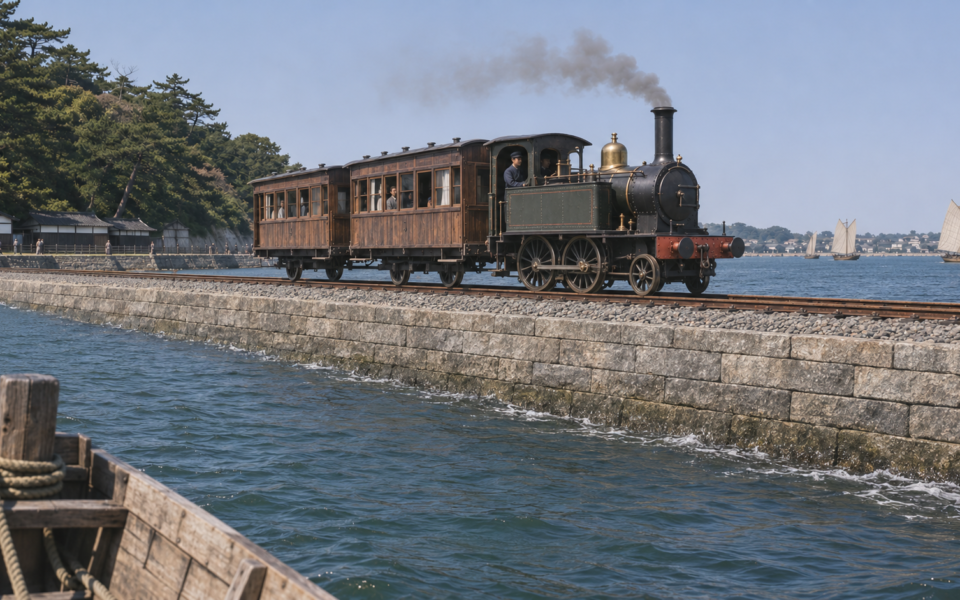
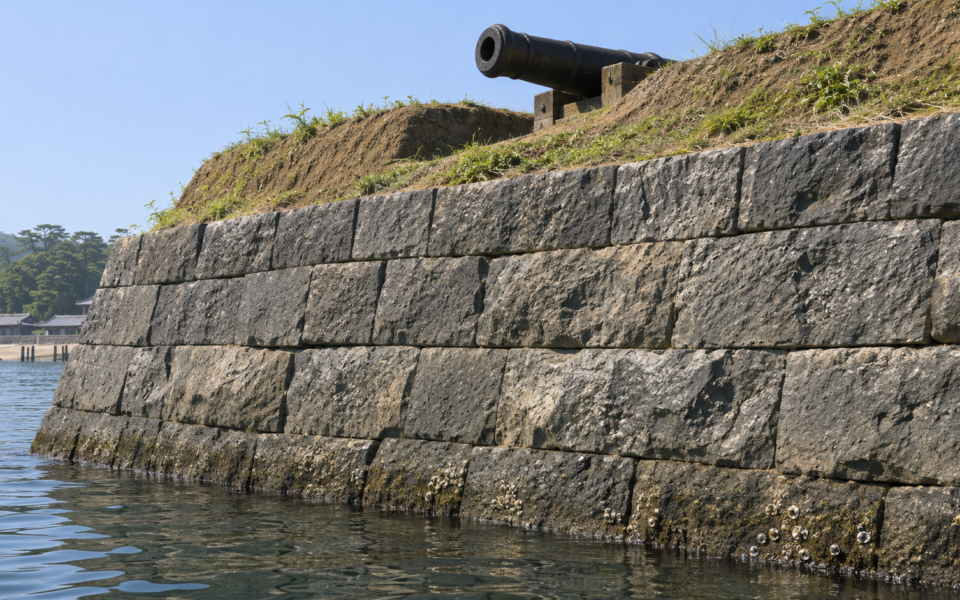
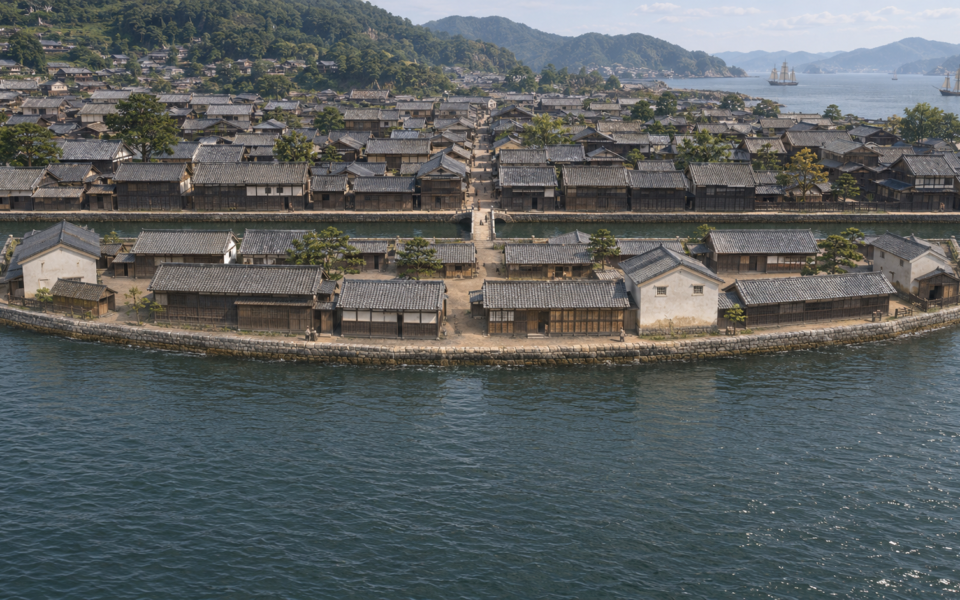
Opening a port and defending its waters proceeded along the same coast.
When The defense order of 1857, Yokohama’s opening and construction in 1859, completion in 1860, abolition in 1899 and later archaeological investigation
Where The former shoreline of Kanagawa in Yokohama, distinct from the Shinagawa batteries in Tokyo
How relationships among the warriors supporting Kamakura developed into fighting in its streets.
When Service under Yoritomo, the disputes of 1213 and fighting on the second and third days of the fifth month in the Japanese calendar, followed by Yoshimura’s later career
Where Kamakura, including the shogun’s residence and Hojo Yoshitoki’s residence; family connections extended to the Miura district of Sagami
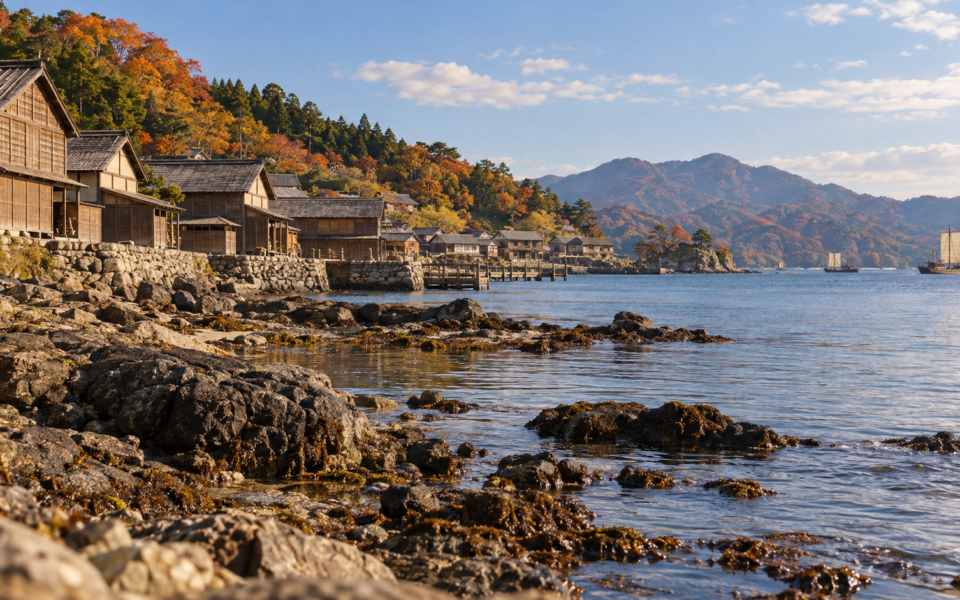
Read the prosperity of northern ports through trading rights and the people who produced their cargoes.
When Medieval trading connections, the 1604 document, institutional changes in the seventeenth and eighteenth centuries, and a late-Edo shipping example
Where Matsumae, Esashi, Hakodate and trading and fishing areas in Ezochi, connected by sea with Honshu
An original letter, its transcription and modern commentary reveal different parts of the story.
When The castle’s change of hands in 1537, the campaign of 1545–1546 and events at Hirai in 1548–1552; month and day references follow the contemporary Japanese calendar
Where Kawagoe in Musashi and the Uesugi base at Hirai in Kozuke
Two campaigns, several approaches, and the establishment of rule after the fighting.
When The Maruyama prehistory in 1578, the campaigns of 1579 and 1581, and subsequent arrangements; month and day references retain the contemporary Japanese calendar
Where Iga and its approaches from Koka, Shigaraki, Kabuto and Yamato
One night of action does not explain every change of allegiance or government.
When From the Kiheitai’s founding in 1863 to the end of Genji 1 and the following internal war; historical month and day references retain the contemporary calendar
Where Chofu and Shimonoseki, then Mitajiri, Isa and the Oda–Edo area within Choshu