
SHIGEKI ENGLISH STORYEN
Japanese history in English
The Battle of Minatogawa: How Was the Defeated Masashige Remembered?
Separate the time of fighting from the times when records, images and memorials were made.
Read Minatogawa’s battle of 1336 alongside its later remembrance through the Baishoron, a draft military-service report, the monument of 1692, Kuniyoshi’s print of 1857, Egeyama, changes to the river and modern parks and statues. Distinguish the battle from the dates, purposes and limits of sources portraying it.
At a glance
Before you enter the story
- When
- The battle in 1336; a report dated 1337; commemoration in 1692 and 1857; the tunnel, park and statue of the modern city
- Where
- Minatogawa and Kobe, considered alongside documents, war narratives and later images held or described by several institutions
- Key figures
- Kusunoki Masashige, Ashikaga Takauji, Akamatsu Enshin, Kishiwada Haruuji, Tokugawa Mitsukuni, Utagawa Kuniyoshi
- What was at stake
- How could a battle end in defeat while the defeated figure continued to be celebrated in texts, images, monuments and the city?
Why this story matters
The larger history behind the turning point
The winner of a battle and the person celebrated in a later image need not be the same. Following both questions preserves the military outcome while allowing the later work of remembrance to become a historical subject in its own right. The print, monument and park each belong to a particular moment.
Source comparison also requires more than counting references. Two institutional pages can discuss the same document, while a compilation can place texts of very different dates beside one event. Identifying what survives and what question it can answer prevents later remembrance or repeated description from becoming extra contemporary testimony.
Historical context
What an international reader needs to know
Dates belong to different historical activities
The battle is dated to the twenty-fifth day of the fifth month in the Japanese calendar of 1336. That is not a modern May 25 obtained by copying the numbers. The later document, stone monument, print and urban works have their own dates, which should not be merged into the day of fighting.
The account moves among these activities deliberately. It first follows Takauji’s recovery and the battle’s outcome, then asks how documents, narratives, places and images convey information. A date on a catalogue entry can describe an item made after the battle, rather than the event being depicted or the date of every action it mentions.
Tradition, interpretation and surviving material
The sources are institutional explanations, catalogues and municipal history, not a claim to have independently transcribed all original manuscripts. The Baishoron’s viewpoint, a military-service report’s subject and a later print’s chosen episode require different questions. None supplies an unrestricted view into every participant’s private thoughts.
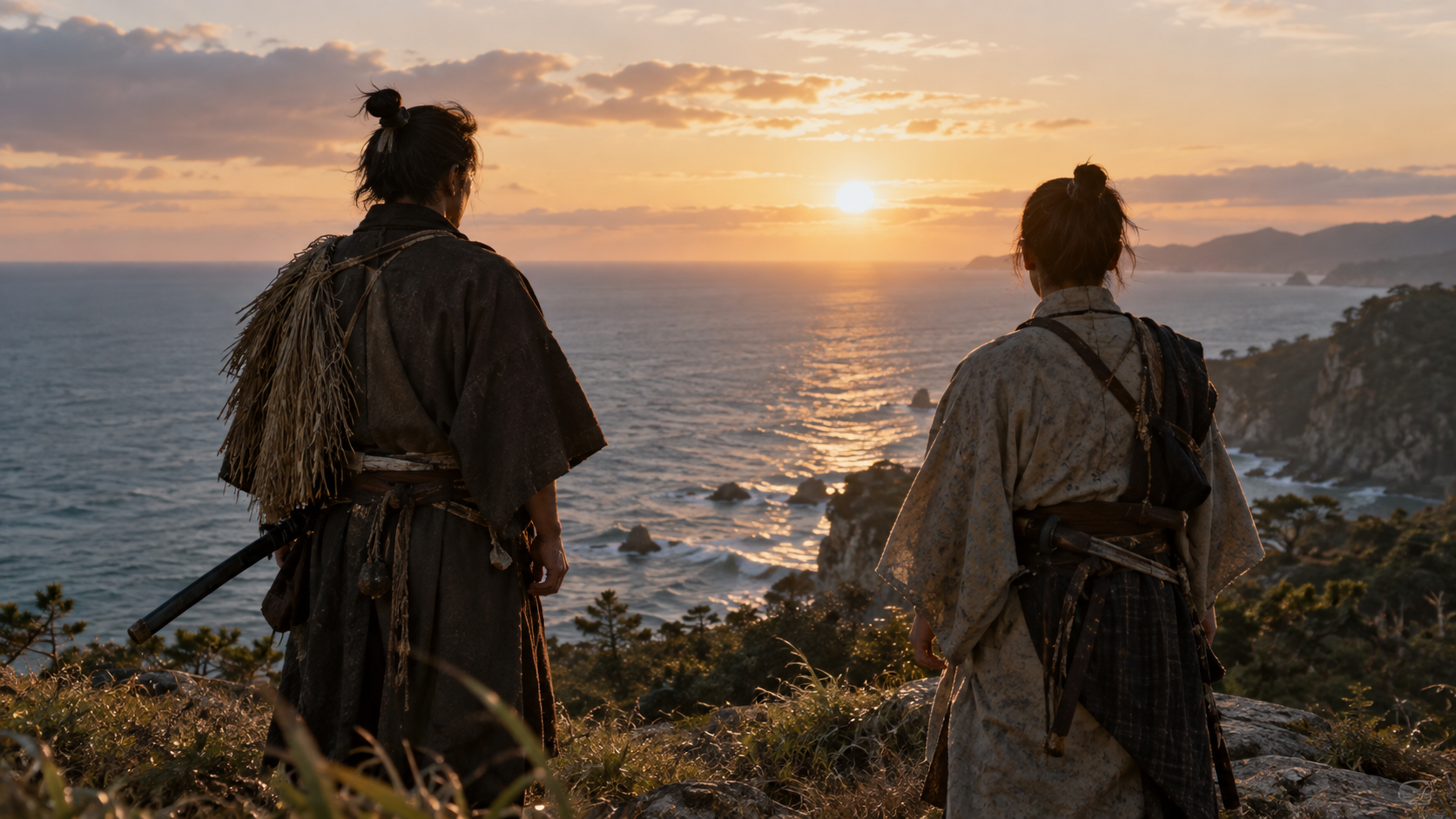
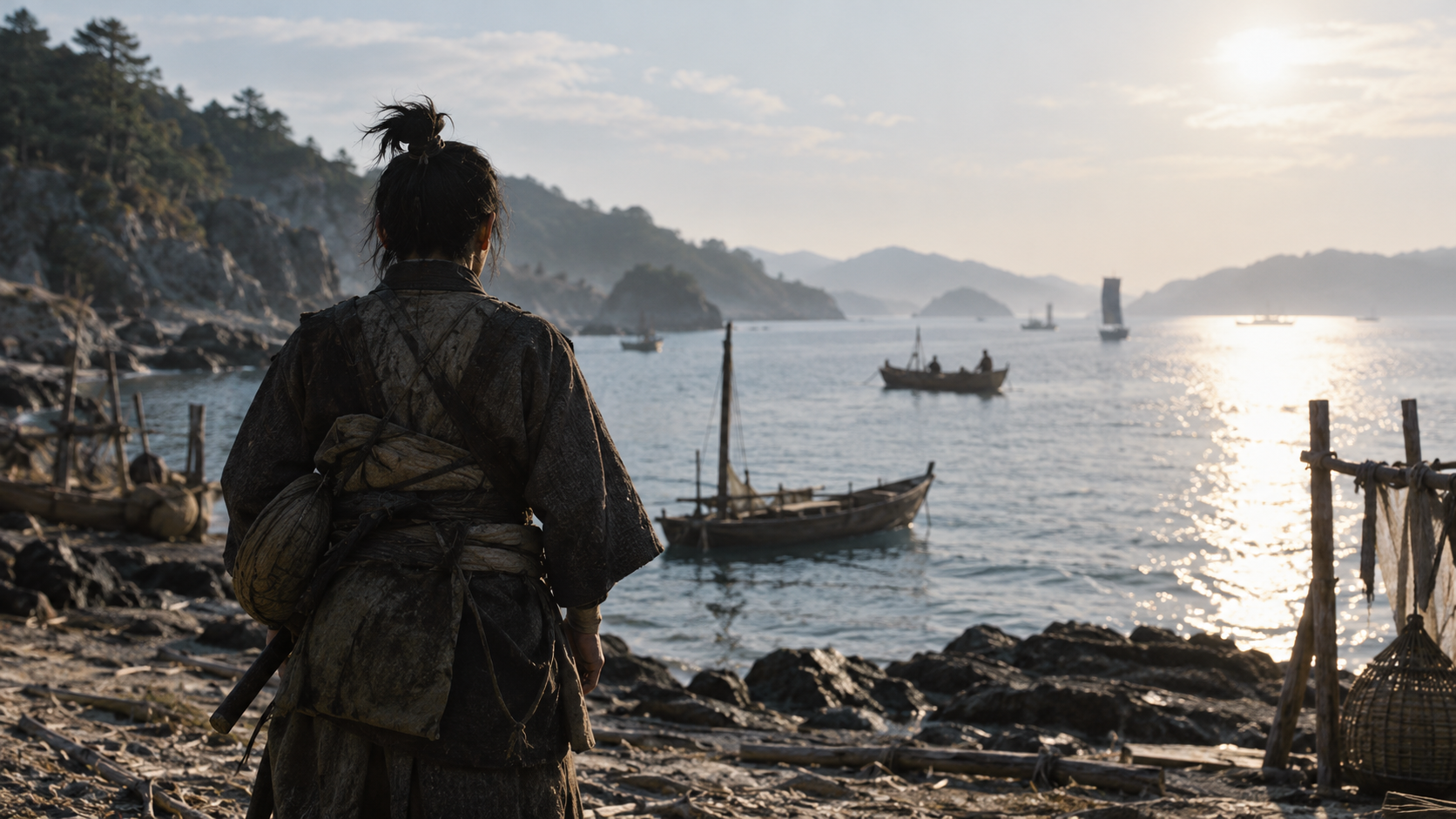
Present Kobe also contains later changes. A remembered headquarters location and a river tunnel built for modern flood control do not jointly establish a complete medieval battlefield map. The generated illustrations are anonymous conceptual scenes or contemporary research props; no original print, historical document, monument photograph or licensed video photograph is reproduced here.
Watch the film
See the story in motion
The film currently uses Japanese audio. This English article provides the context and source trail; it does not imply that an English subtitle track is available.
Scene 01
A battle in 1336 and a print issued in 1857
The name Minatogawa survives in Kobe, but the landscapes and images encountered today belong to different times. Utagawa Kuniyoshi’s print depicting Kusunoki Masashige at Minatogawa takes the battle of 1336 as its subject. The Saitama museum catalogue dates its issue to the fourth month of 1857.
More than five centuries separate the fighting from the publication of that image. Understanding the battle therefore requires asking not only what an image depicts, but when and why the image was made. A later warrior print cannot become a contemporary battlefield record merely because its subject is an earlier conflict.
The article follows Takauji’s recovery, the outcome at Minatogawa, documents, war narrative, stone commemoration and the modern city. The same battle could communicate different things in different periods. Reading those periods separately makes remembrance visible without allowing it to overwrite the event that later people remembered.
Scene 02
Takauji’s recovery and Enshin in the Baishoron
In 1336, Ashikaga Takauji’s forces withdrew from Kyoto. A Hyogo museum curator’s column describes the retreat to Kyushu and subsequent recovery. After victory at Tatarahama near Hakata, Takauji moved east again through the Inland Sea. Minatogawa lay ahead in that renewed advance rather than marking the disappearance of a force defeated earlier.
The Baishoron includes a scene in which Akamatsu Enshin advises Takauji to withdraw westward and recover. Enshin is given a role associated with strategic intelligence. The curator, however, explicitly treats the historical occurrence of that advice as difficult to determine from the character of the compiled narrative.
The course of retreat and return must therefore be distinguished from a story explaining the decision. The account does not invent a verbatim council meeting or treat a role assigned in a narrative as direct access to a historical conversation. A military development and the way it is narrated provide related but different information.
Scene 03
The battle’s historical-calendar date and outcome
The date transmitted for the battle is the twenty-fifth day of the fifth month in the Japanese calendar of 1336. Minatogawa Shrine’s explanation also gives that date. It should not be imagined automatically as the twenty-fifth of modern May, and no Gregorian conversion or modern weekday is supplied here.
The Ashikaga side won, and Kusunoki Masashige died following the fighting. Later works emphasizing his exploits do not change that outcome. The end of the battle and a later work’s selected scene must remain distinct even when both are concerned with the same named figure.
Knowing the result is a starting point. Questions about individual actions and decisions require examining the accounts themselves: when were they written, whose position do they reflect and what kind of material survives? Those questions can change the reading without replacing the outcome with a dramatic image or an invented final conversation.
Scene 04
Dai Nihon Shiryo brings different kinds of material together
The University of Tokyo’s Historiographical Institute publishes Dai Nihon Shiryo as a compilation arranging an event summary with associated sources. Its explanation identifies a range of materials, including documents, records, genealogies, later writings and local descriptions. This makes the compilation an entry point for following different kinds of evidence.
Texts placed together under an event were not necessarily all written on the day it occurred. The editorial summary must be separated from the individual passages assembled beneath it. A source’s name and history remain necessary even when the compilation has already organized the material for a reader.
Finding another page in the same collection does not automatically add another independent witness. The underlying record may be the same, or a later account may depend on an earlier one. Following the source behind a passage is more informative than counting books or pages, and the article does not claim to have read every original entry for Minatogawa.
Scene 05
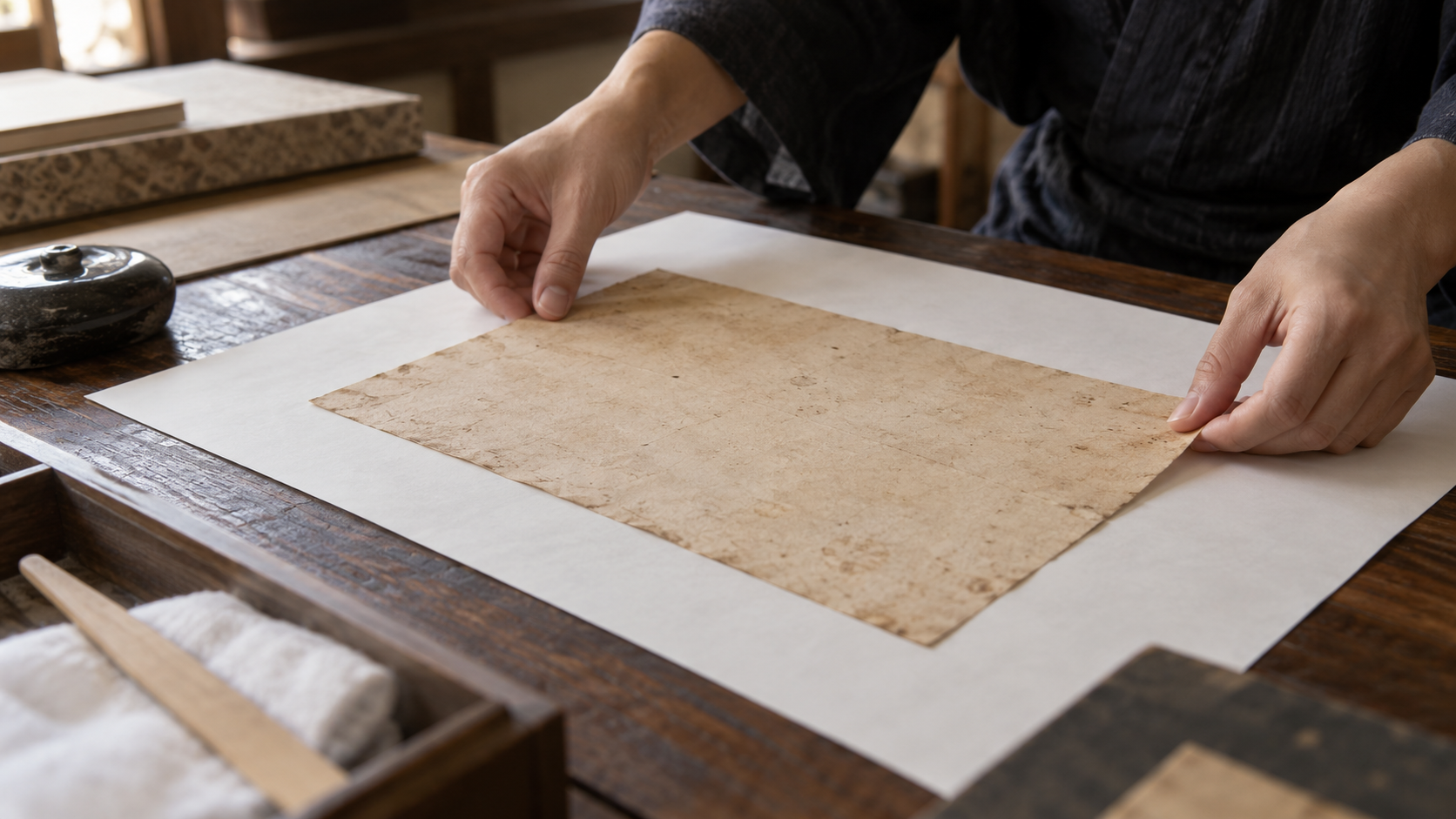
A military-service report dated 1337 is not a complete battle panorama
Sakai City Museum’s catalogue lists a draft military-service report by Kishiwada Haruuji dated to the third month of 1337. Tondabayashi’s city history also discusses his report as recording service through that month. The battle year and the date attached to the surviving document description can therefore be distinguished.
The catalogue’s designation as a draft is retained. Shortening the title could make a reader assume an authenticated, formally endorsed original that has not been established here. Handwriting, circumstances of production and any precise day within the month are separate matters. No extra day, superior officer or endorsement is supplied beyond the examined description.
A report concerning one person’s service cannot automatically explain the entire battlefield. The museum catalogue and city history also discuss the same document, so their two pages are not two independent participants’ testimonies. They serve different descriptive purposes while pointing back to one underlying item, rather than multiplying the original evidence.

Scene 06
How to read a war narrative from an Ashikaga perspective
The Hyogo curator describes the Baishoron as a war narrative portraying the earlier phase of the conflict mainly from the Ashikaga side. That viewpoint is useful information when following how it presents the sequence and distributes roles among its characters. It is not a reason to discard every statement in advance.
Enshin’s strategic role and Takauji’s recovery convey more than a list of events. They also provide material for considering how people were represented. The narrative’s account of developments, its assessment of a character and a particular speech need to be distinguished rather than accepted or rejected as one inseparable unit.
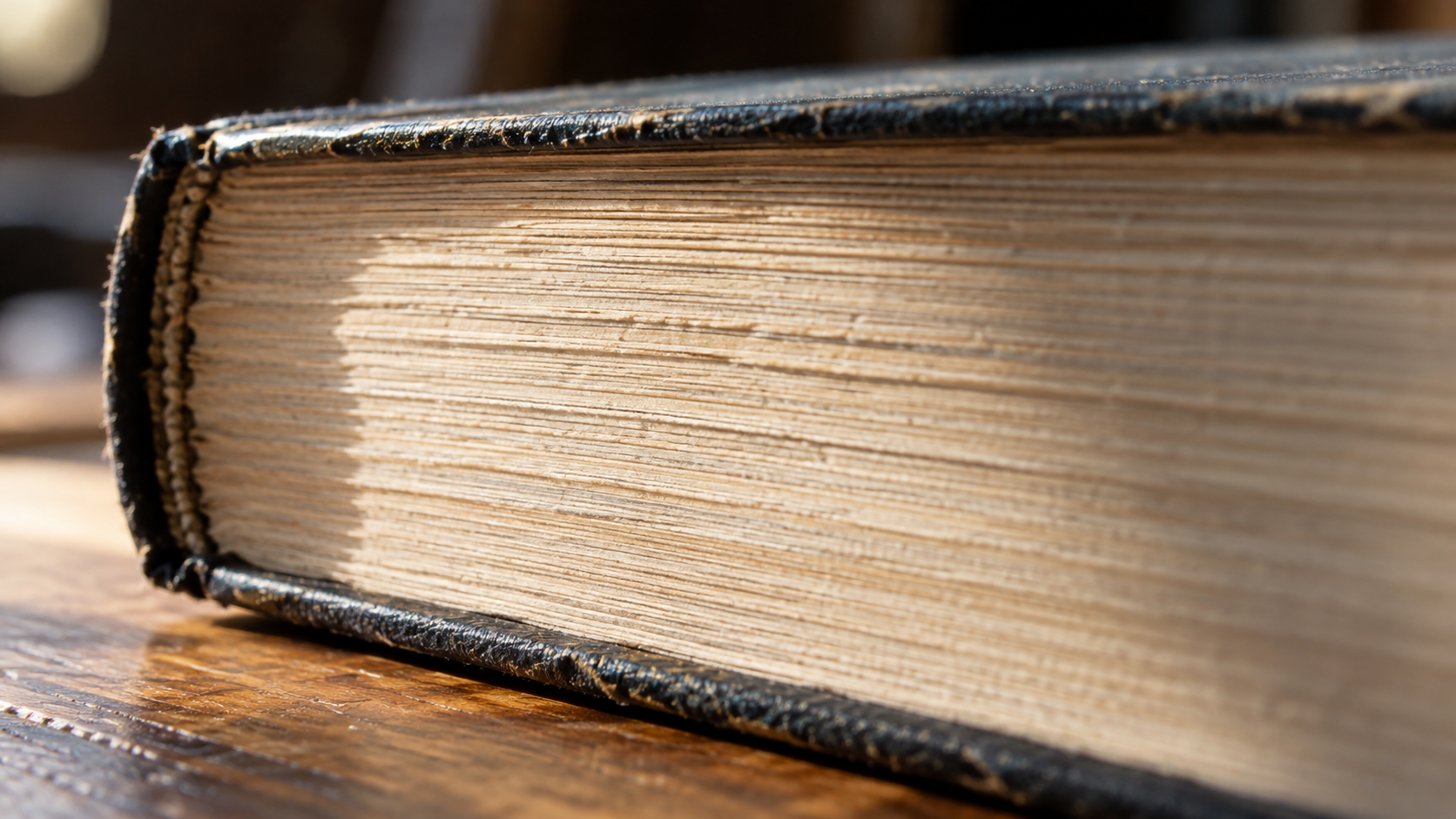
A document may prompt a question about whose service it records; a war narrative may prompt one about whose perspective and role it constructs. Both can contribute to understanding Minatogawa, but the checks appropriate to each are different. The conceptual book image establishes neither a manuscript’s authenticity nor an independently verified original passage.

Scene 07
Egeyama tradition and a river whose course changed
Kobe City describes Egeyama as a place traditionally associated with Masashige’s headquarters. That is a local tradition to be followed in its attributed form. It is different from independently establishing every feature of the battlefield, the exact headquarters position or the arrangement of forces around it.
The landscape subsequently changed. Meiji flood-control works redirected the Minatogawa, and the river tunnel through Egeyama was completed in 1901. The former riverbed was filled and used for parks, roads and urban development. Kobe’s explanation also leaves uncertainty about when an earlier change in the river’s course occurred.
Confirming the modern works does not determine the medieval riverbed. A present road or watercourse cannot immediately become a line on a map of the forces in 1336. The surviving place names matter because medieval remembrance and modern city-making occupy the same setting, not because they remove the need to date the landscape being observed.
Scene 08
The monument of 1692 records later reverence
Remembrance accumulated after the fighting. Minatogawa Shrine explains that Tokugawa Mitsukuni erected Masashige’s monument in 1692. More than three centuries separate that act from the battle. Encountering the monument therefore also means encountering a later period’s reverence for the figure who died at Minatogawa.
An explanation of a monument’s erection and a record of the fighting answer different questions. The stone’s existence cannot reveal troop numbers or recover a final exchange of words. Its commemorative meaning is historically significant without making it evidence for every detail of the event commemorated.
The shrine separately introduces the tomb monument and the place associated with Masashige’s death. Their presence within the same precinct does not erase the distinction. Identifying what each place commemorates makes the descriptions more precise, while the article avoids reproducing the shrine’s dramatic speech, final numbers or unrestricted psychological claims as verified fact.

Scene 09
A triptych celebrating the exploits of a defeated figure
The catalogue describes Kuniyoshi’s work as a three-sheet color print issued in the fourth month of 1857. Its subject was a battle far removed from the late Edo world in which it was published. Masashige’s exploits had become material for an image long after the military outcome was settled.
The museum explains that the selected episode follows accounts such as the Taiheiki in portraying Masashige’s smaller force temporarily overcoming a large Ashikaga force. That chosen scene was not an even summary of every stage or of the battle’s overall result. A dramatic moment in a picture and victory in the entire battle are different claims.
Who won, and whose actions were later celebrated, therefore need not receive the same answer. A defeated person could continue to attract repeated narration and depiction. Checking issue date, maker and subject begins a reading in which soldiers arranged within an image are not mistaken for a contemporary deployment plan.

Scene 10
The modern park and statue continue the history of remembrance
Kobe City dates Minatogawa Park, made on the filled former river, to November 1911. It dates the statue of Masashige there to 1935. The battle of 1336, the monument of 1692, the print of 1857 and these modern urban works belong to different moments in a continuing history.
A document invites questions about whose activity it records. A war narrative raises questions about viewpoint and portrayal. At a place, the reader asks which period’s terrain and commemorative objects are being encountered. Separating these questions lets each source contribute information appropriate to its character rather than forcing all of them into one battle scene.
The fighting at Minatogawa ended in Ashikaga victory, but the activities of remembering Masashige continued. The history of how a defeated figure was narrated, pictured and commemorated is also part of Minatogawa’s past. That conclusion does not reverse the defeat; it recognizes the later times and purposes through which the figure remained present.
How to read this work
History, interpretation, and reconstruction
The defeat at Minatogawa and later commemoration of Masashige answer different questions; source type, date and landscape change make both histories easier to understand.
This work is grounded in published sources and historical research. Interior thoughts, dialogue, and some visual details are cinematic reconstructions. Where historians disagree, the article presents the point as debated rather than settled fact.
Timeline
The story in time
-
Takauji retreats, recovers in Kyushu and advances east again; Enshin’s narrative advice is distinguished from the course of events.
Sources: h01 -
The Baishoron’s Ashikaga viewpoint, event sequence, character assessment and speeches require distinction; no exact compilation year fixed here.
Sources: h01 -
The shrine attributes erection of Masashige’s monument to Tokugawa Mitsukuni.
Sources: h08 -
Kuniyoshi’s three-sheet print of Masashige at Minatogawa is issued.
Sources: h02 -
The Minatogawa river tunnel is completed for flood control; this does not establish the medieval riverbed.
Sources: h07 -
Minatogawa Park is created on the filled old river course.
Sources: h06 -
The statue of Masashige is erected in the park.
Sources: h06
People & terms
A guide for new readers
Glossary
- Gunki 軍記
- A war narrative, whose viewpoint, event account and character portrayal need separate consideration.
- Baishoron 梅松論
- The narrative described by the curator as presenting the early conflict mainly from the Ashikaga side.
- Gunchujo-an 軍忠状案
- A draft military-service report; the catalogue’s draft designation is retained without assuming a formally endorsed original.
- Kobun 綱文
- The event summary placed with associated material in Dai Nihon Shiryo, distinct from each cited source passage.
- Nishikie 錦絵
- A color woodblock print, here an image made centuries after its battle subject.
- Egeyama 会下山
- The Kobe hill associated by tradition with Masashige’s headquarters and later traversed by the modern river tunnel.
Sources & method
How this article was built
The final audio clock’s ten chapters provide the article sequence. Eight substantive institutional references perform different functions. The catalogue and city history discussing one military-service report are explicitly not counted as two independent contemporary testimonies; the compilation-method page explains method rather than supplying another battle witness.
Relevant institutional descriptions and city-history sections were read. The original military-service document, complete war narratives and every Dai Nihon Shiryo entry are not claimed to have been independently transcribed. Catalogue precision is retained without adding a day, an endorsement, troop totals, exact deployment or a Gregorian battle-date conversion.
The battle’s outcome is distinguished from later commemoration, and local tradition from a verified medieval river course. Ten approved generated stills are separately adopted as conceptual article illustrations. No original print, manuscript, site photograph, licensed documentary photograph from the video or soundtrack is reproduced.
Sources
References and further reading
- Curator’s column 31: Harima and the Akamatsu, from the Baishoron 学芸員コラム第31回 播磨ハ赤松 Title translated editorially for reader convenience. Hyogo Prefectural Museum of History / Maeda Toru 兵庫県立歴史博物館/前田徹 The body was read for withdrawal, Tatarahama, renewed advance, Ashikaga viewpoint and uncertainty about Enshin’s advice. Not a complete original reading of the war narrative; no portraits or illustrations reproduced. Accessed 2026-11-04
- Kusunoki Masashige at the great battle of Minatogawa, SPM2019-0231 楠木正成湊川大合戦 SPM2019-0231 Title translated editorially for reader convenience. Saitama Prefectural Museum of History and Folklore 埼玉県立歴史と民俗の博物館 The catalogue was read for maker, fourth-month 1857 issue, three-sheet format and selected episode versus battle outcome. Neither the original image nor explanatory prose is reproduced; generated stills do not imitate the print. Accessed 2026-11-04
- The Mikita-family documents, 2021 exhibition text version 和田家文書の世界 2021年テキスト版 Title translated editorially for reader convenience. Sakai City Museum 堺市博物館 Relevant catalogue item 5 was read: Kishiwada Haruuji’s draft report, third month of 1337. No precise day, endorsement, superior or copy-production year added. Not a current exhibition announcement; no original document or photograph reproduced. Accessed 2026-11-04
- Tondabayashi City History, volume 2: The opening of the civil conflict 富田林市史 第二巻 内乱の開幕 Title translated editorially for reader convenience. Tondabayashi City Cultural Heritage Digital Archive 富田林市 文化財デジタルアーカイブ The relevant section was read for service recorded through the third month of 1337. This and the Sakai catalogue describe the same document, not two independent participant testimonies. Not a full original-document reading or comprehensive military reconstruction. Accessed 2026-11-04
- Dai Nihon Shiryo and Shiryosoran 大日本史料・史料綜覧 Title translated editorially for reader convenience. University of Tokyo, Historiographical Institute 東京大学史料編纂所 The explanation of compilation method was read: summaries, documents, records, genealogies and later writings. Not independent reading of every Minatogawa entry or an additional eyewitness account. Accessed 2026-11-04
- Takauji, Masashige and an age of conflict 尊氏 正成と戦の時代 Title translated editorially for reader convenience. Kobe City, Hyogo Ward 神戸市兵庫区 The body was read for Egeyama tradition, the park in November 1911 and the statue in 1935. Tradition is distinguished from demonstration of medieval terrain; no statue, monument or photograph reproduced. Accessed 2026-11-04
- Minatogawa river tunnel through Egeyama 湊川隧道(会下山トンネル) Title translated editorially for reader convenience. Kobe City 神戸市 The body was read for completion in 1901, westward diversion, the former channel and uncertainty about earlier course changes. Modern works do not determine medieval routes or deployments. No photographs, maps or current visit conditions adopted. Accessed 2026-11-04
- Sites associated with Masashige 楠公史跡 Title translated editorially for reader convenience. Minatogawa Shrine 湊川神社 The shrine’s own explanation was read for the historical-calendar battle date, Mitsukuni’s monument in 1692 and the separate death-site and tomb descriptions. Final dialogue, numbers, inner thoughts and exact location are not reproduced as independently verified facts; no photographs used. Accessed 2026-11-04
Continue reading
More stories from Shigeki
Shigeki English
Railway Opening and the Takanawa Embankment: Where Trains and Boats Crossed
An embankment carrying trains into the sea also raised the question of keeping a way to the water.
- When Construction in the early 1870s, railway opening in 1872, later widening and reclamation, rediscovery in 2019 and additional designation in 2021
- Where The former coast at Takanawa between Shimbashi and Shinagawa, along the Shimbashi–Yokohama railway
Shigeki English
The Toi Raids: Defense, Letters and Returning Captives in the Seas of 1019
The sea carried attackers, returning people and information.
- When 1019, with month and day references retaining the period’s Japanese calendar
- Where Tsushima, Iki, northern Kyushu, Kyoto and the waters connected with Goryeo