
SHIGEKI ENGLISH STORYEN
Japanese history in English
Matsumae and Ainu Trade: From Retainers’ Trading Rights to Merchant Contractors
Read the prosperity of northern ports through trading rights and the people who produced their cargoes.
Explore Matsumae’s economy beyond rice yields. Follow the 1604 black-seal document, retainers’ regional trading rights, merchant finance and contracting, demand for marine products, changes in Ainu trade and labor, and the shipping networks linking three northern ports with Honshu.
At a glance
Before you enter the story
- When
- Medieval trading connections, the 1604 document, institutional changes in the seventeenth and eighteenth centuries, and a late-Edo shipping example
- Where
- Matsumae, Esashi, Hakodate and trading and fishing areas in Ezochi, connected by sea with Honshu
- Key figures
- Ainu producers, traders and fishing workers, Matsumae Yoshihiro, Tokugawa Ieyasu, Retainers holding regional trading rights, Merchant contractors and shipowners
- What was at stake
- How did an economy supported by trade change who controlled exchanges, managed production and supplied the labor behind northern cargoes?
Why this story matters
The larger history behind the turning point
A port’s prosperity does not reveal how its wealth was made or distributed. Following a cargo back to its producers, and following payments back to holders of trading rights, places the experience of Ainu communities alongside the finances of Matsumae and its merchants.
The distinction between retainers trading on their own account and merchants contracting to manage trading areas is essential. A commercial network could expand while the freedom of people working within it became more restricted. Greater circulation of goods is not, by itself, proof of greater freedom or improved livelihoods.
Historical context
What an international reader needs to know
Trade preceded the domain
Ainu people were producers and traders with connections beyond their own settlements before Matsumae’s early modern institutions developed. Starting with those connections avoids presenting the domain as the creator of all northern exchange or treating Ainu society as isolated until outsiders arrived.
Ezochi is a historical geographical designation used here for the northern areas under discussion, rather than a claim that every locality shared identical conditions. Wajin refers in this context to people associated with the Japanese population arriving from or connected with Honshu, distinguished in the sources from Ainu people.
Regulations, institutions and lived conditions
The 1604 black-seal document is read through the Hakodate city history’s transcription and checked against the Hokkaido Museum catalogue. Its provisions concern unauthorized trading, movement and improper demands. Reading the wording does not demonstrate that later society consistently followed those provisions.
Akinaiba chigyo-sei and basho ukeoi-sei describe different arrangements involving trading areas, retainers and merchants. Their development should not be compressed into a single island-wide change on one day. Later fishing labor and later merchant wealth also require attention to their own locations and periods.
Watch the film
See the story in motion
The film currently uses Japanese audio. This English article provides the context and source trail; it does not imply that an English subtitle track is available.
Scene 01
An economy that rice yields alone cannot explain
Many domains collected rice as a central source of revenue. In Matsumae, northern products and trade across the sea supported an economy that could not be measured in the same way. The issue was not simply what the land produced, but how goods and trading opportunities were organized.
Behind a ship’s cargo lay rules governing who could trade with whom. Rights associated with particular areas helped support retainers, and the management of those areas later became increasingly connected with merchants. A cargo therefore represented institutional relationships as well as products from the sea.
Two arrangements guide this account: retainers’ trading rights under akinaiba chigyo-sei and merchant contracting under basho ukeoi-sei. Keeping them distinct makes it possible to trace changes in management while also asking what happened to the producers and traders whose work supported the exchange.
Scene 02
Ainu exchange networks existed before Matsumae’s institutions
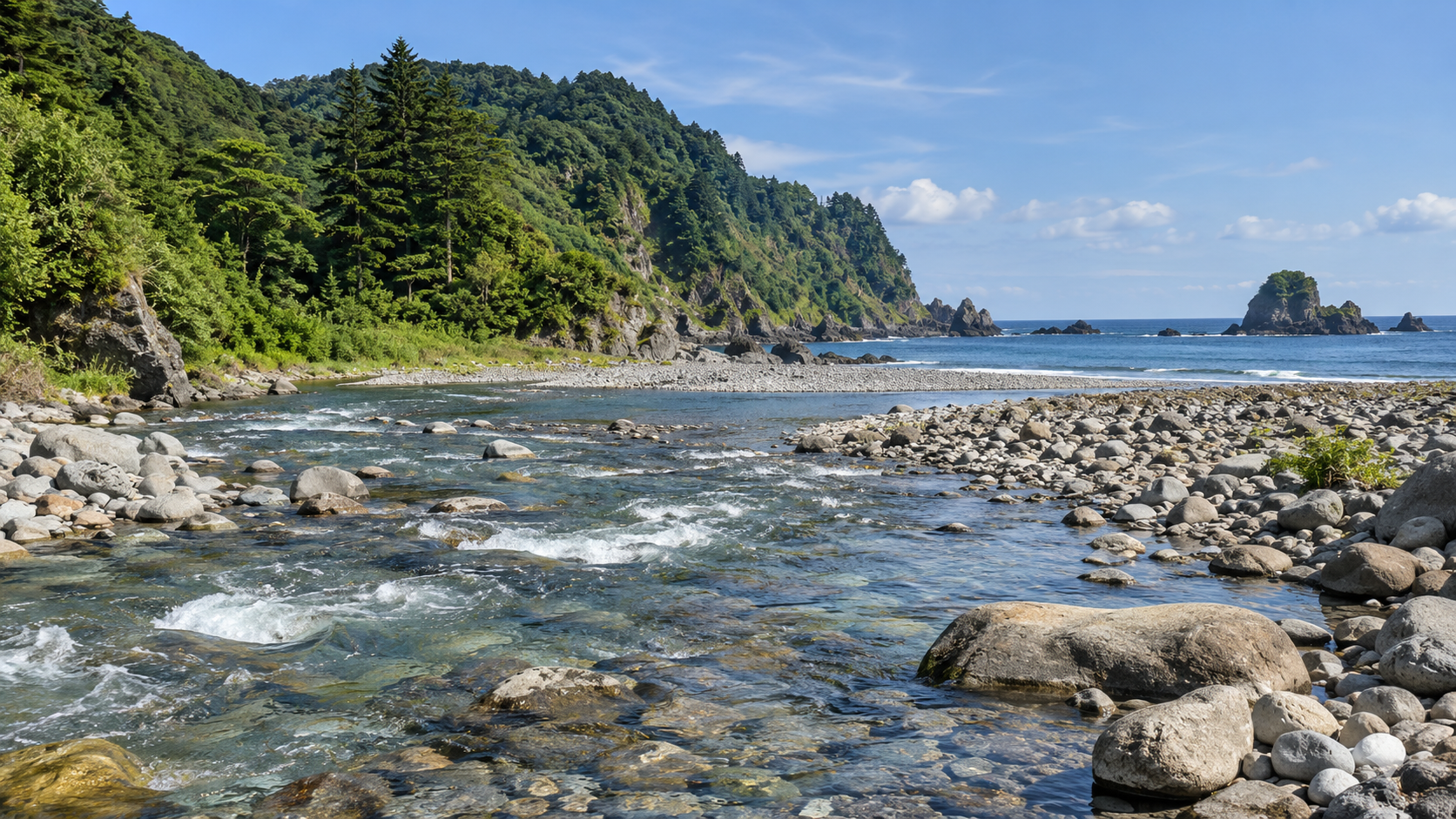
Ainu people were not cut off from the wider world. Hokkaido’s digital museum introduces exchanges in which kelp and salmon moved toward Honshu while Chinese ceramics and copper coins reached Hokkaido. The Foundation for Ainu Culture also describes iron goods, lacquerware and sake moving northward.
These connections were not a one-way movement of northern raw materials. People produced, exchanged and used goods that crossed regional boundaries. The history of Matsumae’s institutions begins within an existing world of exchange, rather than with the creation of trade where none had previously existed.
Archaeology provides another kind of evidence for that earlier world. Kaminokuni’s explanation of Katsuyama introduces ceramics from China and different Japanese regions, together with bone and antler objects. Such finds help investigate movement and daily life, but they do not prove that the later Edo-period contracting system already existed at this medieval site.

Scene 03
Read the provisions of the 1604 black-seal document
In 1604, Ieyasu issued a black-seal document to Matsumae Yoshihiro. The transcription in the Hakodate city history restricts people entering Matsumae from trading directly with Ainu people without Matsumae’s permission. Its wording concerns control over who could undertake such transactions.
The document also contains a provision leaving Ainu movement to their own decision and another prohibiting improper demands against them. Those provisions must be read alongside the regulation of trade. Selecting only one part would give an incomplete account of the text being examined.
Its date is the twenty-seventh day of the first month in the contemporary Japanese calendar, not a Gregorian January 27 produced by copying the numbers. Nor is the city history’s older language of social-development stages adopted as a description of Ainu society as inherently backward. The transcription and the later historian’s framework are distinct.
Scene 04
A written rule does not establish later practice
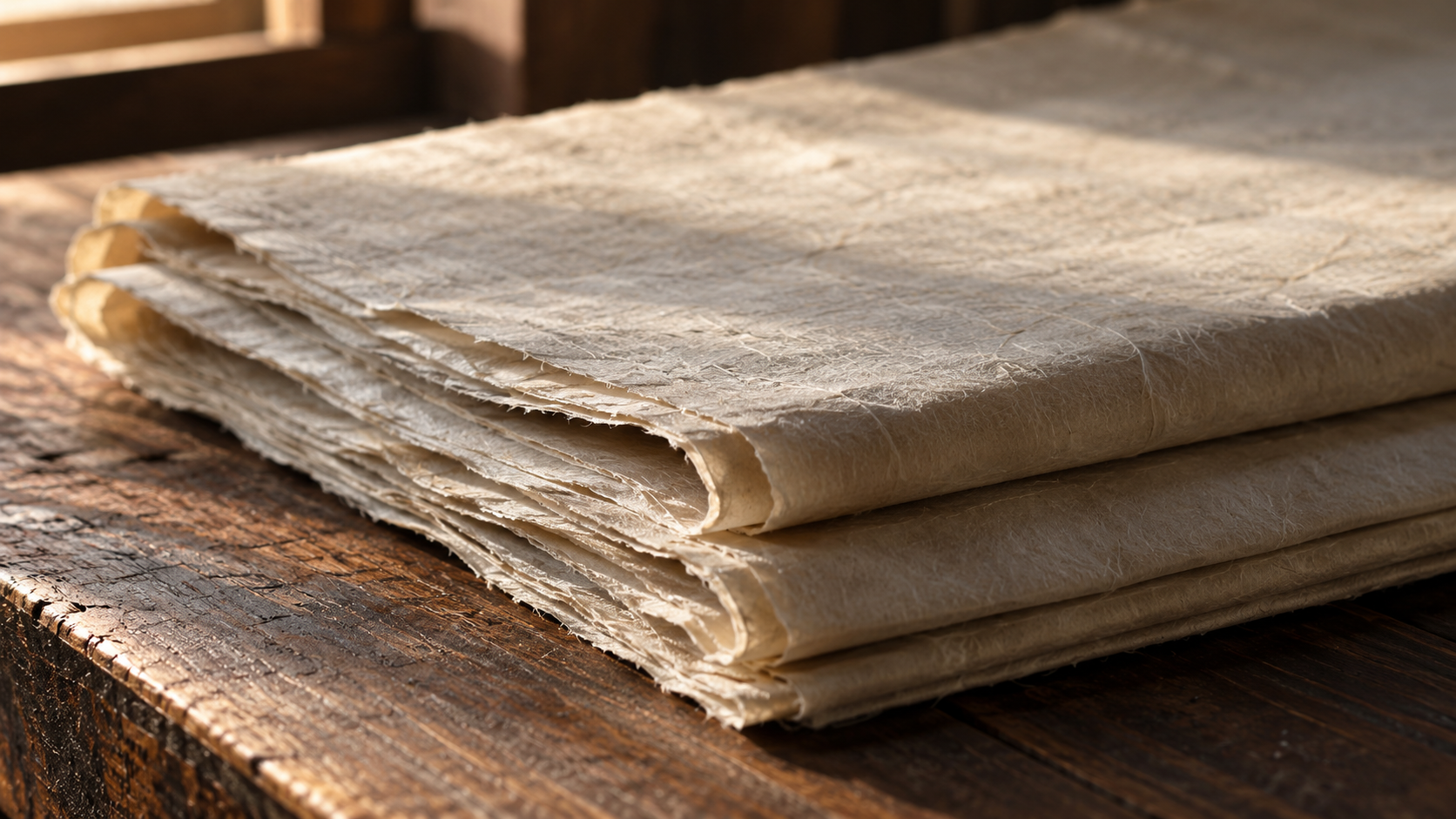
Reading a provision and establishing whether people lived according to it are different tasks. The document contains language concerning movement, while later arrangements around trading areas increasingly restricted Ainu freedom in commerce. One page cannot stand in for the social history of the whole Edo period.
The reverse shortcut is also misleading. Later harsh control should not be presented as if every aspect of it had already been written into the 1604 clauses. The wording, its interpretation and the operation of institutions over subsequent generations need their own evidence.
Keeping rules and practice apart therefore does not minimize later restrictions. It makes the process of change easier to examine. The question becomes how relationships altered through particular institutions and periods, rather than whether one document can be made to describe every later experience.
Scene 05
Retainers received rights associated with trading areas
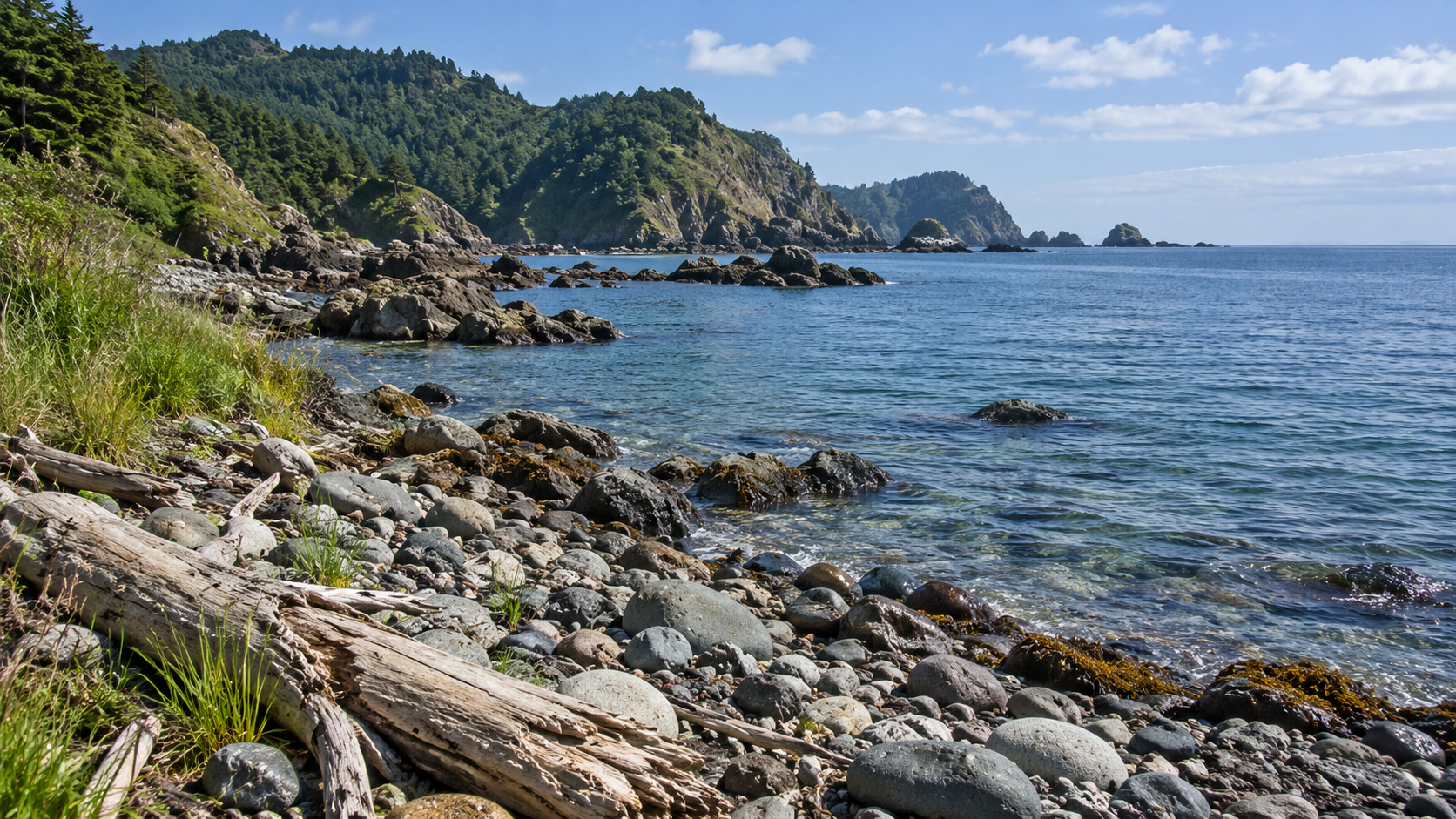
Matsumae could not support its retainers through rice stipends in the same way as many other domains. Important retainers instead received rights to trade within defined areas. The trading places were called akinaiba or basho, and this arrangement is known as akinaiba chigyo-sei.
The right involved more than being able to transport a cargo. It assigned a particular retainer a position in trade connected with an area. What could be acquired there and where those products could be sold helped provide the income supporting that retainer.
Looking only at acreage or rice yield misses this relationship. A region’s productive resources, the position of people controlling exchange and the route to buyers all mattered. The institution must therefore be understood through trading rights and income as well as through a map of land.
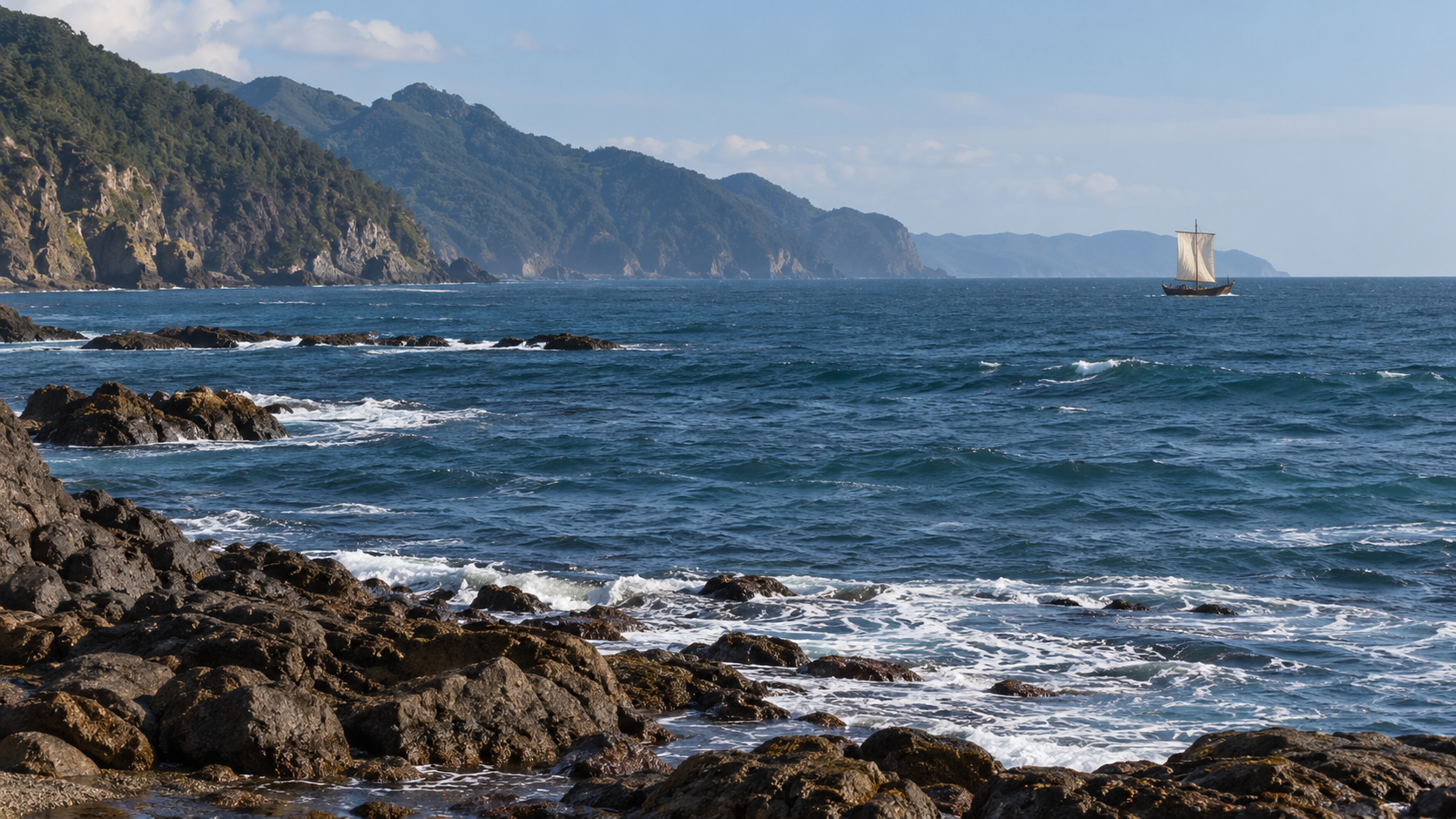
Scene 06
Ships, local exchange and resale at Matsumae
A holder of a trading area sent a ship to exchange goods with Ainu people there. Products obtained through that exchange could then be sold at Matsumae to merchants connected with Honshu. The proceeds supported the holder’s livelihood.
Several roles were involved in the same cargo: those producing the goods, those conducting the exchange and merchants buying at the port. Northern products and goods brought from Honshu moved through these connected transactions. The ship was one element within a wider chain of relationships.
The particular goods and conditions must still be checked for their place and period. A general explanation of the arrangement does not establish the same inventory or exchange terms in every locality. It identifies how transactions could be organized, without turning that outline into a complete account of each trading area.
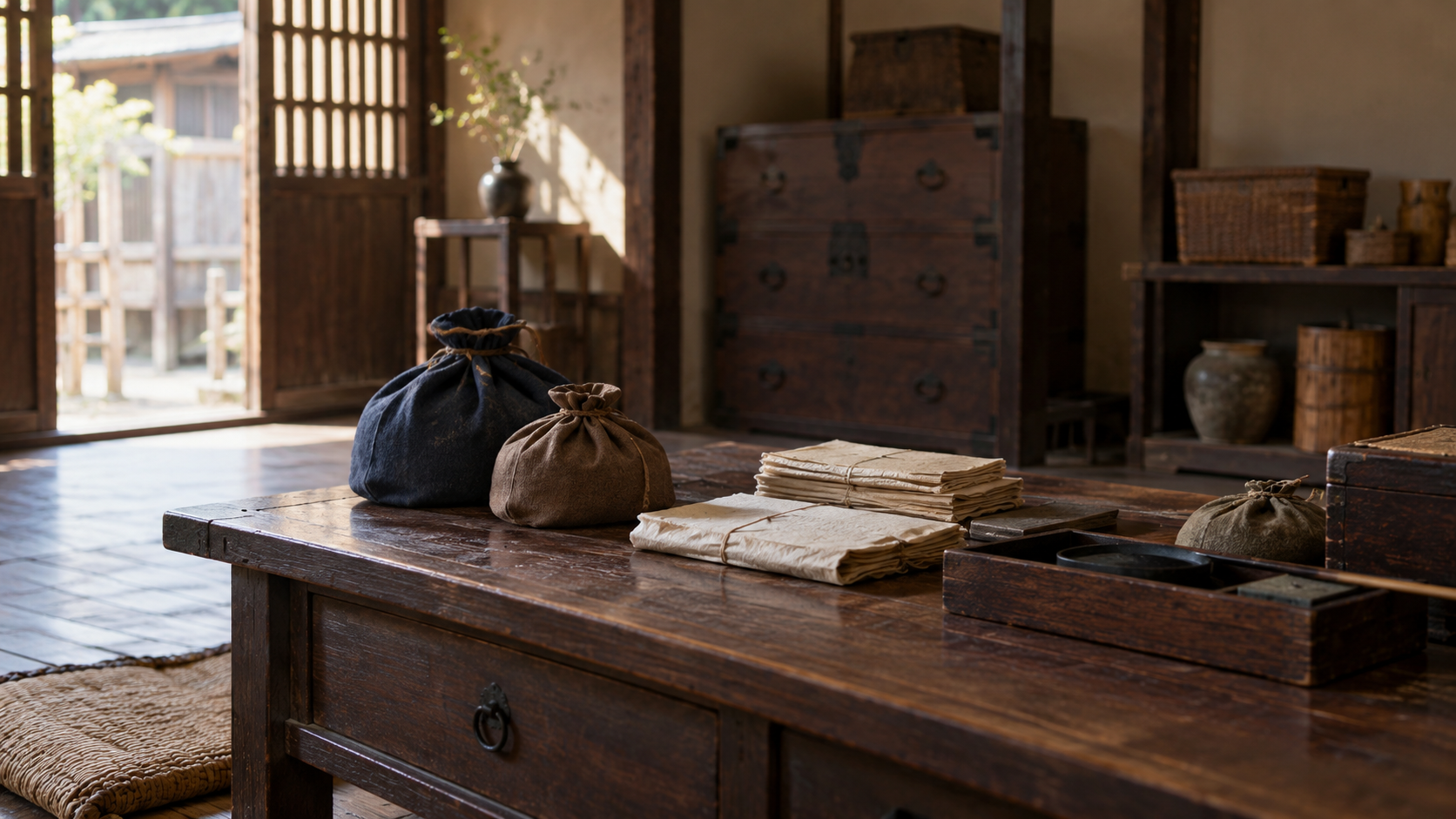
Scene 07
Merchant lending changed the relationship
Sending a ship and obtaining goods for exchange required funds. The Foundation for Ainu Culture describes retainers borrowing trading expenses and even living expenses from merchants, then handing over goods acquired through trade to repay the debt.
A merchant who bought a cargo could therefore also become involved in financing the activity that produced it. That expanding relationship helped lead toward an arrangement in which a merchant took responsibility for managing a trading area. Purchasing, lending and management were connected but distinct roles.
The mere presence of merchants does not yet establish basho ukeoi-sei. Buying goods is different from advancing money, and both differ from undertaking the operation of an area. Following those stages separately helps explain the change without treating every merchant transaction as an example of the later contracting system.
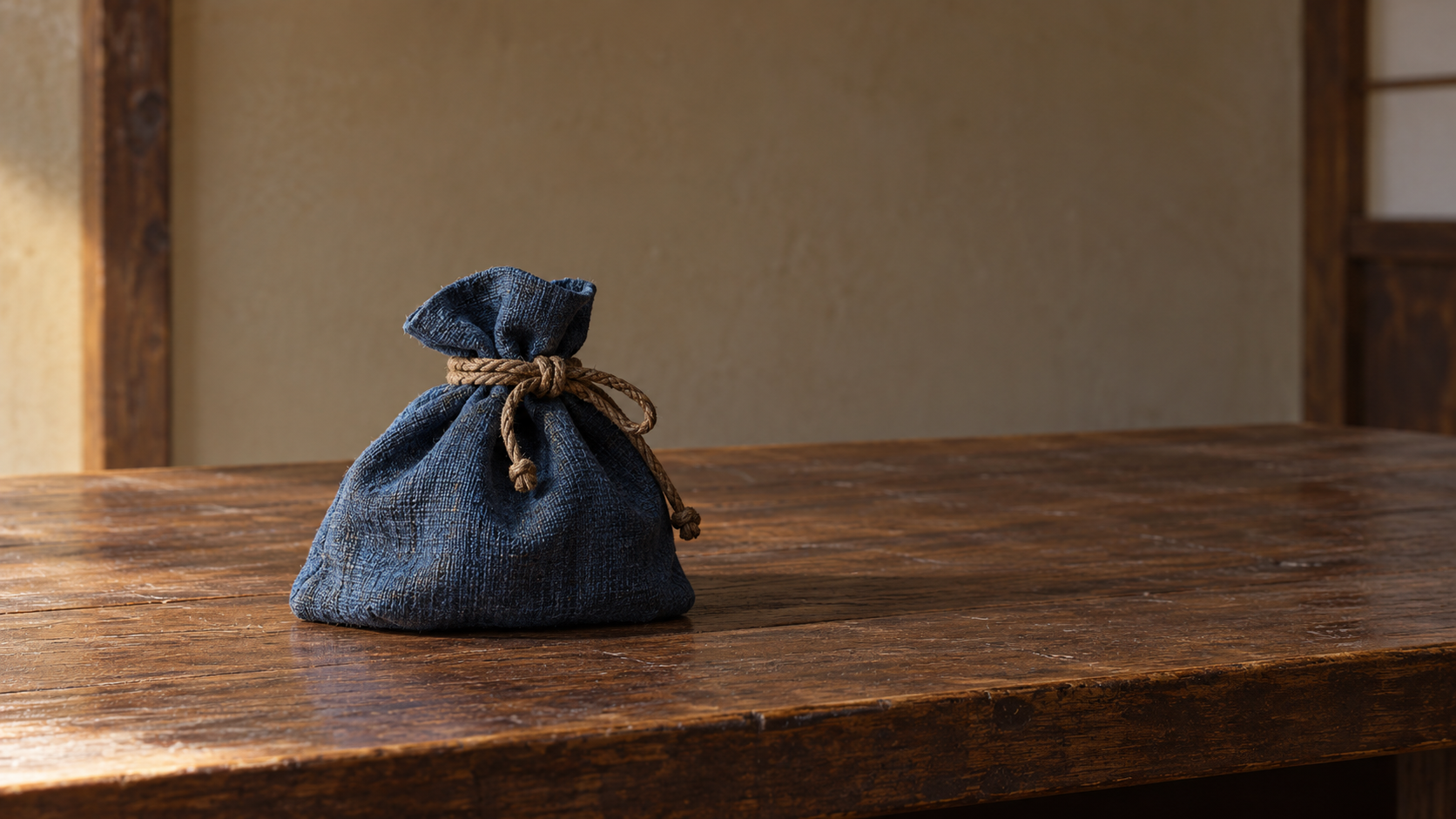
Scene 08
Merchant contracting and two different flows
Under basho ukeoi-sei, a retainer received a set payment while a merchant undertook management of the trading area. Hokkaido’s digital museum places the emergence of this arrangement in the first half of the eighteenth century. This differs from the stage in which the retainer conducted the trade directly.
The payment received by the holder was called unjokin. It is useful to distinguish two flows: money moving from the contractor to the holder, and products moving from fishing and production areas toward markets. The former supplied income to the party granting management; the latter formed part of the merchant’s operation.
Neither flow fully describes the people doing the work. A discussion confined to management payments can obscure Ainu production and labor, while a discussion confined to cargoes can obscure control over trading rights. The changed relationship between right holders and operating merchants needs to be considered together with those other relationships.

Scene 09
Demand linked fisheries with distant markets
Demand for marine products helped change the management of trading areas. The Foundation for Ainu Culture points to products associated with Nagasaki exports and to fish products used as fertilizer for commercial crops such as indigo in Honshu. Northern production became connected with distant markets and farming.
As contractors moved into fishing operations, they introduced or improved equipment and techniques and used Ainu people as a labor force. The expansion of market connections therefore cannot be equated with an expansion of local freedom. The organization of production changed alongside the circulation of products.
The Hokkaido Regional Development Bureau explains herring fertilizer as a product made by boiling, pressing and drying fish, used for crops including rapeseed, cotton and indigo. Its page also includes Meiji-period statistics; those figures are not transferred to early Edo production. A product’s use and the date of a numerical claim require separate attention.
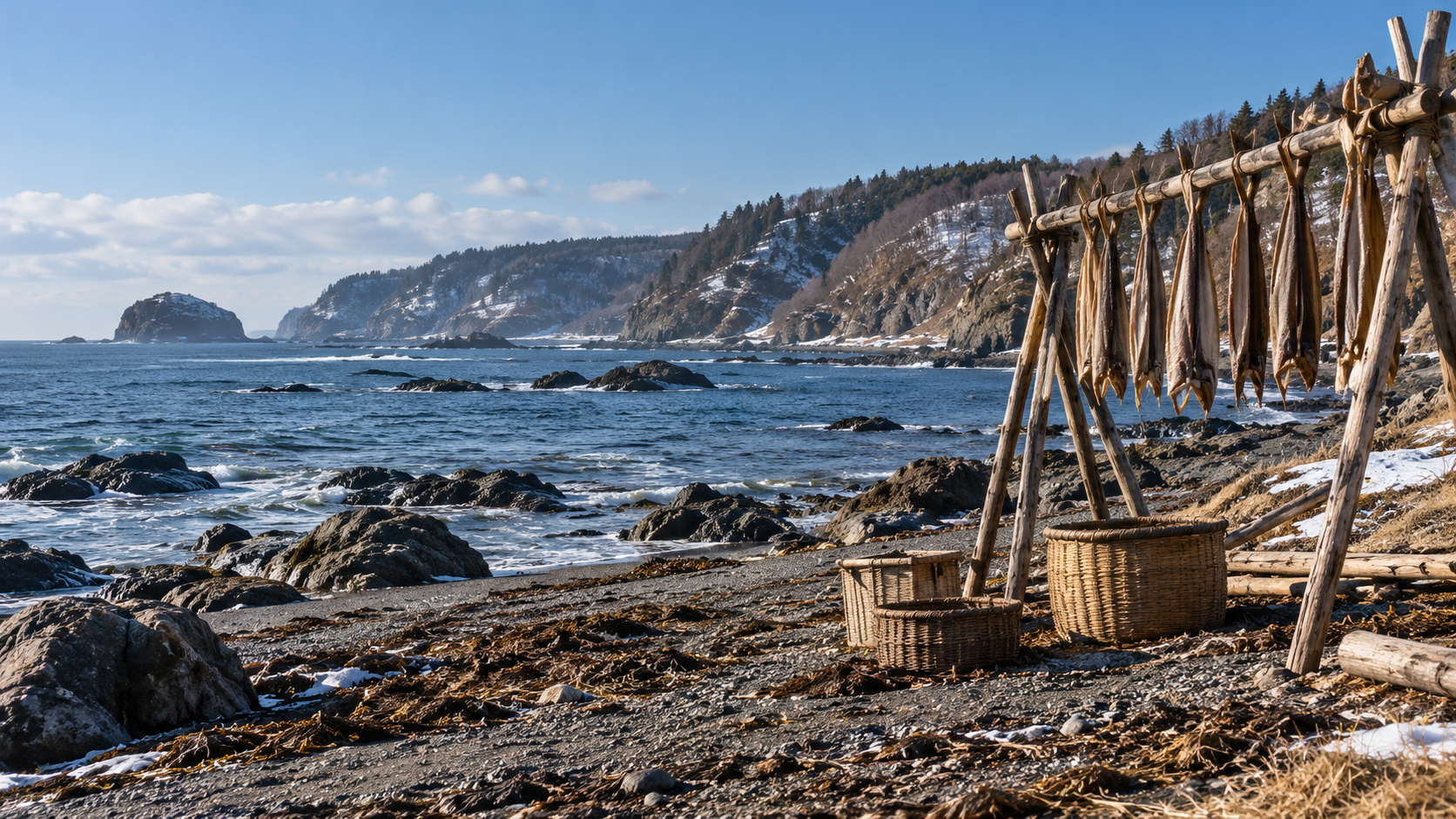
Scene 10
From trading partners toward labor in merchant fisheries
Merchants increasingly did more than exchange products: they operated fisheries. With greater demand and production came the use of Ainu people as workers in those enterprises. Producing goods and exchanging them on one’s own account differs from working in a fishery managed by someone else.
A story told only through flourishing ports can conceal that difference. Even if similar kinds of marine products continued to arrive in Honshu, relationships at the place of production could be changing. The position of the person supplying the product matters alongside its destination.
An increase in the volume traded is therefore not sufficient evidence that people’s lives became more prosperous. The degree of control over production, work and exchange also needs examination. These changes must retain their regional and chronological limits rather than be treated as identical experiences for every Ainu community at once.
Scene 11
Three ports and the connections of kitamaebune shipping
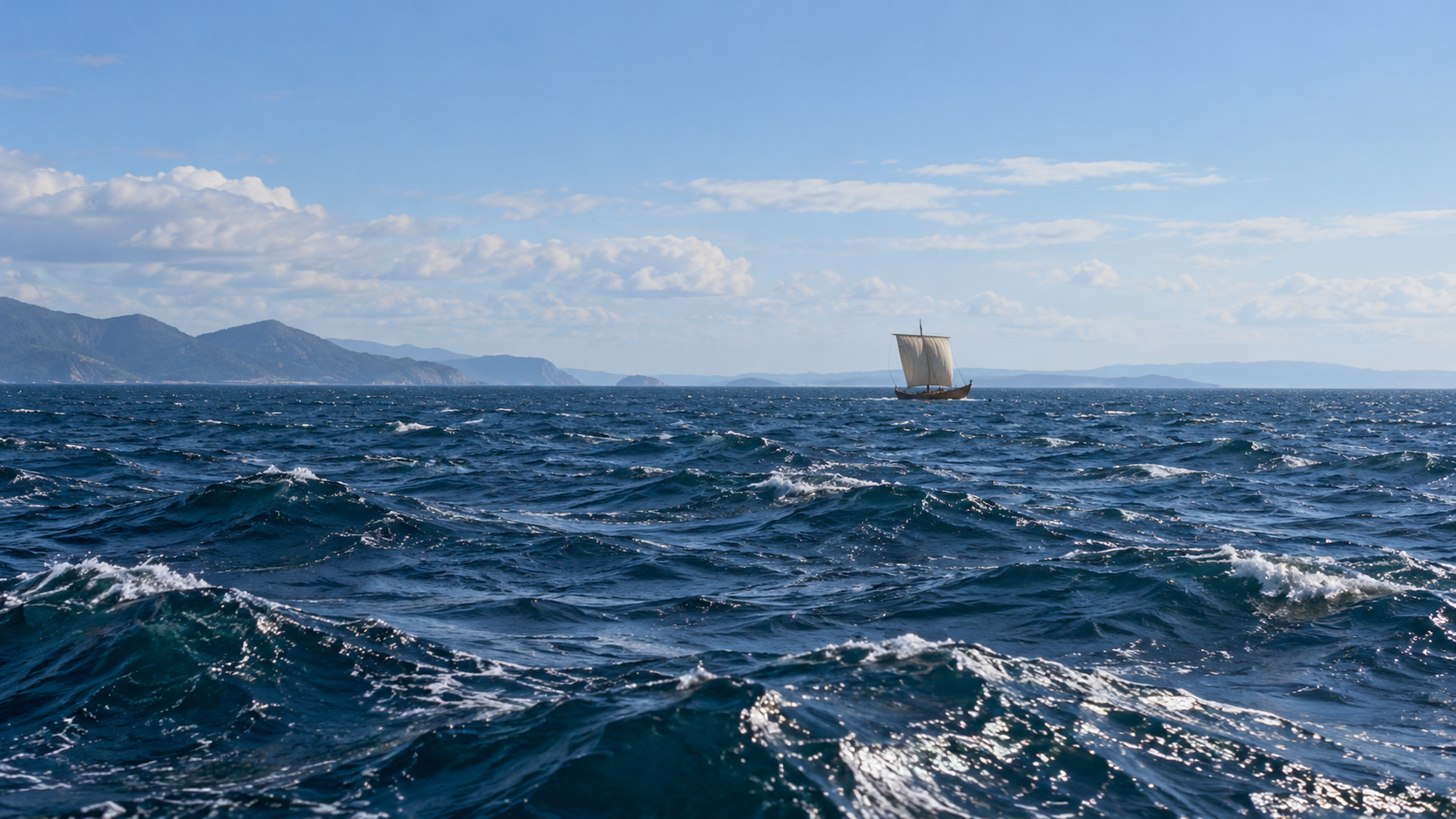
Northern products traveled to Honshu by sea. Hokkaido’s digital museum introduces the three ports of Esashi, Matsumae and Hakodate and their connection with kitamaebune shipping. Herring fertilizer linked the sea with rice agriculture and commercial crop production farther south.
The transport ministry’s kitamaebune explanation emphasizes ships stopping to buy and sell at different ports. Transport and commercial transactions worked together. Because that overview covers long-term change, its nineteenth-century vessels, sailing frequencies and merchant fortunes should not be treated as descriptions of the world in 1604.
Esan’s town history offers a specific later example in its account of Takadaya Kahei’s 1796 voyage. Goods including sake, salt, cotton and rice went toward Hakodate, where salmon, trout and kelp were purchased for the return. This is one late-period merchant’s example, not the inventory or proportions of every ship.

Scene 12
Prosperity, control and the people behind the cargo
Matsumae depended on arrangements controlling trade as well as on northern products. The shift from retainers’ trading rights to merchant contracting changed who handled transactions and management, while Ainu people faced substantial restrictions on trade and livelihoods. The original document’s provisions and later practice were not identical.
Esashi’s former Nakamura residence provides another way to consider the merchant side of this history. A Hakodate Bus pamphlet hosted by the Esashi Tourism Association introduces its marine-product brokerage, shipping-wholesaler background and building arrangement extending toward the shore. The architecture helps pose questions about how a trading house worked.
That merchant heritage does not settle the conditions of labor at each fishery supplying it. When looking at a cargo arriving in port, the people who produced it and the parties deciding the terms of exchange should both remain in view. Together they reveal aspects of northern prosperity that the arrival of a wealthy ship alone cannot explain.
How to read this work
History, interpretation, and reconstruction
Changing trade institutions brought wealth to ports while restricting Ainu freedom and livelihoods. Trading rights, business management, production and labor need to be considered together.
This work is grounded in published sources and historical research. Interior thoughts, dialogue, and some visual details are cinematic reconstructions. Where historians disagree, the article presents the point as debated rather than settled fact.
Timeline
The story in time
-
Ainu people participate in connections with other regions as producers and traders.
Sources: museum, foundation -
Katsuyama serves as a political, military and trading center.
Sources: katsuyama -
Ieyasu’s black-seal document regulates trade while including provisions concerning Ainu movement and improper demands.
Sources: hakodate -
Trading rights associated with areas are distributed to retainers under akinaiba chigyo-sei.
Sources: museum -
Ainu people are used as labor in merchant-operated fisheries; retain differences of locality and timing.
Sources: foundation -
Esan’s town history introduces Takadaya Kahei’s return voyage to and from Hakodate.
Sources: esan -
The former Nakamura residence preserves the history of marine-product brokerage and shipping wholesaling.
Sources: esashi
People & terms
A guide for new readers
Glossary
- Akinaiba chigyo-sei 商場知行制
- An arrangement in which retainers received trading rights associated with particular areas as a basis of support.
- Basho ukeoi-sei 場所請負制
- Merchant contracting for the management of trading areas, with payments to the holder of the rights.
- Unjokin 運上金
- The payment received by the holder under the contracting arrangement discussed here, distinct from the physical flow of fishery products.
- Koku and assessed rice yield 石高
- A way of expressing an agrarian revenue base that alone does not explain Matsumae’s trade-supported economy.
- Ezochi 蝦夷地
- A historical designation used for northern areas discussed here; conditions varied across places and periods.
- Kitamaebune 北前船
- Merchant shipping that connected northern ports with markets along the Sea of Japan and farther south, involving purchases and sales along the way.
Sources & method
How this article was built
The article follows the completed video’s twelve selected chapters, including the expanded eighth chapter. Context is added from archaeological, shipping, fish-fertilizer and merchant-heritage explanations and a later voyage example. Eight substantive references are used; the transcription and catalogue of the same black-seal document are grouped together.
Written regulations, institutional arrangements and conditions experienced by people are treated as different questions. The medieval background, seventeenth-century rules, eighteenth-century contracting and later commercial examples are not collapsed into one unchanging system. No invented dialogue, exact undocumented cargo proportions or universal experience of Ainu communities is supplied.
The foundation booklet’s relevant pages and the pamphlet’s merchant-house section were examined. No full reading of every original historical record is claimed. The generated illustrations are conceptual scenes separately adopted for the article; original documents, photographs, paintings, maps and audio are not reproduced.
Sources
References and further reading
- Ezochi in medieval and early modern times 中近世の蝦夷地 Title translated editorially for reader convenience. Hokkaido Government 北海道 Background on earlier trade, trading-right arrangements, early eighteenth-century contracting and the three ports. No assumption of a uniform regional transition; no photographs or paintings reproduced. Accessed 2026-11-04
- Ainu: History and Culture, September 2022 アイヌ民族 歴史と文化(2022年9月) Title translated editorially for reader convenience. Foundation for Ainu Culture アイヌ民族文化財団 Printed pages 4–5, PDF pages 6–7, were examined; page 5 was also visually read. Covers producers and traders, trading rights, loans, repayment, contracting and labor. Counted as one work, without claiming full reading of the booklet or original historical documents. Accessed 2026-11-04
- Hakodate city history: Entering Tokugawa service, with the museum black-seal catalogue 函館市史 通説編1 徳川の幕下に入る/徳川家康黒印状目録 Title translated editorially for reader convenience. Hakodate City and Hokkaido Museum 函館市・北海道博物館 The city-history transcription was compared with catalogue ID 6915 as material concerning the same document. Trade, movement, improper demands and the period calendar are distinguished from later practice. No independent original-image reading or image reuse is claimed; older developmental-stage language is not adopted. Accessed 2026-11-04
- Katsuyama, part of the Kaminokuni fortified-site historic monument 史跡上之国館跡 勝山館跡 Title translated editorially for reader convenience. Kaminokuni Town 上ノ国町 Medieval trading-center context and excavated ceramics and bone or antler objects. The finds do not establish the later Edo contracting system. No reconstruction models or source images reproduced. Accessed 2026-11-04
- Herring and its history in Hokkaido 群来はいずこへ 江戸時代から北海道の代名詞 ニシン Title translated editorially for reader convenience. Hokkaido Regional Development Bureau, transport ministry 国土交通省北海道開発局 Manufacture and uses of fish fertilizer and its connections with shipping. Meiji statistics and later resource history are not assigned to early Edo production. No photographs reproduced. Accessed 2026-11-04
- Kitamaebune, multilingual regional heritage explanation 北前船 地域観光資源の多言語解説文 Title translated editorially for reader convenience. Transport ministry, with the Ishikawa Tourism League 国土交通省(石川県観光連盟) Buying and selling at ports along a shipping network. Later vessel types, voyage frequencies and wealth are not treated as descriptions of 1604. Accessed 2026-11-04
- Esan town history: Local connections with Takadaya Kahei 恵山町史 6 郷土と高田屋嘉兵衛 Title translated editorially for reader convenience. Hakodate City 函館市 Limited use of the account of the 1796 voyage within the section corresponding to pages 741–754. One example of outward and return cargoes, not a statistical measure of all ships or a complete fishing history. Accessed 2026-11-04
- Esashi–Matsumae sightseeing pamphlet: Former Nakamura residence 江差・松前名所周遊号 案内冊子 江差町旧中村家住宅 Title translated editorially for reader convenience. Hakodate Bus, hosted by Esashi Tourism Association 函館バス(江差観光協会公開) PDF page 4, lower right, visually examined for merchant architecture and marine-product brokerage. The 2015 transport schedules and prices are not presented as current information. No photographs, drawings or maps reproduced. Accessed 2026-11-04
Continue reading
More stories from Shigeki
Shigeki English
The Battle of Minatogawa: How Was the Defeated Masashige Remembered?
Separate the time of fighting from the times when records, images and memorials were made.
- When The battle in 1336; a report dated 1337; commemoration in 1692 and 1857; the tunnel, park and statue of the modern city
- Where Minatogawa and Kobe, considered alongside documents, war narratives and later images held or described by several institutions
Shigeki English
Railway Opening and the Takanawa Embankment: Where Trains and Boats Crossed
An embankment carrying trains into the sea also raised the question of keeping a way to the water.
- When Construction in the early 1870s, railway opening in 1872, later widening and reclamation, rediscovery in 2019 and additional designation in 2021
- Where The former coast at Takanawa between Shimbashi and Shinagawa, along the Shimbashi–Yokohama railway