
SHIGEKI ENGLISH STORYEN
Japanese history in English
Reading the Battle of Kawagoe: Uesugi Norimasa’s Letter to a Fallen Warrior’s Daughter
An original letter, its transcription and modern commentary reveal different parts of the story.
Explore the 1546 Battle of Kawagoe through Uesugi Norimasa’s letter to Akahori Kozuke-no-kami’s daughter. Separate its account of her father’s death, household representation and rewards from famous troop figures and night-attack narratives, and follow the continuing struggle around Hirai Castle.
At a glance
Before you enter the story
- When
- The castle’s change of hands in 1537, the campaign of 1545–1546 and events at Hirai in 1548–1552; month and day references follow the contemporary Japanese calendar
- Where
- Kawagoe in Musashi and the Uesugi base at Hirai in Kozuke
- Key figures
- Uesugi Norimasa, later using an alternative written name, Akahori Kozuke-no-kami and his daughter, Kobayashi Heishiro, Hojo Ujiyasu
- What was at stake
- What does a letter about a dead retainer’s household actually establish, and how does that differ from a complete account of a battle?
Why this story matters
The larger history behind the turning point
The battle is often approached as a dramatic reversal in which a smaller force defeated a much larger coalition. A document addressed to a fallen warrior’s daughter opens another line of inquiry: what obligations, acknowledgements and arrangements continued after the fighting had ended?
Its value does not depend on making it answer every military question. Distinguishing original wording, an institution’s transcription, modern explanatory writing and later narrative traditions allows each to contribute without turning the contents of one into evidence supposedly written in another.
Historical context
What an international reader needs to know
The people, office and places
Norimasa headed the Yamanouchi branch of the Uesugi and held the office of Kanto kanrei, historically associated with assisting the Kamakura kubo. His base lay at Hirai in Kozuke, beyond the castle at Kawagoe. Names shared across branches do not make every Uesugi mentioned in regional history the same person.
The Japanese characters used for Norimasa’s name changed in the period following the defeat, as Fujioka’s presentation explains. The later letters introduced here belong to that continuing political career. They are not evidence of a second lord whose name merely resembles that of the sender of the Akahori letter.
A document’s audience helps define its evidence
A summons to a retainer, a letter concerning a deceased warrior’s household and a later acknowledgement of service were written to accomplish different tasks. Their authors had reasons to discuss particular matters. None was necessarily intended to preserve a comprehensive explanation for a future historian.
The original image and institutional transcription of the Akahori letter were examined alongside the archive’s explanatory material. The year placed in parentheses belongs to its identification by the archive; the month and day follow the period’s calendar. No Gregorian day is calculated by simply copying those numbers.
Watch the film
See the story in motion
The film currently uses Japanese audio. This English article provides the context and source trail; it does not imply that an English subtitle track is available.
Scene 01
Begin with the letter addressed to a daughter
The Battle of Kawagoe is commonly introduced through a contrast between a large army and a much smaller victorious force. Readers may recognize the figures of eighty thousand against eight thousand, together with an account of a surprise attack at night. Those familiar details are not the starting point of every surviving record.
Here the starting point is a letter sent by Uesugi Norimasa to the daughter of Akahori Kozuke-no-kami. It concerns her father’s death and arrangements for the household that remained. Reading it changes the scale of attention from a whole army’s movements to a particular relationship between a lord and a retainer’s family.
That shift does not make the battle’s outcome irrelevant. It asks why this document was sent to this recipient and what the sender wanted to convey. The work continuing after a battle becomes easier to see when its correspondence is read for its immediate purpose, rather than treated as a miniature military chronicle.
Scene 02
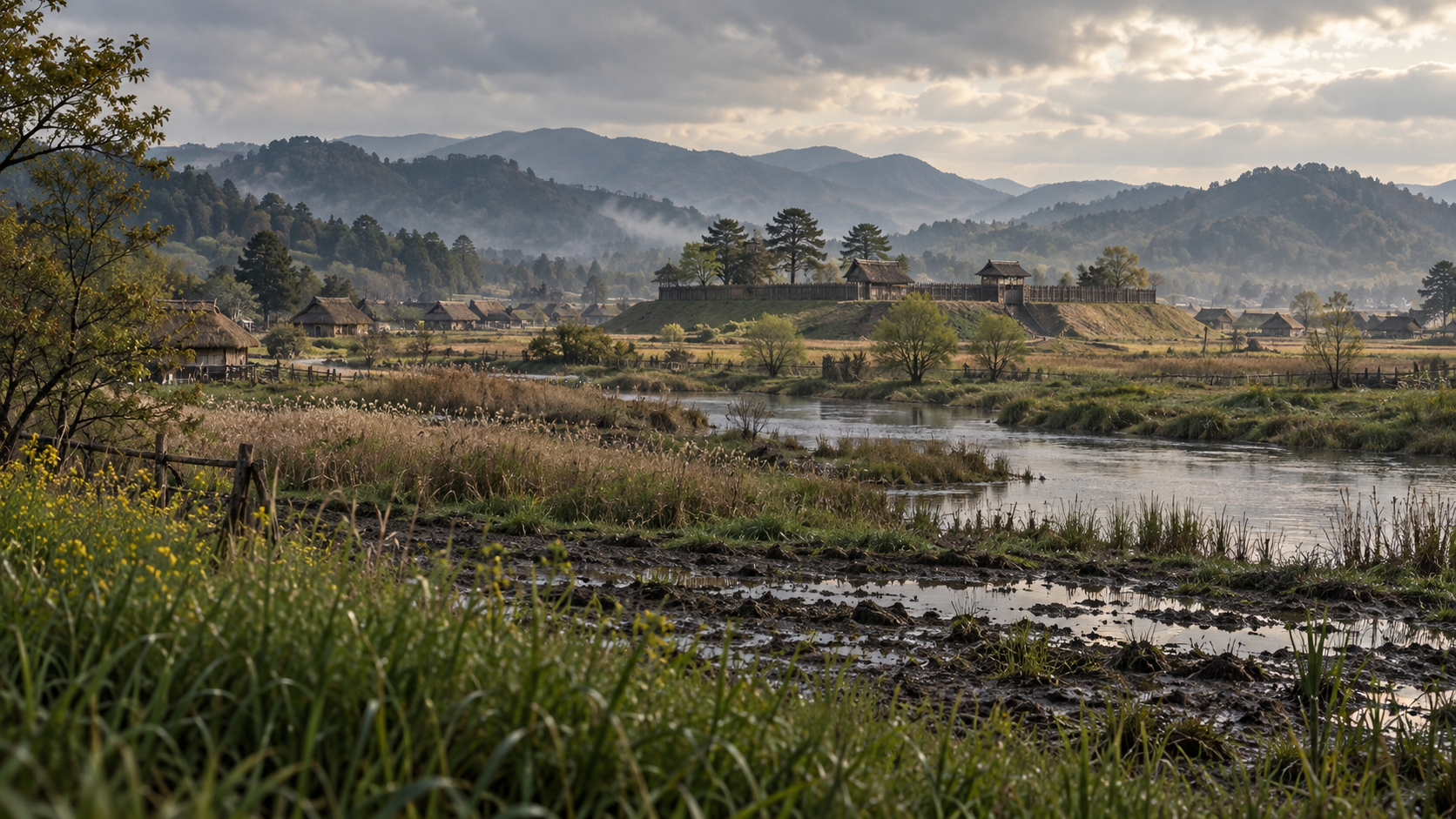
The castle’s capture and the later battle belong to different years
Kawagoe City’s timeline distinguishes the castle’s passage into Hojo hands in 1537 from the battle in which the Hojo defeated the Uesugi side in 1546. These are separate events, despite the shared place-name. Keeping them apart establishes the setting for a letter associated with the latter campaign.
The city’s castle-site explanation also describes expansion during the Edo period. The present remains and the later extent of the castle cannot simply be laid over the battlefield of 1546. A visible building, a later enclosure and an earlier campaign may occupy related space while belonging to different historical stages.
Kawagoe Yakata, the manor site now presented as a historic park, is another distinct place. The city associates it with the Kawagoe clan from the late Heian to Nanbokucho periods. A shared name does not make that residence the same site as Kawagoe Castle or turn all its remains into evidence for the 1546 battle.
Scene 03
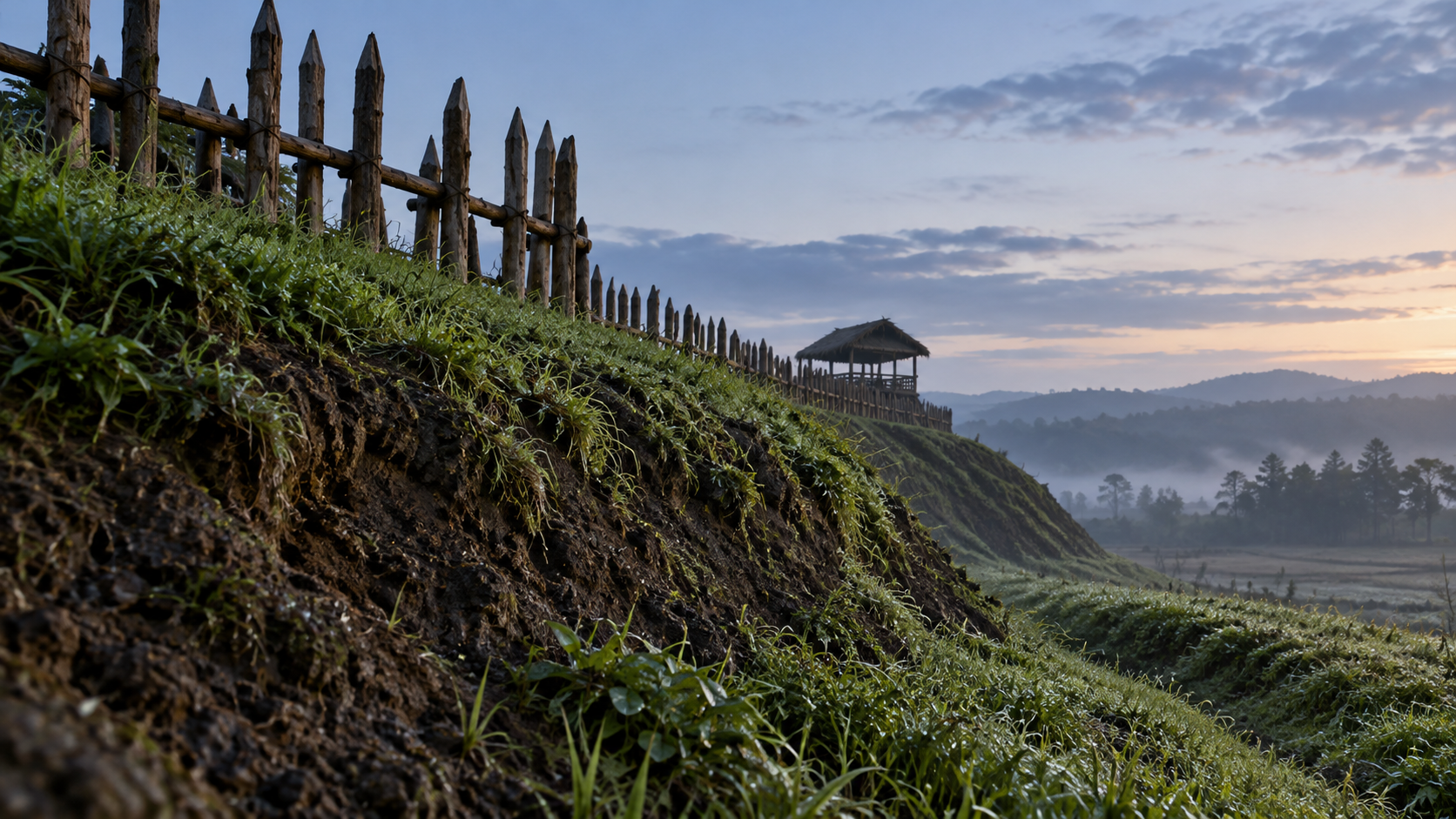
A lord calls a retainer to the camp
Norimasa was the head of the Yamanouchi Uesugi and held the office of Kanto kanrei. Fujioka’s account places that branch’s power base in Kozuke and at Hirai Castle. This regional position helps explain why correspondence concerning a campaign at Kawagoe appears among documents associated with people farther to the north.
A separate catalogue entry introduces a letter of 1545 addressed to Kobayashi Heishiro. According to the city’s modern translation, Norimasa says that he too will take the field against the Hojo and asks Kobayashi to come to his camp. The document records an effort to bring a retainer into a campaign.
A request to join a force is not a muster roll showing its final strength. It does not establish that every person summoned arrived, where all the troops assembled, or how many ultimately fought. Its immediate evidence concerns the act of calling someone to the camp, rather than an army’s complete deployment.
Scene 04
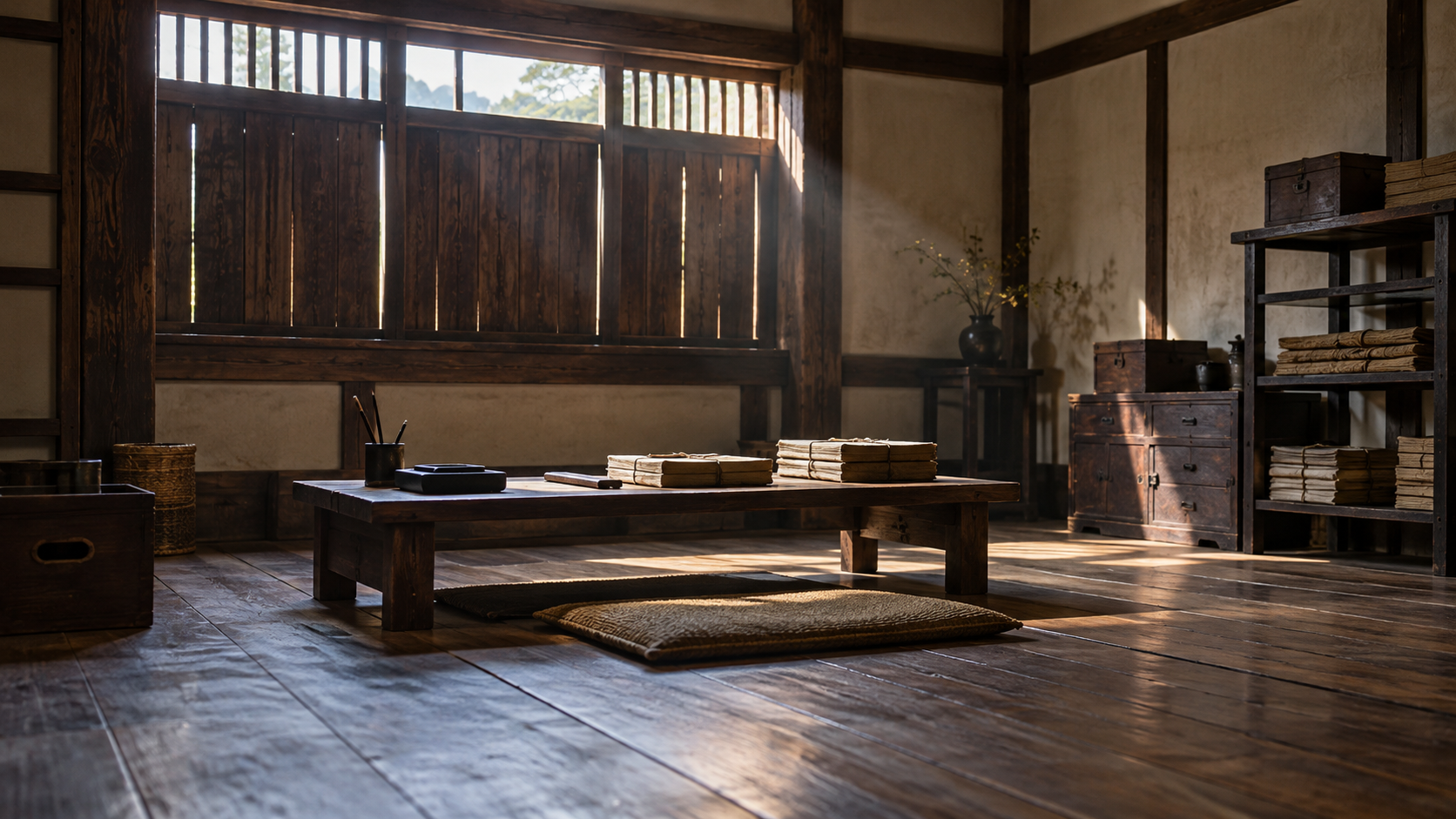
The original image and the transcription are different aids
The Saitama Prefectural Archives publishes an image of the Akahori document and a transcription that makes its writing easier to follow. The sender is Norimasa, and the recipient is identified as Akahori Kozuke-no-kami’s daughter. Much of the text uses kana, a feature visible in the material examined.
The old letter forms should be approached with the help of the transcription rather than used as a surface on which to imagine a story. The document concerns a specific recipient and matters arising after her father’s death. It is not an eyewitness panorama that surveys every part of the battlefield.
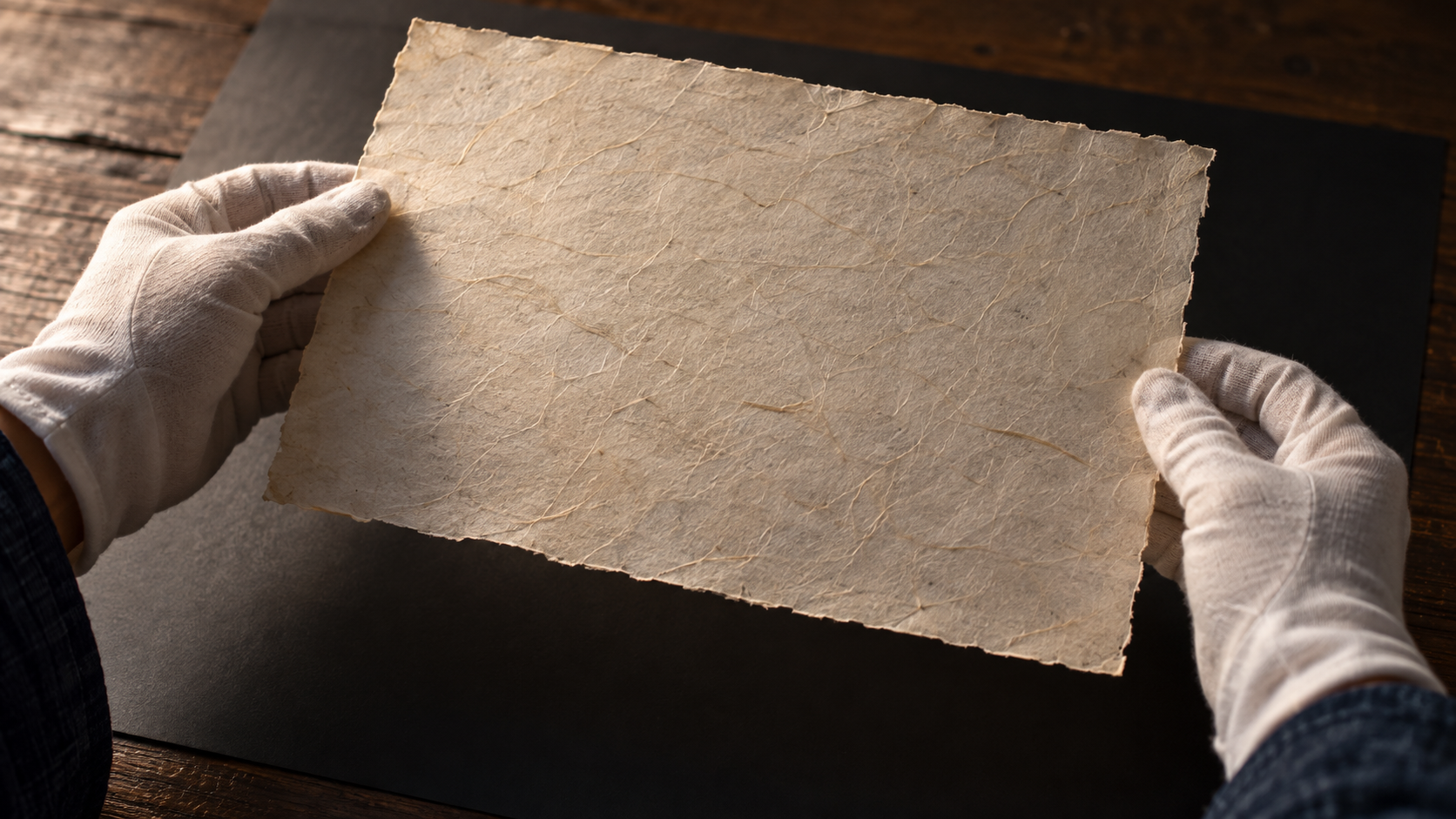
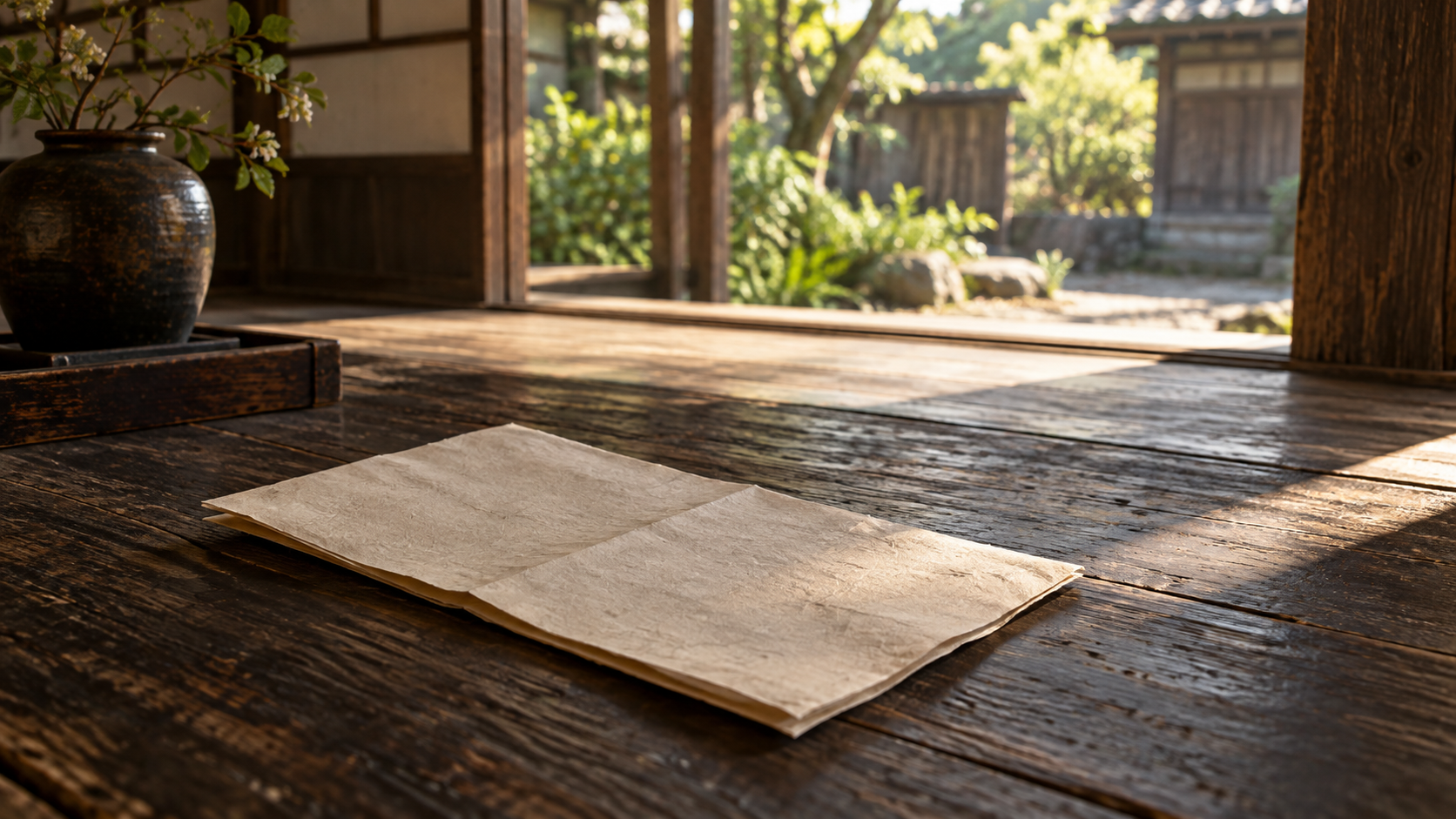
The original image, the transcription and the archive’s modern commentary belong together as an educational resource, but they perform different functions. The article’s illustrative papers do not reproduce any of them. Readers wishing to inspect the writing itself can follow the archive references and compare the image with its institutional transcription.
Scene 05
A father’s death and an acknowledgement of loyal service
The letter refers to the father being killed at Kawagoe and recognizes his loyal service. This is evidence that his death and its consequences formed part of the relationship between the sender and the surviving family. It preserves an acknowledgement directed toward a particular bereaved household.
The passage does not supply the army’s total numbers, the directions in which units moved, or the hour at which this individual died. A letter dealing with one person’s death and family has a different scope from an operational record. Those missing details require other evidence rather than reconstruction from its silence.
The sender’s praise must also be read as an evaluation addressed to the family. A historian’s attempt to establish a battle’s overall course is a different undertaking. Recognizing the social purpose of that praise allows the document to illuminate the effects of war without assigning it an authority over events it does not describe.
Scene 06
Household representation and the limits of this example
The letter also deals with myodai-shiki, an arrangement for representation in place of the deceased father. The archive explains myodai through the ideas of acting as a proxy or substitute and reads this document as an example involving the warrior’s daughter. The continuity of the household was therefore part of its business.
This particular example does not establish that every woman in the period possessed the same rights in every household. The language concerns this recipient and this arrangement. Its significance lies in the concrete case preserved in the letter, without requiring an unsupported general rule about inheritance throughout warrior society.
The text examined here does not include a reply written by the daughter or a description of her subsequent daily life. Her conversation, expression and private feelings cannot be recovered by inventing a scene. The surviving arrangement is worth examining in its own right, while those other questions remain beyond this letter’s direct testimony.

Scene 07
The written day and the year supplied in parentheses
The document gives the twenty-seventh day of the fourth month. In the archive’s heading, the fifteenth year of Tenbun is supplied in parentheses, identifying the letter with 1546. The distinction matters: the year is not simply another set of characters written in the surviving date line.
The fourth month and twenty-seventh day also belong to the contemporary Japanese calendar. They should not be presented as a Gregorian April 27 merely because the same numerals can be used in English. Identifying the event’s year and converting an exact date are related but different tasks.
Parentheses are therefore useful information about how the document has been placed in time. They allow readers to see the difference between an original inscription and a later attribution. Keeping that distinction visible makes the evidence easier to assess without pretending that the article has independently resolved every question of documentary dating.

Scene 08
Where do the famous troop figures and night attack appear?
Within the archive’s educational material, the familiar army figures and account of a night attack appear in the modern explanation of the battle. They are not written in the body of the Akahori letter that was just examined. Sharing a publication does not give every statement in the commentary the status of a statement in the document.
The difference does not, by itself, prove that no fighting took place at night. A letter concerning a fallen retainer’s family need not describe battlefield timing to accomplish its purpose. Its silence on that point cannot carry the entire burden of disproving an event described elsewhere.
The productive question is what supports each claim. The troop figures, the detailed tactical narrative and the household arrangement require attention to their respective evidence. That approach avoids both accepting a familiar number without examination and rejecting it simply because a document written for another purpose does not mention it.

Scene 09
The town history compares dates in military narratives
Letters are not the only kind of material through which a battle is remembered. Military narratives may connect events into a fuller sequence. A note in the Tsurugashima town history compares several such works and points out that their dating of the fighting does not agree.
This is a comparison made by the town history’s editors. It is not a claim that every passage in every military narrative is wrong, or that all the original works have been read in full for this article. The limited comparison helps identify a problem that requires care when combining accounts.
Narrative continuity and independent corroboration are different qualities. A story can make sense as a sequence without each detail having been confirmed elsewhere. The town history’s discussion also demonstrates the need to compare traditions about local origins with other records, rather than treating the existence of a connected story as the completion of chronological verification.
Scene 10
Defeat did not erase the struggle around Hirai overnight
It is too abrupt to interpret the defeat at Kawagoe as the disappearance of all Uesugi power on the same day. Fujioka’s chronology presents further struggles around Hirai in 1548 and 1550, together with acknowledgement of Kobayashi’s service. The retreat from Hirai is placed later, in 1552.
The separate catalogue for the 1548 letter adds a more specific perspective. Its explanation concerns Kobayashi’s service, including a wound, in fighting forces associated with the Obata of Kunimine. It also notes that a messenger would convey details orally. The written page was not necessarily the whole communication.
These records restore time between a major defeat and the loss of a regional base. Defending a castle and maintaining relationships with supporters continued after the famous battle. Norimasa’s eventual departure amid Hojo pressure and defections belongs to that longer process, rather than being collapsed into a single moment of reversal.
Scene 11
Compare letters by their recipient and purpose
The 1545 letter to Kobayashi calls a retainer toward a campaign. The letter to Akahori’s daughter addresses the consequences of her father’s death, including representation and rewards. Even with the same sender, different recipients and different purposes produce different contents.
Neither document was written as a complete explanation of the battle for later readers. Taken together, however, they show a lord attempting to assemble support and then dealing with a deceased warrior’s household. The comparison brings political relationships into view without requiring either letter to contain all the other’s concerns.
A useful question is therefore what each communication was meant to achieve. A summons need not contain arrangements for a dead retainer’s family, and a family-directed letter need not list the movements of the army. Reading the documents alongside one another reveals their connections while preserving the limits of their individual testimony.
Scene 12
Beyond the result: people and households after the fighting
Kawagoe is situated in regional history as a Hojo victory. Yet knowing who won does not fully explain why Norimasa sent this letter to a daughter. Its acknowledgement of a father’s death and attention to the household that remained belong to the continuing consequences of the conflict.
Before turning famous troop figures or tactical accounts into an imagined image of the battlefield, it is helpful to ask which record conveys which statement, to whom, and for what purpose. A single surviving letter can add depth precisely because it preserves business different from the drama of a victorious attack.
Returning a document to its audience does not diminish its historical value. It gives that value a clearer shape. The recipient, the purpose, the date as written and the matters left outside the text together help us look beyond a familiar battle narrative toward the relationships through which its aftermath was experienced and managed.
How to read this work
History, interpretation, and reconstruction
Reading a letter through its recipient and purpose reveals relationships between people and households that a narrative of victory and tactics alone can leave out.
This work is grounded in published sources and historical research. Interior thoughts, dialogue, and some visual details are cinematic reconstructions. Where historians disagree, the article presents the point as debated rather than settled fact.
Timeline
The story in time
-
The Kawagoe manor site belongs to the Kawagoe clan’s residence; distinguish it from the later castle.
Sources: manor-site -
Norimasa calls Kobayashi Heishiro to join his campaign.
Sources: muster-letter -
The letter to Akahori’s daughter; the year is supplied in the archive heading and the date retains the period’s calendar.
Sources: akahori -
Norimasa, using his later written name, acknowledges Kobayashi’s service and wound in fighting around Hirai.
Sources: letter-1548 -
Fujioka’s chronology introduces further acknowledgement of Kobayashi’s fighting around Hirai.
Sources: hirai -
Norimasa leaves Hirai amid Hojo pressure and defections.
Sources: hirai -
Kawagoe Castle is expanded; its later extent is not the battlefield layout of 1546.
Sources: castle-site
People & terms
A guide for new readers
Glossary
- Kanto kanrei 関東管領
- An office historically associated with assisting the Kamakura kubo; Norimasa belonged to the Yamanouchi Uesugi line that held it.
- Kozuke 上野国
- A historical province associated here with the Uesugi base at Hirai, distinct from Musashi, where Kawagoe lay.
- Myodai-shiki 名代職
- Representation in another person’s place; the article discusses the specific arrangement concerning the deceased Akahori warrior’s daughter.
- Transcription 翻刻
- An editorial rendering that helps readers follow the writing of a historical document; distinguish it from both the original image and modern commentary.
- Gunki 軍記
- Military narratives whose accounts and chronology need comparison; the town-history note cited here is not a complete independent reading of every such work.
- Attributed date 比定年代
- A date supplied or identified editorially, such as the year placed in parentheses in the archive heading, rather than wholly written in the original date line.
Sources & method
How this article was built
This article follows the completed video’s twelve-part argument and adds context from the castle and manor explanations and a separately catalogued letter of 1548. Its eight substantive references include three files from the same Akahori educational unit counted together, rather than treated as three independent documents.
The archive image, transcription, modern commentary and municipal catalogue explanations are identified by their functions. Exact battle strength and tactical movements are not reconstructed from a family-directed letter, while silence in that letter is not used as proof that night fighting never occurred.
The date retains the contemporary Japanese calendar, and the supplied year is identified as editorial. The illustrations are generated conceptual scenes adopted separately for this article; no source photographs, original letter images, catalogue illustrations or audio are reproduced.
Sources
References and further reading
- Uesugi Norimasa’s Akahori letter: original image, transcription and course commentary 上杉憲政書状・赤堀文書の原文画像、翻刻、講座解説 Title translated editorially for reader convenience. Saitama Prefectural Archives 埼玉県立文書館 The original image 851 and transcription 852 were visually examined; commentary 853 was read. These three files form one educational unit about one letter. The year is supplied in parentheses. Troop numbers and tactics belong to the modern commentary, not the letter. No archive images are reproduced. Accessed 2026-11-04
- Kawagoe historical timeline 川越の歴史年表 Title translated editorially for reader convenience. Kawagoe City 川越市 The saved text distinguishes the events of 1537 and 1546, checked against the current castle-site explanation. Accessed 2026-11-04
- Hirai Castle and the rise and decline of the Kanto kanrei Uesugi 中世関東の要、平井城と関東管領上杉氏の盛衰 Title translated editorially for reader convenience. Fujioka City 藤岡市 Context for the office and the events of 1548, 1550 and 1552. Conflicting details in the 1545 chronology are not adopted; the later written name does not indicate a different individual. Accessed 2026-11-04
- Uesugi Norimasa’s letter to Kobayashi Heishiro, catalogue mp040030-200040 上杉憲政書状 小林平四郎宛て 目録mp040030-200040 Title translated editorially for reader convenience. Fujioka City 藤岡市 The catalogue and official modern translation introduce the 1545 summons. A summons does not establish final army strength or attendance. The original is held by Gunma Prefectural Museum of History; educational-use terms are not treated as commercial image permission. Accessed 2026-11-04
- Tsurugashima town history: Kawagoe discussion and notes 鶴ヶ島町史 河越合戦に関する本文と註 Title translated editorially for reader convenience. Tsurugashima City 鶴ヶ島市 The discussion corresponding to pages 266–268 and note 1 was read. The editors compare dates in military narratives; no claim is made to have independently read all those works or original manuscripts. Accessed 2026-11-04
- Kawagoe Castle site, prefectural historic monument 県指定記念物 川越城跡 Title translated editorially for reader convenience. Kawagoe City 川越市 Checks the events of 1537 and 1546 and explains Edo-period expansion. Later remains are not automatically assigned to the battlefield of 1546. Accessed 2026-11-04
- Kawagoe manor historic site and park 国指定史跡河越館跡(史跡公園) Title translated editorially for reader convenience. Kawagoe City 川越市 Identifies the Kawagoe clan’s late Heian–Nanbokucho residence, distinguished from Kawagoe Castle. No site photographs or interpretive drawings are reproduced. Accessed 2026-11-04
- Uesugi’s letter to Kobayashi Heishiro, catalogue mp040040-200040 上杉憲當書状 小林平四郎宛て 目録mp040040-200040 Title translated editorially for reader convenience. Fujioka City 藤岡市 A different letter attributed to 1548, concerning service, a wound and further information conveyed orally by a messenger. It is not a second count of the Akahori transcription. No catalogue images are reproduced. Accessed 2026-11-04
Continue reading
More stories from Shigeki
Shigeki English
The Battle of Minatogawa: How Was the Defeated Masashige Remembered?
Separate the time of fighting from the times when records, images and memorials were made.
- When The battle in 1336; a report dated 1337; commemoration in 1692 and 1857; the tunnel, park and statue of the modern city
- Where Minatogawa and Kobe, considered alongside documents, war narratives and later images held or described by several institutions
Shigeki English
Railway Opening and the Takanawa Embankment: Where Trains and Boats Crossed
An embankment carrying trains into the sea also raised the question of keeping a way to the water.
- When Construction in the early 1870s, railway opening in 1872, later widening and reclamation, rediscovery in 2019 and additional designation in 2021
- Where The former coast at Takanawa between Shimbashi and Shinagawa, along the Shimbashi–Yokohama railway