
SHIGEKI ENGLISH STORYEN
Japanese history in English
The Tensho Iga Wars: From Nobukatsu’s Defeat to Oda Control
Two campaigns, several approaches, and the establishment of rule after the fighting.
Distinguish Nobukatsu’s defeat in 1579 from the multi-directional Oda campaign of 1581. Follow Iga’s regional coalition, Maruyama Castle, converging forces, attacks on castles and religious sites, land allocation and Nobunaga’s later inspection, looking beyond the familiar ninja image.
At a glance
Before you enter the story
- When
- The Maruyama prehistory in 1578, the campaigns of 1579 and 1581, and subsequent arrangements; month and day references retain the contemporary Japanese calendar
- Where
- Iga and its approaches from Koka, Shigaraki, Kabuto and Yamato
- Key figures
- Oda Nobukatsu, Oda Nobunaga, Iga’s local lords and landed warriors, Commanders entering through several approaches, Ota Gyuichi, author of the chronicle used here
- What was at stake
- Why did two campaigns in the same region produce different results, and how did military action develop into a new system of control?
Why this story matters
The larger history behind the turning point
A mountainous region did not produce one unchanging military outcome. Comparing 1579 and 1581 draws attention to who initiated an operation, how forces entered and combined, and what arrangements followed their advance.
The subject also benefits from moving beyond images of extraordinary ninja warfare. Local political organization, castles, religious communities and surviving records reveal a conflict over regional power whose consequences extended beyond the battlefield.
Historical context
What an international reader needs to know
A regional coalition and an expanding political power
The term Iga sokoku ikki refers to a regional coalition associated with local lords and landed warriors. It should not automatically be understood as a temporary peasant riot. The exact extent of peasant participation remains a matter of scholarly debate rather than a fully recovered membership list.
Nobukatsu and Nobunaga must also be kept distinct. Nobukatsu was Nobunaga’s son. His unsuccessful operation in 1579 and the wider Oda operation of 1581 are separate episodes, while Nobunaga’s later inspection of Iga belongs to another stage within the second year.
What was read, and what a date means
The chronicle used here is Ota Gyuichi’s Shincho Koki in an 1881 printed edition, preserved by the National Diet Library. Selected passages in three digitized openings were examined. This is neither an autograph manuscript nor a claim to have read every volume or compared all textual traditions.
Month and day references follow the Japanese calendar recorded in that edition. They are not Gregorian dates produced by copying the same numbers. Entry dates, the dating of a surviving text, a modern scholarly interpretation and the completion of a reconstructed castle answer different questions.
Watch the film
See the story in motion
The film currently uses Japanese audio. This English article provides the context and source trail; it does not imply that an English subtitle track is available.
Scene 01
The results changed between 1579 and 1581
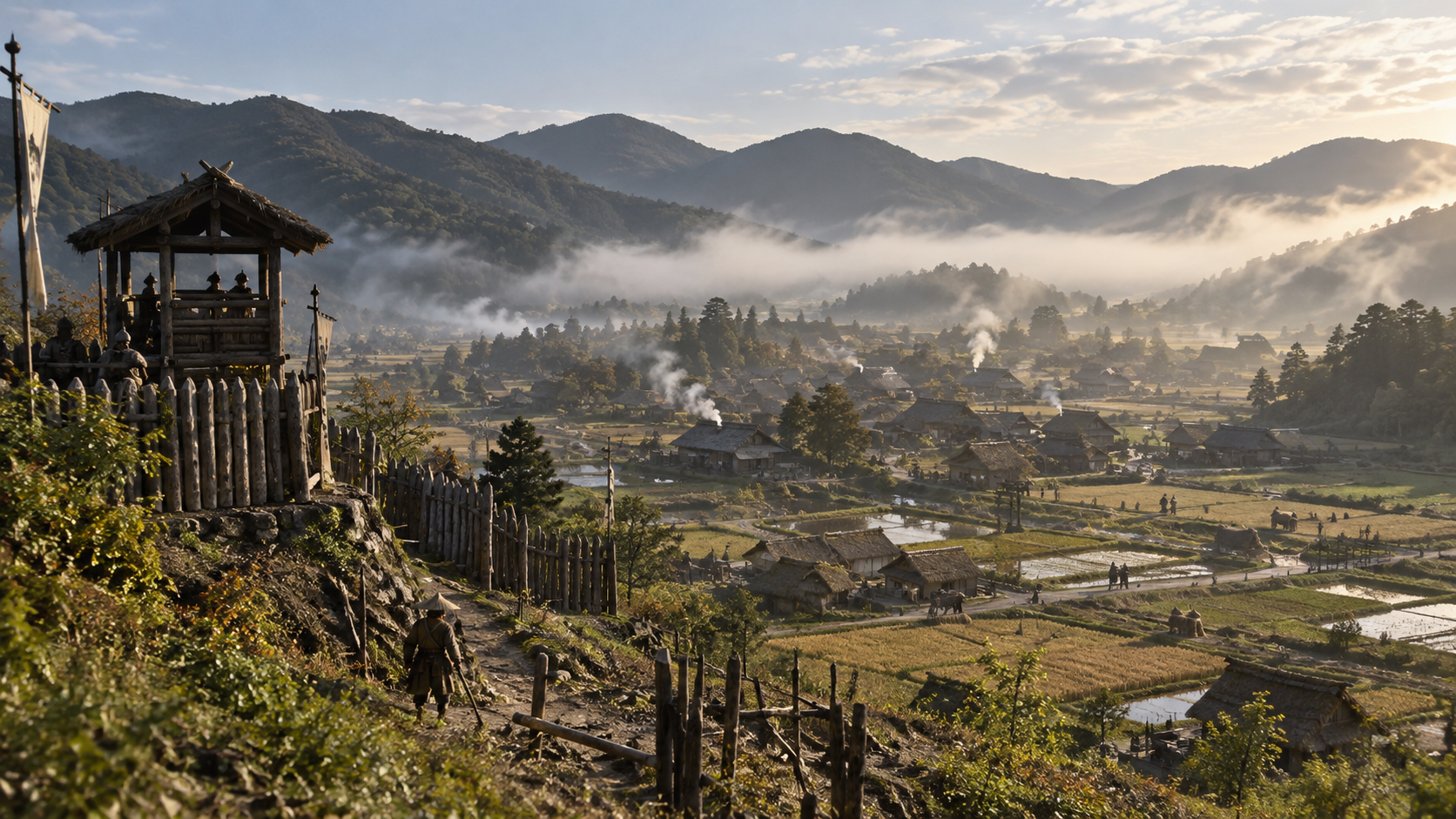
In 1579, Nobukatsu’s force entered Iga and was defeated. Two years later, in 1581, the Oda side attacked and Iga’s defenders were defeated. The same region witnessed different outcomes.
The shape of its mountains and passes cannot, by itself, explain that change. Nobukatsu’s effort to establish a foothold, local resistance, the later movement of several Oda forces and the establishment of rule all need to be considered.
Separating the two years provides a way into that process. The comparison concerns the relationship between regional organization and a larger political power as well as the fighting conducted by individual forces.
Scene 02
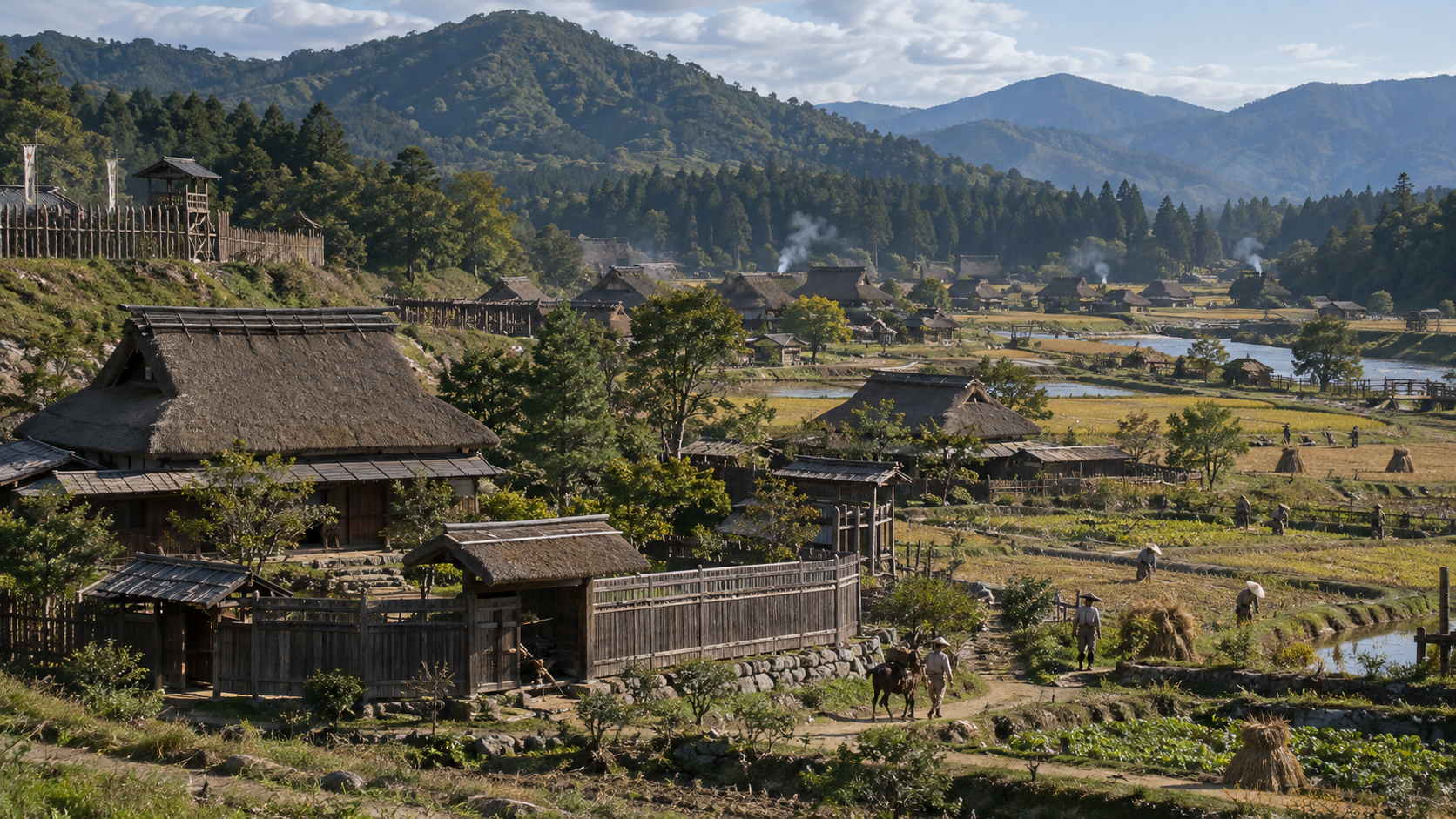
Iga’s coalition was a form of regional organization
Mie Prefecture’s cultural explanation describes relationships among local lords and influential landed figures under the name Iga sokoku ikki. These people organized a response to pressures from outside the region.
The word ikki does not settle the coalition’s precise social composition. A Mie University lecture abstract by Goza Yuichi notes disagreement between interpretations emphasizing landed warriors alone and those including peasants, in a field constrained by limited evidence.
A separate prefectural description introduces a 1573 oath concerning land-use rights near a pass, agreed by people from Iga and Koka. It supplies evidence of regional rule-making, but the document alone does not prove a military alliance during the campaign of 1581.
Scene 03
Maruyama as a foothold: keep the source differences visible
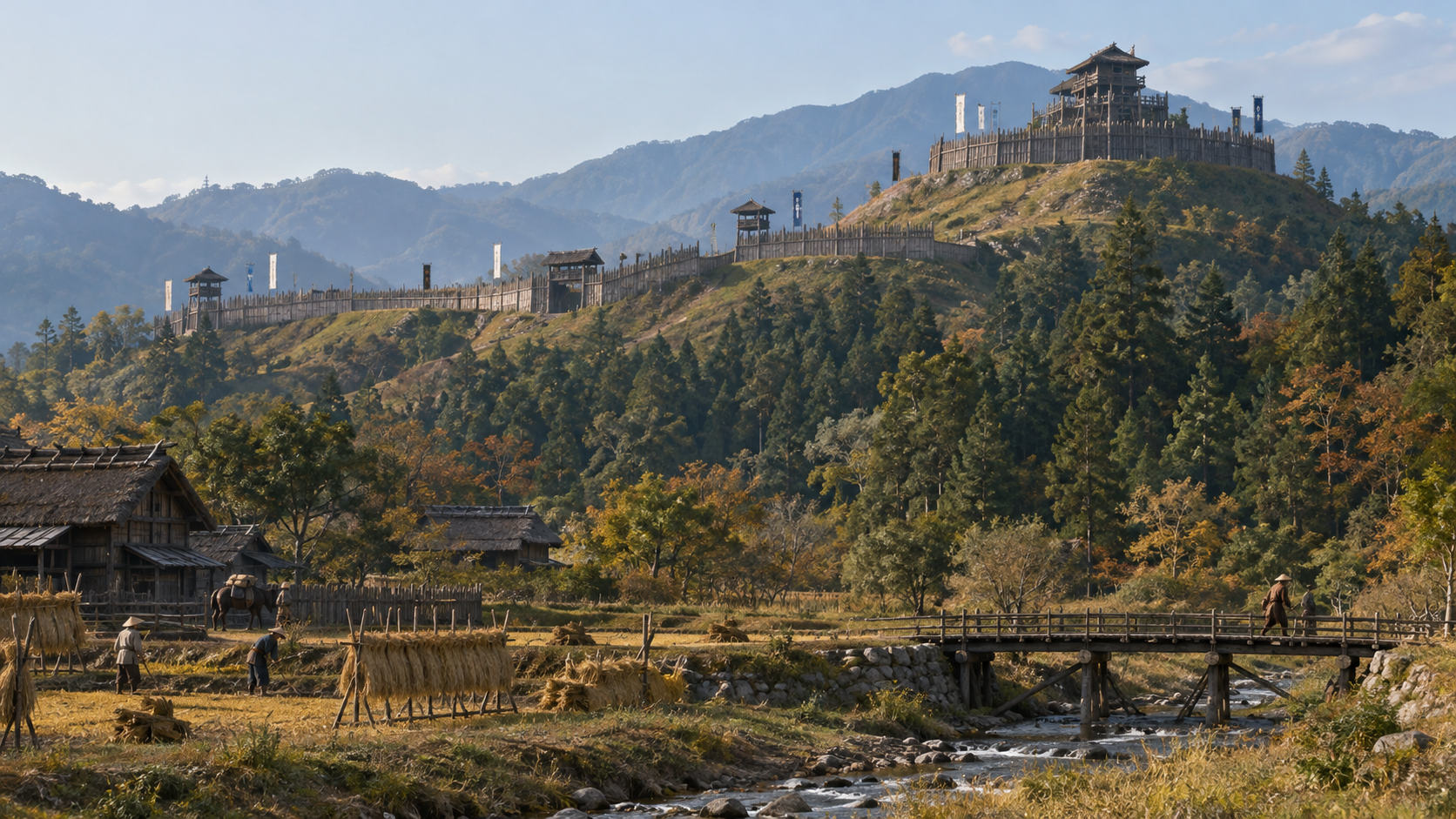
Maruyama Castle appears in the prehistory of the campaigns. The official Japan Heritage explanation says a retainer of Nobukatsu built it in 1578 and that Iga forces captured it in the same year.
The account places an Oda attempt to create a foothold opposite local efforts to stop it. It also describes earthwork enclosures and traces of stone construction at the present site, without establishing that every surviving feature belongs to that initial episode.
The sources differ: the museum material catalogued on Iga’s ADEAC site describes rebuilding in 1578 and capture in 1579. That discrepancy is left unresolved. Nor should the castle at Hijikigawa and Shimokanbe be equated by name alone with the Niki castle also called Maruyama in the Ueno area.
Scene 04
Nobukatsu’s campaign and defeat in 1579
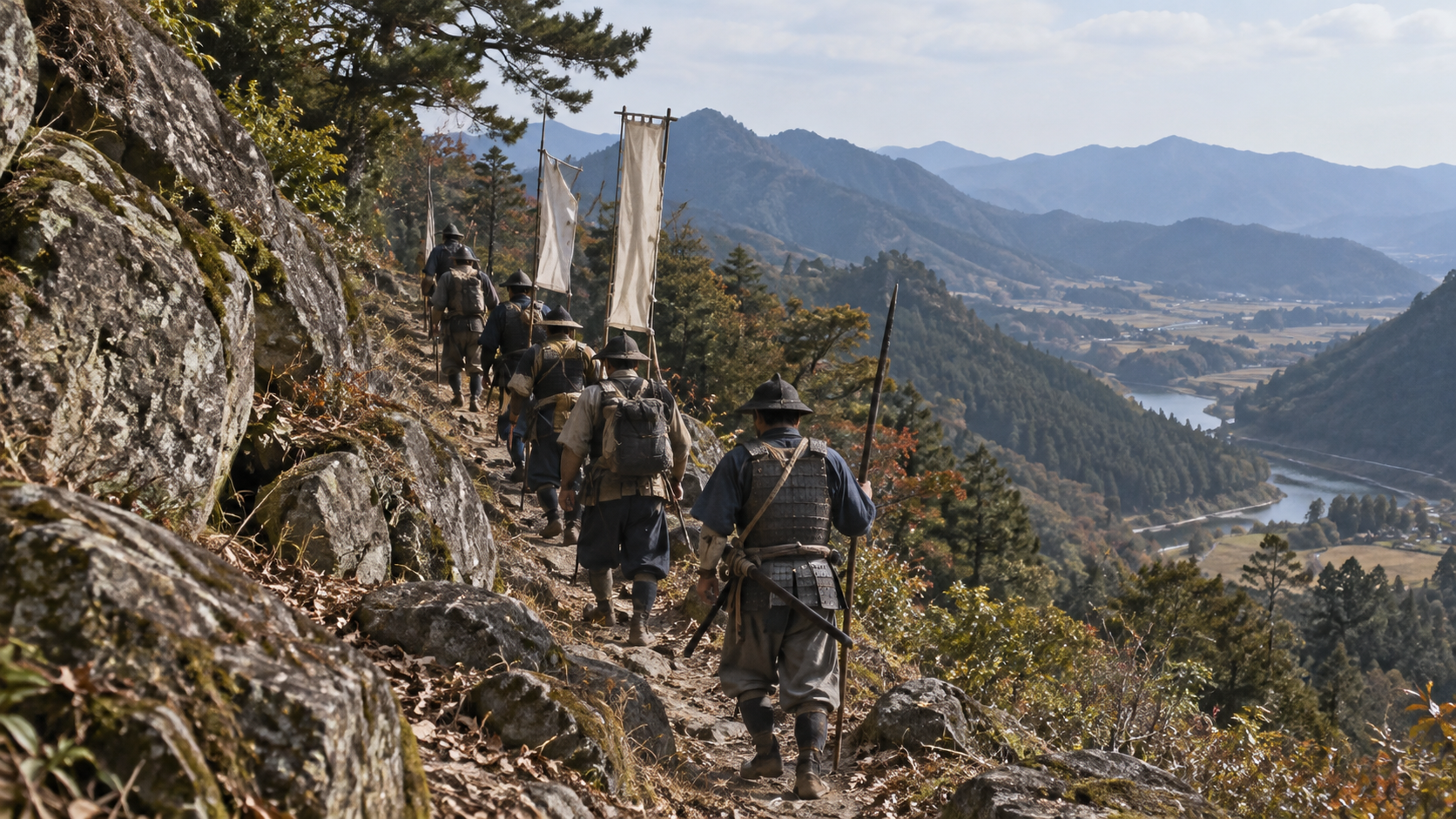
Nobukatsu advanced into Iga in 1579. In the examined printed edition of Shincho Koki, the seventeenth-day entry in the ninth month of Volume 12 records the expedition and defeat.
The account also records the death of his retainer Tsuge Saburozaemon. Following the earlier attempt to secure a castle foothold, the direct entry of troops likewise ended in a reverse for Nobukatsu’s side.
That was a successful repulse for Iga’s defenders, but it did not end their confrontation with the Oda side. The entry’s seventeenth-day dating is reported as such; the difference from sixteenth-day dates in other explanations has not been independently resolved.
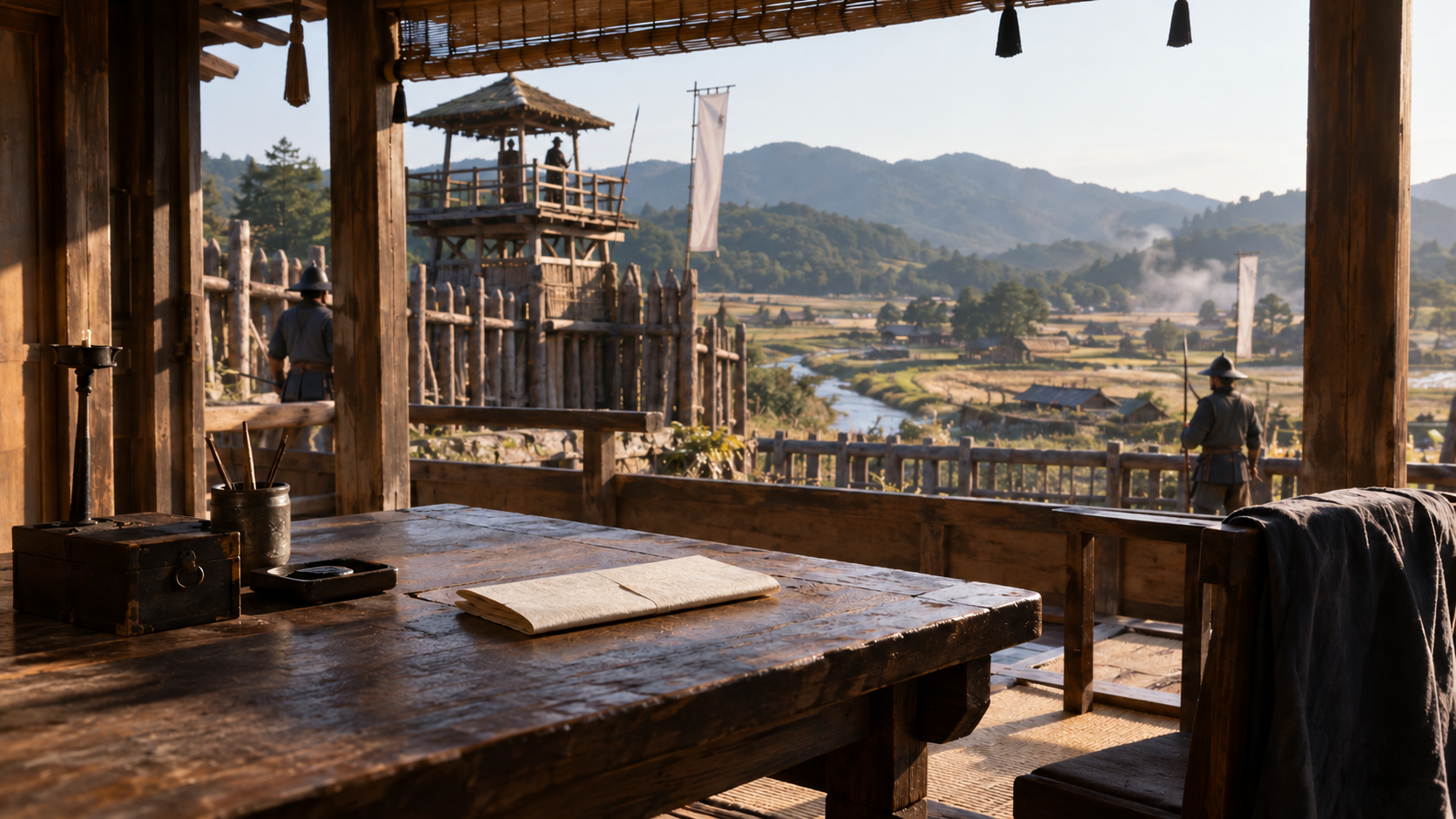
Scene 05
A reprimand preserved in a printed text
The same volume preserves the text of a message from Nobunaga reprimanding Nobukatsu for moving troops without consultation. The campaign therefore also raises a question about initiative and authority within the Oda house.
A communication from father to son appears alongside the account of defeat. The article follows the reprimand as it is transmitted in this printed edition, without treating the nineteenth-century page as Nobunaga’s autograph letter.
The failure of 1579 and the operation of 1581 should consequently not be collapsed into one unchanging attempt. Their relationship involves a different scale and coordination of military action, rather than the simple repetition of the earlier campaign.
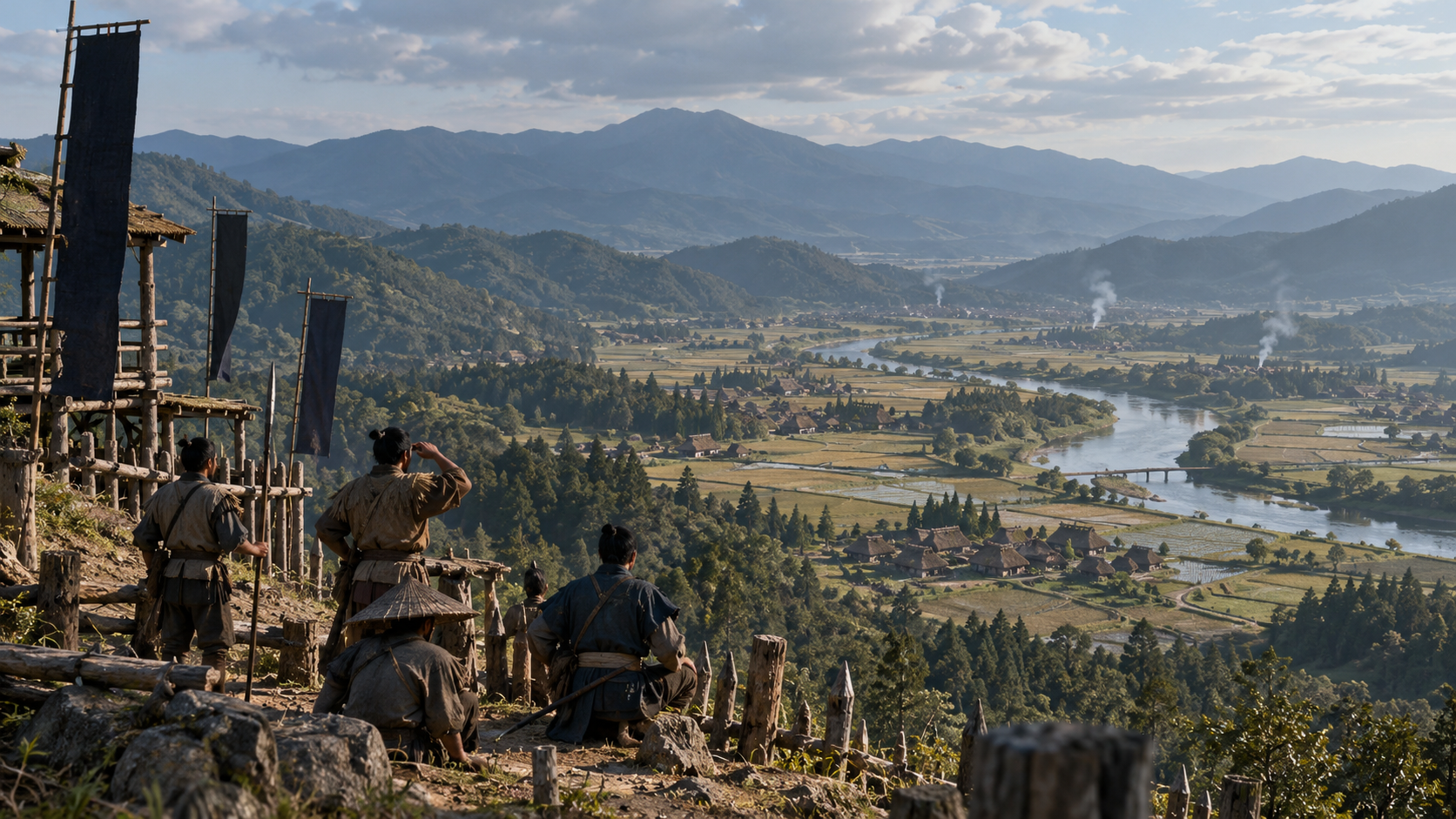
Scene 06
The 1581 account introduces several forces
In Volume 14, Iga appears again in the account for 1581. The third-day entry of the ninth month records Nobukatsu’s movement toward Iga and is followed by more than the action of one commander.
The text lists approaches into the region and the names of commanders assigned to them. Compared with the earlier account of Nobukatsu’s defeat, it outlines an operation involving several Oda forces.
This is the military situation that Iga’s defenders then faced. The list can establish a plurality of approaches without supplying an exact modern map, a complete quantified force structure or proof that Nobunaga personally led the first advance.
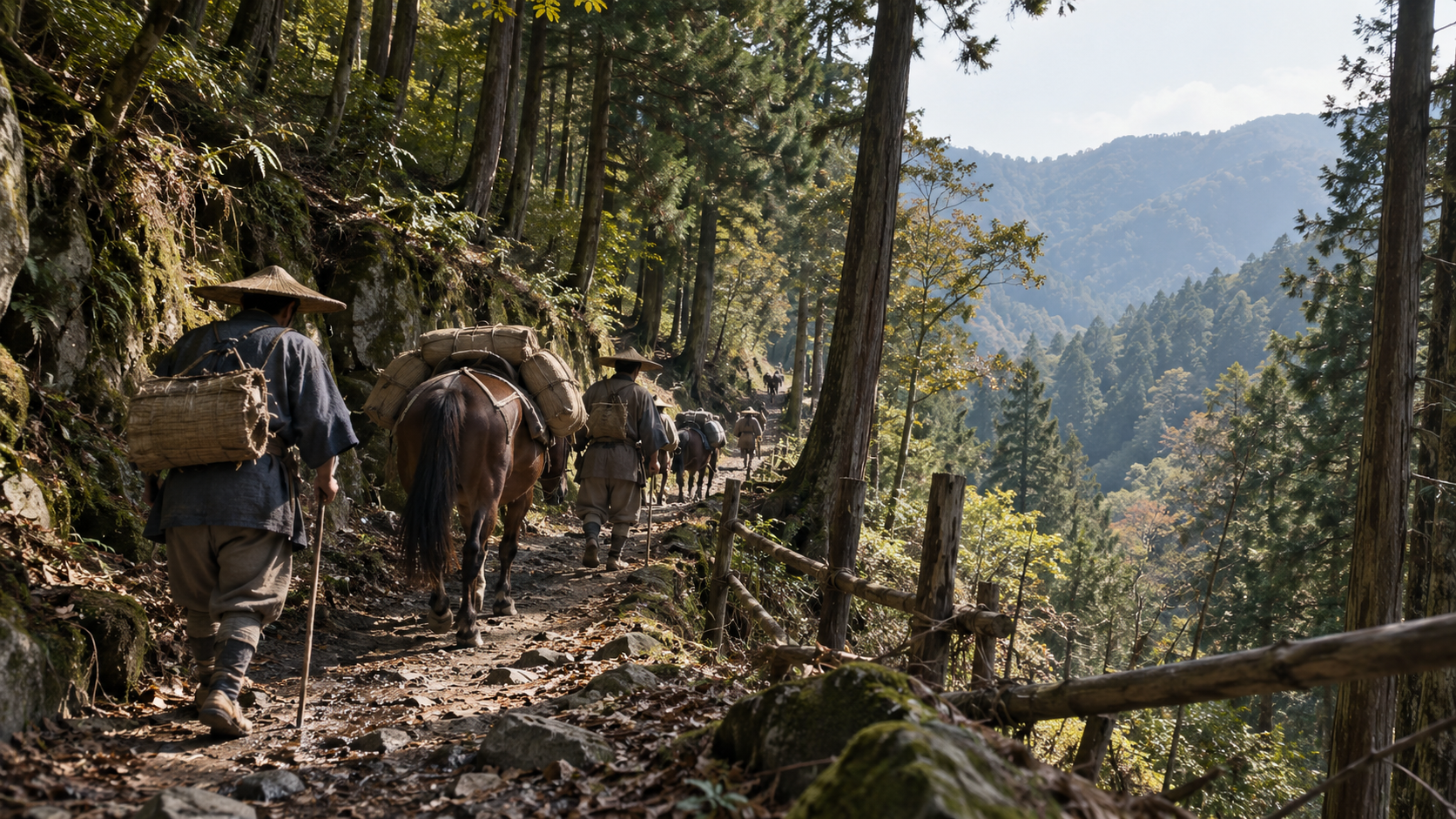
Scene 07
Several approaches into the region
The named approaches include Koka, Shigaraki, Kabuto and Yamato. The forces heading into Iga were not entering from only one location. Different commanders are assigned to different approaches in the text.
The surrounding mountains therefore formed a landscape with several points of military entry. Recognizing those relationships is useful without assuming that present roads reproduce every section of the historical journeys.
The article does not turn the selected list into an independently verified complete set of routes. The next entry adds another movement: forces from separate approaches came together within the operation.
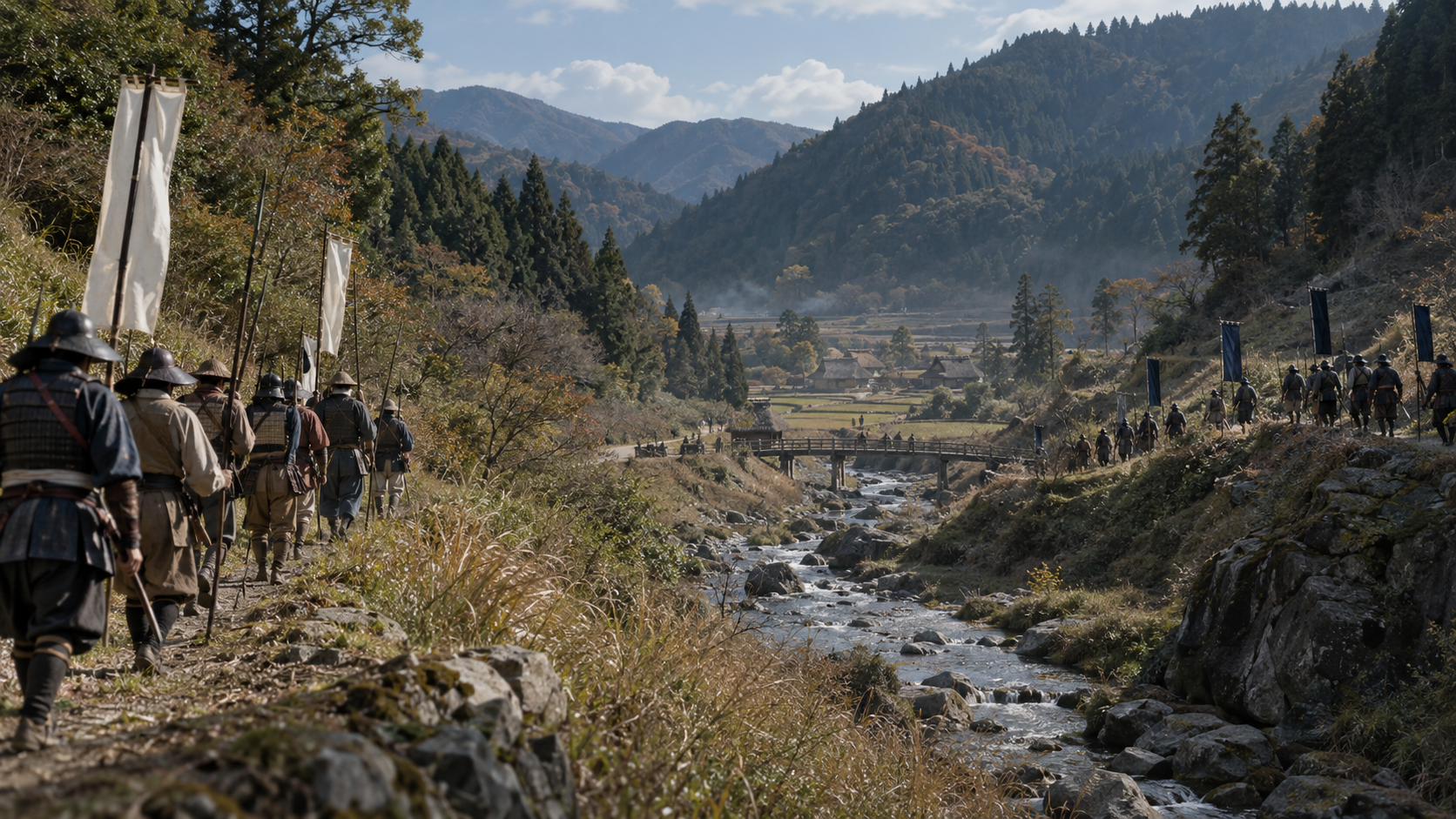
Scene 08
Forces from separate approaches combined
The sixth-day entry in the ninth month describes the forces from Shigaraki and Koka combining. The record thus moves from a list of entrances to an account of forces joining.
The second campaign cannot therefore be described only as unrelated small engagements with no connection among them. Multiple forces entered and then undertook further action in the region.
The sequence matters: assignments to approaches are followed by a convergence, and the chronicle then continues to attacks involving castles and religious institutions. This is a reading of the recorded actions, not an invented reconstruction of every order or conversation between commanders.
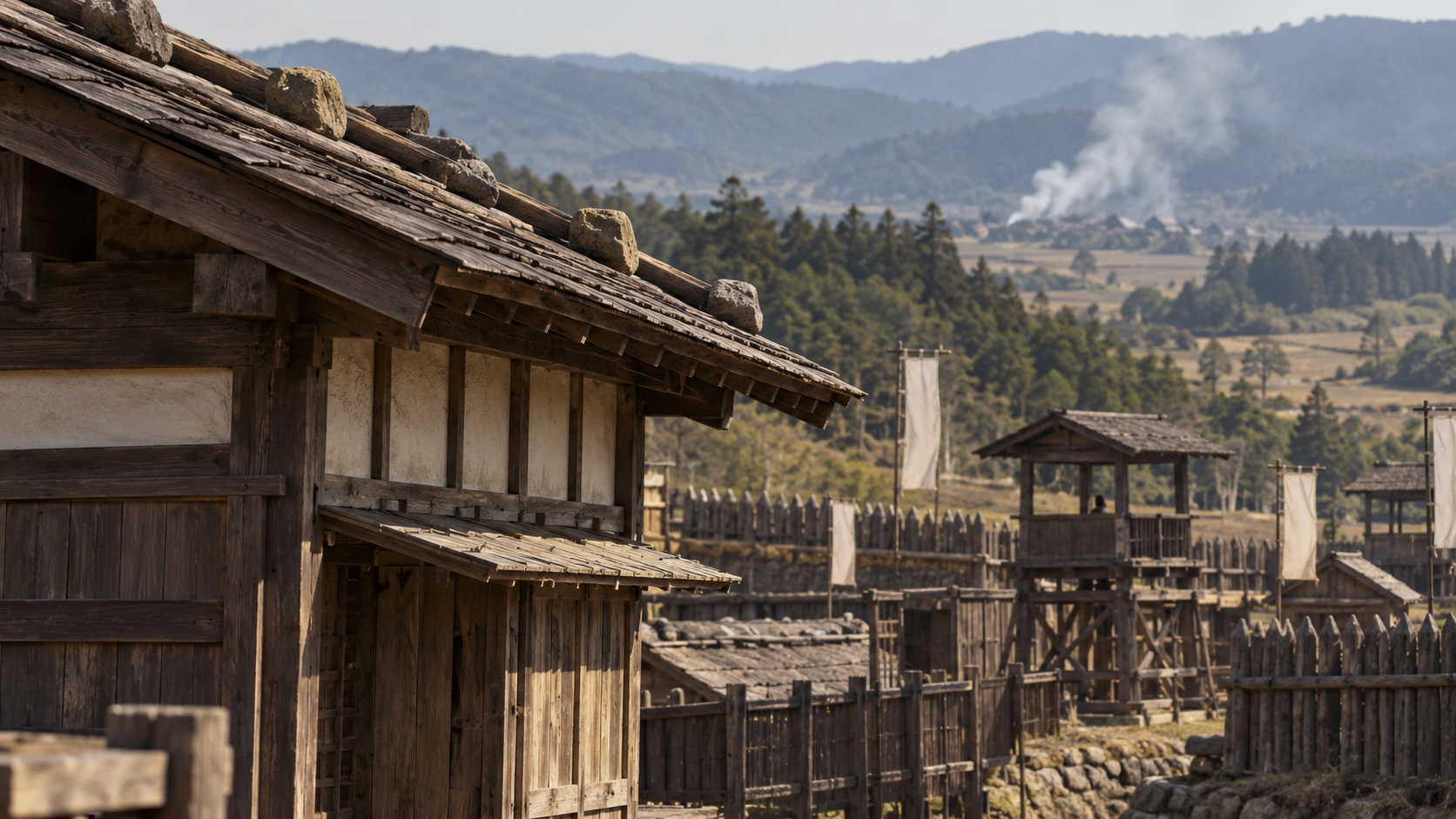
Scene 09
The attack reached castles, religious sites and the region
The ninth-month passages include attacks on castles, the dispersal of defenders and the burning of temples and shrines. The effects of the campaign extended beyond the immediate positions occupied by armed forces.
Shincho Koki follows the Oda side’s movements, and that perspective must remain visible. Even within its account, however, Iga appears as a region under attack. No independently established total of civilian victims, complete destruction or universal death is supplied here.
The aftermath offers another line of inquiry. A Mie University lecture abstract by Takigawa Kazuya discusses recovery through records such as building inscriptions associated with Kotengu Seizo. That perspective cannot turn the dates of surviving Buddhist statues into a direct calculation of wartime losses.
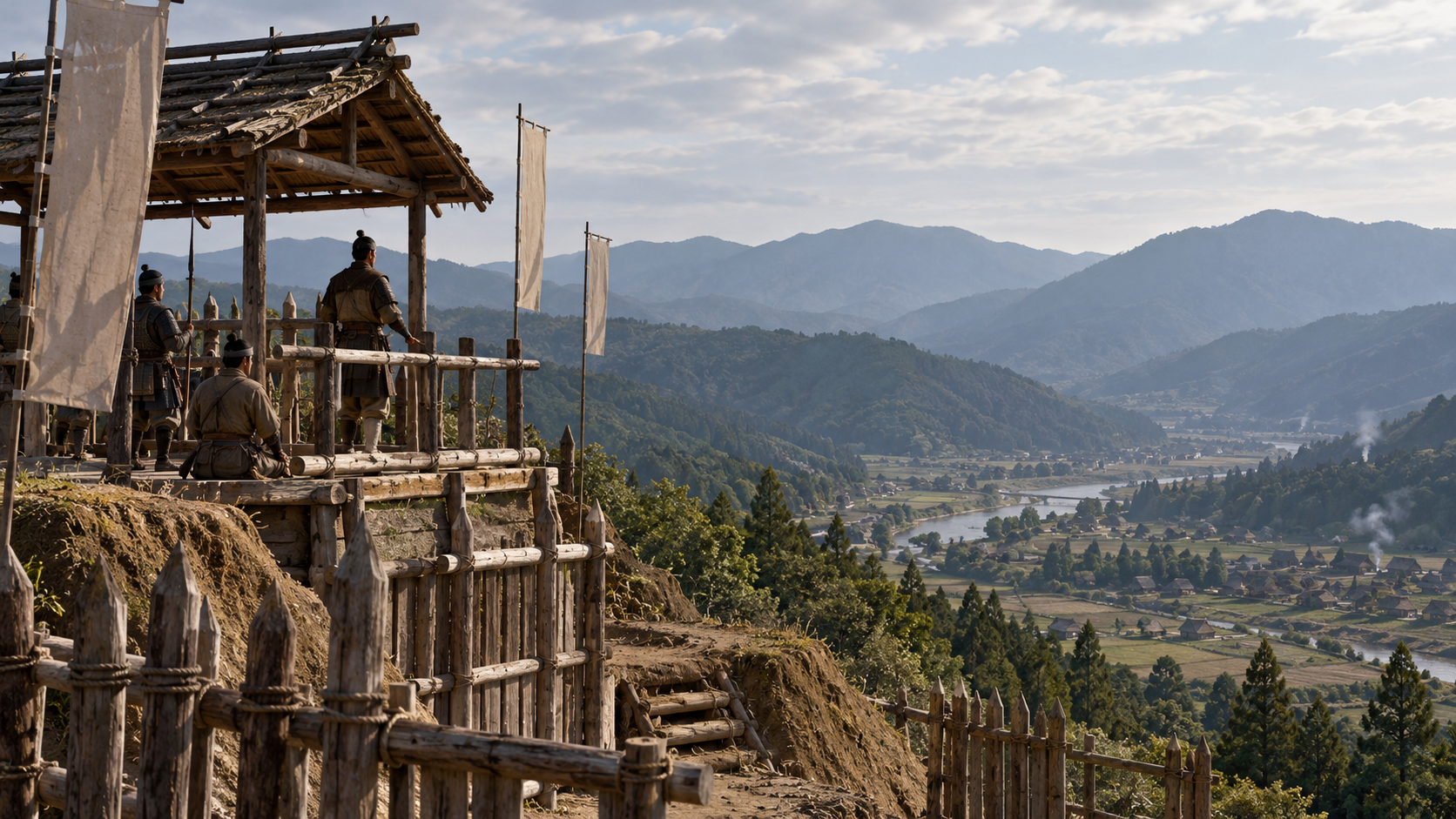
Scene 10
Military action led into the allocation of land
Following the ninth-month entries, the account moves from military actions to the allocation of land in Iga. Entry into the region and arrangements for rule appear as connected stages.
Concentrating on the capture of castles alone would leave that development out. A region in which local powerful figures had maintained their own relationships was being drawn into a new framework from the Oda side.
The result of the second campaign therefore concerned more than which army won. It also concerned who would govern the region afterwards. The article avoids resolving inconsistent personal-name forms in the printed allocation passages by guessing at a definitive recipient list.
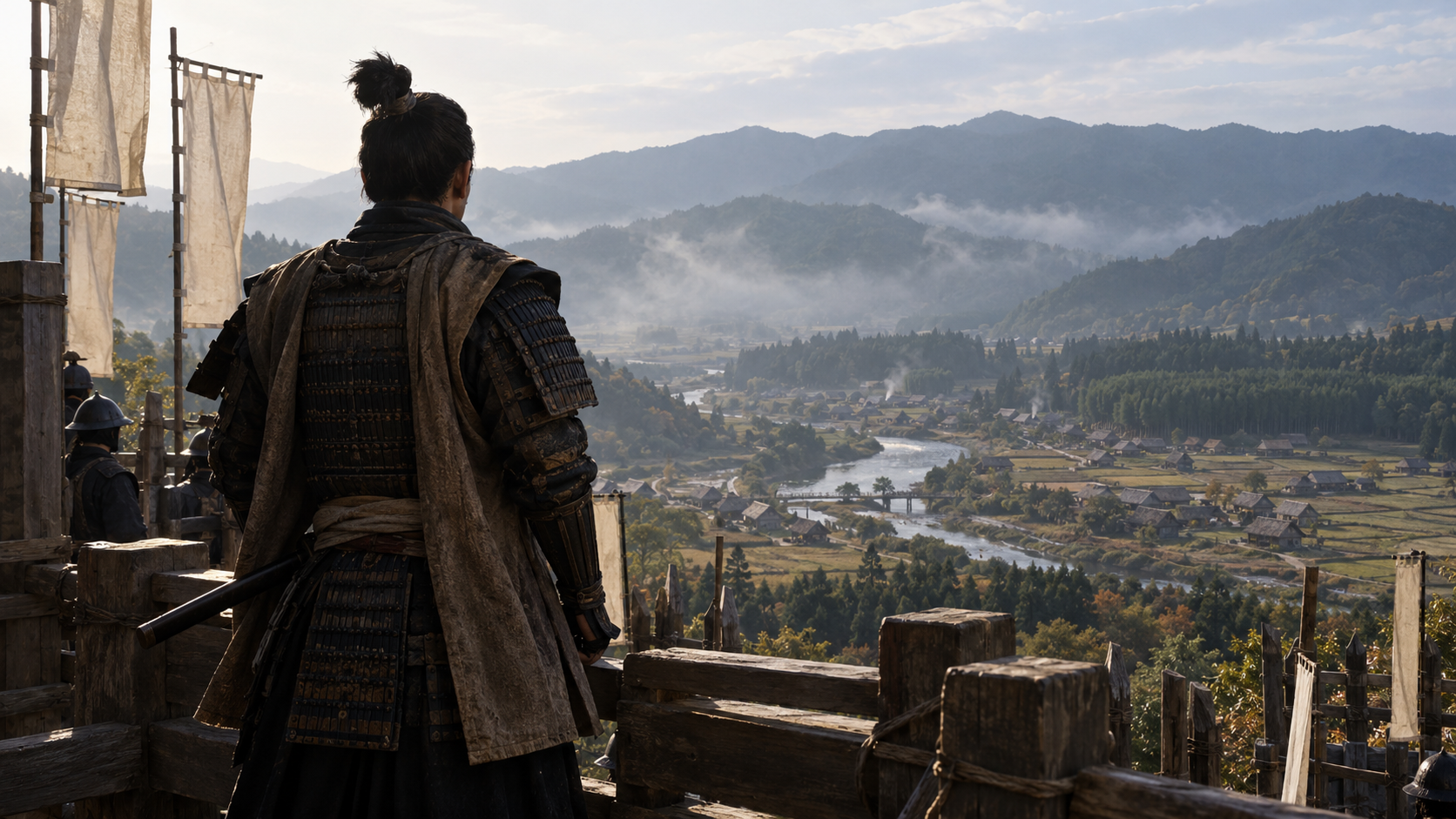
Scene 11
The campaign and Nobunaga’s later inspection were distinct
After the ninth-month military operations, the tenth-month entries describe Nobunaga himself entering Iga. They record his inspection of the region, visits to positions associated with Nobukatsu and others, and instructions concerning fortified sites.
The chronicle presents the commanders’ earlier operations and Nobunaga’s later inspection at different times. His subsequent presence should not be projected backwards into a claim that he personally fought at the head of the initial advance.
The account had moved from forces entering and attacking places to inspection and the arrangement of strongpoints for a new political order. That continuation marks another difference from the entry ending in Nobukatsu’s defeat in 1579.
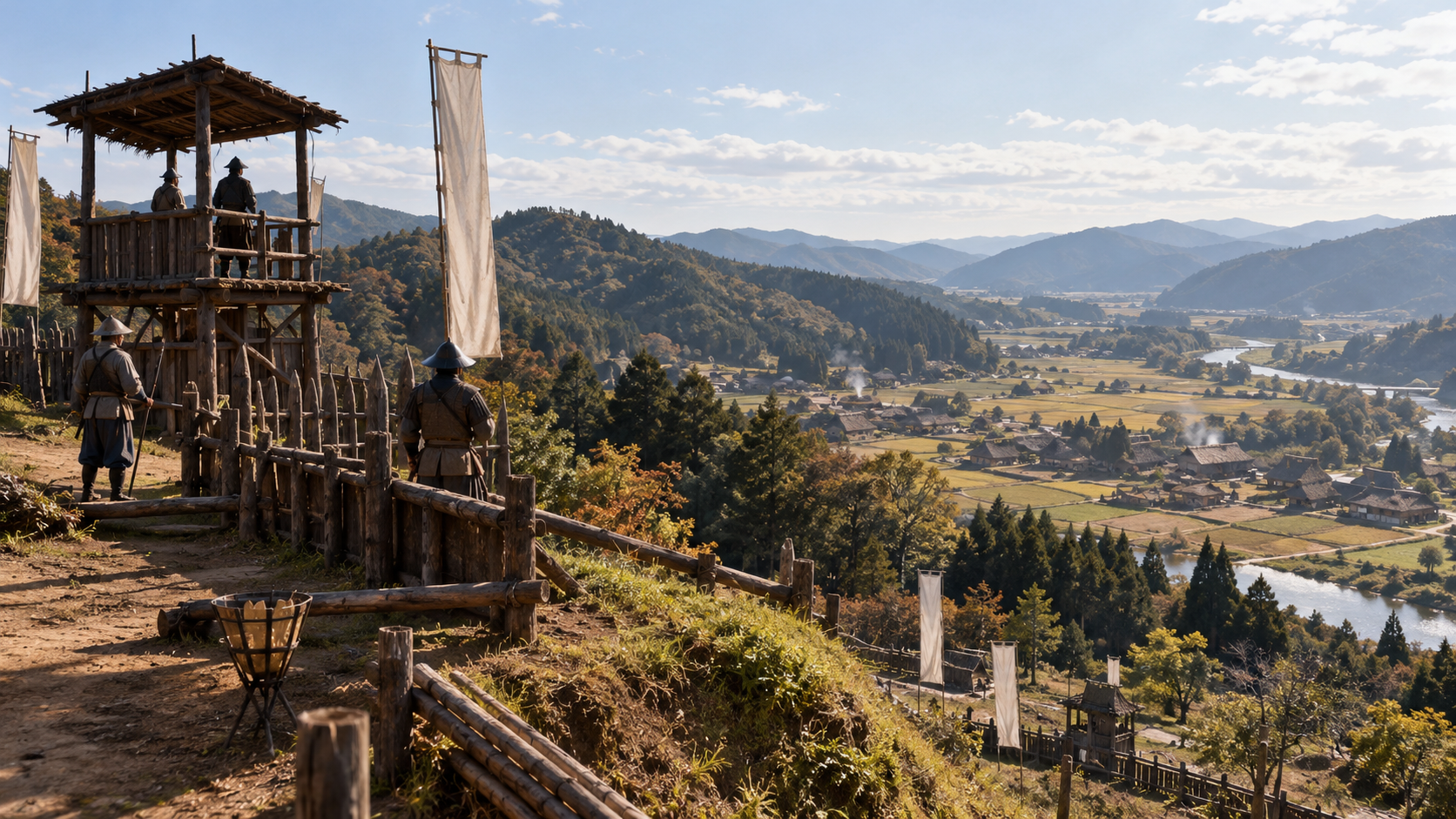
Scene 12
Two years, different records, changing landscapes
Separating 1579 and 1581 reveals the differences between defeat, multi-directional entry, convergence, attacks and arrangements for control. Terrain remained significant, but it did not alone determine both outcomes.
Regional relationships and the expanding Oda political order shaped the conflict. Looking beyond the famous ninja image draws attention to castles, settlements, people and the character of the records through which their actions are known.
Present landscapes also require a chronology. Iga’s Board of Education explains that the current Iga Cultural Industrial Castle at Ueno was completed in 1935. Its existing tower should not be used as an unchanged view of either sixteenth-century campaign. Dating a building is part of reading the landscape responsibly.
How to read this work
History, interpretation, and reconstruction
The two campaigns are best understood through changing regional relationships, operations and government, rather than through terrain or the ninja image alone.
This work is grounded in published sources and historical research. Interior thoughts, dialogue, and some visual details are cinematic reconstructions. Where historians disagree, the article presents the point as debated rather than settled fact.
Timeline
The story in time
-
People from Iga and Koka establish land-use rules near a pass in an oath document.
Sources: boundary-documents -
Maruyama is built and captured; a museum catalogue instead dates its capture to 1579, a difference left unresolved.
Sources: maruyama, maruyama-catalog -
Nobukatsu’s expedition, defeat and Tsuge Saburozaemon’s death are recorded; the difference from sixteenth-day dates elsewhere is unresolved.
Sources: shinchokoki -
The printed text preserves Nobunaga’s reprimand of Nobukatsu’s unconsulted expedition.
Sources: shinchokoki -
Nobukatsu’s advance and commanders assigned to separate approaches are listed.
Sources: shinchokoki -
Forces from Shigaraki and Koka combine.
Sources: shinchokoki -
The account proceeds through attacks on castles and religious sites to land allocation.
Sources: shinchokoki -
Nobunaga inspects Iga, visits positions and issues instructions concerning fortified sites.
Sources: shinchokoki -
Research on temple and shrine recovery uses evidence including building inscriptions.
Sources: reconstruction-study -
The printed edition of Shincho Koki examined for this article is published; it is not an autograph from the campaign years.
Sources: shinchokoki -
The present Iga Cultural Industrial Castle at Ueno is completed.
Sources: modern-ueno
People & terms
A guide for new readers
Glossary
- Iga sokoku ikki 伊賀惣国一揆
- The regional coalition discussed here; the role of landed warriors and the extent of peasant participation require attention to scholarly disagreement.
- Shincho Koki 信長公記
- Ota Gyuichi’s narrative of Nobunaga’s activities, read here through selected passages in an 1881 printed edition.
- Koka 甲賀
- The neighbouring region named as one approach; its force is described as combining with the Shigaraki force in the sixth-day entry.
- Nobukatsu 信雄
- Nobunaga’s son, whose failed campaign of 1579 must be distinguished from the broader operation of 1581.
- Tensho 天正
- The Japanese era name used for these wars; its year and contemporary calendar dates are distinct from unconverted Gregorian month and day labels.
Sources & method
How this article was built
The account distinguishes a later printed historical narrative, modern institutional explanations and scholarly lecture abstracts. The three selected openings of the 1881 chronicle and the prefectural cultural page were visually examined. The chronicle’s focus on Oda movements remains a limitation when considering the experience of the attacked region.
The conflicting capture dates for Maruyama and the seventeenth-day entry versus sixteenth-day dates elsewhere remain unresolved. The exact membership of the regional coalition is not reconstructed, routes are not plotted onto present roads, and no unsupported troop or casualty total is supplied. Nobunaga’s later inspection remains separate from the earlier operations.
The illustrations are AI-created explanatory scenes rather than historical photographs, exact portraits, surveys or replicas of source images. Modern Ueno Castle has its own twentieth-century history. Research-page images, document scans, maps and audio are not reproduced in the article.
Sources
References and further reading
- Mie Culture: Iga Ninja and the Iga Regional Coalition 三重の文化 郷土の文化編 伊賀流忍者・伊賀惣国一揆 Title translated editorially for reader convenience. Mie Prefecture 三重県 Printed page 75 examined in the saved image and text. Used for regional organization and the contrasting outcomes. The Niki castle and the separate Maruyama site are not equated by name. Accessed 2026-11-04
- Ota Gyuichi, Shincho Koki, Lower Book, 1881 Printed Edition 太田牛一 信長公記 巻之下(我自刊我本)明治14年刊 Title translated editorially for reader convenience. Kageo Hokiyama, publisher; National Diet Library, holding institution 甫喜山景雄(刊行)/国立国会図書館(所蔵公開) Selected passages in digitized openings 11, 33 and 34 examined. Not an autograph or a full reading of all volumes. Different entries in one publication are not counted as independent sources. Accessed 2026-11-04
- Maruyama Castle Remains: Japan Heritage, Iga and Koka 丸山城跡 日本遺産 忍びの里 伊賀・甲賀 Title translated editorially for reader convenience. Iga City and Koka City 伊賀市・甲賀市 Official explanation dates construction and capture to 1578 and describes the site. A separate museum catalogue gives a different capture year, which remains unresolved. Accessed 2026-11-04
- Maruyama Castle Remains, ADEAC Catalogue mp100020-100020 丸山城跡 ADEAC目録 mp100020-100020 Title translated editorially for reader convenience. Iga City 伊賀市 Catalogue of material held by the Iga-ryu Ninja Museum: rebuilding in 1578, capture in 1579 and subsequent rebuilding. Used to expose the discrepancy, not reproduce the catalogue image. Accessed 2026-11-04
- Iga and Koka Coalitions: Lecture Abstract by Goza Yuichi 伊賀・甲賀の一揆について 講座要旨(呉座勇一) Title translated editorially for reader convenience. Mie University 三重大学 Used for disagreement over social composition and limited evidence. A lecturer’s comparative interpretation is not presented as the only established conclusion. Accessed 2026-11-04
- Documents Concerning Iga–Koka Mountain-Land Disputes 伊賀甲賀山論関係文書 Title translated editorially for reader convenience. Mie Prefecture 三重県 Cultural-property explanation of a 1573 oath concerning land-use rights. No independent full transcription or proof of a wartime alliance is claimed. Accessed 2026-11-04
- Kotengu Seizo and Recovery after the Iga Wars: Lecture Abstract by Takigawa Kazuya 小天狗清蔵について その活動と天正伊賀の乱後の復興 講座要旨(瀧川和也) Title translated editorially for reader convenience. Mie University 三重大学 Introduces recovery research using inscriptions. The relationship between surviving statues and destruction is a scholarly inference, not a calculation of total losses. Accessed 2026-11-04
- Film of the Ueno Castle Roof-Raising: Explanatory Notes 上野城(伊賀文化産業城)天守閣の上棟式映像 解説 Title translated editorially for reader convenience. Iga City 伊賀市 Board of Education notes, page 1, used for completion of the present castle in 1935. The 1933 ceremony film is not a record of the sixteenth-century campaigns and is not reproduced here. Accessed 2026-11-04
Continue reading
More stories from Shigeki
Shigeki English
The Battle of Minatogawa: How Was the Defeated Masashige Remembered?
Separate the time of fighting from the times when records, images and memorials were made.
- When The battle in 1336; a report dated 1337; commemoration in 1692 and 1857; the tunnel, park and statue of the modern city
- Where Minatogawa and Kobe, considered alongside documents, war narratives and later images held or described by several institutions
Shigeki English
Railway Opening and the Takanawa Embankment: Where Trains and Boats Crossed
An embankment carrying trains into the sea also raised the question of keeping a way to the water.
- When Construction in the early 1870s, railway opening in 1872, later widening and reclamation, rediscovery in 2019 and additional designation in 2021
- Where The former coast at Takanawa between Shimbashi and Shinagawa, along the Shimbashi–Yokohama railway