
SHIGEKI ENGLISH STORYEN
Japanese history in English
Matsudaira Sadanobu: Frugal Reform and the Shared Landscape of Nanko
Moving food, setting aside savings, teaching and regulating people: following reform into Nanko’s shared scenery and practical work.
Sadanobu’s career extends beyond austerity. Follow famine relief, rice reserves, the seven-tenths fund, work and training, examinations and publishing restrictions, then Nanko and the recording of antiquities after his resignation.
At a glance
Before you enter the story
- When
- 1783 famine response and succession; 1787 appointment; 1790 yoseba and publishing instructions; 1791 punishment; 1792 examinations; 1793 resignation; Nanko and the eighty-five-volume publication in 1801.
- Where
- Shirakawa, the Echigo territory and Aizu transport route, Edo’s institutions and neighbourhoods, and the Nanko landscape.
- Key figures
- Matsudaira Sadanobu, Hasegawa Heizō
- What was at stake
- How measures of restraint could overlap with provision, relief and control, and how work continued after central office.
Why this story matters
The larger history behind the turning point
A familiar label such as austerity can obscure what a policy sought to retain or prepare. Distinguishing funds, food, institutions and later landscape work gives Sadanobu’s career a wider and more precise chronology.
Historical context
What an international reader needs to know
A percentage needs a base
The seven-tenths label describes a proportion of savings. A neighbourhood first reduced its communal expenses; a share of the reduction was then set aside. Replacing savings with income or the original budget would describe a different financial arrangement.
The adopted city explanations give different starting years, 1791 and 1792. This article does not conceal that discrepancy. It explains the operation and its connection with food reserves while leaving the exact starting year unresolved within these sources.
Several kinds of provision, several historical dates
The domain famine response, Edo reform and later work at Shirakawa had different scales and purposes. Resignation from shogunal office in 1793 is not the end of the biography. Nanko and Shūko Jisshu both belong to 1801, but a lake and an illustrated catalogue are distinct projects.
Sources describing these activities also have dates of their own. The examination began in 1792 while the displayed document dates to 1867. Today’s lake facilities and later park arrangements cannot automatically be made part of 1801. Source date, event date and the present view should remain separate.
Watch the film
See the story in motion
The film currently uses Japanese audio. This English article provides the context and source trail; it does not imply that an English subtitle track is available.
Chapter 01
The reformer who opened a lake
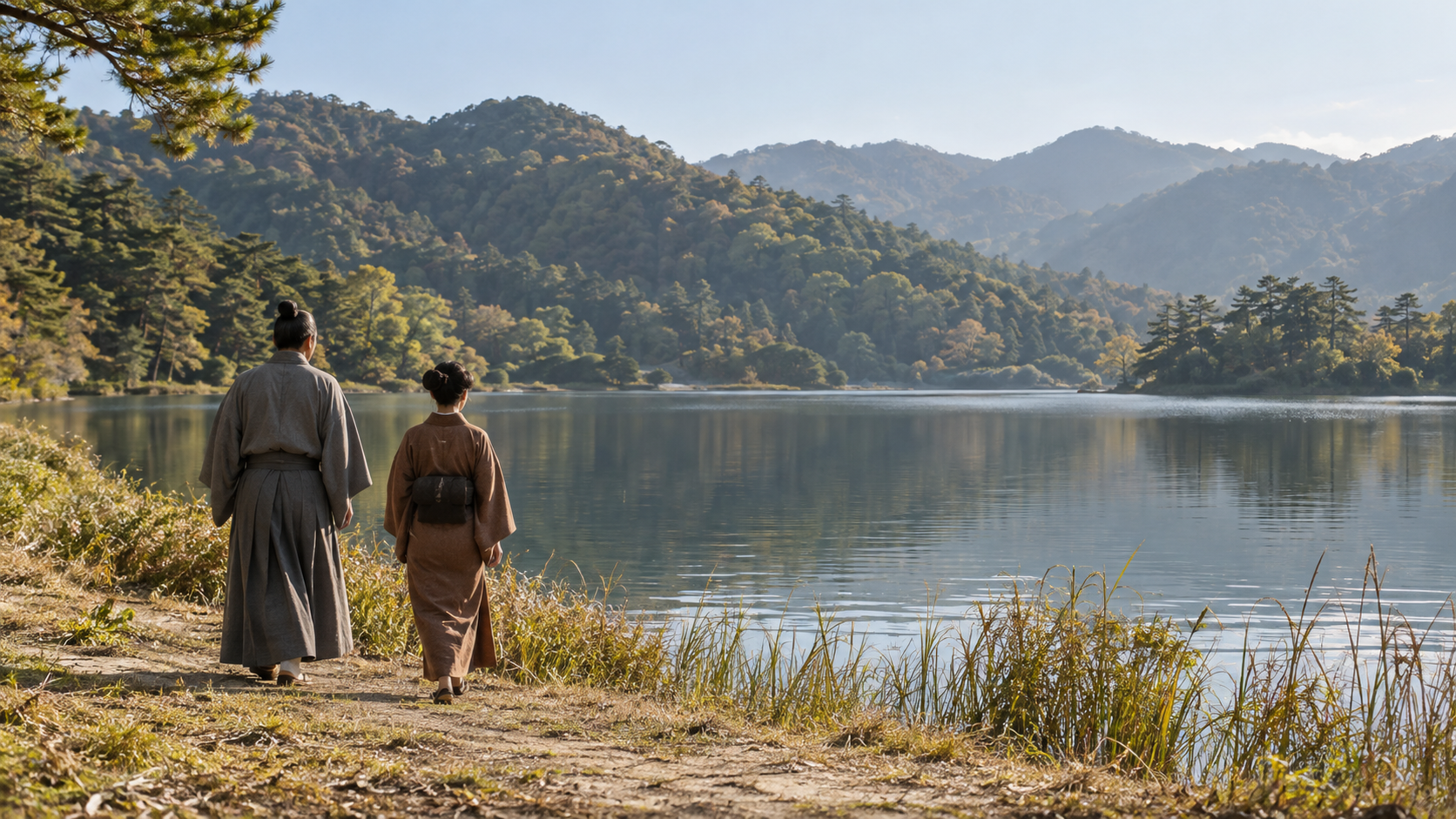
Matsudaira Sadanobu is associated with frugality and restrictions on luxury. Yet Shirakawa also contains a lake he developed and opened for people to enjoy: Nanko, created in 1801. His work extended beyond the policies of restraint most readily attached to his name.
Warriors and commoners could share the scenery. Understanding why the same reformer created such a place requires looking beyond his years in shogunal office. The lake belongs to the later stages of a career that cannot be bounded by the Kansei reforms alone.
Securing rice during famine, preparing for future shortages, assisting people and regulating their conduct were related but different activities. Frugality does not describe all of them with equal precision. The adopted accounts allow those functions to remain visible alongside restrictions.
Shirakawa City, the National Archives and cultural-property explanations guide this account. The question is not only what expenditure Sadanobu reduced, but what provisions, institutions and records he sought to leave for the future. Nanko supplies one place from which to ask it.
Chapter 02
Moving food to Shirakawa in 1783
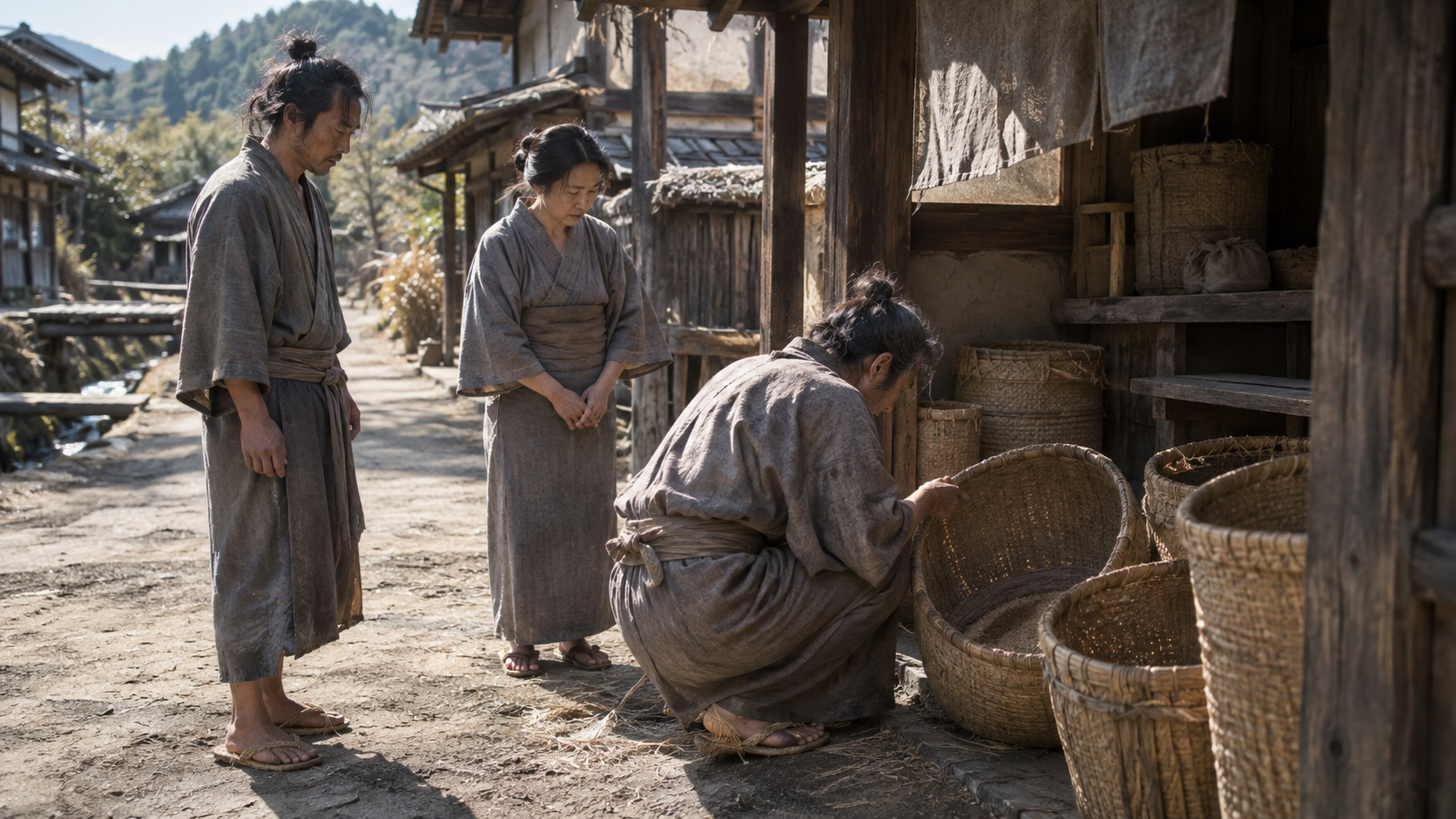
In 1783 the Tenmei famine brought rice shortages and destructive unrest to Shirakawa. The city’s biography describes Sadanobu responding while his adoptive father, the domain lord Matsudaira Sadakuni, was ill. The response preceded Sadanobu’s own succession within the same year.
Shirakawa possessed detached territory in Echigo, where the damage was comparatively less severe. Sadanobu sought to bring rice from there, negotiating cooperation with Aizu on the intervening route. Relief involved connecting separated areas rather than relying solely on what was already available locally.
Purchases of rice and other grains also helped secure food. Calling on people to consume less would not, by itself, have accomplished those tasks. Transport, purchasing and cooperation belonged to the practical work of responding to shortage.
The city’s positive assessment of this relief is distinct from a verified statistical count of every loss. This article does not treat a statement that there were no deaths as a conclusively established mortality total. The relief measures can be described without claiming evidence beyond the account.
Chapter 03
From a domain crisis to shogunal reform
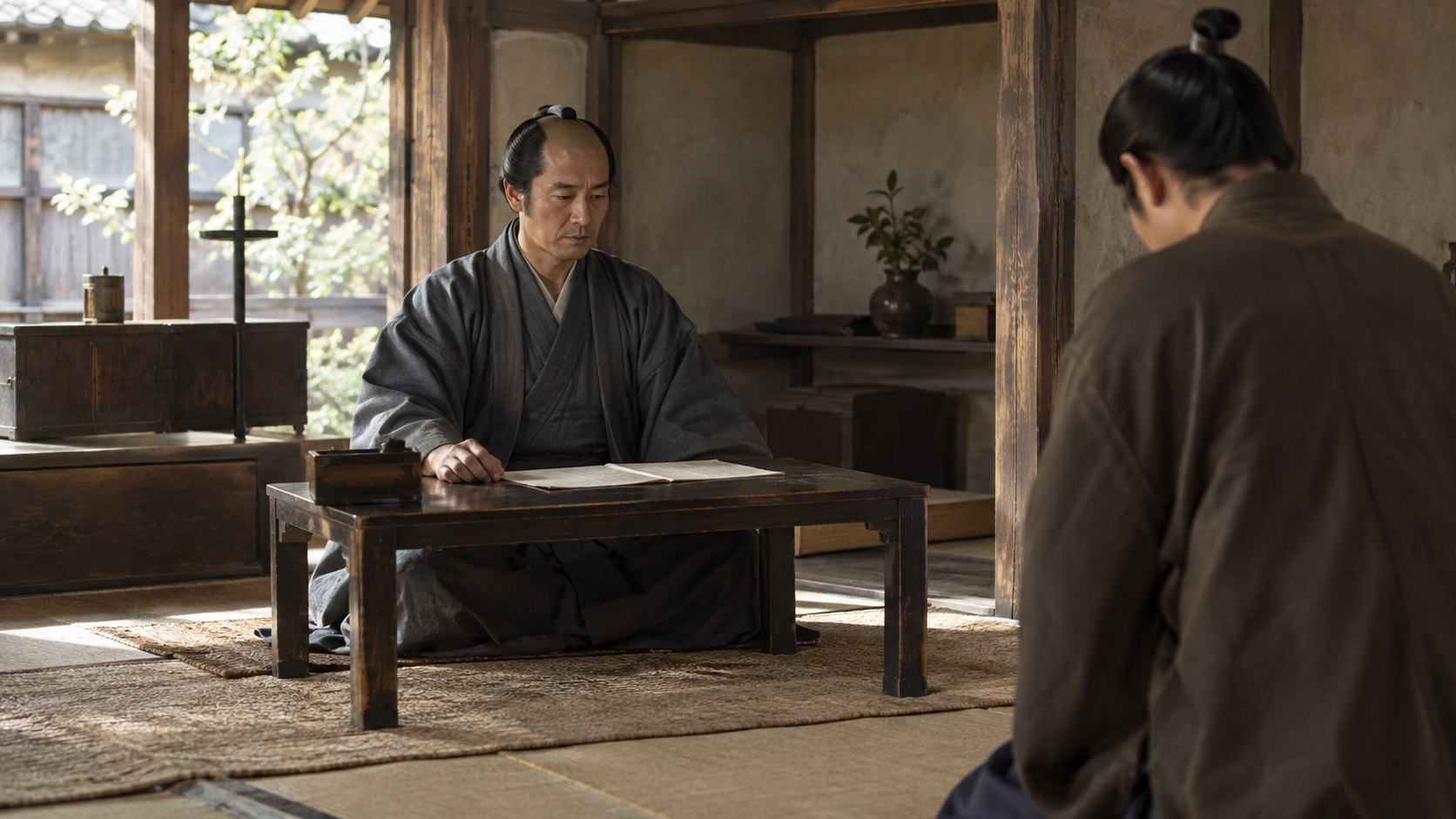
Sadanobu became lord of Shirakawa in 1783 and chief senior councillor of the shogunate in 1787. Shirakawa City also discusses unrest in Edo in its account of the reforms’ background. His responsibilities now extended to a much wider political setting.
Food scarcity, hardship and urban disorder were connected concerns for the authorities. Governing a large city involved questions of livelihood as well as security. This helps explain why the reforms cannot be separated neatly into an economic programme on one side and policing on the other.
Obtaining food for Shirakawa and making policy from the shogunate involved different geographical and institutional scales. Both nevertheless raised questions about preparation for crisis and the governing of people. They should be connected without being treated as the same operation.
Selecting relief alone would make restrictive measures disappear behind praise for a benevolent ruler. Selecting restrictions alone would obscure what the reserves were intended to address. The account keeps assistance, regulation and provision in view rather than assigning the whole programme one simple character.
Chapter 04
What remains after expenditure is cut?
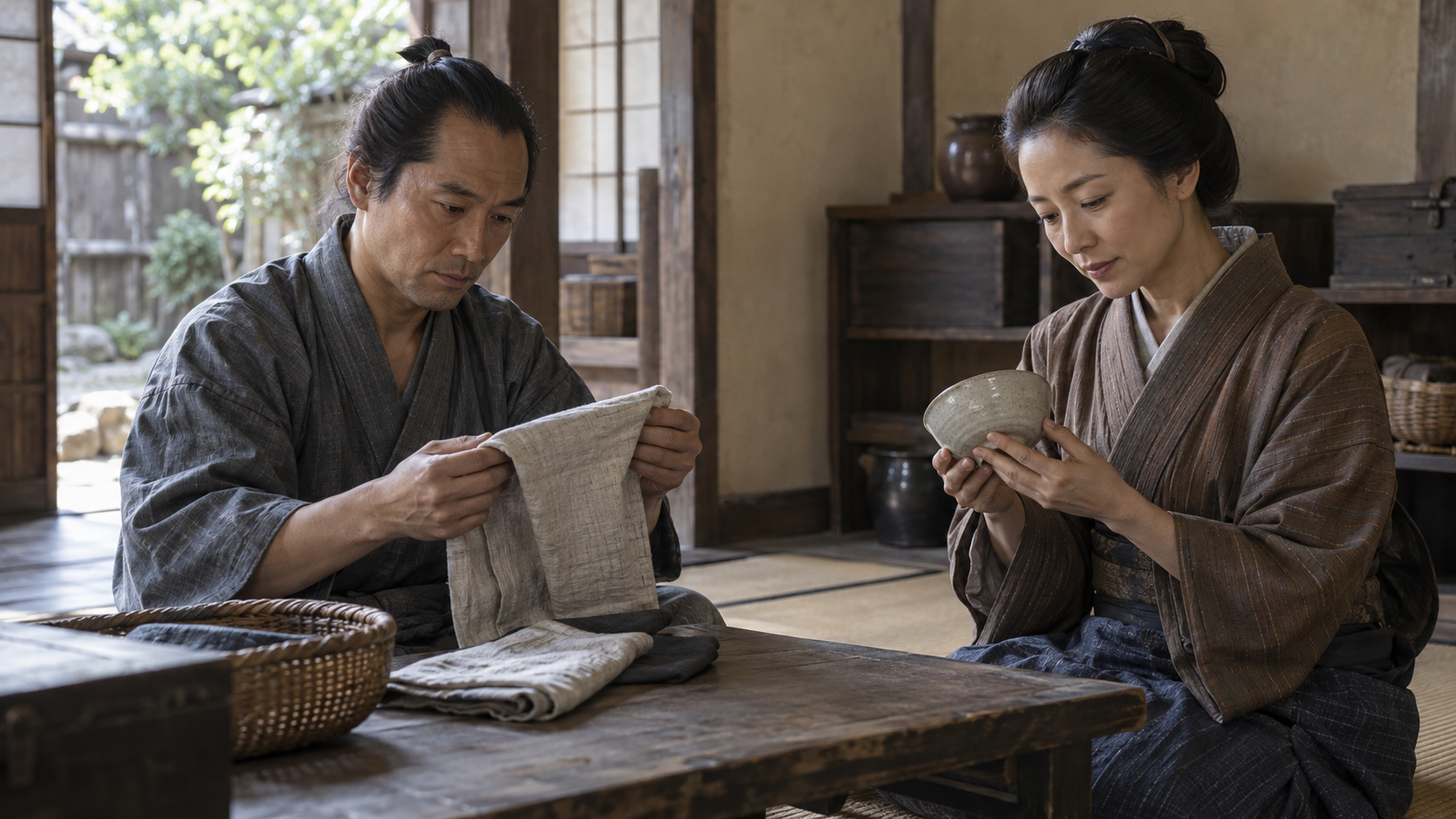
Reducing luxury and reviewing expenses are readily understood aspects of frugality. A reduction in expenditure does not automatically create food for the next shortage, however. Restraint and preparation need to be distinguished if the policies’ operation is to become clear.
Sadanobu’s measures included rice reserves prepared in ordinary times. Searching for provisions after a crisis has begun differs from holding supplies beforehand. The adopted account places such preparation alongside the effort to reduce spending.
Edo also received arrangements for reviewing neighbourhood expenses and retaining part of the resulting savings. The question extended beyond what to stop spending: it concerned what to do with the amount released by those reductions.
One such arrangement was the shichibu tsumikin, or seven-tenths fund. Its numerical label makes the base of the percentage especially important. Without that base, a reader could mistake a contribution from savings for a levy on everyone’s entire income.
Chapter 05
Seven tenths of what?
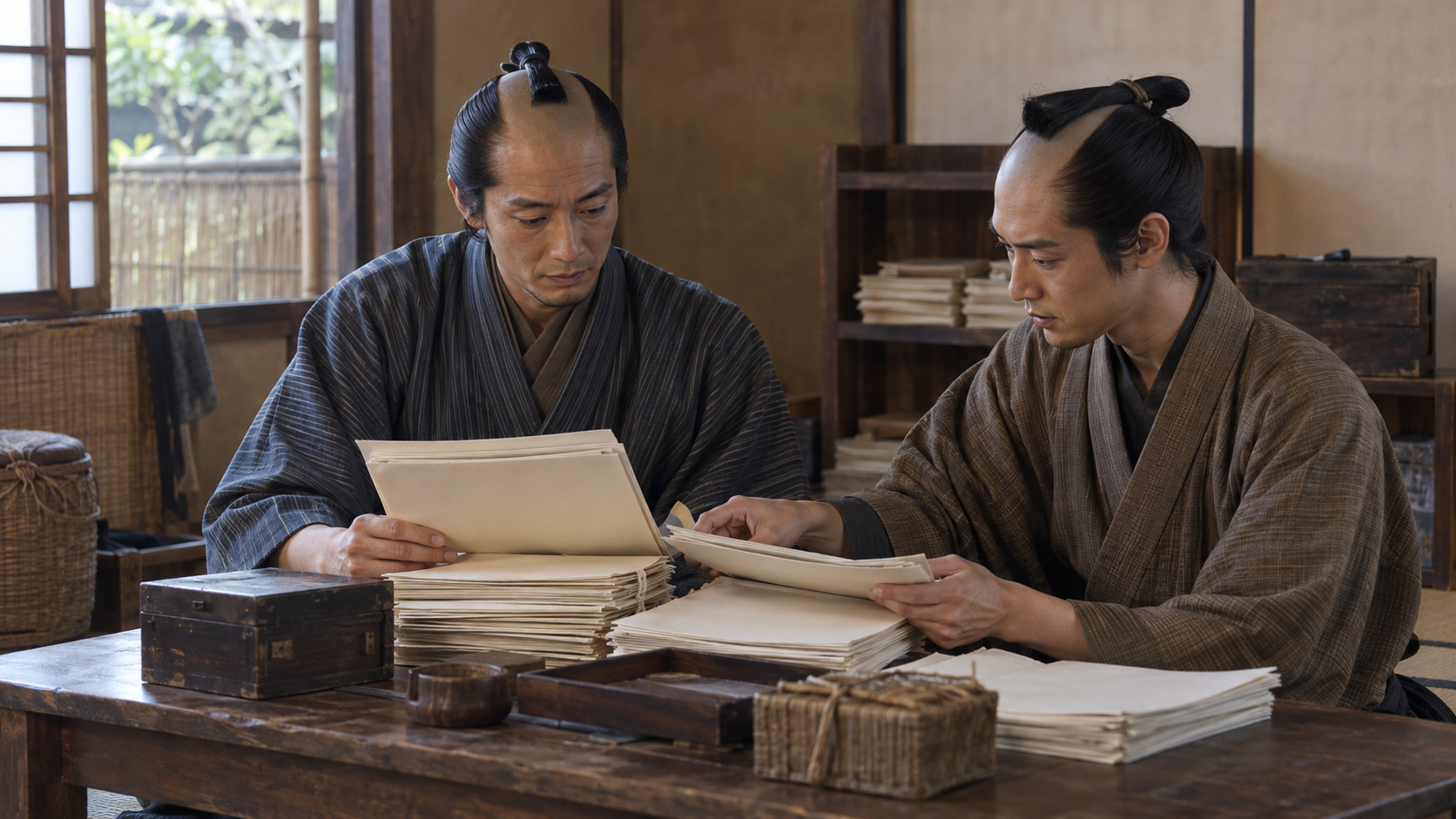
The seven-tenths fund did not mean taking seventy per cent of a townsman’s income. Shirakawa City explains a system in which Edo neighbourhoods reduced their communal expenses and set aside seven tenths of the savings achieved through those reductions.
The base was consequently neither total income nor the entire previous neighbourhood budget. It was the amount saved. Distinguishing expenses, their reduction and the share retained is essential to describing the policy without changing its meaning.
The city connects these accumulated resources with securing unhusked rice against famine. Reviewing current expenditure and preparing food for a future crisis thus appeared within the same arrangement. The financial reserve and the provision it could support were linked but different things.
The city’s two adopted explanations give different starting years, 1791 and 1792. This article retains the difference instead of selecting one as settled. It explains the relationship between neighbourhood expenditure, savings and reserves without inventing an exact modern-currency equivalent.
Chapter 06
Assistance and control at the yoseba
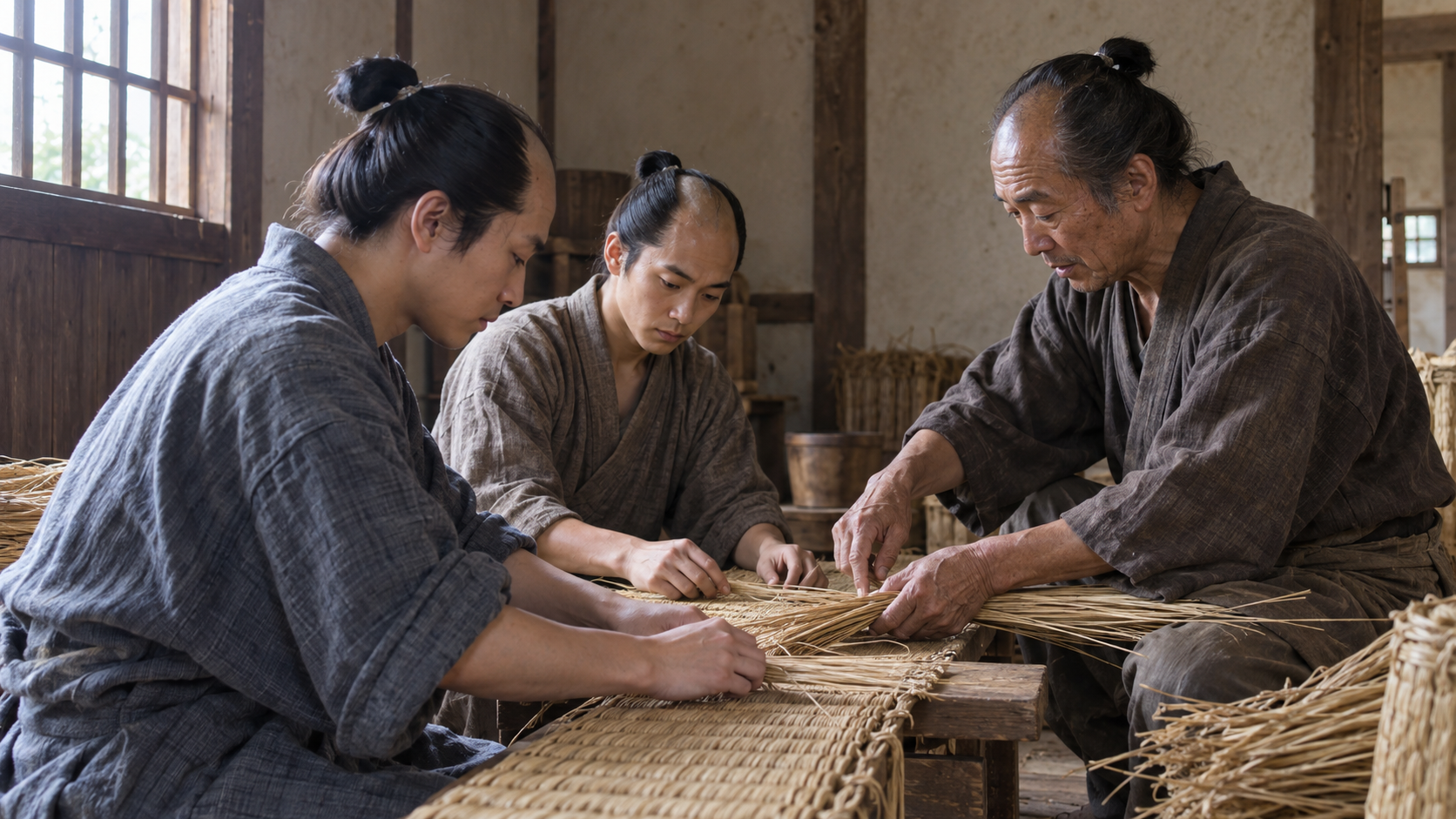
A ninsoku yoseba opened in Edo in 1790. The National Archives explains that Sadanobu adopted Hasegawa Heizō’s proposal to gather people without settled registration or residence and teach them occupational skills. The institution belonged to a response to hardship after the famine.
Training and rehabilitation were accompanied by an aim of preventing crime. Those purposes overlap in the provider’s explanation. The policy cannot be described adequately as either handing out food or merely increasing punishment.
It was also an institution that confined people and regulated their activity. Assistance and control therefore cannot be divided into entirely separate measures here. Nor should a historical institution with these features simply be renamed a modern welfare programme.
The material consulted is the Archives’ exhibition explanation. It does not supply an independently reconstructed floor plan or a record of each inmate’s words. The article describes the intended roles without inventing an individual resident’s experience or a precise training session.
Chapter 07
Encouraging study and restricting publication
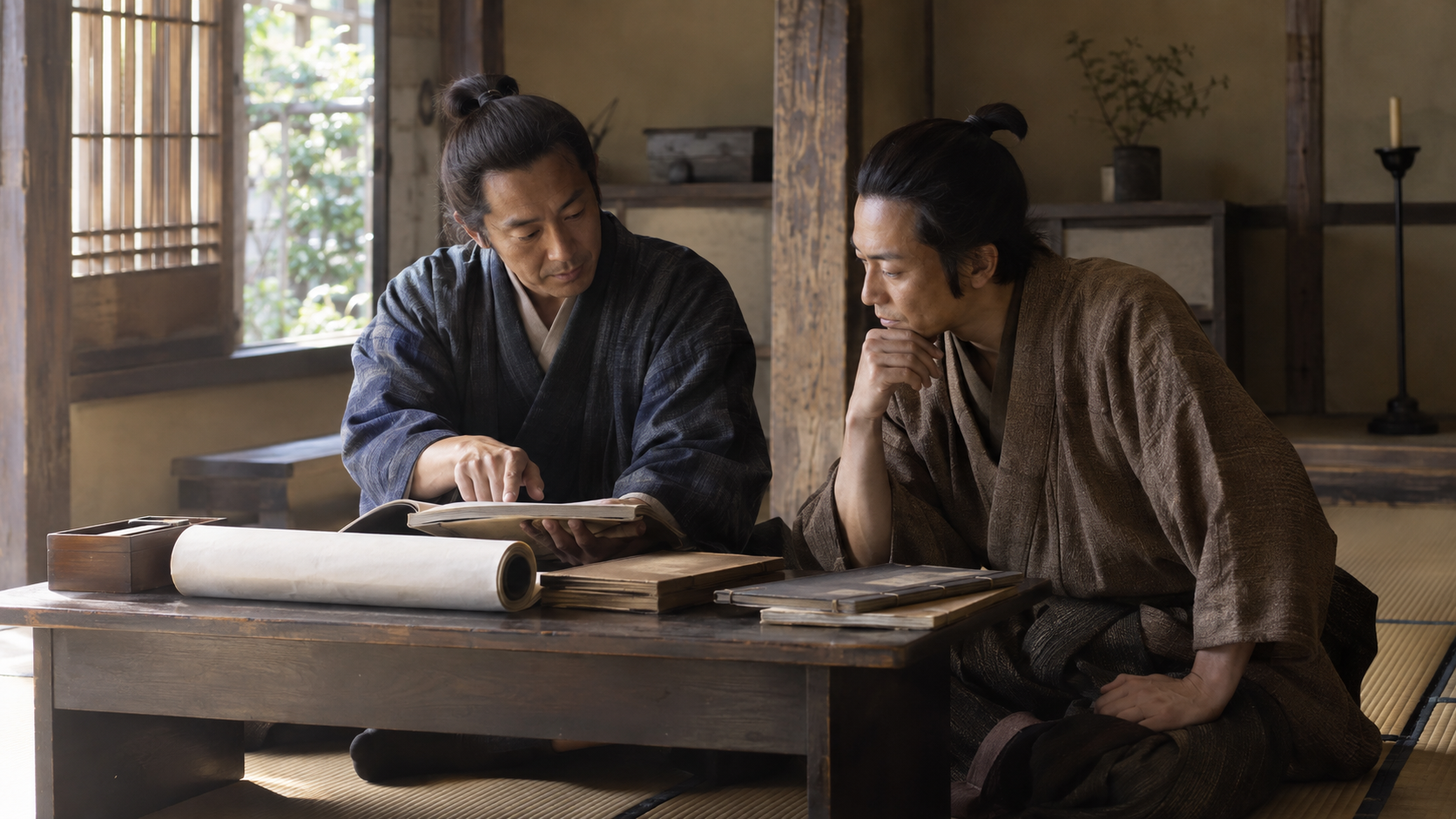
Reform also concerned learning. The National Archives places the first gakumon ginmi examinations in 1792 as part of the Kansei reforms. The explanation describes an arrangement for assessing learning rather than simply praising study in general.
Preliminary and main examinations were followed by rewards for good performance. The original document shown in the exhibition belongs to 1867, not the first examination in 1792.
Publication policy had a more restrictive aspect. Shirakawa City describes instructions to the publishing trade to check content in 1790, followed by punishment of Tsutaya Jūzaburō, Santō Kyōden and others in 1791. These measures concern a different activity from the examinations.
Encouraging knowledge and controlling words entering circulation were both present in policy. The article retains that combination without treating examination and publishing regulation as a single institution. The dates and purposes provide distinctions within a cultural policy too easily reduced to one label.
Chapter 08
His work did not end in 1793
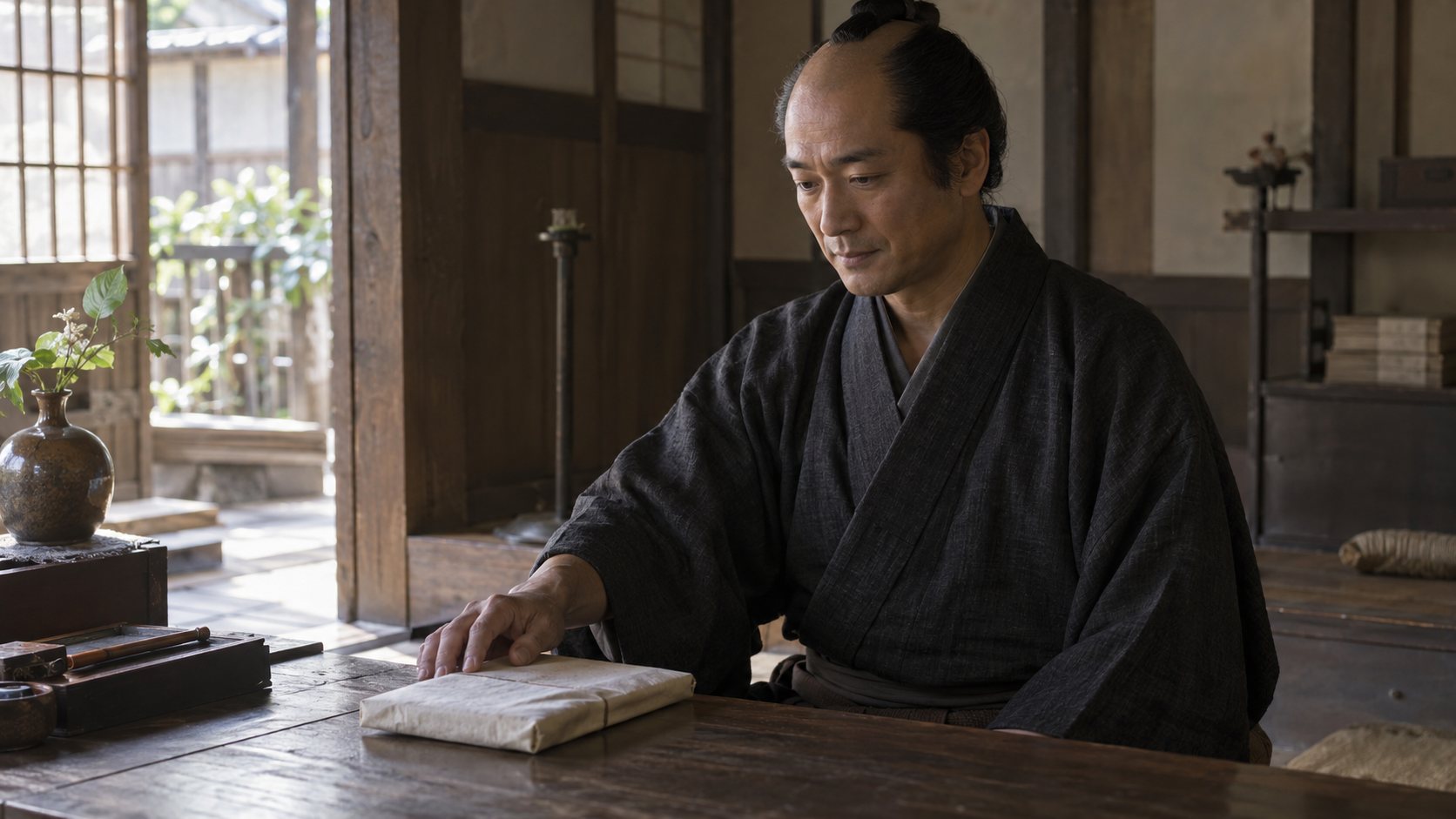
Sadanobu resigned as senior councillor and adviser to the shogun in 1793. His work as lord of Shirakawa did not end at the same moment. Nanko was developed later, in 1801, outside the period of his shogunal reform office.
A biography limited to his years in that office would omit the lake project. Edo reform and the development of a lake at Shirakawa belong to different periods of the same life. Their connection does not make them simultaneous activities.
The article does not explain resignation through feelings absent from the adopted material. Establishing the date of departure and the dates of later work is possible without inventing bitterness, relief or a private resolution that supposedly determined everything afterward.
The setting now returns to Shirakawa. The place Sadanobu developed was intended for enjoying scenery, but it also involved the use of water and land. Reading Nanko only as a leisure destination would leave out part of its historical function.
Chapter 09
Wet ground becomes a shared landscape
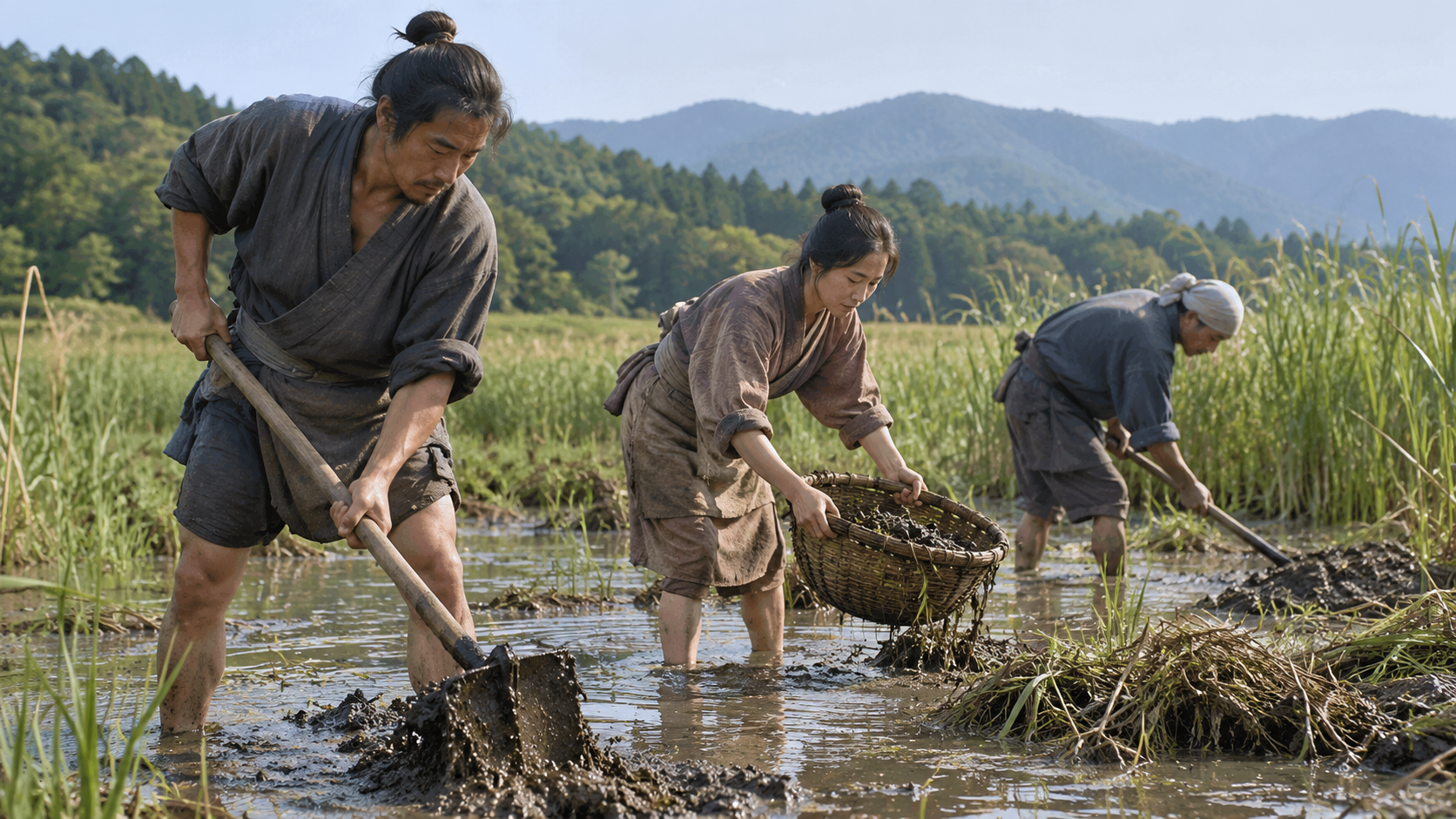
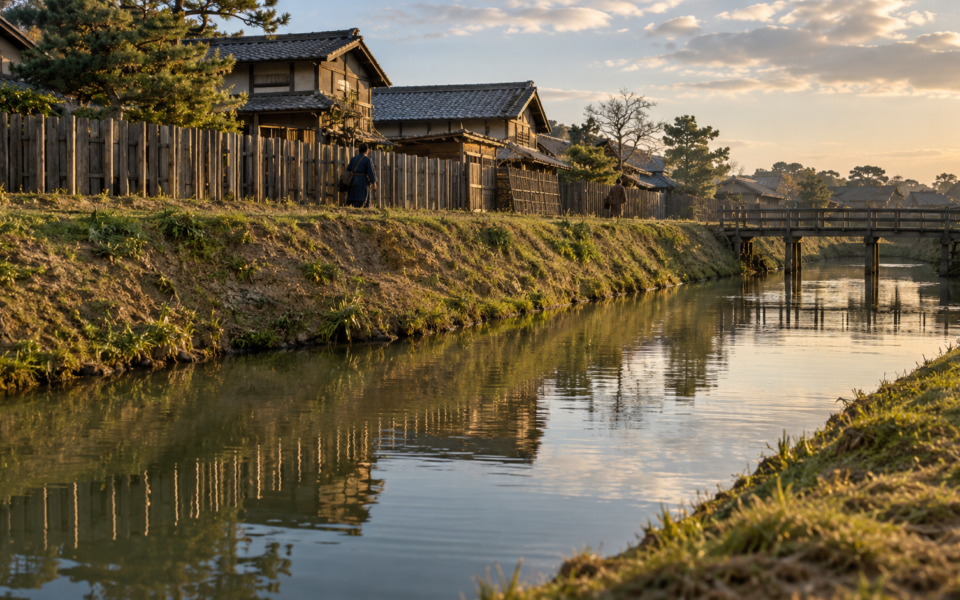
Nanko was developed from wet ground called Ōnuma. Shirakawa City’s cultural-property explanation describes making use of an existing embankment, building up the bank and dredging the marsh. The landscape emerged through work on an earlier place rather than from an empty site.
Surrounding hills, mountains and open ground became part of the view, with pines, cherry trees and maples planted around it. Human work and existing scenery were combined in creating a place to enjoy.
A distinctive feature was its opening to commoners, unlike a garden confined within a castle or private residence. The city presents the idea of shimin kyōraku, shared enjoyment by warriors and commoners. That provides a specific description of access in the adopted account.
It does not mean that the entire status system was abolished. Present shrines, shops and later garden facilities also cannot be placed automatically in the landscape of 1801. Shared enjoyment and the site as it appears now answer different historical questions.
Chapter 10
Water working beyond the view
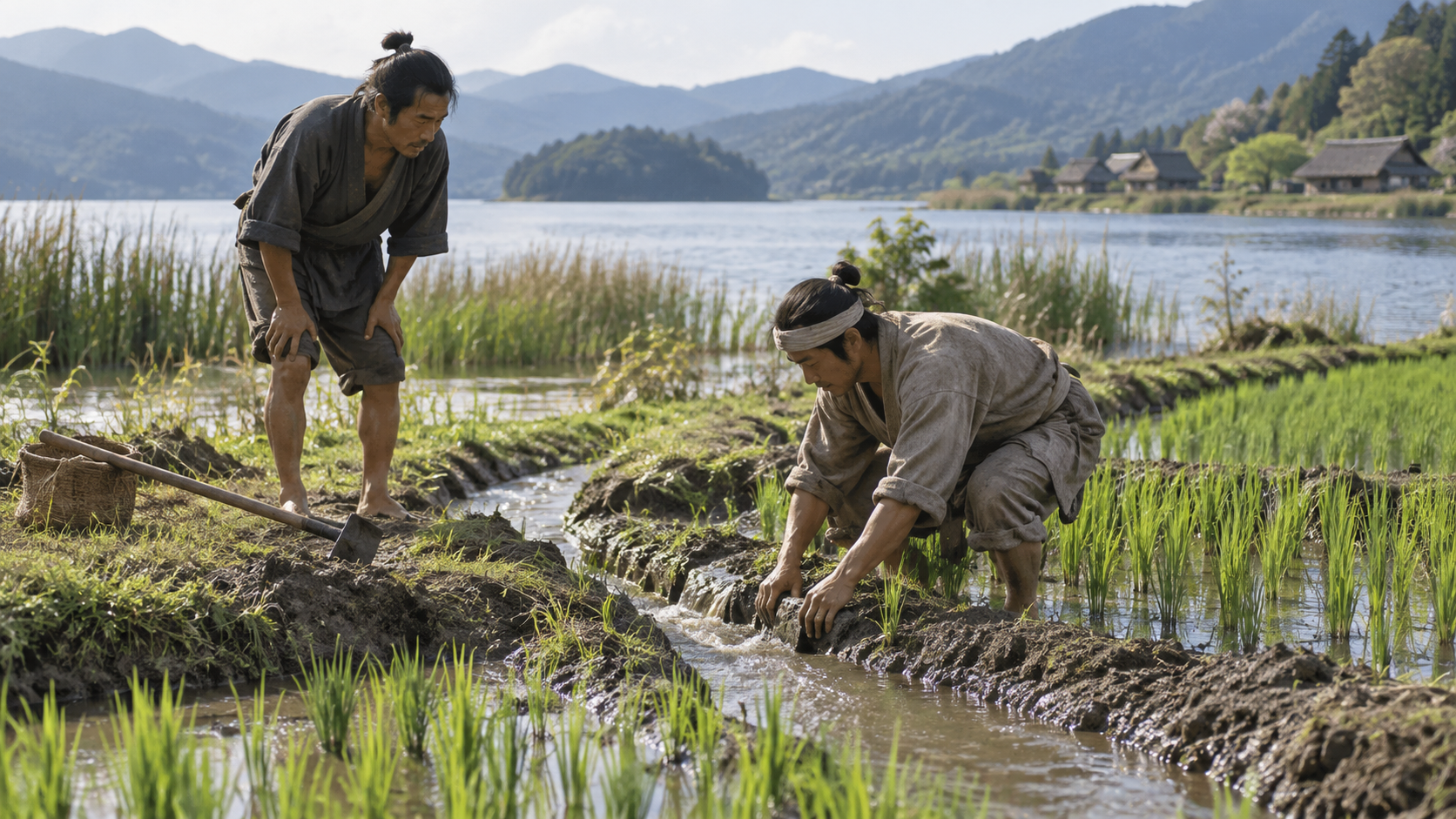
The city explains that Nanko’s water served irrigation and that domain retainers used the lake for swimming and boat-handling training. A surface enjoyed as scenery also had practical roles in everyday production and domain activity.
The construction had a role in assisting impoverished people. The city’s cultural-property explanation additionally connects part of the revenue from newly developed rice land with supporting the domain school. Land, labour and education entered the lake’s wider setting.
Scenery, water, work and teaching thus overlapped in one place. Before treating a lake built by a frugal reformer as a simple contradiction, it is useful to ask how the project was used and what activities it supported.
These roles do not establish identical benefits for everyone or a project without burdens. Describing functions is different from judging the entire undertaking uniformly. The adopted explanations support those functions without supplying a complete account of every cost or individual outcome.
Chapter 11
Recording old treasures in pictures and information
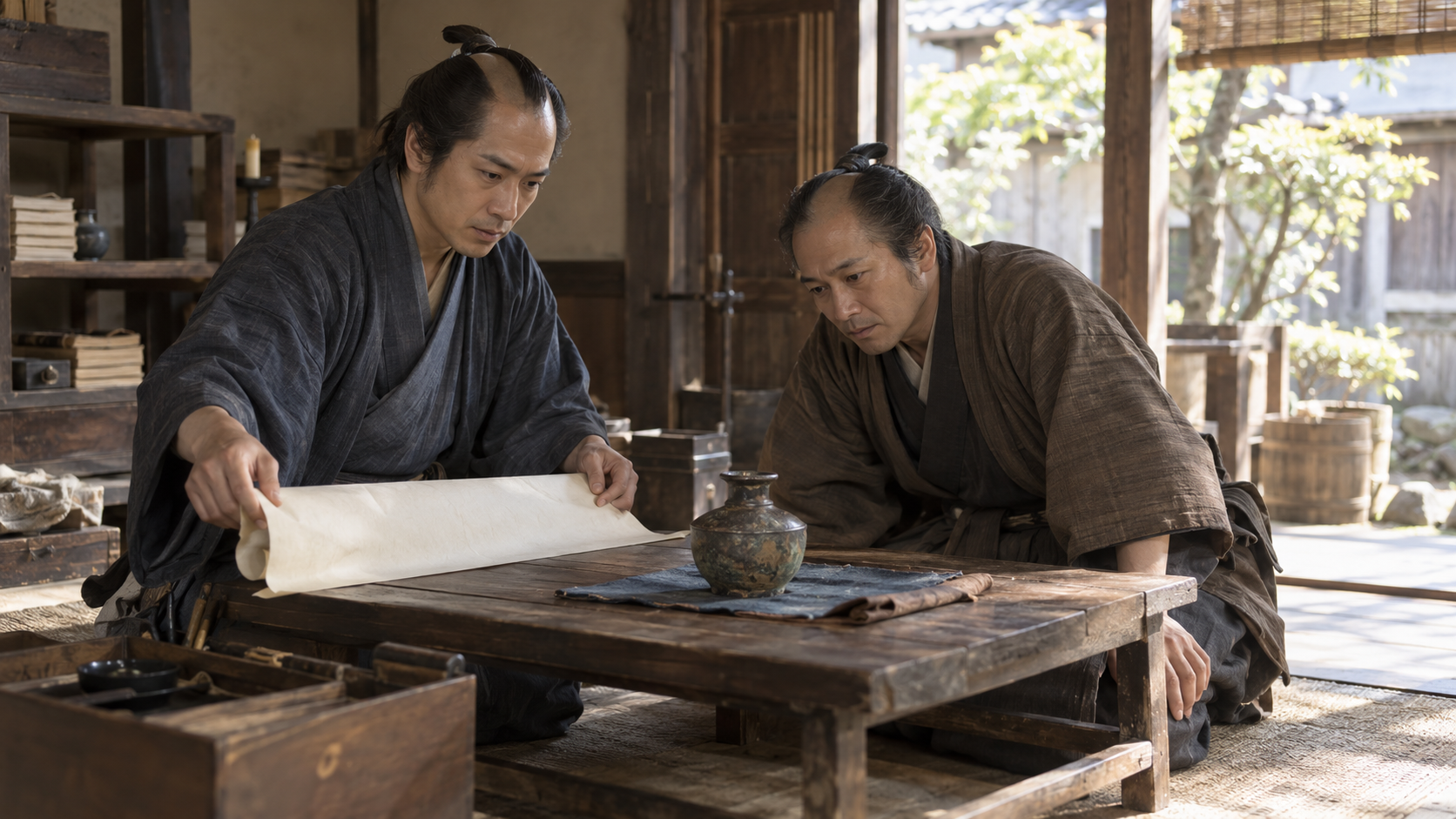
Another undertaking associated with Sadanobu was the survey and recording of old treasures in Shūko Jisshu. The cultural-property explanation describes scholars and artists copying paintings, objects and inscriptions at temples, shrines and other locations.
Names, locations and dimensions accompanied the pictures. The work appeared in 1801 in eighty-five volumes, covering categories including bronze objects, weapons, musical instruments and writing equipment. Its method involved information as well as visual representation.
This was not the same institution as rice reserves. It can nevertheless be considered as another kind of work directed toward leaving something for the future. That is an interpretive comparison, not a claim that all Sadanobu’s projects shared one administrative system.
The article uses designation explanations and catalogue information. It does not claim that all original printing blocks or every volume have been independently deciphered. A set’s volumes, surviving printing blocks and the separately catalogued copies of one category are different counts.
Chapter 12
What was prepared, and what was left behind?
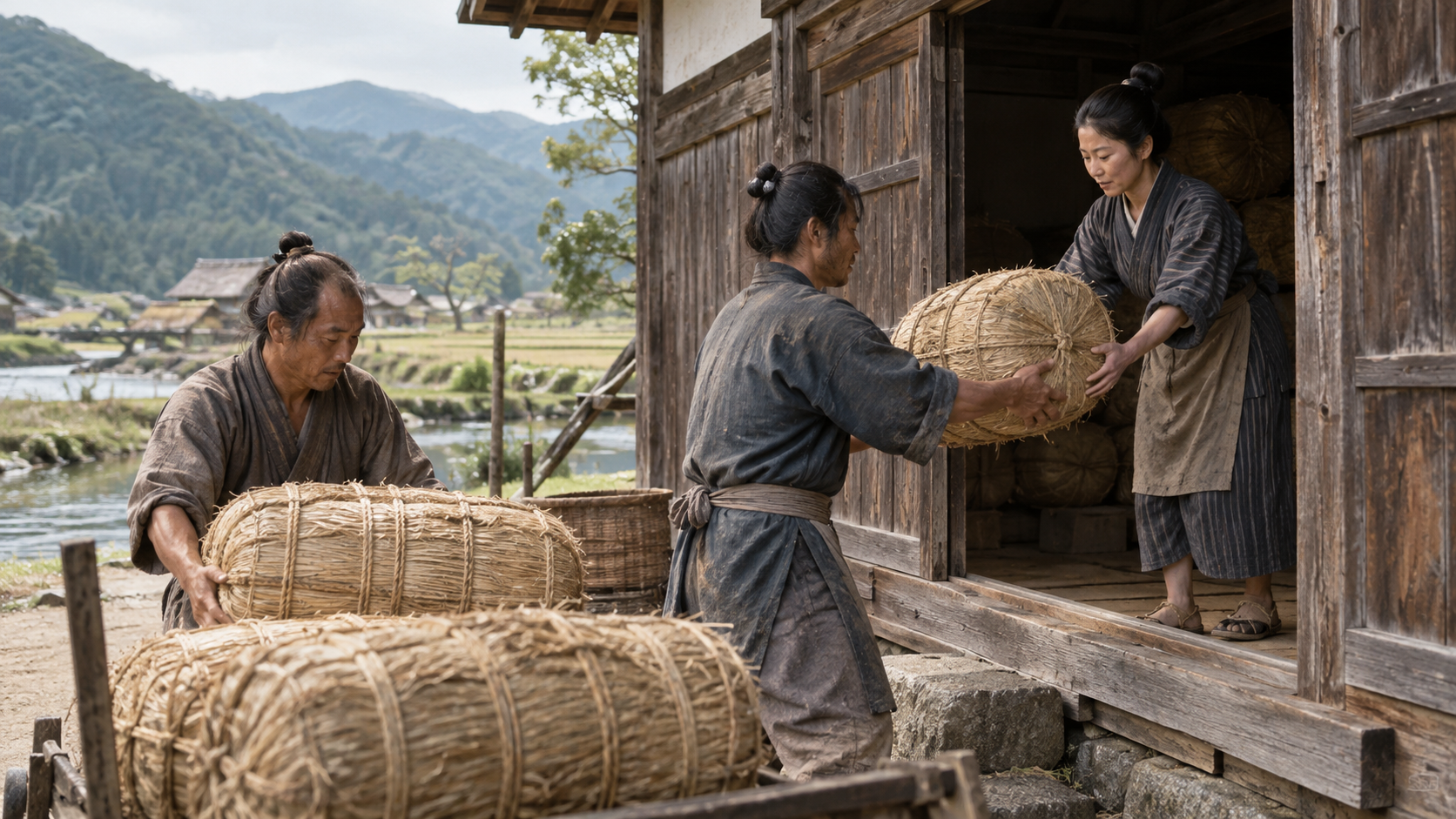
Food was moved to famine-stricken Shirakawa, while a share of savings on neighbourhood expenses was retained against future need. The yoseba combined occupational teaching with crime prevention and confinement. Examinations rewarded learning while publishing faced regulation.
After Sadanobu left shogunal office, Nanko opened scenery to wider enjoyment while supporting uses of water and land. A project recording old treasures also reached publication. These undertakings belong to different dates and functions within the same biography.
Calling everything benevolent rule would erase restrictions; calling everything austerity would obscure assistance and preparation. The account keeps helping and managing, cutting expenditure and retaining provisions distinct enough to show how they could overlap.
What did the reformer known for frugality leave behind? Nanko provides a setting for that question, alongside institutions and records with different purposes. His years beyond office make it possible to follow a life extending past the familiar outline of the Kansei reforms.
How to read this work
History, interpretation, and reconstruction
Read famine response, savings, assistance and regulation separately, then follow Nanko and cultural-property recording beyond Sadanobu’s resignation from shogunal office in 1793.
This work is grounded in published sources and historical research. Interior thoughts, dialogue, and some visual details are cinematic reconstructions. Where historians disagree, the article presents the point as debated rather than settled fact.
Timeline
The story in time
-
Sadanobu responds to food shortage in Shirakawa through transport from Echigo and purchases; he also succeeds as lord that year.
Sources: s01 -
Becomes chief senior councillor of the shogunate and advances the Kansei reforms.
Sources: s01 -
The yoseba based on Heizō’s proposal opens; occupational education and crime prevention are distinguished within its combined purposes.
Sources: s03 -
Instructions for checking publication content are followed the next year by punishment of Tsutaya Jūzaburō, Santō Kyōden and others.
Sources: s01 -
The first gakumon ginmi examinations take place; this is distinct from the date of the later document shown in the exhibition.
Sources: s05 -
Resigns as senior councillor and shogunal adviser; this is not the end of his work as lord of Shirakawa.
Sources: s01
People & terms
A guide for new readers
Key figures
- Matsudaira Sadanobu
- Became lord of Shirakawa in 1783 and, from 1787, led the Kansei reforms as chief senior councillor of the shogunate.
- Hasegawa Heizō
- Proposed the work and training institution for people without settled registration or residence whose plan Sadanobu adopted.
Glossary
- Kansei reforms 寛政の改革
- The measures associated with Sadanobu’s shogunal office, involving restraint, reserves, assistance, regulation and learning.
- Rōjū 老中
- A senior councillor of the shogunate; Sadanobu’s departure from this office in 1793 did not end his domain work.
- Shirakawa 白河
- The domain and town central to the famine response and later Nanko development.
- Detached territory 飛地
- Territory separated from the domain’s main area, relevant here to obtaining food from Echigo through Aizu.
- Rice reserves 囲米
- Provisions held in advance against shortage, distinguished from seeking supplies only after a crisis begins.
- Shichibu tsumikin 七分積金
- The seven-tenths fund: a share of savings achieved on neighbourhood expenses, not seventy per cent of total income.
- Neighbourhood expenses 町入用
- Communal neighbourhood expenses whose reduction supplied the savings discussed in the fund explanation.
- Ninsoku yoseba 人足寄場
- The work and training institution combining assistance, confinement and crime prevention described by the National Archives.
- Gakumon ginmi 学問吟味
- Examinations first held in 1792, with preliminary and main stages and rewards.
- Nanko 南湖
- The lake landscape developed at Shirakawa in 1801, combining shared enjoyment with practical uses.
- Shimin kyōraku 士民共楽
- Shared enjoyment by warriors and commoners; the phrase is not a claim that all status distinctions were abolished.
- Shūko Jisshu 集古十種
- An illustrated record of old treasures published in eighty-five volumes in 1801, distinct from original objects and surviving printing blocks.
Sources & method
How this article was built
The fixed Japanese article’s two people, twelve scenes, eight timeline entries and eight adopted source IDs are preserved. English titles and institutional explanations are editorial translations, not direct quotations or claims of official English titles.
Eight source items are conservatively grouped into three publishing bodies: Shirakawa City, the National Archives and the Agency for Cultural Affairs databases. City departments, repeated archive pages, database cooperation and catalogue contributors do not become additional independent publishers.
The actual source explanations and catalogue entries are used in bounded scope. No complete independent decipherment of the original proposal, every examination document, all printing blocks or all eighty-five volumes is claimed.
Savings and total expenditure, relief and confinement, 1791/1792 fund dates, first examinations and a later exhibited document are distinguished. Neither a no-deaths statement nor universal access language is expanded into a verified total or abolition of status.
All images are AI-generated imaginative reconstructions, not authenticated portraits, actual site photographs, original records, printing blocks or precise historical architecture. Provider photographs and manuscript images are not reproduced.
No invented speech, resignation motive, inmate testimony, exact engineering measurements or uniform claim of benefit fills evidential gaps. The comparison between preparing provisions and preserving information is interpretation, not institutional identity.
Sources
References and further reading
- Getting to Know Matsudaira Sadanobu 白河市・松平定信を知ろう Title translated editorially for reader convenience. Shirakawa City 白河市 Food procurement and transport via Aizu, succession, office, publishing measures and resignation. A no-deaths assessment is not adopted as a verified statistical total; the fund’s date differs from the separate city explanation. Accessed 2026-10-21
- The Kansei Reforms, Part 5 白河市・第五回寛政の改革 Title translated editorially for reader convenience. Shirakawa City 白河市 Seven tenths means seventy per cent of savings on communal expenses, not income or the entire budget. The 1791/1792 discrepancy is retained; no conversion to modern currency is supplied. Accessed 2026-10-21
- The Ninsoku Yoseba and Hasegawa Heizō 国立公文書館・人足寄場と長谷川平蔵 Title translated editorially for reader convenience. National Archives of Japan 国立公文書館 The 1790 institution, adopted proposal, training, confinement and crime prevention. The exhibition explanation is not a complete independent reading of the original proposal or a reconstructed floor plan. Accessed 2026-10-21
- Walking Nanko Park, National Historic Site and Place of Scenic Beauty 白河市・国指定史跡名勝南湖公園を歩こう Title translated editorially for reader convenience. Shirakawa City 白河市 The 1801 landscape, shared enjoyment, irrigation, retainer training and assistance. Status abolition, equal benefits and absence of burdens are not inferred; present facilities are not assigned to 1801. Accessed 2026-10-21
- Examinations in Learning: Gakumon Ginmi 国立公文書館・学問吟味 Title translated editorially for reader convenience. National Archives of Japan 国立公文書館 First examination in 1792, preliminary and main stages and rewards. The displayed document dates to 1867; these dates are distinguished. Accessed 2026-10-21
- Nanko Park: Cultural-Property Explanation 白河市文化財課・南湖公園 Title translated editorially for reader convenience. Shirakawa City 白河市文化財課 Earlier embankment, dredging, planting, public access, irrigation and part of new-field revenue supporting the domain school. Later monuments, park systems and exact construction measurements are not projected backward. Accessed 2026-10-21
- Designation Explanation for the Shūko Jisshu Printing Blocks 文化庁・集古十種板木指定解説 Title translated editorially for reader convenience. Agency for Cultural Affairs 文化庁 Scholars and artists, recording names, locations and dimensions, and publication in eighty-five volumes in 1801. Counts of printing blocks and volumes are not equated; original images are not reproduced. Accessed 2026-10-21
- Shūko Jisshu: Bronze Objects, Cultural Heritage Database 文化遺産データベース・集古十種銅器 Title translated editorially for reader convenience. Agency for Cultural Affairs 文化遺産データベース The database catalogue discusses categories and the eighty-five-volume whole. A separately catalogued set’s physical books, the whole work’s volumes and the original objects are distinguished. Database cooperation and catalogue contribution are not counted as extra independent publishers. Accessed 2026-10-21
Continue reading
More stories from Shigeki
Shigeki English
Sakai’s Merchant City: Trade, Self-Government and Survival
A port, a merchant council and town communities—from changing authority to rebuilding after fire.
- When From the later fifteenth century through the Sengoku period, the fire of 1615 and early Edo-period reconstruction.
- Where Sakai, in present-day Osaka Prefecture, where maritime routes met roads on land.
Shigeki English
The Aburanokōji Incident: After Leaving the Shinsengumi
A separation in spring, a new base in summer, and two successive attacks.
- When Kyoto in Keiō 3 (1867). The incident’s historical date corresponds to December 13, 1867.
- Where Kyoto: the guards’ successive bases, the Aburanokōji attack site and the later place of remembrance.