
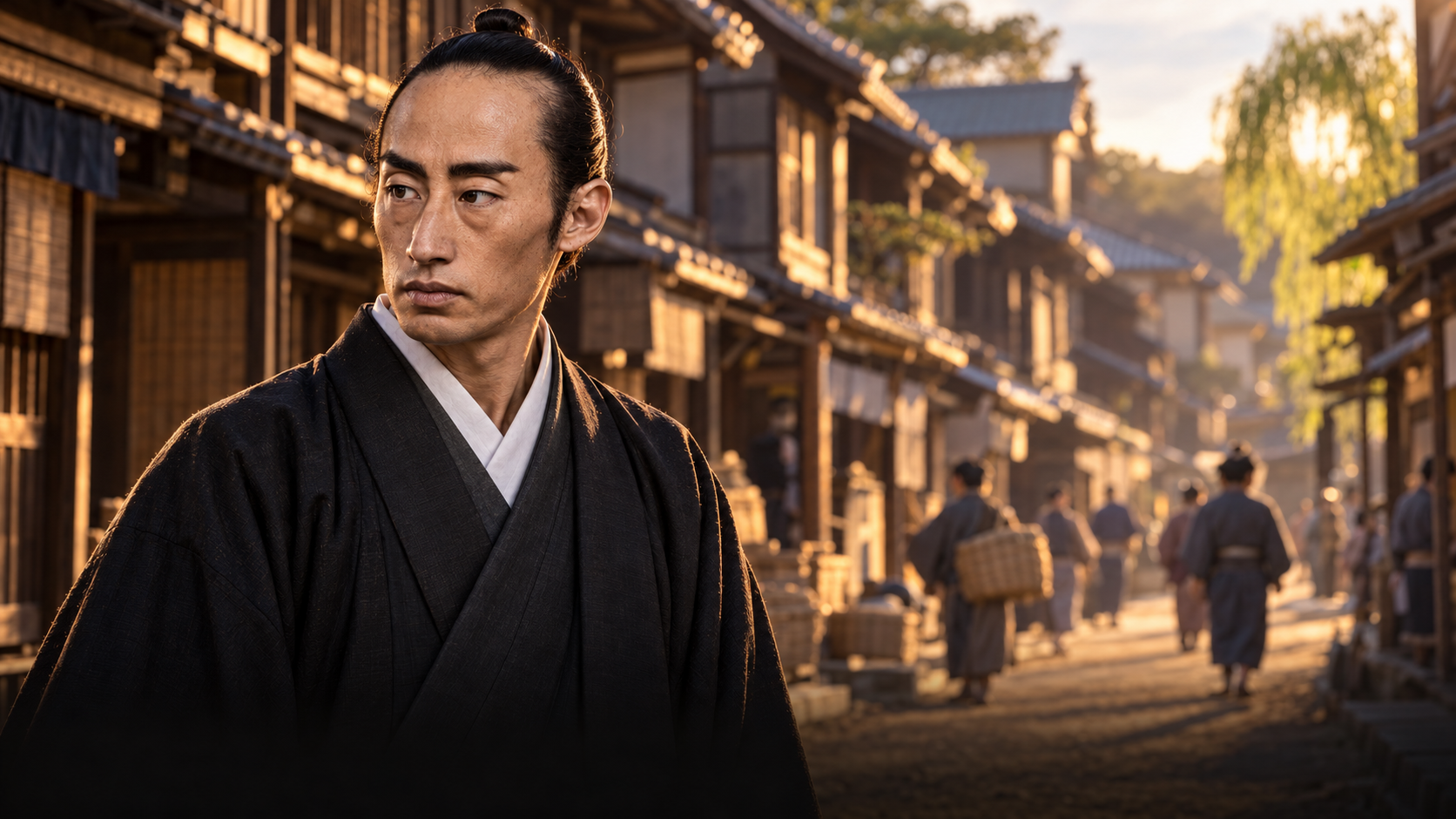
SHIGEKI ENGLISH STORYEN
Japanese history in English
Matsudaira Katamori: From Kyoto Office to War in Aizu
A domain lord, a shogunal office and an imperial relationship: following roles that overlapped and a political framework that changed.
Follow Matsudaira Katamori from the Aizu succession in 1852 to the Kyoto appointment, political upheaval, abolition of the office, surrender in 1868 and a later priestly appointment. His changing positions extend beyond a single explanation through loyalty.
At a glance
Before you enter the story
- When
- 1852 succession; 1862 appointment; 1863 upheaval; 1864 Kinmon incident; 1867 removal and abolition; 1868 surrender; 1880 priestly appointment. Historical months and days are not exact Gregorian conversions.
- Where
- Aizu; Kyoto, including Konkaikōmyō-ji and the later official residence; Toba and Fushimi; Nikkō in his later career.
- Key figures
- Matsudaira Katamori, Matsudaira Shungaku, Emperor Kōmei, Kondō Isami
- What was at stake
- How overlapping duties and relationships acquired different meanings as the institutions assigning them changed.
Why this story matters
The larger history behind the turning point
A biography can conceal political change if one label is used to explain a whole life. Following the distinction between domain government, shogunal appointment and imperial trust gives Katamori’s choices and later circumstances a more specific setting.
Historical context
What an international reader needs to know
Lordship and appointment
The domain lordship and Kyoto office enter the biography at different dates, 1852 and 1862. Kyoto City describes the latter within a hierarchy of shogunal authorities. An English term such as protector can suggest a personal role while hiding that institutional arrangement, so the Japanese office name is retained with an explanation.
The shogunate, domains and imperial court were distinct relationships in the adopted accounts. Katamori’s position connected them without making them identical. Kōmei’s trust did not mean permanent unanimity throughout the court, and holding senior office did not establish personal direction of every action in Kyoto.
Reading dates and retrospective narratives
The Japanese month and day labels used for appointment, arrival and political upheaval belong to their historical calendar. An intercalary eighth month is especially unsuitable for an automatic translation as August. This article retains the labels rather than inventing exact modern dates.
The sources also vary in purpose: biographies, municipal histories, institutional document guides, an exhibition introduction and pages used only to verify readings. The original document images and microfilmed collections have not all been independently deciphered. Later accounts of persuasion are kept separate from claims about verbatim private thoughts.
Watch the film
See the story in motion
The film currently uses Japanese audio. This English article provides the context and source trail; it does not imply that an English subtitle track is available.
Chapter 01
Beyond the duty of protecting Kyoto
The lord of Aizu who was charged with security in Kyoto eventually surrendered to the new government’s forces in Aizu. Between those positions lay changes in the offices, institutions and political relationships through which Matsudaira Katamori acted.
The later war was not already complete at the moment he accepted the Kyoto appointment. Political upheaval, military action and the end of the office itself separated appointment from surrender. Those stages need their own places in the story.
Katamori governed a domain, held an office created by the shogunate and developed a relationship with the emperor. These were overlapping positions, rather than three interchangeable descriptions of a single duty. Distinguishing them helps explain why his circumstances changed.
A verdict about loyalty cannot establish everything he privately thought. The account begins instead with the roles documented at particular times and the relationships that subsequently altered. His position as lord of Aizu came before the office that brought him to Kyoto.
Chapter 02
Beginning as lord of Aizu
Katamori was born into the Matsudaira family of Takasu and adopted by Matsudaira Katataka, lord of Aizu. The National Diet Library’s biography places his succession to the Aizu lordship in Kaei 5, conventionally 1852.
That position preceded his appointment in Kyoto. Being lord of Aizu and being Kyoto shugoshoku were different responsibilities. The latter was not simply another name for the domain lordship he had already inherited.
His responsibilities in Kyoto would come to overlap with his ties to the land and people of Aizu. Studying his Kyoto activities therefore requires retaining the domain as part of his position, without making every event there a direct expression of domain government.
The later war in Aizu also should not determine the meaning of every earlier choice. Succession and the subsequent acceptance of another office belong to different moments. Reading them in order leaves room for changes that were not yet outcomes in 1852.
Chapter 03
A new office in 1862
In Bunkyū 2, conventionally 1862, the shogunate created the Kyoto shugoshoku. Kyoto City distinguishes it from the existing Kyoto shoshidai and city magistrates. The new title represented an institutional change in the arrangements for governing and maintaining order in Kyoto.
The Ryōzen Museum’s exhibition introduction connects its creation with worsening security and decisions involving Hitotsubashi Yoshinobu and Matsudaira Shungaku. Its account explains the selection of Katamori for the newly established responsibility.
The office was consequently not an ancient task that Aizu had always performed as a matter of course. It arose amid changing political circumstances. That distinction keeps the appointment within a particular institutional response rather than an unchanging tradition.
Patrols and security were part of the work, but concentrating only on them would hide the political setting that made the office necessary. In Kyoto, movements involving the court and shogunate overlapped with the military and administrative responsibilities Katamori was asked to assume.
Chapter 04
Reading refusal and persuasion
Did Katamori seek the office eagerly from the beginning? Aizuwakamatsu City describes him as declining while ill and describes Shungaku using the Aizu family injunctions to persuade him. This account places acceptance within a process of request and persuasion.
The city’s historical narrative is the material used here. Expressions of determination or later commemorative language within such an account are not automatically a verbatim record of private thought. The distinction matters when an episode is retold in another language.
The shogunate’s request, family injunctions and relations with the shogunal house provide several approaches to the appointment. No single element is treated here as a complete cause of every later action, much less proof that the eventual war was already inevitable.
The account therefore follows the circumstances in which he accepted responsibility. It does not invent what he feared, predicted or told an unnamed companion. Knowledge of his later defeat cannot supply an otherwise unrecorded scene of foresight at the beginning.
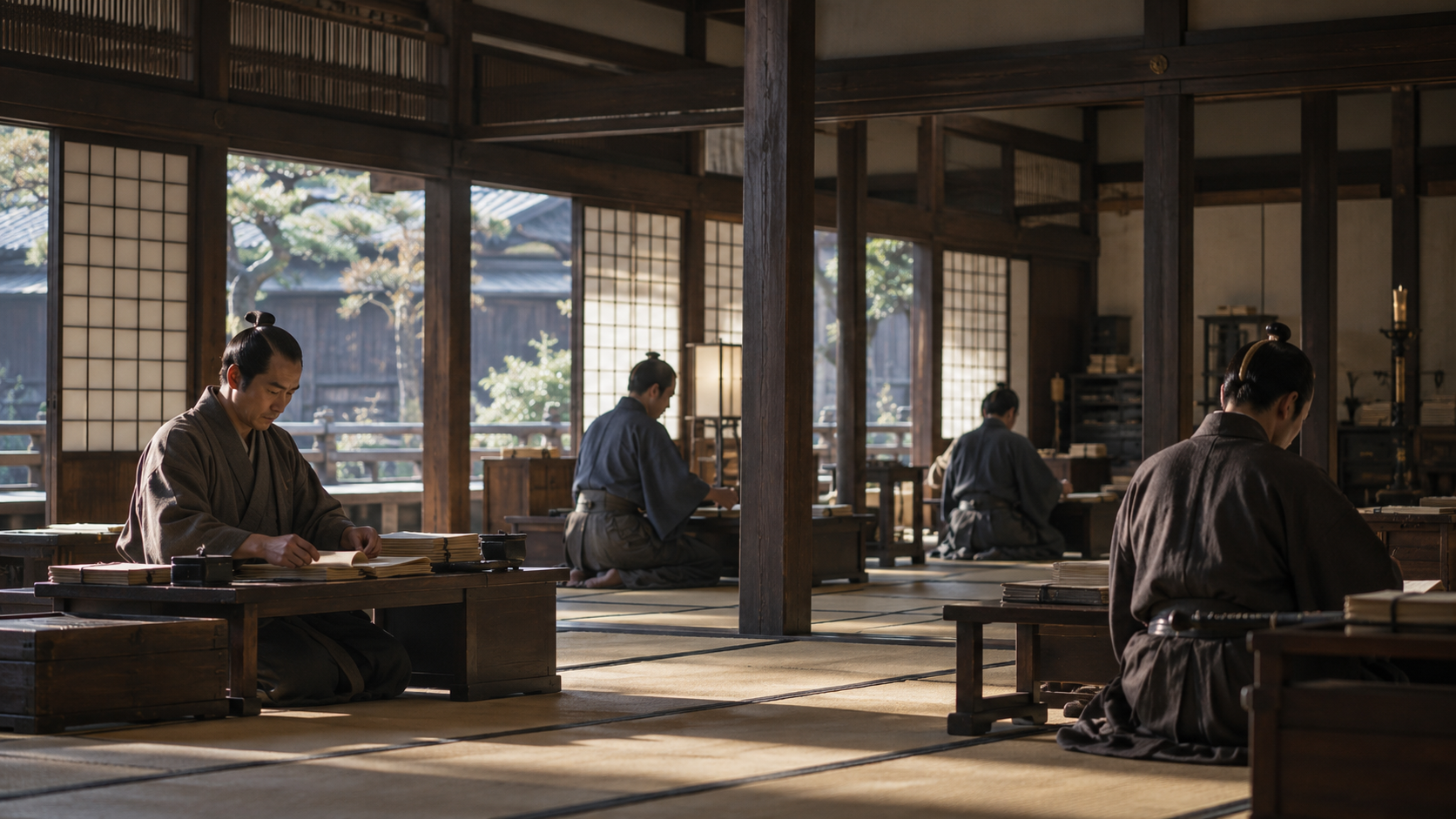
Chapter 05
Shugoshoku and shoshidai were different offices
Kyoto shugoshoku and Kyoto shoshidai are similar-looking titles in romanization, but they refer to different offices. Katamori’s appointment was to the shugoshoku created in 1862. Substituting the older title would change the institutional position under discussion.
Kyoto City places the shugoshoku above the shoshidai and Kyoto city magistrates. Its explanation of the shoshidai describes a shogunal administrative institution concerned with the court and the governance of western Japan. The two descriptions establish a relationship, not an identity.
These distinctions show why a picture of a lone warrior patrolling a street is insufficient to explain Katamori’s role. His office involved relationships with established authorities and with the shogunate’s political and military arrangements in Kyoto.
Institutional seniority nevertheless does not prove that he personally directed everything that happened in the city. Knowing where an office stood helps identify its responsibility; it does not replace evidence about decisions and actions in each particular case.
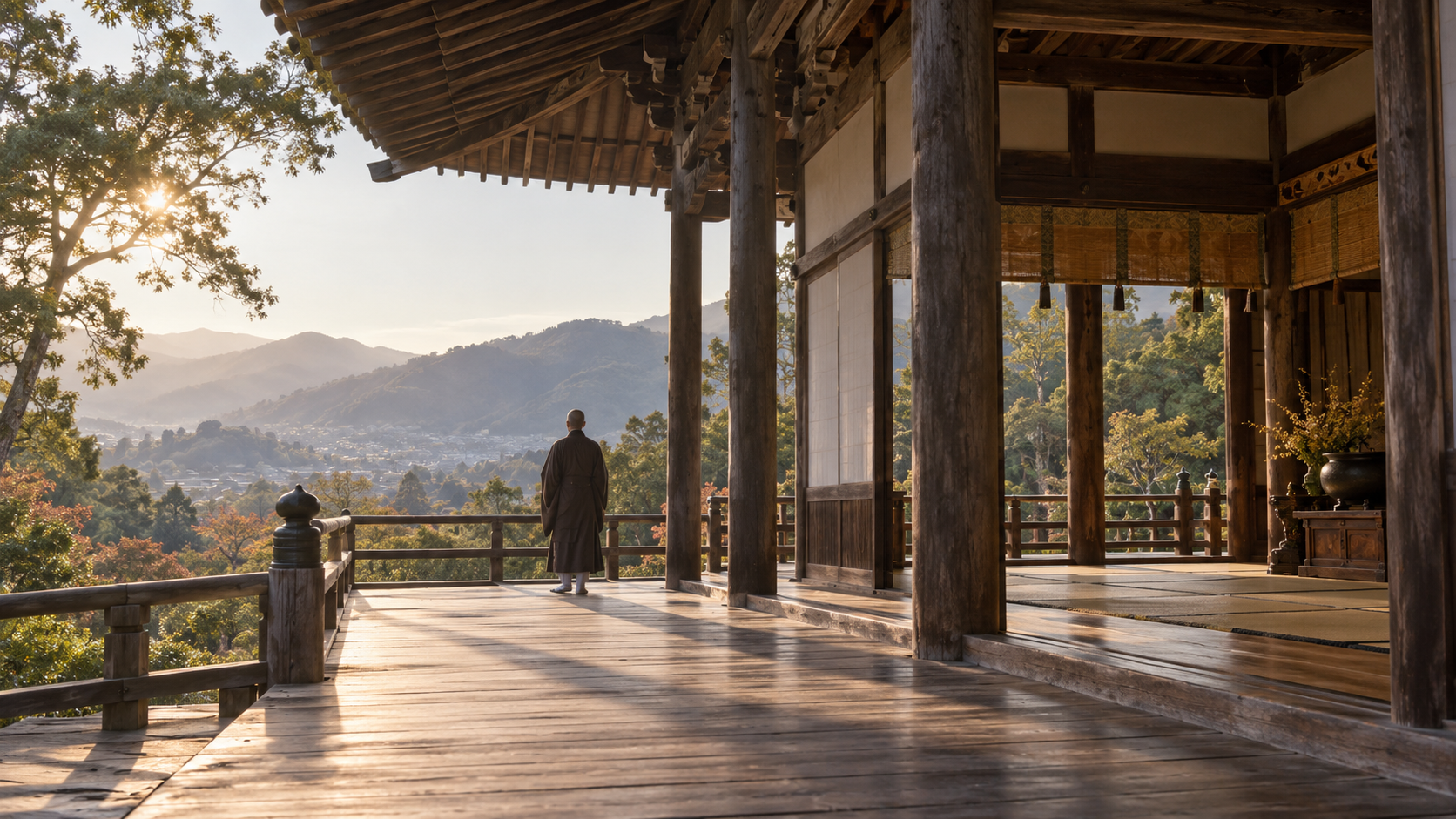
Chapter 06
From Konkaikōmyō-ji to a new residence
The Ryōzen Museum dates Katamori’s appointment to the intercalary eighth month of Bunkyū 2 and his arrival in Kyoto to that year’s twelfth month. These are historical Japanese calendar labels, not automatic equivalents of August and December on a modern calendar.
Kyoto City explains that the official residence initially occupied space within Konkaikōmyō-ji. At the end of Bunkyū 3 it moved to a newly built residence, on ground later occupied by the Kyoto prefectural government. The place of work changed during the Kyoto period.
The office thus involved more than a title. A base was established, people moved and administrative work required a setting. The transition from temple accommodation to a residence is one concrete part of how the responsibility operated in Kyoto.
Today’s markers and buildings cannot simply be treated as the visible fabric of that earlier residence. A site that can now be visited and the appearance of its nineteenth-century predecessor are different things. The account establishes the location and move without claiming an exact architectural reconstruction.
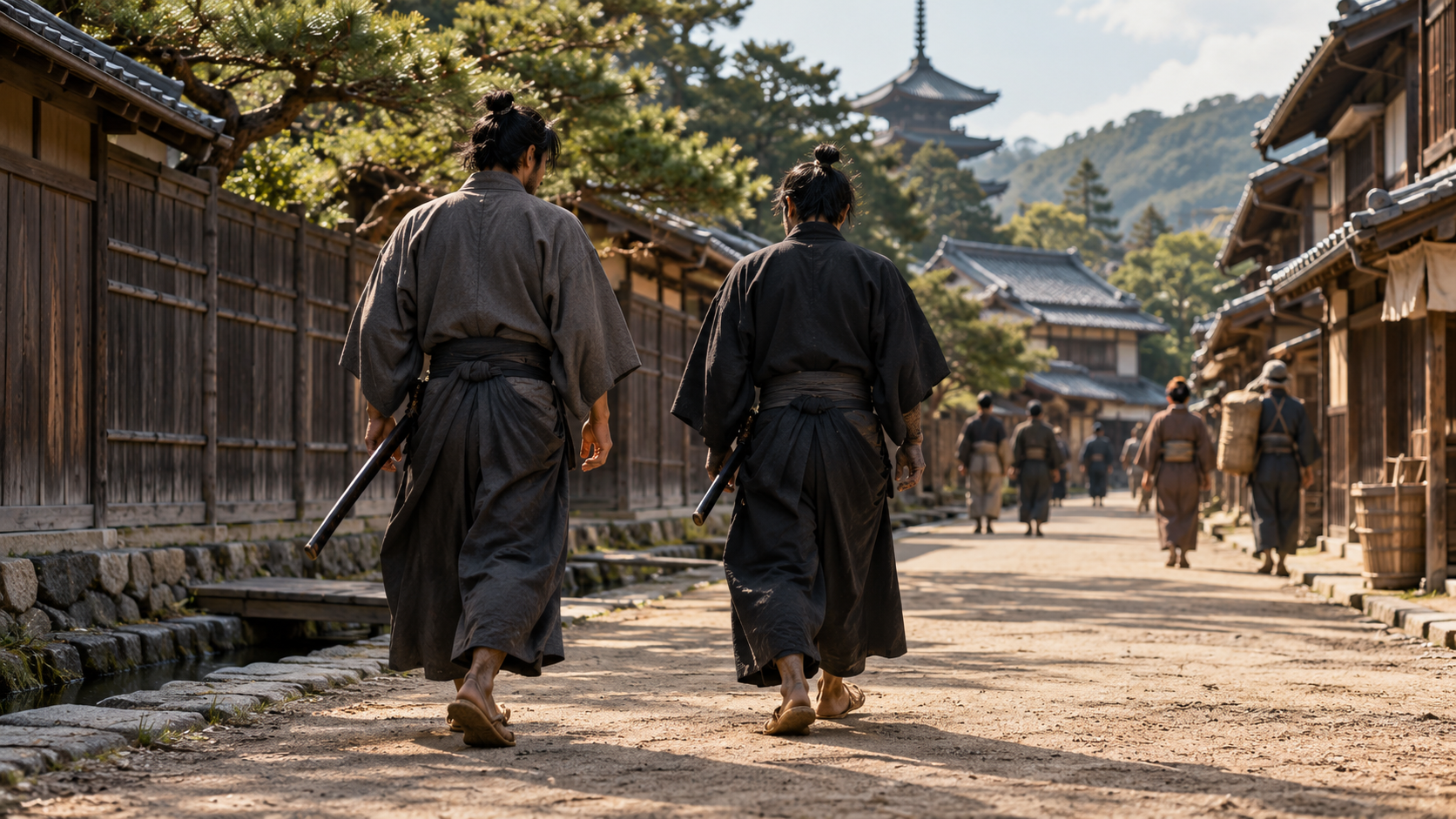
Chapter 07
The relationship with the Shinsengumi
How was Katamori connected with the Shinsengumi? The National Archives explains that Kondō Isami and others among the rōshi sent to Kyoto remained there and came under Katamori. This provides an organizational connection between the domain lord in office and the group.
The Archives describes their participation in the political upheaval of the eighteenth day of the eighth month and the use of the name Shinsengumi around that time. It also introduces papers concerning rewards after the Ikedaya incident and Katamori’s letter of thanks to the senior councillors.
This article uses the provider’s explanation and guide to those records. It does not claim that every character of the original document images has been independently deciphered or that a complete set of operational instructions has been reconstructed.
Coming under Katamori is an important institutional relationship. It does not by itself prove that every Shinsengumi activity followed a detailed instruction personally issued by him. Organizational affiliation and responsibility for a particular act require related but distinct kinds of evidence.
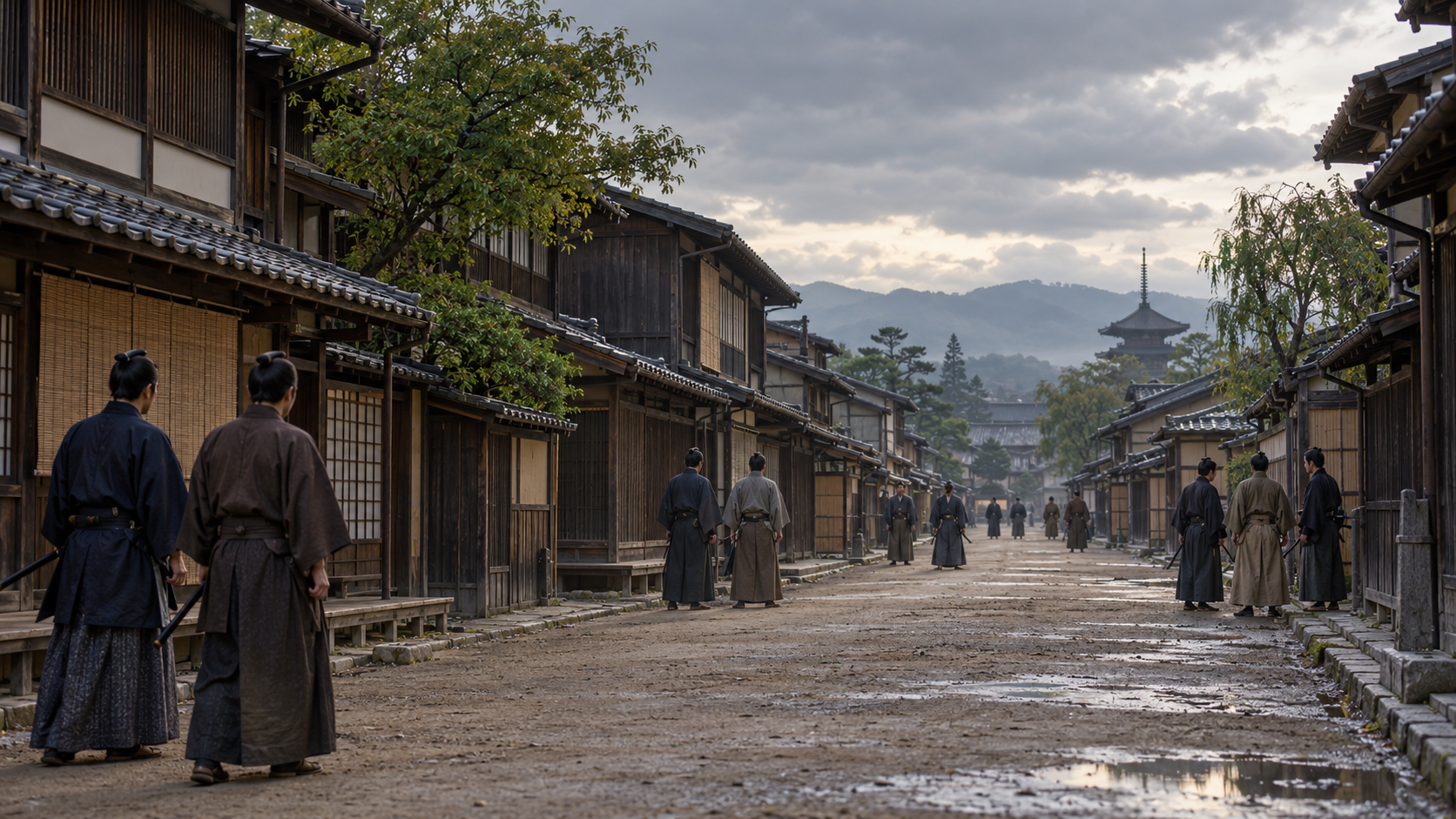
Chapter 08
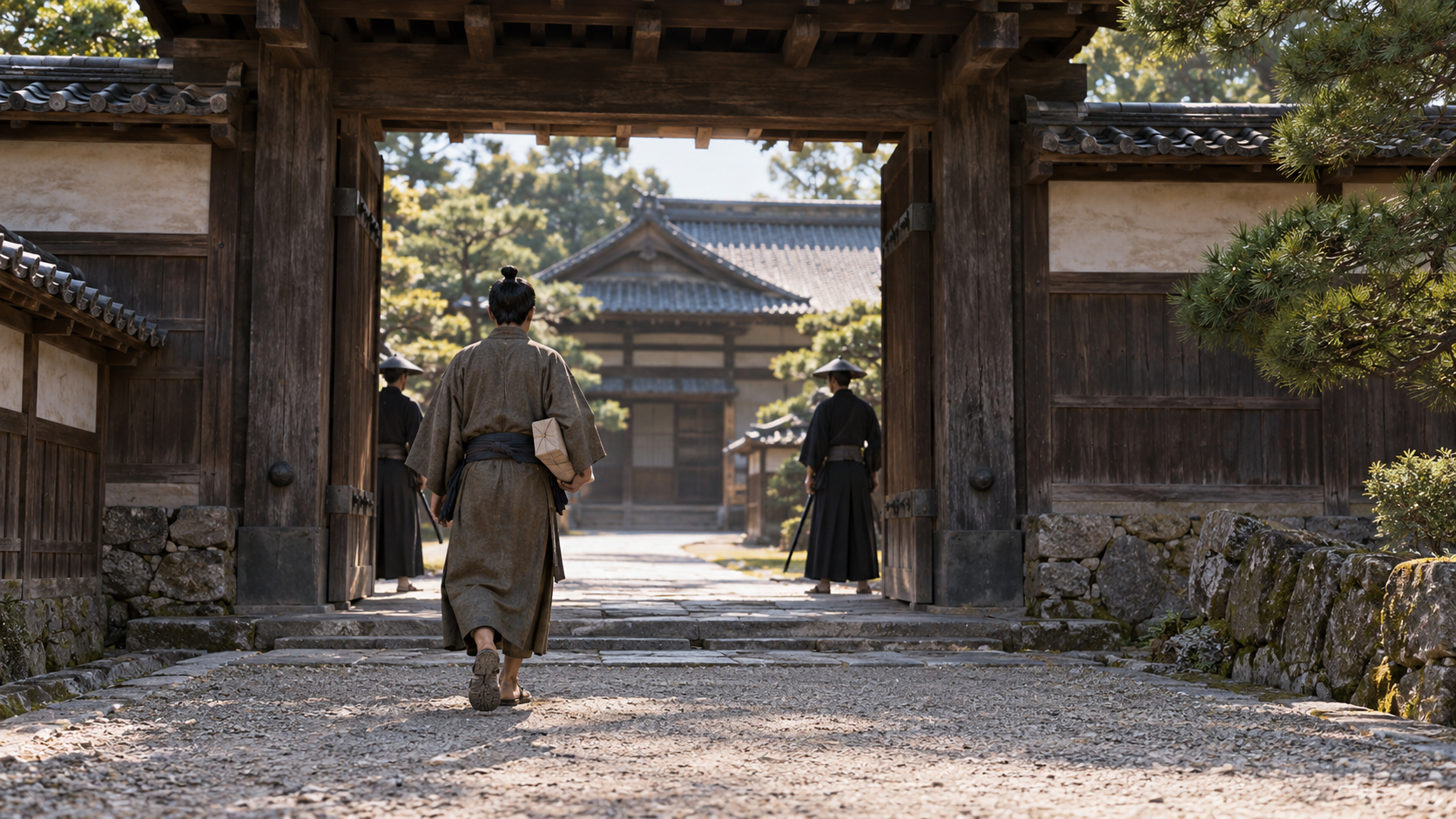
Political upheaval in 1863
The year after his appointment, in 1863, Aizu and Satsuma forces excluded Chōshū influence from Kyoto in the upheaval associated with the eighteenth day of the eighth month. The National Archives describes this political change in its explanation of the subsequent conflict.
Maintaining order in Kyoto was not a task performed outside politics. Aizu’s military presence became part of the confrontation between competing forces. The office’s security language and the political consequences of military action therefore need to be considered together.
The appointment year, 1862, must remain separate from the upheaval year, 1863. The brief Library biography contains wording that requires caution about the latter date. Here, Aizuwakamatsu City and the National Archives provide the explicit basis for placing the upheaval in 1863.
Combining both events into one scene would make later political action seem already settled when Katamori accepted office. Following the years in sequence instead preserves the development of his position and the changes in the relationships through which he acted.
Chapter 09
Imperial trust and several domains at war
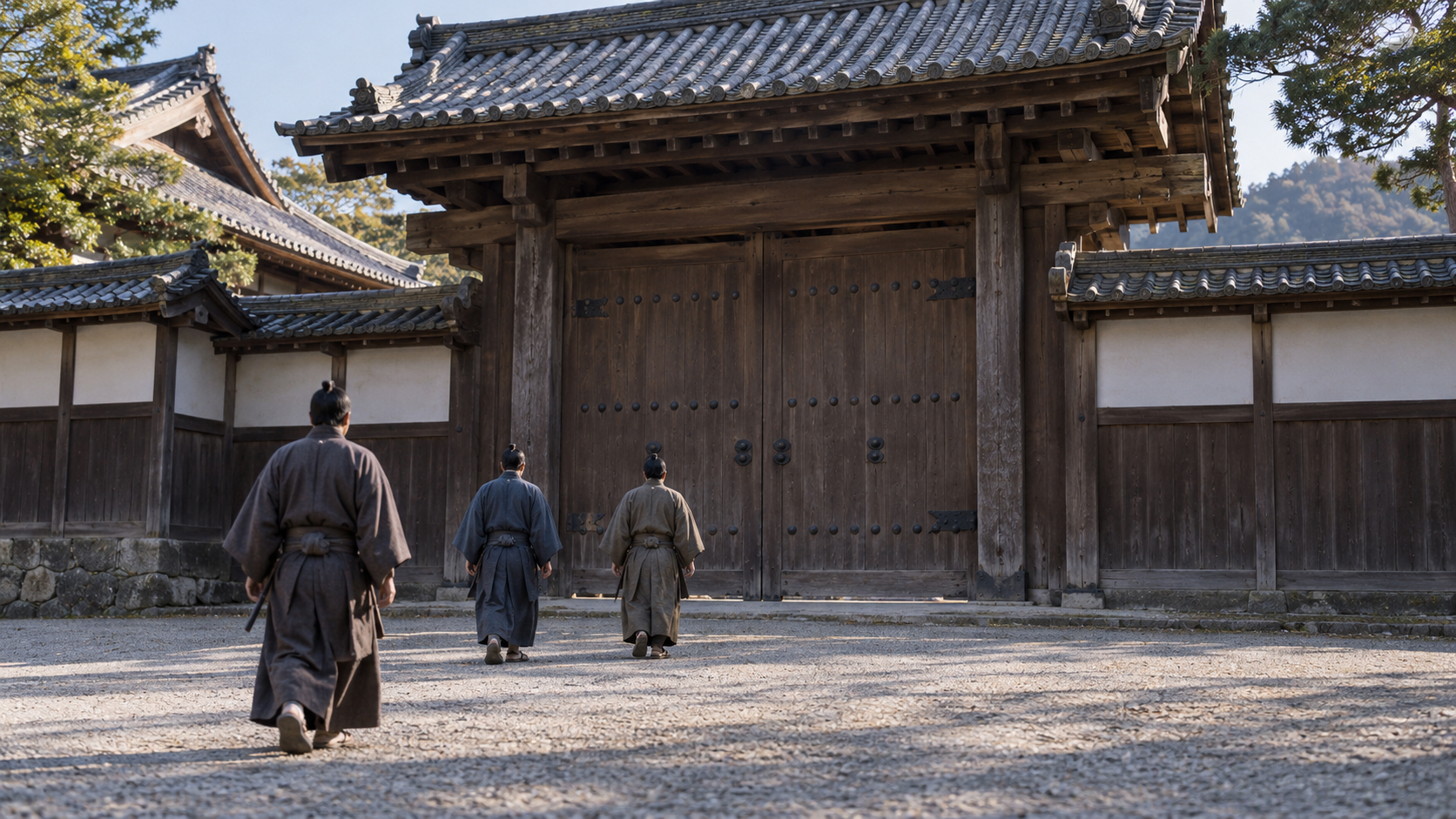
The Library and Aizuwakamatsu City describe Katamori as gaining Emperor Kōmei’s trust. His relationship with the emperor overlapped with his shogunal office. These connections complicate any account that assigns him just one political relationship throughout his Kyoto service.
In the Kinmon incident of 1864, forces from several domains fought Chōshū forces. The National Archives names Echizen, Aizu, Kuwana and Satsuma. Aizu was part of this military response, rather than the only force acting on the field.
The result consequently should not be described as Katamori winning a battle alone. Retaining the presence of other domains prevents a complex situation in Kyoto from being concentrated entirely into the actions of one biographical subject.
Likewise, an explanation of Kōmei’s trust does not prove unchanging and unanimous support from the entire court. A relationship described for a particular period and a political framework that later changed are distinct. Neither should be expanded beyond what the adopted accounts establish.
Chapter 10
The end of the office in 1867
In Keiō 3, conventionally 1867, the restoration of imperial rule brought Katamori’s removal from the Kyoto shugoshoku. Kyoto City also dates abolition of the office itself to that year’s twelfth month. The departure of an officeholder and the end of an institution coincided within this transition.
The shugoshoku did not simply continue unchanged into the war in Aizu. Its disappearance marks a break in the institutional framework. A later action cannot be described as an ordinary continuation of an office that had already been abolished.
The years from 1862 to 1867 should not be drawn as an uninterrupted tenure without any intermediate change. The adopted Shungaku collection description contains an entry concerning the Kyoto office in 1864. This article follows appointment and final removal without pretending to provide a complete continuous tenure chart.
Even when the language of protecting Kyoto remained familiar, a change in who held authority and assigned duties altered the meaning of the position. Before moving to Aizu’s war, the end of the office must therefore be retained as a distinct stage.
Chapter 11
Defeat near Kyoto, surrender in Aizu
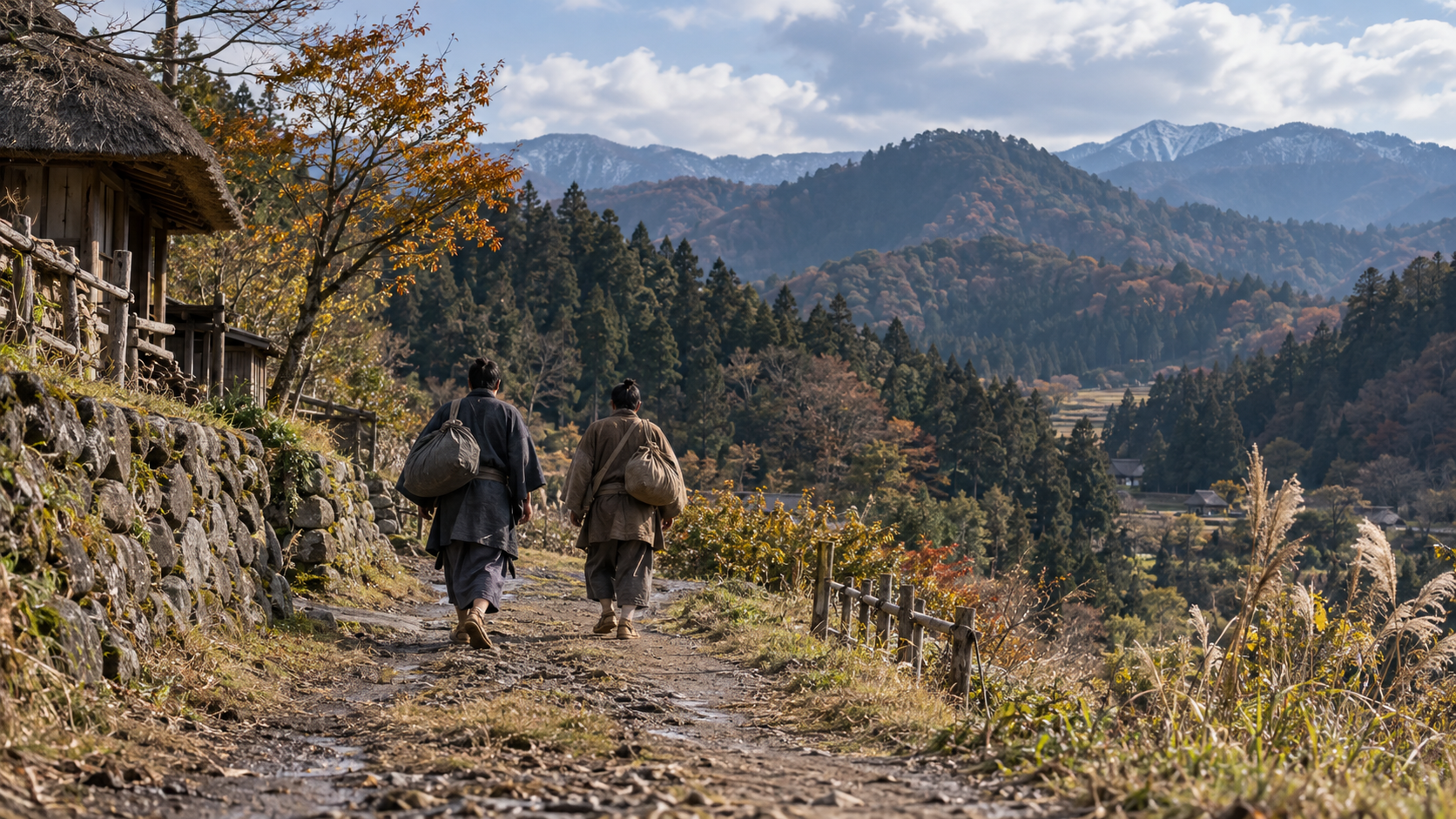
In 1868, after defeat at Toba and Fushimi, Katamori withdrew into confinement in Aizu. The Library’s biographical outline describes the attack by the new government’s forces and his eventual surrender. The geographical and political setting had changed from that of his former Kyoto office.
The time when he held a shogunal appointment in Kyoto and the time when he faced war in Aizu belonged to different circumstances. His former duty cannot be treated as identical with the position in which he now found himself.
This short biography cannot assign the whole responsibility for the war to a single personal decision. Nor should the experiences and losses of the domain’s people disappear beneath a narrative about one man’s loyalty. Those subjects extend beyond what a brief account of his offices can establish.
Accepting the Kyoto appointment had been a major turning point, but it does not follow that no further choices or changes occurred before surrender. The task is to follow how the roles he carried acquired different meanings as their political setting changed.
Chapter 12
A life continuing after surrender
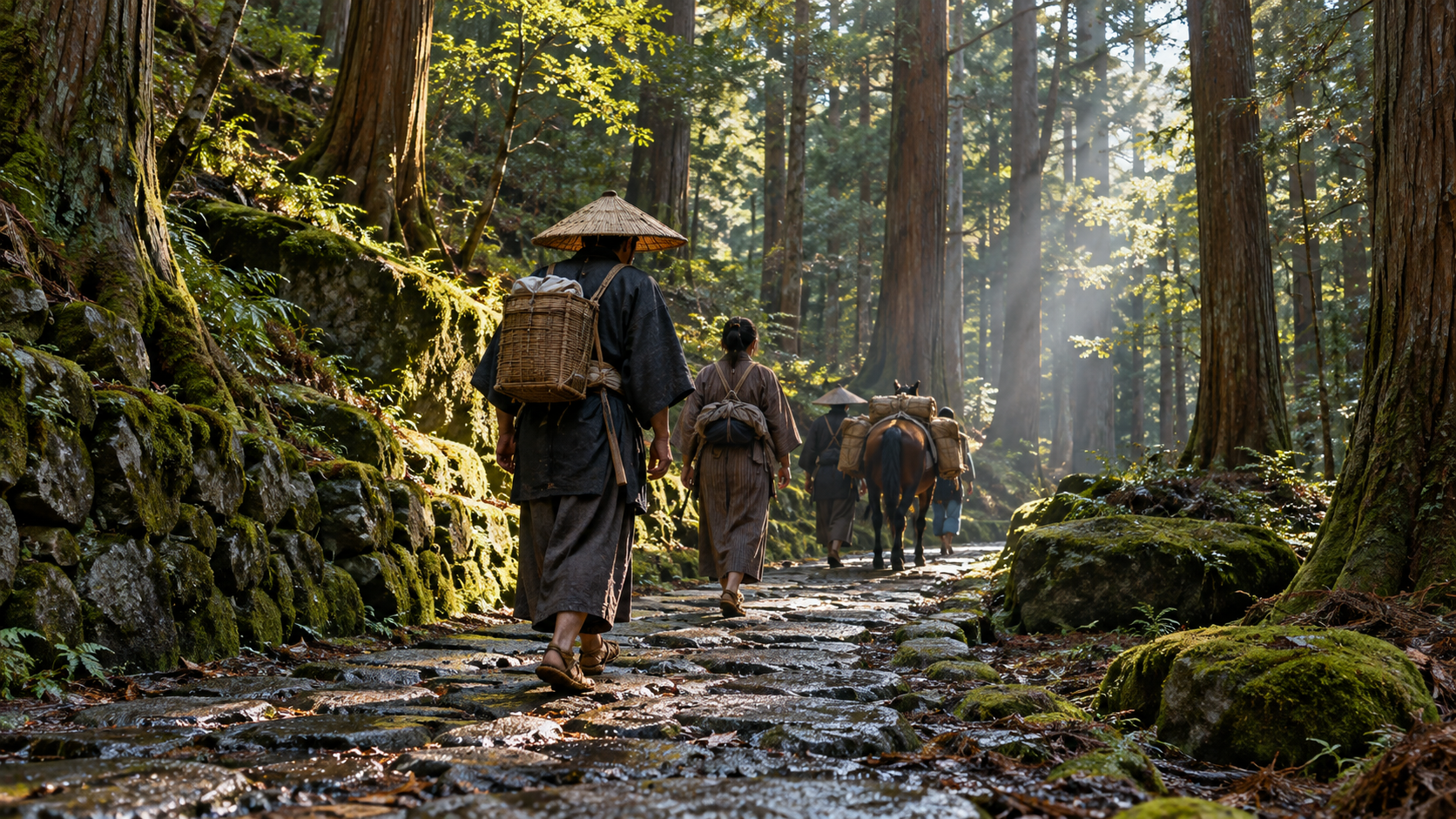
Katamori’s life continued after the surrender. The National Diet Library records that in Meiji 13, conventionally 1880, he became chief priest of Nikkō Tōshōgū. This later appointment belongs within the biography rather than being erased by its wartime conclusion.
An imagined quiet later life cannot prove that he never spoke about the upheavals. No invented silence, confession or private resolution is placed beyond the documented appointment. A restrained image of later years remains an illustration, not evidence for a lifelong vow.
Lordship in Aizu, a newly created Kyoto office, relations with the shogunate and emperor, abolition and a changed political order all form parts of his path. The roles cannot be reduced to one unchanging position without losing the transitions that made the biography historically specific.
Before deciding what loyalty explains, we can ask what overlapped and what disappeared at each point. From responsibility in Kyoto to surrender in Aizu and the life that followed, those differences in time provide a more exact way of reading the obligations associated with Katamori.
How to read this work
History, interpretation, and reconstruction
Distinguish Katamori’s Aizu lordship, Kyoto shogunal office and relationship with Emperor Kōmei. Removal and abolition in 1867 mark a change of political framework before the subsequent war.
This work is grounded in published sources and historical research. Interior thoughts, dialogue, and some visual details are cinematic reconstructions. Where historians disagree, the article presents the point as debated rather than settled fact.
Timeline
The story in time
-
Katamori succeeds as lord of Aizu, a position distinct from the later Kyoto appointment.
Sources: s01 -
In the Kinmon incident, several domains including Aizu fight Chōshū forces; this is not Aizu acting alone.
Sources: s06 -
Becomes chief priest of Nikkō Tōshōgū, an appointment in the life that continued after surrender.
Sources: s01
People & terms
A guide for new readers
Key figures
- Matsudaira Katamori
- Lord of Aizu; appointed Kyoto shugoshoku in 1862 and removed in 1867. Surrendered in Aizu in 1868 and became chief priest of Nikkō Tōshōgū in 1880.
- Matsudaira Shungaku
- A figure involved in accounts of the creation of the Kyoto office and Katamori’s appointment.
- Emperor Kōmei
- The emperor whose trust in Katamori is described by the National Diet Library and Aizuwakamatsu City.
- Kondō Isami
- One of the men who remained in Kyoto and came under Katamori; archival descriptions explain the organizational relationship with the Shinsengumi.
Glossary
- Aizu 会津
- The domain whose lordship Katamori inherited before taking the separate Kyoto appointment.
- Kyoto shugoshoku 京都守護職
- The shogunal office created in 1862 and abolished in 1867; its institutional position is distinguished from the older shoshidai.
- Kyoto shoshidai 京都所司代
- An established shogunal administrative institution described by Kyoto City, not another name for Katamori’s new office.
- City magistrates 町奉行
- Existing urban officials placed below the shugoshoku in Kyoto City’s institutional explanation.
- Konkaikōmyō-ji 金戒光明寺
- The temple containing the initial official residence; the reading is confirmed by an adopted prefectural cultural-property page.
- Shinsengumi 新選組
- The group associated with Kondō and others who remained in Kyoto and came under Katamori. Affiliation does not establish every detailed personal order.
- Rōshi 浪士
- The men in the group sent to Kyoto discussed by the Archives; Kondō and others remained and entered Katamori’s service.
- Rōjū 老中
- Senior shogunal councillors addressed in the letter of thanks introduced by the National Archives.
- Kinmon incident 禁門の変
- The 1864 fighting involving Chōshū and several opposing domains; distinguished from the political upheaval of 1863.
- Intercalary month 閏月
- An additional month in the historical calendar; the intercalary eighth month of Bunkyū 2 is not translated as ordinary modern August.
- Gūji 宮司
- The chief-priest title associated with Katamori’s appointment at Nikkō Tōshōgū in 1880.
- Family injunctions 家訓
- The family precepts used in the persuasion described by Aizuwakamatsu City; the account is not treated as unrestricted access to private thought.
Sources & method
How this article was built
The fixed Japanese article’s four people, twelve scenes, seven timeline entries and ten source IDs are preserved. English titles are editorial translations. Repeated Library, Kyoto City and Archives pages are consolidated into seven publisher organizations.
The 1863 upheaval date is explicitly checked against Aizuwakamatsu City and the National Archives rather than inferred from compressed Library wording. Appointment in 1862, the 1864 conflict, removal in 1867, war in 1868 and later appointment in 1880 remain separate.
The Shungaku collection entry prevents a claim that Katamori held the Kyoto office without interruption throughout 1862–1867. The article does not supply a comprehensive tenure table or resolve intermediate appointments beyond the adopted account.
The Kyoto Prefecture statue page and Imperial Household Agency mausoleum page are used for readings only. They are not extra political evidence. No full reading of the microfilms or every original document character is claimed.
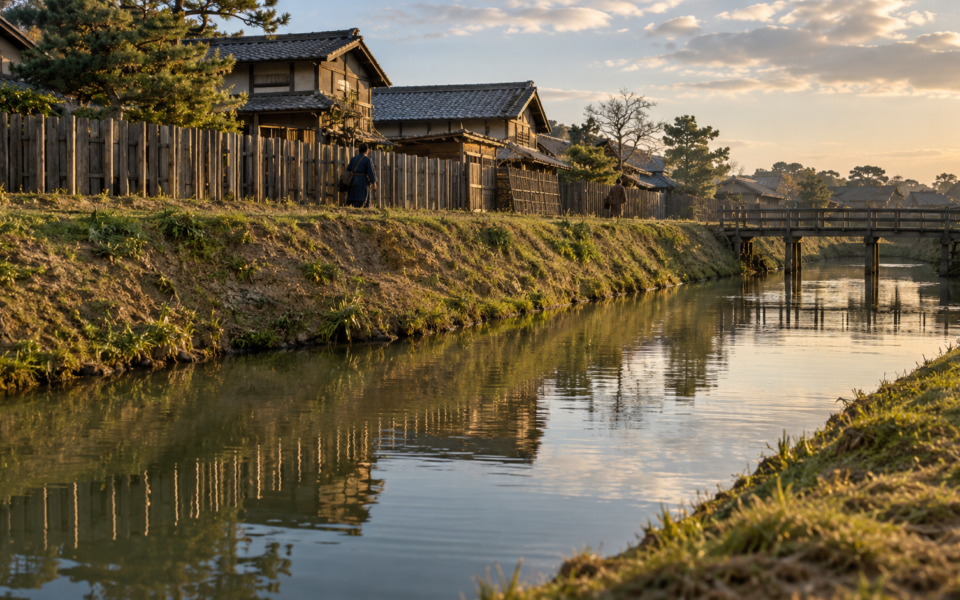
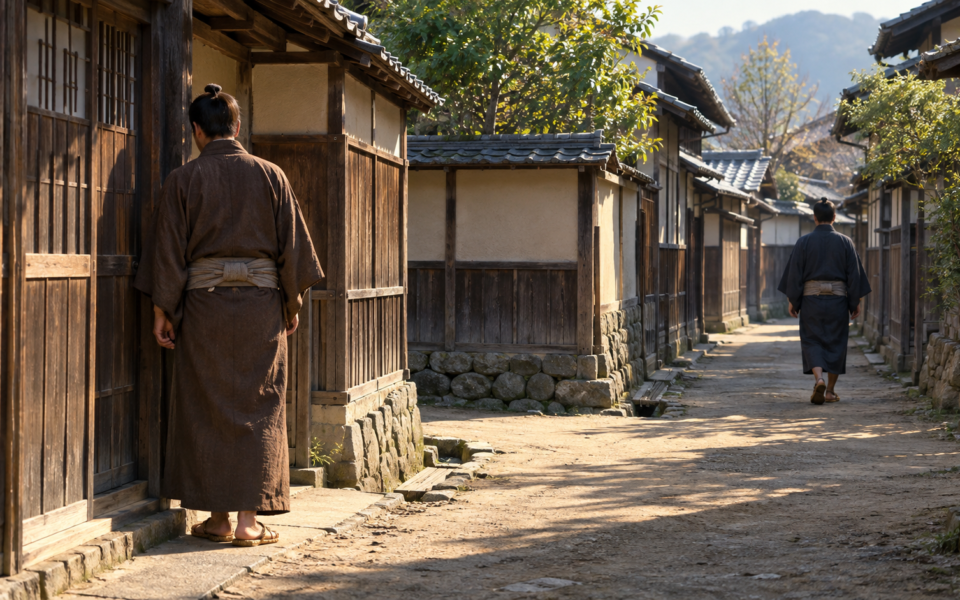
All images are AI-generated imaginative reconstructions. Anonymous people are not authenticated portraits; streets, buildings and papers are not actual site photographs or original documents. No institutional photographs, emblems or manuscript images are reproduced.
No invented dialogue, private motive, permanent court consensus, total responsibility for war or lifelong silence is asserted. Organizational affiliation with the Shinsengumi is distinguished from proof of every personal operational order.
Sources
References and further reading
- Matsudaira Katamori: Portraits of Modern Japanese Historical Figures 松平容保|近代日本人の肖像 Title translated editorially for reader convenience. National Diet Library 国立国会図書館 Biographical outline. Its compressed wording is not used to date the 1863 upheaval; other adopted sources explicitly confirm that year. Portraits are not reproduced. Accessed 2026-10-21
- KA016: Site of the Kyoto Shugoshoku Residence KA016 京都守護職屋敷址 Title translated editorially for reader convenience. Kyoto City 京都市 Creation, relationship to existing offices, residence relocation and abolition. Historical months are retained; today’s monument is not the original residence. Accessed 2026-10-21
- Aizu and the Shinsengumi: Their History at the End of the Shogunate 会津と新選組~幕末の会津と新選組の歴史を紐解く~ Title translated editorially for reader convenience. Aizuwakamatsu City 会津若松市 Refusal, persuasion through family injunctions, arrival, the Shinsengumi, upheaval and imperial trust. Direct speech and commemoration are not treated as verbatim private thoughts. Accessed 2026-10-21
- Katamori and the Shinsengumi: 160 Years since the Kyoto Appointment 企画展 京都守護職就任160年記念「会津藩主・松平容保と新選組」 Title translated editorially for reader convenience. Ryōzen Kenshōkai Foundation 公益財団法人霊山顕彰会・霊山歴史館 The Ryōzen Museum’s exhibition introduction supports the new office, selection, appointment in the intercalary eighth month and arrival in the twelfth month of Bunkyū 2. Original appointment records are not independently deciphered. Accessed 2026-10-21
- Reward Allowances for Thirty Men Including Shinsengumi Captain Kondō Isami, and Related Records 激動幕末 43.新選組隊長近藤勇以下三十名御手当之儀書上ほか(江戸城多聞櫓文書) Title translated editorially for reader convenience. National Archives of Japan 国立公文書館 The provider explains organizational ties, rewards after Ikedaya and Katamori’s letter to the senior councillors. The title means thirty including Kondō, not thirty in addition to him; original images are not reproduced. Accessed 2026-10-21
- Outline of Disguised Names of Men Who Left Chōshū and Associated Provinces in Genji 1 激動幕末 42.元治甲子長州附属諸国脱走変名大略 Title translated editorially for reader convenience. National Archives of Japan 国立公文書館 The institutional explanation supports the 1863 upheaval and 1864 Kinmon incident. A later historical-bureau copy is not treated as a live report from the event. Accessed 2026-10-21
- Wooden Statue of Saishō Rōjin at Konkaikōmyō-ji 木造最勝老人像(金戒光明寺 京都市左京区) Title translated editorially for reader convenience. Kyoto Prefecture 京都府 Auxiliary confirmation of the temple-name reading only. Conservation work on a statue supplies no evidence for late-shogunate political events. Accessed 2026-10-21
- KA061: Site of the Kyoto Shoshidai KA061 京都所司代跡 Title translated editorially for reader convenience. Kyoto City 京都市 Reading and institutional explanation of shoshidai. The office is distinct from shugoshoku; the present marker is not the original residence. Accessed 2026-10-21
- Emperor Kōmei: Mausoleum Guide 孝明天皇 後月輪東山陵 Title translated editorially for reader convenience. Imperial Household Agency 宮内庁 Used for the emperor’s name reading only, not as an explanation of his political relationship with Katamori. Images and emblems are not used. Accessed 2026-10-21
- Matsudaira Shungaku Papers, MF2: Fukui Prefectural Archives Collection 松平春嶽関係文書(MF2:福井県文書館蔵) Title translated editorially for reader convenience. National Diet Library 国立国会図書館 憲政資料室 The name reading and biographical entry are used. Its 1864 office entry prevents an uninterrupted-tenure claim; the microfilmed papers have not been read in full. Accessed 2026-10-21
Continue reading
More stories from Shigeki
Shigeki English
Sakai’s Merchant City: Trade, Self-Government and Survival
A port, a merchant council and town communities—from changing authority to rebuilding after fire.
- When From the later fifteenth century through the Sengoku period, the fire of 1615 and early Edo-period reconstruction.
- Where Sakai, in present-day Osaka Prefecture, where maritime routes met roads on land.
Shigeki English
The Aburanokōji Incident: After Leaving the Shinsengumi
A separation in spring, a new base in summer, and two successive attacks.
- When Kyoto in Keiō 3 (1867). The incident’s historical date corresponds to December 13, 1867.
- Where Kyoto: the guards’ successive bases, the Aburanokōji attack site and the later place of remembrance.