
SHIGEKI ENGLISH STORYEN
Japanese history in English
Hojo Takatoki: The Last Tokuso and the Fall of Kamakura
Why leaving office did not mean leaving power
Takatoki had resigned as shikken seven years before the Kamakura shogunate fell. Follow the household, retainers and military relationships behind his continuing importance, while separating the Taiheiki’s portrait from the events of 1333.
At a glance
Before you enter the story
- When
- 1311–1333, late Kamakura period
- Where
- Kamakura, Kyoto and the political connections between them
- Key figures
- Hojo Takatoki, Emperor Go-Daigo, Ashikaga Takauji, Nitta Yoshisada
- What was at stake
- How the distinction between office and household helps explain power and its collapse.
Why this story matters
The larger history behind the turning point
Takatoki’s story poses a question that a list of officeholders cannot answer: how could a man remain politically central after giving up a major government office? Following that question reveals connections between a powerful household and a wider political order.
The aim is neither to excuse Takatoki nor to rehabilitate him as a misunderstood hero. It is to distinguish his responsibility as a central figure from the many relationships and events involved in the government’s destruction.
Historical context
What an international reader needs to know
A government, a household and two centers of power
The Kamakura bakufu, conventionally called a shogunate in English, was a warrior government. Its political history cannot be understood simply by following the names of its shoguns. The Hojo family, the office of shikken and the headship of the main Hojo line occupied different positions within its changing structure.
Kyoto and Kamakura also need to remain distinct on the reader’s mental map. The imperial court and the shogunate’s Rokuhara establishment were in Kyoto; Kamakura was the warrior government’s eastern headquarters. Losing one center and being attacked at the other were connected but separate developments.
Names, dates and kinds of evidence
The Ashikaga leader’s name is rendered Takauji in English. The Japanese source distinguishes his earlier name, written with the character for “high,” from his later name, written with the character for “respect.” They refer to the same person, not two commanders.
The twenty-second day of the fifth month in 1333 is a date in the calendar then in use. It is not automatically May 22 on a modern Gregorian calendar. The narrative also distinguishes a military tale, a modern historical reference and an archaeological site description; none answers every historical question on its own.
Watch the film
See the story in motion
The film currently uses Japanese audio. This English article provides the context and source trail; it does not imply that an English subtitle track is available.

Chapter 1
A former officeholder at the center of the ending
When the Kamakura shogunate collapsed, Hojo Takatoki was no longer its shikken. Seven years had passed since his resignation. Yet the end of the government is still closely associated with his name. An account centered on his enthusiasm for entertainments leaves an essential question unanswered: why did a man who had left office remain so important?
An ending becomes easier to narrate when it is attached to one life. That clarity can conceal distinctions, however. Takatoki’s death, the breakdown of Hojo rule and the loss of Kamakura as a military headquarters were related developments, not interchangeable descriptions of a single event. Each requires attention at its own scale.
We begin with a distinction between the shikken, an office in the government, and the tokuso, the head of the main Hojo line. From there the view widens to household retainers and warriors in different regions. This is a reading companion to the film, not an attempt to supply undocumented conversations or private thoughts.

Chapter 2
Shikken and tokuso were not the same position
The shikken assisted the shogun and held a major role in the Kamakura government. Tokuso designated the head of the principal Hojo family line. One term concerns an office; the other concerns succession within a ruling house. A person could occupy both positions, but replacing a shikken did not necessarily replace the tokuso.
This distinction changes how we read a political chronology. If we follow only the succession of shikken, we may overlook power that continued through the headship of the Hojo house. Takatoki’s biography makes the problem especially clear: the office changed hands while his position within the family continued.
The institutional diagrams published by Tamagawa University and Tamagawa Academy show changes in the relationships among shogun, shikken, tokuso and retainers. Such diagrams are useful starting points, not complete records of how every instruction was negotiated or carried out. Formal position and the people doing administrative work need to be considered together.

Chapter 3
An inheritance before an appointment
Takatoki succeeded to the tokuso house after his father, Hojo Sadatoki, died in 1311. He became shikken in 1316. The five-year separation matters: inheriting the main Hojo house and taking a government office were different events. His importance did not begin only with his appointment as shikken.
A young head of a powerful household depended on people around him. Adachi Tokiaki, connected through marriage, and members of the Nagasaki family held important positions in Takatoki’s political environment. The standing inherited with a house should not be confused with the administrative experience of the individual who inherited it.
Nor were all those around him there on the same basis. A relationship through marriage and a position as a household retainer were not identical. Distinguishing them helps explain how access to the tokuso could matter beyond the household itself. It does not tell us, without further evidence, whom Takatoki privately trusted or disliked.

Chapter 4
Government beyond the residence
The warriors who supported the shogunate did not all live in one place or perform the same work. Defending land, pursuing claims, carrying instructions and leading armed forces were different activities. The relationship between the shogun and his gokenin, or direct warrior vassals, provided a framework connecting people across regions.
Gokenin is a useful institutional category, not proof that every member had identical interests. A shared designation should not be turned into a single grievance supposedly felt by all warriors. Doing so would obscure a central question of the final crisis: why did some relationships hold while others broke down?
Political authority therefore needs to be followed beyond the person issuing an instruction. A government’s existence and the willingness of armed men to act for it are not the same thing. This perspective prepares us to read the Ashikaga defection as a change in a supporting relationship, not merely an isolated tale of betrayal.

Chapter 5
The household retainers
The tokuso house had retainers known as miuchibito. For understanding their position, service to the Hojo household must be distinguished from the relationship between shogun and gokenin. The similar-looking terms describe different relationships. Their importance lies in the connection between household service and wider political influence.
The uchi-kanrei was a leading figure in the administration of the tokuso household. Nagasaki Enki and his son Takasuke exercised considerable influence in Takatoki’s time. Because the house itself occupied a central political position, managing its affairs could have consequences far beyond an ordinary family’s private business.
This does not establish that Takatoki was powerless, nor that every decision was his alone. It tells us to keep several positions in view: the head of the house, those administering it and the holders of government office. Treating them as if they formed a modern civil-service hierarchy would hide the very connections we need to understand.
The Kanagawa Prefectural Museum of Cultural History provides a concrete example in its account of the Soga family, explaining miuchibito as tokuso retainers and discussing connections between activity in Kamakura and holdings in Mutsu. Household service need not be imagined as activity confined to a residence. The central document discussed, however, dates to 1339, after the shogunate’s fall. It is not direct evidence of an instruction from Takatoki, and one family cannot stand for every retainer.

Chapter 6
Resignation without political disappearance
In 1326 Takatoki resigned as shikken because of illness and took Buddhist vows. Kanazawa Sadaaki succeeded him, followed by Akahashi Moritoki. Takatoki nevertheless remained tokuso. His resignation changed the holder of an office, not the identity of the head of the main Hojo line.
Calling him the last shikken is consequently inaccurate. Moritoki held that distinction. Calling Takatoki merely a former officeholder is also incomplete, because it leaves his continuing family position unexplained. “Fourteenth shikken and last tokuso” preserves both parts of the biography rather than collapsing them into one title.
Taking religious vows should not automatically be equated with complete withdrawal from political life. In this case, the evidence supports a more specific statement: Takatoki left the shikken office while retaining his position as tokuso. Asking what changed and what remained makes the seven years before the collapse intelligible as more than private retirement.

Chapter 7
The Takatoki of the Taiheiki
The familiar portrait of Takatoki absorbed in dengaku performance and dogfighting is associated with the Taiheiki. This military tale depicts people and conflict while also giving events narrative and moral meaning. It is not simply an administrative register recording the business of government day by day.
The Hyogo Literary Museum’s online Taiheiki exhibition explains the work and its presentation of figures in the upheavals surrounding the Northern and Southern Courts. Reading such a work involves asking not only what event it reports, but what role a person plays in the larger story being told.
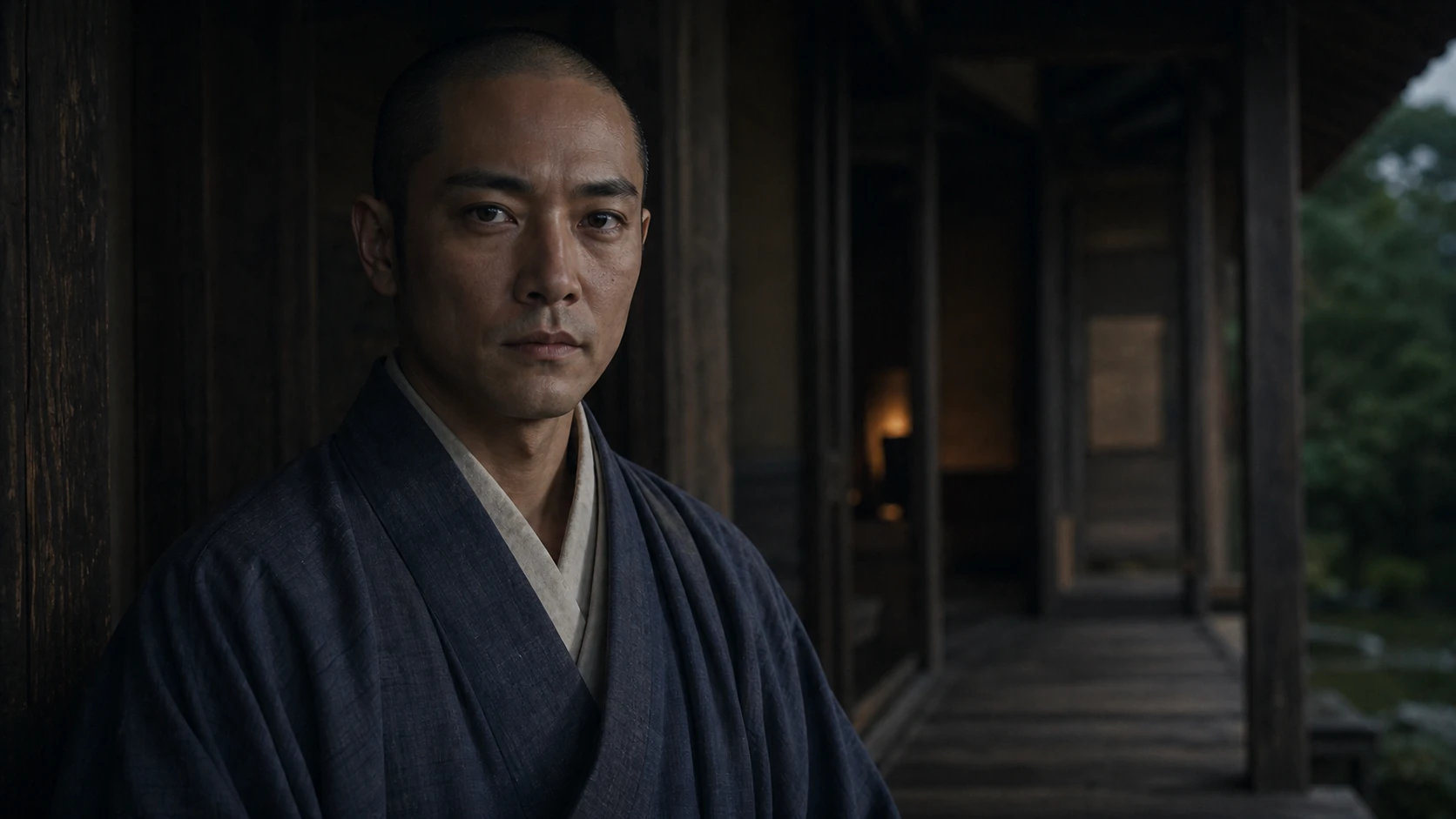
A memorable scene of entertainment is not a complete explanation of political collapse. The force of a literary portrait and the evidence needed to establish causation are different things. Our generated illustrations likewise convey a subject rather than authenticate costumes, numbers or building arrangements. Neither a vivid text nor a convincing image should be asked to prove more than it can.

Chapter 8
What a source can and cannot establish
It would be another leap to dismiss every anecdote as invention. Evidence that Takatoki enjoyed a particular entertainment and the claim that this enjoyment explains the entire shogunate’s fall are different propositions. Accepting the first does not automatically establish the second, just as questioning the second does not disprove every reported episode.
Historical reading is therefore not a choice between believing a source in full and rejecting it in full. A text can be valuable for understanding a reputation without being sufficient to establish the size of an army or the words spoken in a room. The question being asked determines the evidence needed.
This article combines reference works for dates and positions, institutional explanations for political relationships, museum descriptions for the sequence of upheaval and cultural-property information for the final site. Repetition across modern pages is not automatically independent corroboration. Reading an exhibition description also does not mean that every original object or document in the exhibition has been examined.

Chapter 9
A center of power, not a single switch
The concentration of power around the tokuso does not mean Takatoki personally made every decision. The weight of household headship and the influence of people doing daily administrative work overlapped without becoming identical. Looking at Takatoki alone makes the surrounding network disappear; looking only at retainers leaves their connection to the house unexplained.
Power is not well represented here as a switch controlled by only one person. The house’s standing could sustain the influence of its retainers, while their work sustained a political arrangement centered on the house. Recognizing that relationship is not a verdict about who issued any particular instruction.
For an individual decision, specific evidence would still be needed. The broad statement that this was Takatoki’s political world does not authorize an invented order in his voice. Keeping status and administrative action distinct allows responsibility to be investigated without turning an overall interpretation into a series of imaginary scenes.

Chapter 10
The confrontation of 1331
In 1331 Emperor Go-Daigo’s attempt to overthrow the shogunate came into open conflict. He moved to Kasagi but was defeated by the shogunate’s side and sent into exile on Oki the following year. At that stage the warrior government could still act against the central figure of the challenge.
Knowing the outcome in 1333 can make the preceding years seem like an inevitable collapse. The defeat and exile of the emperor complicate that picture. Omitting this intermediate phase turns a changing confrontation into a simple story of a government that could no longer respond at all.
Removing the emperor from the immediate struggle did not end all resistance. Fighting associated with Kusunoki Masashige and other opponents continued. Success in one place did not settle every relationship elsewhere. The narrative follows that continuation without assigning one motive, whether imperial loyalty or resentment of the shogunate, to everyone who became involved.

Chapter 11
The struggle resumes
In 1333 Go-Daigo escaped from Oki and renewed his call against the shogunate. His return was a turning point, but not a moment at which every region changed sides simultaneously. The renewed imperial challenge, the Ashikaga defection, the Nitta rising and the final events in Kamakura need to remain distinct stages.
Sending forces to respond was one of the shogunate’s available actions. Yet warriors dispatched on its behalf did not necessarily continue to fight for it. The relationship between instructions sent from Kamakura and choices made elsewhere was itself part of the political order, not an automatic mechanism.
When that connection failed, the government could lose the armed support on which it depended. This change occurred beyond Takatoki’s residence. His position as tokuso helps explain the political center, but cannot by itself explain what happened on distant military fronts. The narrative must widen without forgetting the person with whom it began.

Chapter 12
Forces sent by the shogunate turn against it
Ashikaga Takauji, whose name was then written differently in Japanese, went to Kyoto on the shogunate’s side before joining Go-Daigo’s cause. Rokuhara, the shogunate’s establishment in Kyoto, then fell. Armed force dispatched to sustain the government had become part of the attack on one of its own bases.
This was more than a subtraction from a troop total. It changed whose instructions were followed and alongside whom warriors fought. Takatoki’s standing as tokuso did not guarantee that these relationships could be maintained. Nor does knowledge of Takauji’s later career establish every intention behind his choice in 1333.
Rokuhara’s fall and Kamakura’s fall were not the same engagement. Keeping them separate prevents the Ashikaga action from swallowing the subsequent eastern campaign in the telling. The shogunate operated through connections in several regions; its loss of those footholds must likewise be traced in more than one place.
A different approach to this turning point is the written prayer described by the Kameoka Museum of Culture. Its explanation associates the document with a petition at Shinomura Hachimangu for overthrowing the shogunate and restoring the Minamoto, with commitments concerning the shrine and land if the petition succeeded. The museum qualifies the attribution as possibly in Takauji’s own hand. A petition’s stated aims are evidence to consider, not a complete disclosure of private motives.

Chapter 13
The attack reaches Kamakura
In the east, Nitta Yoshisada and others rose against the shogunate and advanced on Kamakura. After losing its Kyoto establishment, the government now faced attack at its headquarters. The surrounding hills and sea, and the limited routes into the town, were important geographical conditions, not a guarantee of successful defense.
A map alone cannot tell us which forces obeyed which instructions or why a defensive position held or failed. This account does not add unsupported troop numbers, precise timings or a detailed order of assault to make the campaign resemble an eyewitness report. The verified sequence matters more than invented tactical precision.
The celebrated Inamuragasaki tradition, involving a sword cast into the sea, belongs to the battle’s later telling and remembrance. It can be discussed as a story without being treated as a measurement of tides or proof of a miraculous opening. Site descriptions, literary tradition and cinematic illustration perform different roles and should not be allowed to substitute for one another.
The Agency for Cultural Affairs lists the historic site with a name explicitly identifying it as the legendary place of Yoshisada’s crossing. Protection as a historic site and verification of every episode associated with it are separate matters. Even an official heritage description needs to be read for what it designates and what it presents as tradition.

Chapter 14
Toshoji: an ending and a longer history
On the twenty-second day of the fifth month of Genko 3, in 1333, Takatoki and members of the Hojo side died at Toshoji. This was the end of the Kamakura shogunate. The temple’s association with the tokuso house gives the site political significance, but does not supply a record of Takatoki’s last words or expression.
Kamakura City describes excavated building foundations, ditches, postholes and traces of fire, including remains spanning the Kamakura and Muromachi periods. Evidence of burning is not permission to assign every trace to one day in 1333. The old-calendar date also must not be silently presented as an equivalent date on a modern calendar.
The temple was rebuilt after its destruction and existed in the Muromachi period: the government’s end was not the site’s entire history. The nearby cave’s association with Takatoki’s death is described as a tradition. Keeping material remains, later use and local memory distinct makes Toshoji more than the setting for a single tragic scene.

Chapter 15
Responsibility is not a complete explanation
Takatoki was not an uninvolved spectator. He remained tokuso after leaving the shikken office, and his position belonged to the center of Hojo rule. But the collapse also involved household retainers, government offices, the imperial challenge and warriors deciding where to stand. His character alone cannot account for all of these connections.
Responsibility and causation are related but different questions. Identifying a central figure does not explain the sequence in Kyoto and Kamakura. Examining the breakdown of institutions and relationships does not erase that figure’s central position either. There is no need to turn Takatoki into a hero in order to resist ending the inquiry with the label of a bad ruler.
A biography helps establish a life’s sequence; an institutional explanation distinguishes office from household; a military tale opens a window onto reputation; and archaeology locates traces of a longer past. Asking each to do an appropriate job transforms a familiar story of downfall into a question about how political power was sustained, and how it lost its support.
How to read this work
History, interpretation, and reconstruction
Takatoki’s reputation alone cannot explain the shogunate’s collapse. His position as head of the main Hojo line, the work of his household retainers and changing military allegiances must be considered together.
This work is grounded in published sources and historical research. Interior thoughts, dialogue, and some visual details are cinematic reconstructions. Where historians disagree, the article presents the point as debated rather than settled fact.
Timeline
The story in time
-
Following Sadatoki’s death, Takatoki succeeds to the tokuso house.
Sources: takatoki-nipponica -
Takatoki becomes shikken.
Sources: takatoki-nipponica -
Takatoki resigns as shikken and takes Buddhist vows while remaining tokuso.
Sources: takatoki-nipponica -
Go-Daigo’s challenge is defeated and the emperor is exiled to Oki.
Sources: hyogo-taiheiki -
Go-Daigo escapes Oki; Ashikaga Takauji changes sides and Rokuhara falls.
Sources: kamakura-fall-exhibition, hyogo-taiheiki, takatoki-nipponica -
Takatoki and members of the Hojo side die at Toshoji; the Kamakura shogunate ends.
Sources: kamakura-fall-exhibition
People & terms
A guide for new readers
Key figures
- Hojo Takatoki
- Fourteenth shikken and last head of the main Hojo line, or tokuso
- Emperor Go-Daigo
- Emperor who challenged the Kamakura shogunate
- Ashikaga Takauji
- Warrior who turned from the shogunate to Go-Daigo’s side in 1333; his name’s written form later changed
- Nitta Yoshisada
- Warrior associated with the 1333 attack on Kamakura
Glossary
- Bakufu 幕府
- A warrior government, conventionally called a shogunate in English.
- Shikken 執権
- A major office in the Kamakura government, assisting the shogun; distinct from headship of the main Hojo line.
- Tokuso 得宗
- The head of the principal Hojo family line, a household position with major political significance.
- Gokenin 御家人
- Warrior vassals linked to the shogun; the designation does not imply identical interests among them.
- Miuchibito 御内人
- Retainers serving the tokuso household.
- Uchi-kanrei 内管領
- A leading administrator of the tokuso household, a position associated with the Nagasaki family in Takatoki’s time.
- Dengaku 田楽
- A performance tradition associated with the familiar literary portrayal of Takatoki.
- Taiheiki 太平記
- A military tale about the upheavals surrounding the Northern and Southern Courts; both a source for historical inquiry and a literary work.
Sources & method
How this article was built
The Japanese article is the factual and media source for this English edition. Dates, people, scenes and references are linked to that source rather than independently rewritten. Explanations of political relationships are identified as interpretation, not quoted orders or access to private intentions.
The reference list includes modern institutional explanations and cultural-property descriptions. Consulting those descriptions is not presented as direct examination of every original document or excavation record behind them. Literary characterization, archaeological findings and local tradition are kept distinct.
All story illustrations are AI-generated reconstructions, not archival photographs or exact restorations. No generated facial expression, costume or architectural arrangement is offered as historical evidence. The linked film has Japanese audio; this article does not claim that English subtitles have been verified.
Sources
References and further reading
- Toshoji Temple Ruins 史跡東勝寺跡 Title translated editorially for reader convenience. Kamakura City 鎌倉市 Cultural-property description used to distinguish the temple site, excavated remains and the nearby cave tradition. The remains span more than one historical period. Accessed 2026-09-08
- 150 Years of the Hojo: The End of Their Splendor and the Fall of the Kamakura Shogunate 企画展「北条氏150年 栄華の果てー鎌倉幕府滅亡ー」 Title translated editorially for reader convenience. Kamakura Museum of History and Culture, Kamakura City Board of Education 鎌倉歴史文化交流館(鎌倉市教育委員会) Exhibition overview for the sequence from the imperial challenge to the Ashikaga defection, Nitta rising and the end at Toshoji. The original exhibited documents are not claimed to have been examined in full. Accessed 2026-09-08
- Hojo Takatoki: Nipponica and Yamakawa Dictionary of Japanese History 日本大百科全書(田辺久子)・山川日本史小辞典「北条高時」 Title translated editorially for reader convenience. Shogakukan and Yamakawa Publishing, via Kotobank 小学館・山川出版社/コトバンク Reference entries for household succession, the shikken office, retirement and the final crisis. Character assessments and causal claims are not adopted without qualification. Accessed 2026-09-08
- Taiheiki Hall 太平記館:太平記概説・後醍醐天皇と北条高時・討幕計画 Title translated editorially for reader convenience. Hyogo Literary Museum, Hyogo Prefectural Museum of Art ネットミュージアム兵庫文学館/兵庫県立美術館 Literary and historical context for the Taiheiki and its portrait of Takatoki; miraculous episodes, speeches and exaggerated numbers are not converted into verified events. Accessed 2026-09-08
- Changes in the Organization of the Bakufu 変化する幕府の組織(鎌倉幕府の移り変わり) Title translated editorially for reader convenience. Tamagawa University and Tamagawa Academy, with Taga Historical Research Institute 玉川大学・玉川学園/多賀歴史研究所 Institutional explanation of the changing roles of shogun, shikken, tokuso and household retainers; not evidence for a single motive shared by all warriors. Accessed 2026-09-08
- Ashikaga Takauji’s Written Prayer 足利高氏願文 Title translated editorially for reader convenience. Kameoka Museum of Culture 亀岡市文化資料館 The museum describes a prayer associated with Takauji’s change of allegiance in 1333. Its possible authorship and stated petition do not establish every private motive. Accessed 2026-09-08
- Inamuragasaki: Legendary Site of Nitta Yoshisada’s Crossing 稲村ヶ崎(新田義貞徒渉伝説地) Title translated editorially for reader convenience. Agency for Cultural Affairs, Cultural Heritage Online 文化庁/文化遺産オンライン The designated historic site is explicitly associated with a crossing legend. The designation does not establish a miracle, contemporary tide measurements or a precise military route. Accessed 2026-09-08
- The Soga Family in the Medieval Period 曽我一族の中世 Title translated editorially for reader convenience. Kanagawa Prefectural Museum of Cultural History 神奈川県立歴史博物館 Curatorial explanation of tokuso retainers and the Soga family’s activity. The central document dates to 1339, after the shogunate’s fall; one family’s example is not generalized to every retainer. Accessed 2026-09-08
Continue reading
More stories from Shigeki
Shigeki English
Oishi Kuranosuke: The Road from Surrendering Ako Castle to the Raid
Before the famous night came accounts, letters, separation, and an attempt to restore a fallen house.
- When Genroku 14–16, spanning 1701–1703; month and day references retain the old Japanese calendar
- Where Ako, Yamashina near Kyoto, and Edo
Shigeki English
The Sakuradamon Incident: A Shogunate Wounded, but Still Governing
Follow the assassination of Ii Naosuke through the orders, letters, and announcements that followed it.
- When 1860, with political background in 1858 and an aftermath extending into the 1860s
- Where Edo Castle and Hikone, with reports circulating beyond Edo