
SHIGEKI ENGLISH STORYEN
Japanese history in English
Takezaki Suenaga: The Warrior Who Took His Claim to Kamakura
From the first charge at Hakata to an appeal in Kamakura, a stewardship at Kaitō and the famous scrolls of the Mongol invasions.
Takezaki Suenaga went first into battle against the Mongol invasion of 1274, then traveled to Kamakura to demand a reward. Follow his two campaigns, his rule at Kaitō and the making, journey and later alteration of the illustrated scrolls that preserve his story.
At a glance
Before you enter the story
- When
- From Suenaga’s birth in 1246 through the invasions of 1274 and 1281, his documents of 1293 and 1314, and the designation of the scrolls as a National Treasure in 2021.
- Where
- Higo Province in present-day Kumamoto Prefecture, Hakata Bay and Kamakura.
- Key figures
- Takezaki Suenaga, Adachi Yasumori, Mii Suenari, Kikuchi Takefusa, Shōni Kagesuke
- What was at stake
- How a warrior of modest standing won recognition for his service, and how the record he left has been read and altered since.
Why this story matters
The larger history behind the turning point
The Mongol invasions are often told through storms and great armies. Suenaga’s story shows them from the level of one vassal who had to pay for his own journey, wait for a hearing and argue that his service deserved a reward.
The scrolls he commissioned remain a key source for the invasions, yet their famous explosion may be a later addition. Their history is a reminder to ask who made a historical record, and when each part of it was created.
Historical context
What an international reader needs to know
A warrior and a distant government
The Kamakura shogunate was a warrior government based in eastern Japan, far from Kyushu. Warriors who served it directly, known as gokenin, could receive land or office as rewards, but claims had to be reported and examined before anything was granted.
Dates and names
Months and days follow the lunisolar calendar used in Japan at the time, so they do not match the modern calendar. Japanese family names come first. The scrolls are known in Japanese as the Mōko Shūrai Ekotoba.
Watch the film
See the story in motion
The film currently uses Japanese audio. This English article provides the context and source trail; it does not imply that an English subtitle track is available.
Opening
Who decides that a warrior went first?
In 1274, when Mongol-led forces landed on the shores of Hakata Bay, a warrior from Higo Province named Takezaki Suenaga rode at the enemy ahead of others. No word of a reward followed. The next year he set out for Kamakura, the seat of the warrior government, to put his case directly to one of its most powerful men.
Suenaga is remembered today because he stands at the center of the Mōko Shūrai Ekotoba, the illustrated scrolls of the Mongol invasions, now a National Treasure of Japan. Japan’s Cultural Heritage Online singles the work out as an unusual attempt to record events from the point of view of a single vassal of the shogunate.
This article follows Suenaga’s origins, his two campaigns, his appeal in Kamakura, his rule at Kaitō and the making and later history of the scrolls. Months and days follow the calendar then in use in Japan. Where sources disagree, as they do about what he sold and how long he waited, those differences are stated openly.
Chapter 1
A vassal from Takezaki in Higo
Suenaga was born in 1246, and the year of his death is uncertain. He was known as Gorō Hyōe-no-jō. His family’s home base was Takezaki in the Toyofuku estate of Higo Province, and a local school history connects his family name with Takezaki in the Matsubase area of present-day Uki City, Kumamoto Prefecture.
Two theories describe his ancestry. One makes him a branch of the family of the chief priests of Aso, and the other a relative of the powerful Kikuchi family. The Yamakawa dictionary of Japanese history treats the Kikuchi connection as the stronger theory, and it adds that Suenaga had lost his ancestral holding at Takezaki.
A gokenin was a warrior who served the Kamakura shogunate directly. Service in war could bring rewards of land or office from the government. For a man who is said to have lost his family’s land, the fight against the invaders can reasonably be read as an opportunity as well as a duty.
Chapter 2
First into battle at Hakata, 1274
On the twentieth day of the tenth month of 1274, the invasion fleet appeared in Hakata Bay and troops landed at several points along the shore. The defenders are said to have struggled against massed tactics and explosive weapons known as teppō. Suenaga served under the commander Shōni Kagesuke and fought at Hakata with only a few followers.
According to the historian Thomas Conlan, Suenaga was ordered to wait for reinforcements but charged the enemy anyway. A line attributed to him in the scrolls holds that in the way of the warrior, going first is what earns reward. In this attack his horse was killed and he himself was wounded.
The invaders are usually said to have withdrawn on the twenty-first, although a record of fighting near Dazaifu on the twenty-fourth has led some to argue that they pushed farther inland. The reason for their departure, once simply credited to a storm, also remains disputed. Once the fighting ended, Suenaga’s problem became how to have his service recognized.
Chapter 3
The reward that never came
After the campaign Suenaga waited for a decision on his reward for going first. The local history museum in Uki explains that no word came from the shogunate. Conlan notes that Suenaga’s name had been recorded among the wounded, which was a different matter from having his claim to be first accepted and rewarded.
Service on the battlefield led to a reward only after it had been reported and examined. A long distance separated the men who had fought in Kyushu from the officials who made decisions in Kamakura. Even a true claim to have been first was worth nothing unless it reached the people who were able to judge it.
In 1275 Suenaga stopped waiting and went to appeal in person. His experience should not be stretched into a claim that every warrior who fought the invaders went unrewarded. It is one specific case, and it is valuable precisely because the steps he took can be followed in such unusual detail.
Chapter 4
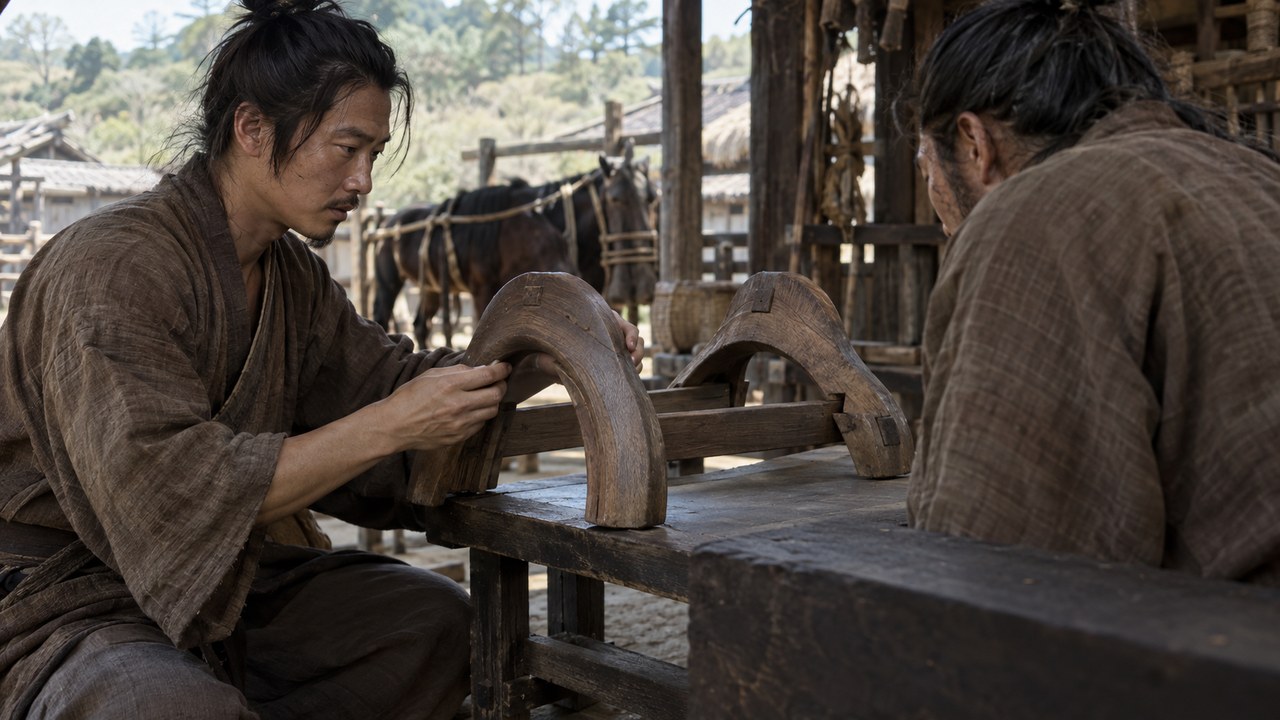
Selling a saddle to travel east
According to Uki City’s public newsletter, Suenaga sold a saddle to pay for the journey and left for Kamakura with a small number of retainers. Conlan’s study says instead that his relatives gave him no support and that he sold his horse. The sources differ on the item, but both describe a warrior giving up his equipment to travel.
The same newsletter says that he met Mii Suenari on the road. Mii was his eboshi-oya, the man who had acted as a symbolic parent at the coming-of-age ceremony called genpuku. Even on this hard journey, the ties that a warrior had built over his life appear in the record of his travels.
The first of the two scrolls gives its opening half to Suenaga’s deeds in the 1274 campaign and its latter half to his appeal in Kamakura. For a work famous for its battle scenes, the amount of space given to a journey and a lawsuit is one of its most distinctive features.
Chapter 5
Facing Adachi Yasumori
Arriving in Kamakura did not bring an immediate hearing. Uki City explains that nobody would pass his request to the officials in charge of rewards and that he waited about two months, while a local school history says he petitioned for about three. The man he finally met was Adachi Yasumori, the official who examined warriors’ claims.
Conlan writes that Yasumori rejected the claim because Suenaga had neither killed an enemy nor lost any of his men. Suenaga pressed on, declaring himself ready to take his own life, and Yasumori relented. What was at stake was whether going first could count as merit in itself, apart from the number of enemies killed.
Suenaga received a land stewardship in Higo and the gift of a horse. Conlan adds that Yasumori then issued a law forbidding others from appealing directly to Kamakura for rewards. One man’s successful appeal and a measure narrowing that route for everyone else thus appear side by side in the same account of these events.
Chapter 6
Steward of Kaitō
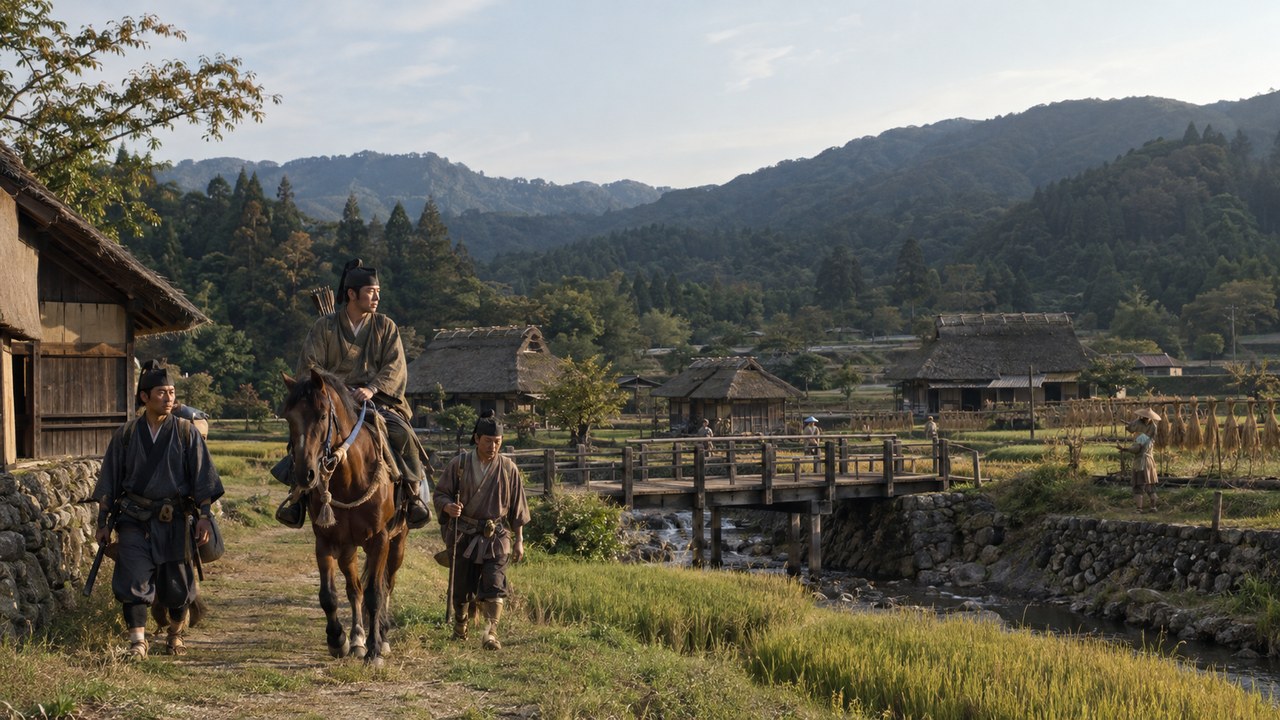
In the first month of 1276, Suenaga entered Kaitō, the district granted to him as his reward. It lay in what is now the Ogawa area of Uki City and was also connected with the lands of Kōsa Shrine in Higo. A jitō, or land steward, was responsible for managing and controlling such an estate.
Between about the third and eighth months of that same year, a stone wall some twenty kilometers long was built on the dunes around Hakata Bay. The work was assigned to warriors from the provinces of Kyushu according to the size of their lands, and the Ikinomatsubara section was the responsibility of warriors from Higo.
Gaining land as a reward also brought new obligations to the government. While memories of the fighting were still fresh, the warriors of Kyushu began preparing for another attack. Suenaga had only just arrived at Kaitō when this work began, and a second campaign against the invaders lay ahead of him.
Chapter 7
The second campaign, 1281
In 1281 the invaders returned to Hakata Bay. Fukuoka City’s plan for the historic site explains that the wall built after the first invasion now helped keep them from landing. The scrolls call the wall ishitsuiji, a stone embankment, and they show Suenaga riding along in front of it with his men.
On top of the wall sit Kikuchi Takefusa, a powerful warrior from Higo, and his men. According to a Japan Tourism Agency description, Suenaga calls on Takefusa here to bear witness to his bravery in the coming fight. A boat hook carried by one of his followers hints at the naval battle that is about to begin.
Suenaga’s party set out from Ikinomatsubara for Mikuriya, and he is said to have boarded enemy ships and fought on them. Reference works connect the sea battles of the second scroll with Shika Island and Takashima. At one point the scroll shows his followers in a boat without him, and the section showing his own ship may be lost.
Chapter 8
Yasumori’s fall and a lord’s documents
On the seventeenth day of the eleventh month of 1285, Adachi Yasumori and his family were destroyed after a struggle with Taira no Yoritsuna, in the incident known as the Shimotsuki Disturbance. The official who had finally accepted Suenaga’s appeal died only four years after the second invasion had ended.
Suenaga, meanwhile, left written records as lord of Kaitō. He assigned revenue to repair the district shrine, Kaitō Shrine, and the temple Tōfukuji, and he set down eighteen articles on the governing of local people. A note in his own hand, added when the rules were rewritten in 1314, is prized as a rare example of his writing.
A local school history says that he founded Tōfukuji as his family temple and became a monk there. Conlan writes that he composed a final testament in 1324 and presumably died soon afterward, while Japanese reference works continue to treat the year of his death as unknown. The end of his life remains only partly visible.
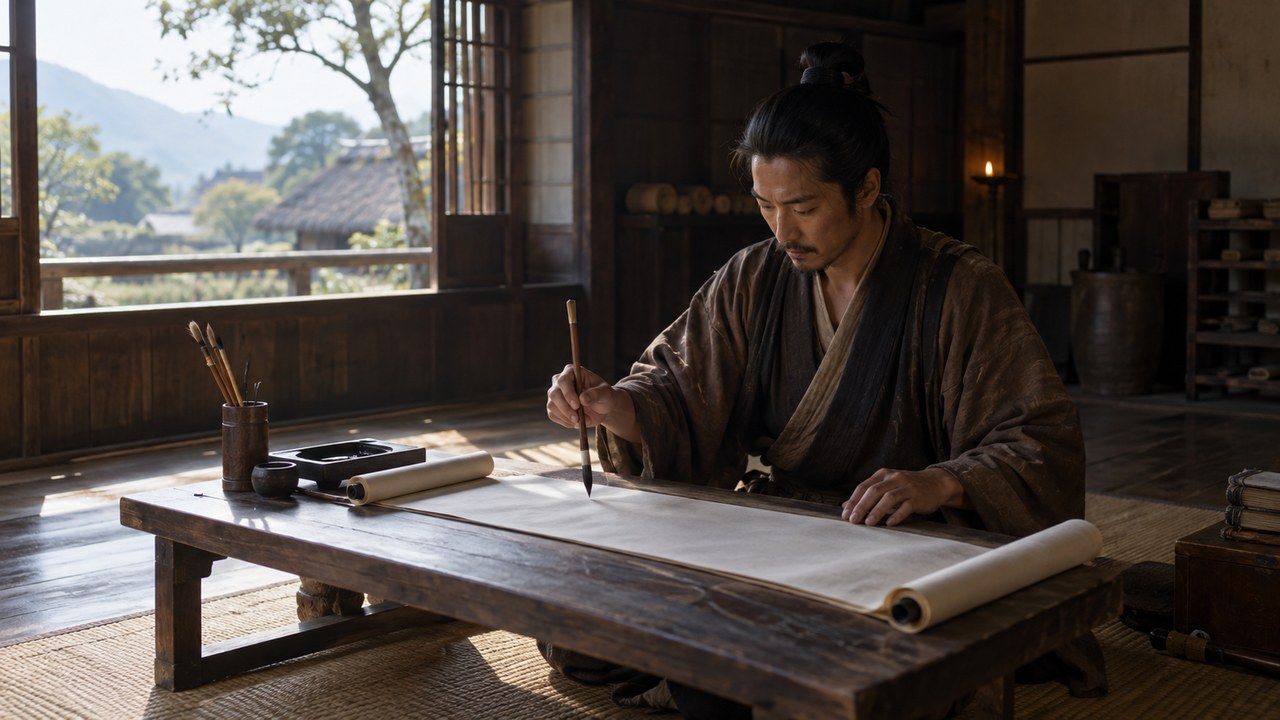
Chapter 9
Why were the scrolls made?
The Mōko Shūrai Ekotoba is understood to have been made at Suenaga’s direction to show how he fought and how he was rewarded. Its two scrolls together run to more than forty meters. They are known for careful depictions of armor and horse gear, and the names of important figures are written above them, with Suenaga’s in red.
Reference works explain that Suenaga credited his reward to the divine favor of the deity of Kōsa and had the scrolls made to give thanks and to pass the story to his descendants. One dictionary also mentions gratitude to Yasumori, and another theory holds that the work was connected with his demand for a reward after 1274.
The date has usually been placed around 1293, from a colophon dated the ninth day of the second month of the first year of Einin. That era name, however, began only on the fifth day of the eighth month, so the date is thought to have been written later. Other scholars suggest dates from the late thirteenth century to the 1320s.
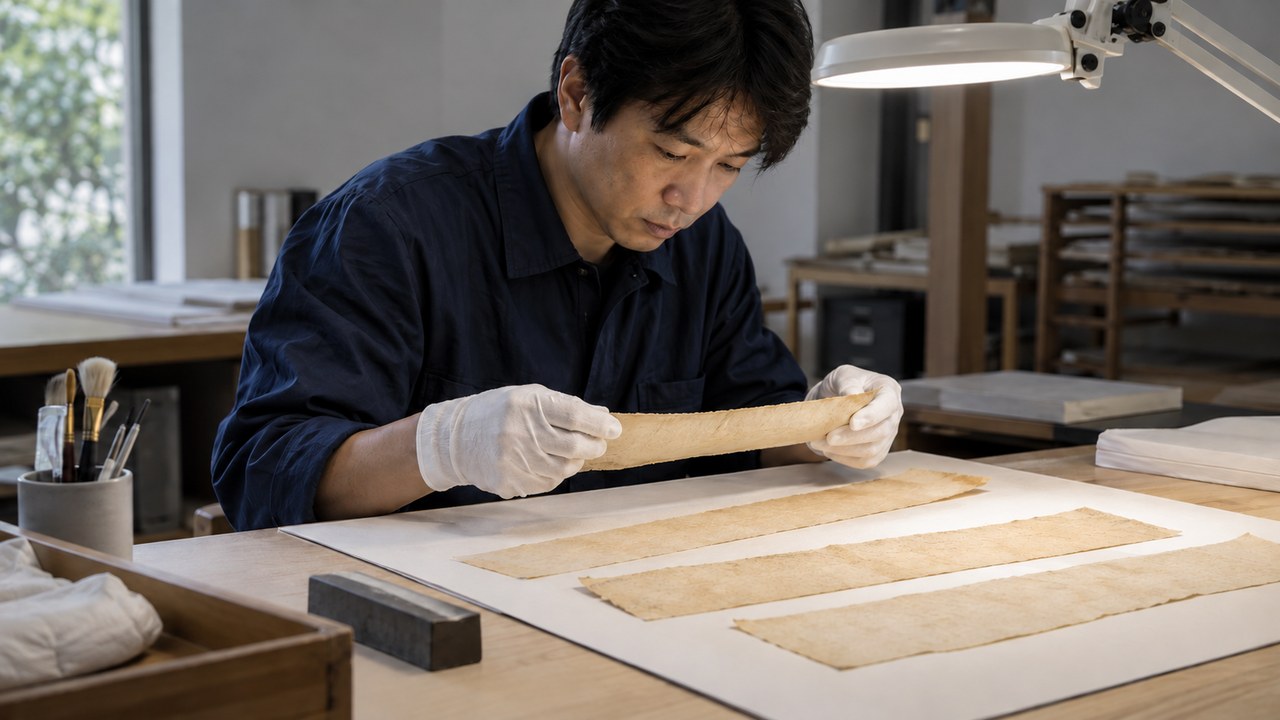
Chapter 10
From Kaitō Shrine to the imperial household
According to Conlan, the scrolls were kept at Kaitō Shrine until the civil wars of the fourteenth century, when they came into the hands of the Nawa family. In the late sixteenth century they passed to the Ōyano family of Amakusa as part of a Nawa daughter’s dowry, and they remained with the Ōyano for generations.
In 1825 they were entrusted to the Hosokawa family, lords of the Kumamoto domain, and returned to the Ōyano after the domains were abolished in the Meiji period. In 1890 they passed from Ōyano Jūrō to the imperial household. The Museum of the Imperial Collections records a purchase, while other accounts describe a gift.
The scrolls became national property in 1989 and are now held by the Museum of the Imperial Collections. They were designated a National Treasure on 30 September 2021. The museum’s own description openly notes the disordered sections and missing portions that resulted from their long history of movement from one owner to another.
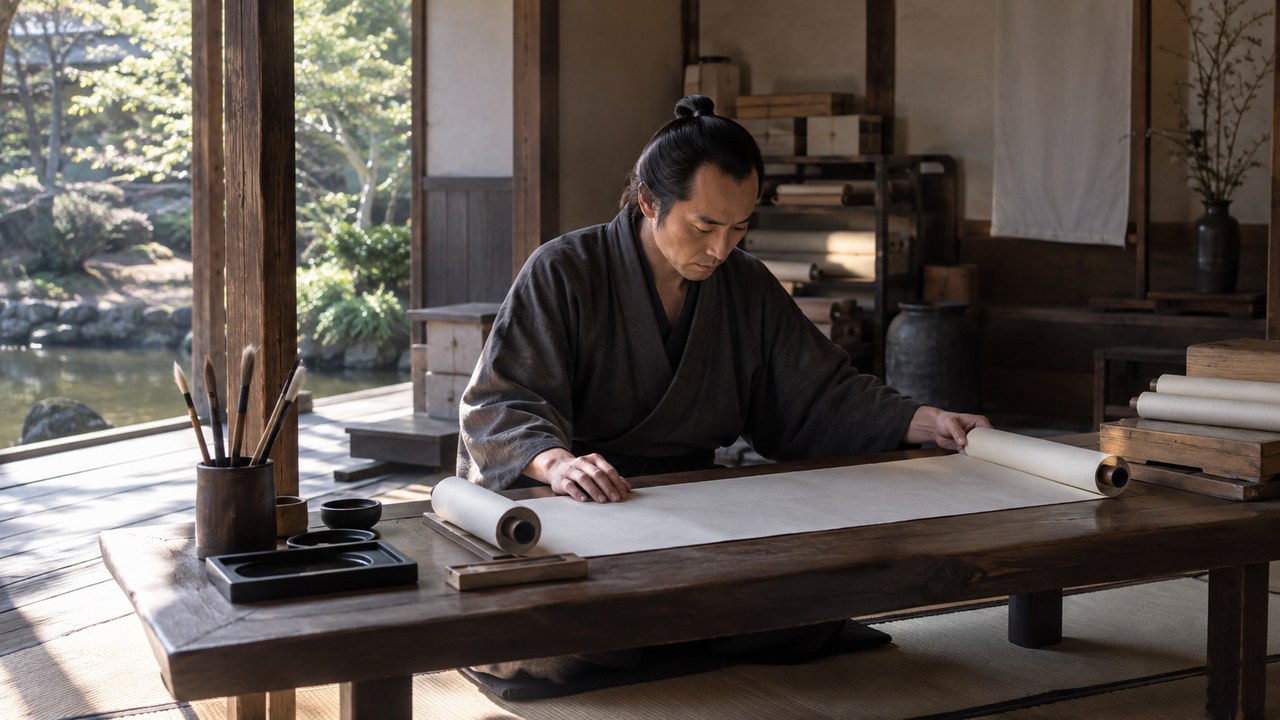
Chapter 11
The explosion that may have been added
One of the most famous images in the scrolls shows a teppō bursting before the mounted Suenaga. Conlan argues that this explosion and five Mongol soldiers were added later. Their brushwork and ink differ from the surrounding painting, he says, and the figures were painted over fleeing warriors and across a seam in the paper.
Part of his evidence is that Arai Hakuseki, who described the scene after seeing the scrolls in 1709, makes no mention of the explosion. Conlan considers it most likely that the Tsuda family added it while using the scrolls for a work published in 1758. The earliest surviving copies, from 1795, already include the image.
Ceramic teppō have been recovered from the seabed off Takashima, so the question concerns the history of the picture and not the existence of the weapon. Some forty copies of the scrolls are known. The three-scroll copy kept at Tōfukuji dates from about 1793 to 1797 and reproduces only the pictures, without the written text.
Chapter 12
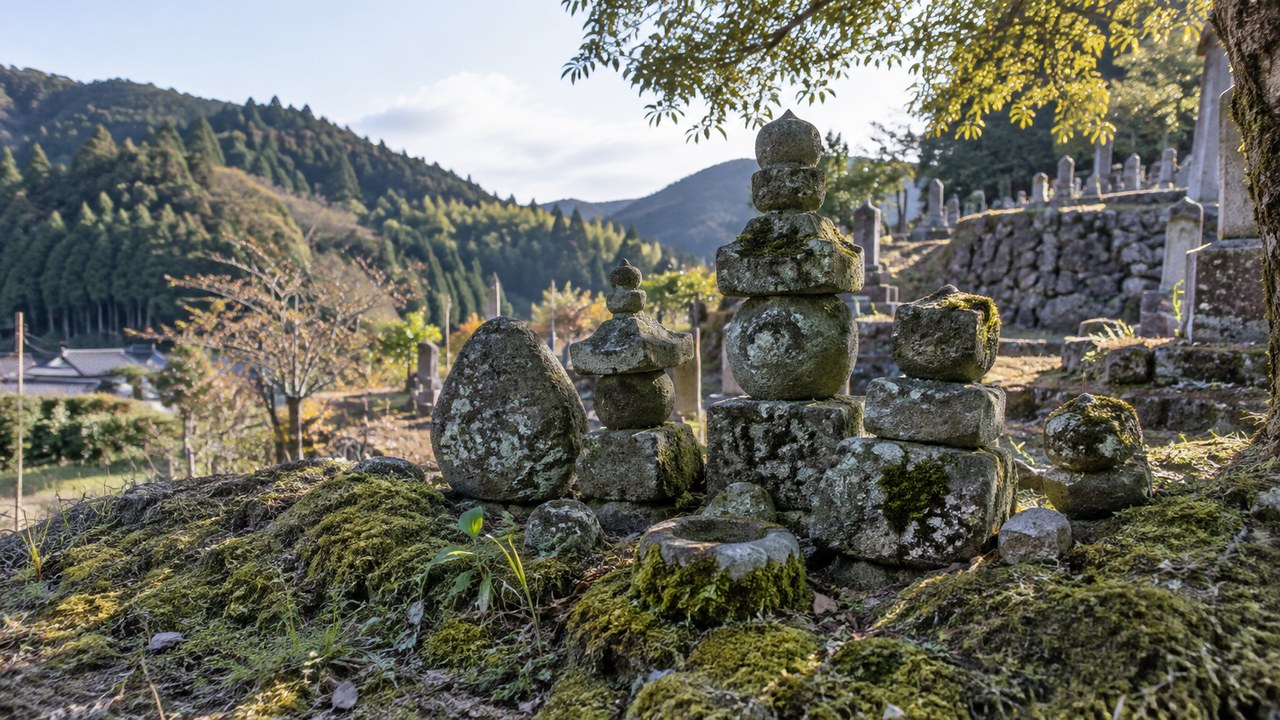
What remains at Hirabara
In the Hirabara area of Kaitō stands a five-tiered stone monument traditionally called Suenaga’s grave. Uki City links it with a record that he retired to this area late in life, but it also states that the monument was assembled from fragments of such towers. The exact place of his burial has not been established.
In December 2025, sixth-grade pupils from the local Kaitō Elementary School joined residents in cleaning Hirabara Park, where the grave stands. Their lessons about Suenaga and the Mongol invasions had prompted them to take part. The warrior who once governed Kaitō still has a place in what the community teaches its children.
Suenaga went to Kamakura to have his charge recognized, and he went on to preserve his work in estate documents and in painted scrolls. Later hands have altered that record too. Reading its layers one at a time, and asking who added what and when, is the surest way to approach the life of this one provincial warrior.
How to read this work
History, interpretation, and reconstruction
Battlefield service did not become a reward by itself. Reading Suenaga’s appeal, his estate documents and his scrolls together shows a provincial warrior working to have his deeds recognized and remembered.
This work is grounded in published sources and historical research. Interior thoughts, dialogue, and some visual details are cinematic reconstructions. Where historians disagree, the article presents the point as debated rather than settled fact.
Timeline
The story in time
-
He enters Kaitō, the district granted to him as a reward.
Sources: s02 -
A stone wall about twenty kilometers long is built around Hakata Bay.
Sources: s14 -
Adachi Yasumori is destroyed in the Shimotsuki Disturbance.
Sources: s09 -
Suenaga’s rules are rewritten, with a note in his own hand.
Sources: s02 -
According to Conlan, Suenaga writes his final testament.
Sources: s12 -
The scrolls pass from Kaitō Shrine to the Nawa family.
Sources: s12 -
The scrolls pass to the Ōyano family of Amakusa.
Sources: s12 -
The three-scroll copy kept at Tōfukuji is painted.
Sources: s03 -
The scrolls are entrusted to the Hosokawa family of Kumamoto.
Sources: s12 -
The scrolls become national property.
Sources: s12 -
The Mōko Shūrai Ekotoba is designated a National Treasure.
Sources: s06
People & terms
A guide for new readers
Key figures
- Takezaki Suenaga
- A gokenin from Higo who fought in both invasions, appealed in Kamakura and became steward of Kaitō.
- Adachi Yasumori
- The powerful shogunate official who heard Suenaga’s appeal and was destroyed in 1285.
- Mii Suenari
- Suenaga’s eboshi-oya, whom Uki City says he met on the road to Kamakura.
- Kikuchi Takefusa
- A powerful Higo warrior shown seated on the stone wall in the scrolls.
- Shōni Kagesuke
- The commander under whom Suenaga fought in 1274.
Glossary
- Gokenin 御家人
- A warrior who served the Kamakura shogunate directly.
- Onshō 恩賞
- A reward for service, often in the form of land or office.
- Jitō 地頭
- A land steward responsible for managing and controlling an estate.
- Eboshi-oya 烏帽子親
- A man who acted as a symbolic parent at a warrior’s coming-of-age ceremony.
- Genpuku 元服
- The coming-of-age ceremony for a young warrior.
- Ishitsuiji 石築地
- The stone wall built around Hakata Bay after the first invasion.
- Teppō てつはう
- An explosive projectile used by the invading forces.
- Okibumi 置文
- A document setting down rules or instructions for later generations.
- Kotobagaki 詞書
- The written passages that accompany the pictures in an illustrated scroll.
- Gorintō 五輪塔
- A five-tiered stone monument, often used as a grave marker.
Sources & method
How this article was built
This English edition follows the revised Japanese article scene by scene and keeps its eighteen sources, their order and its seventeen timeline entries. It draws on the Museum of the Imperial Collections, the Agency for Cultural Affairs, Uki City, Fukuoka City, the Japan Tourism Agency, reference works and signed studies.
Institutional explanations, reference works and the interpretation offered here are kept separate. The exchange with Adachi Yasumori and the argument that the explosion was added later are presented as Thomas Conlan’s readings. Two Uki City pages could not be reopened for this revision and are used only within what was confirmed on 10 October 2026.
Sources
References and further reading
- Mōko Shūrai Ekotoba: Collection Description 蒙古襲来絵詞・収蔵品解説 Title translated editorially for reader convenience. Museum of the Imperial Collections, Sannomaru Shozokan 皇居三の丸尚蔵館 The two invasions, the focus on Suenaga, date, format, National Treasure status, the 1890 purchase and damage to the scrolls. Accessed 2026-11-19
- Takezaki Suenaga: Donation Deed and Okibumi, Two Documents 竹崎季長寄進状并置文(二通) Title translated editorially for reader convenience. Agency for Cultural Affairs 文化庁・国指定文化財等データベース The entry into Kaitō, revenue for repairs, the eighteen articles and the handwritten note of 1314. Accessed 2026-11-19
- Takezaki Suenaga Ekotoba 竹崎季長絵詞 Title translated editorially for reader convenience. Uki City 宇城市 The Tōfukuji copy, its date, three scrolls and lack of text, and the number of known copies. Accessed 2026-11-19
- Kaitō, the Land Rewarded for Going First (Kōhō Uki, 1 October 2024, p. 14) 先駆けの恩賞地海東郷(広報うき2024年10月1日・14ページ) Title translated editorially for reader convenience. Uki City Local History Museum 宇城市・郷土資料館 The saddle, the eboshi-oya, the two-month wait, Yasumori and the appointment, as confirmed on 10 October 2026. Accessed 2026-10-10
- Grave of Takezaki Suenaga 竹崎季長の墓 Title translated editorially for reader convenience. Uki City 宇城市 The record of retirement to Hirabara and the monument assembled from fragments, as confirmed on 10 October 2026. Accessed 2026-10-10
- Mōko Shūrai Ekotoba, Color on Paper 紙本著色蒙古襲来絵詞 Title translated editorially for reader convenience. Agency for Cultural Affairs, Cultural Heritage Online 文化庁・文化遺産オンライン The 2021 designation, dimensions, date of the main portion and the work’s point of view. Accessed 2026-11-19
- Takezaki Suenaga 竹崎季長 Title translated editorially for reader convenience. Kotobank コトバンク Reference entries on his birth, names, origins, campaigns and Kaitō. Accessed 2026-11-19
- Mōko Shūrai Ekotoba 蒙古襲来絵詞 Title translated editorially for reader convenience. Kotobank コトバンク Reference entries on structure, the colophon date and theories of the work’s purpose. Accessed 2026-11-19
- Adachi Yasumori 安達泰盛 Title translated editorially for reader convenience. Kotobank コトバンク Reference entries on his dates, his role in examining rewards and his death in 1285. Accessed 2026-11-19
- Illustrated Account of the Mongol Invasions, Volume 2, Sections 5–8 『蒙古襲来絵詞』第2巻 第5紙〜第8紙 Title translated editorially for reader convenience. Japan Tourism Agency 観光庁 地域観光資源の多言語解説文データベース Suenaga’s birth, the scene with Kikuchi Takefusa, the boat hook and the names written in red. Accessed 2026-11-19
- Illustrated Account of the Mongol Invasions, Volume 2, Sections 9–12 『蒙古襲来絵詞』第2巻 第9紙〜第12紙 Title translated editorially for reader convenience. Japan Tourism Agency 観光庁 地域観光資源の多言語解説文データベース The boat leaving Ikinomatsubara for Mikuriya and the section that may be lost. Accessed 2026-11-19
- Myth, Memory, and the Scrolls of the Mongol Invasions of Japan Myth, Memory, and the Scrolls of the Mongol Invasions of Japan Title translated editorially for reader convenience. Thomas D. Conlan, Princeton University scholar page Thomas D. Conlan(プリンストン大学の研究者ページ) The charge, the appeal to Yasumori, the 1324 testament, the transmission of the scrolls and the argument about later additions. Accessed 2026-11-19
- History of Toyofuku: About Takezaki Suenaga 豊福の歴史 竹崎季長について Title translated editorially for reader convenience. Toyofuku Elementary School, Uki City 宇城市立豊福小学校 The family name, the fighting at Hakata, the three-month appeal, Tōfukuji and the length of the scrolls. Accessed 2026-11-19
- Basic Plan for the Mongol Invasion Defensive Wall Historic Site (Hakozaki District) 史跡元寇防塁(箱崎地区)整備基本計画 Title translated editorially for reader convenience. Fukuoka City 福岡市 The date, length and assignment of the wall and its role in 1281. Accessed 2026-11-19
- 750 Years After the Mongol Invasions: Did the Divine Wind Really Blow? 蒙古襲来750年、実は、元寇で神風は吹かなかった!? Title translated editorially for reader convenience. Nippon Tabi Magazine ニッポン旅マガジン Dates and landing sites of 1274, theories of the withdrawal and teppō found off Takashima. Accessed 2026-11-19
- What the National Treasure Mōko Shūrai Ekotoba Reveals About Kamakura Warriors 国宝「蒙古襲来絵詞」を見ればわかる…モンゴル軍を撃退した鎌倉武士が何よりも重視していたこと Title translated editorially for reader convenience. Goza Yūichi, President Online 呉座勇一(プレジデントオンライン) The later history of the scrolls, the 1890 gift and the 2021 designation. Accessed 2026-11-19
- The Value of the Mōko Shūrai Ekotoba as a Historical Source: On the Form of Bows 「蒙古襲来絵詞」の歴史資料としての価値:弓の形態をめぐって Title translated editorially for reader convenience. Shimizu Hisao, Hōsei Shigaku 43 清水久夫(法政大学史学会『法政史学』43号) The line attributed to Suenaga on going first. Accessed 2026-11-19
- Pupils Clean a Site Linked to Takezaki Suenaga 「地域のためにできることを」…竹崎季長ゆかりの地清掃 海東小児童ら、元寇の学習きっかけ Title translated editorially for reader convenience. Kumamoto Nichinichi Shimbun 熊本日日新聞 The cleaning of Hirabara Park on 1 December 2025, from the publicly visible part of the article. Accessed 2026-11-19
Continue reading
More stories from Shigeki
Shigeki English
Amakusa Shiro at Hara Castle: A Young Symbol in the Surviving Evidence
An Arima castle, Matsukura taxes, risings in Shimabara and Amakusa, Itakura’s death, Nobutsuna’s siege and the fall of the castle: the history of the people who gathered under a boy’s name, told within the limits of the sources.
- When Kan’ei 14–15 (1637–1638), with the castle’s construction (1599–1604) and modern excavation and World Heritage inscription (2018) as background
- Where Shimabara and Amakusa in southwestern Japan, culminating in the siege of Hara Castle
Shigeki English
From the Black Ships to Hakodate: Sixteen Years from Bakumatsu to Meiji
Treaties, the Sakuradamon incident, the Kinmon incident, the Satsuma–Choshu alliance, the return of power, Toba–Fushimi, Edo Castle, Aizu and Hakodate: diplomatic commitments, political authority and military command did not change at the same moment.
- When 1853–1869, with administrative changes in 1869 and 1871 placed separately
- Where Uraga, treaty ports, Edo, Kyoto, Toba–Fushimi, Aizu and Hakodate