
SHIGEKI ENGLISH STORYEN
Japanese history in English
The Shimabara–Amakusa Uprising: How Two Risings Met at Hara Castle
Matsukura rule, two castles the rebels could not take, and the families who gathered at Hara, from the first rising to modern excavation.
In 1637 uprisings broke out in Shimabara and Amakusa, two areas under different lords. Follow the taxes and famine behind them, the failed attacks on two castles, the gathering at Hara, the siege and its fall, the punishment of the lords and the excavations that recovered the site.
At a glance
Before you enter the story
- When
- From the arrival of the Matsukura in 1616 through the uprising of 1637–1638, with the ban on Portuguese ships in 1639 and excavations from 1992.
- Where
- The Shimabara Peninsula and the Amakusa Islands on the Ariake Sea, in present-day Nagasaki and Kumamoto Prefectures.
- Key figures
- Amakusa Shirō, Matsukura Katsuie, Matsukura Shigemasa, Terasawa Katataka, Itakura Shigemasa, Matsudaira Nobutsuna, Suzuki Shigenari
- What was at stake
- How heavy taxation, famine and the suppression of Christianity led to one of the largest uprisings of the Edo period and shaped Japan’s later policies.
Why this story matters
The larger history behind the turning point
The uprising is often remembered through one teenage leader and one famous siege. Following the two regions separately shows how local government, hunger, faith and failed attacks combined to bring tens of thousands of people to a single abandoned castle.
Its aftermath reached far beyond Shimabara. The ban on Portuguese ships and the tightening of anti-Christian controls followed soon after, and the bones and crosses excavated at Hara still testify to the families who died there.
Historical context
What an international reader needs to know
Two regions, two lords
Shimabara was ruled by the Matsukura family, while Amakusa belonged to the Terasawa family of the Karatsu domain. Shimabara Castle, Tomioka Castle and Hara Castle were three different places, and keeping them apart makes the course of the uprising easier to follow.
Dates and names
Months and days follow the lunisolar calendar used in Japan at the time, so they do not match the modern calendar. Japanese family names come first. Matsukura Shigemasa and Itakura Shigemasa were two different men who happen to share a personal name.
Watch the film
See the story in motion
The film currently uses Japanese audio. This English article provides the context and source trail; it does not imply that an English subtitle track is available.
Opening
Two territories, one castle
In the tenth month of 1637 an uprising broke out in the southern part of the Shimabara Peninsula. The fighting lasted about four months, until Hara Castle fell on the twenty-eighth day of the second month of 1638. Sources put the number of people inside the castle anywhere from over twenty thousand to about thirty-seven thousand, and most of them died.
The uprising did not begin inside Hara Castle. Separate risings broke out in Shimabara and Amakusa, two areas with different lords. Only after attacks on Shimabara Castle and Tomioka Castle had failed did people gather, in stages, at a castle that had already been abandoned.
This article follows events from the rule of the Matsukura family through the rising, the siege, the punishments that came afterward and the excavations of recent decades. Months and days follow the calendar then in use in Japan. Where sources disagree about numbers or causes, those disagreements are stated openly rather than smoothed over.
Chapter 1
From the Arima domain to the Matsukura domain
The Shimabara Peninsula had once been the domain of the Arima, a Christian daimyo family. The missionary Luís de Almeida began preaching at the port of Kuchinotsu in 1563. In 1612 Arima Harunobu was sentenced to death over the Okamoto Daihachi affair, and in 1614 his son Naozumi was transferred to Hyūga, ending the family’s rule.
In 1616 Matsukura Shigemasa arrived from Gojō in Yamato Province with a domain assessed at forty thousand koku. He built the new Shimabara Castle, carried out a comprehensive land survey and suppressed Christianity severely. Reference works count these measures among the main causes of the uprising that came two decades later.
Most reference works date Shigemasa’s death to 1630, while Shimabara City’s explanation dates the succession of his son Katsuie to 1631. Katsuie was the lord when the uprising began, and the same explanation attributes its main cause to his poor government. Father and son therefore need to be considered separately, even though they share one family name.
Chapter 2
Taxes, famine and the ban on Christianity
The Minamishimabara City Board of Education explains that the domain’s tax demands far exceeded what its land had originally been assessed to produce, and that the famine of 1637 made matters worse. A Shimabara City curator adds that many sources describe Katsuie conducting land surveys and collecting taxes at unjustly high rates.
Across the sea, Amakusa belonged to the Terasawa family of the Karatsu domain. Terasawa Hirotaka is said to have set Amakusa’s assessed yield at an inflated forty-two thousand koku. The encyclopedia Sekai Daihyakka Jiten names heavy taxation by both the Matsukura and the Terasawa, repeated crop failures and the persecution of Christians as the background to the uprising.
Tortures such as water prisons and the so-called straw-coat dance have long been part of the standard account. Some rumors about Katsuie, however, cannot be confirmed as true or false. Neither resentment over taxes nor religious conviction can be singled out as the only cause; for the people involved, the two pressures overlapped in daily life.
Chapter 3
The killing of an intendant and the attack on Shimabara Castle
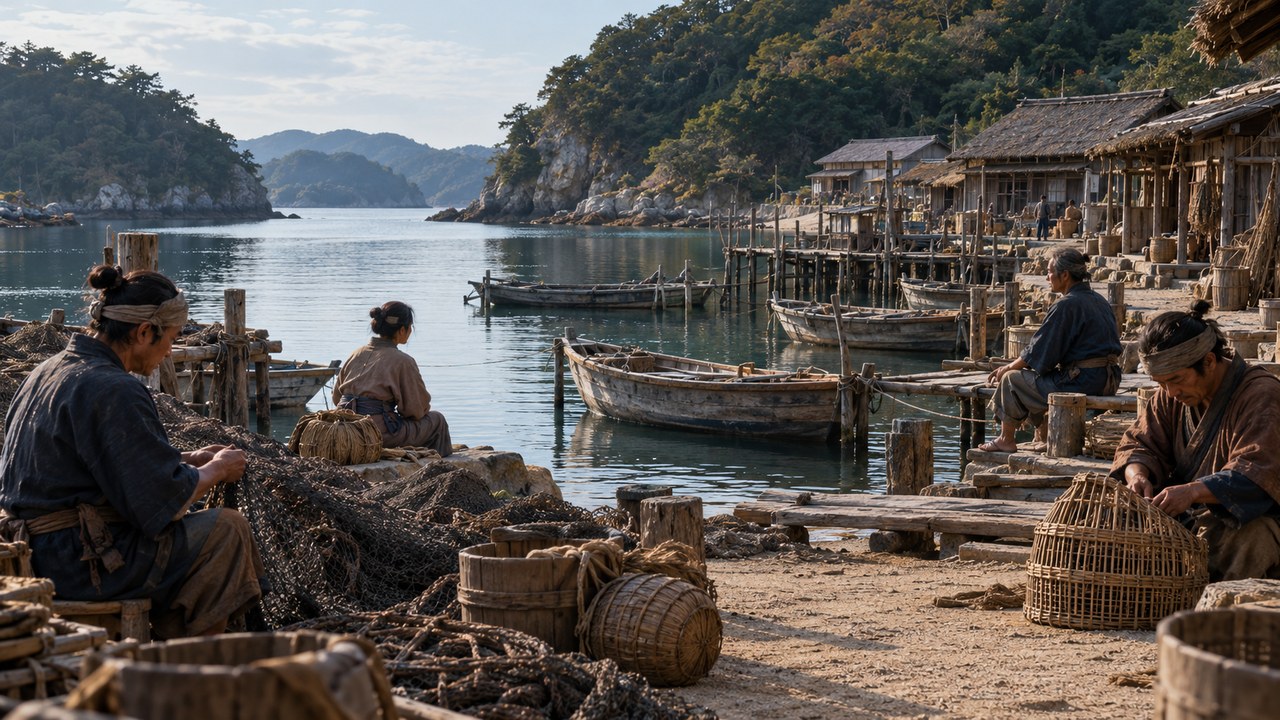
According to Minamishimabara City’s chronology, people in the Shimabara domain who had renounced Christianity began returning to their faith around the fifteenth day of the tenth month of 1637. Around the twenty-fifth, a local intendant was killed at Arima, and the uprising spread quickly from there to neighboring villages.
Accounts of how it started differ. Alongside the standard explanation centered on tax collection, the encyclopedia Nihon Daihyakka Zensho records another version. In it, an intendant tore up a sacred image that farmers who had supposedly abandoned Christianity were venerating, and those farmers killed him in response. The surviving accounts do not settle the question.
On the twenty-sixth the rebels attacked Shimabara Castle but could not take it. The historian Inaba Tsuguharu writes that within ten days the movement had grown to some twenty-five thousand people, counting farmers and their families from twelve villages in the south of the peninsula. He also stresses that not every resident of Shimabara and Amakusa took part.
Chapter 4
The rising in Amakusa: Hondo and Tomioka
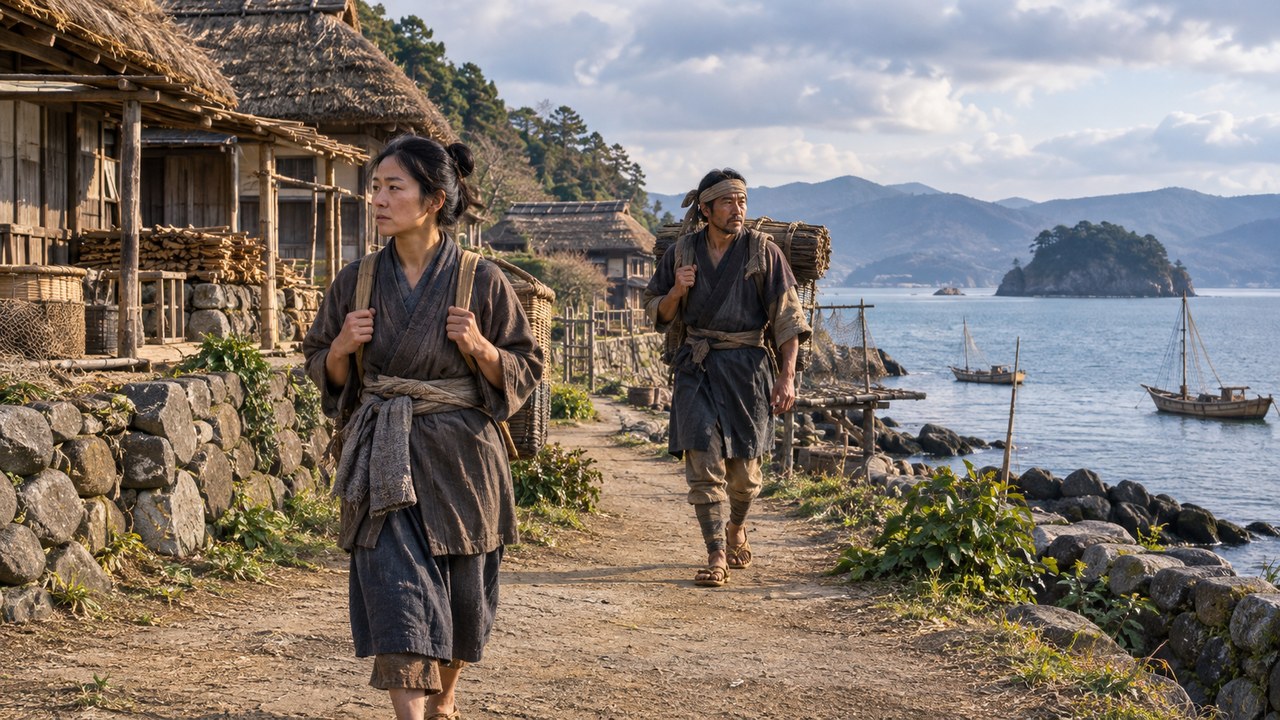
News of the disturbance at Arima crossed the water, and Amakusa rose in the last days of the tenth month. Sekai Daihyakka Jiten dates the rising on Ōyano Island to the twenty-seventh. Watanabe Kozaemon, the husband of Amakusa Shirō’s elder sister, was captured with others in the Hosokawa domain, and Shirō’s mother was also taken there.
On the fourteenth day of the eleventh month, Miyake Tōbei, the commander of Tomioka Castle, was killed in the fighting at Hondo. The war chronicle Shimabara-jin, introduced in a Kami-Amakusa City column, also describes the rebels gaining the upper hand there and the Karatsu forces withdrawing. Such chronicles were compiled later, however, and their details cannot simply be taken as fact.
From the nineteenth to the twenty-third the rebels besieged Tomioka Castle, but its strong natural position forced them back. Soot and oil stains on the stone walls west of the second enclosure are thought to be traces of this fighting. Meanwhile, refugees from the southern part of Kami-shima fled across the water to Sashiki on the Kumamoto side.
Chapter 5
A teenage commander: Masuda Shirō
Masuda Shirō Tokisada, the youth known as Amakusa Shirō and regarded as the rebels’ commander, has an uncertain background. His birth is placed in either 1621 or 1623. His birthplace is given as Ōyano Island in one account and as a village in Uto District in another. His baptismal name is recorded as Francisco.
His father, Masuda Jinbei Yoshitsugu, is described as a former retainer of the Christian lord Konishi Yukinaga, and other former retainers of the Konishi and Arima families joined the uprising. The historian Fujita Tatsuo, drawing on recent research, introduces the view that masterless samurai and village headmen led a planned rising rather than a spontaneous outburst.
Records state that the leaders met on Yushima, an island in the Ariake Sea also called Dangōjima, and chose Shirō as their commander. Yet although he became the symbol of the uprising, some argue that he was little more than a figurehead raised up by others. What he actually did as a leader remains unclear.
Chapter 6
Across the water to the abandoned Hara Castle
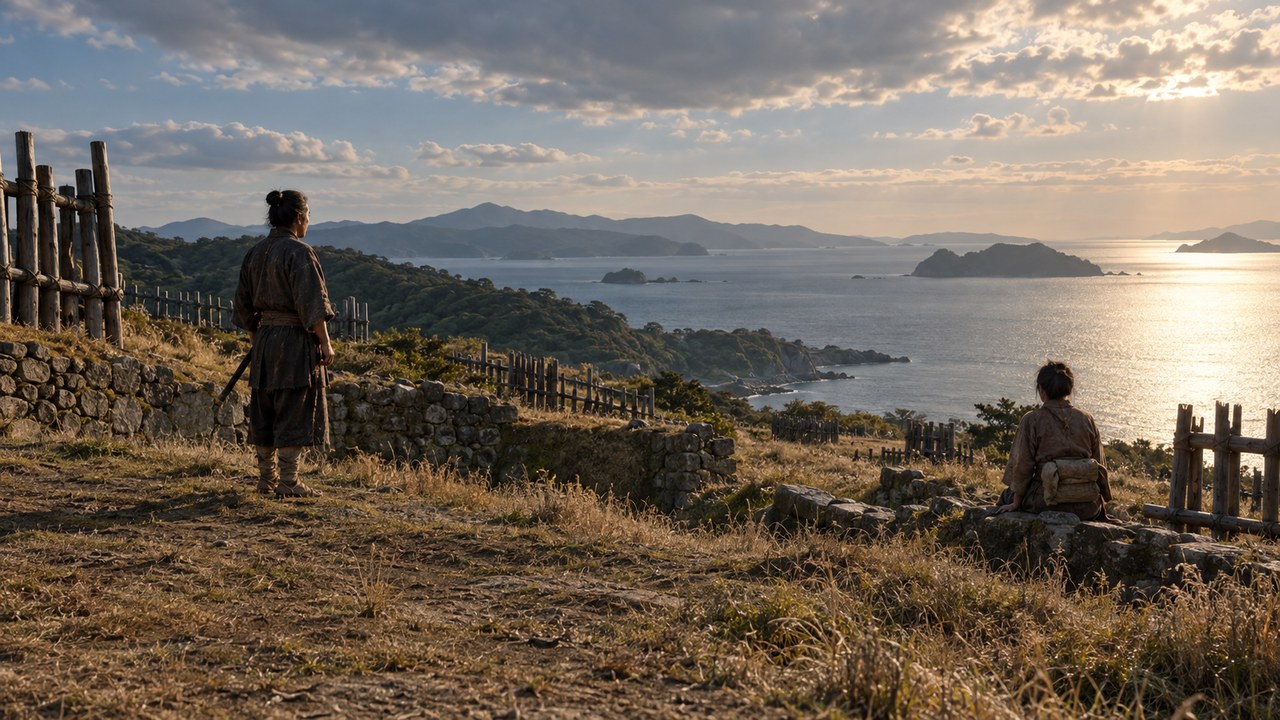
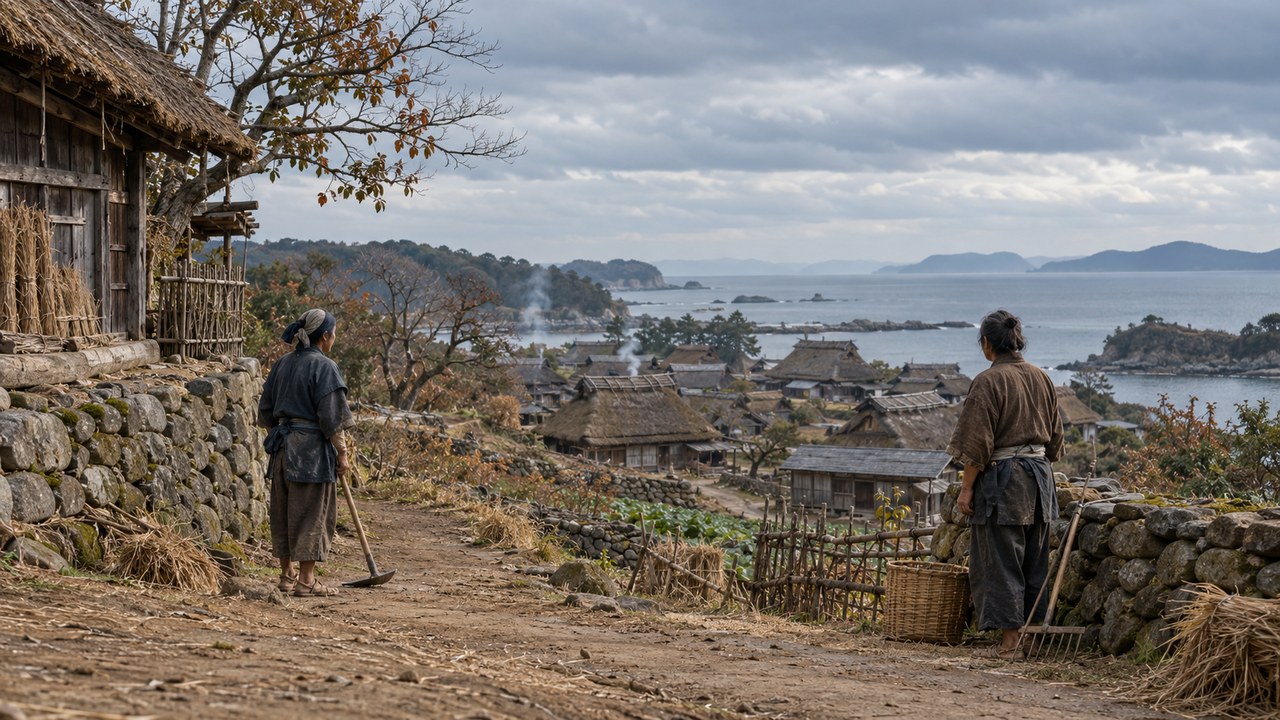
Minamishimabara City’s chronology places the first entry of Shimabara people into Hara Castle in the tenth month, and it records Christians from Ōyano and nearby Amakusa communities crossing to Shimabara between the twenty-fifth of the eleventh month and the first of the twelfth. The gathering was a process of overlapping movements of people and goods, not a single order.
Hara’s main enclosure, faced entirely with stone, was built by Arima Harunobu between about 1599 and 1604. The castle had been abandoned under the 1615 decree limiting each province to one castle. It measured about 1.3 kilometers from north to south and 0.5 kilometers from east to west, with the sea on three sides and wetland to the west.
Minamishimabara City considers that Hara’s continued usefulness as a military structure, even after it lost its political role, was a major reason it became the rebels’ base. Fujita reads its location, overlooking the trading port of Kuchinotsu, as a sign that the rebels hoped for Portuguese reinforcements. That is one scholar’s interpretation rather than an established conclusion.
Chapter 7
The people inside the castle
Figures for the people inside Hara differ. Minamishimabara City and Nihon Daihyakka Zensho give about thirty-seven thousand, Nagasaki Prefecture’s materials give over twenty thousand, and another estimate is about twenty-seven thousand. Nihon Daihyakka Zensho adds that only thirteen thousand of them actually took part in the fighting, a reminder of how many others were present.
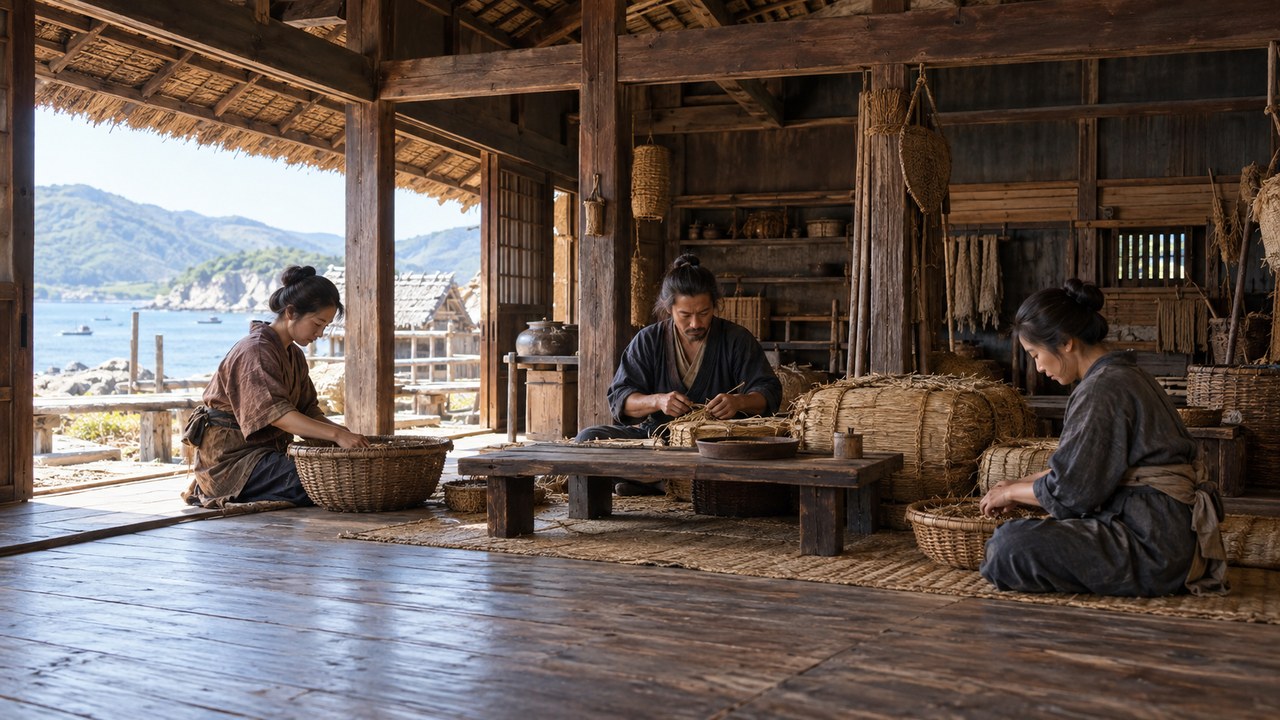
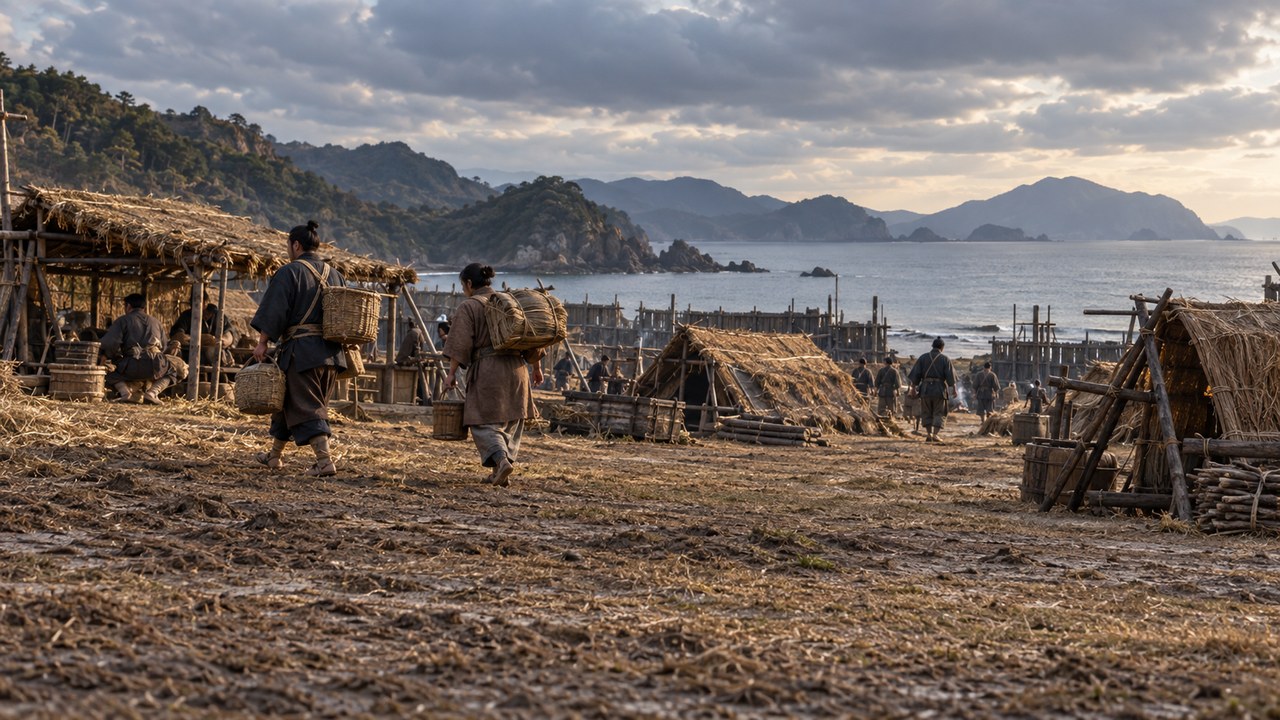
Records indicate that about 3,500 farmers from villages such as Futsu and Dōzaki held the third enclosure, while about 5,700 from villages including Kuchinotsu, Kazusa and Mie held the second. Excavations west of the main enclosure have uncovered the remains of regularly laid out, partly sunken huts in which people appear to have lived during the siege.
At the site of the main gate, archaeologists found the bones of women and children as well as adult men. These finds are taken to show that farmers joined the uprising in organized family groups. The people at Hara were not only fighters; whole households had come to the castle and shared the fate of the siege.
Chapter 8
The New Year assault and the death of Itakura Shigemasa
The shogunate sent Itakura Shigemasa as its envoy and ordered the lords of Kyushu to mobilize. He reached Arima on the ninth day of the twelfth month and began attacking Hara Castle the next day. The castle held, however, and the campaign dragged on into the new year with no sign of a quick victory.
Learning that Matsudaira Nobutsuna was being sent as a second envoy, Shigemasa launched a general assault on the first day of the first month of 1638 and was killed, aged fifty-one. A record from the Tottori domain likewise notes that two attacks failed to take the castle and that Itakura died in the fighting.
A memorial stone for Shigemasa was made in 1681 at the request of his grandson, but permission to erect it was refused. Only in 1798 did his descendants set it up at Hara. Even the death of a commander on the winning side took more than a century to receive a lasting public form.
Chapter 9
Starvation and bombardment from the sea
Nobutsuna arrived on the fourth day of the first month and changed the strategy to encirclement and starvation. The shogunal forces eventually numbered about 120,000. Miners brought from Hyūga were set to digging tunnels toward the castle, but the defenders dug countermines and drove them back with smoke from green leaves and with human waste.
Nobutsuna also asked the head of the Dutch trading post to bombard the castle from the sea. Minamishimabara City’s chronology records the shots fired between the thirteenth and twenty-eighth of the first month: 128 from warships and 298 from cannon positions on land, for a total of 426. The figures convey the scale of the effort.
Messages tied to arrows passed between the two sides, and from about the fifteenth of the second month people repeatedly slipped out of the castle. As food and ammunition ran short, the defenders’ ability to hold out steadily declined. The siege that had begun with failed assaults was now being decided by hunger and exhaustion.
Chapter 10
The fall of Hara Castle
On the twenty-seventh day of the second month, an unauthorized advance by the forces of Nabeshima Katsushige set off the general assault, and on the twenty-eighth Hara Castle fell. Shirō is said to have been killed at this time. The Tottori record states that the attackers entered after food inside the castle had run out and the defenders had weakened.
Most of those inside were killed. The Yamakawa Nihonshi Shōjiten states that about thirty thousand people, excluding those who surrendered, were put to death. Losses on the shogunal side were also heavy: Sekai Daihyakka Jiten records more than two thousand dead and over ten thousand wounded, a toll that shows how hard the defenders had fought.
The best-known survivor is Yamada Emonsaku, who was spared because he had secretly cooperated with the attackers. His statement describes conditions on the rebel side, but its reliability cannot be taken for granted. Behind the figures that survive stand a great many people whose names and final moments were never written down.
Chapter 11
Punished lords and emptied villages
Matsukura Katsuie lost his domain and was beheaded, an exceptional punishment for a daimyo. Terasawa Katataka was stripped of Amakusa, assessed at forty thousand koku, and in 1647 he took his own life, ending his family line. Although both had governed lands that rose in the same uprising, the two lords did not receive the same treatment.
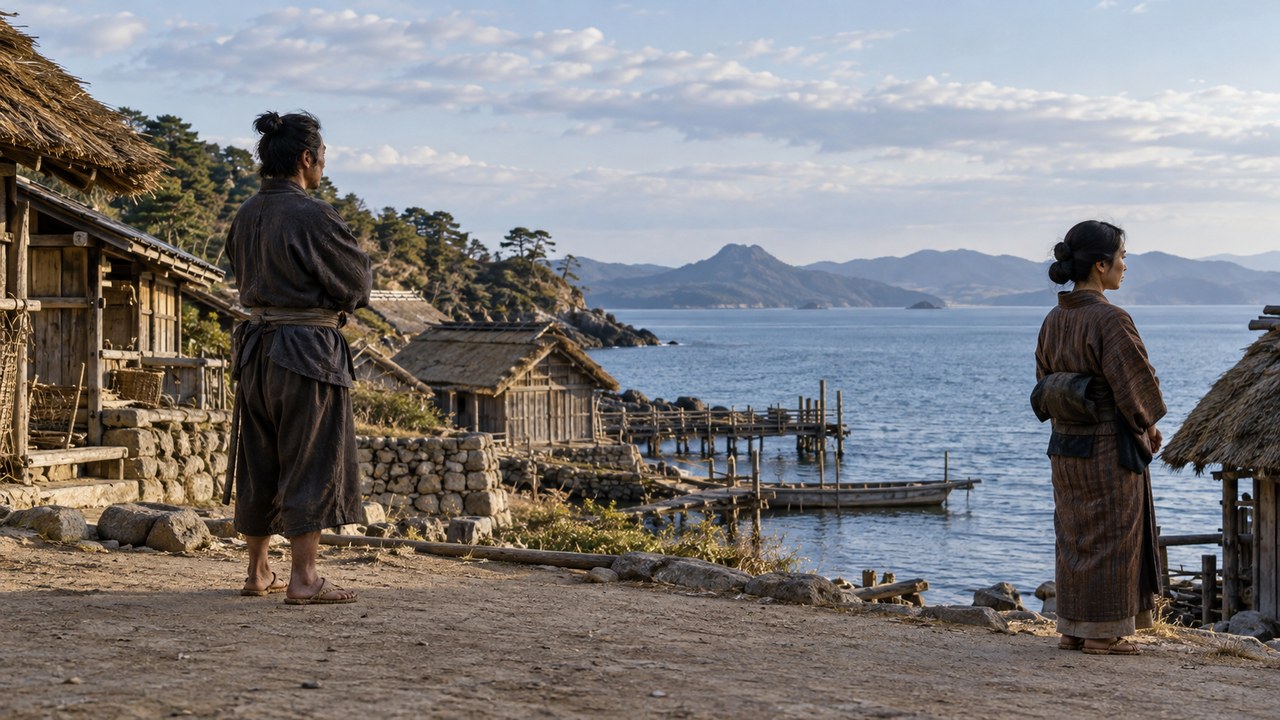
Kōriki Tadafusa took over Shimabara. Amakusa passed through the hands of Yamazaki Ieharu and became shogunal territory in 1641, with Suzuki Shigenari as its first intendant. A report from 1638 stated that about a quarter of Amakusa had become land with no one left to cultivate it, an indication of how deeply the war had emptied the islands.
Shigenari is said to have resurveyed the land and asked the shogunate to reduce its tax burden. A story claims he killed himself to protest for a halving of the assessment, but no document supports it, and death from illness is now considered more likely. In 1648 he erected a memorial stone for the dead near the ruins of Hara Castle.
Chapter 12
Tighter prohibitions and what remained underground
In 1639, the year after the uprising, the shogunate banned Portuguese ships from Japan, and in 1641 it moved the Dutch trading post from Hirado to Dejima in Nagasaki. Restrictions on foreign contact had been growing before the uprising, but the system of prohibiting Christianity and controlling overseas contact took firm shape in its aftermath.
After the uprising Hara Castle was thoroughly demolished, and its stone-walled main enclosure was completely buried under earth. In 1766 a Jizō statue known as Honekami Jizō was set up to honor bones gathered from the area. Excavations that began in 1992 finally brought the buried castle back into view after more than three and a half centuries.
Finds include human bones together with crosses, medals and rosary beads. By the end of March 2014, thirty-six crosses had been recovered, some thought to have been handmade by melting down lead bullets. In 2018 Hara Castle became a component of the World Heritage property Hidden Christian Sites in the Nagasaki Region, keeping the memory of those who gathered there.
How to read this work
History, interpretation, and reconstruction
Following how risings in two separately ruled regions converged at Hara after failed castle attacks reveals more than the name of Amakusa Shirō: it brings into view the families who entered the siege together.
This work is grounded in published sources and historical research. Interior thoughts, dialogue, and some visual details are cinematic reconstructions. Where historians disagree, the article presents the point as debated rather than settled fact.
Timeline
The story in time
People & terms
A guide for new readers
Key figures
- Amakusa Shirō (Masuda Shirō Tokisada)
- The youth regarded as the rebels’ commander, whose background and actual role remain uncertain.
- Matsukura Katsuie
- Lord of Shimabara at the time of the uprising, beheaded after its suppression.
- Matsukura Shigemasa
- Katsuie’s father, who entered Shimabara in 1616 and built Shimabara Castle.
- Terasawa Katataka
- Lord of Karatsu and Amakusa, stripped of Amakusa after the uprising.
- Itakura Shigemasa
- Shogunal envoy killed in the assault of New Year’s Day 1638; not the same man as Matsukura Shigemasa.
- Matsudaira Nobutsuna
- Senior shogunal official who took Hara Castle through encirclement and starvation.
- Suzuki Shigenari
- Shogunal officer in the campaign and later the first intendant of Amakusa.
Glossary
- Ikki 一揆
- A league or uprising of people acting together, here combining grievances over rule and faith.
- Daimyo 大名
- A regional lord who governed a domain under the Tokugawa shogunate.
- Koku 石
- A unit of rice volume used to express the assessed productive value of land.
- Intendant 代官
- An official who administered land and collected taxes on behalf of a lord.
- Hara Castle 原城
- A former Arima castle on the Ariake Sea, abandoned in 1615 and used by the rebels.
- Shimabara-jin 島原陳
- A war chronicle describing the uprising and its suppression.
- Honekami Jizō 骨カミ地蔵
- A Jizō statue at Hara associated with honoring the bones of the dead.
- Medal メダイ
- A small religious medal carried by Christians, found among the excavated objects at Hara.
Sources & method
How this article was built
This English edition follows the revised Japanese article scene by scene and keeps its twenty-four sources, their order and its fifteen timeline entries. It draws on Minamishimabara City, Shimabara City, Nagasaki Prefecture, national institutions, reference works and signed articles by historians.
Institutional explanations, reference works and the interpretation offered here are kept separate. Where sources differ, as they do on the number of people in the castle, the circumstances of the first killing, the date of Matsukura Shigemasa’s death and the details of Shirō’s life, the differences are stated. Minamishimabara City’s chronology was checked in full on 20 October 2026 and is used within that confirmed scope.
Sources
References and further reading
- The Shimabara–Amakusa Uprising 島原・天草一揆(島原天草の乱) Title translated editorially for reader convenience. Minamishimabara City Board of Education 南島原市教育委員会 Taxes, famine, the attacks on the castles, numbers, tunnels, memorials. Accessed 2026-11-19
- Nationally Designated Cultural Property: Hara Castle Site 国指定文化財/原城跡 Title translated editorially for reader convenience. Minamishimabara City Board of Education 南島原市教育委員会 The date, size, abandonment and demolition of the castle, and excavated objects. Accessed 2026-11-19
- Hara Castle Site 原城跡 Title translated editorially for reader convenience. Minamishimabara City 南島原市/世界遺産のまち南島原 The castle’s structure, building, abandonment, excavation and designation. Accessed 2026-11-19
- Rediscovering Our Hometown: Matsukura Katsuie, Second Lord of Shimabara Castle ふるさと再発見「第2代島原城主 松倉勝家(1597―1638)」 Title translated editorially for reader convenience. Shimabara City Board of Education 島原市教育委員会(社会教育課学芸員 吉田信也の署名解説) Katsuie’s succession, taxation, doubtful rumors and punishment. Accessed 2026-11-19
- The Course of the Shimabara–Amakusa Uprising 島原天草一揆の経過 Title translated editorially for reader convenience. Minamishimabara City Board of Education 南島原市教育委員会(S01からの正式添付) The chronology of events, used within what was confirmed on 20 October 2026. Accessed 2026-10-20
- Amakusa Shirō Museum Notebook 38: Shimabara-jin, Summer Volume 広報上天草2023年2月号 天草四郎ミュージアム手帖38『島原陳』夏 Title translated editorially for reader convenience. Kami-Amakusa City 上天草市/天草四郎ミュージアムの市広報コラム(牧野寿美礼署名) The fighting at Hondo and Tomioka as presented in a war chronicle. Accessed 2026-11-19
- Shimabara Rebellion 島原の乱 Title translated editorially for reader convenience. Kotobank コトバンク Reference-work entries on dates, background, losses, punishments and Yamada Emonsaku. Accessed 2026-11-19
- Shimabara–Amakusa Uprising 島原天草一揆 Title translated editorially for reader convenience. Kotobank コトバンク Nihon Daihyakka Zensho on origins, numbers, punishments and World Heritage listing. Accessed 2026-11-19
- Matsukura Shigemasa 松倉重政 Title translated editorially for reader convenience. Kotobank コトバンク His arrival, domain size, castle and the differing dates of his death. Accessed 2026-11-19
- Hara Castle Site: Guide to a World Heritage Component 原城跡(世界遺産の構成資産の案内) Title translated editorially for reader convenience. Official Website of the Hidden Christian Sites in the Nagasaki Region 長崎と天草地方の潜伏キリシタン関連遺産 公式サイト The Yushima meeting, the placement of villagers, huts and human remains. Accessed 2026-11-19
- Kensaku Yoka Tele, Vol. 9 (January 2017) 検索よかテレ Vol.9(2017年1月号) Title translated editorially for reader convenience. Nagasaki Prefecture Public Relations Division 長崎県広報課 Lead crosses and the number of crosses excavated. Accessed 2026-11-19
- World Heritage in Nagasaki: Hidden Christian Sites in the Nagasaki Region 長崎の世界遺産「長崎と天草地方の潜伏キリシタン関連遺産」 Title translated editorially for reader convenience. Nagasaki Prefecture World Heritage Division 長崎県世界遺産課 Numbers in the castle, sunken huts and the later system of prohibitions. Accessed 2026-11-19
- The Shimabara Rebellion and the Remains of Hara Castle 島原の乱と原城跡遺構【初期の弾圧】 Title translated editorially for reader convenience. Nagasaki City (Nagazine) 長崎市(ナガジン) The Arima transfer, estimates of forces, former retainers and Yamada Emonsaku. Accessed 2026-11-19
- The Dutch Trading Post at Dejima 第1部 2. 出島の商館(江戸時代の日蘭交流) Title translated editorially for reader convenience. National Diet Library 国立国会図書館 The expulsion of the Portuguese in 1639 and the move to Dejima in 1641. Accessed 2026-11-19
- Nagasaki Museum of History and Culture: The Uprising and the Ban on Portuguese Ships 長崎歴史文化博物館(島原・天草一揆とポルトガル船の来航禁止) Title translated editorially for reader convenience. Japan Tourism Agency 観光庁 地域観光資源の多言語解説文データベース The ban of 1639 and the move to Dejima in 1641. Accessed 2026-11-19
- Amakusa Shirō 天草四郎 Title translated editorially for reader convenience. Nippon Tabi Magazine ニッポン旅マガジン Shirō’s birth, father, baptismal name and his role as a symbol. Accessed 2026-11-19
- Hara Castle 原城(原城跡) Title translated editorially for reader convenience. Nippon Tabi Magazine ニッポン旅マガジン The unauthorized Nabeshima advance and the final assault. Accessed 2026-11-19
- Minamishimabara City Arima Christian Heritage Museum 南島原市有馬キリシタン遺産記念館 Title translated editorially for reader convenience. Nippon Tabi Magazine ニッポン旅マガジン Kuchinotsu, Almeida and the human remains at the main gate. Accessed 2026-11-19
- Tomioka Castle (Tomioka Visitor Center) 富岡城(富岡ビジターセンター) Title translated editorially for reader convenience. Nippon Tabi Magazine ニッポン旅マガジン Terasawa assessments, Miyake Tōbei, the siege, shogunal rule and Suzuki Shigenari. Accessed 2026-11-19
- Why Did the Christian Rebels of Amakusa and Shimabara Hold Out at Hara Castle? 天草・島原のキリシタン一揆はなぜ原古城に籠もったのか? Title translated editorially for reader convenience. Fujita Tatsuo, Serai.jp (Shogakukan) 藤田達生(サライ.jp、小学館) The battle at Hondo, the view of a planned rising and reasons for choosing Hara. Accessed 2026-11-19
- Revolt on the Southern Ariake Sea 南有明海域の反乱 幕藩国家揺るがす衝撃(細川キリシタン群像⑨) Title translated editorially for reader convenience. Inaba Tsuguharu, Kumamoto Nichinichi Shimbun 稲葉継陽(熊本日日新聞) The attack of the 26th, twelve villages and twenty-five thousand people. Accessed 2026-11-19
- Those Who Fled the Uprising 一揆からの脱走者たち(細川キリシタン群像⑩) Title translated editorially for reader convenience. Inaba Tsuguharu, Kumamoto Nichinichi Shimbun 稲葉継陽(熊本日日新聞) Refugees reaching Sashiki. Accessed 2026-11-19
- New History of Tottori Prefecture: Inpu Rekinen Daizasshū 新鳥取県史 資料編 近世6 因府歴年大雑集(デジタル郷土学習教材) Title translated editorially for reader convenience. Tottori Prefecture 鳥取県 A domain record of the attacks, Itakura’s death and the fall of the castle. Accessed 2026-11-19
- The Mystery of the “Foreign Jizō” at Meitokuji in Amakusa 熊本県天草・明徳寺の「異人地蔵」「十字」の正体 Title translated editorially for reader convenience. Wa-Raku Web (Shogakukan) 和樂web(小学館) The report of abandoned land in 1638 and accounts of Suzuki Shigenari. Accessed 2026-11-19
Continue reading
More stories from Shigeki
Shigeki English
Amakusa Shiro at Hara Castle: A Young Symbol in the Surviving Evidence
An Arima castle, Matsukura taxes, risings in Shimabara and Amakusa, Itakura’s death, Nobutsuna’s siege and the fall of the castle: the history of the people who gathered under a boy’s name, told within the limits of the sources.
- When Kan’ei 14–15 (1637–1638), with the castle’s construction (1599–1604) and modern excavation and World Heritage inscription (2018) as background
- Where Shimabara and Amakusa in southwestern Japan, culminating in the siege of Hara Castle
Shigeki English
From the Black Ships to Hakodate: Sixteen Years from Bakumatsu to Meiji
Treaties, the Sakuradamon incident, the Kinmon incident, the Satsuma–Choshu alliance, the return of power, Toba–Fushimi, Edo Castle, Aizu and Hakodate: diplomatic commitments, political authority and military command did not change at the same moment.
- When 1853–1869, with administrative changes in 1869 and 1871 placed separately
- Where Uraga, treaty ports, Edo, Kyoto, Toba–Fushimi, Aizu and Hakodate