
SHIGEKI ENGLISH STORYEN
Japanese history in English
Ōmi Merchants and "Good for Three Sides": Reading Edo Trade Through a Testament and Account Books
A modern slogan and what merchants actually wrote. Separating them reveals the concrete work that linked profit and trust.
Did Edo-period Ōmi merchants really write "good for the seller, the buyer and society"? Trace the 1754 testament, the slogan’s modern origin, two-way trade, house codes, the Hino Ōtōban and the Nakai family’s account books. Public bodies, archives and research papers show how trade at a distance was organized and checked.
At a glance
Before you enter the story
- When
- From the birth of Nakai Mitsutake in 1716 and the testament of 1754 to the Sōma shop report of 1802 and its closure in 1839, with the slogan appearing around 1988.
- Where
- Ōmi Province (today’s Shiga Prefecture), with branches in northern Kantō and Tōhoku, including Sendai and Sōma.
- Key figures
- Nakamura Jihei Sōgan, Nakai Genzaemon Mitsutake, Nakai Shōjiemon, Ogura Eiichirō
- What was at stake
- How merchants who lived far from their shops could keep trade profitable and trustworthy, and how a modern slogan relates to that history.
Why this story matters
The larger history behind the turning point
"Good for three sides" is now quoted by companies and governments across Japan as a native model of corporate social responsibility. Knowing that the phrase is modern does not make the ideas worthless, but it changes what we can claim about the past.
The account books of the Nakai family show the less famous side of the story: careful calculation, checking and standard reporting. They suggest that trust over long distances was built through procedures as well as through good intentions.
Historical context
What an international reader needs to know
Places and terms
Ōmi Province lay around Lake Biwa, close to Kyoto. Its merchants kept their homes there while trading in distant provinces, especially in the north and east of Japan. Edo was the shogun’s capital, today’s Tokyo.
Dates, money and names
Western years are given with Japanese era years where useful. Ryō and bu were units of gold currency. Japanese names are given with the family name first.
Watch the film
See the story in motion
The film currently uses Japanese audio. This English article provides the context and source trail; it does not imply that an English subtitle track is available.
Opening
Is "good for three sides" in the old letter?
In 1754, the fourth year of the Hōreki era, Nakamura Jihei Sōgan, a merchant from Gokashō in Ōmi Province, left a written testament for the young boy who would inherit his house. The Ōmi Merchant Museum in Higashiōmi City introduces it as the Sōjirō Yōshu Kakioki, and it sets out how to behave when trading in distant provinces.
The famous slogan "good for the seller, good for the buyer, good for society" does not appear in it word for word. The museum itself says only that, although the wording is different, the letter contains ideas that correspond to "good for the seller, good for the buyer." That careful phrasing is the starting point of this article.
Here the modern slogan and what Edo-period merchants actually wrote are kept apart. The story follows where the slogan came from, how long-distance trade worked, and what research on the account books of the Nakai family of Hino has found, in order to ask how profit and trust were actually connected in practice.

Origins of the phrase
When and where did the slogan come from?
According to Higashiōmi City, the full phrase "good for the seller, good for the buyer, good for society: good for three sides" is not a historical term. It is a coinage used around 1988 by the researcher Ogura Eiichirō. Shiga University’s Faculty of Economics likewise notes that the term itself cannot be found in the house codes or shop rules of Ōmi merchants.
A 2025 paper by Mikita Naomi summarizes earlier studies. A different version, "good for oneself, good for the other party, good for third parties," is credited to Hiroike Chikurō, founder of the moral science movement known as Moralogy, and was in use before 1935. The paper also notes a suggestion by Usami Hideki that Ogura drew on a motto of the first Itō Chūbei.
The slogan spread widely after an international AKINDO forum held in 1991 at the call of Shiga Prefecture and an international AKINDO conference in 2001. Shiga University’s Faculty of Economics sees it as having been stretched and popularized amid the rise of corporate social responsibility. That a summary is modern and that the ideas behind it are old are two separate questions.
Who were they?
Homes in Ōmi, business elsewhere
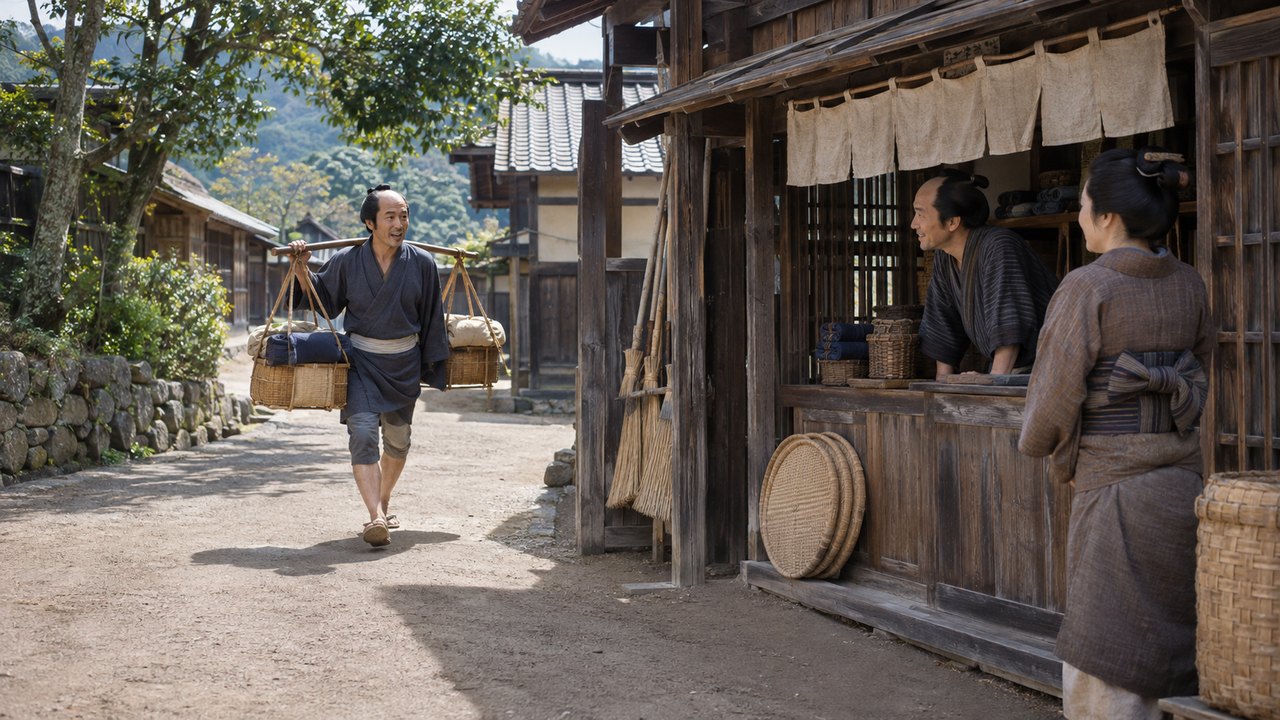
Hino Town defines Ōmi merchants as traders who, from the Edo period into the Meiji era, kept their main homes in Ōmi Province while peddling or running branch shops in other provinces. Ōmi corresponds roughly to today’s Shiga Prefecture, beside Lake Biwa. The term describes a pattern of business rather than a single firm or a single village.
Many came from Hachiman and Hino in Gamō District, from Gokashō in Kanzaki District, and from Echi and Takashima Districts. A multilingual guide published by the Japan Tourism Agency says Hachiman merchants dealt in mosquito nets, tatami facing and hemp cloth, and opened shops in Edo early on. Goods and methods differed from place to place.
Shiga University’s Faculty of Economics lists five characteristics: peddling in the founding years; branch shops across the country as their trading area grew; small margins with large volumes across many lines of business; rational management, seen in joint enterprises and account books; and a spirit of diligence, thrift, honesty and steadiness supporting it all.
From peddling to shops
From carrying packs to running distant shops
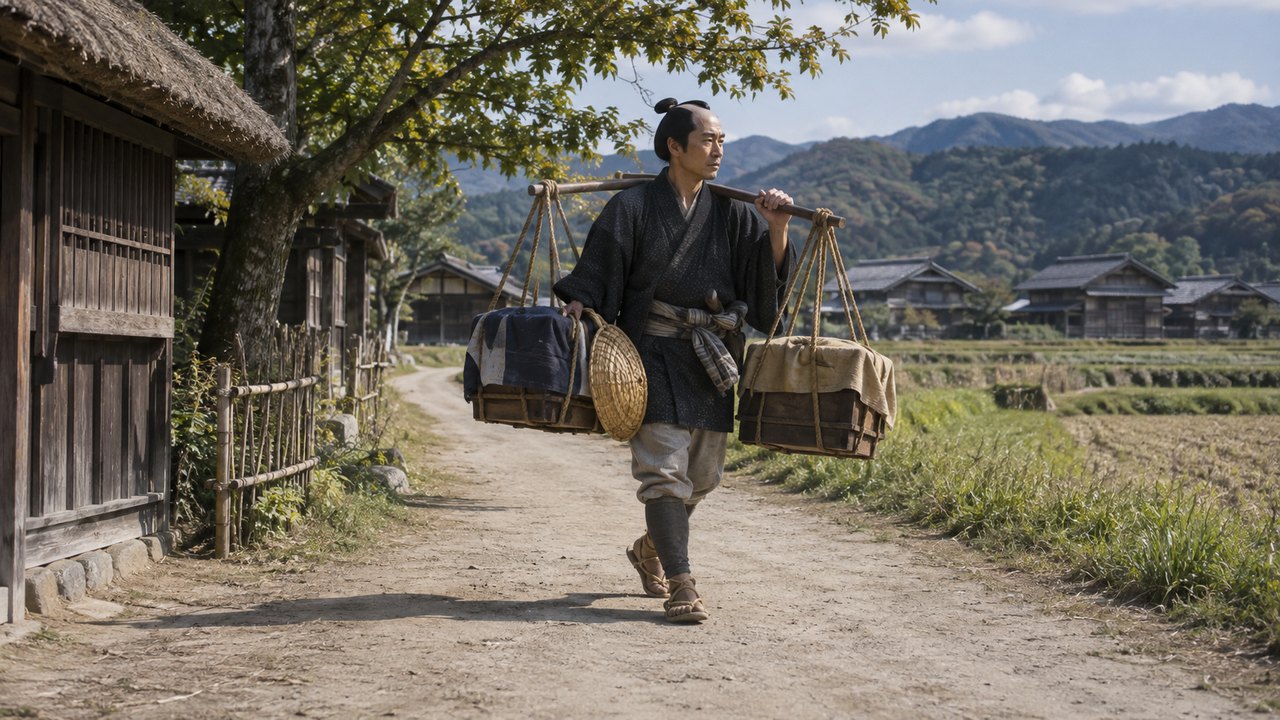
Nakai Genzaemon Mitsutake (1716–1805), founder of the Nakai house of Hino, began as a peddler and later moved into shop-based trade. According to a paper by Matsuda Yukari, after opening a shop at Koshibori in what is now Tochigi Prefecture in 1745, the family is said to have set up nearly thirty branches, mainly in the northern Kantō and Tōhoku regions.
Once a merchant owned a branch, someone had to keep buying and selling there, day after day, even when the head of the house was far away at home in Ōmi. Expanding the business meant expanding the area that the owner could not watch with his own eyes, and that created problems that honesty alone could not solve.
Whom should a shop be entrusted to? How should money be sent, and how could the owner learn what had actually sold? Trust was needed not only between merchant and customer but also between the main house and its branches. This is why Ōmi merchants cannot be understood only through the image of a lone traveling peddler.

Two-way roads
Carrying goods down and bringing goods back
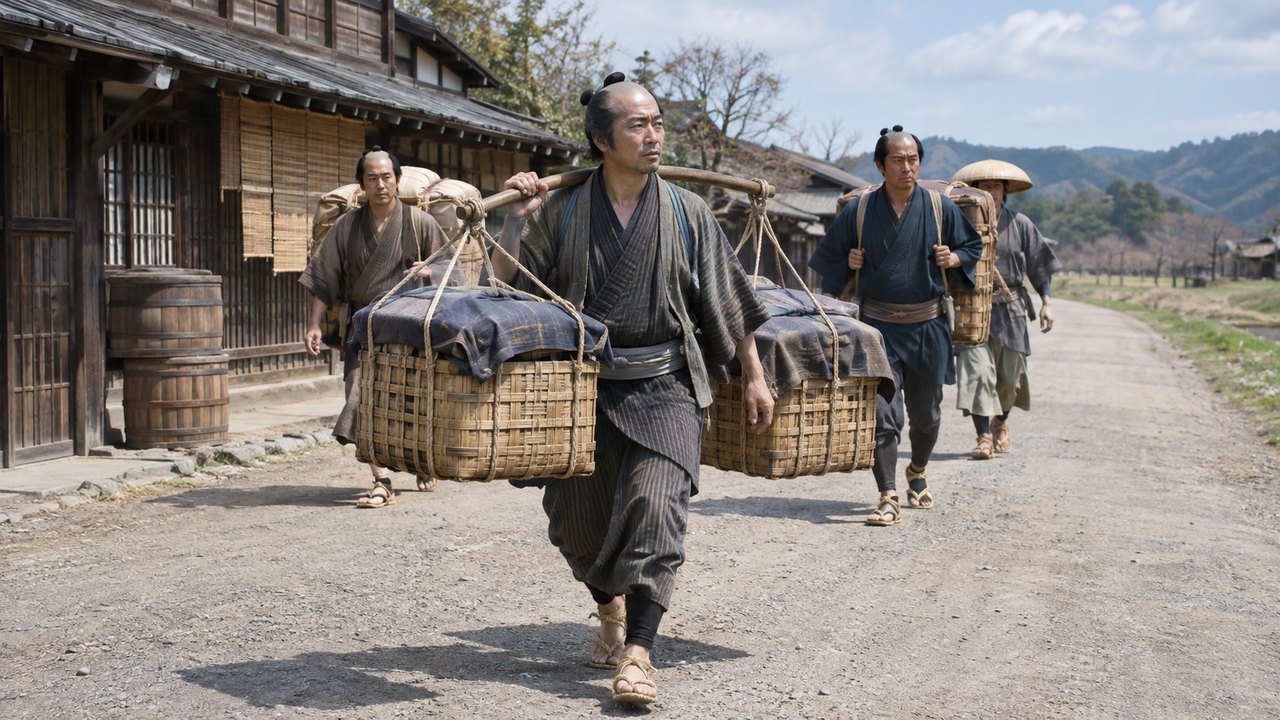
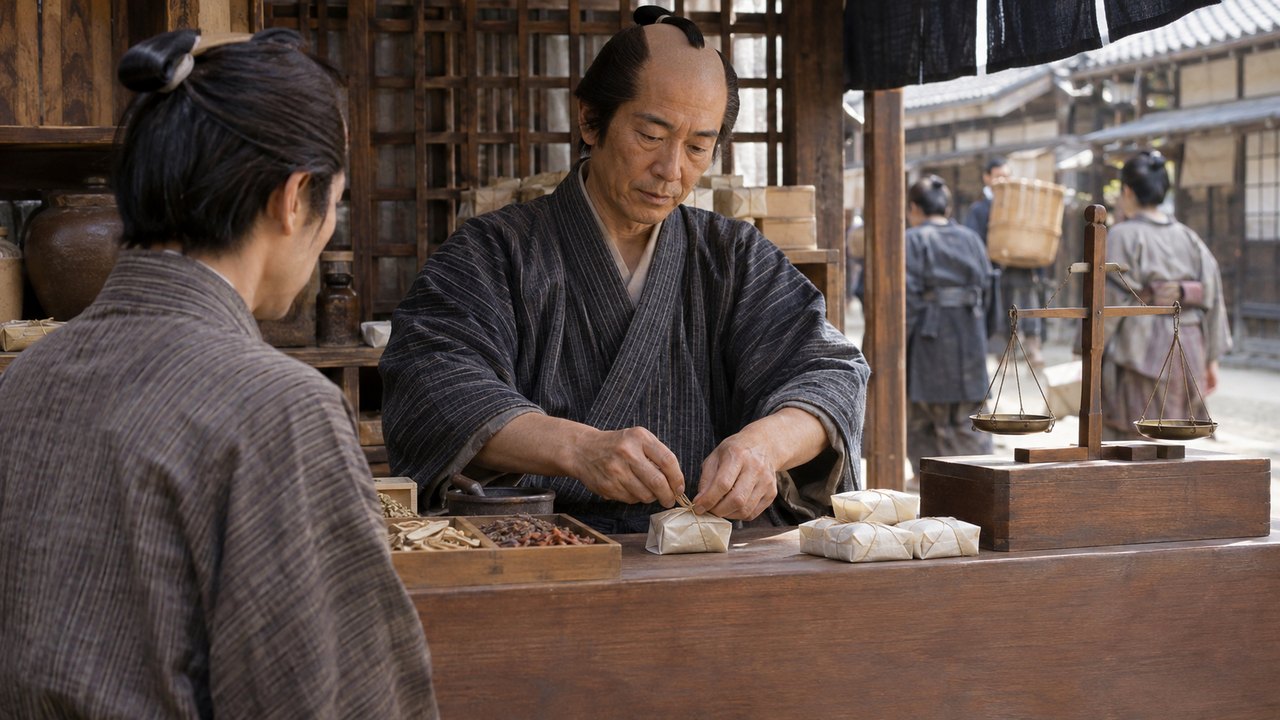
Hino Town explains that the basic method of Ōmi merchants was mochikudari trade: carrying goods from the Kyoto and Osaka region down to the provinces, then buying provincial products and selling them back in the Kyoto and Osaka region. By carrying loads in both directions, a merchant linked two distant markets and made each leg of the journey count.
In a lecture, Usami Hideki introduces an account of how Nakamura Jihei succeeded by taking hemp cloth to Shinano and selling it, then buying hemp from Kōzuke on the return trip, a pattern called "saw-tooth trade." The account gives his motives: farming did not provide work all year, and he wished to benefit his home district and to make a name and raise his house.
What to carry out, and what to bring home? Trade that ran back and forth depended on knowing how production and demand differed from one district to another. A load was only worth carrying if someone at the other end needed it, so knowledge of distant households and markets was itself part of the merchant’s capital.
Thin margins
Selling cheaply and turning stock quickly
According to Shiga University’s Faculty of Economics, the early centers of Ōmi merchants’ activity were northern Kantō, Tōhoku, Hokuriku and San’in, regions that were economically less developed at the time. Because they moved in during periods of recession, they had little choice but to sell at low prices.
Thin margins meant goods had to turn over faster and volumes had to grow. The same explanation says this led to market research and to pooling capital in joint enterprises to spread commercial risk. Low prices worked only as part of a system that kept goods moving, held costs down and gathered information about what each market needed.
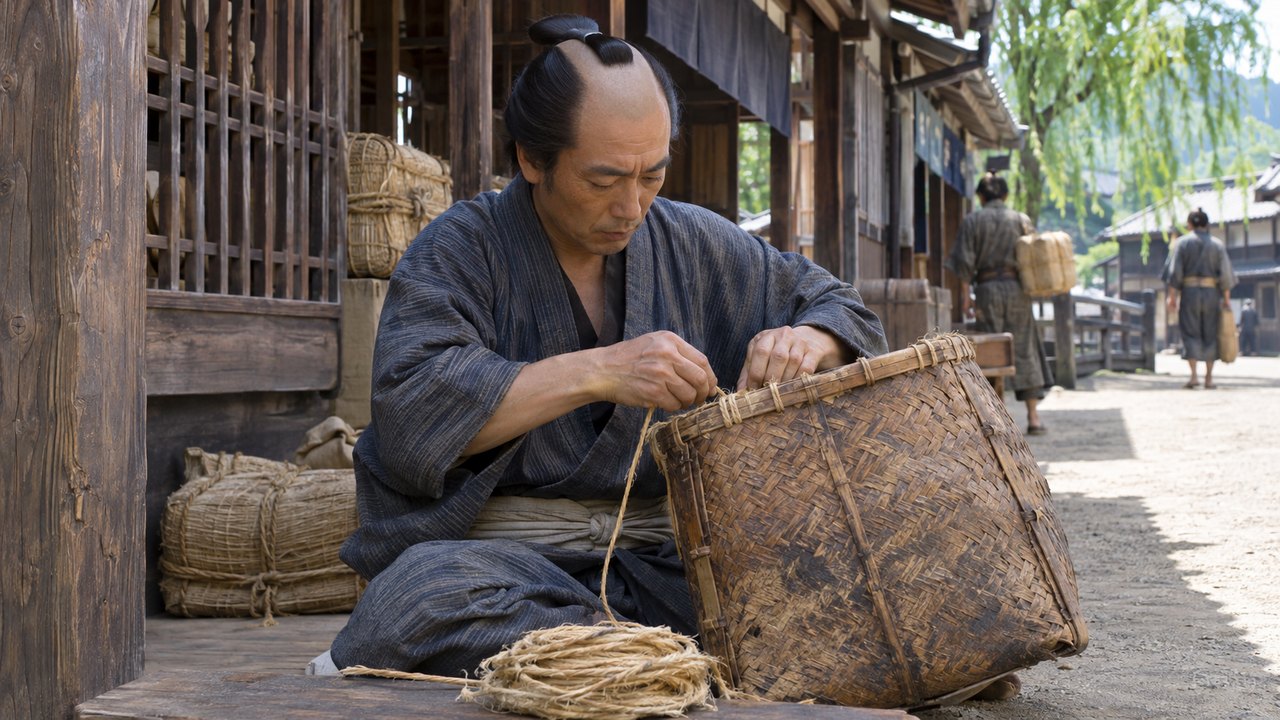
Hino merchants had their own way of growing. Hino Town says they favored small shops, following the saying "when you have saved a thousand ryō, open a new shop," and opened many branches in many places. Many ran breweries, and they also made and sold a herbal medicine called Manbyō Kannōgan.
House codes
Who were the house codes written for?
Ōmi merchant families left house codes and shop rules that told the head of the house and the employees how to conduct themselves. The Japan Tourism Agency guide introduces phrases such as "shimatsu shite kibaru," meaning to make the most of what one has and work hard, and "intoku zenji," doing good deeds without seeking recognition.
Usami Hideki argues that shop rules expressed the will of those who had built a family name, family property and a family business to pass all three on to the next generation. At the same time, he notes, the moment such rules were written down could also mark a turn toward a more conservative, defensive style of management.
House codes describe how people ought to behave. The fact that a rule was written does not prove that everyone in the house always followed it. Reading ideals and practice separately does not lessen the value of these documents; it shows more concretely what kinds of behavior the families felt they needed to warn against.
Organizations
Joint ventures and the Hino Ōtōban
The capital and labor that one person can supply are limited. Shiga University’s Faculty of Economics lists joint enterprises, pooling capital to spread commercial risk, as a feature of Ōmi merchants. Even so, the forms of investment and liability involved should not simply be equated with a modern joint-stock company; each arrangement has to be examined in its own period.
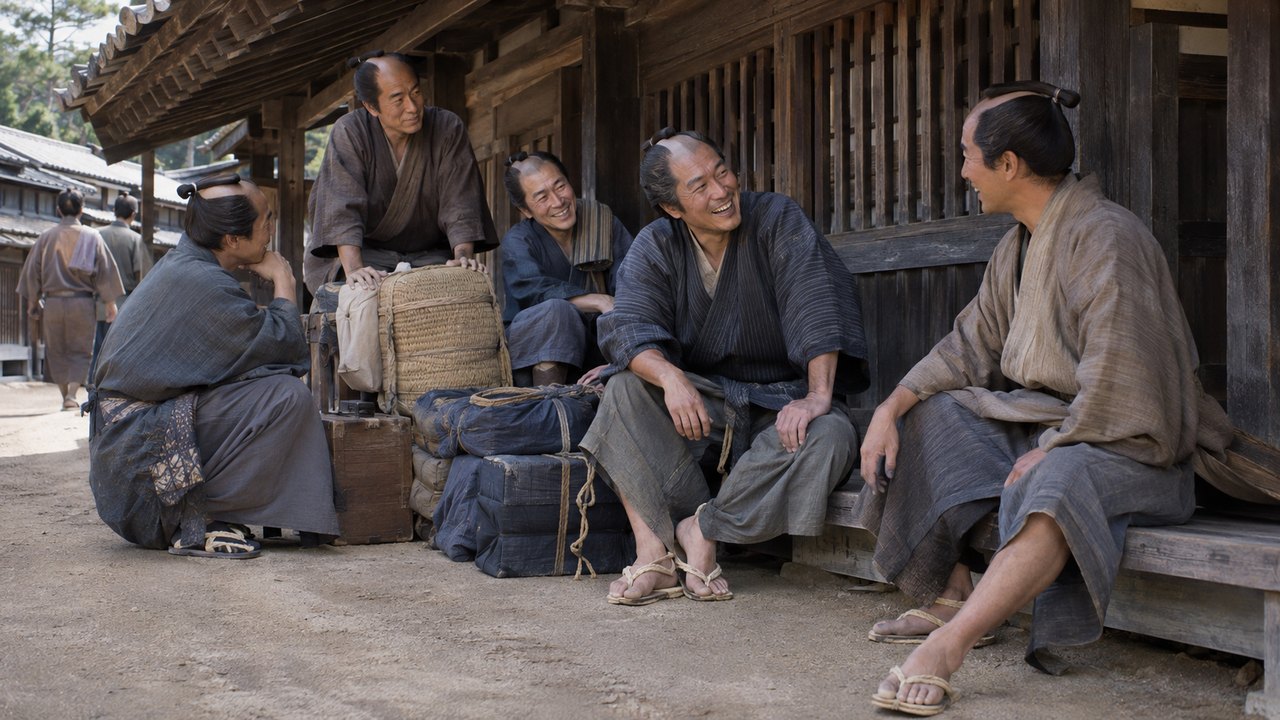
According to Hino Town, Hino merchants formed a group called the Hino Ōtōban for mutual aid and efficiency. They designated official inns, known as Hino merchant lodgings, in post towns along the main highways, so that traveling members could find convenient and safe places to stay and store their goods while on the road.
The same explanation says the Ōtōban was established under the protection of the shogunate. If a daimyo or other borrower failed to repay a loan, it had the privilege of collecting the debt under the shogunate’s authority. This point matters: the spread of Ōmi trade cannot be explained by morality alone, without the institutions and power behind it.
The Nakai house
A merchant house that left twenty thousand documents
The Nakai Genzaemon house ranked among the wealthiest of all Ōmi merchants. According to Shiga University’s Archives Museum, from the time of the founder Mitsutake the family opened many branches across the country, beginning with the Sendai shop and including Nagoya, Osaka and Karasu in Ise, trading on a large scale.
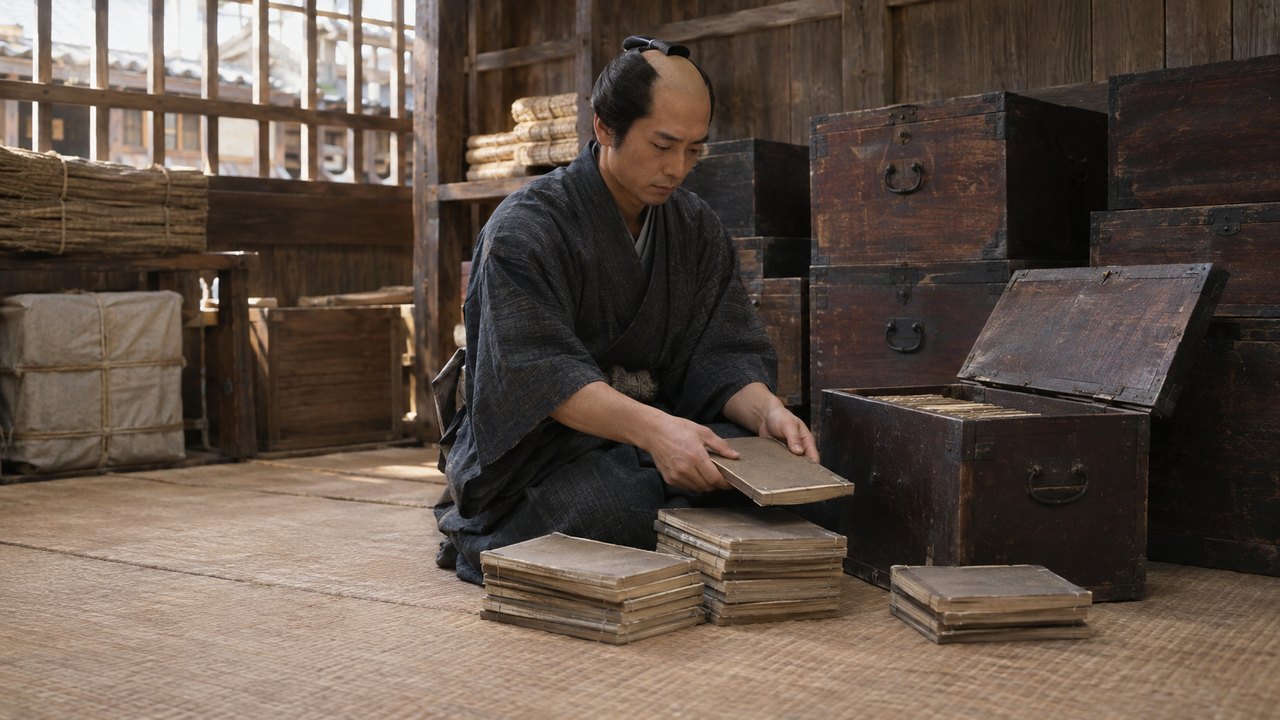
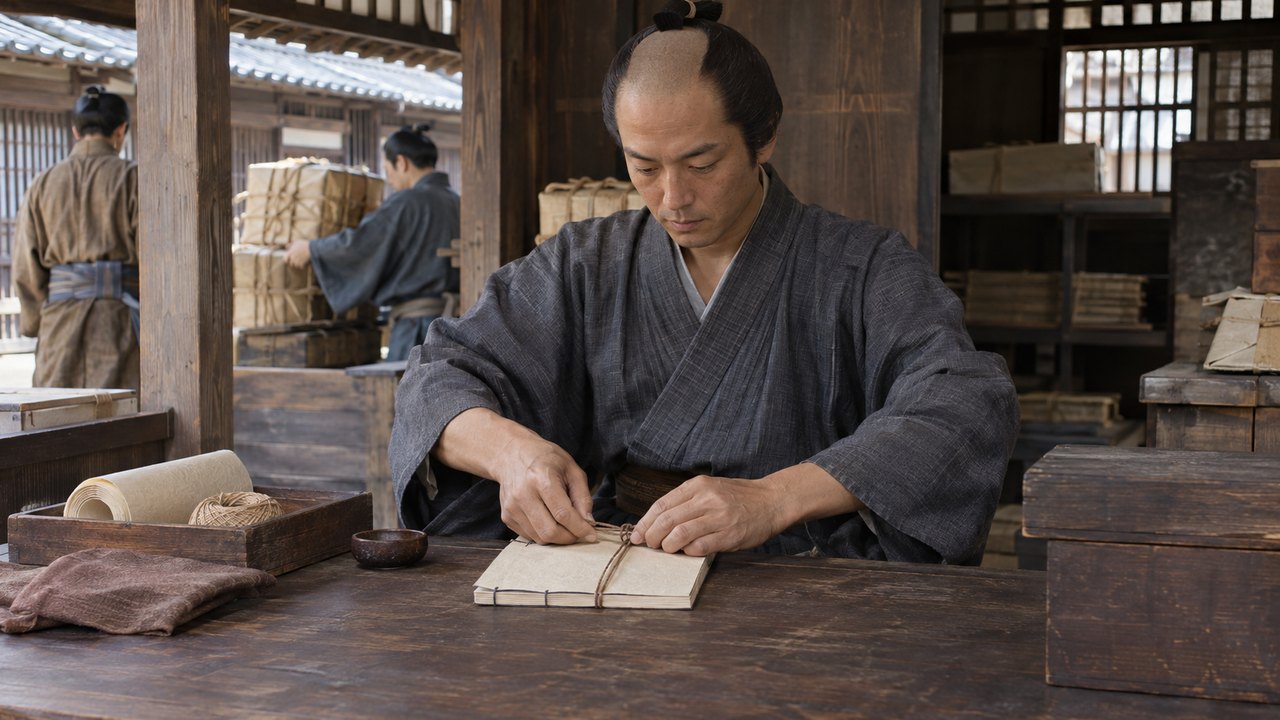
The family’s papers were brought to the archives in several batches from 1951 onward. They include not only records from the main house in Hino but also documents produced at branches around the country. A full survey funded by a government research grant began in fiscal 2000 and confirmed the existence of about twenty thousand documents.
The archives’ catalog now counts 20,383 items in the Nakai Genzaemon family papers, with coherent records on commerce, finance, manufacturing and the reclamation of new fields. Still, the Nakai were one family among many. Practices found in their papers cannot be taken as a system shared by every Ōmi merchant, and should be read within their own limits.
Branch accounts
The Sendai and Sōma shops
According to Matsuda Yukari, the Sendai shop, one of the family’s main outlets, opened around 1769 in Ōmachi 1-chōme, Sendai. It was divided into five sections handling finance and personnel, retail, pawnbroking, raw silk purchasing and the wholesale of cotton cloth. The pawnshop and the cotton shop each had their own premises in the city.
The Sōma shop was opened in 1783 by Mitsutake as an offshoot of the Sendai shop, in Nakamura Ōmachi in Sōma District. Its main business was selling secondhand clothing and household goods, together with ginned cotton, gathered from the Kyoto and Osaka region and Edo, and running a pawnshop for local customers.
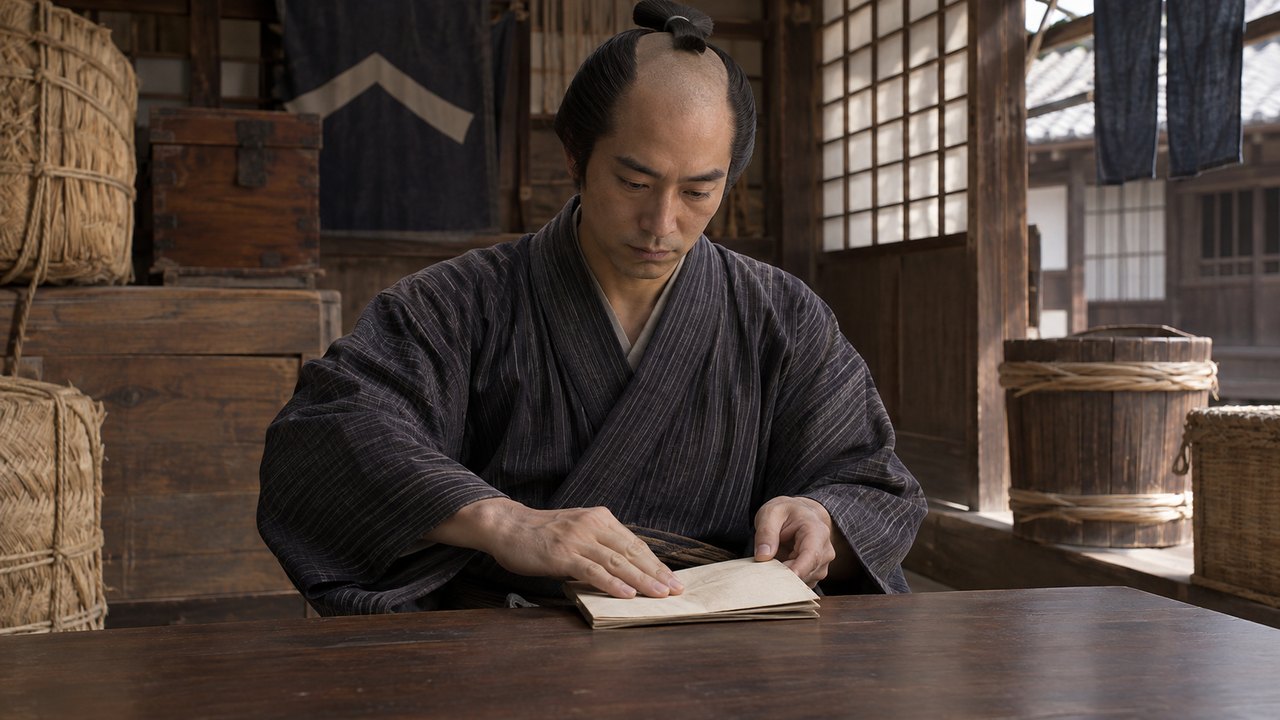
Matsuda examined in detail an inventory and settlement report the Sōma shop drew up at the New Year of 1802 and sent to the main house. Although the cover bears the year 1802, it reports the results of the previous year, a year of the Rooster. Telling apart when a document was made and which year it reports on is essential to reading it.
Two calculations
Checking profit from two directions
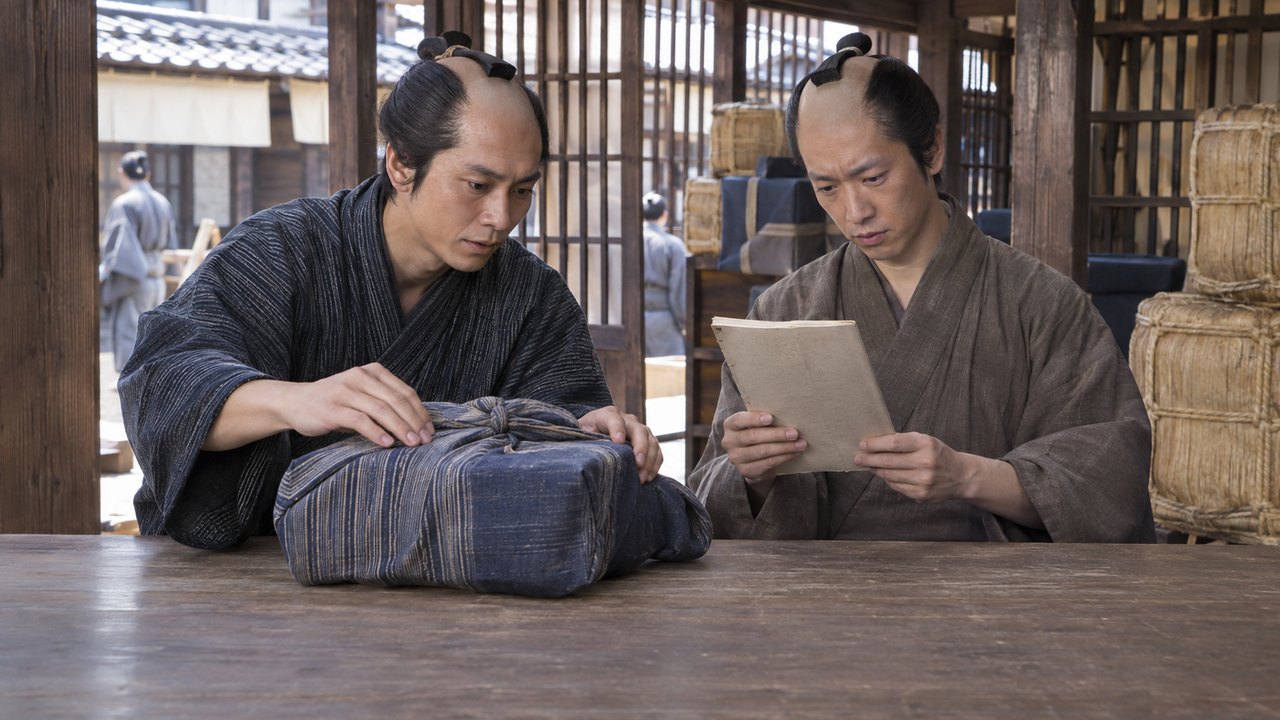
The Sōma report contained one section that worked out profit or loss by comparing net worth at the start and end of the year, setting assets against liabilities and other items, and another that compared a section of gains with a section of losses. Matsuda concludes that the shop calculated a single year’s result from two directions at once.
The losses section listed interest paid, cash shortages, daily necessities, travel expenses, food and wages. A household expenses section added rice, miso, soy sauce and vegetables, travel to the main house, and wages for eight employees. The account book of a shop also recorded the daily lives of the people who kept it running.
The two calculations did not match, and the difference of a little over two ryō and two bu was entered as a "discrepancy." Another section compared the pawned goods on record with the goods actually inspected on the shelves. Trust rested not only on believing there were no mistakes but also on the work of finding differences.
Standard forms
Bringing the reports into line
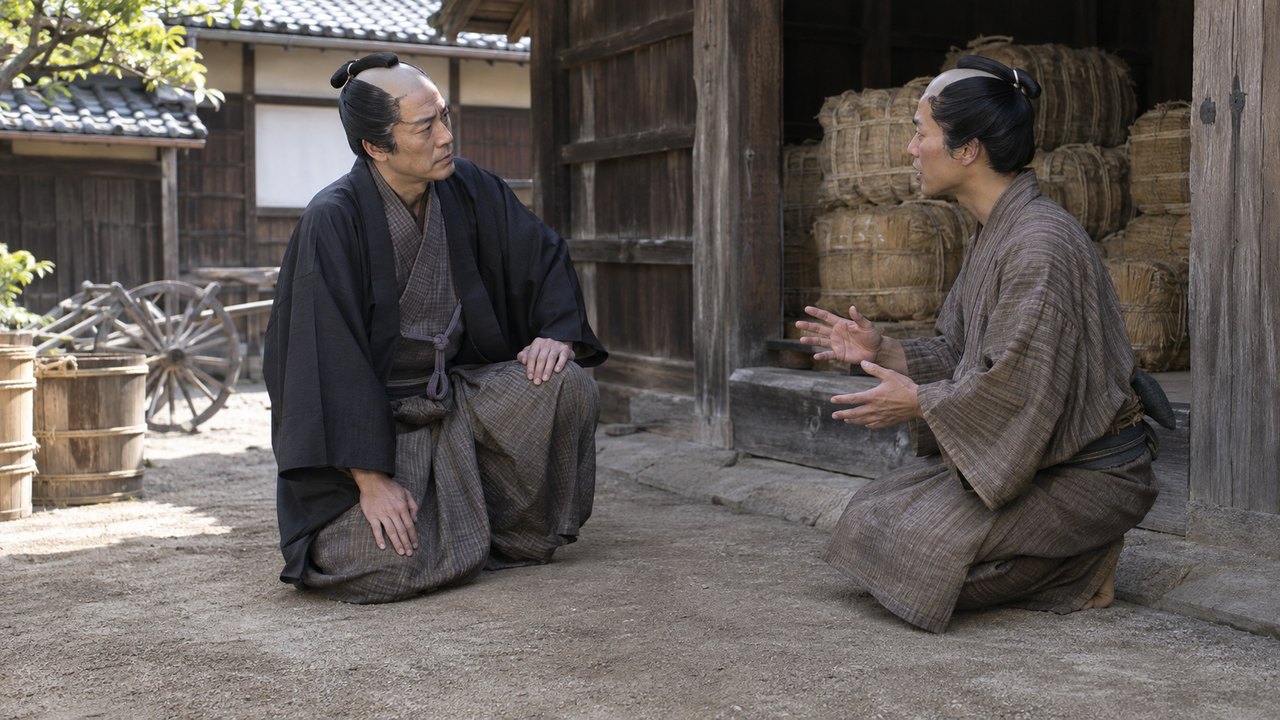
Matsuda compared year by year the reports of the Sōma shop, the Sendai pawnshop and the Ishinomaki shop. Even when a shop began with its own format, its reports later moved closer to the format used by the Sendai pawnshop. At Sōma, the methods of calculation and presentation changed between 1791 and 1802.
The head of the main house made tours of the branches, known as misemawari, inspecting account books such as these reports and gathering the staff to explain the house rules. Matsuda suggests that reports which could be compared easily were needed to evaluate how each shop was doing, and that changes in format sometimes coincided with changes of manager.
No record has been found of the Nakai house instructing branches how to calculate profit or prepare these reports, and the link to changes of manager is offered only as a possibility. In 1839 the Sōma shop was closed as the fourth head, Mitsumoto, wound up branches one after another. Hoping for permanence did not guarantee it.
Society and trade
Beyond the slogan, the concrete work
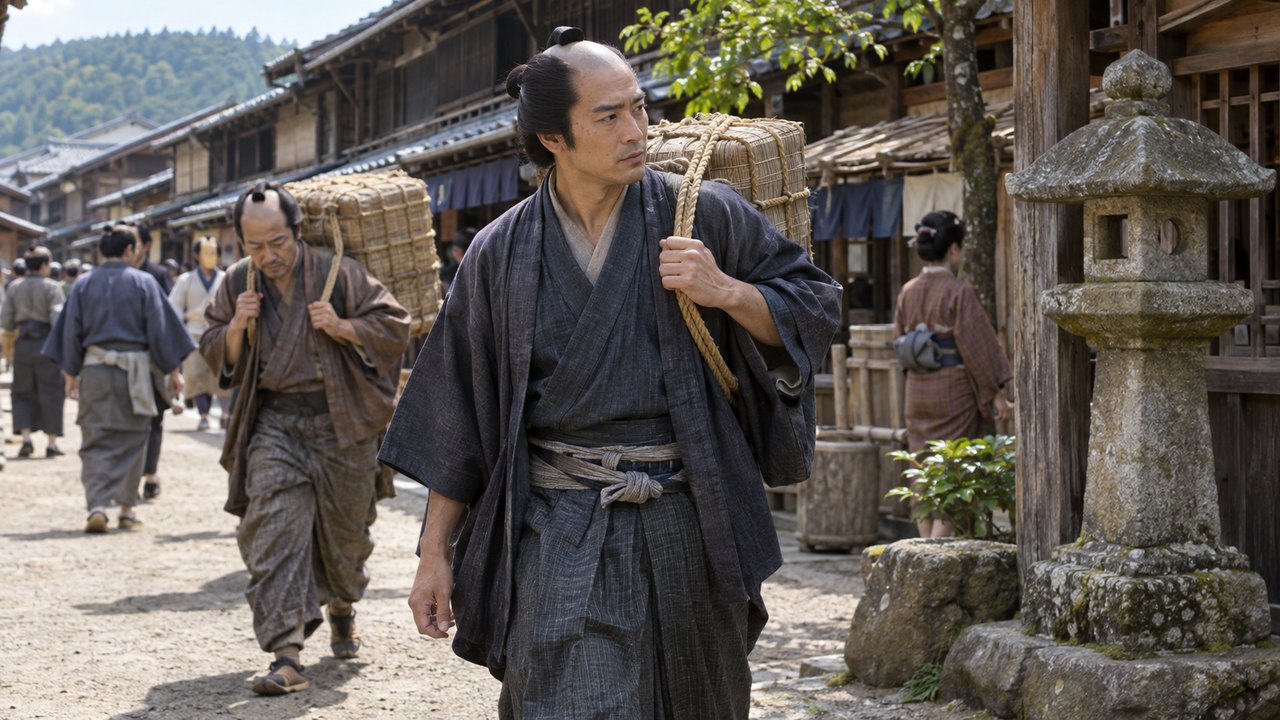
According to the archives, Nakai Shōjiemon, of a branch family of the Nakai, rebuilt the Seta Long Bridge and set up a stone lantern for night travelers at Kusatsu post town. Hino Town says many Hino merchants studied Shingaku, a popular ethical teaching, donated lanterns along highways and paid to repair or build roads and bridges.
Usami notes from the records that families who kept their houses going for generations spent their own money on society, such as relief for the poor after disasters and gifts to shrines and temples. He also warns that presenting Nakamura Jihei’s testament as the original source of the three-sides ideal looks like an explanation made with hindsight.
Carrying needed goods to distant places, arranging relations with those entrusted with shops, passing on ideals through house codes and checking real work through account books: this was the work that lay between profit and trust. The three short phrases are an entrance. Looking past them to a single document, a single shop and a single road makes the picture of trade far richer.
How to read this work
History, interpretation, and reconstruction
The phrase "good for the seller, good for the buyer, good for society" was coined around 1988 and does not appear in that form in Edo-period house codes. Yet Ōmi merchant trade rested on concrete work, including two-way trade between distant markets, house codes and shop rules, joint organizations and institutions, and account books linking main houses with their branches, and it was there that profit and trust were joined.
This work is grounded in published sources and historical research. Interior thoughts, dialogue, and some visual details are cinematic reconstructions. Where historians disagree, the article presents the point as debated rather than settled fact.
Timeline
The story in time
-
Nakai Genzaemon Mitsutake is born (died 1805). He begins as a peddler and later moves into shop-based trade.
Sources: s08 -
The Nakai open a shop at Koshibori in present-day Tochigi Prefecture, and are later said to set up nearly thirty branches.
Sources: s08 -
The Nakai family’s Sendai shop opens in Ōmachi 1-chōme, Sendai.
Sources: s08 -
Mitsutake opens the Sōma shop in Nakamura Ōmachi as an offshoot of the Sendai shop.
Sources: s08 -
The surviving series of Sōma shop settlement reports begins (to 1810).
Sources: s08 -
The Sōma shop sends the main house its report on the previous year’s results.
Sources: s08 -
Nakai Mitsutake dies.
Sources: s08 -
The Sōma shop is closed as the fourth head, Mitsumoto, winds up branches.
Sources: s08 -
Hiroike Chikurō, founder of Moralogy, is said to be using the phrase "good for three sides."
Sources: s04 -
The Nakai Genzaemon family papers begin to be transferred to Shiga University.
Sources: s06 -
An international AKINDO forum is held at the call of Shiga Prefecture.
Sources: s04 -
A grant-funded survey of the Nakai papers begins and confirms about twenty thousand documents.
Sources: s06 -
The international AKINDO conference 2001 helps make the slogan known nationwide.
Sources: s04
People & terms
A guide for new readers
Key figures
- Nakamura Jihei Sōgan
- Merchant of Gokashō who left a testament for his young heir in 1754 and is said to have built his trade selling hemp cloth in distant provinces.
- Nakai Genzaemon Mitsutake
- Founder of the Nakai house of Hino (1716–1805), who began as a peddler and opened many branches, including Sendai and Sōma.
- Nakai Shōjiemon
- Member of a Nakai branch family who rebuilt the Seta bridge and set up a lantern at Kusatsu.
- Ogura Eiichirō
- Researcher of Ōmi merchants who used the wording "good for the seller, good for the buyer, good for society" around 1988.
Glossary
- Sanpō yoshi 三方よし
- "Good for three sides": a modern slogan summarizing the ideals of Ōmi merchants.
- Mochikudari trade 持ち下り商い
- Carrying goods from the Kyoto and Osaka region to the provinces and bringing provincial goods back.
- Hino Ōtōban 日野大当番
- An association of Hino merchants that designated inns on the highways and held debt-collection privileges.
- Tanaoroshi mokuroku 店卸目録
- A branch’s inventory and settlement report sent to the main house.
- Misemawari 店廻り
- Inspection tours of branches by the head of the main house.
Sources & method
How this article was built
This English edition follows the Japanese article scene by scene and keeps its nine sources, their order and its fifteen timeline entries. It relies on Higashiōmi City, Hino Town, Shiga University and its archives, the Japan Tourism Agency, and two peer-reviewed papers.
Theories about the slogan’s origin are attributed to the studies reviewed by Mikita, the character of shop rules to Usami, and the reasons for standardizing reports to Matsuda. Where counts differ, as with the size of the Nakai papers, both figures are given.
Sources
References and further reading
- What Are Ōmi Merchants? 近江商人とは(朝日・大学パートナーズシンポジウム) Title translated editorially for reader convenience. Faculty of Economics, Shiga University 滋賀大学経済学部 Five characteristics, regions, thin margins, turnover, market research and pooled capital, and the absence of the slogan from house codes. Accessed 2026-11-19
- About "Sanpō Yoshi" 「三方よし」について Title translated editorially for reader convenience. Higashiōmi City (Ōmi Merchant Museum) 東近江市(近江商人博物館・中路融人記念館) The 1988 coinage by Ogura Eiichirō and the 1754 testament of Nakamura Jihei Sōgan. Accessed 2026-11-19
- Ōmi Hino Merchants 近江日野商人 Title translated editorially for reader convenience. Hino Town 日野町 Definition, home districts, mochikudari trade, Hino small shops, brewing and medicine, the Hino Ōtōban, its privileges, and charitable works. Accessed 2026-11-19
- An Exploratory Study of Diversity in Management Philosophy: From the Viewpoint of the Origins of the Sanpō Yoshi Ideal (Mikita Naomi, 2025) 三木田尚美「経営理念の多様性に関する探索的研究―三方よし理念の由来の視点から―」(イノベーション・マネジメント22巻、2025年) Title translated editorially for reader convenience. Research Institute for Innovation Management, Hosei University 法政大学イノベーション・マネジメント研究センター Review of studies on the origin of the phrase, Hiroike Chikurō, Itō Chūbei and the AKINDO forums. Accessed 2026-11-19
- What Lies Beyond the Pass: Setting Out in Trade (lecture by Usami Hideki) 宇佐美英機「峠の向こうに何がある―商いへの旅立ち―」(講演録、滋賀大学経済学部附属史料館研究紀要第51号) Title translated editorially for reader convenience. Archives Museum, Faculty of Economics, Shiga University 滋賀大学経済学部附属史料館 Nakamura Jihei’s motives and saw-tooth trade, criticism of treating his testament as the source of the slogan, shop rules and service to society. Accessed 2026-11-19
- Archives Newsletter SAM No. 18: The Nakai Genzaemon Family Papers 滋賀大学経済学部附属史料館にゅうすSAM第18号(中井源左衛門家文書) Title translated editorially for reader convenience. Archives Museum, Faculty of Economics, Shiga University 滋賀大学経済学部附属史料館 Nakai branches, the branch family’s bridge and lantern, transfer from 1951 and the survey from fiscal 2000. Accessed 2026-11-19
- Introduction to the Collections 収蔵史料紹介 Title translated editorially for reader convenience. Archives Museum, Faculty of Economics, Shiga University 滋賀大学経済学部附属史料館 The 20,383 items of the Nakai Genzaemon family papers and their contents. Accessed 2026-11-19
- A Study of Bookkeeping in a Late Edo Merchant House: Analysis of the Nakai Family’s Inventory Reports (Matsuda Yukari, 2021) 松田有加里「江戸時代後期の商家における帳合法に関する研究―近江商人中井家の「店卸目録」の分析から―」(簿記研究4巻1号、2021年) Title translated editorially for reader convenience. Japan Association for Bookkeeping Research 日本簿記学会 Nakai branches, the Sendai and Sōma shops, the 1802 report, two calculations, discrepancies, standardization and inspection tours. Accessed 2026-11-19
- Ōmi Merchants (Multilingual Commentary Database) 近江商人(観光庁 地域観光資源の多言語解説文データベース) Title translated editorially for reader convenience. Japan Tourism Agency 観光庁 Goods of Hachiman merchants, diligence and thrift, "shimatsu shite kibaru" and "intoku zenji." Accessed 2026-11-19
Continue reading
More stories from Shigeki

Shigeki English
Amakusa Shiro at Hara Castle: A Young Symbol in the Surviving Evidence
An Arima castle, Matsukura taxes, risings in Shimabara and Amakusa, Itakura’s death, Nobutsuna’s siege and the fall of the castle: the history of the people who gathered under a boy’s name, told within the limits of the sources.
- When Kan’ei 14–15 (1637–1638), with the castle’s construction (1599–1604) and modern excavation and World Heritage inscription (2018) as background
- Where Shimabara and Amakusa in southwestern Japan, culminating in the siege of Hara Castle

Shigeki English
From the Black Ships to Hakodate: Sixteen Years from Bakumatsu to Meiji
Treaties, the Sakuradamon incident, the Kinmon incident, the Satsuma–Choshu alliance, the return of power, Toba–Fushimi, Edo Castle, Aizu and Hakodate: diplomatic commitments, political authority and military command did not change at the same moment.
- When 1853–1869, with administrative changes in 1869 and 1871 placed separately
- Where Uraga, treaty ports, Edo, Kyoto, Toba–Fushimi, Aizu and Hakodate