

SHIGEKI ENGLISH STORYEN
Japanese history in English
Oda Nobutada: The Son Who Had Already Inherited the Headship
Behind Nobunaga stood a commander who governed Gifu and had led armies for seven years before Honnoji
Oda Nobutada was not simply an heir waiting to succeed his father. He received the Oda family headship in 1575, governed from Gifu, and commanded operations at Shigisan, Miki, and Takato. Without filling the gaps in his early life with legend, this biography follows the decisions and campaigns that reveal what was lost in Kyoto in 1582.
At a glance
Before you enter the story
- When
- 1557-1582, with the central narrative running from the transfer of headship in 1575 to the Honnoji Incident in 1582
- Where
- Gifu and campaign zones at Iwamura, Shigisan, Miki, Takato, and finally Kyoto
- Key figures
- Oda Nobutada, Oda Nobunaga, Matsunaga Hisahide, Hashiba Hideyoshi, Nishina Morinobu, Akechi Mitsuhide, Murai Sadakatsu
- What was at stake
- Recognising Nobutada's existing headship and command changes the meaning of his death: the Oda house lost not only Nobunaga's future heir, but a serving head of the family with a documented record of governance and military leadership.
Why this story matters
The larger history behind the turning point
Oda Nobutada usually enters popular narratives at their ending. He appears beside the Honnoji Incident as the son who died on the same day as his famous father. When that final morning becomes the entire frame, seven years of headship, governance, and command shrink into a prelude, and Nobutada remains an unrealised possibility rather than a historical actor.
The records collected here offer a different route. They show a transfer of headship in 1575, rule centred on Gifu, permission granted for activities in the castle town, and commands exercised across very different campaigns. None of this requires imagined childhood conversations, heroic speeches, or predictions about the future he might have had.
For readers new to the period, Nobutada's career also shows that succession was not always one clean moment in which an older ruler disappeared and a younger one received every power. Nobunaga remained formidable after the transfer, while Nobutada accumulated real responsibilities. Their overlapping authority helps explain why losing both men on one morning was politically consequential.
Historical context
What an international reader needs to know
A transfer without a complete retirement
Family headship placed Nobutada at the formal head of the Oda house, but the sources do not support a simple picture in which Nobunaga stepped away from politics and war. Nobunaga continued to direct major affairs after 1575. The transfer should therefore be understood as a genuine elevation of Nobutada within a continuing father-son structure, not as a modern retirement ceremony.
This distinction protects the narrative from two opposite errors. One would reduce Nobutada to an heir with no present authority; the other would transfer every aspect of Nobunaga's power to him at once. The documented record supports neither extreme. It shows Nobutada governing, granting permissions, and repeatedly standing at the head of forces.
Command was more than personal combat
The campaigns in this biography did not all demand the same work. A mountain fortress, an extended network of siege forts, and an advance into Takeda territory posed different problems. Describing Nobutada as commander does not mean claiming that he personally performed every action or that victory belonged to him alone.
His forces included many commanders, retainers, and soldiers acting within Nobunaga's wider political and military order. What the sources allow us to see is Nobutada's repeated placement at the top of major operations. The article focuses on that responsibility while leaving unverified troop numbers, private exchanges, and exact chains of command unstated.
Watch the film
See the story in motion
The film currently uses Japanese audio. This English article provides the context and source trail; it does not imply that an English subtitle track is available.

Prologue
The man lost that morning was not an heir in waiting
Before dawn on 21 June 1582, Oda Nobunaga was attacked at Honnoji in Kyoto. His eldest son, Oda Nobutada, was lodged at Myokakuji. Nobutada attempted to move towards Honnoji, then transferred to Nijo New Palace as Akechi troops closed in and prepared to resist there.
Seen only through this final morning, he can appear to be a young successor who died before receiving his father's place. That impression is powerful because Nobunaga dominates the story, but it conflicts with a basic date in Nobutada's career.
Nobutada received the Oda family headship in 1575, seven years before the incident. He later governed from Gifu and led forces at Shigisan, Miki, and Takato. What disappeared in Kyoto was not merely a future candidate; it was a serving head of the house who had already issued decisions and commanded armies.
A biography read backwards from Honnoji can turn every earlier event into an omen of the ending. This one instead begins with the transfer of headship and moves forward through work already completed. The point is not to magnify a lost future, but to recover responsibilities visible in the record before the final day.

1557
Do not fill a sparse early life with legend
Gifu City's account identifies Nobutada as Nobunaga's eldest son and gives his birth year as 1557. The public materials reviewed for this project do not securely fix one complete account of his mother, birthplace, childhood, or early personality.
Historian Wada Yasuhiro has also commented on the relative scarcity of anecdotes about Nobutada while describing research grounded in strong evidence. A shortage of memorable eccentricities or celebrated quotations does not demonstrate that Nobutada held an insignificant role among his contemporaries.
This biography therefore does not invent childhood exchanges, private rivalry, or a father's secret expectations. It approaches Nobutada at the point where orders, permissions, castles, and troop movements begin to make his actions clearer. The absence of a colourful legend is not repaired with fiction.
An evidential gap is a limit, not an invitation. Leaving the early years partly unknown allows later, better-supported activity to carry its proper weight. Instead of a personality assembled from retrospective stories, the foundation becomes a sequence of public responsibilities that can be traced.

1575
Iwamura and the transfer of headship
In 1575, Nobutada took part in operations against Iwamura Castle. Gifu City describes him as winning military distinction there, while Ena City's planning document records the surrender of the castle side before an Oda army with Nobutada as commander.
In the same year, Nobunaga transferred the Oda family headship to Nobutada. The Nagahama Castle Historical Museum also states the transfer directly. Military command and formal family leadership therefore enter the documented chronology together in 1575.
The transfer cannot be stretched into a claim that Nobunaga surrendered all political and military power. He remained at the centre of far-reaching decisions and campaigns. It is safer to see 1575 as a turning point at which Nobutada was publicly installed at the head of the house within an order Nobunaga continued to dominate.
Nor does the evidence establish that headship was simply a reward for one battle. What can be said is narrower: in the year Nobutada appeared as commander in the Iwamura operation, the headship passed to him. The roles of representing the house and leading troops acquired a visible, overlapping shape.

1576-1581
Giving orders from Gifu
Gifu City's list of castle lords begins Nobutada's period as lord of Gifu Castle in 1576, after Nobunaga moved to Azuchi. Nobutada governed Mino and part of Owari from this base. His record cannot be reduced to appearances on distant battlefields.
The historical chronology in the Gifu Castle site plan notes that Nobutada permitted the missionary Organtino to preach in Gifu in 1579. It also records his authorisation of the Funaki guild in 1581. The present sources do not justify expanding those brief entries into a complete account of policy.
Even within those limits, permission matters. Decisions about who might operate in the castle town and what activity could be recognised belonged to the work of rule. Behind the spectacular campaigns stood repeated acts issued from Nobutada's position at Gifu.
Nobunaga continued to direct wider politics and war from Azuchi while Nobutada held the headship and governed from Gifu. Avoiding the false choice between complete retirement and empty title reveals a structure of different, overlapping roles. The castle lord and the field commander were the same person.

1577
Command at Shigisan
In 1577, Matsunaga Hisahide left the campaign against Ishiyama Honganji and held Shigisan Castle. Heguri Town's account of the castle site states that Nobutada's army surrounded the position and that the castle fell on 10 October.
Shigisan was a major fortified site in mountainous terrain. Gifu City's account summarises Nobutada as exercising overall command in the operation against Hisahide. The campaign places him not at the margin of the Oda force, but at the head of an encirclement that reached its conclusion.
A famous tale says that Hisahide died in an explosion together with the prized Hiragumo tea kettle. Heguri Town warns that this dramatic version is considered a later popular story. The article therefore does not present the explosion as an eyewitness certainty.
Removing that theatrical ending does not empty the campaign of meaning. The documented framework remains: Hisahide held the castle, Nobutada's forces surrounded it, and it fell on 10 October. Watching who carried responsibility for the army is more revealing here than embellishing a single final instant.

1578-1579
Building an encirclement around Miki
At Miki Castle in Harima, Nobutada's role was not defined by one charge against a gate. The operation required the construction and continuation of an encircling system. It brings a different form of military work into view.
Miki City's account states that from late July to mid-August 1578, Hashiba Hideyoshi and others built siege forts, including positions below Hiraiyama, under Nobutada's direction. In April 1579, Nobutada and other commanders returned to Harima and constructed six additional forts.
A siege fort was not an isolated dramatic stage. Such positions worked with earthworks, ditches, barriers, watch points, and routes to constrain movement and narrow an encirclement. The exact simultaneous arrangement is not reconstructed here, but the record shows that new strongpoints were added across more than one season.
The campaign therefore reveals command as an organisation of people, materials, terrain, and time. Nobutada was not only a young warrior dispatched by his father. He occupied a position from which several commanders could be directed and the conditions of a long operation could be assembled.

Headship and army
The accumulating work of a commander
Set Iwamura, Shigisan, and Miki beside one another. They are not repetitions of the same victory. Each demanded a different combination of pressure, encirclement, cooperation, and time, and the surviving public accounts place Nobutada in positions of command across them.
Gifu City summarises him as holding overall command in operations including those against the Saika, Matsunaga Hisahide, and the Takeda. Scholarship also includes studies devoted to the formation and development of what is termed Nobutada's army group.
The bibliographic presence of those studies is important, but their full texts were not reviewed for this article. It would therefore be improper to manufacture a roster of retainers, a precise boundary of authority, or a complete command system from titles alone. Those studies remain pathways for later research.
The safer conclusion comes from the campaigns already supported by public sources. Nobutada repeatedly stood where other people's actions had to be coordinated. That does not turn every achievement into his personal genius; the campaigns depended on Nobunaga's authority, many commanders, and numerous soldiers. It identifies the responsibility entrusted to him.

March 1582
Demanding the surrender of Takato Castle
In March 1582, Oda forces advanced into Takeda territory. Nishina Morinobu held Takato Castle. As commander of the attacking side, Nobutada demanded the castle's surrender before the assault.
Morinobu rejected the demand and resisted. Takato Castle fell in one day of fighting, and Morinobu died. Sources give varying troop figures, so this edition states no fixed number. It also invents neither a conversation between the two men nor their final words.
Soon after Takato fell, Takeda Katsuyori was also attacked by Nobutada's forces and the Takeda ceased to exist as a warring-state house. The Nagahama Castle Historical Museum likewise places Nobutada in the vanguard of the advance into Kai and connects his role with the Takeda defeat.
Seven years after receiving the headship, Nobutada was at the front of an army moving across a broad campaign zone. The essential detail at Takato is not an inflated number or dramatic exchange. It is that he issued the demand to surrender and carried responsibility for what followed when it was refused.

Spring to early summer 1582
From victory to a morning in Kyoto
Little time separated the fall of Takato and the destruction of the Takeda from the Honnoji Incident. Ina City's account notes that Nobunaga died at Honnoji roughly three months later. The chronological closeness changes how the final morning appears.
Before dawn on 21 June, Nobunaga was at Honnoji and Nobutada at Myokakuji, in separate lodgings within Kyoto. The two men carrying central political and military responsibilities for the Oda house were present in the same city when Mitsuhide's troops entered.
The commander who had demanded Takato's surrender in spring attempted to move towards his father in early summer. His final struggle was not the first test of a youth who had yet to receive responsibility. It came after headship, governance, and command across several campaigns.
No source is needed to invent his thoughts on the road between Kai and Kyoto. What matters is the documented proximity in time: in March he commanded in Takeda territory; on the night before the incident he was lodged at Myokakuji. A serving commander's routine was interrupted, not a hypothetical career waiting to begin.

21 June 1582
From Myokakuji to Nijo New Palace
When Nobutada learned of the attack at Honnoji, he attempted to move towards his father with the men available to him. With Akechi troops pressing in, he transferred instead from Myokakuji to nearby Nijo New Palace.
Crown Prince Sanehito and other members of the imperial household were at the palace. After Murai Sadakatsu helped arrange their withdrawal, Nobutada remained with Sadakatsu and others, resisted Mitsuhide's forces, and died there.
The place was not the surviving Nijo Castle now recognised as a World Heritage site. Historical descriptions use names including Lower Palace and Nijo Palace, and later explanations have sometimes blurred their locations. This edition uses Nijo New Palace for the residence given to Crown Prince Sanehito.
No direct statement preserves exactly what Nobutada thought or what alternative he believed possible. The article retains the sequence of actions: he learned of the crisis, attempted to move, transferred to the palace, and fought. Faces, dialogue, route, and numbers remain outside the factual claim.

Conclusion
Beyond the label of Nobunaga's son
Nobutada is easily remembered as the eldest son who died on the same day as Nobunaga. Walk through the years from 1575 to 1582, however, and the shape of that description changes. It remains true, but it is no longer sufficient.
He governed from Gifu, led the force at Shigisan, directed the construction of siege positions around Miki, and demanded surrender at Takato. His life consisted not only of expectations placed upon him, but of decisions issued and armies already moved.
What was lost on 21 June 1582 cannot therefore be described simply as Nobunaga and a possible future successor. Nobunaga died together with the son who had held the family headship for seven years. That claim does not require speculation about what Nobutada would have achieved had he lived.
The record gives completed work rather than an alternate future. Recovering that work does not turn Nobutada into another solitary hero, nor does it minimise the people who served within each campaign. It restores the weight of the responsibility he demonstrably carried and lets him stand as a historical actor within, but not merely behind, Nobunaga's story.
How to read this work
History, interpretation, and reconstruction
Oda Nobutada had already received the Oda family headship in 1575 and had assumed responsibility for rule from Gifu and for major military operations. This edition does not equate that transfer with Nobunaga's complete retirement or the surrender of every power; it presents the period as one in which father and son exercised substantial, overlapping roles.
This work is grounded in published sources and historical research. Interior thoughts, dialogue, and some visual details are cinematic reconstructions. Where historians disagree, the article presents the point as debated rather than settled fact.
Timeline
The story in time
-
Gifu City's account gives this as the birth year of Oda Nobutada, Nobunaga's eldest son. This edition does not settle the details of his mother, birthplace, or childhood.
Sources: gifu-castle-lords -
Nobutada gains military distinction in the Iwamura operation and receives the Oda family headship from Nobunaga in the same year.
Sources: gifu-castle-lords, ena-iwamura-plan, nagahama-nobutada -
Nobunaga moves to Azuchi. Gifu City's castle-lord chronology begins Nobutada's period as lord of Gifu Castle in this year.
Sources: gifu-castle-lords, gifu-castle-plan -
Shigisan Castle falls after encirclement by Nobutada's army, and Matsunaga Hisahide dies. The famous exploding-tea-kettle story is treated as a later popular tale.
Sources: heguri-shigisan -
During the Miki campaign, Hideyoshi and others construct siege forts, including positions below Hiraiyama, under Nobutada's direction.
Sources: miki-tsukeji -
Nobutada and other commanders return to Harima and build six additional siege forts around Miki Castle.
Sources: miki-tsukeji -
Nobutada grants Organtino permission to preach in Gifu.
Sources: gifu-castle-plan -
Nobutada grants permission to the Funaki guild.
Sources: gifu-castle-plan -
As commander of the attacking force, Nobutada demands the surrender of Takato Castle. Nishina Morinobu refuses, the castle falls, and the defeat of the Takeda follows.
Sources: ina-takato, gifu-castle-lords, nagahama-nobutada -
Nobunaga remains at Honnoji, while Nobutada returns that night to his lodging at Myokakuji.
Sources: ntj-honnoji -
Nobutada moves from Myokakuji to Nijo New Palace, fights Akechi forces with Murai Sadakatsu and others, and dies.
Sources: ntj-nijo, ndl-nijo-location
People & terms
A guide for new readers
Key figures
- Oda Nobutada
- Nobunaga's eldest son, who received the Oda family headship in 1575 and took responsibility for rule from Gifu and major campaigns.
- Oda Nobunaga
- Nobutada's father, who transferred the headship but remained central to political and military decision-making.
- Matsunaga Hisahide
- The warrior who held Shigisan Castle in 1577 and faced an encirclement led by Nobutada's army.
- Hashiba Hideyoshi
- An Oda commander who took part in constructing siege forts during operations around Miki under Nobutada's direction.
- Nishina Morinobu
- The Takeda-side lord of Takato Castle who rejected Nobutada's demand for surrender in 1582 and resisted the attack.
- Akechi Mitsuhide
- The commander whose troops attacked Nobunaga and Nobutada in Kyoto on 21 June 1582.
- Murai Sadakatsu
- An Oda official who remained with Nobutada and fought at Nijo New Palace.
Glossary
- Family headship 家督
- Formal leadership of a warrior house. Nobutada received the Oda headship in 1575, although Nobunaga continued to exercise major political and military power.
- Castle lord 城主
- The lord associated with authority over a castle and its domain. Gifu City's chronology identifies Nobutada's period as lord of Gifu Castle from 1576.
- Siege fort 付城
- A fortification established to support an encirclement. Multiple such positions were constructed around Miki under Nobutada's direction in 1578 and 1579.
- Eldest son 嫡男
- A son recognised in the principal line of succession. The term identifies Nobutada's dynastic position but does not by itself describe the authority he had already received.
- Nijo New Palace 二条新御所
- The Kyoto residence where Nobutada made his final resistance. It must not be confused with the surviving Nijo Castle.
- Honnoji Incident 本能寺の変
- The rebellion of 1582 in which Akechi Mitsuhide's forces attacked Nobunaga at Honnoji and Nobutada later fought at Nijo New Palace.
Sources & method
How this article was built
This English edition preserves the people, all eleven scene identifiers, all eleven timeline entries, every source identifier, and the cleared image sequence of the reviewed Japanese story. It adds background needed by international readers without detaching the English narrative from that factual and rights-reviewed package.
Local-government and museum materials form the factual spine: headship, rule from Gifu, the successive campaigns, and the final movement in Kyoto. The researcher interview is used for a clearly attributed assessment of the sparse anecdotal record. Bibliographic entries for unread scholarship remain leads and do not supply organisational details.
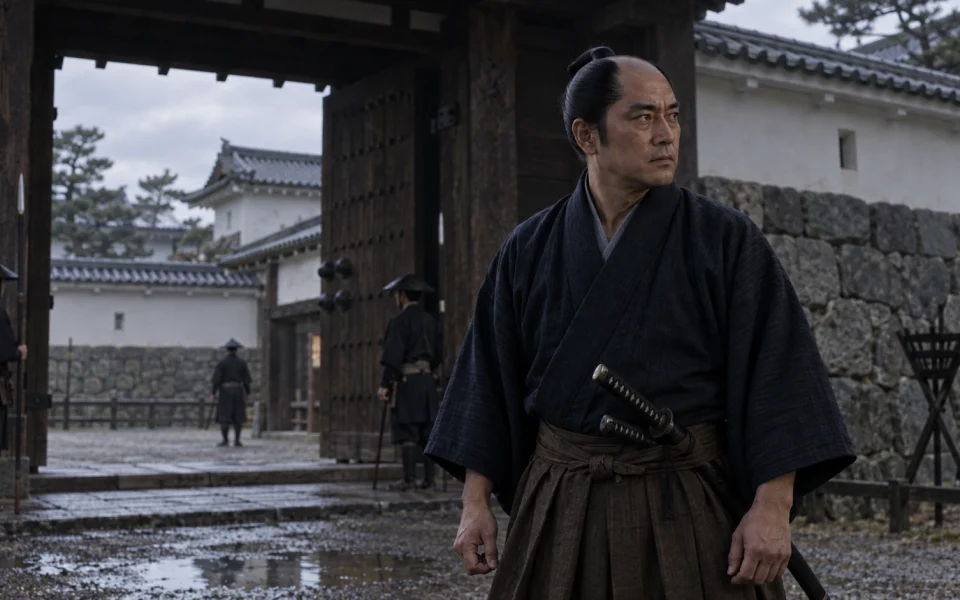
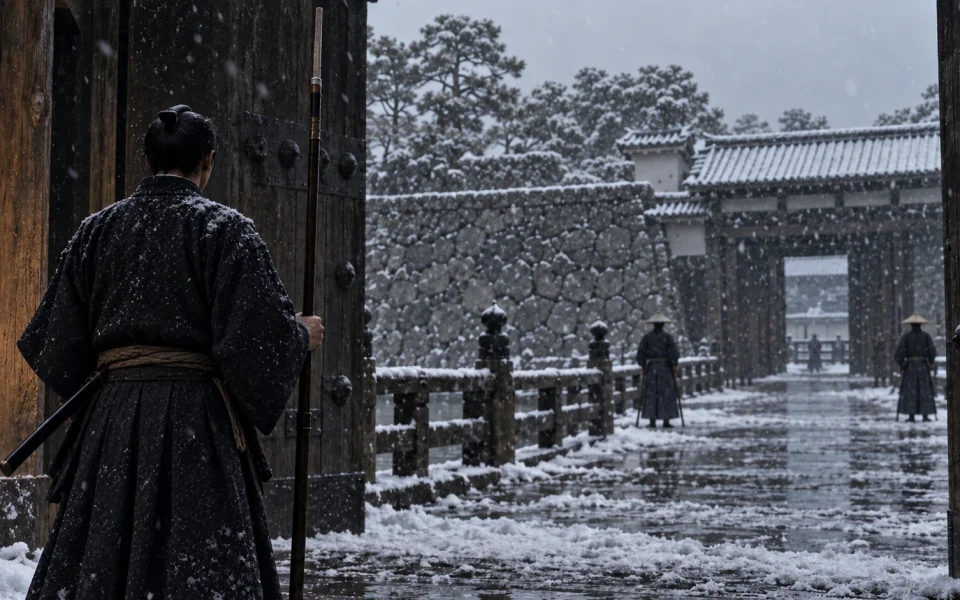
All visual assets are inherited AI-generated reconstructions. No municipal photograph, museum object, historic manuscript image, map, or figure is reproduced. The article distinguishes documented events from its interpretation of Nobutada's accumulated responsibility and refuses to invent dialogue, inner thoughts, troop totals, or a counterfactual future.
Sources
References and further reading
- The Successive Lords of Gifu Castle 岐阜城の歴代城主 Title translated editorially for reader convenience. Gifu City 岐阜市 Supports Nobutada's dates, the Iwamura operation and transfer of headship in 1575, his period at Gifu Castle, governance of part of Mino and Owari, major commands, and his death at Nijo. The castle-lord period is not confused with the earlier headship transfer. Accessed 2026-07-24
- Basic Conservation and Development Plan for the Historic Site of Gifu Castle 史跡岐阜城跡整備基本計画 Title translated editorially for reader convenience. Gifu City 岐阜市 The historical chronology supports the 1575 transfer, Nobunaga's move to Azuchi in 1576, permission for Organtino in 1579, and permission for the Funaki guild in 1581. Figures from the PDF are not reproduced. Accessed 2026-07-24
- Ena City Plan for the Maintenance and Improvement of Historic Character 恵那市歴史的風致維持向上計画 Title translated editorially for reader convenience. Ena City 恵那市 Supports the 1575 surrender of the Iwamura Castle side before an Oda army commanded by Nobutada. It does not establish his exact camp position or any battlefield dialogue. Accessed 2026-07-24
- Prefecturally Designated Historic Site: Shigisan Castle Ruins 県指定 信貴山城跡 Title translated editorially for reader convenience. Heguri Town 平群町 Supports Hisahide's stand at Shigisan in 1577, the encirclement by Nobutada's army, the fall on 10 October, and caution that the celebrated tea-kettle explosion is a later popular tale. Accessed 2026-07-24
- The Network of Siege-Fort Ruins 付城跡群 Title translated editorially for reader convenience. Miki City 三木市 Supports construction under Nobutada's direction in 1578 and the return in 1579 to build six further siege forts. The article does not claim to reconstruct the exact complete arrangement. Accessed 2026-07-24
- Discovering the Appeal of Takato Castle Ruins 高遠城跡の魅力をご紹介 Title translated editorially for reader convenience. Ina City 伊那市 Supports Nobutada's demand for surrender in March 1582, Nishina Morinobu's refusal and resistance, the castle's fall in one day, and the subsequent Takeda defeat. Troop numbers are not fixed. Accessed 2026-07-24
- People Around Hideyoshi: Nobunaga and the Oda Family Served by the Brothers Hideyoshi and Hidenaga 北近江豊臣博覧会関連コーナー展示「秀吉をめぐる人々」①秀吉・秀長兄弟が仕えた織田信長と織田家の人々 Title translated editorially for reader convenience. Nagahama Castle Historical Museum 長浜城歴史博物館 Supports the 1575 headship transfer, Nobutada's part in the 1582 Kai campaign and Takeda defeat, and his death in Kyoto. Exhibition images are not reproduced. Accessed 2026-07-24
- The Course of the Honnoji Incident 本能寺の変の経緯 Title translated editorially for reader convenience. Japan Arts Council, Cultural Digital Library 日本芸術文化振興会 文化デジタルライブラリー Supports Nobunaga's stay at Honnoji and Nobutada's return to Myokakuji on the preceding night. No illustrations from the source are used, and its link restrictions remain inherited from the Japanese package. Accessed 2026-07-24
- The Honnoji Incident: Nijo and Azuchi at the Time 本能寺の変――その時の二条城と安土城 Title translated editorially for reader convenience. Japan Arts Council, Cultural Digital Library 日本芸術文化振興会 文化デジタルライブラリー Supports Nobutada's move from Myokakuji, the withdrawal of the imperial household, and his resistance with Murai Sadakatsu. No source illustrations are reproduced. Accessed 2026-07-24
- Where Did Oda Nobutada, Nobunaga's Eldest Son, Die? 織田信長の嫡子・信忠が亡くなった場所はどこか Title translated editorially for reader convenience. National Diet Library Collaborative Reference Database 国立国会図書館 レファレンス協同データベース Supports caution about the variant names and locations described as Nijo Palace, Nijo Castle, or Lower Palace. This edition uses Nijo New Palace and distinguishes it from today's castle. Accessed 2026-07-24
- Revised Chronicle of Lord Nobunaga 改訂 信長公記 Title translated editorially for reader convenience. National Diet Library Next-Generation Digital Library 国立国会図書館 次世代デジタルライブラリー A digitised edition of Ota Gyuichi's chronicle, retained as a route for further checking of campaigns and the incident. This article confines claims to the reviewed modern public explanations and reproduces neither images nor extended text. Accessed 2026-07-24
- The Formation and Development of the Oda Nobutada Army Group 織田信忠軍団の形成と発展 Title translated editorially for reader convenience. CiNii Research; Nihon Rekishi, Yoshikawa Kobunkan CiNii Research(掲載誌『日本歴史』、吉川弘文館) Bibliographic record for a 1983 study by Taniguchi Katsuhiro. Because its full text was not reviewed, it is not used to establish the detailed membership, structure, or evaluation of Nobutada's forces. Accessed 2026-07-24
- A Study of Oda Nobutada 織田信忠考 Title translated editorially for reader convenience. CiNii Research CiNii Research Bibliographic record for scholarship on Nobutada. Its unread contents do not support specific claims that cannot be verified through the public institutional sources. Accessed 2026-07-24
- Interview with Wada Yasuhiro on Oda Nobutada: Eldest Son of the Ruler of the Realm 『織田信忠―天下人の嫡男』/和田裕弘インタビュー Title translated editorially for reader convenience. Chuokoron-Shinsha 中央公論新社 Supports the researcher's comments on the scarcity of Nobutada anecdotes and his assessment of the roles at Shigisan, Miki, and in the Takeda campaign. Age is not stated because the interview uses traditional age reckoning. Accessed 2026-07-24
Continue reading
More stories from Shigeki
Shigeki English
Oishi Kuranosuke: The Road from Surrendering Ako Castle to the Raid
Before the famous night came accounts, letters, separation, and an attempt to restore a fallen house.
- When Genroku 14–16, spanning 1701–1703; month and day references retain the old Japanese calendar
- Where Ako, Yamashina near Kyoto, and Edo
Shigeki English
The Sakuradamon Incident: A Shogunate Wounded, but Still Governing
Follow the assassination of Ii Naosuke through the orders, letters, and announcements that followed it.
- When 1860, with political background in 1858 and an aftermath extending into the 1860s
- Where Edo Castle and Hikone, with reports circulating beyond Edo