
SHIGEKI ENGLISH STORYEN
Japanese history in English
The Battle of Koshu-Katsunuma: A Castle, a Road and Village Reports
Follow the Koyo Chinbutai through transport obligations and the movement of news.
In 1868, Kondo Isami’s force aimed for Kofu Castle but fought at Kashio after the new government’s troops entered first. Trace the sequence, firearms and positions, village transport duties and circulating notices, keeping troop counts, timing traditions, prints and recollections distinct.
At a glance
Before you enter the story
- When
- 1868; the first through twelfth days of the third month in the calendar then in use
- Where
- The Koshu road from Edo toward Kofu, with fighting at Kashio near Katsunuma
- Key figures
- Kondo Isami, Koyo Chinbutai, Itagaki Taisuke, New-government troops, Post-station and village transport workers
- What was at stake
- Why did the force fail to reach its intended castle, and how did the advance and defeat affect people along the road?
Why this story matters
The larger history behind the turning point
A battle known through famous swordsmen also involved artillery, ammunition, pack animals and people required to carry loads. Village documents make that work visible and connect military operations with local obligations.
Reports travelling along a road were not necessarily eyewitness accounts written on the battlefield. Identifying where news came from helps explain both the fighting and the practical response of communities that had to supply successive forces.
Historical context
What an international reader needs to know
A renewed force and an existing political base
After the defeat at Toba-Fushimi, Kondo and others organised as the Koyo Chinbutai. The familiar Shinsengumi figures entered a new phase of military action associated with the shogunate’s side. Their goal was Kofu Castle, rather than a repetition of policing in Kyoto.
Kofu was a political and administrative base with a castle and town. The intention to secure it must be distinguished from actually occupying it, and neither fact would prove that success there guaranteed reversal of the whole war.
Historical dates and local transport
Month-and-day dates in this article follow the calendar used in 1868. The third month is not silently converted into the same numbered Gregorian month. The event sequence matters more than an unsupported modern date conversion.
Sukego required villages to support transport at post stations by supplying people and horses. It connects military movement with local work without implying that every worker volunteered or shared one political opinion. The generated illustrations are explanatory, not exact road surveys, formations, portraits or original notices.
Watch the film
See the story in motion
The film currently uses Japanese audio. This English article provides the context and source trail; it does not imply that an English subtitle track is available.
Scene 01
A force heading for a castle it never occupied
Kondo Isami and his companions headed toward Kofu Castle in 1868. The collision that awaited them occurred at Kashio near Katsunuma, rather than as their own successful defence of the castle.
Calling themselves the Koyo Chinbutai, they advanced from Edo into Kai. Another force had already entered their intended base before they arrived.
The article follows the castle, the road and the notices reaching villages. Together those perspectives explain the short advance without treating a famous group’s reputation as a substitute for the sequence of events.
Scene 02
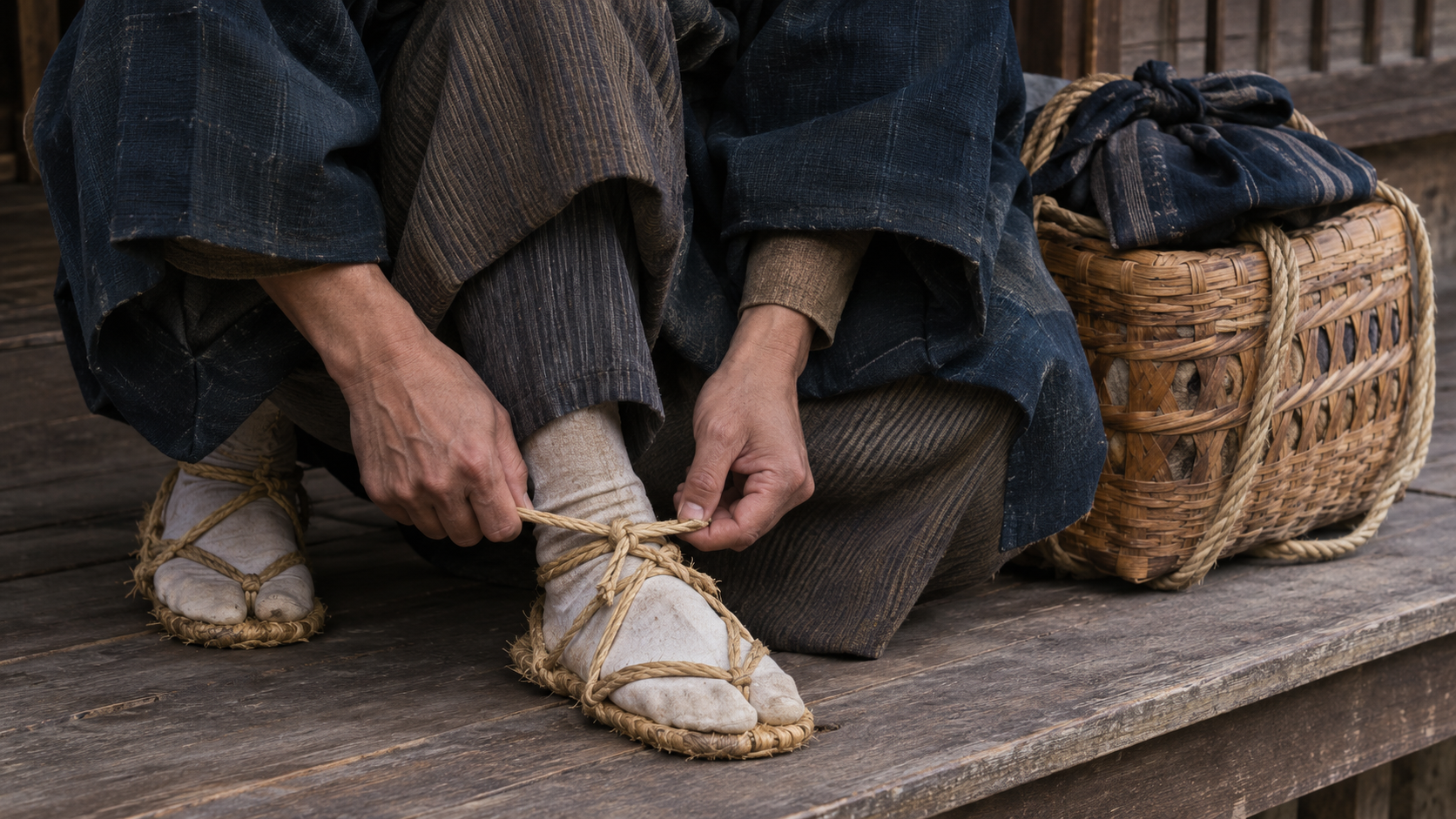
A new phase after defeat near Kyoto
After Toba-Fushimi, Kondo’s group sought to recover its position. Yamanashi’s library explanation identifies the Koyo Chinbutai as the organisation formed for that purpose.
A new name did not make the participants entirely different people. It did mark a different military setting from their earlier activities in Kyoto.
Their route now led west from Edo along the Koshu road toward Kofu. Keeping the objective visible prevents the earlier urban image of the Shinsengumi from obscuring the purpose of this advance.
Scene 03
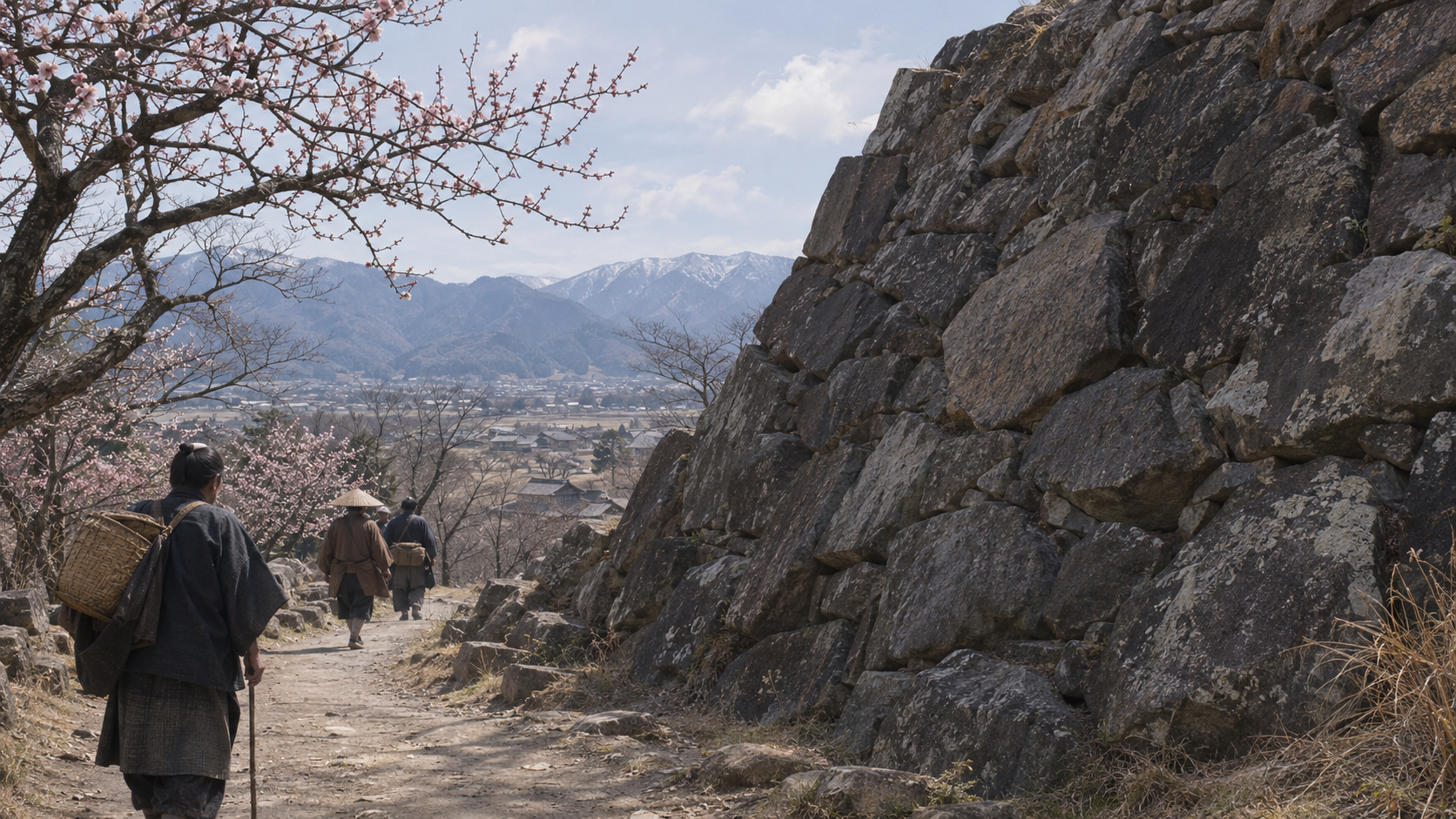
Kofu Castle was an administrative centre
Kofu Castle was a political base in Kai. The cultural-property explanation describes a castle formed from a central area, surrounding enclosures and the town, rather than one isolated old structure.
During shogunate rule, Kai became directly administered territory and Kofu Kinban officials were placed at the castle. The goal therefore concerned an established base with administrative significance.
Securing it was an intention, not an accomplished fact. Nor does its significance establish that occupation would necessarily have reversed the wider military outcome. The first question remains which side actually arrived before the other.
Scene 04
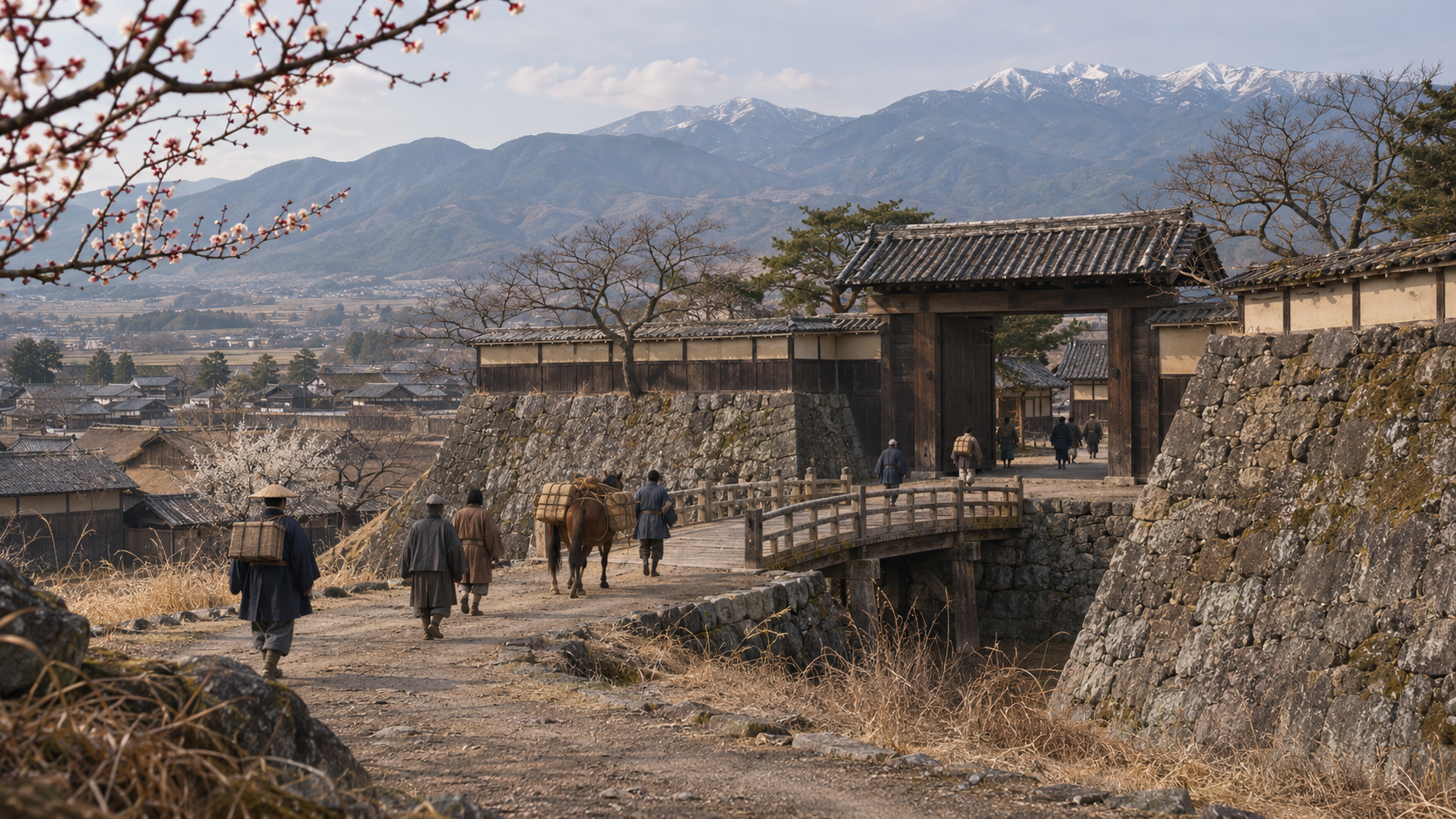
The new government’s troops entered first
Koshu City’s plan dates the force’s departure from Edo to the first day of the third month. The prefecture’s educational chronology places Itagaki and the new-government troops entering Kofu Castle on the fifth day.
The castle chronology describes that entry as occurring without fighting inside the castle. Battle at Kashio followed on the sixth day.
Kondo’s force did not first seize and hold Kofu and then sortie from it. Its intended base had passed to the opposing side while it was advancing. This sequence is central to understanding the campaign.
Scene 05
The road moved more than armed men
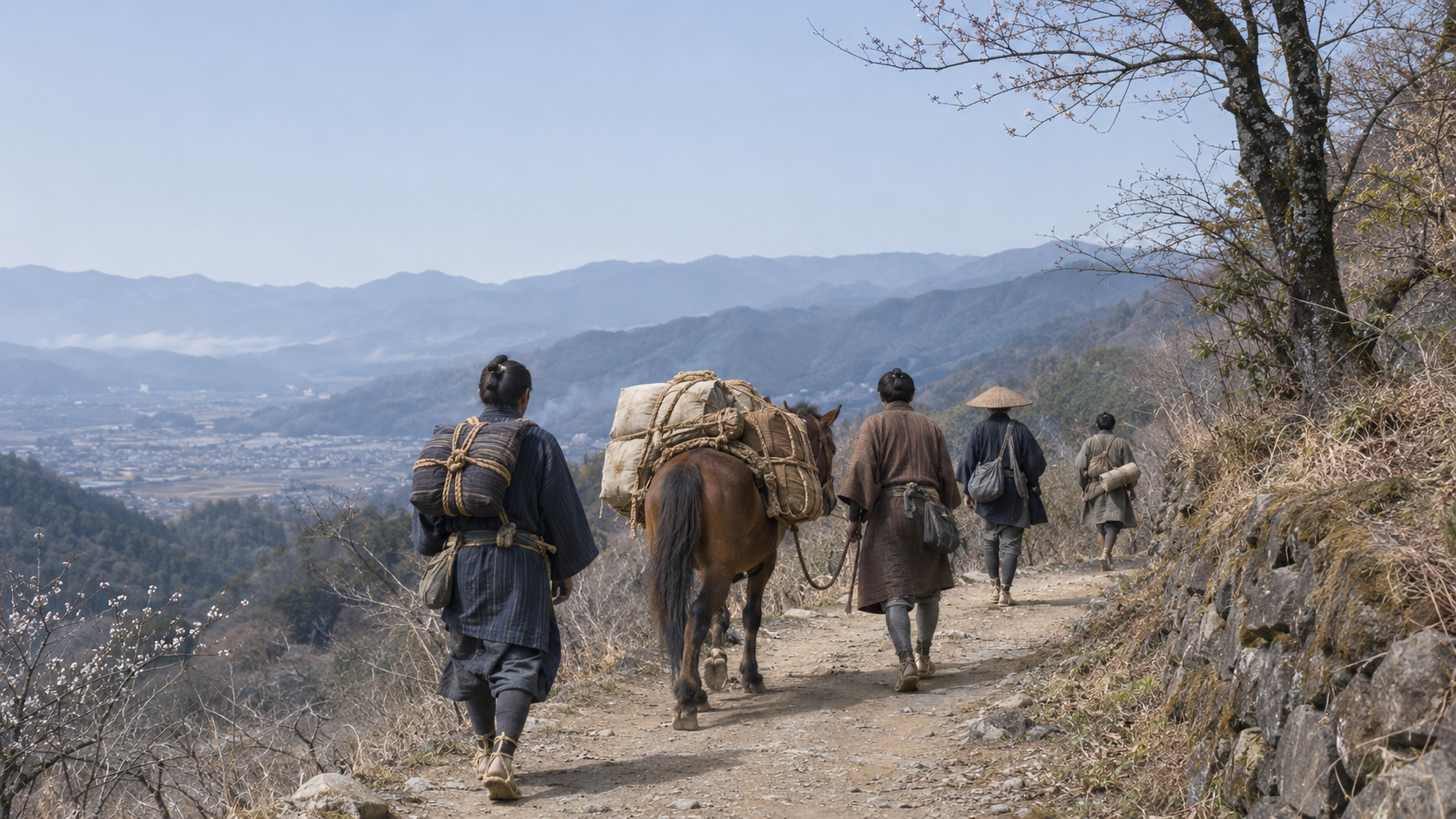
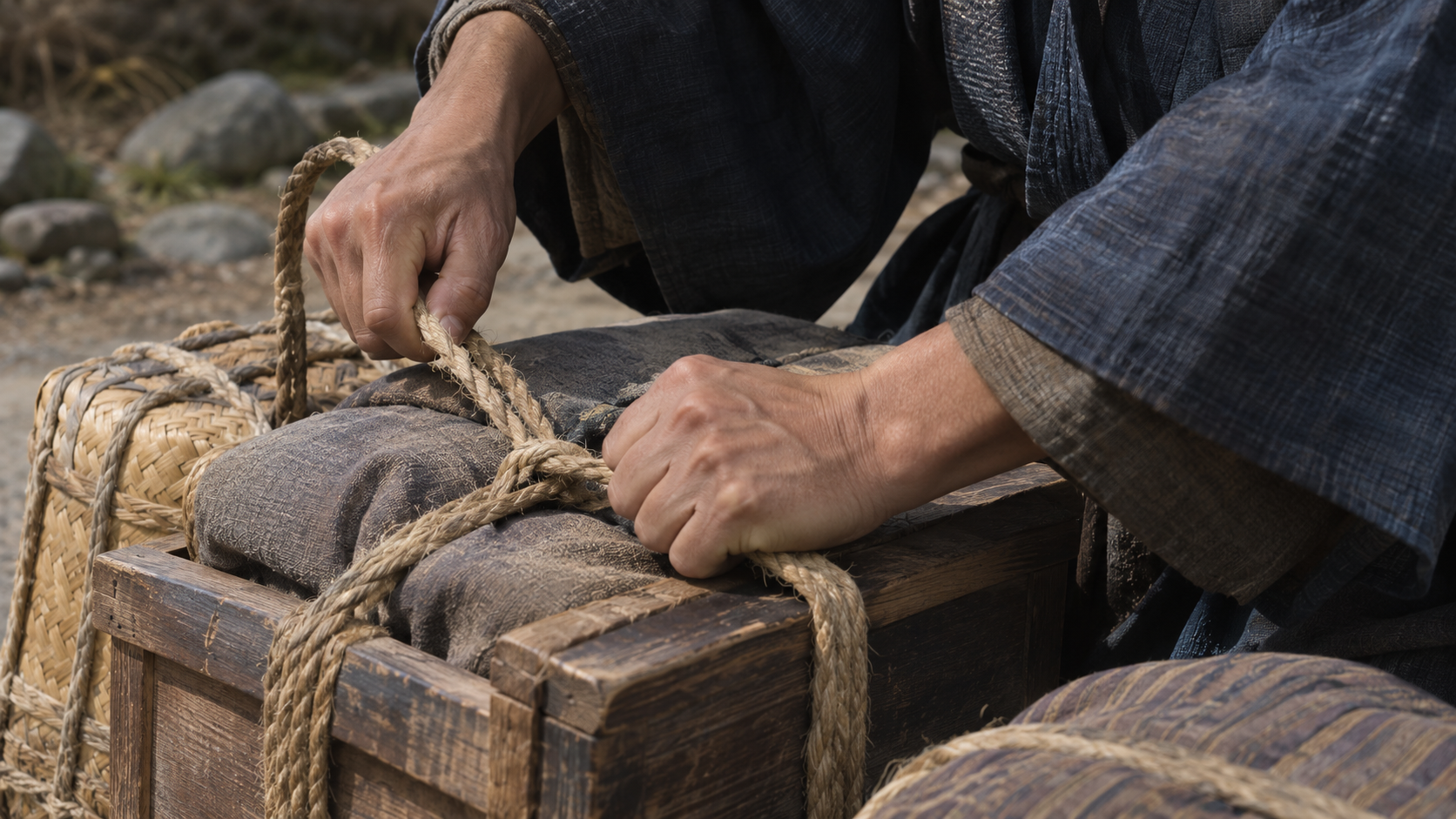
Guns, ammunition and baggage required transport. Hino City’s explanation of sukego documents introduces a notice from the Naito-Shinjuku transport office requesting labour from surrounding villages.
References to Shinsengumi and Chinbutai baggage connect the documents with the military advance. Villages supplied people and horses to support the post-station transport system.
The army’s route therefore rested on work performed beyond its armed ranks. The documents reveal obligations and logistics; they do not justify speaking for every villager’s feelings or describing every carrier as a volunteer.
Scene 06
The clash took place at Kashio
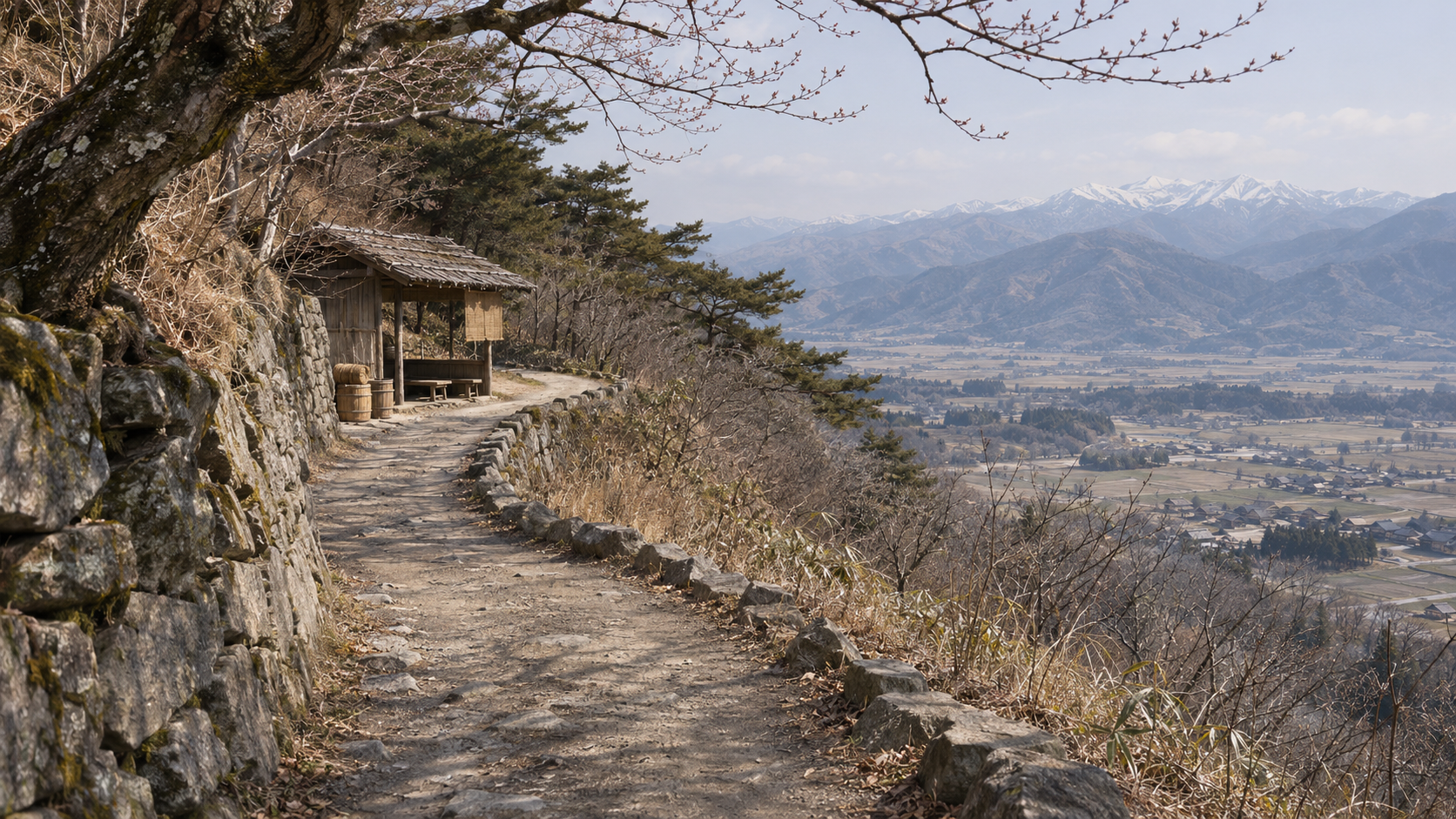
Koshu’s explanation describes Kondo’s side withdrawing from Katsunuma post station toward Daizenji and taking a position at Kashio. This was a point along the route toward Kofu, rather than the castle itself.
Present battlefield markers and temple buildings are not an unchanged view of the day. They can locate a subject without reproducing every historical feature.
The geographical distinction is sufficient for the argument: the conflict occurred on the approach after the intended base was occupied by the other side. Exact deployments are not invented from a broad relationship between Edo, Kashio and Kofu.
Scene 07
Firearms and positions belonged in the battle
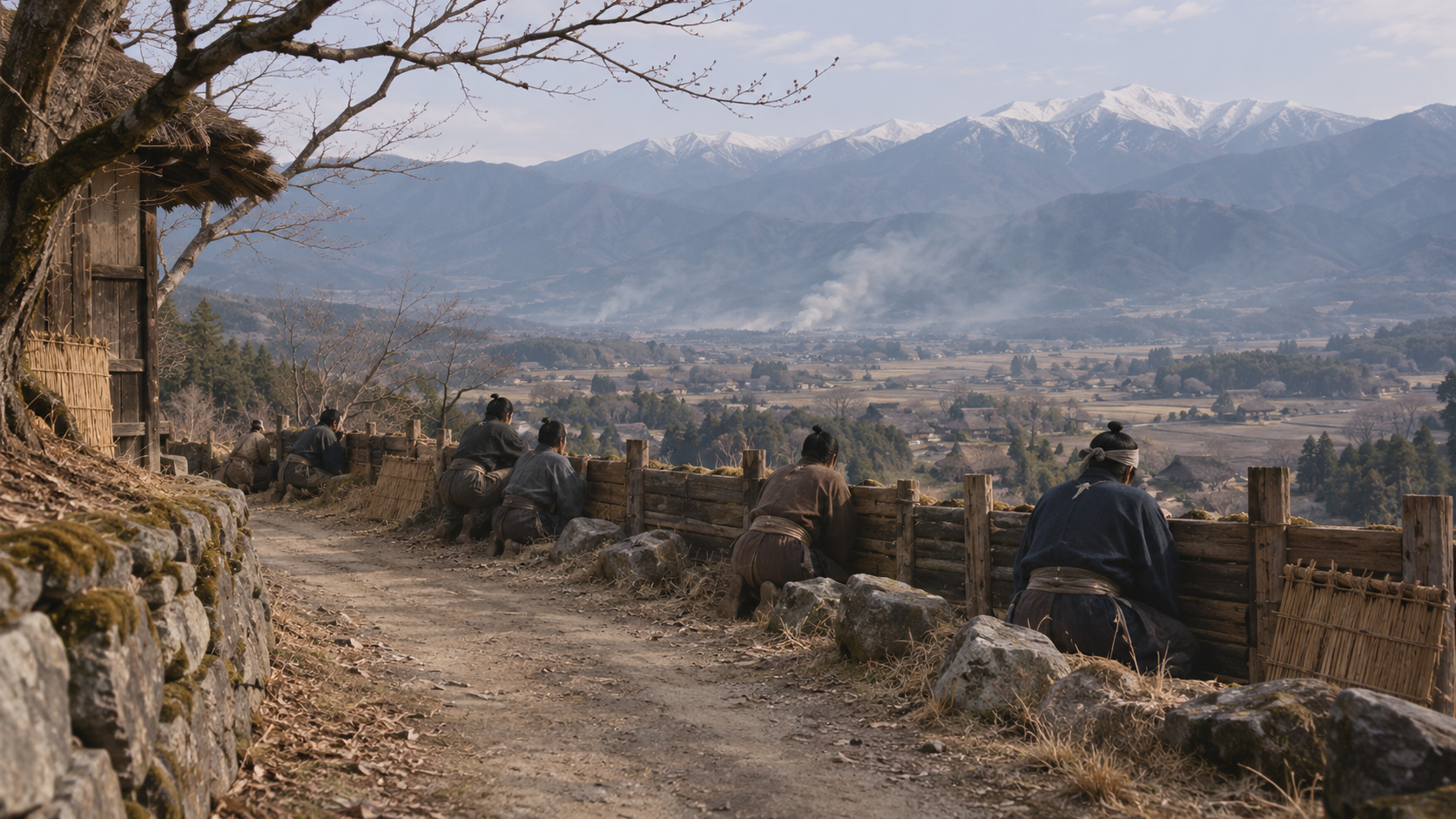
The city’s plan mentions fences and artillery on the shogunate side. A past exhibition also introduced projectiles said to have been used in the clash. The battle cannot be explained through Kondo’s sword alone.
Opposing him were new-government forces under Itagaki, including troops from Tosa and Inaba. The outcome was defeat and retreat toward Edo.
Artillery, positions, numbers and support therefore belong alongside the familiar image of the fighters. The generated illustration does not authenticate gun counts, exact lines or a particular moment of combat.
Scene 08
Do not combine unlike troop counts
Koshu’s explanation includes figures for members and roadside participants as well as a number describing the shogunate force at the battle. The categories and moments being counted are not automatically identical.
Adding them to create a new total would introduce a number the sources do not establish. The article likewise does not turn a tradition of a short engagement into a precise clock.
The secure sequence remains an unsuccessful attempt to reach Kofu, defeat at Kashio and retreat. Those facts can be described without manufacturing an exact strength ratio or a minute-by-minute battle duration.
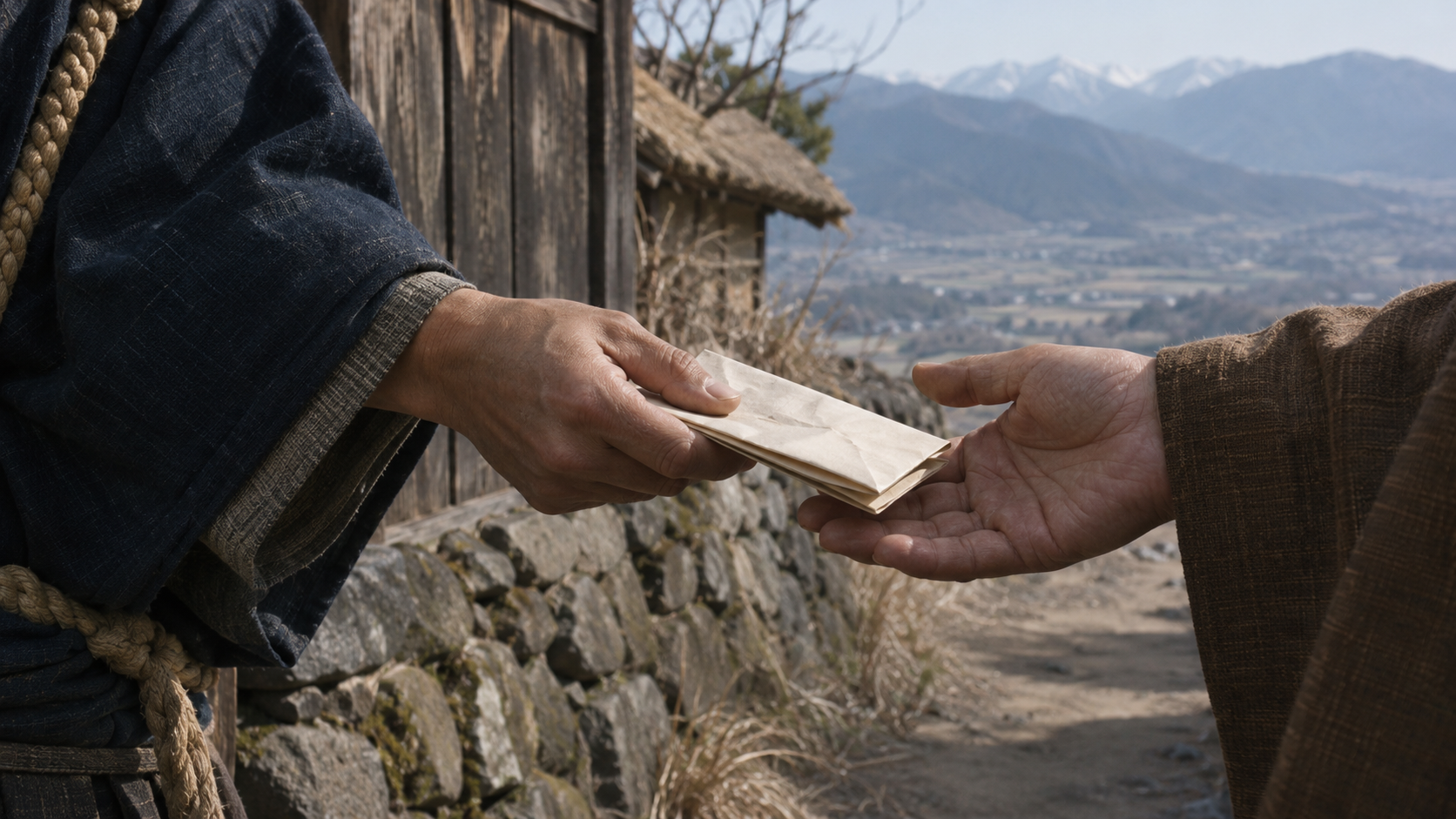
Scene 09
News of battle reached villages
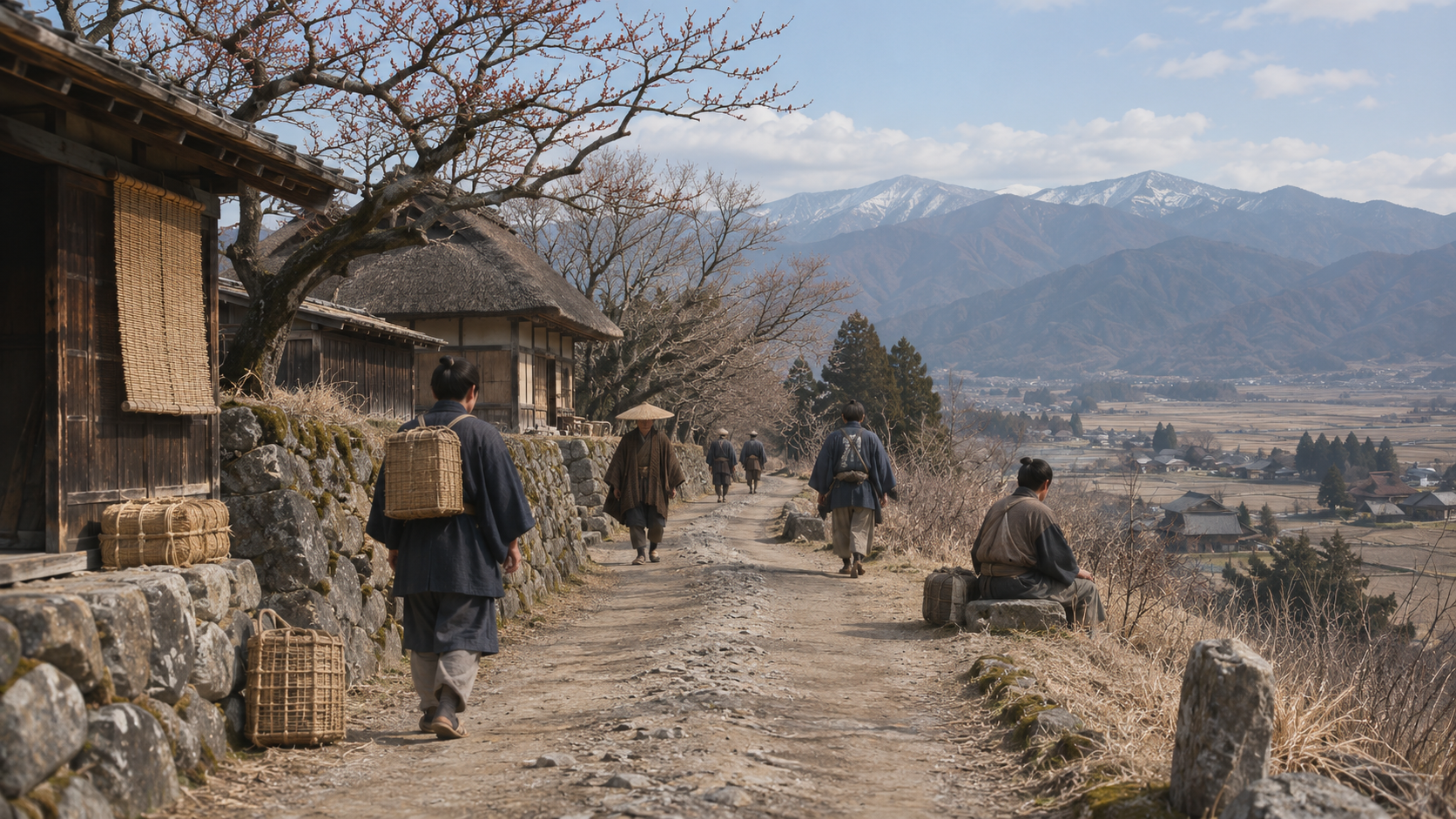
A notice dated the eighth day, introduced by Hino City, reported that the opposing side entered Kofu before the Chinbutai arrived. It also passed on news from Uenohara post station about fighting near Katsunuma.
This does not make the writer an observer of every event on the battlefield. It is a document through which information reached villages along the road.
Military movement and reports about that movement followed connected routes. Distinguishing the source of the news keeps a circulating notice useful without assigning it an eyewitness status it does not claim.
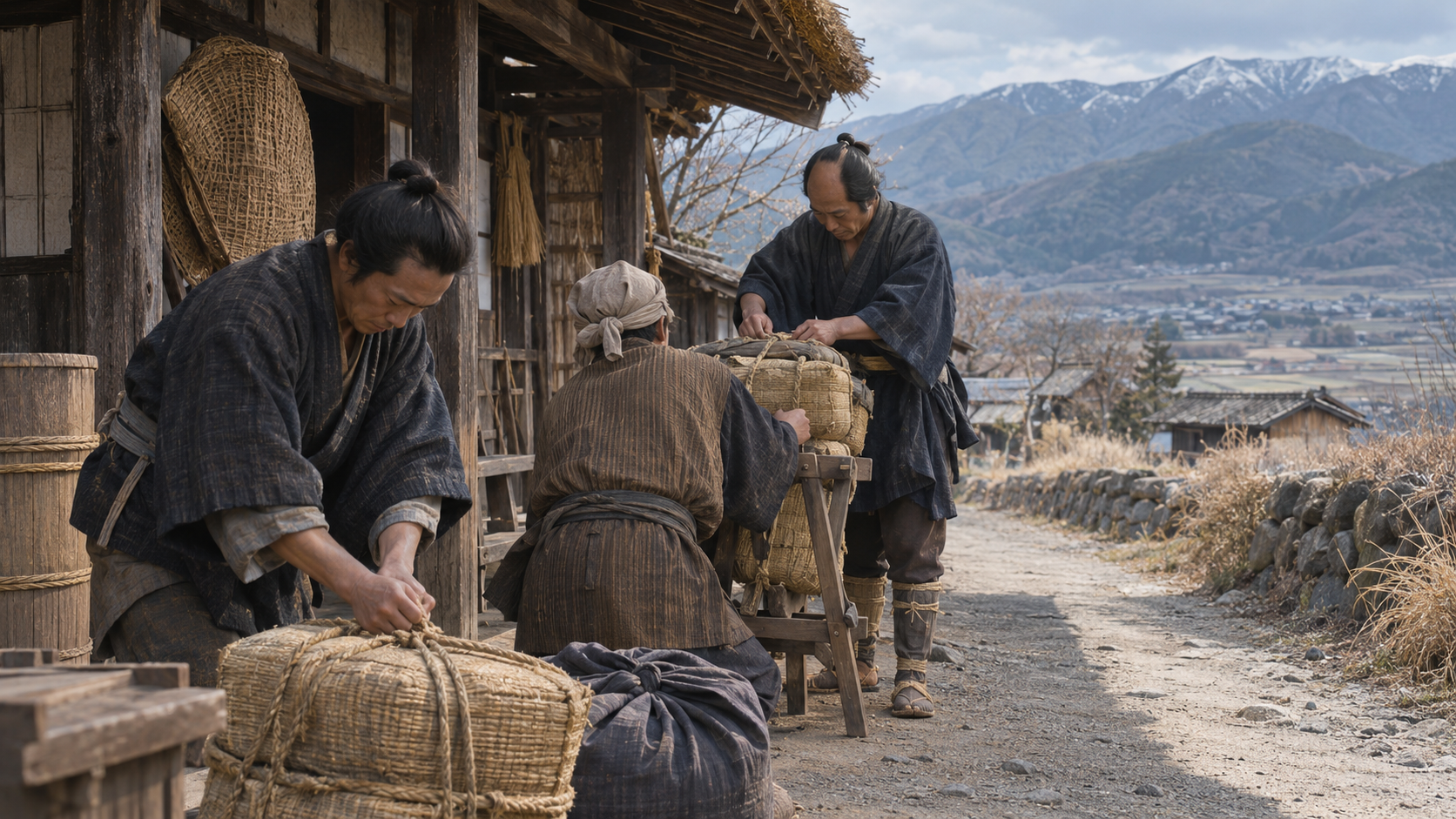
Scene 10
The recipients of transport support changed
Hino’s account draws attention to a notice dated the twelfth day that calls the new force kangun, or the government army. The side receiving transport support was changing.
Villages that had supplied people and horses for the former shogunate’s force now had to respond to the new government’s military presence. Political change appeared in practical transport arrangements.
That observation does not prove an instantaneous change of mind among all residents. It identifies a change in whom they had to supply. The defeat affected the road’s communities as well as the combatants.
Scene 11
An heroic print was another kind of source
Yamanashi’s catalogue introduces a print by Yoshitoshi presenting Kondo prominently at Daizenji’s gate. The library explanation describes a heroic image, but the depiction is not a literal report of each action in battle.
Transport notices preserve instructions and received information. Prints offer an arresting representation of a person. Their different purposes require different readings.
Later recollections also need dates and perspectives. The article refers to the institutional teaching material without claiming to have read an original memoir that has not been independently examined. No dramatic movement in the print becomes an established deed.
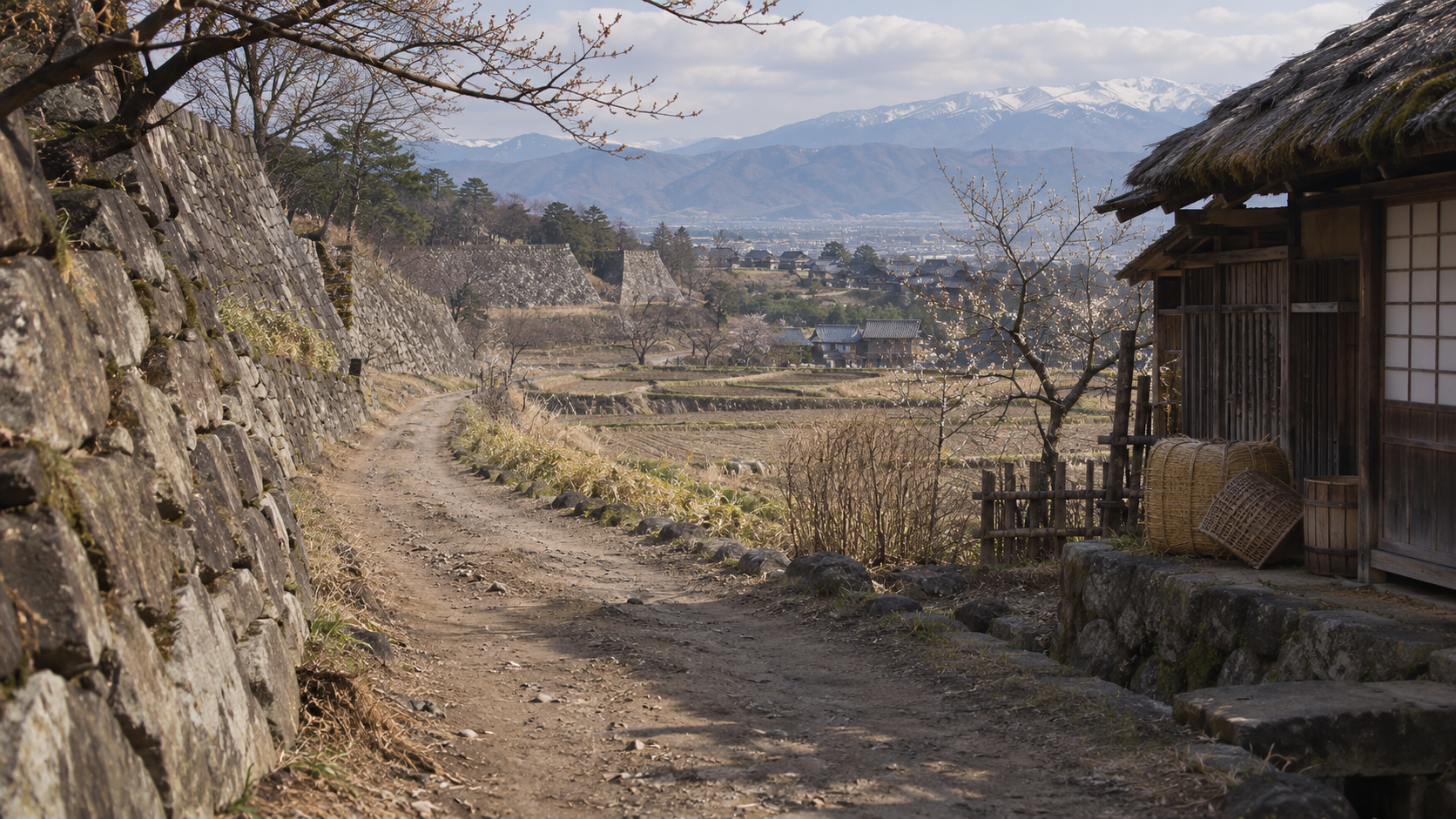
Scene 12
A road connected plans, defeat and local work
The reviewed accounts describe Kondo’s force seeking recovery after defeat and advancing toward Kofu. The new government’s troops entered first, and the Koyo Chinbutai fought at Kashio before retreating east.
Between the intended castle and the encounter on the road lay transport obligations and circulating reports. People moving loads and villages receiving notices form part of the same history.
Koshu-Katsunuma therefore reveals more than another episode in the fortunes of a group known from Kyoto. It shows communities meeting a change in authority through daily work, as the army’s route crossed the practical life of the road.
How to read this work
History, interpretation, and reconstruction
The gap between a plan to secure a castle and defeat on the road was also a history of transport workers and villages receiving news and responding to a change in military authority.
This work is grounded in published sources and historical research. Interior thoughts, dialogue, and some visual details are cinematic reconstructions. Where historians disagree, the article presents the point as debated rather than settled fact.
Timeline
The story in time
People & terms
A guide for new readers
Glossary
- Koyo Chinbutai 甲陽鎮撫隊
- The force organised around Kondo and others for the advance toward Kofu after Toba-Fushimi.
- Sukego 助郷
- Village obligations to provide people and horses supporting transport at post stations.
- Circular notice 廻状
- A communication circulated to communities, which could contain transport instructions or news received from elsewhere.
- Kashio 柏尾
- The location near Katsunuma where the clash occurred, distinct from Kofu Castle.
- Kangun 官軍
- The term for the government army noted in the later circular, relevant to the change in transport recipients.
- Nishiki-e 錦絵
- A multicolour print whose dramatic representation is distinguished from an eyewitness battle report.
Sources & method
How this article was built
The narrative separates a planned objective from the base actually occupied and follows the sequence before discussing outcome. Historical-calendar dates remain explicitly labelled. Numbers referring to different categories or stages are not combined into a new total.
Transport documents are read for obligations, communications and the direction of support. A report received through a post station is distinguished from a complete eyewitness account, and changes of terminology are not used to claim identical private opinions among all villagers.
Print descriptions, institutional summaries and later recollections serve different purposes. The account supplies no dramatic dialogue, exact formation or minute-by-minute reconstruction. Generated scenes remain explanatory, and no original print or circular notice is reproduced.
Sources
References and further reading
- Historical landscape plan: Kashio battlefield section 甲州市歴史的風致維持向上計画 第2章 柏尾古戦場跡 Title translated editorially for reader convenience. Koshu City 甲州市 The relevant column supplies the sequence and differing count categories. It is not treated as a complete verified deployment plan. Accessed 2026-11-06
- The Chinbutai in sukego documents, history and folklore issue 160 日野の歴史と民俗160号 詳細版 助郷史料に記されている鎮撫隊 Title translated editorially for reader convenience. Hino City 日野市 Explanation and modernised transcription of transport records. Received news from Uenohara is not converted into direct observation of every battle event. Accessed 2026-11-06
- Kondo’s bravery at Katsunuma: Digital archive catalogue 山梨デジタルアーカイブ 勝沼駅近藤勇驍勇之図 Title translated editorially for reader convenience. Yamanashi Prefectural Library 山梨県立図書館 Bibliographic and descriptive entry for the print. Its original image is not reproduced or used to establish a literal action. Accessed 2026-11-06
- Learn through the Koshu collection: Question 8 山梨県立図書館 クイズで学ぼう甲州文庫 Q8解説 Title translated editorially for reader convenience. Yamanashi Prefectural Library 山梨県立図書館 Relevant explanation of the force’s organisation, advance and defeat. Accessed 2026-11-06
- Yamanashi history: Early Meiji years 山梨県の歴史 明治元年~11年 Title translated editorially for reader convenience. Yamanashi Prefecture 山梨県 Relevant 1868 chronology, with historical months retained and present prefectural terminology distinguished from period administration. Accessed 2026-11-06
- Kofu Castle chronology 山梨県 甲府城年表 Title translated editorially for reader convenience. Yamanashi Prefecture 山梨県 Explains the castle’s history and entry by the new-government force. Modern reconstructed buildings are not depicted as photographs of 1868. Accessed 2026-11-06
- Cultural-property guide: Kofu Castle site 山梨県文化財ガイド 史跡甲府城跡 Title translated editorially for reader convenience. Yamanashi Prefecture 山梨県 Explains the castle complex and the distinction between remains, reconstruction and the late-shogunate setting. Accessed 2026-11-06
- Furusato Yamanashi: Historical chronology ふるさと山梨 中学校版 年表p148 Title translated editorially for reader convenience. Yamanashi Prefectural Board of Education 山梨県教育委員会 The displayed 1868 entries support the event sequence, not an unexamined conversion into Gregorian dates. Accessed 2026-11-06
- Past Kashio battle exhibition overview 甲州市 柏尾の戦い展示概要 Title translated editorially for reader convenience. Koshu City 甲州市 Historical exhibition explanation, not a claim that the exhibition remains open or that a reported duration is a precise clock. Accessed 2026-11-06
- High-school history resources: Kai in the late shogunate and Restoration 山梨県立博物館 高校日本史 甲斐の幕末・維新 活用資料 Title translated editorially for reader convenience. Yamanashi Prefectural Museum 山梨県立博物館 Teaching material used within its published scope. Original memoirs and the full prefectural history are not represented as independently read. Accessed 2026-11-06
Continue reading
More stories from Shigeki
Shigeki English
The Second Choshu Expedition: Four Fronts and a Negotiated Withdrawal
Read weapons together with terrain, training, command and support.
- When 1866, distinct from the first expedition in 1864; the process of ending extended into January 1867
- Where Oshima, the Aki border, Iwami and the Kanmon Strait facing Kokura
Shigeki English
Hasedo: Why Fighting Continued after Sekigahara
Separate the siege, the arrival of news, and withdrawal under pursuit.
- When 1600; month and day references use the calendar of the time
- Where Hasedo and Yamagata in Dewa, connected with Aizu and distant Sekigahara