
SHIGEKI ENGLISH STORYEN
Japanese history in English
Taira no Masakado: From a Family Conflict to Provincial Rebellion
Follow changes in opponents and authority between 935 and 940.
Distinguish Masakado’s conflicts with relatives, protection of Fujiwara no Haruaki, seizure of Hitachi’s provincial headquarters, claim to a new imperial title and appointment of governors. Follow the suppression in 940, while separating later legends and surviving editions of Shomonki from the events.
At a glance
Before you enter the story
- When
- 935–940; later legends, manuscripts and printed editions considered separately
- Where
- Eastern Japan, including Hitachi, Shimotsuke, Kozuke and Shimosa, within a provincial geography different from modern prefectures
- Key figures
- Taira no Masakado, Taira no Sadamori, Fujiwara no Haruaki, Fujiwara no Hidesato, Court-appointed provincial governors
- What was at stake
- When did a conflict among relatives become a challenge to the court’s provincial authority?
Why this story matters
The larger history behind the turning point
Political conflict can change its object while involving some of the same people. Attacking a relative’s residence and taking the authority of a provincial headquarters were different actions, even when they belonged to one continuing sequence of fighting.
A figure can also acquire a long history after death. Stories, places of worship and later publications tell us about remembrance and transmission, but do not automatically establish the details of a tenth-century battle or a participant’s private motives.
Historical context
What an international reader needs to know
Provincial offices connected the region with the court
Kokushi were provincial governors appointed through the court’s authority. A kokufu was the administrative centre through which provincial government operated. These institutions make the seizure of an office more than the capture of a building.
The provinces named in the account were not identical to today’s prefectures. Modern maps can orient a reader, but they should not imply unchanged boundaries or provide a precise military route unsupported by the sources. Appointing someone to office also does not prove durable effective control over every part of a region.
An early narrative survives through later transmission
Shomonki is introduced by the National Institute of Japanese Literature as a war narrative thought to have formed relatively soon after the rebellion. Proximity in date does not make every judgment or scene an unmediated fact. Its literary arrangement requires attention alongside the events described.
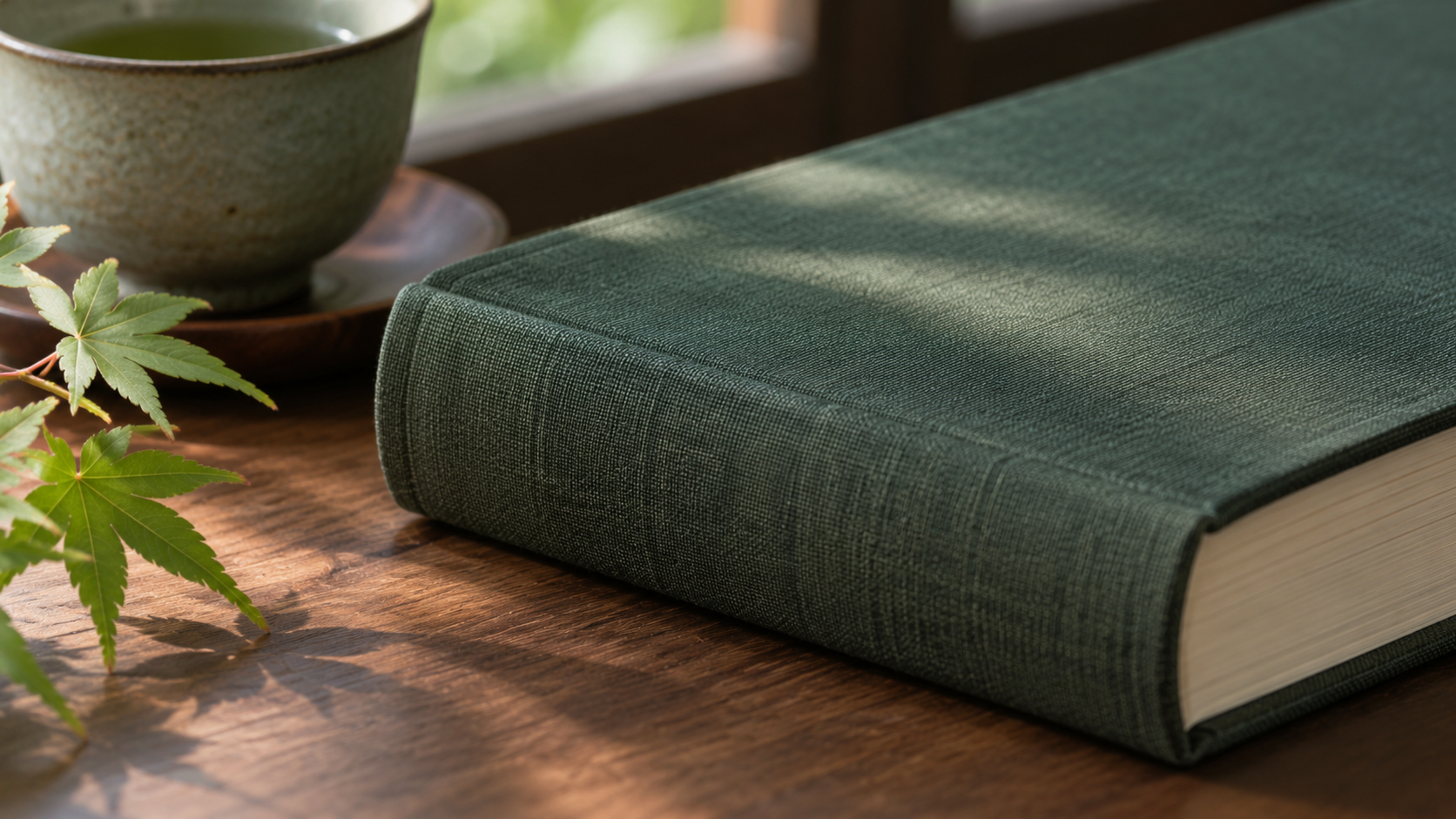
Later manuscripts and a facsimile published in 1924 belong to the work’s transmission. The modern key, bound book, ropes and tokens in the illustrations are explanatory comparisons. They are not authenticated tenth-century objects, seized official possessions or reproductions of an original manuscript.
Watch the film
See the story in motion
The film currently uses Japanese audio. This English article provides the context and source trail; it does not imply that an English subtitle track is available.
Scene 01
The opponent changed
In 939, the conflict in eastern Japan crossed a consequential boundary. Masakado attacked not only relatives’ residences but Hitachi’s provincial headquarters, a base of government connected with the court. He later claimed the title of a new emperor.
Did he intend that outcome from the beginning? The reviewed accounts distinguish family conflict, confrontation with provincial administration and the imperial claim as stages.
Following the changing opponent makes the sequence clearer. The focus is 935–940. Legends preserved in later places are considered separately, rather than used to supply missing battlefield detail or a complete original plan.

Scene 02
Enter through a narrative and its transmission
Shomonki is an important account of the conflict and the circumstances leading to it. The National Institute of Japanese Literature explains it as a narrative thought to have formed not long after the rebellion ended.
Its evaluations and organisation do not become certain fact simply because the work is early. This article relies on institutional source explanations rather than claiming a complete independent reading of every line.
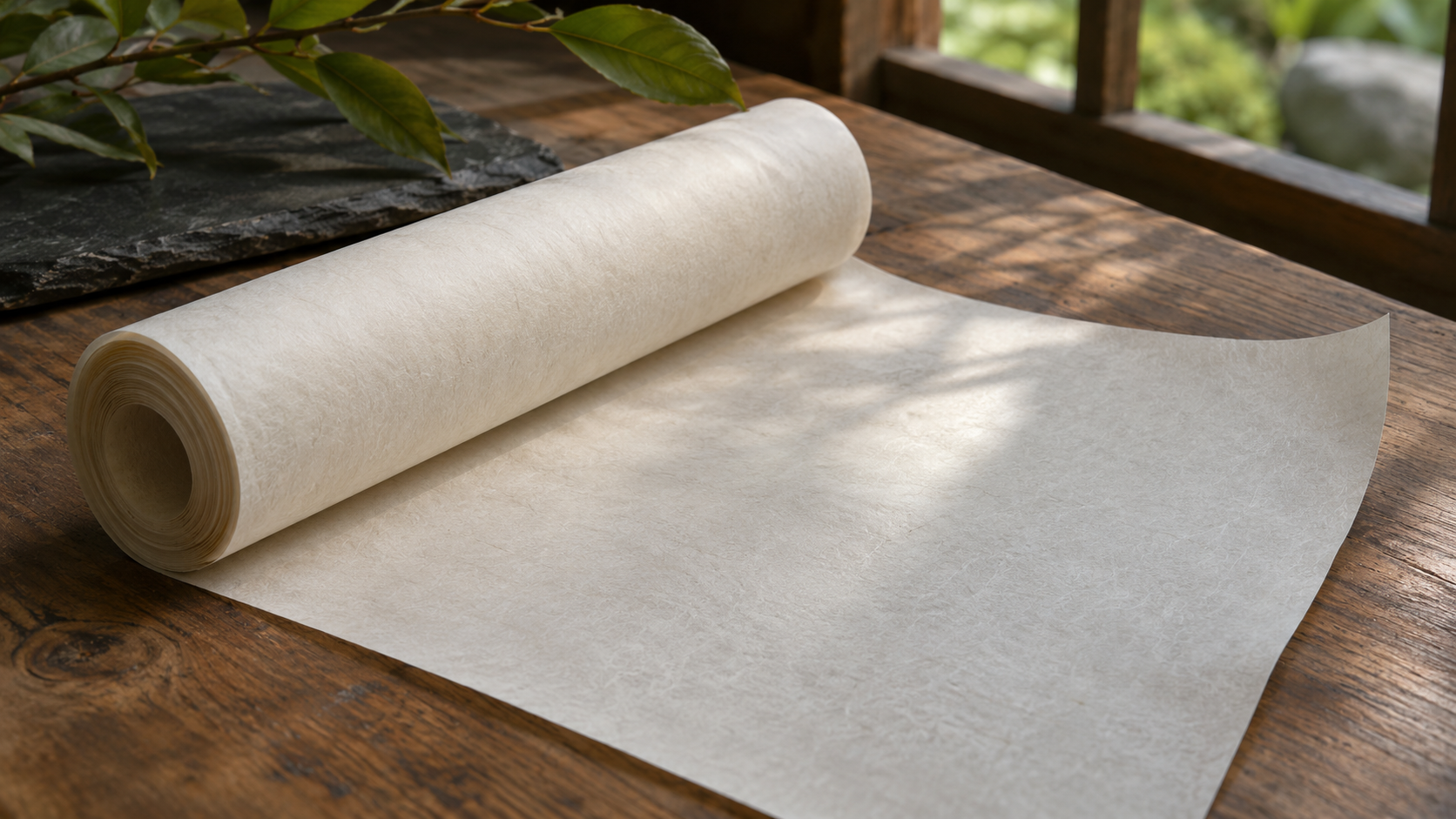
The National Diet Library also catalogues a 1924 facsimile of the Jotoku-era manuscript held at Shinpukuji. Early composition, a later surviving manuscript and modern publication are different dates. The blank paper illustration reproduces none of those actual objects.
Scene 03
Begin with conflict among relatives
In 935, Masakado began fighting relatives in eastern Japan. Shinagawa’s district history explains disputes over land and positions within the family and region. Those relationships included people connected with his uncle and Taira no Sadamori.
Kinship did not prevent conflict. Closely related people could contest property and regional standing while remaining embedded in wider institutions.
The later title of new emperor should not be read backward as a settled programme already defining every earlier action. The beginning of family warfare and the later challenge to court authority require separate explanation.

Scene 04
The region and capital remained connected
During the earlier conflict, local society had not simply severed its connection with the capital. Participants could appeal to the court, and Masakado himself was summoned there. Force and central adjudication could occur within the same dispute.
Provincial officers, regional figures, relatives and followers were connected through several relationships. Later images of warrior government should not be imposed unchanged on this tenth-century setting.
Masakado and the court were not two fully separate countries from the outset. The continuing relationship makes the later seizure of provincial authority meaningful: it challenged a framework in which earlier disputes had still operated.
Scene 05
Why the provincial headquarters mattered
Each historical province had a centre through which governors administered it. Hitachi, Shimotsuke and Kozuke appear in this account, but their names should not be treated as labels for unchanged modern prefectural boundaries.
Attacking a relative’s property and controlling a provincial headquarters were different political acts. The latter brought the dispute into the operation of government connected to court appointment.
The article follows that change in relationship rather than drawing an invented precise campaign route. A wooden bolt is an explanatory comparison for a controlled entrance, not an authenticated object from a tenth-century provincial office.

Scene 06
Protection led into confrontation with the office
Fujiwara no Haruaki was involved in the confrontation with Hitachi’s headquarters. Shinagawa’s explanation describes him as disputing taxation with the governor and taking refuge with Masakado.
Masakado’s protection of him connected the conflict with provincial administration. It added a confrontation with the governing side to relationships already involved in local disputes.
The narrative does not therefore identify Haruaki solely as an innocent victim or infer that Masakado acted only from generosity. Evaluations in sources need attribution. The action that can be followed here is protection leading to conflict with the provincial office.

Scene 07
The seizure in 939
In the eleventh month of 939, using the calendar of the time, Masakado took Hitachi’s provincial headquarters. Shinagawa’s history treats the seizure of the governor’s seal and keys as a decisive turning point.
Those items concerned authority and administration, not merely possession of one building. Force had displaced officials appointed under the court’s framework.
The illustration shows a modern-style key only as a comparison. It does not establish the shape of the keys seized in 939. No exact troop count, unrecorded tactical movement or eyewitness reconstruction is added to make the episode appear more precise.
Scene 08
An imperial claim and appointments
After Hitachi, the movement extended toward Shimotsuke and Kozuke. In the twelfth month of 939, Masakado claimed the title of new emperor and is described as appointing his own provincial governors.
Shizuoka’s educational source explanation introduces a Shomonki passage that includes appointments in Izu alongside the eastern provinces. Title and appointment together indicated a rival basis for granting office.
A recorded appointment is not the same as long-lasting, stable control of a large territory. Colouring an entire region uniformly on a map would hide that distinction. The wooden tokens illustrate categories conceptually, not historical insignia or actual appointment documents.
Scene 09
The court offered rewards for suppression
In the first month of 940, the court issued an order promising rewards to those who defeated Masakado. Tochigi’s museum explanation draws attention to ranks and land within that promise.
An order from the capital connected with people fighting in the region. Suppression involved both the authority issuing instructions and local participants able to act on them.
Fujiwara no Hidesato and Taira no Sadamori became Masakado’s opponents. Sadamori connected the final fighting with the earlier family dispute. The political challenge and older relationships therefore overlapped, rather than one entirely replacing the other.
Scene 10
Defeat in 940
Masakado was defeated and died in Shimosa on the fourteenth day of the second month of 940. The movement after his new imperial claim lasted a short period rather than many years.
The article does not identify a particular archer or establish every shot and manoeuvre. Narrative depictions and other accounts need not coincide in all battlefield details.
The reviewed institutional explanations support suppression by Hidesato, Sadamori and others. Separating the years of family conflict from the short development after the provincial seizures gives the chronology a clearer shape without inventing a complete tactical reconstruction.
Scene 11
The figure remembered in legend
Masakado continued to be narrated and worshipped after the fighting ended. Stories of a flying head, a woman revealing a weakness and commemorative sites belong to a history of later memory.
Chiba’s museum asks how people in later periods told and enshrined him. Inzai’s public account similarly introduces local traditions. These materials are used as descriptions of tradition, not evidence proving a supernatural event or a particular betrayal.
Legends have historical value through questions about their time, place and transmission. That differs from treating a mound as proof that a head flew there. The modern book illustration is not a surviving Shomonki manuscript or a documentary image of an actual edition.
Scene 12
Changing actions explain the transformation
Why did the regional conflict become rebellion against the court? The turning point examined here is the expansion from disputes with relatives toward control of provincial government, followed by a rival title and appointments.
Actions changed from conflict within a framework still connected to central adjudication toward challenging the authority that assigned provincial offices. No complete original separatist plan is required to explain that sequence.
The suppression also connected the capital’s orders with people acting locally. Masakado’s rebellion therefore reveals a form of tenth-century regional politics that cannot be reduced entirely to the label of a solitary hero or traitor.
How to read this work
History, interpretation, and reconstruction
The move from disputes still connected to court adjudication toward seizure of provincial authority and independent appointments explains the rebellion more precisely than assuming a complete separatist plan from the beginning.
This work is grounded in published sources and historical research. Interior thoughts, dialogue, and some visual details are cinematic reconstructions. Where historians disagree, the article presents the point as debated rather than settled fact.
Timeline
The story in time
People & terms
A guide for new readers
Glossary
- Kokufu 国府
- A provincial administrative centre connected with the court-appointed governors, not merely a private residence.
- Kokushi 国司
- Provincial governors whose appointment formed part of the court’s governing framework.
- Shinno, new emperor 新皇
- The title Masakado claimed; it should not be confused with the different title written with characters meaning imperial prince.
- Shomonki 将門記
- An early narrative of the conflict surviving through later manuscripts and publications, with interpretation and literary arrangement as well as event description.
- Suppression order 追捕官符
- An official order connecting court authority and promised rewards with action against Masakado.
- Facsimile 影印
- A reproduction of a manuscript’s appearance, whose publication date differs from the manuscript’s date and the events described.
Sources & method
How this article was built
The narrative follows changes in opponents, institutions and actions rather than reconstructing a private intention from the outcome. It distinguishes conflict among relatives from seizure of provincial authority, an imperial claim and independent appointments. Modern prefectural boundaries are not projected unchanged onto the provinces.
Shomonki’s early composition, its later manuscript transmission and modern facsimile publication retain separate dates. Institutional explanations guide the account; they do not imply that the complete original narrative or every cited manuscript was independently deciphered. Historical month-and-day labels are retained.
Later traditions concern remembrance and worship. Their presence does not establish supernatural events or dramatic betrayal as causes of the battle. Modern-style keys, books and other generated props are explicitly explanatory comparisons and provide no evidence for the physical form of tenth-century objects.
Sources
References and further reading
- Shomonki: Japanese literary history through books 将門記/書物で見る日本古典文学史 Title translated editorially for reader convenience. National Institute of Japanese Literature 国文学研究資料館 Explains the work and its relatively early formation. The full text and images of the introduced 1799 edition are not claimed as independently read. Accessed 2026-11-06
- Masakado’s rebellion, district history pages 182–184 将門の乱(区史182~184頁) Title translated editorially for reader convenience. Shinagawa City / Shinagawa Digital Archive 品川区/しながわデジタルアーカイブ Modern historical explanation used for family conflict, central connections and provincial seizures. Private motives, speeches and precise numbers are not adopted. Accessed 2026-11-06
- Shomonki: Tochigi Digital Museum とちぎデジタルミュージアム 将門記 Title translated editorially for reader convenience. Tochigi Prefecture / Tochigi Prefectural Museum 栃木県/栃木県立博物館 Collection explanation and overview, used without reproducing the images or turning supernatural or tactical narrative into established detail. Accessed 2026-11-06
- Local disorder and the emergence of warriors 地方の治安の乱れと武士の発生~国衙軍成立の背景~ Title translated editorially for reader convenience. Shizuoka Prefectural Central Library 静岡県立中央図書館 Two-page educational source explanation and selected material, not a claim to have read every underlying complete original text. Accessed 2026-11-06
- Masakado’s death and legends living in Kashiwa 第八回 かしわ・その時 平将門死す~柏に生きる将門伝説を追って~ Title translated editorially for reader convenience. Kashiwa City 柏市 Introduces historical chronology and later traditions without establishing universal popular support or inevitable development into later warrior government. Accessed 2026-11-06
- The world of Masakado legends, director’s message 館長メッセージ令和2年度:将門伝説の世界(6月19日) Title translated editorially for reader convenience. Chiba City Folk Museum 千葉市立郷土博物館 Relevant section on later remembrance and worship. Interpretive hypotheses and supernatural causal claims are not adopted as settled facts. Accessed 2026-11-06
- Masakado traditions in Inzai, Citizens’ Academy newsletter issue 3 印西市の将門伝承(印西市民アカデミーだより+第3号) Title translated editorially for reader convenience. Inzai City 印西市 The publicly available one-page account introduces local traditions around Takebukuro, a well and Kozaisho. These are not used as proof of betrayal, an intimate relationship or a fully formed independence plan. Accessed 2026-11-06
- Shomonki, facsimile edition published in 1924 将門記 1924年影印版 書誌ID000000925798 Title translated editorially for reader convenience. National Diet Library 国立国会図書館 Bibliographic record for a facsimile of the Jotoku-era Shinpukuji manuscript, with commentary by Yamada Yoshio. It is not a full independent reading of the text or a date for the tenth-century events. Accessed 2026-11-06
Continue reading
More stories from Shigeki
Shigeki English
The Second Choshu Expedition: Four Fronts and a Negotiated Withdrawal
Read weapons together with terrain, training, command and support.
- When 1866, distinct from the first expedition in 1864; the process of ending extended into January 1867
- Where Oshima, the Aki border, Iwami and the Kanmon Strait facing Kokura
Shigeki English
Hasedo: Why Fighting Continued after Sekigahara
Separate the siege, the arrival of news, and withdrawal under pursuit.
- When 1600; month and day references use the calendar of the time
- Where Hasedo and Yamagata in Dewa, connected with Aizu and distant Sekigahara