
SHIGEKI ENGLISH STORYEN
Japanese history in English
Hojo Tokimune and Coastal Defence: Orders from Kamakura to the West
Destinations, deadlines and provincial mobilization become visible in the work of written commands.
Follow defence orders from 1268 through the aftermath of the first Mongol invasion. Compare instructions concerning Iwami, Aki and Nagato, then distinguish commands from certificates of completed service and medieval documents from a later collecting album.
At a glance
Before you enter the story
- When
- Mainly 1268–1276; historical-calendar dates and later collecting are distinguished
- Where
- Kamakura, Sanuki, Iwami, Aki, Nagato, Suo and Kyushu
- Key figures
- Hojo Tokimune, Shogunal officials, Provincial military governors, Gokenin with western landholdings
- What was at stake
- How could a command issued far from the threatened coast specify who should move, where they should go and whose summons they should obey?
Why this story matters
The larger history behind the turning point
Defence involved more than a decision attributed to one leader. Written instructions connected landholdings, people and provincial authorities. Their specific wording allows the work between a central order and local mobilization to be followed more closely.
An order establishes what was demanded, not that every recipient complied. Certificates of completed service performed another function. Reading these kinds of documents separately helps distinguish the organization of government from evidence of particular people’s actions.
Historical context
What an international reader needs to know
Years, days and different stages of danger
The National Archives distinguishes the arrival of a state letter in 1268 from the invasions of 1274 and 1281. Warning before an attack, responding to news of fighting and preparing later defences were different circumstances. This article centres on what documents required at those stages.
Month and day labels in medieval orders retain the historical calendar. The third day of the eleventh month is not silently converted into Gregorian 3 November. Nor does the difference between two issue dates establish the time a messenger spent travelling or the day an order was received.
Documents, research and later preservation
The account combines a bounded reading of one original document image, institutional explanations and examples presented in a research paper published by Honjo City. Reading the paper’s discussion is not the same as independently reading every original document that it cites.
The album containing the Iwami order was assembled in a later period. Likewise, the Aokata document group includes material from different centuries. A common binding, collection name or subject does not turn separate documents into one administrative transaction.
Watch the film
See the story in motion
The film currently uses Japanese audio. This English article provides the context and source trail; it does not imply that an English subtitle track is available.
Scene 01
A document that moved people westward
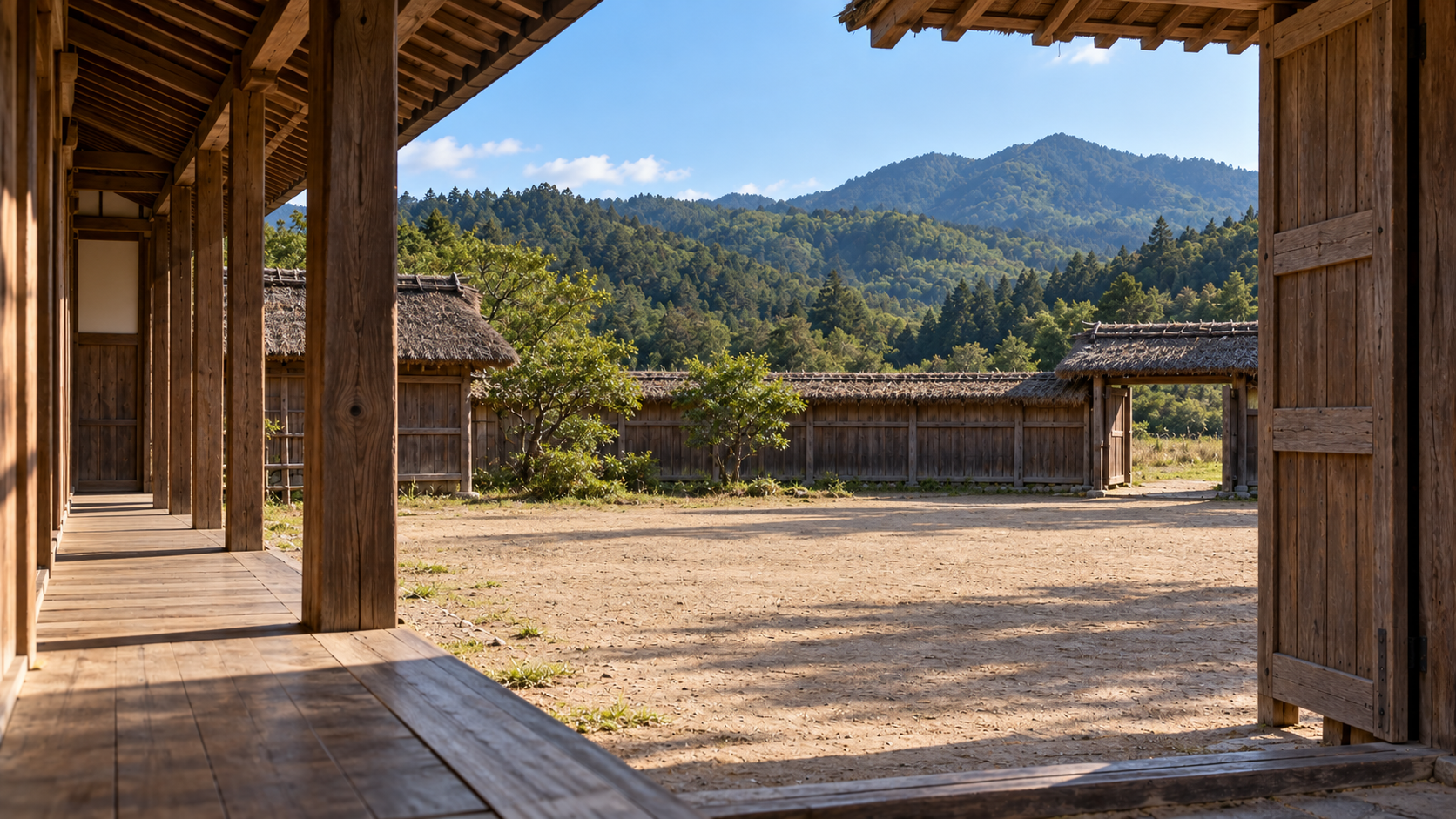
After news of the Bunei invasion, the Kamakura shogunate issued orders requiring people to move. One surviving command directs a journey to landholdings in Iwami and defence in response to the provincial governor’s summons.
The document gives a destination and a deadline. It therefore offers more than a general call for vigilance. What was demanded, and from whom, can be considered through the specific instructions preserved on the paper.
Orders also existed before the first invasion. Beginning with preparations in 1268 and proceeding to instructions after news of fighting keeps warning, movement and response in sequence. The National Archives supplies the broader distinction between the state letter and the two invasions.
Scene 02
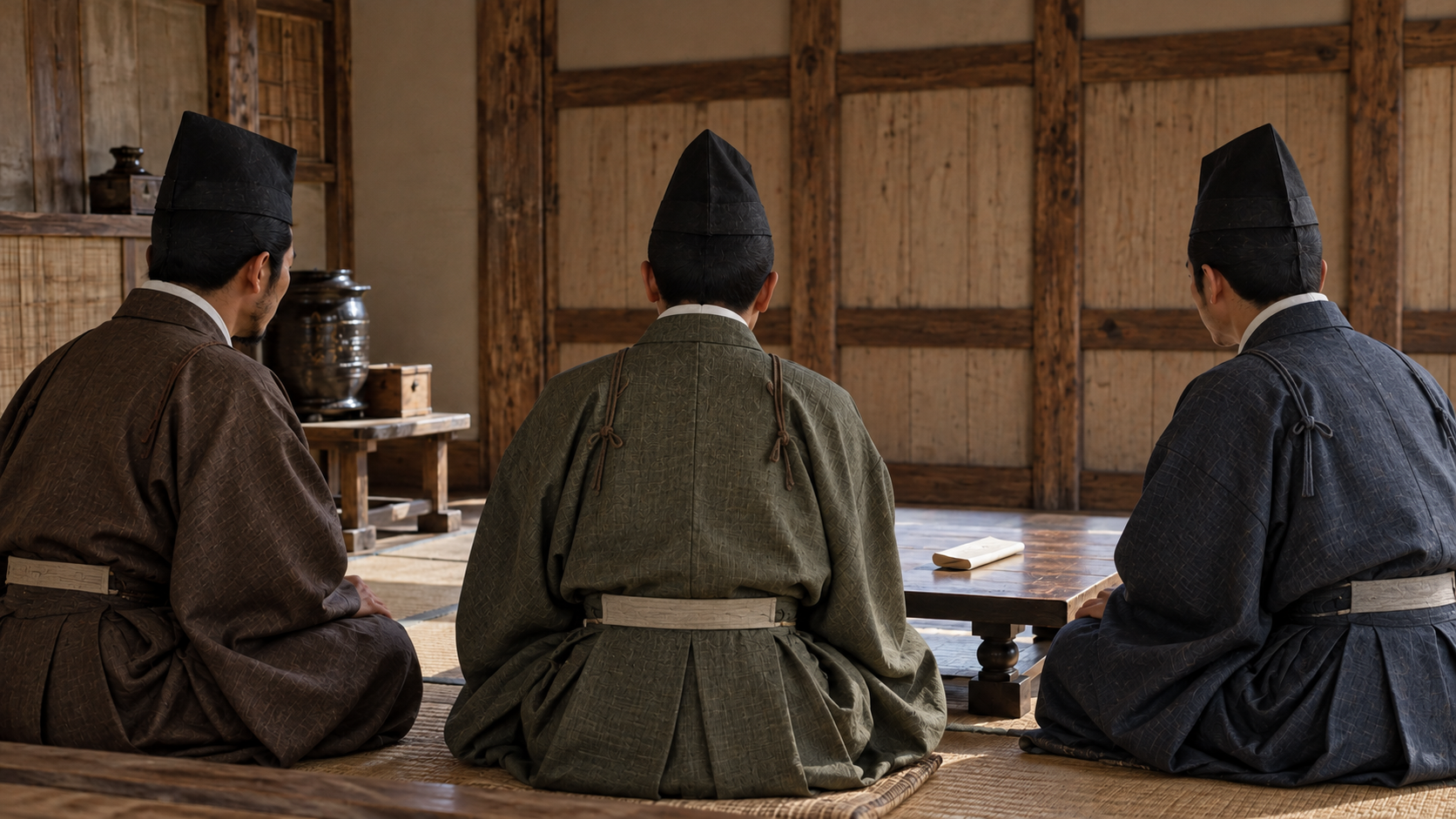
Warning through a governor in 1268
A study of foreign-defence policy published by Honjo City introduces a Kanto migyosho from 1268. It describes an instruction to prepare for a Mongol attack conveyed to gokenin through the military governor of Sanuki.
The example is not a description of Kamakura directly summoning each Sanuki retainer one by one. It identifies an intermediary: instructions went to the governor and then connected with the people expected to prepare.
Considering Tokimune, Masamura and shogunal government therefore requires attention to receivers and transmitters as well as issuers. The article retains the study’s year-level example without assuming Tokimune held the same office throughout every part of that year.
Scene 03
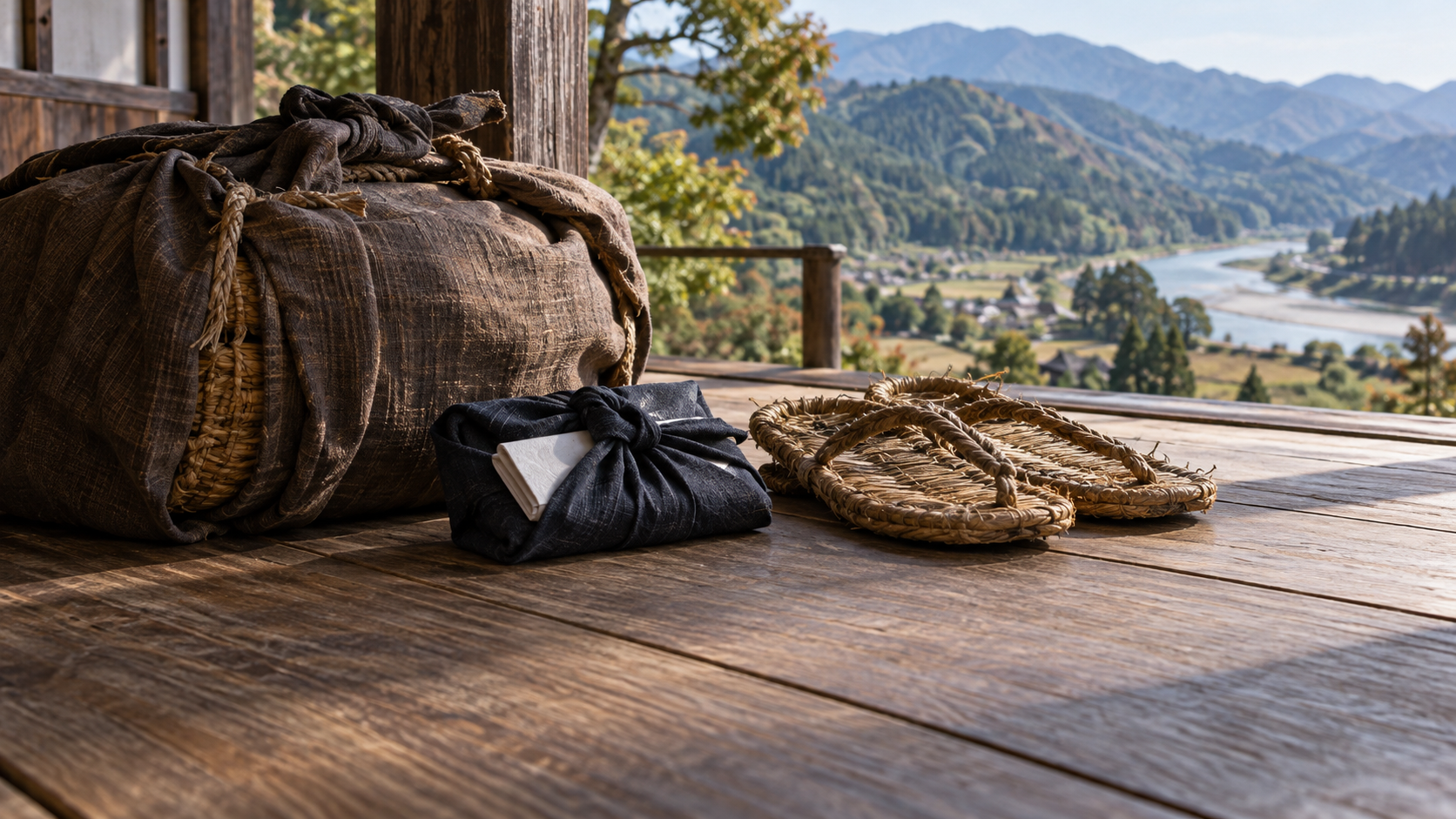
Requiring a journey in 1271
The same study introduces orders in 1271 directing eastern gokenin toward Kyushu. These concerned people with landholdings in the west and sought their involvement in preparations there.
Being told to remain alert and being required to travel to an estate demand different actions. The relationship between a person and a western holding helped turn a warning into a question of mobilization.
An order alone does not show that everyone immediately departed in person. Who actually went must be investigated through individual records. The narrower evidence is that the government was specifying movement rather than simply announcing danger.

Scene 04
An order dated the third day of the eleventh month
Kyushu National Museum holds a Kanto migyosho dated Bunei 11, or 1274, within its collected-document album. The preserved image identifies the date as the third day of the eleventh month.
The text refers to a report of fighting in Tsushima and Iki before giving instructions. It is therefore evidence of a response after news of combat, rather than a warning issued before anything had happened.
This difference gives the command its place in the sequence. The article follows the limited readable portions and institutional identification; it does not claim a newly verified full transcription, the recipient’s personal identity or a complete reconstruction of communications.
Scene 05
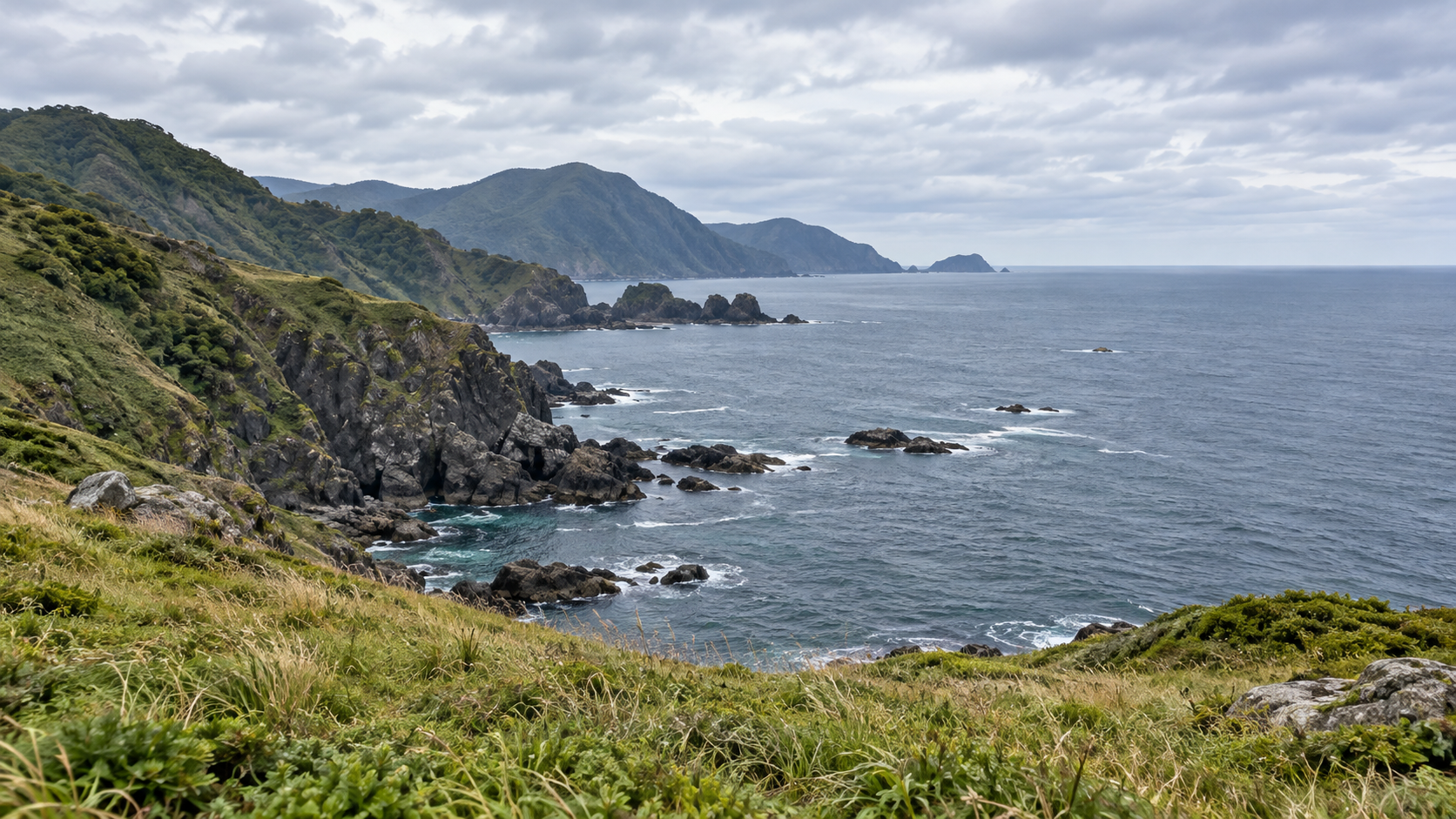
Landholdings in Iwami and the duty to defend
The order requires travel to landholdings in Iwami. News of fighting near Kyushu was not being treated solely as a problem confined to that island. A relationship with land elsewhere in the west mattered to the response.
Holding land and going there for defence appear together in the command. The instruction connects the gokenin’s estate with a demand for military action rather than describing an undifferentiated movement of everyone toward one battlefield.
This is a specific way that distant government could seek a western response. It does not tell us every duty attached to every holding, or demonstrate that the person concerned subsequently fought at a particular location.
Scene 06
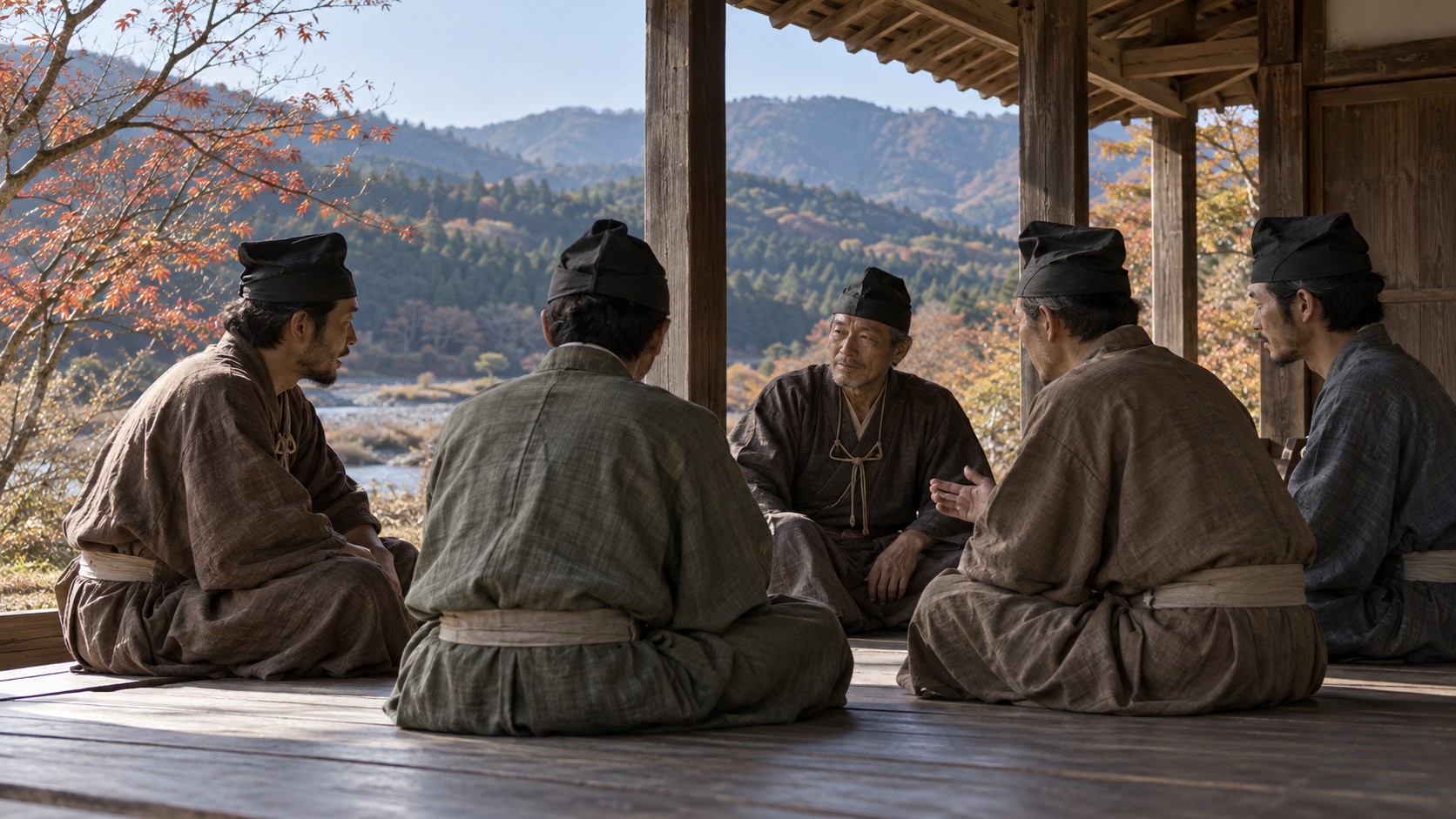
Following the governor’s summons
The instructions go beyond reaching the destination. If the enemy came, the recipient was to respond to the military governor’s summons and take part in defence. Central instruction and provincial mobilization are linked within the document.
This is more precise than imagining Tokimune personally directing every individual soldier. The questions become where the command was addressed and whose local summons it required people to follow.
Reading that relationship makes the organization of defence more concrete. The document supplies a stated condition for action; it does not by itself show the timing, numbers or outcome of a later local assembly.
Scene 07
A deadline before the coming twentieth day
The order specifies arrival at the landholding before the coming twentieth day. It indicates when the issuing authority wanted movement completed, rather than leaving the demand as an open-ended call to be careful.
These dates belong to the calendar then in use. They should not be transferred unchanged into a present calendar or treated as an exact measure of the days available after a recipient read the document.
The deadline is evidence of what the command demanded. When the person received it, read it and acted requires other records. The administrative date and the chronology of compliance answer different questions.
Scene 08
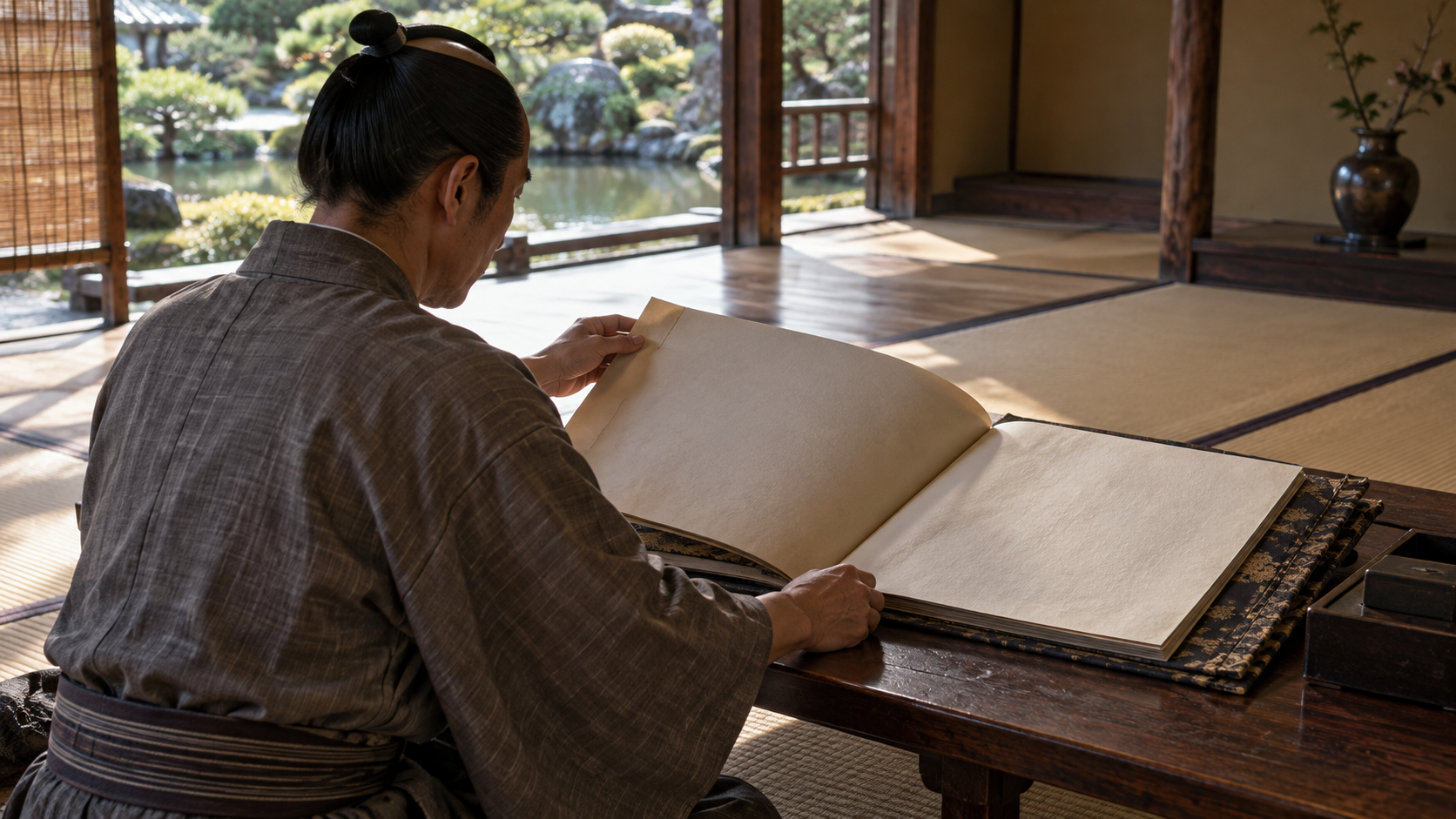
A medieval command in a later album
The document ends with the offices of governor of Musashi and governor of Sagami, each accompanied by a written seal. An adjacent annotation identifies the men as Yoshimasa and Tokimune. That annotation is distinguished from the document’s own wording.
This is an official form conveying a shogunal instruction, not a diary in which Tokimune describes his private feelings. The article does not identify the document as his autograph solely from the annotation.
The museum and its e-Museum explanation date the album’s assembly in the Chofu Mori house to around the early eighteenth century. The issue of the medieval order and its later collection have different dates. Other documents in the same album are not all orders from 1274.

Scene 09
Comparing Aki and Nagato, without merging the dates
Kyoto Prefecture’s Toji Hyakugo Documents exhibition explains an order copy dated the first day of the eleventh month of 1274, addressed to Aki’s governor. It likewise responds to news from Tsushima and Iki and requires travel before the coming twentieth day.
If the enemy came, local land stewards, gokenin and others were to be gathered for defence. A destination, deadline and condition for local mobilization can thus be compared with the Iwami instruction while the two documents remain distinct.
The other command copied on the same paper dates to the twelfth day of the fifth month of 1275. It responds to insufficient gokenin for Nagato’s guard, bringing in Suo and Aki for joint defence. It must not be folded into the earlier order as one document from one date.
Scene 10
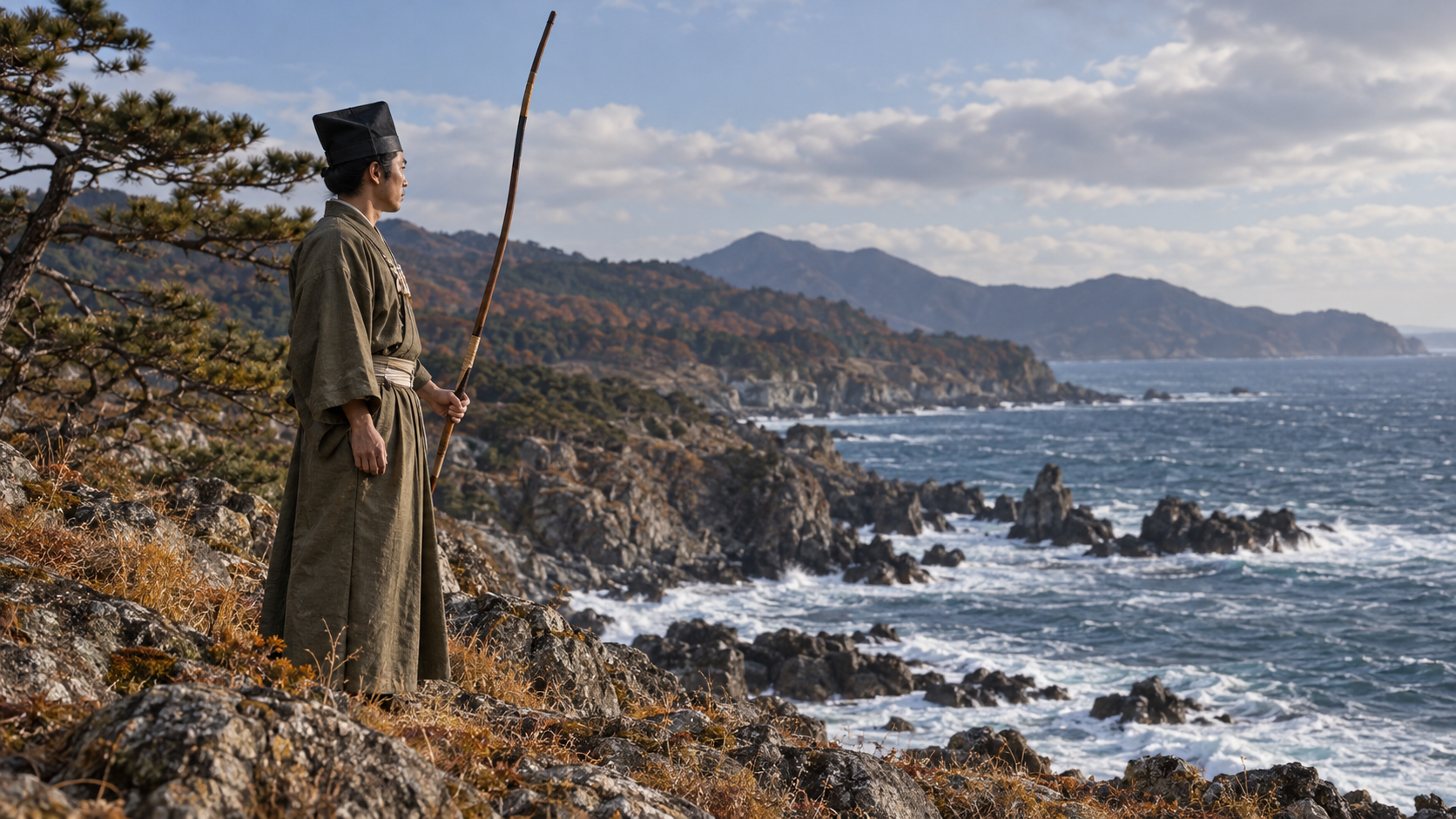
Local instructions about where to guard
The Honjo-published study also introduces a local example from 1272, before the first invasion. It describes the Otomo issuing instructions to a gokenin to guard strategic places in Chikuzen and Hizen.
Asking for preparations from Kamakura and specifying where to stand guard locally were different parts of moving people. The governor’s summons in the Iwami document helps pose a related question about local organization.
The years, recipients and regions nevertheless differ. These examples should not be joined as if the 1272 instruction were the next step in the same transaction as the Iwami order of 1274.
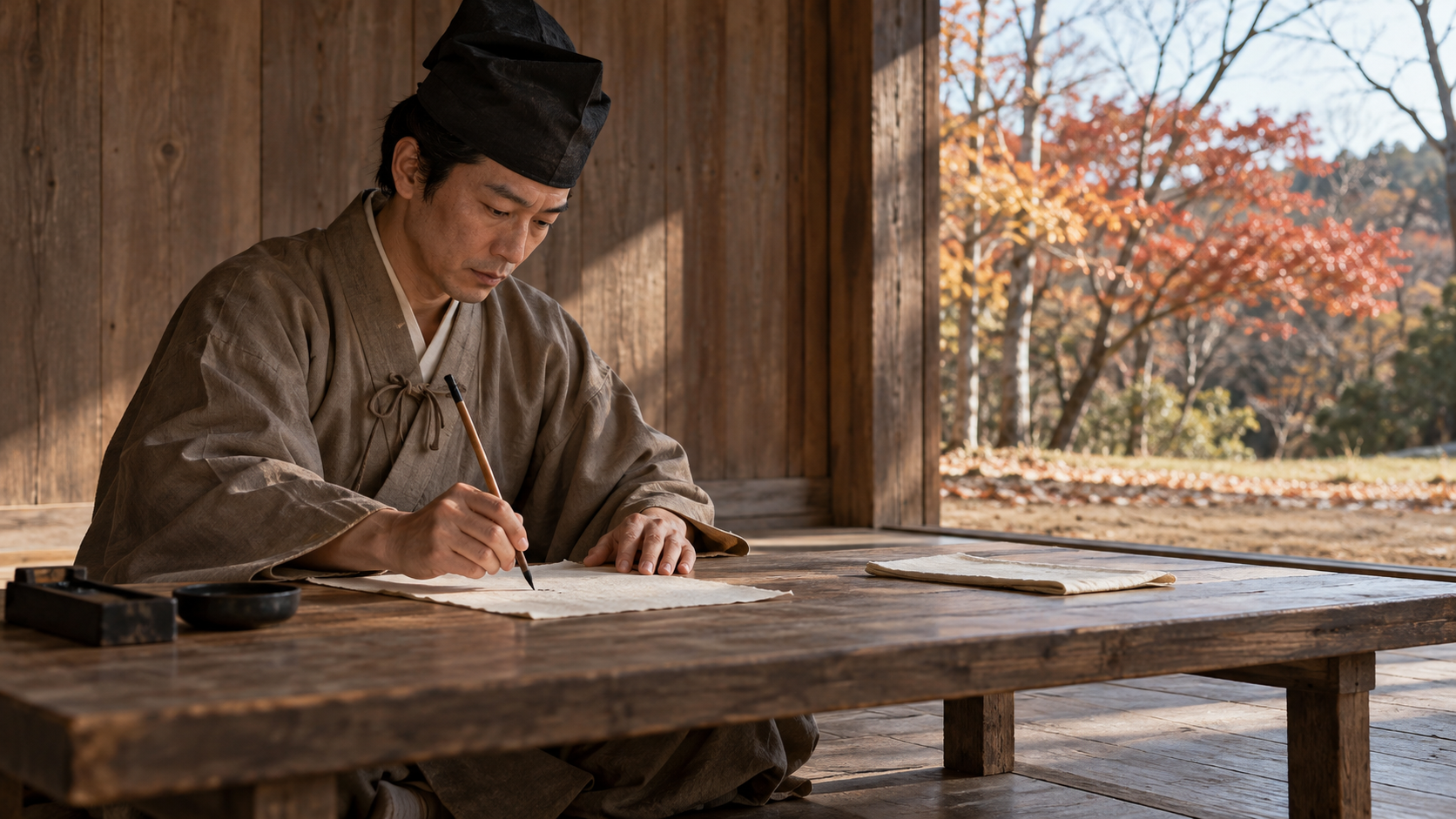
Scene 11
A command and a certificate of service
Alongside documents giving commands were documents certifying that a duty had been completed. The Agency for Cultural Affairs explanation of the Aokata Documents introduces fuk-kanjo with this function for guard service.
The collection spans the Kamakura through Edo periods and includes guard-service material from the Northern and Southern Courts period. Not every item can be assigned to Tokimune or treated as an instruction he issued.
Nor does an Aokata certificate automatically prove compliance with the Iwami command discussed here. The documents show different administrative functions without establishing that they concern the same person, order or completed assignment.
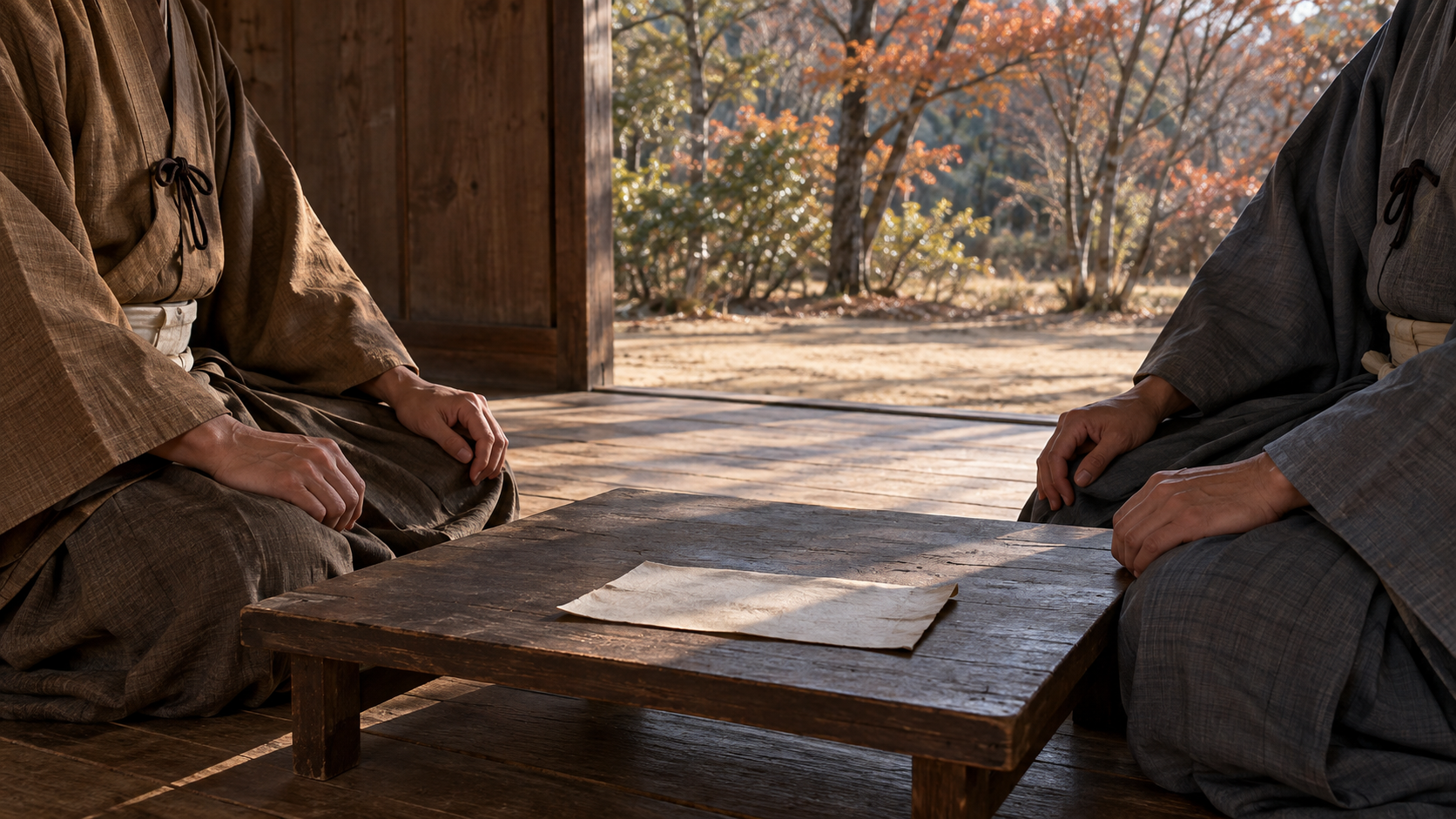
Scene 12
Instructions and performance require different evidence
Placing the functions side by side shows that defence was more than one announcement. Danger could be communicated, people directed toward a place and their action tied to the summons of a local authority.
Other records could certify completed service. Yet a command alone does not reveal where and when all recipients fought. A document’s usefulness depends partly on recognizing the particular question it can answer.
Distinguishing instruction from proof of performance permits both government organization and individual service to be investigated. It preserves the gap between what an authority demanded and the evidence needed to establish what followed.
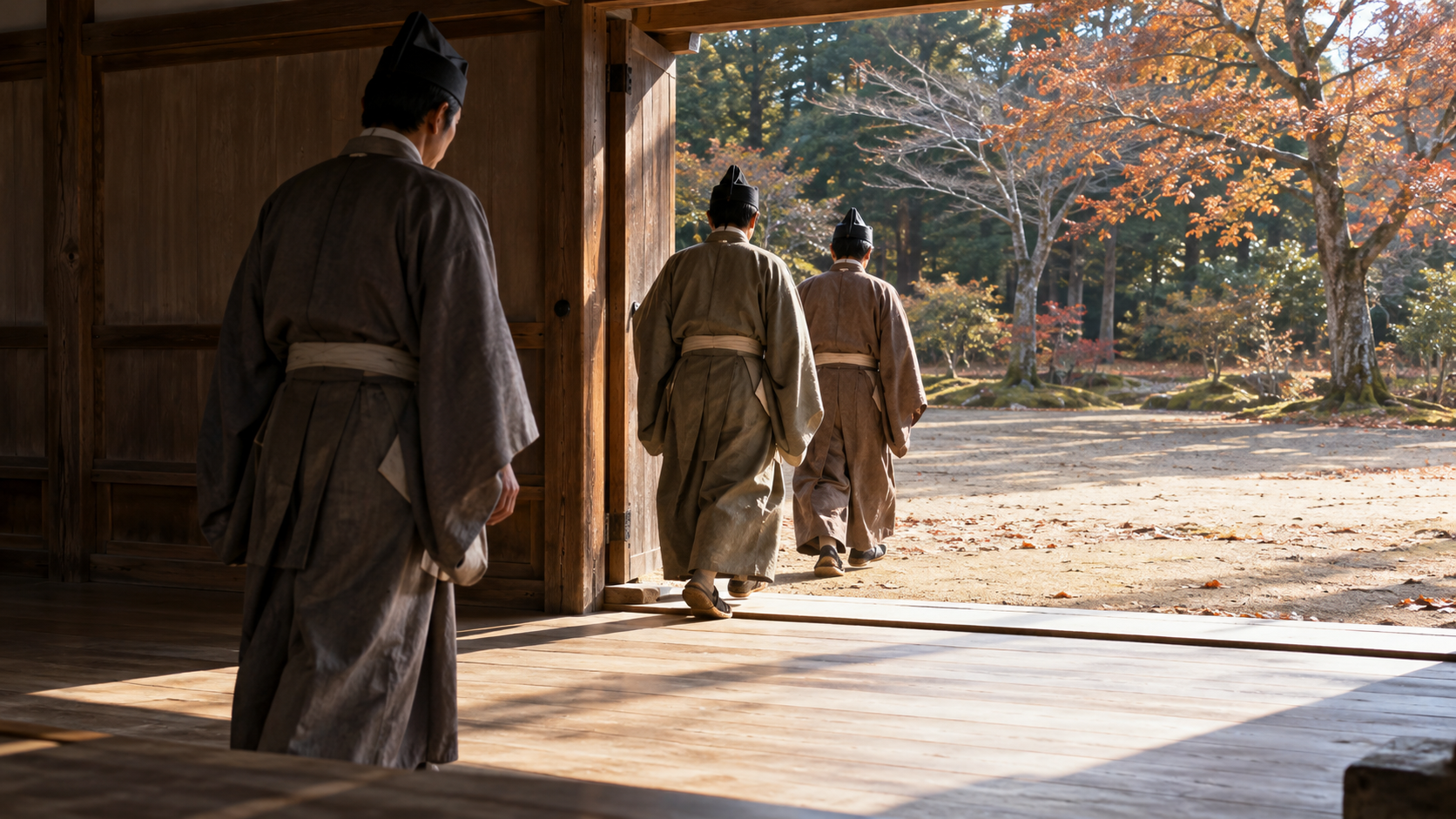
Scene 13
The machinery linking distant places
The orders connect warnings through governors, travel toward landholdings, deadlines and local defence. These details offer a way to consider government in Tokimune’s time alongside the decisions associated with an individual leader.
The important questions are who was addressed, what was required and how the instruction connected with people elsewhere. One surviving paper can reveal part of that machinery without providing a complete record of its operation.
Defence also had later stages. Fukuoka City’s cultural-property report describes construction of coastal stone defences in 1276 after the Bunei invasion. Those later works should not be inserted into the warning of 1268 or treated as already present in the Iwami command of 1274.
How to read this work
History, interpretation, and reconstruction
Recipients, deadlines and provincial mobilization, together with the difference between orders and evidence of performance, reveal how defence linked Kamakura with western Japan.
This work is grounded in published sources and historical research. Interior thoughts, dialogue, and some visual details are cinematic reconstructions. Where historians disagree, the article presents the point as debated rather than settled fact.
Timeline
The story in time
-
A research study introduces a warning conveyed to gokenin through the governor of Sanuki.
Sources: 129-honjo-kijioka-research -
The study introduces travel orders to eastern gokenin with western landholdings.
Sources: 129-honjo-kijioka-research -
The study introduces an Otomo instruction to guard strategic places in Chikuzen and Hizen.
Sources: 129-honjo-kijioka-research -
Order copy addressed to the governor of Aki.
Sources: 129-kyoto-hyakugo-2018-exhib4 -
An order directs travel to landholdings in Iwami.
Sources: 129-kyuhaku-b12015 -
Suo and Aki are included in joint defence concerning Nagato’s guard.
Sources: 129-kyoto-hyakugo-2018-exhib4 -
Construction of stone defences along Hakata Bay represents a later stage of preparation.
Sources: 129-fukuoka-borui -
The Chofu Mori house assembles the document album, distinct from the dates of its medieval contents.
Sources: 129-ekokuho-album
People & terms
A guide for new readers
Glossary
- Kanto migyosho 関東御教書
- A document conveying an instruction of the Kamakura shogunate; it is not a private diary.
- Gokenin 御家人
- Retainers of the shogunate, whose relationship to western landholdings matters in the orders discussed here.
- Shugo 守護
- A provincial military governor serving as an intermediary and an authority for local mobilization.
- Fuk-kanjo 覆勘状
- A document certifying completion of service, a different function from issuing the initial command.
- Tekagami 手鑑
- A collecting album. Its assembly date is separate from the dates of the documents mounted within it.
Sources & method
How this article was built
The article uses the completed thirteen-scene script rather than stopping with the twelve-scene preparation. The additional Aki and Nagato comparison follows its own source and dates, and remains separate from the Iwami command.
The saved B120-15 image was visually checked for the limited date, deadline and office-name discussion. The neighbouring annotation is kept distinct from the document text, and a readable passage is not promoted into a complete newly verified transcription.
The saved Kyoto exhibition PDF was checked against the printed explanation and transcription on pages four and five. Its two dates were kept separate. An older locator’s physical-page offset was corrected without changing the historical dates.
Thirteen existing generated illustrations were visually reviewed and copied with matching hashes for article use. Their originating actor and earlier material reviews are retained. The earlier YouTube-only rights scope is not treated as automatic approval for every other asset; no collection image or soundtrack is reproduced.
Sources
References and further reading
- Kanto Migyosho, B120-15 関東御教書 B120-15 Title translated editorially for reader convenience. Kyushu National Museum 九州国立博物館 Individual record and retained image, face 015. Bounded reading includes the historical date, deadline, Iwami destination and governor’s summons. No full independent transcription, recipient identification or Tokimune autograph claim. Accessed 2026-11-04
- Collected Documents Album, B120 古文書手鑑 B120 Title translated editorially for reader convenience. Kyushu National Museum 九州国立博物館 Catalogue and adopted institutional review distinguish the original documents from the later album. No reading of all seventy-eight leaves or reproduction of collection images is claimed. Accessed 2026-11-04
- National Cultural Properties Database: Aokata Documents 国指定文化財等データベース 青方文書 Title translated editorially for reader convenience. Agency for Cultural Affairs 文化庁 Saved official detailed explanation confirms service certification and later examples. Individual documents are not newly deciphered or treated as proof of compliance with the Iwami order. Accessed 2026-11-04
- Kijioka Keiichi: Foreign-Defence Policy and the Activities of the Sho 雉岡恵一 蒙古襲来における鎌倉幕府の異国警固政策と庄氏の政治的・軍事的活動 Title translated editorially for reader convenience. Honjo City 本庄市 Research by a municipal cultural-property council member. Adopted reading includes PDF page six, printed page 91, and related discussion and notes for 1268, 1271 and 1272. Cited originals are not all independently read. Accessed 2026-11-04
- Toji Hyakugo Documents Exhibition, 2018: Order Copies, Yo Box 29 平成30年度 東寺百合文書展 前期解説 四 関東御教書案 ヨ函29号 Title translated editorially for reader convenience. Kyoto Prefecture 京都府 Saved PDF physical pages six and seven, printed pages four and five, were read for explanation and printed transcription. The previous physical-page locator was off by one. Fresh retrieval returned 403; no complete original-image decipherment is claimed. Accessed 2026-11-04
- e-Museum: Collected Documents Album e国宝 古文書手鑑 Title translated editorially for reader convenience. Kyushu National Museum 九州国立博物館 Corroborates the later album and the order dated in 1274. This is the same holding institution as the B120 catalogue, not an additional independent issuer. No image is reproduced. Accessed 2026-11-04
- Japan and Mongolia: A History Preserved in Documents, Chapter One 日本とモンゴル 綴られた交流のあゆみ 第1章 Title translated editorially for reader convenience. National Archives of Japan 国立公文書館 Institutional background distinguishes the 1268 letter and the 1274 and 1281 invasions. Private motives, complete force numbers and precise routes are not added. Accessed 2026-11-04
- Additional Designation of the Genko Borui Historic Site, 7 December 2021 国史跡元寇防塁の追加指定について(2021年12月7日) Title translated editorially for reader convenience. Fukuoka City 福岡市 The first-page summary describes stone defences built in 1276 after the 1274 invasion. This later stage is not identified with performance of a particular earlier command. No photograph is reused. Accessed 2026-11-04
Continue reading
More stories from Shigeki
Shigeki English
The Battle of Minatogawa: How Was the Defeated Masashige Remembered?
Separate the time of fighting from the times when records, images and memorials were made.
- When The battle in 1336; a report dated 1337; commemoration in 1692 and 1857; the tunnel, park and statue of the modern city
- Where Minatogawa and Kobe, considered alongside documents, war narratives and later images held or described by several institutions
Shigeki English
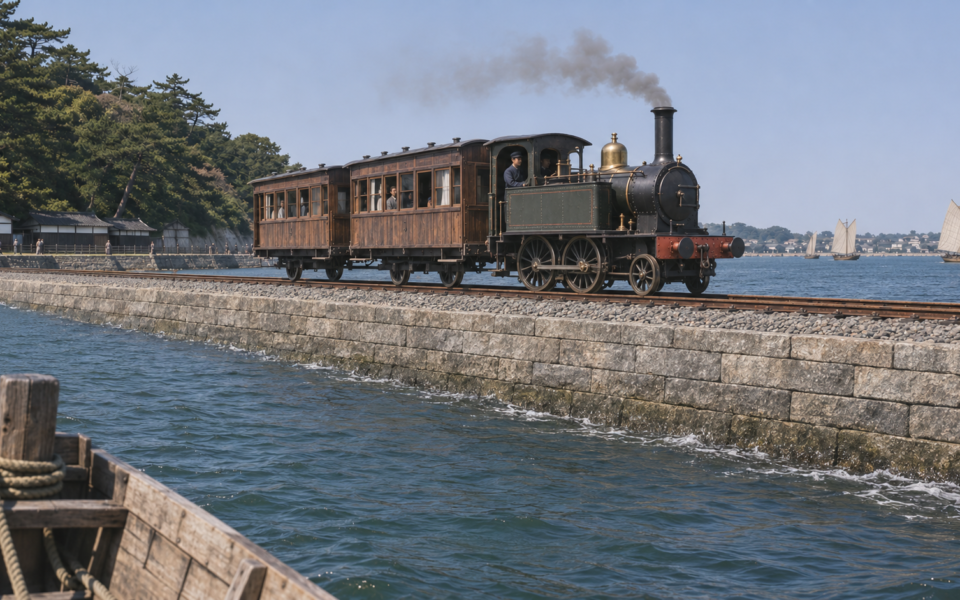
Railway Opening and the Takanawa Embankment: Where Trains and Boats Crossed
An embankment carrying trains into the sea also raised the question of keeping a way to the water.
- When Construction in the early 1870s, railway opening in 1872, later widening and reclamation, rediscovery in 2019 and additional designation in 2021
- Where The former coast at Takanawa between Shimbashi and Shinagawa, along the Shimbashi–Yokohama railway