
SHIGEKI ENGLISH STORYEN
Japanese history in English
Enomoto Takeaki after Defeat: Government Service, Treaties and Migration
Follow the changing responsibilities behind a former opponent’s Meiji career.
Trace Enomoto Takeaki’s life after surrender through release in 1872, service in Hokkaido, the 1875 Treaty of Saint Petersburg, a Siberian journey in 1878 and later migration projects. Separate personal knowledge, government instructions and the results of a plan.
At a glance
Before you enter the story
- When
- From service under the shogunate to release in 1872, the treaty of 1875 and migration to Mexico in 1897
- Where
- Japan, Saint Petersburg, Siberia and overseas settlement projects
- Key figures
- Enomoto Takeaki, Kuroda Kiyotaka, Soejima Taneomi
- What was at stake
- How did a leader who resisted the new government come to represent it abroad, and what did that change of role involve?
Why this story matters
The larger history behind the turning point
A surrender is a military and political turning point, but it need not be the end of a person’s work. Enomoto’s subsequent appointments show knowledge acquired under the shogunate being used within new offices. Those appointments involved institutional choices as well as an individual’s abilities.
Diplomatic signature, formal ratification and a later public proclamation are different actions. The same care is needed when judging migration: departure, the financing of a settlement enterprise and the later lives of migrants cannot be compressed into one verdict of success or failure.
Historical context
What an international reader needs to know
A career across a change of government
Enomoto served the Tokugawa shogunate and continued resistance after the surrender of Edo Castle. His eventual surrender at Hakodate belongs to that conflict. His later service to the Meiji government should not be read backward as proof that he had always intended to join it.
The Kaitakushi was the government office responsible for Hokkaido development. Employment there placed Enomoto within an administrative institution, with superiors and assigned work. Kuroda Kiyotaka’s support helps explain the connection between release and employment, without making every subsequent decision Kuroda’s personal act.
A minister abroad represented a government and operated within its instructions. Enomoto’s negotiations with Russia therefore need two scales of explanation: what he did as a negotiator and what the Japanese government had already decided he should seek. His signature does not mean the policy originated with him alone.
Different records answer different questions
Institutional biographies establish the sequence of offices. Exhibitions explain a treaty and the documents surrounding its implementation. A travel diary records what a particular traveller noticed. None of these automatically supplies the perspective of every person affected by government decisions.
The account uses explanations and selected excerpts from public archives and libraries. It does not claim to have transcribed every letter or both original diary volumes in full. Where institutional pages differ over a detail not necessary to the argument, that detail is left open rather than silently forced into a single precise chronology.
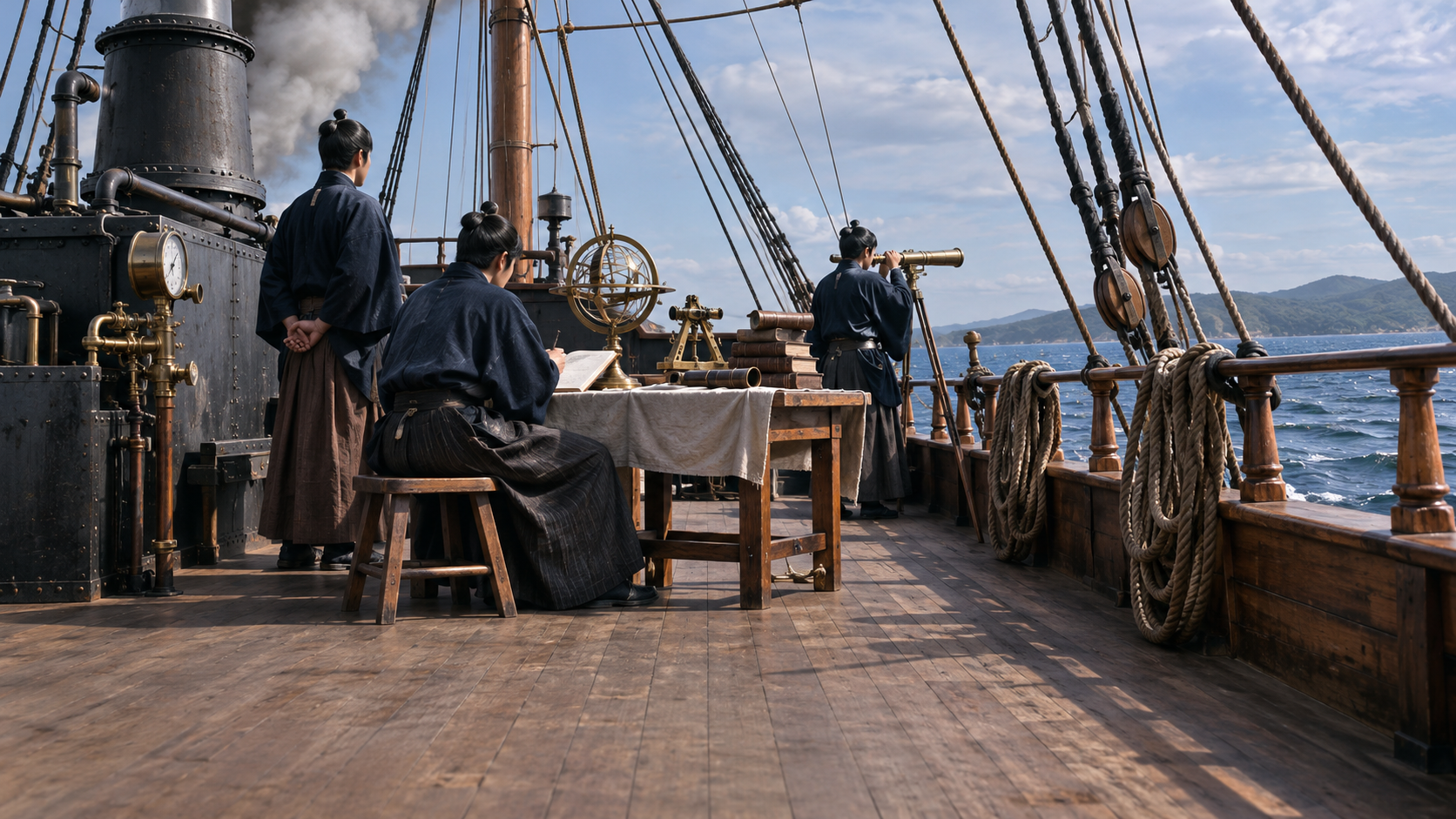
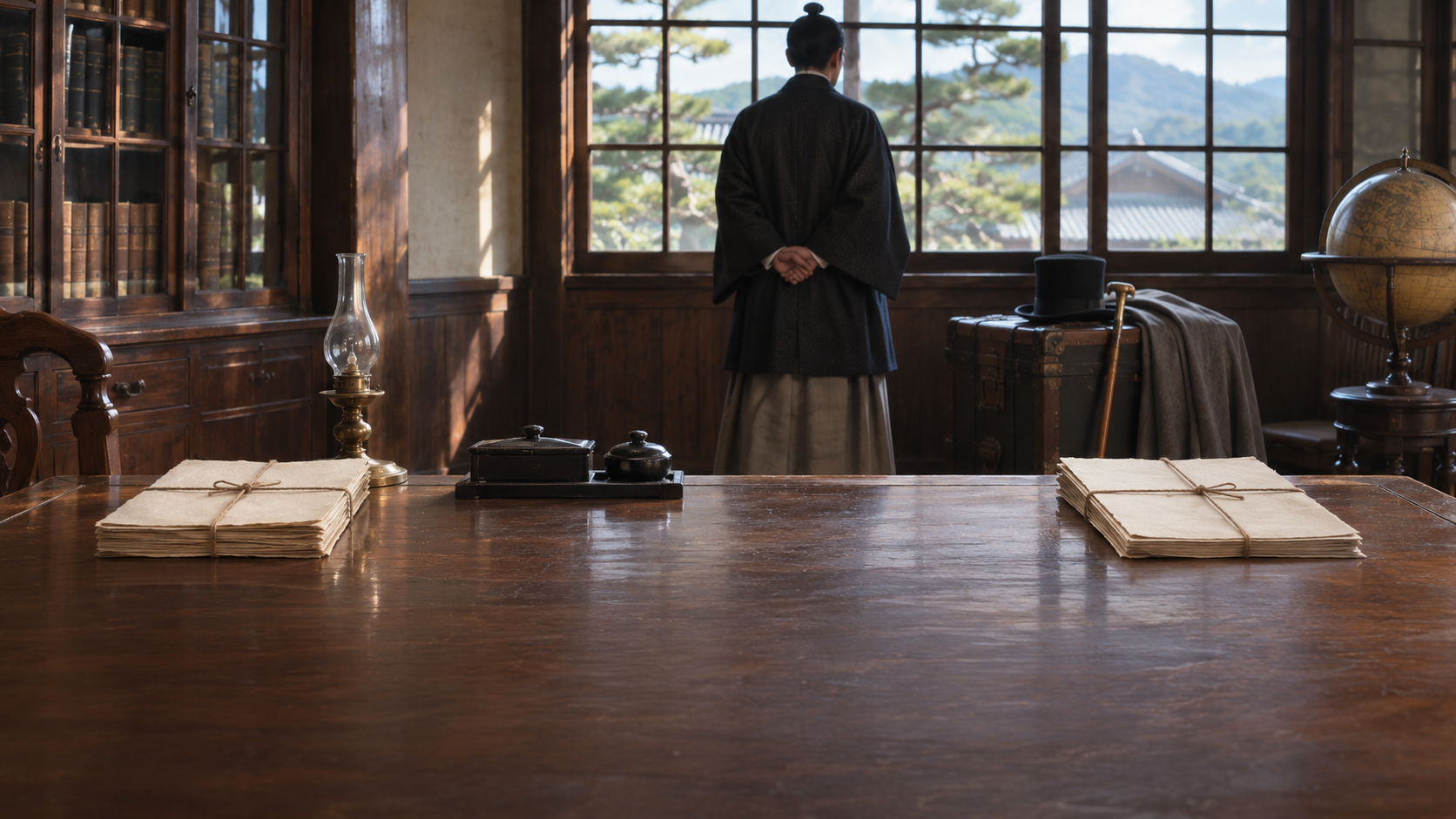
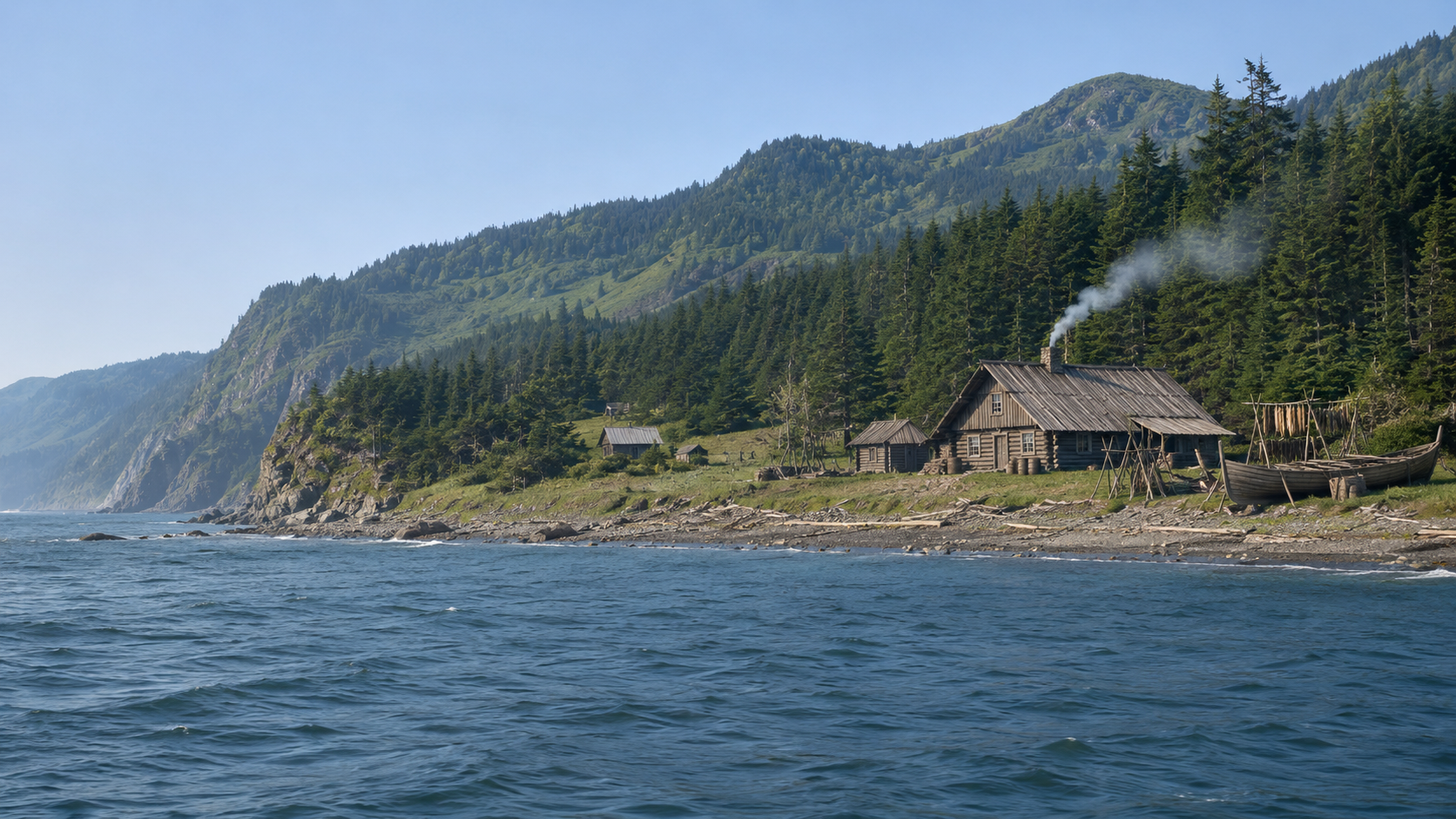
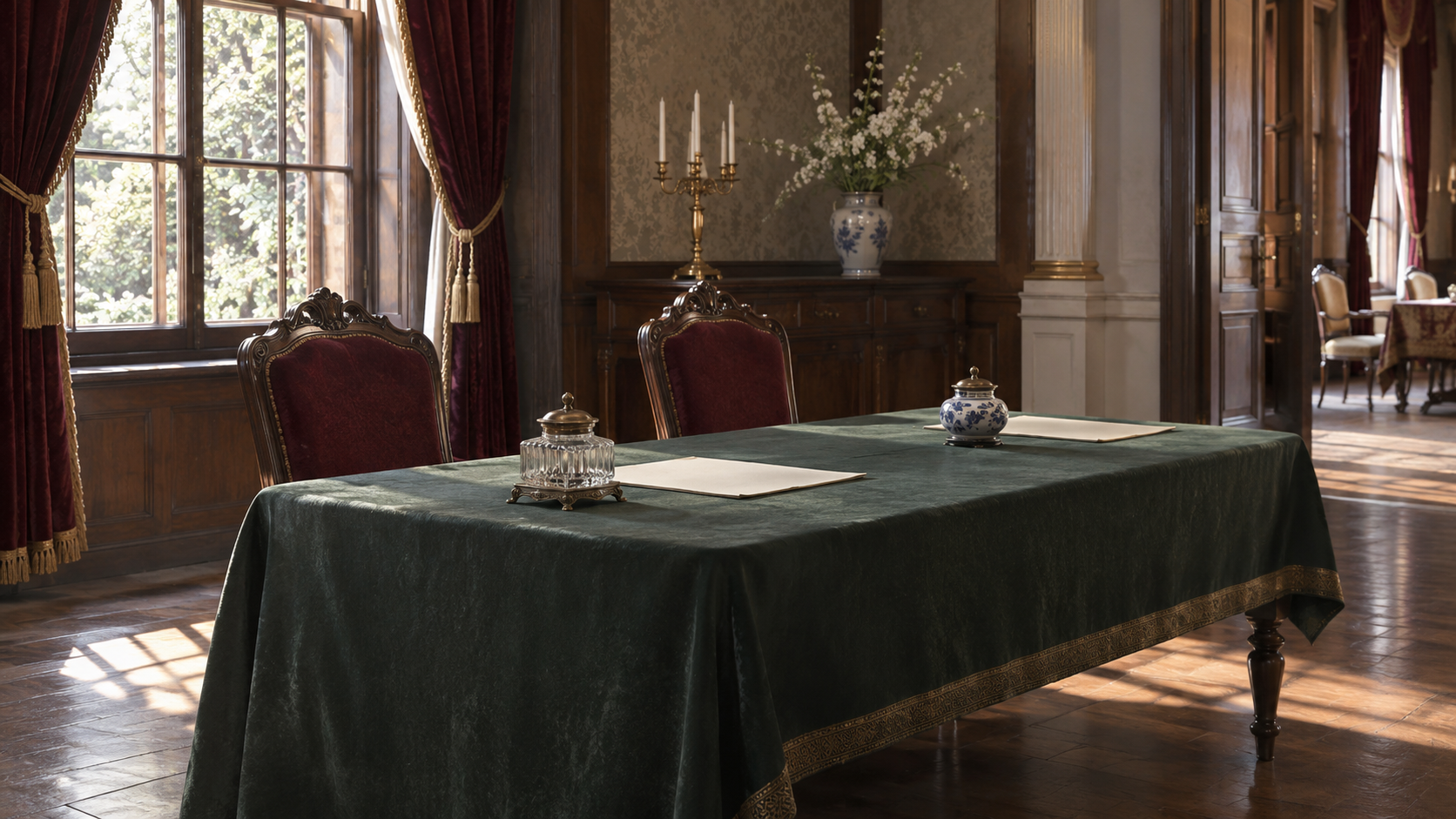
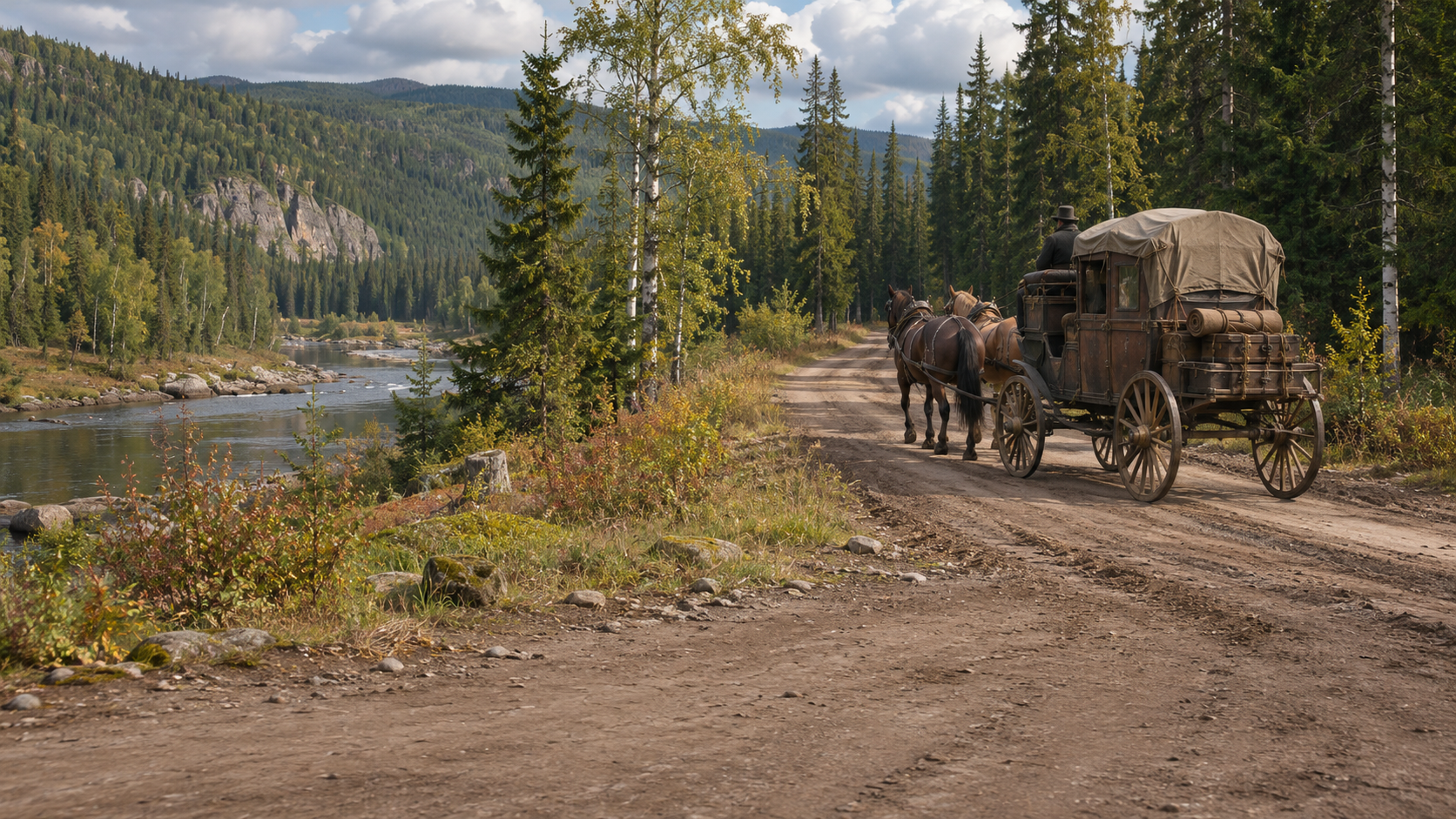
The generated illustrations are anonymous conceptual scenes. A desk is not the actual treaty table, a camera is not an authenticated possession and a rural landscape is not a photograph of a named settlement. Keeping that boundary visible allows the images to support reading without making them documentary evidence.
Watch the film
See the story in motion
The film currently uses Japanese audio. This English article provides the context and source trail; it does not imply that an English subtitle track is available.
Scene 01
The former opponent at a treaty table
In 1875, Enomoto Takeaki signed the Treaty of Saint Petersburg on behalf of Japan. A man who had commanded forces resisting the new government was now representing that government in negotiations with Russia. The contrast invites a question about the years between those two roles.
Ending his story at the surrender of Goryokaku would remove the work that followed. Explaining the whole transition through exceptional talent would also skip necessary steps. Release from prison, employment in the Kaitakushi and instructions from the government were separate developments.
Following those changes makes the transition intelligible without inventing a private conversion or a single decisive conversation. The starting point is his earlier education, followed by the institutions that offered a place for his knowledge after defeat.
Scene 02
Knowledge acquired under the shogunate
Enomoto did not first encounter Western learning after the Meiji government came to power. He studied at the naval training establishment in Nagasaki and later in the Netherlands under the shogunate. The National Diet Library describes a range of subjects extending beyond ship handling.
Military studies, gunnery and steam machinery appeared alongside international law and mineralogy. Technical knowledge for operating a warship overlapped with knowledge useful for studying foreign institutions and physical environments. These were possibilities within his education, rather than a guarantee of future appointments.
His political allegiance remained a separate matter. He continued resistance after Edo Castle’s surrender. Knowing the diplomatic career that followed does not establish that, during the war, he already expected to serve the victorious government or had agreed to do so.
Scene 03
Release and employment were separate steps
Surrender did not immediately make Enomoto a senior official. He experienced imprisonment before being released in 1872 and entering Kaitakushi service. The Hokkaido Archives’ collection guide provides this sequence, keeping the interval between military defeat and government employment in view.
The National Diet Library identifies Kuroda Kiyotaka’s patronage in explaining his work on Hokkaido development. That connection places an individual’s skills within a relationship involving a senior figure and an office. Possessing knowledge and being offered an institutional role were both necessary parts of the transition.
The useful question is therefore more specific than whether a talented person was forgiven. Under whom did he work, in which office and with what responsibility? Those questions preserve the administrative sequence that a story of instant reconciliation would otherwise erase.
Scene 04
A negotiating policy came from government
After work in the Kaitakushi, Enomoto received the assignment of negotiating with Russia. He did not freely determine every condition on his own. The Foreign Ministry’s explanation describes competing positions within the government over whether to retain or relinquish Japan’s rights in Sakhalin.
Soejima Taneomi and Kuroda Kiyotaka represented different positions in that discussion. The policy favouring relinquishment became predominant, and Enomoto travelled with instructions that included it. His appointment and his departure with instructions must also be distinguished when arranging the chronology.
A diplomatic representative could negotiate terms within a policy that others had helped establish. Recognising that framework does not make his work insignificant. It identifies the responsibility he actually held, while avoiding the suggestion that a national territorial arrangement was simply one man’s personal preference.
Scene 05
Identify the islands in the agreement
Under the treaty, Japan relinquished its rights to the whole of Sakhalin and received eighteen islands from Russia, running from Urup to Shumshu. The Foreign Ministry’s exhibition explanation notes that the treaty names the islands. The geographical range matters to understanding the arrangement.
The broad labels Sakhalin and the Kurils can conceal differences in scope. Reading the specified islands gives a firmer account of what the agreement covered than imagining an undifferentiated island chain. It also prevents a signature scene from replacing the substance of the signed document.
The parties were the Japanese and Russian governments. Enomoto was acting in an official capacity rather than acquiring territory personally. This article describes the historical agreement and its stated range; it does not extend that account into a judgment on present territorial disputes.
Scene 06
Signature was followed by further procedures
The treaty was signed on 7 May 1875. Instruments of ratification were exchanged on 22 August of the same year. The National Archives also introduces documents concerning a public proclamation in November. These dates mark successive procedures rather than alternative dates for one identical event.
Negotiating an agreement, signing it, formally confirming it and announcing it domestically involved different actions. The archival explanation of a submission about publication places the treaty within an administrative process extending beyond the moment when representatives sat together at a table.
Enomoto’s signature can remain central without absorbing all those later steps. Looking at the movement of documents and the activity of offices gives diplomacy an institutional setting. It shows a form of government service different from battlefield command, with its own procedures and limits.
Scene 07
A return journey across Siberia
After his Russian assignment, Enomoto returned through Siberia in 1878. This journey preceded the Siberian railway. The National Diet Library introduces two diary volumes, one large and one small, recording places and events encountered while travelling by horse-drawn carriage.
Moving from the treaty chronology to a diary changes the kind of evidence available. Towns and landscapes along the route became objects of observation, as well as the capital and its officials. The journey broadens the subjects visible within the same person’s career.
A traveller’s diary is nevertheless a situated record. It does not gather the voices of everyone living along the route or stand for the region as a whole. The observations tell us what Enomoto recorded; further evidence would be needed to describe all the communities he passed.
Scene 08
Photographs were bought, received and exchanged
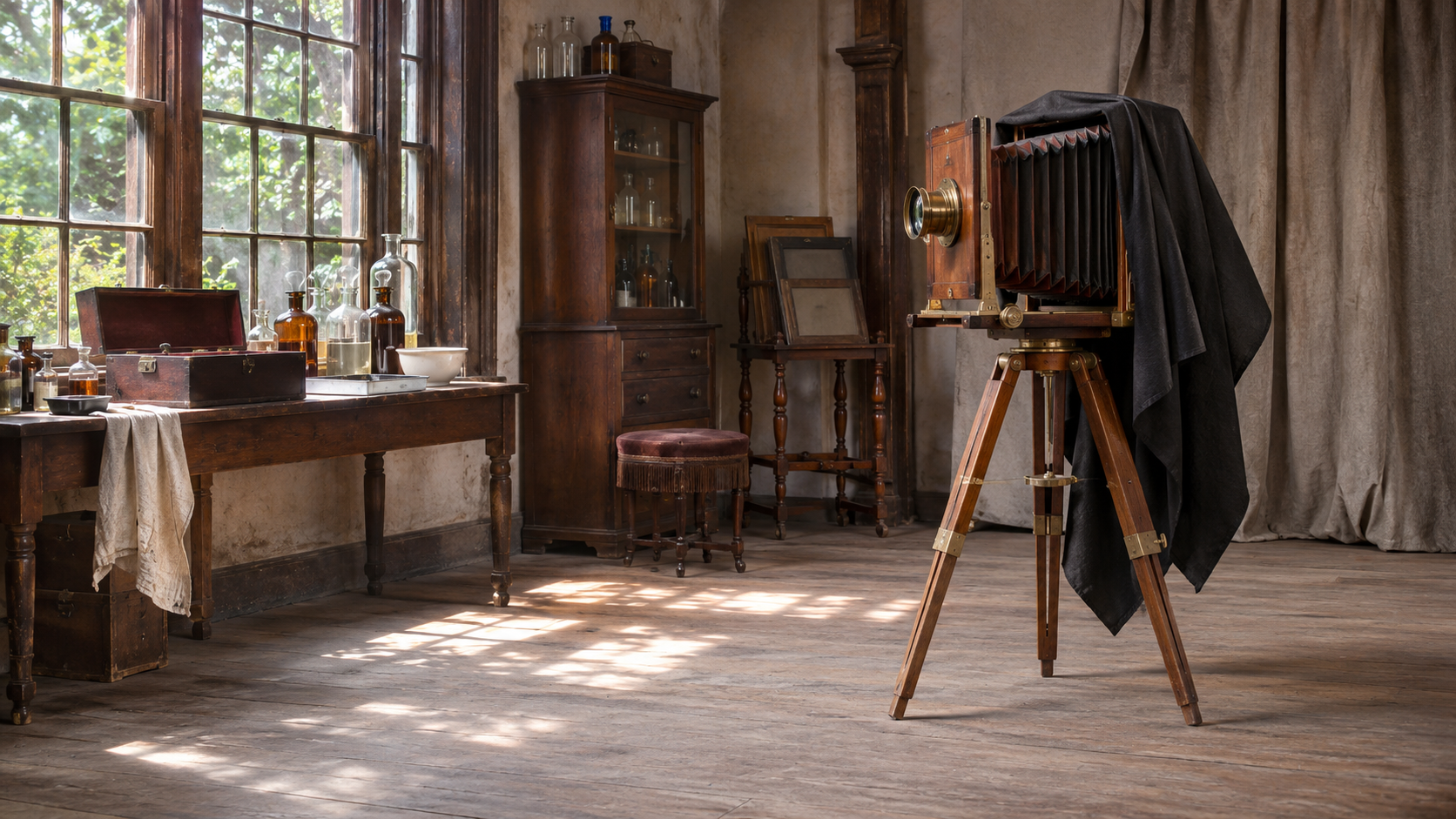
Enomoto also collected photographs during the journey. The National Diet Library describes purchases from photographic studios, gifts and exchanges. The collection should therefore not be described as a set of pictures that he personally photographed, even though he brought the images into his own materials.
A purchased town view and a photograph received from an acquaintance have different histories. Bringing diary entries into the discussion helps identify those histories and the social exchanges surrounding them. Possessing a photograph alone does not explain who made it or why it reached the collector.
Written notes and collected images offer complementary evidence about his encounters with foreign places. They do not give a complete visual record of the journey. The anonymous camera illustration used here introduces that theme without claiming to show an actual camera owned or used by Enomoto.
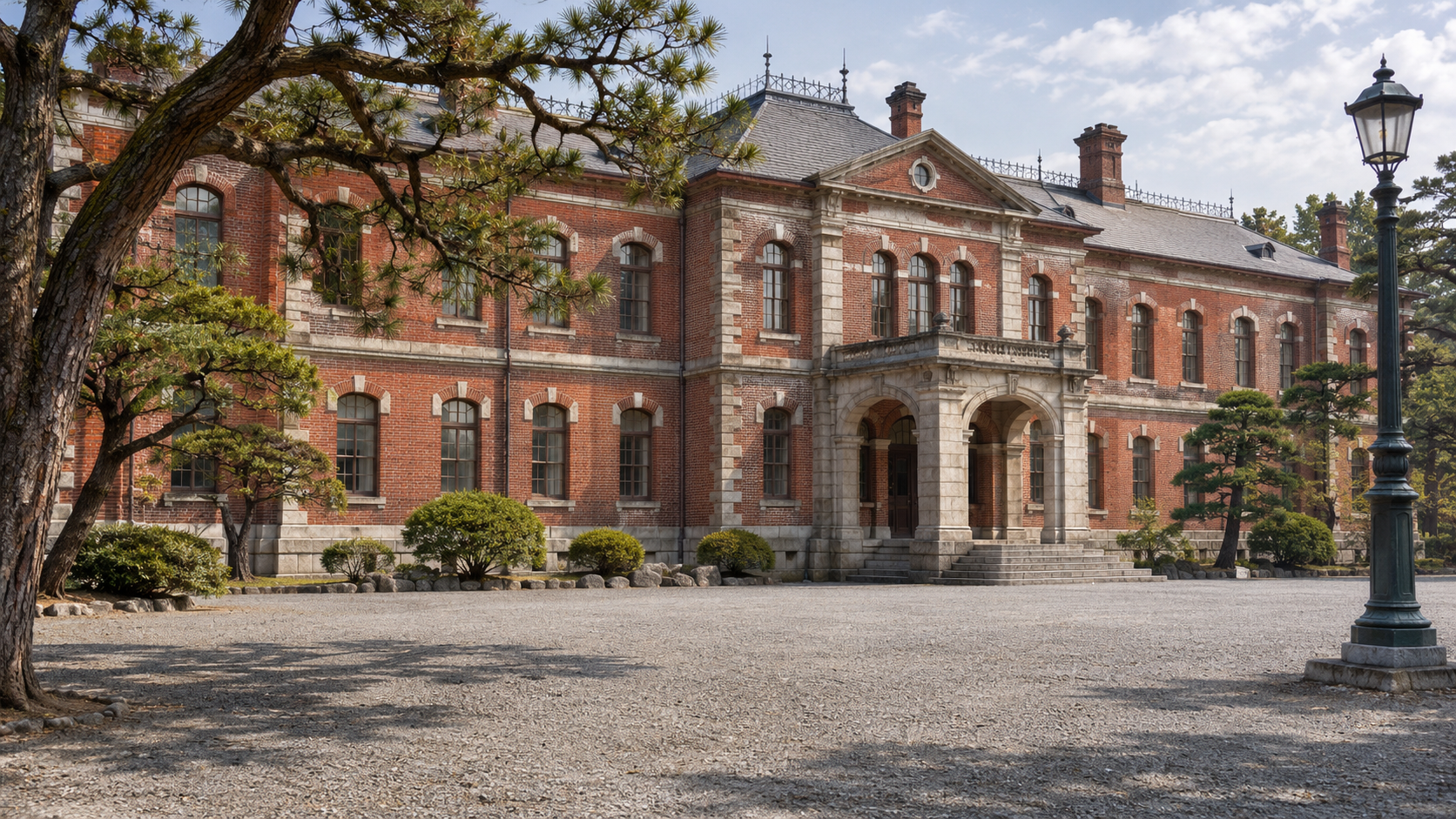
Scene 09
Diplomatic and ministerial responsibilities changed
Enomoto’s government service did not end with Russia. He served as minister to Qing China and later held cabinet portfolios in communications, education, agriculture and commerce, and foreign affairs. The sequence demonstrates several kinds of responsibility, rather than a single unchanging occupation.
Holding an office is a verifiable biographical fact. Whether a particular policy achieved its intended result is another question requiring its own evidence. Listing ministerial titles cannot by itself prove that every enterprise under those ministries succeeded or was directed by Enomoto alone.
In 1891 he became foreign minister and worked on treaty revision. He also addressed migration. The changing assignments connect overseas relations with questions extending beyond warships and territorial agreements, including how a government should investigate and support opportunities for people to live abroad.
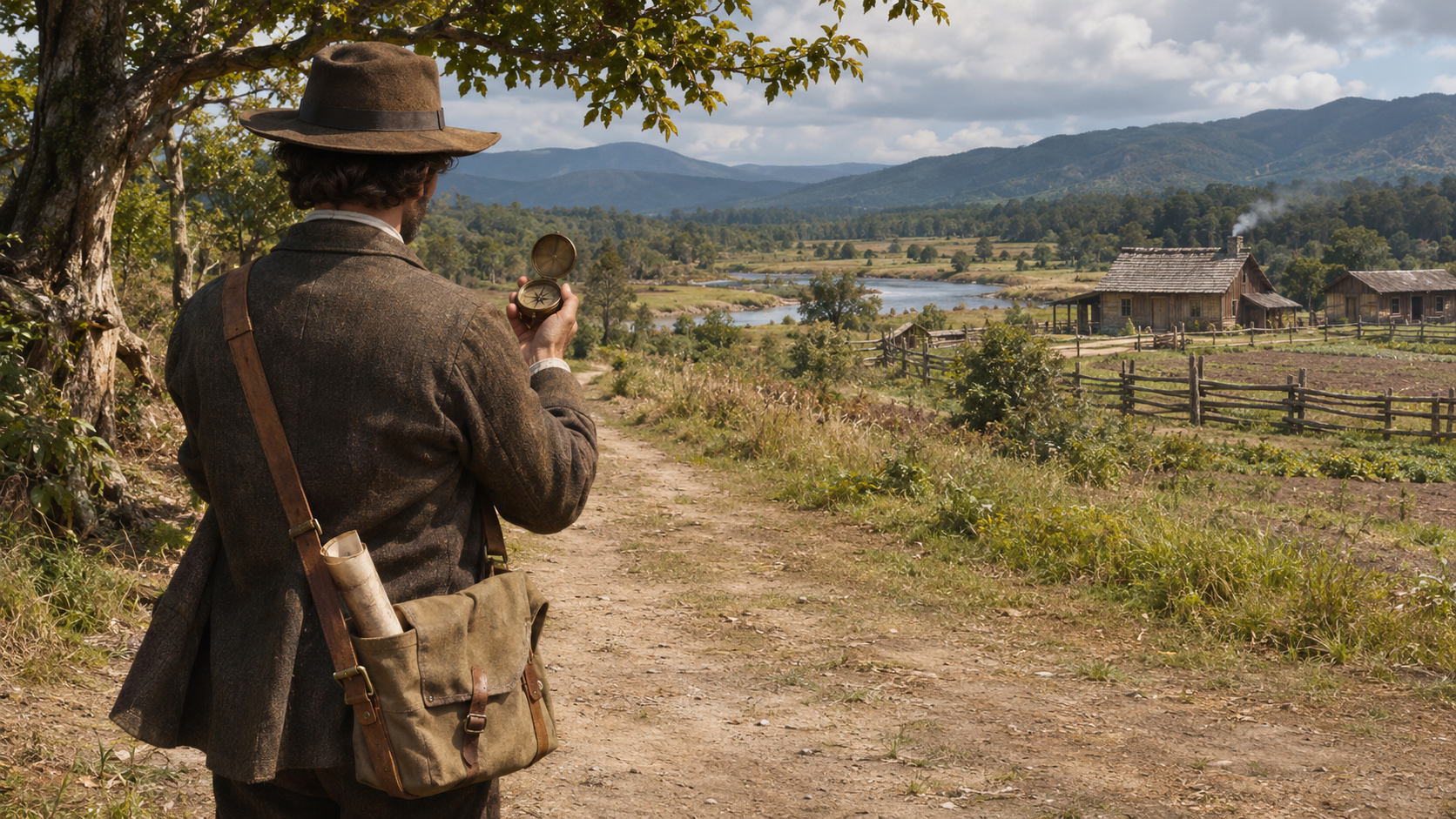
Scene 10
A proposal for settlement abroad
Enomoto’s migration proposals were not limited to temporary employment followed by return. The National Diet Library describes the purchase or lease of land with Japanese capital, to be cultivated by settlers who would establish a lasting life there. This was a particular scheme, not a universal description of migration.
An immigration section was established within the Foreign Ministry, and investigation of possible destinations formed part of the work. After leaving the ministry, Enomoto was involved in establishing the Colonization Association in 1893. The historical terminology belongs to the plans and organisations of that period.
Acquiring or leasing land did not automatically secure livelihoods. A settlement enterprise required information about local conditions, finance and continuing support after arrival. Those conditions must remain visible alongside the ambition of a proposal, especially when the later outcome was more difficult than its planners expected.
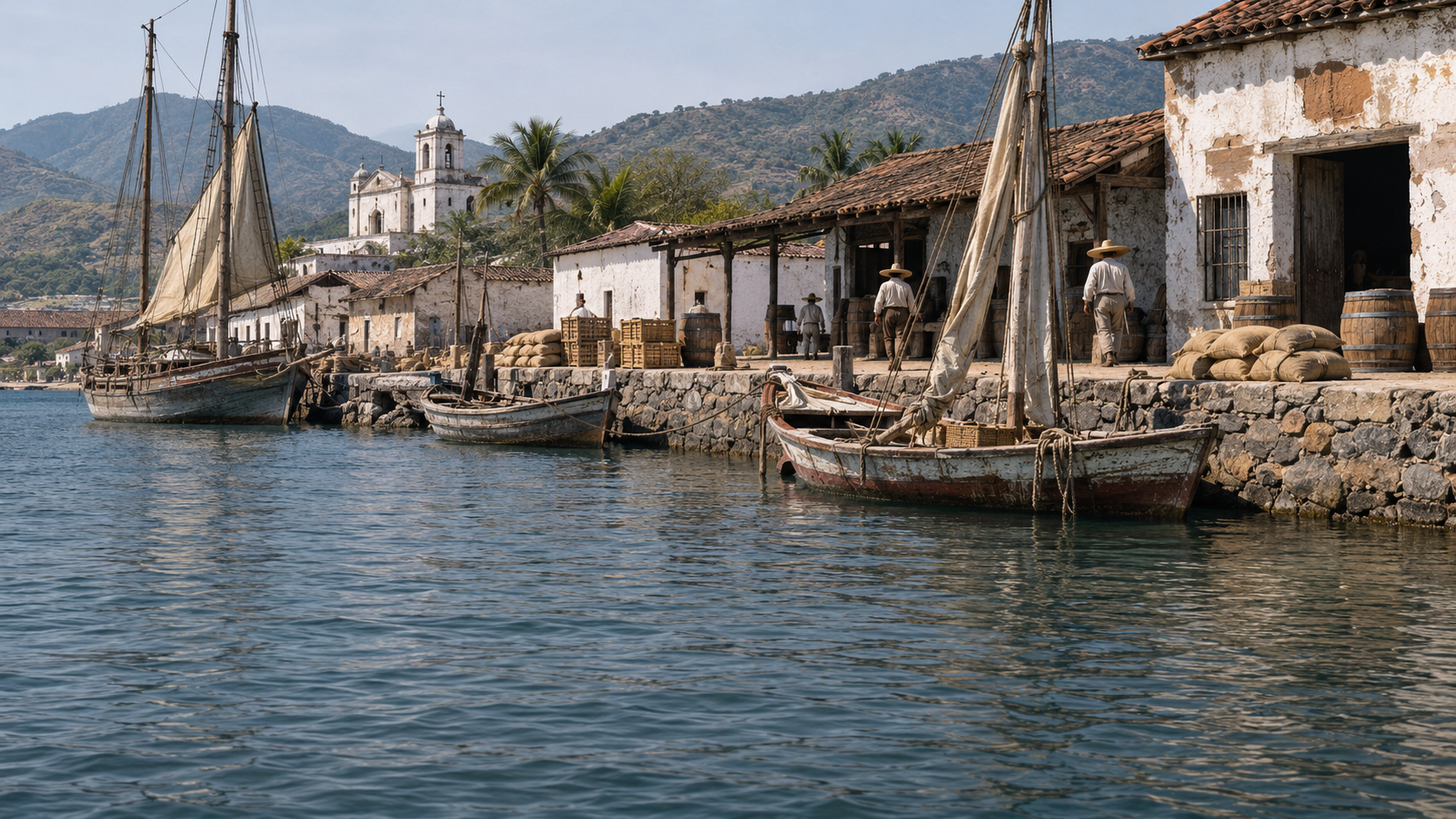
Scene 11
Departure and a sustainable enterprise were different outcomes
In 1897, an organised group associated with Enomoto’s plans travelled to Mexico. The Japanese embassy’s historical account commemorates that migration. The National Diet Library, meanwhile, explains that his scheme ran into financial difficulties. The accounts concern connected developments but do not support a simple equation between departure and complete success.
Creating a route overseas and maintaining the business at the destination were different achievements. A plan could enable people to leave while failing to provide enough capital for its intended enterprise. Exact numbers and arrival-day details are left open here because the institutional accounts do not align in every particular.
Nor did the difficulties of one enterprise end the later lives of everyone who travelled. Enomoto’s proposal, the business needing funds and the migrants’ individual experiences had related but distinct histories. Keeping those histories separate prevents both celebratory and dismissive shortcuts from replacing the evidence.
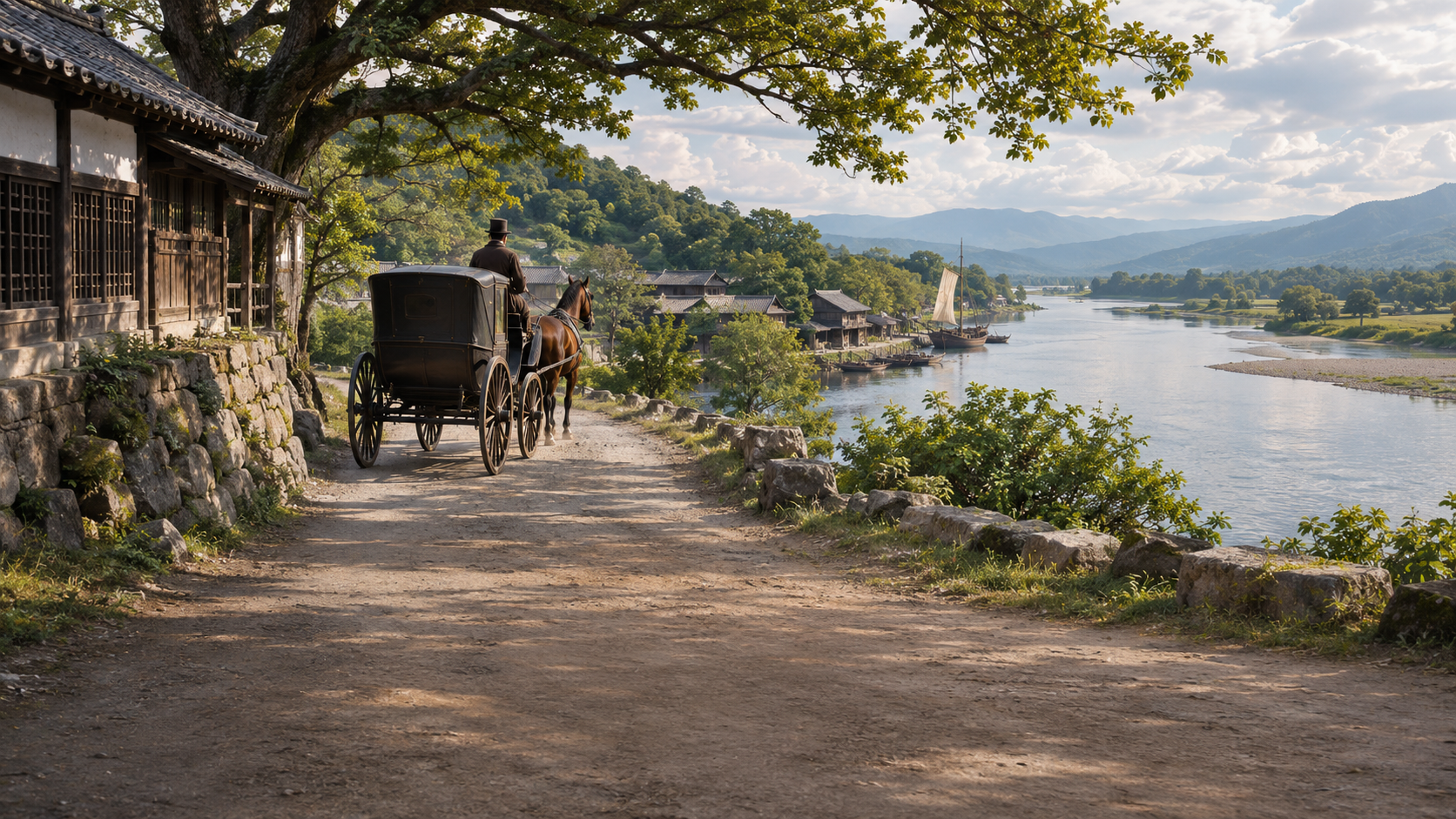
Scene 12
Read the later life through assigned work
After surrender at Hakodate, Enomoto entered the Kaitakushi, represented the government in Russia and signed the treaty within an official negotiating framework. He then recorded a Siberian journey, held ministerial offices and helped develop plans for overseas settlement. These were changes of role across several decades.
Knowledge acquired under the shogunate found later uses, but it operated through relationships, offices and instructions. Kuroda’s support and the government’s policy discussions belong within that account. So do the financial conditions that limited the migration scheme, rather than disappearing behind an impressive list of titles.
A former military leader’s later career need not be reduced to a story of solitary genius. Following responsibilities and documents gives a more precise explanation: knowledge could outlast a regime, while the institutions employing it and the practical demands of the work continued to change.
How to read this work
History, interpretation, and reconstruction
Enomoto’s changing career becomes clearer when his knowledge is placed alongside the people and offices that employed him, the instructions he carried and the conditions needed to sustain his projects.
This work is grounded in published sources and historical research. Interior thoughts, dialogue, and some visual details are cinematic reconstructions. Where historians disagree, the article presents the point as debated rather than settled fact.
Timeline
The story in time
People & terms
A guide for new readers
Glossary
- Kaitakushi 開拓使
- The Meiji government office responsible for Hokkaido development, where Enomoto served after release.
- Minister abroad 公使
- A diplomatic representative assigned to act for a government, within its instructions and policy.
- Government instructions 訓令
- The official directions that framed a representative’s negotiating assignment.
- Ratification 批准
- A formal confirmation of an agreement, distinguished here from its earlier signature.
- Colonization Association 殖民協会
- An organisation established in 1893 with Enomoto’s involvement; its name reflects the terminology of the period.
- Hakodate surrender 箱館での降伏
- The military turning point preceding Enomoto’s imprisonment and later Meiji government service.
Sources & method
How this article was built
This article follows a sequence of responsibilities rather than reconstructing private conversations or motives. Institutional biographies, archival exhibit explanations and library discussions support different parts of the account. Several references come from the same institution and are not presented as ten independent eyewitnesses.
The treaty’s geographical scope is the eighteen islands from Urup to Shumshu described by the cited Foreign Ministry exhibit. Signature, exchange of ratifications and public proclamation are kept separate. Diary excerpts provide a traveller’s observations, and photographic collection histories distinguish purchase, gift, exchange and authorship.
The migration section separates a proposal, an organised departure, the financing of an enterprise and migrants’ subsequent lives. Where the institutional accounts differ on incidental numbers or exact arrival dates, the narrative uses the shared year and event rather than adding false precision. No conclusion about every migrant’s later experience is drawn.
Sources
References and further reading
- Enomoto Takeaki: Portraits of Modern Japanese Historical Figures 国立国会図書館・近代日本人の肖像「榎本武揚」 Title translated editorially for reader convenience. National Diet Library 国立国会図書館 Institutional biography covering naval service, Kuroda’s support, diplomatic assignments and cabinet offices. A disputed study-abroad year is not adopted. Accessed 2026-11-06
- Collection guide: Enomoto Takeaki letters 北海道立文書館「榎本武揚書簡」 Title translated editorially for reader convenience. Hokkaido Archives 北海道立文書館 Establishes release and Kaitakushi employment in 1872. A collection description is not treated as a complete transcription of all letters. Accessed 2026-11-06
- Meiji-period exhibit: Ratification of the Sakhalin–Kuril exchange treaty 外務省外交史料館「明治期」樺太千島交換条約批准書 Title translated editorially for reader convenience. Diplomatic Archives, Ministry of Foreign Affairs of Japan 外務省外交史料館 Explains competing government policies, instructions, signature, ratification and the eighteen islands. Unrelated inconsistent date details are excluded. Accessed 2026-11-06
- Kuroda Kiyotaka and an inspection of the Kuril Islands 国立公文書館「明治宰相列伝」開拓長官黒田清隆千島州へ出張 Title translated editorially for reader convenience. National Archives of Japan 国立公文書館 Explains Enomoto’s appointment in 1874. Appointment is distinguished from departure; inconsistent inspection-year wording is not used. Accessed 2026-11-06
- Ratification of the Sakhalin–Kuril exchange treaty 国立公文書館「樺太・千島交換条約が批准される」 Title translated editorially for reader convenience. National Archives of Japan 国立公文書館 Introduces documents about the agreement and its proclamation. The original images have not all been independently transcribed for this article. Accessed 2026-11-06
- Enomoto Takeaki: The World of Diaries 国立国会図書館・日記の世界「榎本武揚」 Title translated editorially for reader convenience. National Diet Library 国立国会図書館 Overview and selected exhibits of the two-volume 1878 Siberian diary, rather than a complete reading of both original volumes. Accessed 2026-11-06
- Enomoto Takeaki’s collection of photographs in Siberia 国立国会図書館「榎本武揚のシベリアにおける写真収集」 Title translated editorially for reader convenience. National Diet Library 国立国会図書館 Explains the journey and photographic purchases, gifts and exchanges. Possession is distinguished from personal photography. Accessed 2026-11-06
- Encounter with Brazil 外務省外交史料館「伯剌西爾との出会い」 Title translated editorially for reader convenience. Diplomatic Archives, Ministry of Foreign Affairs of Japan 外務省外交史料館 Covers his appointment as foreign minister, migration work and the association founded in 1893. Accessed 2026-11-06
- Before migration to Brazil began, chapter 1, part 2 国立国会図書館「ブラジル移民の100年」第1章(2) Title translated editorially for reader convenience. National Diet Library 国立国会図書館 Explains settlement proposals and financial difficulties in the Mexico scheme. Inconsistent incidental year and headcount details are left open. Accessed 2026-11-06
- 125th anniversary of the Enomoto group’s migration to Mexico 在メキシコ日本国大使館「榎本殖民団メキシコ移住125周年」 Title translated editorially for reader convenience. Embassy of Japan in Mexico 在メキシコ日本国大使館 Institutional account of the organised migration in 1897. The year and occurrence are used without forcing differing headcounts or arrival dates into agreement. Accessed 2026-11-06
Continue reading
More stories from Shigeki
Shigeki English
Kobayakawa Hideaki after Sekigahara: Work beyond Okayama’s Keep
The outer moat offers a way into a short period of castle government.
- When Hideaki’s Okayama rule, 1600–1602; earlier construction in 1597 and later changes considered separately
- Where Okayama Castle, its outer enclosures and former western moat; Bizen and Mimasaka
Shigeki English
Passing Hakone Checkpoint: Identity, Direction and Travel Documents
A pass mattered, but the inspection depended on more than possessing paper.
- When Edo-period Hakone; establishment at the present location around 1619, regulations of 1711 and later reconstruction
- Where The Tokaido road between Lake Ashi and the surrounding mountains at Hakone