
SHIGEKI ENGLISH STORYEN
Japanese history in English
Beyond Sugihara’s Transit Visas: From Kaunas to Tsuruga and Onward
Follow the documents, transport and assistance that connected individual escape routes.
Trace the route from Kaunas through Siberia and Vladivostok to Tsuruga and onward destinations in 1940–1941. Read Sugihara Chiune’s transit visas alongside Jan Zwartendijk’s documents, diplomatic telegrams, visa lists and accounts of transport and assistance. Keep visitors, visas and people ultimately helped distinct.
At a glance
Before you enter the story
- When
- Appointment in Kaunas in 1939; visas and refugee journeys in 1940–1941
- Where
- Kaunas, the Soviet Union, Vladivostok, Tsuruga and onward destinations
- Key figures
- Sugihara Chiune, Jan Zwartendijk, Osako Tatsuo, Jewish refugees, Residents and transport workers in Tsuruga
- What was at stake
- What did a Japanese transit visa enable, and what obstacles remained between receiving it and reaching another country?
Why this story matters
The larger history behind the turning point
The decision to issue a document mattered enormously, but the journey also depended on people and procedures elsewhere. Following the route brings consular action into contact with departure permissions, railway journeys, shipping, local assistance and arrangements for the next country.
Numbers in historical records require a named object of counting. A report about visitors to a consulate, an aggregate of visas, a list of names and an estimate of people helped cannot be treated as interchangeable totals or combined to produce a new exact figure.
Historical context
What an international reader needs to know
Transit permission and a destination were different requirements
A Japanese transit visa concerned passage through Japan on the way elsewhere. It was not a promise of permanent residence or an instruction binding every other state along the journey. A route across several borders required several permissions to connect successfully.
The Foreign Ministry’s contemporary requirements included arrangements for admission to the destination country and sufficient funds for travel and a stay in Japan. Refugees could face difficulty meeting those requirements precisely because they had been displaced. This explains the procedural problem without assuming every applicant had an identical case.
Jan Zwartendijk’s documents concerning Dutch destinations formed another part of the story. The destination written on paper must be distinguished from the place a person eventually reached. Possessing a document associated with Curaçao does not demonstrate that every holder travelled there.
Persecution, occupation and individual experience
The account begins after the outbreak of the Second World War, when Jewish people escaping Nazi persecution and occupied Poland sought a route out through Lithuania. Soviet military occupation of Lithuania in June 1940 was another development. These events are connected in the refugees’ circumstances but should not be collapsed into one action by one state.
The sources include official explanations, museum accounts and selected documents. An administrative telegram reports what its sender described; an album preserves particular relationships; a later testimony introduces one person’s experience. None alone represents every refugee or every stage of the route.
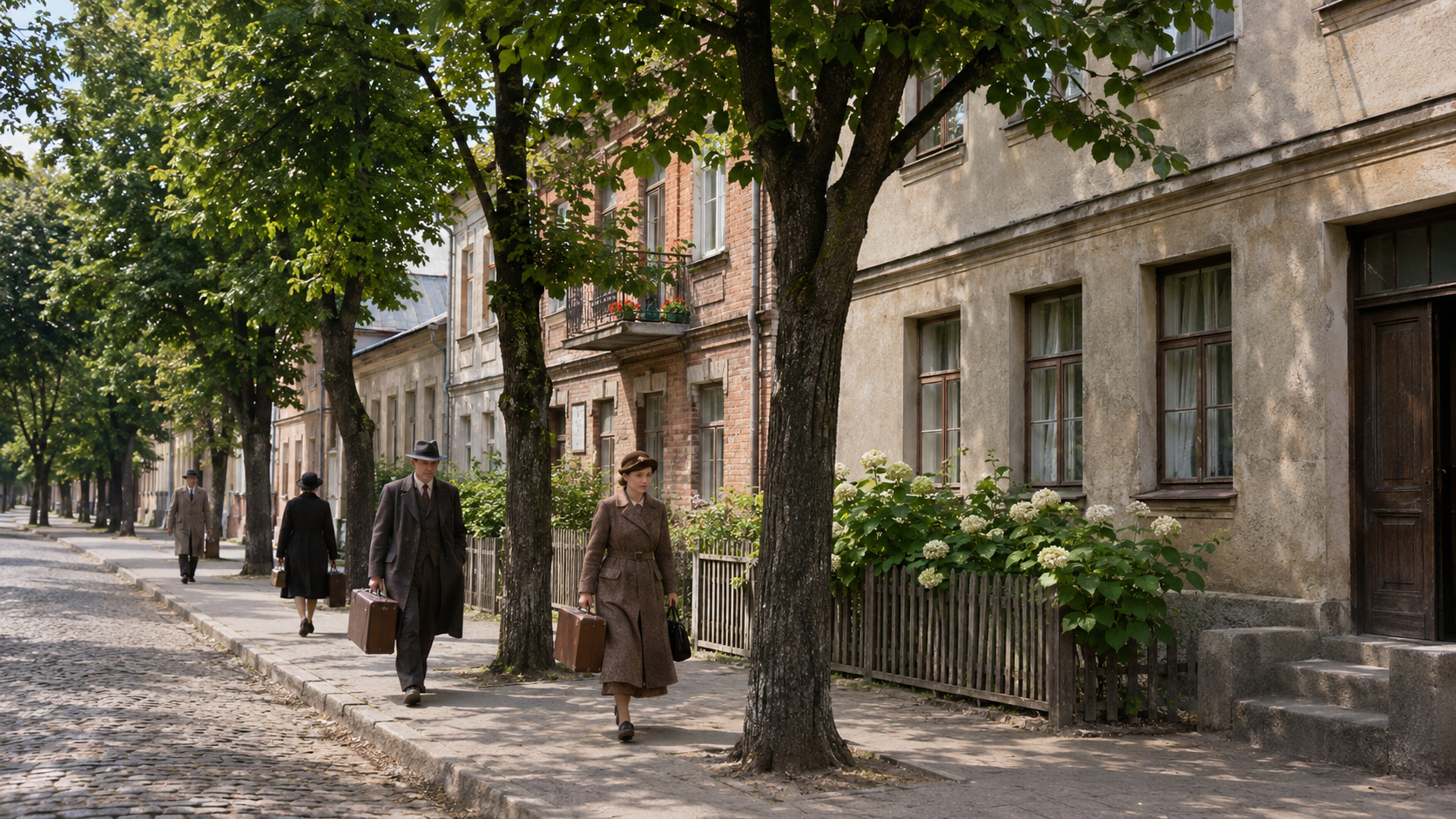
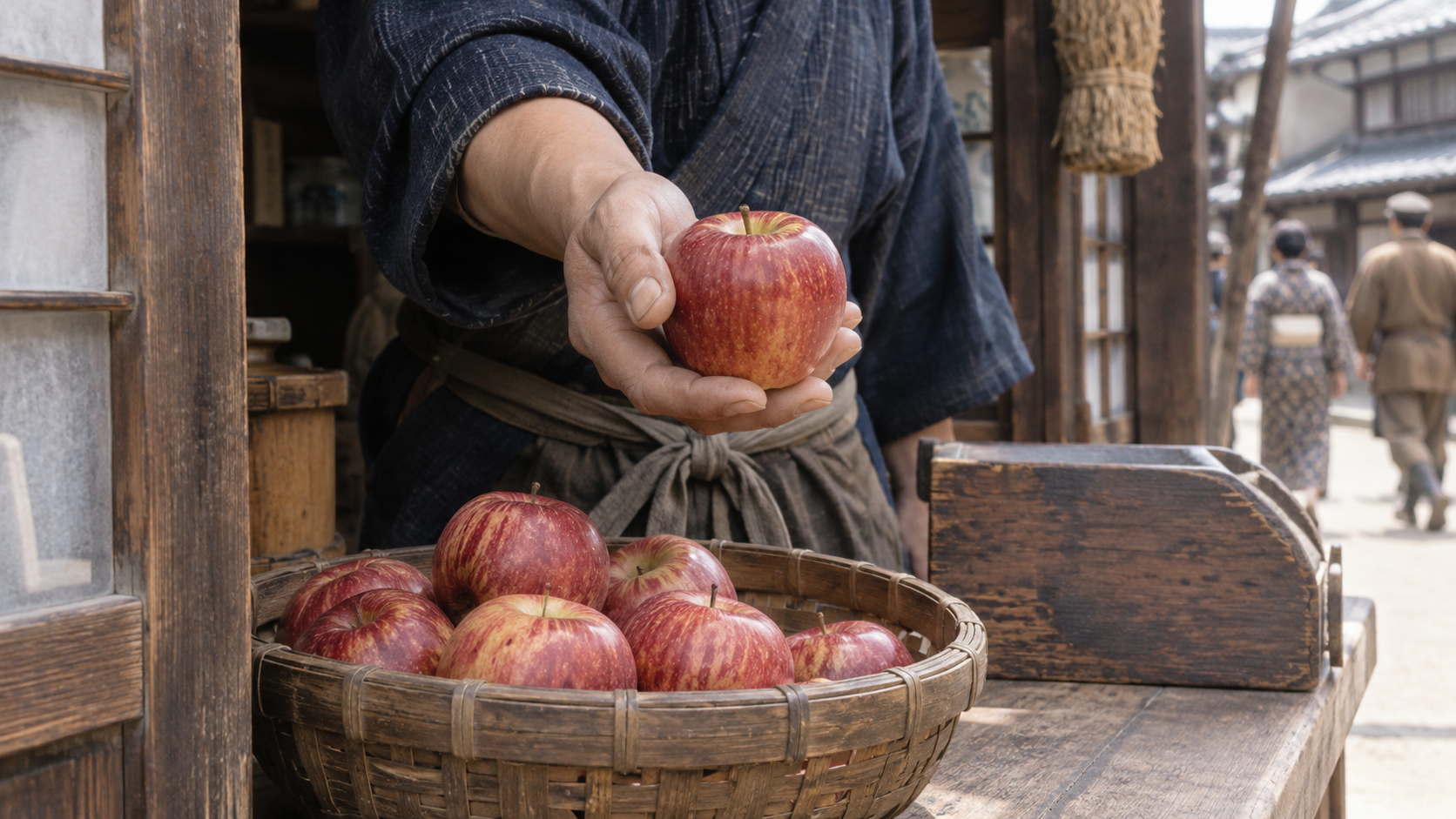
Anonymous generated illustrations accompany the text. They do not reproduce an actual passport or telegram and do not identify Sugihara, refugees, ship passengers or Tsuruga residents. The market scene is a general image, not a reconstruction of a documented encounter involving a particular seller or recipient.
Watch the film
See the story in motion
The film currently uses Japanese audio. This English article provides the context and source trail; it does not imply that an English subtitle track is available.
Scene 01
A visa did not end the journey
Where did people go after receiving Sugihara Chiune’s visas? One route led from Kaunas in Lithuania across the Soviet Union, over the Sea of Japan and into Tsuruga. Yet arrival in Japan was not necessarily the final destination. The document concerned transit to another country.
A visa issued at a consular desk could become one link in a much longer journey involving trains, ships and further immigration procedures. Treating the document as a guarantee of permanent refuge would conceal the uncertainties that remained after its holder left the consulate.
Following the route preserves the importance of Sugihara’s action while also revealing other people’s work. It brings the decision to issue visas together with the practical conditions that allowed some holders to move onward, without assuming that every person followed exactly the same path.
Scene 02
People seeking an exit through Kaunas
The setting was Europe after the beginning of the Second World War. Jewish people escaping Nazi persecution and occupied Poland sought ways to leave through Lithuania. Sugihara became acting consul at the Japanese consulate in Kaunas in 1939, before the most urgent period examined here.
In June 1940, Soviet forces occupied Lithuania. A place that had offered an avenue of escape was itself undergoing a political transformation. Refugees seeking documents therefore faced changing circumstances at the place where they had arrived, as well as the dangers from which they had fled.
Nazi persecution and Soviet occupation must be named separately. Distinguishing them gives a clearer chronology of the pressures surrounding the search for a route abroad. It also avoids using one general image of wartime danger to replace the particular institutions and decisions affecting movement.

Scene 03
What a transit visa permitted
A Japanese transit visa permitted passage through Japan toward a further destination. The Foreign Ministry’s instructions required that admission procedures for that destination be completed and that travellers possess funds for the journey and their stay in Japan. Those conditions framed the consular work.
For people who were fleeing, assembling the necessary documents and resources could itself be difficult. A country along the way could require evidence that another country would admit the traveller. The practical route therefore depended on connecting permissions, rather than simply choosing a line across a map.
The administrative record reproduced in the archival exhibition helps explain that procedural setting. It is not used here to publish individual financial details or to reconstruct every applicant’s circumstances. The point is the connection between transit permission and the onward journey it was supposed to support.
Scene 04
Another consul and another document
Kaunas also had a Dutch honorary consul, Jan Zwartendijk. The local Sugihara House museum describes his issuance of documents concerning Dutch destinations including Curaçao. In combination with Japanese transit visas, those documents helped create possibilities for escape across several jurisdictions.
This cooperation should not be confused with proof of an identical final destination for everyone concerned. The destination written in a document and the actual place reached are different historical facts. The former may help explain an application process without establishing the latter.
Looking beyond a single desk makes the route easier to understand. Different consular acts could connect, while permissions and transport still had to be secured elsewhere. Recognising those other contributions does not diminish Sugihara’s decision; it places that decision within the chain of arrangements that travellers needed.

Scene 05
The telegram of 28 July
A telegram sent from Kaunas to the foreign minister on 28 July 1940 reported that around one hundred Jewish people were coming to the consulate each day seeking Japanese transit visas. The digitised telegram displayed by the Japan Center for Asian Historical Records contains that passage.
The object being counted was visitors seeking visas. It was not the number of visas issued in one day. The distinction matters because a compelling description of demand can otherwise become an unsupported production rate, and then be multiplied into a misleading total.
The report conveys pressure on the consular office without requiring invented dialogue or a recreated conversation in the queue. Reading its stated purpose and wording gives a firmer basis for describing the situation than adding details that the document does not supply.
Scene 06
Visas for people who did not meet the requirements
The Foreign Ministry’s present explanation states, within what its retained documents establish, that Sugihara issued transit visas to people who did not meet the stipulated requirements. It recognises that conduct as a courageous humanitarian action. This is an institutional assessment tied to the available records.
The telegram explanations published by Yaotsu Town also preserve inquiries about passport validity and exceptions, together with replies from the ministry. The issuing office and headquarters remained in communication. The historical situation therefore involved continuing administrative questions rather than one unconstrained moment followed by no further contact.
Documents were nevertheless issued to support escape amid those restrictions. Preserving the ongoing correspondence makes the action more concrete: people needed permission, the office faced requirements and officials exchanged messages while decisions were being made. A dramatic invented conversation is unnecessary to establish that tension.

Scene 07
Count visas, names and estimates separately
On 5 February 1941, Sugihara reported from Prague that he had granted 2,132 transit visas to Lithuanians and former Polish nationals, estimating that about 1,500 were Jewish. Those figures are legible in the displayed telegram. The second figure is an estimated component of the first.
Yaotsu Town’s explanation of a visa register sent later that month describes 2,139 names. A reported aggregate and a subsequently transmitted list are different records. Their figures should be accompanied by those descriptions rather than presented as competing exact counts of lives saved.
No new rescue total is calculated by adding these numbers or subtracting one from another. Visa issuance, listed names, family arrangements and eventual survival would require different evidence. The comparison here establishes the limits of what these particular documents count, while retaining the figures actually recorded in them.
Scene 08
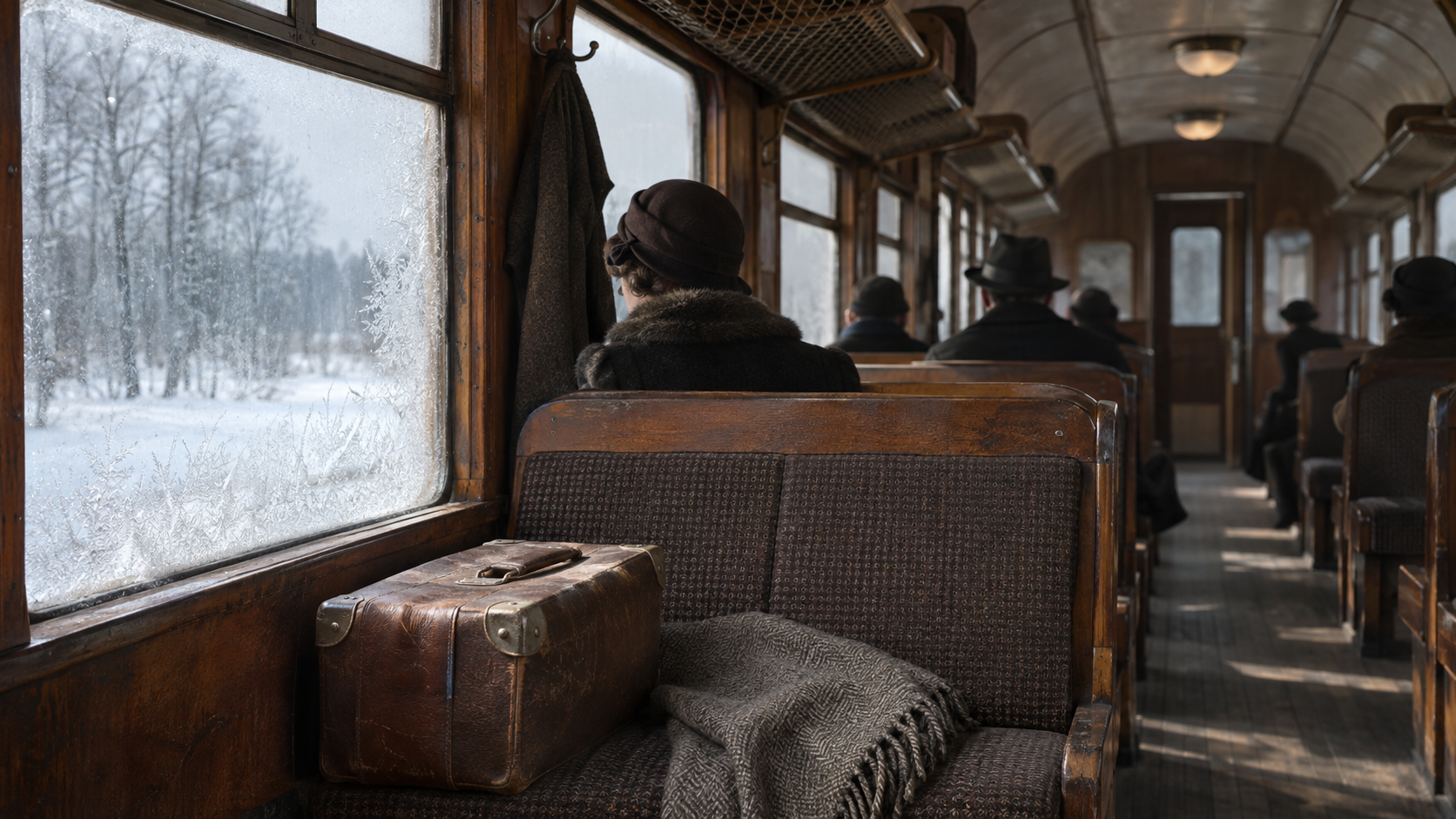
The railway route stretched east
The route introduced by Yaotsu Town crossed the continent on the Trans-Siberian Railway and continued from Vladivostok to Tsuruga. That geographical outline shows how a Japanese transit visa could fit into an eastward escape route. It does not mean the visa completed all the procedures for every country.
The United States Holocaust Memorial Museum explains that some people holding visas could not leave the Soviet Union in time. Receiving a document and successfully using it were therefore different outcomes. Permissions, timing and transport remained consequential after the consular stage.
A map can display the route as one continuous line, but travellers encountered it as successive stages. The railway connection mattered alongside departure permission and the onward sea crossing. Keeping those stages distinct prevents the neatness of a diagram from becoming an assumption about everyone’s actual experience.
Scene 09
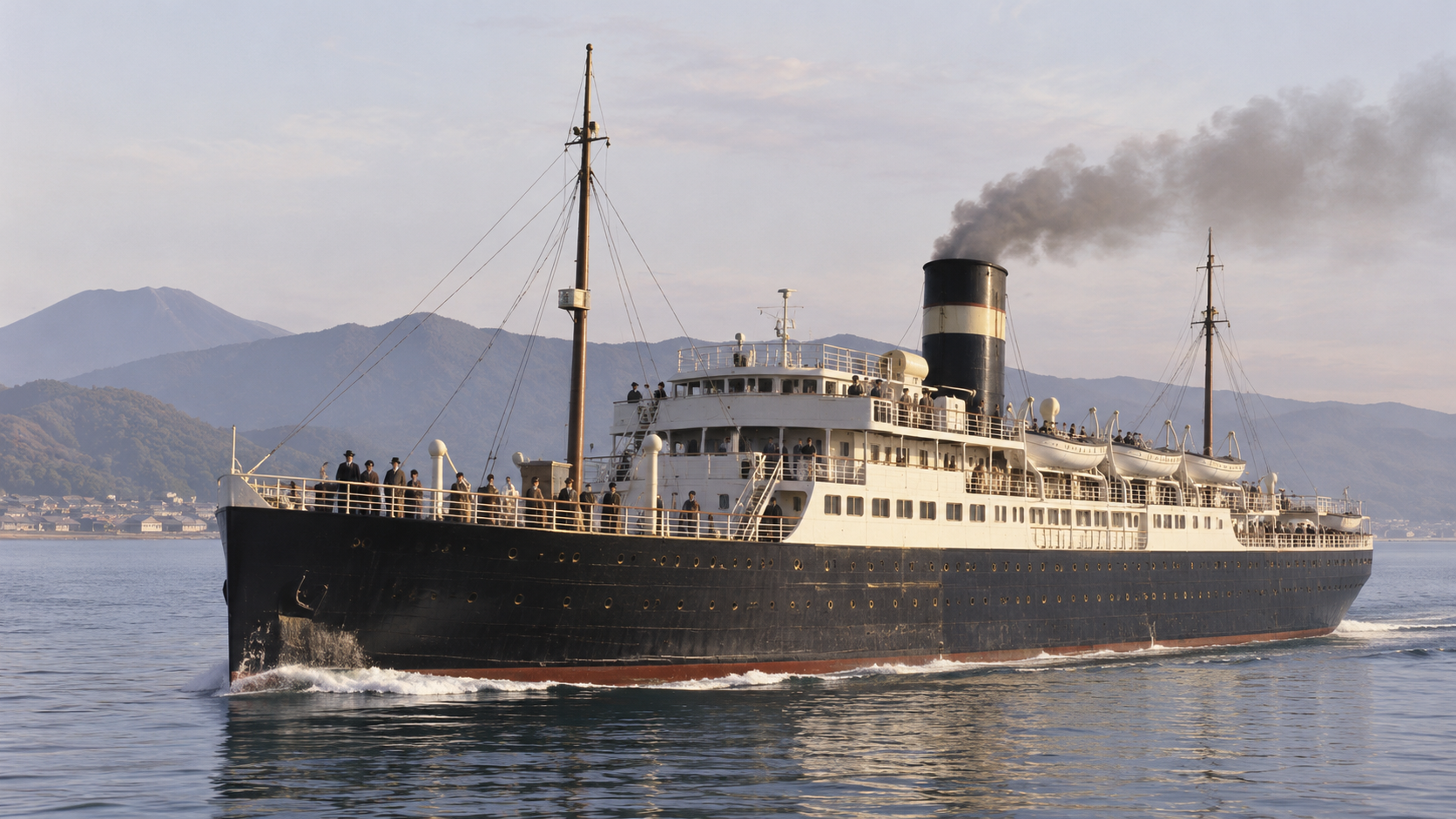
Across the sea to Tsuruga
During 1940 and 1941, Jewish refugees carrying visas issued by Sugihara reached Tsuruga through Vladivostok. After the long continental journey, there was still a sea passage. The port brought the consular and railway history into contact with local arrangements in Japan.
Tsuruga City’s account introduces assistance by residents, including the provision of fruit and the opening of public baths. These examples identify forms of help described in local records and testimony. They do not establish that every arriving person received the same assistance in precisely the same way.
Nor can one account supply the feelings of everyone involved. The port’s records show that the journey depended on human encounters as well as documents. The illustrations support that theme without claiming to reproduce a particular arrival, named vessel or historically documented exchange of goods.
Scene 10
An album from the transport side
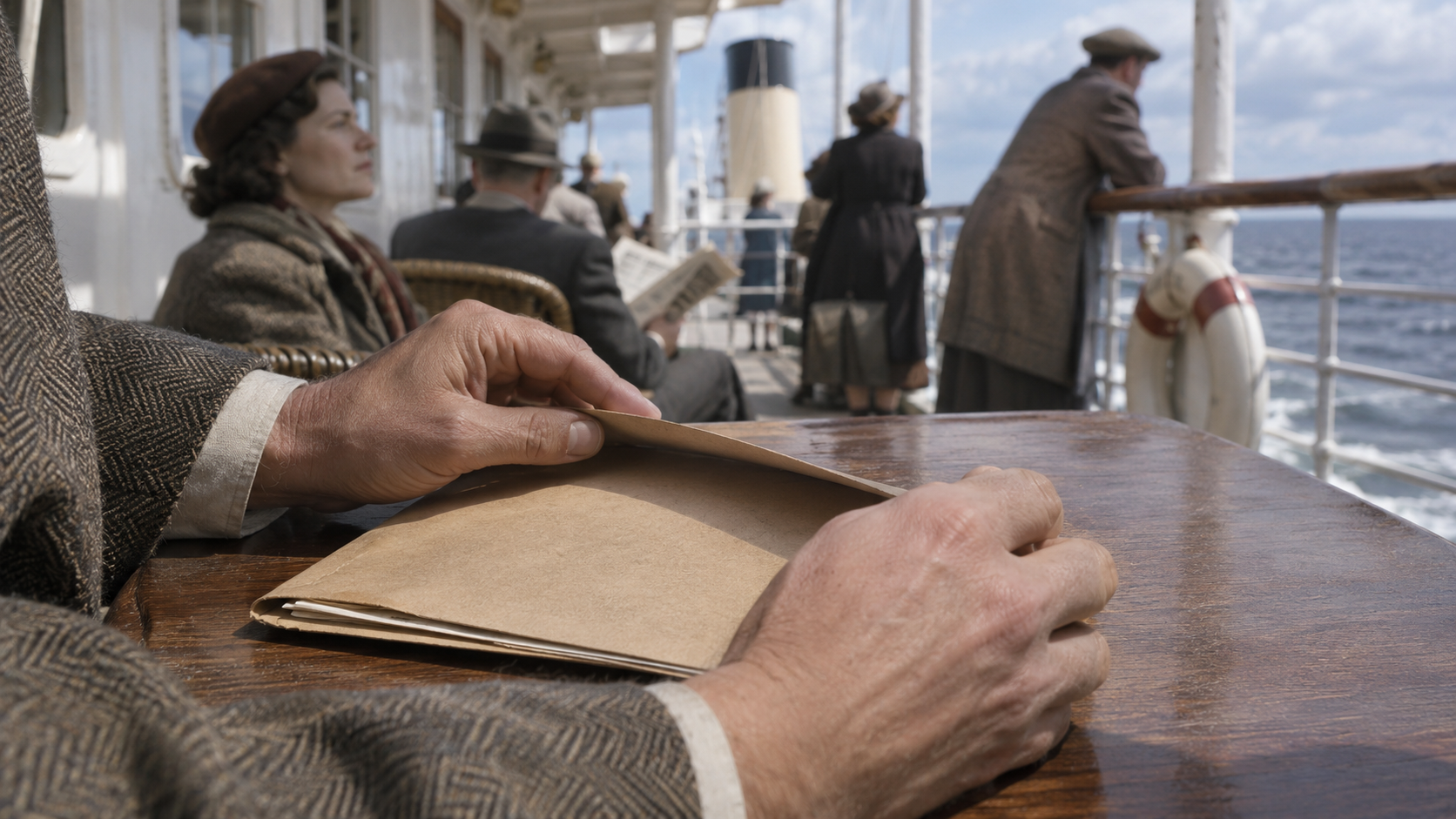
The Tsuruga museum also introduces the album of Osako Tatsuo, an employee of the Japan Tourist Bureau. Its explanation describes his involvement in transporting Jewish refugees between Vladivostok and Tsuruga. This evidence brings a transport worker’s responsibilities into the account of the sea crossing.
The album contains photographs received from passengers as expressions of thanks. Those images point to relationships between people who travelled and someone who helped organise their movement. They add another kind of evidence alongside consular correspondence and official aggregate figures.
The discussion relies on the museum’s account of the album, not a claim to have examined every original page. Its significance lies in the people and exchanges it introduces. The route becomes more than an arrow between two ports, while the scope of the actual source consultation remains explicit.
Scene 11
There were further borders after Japan
People’s destinations after Japan varied. The Foreign Ministry’s explanation names onward movement to Shanghai, the United States and Canada, among other places. Arrival at Tsuruga should not therefore be rewritten as a common ending in one country or a shared permanent settlement.
The United States Holocaust Memorial Museum’s introduction to Susan Bluman’s testimony describes her and her husband departing Japan for Vancouver in June 1941. This is a particular example of onward travel, rather than evidence that every visa holder had the same destination or departure schedule.
The article uses the published testimony description without quoting audio that has not been reviewed in full. Individual permissions and timing differed. Even after receiving transit documents and reaching Japan, travellers still faced the task of finding and arranging a place where they could continue their lives.

Scene 12
What one document connected
A transit visa did not guarantee an entire escape journey. It could nevertheless provide vital support by opening a possibility of movement at a time when routes were closing. That role remains significant without converting a conditional permission into a promise of permanent refuge.
Following the route from Kaunas brings other consuls, transport workers, residents and travellers into view. Their actions connected with Sugihara’s decision across the railway, the sea crossing, the port and the procedures for a further country. No single scene contains the whole process.
Separating visas from people ultimately helped, and documentary destinations from actual arrivals, makes the account more precise. It allows the records to introduce different escape routes and different experiences, instead of making every person disappear into one total or one predetermined conclusion.
How to read this work
History, interpretation, and reconstruction
A transit visa did not guarantee every border crossing or a permanent home, but it could connect with other documents, permissions, transport and assistance to make escape possible.
This work is grounded in published sources and historical research. Interior thoughts, dialogue, and some visual details are cinematic reconstructions. Where historians disagree, the article presents the point as debated rather than settled fact.
Timeline
The story in time
People & terms
A guide for new readers
Glossary
- Transit visa 通過査証
- Permission to pass through a country toward another destination, distinct from permanent residence or a guarantee of the full journey.
- Acting consul 領事代理
- The consular capacity in which Sugihara served in Kaunas in the period discussed.
- Diplomatic telegram 公電
- An official message whose sender, date and reported subject must be identified before its figures are interpreted.
- Visa register 査証調書
- A list transmitted after the issuing period, distinguished here from a separately reported aggregate.
- Tsuruga 敦賀
- The Japanese port reached from Vladivostok on the route examined, which was not necessarily the travellers’ final destination.
- Trans-Siberian Railway シベリア鉄道
- The continental railway route connecting the European starting region with the onward sea crossing described in the institutional accounts.
Sources & method
How this article was built
The account uses official and museum explanations alongside three specified archival images. The exhibition narrative and its document images belong to the same archival presentation, while the city and museum pages also overlap institutionally. These references are not twelve independent eyewitness accounts.
The two telegrams support specific statements about a visitor report and a later visa aggregate. The register’s count of names is described through the institutional explanation. No arithmetic is used to manufacture a rescue total from different kinds of record.
Individual testimony descriptions and the museum’s album explanation introduce particular experiences without substituting for everyone’s journey. The narrative separates Nazi persecution from Soviet occupation, consular permission from successful departure, and arrival in Japan from onward admission elsewhere. Generated images remain explanatory material rather than historical documentation.
Sources
References and further reading
- Frequently asked questions: Europe 外務省: よくある質問集 欧州 Title translated editorially for reader convenience. Ministry of Foreign Affairs of Japan 外務省 Explains the conditions and the ministry’s present assessment within the retained administrative record. Unrelated claims about later resignation are not inferred. Accessed 2026-11-06
- Sugihara Chiune and the visas for life 知っていましたか? 近代日本のこんな歴史 | 杉原千畝と「命のビザ」 ~東洋のシンドラーと呼ばれた外交官~ Title translated editorially for reader convenience. Japan Center for Asian Historical Records アジア歴史資料センター Exhibition narrative and selected displayed documents. References to a wider archival collection do not imply that every file in it was read. Accessed 2026-11-06
- Foreign Ministry telegrams 外務省公電/八百津町 Title translated editorially for reader convenience. Yaotsu Town 八百津町 Explanations of correspondence concerning visitors, requirements and exceptions, the February aggregate and the later register. Not every original image is claimed as independently read. Accessed 2026-11-06
- Port of Humanity Tsuruga Museum 人道の港 敦賀ムゼウム - 敦賀市ホームページ(人道の港発信室) Title translated editorially for reader convenience. Tsuruga City 敦賀市 Official account of Jewish refugees and local assistance; current visitor information is outside this historical narrative. Accessed 2026-11-06
- Chiune (Sempo) Sugihara Chiune (Sempo) Sugihara | Holocaust Encyclopedia Title translated editorially for reader convenience. United States Holocaust Memorial Museum 米国ホロコースト記念博物館 Encyclopedia article and published testimony descriptions. The embedded testimony audio is not quoted or represented as reviewed in full. Accessed 2026-11-06
- Who works at the Foreign Ministry? (キッズ外務省)外務省で働く人はどんな人? | 外務省 Title translated editorially for reader convenience. Ministry of Foreign Affairs of Japan 外務省 The section on Sugihara supplies examples of onward destinations. It does not establish a common route for everyone. Accessed 2026-11-06
- Jan Zwartendijk Jan Zwartendijk | Sugihara namai Title translated editorially for reader convenience. Sugihara House Museum, Kaunas 杉原記念館(カウナス) Institutional account of the honorary consul and the relationship between Dutch destination documents and Japanese transit visas. A written destination is distinguished from actual arrival. Accessed 2026-11-06
- Jewish refugees: Permanent exhibition ユダヤ難民 | 敦賀ムゼウム Title translated editorially for reader convenience. Port of Humanity Tsuruga Museum 人道の港 敦賀ムゼウム Museum explanation of local assistance and Osako Tatsuo’s album. Neither all original album pages nor permission to reproduce its photographs is assumed. Accessed 2026-11-06
- About Sugihara Chiune 杉原千畝について/八百津町 Title translated editorially for reader convenience. Yaotsu Town 八百津町 Used for the described escape route. Other biographical assertions, quoted dialogue and incidental inconsistent details are not adopted. Accessed 2026-11-06
- Displayed administrative record, image p05L アジア歴史資料センター 展示史料 P01 Title translated editorially for reader convenience. Japan Center for Asian Historical Records アジア歴史資料センター The relevant consular and visa fields were inspected. Individual financial details are not adopted, and the original image is not reproduced in the article. Accessed 2026-11-06
- Telegram from Kaunas, 28 July 1940, image p06L アジア歴史資料センター 展示史料 P02 Title translated editorially for reader convenience. Japan Center for Asian Historical Records アジア歴史資料センター The passage reporting around one hundred daily visitors was inspected. It is not a daily visa count. Original image used for research only. Accessed 2026-11-06
- Telegram from Prague, 5 February 1941, number 12, image p09L アジア歴史資料センター 展示史料 P03 Title translated editorially for reader convenience. Japan Center for Asian Historical Records アジア歴史資料センター The figures 2,132 and an estimated Jewish component of about 1,500 were inspected. They are not converted into an exact number of people saved. Accessed 2026-11-06
Continue reading
More stories from Shigeki
Shigeki English
The Second Choshu Expedition: Four Fronts and a Negotiated Withdrawal
Read weapons together with terrain, training, command and support.
- When 1866, distinct from the first expedition in 1864; the process of ending extended into January 1867
- Where Oshima, the Aki border, Iwami and the Kanmon Strait facing Kokura
Shigeki English
Hasedo: Why Fighting Continued after Sekigahara
Separate the siege, the arrival of news, and withdrawal under pursuit.
- When 1600; month and day references use the calendar of the time
- Where Hasedo and Yamagata in Dewa, connected with Aizu and distant Sekigahara