
SHIGEKI ENGLISH STORYEN
Japanese history in English
Women of Aizu: Yae and Takeko, Inside and Outside the Castle
Yae took up a firearm; Takeko headed toward the castle. Follow their different paths from Aizu in 1868 toward Kyoto classrooms and the learning of nursing.
Yamamoto Yae was inside the besieged castle; Nakano Takeko fought while heading toward it. Their different records reveal work sustaining the siege, Yae’s later move to Kyoto, women’s education and Red Cross relief across a life continuing after war.
At a glance
Before you enter the story
- When
- Aizu in 1868; Yae’s move in 1871 and later Kyoto activities; Red Cross membership from 1890 and subsequent relief; institutional training milestones in 1890 and 1896.
- Where
- Inside Tsuruga Castle and the roads toward it; Hokaiji Temple in Aizubange; Kyoto’s places of education; the later settings of Red Cross study and relief.
- Key figures
- Niijima Yae (Yamamoto Yae), Nakano Takeko, Yamamoto Kakuma, Niijima Jō
- What was at stake
- How individual locations, skills and outcomes differed, and why daily support, education and later learning belong alongside the famous images of women fighting.
Why this story matters
The larger history behind the turning point
A life can extend far beyond its best-known scene, while another life in the same conflict can be cut short. Reading Yae and Takeko separately preserves that difference. It also brings food preparation, care, teaching and learning into view as work undertaken by particular people, rather than treating all women as one heroic group.
Historical context
What an international reader needs to know
Two people and the geography of a siege
Tsuruga Castle, Aizu Castle and the castle in Aizuwakamatsu refer to the same siege setting in this account. Yae was inside; Takeko’s group was heading toward it when fighting occurred. Aizubange’s memorial account concerns another place in Aizu. The distinction prevents a reader unfamiliar with the region from combining every scene into one castle interior.
The Boshin War provides the conflict’s setting. Here the Aizu domain held the castle against the new government’s forces. The women’s later histories differed: Takeko died, while Yae moved to Kyoto in 1871. These are specific experiences within the conflict, not a complete account of every woman or every military operation in Aizu.
Names, schools and nursing records
Yamamoto Yae and Niijima Yae are names from the same person’s life. Yamamoto Kakuma was her elder brother; Niijima Jō was her later husband. The article follows the selected stages in the fixed Japanese account without presenting them as a complete record of every family relationship or event.
The 1872 opening of a women’s school, Yae’s own work in education and the Red Cross’s institutional training history answer different questions. Likewise, membership, a certificate of nursing study and service as an assistant instructor are distinct descriptions. None automatically establishes a modern license, a three-year personal course or use of a particular textbook.
Watch the film
See the story in motion
The film currently uses Japanese audio. This English article provides the context and source trail; it does not imply that an English subtitle track is available.
Chapter 01
The time beyond the castle’s surrender
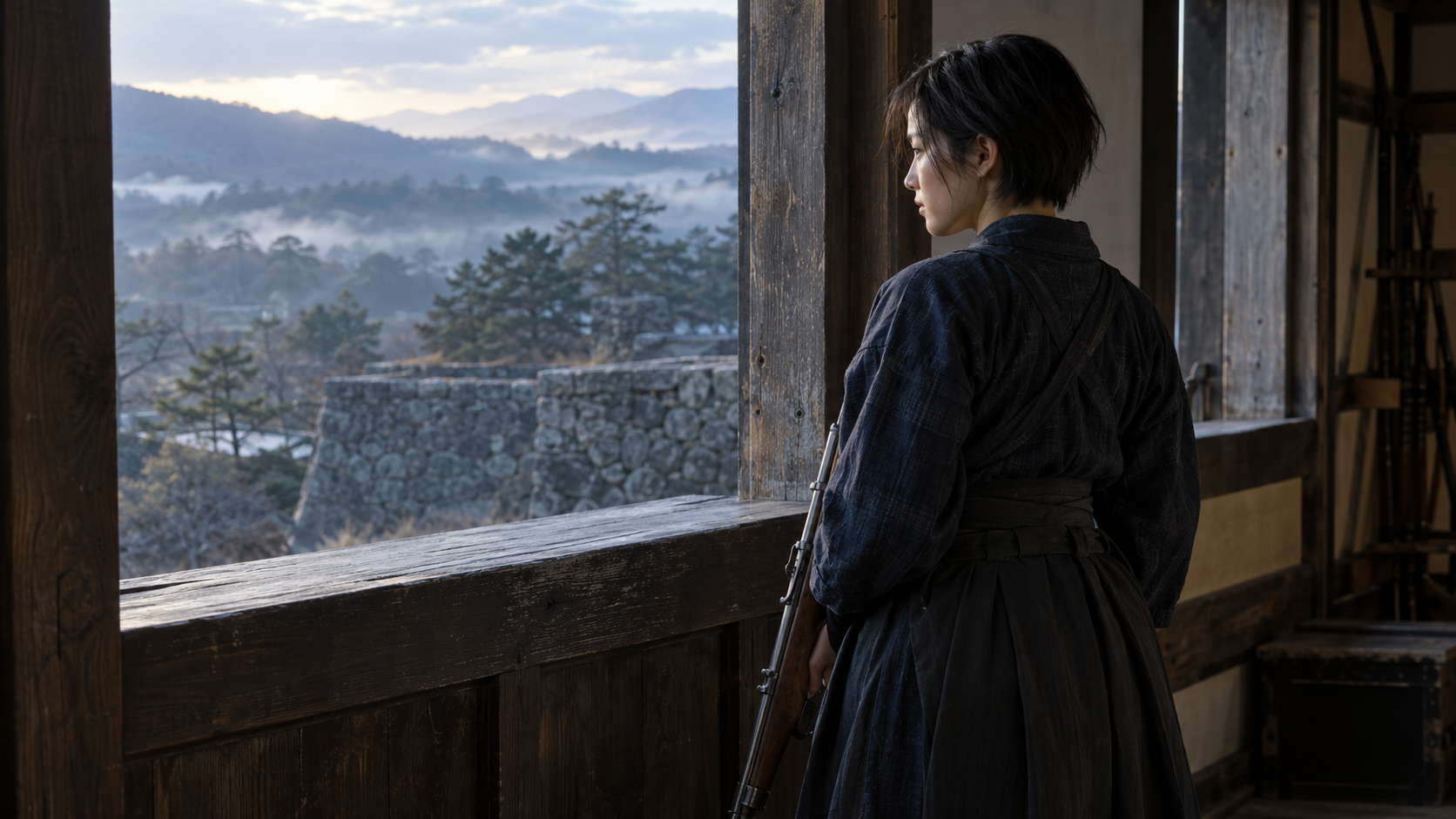
Aizu, 1868. Yamamoto Yae joined those holding Tsuruga Castle and fought the government’s forces. Her image with a firearm became a defining scene through which her name was remembered. Yet her life continued for many years after the fighting at the castle had ended. That later time also belongs to her history.
Three years later she moved to Kyoto and became involved in women’s education. Later still she joined the Japanese Red Cross Society and helped care for soldiers wounded or made ill in war. From Aizu to Kyoto, her work moved from handling a firearm toward classrooms and the learning and practice of nursing.
Nakano Takeko, also remembered for the fighting in Aizu, followed a different path. She fought while heading toward the castle and received a fatal wound. Combining the two women into one heroic image makes it harder to see the different places they occupied and the different time available to them afterward.
This article follows events inside and outside the castle, the work of sustaining daily life, and learning after the war. In that sequence, it seeks to return the history of Aizu’s women to individual lives. Their actions shared a setting, but their experiences and outcomes should not become interchangeable.
Chapter 02
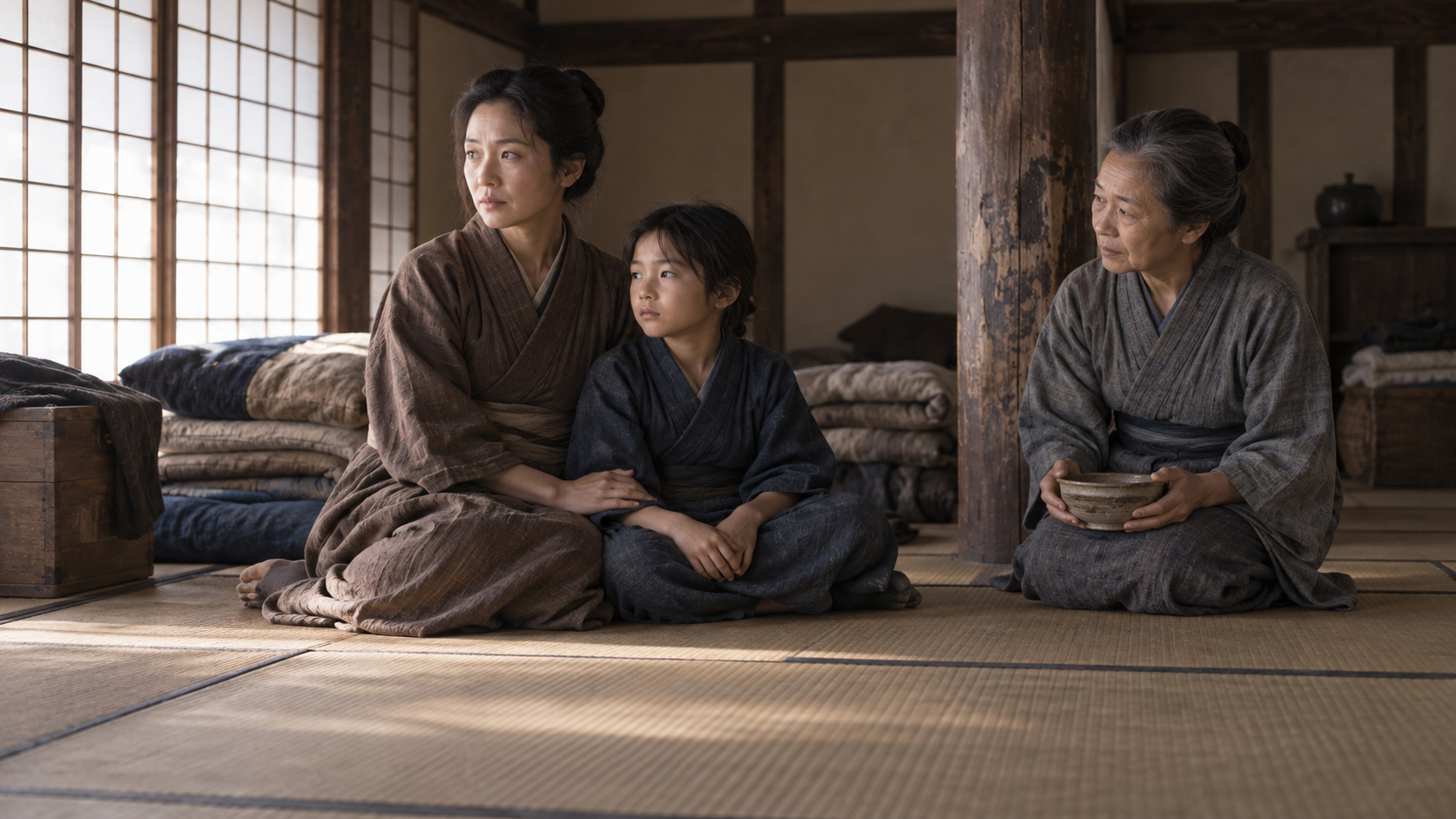
People were living in the besieged castle
During the Boshin War in Aizu, Tsuruga Castle was surrounded by the new government’s forces. Those inside were not only the lord and his warrior retainers. Aizuwakamatsu City’s educational material also describes women and children in the castle. The siege contained a population whose needs extended beyond fighting.
While fighting continued outward, people inside ate, rested and lived with injuries. A siege was time spent defending a position, but also time during which the lives of the people gathered there continued. Considering those ordinary needs broadens the view beyond the castle’s defenses and the fire directed at them.
Women’s work also differed. Yae’s record includes using a firearm; other work included preparing food and caring for the wounded. The same training and role cannot be assigned to every woman in the castle. Shared presence within the defenses did not mean identical skills or responsibilities.
Who undertook what, and where? Keeping those differences in view reveals a siege extending beyond its keep and gunfire. Yae’s firearm was also inside this inhabited castle. The people around it and the work sustaining them form part of the setting in which her actions took place.
Chapter 03
Growing up in a family of gunnery instruction
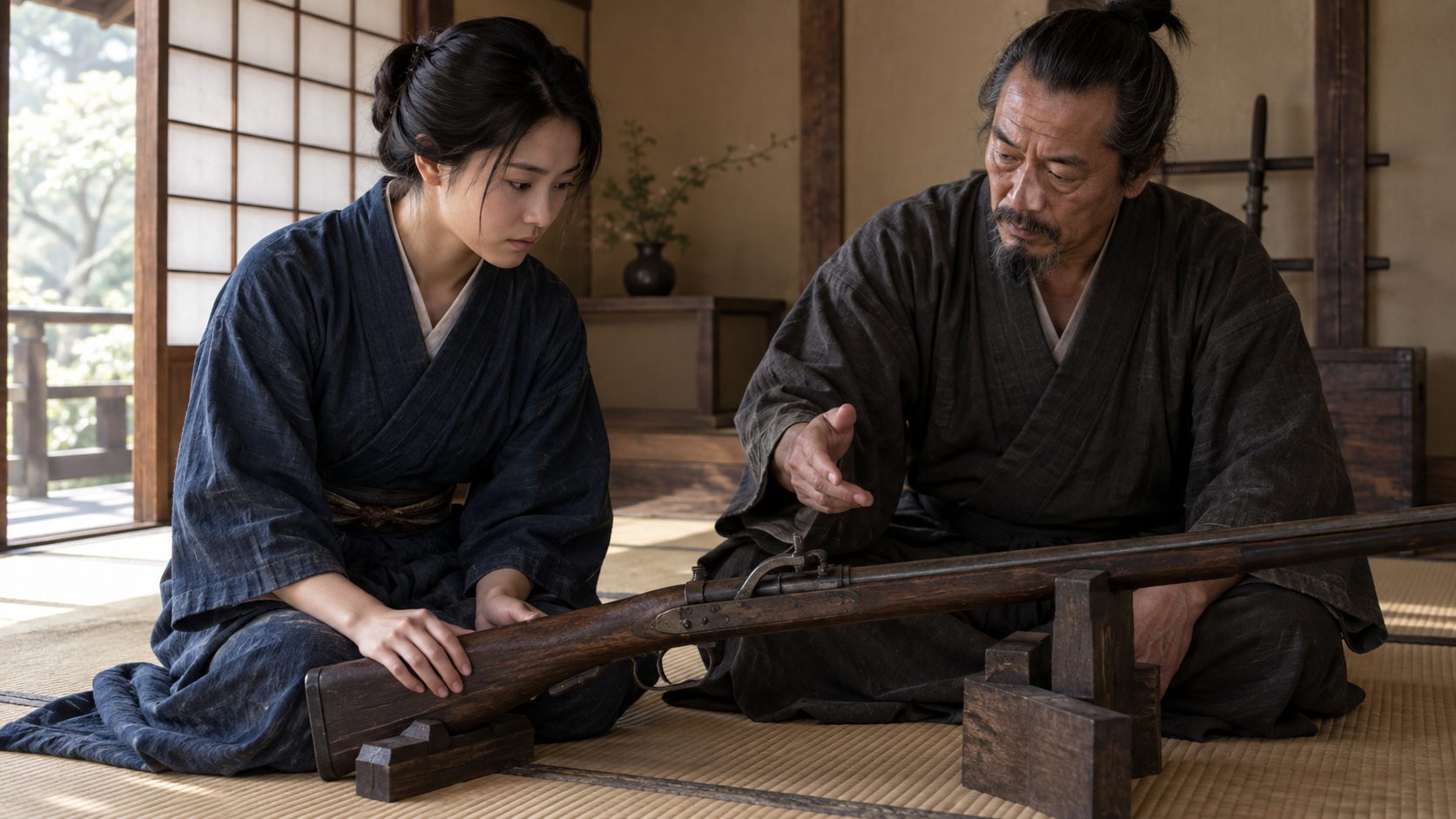
Yae was born into the household of Yamamoto Gonpachi, a gunnery instructor serving the Aizu domain. Kakuma was her elder brother. The family names introduced in Doshisha University’s account recur when following her life from Aizu toward Kyoto. Family provided connections across otherwise very different stages of her life.
Access to an environment in which gunnery was learned offers an entry into considering her work during the siege. Handling a firearm amid conflict is preceded by time spent learning and acquiring skills. Yae’s actions had a background of knowledge connected with her household, rather than beginning only at the castle.
That experience cannot be extended to the women of Aizu as a whole. Even among people inside the same castle, the families in which they grew up and the skills they had acquired differed. Yae used a firearm as one person with that particular background. She does not establish a uniform pattern for everyone around her.
Later accounts also show her involved in education and learning nursing. When looking across the ways knowledge became work during her life, growing up in a gunnery instructor’s household belongs among its early stages. The later work should be followed in sequence rather than read back into childhood as a predetermined outcome.
Chapter 04
Where Yae took up a firearm
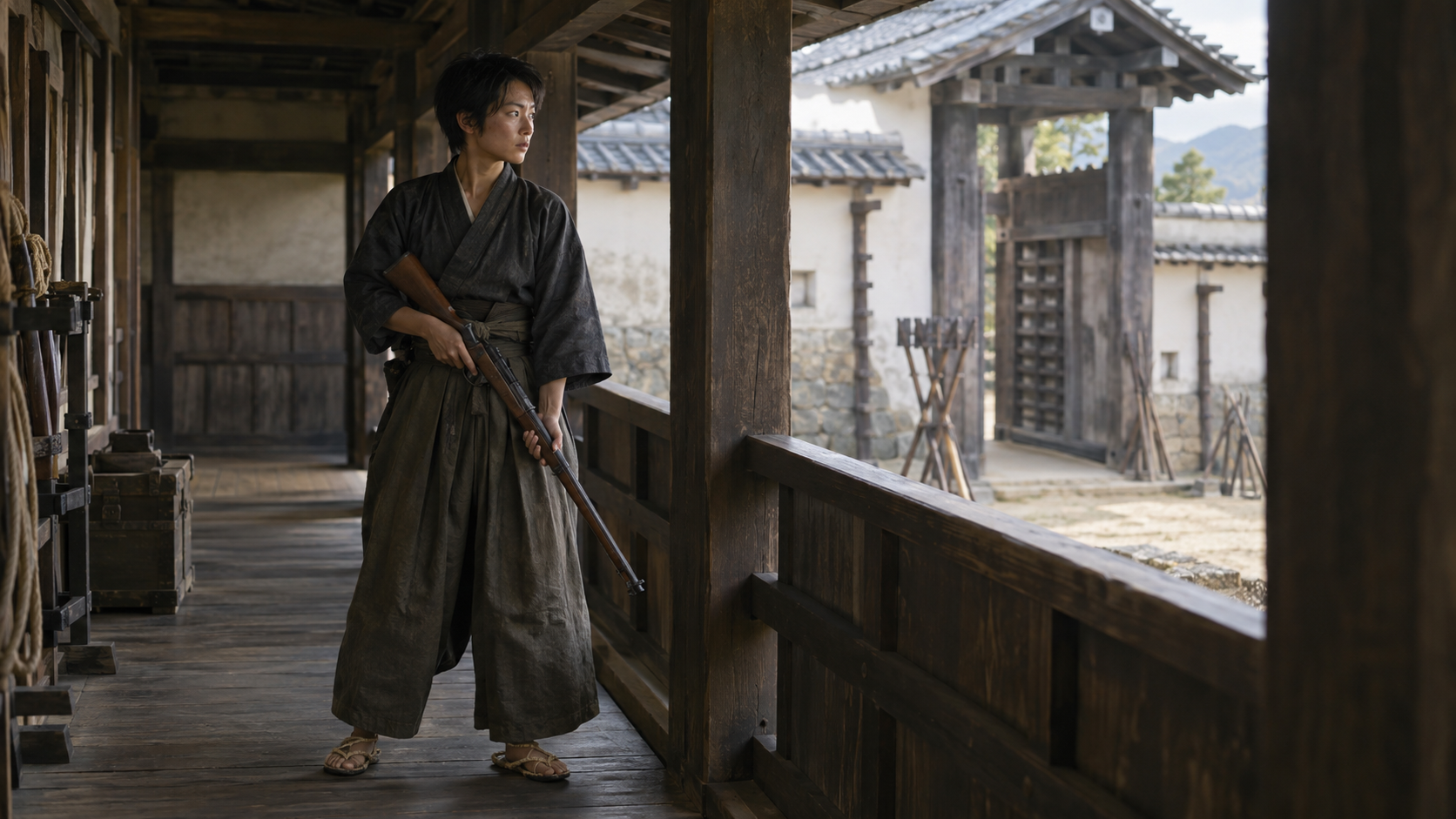
During the siege in 1868, Yae cut her hair and entered the castle wearing men’s clothing. Doshisha University describes her fighting with a Spencer firearm. The National Diet Library likewise records her participation in the siege of Aizu Castle and fighting against the government’s forces. These accounts locate her within the besieged position.
The defenders belonged to the Aizu side; the attackers were the new government’s forces. Yae was inside the castle under that encirclement. Her location was therefore different from Takeko’s, who fought while on her way toward it. Establishing where each woman was comes before comparing their actions.
Looking at Yae through the tool she used connects knowledge acquired earlier with work during the siege. Beyond a famous individual’s exploits was a person who possessed skills and handled a weapon. Her background and action can be considered together without supplying a precise firing position or an undocumented shot.
The time experienced by the people gathered in the castle did not end with a shooting scene. Yae herself is also described as helping sustain life inside. Her record brings the use of a firearm together with other responsibilities in the same occupied and besieged place.
Chapter 05
Food and care also sustained the siege
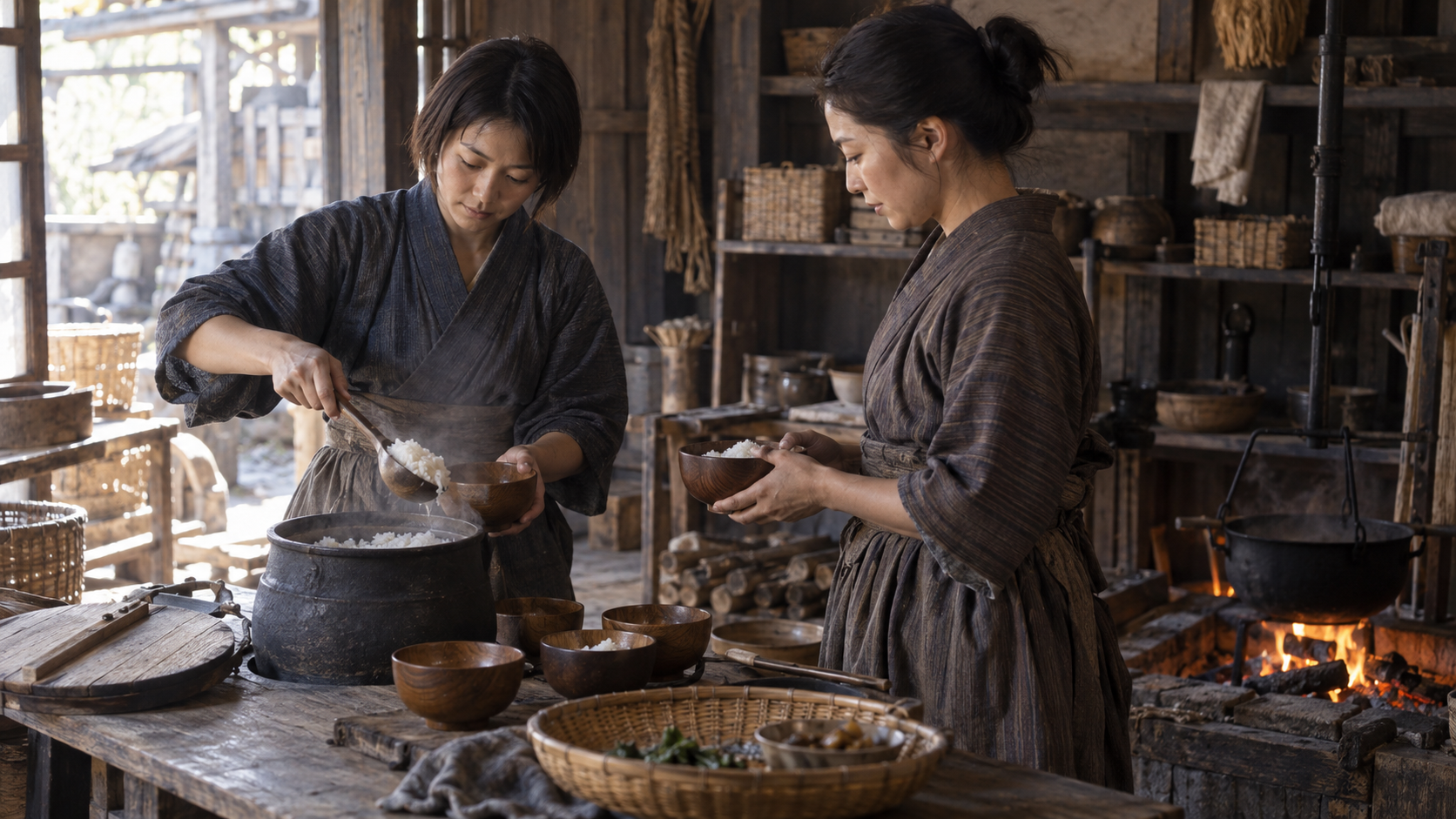
Aizuwakamatsu City’s Boshin 150th-anniversary publication introduces Yae’s involvement in cooking and caring for injured people during the siege. Work attending to daily needs thus overlaps with the record of a person who used a weapon. The same biography contains several kinds of contribution.
Preparing food in an encircled castle and supporting those who were hurt enabled people to face another day. The expression defending a castle can include work maintaining the lives of its occupants. Its meaning is broader when the people eating, resting and receiving care remain in the account.
Those using weapons and those sustaining daily life cannot always be divided into separate groups. The cooking and care associated with Yae prompt us to consider several roles undertaken by one person. A division useful for describing tasks should not automatically become a division between different sets of people.
Knowing of her later relief work draws attention to this care during the siege. Yet migration, educational work and many years lay between the two periods. Those intervening stages matter. The path from one setting to the other needs to be followed in order rather than compressed into one immediate change of purpose.
Chapter 06
Takeko was heading toward the castle
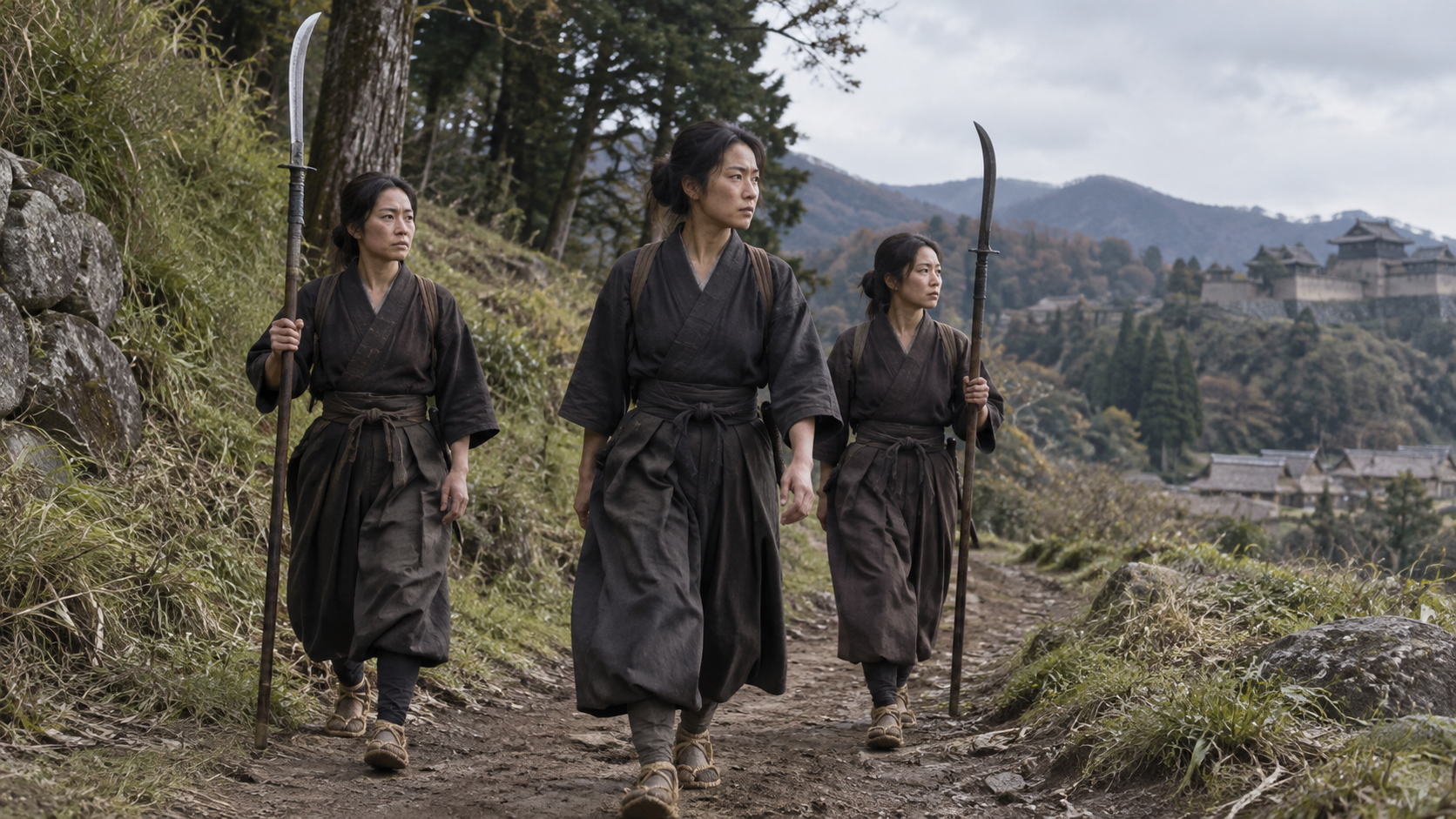
Nakano Takeko, described by Aizubange Town, also fought on the Aizu domain’s side in 1868. The women’s unit associated with her was later called the Joshitai. The familiar name therefore includes a history of naming after the fighting. It should not be presented without that temporal distinction.
According to the town’s explanation, Takeko’s group encountered fighting on the way to Tsuruga Castle. She was struck by gunfire and fatally wounded. The road toward the castle did not simply continue into its interior. Her movement and its outcome need to remain distinct from Yae’s experience inside.
Yae held out within the castle; Takeko fought while heading toward it. They were on the Aizu side in the same year, but their routes and outcomes differed. Placing them in the same conflict does not mean placing them at the same position or giving them the same later history.
Takeko’s name has been passed down as that of a woman who fought. Following her record leads from the scenes of fighting toward a grave in Aizu and a place preserving her memory. That later commemoration belongs to a different part of the story from the events on the road.
Chapter 07
A name preserved in Aizu
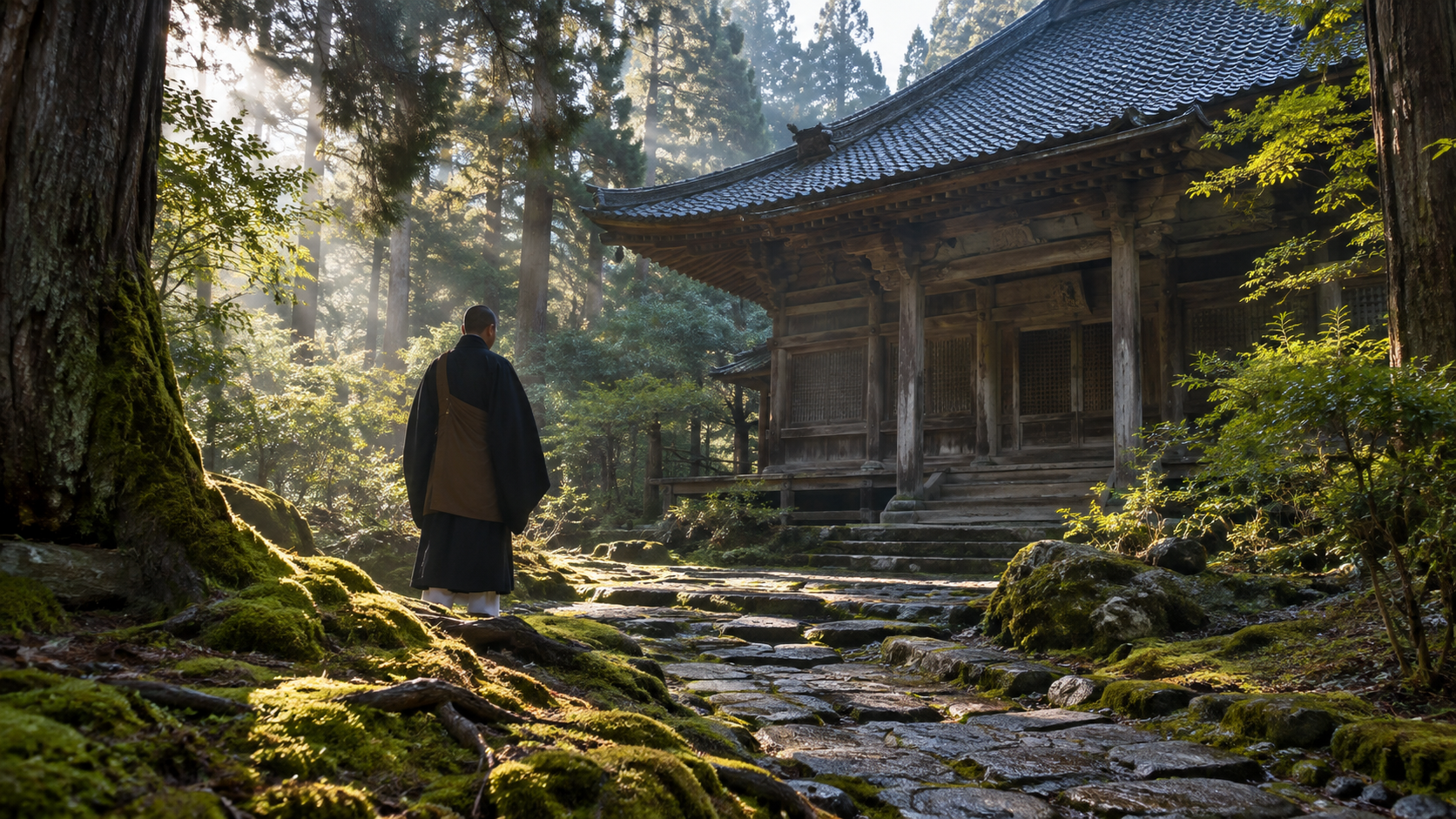
Takeko’s grave is at Hokaiji Temple in Aizubange. The town also introduces belongings associated with her that remain at the temple. After the fighting, her name continued to be remembered through such places and objects. They provide a way of approaching her memory without reconstructing an exact scene of death.
Looking back from the grave places the image of a warrior beside a life cut short. Takeko did not have the years in Kyoto or the new work that Yae subsequently experienced. The difference concerns the continuation of a person’s time, not simply a different ending to a battle scene.
That difference does not fit a scale for comparing courage. One person died in Aizu; another survived and later moved elsewhere. Setting their outcomes beside one another helps reveal what war did to the time of individual lives. It does not require ranking the women’s actions against one another.
Keeping Takeko’s remembered name at Hokaiji in Aizu, the account next follows Yae’s movement. Three years after 1868, in 1871, she traveled to Kyoto, where her brother was living. The shift in place begins another period of work and relationships in her life.
Chapter 08
Three years later, toward Kyoto
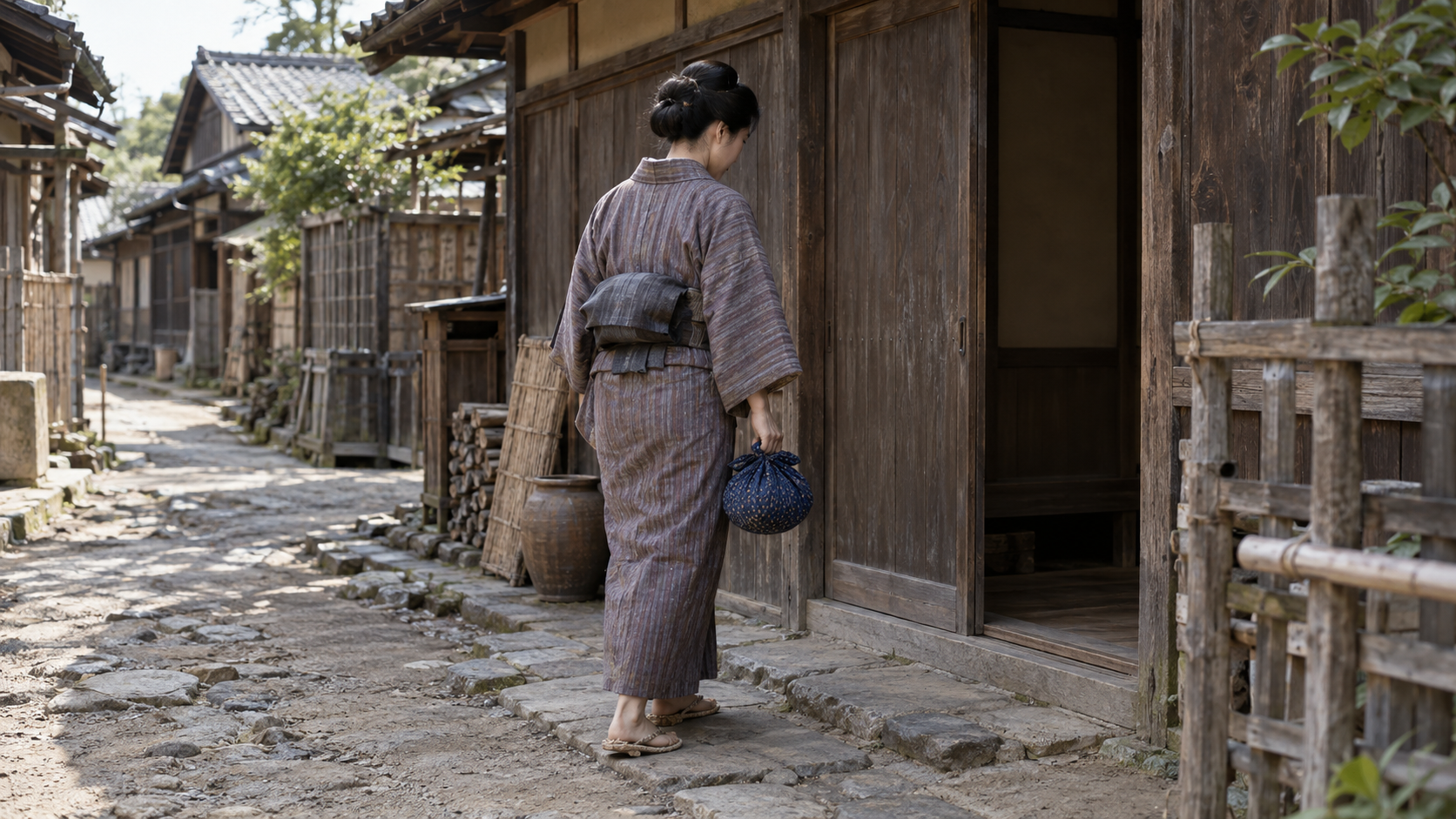
In 1871, Yae moved to Kyoto to join her elder brother Kakuma. Both the National Diet Library and Doshisha University describe this move. Another place entered the life of the woman who had been inside Aizu Castle. Migration is part of the chronology that continued after the siege.
The period of growing up in a gunnery instructor’s household and participating in a siege was followed by life in Kyoto. People continue to live, work and form relationships after fighting ends. Following those years makes the extent of Yae’s life visible beyond the episode for which she is often remembered.
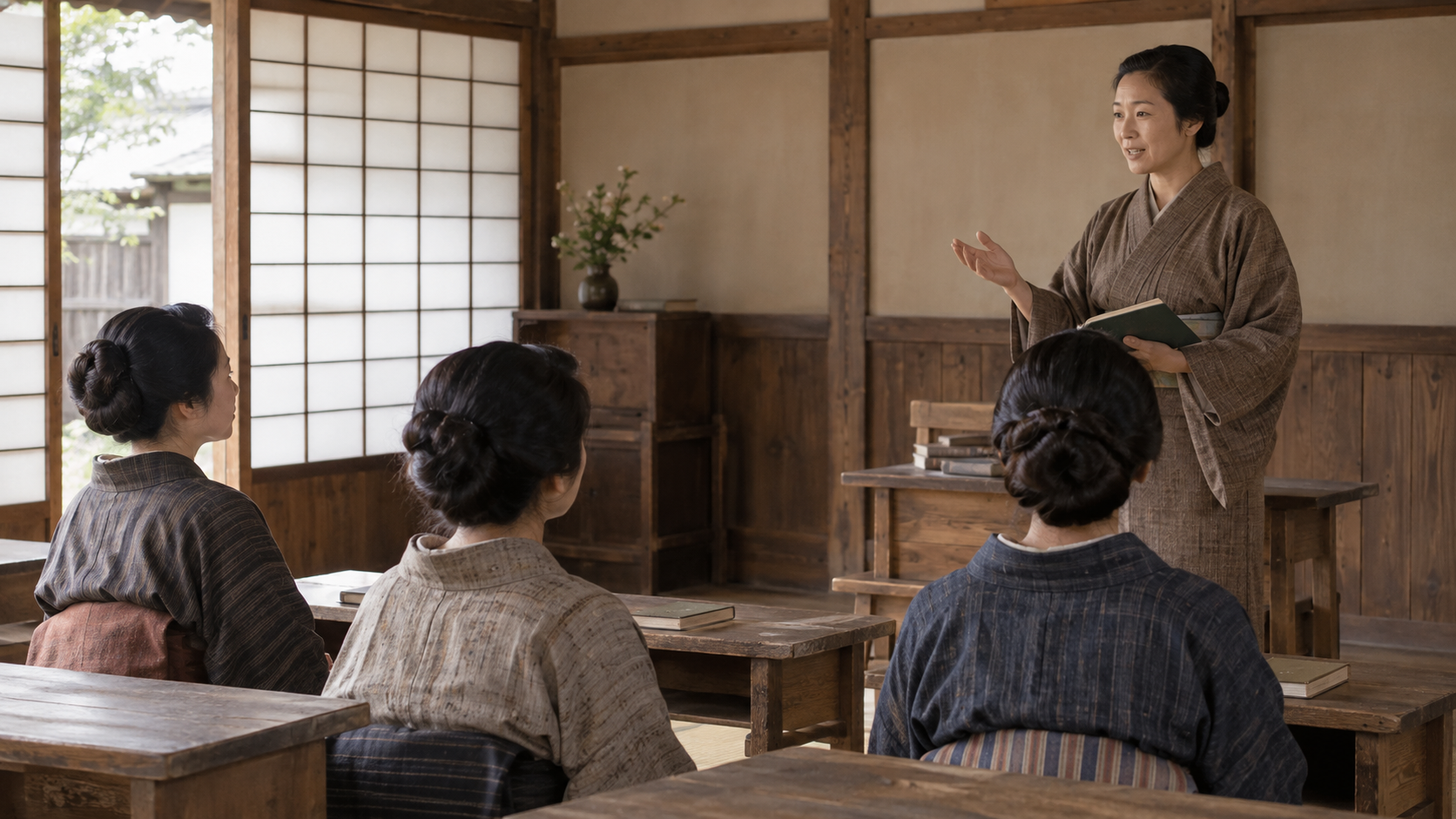
In Kyoto she worked at a women’s educational institution known as the Nyokōba. The field of her work had changed from a castle under siege toward a place where women learned. Its daily tasks belonged to a setting different from the Aizu battlefield, and deserve attention in their own right.
Survival was followed by time spent building another life. Her Kyoto activities should not remain a brief epilogue to the siege. They can be read as years during which one person continued working. The move in 1871 opens this part of the account without determining an employment date merely from the migration year.
Chapter 09
Supporting places where women learned
The Nyokōba belonged to the educational setting for women in Meiji-era Kyoto. Kyoto City’s explanation describes the opening of the Shin’ei Gakkō Nyokōba in 1872, teaching English and domestic studies. Yae’s educational work took place in a period when such institutions were emerging; the institution’s curriculum does not identify every subject she personally taught.
She subsequently married Niijima Jō and became involved in Doshisha’s activities. The National Diet Library describes a school for girls as contributing to the foundation of what became Doshisha Women’s College. The account thus extends from work in one educational setting toward another associated with Doshisha.
Her work at the Nyokōba, life with Jō and involvement in women’s education connected with Doshisha formed different settings for her activity. Years supporting places of learning became part of the life of someone who had known gunnery. The continuity of a life did not mean that its tasks remained unchanged.
Moving from Aizu to Kyoto was a movement on a map and also a change in where she worked. In 1890, after Jō’s death, Yae widened her activity into another field. The later transition belongs after these educational years, rather than immediately after the castle’s surrender.
Chapter 10
Learning and caring through the Red Cross
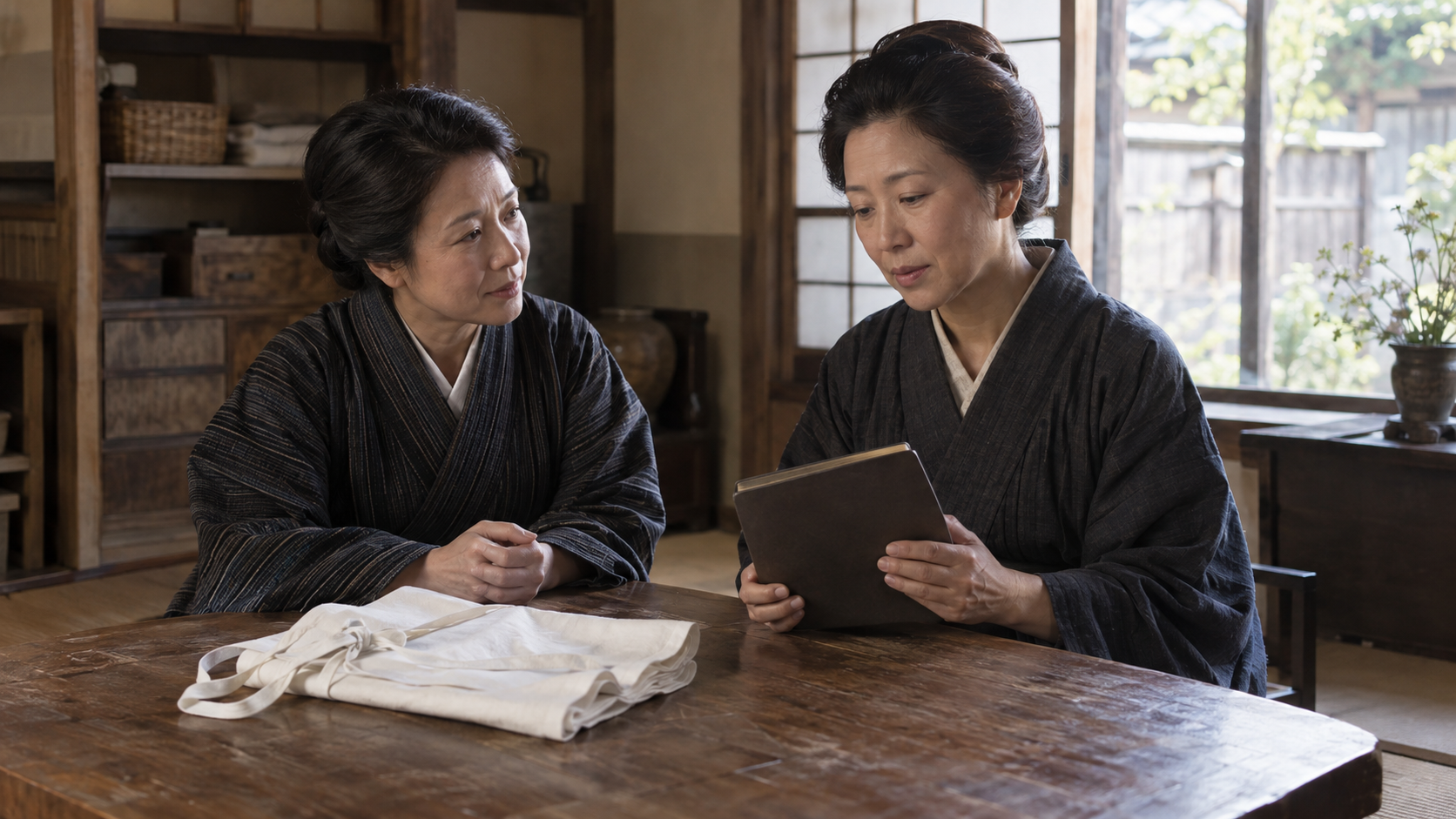
Niijima Jō died in 1890. In that year Yae became a member of the Japanese Red Cross Society. The membership recorded in Doshisha’s timeline is a concrete milestone leading toward her later relief activities. Membership here is not silently turned into an appointment as a paid employee or admission to a particular training course.
The Red Cross newspaper introduces her as a member of the women’s voluntary nursing association and describes her care for sick and wounded soldiers during the Sino-Japanese and Russo-Japanese wars. A survivor of the siege of Aizu encountered war again through supporting injured and ill soldiers in a different setting.
There was also a process of learning nursing. The newspaper states that Yae obtained a certificate of nursing study. Work supporting others involved joining an organization and acquiring knowledge. That certificate is described within the newspaper’s account; it should not be equated with a modern nursing license or a presumed standard course.
Her activities extend from care associated with the siege through educational work to learning and relief through the Red Cross. Placing work from different times and locations in sequence reveals a life that cannot be captured only by the image of a woman taking up a firearm.
Chapter 11
Teaching nursing and sustaining relief work
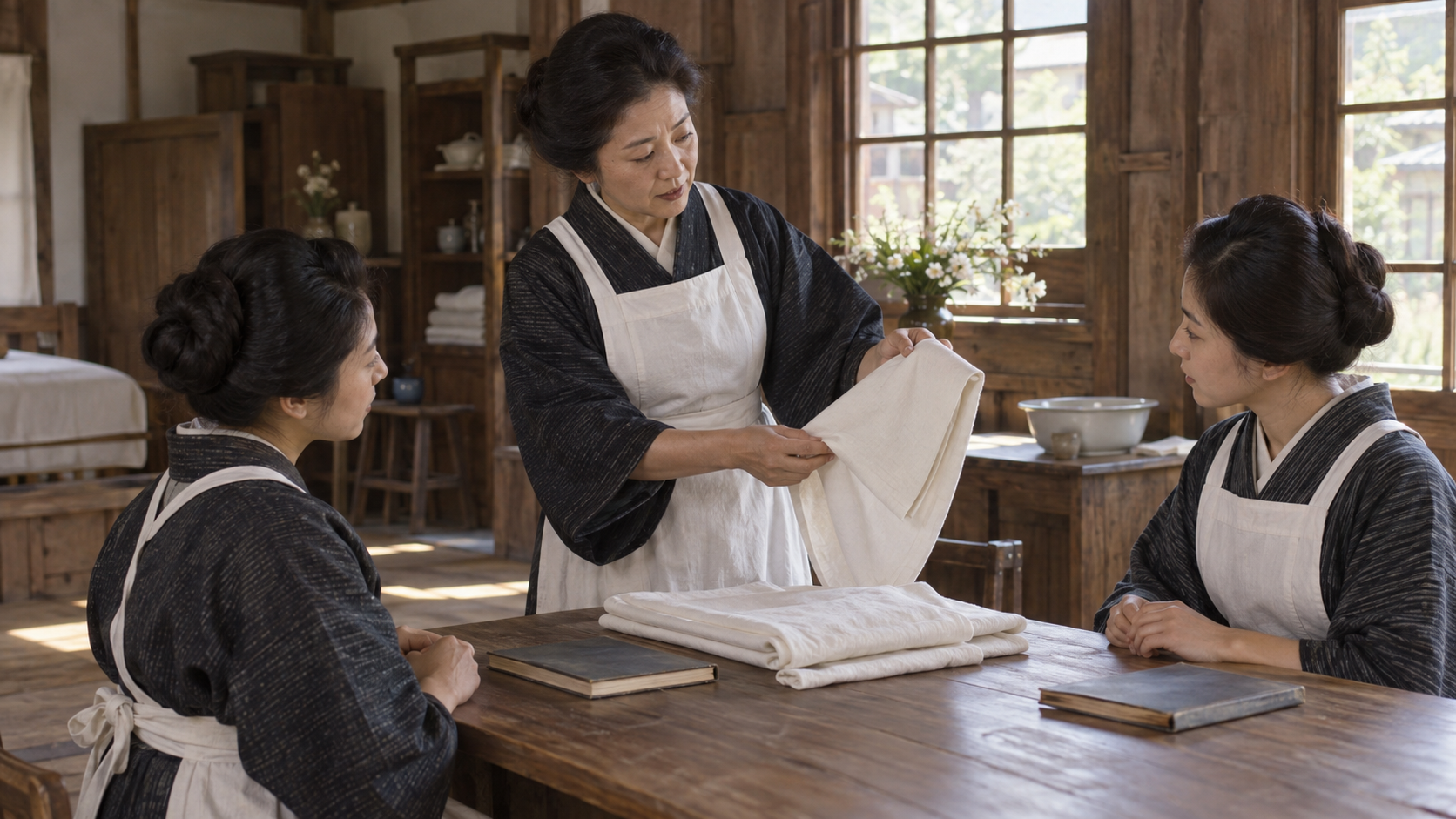
The Japanese Red Cross Society’s historical exhibition dates the beginning of its relief-personnel training to 1890 and a standardized nursing textbook to 1896. Systems for teaching and learning developed alongside the work of caring for sick and wounded people. This is an institutional history that provides a setting for the discussion.
That training history cannot simply be assigned to Yae as an individual course record. The Red Cross newspaper separately states that, besides obtaining a certificate of study, she served as an assistant instructor at a nursing school. Her particular record and the organization’s general chronology need to remain distinguishable.
Yae, who had been involved in women’s education in Kyoto, also undertook learning and teaching in nursing. Developing people able to give care can pass knowledge toward subsequent workers as well as support immediate relief. Teaching therefore adds another kind of work to the account of care.
Beyond a description of someone who fought bravely are acquired skills and work continued over time. Gunnery, women’s education and nursing belonged to different settings in Yae’s life. Following her between them carries the account beyond the fighting in Aizu, without assuming that she completed every stage of the general training system.
Chapter 12
Looking back at Aizu through two lives
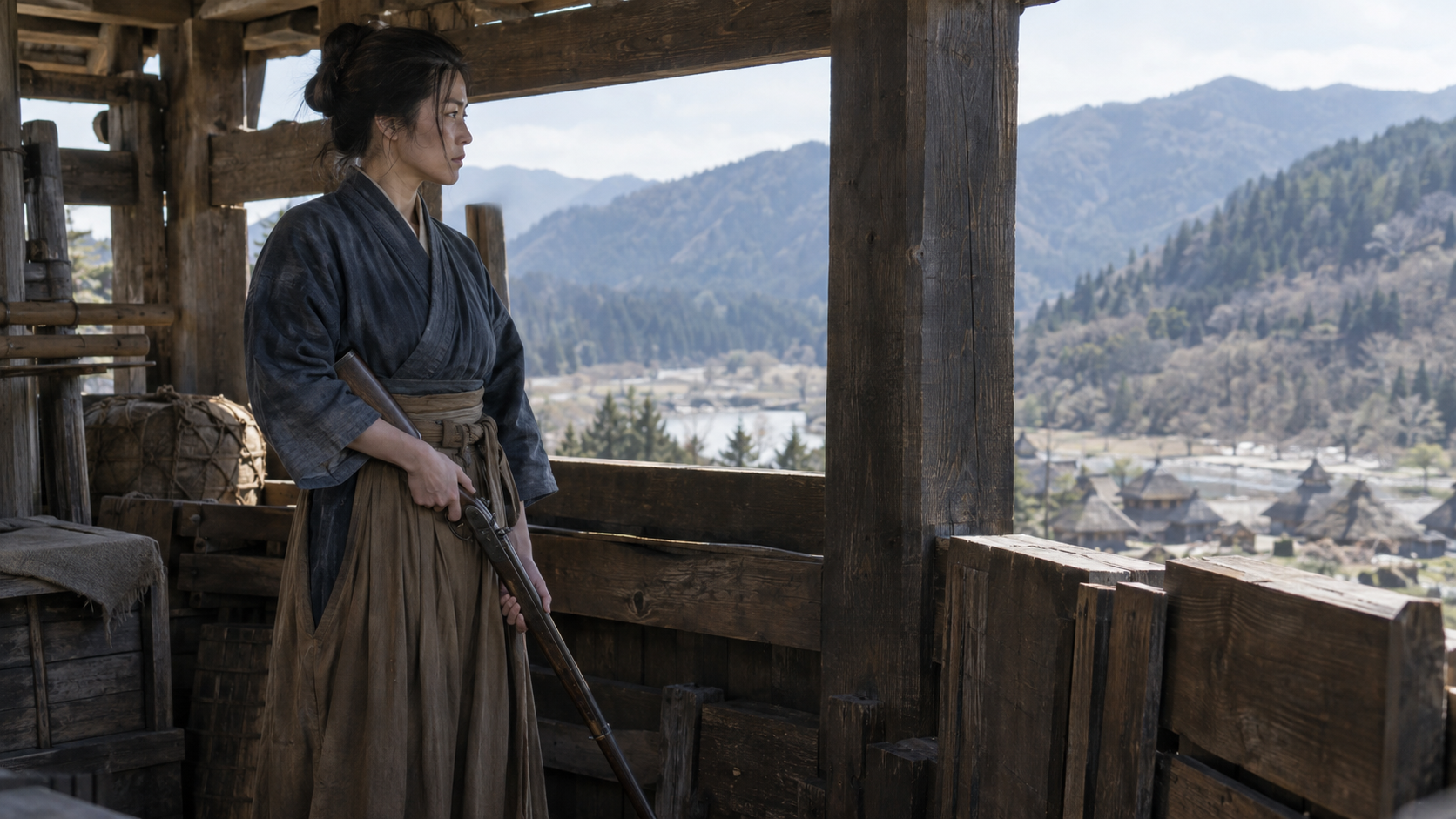
Yae used a firearm inside the castle and also helped with food preparation and care. Takeko fought while traveling toward the castle, and her grave remains in Aizu. The histories of two women in the same conflict contain differences of location and of how their lives ended. Those differences remain essential to the account.
Yae’s path continued with the move to Kyoto in 1871, education associated with the Nyokōba and Doshisha, and learning and relief through the Red Cross. A person who fought in Aizu appears in nursing history because she lived and worked for years after the siege. Those years are historical substance, not merely a concluding anecdote.
Even while following them, the record of Takeko, who could not live those later years, remains. A name preserved at Hokaiji and Yae’s continuing activities in Kyoto can be placed beside one another. Together they reveal differences that war marked in the time available to individual people.
Defending a castle, sustaining everyday life and continuing to learn: Aizu’s women can be read as people who worked and lived in particular places. From that approach, a history opens beyond the familiar impressions of firearm and naginata. It gains breadth by keeping individual roles and lives visible.
How to read this work
History, interpretation, and reconstruction
Following Yae and Takeko’s different locations and outcomes reveals work sustaining the siege and, in Yae’s later life, the continuing work of women’s education, nursing study and relief.
This work is grounded in published sources and historical research. Interior thoughts, dialogue, and some visual details are cinematic reconstructions. Where historians disagree, the article presents the point as debated rather than settled fact.
Timeline
The story in time
-
The Shin’ei Gakkō Nyokōba opens in Kyoto. This institutional date is distinguished from Yae’s individual employment record.
Sources: s11 -
Jō dies, and Yae becomes a member of the Japanese Red Cross Society.
Sources: s03 -
Yae takes part in relief for sick and wounded soldiers.
Sources: s09 -
The Red Cross begins relief-personnel training and later produces a standardized nursing textbook. These institutional milestones are not Yae’s personal course record.
Sources: s10
People & terms
A guide for new readers
Key figures
- Niijima Yae (Yamamoto Yae)
- Participated in the siege of Aizu Castle, then worked in women’s education and Red Cross relief in Kyoto.
- Nakano Takeko
- Fought while on her way toward Tsuruga Castle in 1868 and was fatally wounded.
- Yamamoto Kakuma
- Yae’s elder brother, whom she joined in Kyoto in 1871.
- Niijima Jō
- Yae’s husband, involved in Doshisha’s educational activities; died in 1890.
Glossary
- Aizu 会津
- The domain and regional setting of the fighting discussed here, connected in the university’s account with present-day Aizuwakamatsu in Fukushima Prefecture.
- Tsuruga Castle 鶴ヶ城
- The castle in Aizu where Yae participated in the siege; also referred to here as Aizu Castle.
- Boshin War 戊辰戦争
- The conflict named in the accounts of the fighting in Aizu in 1868; the castle’s defenders faced the new government’s forces.
- Siege 籠城
- Holding out within a defended place; the article also considers the food, rest and care needed by its occupants.
- Gunnery instructor 砲術師範
- The role held by Yae’s father Gonpachi, providing part of the household setting for her earlier learning.
- Joshitai 女子隊
- The later name for the women’s unit in the municipal account of Takeko. The name is not treated as proof that all women in Aizu shared one unit or role.
- Naginata 薙刀
- The long-handled weapon evoked in the article’s conclusion; generated images do not establish an actual individual weapon or precise combat technique.
- Nyokōba 女紅場
- A women’s educational institution in the Kyoto setting. The school’s history, Yae’s employment and later Doshisha institutions are distinguished.
- Japanese Red Cross Society membership 日本赤十字社社員
- Membership in the society, rather than an assumed paid staff post, modern nursing license or automatic enrollment in a standard course.
- Women’s voluntary nursing association 篤志看護婦人会
- The association in the Red Cross newspaper’s account of Yae’s nursing study and relief work.
- Certificate of nursing study 看護学修業証
- The certificate described in the newspaper. It is not equated here with a modern professional license or evidence of completing the general Red Cross three-year course.
- Hokaiji Temple 法界寺
- The temple in Aizubange where the municipal account locates Takeko’s grave and belongings.
- Yae’s earlier family name 山本八重
- The name Yamamoto Yae used for the earlier part of the life later associated with the name Niijima Yae.
Sources & method
How this article was built
This English manuscript translates the fixed, publicly verified Japanese article’s twelve chapters, four listed people, seven timeline entries and eight sources. Scene and source IDs retain their order. Reference titles are editorial English renderings rather than claims of official translated titles.
Relevant passages on six official HTML pages were consulted, including the municipal English account of Takeko. The retained municipal PDF spread 48–49 was visually inspected for the Yae column on printed page 49; the enlarged Yae box from physical page 4 of the 2012 Red Cross newspaper was visually inspected. Complete reading of either PDF is not claimed.
Yae’s position inside the castle and Takeko’s fighting while traveling toward it remain separate. The later name Joshitai is identified as later. Their different outcomes are not merged into a common path or ranked as a measure of bravery.
The municipal Yae column supports cooking and care during the siege. These activities are not assigned to every woman, and Yae’s gunnery background is not generalized into universal training. No exact firing position, battle sequence, final scene, dialogue or private emotion is invented.
Yae’s move in 1871 is distinguished from a school opening in 1872 and her individual employment history. The institution’s English and domestic-studies curriculum is not automatically her personal teaching assignment. Kyoto’s Nyokōba and later Doshisha educational settings are not collapsed into one institution.
The Red Cross newspaper’s certificate of nursing study and assistant-instructor statements are retained. The general training system beginning in 1890 and textbook dated 1896 do not establish Yae’s own enrollment, graduation, length of study or syllabus. Membership is not translated as proof of paid employment, and no overseas frontline placement is inferred.
All twelve generated illustrations were actually viewed in the retained contact sheet. Their canonical bytes and article-use rights are matched against the Japanese review. They contain anonymous fictional figures and imagined interiors, roads, temple and classroom settings. They are not authentic portraits, original documents, precise weapons or uniforms, actual site photographs or exact battle reconstructions. Institutional photographs are not reproduced.
Connecting siege care, migration, education and later nursing is an interpretation of the sequence, not proof of an unrecorded moment of resolve or a psychological explanation. The linked video has Japanese audio; English subtitles are unverified.
Sources
References and further reading
- Portraits of Modern Japanese Historical Figures: Niijima Yae 国立国会図書館・新島八重 Title translated editorially for reader convenience. National Diet Library 国立国会図書館 Relevant official HTML biography consulted. The siege, 1871 move, educational work and later relief remain distinct stages. The portrait is not reproduced. Accessed 2026-10-17
- Niijima Yae: Biography and Timeline 同志社大学・新島八重 Title translated editorially for reader convenience. Doshisha University 同志社大学 Relevant official HTML biography and timeline consulted. The migration date, individual employment and 1890 membership are distinguished; statements about other people are not extended into invented dialogue or motives. Accessed 2026-10-17
- Nakano Takeko: Multilingual Municipal Account 会津坂下町・中野竹子多言語ページ Title translated editorially for reader convenience. Aizubange Town 会津坂下町 Relevant official HTML, including its English account, consulted. Takeko’s route toward the castle, later unit name, fatal wound and Hokaiji memorial are preserved without inventing a final scene. Accessed 2026-10-17
- Introducing the Tsuruga Castle Discovery Map: Siege Edition 会津若松市・鶴ヶ城みりょく発見マップ紹介 Title translated editorially for reader convenience. Aizuwakamatsu City 会津若松市 Relevant official HTML introduction consulted for women and children inside the castle. No claim is made to have read every linked pamphlet or to reproduce its illustrations. Accessed 2026-10-17
- Boshin 150th-Anniversary Publication, Part Six 会津若松市・戊辰150周年記念誌6 Title translated editorially for reader convenience. Aizuwakamatsu City 会津若松市 Retained PDF physical page 2, printed spread 48–49, visually inspected for the Yae column on printed page 49. Its account of cooking and care is not extended to a complete daily roster. Institutional photographs are not reproduced. Accessed 2026-10-17
- Red Cross Newspaper, Issue 864, May 2012 日本赤十字社・赤十字新聞864号2012年5月 Title translated editorially for reader convenience. Japanese Red Cross Society 日本赤十字社 The retained enlargement of the central women’s voluntary nursing association and Yae box on physical PDF page 4 was visually inspected. The study certificate and assistant-instructor statements do not establish a modern license or completion of the general three-year course. Accessed 2026-10-17
- The History of Training Japanese Red Cross Relief Personnel 日本赤十字社・救護員養成のあゆみ Title translated editorially for reader convenience. Japanese Red Cross Society 日本赤十字社 Relevant official HTML sections consulted for training from 1890 and the standardized textbook of 1896. General institutional requirements are not assigned to Yae without individual evidence. Accessed 2026-10-17
- Creating Kyoto as a City of Learning 京都市上京区役所・学都京都の創造 Title translated editorially for reader convenience. Kamigyō Ward Office, Kyoto City 京都市上京区役所 Relevant official HTML consulted for the 1872 women’s school and its curriculum. The institution’s subjects are not automatically Yae’s personal teaching assignments. Accessed 2026-10-17
Continue reading
More stories from Shigeki
Shigeki English
Sakai’s Merchant City: Trade, Self-Government and Survival
A port, a merchant council and town communities—from changing authority to rebuilding after fire.
- When From the later fifteenth century through the Sengoku period, the fire of 1615 and early Edo-period reconstruction.
- Where Sakai, in present-day Osaka Prefecture, where maritime routes met roads on land.
Shigeki English
The Aburanokōji Incident: After Leaving the Shinsengumi
A separation in spring, a new base in summer, and two successive attacks.
- When Kyoto in Keiō 3 (1867). The incident’s historical date corresponds to December 13, 1867.
- Where Kyoto: the guards’ successive bases, the Aburanokōji attack site and the later place of remembrance.