
SHIGEKI ENGLISH STORYEN
Japanese history in English
Shibusawa Eiichi and the 1867 Paris Exposition: What Did the Accountant Bring Home?
Behind the exhibits lay a way of organizing people and money. Reading the travel records and later memories apart.
In 1867 Shibusawa Eiichi went to the Paris Exposition as the accountant of the shogun’s envoy. Trace his duties, diaries, the Shizuoka commercial office, Rikkai Ryakusoku and the First National Bank. Public museum, library and foundation records show how observation became practice step by step.
At a glance
Before you enter the story
- When
- From the voyage of 1867 and return in 1868 to the First National Bank of 1873, with his death in 1931.
- Where
- Yokohama, Paris and Europe, Shizuoka and Tokyo.
- Key figures
- Shibusawa Eiichi, Tokugawa Akitake, Léon Roches, Paul Fleury-Hérard, Hiraoka Junzō
- What was at stake
- How experience gained abroad by a junior official could be turned into working institutions in a Japan whose government had just changed.
Why this story matters
The larger history behind the turning point
Shibusawa Eiichi is often called the father of Japanese capitalism, and his trip to Paris is usually told as the moment of inspiration. The records show a more gradual story in which a young accountant observed, recorded and later tested what he had seen.
The case also shows why diaries written at the time and memories told decades later should be read separately. Keeping them apart makes both Shibusawa’s role and the work of many others clearer.
Historical context
What an international reader needs to know
Places and terms
In the 1860s Japan was ruled by the Tokugawa shogunate from Edo, with regional lords governing their own domains. The shogunate fell in 1867 and 1868, and the new Meiji government took over. After that, the Tokugawa family was given the Shizuoka domain.
Dates and names
Western dates are given where sources provide them; some events are dated only by Japanese year and month. Japanese names are given with the family name first.
Watch the film
See the story in motion
The film currently uses Japanese audio. This English article provides the context and source trail; it does not imply that an English subtitle track is available.
Opening
What did he see in Paris?
In 1867 Shibusawa Eiichi traveled to France as an attendant to Tokugawa Akitake, the younger brother of the shogun Tokugawa Yoshinobu. The party was going to represent the shogun at the Paris Exposition Universelle, the first world’s fair in which Japan officially took part. Shibusawa’s job on the journey was to keep the accounts and handle the paperwork.
Four years later, in 1871, Japan’s Ministry of Finance published a book called Rikkai Ryakusoku, an outline of what a company is and how to set one up, based on Shibusawa’s explanations. From the glittering capital of an international exhibition to a practical handbook on companies, something connected the two. This article asks what that was.
To answer, the story separates four kinds of evidence: the exposition grounds, the diaries kept during the trip, recollections Shibusawa offered decades later, and the experiments he made after returning home. Writing made on the road and memories told much later are not given equal weight, and each source is allowed to say only what it actually says.
Chapter 1
The shogun’s deputy and his attendants
In 1866 the French emperor Napoleon III wrote to the shogunate asking it to send exhibits to the exposition and inviting the head of state to attend. According to the Diplomatic Archives of Japan’s Foreign Ministry, the French minister in Japan, Léon Roches, also urged the shogunate to take part and to send a representative. The shogunate chose Akitake, then fourteen years old.
Shibusawa’s official title was a junior post attached to the army with the rank of a finance official. The National Museum of Japanese History describes it simply as responsibility for accounts and records. A column by the National Diet Library adds that seven samurai from the Mito domain were chosen to guard Akitake, and that Shibusawa joined the party to coordinate them.
The party left Yokohama in the first month of the third year of Keiō, early 1867, aboard the French mail steamer Alphée. Shibusawa’s travel diary, the Kōsei Nikki, begins on the eleventh day of that month. On board he noted his first Western meals and coffee, the earliest of many new experiences he would set down on paper.
Chapter 2
Three exhibitors from one country
The 1867 exposition was the first at which Japan exhibited officially. Yet the shogunate was not the only Japanese exhibitor. The Diplomatic Archives explain that the shogunate encouraged the domains to take part as well, and that two powerful domains in the southwest, Satsuma and Saga, decided to send their own goods to Paris.
According to the same source, Satsuma advertised in local newspapers that it was exhibiting independently of the shogunate, and it even produced and distributed its own decorations. The shogunate is said to have found no effective response. Inside the exhibition halls, a quiet contest over who spoke for Japan was already under way.
An exposition was a place to display goods, but it was also a place to show foreigners who represented a country. In November of the same year, the shogun returned his governing authority to the imperial court. The regime that had sent Akitake to Paris was changing shape while his party was still abroad.
Chapter 3
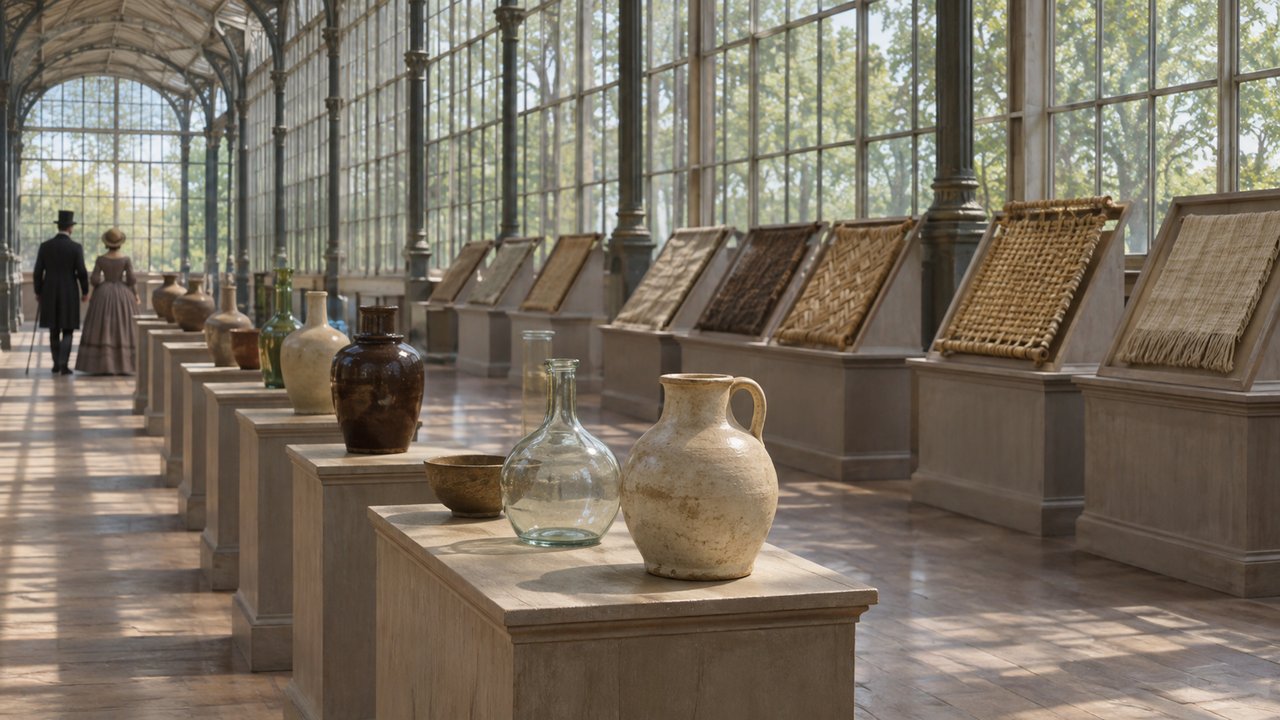
An oval exhibition palace
The exposition ran from April 1 to October 1, 1867, on the Champ de Mars in Paris. The site covered 146,000 square meters and the exhibitors numbered about 60,000. The National Diet Library reports 9,063,000 visitors, counting paying admissions only, a figure that gives a sense of the crowds Shibusawa saw around him.
The main hall was an oval building in which seven galleries ran in concentric rings around a central garden. Each gallery held one class of exhibits, and the sixth and largest was devoted to machinery. National displays were arranged like spokes radiating from the center, so visitors could compare objects either by type or by country.
Exhibits included Siemens electric motors and generators, a hydraulic elevator that carried visitors up to the roof and Krupp artillery. Japanese objects attracted great curiosity and are said to have helped spark Japonisme in Europe. Around the main hall stood more than a hundred national pavilions, shops, amusements and restaurants.
Chapter 4
The work of an accountant abroad
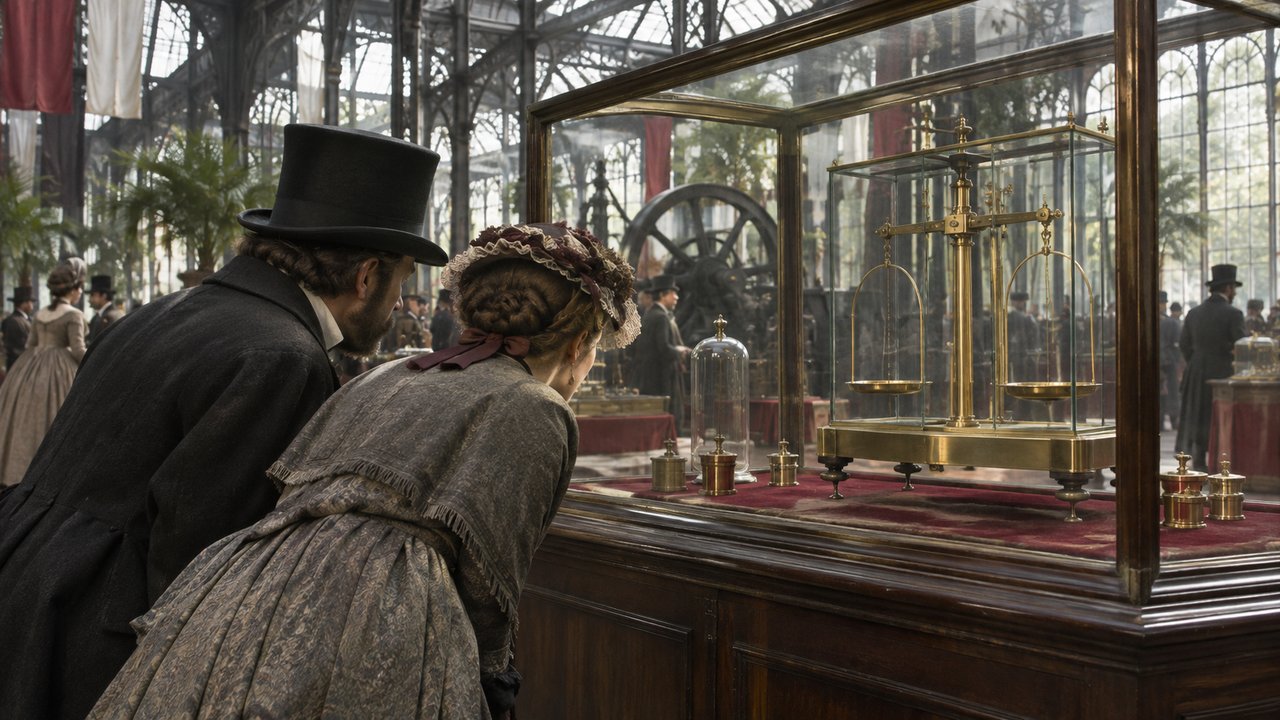
What kept the party going was work very different from the displays. The National Diet Library column explains that Shibusawa handled general affairs and accounts, cutting expenses and arranging the sale of items that had been exhibited at the fair. He was not simply a visitor; he was one of the people who made the journey run.
His diary also preserves moments of surprise. According to the National Diet Library’s online exhibition on Japan and France, Shibusawa wrote on April 1 that he was impressed by a splendid ball, and on April 20 he visited the Invalides, the home for disabled soldiers, and was moved by Western welfare institutions.
Paying bills, selling goods and checking the daily flow of money in and out put Shibusawa in a position to see the effort it takes to keep an enterprise going, something a sightseer would miss. When we ask how the journey shaped his later work, this unglamorous job is an important clue.
Chapter 5
Three diaries and a long stay
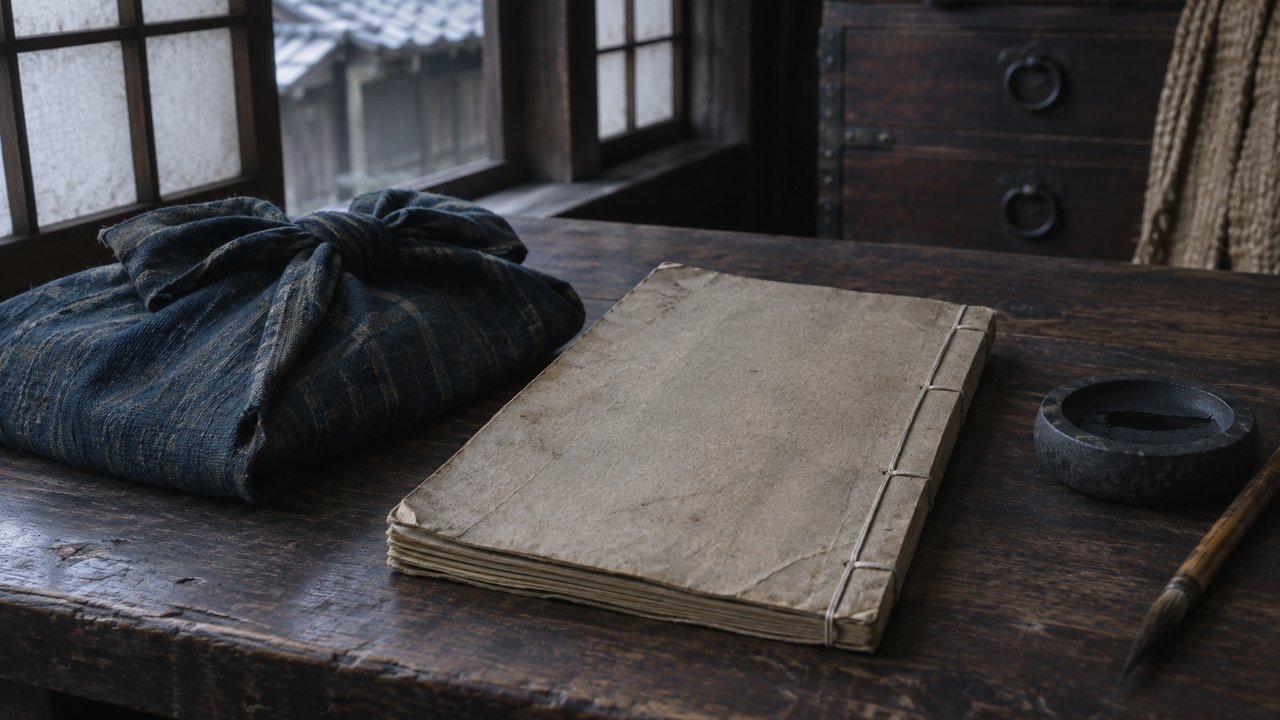
There is more than one record of the trip. The National Museum of Japanese History’s database includes the Kōsei Nikki, covering the first to the eleventh month of 1867 by the Japanese calendar; a diary of the party’s residence in Paris, running into the summer of 1868; and a daily record of Akitake’s tour of other countries.
After the exposition, Akitake toured several European countries and returned to Paris in November 1867. He then continued his studies in France until the fall of the shogunate forced him home. The National Diet Library column says Shibusawa’s stay in Paris lasted about a year and a half.
The same column notes that the Kōsei Nikki records the scale of the fair, the participation of each nation, the exhibition grounds and scenes of everyday Paris. A visit to the fair could be finished in a day, but living and learning abroad went on for many months. The diaries let readers follow that longer stretch of time.
Chapter 6
A banker and an officer
Among those who looked after the party was the banker Paul Fleury-Hérard. The National Diet Library says that Shibusawa learned the workings of a capitalist economy from him, and the Printing Museum in Tokyo writes that he learned about the financial system and the joint-stock company from the same banker.
Later in life, Shibusawa recalled watching Fleury-Hérard deal with a military officer as an equal. He said the sight convinced him that Japan had to break down its rigid status barriers and raise the standing of people in business. This is a memory told long afterward, not a note written during the trip.
According to a research article from the Shibusawa Eiichi Memorial Foundation, Shibusawa said he was struck in Europe by how businesses grew through joint-capital organizations and by how close contact was between officials and private citizens. Still, one relationship between two men cannot prove that French society as a whole was equal.
Chapter 7
The idea of gappon
A word Shibusawa used often in later years was gappon, literally pooling capital. It is sometimes taken to mean much the same thing as a joint-stock company, but Kimura Masato of the Shibusawa Eiichi Memorial Foundation questions that reading. Shibusawa never spelled out its exact content, and even the origin of the word is unclear.
In Kimura’s analysis, gappon rests on three elements. The first is a purpose, which is to increase the public good. The second is people, managers who understand that purpose, and the networks that connect them. The third is capital, gathered from idle funds. Any form of organization would do, so long as it fit the purpose.
This is a scholarly summary drawn from Shibusawa’s whole career, and it does not mean the idea was complete the day he arrived in Paris. Even so, the insistence on aligning purpose and people as well as money echoes the experience of a man who had kept a traveling party’s accounts in balance.
Chapter 8
The shogunate ends while he is away
While the party was in Europe, Japanese politics changed completely. The shogunate that had sent Akitake as its deputy ceased to exist, and Akitake’s studies were cut short by its collapse. An article on Nippon.com likewise notes that the shogunate came to an end while Shibusawa was in Europe.
Shibusawa returned to Japan in 1868, the first year of the Meiji era. According to a chronology published by Fukaya, his home city in Saitama Prefecture, he then served the Shizuoka domain for a time, the domain given to the Tokugawa family. Nippon.com also says he lived for a while in Sunpu, today’s Shizuoka.
The organization that had sent him abroad was gone, but the knowledge gained by the people who served it did not vanish with it. The question was with whom, and in what role, that knowledge could be used. His return marked the end of the journey and also the beginning of a search for a place to test what he had seen.
Chapter 9
The commercial office in Shizuoka
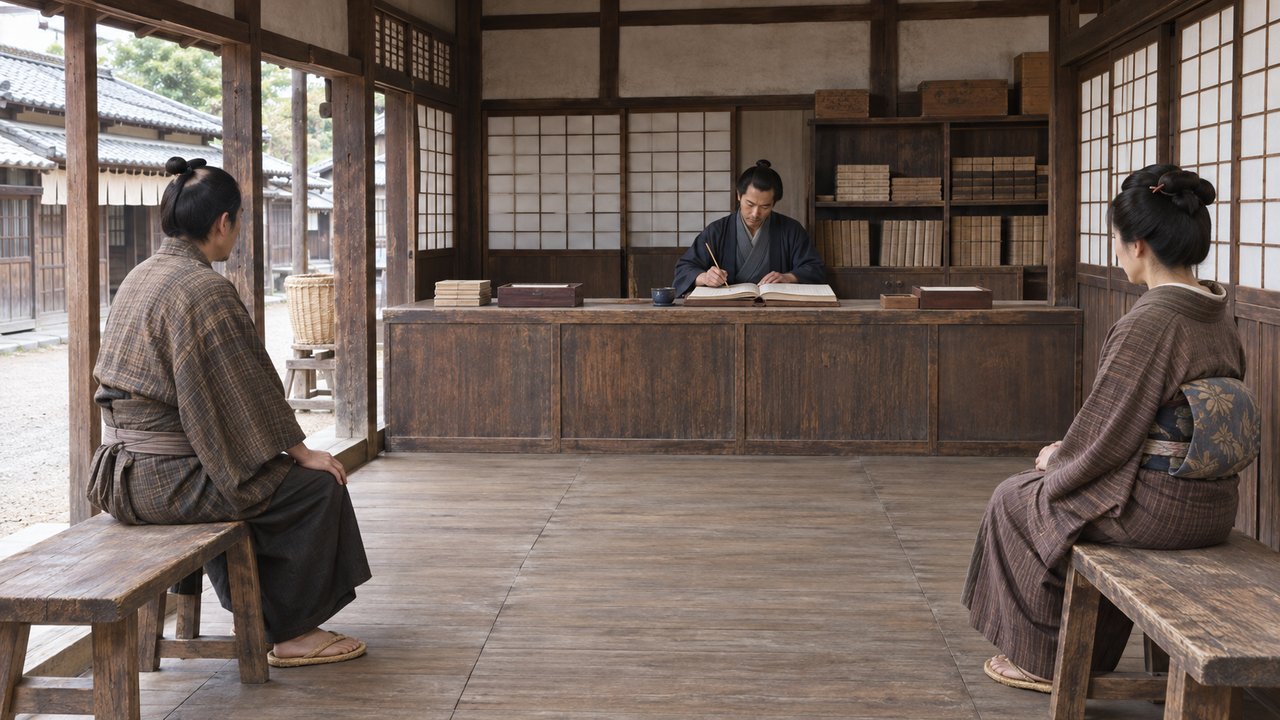
According to the Shibusawa Eiichi Memorial Foundation, in the last month of 1868 by the Japanese calendar Shibusawa proposed a commercial office to Hiraoka Junzō, the Shizuoka domain’s finance chief, and the proposal was accepted. On February 26, 1869, the office opened in Kon’yamachi in Shizuoka, with Shibusawa as its head.
In Shibusawa’s own recollection, the plan was to manage separately the funds the new government had lent to the domain and to use them as capital for new industry. Money would be lent to promote trade, and a joint-capital trading body would handle buying, selling and lending.
The foundation describes the office as a combined financial and trading company. Fukaya’s chronology lists the founding of the commercial office under 1868, while the foundation dates its opening to early 1869. This article follows the foundation, which gives separate dates for the proposal and the opening.
Chapter 10
A short experiment and a new government
The commercial office did not last long. The foundation explains that it was abolished in the eighth month of 1869 by the Japanese calendar, when a public granary called the Jōheisō was established. The first experiment Shibusawa made after returning home did not survive in its original form.
On December 6 of the same year, Shibusawa was appointed head of the tax bureau in the Ministry of Civil Affairs and entered the service of the new government. The National Diet Library’s portrait database records that he became a senior secretary of the Ministry of Finance in 1872, while Fukaya’s profile says that in the same year he acted for a vice minister.
He had moved from organizing money and trade for a single domain to shaping institutions for the whole country. What he had seen abroad would now take form inside government offices, as documents and systems. One of those forms was a short book explaining how to set up a company.
Chapter 11
Rikkai Ryakusoku
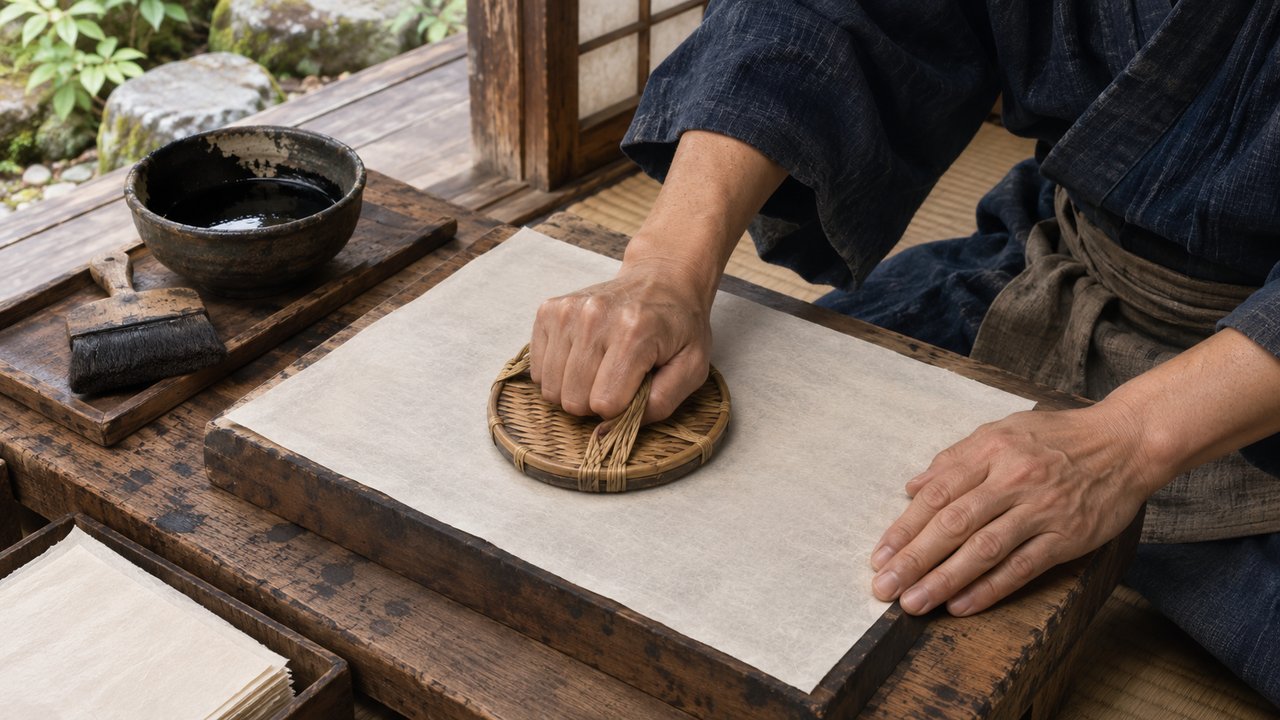
In 1871, the fourth year of Meiji, the Ministry of Finance published an official edition of Rikkai Ryakusoku. Rikkai here refers to founding a company. According to the Printing Museum, the book is divided into two parts, one on trading companies and one on exchange companies.
The part on trading companies explains the significance of commerce, the need for joint-capital organization, the rights and duties of companies and the structure of a joint-stock company. The part on exchange companies covers bills of exchange, short-term loans and deposits. The book insists that companies belong to private rights, urges merchants to stand on their own rather than rely on official protection, and recommends running a business by written rules and records.
The ministry’s printing bureau already had the latest letterpress and lithographic technology, yet this book was printed from traditional woodblocks. The Printing Museum suggests that the government chose the fastest method available because it wanted to spread the importance of joint-stock companies as quickly as possible.
Closing
Toward the machinery of companies
In 1873 Shibusawa left the Ministry of Finance and went into business. He became general superintendent of the First National Bank, which opened that year, and its president in 1875. According to Fukaya, he was involved with some five hundred companies over his lifetime.
The National Diet Library notes that he helped found and develop firms such as Oji Paper, Osaka Spinning and Tokyo Gas. After retiring from business in 1916, he devoted himself to public welfare and international goodwill. He died on November 11, 1931, at the age of ninety-one.
What Shibusawa saw in Paris was probably more than machines and boulevards. He supported a journey as its accountant, tested an idea in Shizuoka, explained it in a book and then took on the work himself at a bank. Following those steps one by one, rather than leaping from Paris to fame, shows how observation slowly became an institution.
How to read this work
History, interpretation, and reconstruction
What Shibusawa Eiichi brought back from Paris was less a new machine than an interest in how purpose, people and capital are combined to keep an enterprise running. That idea took shape gradually, through an experiment in Shizuoka, a handbook and work at a bank.
This work is grounded in published sources and historical research. Interior thoughts, dialogue, and some visual details are cinematic reconstructions. Where historians disagree, the article presents the point as debated rather than settled fact.
Timeline
The story in time
-
He enters the service of the Hitotsubashi family.
Sources: s10 -
Napoleon III asks the shogunate to exhibit at the Paris exposition and invites the head of state.
Sources: s03 -
The Paris Exposition Universelle opens and runs until October 1.
Sources: s02 -
Akitake’s party returns to Paris after touring Europe.
Sources: s04 -
The shogun returns governing authority to the imperial court.
Sources: s01 -
The commercial office opens in Shizuoka, with Shibusawa as its head.
Sources: s08 -
The commercial office is abolished when the Jōheisō granary is established.
Sources: s08 -
The Ministry of Finance publishes Rikkai Ryakusoku.
Sources: s07 -
He becomes a senior secretary of the Ministry of Finance.
Sources: s05 -
He becomes president of the First National Bank.
Sources: s10 -
He retires from business.
Sources: s05
People & terms
A guide for new readers
Key figures
- Shibusawa Eiichi
- Accountant and secretary to Akitake’s party, who later served the Shizuoka domain and the Meiji government before entering business.
- Tokugawa Akitake
- Younger brother of the shogun, sent to Paris at fourteen as the shogun’s deputy and later a student in France.
- Léon Roches
- French minister to Japan, who urged the shogunate to take part in the exposition.
- Paul Fleury-Hérard
- Paris banker who looked after the party and taught Shibusawa about the economy.
- Hiraoka Junzō
- Finance chief of the Shizuoka domain, who accepted Shibusawa’s proposal for a commercial office.
Glossary
- Shogunate 幕府
- The military government of the Tokugawa family, which ruled Japan until 1867–1868.
- Domain 藩
- The territory ruled by a regional lord.
- Gappon 合本
- Shibusawa’s term for pooling capital and people for a shared purpose.
- Rikkai Ryakusoku 立会略則
- An 1871 government handbook explaining how to found and run companies.
- Kōsei Nikki 航西日記
- Shibusawa’s diary of the westward voyage and the exposition.
Sources & method
How this article was built
This English edition follows the Japanese article scene by scene and keeps its twelve sources, their order and its seventeen timeline entries. It relies on the Foreign Ministry archives, the National Diet Library, the National Museum of Japanese History, the Printing Museum, the Shibusawa Eiichi Memorial Foundation, Fukaya City and Nippon.com.
Where sources differ, including the year given for the commercial office and the title held in 1872, the differences are stated. Shibusawa’s story of the banker and the officer is presented as a later recollection, and no private thoughts or conversations are invented.
Sources
References and further reading
- Encounter with World Expositions 万国博覧会との出会い(外交史料に見る日本万国博覧会への道) Title translated editorially for reader convenience. Diplomatic Archives of the Ministry of Foreign Affairs of Japan 外務省外交史料館 Roches’s advice, Akitake’s mission, Satsuma and Saga, and the return of power to the court. Accessed 2026-11-19
- The 2nd Paris Exposition, 1867 1867年 第2回パリ万博(博覧会―近代技術の展示場) Title translated editorially for reader convenience. National Diet Library 国立国会図書館 Dates, visitors, exhibitors, site, layout of the main hall and Japan’s participation. Accessed 2026-11-19
- Column: Shibusawa Eiichi 【コラム】渋沢栄一(博覧会―近代技術の展示場) Title translated editorially for reader convenience. National Diet Library 国立国会図書館 Napoleon III’s letter, Shibusawa’s duties, cost-cutting and sales, length of stay and the travel diary. Accessed 2026-11-19
- Part 1: Japan’s Modernization and France 第1部 日本の近代化とフランス(近代日本とフランス) Title translated editorially for reader convenience. National Diet Library 国立国会図書館 Departure aboard the Alphée, diary entries, Fleury-Hérard and Shibusawa’s later recollection. Accessed 2026-11-19
- Shibusawa Eiichi, Portraits of Modern Japanese Historical Figures 渋沢栄一|近代日本人の肖像 Title translated editorially for reader convenience. National Diet Library 国立国会図書館 Dates of birth and death, government posts, banking and companies. Accessed 2026-11-19
- Overview of the database of Shibusawa Eiichi’s diaries in France 渋沢栄一滞仏日記データベース 概要 Title translated editorially for reader convenience. National Museum of Japanese History 国立歴史民俗博物館 Shibusawa’s post and the periods covered by the three diaries. Accessed 2026-11-19
- Rikkai Ryakusoku, official edition, as told by Shibusawa Eiichi 渋沢栄一述『官版 立会略則』 Title translated editorially for reader convenience. Printing Museum, Tokyo 印刷博物館 Publication, structure, arguments and woodblock printing of the book. Accessed 2026-11-19
- Service in the Shizuoka domain 静岡藩仕官時代(渋沢栄一ゆかりの地) Title translated editorially for reader convenience. Shibusawa Eiichi Memorial Foundation 渋沢栄一記念財団 Proposal, opening, plan and abolition of the commercial office, and the tax bureau appointment. Accessed 2026-11-19
- On the gappon research project (1), by Kimura Masato 「合本主義」研究プロジェクトについて(1)(木村昌人、青淵759号、2012年6月) Title translated editorially for reader convenience. Shibusawa Eiichi Memorial Foundation 渋沢栄一記念財団 The three elements of gappon and Shibusawa’s remarks about Europe. Accessed 2026-11-19
- Introducing Shibusawa Eiichi 渋沢栄一の紹介 Title translated editorially for reader convenience. Fukaya City 深谷市 Birth, service, travel, government posts, the First National Bank and companies. Accessed 2026-11-19
- Chronology of Shibusawa Eiichi (excerpt) 渋沢栄一年譜(抜粋) Title translated editorially for reader convenience. Fukaya City 深谷市 Return in 1868, Shizuoka domain, commercial office and the 1869 appointment. Accessed 2026-11-19
- The former Shibusawa residence returns to Tokyo 新1万円札の顔・渋沢栄一が壮年期を過ごした「旧渋沢邸」(土師野幸徳、2024年7月3日) Title translated editorially for reader convenience. Nippon.com ニッポンドットコム End of the shogunate during the trip, life in Sunpu and the 1873 resignation. Accessed 2026-11-19
Continue reading
More stories from Shigeki
Shigeki English
Amakusa Shiro at Hara Castle: A Young Symbol in the Surviving Evidence
An Arima castle, Matsukura taxes, risings in Shimabara and Amakusa, Itakura’s death, Nobutsuna’s siege and the fall of the castle: the history of the people who gathered under a boy’s name, told within the limits of the sources.
- When Kan’ei 14–15 (1637–1638), with the castle’s construction (1599–1604) and modern excavation and World Heritage inscription (2018) as background
- Where Shimabara and Amakusa in southwestern Japan, culminating in the siege of Hara Castle
Shigeki English
From the Black Ships to Hakodate: Sixteen Years from Bakumatsu to Meiji
Treaties, the Sakuradamon incident, the Kinmon incident, the Satsuma–Choshu alliance, the return of power, Toba–Fushimi, Edo Castle, Aizu and Hakodate: diplomatic commitments, political authority and military command did not change at the same moment.
- When 1853–1869, with administrative changes in 1869 and 1871 placed separately
- Where Uraga, treaty ports, Edo, Kyoto, Toba–Fushimi, Aizu and Hakodate