
SHIGEKI ENGLISH STORYEN
Japanese history in English
Wakaejima: The Stones That Supported Kamakura’s Harbor
Reading the work of a medieval port through its stones, its road and the objects left in the ground.
Built in 1232 after a monk’s petition and with the support of regent Hōjō Yasutoki, Wakaejima is Japan’s oldest surviving harbor facility. Follow its story from a dangerous shallow coast to the roads, workshops, timber rules and temple levy that tied the port to daily life in Kamakura.
At a glance
Before you enter the story
- When
- Built in 1232, with records running from 1223 to the site’s designation in 1968 and local activity in 2026.
- Where
- The eastern end of the Kamakura coast at Zaimokuza, on the boundary of Kamakura and Zushi in Kanagawa Prefecture.
- Key figures
- Ō-Amidabutsu, Hōjō Yasutoki, Ninshō, Ashikaga Takauji
- What was at stake
- How a small harbor built of stones helped connect sea transport with the daily life of a medieval capital.
Why this story matters
The larger history behind the turning point
Kamakura is usually remembered through its warriors, shoguns and great temples. Wakaejima turns attention to the sailors, carriers, merchants, craftspeople and monks whose work kept goods moving into the city.
The site also shows how historians work with incomplete evidence. Chronicles, excavated objects and the present remains each answer different questions, and none of them alone can recreate the harbor as it was in 1232.
Historical context
What an international reader needs to know
Places and terms
Kamakura, south of present-day Tokyo, was the seat of Japan’s first warrior government from the late twelfth century. The regent, or shikken, held the leading political role in the shogunate during the period of this story.
Dates and names
Months and days before 1873 follow the lunar calendar used at the time, so they do not match the modern calendar. Japanese names are given with the family name first.
Watch the film
See the story in motion
The film currently uses Japanese audio. This English article provides the context and source trail; it does not imply that an English subtitle track is available.
Opening
The harbor that appears at low tide
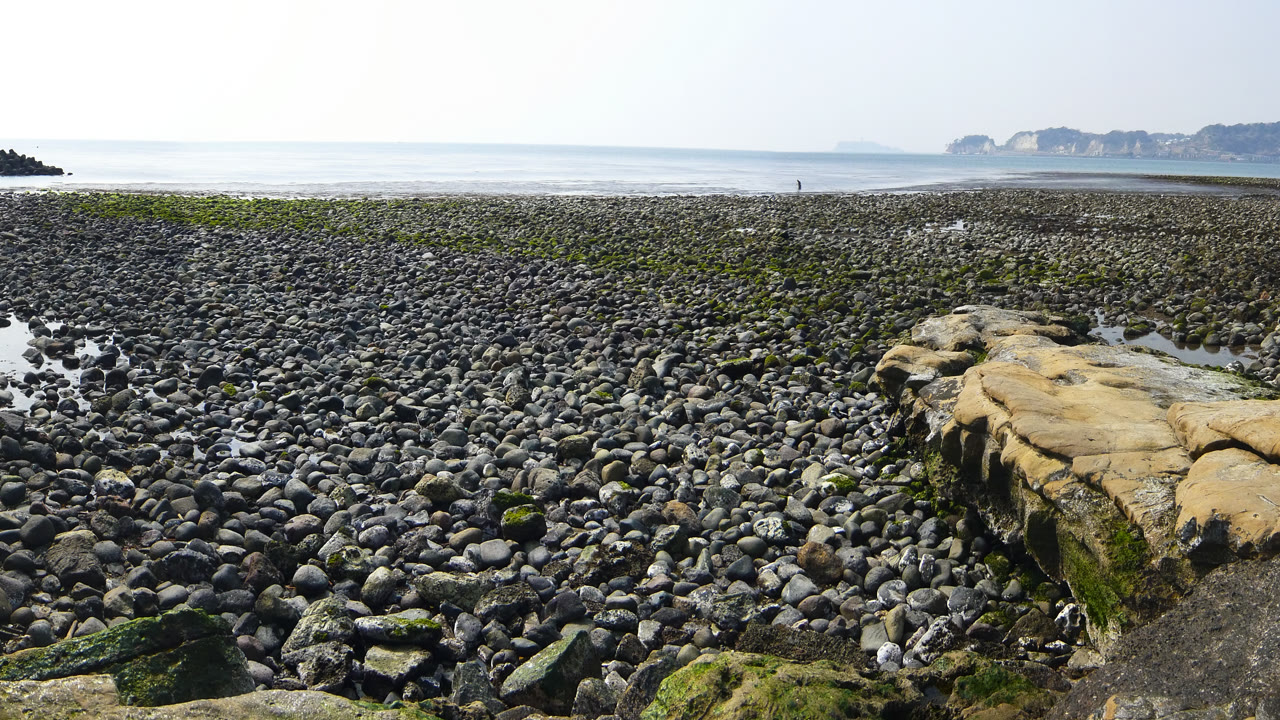
At the southern end of Zaimokuza Beach in Kamakura, countless rounded stones emerge from the sea and stretch offshore when the tide goes out. At high tide they almost disappear, and during spring tides they can look like a long pier. This spread of stones is Wakaejima, also read Wakae-no-shima.
Japan’s Agency for Cultural Affairs describes the site as the remains of a harbor completed in 1232, with a wharf of piled round stones reaching into the water, and calls it the oldest surviving harbor facility in the country. It became a National Historic Site in 1968, and the designated area lies across Kamakura and Zushi. It is protected as a monument of national importance, even though it can be seen fully only when the tide is low.
“Oldest surviving” does not mean the first harbor ever built in Japan, and the stones visible today do not preserve the shape of the finished work. So how did this modest stretch of rock support the warrior capital of Kamakura? Written records and excavated remains offer a way to follow the question from the sea into the town.
Chapter 1
Ships came before the harbor
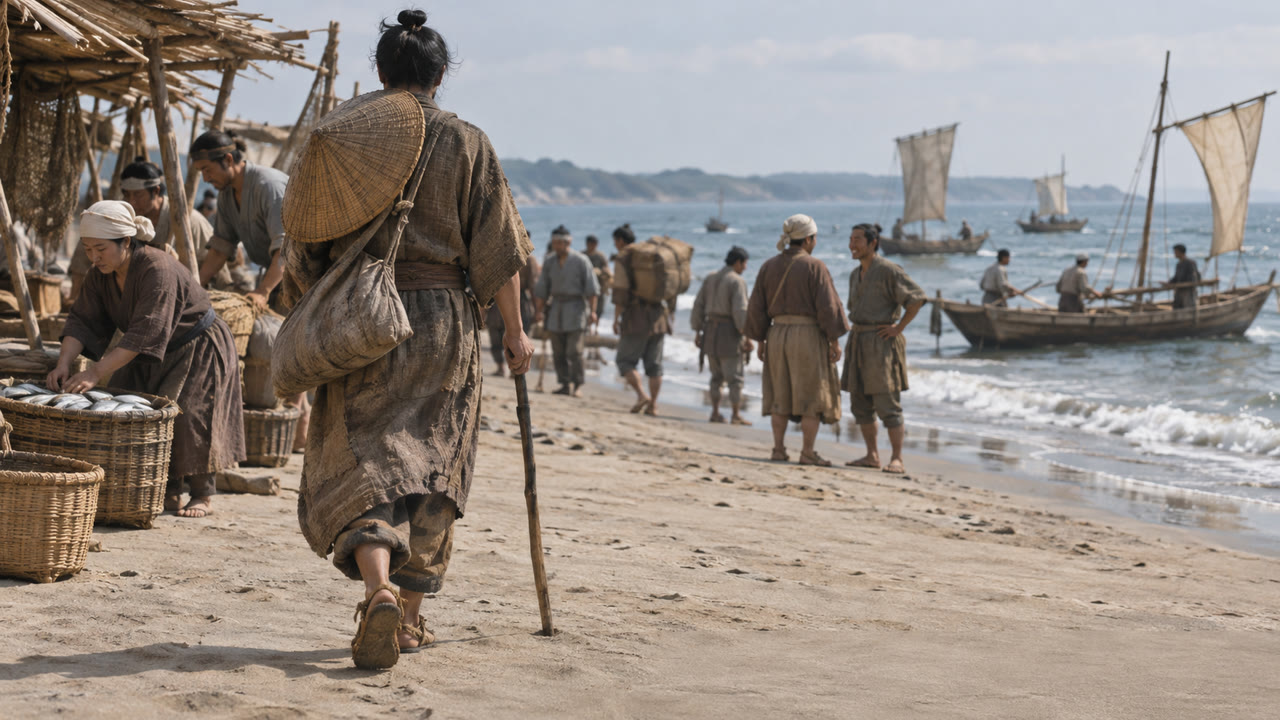
In 1223, nine years before the construction, the author of the travel account Kaidōki reached the beach at Yui in Kamakura and described hundreds of boats lying at anchor. The southeastern corner near Iijima, the account says, served as a landing place for boats and was busy with merchants.
The word “hundreds” belongs to a traveler’s literary description and is not a count made by a modern survey. Even so, the passage shows that the sea off Kamakura was already a place where people and goods gathered well before any harbor works were undertaken there.
Wakaejima, then, did not create a port on an empty shore. It was an attempt to improve a stretch of coast that people were already using, and to make the last part of a sea journey to Kamakura easier and safer for those who depended on it.
Chapter 2
The problem of a shallow sea
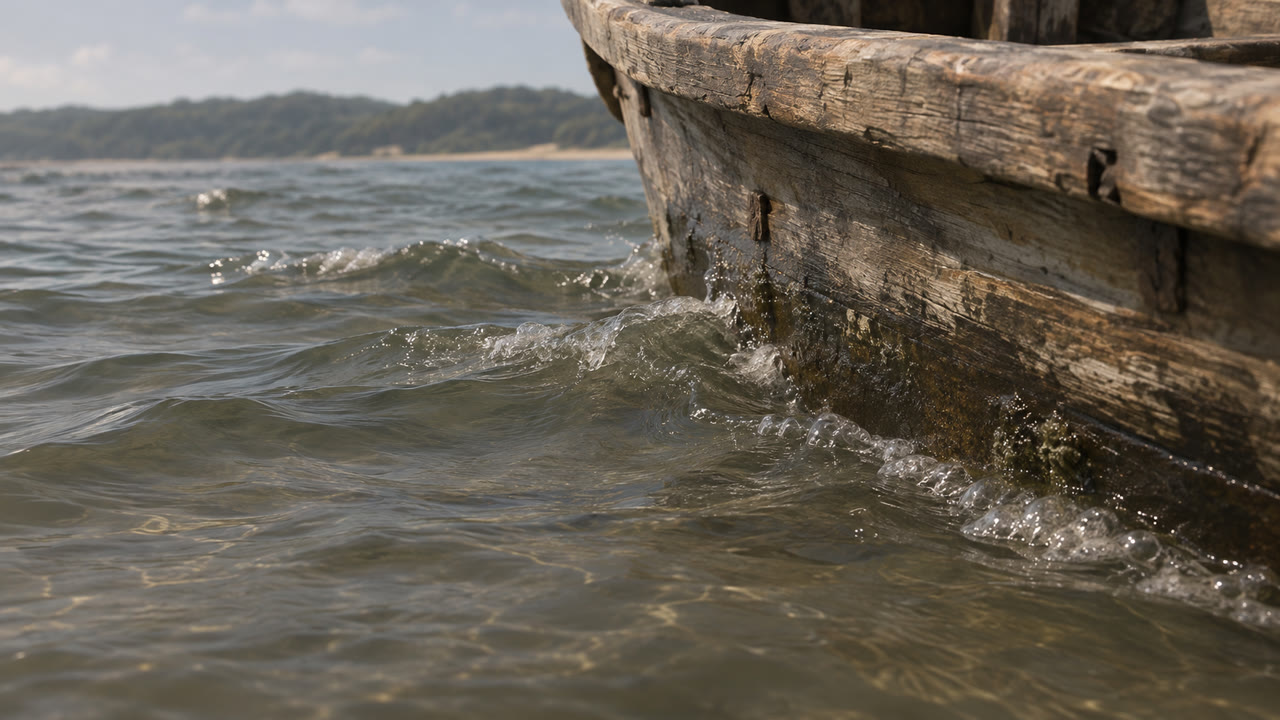
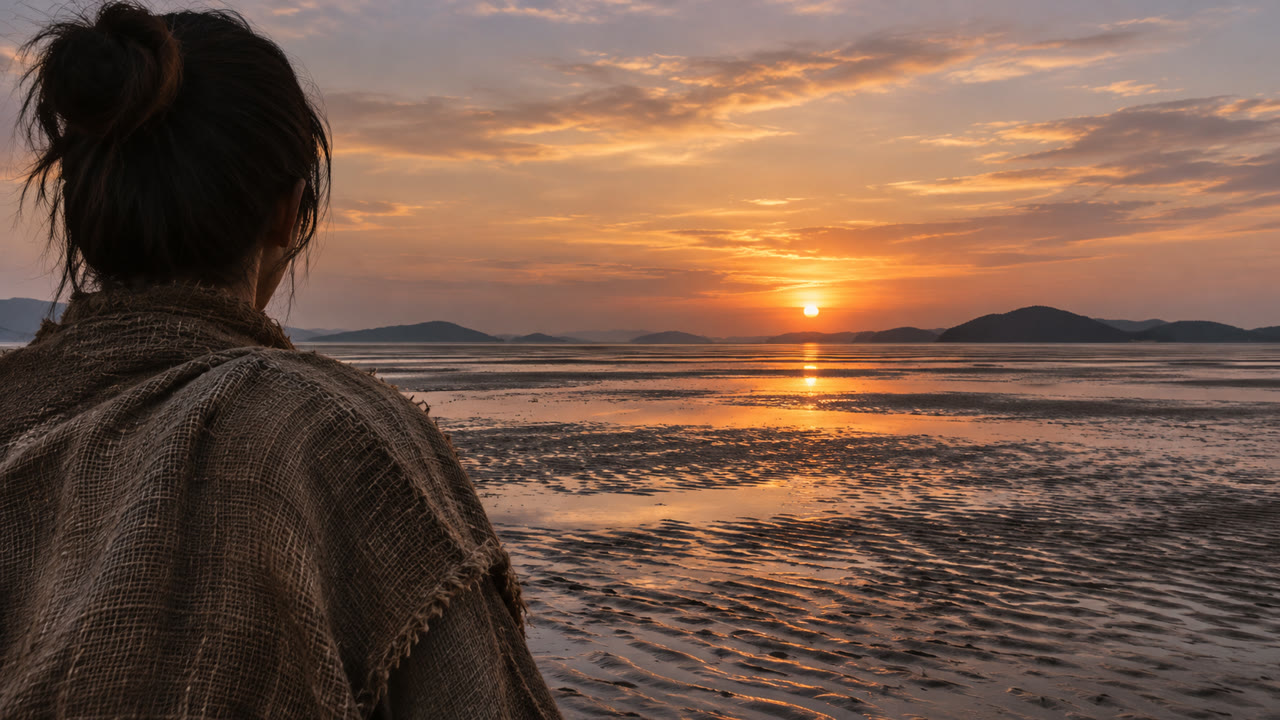
The Kamakura coast is shallow for a long way out, which made loading and unloading difficult. A City of Kamakura document adds that strong winds often damaged or capsized vessels, so the beach that drew merchants and sailors was also a dangerous place to bring a loaded ship.
According to the City of Zushi, shipwrecks were frequent off Zaimokuza. A vessel that had crossed open water still had not finished its work when it arrived offshore, because its passengers and cargo had to reach land safely before the voyage could be said to be over. For a town that relied on goods arriving by sea, this was a practical problem as well as a danger to sailors.
The difficulty lay in that final stretch between ship and shore. The words of the petition preserved in the chronicle Azuma Kagami make the aim plain: the new structure was meant to remove the trouble that boats faced when they came in to land.
Chapter 3
A monk’s request and a regent’s support
On the twelfth day of the seventh month of 1232, a monk named Ō-Amidabutsu asked the Kamakura shogunate for permission to build Wakaejima. He was a kanjin holy man, a monk who raised donations from the public to carry out religious and charitable projects.
The regent Hōjō Yasutoki and others agreed to help. The project therefore began with the proposal of one monk and went forward with the backing of the most powerful figure in the shogunate, joining fundraising from below with political support from above. The harbor should not be imagined as the achievement of any single person.
The sources used here reveal little about Ō-Amidabutsu’s life or about what led him to make the request. What can be said with confidence is that the harbor came into being through the combination of a monk’s petition and the support of the government.
Chapter 4
A project of less than a month
Studies citing Azuma Kagami report that work began on the fifteenth day of the seventh month and ended on the ninth day of the eighth month, less than a month after the request. A City of Kamakura plan instead gives the first day of the seventh month as the start, so the sources differ.
The historian Okutomi Takayuki argues that such a short schedule points to a relatively small project. He contrasts it with the repair of Ōwada no Tomari, the great harbor near present-day Kobe, which was carried out on a much larger scale as an undertaking of the state.
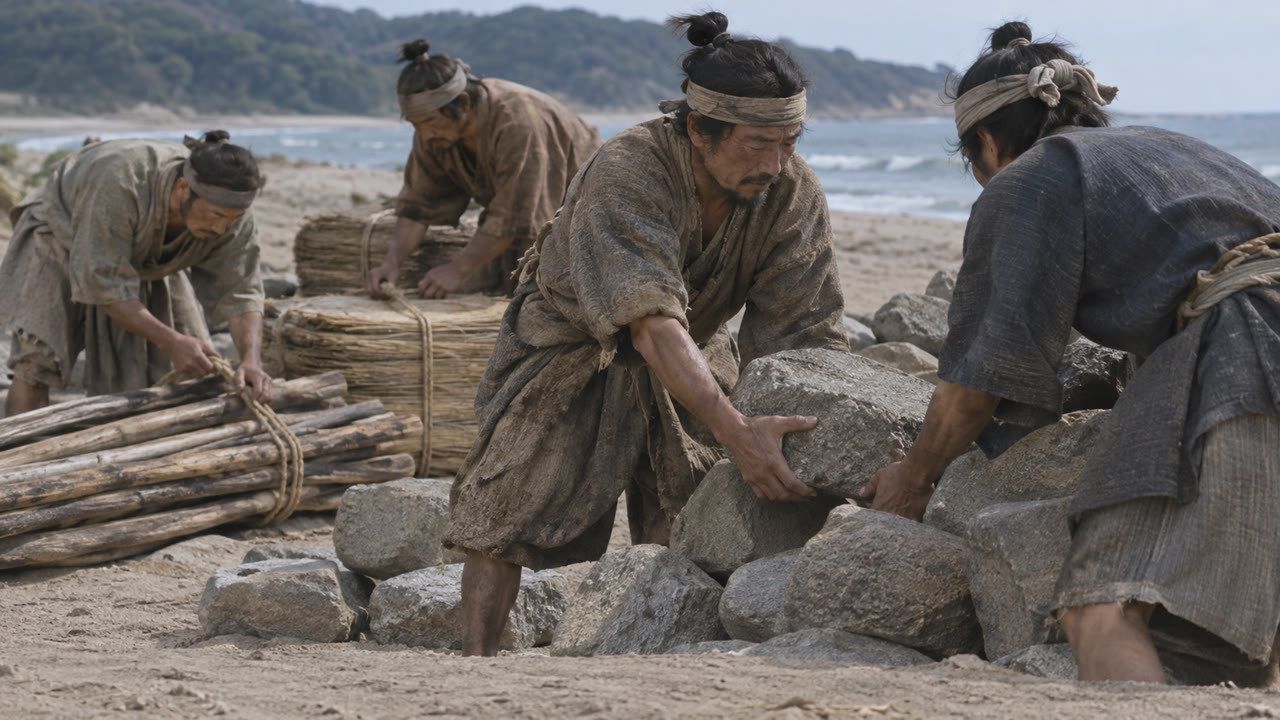
The brief records do not say where the stones came from or how many people worked on the site. Nor can the recorded dates alone tell us when preparations began, so the short schedule should not be read as a full account of the labor behind the harbor. The working scenes shown in this article are reconstructions, not depictions of recorded events.
Chapter 5
The shape of an island of stones
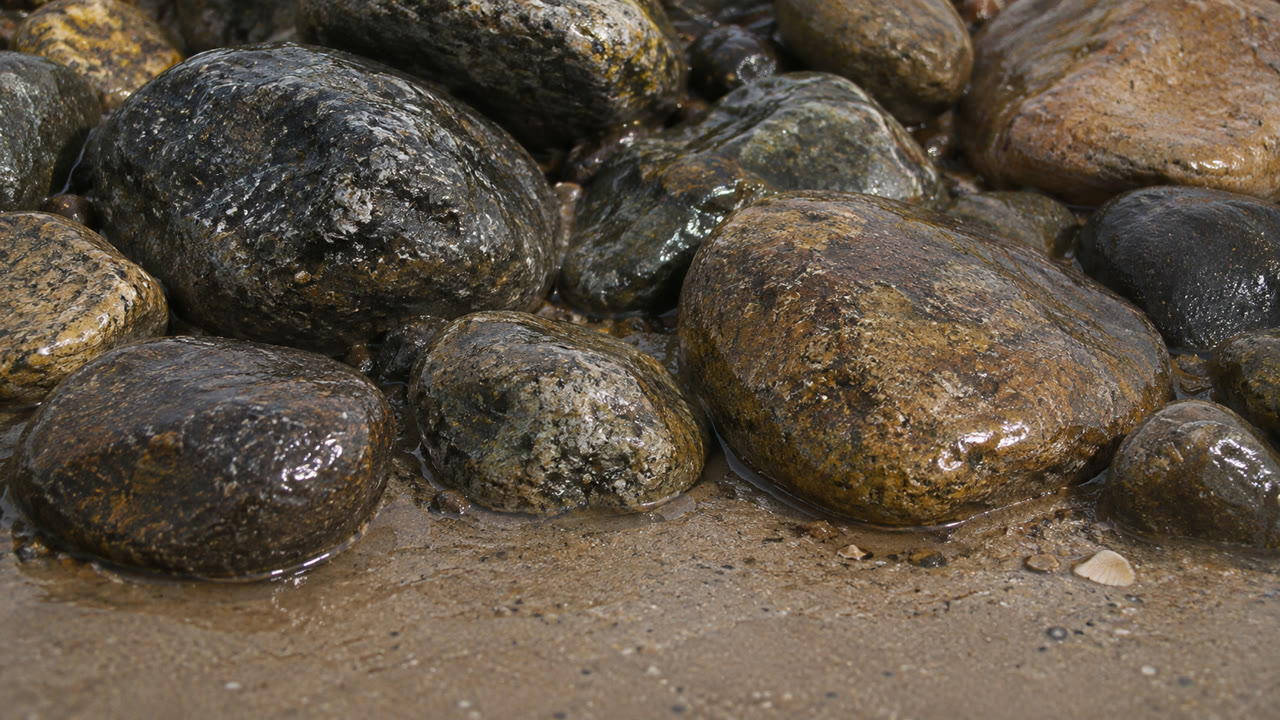
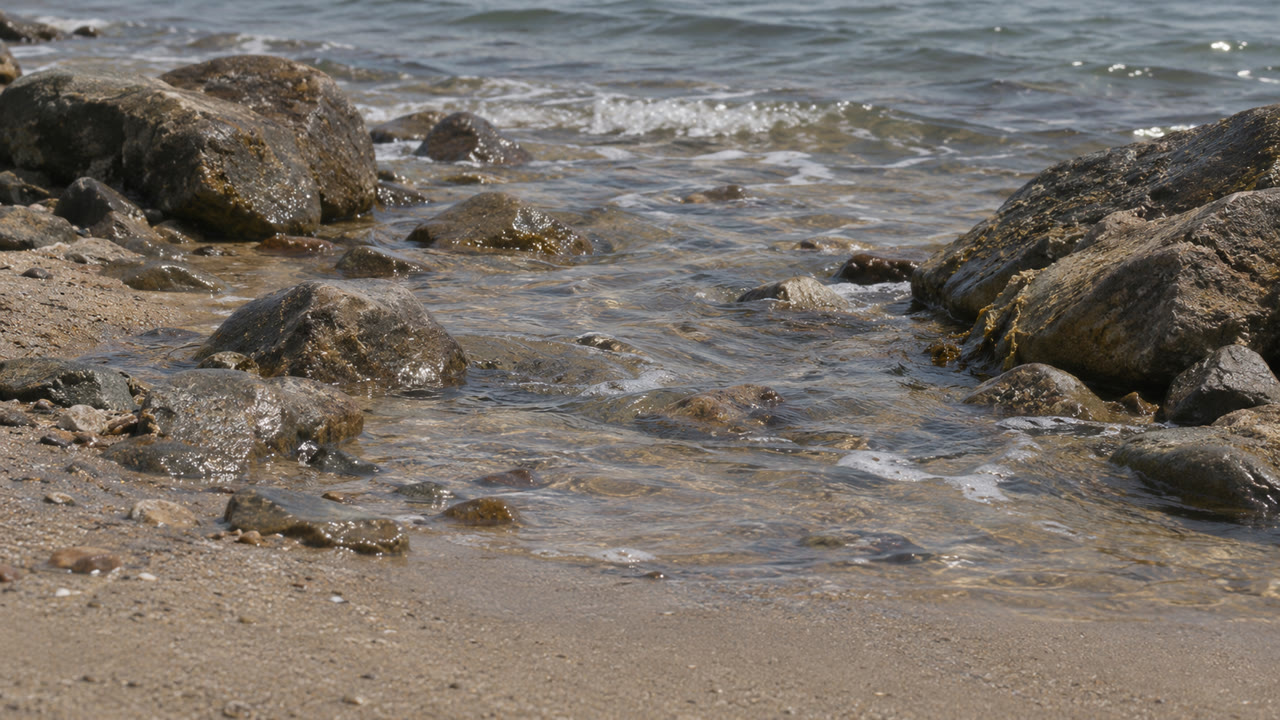
Today the remains appear at low tide for about 200 meters westward from the tip of a headland, as an island-like mass of round stones heaped on large rocks. A City of Kamakura document gives the diameter of the stones as roughly 40 to 50 centimeters. These figures describe the site as it survives now and should not be taken as the dimensions of the harbor when it was finished.
Kanagawa Prefecture explains that the site was made by reclaiming part of the sea to keep ships safe as they came ashore. Ten years after its completion, in 1242, the travel account Tōkan Kikō mentions it under the name “Wakae no Tsukishima,” the built island of Wakae.
Its original appearance, however, remains unknown. Wind, waves and earthquakes damaged the structure, later generations altered it, and its stones continued to scatter. What visitors see now is the result of centuries of change rather than a preserved thirteenth-century harbor.
Chapter 6
Kamakura’s gateway from the sea
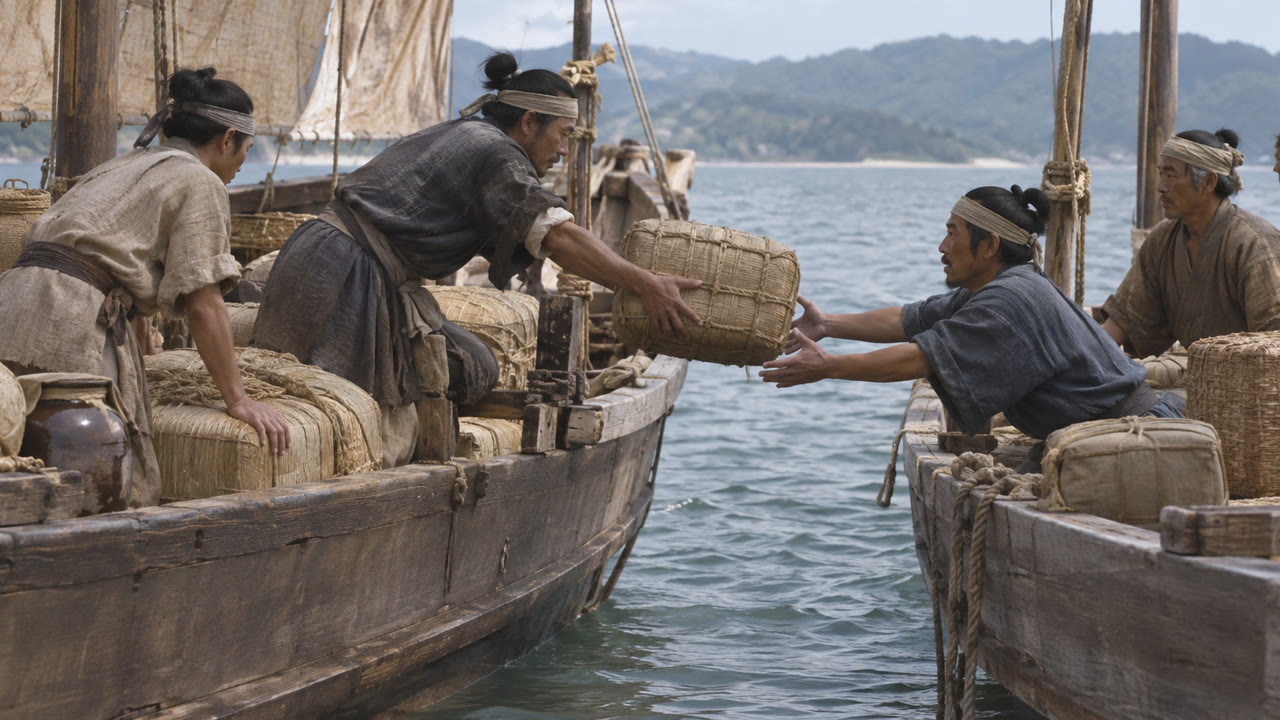
A City of Kamakura document describes Wakaejima as a harbor under the direct control of the shogunate and as a maritime gateway for exchange with China and other parts of Japan. The City of Zushi likewise calls it a window on East Asian trade, used by ships from Song China. Such descriptions place the harbor within networks that reached well beyond the coast of eastern Japan.
Fragments of ceramics still wash up on the nearby beach. Local tradition also holds that when timber for Tsurugaoka Hachimangū shrine was brought from Ise and landed at Wakaejima, the work songs of the people from Ise survived in Kamakura as a song known as the Tennō-uta.
A single shard on the beach, however, cannot reveal the route of the ship that carried it. The importance of the harbor as a whole and the history of any individual object are separate questions, and the evidence for one does not automatically answer the other.
Chapter 7
Harbor life beneath the ground
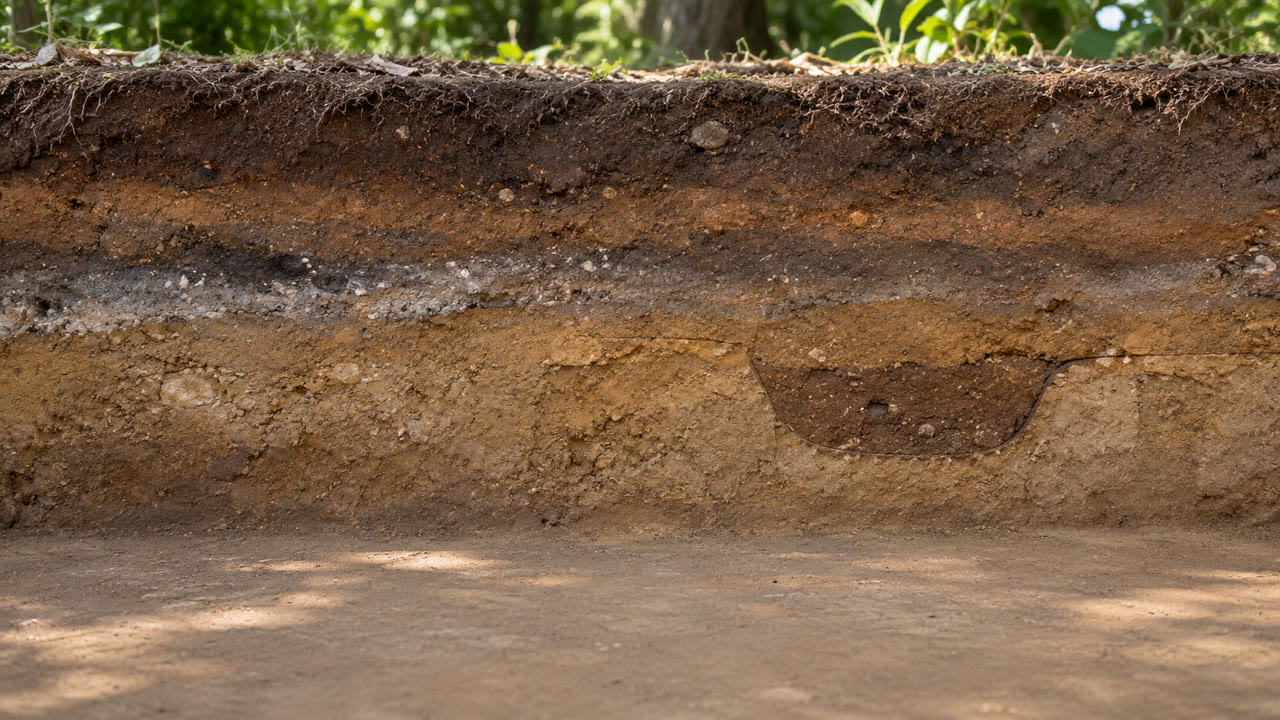
The Zaimokuza Machiya site offers a view of life beyond the shoreline. An excavation carried out in Zaimokuza 2-chome in fiscal 2016 found traces of land use from the thirteenth to the fifteenth century, including the remains of buildings, wells and ditches.
The finds were remarkably varied: Chinese and Japanese ceramics, cooking pots, roof tiles, bellows nozzles and iron slag, iron nails, copper coins, soapstone pots and whetstones. Chopsticks, animal bones, shells and seeds also survived, giving glimpses of what people ate and how they lived. Together they suggest a neighborhood where cooking, craftwork and storage went on side by side.
An exhibition at the Kamakura Museum of History and Culture interpreted the site as a place where people lived while storing and processing goods brought into the area. That reading comes from the combination of structures and objects found together, rather than from any written record naming the residents.
Chapter 8
The road from harbor to town
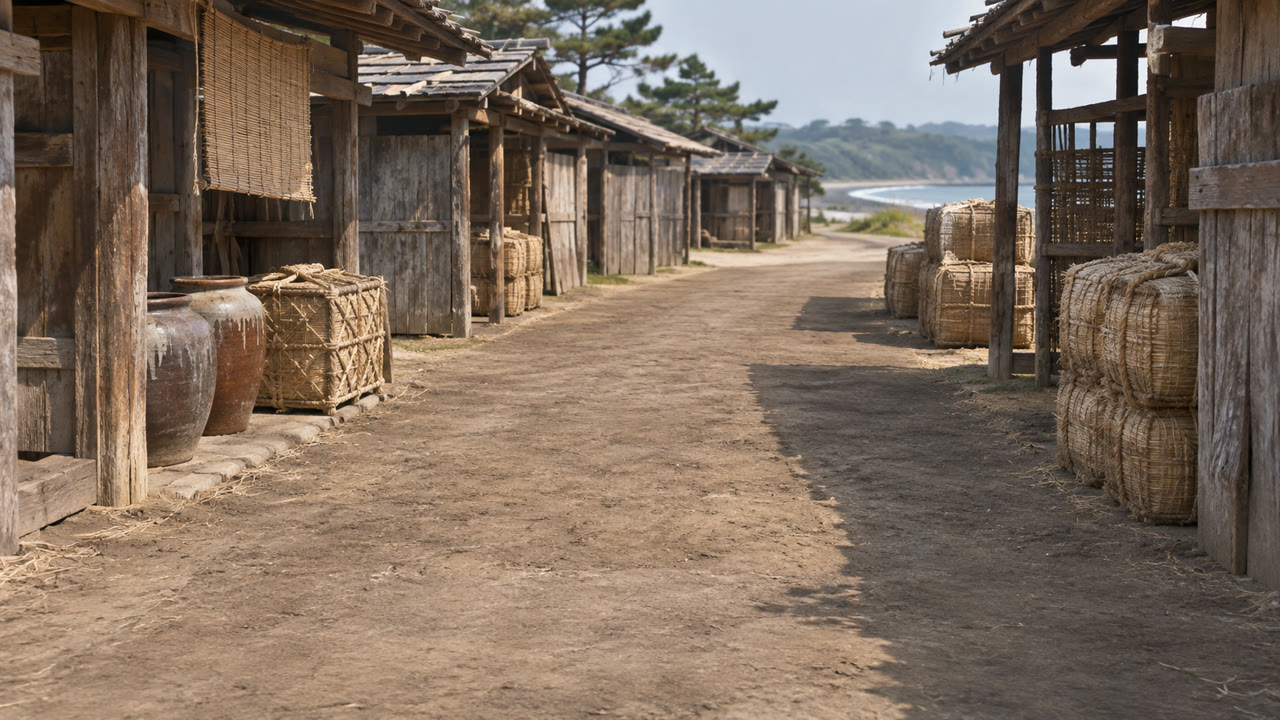
A road on the western side of the excavated area forms an extension of Komachi-ōji, one of Kamakura’s main streets. The exhibition suggests that everyday supplies, trade goods and building materials landed at Wakaejima traveled along this important route into the town.
Three kinds of places had to work together: a point where cargo passed from ship to shore, a road along which it could be carried, and sites where it was stored, processed and used. Only when all three were linked did sea transport become part of daily life in the town. A harbor meant little if goods could not move onward, and a road was of limited use if cargo could not be landed easily.
The district name Zaimokuza is also explained as being connected with a guild of timber merchants. The name alone, though, cannot tell us exactly when, where or by whom that trade was carried on, so it is best treated as a clue rather than a complete answer.
Chapter 9
Places of trade and the size of timber
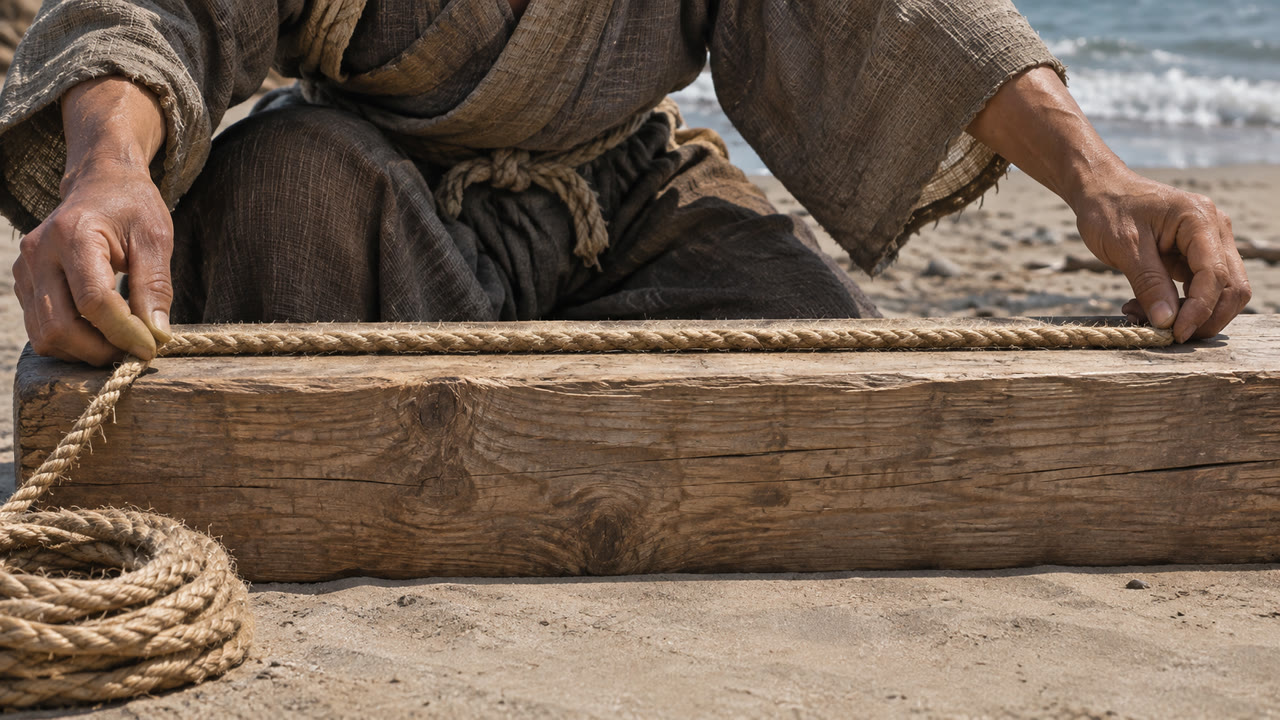
The harbor area soon appears in the laws of the shogunate. On the third day of the twelfth month of 1251, the government approved merchant houses in seven places in Kamakura, and Wakae was among them. The same measure banned tying cattle in the lanes and required the lanes to be kept clean. Such rules may seem minor beside great political events, but blocked streets would have slowed the movement of people and cargo.
On the eleventh day of the tenth month of 1253, a law intended to restrain the rising prices of charcoal, firewood and other goods also fixed the dimensions of timber entering through the port of Wakae. Consistent sizes were likely important to those who needed building materials.
These entries suggest that Wakae was more than a landing place for boats. By the middle of the thirteenth century it had become an area where the shogunate took an interest in regulating commerce and the movement of construction materials through the city.
Chapter 10
Two kinds of gateway: sea and mountain
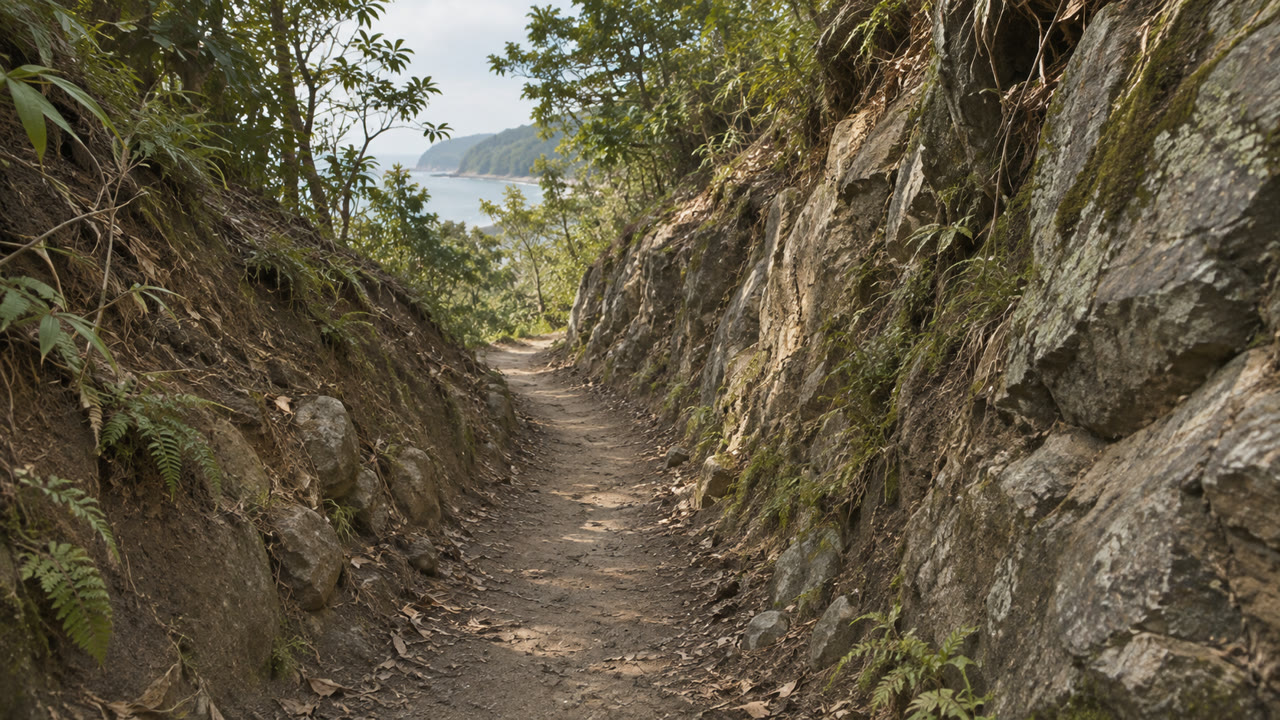
Wakaejima was not the only way into Kamakura. From around the early thirteenth century, the shogunate cut roads through the surrounding hills. These passes, called kiritōshi, kept the city connected with the outside world and could also serve as defensive strongpoints.
The Asahina Pass, linking Kamakura with Mutsura, was approved in 1240, and work began in 1241 with Yasutoki himself present. Mutsura served as an outer port for Kamakura on the northeastern side, giving the city another connection to the sea beyond its own beach.
The building of Wakaejima did not make these other routes unnecessary. Kamakura was a city with several entrances by sea and over the hills, and Wakaejima was one important part of that wider network that tied the capital to the regions around it. Its place in that network matters as much as its age.
Chapter 11
Gokurakuji and the work of upkeep
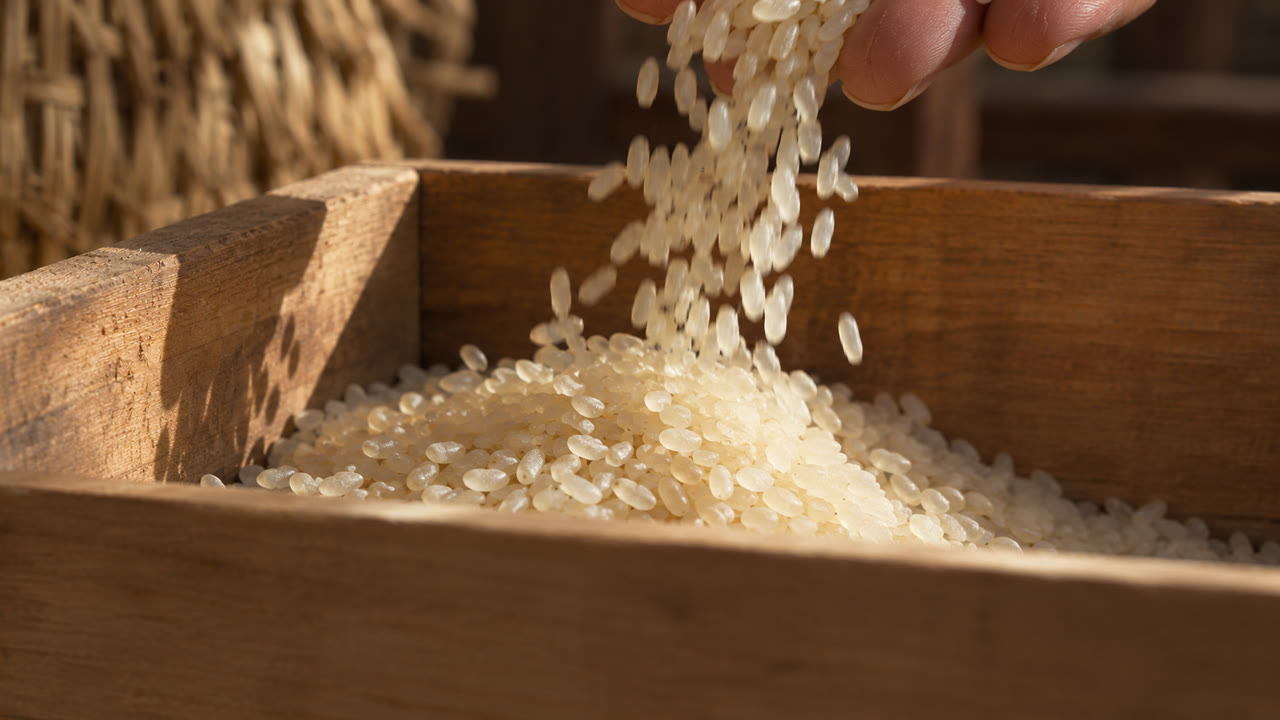
A structure in the sea could not simply be built and forgotten. Its upkeep came to be linked with the temple of Gokurakuji. A copy of a 1349 letter from Ashikaga Takauji confirmed the temple elder’s authority over the site, the shōmai levy, repairs to the island and a ban on killing animals along the shore, following the precedent of the monk Ninshō. More than a century separates this letter from the original construction, so it does not describe how the harbor was managed in 1232.
Shōmai, also called sekimai, was a charge on the cargo of ships entering the port. The sources disagree on the rate: a reply from the Kamakura City Central Library gives one shō of rice per koku, while an article by Watanuki Tomoko gives the usual rate as one to of rice per koku, ten times as much.
The levy is described as supporting harbor repairs and road building, yet Okutomi argues that what began as a repair fund became income for the lord who held the rights. Records of authority and the day-to-day running of the harbor should therefore be read as separate things.
Epilogue
The work of unnamed people in the stones
Wakaejima is said to have remained in use, with alterations, into the Edo period. In the 1750s part of the island was cut through so that fishing boats could pass. As the people using the harbor changed, the form of the harbor changed with them. Its survival does not mean that time stood still, for the remains carry the marks of repair, use and loss.
Designated a National Historic Site in 1968, the remains still lie in the sea, and local residents marked the fiftieth year of their cleanup activity in 2026. During spring low tides, families also come here to explore the pools among the stones.
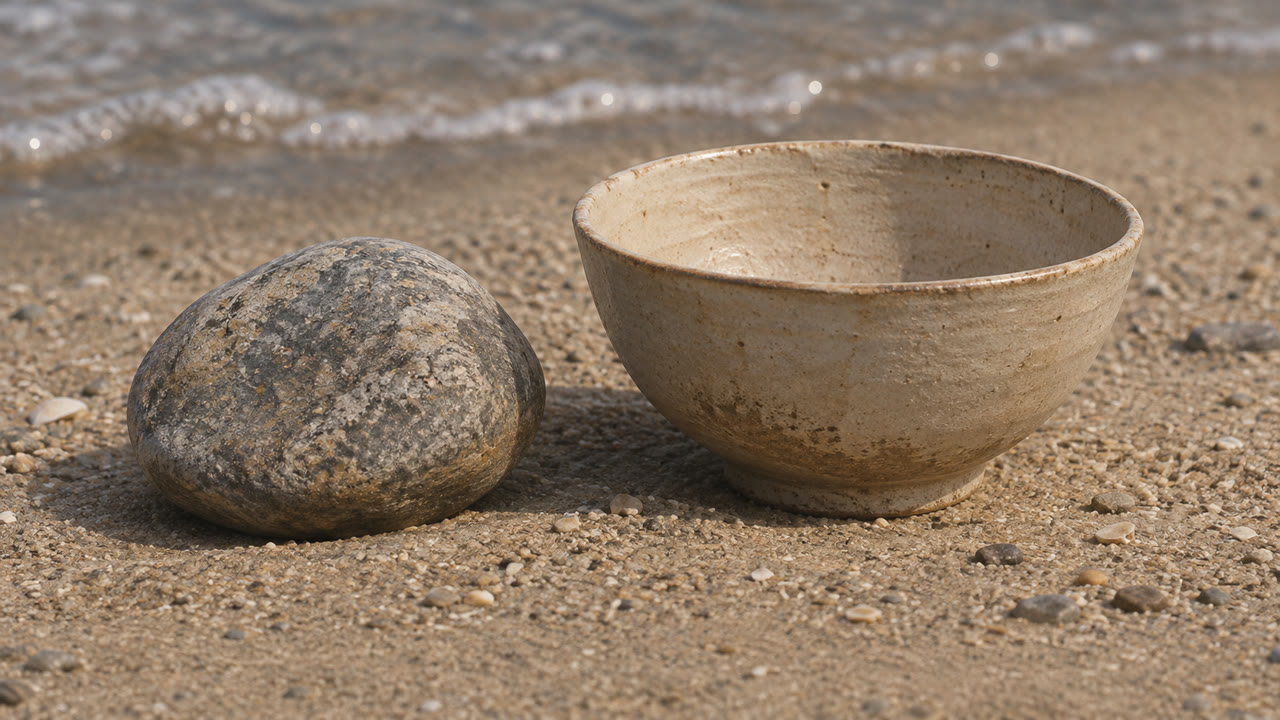
Beyond the round stones ran a road for carrying goods. There were hands that processed materials and people who ate from bowls brought across the water. The warrior capital that Wakaejima helped sustain rested on the labor of many people whose names were never recorded.
How to read this work
History, interpretation, and reconstruction
Wakaejima matters for more than its age. A structure meant to ease the landing of ships became part of a wider system of roads, urban work and upkeep that sustained life in the warrior capital.
This work is grounded in published sources and historical research. Interior thoughts, dialogue, and some visual details are cinematic reconstructions. Where historians disagree, the article presents the point as debated rather than settled fact.
Timeline
The story in time
-
The author of Kaidōki visits Kamakura and describes hundreds of boats anchored off Yui beach.
Sources: s04 -
Work on the Asahina Pass between Kamakura and Mutsura begins with Hōjō Yasutoki present.
Sources: s04 -
The travel account Tōkan Kikō mentions the site as “Wakae no Tsukishima.”
Sources: s05 -
The shogunate approves merchant houses in seven places in Kamakura, including Wakae.
Sources: s04 -
The dimensions of timber entering through the port of Wakae are fixed.
Sources: s04 -
Hōjō Shigetoki is said to have founded the temple of Gokurakuji.
Sources: s04 -
Ninshō moves to Gokurakuji, where he lives until his death in 1303.
Sources: s04 -
Part of the island is cut through so that fishing boats can pass.
Sources: s05 -
Local residents are reported to have reached the fiftieth year of their cleanup activity.
Sources: s09
People & terms
A guide for new readers
Key figures
- Ō-Amidabutsu
- A kanjin monk who asked the shogunate in 1232 to build Wakaejima.
- Hōjō Yasutoki
- Regent of the Kamakura shogunate who supported the harbor project.
- Ninshō
- Founding priest of Gokurakuji, named as the precedent for the temple’s rights in 1349.
- Ashikaga Takauji
- Warrior leader whose 1349 letter confirmed Gokurakuji’s rights over the island.
Glossary
- Kanjin 勧進
- Fundraising by monks among the public for temples, bridges and other projects.
- Kiritōshi 切通
- A road cut through a hill or ridge, used around medieval Kamakura.
- Shōmai 升米
- A levy on the cargo of ships entering a port; also called sekimai.
- Koku, to and shō 石・斗・升
- Traditional units of volume: one koku equals ten to, and one to equals ten shō.
- Azuma Kagami 吾妻鏡
- A chronicle of the Kamakura shogunate and a main source for the construction of Wakaejima.
Sources & method
How this article was built
This English edition follows the Japanese article scene by scene and keeps its ten sources, their order and its fourteen timeline entries. It draws on national, prefectural and municipal institutions, university and academic publications, and published articles.
Records, excavated evidence and interpretation are kept separate. Where sources disagree, including on the start of construction and the rate of the shōmai levy, the differences are stated, and no private thoughts or conversations are invented.
Sources
References and further reading
- Wakaejima: Database of National Cultural Properties 和賀江嶋 — 国指定文化財等データベース Title translated editorially for reader convenience. Agency for Cultural Affairs 文化庁 Designation date, location and description as the oldest surviving harbor facility. Accessed 2026-11-19
- Important Cultural Properties in Zushi: Wakaejima 逗子市内の重要文化財 第3項 和賀江嶋 Title translated editorially for reader convenience. City of Zushi 逗子市 Low-tide appearance, shipwrecks and construction, trade, Edo-period use and scattering of stones. Accessed 2026-11-19
- Excavation Bulletin Exhibition 2018, vol. 2: Living with Water in the Middle Ages 発掘調査速報展2018 vol.2 水と暮らす中世(展示資料) Title translated editorially for reader convenience. Kamakura Museum of History and Culture 鎌倉歴史文化交流館 Remains and finds at the Zaimokuza Machiya site, the road, and the interpretation of the site. Accessed 2026-11-19
- Medieval Japanese Harbors, with a Focus on Wakaejima, by Okutomi Takayuki 日本中世の港湾 ―和賀江島を中心として―(奥富敬之) Title translated editorially for reader convenience. Japan Society of Port Economics 日本港湾経済学会 Azuma Kagami and Kaidōki passages, laws of 1251 and 1253, Gokurakuji, the levy, Mutsura and the Asahina Pass. Accessed 2026-11-19
- On Land Creation in Premodern Times, by Watanuki Tomoko 前近代の土地造成をめぐって(綿貫友子、『国民経済雑誌』223巻6号) Title translated editorially for reader convenience. Kobe University 神戸大学 Construction dates, Tōkan Kikō, the 1349 letter, the levy, the present remains and the 1750s alteration. Accessed 2026-11-19
- What Was the Sekimai Levy Collected by Gokurakuji at Wakaejima? (Kamakura City Central Library reply) 和賀江島で極楽寺が徴収していた「関米」とは何か(鎌倉市中央図書館の回答) Title translated editorially for reader convenience. National Diet Library, Collaborative Reference Database 国立国会図書館 レファレンス協同データベース Explanation of the levy and how it was used. Accessed 2026-11-19
- Cultural Properties That Formed the Samurai Capital of Kamakura 武家の古都・鎌倉を構成した文化財 Title translated editorially for reader convenience. Kanagawa Prefecture 神奈川県 Purpose of Wakaejima, role of the mountain passes, and the port of Mutsura. Accessed 2026-11-19
- Kamakura City Plan for Maintaining and Improving Historic Character, Chapter 2 鎌倉市歴史的風致維持向上計画 第2章 Title translated editorially for reader convenience. City of Kamakura 鎌倉市 Size of the stones, recorded start date, the levy and upkeep, and the tradition of Ise timber. Accessed 2026-11-19
- Local Residents Mark 50 Years of Cleaning Wakaejima, Japan’s Oldest Harbor Ruin 国内最古の築港遺跡「和賀江嶋」 鎌倉の地元住民が50年目の清掃活動 Title translated editorially for reader convenience. Kanagawa Shimbun 神奈川新聞 May 2026 report on the residents’ cleanup activity. Accessed 2026-11-19
- Kamakura, Ancient Capital by the Sea, by Harada Hiroshi 海辺の古都・鎌倉:江の島と紅富士、水中花火、神職の沐浴…波打ち際の絶景に出会う(原田寛) Title translated editorially for reader convenience. Nippon.com ニッポンドットコム Present appearance of the site and its use as a port into the Edo period. Accessed 2026-11-19
Continue reading
More stories from Shigeki
Shigeki English
Amakusa Shiro at Hara Castle: A Young Symbol in the Surviving Evidence
An Arima castle, Matsukura taxes, risings in Shimabara and Amakusa, Itakura’s death, Nobutsuna’s siege and the fall of the castle: the history of the people who gathered under a boy’s name, told within the limits of the sources.
- When Kan’ei 14–15 (1637–1638), with the castle’s construction (1599–1604) and modern excavation and World Heritage inscription (2018) as background
- Where Shimabara and Amakusa in southwestern Japan, culminating in the siege of Hara Castle
Shigeki English
From the Black Ships to Hakodate: Sixteen Years from Bakumatsu to Meiji
Treaties, the Sakuradamon incident, the Kinmon incident, the Satsuma–Choshu alliance, the return of power, Toba–Fushimi, Edo Castle, Aizu and Hakodate: diplomatic commitments, political authority and military command did not change at the same moment.
- When 1853–1869, with administrative changes in 1869 and 1871 placed separately
- Where Uraga, treaty ports, Edo, Kyoto, Toba–Fushimi, Aizu and Hakodate