
SHIGEKI ENGLISH STORYEN
Japanese history in English
Yui Shōsetsu: The 1651 Plot That Stopped Before It Began
Separating the documented course of the Keian Incident from the stories added by later fiction and theater.
In 1651, a plot against the Tokugawa shogunate led by military teacher Yui Shōsetsu and Marubashi Chūya was exposed before it could begin. Follow the rōnin problem, the reported plan, his death at Sunpu, the policy changes and the stories that followed.
At a glance
Before you enter the story
- When
- The seventh and eighth months of 1651, with its background in the early seventeenth century and its retellings into the Meiji period.
- Where
- Edo, Sunpu (present-day Shizuoka), and the planned disturbances in Kyoto and Osaka.
- Key figures
- Yui Shōsetsu, Marubashi Chūya, Kanai Hanbei, Matsudaira Sadamasa, Matsudaira Nobutsuna, Tokugawa Yorinobu, Hayashi Razan
- What was at stake
- How a plot that never took place exposed the problem of masterless samurai and became one of the Edo period’s lasting stories.
Why this story matters
The larger history behind the turning point
The Keian Incident came at a moment of transition, just after the death of a powerful shogun, and it is closely associated with a change in how the shogunate treated daimyo houses and masterless samurai.
It also shows how little evidence can support a very large story. Much of what people remember about Yui Shōsetsu comes from fiction and theater created long after 1651.
Historical context
What an international reader needs to know
Places and terms
Edo is present-day Tokyo. Sunpu is present-day Shizuoka, on the Pacific coast road between Edo and Kyoto. The shogun was the military ruler of Japan, and daimyo were the lords of regional domains.
Dates and names
Months and days follow the lunar calendar used at the time, so the seventh month of 1651 does not match July in the modern calendar. Japanese names are given with the family name first.
Watch the film
See the story in motion
The film currently uses Japanese audio. This English article provides the context and source trail; it does not imply that an English subtitle track is available.
Opening
A plan stopped before it began
In the seventh month of 1651, the fourth year of the Keian era, the Tokugawa shogunate learned of a plot involving Yui Shōsetsu, a teacher of military science in Edo, and Marubashi Chūya, who ran a spear school in the city. The scheme reportedly called for disturbances in Edo, Sunpu, Kyoto and Osaka, but it was never carried out.
Marubashi was arrested in Edo, and Shōsetsu took his own life at an inn in Sunpu on the twenty-sixth day of that month. The affair is known as the Keian Incident or the Keian Uprising, and it has long been described as one of the turning points in the shogunate’s handling of masterless samurai.
Yet the encyclopedia Nihon Daihyakka Zensho notes that shogunal records do not survive and that the full picture remains unknown. Most literary works about the affair were written in the eighteenth and nineteenth centuries. This article separates the course of events given by reference works and scholars from the stories added later. Dates follow the calendar of the time.
Chapter 1
Warriors without a lord
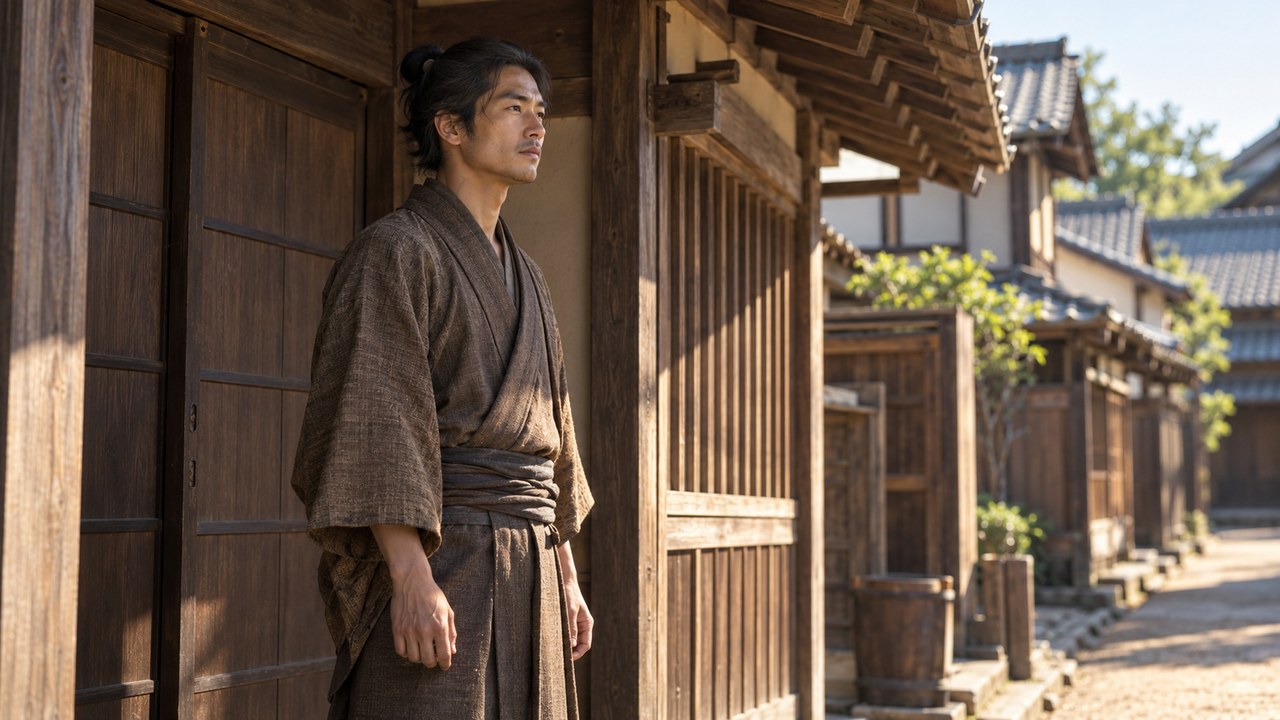
After the Battle of Sekigahara in 1600, the shogunate confiscated or reduced the domains of many daimyo. Warriors who lost their lords became rōnin, and a standard historical dictionary says they appeared in great numbers in the first half of the seventeenth century. A ban on adoptions requested on a lord’s deathbed was also a major cause of domain confiscations.
Estimates of their number vary widely. Figures of 400,000 and of more than 500,000 have been handed down, while Nihon Daihyakka Zensho, in its entry on the Keian Incident, calls an estimate of 300,000 to 400,000 too high. No reliable count exists, so these numbers show how large the problem seemed rather than how large it measurably was.
Rōnin gathering in the cities also became targets of official control. That does not mean that all of them resented the shogunate or joined Shōsetsu’s plot. The social problem behind the incident and the actual circle of people involved in it are two different questions, and the surviving sources do not allow the first to stand in for the second.

Chapter 2
Competing accounts of his origins
His family name can be written with two different sets of characters, and the National Diet Library’s authority record links both forms to the same man. His birth is often placed in 1605, but some dictionaries add a question mark to that year and others leave it unknown. Even the first date in his biography cannot be stated with confidence.
Accounts of his birthplace differ as well. Some describe him as the son of a dyer in Yui, in Suruga Province, while others say he was born at Miyagasaki in the same province. Nihon Daihyakka Zensho reports that shogunal records give his father a different name again, and one biographical dictionary concludes that much about his background remains unclear.
At the old Tōkaidō post town of Yui stands Shōsetsu Kon’ya, an indigo dye house said to be his birthplace, with a small shrine behind it said to honor his belongings. Stories about his father’s earlier life are also told there, but they are said to include much later embellishment and are best read as local tradition.
Chapter 3
Military science under the name of Kusunoki
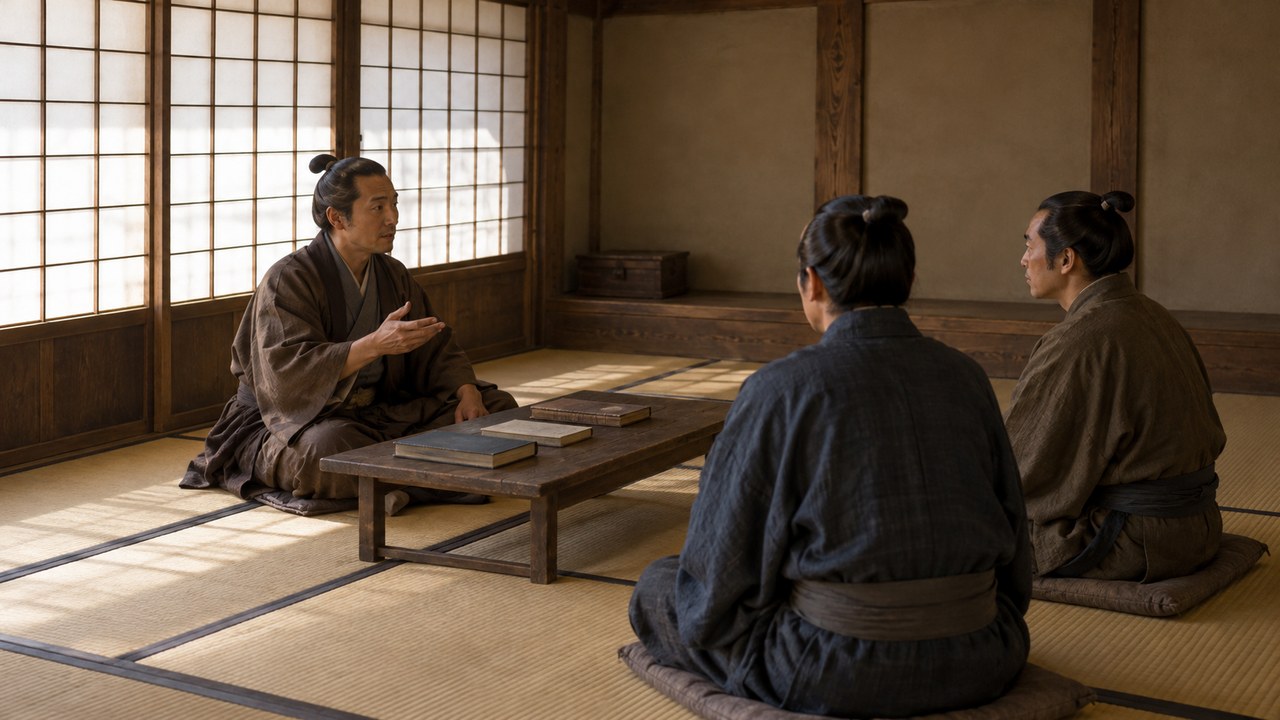
Shōsetsu taught the Kusunoki school of military science. During the Warring States period, the fourteenth-century commander Kusunoki Masashige came to be admired as a strategist, and by the early Edo period several schools claimed his legacy. Shōsetsu is said to have presented himself as a descendant of Masashige, or even as the heir of his main line.
Later works such as Keian Taiheiki say that he was adopted by a military scholar and studied the Kusunoki tradition under Kusunoki Fuden. These details come from books written long after his death, so they cannot be treated as a confirmed record of his training. They show instead what later readers expected the career of such a teacher to look like.
The Confucian scholar Hayashi Razan also portrayed Shōsetsu as a man who claimed to know the military methods of Kusunoki Masashige. Razan’s account, however, was written to criticize him. It tells us how an opponent wished to present Shōsetsu and his learning, and it should not be accepted without question as a neutral portrait of the man himself.
Chapter 4
The Chōkōdō and those who gathered there
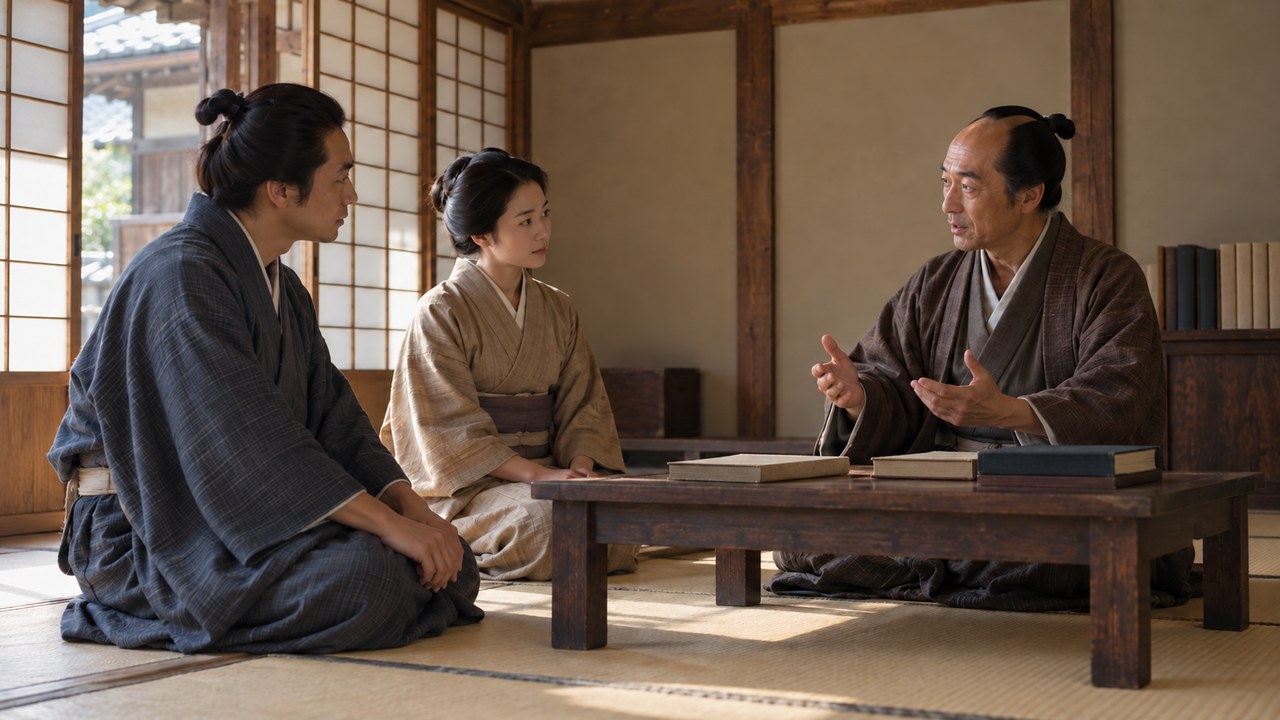
Shōsetsu’s school is known as the Chōkōdō. Nihon Daihyakka Zensho places it at Ushigome Enokichō, while also noting that the scholar Arai Hakuseki recorded a rented room in Renjakuchō. Other encyclopedias describe him teaching in rented quarters or a back-street house in Kanda Renjakuchō. The sources do not agree on where the school stood.
His students reportedly included bannermen, retainers of daimyo and rōnin. The number is often given as about 3,000, but a research note from Hosei University presents that figure as a boast. None of the sources consulted for this article offers a way to verify it, so the number is best understood as part of his reputation rather than a roll of students.
His associate Marubashi Chūya ran a school of Hōzōin-style spearmanship at Ochanomizu in Edo. Popular books made him a native of Dewa, but one encyclopedia suggests he was the son of a low-ranking shogunal retainer, and a biographical dictionary calls his origins unknown. Kanai Hanbei is also named among the leaders of the plot, along with others.
Chapter 5
A shogun’s death and a lord’s protest
In the fourth month of 1651, the third shogun, Tokugawa Iemitsu, died, and his heir Ietsuna was only eleven years old. Shōsetsu and his associates are said to have seen this as their opportunity. Among the senior councilors who supported the young shogun and dealt with that year’s crises was Matsudaira Nobutsuna.
That same year, Matsudaira Sadamasa, lord of Kariya in Mikawa Province, asked to give up his domain of 20,000 koku to relieve impoverished bannermen. He shaved his head without permission, begged for alms in Edo and submitted a memorial criticizing senior officials. The shogunate treated his conduct as a sign of madness and punished him.
One encyclopedia counts this episode among the causes of political unease. According to Nihon Daihyakka Zensho, Shōsetsu’s final letter expressed an intention to carry on Sadamasa’s purpose. An armed plot and the surrender of a domain were very different acts, but both brought the hardship of the warrior class into public view during the same tense months.
Chapter 6
A scheme across four cities
The reported plan was ambitious. Shōsetsu would seize the treasury at Kunōzan in Suruga and take Sunpu Castle. In Edo, Marubashi would set fires at places including the gunpowder store at Koishikawa, and the conspirators would pose as men of the Kii Tokugawa house to take Edo Castle. Disturbances would also break out in Kyoto and Osaka.
One encyclopedia says the aim at Kunōzan was to seize the money left there by Tokugawa Ieyasu. The Hosei research note quotes the idea that two or three hundred men holding Kunōzan could stand off thousands. Another reference work assigns Osaka to Kanai Hanbei. These details describe what the plotters are said to have intended, not anything they accomplished.
The historian Kiri Paramore argues that simultaneous attacks on the political and economic centers of the country had no precedent, which is why the shogunate felt so threatened. Still, the plan was never carried out and few concrete records from the time survive. Its reported details cannot be read as an account of events that actually took place.
Chapter 7
The twenty-sixth day, at an inn in Sunpu
On the twenty-second day of the seventh month, Shōsetsu left Edo for Sunpu. The plan had reached the authorities through informers, and later accounts name one member of the group as the man who betrayed it. Sources disagree over whether Marubashi was arrested on the twenty-second or the twenty-third, a small gap that shows how uncertain even basic details can be.
On the twenty-sixth, officers of the town magistrate surrounded Shōsetsu at his lodging in Sunpu, and he took his own life. The inn is remembered as the Umeya, and one dictionary places it in the Chamachi district. He is sometimes said to have been forty-seven years old, but with his birth year unsettled, that age cannot be confirmed.
One biographical dictionary quotes a line from his final letter, lamenting that his unworthy aim had come to nothing. It is a brief statement of failure rather than a full explanation of the plot. A mound said to hold his head is still pointed out at the temple of Bodaijuin in Shizuoka, the modern city that grew from Sunpu.
Chapter 8
Execution at Suzugamori and suspicion of Kii
Most dictionaries say Marubashi was crucified at Shinagawa on the tenth day of the eighth month. He is also remembered as the first person executed at the Suzugamori grounds, established that same year. Counts of the dead vary: thirty-five members and relatives, or at least thirty-odd people, with one dictionary describing mass arrests and executions through the eighth and ninth months.
The affair also cast a shadow over Tokugawa Yorinobu, lord of Kii. Nihon Daihyakka Zensho records a rumor that he was Shōsetsu’s backer, and the Britannica dictionary says Shōsetsu had been invited by him. The reported plan to pose as men of the Kii house adds to the connection, although a rumor and a borrowed name prove nothing by themselves.
An explanation from the Shogakukan site HugKum says that a letter from Yorinobu in Shōsetsu’s possession proved to be forged, and that views differ on whether the affair caused Yorinobu’s later loss of standing. The existence of a rumor and actual involvement in the plot are separate matters, and the sources used here do not establish the second.
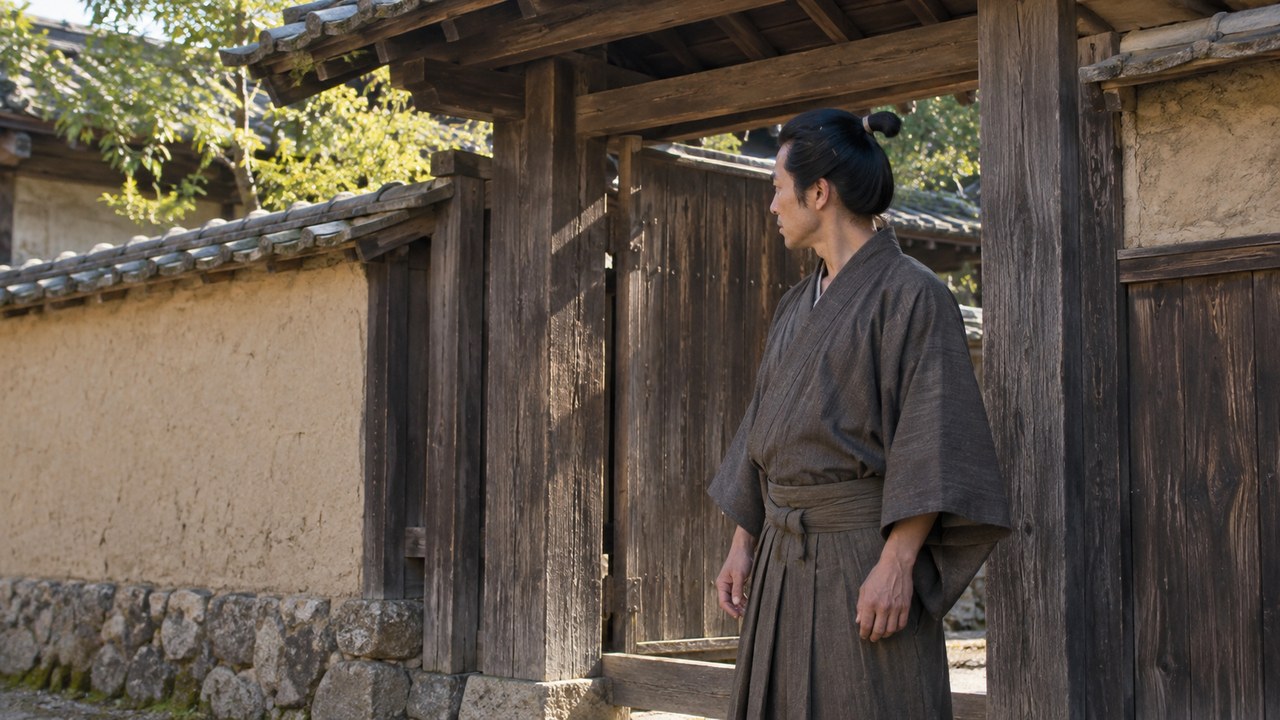
Chapter 9
Easing the adoption ban and guarding Sunpu
In the year of the incident, the shogunate relaxed its ban on deathbed adoptions. Several dictionaries say the practice was allowed for lords aged seventeen or over and under fifty, though the wording of the age limits differs from one work to another. Officials were required to visit the sickbed and confirm the lord’s wishes, a procedure known as hanmoto mitodoke.
If fewer domains disappeared, fewer warriors would lose their positions. One encyclopedia says the incident transformed the shogunate’s policy toward rōnin, and another reference work treats it as an opening toward government by civil rather than military means. Even so, this single event cannot explain every change in policy that followed during the long rule of Ietsuna.
At Sunpu, the city of Shizuoka explains that a third residence for castle guard officers was established in response to the incident, adding to the two guard posts already in place. In the ninth month of 1652, another plot, led by Betsuki Shōzaemon, was exposed by an informer and was likewise seen at the time as a rising of rōnin interested in military science.

Chapter 10
The incident as written by Hayashi Razan
Sōzoku Zengoki is one of the few works from near the time that discusses the causes of the incident at length. According to Kiri Paramore’s study, manuscripts survive in the Cabinet Library, the National Diet Library and elsewhere, and many of those he examined appear to derive from a single copy made in 1803.
Whether Hayashi Razan really wrote it has been questioned. Paramore points to a letter of 1654 addressed to Ishikawa Jōzan, in which Razan mentions a “record of grass bandits” in very similar terms, as evidence supporting his authorship. The doubts raised over its pen name and rough Chinese style, he argues, are not decisive against that conclusion.
In this work, Razan attacks military science, heterodox learning, Buddhism and Christianity as parts of one connected danger. Paramore reads it as a text that helped draw the line between orthodox and unorthodox thought as well as describing a crime. When reading its picture of Shōsetsu, we need to keep the author’s purpose firmly in view.

Chapter 11
Shōsetsu on the page and on the stage
Keian Taiheiki, a work of documentary-style fiction formed around the middle of the Edo period, became the best-known retelling of the affair. One encyclopedia describes it as highly fictional and far removed from historical fact. Another explanation says it was banned by the shogunate yet continued to circulate in handwritten copies, which helped keep the story alive among readers.
On stage, Marubashi first appeared under other names, as in the 1759 puppet play Taiheiki Kikusui no Maki. After a kabuki play by Kawatake Mokuami opened at Tokyo’s Morita-za in the third month of 1870, his real name took hold. Its famous scene shows him feigning drunkenness to gauge the depth of Edo Castle’s moat, and it became a signature role for Ichikawa Sadanji I.
Publishers kept returning to the subject in the Meiji period. An illustrated “true record” of Shōsetsu appeared in 1891, and a printed version of a storyteller’s tale about Shōsetsu and Marubashi followed in 1900. A title that promises a true record does not make a book a record of the events, and these works belong to the history of retelling.
Closing
What is known and what was retold
What can be said with confidence is the outline: in 1651 a plot against the shogunate was discovered, Shōsetsu took his own life at Sunpu, and Marubashi and others were executed. Many dictionaries also record that the ban on deathbed adoptions was relaxed in the same year, even as they differ over how directly the two were connected.
His birth, the number of his students, the details of the plan and any link to the Kii house remain uncertain or disputed. Documentary fiction, storytelling and theater filled those gaps. Perhaps because the plan stopped before anything happened, later tellers had unusual freedom to imagine what might have been, and audiences were glad to follow them.
To read about Yui Shōsetsu is to follow a brief political crisis and also to watch a thinly documented event grow into a story. When the name Keian Taiheiki appears, it is worth asking when a given scene was told, by whom and for what audience. That question brings us closer to both the incident and its long afterlife.
How to read this work
History, interpretation, and reconstruction
The Keian Incident ended before it began and left few concrete records. Separating its documented outline from disputed details and later stories shows how Yui Shōsetsu came to be remembered.
This work is grounded in published sources and historical research. Interior thoughts, dialogue, and some visual details are cinematic reconstructions. Where historians disagree, the article presents the point as debated rather than settled fact.
Timeline
The story in time
-
Yui Shōsetsu is said to have been born, though some dictionaries mark the year as uncertain.
Sources: s09 -
Shōsetsu leaves Edo for Sunpu.
Sources: s08 -
The ban on deathbed adoptions is relaxed.
Sources: s12 -
A third guard officers’ residence is established at Sunpu.
Sources: s03 -
A plot led by Betsuki Shōzaemon is exposed in the Jōō Incident.
Sources: s16 -
Hayashi Razan mentions his record of the affair in a letter to Ishikawa Jōzan.
Sources: s04 -
Marubashi appears under another name in the puppet play Taiheiki Kikusui no Maki.
Sources: s11 -
Kawatake Mokuami’s kabuki play on the incident opens at the Morita-za in Tokyo.
Sources: s14 -
An illustrated “true record” of Yui Shōsetsu is published.
Sources: s05 -
A printed storyteller’s tale of Yui Shōsetsu and Marubashi Chūya is published.
Sources: s06
People & terms
A guide for new readers
Key figures
- Yui Shōsetsu
- A teacher of Kusunoki-school military science in Edo, regarded as the leader of the 1651 plot.
- Marubashi Chūya
- A spear teacher in Edo and a leader of the plot, executed at Shinagawa.
- Kanai Hanbei
- Named among the leaders of the plot and said to have been assigned to Osaka.
- Matsudaira Sadamasa
- Lord of Kariya who asked in 1651 to give up his domain to relieve bannermen.
- Matsudaira Nobutsuna
- A senior councilor who supported the young shogun and handled the crises of 1651.
- Tokugawa Yorinobu
- Lord of Kii, rumored to have backed Shōsetsu.
- Hayashi Razan
- A Confucian scholar who criticized the plot and military science in Sōzoku Zengoki.
Glossary
- Rōnin 牢人・浪人
- A warrior without a lord; the word does not imply a shared motive or participation in the plot.
- Kaieki 改易
- The confiscation of a daimyo’s domain by the shogunate.
- Matsugo yōshi 末期養子
- An heir adopted when a lord was already near death.
- Jitsuroku 実録
- Documentary-style fiction presented as a true record of events.
- Kōdan 講談
- A spoken storytelling art, often based on historical tales.
Sources & method
How this article was built
This English edition follows the revised Japanese article scene by scene and keeps its twenty-four sources, their order and its seventeen timeline entries. It draws on national and municipal institutions, university publications, reference works and published articles.
Institutional explanations and the interpretation offered here are kept separate. Where sources disagree, the differences are stated, and no private thoughts or conversations are invented.
Sources
References and further reading
- Yui Shōsetsu, died 1651: Authority Record 由井, 正雪, -1651 — Web NDL Authorities Title translated editorially for reader convenience. National Diet Library 国立国会図書館 Variant forms of the surname and the year of death. Accessed 2026-11-19
- Reference answer on the manuscript of Keian Taiheiki 『慶安太平記』の写本を所有している。原作者、書かれた時代などを知りたい。 Title translated editorially for reader convenience. Sagamihara City Hashimoto Library / Collaborative Reference Database 相模原市立橋本図書館/レファレンス協同データベース The work’s character as documentary-style fiction and its mid-Edo origin. Accessed 2026-11-19
- Shizuoka City Plan for the Preservation and Use of Cultural Properties 静岡市文化財保存活用地域計画 Title translated editorially for reader convenience. City of Shizuoka 静岡市 The 1651 discovery and suicide, guard posts and the third guard residence. Accessed 2026-11-19
- A Study of Sōzoku Zengoki: Its Place in Tokugawa Intellectual History 『草賊前後記』考―徳川思想史におけるその位置― Title translated editorially for reader convenience. International Christian University (Asian Cultural Studies, Supplement 34) 国際基督教大学(アジア文化研究別冊34) Kiri Paramore on the incident, scarce records, manuscripts, authorship and the critique of military science. Accessed 2026-11-19
- Ehon Jitsuroku: Yui Shōsetsu Keianroku (H-1416-14) 絵本実録 由井正雪慶安録 全(H-1416-14) Title translated editorially for reader convenience. National Museum of Japanese History 国立歴史民俗博物館 Catalog record of the 1891 book; no claim is made about the accuracy of its contents. Accessed 2026-10-20
- Yui Shōsetsu Marubashi Chūya Ryōyūden 由井正雪丸橋忠弥両雄伝 Title translated editorially for reader convenience. National Diet Library Search 国立国会図書館サーチ Catalog record of the 1900 storyteller’s book. Accessed 2026-11-19
- Reading the Edo Period through Organization Theory (5) 組織論で読み解く 江戸時代(5) Title translated editorially for reader convenience. Hosei University Business Administration Society (Keiei Shirin 47:4) 法政大学経営学会(経営志林47巻4号) Estimates of rōnin, the boast of 3,000 students and the view of Kunōzan. Accessed 2026-11-19
- Keian Incident 慶安事件 Title translated editorially for reader convenience. Kotobank コトバンク Entries from several Japanese encyclopedias on the course of events, the plan, executions and policy. Accessed 2026-11-19
- Yui Shōsetsu: Encyclopedia Entries 由比正雪 Title translated editorially for reader convenience. Kotobank コトバンク Birth, origins, school, students, death and final letter. Accessed 2026-11-19
- Yui Shōsetsu: Dictionary Entries 由井正雪 Title translated editorially for reader convenience. Kotobank コトバンク Britannica entry on his origins, teaching and invitation by Tokugawa Yorinobu. Accessed 2026-11-19
- Marubashi Chūya 丸橋忠弥 Title translated editorially for reader convenience. Kotobank コトバンク Origins, spear school, arrest, execution and stage portrayals. Accessed 2026-11-19
- Deathbed Adoption (Matsugo Yōshi) 末期養子 Title translated editorially for reader convenience. Kotobank コトバンク The 1651 relaxation, differing age limits and the sickbed procedure. Accessed 2026-11-19
- Rōnin 牢人 Title translated editorially for reader convenience. Kotobank コトバンク Origins, estimated numbers, control and policy. Accessed 2026-11-19
- Kusunoki-ryū Hanami no Makubari 樟紀流花見幕張 Title translated editorially for reader convenience. Kotobank コトバンク Author, the 1870 premiere at the Morita-za and alternate titles. Accessed 2026-11-19
- Keian Taiheiki 慶安太平記 Title translated editorially for reader convenience. Kotobank コトバンク The character of the documentary fiction, its fictional content and the moat scene. Accessed 2026-11-19
- Jōō Incident 承応事件 Title translated editorially for reader convenience. Kotobank コトバンク The plot exposed in the ninth month of 1652. Accessed 2026-11-19
- Tokugawa Yorinobu 徳川頼宣 Title translated editorially for reader convenience. Kotobank コトバンク The rumor that he backed Shōsetsu. Accessed 2026-11-19
- Matsudaira Nobutsuna 松平信綱 Title translated editorially for reader convenience. Kotobank コトバンク His support of Ietsuna and handling of the 1651 crises. Accessed 2026-11-19
- Suzugamori Execution Ground Site 鈴ヶ森刑場跡 Title translated editorially for reader convenience. Kotobank コトバンク The establishment of the site in 1651. Accessed 2026-11-19
- Shōsetsu Kon’ya 正雪紺屋 Title translated editorially for reader convenience. Nippon Tabi Magazine ニッポン旅マガジン The birthplace tradition, the shrine, later embellishment and the head mound at Bodaijuin. Accessed 2026-11-19
- Suzugamori Execution Ground 鈴ヶ森刑場 Title translated editorially for reader convenience. Nippon Tabi Magazine ニッポン旅マガジン The site and the tradition that Marubashi was the first person executed there. Accessed 2026-11-19
- The Hidden Story of Domain Confiscations in the Edo Period お殿様も安閑としていられなかった、江戸時代のお家断絶の裏事情 Title translated editorially for reader convenience. Serai.jp (Shogakukan) サライ.jp(小学館) The actions of Matsudaira Sadamasa and the shogunate’s response. Accessed 2026-11-19
- What Was the Yui Shōsetsu Rebellion? 「由井正雪の乱」とは? 起こった背景から、その後の影響までを確認しよう Title translated editorially for reader convenience. HugKum (Shogakukan) HugKum(小学館) Ietsuna’s age, the informer and the forged letter. Accessed 2026-11-19
- Seeing History through Kusunoki Sites 楠公史跡から歴史が見える。-近世・近代の楠公顕彰- Title translated editorially for reader convenience. City of Kawachinagano (lecture material by Otani Masahiko) 河内長野市(尾谷雅比古の講演資料) The spread of Kusunoki military science, Shōsetsu’s claim of descent and circulation in manuscript. Accessed 2026-11-19
Continue reading
More stories from Shigeki
Shigeki English
Amakusa Shiro at Hara Castle: A Young Symbol in the Surviving Evidence
An Arima castle, Matsukura taxes, risings in Shimabara and Amakusa, Itakura’s death, Nobutsuna’s siege and the fall of the castle: the history of the people who gathered under a boy’s name, told within the limits of the sources.
- When Kan’ei 14–15 (1637–1638), with the castle’s construction (1599–1604) and modern excavation and World Heritage inscription (2018) as background
- Where Shimabara and Amakusa in southwestern Japan, culminating in the siege of Hara Castle
Shigeki English
From the Black Ships to Hakodate: Sixteen Years from Bakumatsu to Meiji
Treaties, the Sakuradamon incident, the Kinmon incident, the Satsuma–Choshu alliance, the return of power, Toba–Fushimi, Edo Castle, Aizu and Hakodate: diplomatic commitments, political authority and military command did not change at the same moment.
- When 1853–1869, with administrative changes in 1869 and 1871 placed separately
- Where Uraga, treaty ports, Edo, Kyoto, Toba–Fushimi, Aizu and Hakodate