
SHIGEKI ENGLISH STORYEN
Japanese history in English
Kobayakawa Hideaki after Sekigahara: Work beyond Okayama’s Keep
The outer moat offers a way into a short period of castle government.
Follow Hideaki’s rule at Okayama from 1600 to 1602 through inherited Ukita buildings, the western outer moat, gates, temples, outer enclosures and tower alterations. Distinguish the Twenty-Day Moat tradition from verified construction records, and his work from later Ikeda changes and the reconstructed keep.
At a glance
Before you enter the story
- When
- Hideaki’s Okayama rule, 1600–1602; earlier construction in 1597 and later changes considered separately
- Where
- Okayama Castle, its outer enclosures and former western moat; Bizen and Mimasaka
- Key figures
- Kobayakawa Hideaki, Ukita Naoie, Ukita Hideie, Ikeda Tadatsugu, Ikeda Toshitaka, Mori Tadamasa
- What was at stake
- What did a short-lived lord alter in an existing castle, and how can later traces be assigned to different periods?
Why this story matters
The larger history behind the turning point
A biography can be overwhelmed by its best-known battle. Turning to the management of a newly acquired territory introduces other responsibilities, including inherited buildings, boundaries, access routes and changes to the relationship between castle and town.
Visible remains also have layered histories. A surviving place-name, an excavation and a reconstructed keep offer different kinds of evidence. None alone establishes that everything associated with the site was built by the same lord or at the same time.
Historical context
What an international reader needs to know
A castle was more than its keep
The keep was a prominent part of a larger complex. Moats, gates, enclosures, residences and surrounding settlement all contributed to the castle’s work. An alteration to its outer boundary could matter even if it did not produce a new central tower.
Hideaki inherited a castle shaped by the Ukita family. Identifying what already existed is necessary before assigning changes to his rule. Later Ikeda construction added further layers, and modern destruction and reconstruction changed the appearance again.
Territory and a construction tradition need careful labels
Bizen and Mimasaka were the two provinces Hideaki received in this account. Their later histories diverged after his death. They should not be left permanently coloured as one unit on a map or assumed always identical to the later Okayama domain.
The name Twenty-Day Moat carries a tradition about rapid construction. An institutional account of that tradition is evidence of how the work was remembered, but it is not a verified daily construction log. The generated illustrations are explanatory scenes, not measurements, portraits or photographs of actual remains.
Watch the film
See the story in motion
The film currently uses Japanese audio. This English article provides the context and source trail; it does not imply that an English subtitle track is available.
Scene 01
A vanished moat introduces the lord’s work
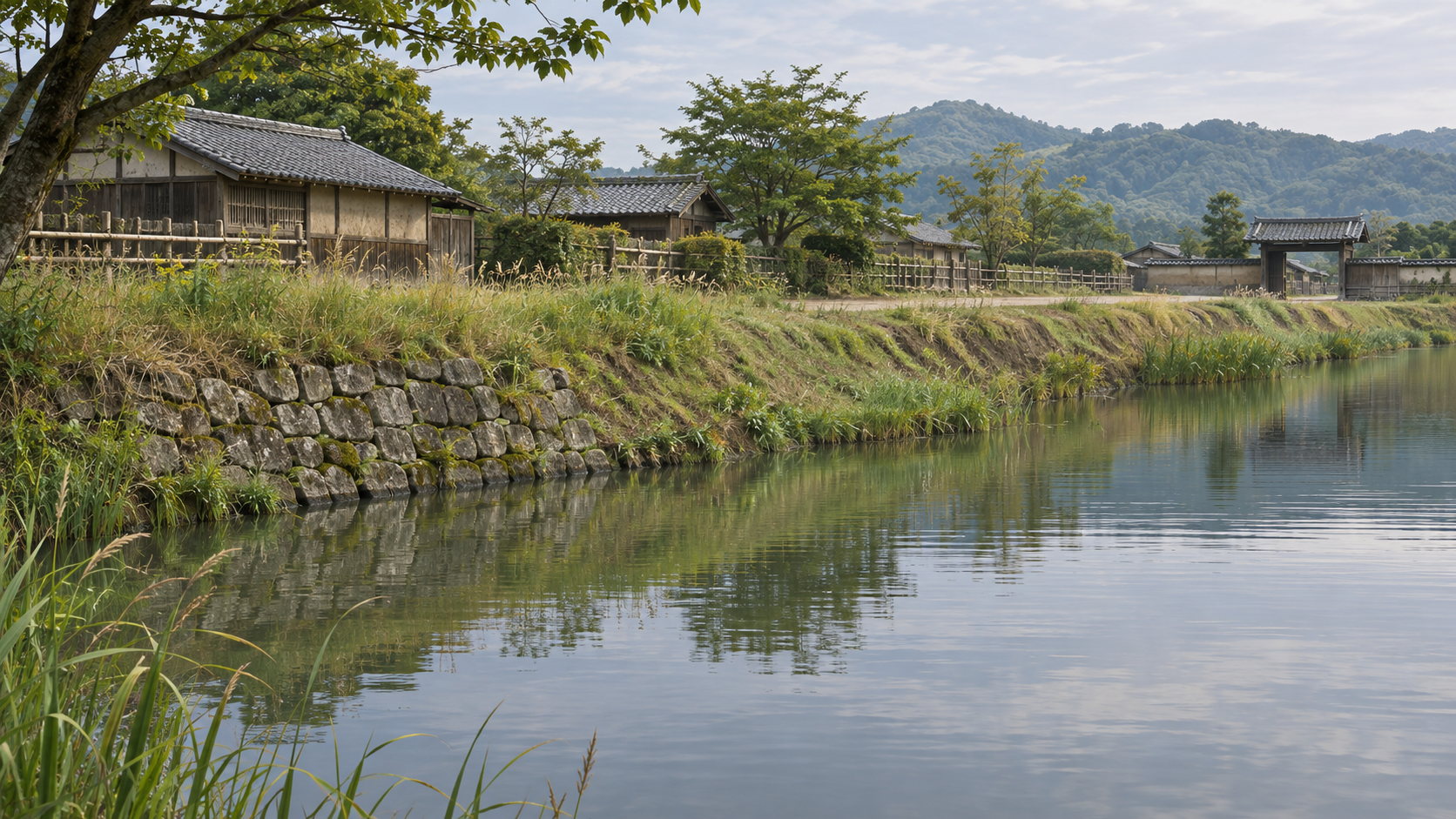
A former outer moat ran along what is now Yanagawa-suji in central Okayama. Known as the Twenty-Day Moat, it is associated with improvements during Hideaki’s time as castle lord. Its line offers an entrance to the period after Sekigahara.
Hideaki acquired his territory in 1600 and died in 1602. Ending his biography at the battlefield removes the work undertaken during those intervening years.
The question is what he changed in the castle he received. Did he build its keep, or alter the area beyond it? Starting with a former moat redirects attention from a famous battle to the organisation of a castle and town.
Scene 02
From Toyotomi connections to the Kobayakawa house
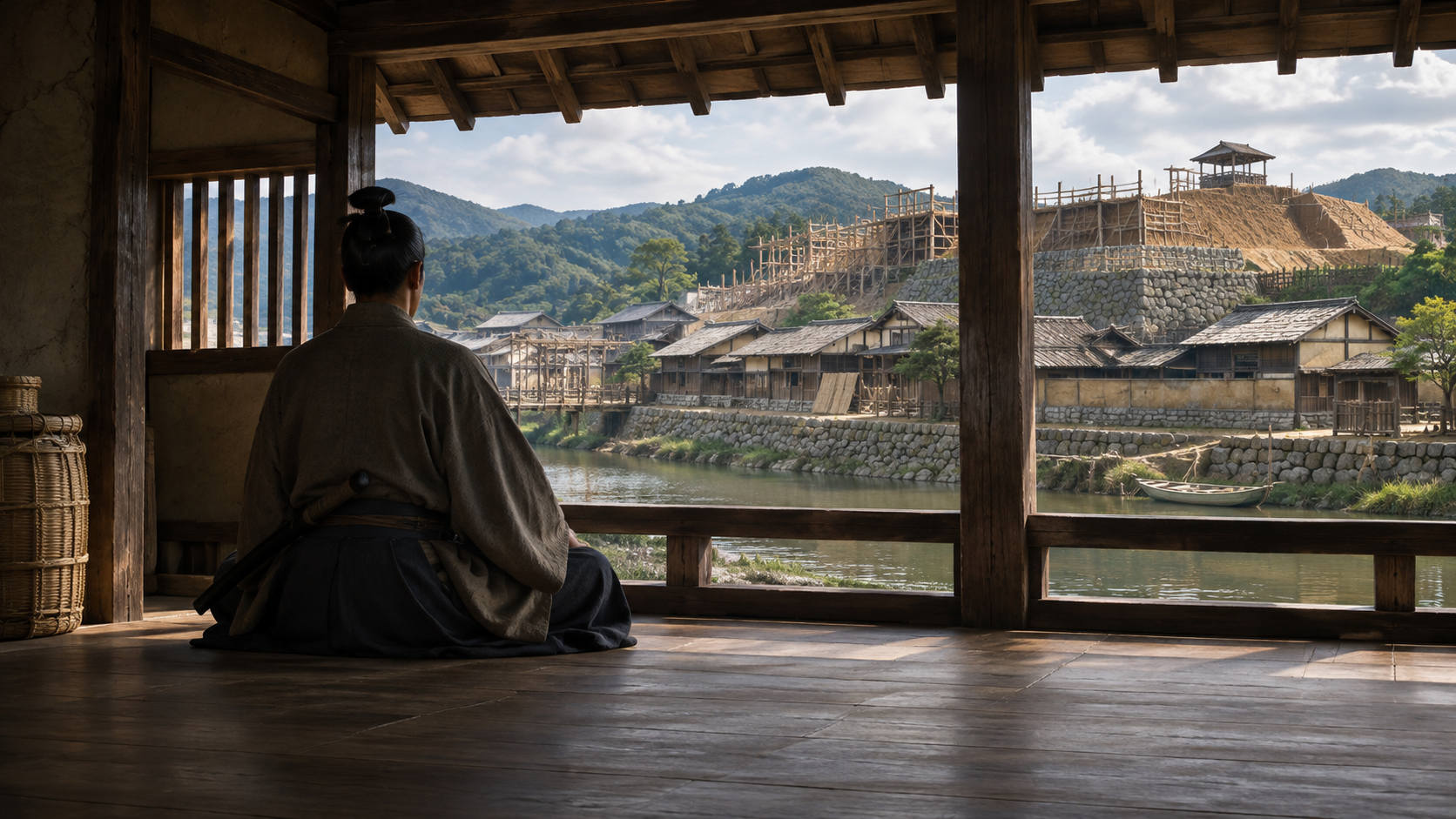
Hideaki was a son of Kinoshita Iesada and belonged to the family circle close to Hideyoshi’s principal wife. He became Hideyoshi’s adopted son and later an adopted son of Kobayakawa Takakage. Okayama’s library biography explains those changing household connections.
His actions at Sekigahara mattered to the outcome, but the article does not invent the timing of commands or present his private hesitation as a recorded conversation.
The focus is the territory granted afterward. Through his relationship with the victorious side, he came to hold Bizen and Mimasaka. His work at Okayama begins with that transfer, rather than with the construction of an entirely new castle from an empty site.
Scene 03
Receiving territory meant using an existing base
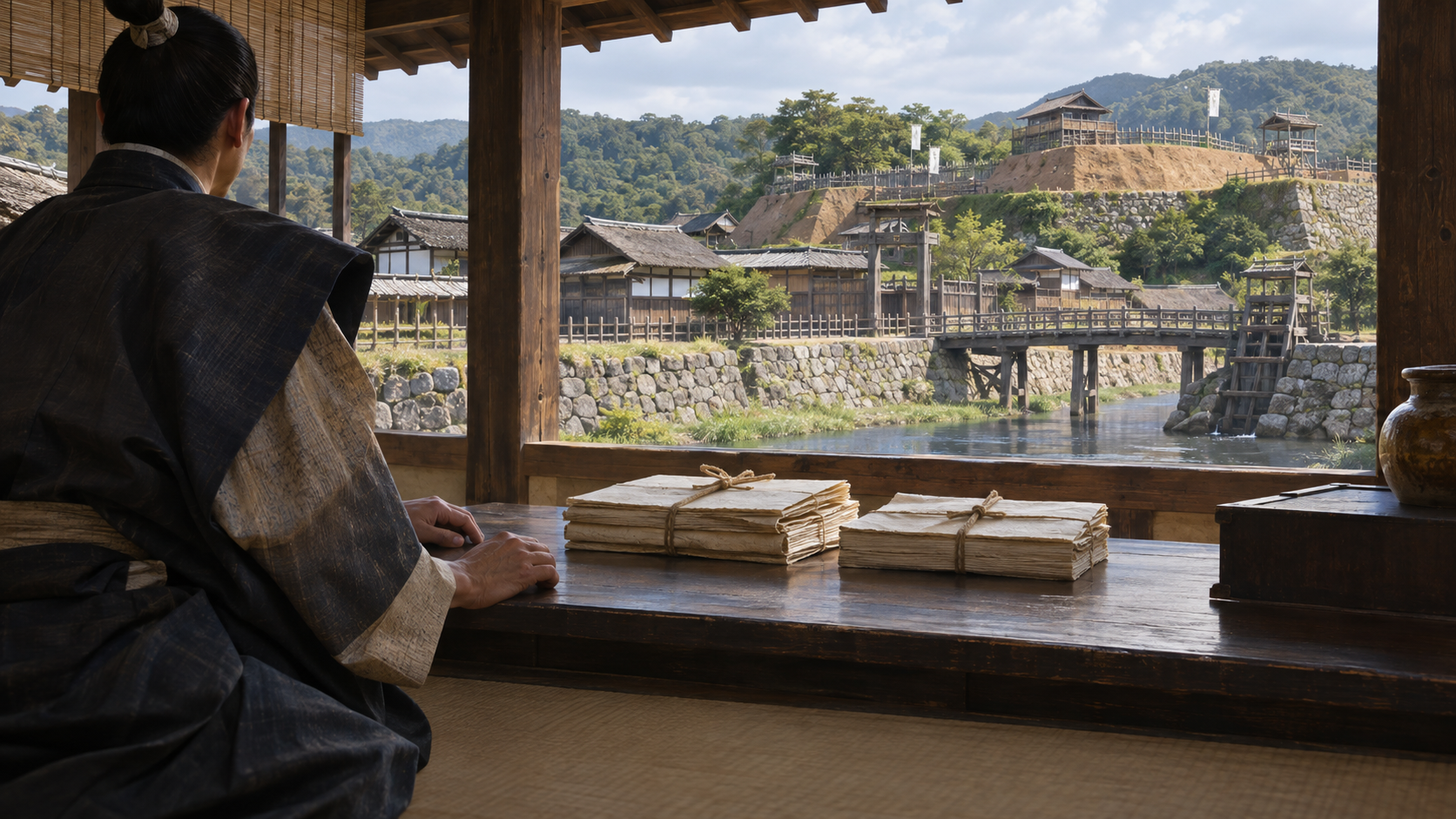
After Sekigahara, Hideaki received Bizen and Mimasaka from Ukita Hideie’s former lands. These covered areas in the southeastern and northern parts of present Okayama Prefecture. Okayama Castle became the centre from which the territory was administered.
Receiving a castle involved more than taking possession of a tower. Retainers needed places to work, and the castle had to function in relation to the town and wider territory.
Assessed land yield should not be read as a cash payment immediately placed in the lord’s hands. Nor did the two provinces remain one unchanged territorial unit: their later destinations separated after Hideaki’s death.
Scene 04
The keep preceded Hideaki
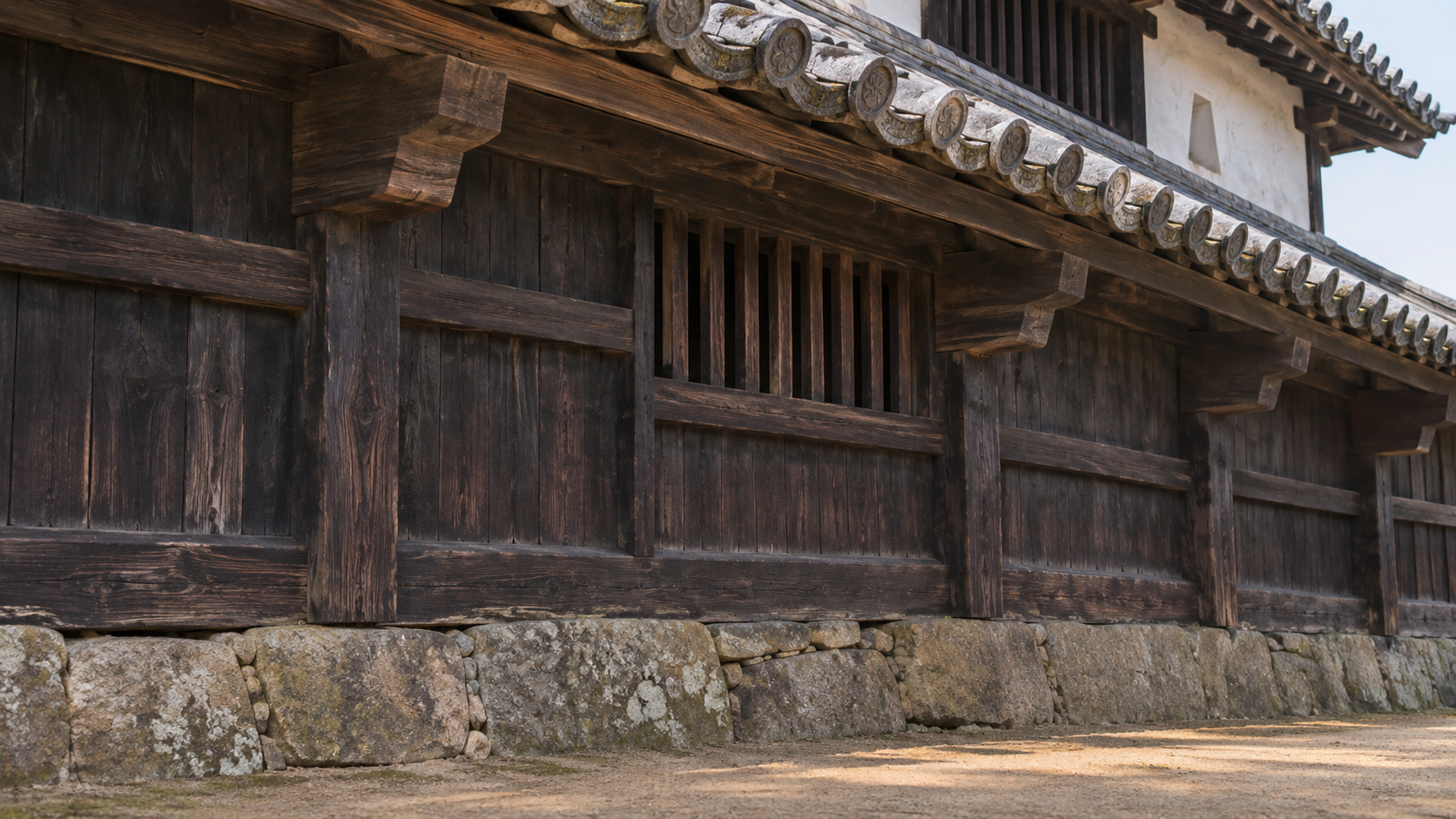
Ukita Naoie and his son Hideie shaped the foundations of the castle complex. Construction developed into a castle with stone walls and tiled buildings under Hideie. The keep was completed in 1597, three years before Sekigahara.
The Asahi River also served a defensive role behind the castle. Hideaki therefore arrived at a place with an established castle-and-town structure.
Distinguishing inheritance from alteration changes the question. His work cannot be assessed by crediting him with every prominent feature. Attention must move from the already existing keep toward the surrounding enclosures and the boundary farther outside.
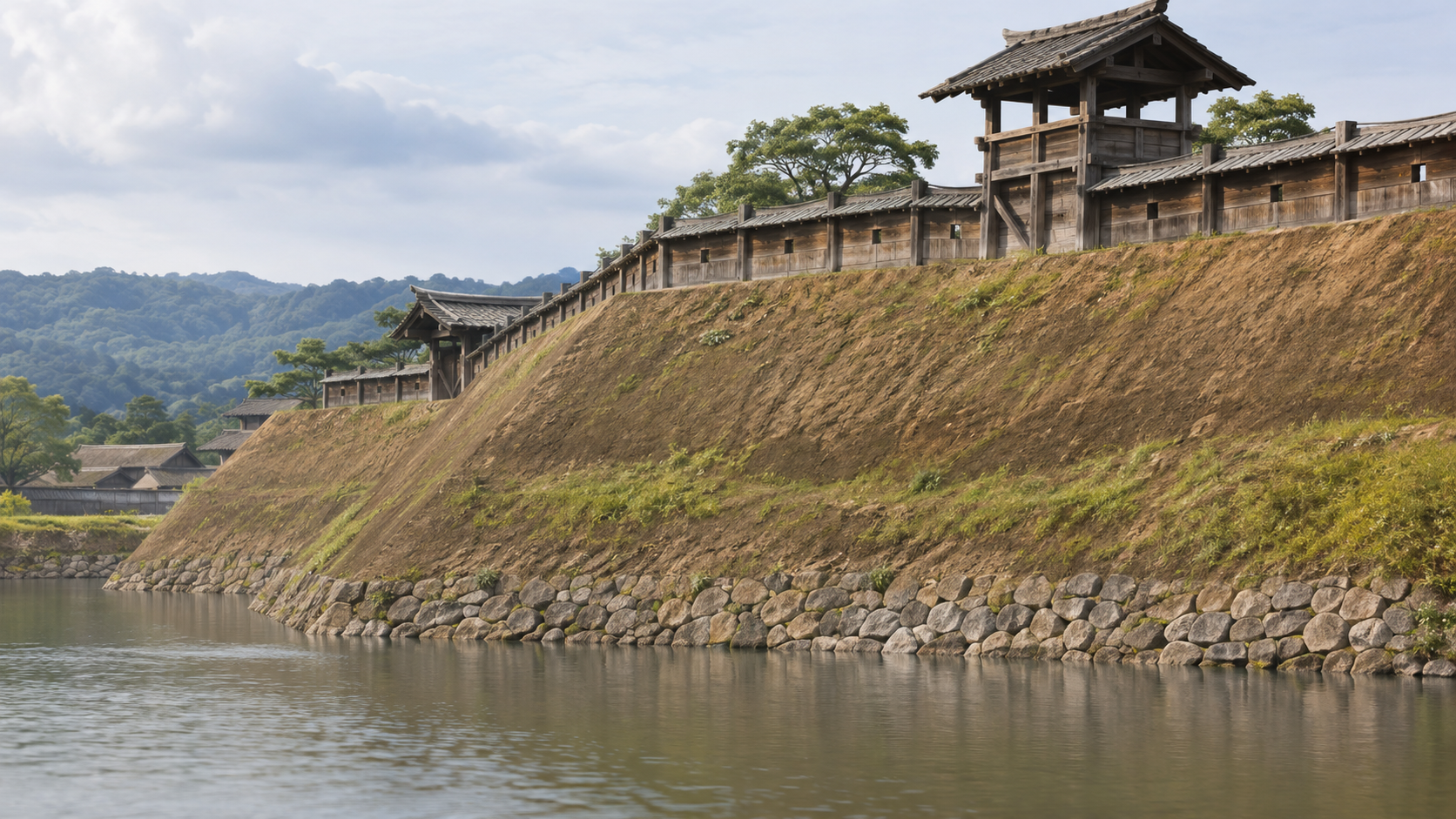
Scene 05
Strengthening the western side
The outer moat is a well-known improvement associated with Hideaki’s rule. Okayama City explains it as a work strengthening the castle’s west side. It extended the defensive boundary rather than merely recutting a ditch beside the central enclosure.
A castle’s functions depended on the relationship between moats, gates and residential areas. Moving an outer boundary could change which spaces lay within the larger complex.
The importance of that work cannot be measured only by whether an impressive building remains standing. The conceptual illustration does not provide the moat’s exact dimensions or bends; those require historical plans and investigation rather than visual invention.
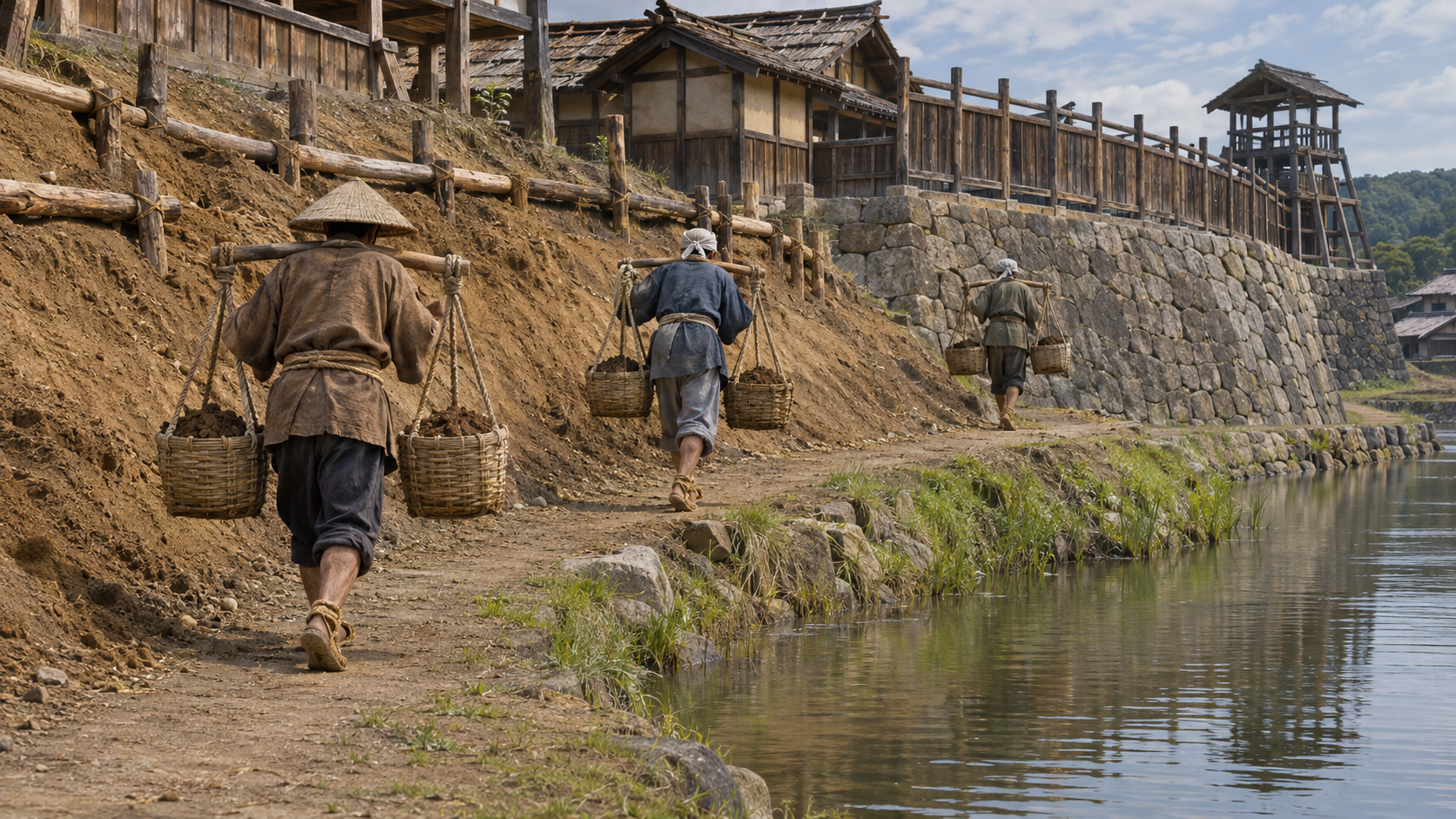
Scene 06
What the name Twenty-Day Moat tells us
Okayama City relates a tradition that residents and even retainers were mobilised to construct the moat in twenty days. That account explains the name by associating it with concentrated labour and rapid construction.
The phrase according to tradition matters. The article has not verified a day-by-day journal recording a start and finish exactly twenty days apart, and it does not calculate workforce size or daily output from the name.
The tradition nevertheless shows how Hideaki was remembered locally as a lord who gathered labour for the outer moat. Construction and the language used to remember it are connected kinds of history, but they are not the same evidence.
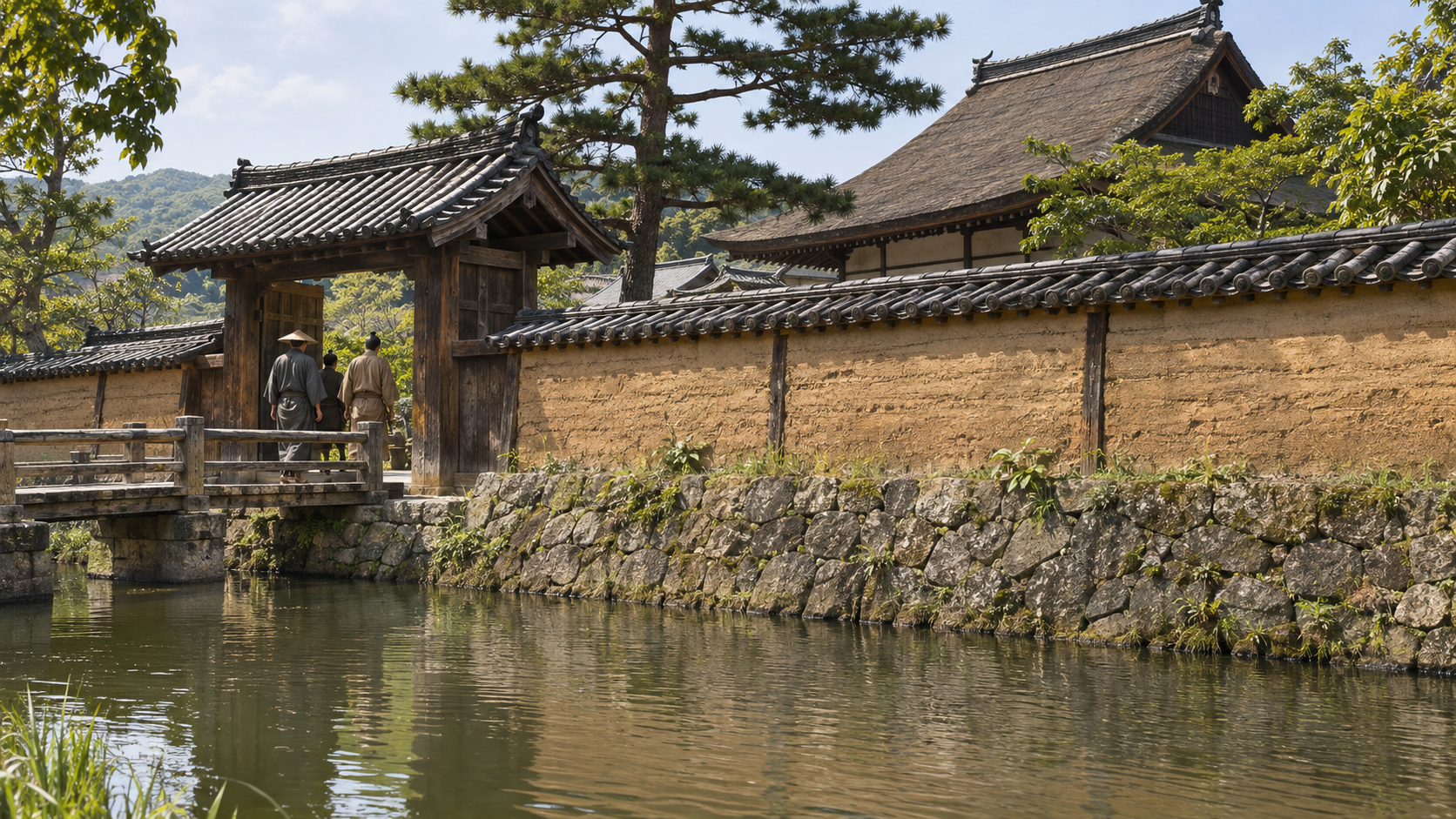
Scene 07
Temples, gates and the town’s boundary
The city’s explanation of the moat also describes temples to its west and castle gates across the boundary. The placement of temples is presented as contributing to defence. Moat and gate together organised access between inside and outside.
Those arrangements connect castle defence with the shape of the town. The outer ditch was not simply a container for water detached from streets and institutions.
The moat was filled in during the Meiji period, and its route became Yanagawa-suji. The water disappeared while the town’s lines retained clues to the earlier boundary. Looking along a road can therefore reveal a different kind of trace from looking up at a keep.
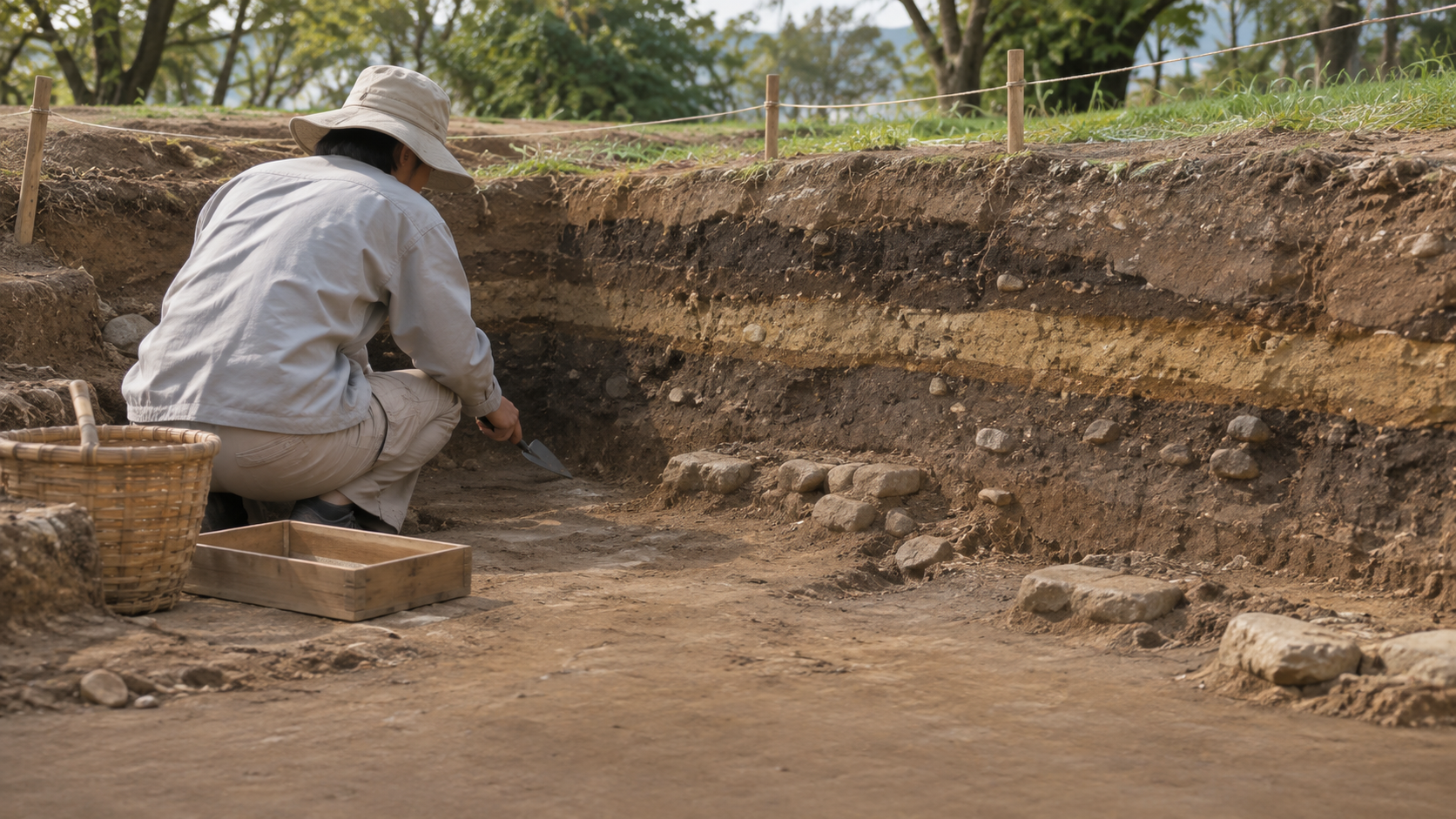
Scene 08
Excavation reveals several periods
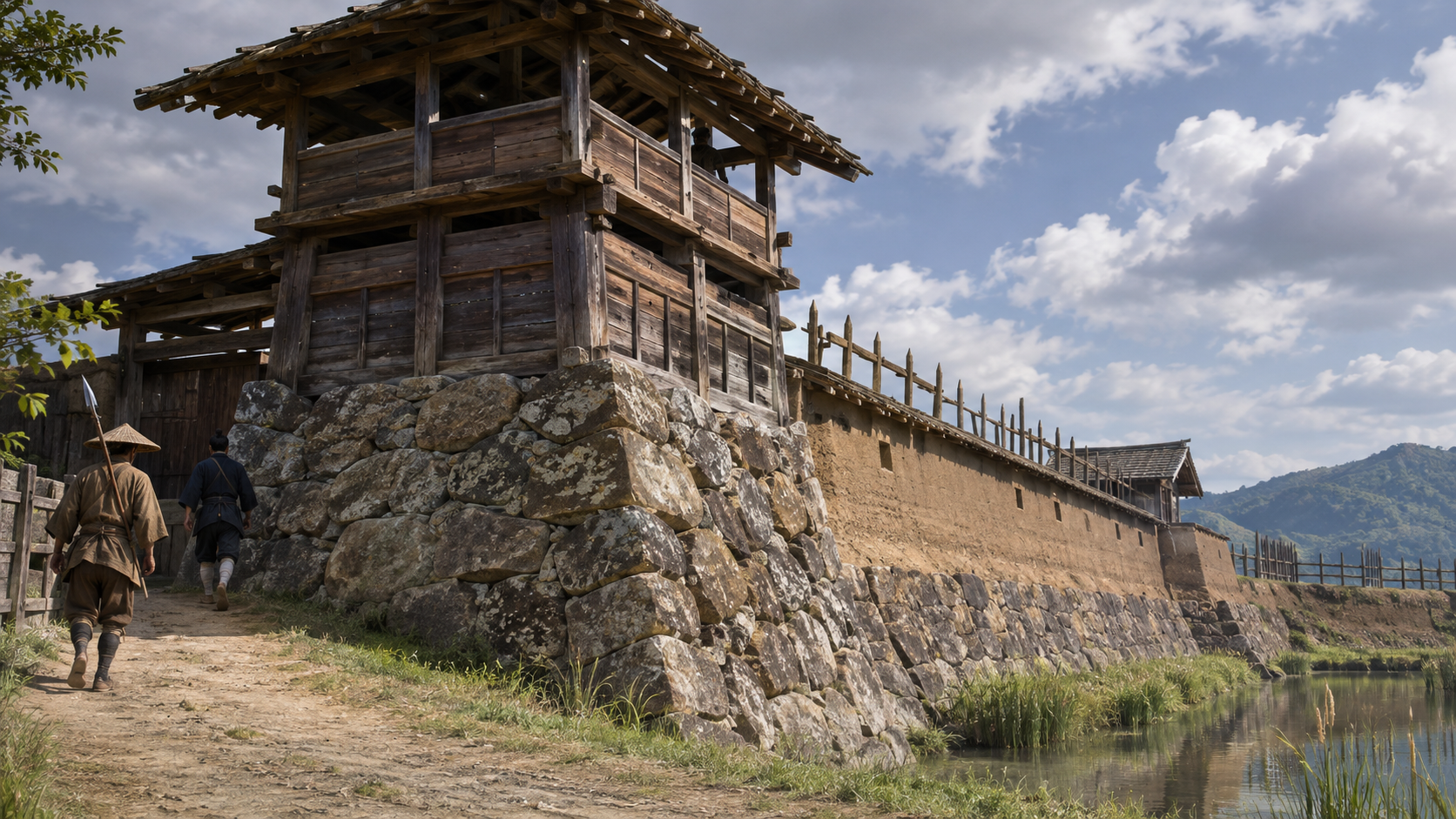
Okayama City’s 2025 excavation exhibition introduces the Sannosoto enclosure as the outermost area said to have been developed during Hideaki’s rule. An enclosure was a defined part of the castle complex, not a separate castle in itself.
The land later served as warrior residential ground and subsequently as school property. Finds from an excavation therefore cannot all be assigned automatically to Hideaki’s building work.
The exhibition distinguishes earlier features and later school-related remains. Comparing those layers with historical plans helps examine the castle’s expansion. The generated modern excavation image is not a photograph of this particular investigation or proof of a specific find.
Scene 09
A tower had predecessors and later changes
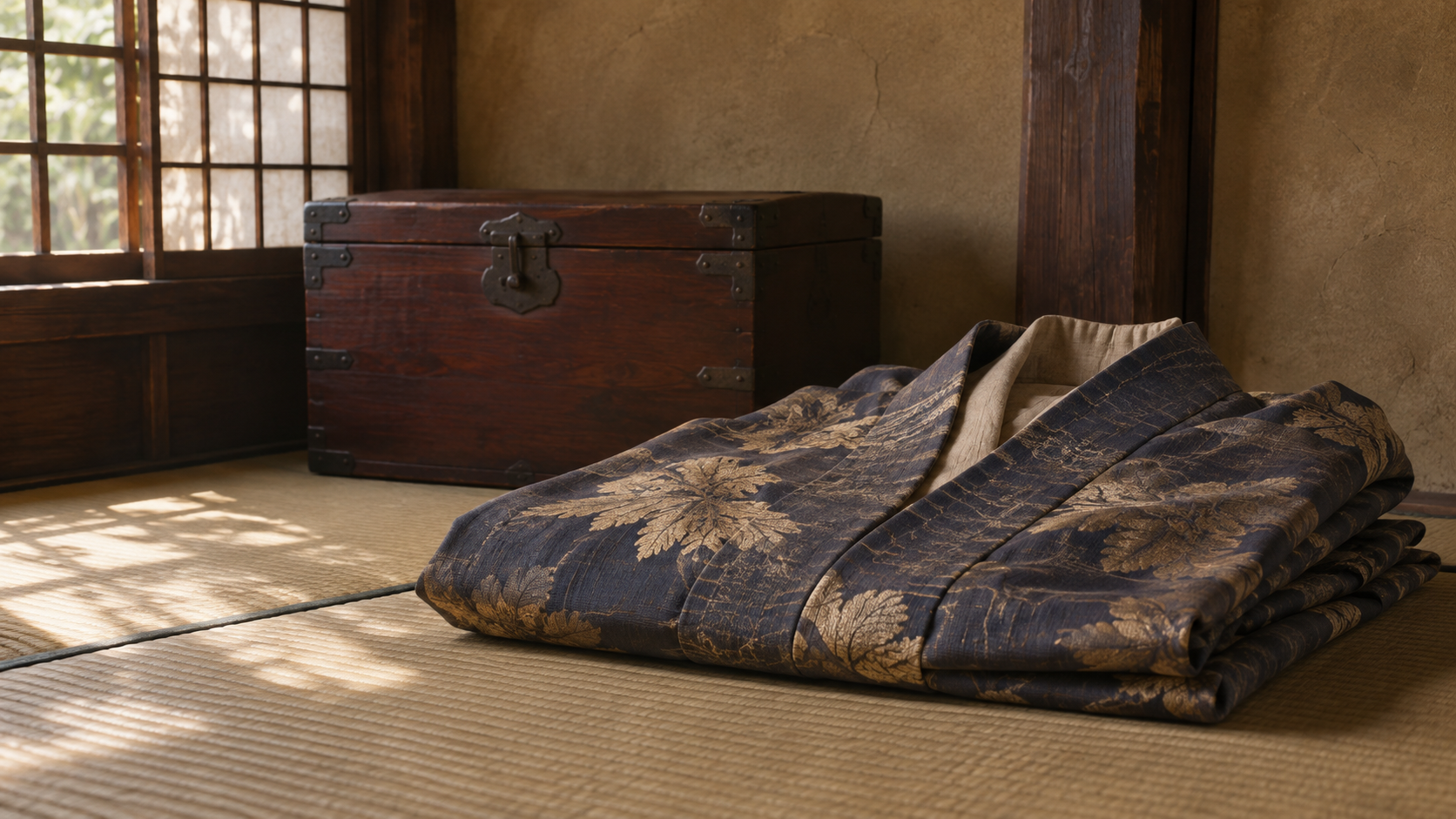
Okayama Prefecture’s explanation describes a tower built on the southwest side of the central enclosure’s middle level as a predecessor of the later Onando tower. It also relates a tradition of relocation from the Ukita family’s Numa Castle.
The relocation detail remains a tradition rather than a fully reconstructed building operation. A predecessor in Hideaki’s period does not establish that every feature of the later Ikeda-period tower was already present.
Names can continue through rebuilding and enlargement. Materials, dimensions and surrounding walls may belong to different stages. Attributing a feature therefore requires identifying which part and which period are under discussion.
Scene 10
Death ended the household’s rule
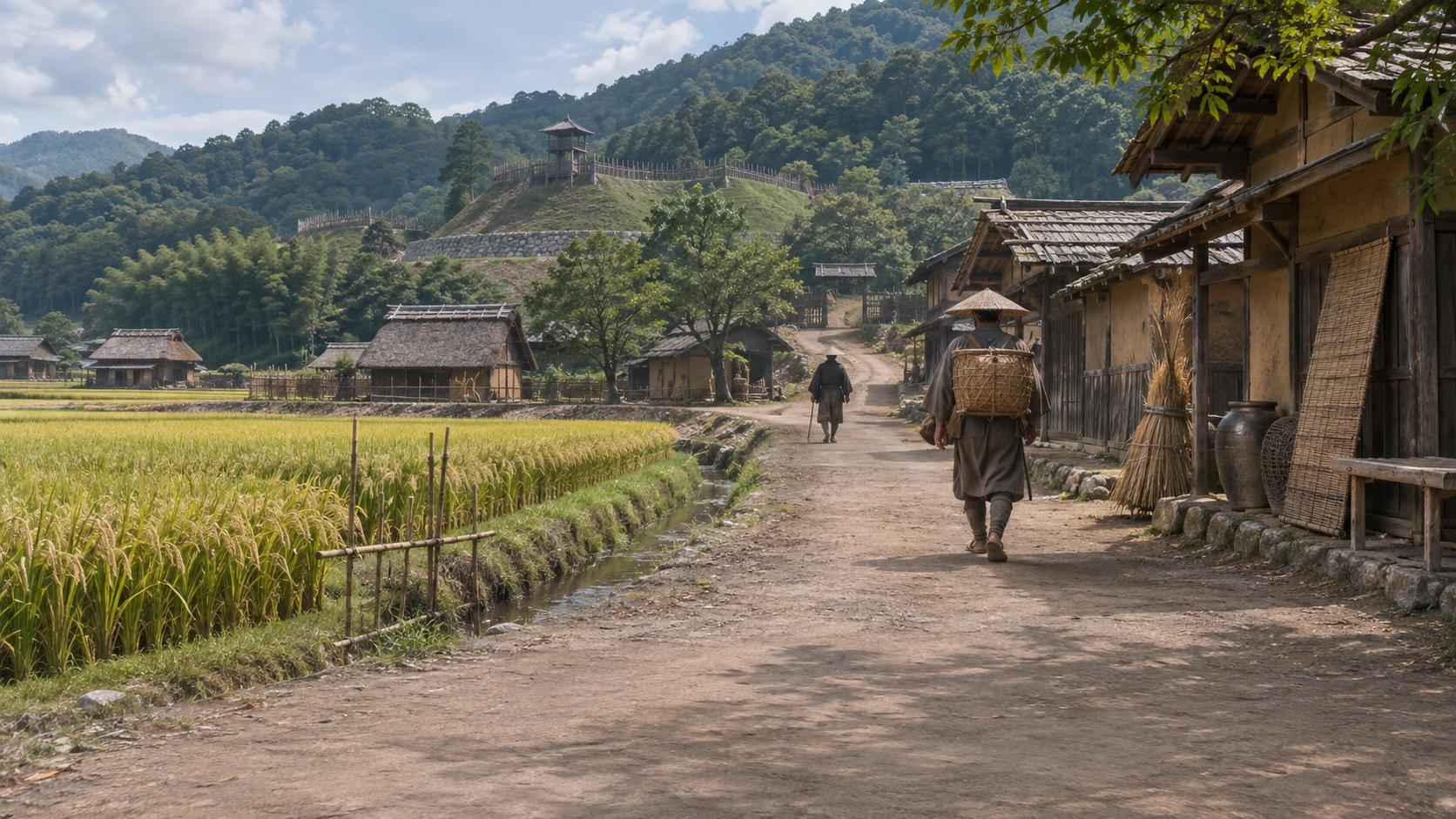
Hideaki died young in 1602. Without a child to succeed him, this Kobayakawa house came to an end. The reviewed institutional accounts describe death from illness and the absence of an heir.
The article does not turn that death into punishment for battlefield conduct or invent fear and regret as a diagnosis. Neither is necessary to explain the administrative consequences.
Work had progressed during a short rule, but the same household would not continue it. Moats and enclosures outlasted the lord and became part of a complex used and altered by successors. His biography ended while the buildings and boundaries had further histories.
Scene 11
Bizen and Mimasaka went to different houses
In 1603, Bizen was granted to Ikeda Tadatsugu. Because he was young, his elder brother Toshitaka entered Okayama Castle and administered on his behalf. Mimasaka, meanwhile, went to Mori Tadamasa.
The latter transfer leads into Tsuyama’s castle history. Keeping Hideaki’s two provinces permanently joined on a map would conceal that divergence.
At Okayama, the Ikeda continued alterations to the central and western enclosures. Earlier work became part of a castle used by another household. Succession meant both inheritance and change, rather than the complete disappearance of every predecessor’s contribution.
Scene 12
Look outside the keep
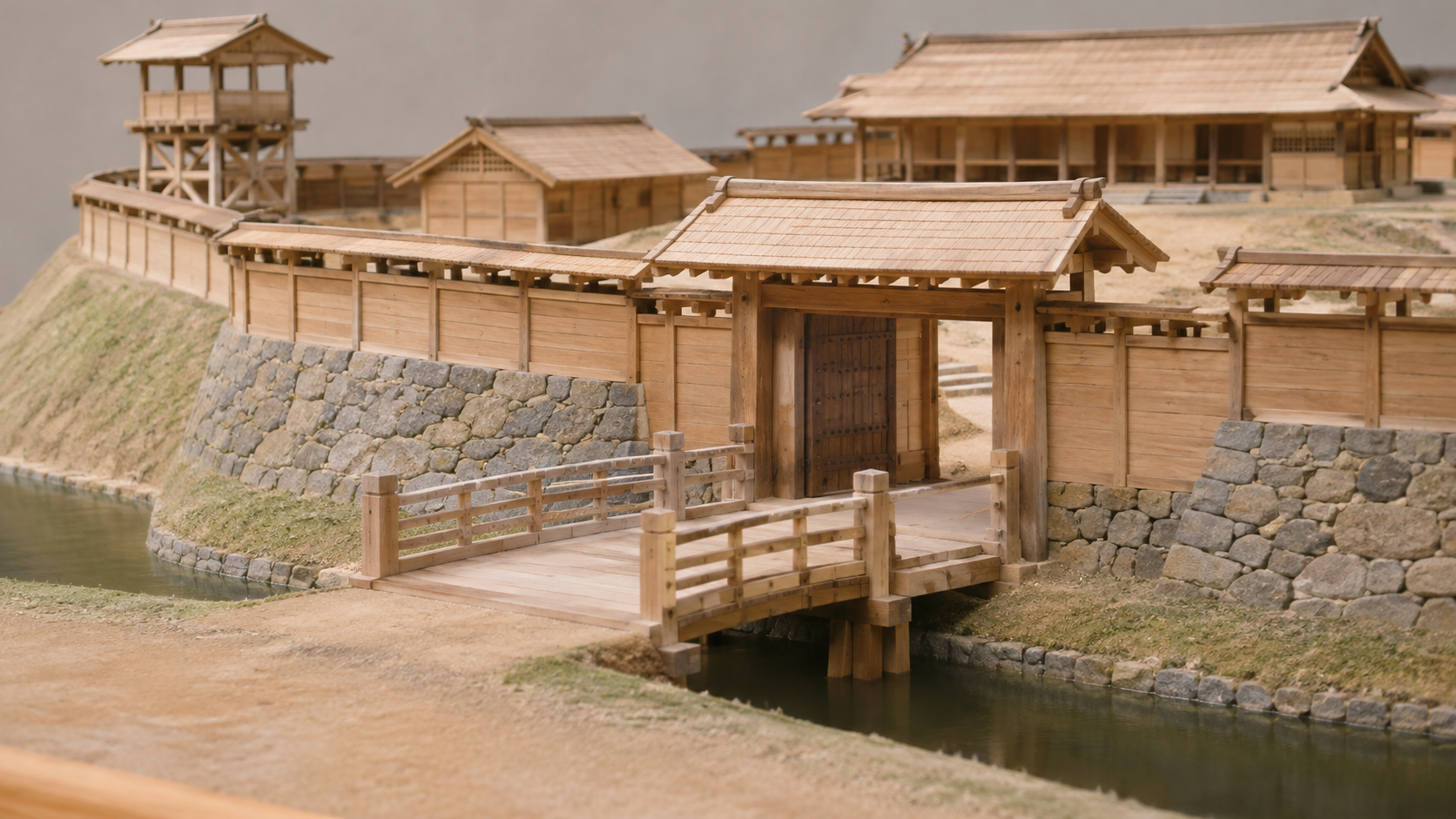
Hideaki did not build Okayama Castle from the beginning. He received the Ukita complex and contributed to works including the outer moat and a tower. Later Ikeda alterations added further layers to the site.
Modern history changed it again. The present keep was reconstructed in 1966 after wartime destruction. Everything now visible cannot be treated as the same scene Hideaki saw.
The moat’s name and former course still introduce questions about his brief rule. Moving beyond one Sekigahara episode, and beyond the keep itself, reveals a castle lord’s work through inherited structures, expanded boundaries and the town that continued to use them.
How to read this work
History, interpretation, and reconstruction
Looking beyond one battlefield episode and beyond the keep reveals changes to a castle and town during Hideaki’s brief rule, without attributing the whole inherited complex to him.
This work is grounded in published sources and historical research. Interior thoughts, dialogue, and some visual details are cinematic reconstructions. Where historians disagree, the article presents the point as debated rather than settled fact.
Timeline
The story in time
-
The outer moat was filled and its route became Yanagawa-suji.
Sources: s01
People & terms
A guide for new readers
Glossary
- Keep 天守
- A prominent central tower within a larger castle complex; Okayama’s was completed before Hideaki arrived.
- Twenty-Day Moat 二十日堀
- The outer moat associated with a tradition of rapid construction under Hideaki, distinct from a verified daily work log.
- Enclosure 曲輪
- A defined section of a castle, which could have its own defensive and residential functions.
- Sannosoto enclosure 三之外曲輪
- The outermost area discussed in Okayama’s excavation explanation, with remains from more than one period.
- Bizen 備前
- One of Hideaki’s provinces, later granted to Ikeda Tadatsugu.
- Mimasaka 美作
- The other province discussed here, later granted to Mori Tadamasa rather than remaining permanently joined to Bizen.
Sources & method
How this article was built
The narrative separates inherited Ukita structures, Hideaki’s alterations and later Ikeda work before considering modern destruction and reconstruction. Local place-names and present roads help frame questions but do not independently establish exact dimensions or a complete construction schedule.
The twenty-day explanation and the reported relocation from Numa Castle retain their status as traditions in the cited accounts. Excavation introduces chronological layers, including uses before and after the enclosure. No calculation of labour or cash income is made from names or assessed yields.
The account does not diagnose Hideaki’s death through a moral interpretation of Sekigahara. It follows the institutional statements about illness, no heir and territorial succession. Generated stills remain explanatory; neither the modern excavation scene nor the model-style image authenticates a particular investigation or reconstruction.
Sources
References and further reading
- Okayama historical marker C55: Outer moat 岡山歴史のまちしるべ多言語版(C55外堀(二十日堀)) Title translated editorially for reader convenience. Okayama City 岡山市 Explains the western moat, naming tradition, temples, gates and later filling. The tradition is not treated as a complete construction diary. Accessed 2026-11-06
- Okayama Castle site 岡山城跡 Title translated editorially for reader convenience. Agency for Cultural Affairs / Cultural Heritage Online 文化庁 文化遺産オンライン Explains Ukita construction, the 1597 keep, Hideaki’s rule and death, succession and later Ikeda alterations. Accessed 2026-11-06
- Kobayakawa Hideaki: Okayama biographies 小早川 秀秋 《おかやま人物往来》 Title translated editorially for reader convenience. Okayama Prefectural Library 岡山県立図書館 デジタル岡山大百科 Collection description and biography covering family connections, castle work, death and absence of an heir. Accessed 2026-11-06
- Okayama excavation discoveries exhibition 2025 岡山市埋蔵文化財発掘調査速報展2025 Title translated editorially for reader convenience. Okayama City Board of Education / Archaeological Center 岡山市教育委員会文化財課・岡山市埋蔵文化財センター The relevant enclosure entry identifies development attributed to Hideaki and later land uses. All excavation features are not assigned to one period. Accessed 2026-11-06
- Unification and the emergence of early modern castles 天下統一と近世城郭の誕生 Title translated editorially for reader convenience. Okayama Prefectural Ancient Kibi Cultural Properties Center 岡山県古代吉備文化財センター Explains the Ukita castle, river setting, wartime loss and 1966 reconstruction. Accessed 2026-11-06
- The arrival of peace 泰平の世の到来 Title translated editorially for reader convenience. Okayama Prefectural Ancient Kibi Cultural Properties Center 岡山県古代吉備文化財センター Discusses Kobayakawa and Ikeda works, tower tradition, succession and later enlargement. Accessed 2026-11-06
- History and significance of Tsuyama Castle 津山城の歴史と魅力 Title translated editorially for reader convenience. Tsuyama Town Museum 津山まちじゅう博物館 The relevant opening explanation identifies Mori Tadamasa’s acquisition of Mimasaka in 1603. Accessed 2026-11-06
- Present condition of Okayama Castle and its former town 岡山城と旧城下町の現状(本文22~34頁のPDF) Title translated editorially for reader convenience. Okayama City 岡山市 Relevant introductory figures and the main-enclosure discussion distinguish remains from the reconstructed keep. Not every page is claimed as independently analysed. Accessed 2026-11-06
- Okayama Castle’s successive lords 岡山城を知る – 歴代城主の紹介 Title translated editorially for reader convenience. Official Okayama Castle website 岡山城公式ウェブサイト Institutional biographies place Hideaki’s short rule among the Ukita and Ikeda periods. Accessed 2026-11-06
Continue reading
More stories from Shigeki
Shigeki English
The Second Choshu Expedition: Four Fronts and a Negotiated Withdrawal
Read weapons together with terrain, training, command and support.
- When 1866, distinct from the first expedition in 1864; the process of ending extended into January 1867
- Where Oshima, the Aki border, Iwami and the Kanmon Strait facing Kokura
Shigeki English
Hasedo: Why Fighting Continued after Sekigahara
Separate the siege, the arrival of news, and withdrawal under pursuit.
- When 1600; month and day references use the calendar of the time
- Where Hasedo and Yamagata in Dewa, connected with Aizu and distant Sekigahara