
SHIGEKI ENGLISH STORYEN
Japanese history in English
Komaki and Nagakute: Winning a Battle, Ending a Campaign
Ieyasu’s victory, Nobukatsu’s peace and the work done by castles, alliances and documents.
Follow the 1584 campaign through Oda Nobukatsu, Tokugawa Ieyasu and Hashiba Hideyoshi. Distinguish the fighting at Nagakute from the advance toward Okazaki, Iwasaki Castle, continuing operations in Owari and Ise, political documents and the peace reached with Nobukatsu in the eleventh month.
At a glance
Before you enter the story
- When
- The third through eleventh months of 1584; later battle paintings, modern reconstruction and historic-site designation are dated separately
- Where
- Komaki, Nagakute, Iwasaki and the route toward Okazaki, alongside western Owari and Ise
- Key figures
- Oda Nobukatsu, Tokugawa Ieyasu, Hashiba Hideyoshi, Ikeda Tsuneoki, Mori Nagayoshi, Hori Hidemasa
- What was at stake
- Why did Ieyasu’s battlefield victory fail to settle the wider conflict on the same day?
Why this story matters
The larger history behind the turning point
A campaign does not have a single scoreboard. The result of one encounter, the ability to keep forces in the field, the allegiance of local communities and the terms accepted by an ally are related outcomes. Following their different rhythms explains how a real battlefield victory can coexist with an unsettled war.
The surviving traces also work at different scales. Earthworks concern defensive preparation; a document records an act directed at a particular recipient; a later painted screen selects memorable scenes. Comparing these materials expands the account without turning every source into an eyewitness report of the same moment.
Historical context
What an international reader needs to know
An alliance with more than two participants
After Oda Nobunaga’s death, succession to his political position remained contested. His son Nobukatsu joined Ieyasu against Hideyoshi. Nobukatsu possessed territories and interests of his own, so treating him merely as an excuse for a duel between two better-known leaders obscures the importance of his eventual peace.
Owari and Mikawa were historical provinces; Okazaki was an important base on the Ieyasu side. The movement toward it was an attempt to change the military situation away from the opposed positions around Komaki. Modern municipal boundaries provide useful orientation, but they are not the political divisions of 1584.
Calendars and the age of an image
Historical months and days here follow the Japanese calendar then in use. The ninth day of the fourth month should not be silently read as modern April 9. Years provide a common orientation, while the historical month identifies the sequence used by the institutional accounts.
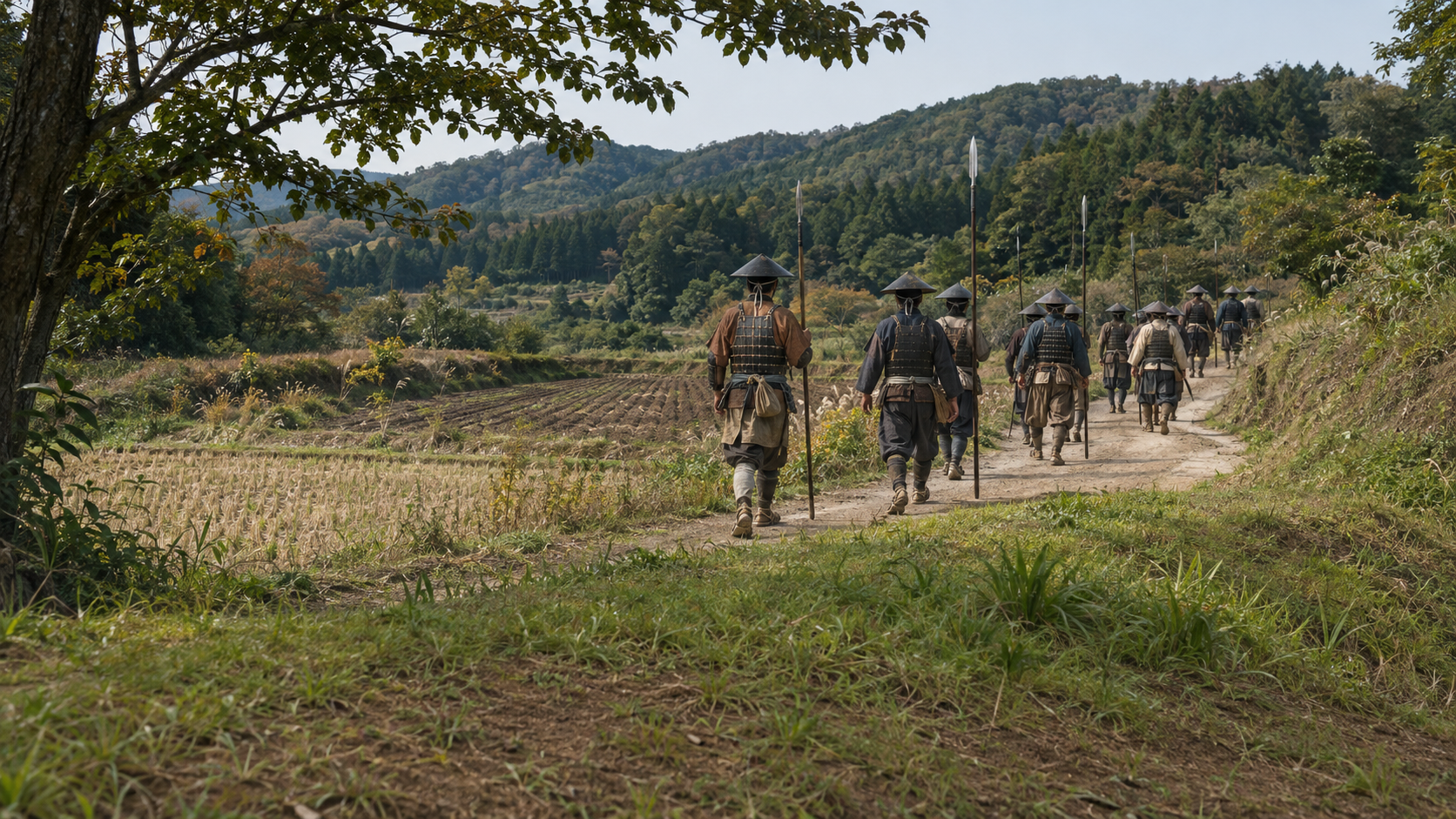
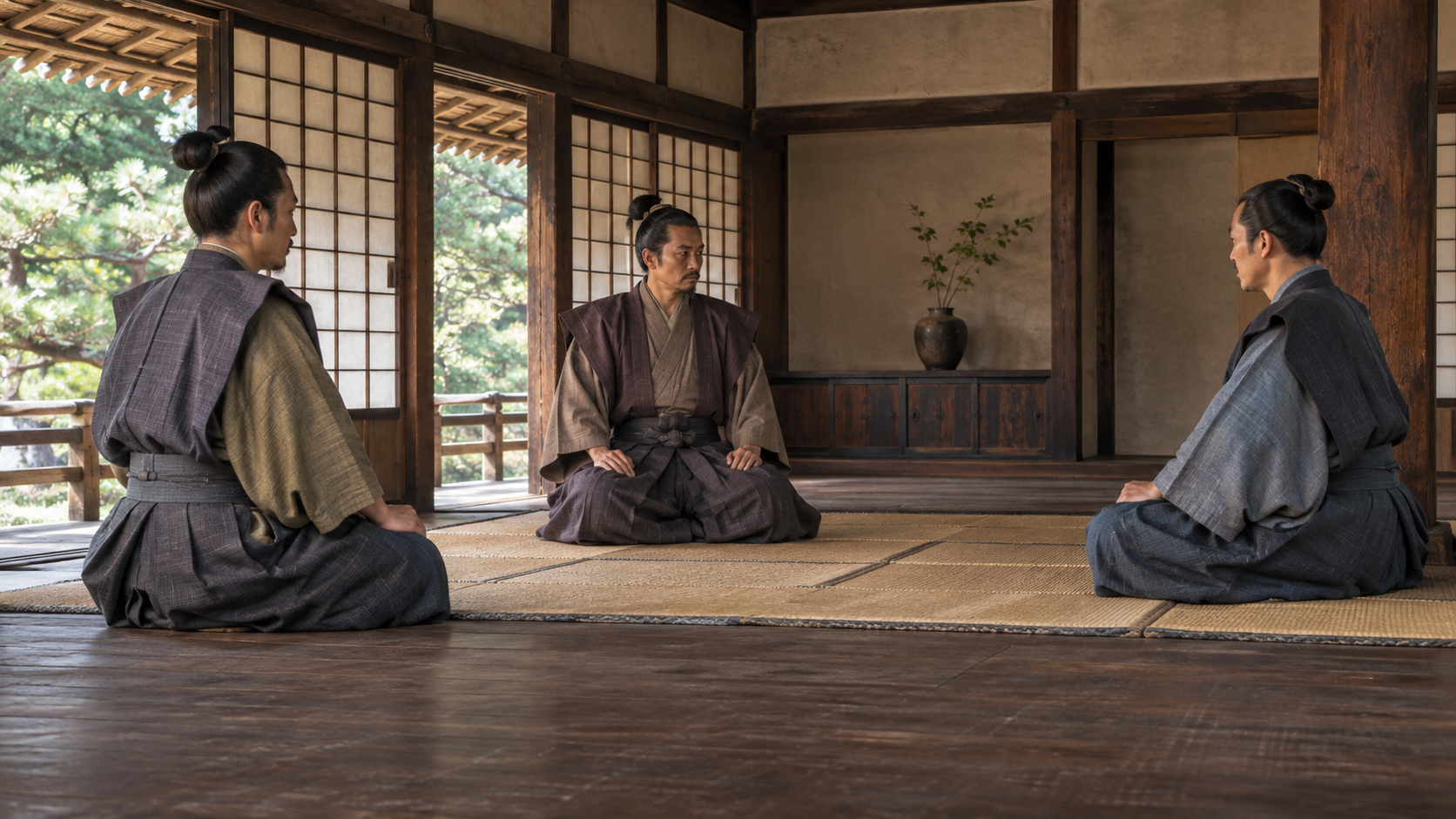
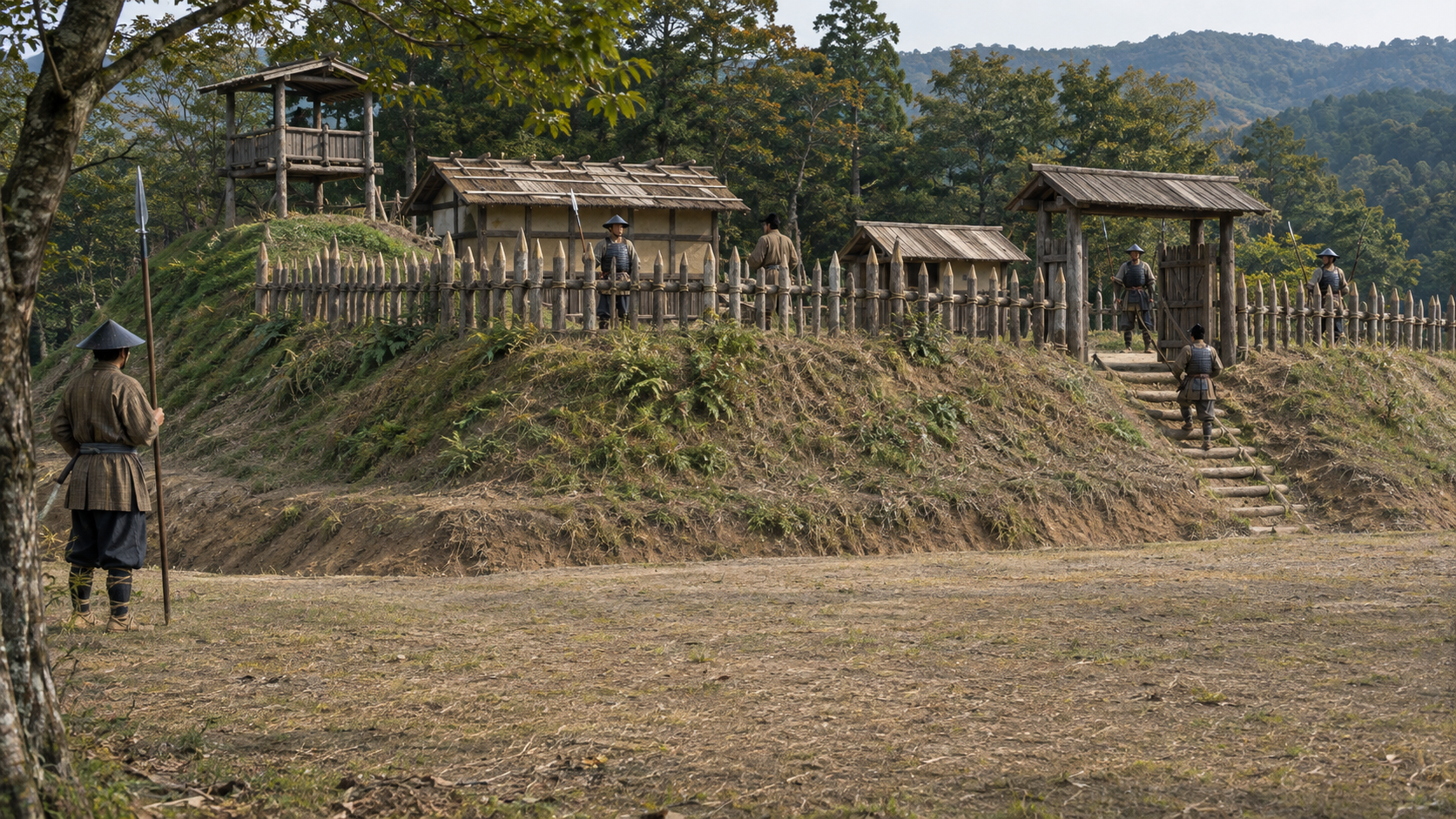
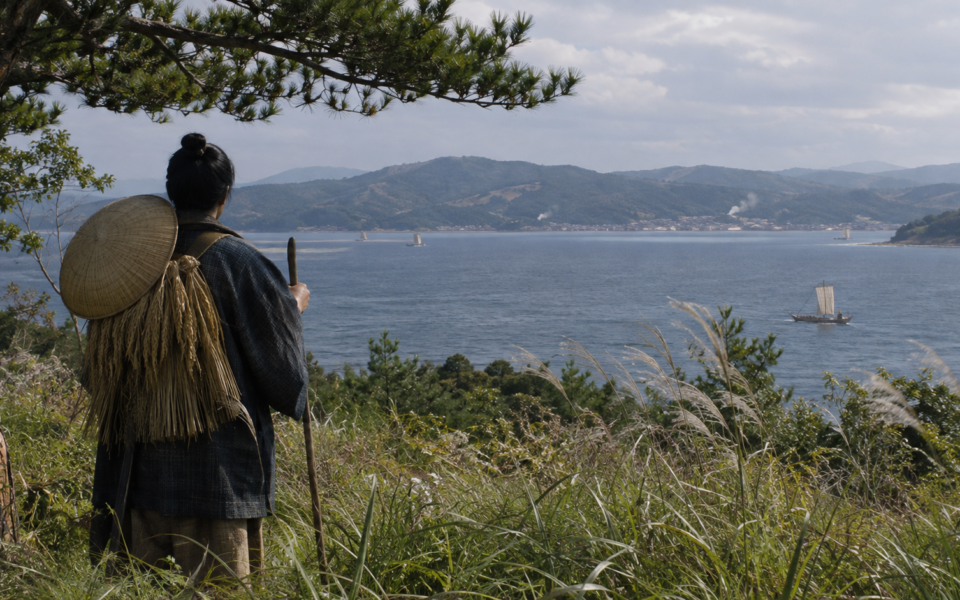
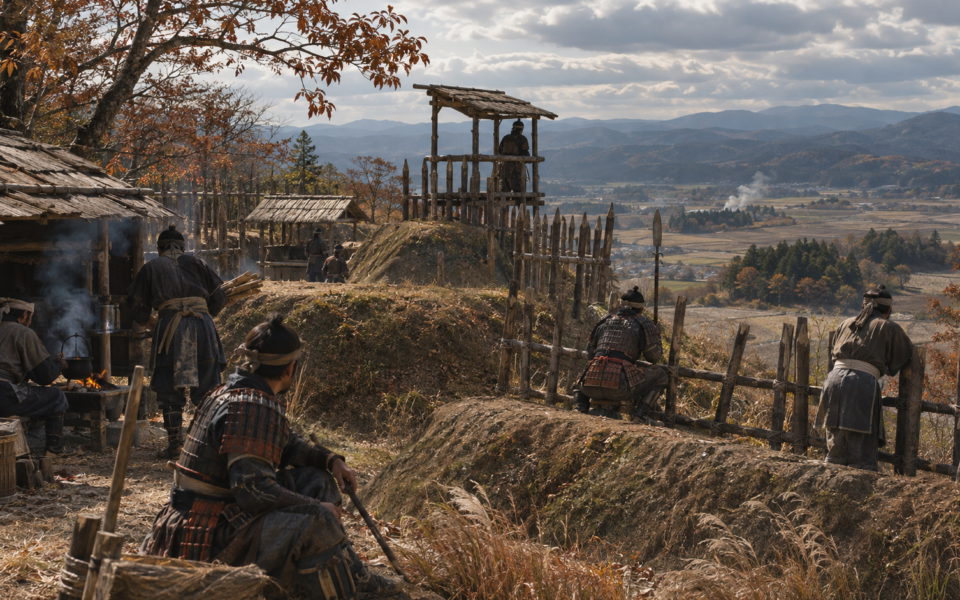
A screen painted in the middle Edo period, an observation tower rebuilt in 1987 and earthworks interpreted through excavation are different kinds of material. None can stand in for all the others. The illustrations accompanying this article are anonymous generated scenes, with no claim to reproduce an identified meeting, document, battlefield layout or original building.
Watch the film
See the story in motion
The film currently uses Japanese audio. This English article provides the context and source trail; it does not imply that an English subtitle track is available.
Scene 01
A victorious day and an unfinished campaign
In 1584, Ieyasu’s forces defeated units on Hideyoshi’s side at Nagakute. Yet the campaign did not finish when that day’s fighting ended. Operations moved to other places and continued into the autumn. The first question is therefore not whether the victory happened, but what it decided.
Nobukatsu belongs at the centre of that question. So do the castles and territories beyond the most famous battlefield. Following the campaign’s different parts makes it possible to acknowledge Ieyasu’s success without making every subsequent development a consequence already fixed by that encounter.
Battle, continuing regional operations and peacemaking should retain their separate durations. Documents issued outside the immediate fighting offer another way into the relationships that kept a coalition functioning.
Scene 02
Include Nobukatsu in the political picture
Nagoya City Museum explains that Nobukatsu, competing with Hideyoshi over the position left by Nobunaga, allied with Ieyasu. Nobukatsu was not simply a famous man’s son standing beside a more important commander. He held territory, including in Owari, and participated in the conflict on that basis.
Ieyasu likewise entered a struggle affecting the security of his own lands. Their alliance did not erase their separate positions or make every future decision a joint one.
That distinction becomes essential when Nobukatsu later negotiated peace. A coalition can fight together while its members retain different reasons to continue, or to stop.
Scene 03
Defensive work around Komakiyama
Komaki City describes defensive improvements at Komakiyama, where Ieyasu established his headquarters, including banks, ditches and surrounding forts. Hideyoshi’s side also prepared fortified positions. Moving closer to an opponent was not the only military activity taking place.
Securing approaches and preparing to respond to movement were practical parts of the campaign. Earthworks can help us consider that preparation, rather than seeing a pause in direct fighting as an absence of action.
The present mountain contains traces from different phases. It would be misleading to assign everything visible there to one construction effort by Ieyasu, overlooking Nobunaga’s earlier castle and later alterations.
Scene 04
A battle map with east at the top
Aichi Prefectural Archives describes a deployment map held by Komatsuji with east at the top. A reader accustomed to north-up maps must first change orientation. The institution explains that the image covers the area between Inuyama and Iwasaki and depicts movements of the opposing sides.
A single sheet can also bring together events occurring at different times. Its arrangement should not automatically be read as a photograph-like view of simultaneous positions.
Checking orientation, place and date is the beginning of interpreting the map. This account uses the institutional description; it does not claim a complete independent reading of all inscriptions or establish every route as exact.
Scene 05
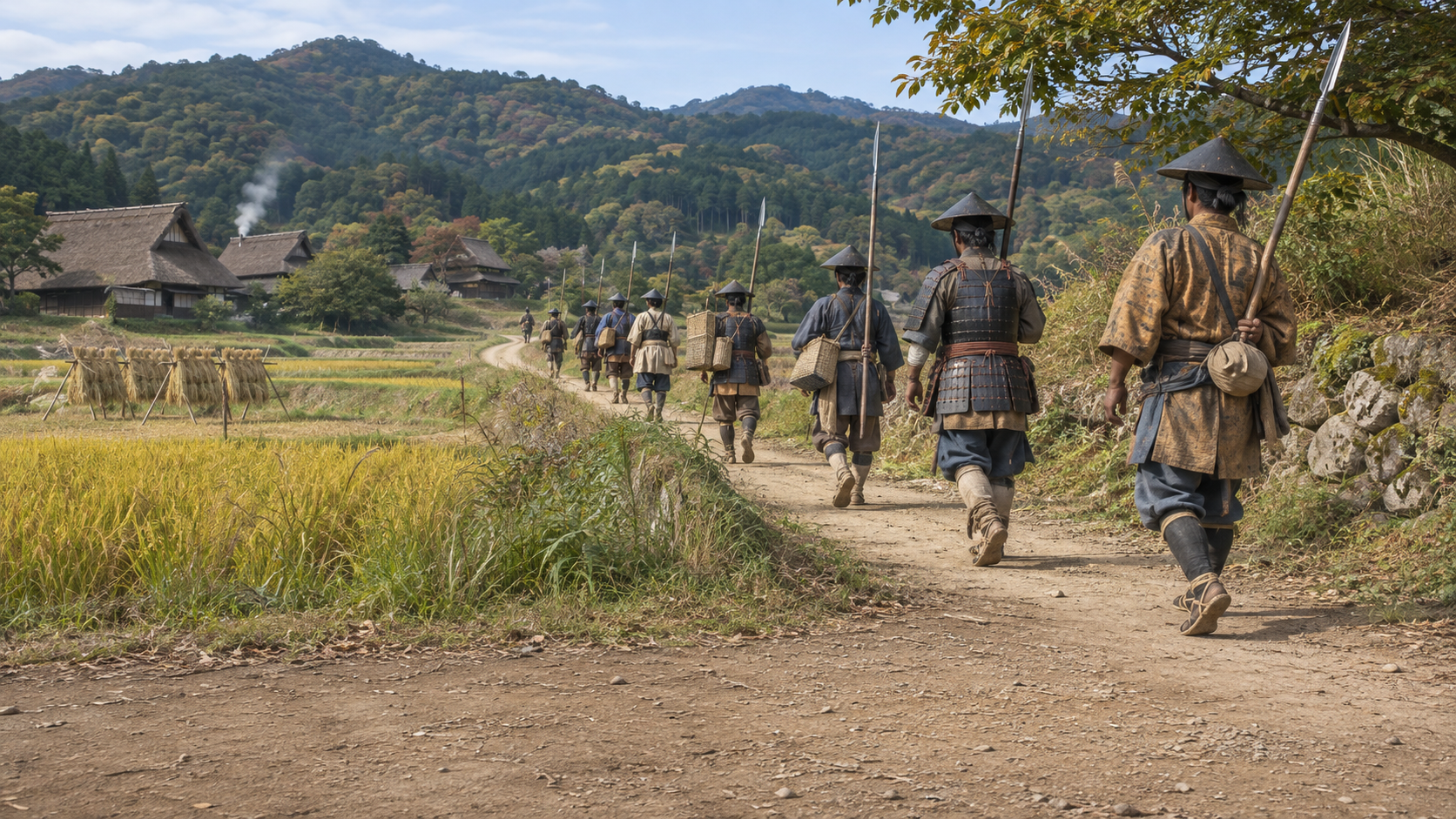
A detached force heads toward Okazaki
In the fourth month, a detached force on Hideyoshi’s side advanced toward Okazaki. Often called the Mikawa naka-iri operation, this movement sought to act toward the opponent’s rear instead of continuing only against the positions around Komakiyama.
Nagakute City distinguishes a familiar story about Ikeda proposing the operation from research emphasizing preparatory works and the scale of the march. These explanations should not be combined into certainty about an individual’s private calculations.
The advance and its eventual failure are one subject; the story of how the plan originated is another. A failed operation does not, by itself, prove that everyone could see in advance that a single person’s proposal was reckless.
Scene 06
Iwasaki was part of the route
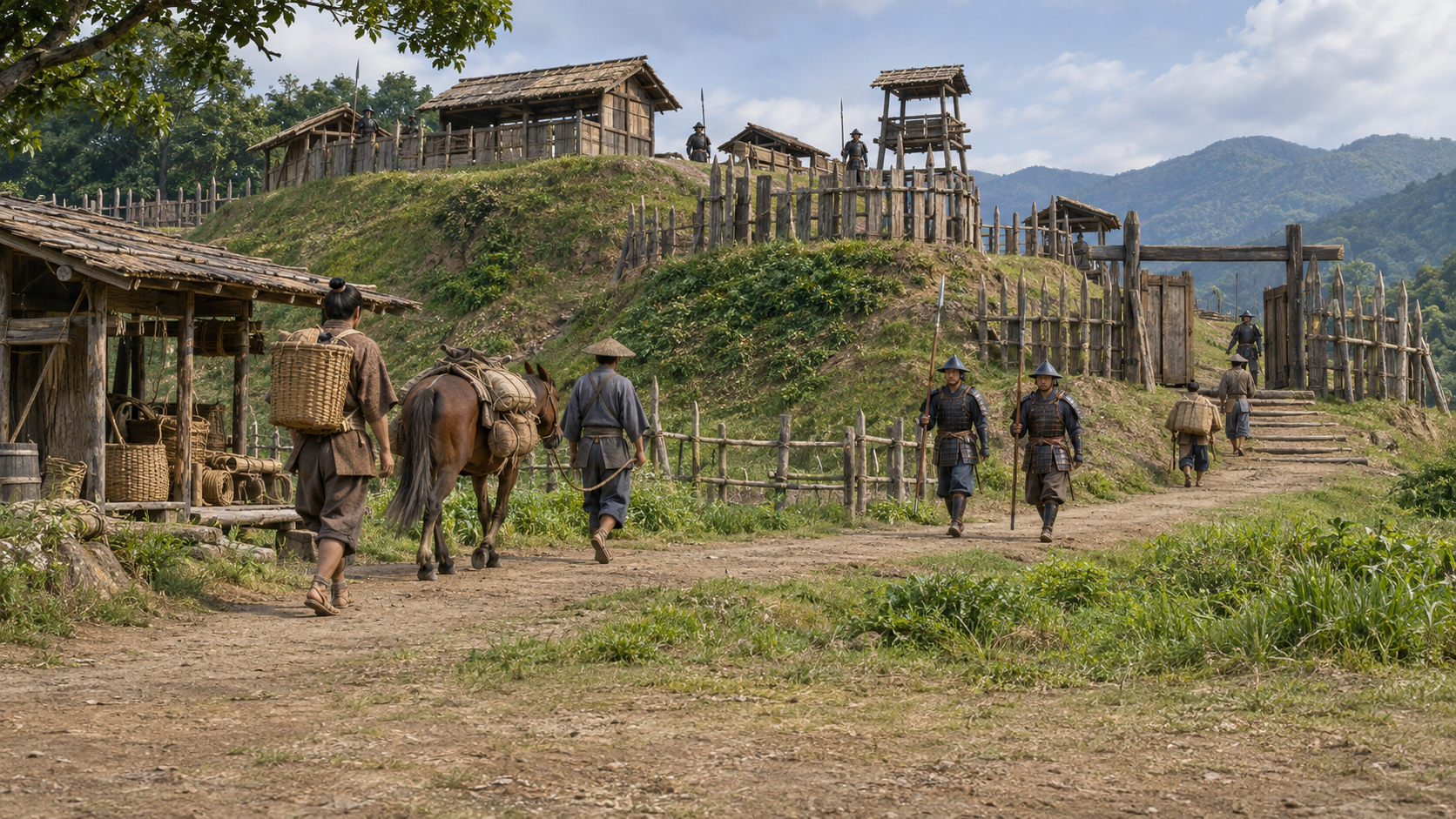
Nisshin City identifies Iwasaki as a strategic point on a road connecting Owari and Mikawa. While castle lord Niwa Ujitsugu was with Ieyasu’s side at Komaki, his younger brother Ujishige and others defended Iwasaki. The castle fell after fighting with the advancing Hashiba forces.
A map containing only the two main armies leaves out such intermediate places. Routes already had defenders, settlements and local relationships before a detached force entered them.
The keep-like structure now at Iwasaki is an observation tower rebuilt in 1987. Its appearance should not be presented as a surviving building from the campaign.
Scene 07
The fourth month’s ninth day had several encounters
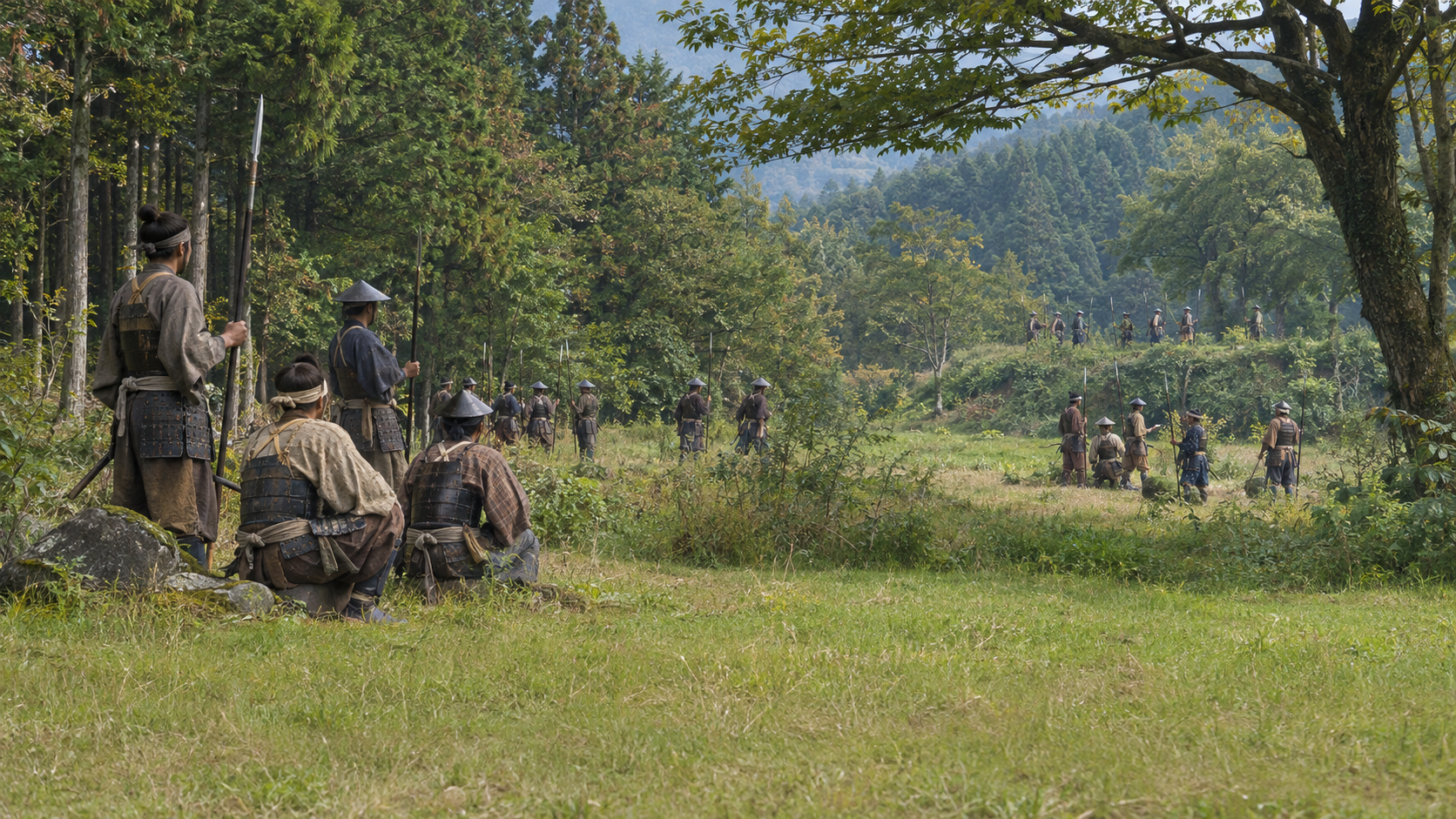
Nagakute City separates the fighting into places including Hakusanbayashi, Hinokigane and Hotokegane. Tokugawa forces gained advantages, but there was also a phase in which Hori Hidemasa’s troops drove back pursuing opponents.
The eventual victory of Ieyasu’s side does not mean that all its units won continuously throughout the day. The position of one successful force and the experience of another need to be considered separately.
This is why a simple diagram in which the entire battlefield changes colour at once is insufficient. Place and sequence preserve the difference between the campaign’s remembered result and the changing fortunes of individual encounters.
Scene 08
Commanders lost, scenes selected later
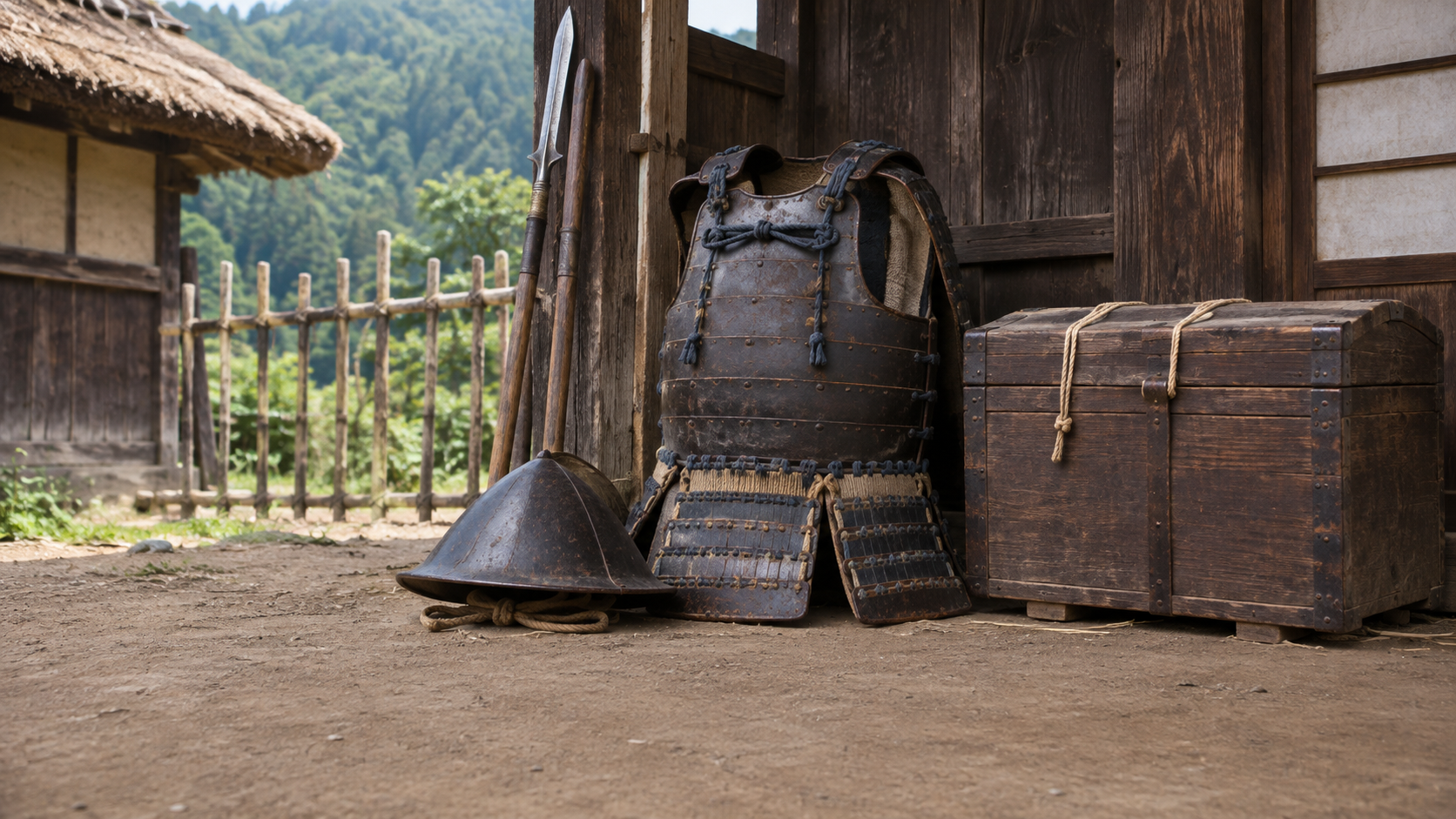
Ikeda Tsuneoki and Mori Nagayoshi were among the commanders killed on Hideyoshi’s side. Their deaths meant the loss of people exercising military command, not merely names added to a later list of casualties.
The battle screen introduced by Nagoya City Museum belongs to the middle Edo period. Its composition and selection of episodes are themselves part of how the battle was represented later.
Figures shown in a painting do not make the image an eyewitness record. The screen can be studied both for the events it depicts and for the choices made in a later age. Its visual emphasis cannot automatically establish a complete view of the fighting.
Scene 09
Pressure continues elsewhere
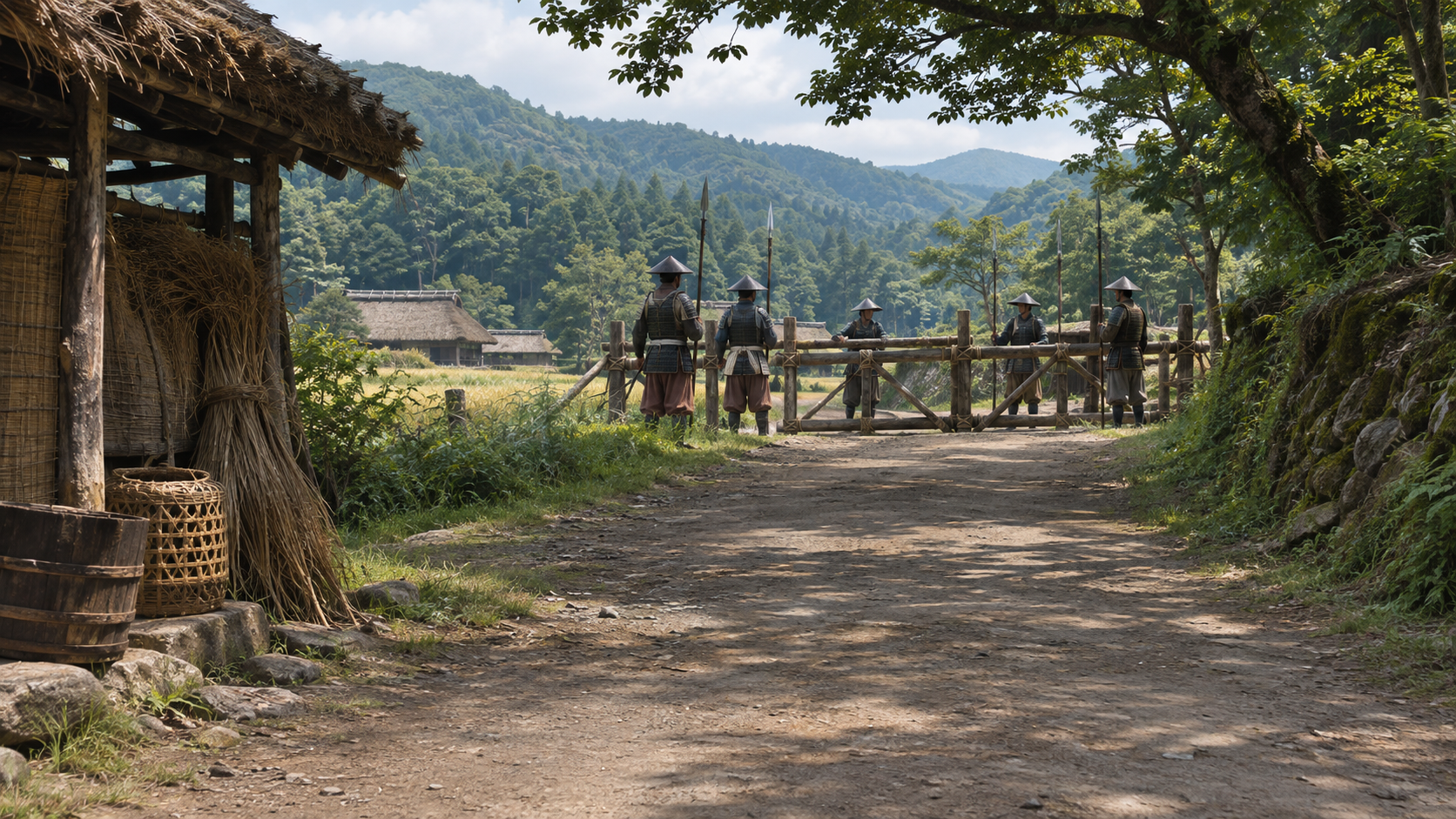
The conflict between Hideyoshi and the Nobukatsu–Ieyasu side continued after the fighting at Nagakute. Nagoya City Museum follows operations into western Owari and Ise, while the city accounts also describe local fighting in the fifth and sixth months.
Ieyasu’s victory remains a fact within that wider course. At the same time, Hideyoshi had not become unable to move further forces simply because units had withdrawn from one battlefield.
Looking beyond the best-known encounter restores the pressure felt at other castles and in other territories. The campaign continued to create conditions in which the allies had to make political decisions.
Scene 10
Documents help build relationships
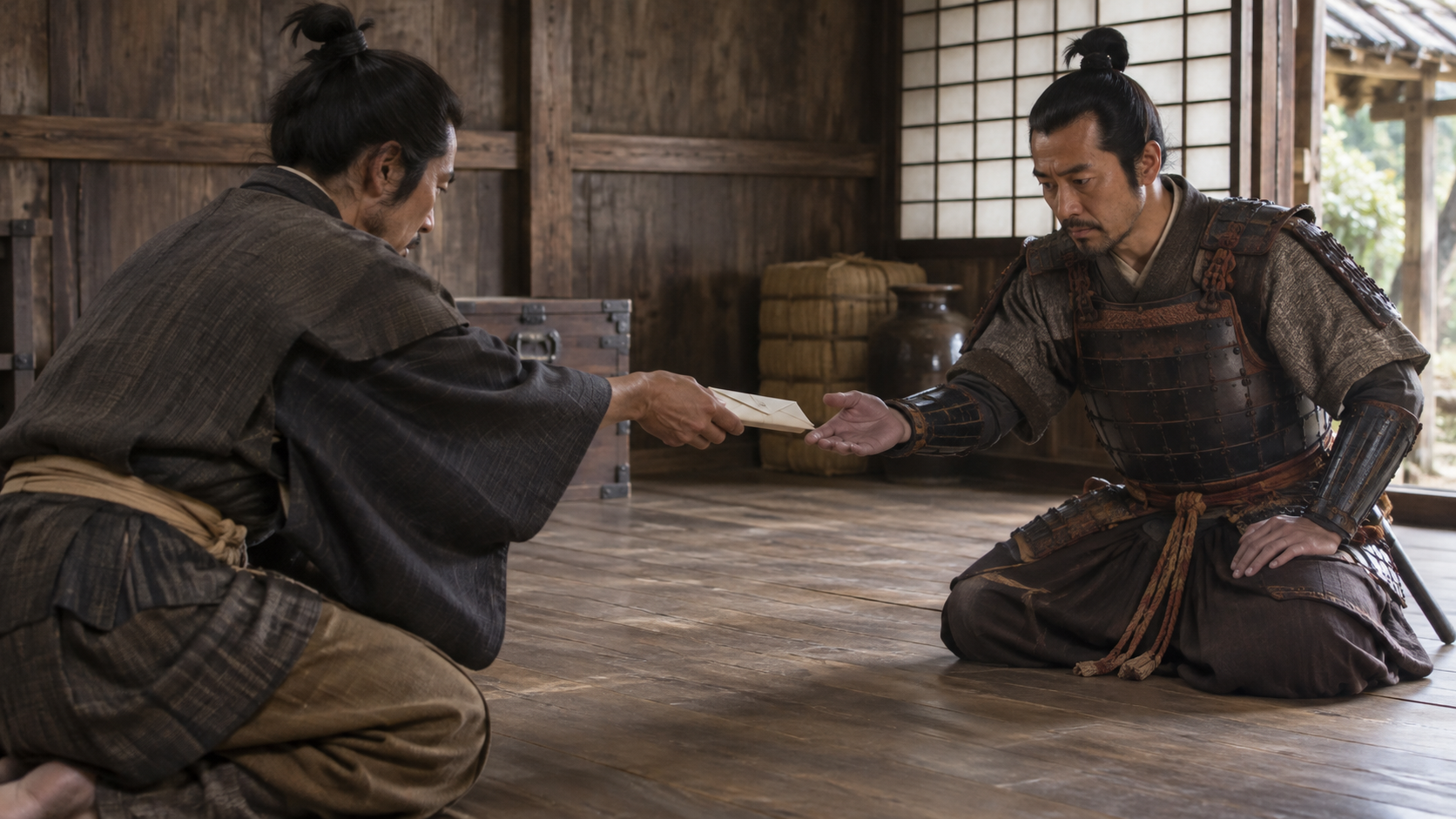
Nagoya City Museum’s exhibition draws attention to documents including confirmations of rights and prohibitory orders. Recognizing claims to land, or forbidding particular conduct, addressed relationships with people in the regions where armies operated.
Military victory did not automatically secure everyone’s obedience. A document from Ieyasu directed toward an influential figure at Atsuta and a prohibition issued by Hideyoshi to a temple had different recipients and purposes.
A catalogue gives an entry point into those acts. It does not establish how every recipient behaved or thought afterward. A fuller reading of each original would be a further task, beyond the institutional descriptions used here.
Scene 11
Nobukatsu’s peace changes the conditions
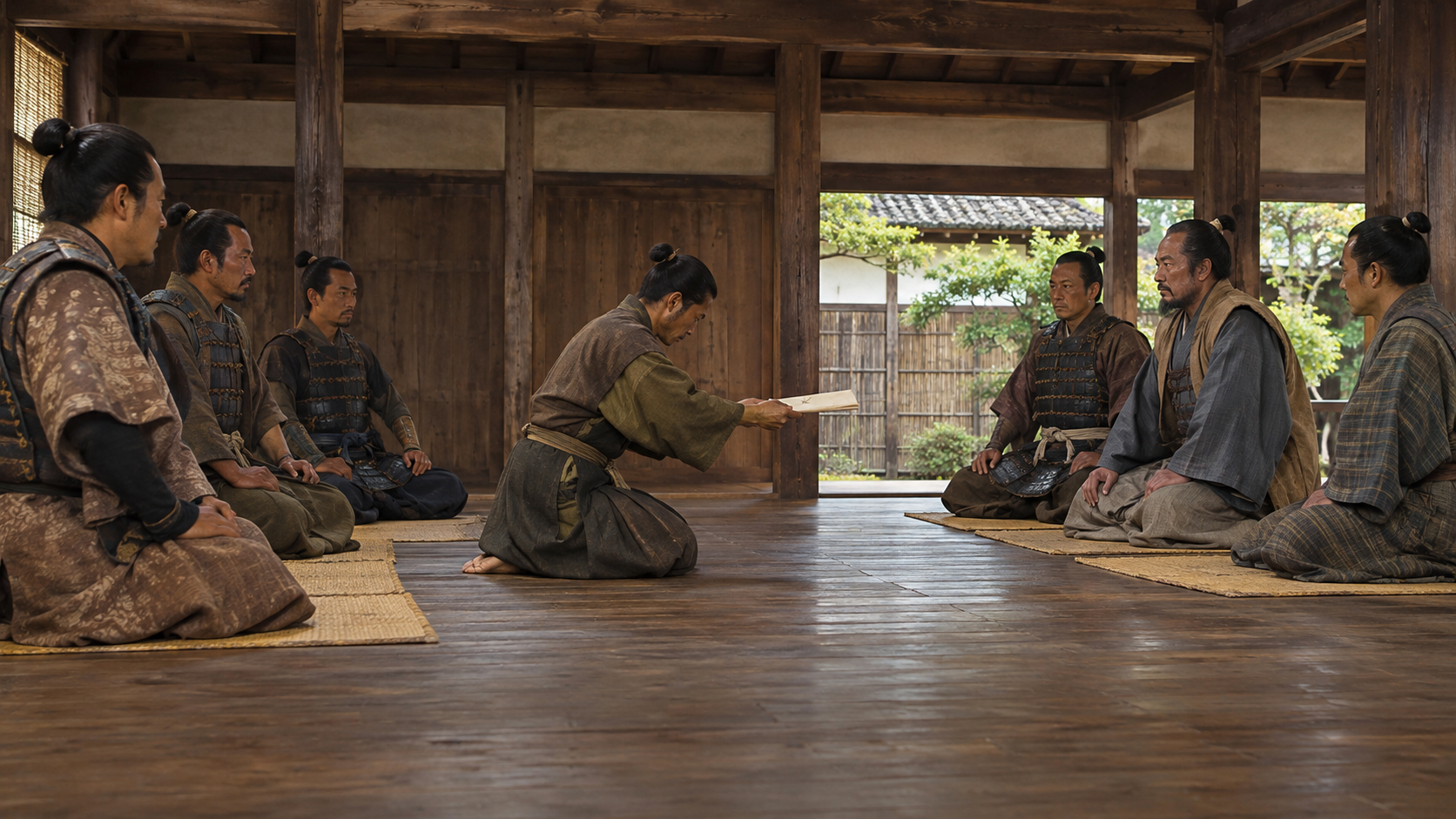
In the eleventh month, Hideyoshi and Nobukatsu reached peace. Nagakute City connects Nobukatsu’s separate agreement, after operations in northern Ise, with the ending of the campaign. Ieyasu had fought in alliance with him.
When that ally stopped fighting Hideyoshi, the conditions for continuing the war changed for Ieyasu as well. This does not cancel the victory at Nagakute. Battlefield achievements and negotiations concerning alliances and territories were developing in different settings.
The peace also should not be collapsed into the later process through which Ieyasu entered Hideyoshi’s political order. Several stages can connect without becoming one day’s event.
Scene 12
Use more than one measure of an outcome
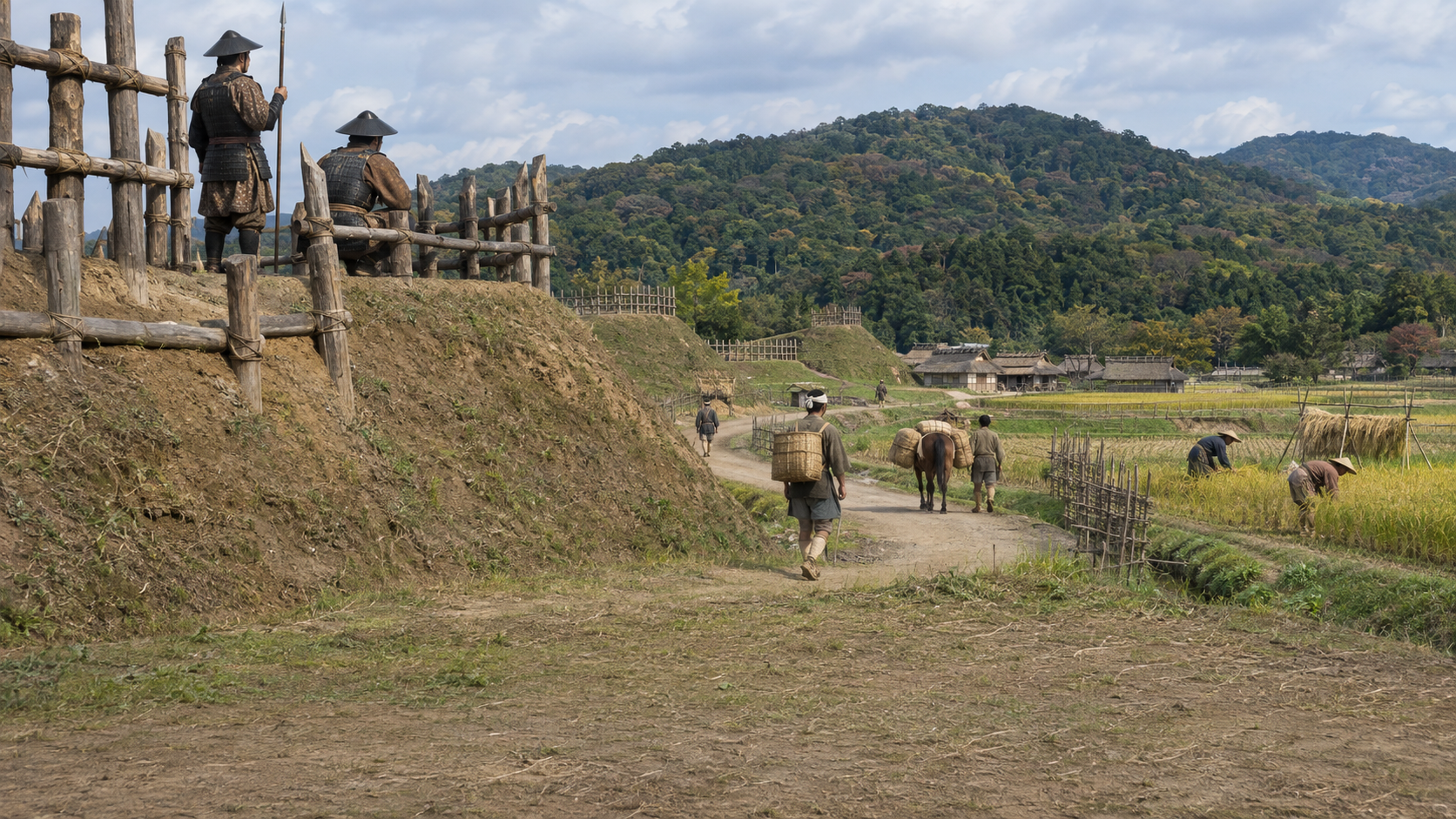
Who won on the ninth day of the fourth month? Under whose conditions did the campaign of the third through eleventh months end? These are connected questions, but they are not the same question.
Komakiyama’s defences, the advance toward Okazaki, Iwasaki, the Nagakute encounters, political documents and Nobukatsu’s peace together show military and political activity changing each other’s conditions. Later knowledge of who became ruler should not be projected backward as certainty about every participant’s intentions.
Commemoration has its own chronology too: the educational account notes the battlefield’s national historic-site designation in 1939. Later paintings, reconstructed buildings and conserved remains illuminate different things. Following the time needed to end a war gives the victorious day its place within a larger history.
How to read this work
History, interpretation, and reconstruction
The victory at Nagakute and the conditions that ended the campaign operated on different timescales; fortifications, regional interests, documents and alliances connect the two.
This work is grounded in published sources and historical research. Interior thoughts, dialogue, and some visual details are cinematic reconstructions. Where historians disagree, the article presents the point as debated rather than settled fact.
Timeline
The story in time
People & terms
A guide for new readers
Glossary
- Daimyo 大名
- A territorial lord; allies could retain distinct domains, obligations and reasons for fighting.
- Andojo 安堵状
- A document confirming a right or possession. Its issue does not alone prove every subsequent action of its recipient.
- Kinzei 禁制
- An order prohibiting specified conduct, directed to particular places or recipients in the circumstances of its issue.
- Mikawa naka-iri 三河中入
- The advance into Mikawa toward Okazaki, distinct from a complete explanation of how the plan originated.
- Jindatezu 陣立図
- A representation of military deployment; orientation and depicted dates require examination before interpreting its arrangement.
- Waboku 和睦
- Peace or accommodation between parties. The agreement with Nobukatsu is distinguished from Ieyasu’s later political incorporation.
Sources & method
How this article was built
The principal basis is the stated museum, archival and municipal explanations. Their descriptions identify records and findings, but do not turn this article into a new full transcription of the original letters, screen, map or excavation reports. Repeated references to the same institution are not independent contemporary witnesses.
The account separates a day’s battlefield result from a months-long campaign, a peacemaking stage from later political developments, and historical material from subsequent remembrance. The generated illustrations provide conceptual settings only. No institutional photograph, original map, manuscript image, exact formation or historical conversation has been added.
Sources
References and further reading
- Documents and the Komaki–Nagakute Campaign 名古屋市博物館「文書に見る小牧・長久手の戦い」 Title translated editorially for reader convenience. Nagoya City Museum 名古屋市博物館 Exhibition text and catalogue descriptions of confirmations, prohibitions and related documents; the original handwriting has not been independently transcribed in full. Accessed 2026-11-06
- Komaki–Nagakute Deployment Map 愛知県公文書館「小牧・長久手合戦陣立図」 Title translated editorially for reader convenience. Aichi Prefectural Archives 愛知県公文書館 Institutional description of the Komatsuji map, including its east-up orientation and represented area. Not a complete decipherment of its inscriptions. Accessed 2026-11-06
- The Battle of Komaki and Nagakute 名古屋市博物館「小牧長久手の戦い」 Title translated editorially for reader convenience. Nagoya City Museum 名古屋市博物館 Campaign, commanders, continuing operations and the middle-Edo battle screen are distinguished. The screen is not contemporary battlefield reportage. Accessed 2026-11-06
- Stories of Nagakute Battlefield 長久手市「長久手古戦場物語」 Title translated editorially for reader convenience. Nagakute City 長久手市 Institutional account of the coalition, the advance, separate encounters and peace. Research interpretations and familiar narrative explanations remain distinguishable. Accessed 2026-11-06
- History of Komakiyama Historic Site 小牧市「史跡小牧山の沿革 小牧・長久手の合戦」 Title translated editorially for reader convenience. Komaki City 小牧市 Defensive works and the interpretation of remains; present earthworks are not all assigned to one construction phase. Accessed 2026-11-06
- Nisshin in the Warring States Period 日進市「にっしんの戦国時代」 Title translated editorially for reader convenience. Nisshin City 日進市 Iwasaki’s road position, its defenders and its fall. Exact troop counts and dramatized dialogue are not adopted. Accessed 2026-11-06
- Iwasaki Castle Site Park 日進市「岩崎城址公園」 Title translated editorially for reader convenience. Nisshin City 日進市 Used for the observation tower’s 1987 rebuilding, rather than as evidence that the present building survived from 1584. Accessed 2026-11-06
- Nagakute Battlefield 長久手古戦場 Title translated editorially for reader convenience. Aichi Prefectural Education Center 愛知県総合教育センター Educational account of the battle and 1939 designation. Photographs are not reproduced and current travel advice is not adopted. Accessed 2026-11-06
Continue reading
More stories from Shigeki
Shigeki English
The Second Choshu Expedition: Four Fronts and a Negotiated Withdrawal
Read weapons together with terrain, training, command and support.
- When 1866, distinct from the first expedition in 1864; the process of ending extended into January 1867
- Where Oshima, the Aki border, Iwami and the Kanmon Strait facing Kokura
Shigeki English
Hasedo: Why Fighting Continued after Sekigahara
Separate the siege, the arrival of news, and withdrawal under pursuit.
- When 1600; month and day references use the calendar of the time
- Where Hasedo and Yamagata in Dewa, connected with Aizu and distant Sekigahara