
SHIGEKI ENGLISH STORYEN
Japanese history in English
The Tenmei Famine: Living Until the Next Harvest
Memorials in Hachinohe, seed and tools in Sannohe, and reserves in Yonezawa: reading different kinds of preparation.
The Tenmei famine cannot be explained by Asama’s eruption or one celebrated ruler alone. Records from Tōhoku connect food, further planting, reserves and remembrance, while the dates of later famine books reveal how experience was transmitted.
At a glance
Before you enter the story
- When
- Centered on 1783–1784 in Tōhoku; also the 1755 experience, 1771 draft, 1795 memorial and publications in 1802 and 1833–1837.
- Where
- Tōhoku, especially Hachinohe, the Sannohe area, Yonezawa and Ichinoseki; Asama appears as a distinct volcanic disaster.
- Key figures
- Uesugi Harunori (Yōzan), Sugita Genpaku, Takebe Seian, Endō Tōru
- What was at stake
- How immediate food needs, the means to plant again, reserves and the preservation of experience connected one season with the next.
Why this story matters
The larger history behind the turning point
A famine history changes when an order, a writer’s praise, a municipal account, a memorial and a later book are read as different kinds of evidence. The local records reveal work that a single disaster image or a story about one ruler could leave out.
Historical context
What an international reader needs to know
Regions and domains are different frames
Tōhoku names the northeastern region of Japan’s main island, Honshū. The places followed here were not interchangeable administrative units in the eighteenth century. A modern Aomori prefectural chronology and an account of Hachinohe domain can overlap geographically without covering precisely the same territory or period. Yonezawa and Ichinoseki provide other local perspectives. Keeping place names attached to each record avoids turning one response into a description of every community.
A domain was a territory governed by a lord within the Edo-period order. Calling Harunori lord of Yonezawa identifies the setting of the response discussed here; it does not make his measures a national policy. The account also distinguishes farmers, townspeople and warriors where the municipal description of reserves does so. Those categories are not used to invent an equal experience of access or loss.
Orders, memorials and books answer different questions
The Sannohe document prescribes work; its survival does not prove successful completion. Genpaku’s account preserves evaluation; praise does not substitute for a casualty survey. Hachinohe’s memorial records show remembrance at particular dates, while the books have separate histories of drafting, revision and publication. These distinctions help an international reader follow why the article does not resolve every question into one narrative.
Historical Japanese month labels also need care. The extra, intercalary first month in the 1784 order is not ordinary January. This article retains the original calendar description without inventing a Gregorian date. Likewise, 1771 and 1833 refer to different stages of one book, rather than alternative dates to be averaged or silently reconciled.
Watch the film
See the story in motion
The film currently uses Japanese audio. This English article provides the context and source trail; it does not imply that an English subtitle track is available.
CHAPTER 01
Living until the next harvest
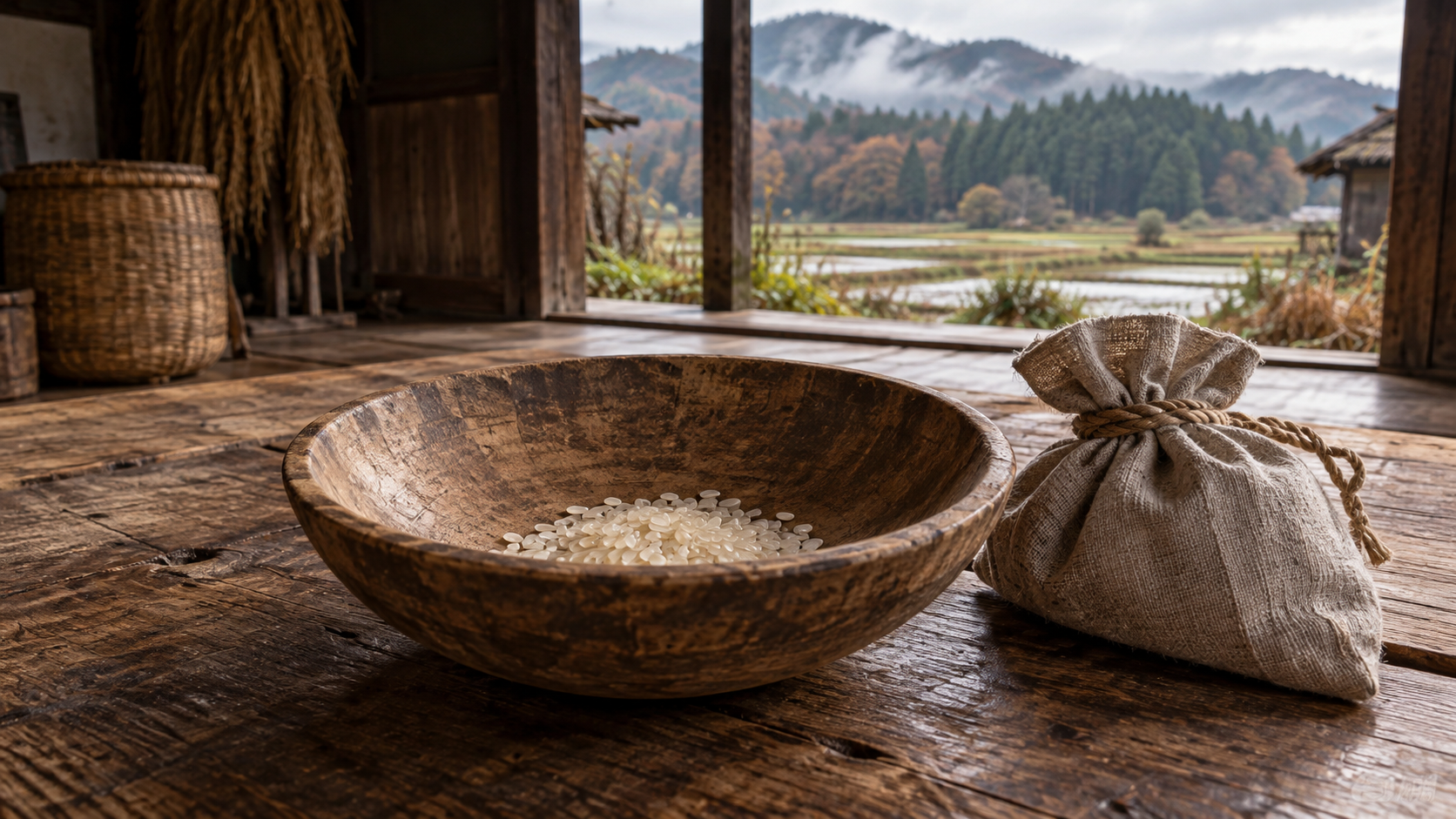
A harvest has fallen short, but the next crop is still far away. The question at the center of this account of the Tenmei famine is how people could live through that interval. This is a question drawn from the records, not a quotation from an imagined family.
In the late eighteenth century, a severe food crisis affected lives across Tōhoku. Aomori Prefecture’s historical chronology records a great famine in 1783–1784. Yet neither the losses nor the responses were identical everywhere in the region. A single account of the whole disaster can conceal important local differences.
Seed retained in a village, grain stored in a granary, rice brought from elsewhere, and experience recorded after the crisis belonged to different parts of the problem. Local records let us ask what was needed both to sustain life immediately and to make a subsequent livelihood possible.

CHAPTER 02
The span of time called Tenmei
The Tenmei famine did not begin and end on a single day. The Tōhoku chronology published by the Ministry of Agriculture, Forestry and Fisheries places the great famine under 1782. Aomori Prefecture’s chronology gives 1783–1784. These entries do not supply one exact starting date applicable to every place.
The difference does not immediately establish that one chronology is wrong. Their geographical coverage or the span summarized by an entry may differ. Comparing the year labels alone cannot settle a common national beginning. Nor can the boundaries of a present-day prefecture simply be laid over the boundaries of an Edo-period domain.
The focus here is Tōhoku around 1783. Earlier experiences and later responses also appear, but their dates remain visible. A book published decades afterward cannot be placed in the hands of people during the crisis merely because it discusses preparations for famine.
CHAPTER 03
Cold conditions and the means to keep living
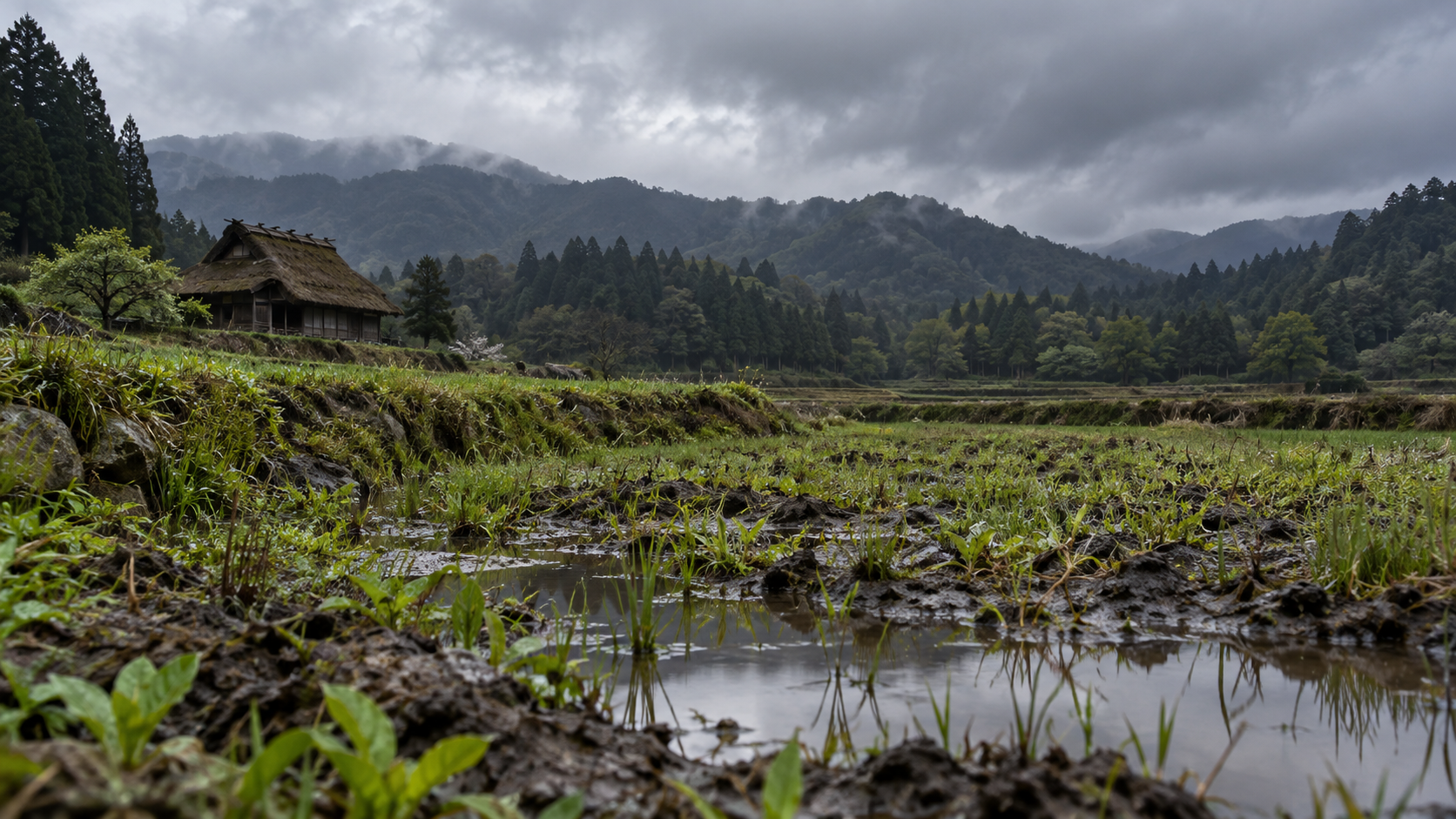
Cold climatic conditions matter when considering poor harvests in Tōhoku. The adopted study discusses those conditions, but climate alone does not describe every aspect of people’s circumstances. When a crop diminished, could food grain be secured? Could stored supplies be used? Those questions concern what stood between a harvest and a household’s next meal.
Another question followed: could cultivation continue into the next season? Reading the records brings food and future planting into the same discussion without making them the same task. A food crisis did not finish at the edge of that year’s fields. Its consequences could affect the means of producing the following crop.
The storage arrangements described for Yonezawa and the cultivation order preserved for the Sannohe area offer different perspectives on this work. These are records from separate places. Together they invite attention both to difficult weather and to the arrangements through which food and the means of farming could become available.
CHAPTER 04
Asama’s eruption and a wider food crisis
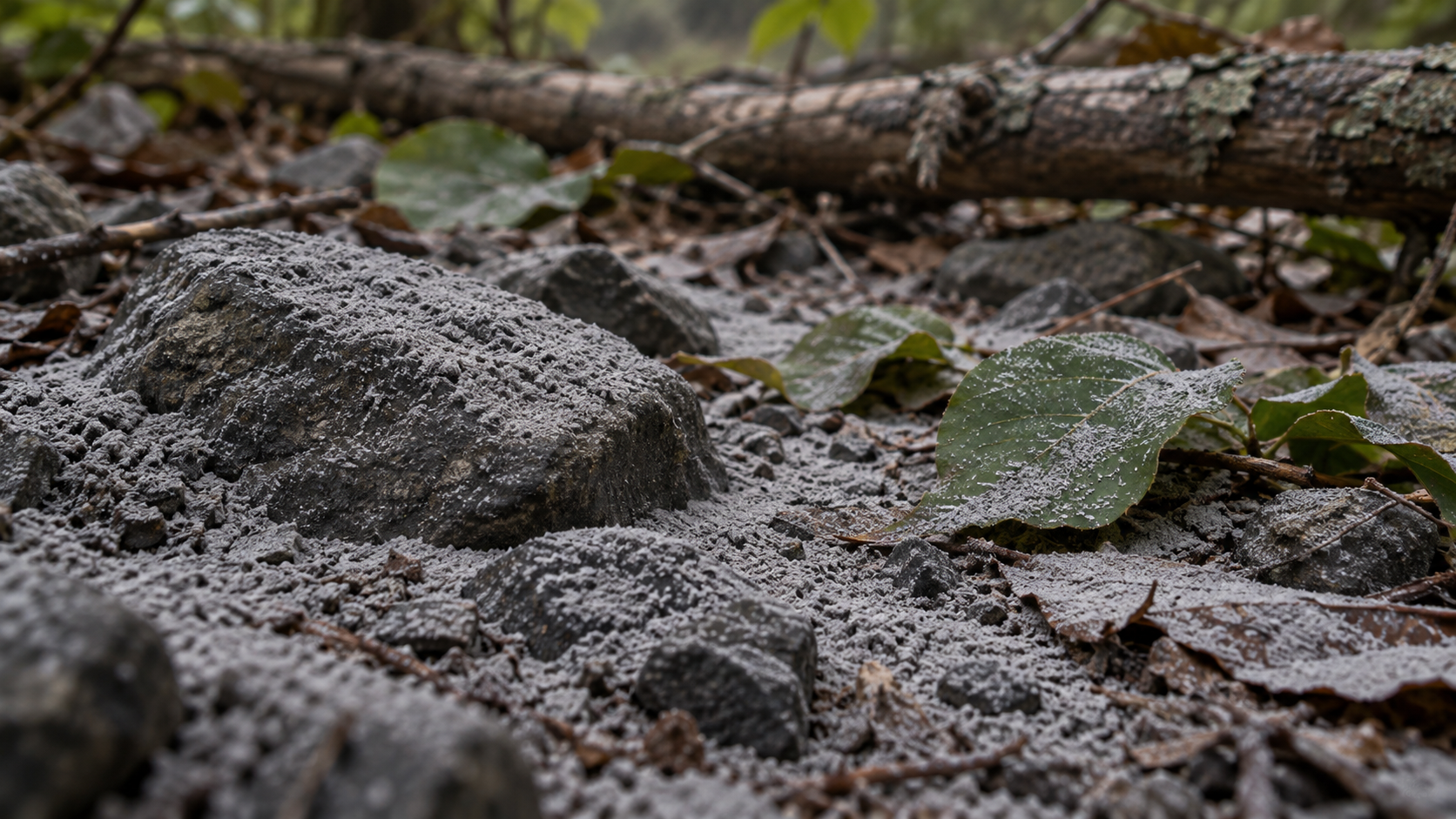
Mount Asama erupted in 1783. The Japan Meteorological Agency’s record identifies damage from pyroclastic flows, a debris avalanche and flooding along rivers. These are categories of direct volcanic disaster. They need to be distinguished from a food crisis extending across a much wider area.
Events occurring in the same year cannot automatically be represented by one casualty figure. A number describing volcanic losses would not become a count of all victims of the Tenmei famine. Following only the drama of an eruption can also make the continuing problems of food and agricultural work in Tōhoku villages harder to see.
The task is therefore to establish the scope of each kind of evidence. This article does not turn Asama into a single complete explanation of the famine. Keeping direct disaster and prolonged food shortage distinct leaves room for the regional records that follow.
CHAPTER 05
Memorials remaining in Hachinohe
The scale and persistence of the crisis can also be approached through records of commemoration. Hachinohe City’s domain chronology places a great famine in 1783 and records the building of a memorial tower at Taisen-in in Niida the following year. In 1795, a memorial observance for the famine was held at the nenbutsu hall on Chōjasan.
The end of a failed harvest year did not immediately end remembrance. In its cultural-property explanation of the Taisen-in memorial and stone, the city also describes a lesson urging later generations to keep grain in reserve. The account connects mourning with preparation for a future crisis.
These records do not tell us every participant’s feelings or the precise conduct of a ceremony. What they do show is that remembrance continued at later dates. The connection between commemorating lost lives and encouraging reserves is preserved in the local account of the stones.

CHAPTER 06
Reading praise within a disaster account
A text about disaster preserves not only events but also its writer’s perspective. Sugita Genpaku’s Nochimigusa, introduced by the National Archives of Japan, is one example. The Archives’ explanation presents descriptions of famine suffering alongside assessments of the responses made by domain lords.
Among those praised is Uesugi Harunori of Yonezawa, better known as Yōzan. Such praise is important evidence for how responses were evaluated. It is nevertheless a different kind of evidence from a survey proving that no person died in any village throughout the domain. One cannot silently be substituted for the other.
What did the writer hear or observe, and what did he commend? Those questions preserve the value of an account while limiting what its praise can establish. The source used here is the Archives’ exhibition explanation, not a claim to have independently deciphered the complete original work or traced Genpaku through every affected place.
CHAPTER 07
Grain to eat and seed to sow
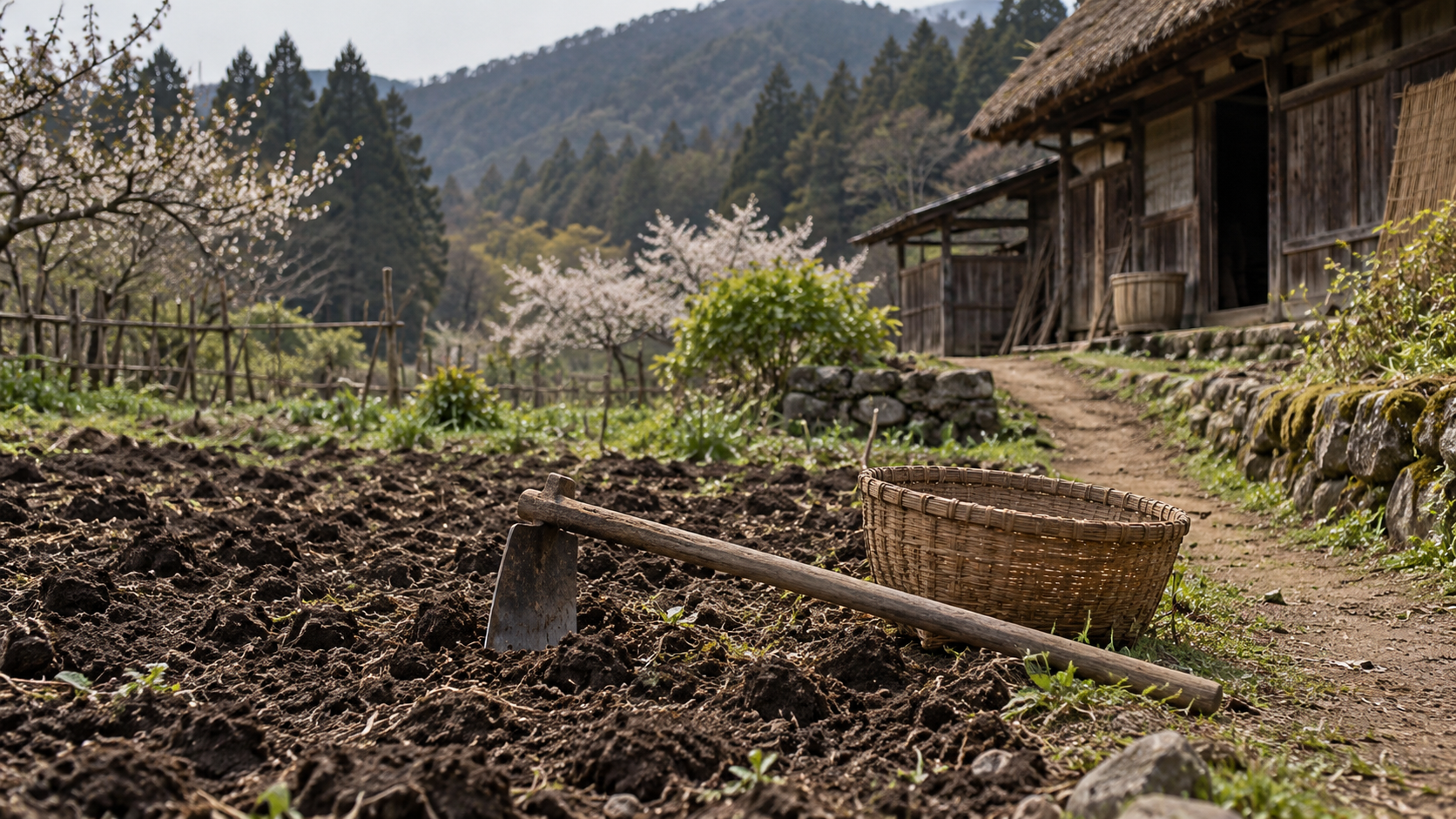
Work in the fields had to continue after the famine. A document in the Aomori prefectural history archive records the appointment of supervisors for planting in the Sannohe area in 1784. It includes directions concerning an investigation of seed holdings and arrangements for agricultural tools that had been pawned.
The issue was therefore more than food for the immediate day. Seed and usable tools were also needed for the next harvest. Without them, rebuilding a livelihood through another season of cultivation would be difficult. This is the practical significance drawn from the matters the order required officials to address.
An order does not demonstrate that every instruction was carried out or that the result was successful. The document’s historical date is retained as Tenmei 4, intercalary first month, twenty-second day, without an invented modern-calendar conversion. Its existence identifies a problem and a prescribed response; implementation would require further evidence.
CHAPTER 08
Making stored grain available
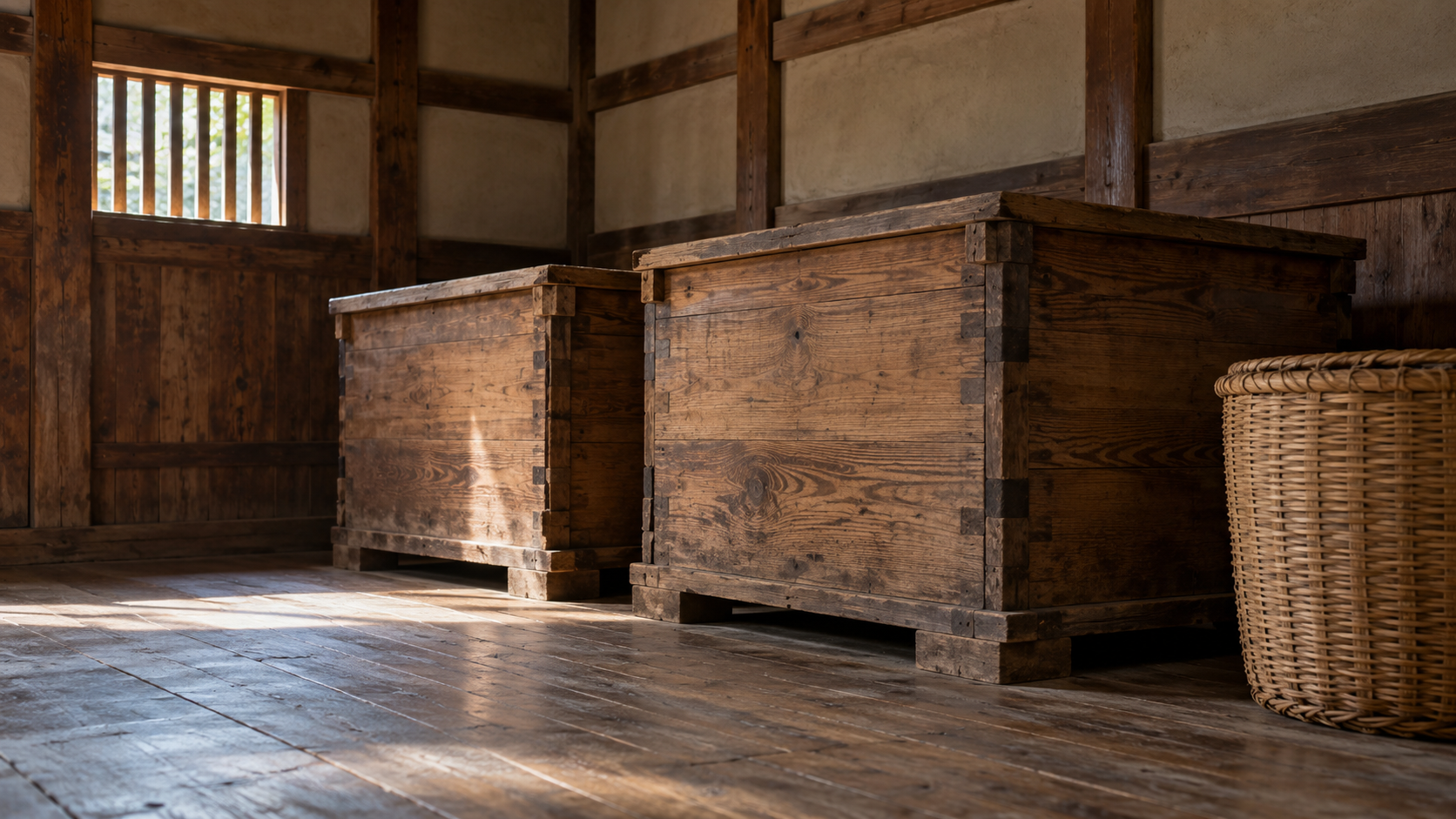
Storing food was one form of preparation. Yonezawa City describes grain-storage arrangements associated with farmers, townspeople and warriors. Its explanation connects annual accumulation with the release of grain during the Tenmei famine. Both stages belong to the account: establishing a reserve and using it when a crisis arrived.
The presence of a granary alone is not the whole mechanism. Grain kept inside a building does not, merely by being there, show how people were sustained. The question is when and how reserves were made useful to livelihoods. The adopted municipal explanation supplies the storage-and-release outline, rather than a complete distribution ledger.
Reducing the Yonezawa example to a story in which one hero saved everyone would obscure these arrangements. Using previously accumulated supplies can be considered alongside preparations for further cultivation. The comparison explains different work involved in getting through a shortage; it does not invent numbers of granaries, ration quantities or individual distribution scenes.

CHAPTER 09
Evaluating relief without concealing losses
Why have Yonezawa’s relief measures been discussed so often? Storage and responses attracted praise, but that assessment should not be converted into an unqualified statement that there were no victims. The adopted research paper distinguishes a tradition of no starvation deaths from losses described in a village history.
Considering the significance of relief and examining local suffering are compatible tasks. Praise need not be erased, and tragedy need not be hidden. The question here is the form that responses to crisis took, rather than a verdict that one person was completely virtuous or that one story settles every local experience.
The study is used within its recorded page scope. This article does not claim a new independent examination of the village-history original, nor does it calculate a new casualty total. Retaining differences among places makes the importance of food provision visible without allowing that importance to stand in for all that people experienced.

CHAPTER 10
When knowledge for famine relief was compiled
Preparations for famine did not originate solely in the Tenmei experience. The National Archives introduces Bikō Sōmokuzu, a work by Takebe Seian, a physician of the Ichinoseki domain. His experience of the famine of 1755 prompted the research, and a draft existed by 1771. Both dates precede the crisis at the center of this article.
Publication, however, came in 1833, after the author’s death. The making of a draft and the appearance of a printed book are different events. Ichinoseki City Museum’s explanation describes later editorial work and the long interval before publication. A manuscript’s existence does not by itself establish widespread printed circulation.
Earlier experience was compiled and transmitted into a later period. Keeping that sequence intact shows knowledge as something accumulated and worked upon across generations. This is an account of a book’s history, not instructions for gathering plants, preparing famine foods or using historical remedies today.

CHAPTER 11
Preparations passed into later periods
Katemono, published in Yonezawa, also requires careful dating. The city’s explanation of its printing blocks gives 1802 as the publication year. That is later than 1783, when the Tenmei crisis became severe in the account followed here. The book’s later existence cannot establish its availability during that earlier year.
Kyūkō Benran, introduced by the National Archives, was published from 1833 to 1837. It too must not be described as a book distributed during the Tenmei famine. Placing a later measure in an earlier crisis can make knowledge or arrangements appear already available when the chronology does not support that claim.
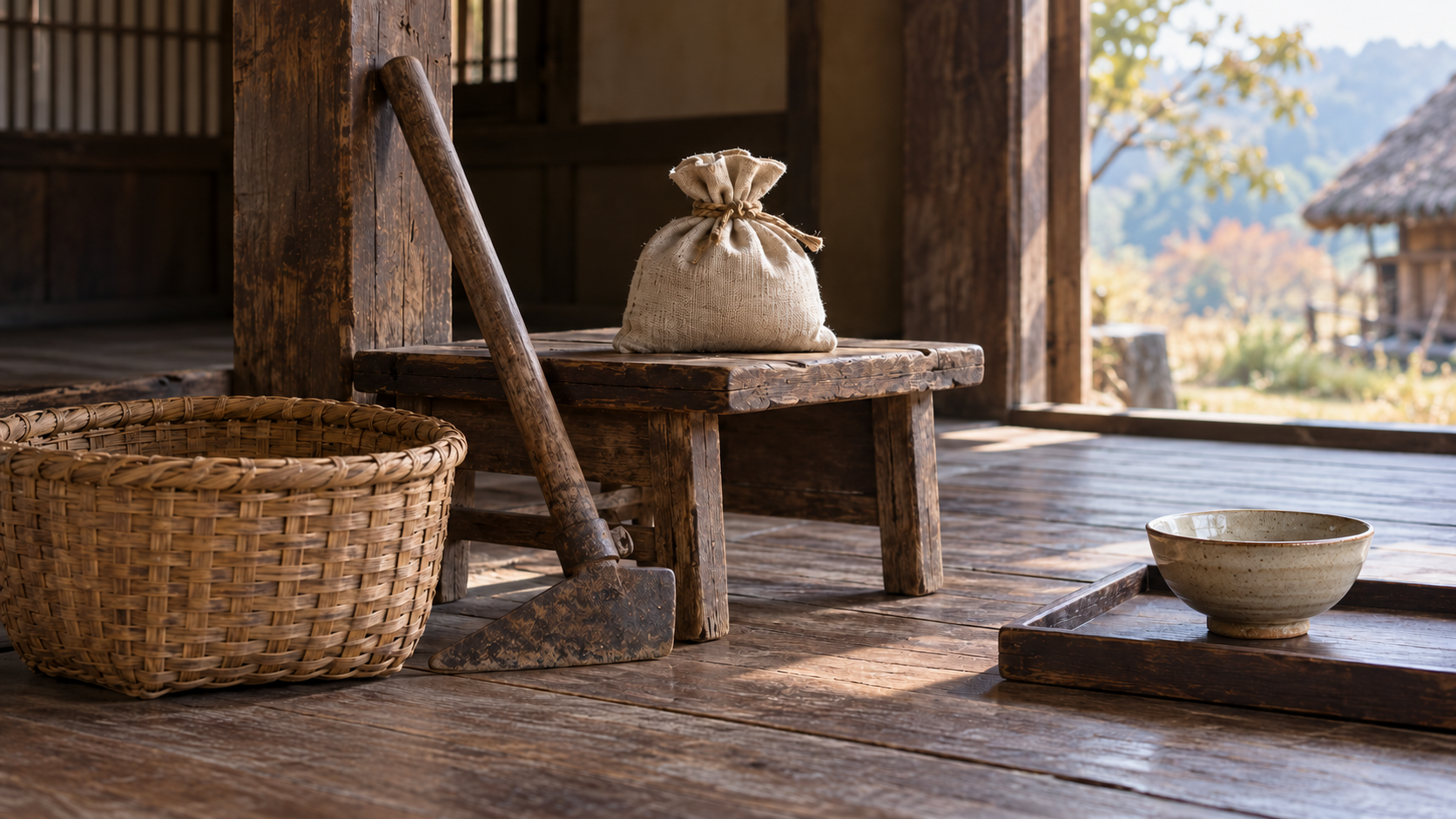
Experience was recorded, organized and made into preparation for another time. Separating those stages by date makes the long work of preserving disaster knowledge visible. The illustrations accompanying this chapter are explanatory props, not copies of either book or of the actual printing blocks.
CHAPTER 12
Following the work that connected one harvest to another
The Tenmei famine cannot be explained only through crop failure. Securing food, assembling seed and tools for further planting, and making reserves available were distinct tasks. Each concerned a different part of the interval between a failed harvest and the possibility of another crop.
Mourning lost lives and recording experience were further forms of work. The records from Hachinohe, Sannohe and Yonezawa bring different problems into view. Condensing a wide regional disaster into one figure or one hero would leave out much of that local experience. Checking what kind of evidence survives is a way of approaching those differences.
What provisions and work helped connect immediate survival with the next season? The records leave that question with us. This conclusion draws together the examples already examined; it does not turn them into a guarantee for a present-day policy, a complete account of every community or a new total of the dead.
How to read this work
History, interpretation, and reconstruction
Read food provision, further planting, the release of reserves and remembrance as distinct tasks. Keep regions, dates and kinds of evidence separate rather than asserting a single cause or zero casualties.
This work is grounded in published sources and historical research. Interior thoughts, dialogue, and some visual details are cinematic reconstructions. Where historians disagree, the article presents the point as debated rather than settled fact.
Timeline
The story in time
-
The Tōhoku agricultural bureau’s chronology places the great Tenmei famine under this year, without establishing a simultaneous nationwide beginning.
Sources: s01 -
Aomori Prefecture’s chronology records the great Tenmei famine under these years.
Sources: s02 -
Mount Asama erupts. Direct volcanic disaster is distinguished from the wider losses associated with famine.
Sources: s05 -
A memorial observance for the famine of Tenmei 3 is held at the nenbutsu hall on Chōjasan.
Sources: s03 -
Katemono is published in Yonezawa.
Sources: s12 -
Kyūkō Benran is published.
Sources: s07
People & terms
A guide for new readers
Key figures
- Uesugi Harunori (Yōzan)
- Lord of Yonezawa. Assessments of his reserves and famine response are distinguished from verification of losses throughout the domain.
- Sugita Genpaku
- Author of Nochimigusa, introduced by the National Archives. His account records famine suffering and assessments of domain lords.
- Takebe Seian
- Physician of Ichinoseki domain and author of Bikō Sōmokuzu. Its draft dates to 1771 and publication after his death to 1833.
- Endō Tōru
- Author of Kyūkō Benran, introduced by the National Archives and published in 1833–1837. The National Diet Library authority record links this catalogued name to the common-name form used in the Japanese article.
Glossary
- Tenmei famine 天明の飢饉
- The famine discussed here mainly through Tōhoku records around 1783–1784; the adopted chronologies use different year spans.
- Tōhoku 東北
- Northeastern Honshū, the regional focus of this article, not a single eighteenth-century domain.
- Domain 藩
- A lord’s territory in the Edo-period order; historical domain boundaries should not be equated with present prefectures.
- Seed holdings 種物所持
- Grain retained for sowing, whose availability was to be investigated under the adopted Sannohe order.
- Pawned agricultural tools 質入れ農具
- Farming implements placed in pawn and addressed in the cultivation order; the order alone does not show that every tool was recovered.
- Intercalary month 閏月
- An additional month in the historical calendar. The order’s intercalary first month is not translated as ordinary January.
- Memorial tower 供養塔
- A monument associated with commemoration of the dead, recorded at Taisen-in in 1784.
- Nenbutsu hall 念仏堂
- The hall on Chōjasan where the adopted Hachinohe account records a memorial observance in 1795.
- Nochimigusa 後見草
- Genpaku’s work introduced by the National Archives; its assessment of rulers is distinguished from a comprehensive survey of losses.
- Bikō Sōmokuzu 備荒草木図
- Seian’s famine-preparation work, drafted by 1771 and published in 1833; the two dates describe different stages.
- Katemono かてもの
- The Yonezawa publication dated 1802 in the municipal account of its printing blocks.
- Kyūkō Benran 救荒便覧
- Endō Tōru’s famine-preparation work published in 1833–1837, not a book distributed during the Tenmei crisis.
- Endō Tōru 遠藤勝助(遠藤通)
- The author of Kyūkō Benran, identified by a common-name form in the Japanese article and by this catalogued name in the National Diet Library authority record.
Sources & method
How this article was built
The fixed Japanese article’s four people, twelve chapters, ten timeline entries and thirteen source IDs are preserved, including the gaps in the source numbering. Titles are editorial translations. Repeated Aomori, Hachinohe, Yonezawa and National Archives pages count under their parent publishers, and the Ichinoseki museum under its city; J-STAGE is a platform, not an additional publisher.
The source review and its recorded reading scopes are inherited from the verified Japanese article. The municipal PDF is used at printed page 7 and the 1977 research paper at printed pages 5 and 8. No complete reading of either PDF or independent decipherment of every cited original is claimed. The Aomori archive transcription is paraphrased with its CC BY 4.0 attribution retained.
The chronologies’ date spans, direct volcanic damage, local losses, praise of relief and evidence of implementation remain distinct. The Sannohe historical date is not converted. Drafting, later editing and publication of famine books are separated, and no historical recipe or medical advice is presented for current use.
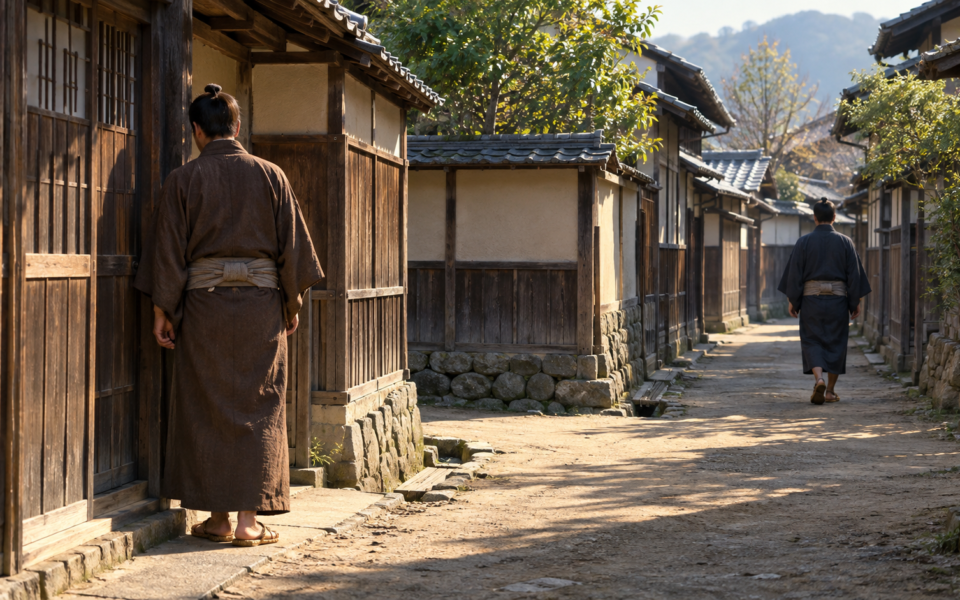
All accompanying images are AI-generated imaginative illustrations. Several show modern research props. They are not actual victims’ belongings, photographs of named memorials, original documents, printed source pages or precise reconstructions of granaries and farms. No institutional photographs, diagrams or printing-block images are reproduced.
National Diet Library authority records are used only to verify the names Takebe Seian, Endō Tōru and Fusao Akiyama. They do not add historical arguments or increase the thirteen-reference count. The catalogued Endō name is linked there to the common-name form used in the Japanese article.
Sources
References and further reading
- Edo Period: Historical Chronology 江戸時代 Title translated editorially for reader convenience. Ministry of Agriculture, Forestry and Fisheries 農林水産省 東北農政局 The Tōhoku bureau’s entry places the great famine under 1782. It is not used to establish one nationwide starting day. Accessed 2026-10-23
- Aomori Prefecture’s History in a Chronology 年表で見る青森県の歴史 Title translated editorially for reader convenience. Aomori Prefecture 青森県 The entry gives 1783–1784. Present-day prefectural boundaries are not equated with historical domains. Accessed 2026-10-23
- Second Installment: Successive Lords of Hachinohe Domain 第二回 八戸藩の歴代藩主 Title translated editorially for reader convenience. Hachinohe City 八戸市 Used for the 1783 famine, the 1784 Taisen-in memorial tower and the 1795 Chōjasan observance. Population and death figures in the table are not adopted. Accessed 2026-10-23
- Great Disasters: Nochimigusa 天下大変 後見草 Title translated editorially for reader convenience. National Archives of Japan 国立公文書館 The exhibition explanation of Sugita Genpaku’s work supplies descriptions and assessments. Praise is not converted into a complete household loss survey; the entire original has not been independently deciphered. Accessed 2026-10-23
- Volcanic Disasters in the Past 過去に発生した火山災害 Title translated editorially for reader convenience. Japan Meteorological Agency 気象庁 Used for the types of direct damage associated with Asama in 1783. Volcanic casualty figures are not transferred to the famine as a whole. Accessed 2026-10-23
- Great Disasters: Bikō Sōmokuzu 天下大変 備荒草木図 Title translated editorially for reader convenience. National Archives of Japan 国立公文書館 Used for the 1755 experience, the 1771 draft and publication in 1833. Plant collecting, preparation and consumption are not presented as practical advice. Accessed 2026-10-23
- Great Disasters: Kyūkō Benran 天下大変 救荒便覧 Title translated editorially for reader convenience. National Archives of Japan 国立公文書館 Endō Tōru’s book was published in 1833–1837. It is not treated as a Tenmei-era distributed book or as present-day medical or dietary guidance. Accessed 2026-10-23
- Uesugi Yōzan and the SDGs: Social Measures 上杉鷹山とSDGs 社会の取り組み Title translated editorially for reader convenience. Yonezawa City 米沢市 The food-reserves explanation describes stores associated with different statuses, annual accumulation and release during the famine. This modern municipal account is not proof of zero casualties. Accessed 2026-10-23
- Appointment of Planting Supervisors in the Sannohe Area, Tenmei 4, Intercalary First Month, Day 22 三戸通田畑仕付世話役の任命 天明4年閏1月22日 Title translated editorially for reader convenience. Aomori Prefecture 青森県史デジタルアーカイブス Published transcription of document 571 in the prefectural history, early-modern materials volume 4. The paraphrase concerns seed holdings and pawned tools, not implementation or success. Provided by the Aomori Prefectural History Digital Archives under CC BY 4.0; the historical date is not converted. Accessed 2026-10-23
- Cultural Property News: The Printing Blocks of Katemono 文化財ニュース かてものの「版木」 Title translated editorially for reader convenience. Yonezawa City 米沢市 The section on printed page 7 supplies the publication year 1802. This is a bounded page reading, not a claim to have read all eight pages. Block photographs and illustrations are not reproduced. Accessed 2026-10-23
- The Tenmei Famine and Epidemics in Relation to Their Socioeconomic Background 社会経済的背景との関連からみた天明の飢饉と疫病 Title translated editorially for reader convenience. Minzoku Eisei journal 民族衛生(J-STAGE公開論文) Fusao Akiyama and colleagues, volume 43, numbers 1–2, 1977. Adopted printed pages 5 and 8 concern cold conditions and the distinction between a no-starvation tradition and village-history losses. No population ratios, diagnoses or death totals are adopted; cited originals were not independently investigated. J-STAGE is the hosting platform. Accessed 2026-10-23
- Cultural Properties of Niida Taisen-in 新井田対泉院の文化財 Title translated editorially for reader convenience. Hachinohe City 八戸市 Used for the municipal account of the memorial tower and stone and its lesson about grain reserves. Neither the full inscription nor photographs of the actual objects are reproduced. Accessed 2026-10-23
- Bikō Sōmokuzu 備荒草木図 Title translated editorially for reader convenience. Ichinoseki City 一関市博物館 The city museum explains the 1771 draft, later editorial work and publication in 1833. Illustrations and plant-preparation instructions are not reproduced. Accessed 2026-10-23
Continue reading
More stories from Shigeki
Shigeki English
Sakai’s Merchant City: Trade, Self-Government and Survival
A port, a merchant council and town communities—from changing authority to rebuilding after fire.
- When From the later fifteenth century through the Sengoku period, the fire of 1615 and early Edo-period reconstruction.
- Where Sakai, in present-day Osaka Prefecture, where maritime routes met roads on land.
Shigeki English
The Aburanokōji Incident: After Leaving the Shinsengumi
A separation in spring, a new base in summer, and two successive attacks.
- When Kyoto in Keiō 3 (1867). The incident’s historical date corresponds to December 13, 1867.
- Where Kyoto: the guards’ successive bases, the Aburanokōji attack site and the later place of remembrance.