
SHIGEKI ENGLISH STORYEN
Japanese history in English
Taira no Kiyomori: Court Office, Fukuhara and the Sea
Court office, Kyoto residences and Inland Sea ports: follow Kiyomori’s career while distinguishing completed works from plans thought to have remained largely unrealized.
Taira no Kiyomori became daijō-daijin in 1167 and resigned after about three months. His subsequent career connects Itsukushima patronage, harbour works, and life in Kyoto and Fukuhara. Separate the works of 1173 from the plan of 1180, the brief capital transfer from lasting settlement, and his death from the family’s later defeat.
At a glance
Before you enter the story
- When
- From the family succession of 1153 through the conflicts of 1156 and 1159, office in 1167, religious entry in 1168, works in 1173, conflict in 1179, the 1180 transfer and return, and the distinction between 1181 and 1185.
- Where
- Kyoto, Fukuhara in present-day Kobe, Ōwada no Tomari and the Inland Sea, with Itsukushima as a religious setting and Dan-no-ura as the site of the later family defeat.
- Key figures
- Taira no Kiyomori, Minamoto no Yoshitomo, Go-Shirakawa, Taira no Tokiko
- What was at stake
- Court advancement and changing alliances, residences and religious patronage, maritime access and the limits of projects and political authority.
Why this story matters
The larger history behind the turning point
A court title or a story of pride and downfall can flatten Kiyomori’s career. Reading different places and dates together reveals a political life connected with the sea, while preserving the difference between what was achieved, what remained uncertain and what happened only after his death.
Historical context
What an international reader needs to know
Court office and changing imperial titles
The court is an institution within which Kiyomori advanced, rather than a background he simply left behind as a warrior. Daijō-daijin names a court office. Its translation as grand minister of state identifies that setting; it is not a modern ministerial post or proof that its holder personally directed every later activity.
Go-Shirakawa appears as emperor, retired emperor and cloistered emperor at different stages of this account. These titles refer to the same individual at different times. Following those changes helps make sense of Kiyomori fighting on his side in 1156 and confining him in 1179 without turning the intervening relationship into permanent cooperation.
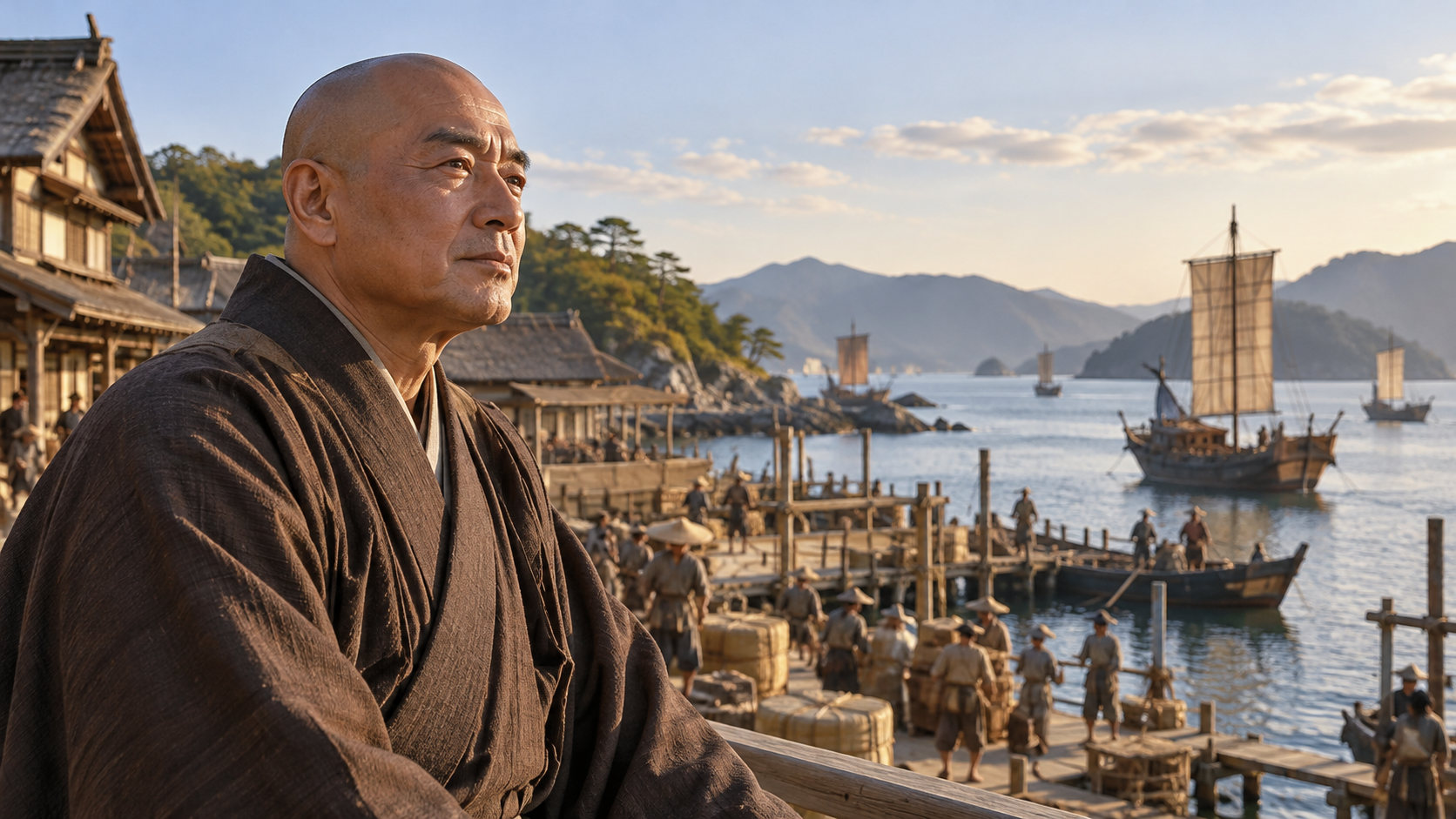
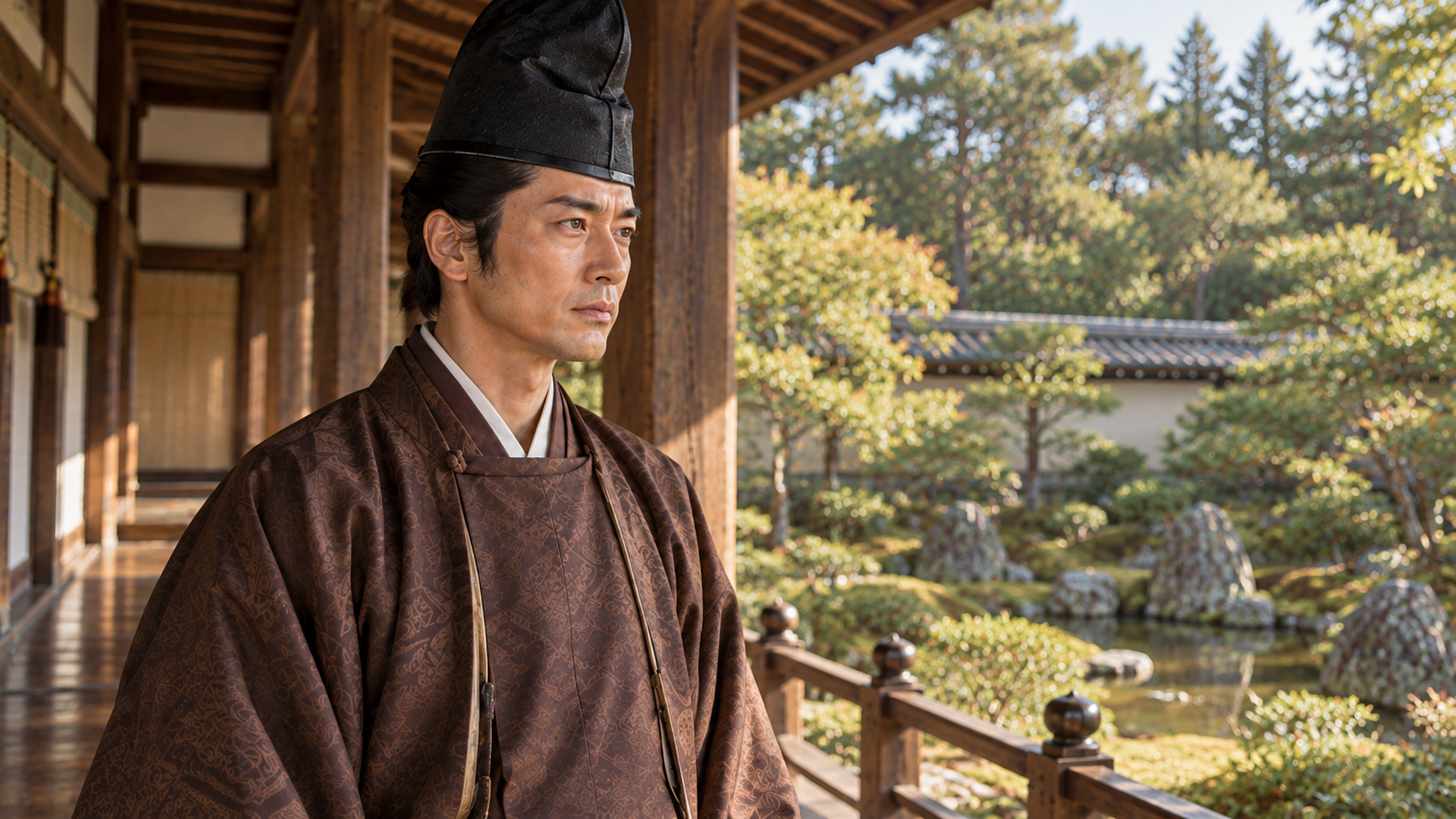
Kiyomori’s resignation in 1167 and entry into religious life in 1168 are likewise separate events. Neither is used as a date when his political activities automatically ceased. The fictional tonsured figure in the opening illustration evokes the later period; it does not establish how he looked while holding office.
Places, projects and kinds of evidence
Kyoto supplies the setting of court politics and residences; Fukuhara lies in the area now associated with Kobe. Ōwada no Tomari supplies the harbour setting, while Itsukushima brings religious patronage into the maritime geography. These places are connected in the career described here, but they are not interchangeable sites or parts of one project completed at the same moment.
The 1173 harbour works, the large plan of 1180 and the transfer of the capital in 1180 answer different questions. The first concerns work described as carried out, the second a plan considered scarcely implemented, and the third a brief political relocation. Present-day urban geography cannot establish the precise medieval outlines of the island, residence or capital.
Municipal explanations, an archaeological interpretation and an exhibition materials list also have different evidential roles. A possible Taira base at the Gion site remains a possibility. A list of narrative versions and historical materials introduces those works; listing them does not mean their complete texts have been independently examined for this article.
Watch the film
See the story in motion
The film currently uses Japanese audio. This English article provides the context and source trail; it does not imply that an English subtitle track is available.
Chapter 01
What a court title leaves out
Taira no Kiyomori’s rise can be pictured through victory in battle and advancement towards the highest levels of court office. Yet an account confined to the imperial court in Kyoto leaves other important places out of view. His career also reached towards the sea and the facilities that supported movement across it.
The Inland Sea, ports receiving ships and Fukuhara, briefly the seat of the capital, all belong to this wider landscape. Kiyomori advanced within the court’s offices while maintaining bases close to the coast. These activities connect the world of political rank with places beyond the capital’s residences and ceremonial spaces.
Becoming daijō-daijin, participating in harbour works and moving the capital were related developments, but they were not one event in a single year. Some works were carried out; other undertakings are thought to have remained largely plans. Keeping that difference visible changes the picture of what Kiyomori actually achieved.
Accounts published by Kyoto City, Kobe City and the Miyajima institution provide a route through these places and dates. Following residences, religious patronage and maritime movement alongside court office reveals aspects of his career that a title alone cannot explain. The question is what happened, where, and to what extent.
Chapter 02
1153: inheriting a family position
In 1153 Kiyomori’s father, Taira no Tadamori, died, and Kiyomori succeeded as head of the family. Kyoto’s official chronology includes that succession among the stages of his career. It supplies a starting point for considering an inherited position before following the later offices and projects associated with him.
Kiyomori’s rise did not begin from nothing. A position passed down from his father’s generation provided a foundation on which his own activities developed. Acknowledging that inheritance does not make his later career inevitable; it distinguishes an existing family position from the subsequent choices and events described in the chronology.
Thinking of warriors only as people outside the court makes that subsequent path difficult to understand. The high positions Kiyomori later acquired were court offices. Military power and participation in the politics of the capital were connected, rather than belonging to two entirely separate worlds in his career.
Knowing the later outcome does not allow us to reconstruct conversations between father and son about a future programme. The year of succession is evidence; an imagined exchange about everything that followed would be a different kind of story. This account keeps the documented succession separate from such a scene.
Chapter 03
Hōgen: on the same side as Yoshitomo
The Hōgen conflict took place in 1156. Kyoto City’s historical chronology records Taira no Kiyomori and Minamoto no Yoshitomo among those who attacked the residence of the retired emperor Sutoku. In this conflict Kiyomori was on the side of Emperor Go-Shirakawa.
For readers familiar with the later opposition of the Minamoto and Taira, this alignment is a useful point at which to pause. Kiyomori and Yoshitomo were fighting on the same side. The family names alone did not determine an unchanging division between opponents in every political conflict.
Who supported whom, and when, matters as much as the names of the families. Political struggles involving an emperor and a retired emperor drew in particular combinations of warriors. Following those combinations prevents the later pattern of conflict from being imposed on an earlier event.
Nor does this one conflict establish that warriors completely replaced the court. The relationships between military figures and disputes within court politics need to be considered together. That setting helps explain the next stage in Kiyomori’s career without making 1156 the arrival of a wholly separate political world.
Chapter 04
Heiji: fighting a former ally
Three years later, in 1159, the Heiji conflict occurred. Kyoto City describes Fujiwara no Nobuyori, Minamoto no Yoshitomo and others attacking the residence of the retired emperor Go-Shirakawa. Kiyomori fought against Yoshitomo and emerged on the victorious side. The alignment was different from that of Hōgen.
The relationship of men who had fought together in 1156 did not simply continue unchanged. Placing the three-year interval between the conflicts helps separate them. They cannot be treated as repetitions of one fixed struggle with the same people permanently assigned to the same opposing camps.
Kiyomori’s advancement should therefore not be pictured as a straight path established from the outset. Political combinations changed, and he came to fight someone who had previously been on his side. The sequence matters because it shows how a career developed through changing relationships.
Dramatic challenges and manoeuvres in narratives of battle are not automatically transcripts of the participants’ words. This account does not invent speech for either man. It follows the two dated conflicts and the difference in their relationship before turning to Kiyomori’s later court office.
Chapter 05
A brief tenure as daijō-daijin
In 1167 Kiyomori was appointed daijō-daijin, a senior office of the imperial court often translated as grand minister of state. For a warrior to reach this position was a significant development. The appointment belongs within court institutions, even though Kiyomori’s power also had a military dimension.
The official chronology also records his resignation after approximately three months. The year in which he acquired the position and the length of time he actually held it are separate facts. His later prominence should not obscure the short duration of his formal tenure.
Subsequent activities cannot all be listed as the work of a man continuously serving as daijō-daijin. In 1168 he entered religious life, another change in his position. That change, in turn, did not mean that his connections with politics, residences or maritime projects had ended.
Kyoto, Fukuhara, harbour works and political conflict remain part of the career that followed. Paying attention to the changes in office makes these later activities clearer. A title marks one stage; it cannot serve as an unchanged description of everything Kiyomori did after acquiring it.
Chapter 06
Itsukushima and the family’s religious patronage
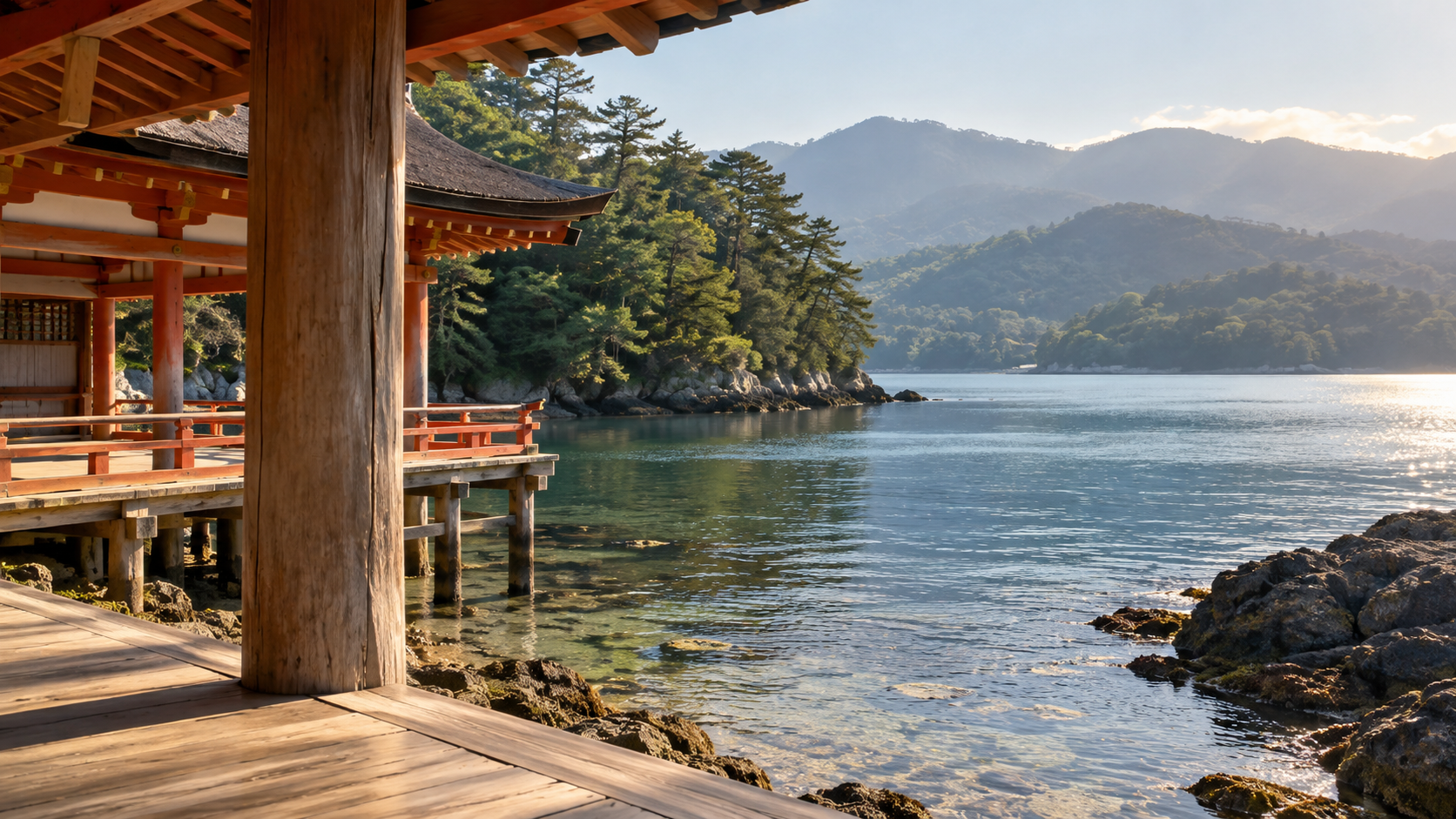
Kiyomori’s connection with Itsukushima is another part of his relationship to the Inland Sea. The Miyajima history account describes his appointment as governor of Aki and his strong devotion to Itsukushima Shrine. It associates him with support for construction and religious offerings at the shrine.
The Heike nōkyō, the dedication of copied Buddhist scriptures, also brings the family into view. It is more informative to consider this as religious activity involving members of the Taira family than to attach Kiyomori’s name alone to everything. Patronage and offerings belonged to a wider familial setting.
The same institutional account introduces visits by members of the imperial family and the nobility. A place of worship beside the sea was therefore connected with people of the capital. Its religious significance and those connections should remain visible when tracing Kiyomori’s activities beyond Kyoto.
Religious devotion cannot simply be reduced to an instrument of trade, and the evidence does not give access to all of Kiyomori’s inner intentions. Nor are every present building and festival treated as unchanged survivals from his lifetime. The account distinguishes his patronage from later forms and from legends associated with it.
Chapter 07
Ships need shelter as well as a destination
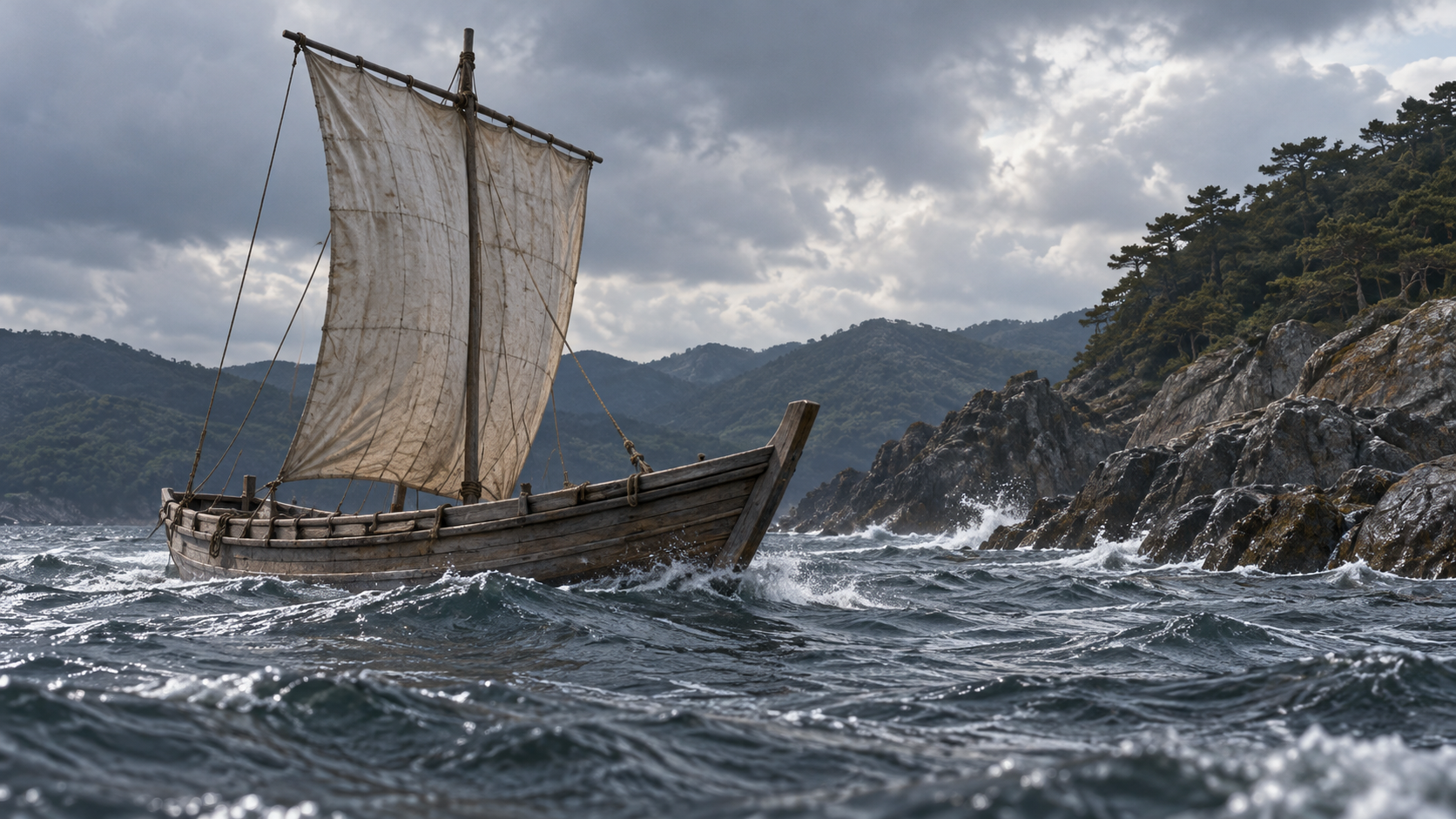
The area associated with present-day Hyōgo-tsu in Kobe was known as Ōwada no Tomari during the Heian period. Kobe City Library explains that winds and waves from the southeast made anchoring dangerous. The existence of a place to receive ships did not remove the practical problems of sheltering them.
A ship might complete a sea passage yet still face difficulty remaining safely near the shore. The movement of people and cargo depended on conditions at the landing place as well as on travel across the water. A harbour’s existence and its usability were not the same thing.
Kobe City presents Kiyomori’s interest in the port in connection with trade between Japan and Song China. This larger story of maritime exchange was linked to a concrete problem: how to reduce exposure to wind and waves. The physical conditions of the harbour belong beside the political and commercial setting.
These explanations do not identify the cargo or value of every ship’s transactions. The modern shoreline cannot simply be projected backwards, and an imagined vessel is not an exact reconstruction of a Song ship. The evidence supports a connection between trade and harbour improvement without supplying a complete record of maritime commerce.
Chapter 08
Works in 1173, plans in 1180
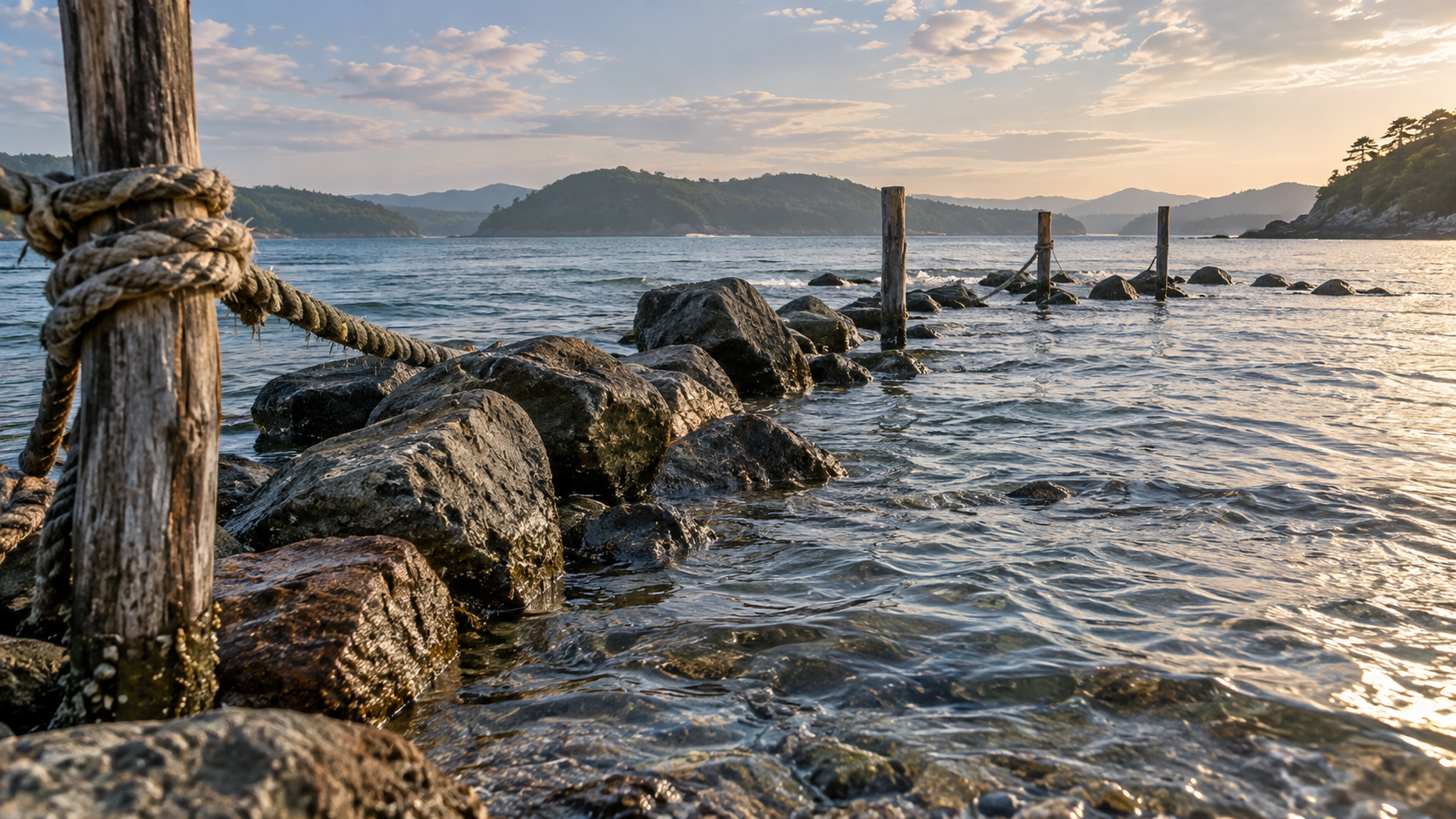
Kobe City Library explains that in 1173 Kiyomori used his own resources to improve the harbour and construct an island to protect it from wind and waves. The island was called Kyōgashima. This account identifies an undertaking carried out, rather than simply a proposal for future improvement.
The island’s precise location, however, remains unknown. A description of construction does not mean that its exact position and outline can be drawn on a map. Retaining this uncertainty allows the works to be discussed without turning an institutional account into a fully reconstructed engineering plan.
The library also discusses a large undertaking planned in 1180 on a national scale. It considers that the disorders of the time meant the plan was scarcely put into effect. That assessment must be kept separate from the works of 1173; the two cannot be combined into one completed great harbour.
Legends associated with Kyōgashima are another kind of material. A story told about the island is not a direct report from the construction site. Distinguishing the earlier works, the assessment of the later plan and subsequent traditions provides a firmer basis for reading the port’s history.
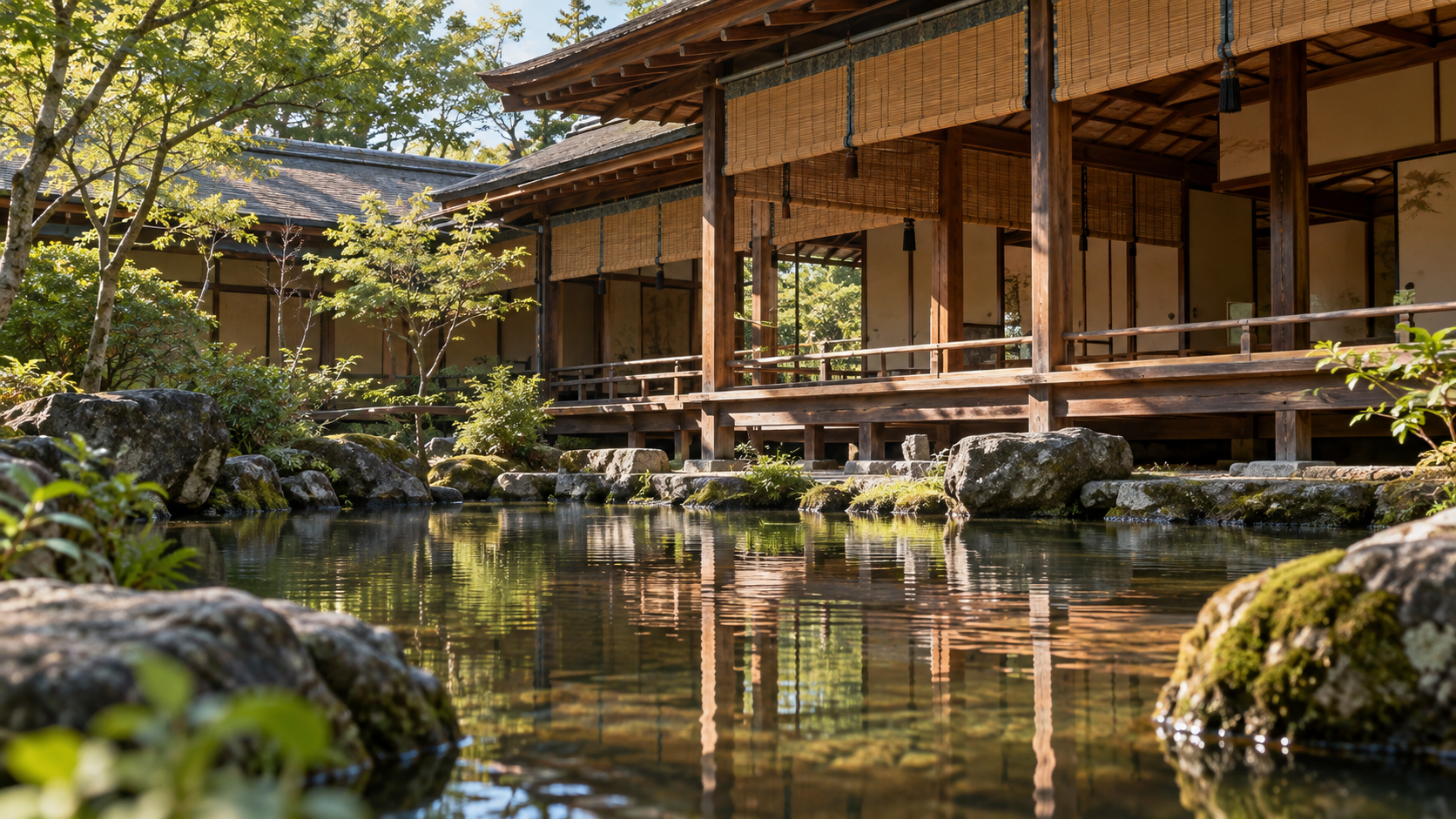
Chapter 09
A Kyoto residence and life in Fukuhara
According to Kyoto City’s explanation, Kiyomori often lived in Fukuhara after entering religious life. Meanwhile, the Nishihachijō mansion remained a residence in Kyoto and was occupied principally by his wife Tokiko. The two places need to be considered together when following the family’s activities.
Kiyomori’s presence farther west did not mean that all connections with Kyoto were severed at once. Rokuhara alone cannot represent every place associated with the Taira, just as Fukuhara was not their only base. Different residences reveal a wider geographical setting than either place viewed in isolation.
Kobe’s historical heritage account introduces a garden pond, building remains and Chinese ceramics found at the Gion archaeological site. These finds are presented as clues to a possible Taira base. The evidence offers a way to consider activity in the area without removing the uncertainty from that identification.
An archaeological interpretation cannot determine Kiyomori’s room or where he sat each day. The account of a continuing Kyoto residence and the possibilities suggested by the Fukuhara-area remains have different evidential scopes. They can be read alongside each other without turning either into a precise reconstruction of everyday life.
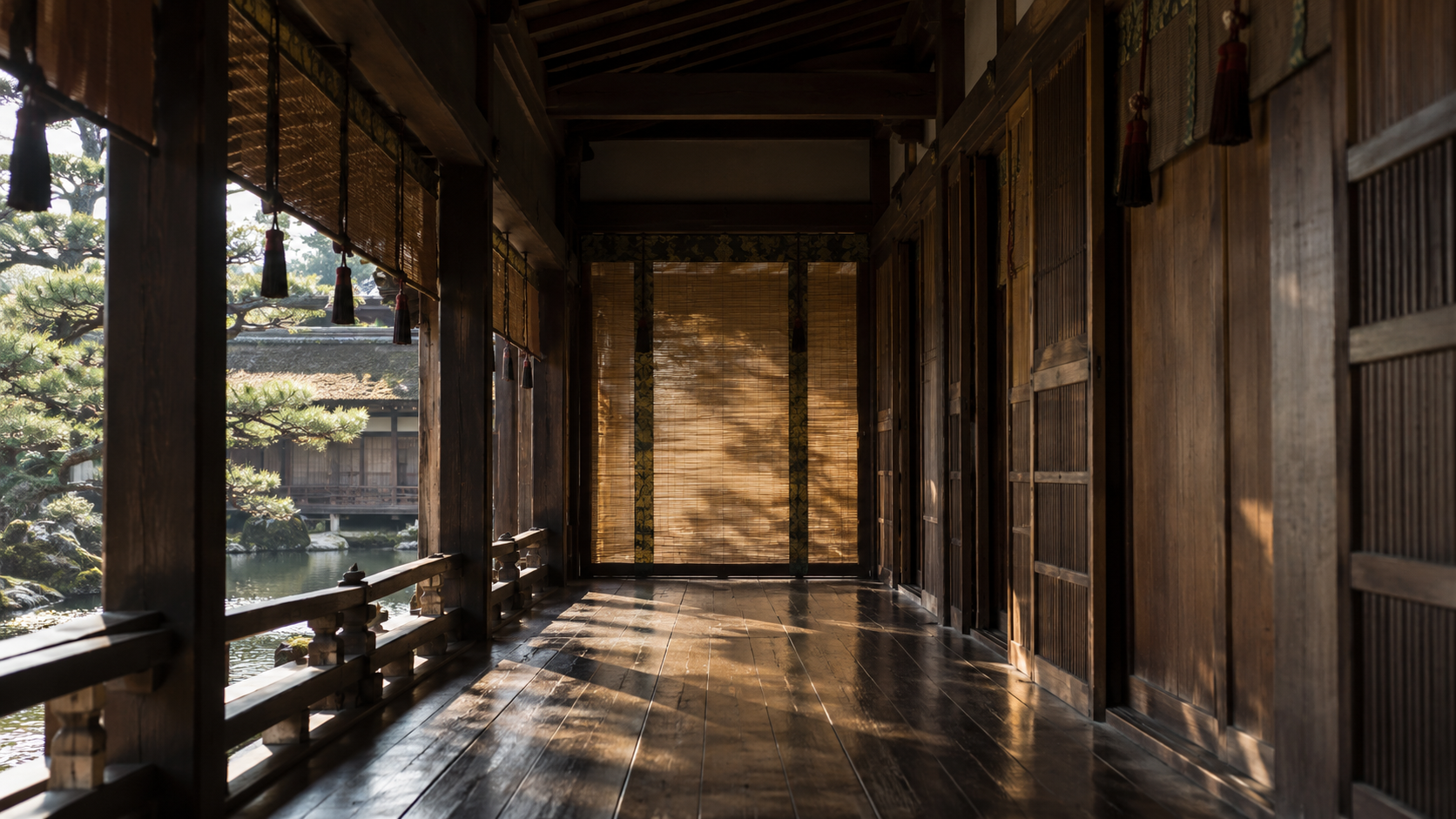
Chapter 10
Political conflict after advancement
In 1179 Kiyomori confined Go-Shirakawa, by then a cloistered emperor, and brought his cloistered rule to a halt. The event appears in the official chronology. High court office had not eliminated political conflict from Kiyomori’s subsequent career, nor fixed his relations with the imperial household permanently.
In the Hōgen conflict Kiyomori had fought on the side of Emperor Go-Shirakawa. That earlier cooperation and the later confinement must remain separate stages. The same name appears in both episodes, but the political relationship cannot be assumed to have had an unchanged form across the intervening years.
Knowing the eventual outcome makes it tempting to describe every earlier event as a step towards it. Following the relationship at different moments reveals tensions that a succession of titles alone would miss. It also prevents the earlier alliance from being read as proof of lasting harmony.
Fukuhara cannot be explained only by the convenience of a harbour and detached from the politics of Kyoto. Kiyomori’s maritime activities and his conflicts at the capital occurred within the same period. They can be considered together without inventing a single motive that supposedly explains every undertaking.
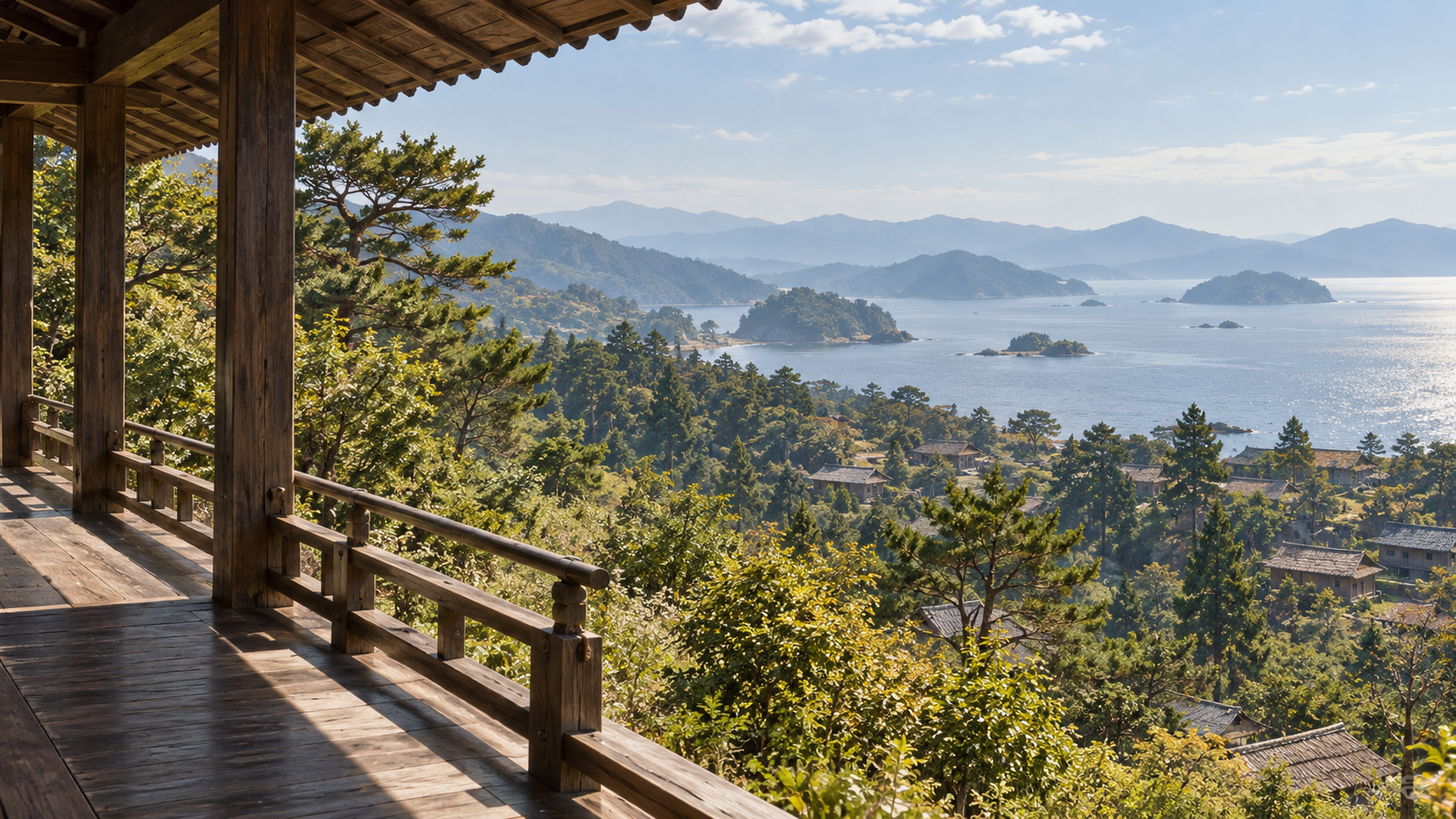
Chapter 11
A short-lived capital beside the sea
In 1180 Kiyomori advanced the transfer of the capital from Kyoto to Fukuhara. Kobe City’s explanation also records this move. Establishing the capital close to the sea represented a major change, distinct from maintaining a residence there or improving a place where ships could anchor.
Fukuhara’s time as the capital was brief. The return to Kyoto took place in the same year, after a period described as approximately half a year. Moving to a place and establishing the capital there on a lasting basis were different things; the transfer did not establish a lasting capital there.
A residence in Fukuhara, the improvement of the harbour and the relocation of the capital are connected but separate developments. Their dates and contents matter. Treating them as a single completed programme would conceal both the earlier works and the limits of what was accomplished in 1180.
The modern cityscape of Kobe cannot be read as a completed medieval metropolis preserved in place. Both the maritime orientation of Kiyomori’s power and the instability of this attempt belong in the picture. A short-lived transfer should not be expanded into an unsupported account of a fully realized great capital.
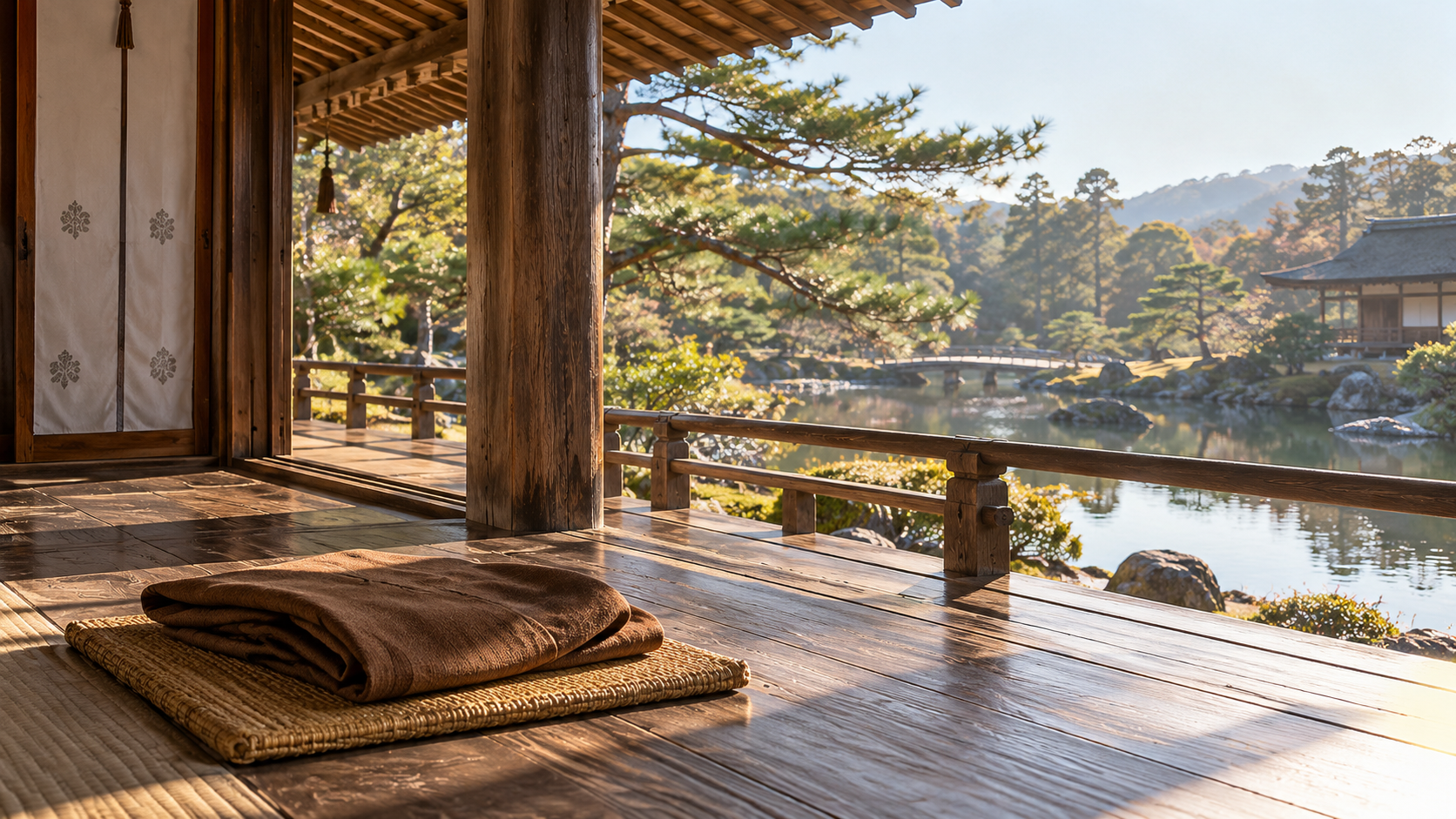
Chapter 12
Kiyomori’s death and the family’s later defeat
Kiyomori died in 1181. The Taira defeat at Dan-no-ura occurred later, in 1185. His own final years and the subsequent fate of the family therefore cannot be merged into a single event. Keeping those dates apart is a basic requirement for understanding the limits of his personal career.
The National Archives of Japan’s exhibition list places versions of The Tale of the Heike alongside materials including Gyokuyō. The list provides an introduction to different kinds of material through which Kiyomori’s age can be approached. It does not itself replace reading those individual works or establish that they offer identical accounts.
Seeing Kiyomori only as a man destroyed by pride can obscure the short tenure of his office, the residences in Kyoto and Fukuhara, and projects that did not reach completion. The vividness of a narrative and the events established for particular dates need to be considered separately.
Kiyomori advanced through court office and devoted resources to maritime facilities, yet not every plan was realized. Asking what was accomplished and what remained incomplete makes his career more concrete. It allows a warrior’s movement towards the sea to be followed without treating the family’s later defeat as his own immediate ending.
How to read this work
History, interpretation, and reconstruction
Read Kiyomori’s court office, Kyoto and Fukuhara residences, religious patronage and maritime facilities together, while distinguishing implemented works from plans considered scarcely implemented, and historical evidence from narrative.
This work is grounded in published sources and historical research. Interior thoughts, dialogue, and some visual details are cinematic reconstructions. Where historians disagree, the article presents the point as debated rather than settled fact.
Timeline
The story in time
-
After Tadamori’s death, Kiyomori succeeds as head of the family.
Sources: s01 -
In the Hōgen conflict, Kiyomori and Yoshitomo fight on Emperor Go-Shirakawa’s side.
Sources: s02 -
Kiyomori becomes daijō-daijin and resigns after approximately three months.
Sources: s01 -
Harbour improvements funded from Kiyomori’s resources include Kyōgashima, whose precise location is unknown.
Sources: s03 -
Kiyomori confines the cloistered emperor Go-Shirakawa and halts cloistered rule.
Sources: s01 -
Kiyomori dies, before the Taira family’s later defeat.
Sources: s01 -
The Taira are defeated at Dan-no-ura, after Kiyomori’s death.
Sources: s09
People & terms
A guide for new readers
Key figures
- Taira no Kiyomori
- Head of his family from 1153, a warrior who advanced through court office and maintained connections with Kyoto, Fukuhara and ports on the Inland Sea.
- Minamoto no Yoshitomo
- Warrior who fought on the same side as Kiyomori in the Hōgen conflict of 1156 and against him in the Heiji conflict of 1159.
- Go-Shirakawa
- Emperor and subsequently retired and cloistered emperor, whose relationship with Kiyomori changed over time; confined by Kiyomori in 1179.
- Taira no Tokiko
- Kiyomori’s wife, described by Kyoto City as the principal resident of the Nishihachijō mansion in Kyoto.
Glossary
- Daijō-daijin 太政大臣
- Grand minister of state, a senior court office held by Kiyomori briefly in 1167; the title does not imply continuous tenure through later projects.
- Fukuhara 福原
- The area in present-day Kobe associated with Kiyomori’s residence and the brief transfer of the capital in 1180.
- Ōwada no Tomari 大輪田泊
- The medieval harbour in the area associated with present-day Hyōgo-tsu in Kobe, discussed in connection with trade and harbour improvement.
- Kyōgashima 経ヶ島
- The island described in connection with the 1173 harbour works; its precise location is unknown.
- Inland Sea 瀬戸内海
- The maritime setting connecting the shrine and harbour locations discussed here; individual voyages and cargoes are not reconstructed.
- Hōgen and Heiji 保元・平治
- The conflicts of 1156 and 1159, respectively; Kiyomori and Yoshitomo’s alignment differed between them.
- Cloistered rule 院政
- Political rule exercised by a retired emperor; the account records Kiyomori halting Go-Shirakawa’s rule in 1179.
- Nishihachijō mansion 西八条殿
- A Kyoto residence associated with Kiyomori and described by Kyoto City as principally occupied by his wife Tokiko.
- Heike nōkyō 平家納経
- The dedication of copied scriptures associated with the Taira family’s religious activity at Itsukushima.
- Heike and Taira 平家・平氏
- Related names used in this article for Kiyomori’s family and its historical or narrative setting; not two opposing families.
- The Tale of the Heike 平家物語
- A narrative work represented by several versions in the National Archives exhibition list; its dramatic presentation is distinguished from independently established events.
- Dan-no-ura 壇ノ浦
- The site of the Taira defeat in 1185, four years after Kiyomori’s death in 1181.
Sources & method
How this article was built
The English account follows the fixed Japanese manuscript, retaining its four people, twelve chapters, ten timeline entries and nine adopted references. Background explains terms and geography within that scope. The three Kyoto references are counted under Kyoto City, and the three Kobe references under Kobe City, rather than treating their departments as independent publishers.
The chronology distinguishes 1156 cooperation from 1159 opposition, the brief 1167 tenure from religious entry in 1168, and Kiyomori’s death in 1181 from the defeat in 1185. Years are retained without silently converting historical calendar days or equating traditional counted ages with modern ages.
Kobe City Library’s assessment of the limited implementation of the 1180 plan remains attributed. Kyōgashima’s precise position is unknown, and the Gion site is a possible Taira base. The account adds no exact medieval plan, trade values, invented conversations or private thoughts. Legends are not adopted as direct reports.
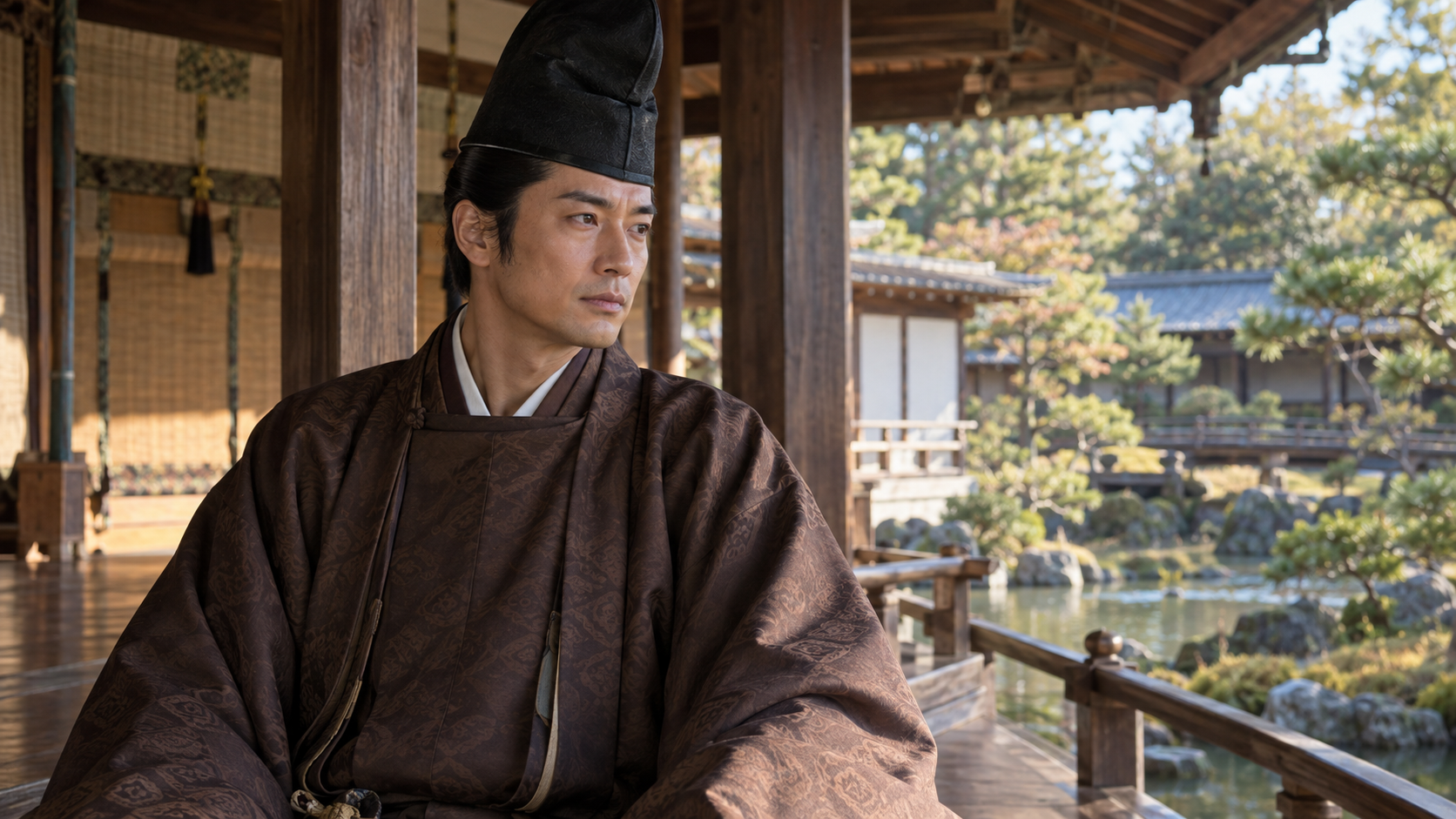
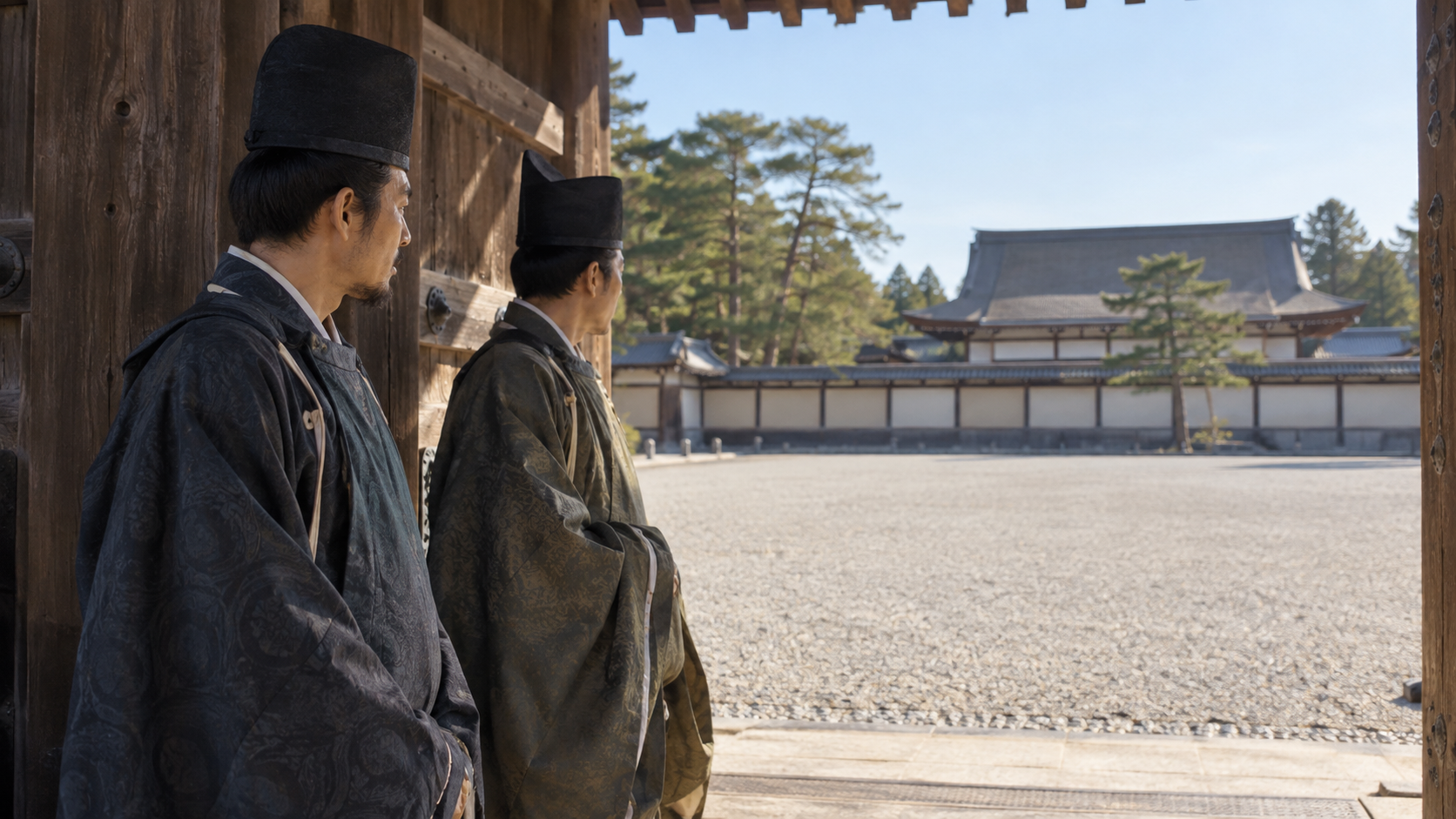
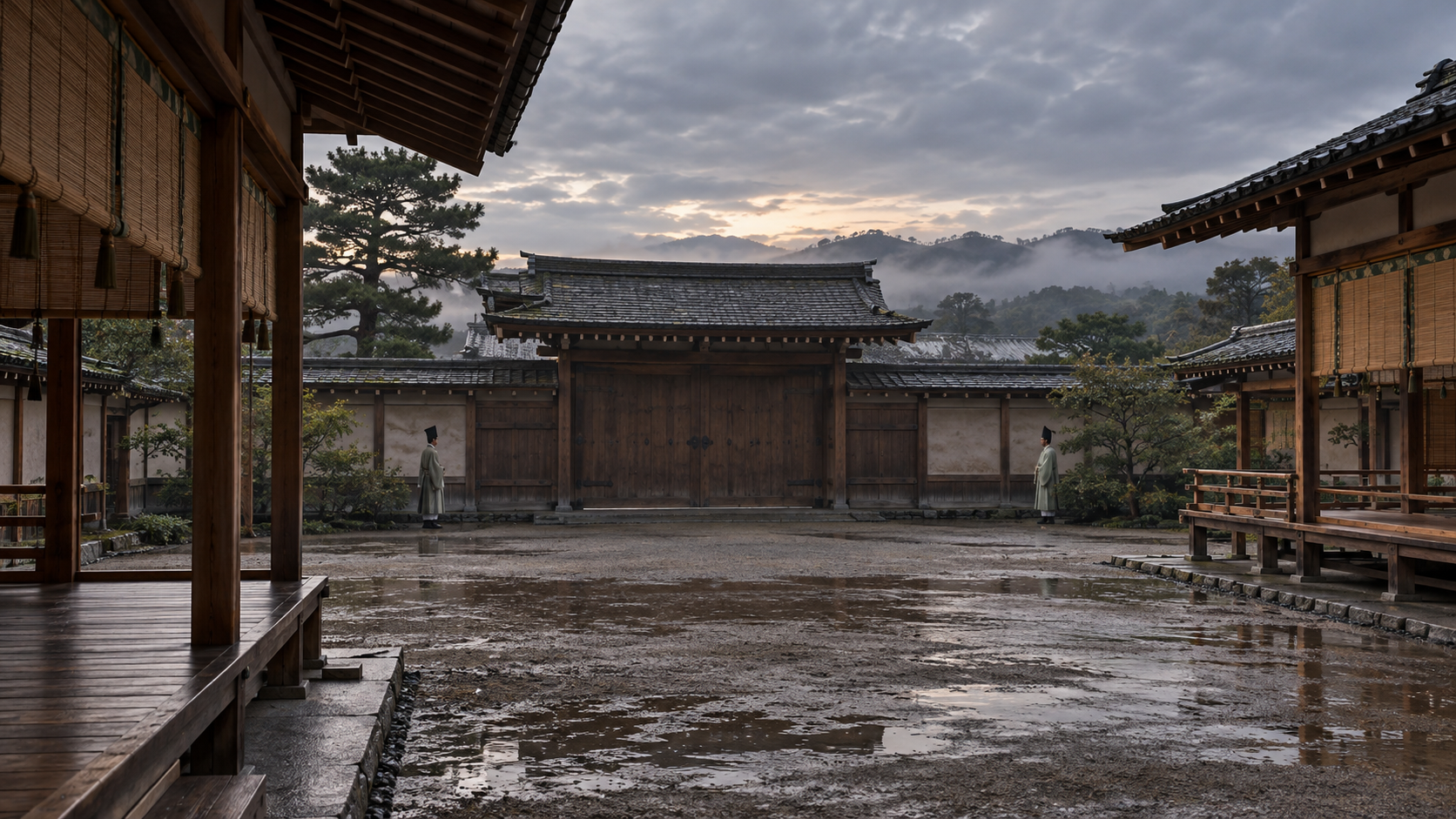
The National Archives reference is an exhibition list, not a claim to a full independent reading of Gyokuyō or every version of The Tale of the Heike. The municipal bulletin is used only for the dated defeat statement. Institutional illustrations and maps are not reproduced. SHIGEKI’s images are AI-generated imaginative reconstructions, not historical photographs, authenticated portraits, possessions or precise site reconstructions.
Sources
References and further reading
- Chronology of Taira no Kiyomori’s Rise and Decline 京都市産業観光局・平清盛盛衰年表 Title translated editorially for reader convenience. Kyoto City 京都市産業観光局 Succession in 1153; appointment and resignation after about three months in 1167; religious entry in 1168; events of 1179–1181. No continuous later tenure or conflation of traditional counted age with modern age; no images reproduced or original records independently transcribed in full. Accessed 2026-10-22
- The History of Kyoto City 京都市・京都市のあゆみ Title translated editorially for reader convenience. Kyoto City 京都市 Kiyomori and Yoshitomo’s shared side in 1156 is distinguished from the Heiji conflict in 1159. No permanent division inferred solely from the Minamoto and Taira names; no invented dialogue or silent calendar-day conversion. Accessed 2026-10-22
- Taira no Kiyomori and Kobe 神戸市立図書館・平清盛と神戸 Title translated editorially for reader convenience. Kobe City 神戸市立図書館 Wind and waves; the privately funded 1173 works; Kyōgashima’s unknown location; the assessment that the large 1180 plan was scarcely implemented. Legend is separated from construction, and no exact location or completed great port is inferred. Accessed 2026-10-22
- Historic Sites Associated with Taira no Kiyomori 神戸市兵庫区・平清盛ゆかりの史跡 Title translated editorially for reader convenience. Kobe City 神戸市兵庫区 Trade with Song China and the brief transfer of the capital to Fukuhara in 1180. Linked PDFs and genealogies are outside the adopted scope. The modern city is not projected unchanged into the medieval setting. Accessed 2026-10-22
- Site of Taira no Kiyomori’s Nishihachijō Mansion 京都市・平清盛公西八条殿跡 Title translated editorially for reader convenience. Kyoto City 京都市 Nishihachijō and Rokuhara, Tokiko’s principal residence, and Kiyomori’s frequent presence in Fukuhara after religious entry. No authenticated floor plan, daily seating position or conversations are supplied. Accessed 2026-10-22
- The History of Miyajima 宮島観光協会・宮島の歴史 Title translated editorially for reader convenience. Miyajima Tourist Association 宮島観光協会 Aki governorship, devotion to Itsukushima, construction, scripture dedication and visits by family, imperial and aristocratic figures. The dream of an old monk is not adopted as fact; present buildings and festivals are not all treated as unchanged medieval survivals. Accessed 2026-10-22
- Kobe Historical Heritage: The Medieval Period 神戸市・神戸歴史遺産 中世 Title translated editorially for reader convenience. Kobe City 神戸市 The Gion site’s garden pond, building remains and Chinese ceramics, and the possibility of a Taira base. This interpretation remains qualified; it does not identify Kiyomori’s room or establish an exact residential plan. Accessed 2026-10-22
- The Tale of the Heike: Exhibition Materials List 国立公文書館・平家物語 展示資料一覧 Title translated editorially for reader convenience. National Archives of Japan 国立公文書館 Used only as a list including versions of The Tale of the Heike and materials such as Gyokuyō. The Japanese review used the current web first portion and search-provided text for later entries. No full independent reading of the listed original works is claimed. Accessed 2026-10-22
- Shimonoseki Municipal Bulletin, June 2016: Historical Stories Passed Down 下関市・市報しものせき2016年6月号「語り継がれる歴史物語」 Title translated editorially for reader convenience. Shimonoseki City 下関市 Only the opening historical feature’s direct statement that the Heike were defeated by the Minamoto at Dan-no-ura in 1185 is adopted. Ages, details of deaths, court-woman traditions and festival origins are not added. Accessed 2026-10-22
Continue reading
More stories from Shigeki
Shigeki English
Sakai’s Merchant City: Trade, Self-Government and Survival
A port, a merchant council and town communities—from changing authority to rebuilding after fire.
- When From the later fifteenth century through the Sengoku period, the fire of 1615 and early Edo-period reconstruction.
- Where Sakai, in present-day Osaka Prefecture, where maritime routes met roads on land.
Shigeki English
The Aburanokōji Incident: After Leaving the Shinsengumi
A separation in spring, a new base in summer, and two successive attacks.
- When Kyoto in Keiō 3 (1867). The incident’s historical date corresponds to December 13, 1867.
- Where Kyoto: the guards’ successive bases, the Aburanokōji attack site and the later place of remembrance.