
SHIGEKI ENGLISH STORYEN
Japanese history in English
Saigō Takamori: Leaving Government in 1873, Going to War in 1877
Domain retainer, government councillor and educator back home: follow changing offices and relationships through the years before the Satsuma Rebellion.
Saigō helped establish the new government, then fought its forces in 1877. Trace island years, changing alliances, reforms, the 1873 envoy dispute, resignation and the private academy without collapsing departure and war.
At a glance
Before you enter the story
- When
- From the Gregorian birth year 1828 to the end of the Satsuma Rebellion in 1877; the 1859 and 1862 island episodes, 1868–1869 war and 1873 resignation are distinct.
- Where
- Satsuma and Kagoshima, Amami and other islands, Edo and the new government, then the rebellion’s fighting through Kumamoto, Miyazaki and Shiroyama.
- Key figures
- Saigō Takamori, Shimazu Nariakira, Shimazu Hisamitsu, Katsu Kaishū, Iwakura Tomomi, Etō Shinpei
- What was at stake
- How a participant in creating government came to fight it, and why the years between political departure and armed conflict must remain visible.
Why this story matters
The larger history behind the turning point
A biography can become too simple when one ending is made to explain every earlier action. Saigō’s changing offices and relationships offer another way to read his life. The sequence preserves both his part in making government and the disputes and gatherings that followed, while distinguishing the decisions of 1873 from the war of 1877.
Historical context
What an international reader needs to know
Domain Service, National Government and Different Offices
Saigō’s early service belonged within Satsuma, before the later restructuring of domains into prefectures. Cooperation with other domains and participation in the new government therefore involved changes of institutional setting as well as personal relationships. The reforms provide background; they are not all described as the achievement of Saigō acting alone.
The titles in the resignation matter. Sangi and commander of the Imperial Guard were positions he was permitted to leave; the request concerning army general was not accepted. Leaving the government’s political leadership is therefore not shorthand for identical simultaneous dismissal from every position. The distinction follows the museum’s explanation rather than a new reading of the original instruments.
A Chronology with Intervals, Not an Inevitable Ending
The birth year 1828 is Gregorian and differs from the historical Japanese year Bunsei 10. The island residence in 1859 is distinct from the exiles of 1862. Edo Castle’s surrender belongs within a war that continued into 1869. These separations prevent famous episodes from absorbing other parts of the biography.
The proposal to send an envoy, decisions in 1873, resignation, return home, the 1874 request for cooperation and the students’ actions in 1877 also belong to different stages. The sources do not require them to be explained by one invented motive. A policy decision was not necessarily carried out, and departure from office was not the beginning of the later war.
Watch the film
See the story in motion
The film currently uses Japanese audio. This English article provides the context and source trail; it does not imply that an English subtitle track is available.
Chapter 01
Do Not Turn Four Years into One Moment
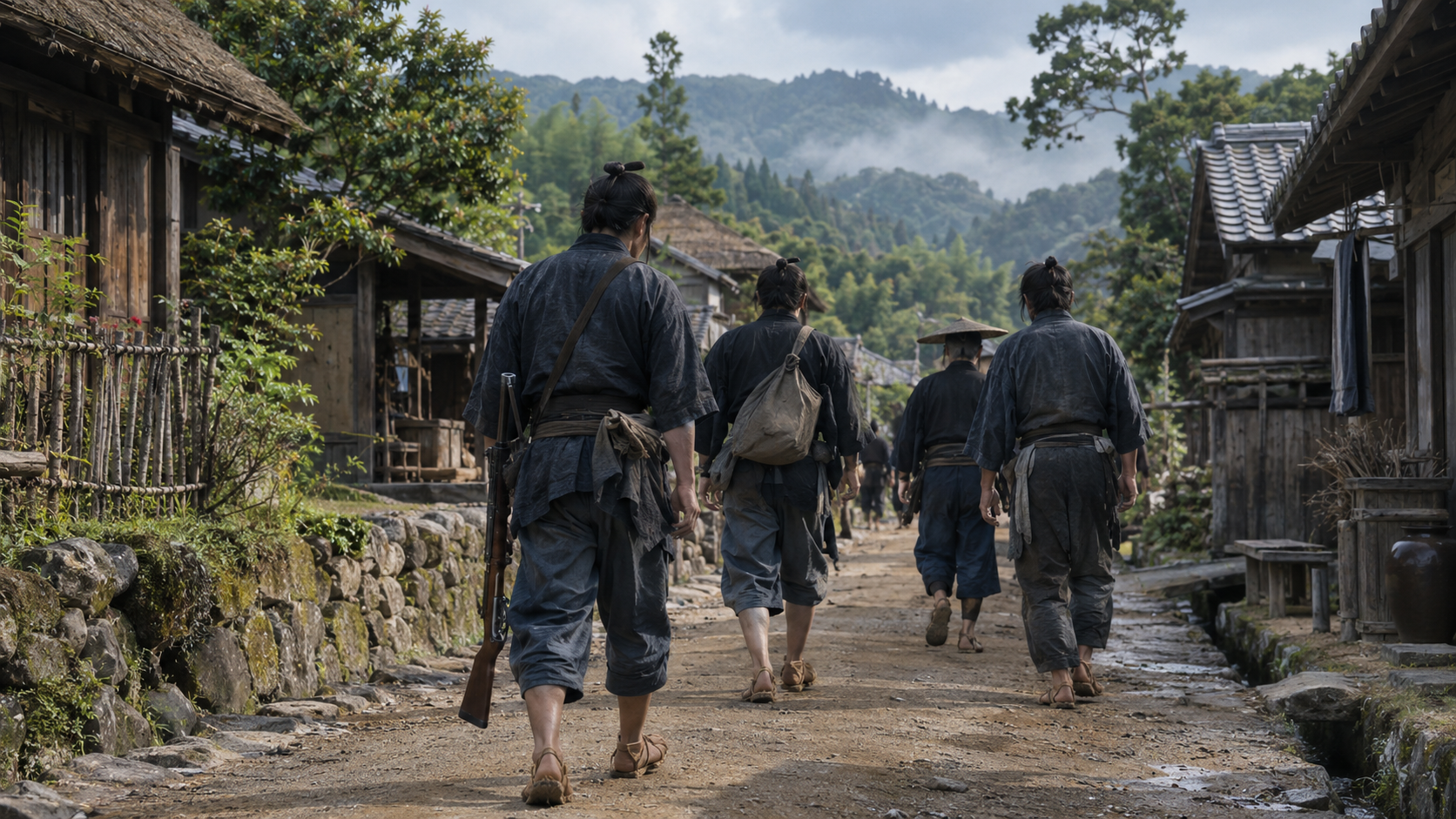
In 1877, Saigō Takamori fought the army of the Meiji government. He had himself helped bring that government into being. A figure central to the political transformation eventually led forces from outside its leadership. Following that distance between positions requires more than placing the beginning and end of his career beside each other.
He left the government’s political leadership in 1873. Several further years passed before the Satsuma Rebellion began. Merging departure and war into one moment would obscure changes of position and the actions of other people during the interval. A resignation was not itself an order to begin the later conflict.
His life passed through service under a domain lord, years away on islands, alliances and war in the final Tokugawa period, and politics within the new government. Instead of treating these as stages on an inevitable route to a known ending, the account follows the relationships and responsibilities that applied at different times.
Relationships could remain after an office was left. Looking in sequence at his return to Kagoshima, the private academy and tensions with central government makes the route into war more visible. The explanation need not depend on imagining one sudden change of heart. Institutions and the actions of people around him also belong to the history.
Chapter 02
Beginning as a Satsuma Retainer
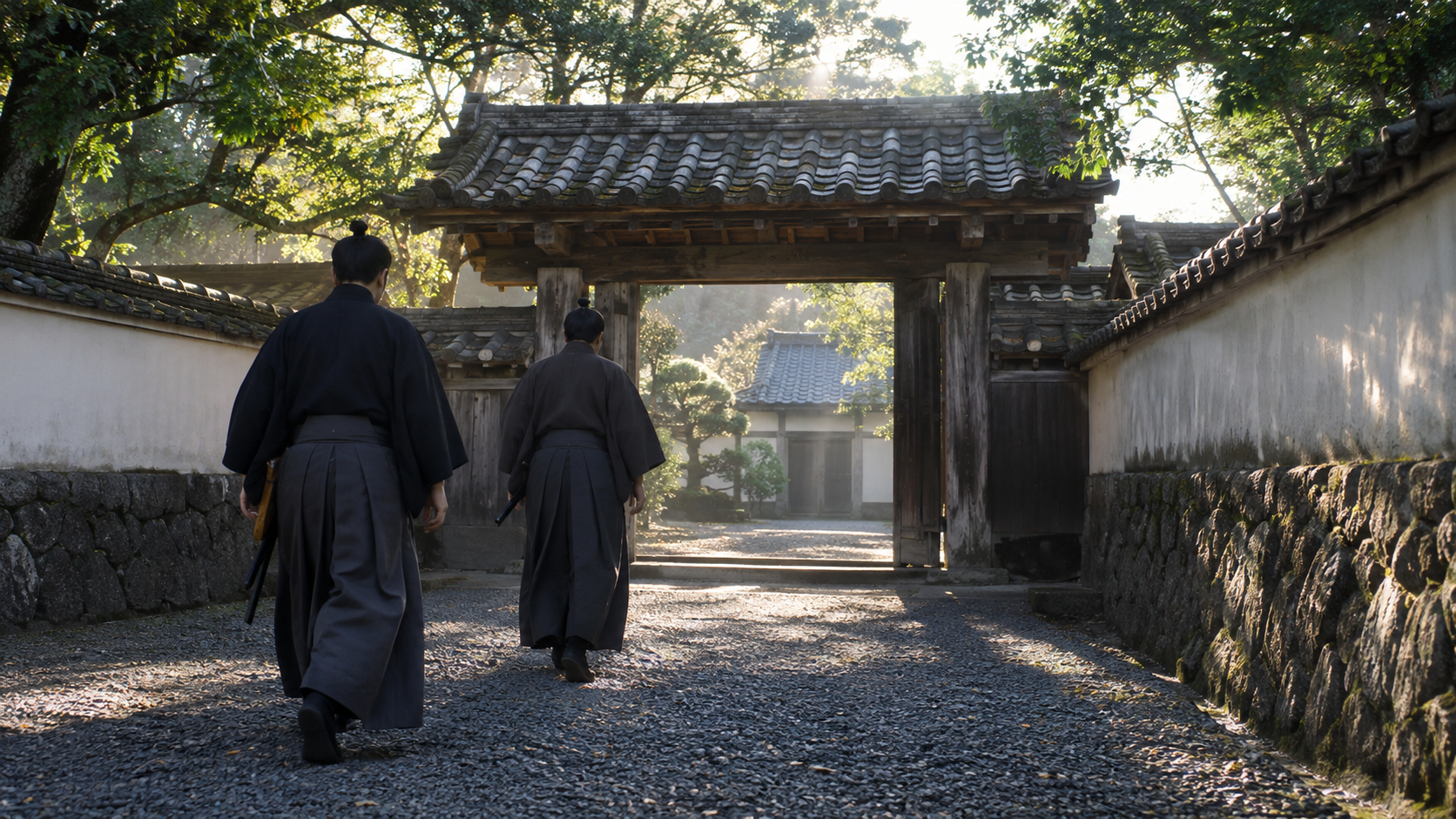
Saigō was born in Kagoshima in 1828. The National Diet Library’s biography introduces his appointment by the Satsuma lord Shimazu Nariakira as an opening into political activity. His starting point was a responsibility within a domain. The Gregorian birth year used here should not be confused with the historical Japanese year Bunsei 10.
Knowing his later involvement in national politics can tempt us to give the young Saigō the same fully formed aims from the beginning. Service under a lord and responsibility within the Meiji government were separated by substantial changes. The narrative does not attribute later positions to him before the circumstances in which he held them.
Saigō worked amid changing relations among domains, the shogunate and the imperial court. After Nariakira’s death, his political footing changed. Connecting only periods of prominent public activity would omit the times when he was removed from that activity. The biography needs those interruptions as well as the events for which he is widely remembered.
This account does not determine his appearance from a later statue or a published portrait. It follows the institutional biography’s career outline: under whose authority he served and how his position changed. That sequence provides a basis for reading later turning points without making a generated figure into a likeness authenticated by the sources.
Chapter 03
Years Spent Away on Islands
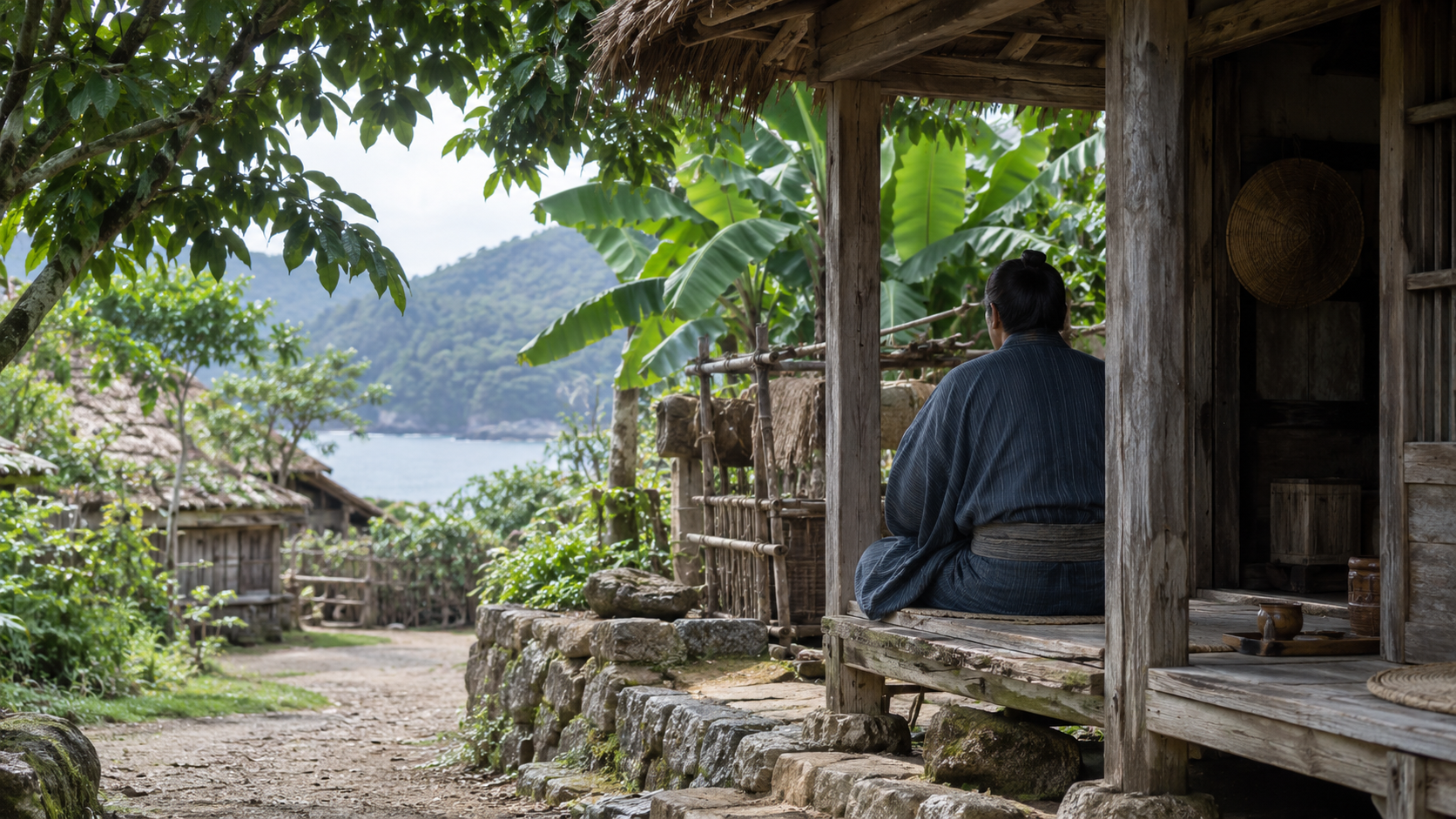
Amami City’s chronology records Saigō’s residence in exile at Tatsugō in 1859. Shifting attention away from political activity at the centre brings the years on the islands into his life’s chronology. They should not be treated merely as a pause between more important scenes, nor filled with words supposedly spoken without supporting evidence.
The same chronology records exile to Tokunoshima and then Okinoerabu in 1862. The 1859 residence and these later removals cannot be combined into one identical event. Their dates and destinations need to remain distinct even in a short account. A single generalized image of island life does not establish which residence or stage it represents.
The National Diet Library describes exile following conflict with Shimazu Hisamitsu and a subsequent recall. Saigō was not always in a position freely to determine the domain’s policy. He could also be subject to decisions made within its authority. That difference in position matters to a career later associated with major military and political responsibility.
Appointment, removal and recall mark changes in the conditions under which he could act. Rather than placing an invented monologue over the island setting, this narrative retains those shifts of status. The anonymous man at a subtropical house is a conceptual illustration, not Saigō’s actual dwelling at Tatsugō or an authenticated image of him.
Chapter 04
Cooperating with a Former Opponent
After his recall, Saigō worked as a staff officer on the shogunate’s side during the first Chōshū campaign. Knowledge of the later Satsuma–Chōshū alliance must not be projected back into that earlier position. The cooperation familiar from the political transformation followed a period in which the two domains stood on different sides.
Reimeikan’s explanation introduces Satsuma’s pursuit of cooperation between court and shogunate and its opposition to Chōshū, which advocated reverence for the emperor and expulsion of foreigners. The starting point was not two domains moving together under an unchanged policy. The institutional setting helps explain why their later cooperation constituted a change.
The Anglo-Satsuma conflict, bombardment at Shimonoseki and domestic political circumstances were among the conditions through which policies changed. Satsuma and Chōshū came to form a military alliance and move against the shogunate. The account follows that transition without constructing a particular conversation, seating arrangement or private agreement beyond what the cited explanations support.
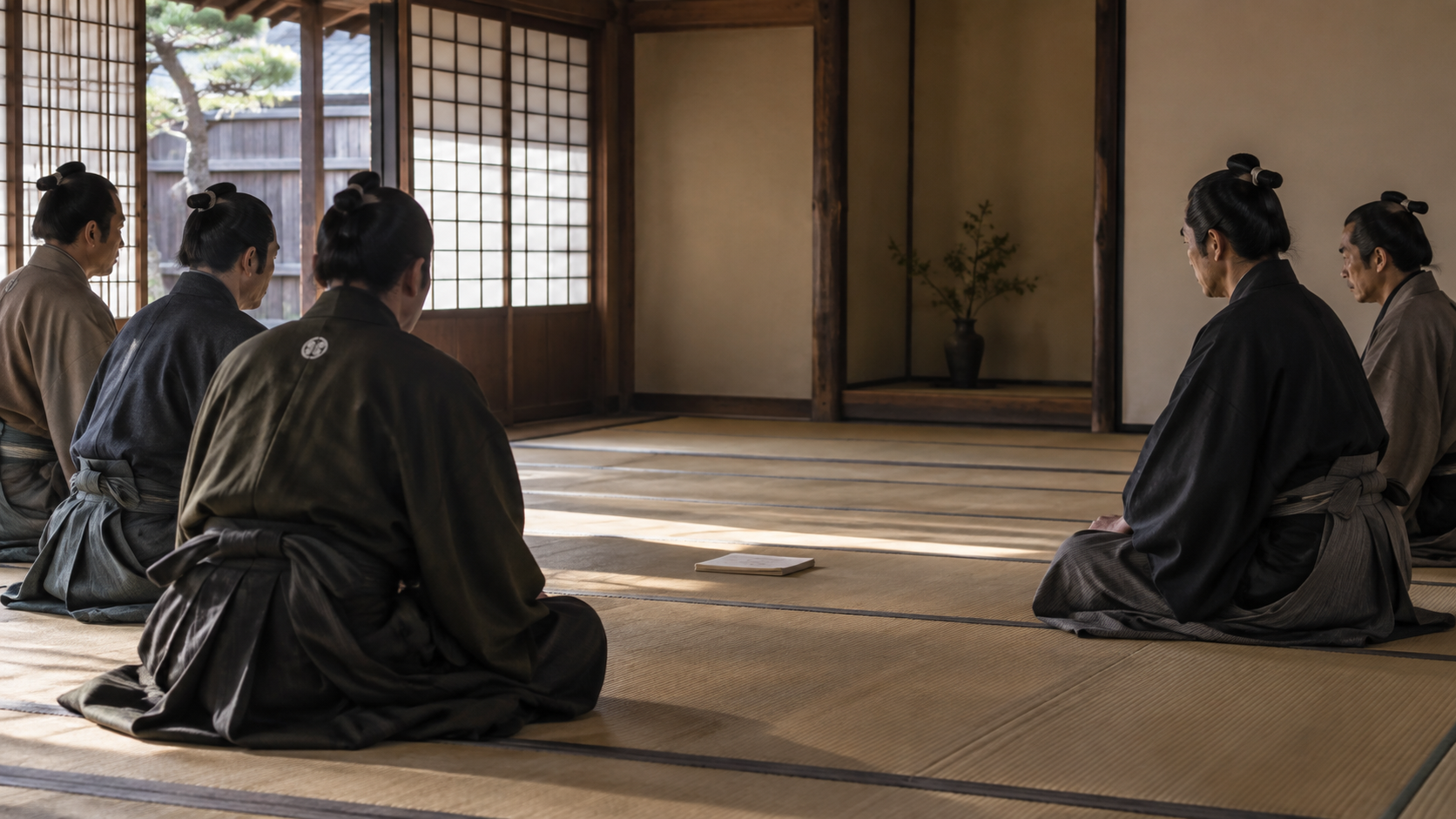
Saigō’s activity needs to be read within this changing relationship. Imagining that he had always followed one direct route toward overthrowing the shogunate would conceal the transition between his earlier staff role and the later alliance. The generated meeting scene evokes negotiation among domain figures, not a documentary reconstruction of the alliance’s actual participants or meeting.
Chapter 05
Opening Edo while War Continued Elsewhere
In 1868, the fighting at Toba and Fushimi initiated the Boshin War. Saigō undertook military responsibilities for the new government and participated in negotiations with Katsu Kaishū connected with the surrender of Edo Castle. His role thus included negotiation as well as the conduct of military affairs on the new government’s side.
Avoiding the planned large-scale attack on Edo was a major turning point. The description of a bloodless castle surrender must not, however, be expanded into a claim that fighting disappeared throughout Japan. What happened at Edo and the course of the wider war are related but different historical propositions.
Reimeikan’s Boshin War explanation follows subsequent fighting through Ueno, Nagaoka, Aizu and Hakodate. The war ended in 1869. Its chronology therefore continued after Edo Castle opened. Keeping those later campaigns in view avoids allowing a well-known negotiation to stand for a nationwide end of hostilities that had not yet occurred.
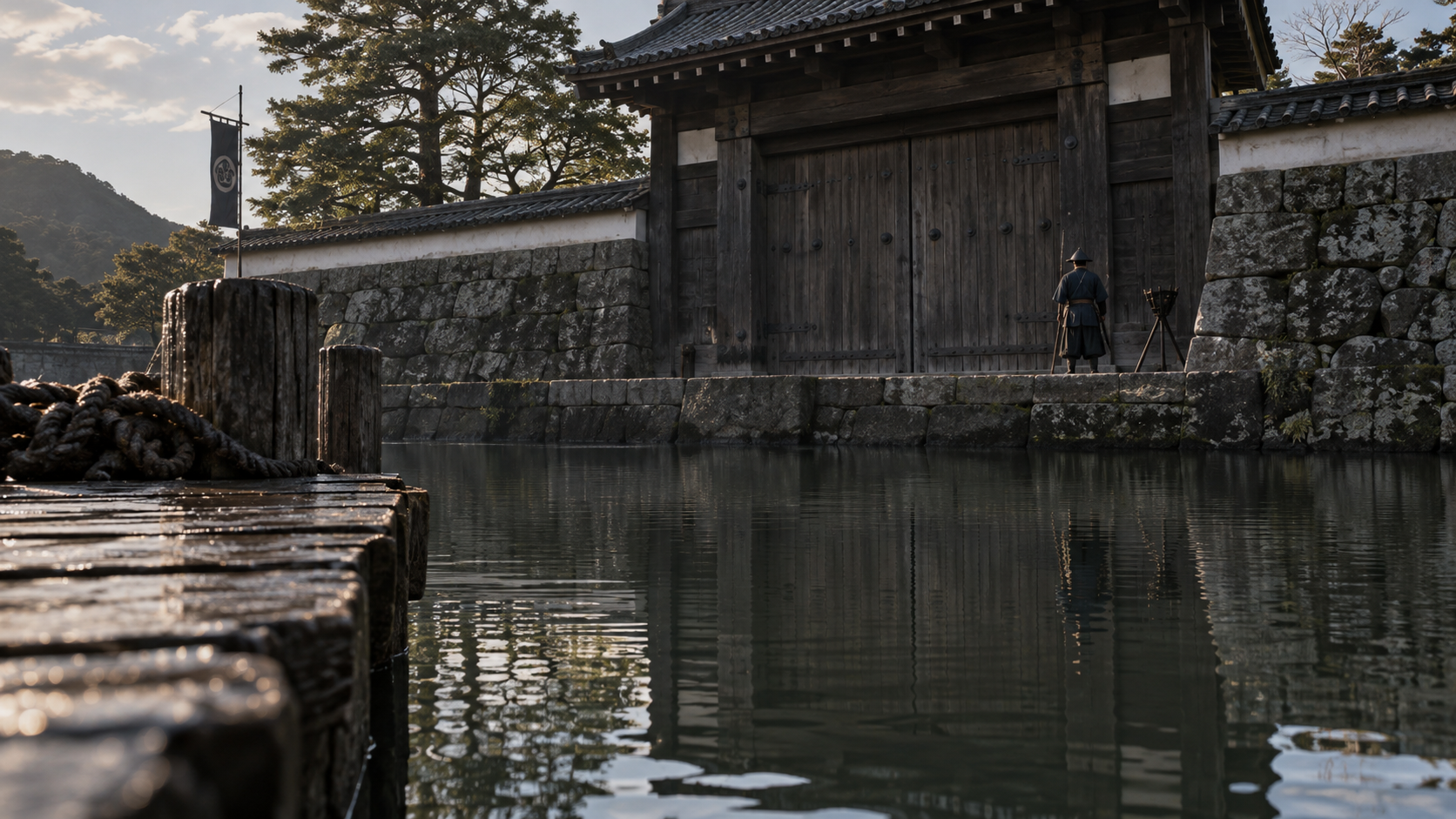
Negotiation and fighting both belonged to the change of government. At this stage, Saigō’s responsibilities were on the new government’s side. Remembering that position clarifies the later relationship with the opponent he faced in 1877. The imagined waterside gate illustrates the castle question without reconstructing an actual Edo gate or the place where negotiations took place.
Chapter 06
Inside the Government Carrying Out Reforms
After the new government was established, Saigō entered its political centre as a councillor, or sangi. He was not merely an observer looking at it from outside. He held responsibilities within the new arrangements. This stage is necessary to understanding what it meant when he later left the government’s political leadership.
The return of domain lands and populations took place in 1869, and the abolition of domains in favour of prefectures in 1871. Reimeikan describes the restructuring of domain-based government and subsequent changes including the education system, solar calendar, conscription and land-tax reform. These measures provide institutional background, rather than a list of achievements assigned to one person.
All these reforms cannot be credited to Saigō alone. His participation inside the government nevertheless matters. He cannot simply be described as someone who had opposed reform from the outset solely to preserve the earlier domain and former-retainer order. The account follows positions he actually held without reducing a changing career to that single label.
A man who began as a Satsuma retainer also participated in politics that changed the domain system itself. Cooperation in establishing a government did not ensure agreement on every later policy or priority. That distinction helps prepare the account of the 1873 dispute while avoiding an invented explanation of his private reaction to each reform.
Chapter 07
A Dispute over an Envoy to Korea
In 1873, the proposed dispatch of an envoy to Korea became a major division within government. Reimeikan’s explanation of the memorandum recording the decision describes Saigō speaking of courteous, peaceful negotiation. That is the institution’s interpretation of the material it introduces, not a complete independent resolution here of the controversy over his diplomatic policy.
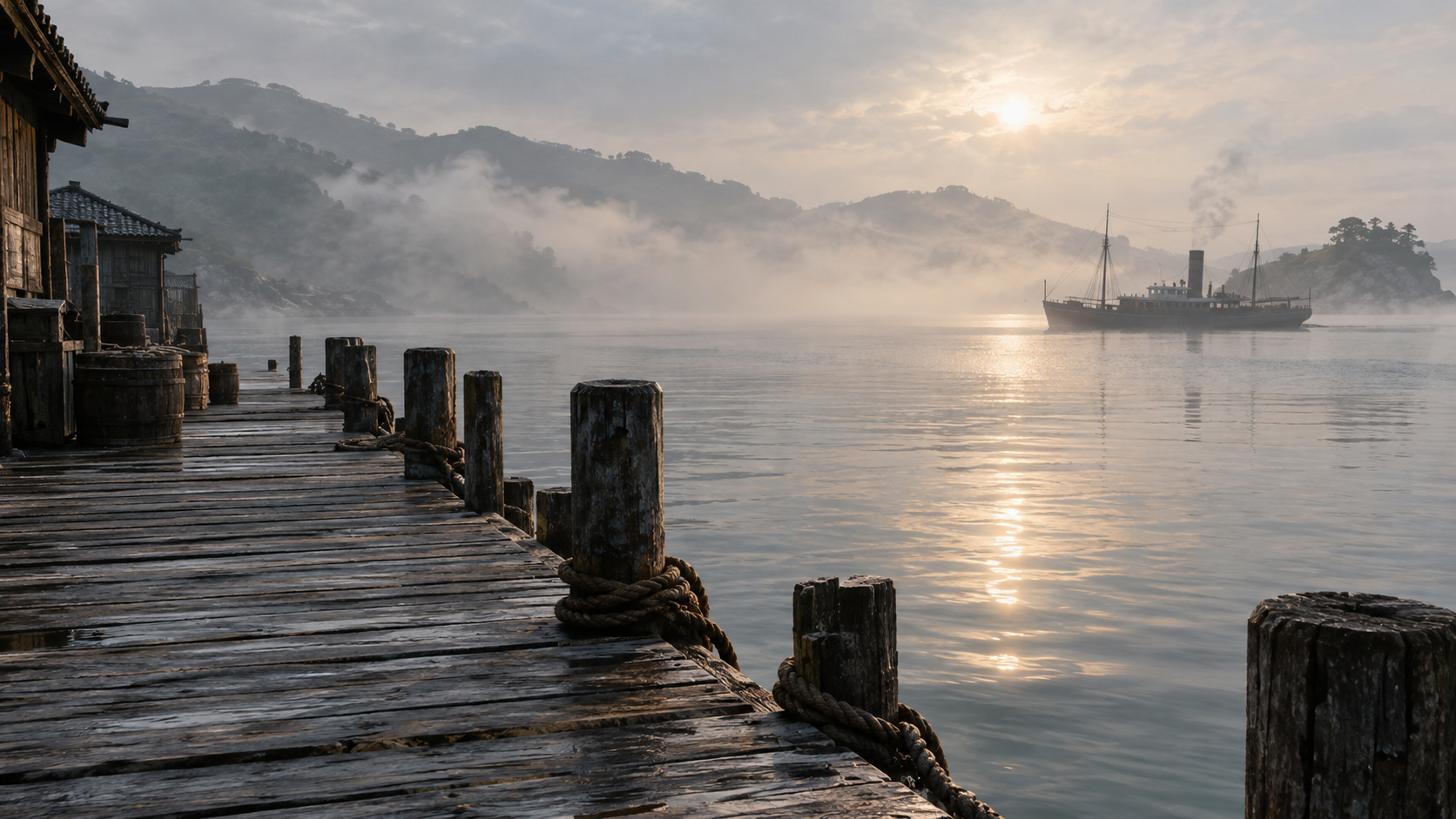
According to the museum, a cabinet decision on 18 August was followed by a renewed decision on 15 October to send Saigō. Reaching a decision to dispatch an envoy and actually carrying it out were different events. The narrative therefore does not present a generated harbour view as evidence that Saigō’s proposed Korean mission sailed.
Iwakura Tomomi and others advocated priority for domestic government, and on 23 October the dispatch was postponed indefinitely. The difference between Saigō and other government leaders first appears here as a policy dispute within the government. Its decisions and reversals have their own sequence before the resignation and return to Kagoshima.
Assessments of this diplomatic policy are contested. This exhibition explanation alone is not used to certify Saigō as an uncomplicated pacifist, nor to determine all his intentions through another single label. The account follows the decision, postponement and subsequent resignation, preserving attribution rather than claiming to recover a complete otherwise unrecorded personal programme.
Chapter 08
Between Resignation Request and Permission
On 23 October, Saigō requested resignation from three positions: army general, commander of the Imperial Guard and councillor. Reimeikan’s explanation of the resignation request and permission records a difference among the responses given on the following day. The request and the permission must be read separately rather than replaced by a general statement that he immediately lost every office.
Resignation as councillor and Imperial Guard commander was accepted, but resignation as army general was not. Even an event summarized as leaving government contained a difference between what he sought and what was permitted. Retaining the official titles makes the distinction more precise without turning the institutional explanation into an independent transcription of the original documents.
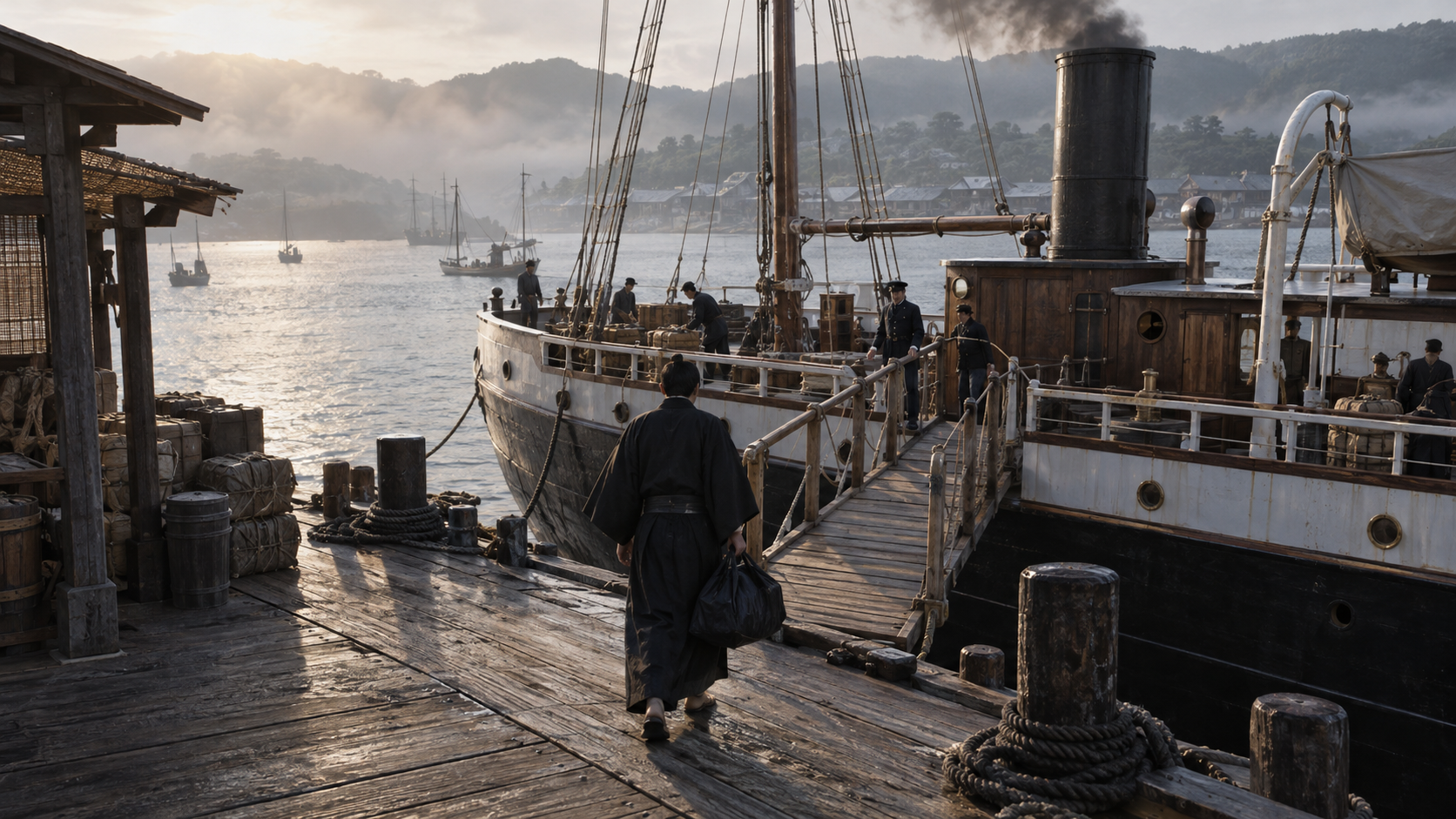
At the end of October he departed by ship from Yokohama and returned to Kagoshima at the beginning of November. A position conducting policy in the capital gave way to life back in his home region. Following the office record alongside this movement gives the change a concrete sequence, without inventing a vessel name or a scene aboard it.
Saying that all offices were lost at once would erase what the permission document’s explanation distinguishes. A resignation request was also not a declaration beginning the later war. The movement away from central politics in 1873 should be read on its own terms before following the intervening years that led toward armed conflict.
Chapter 09
Back in Kagoshima and the Private Academy
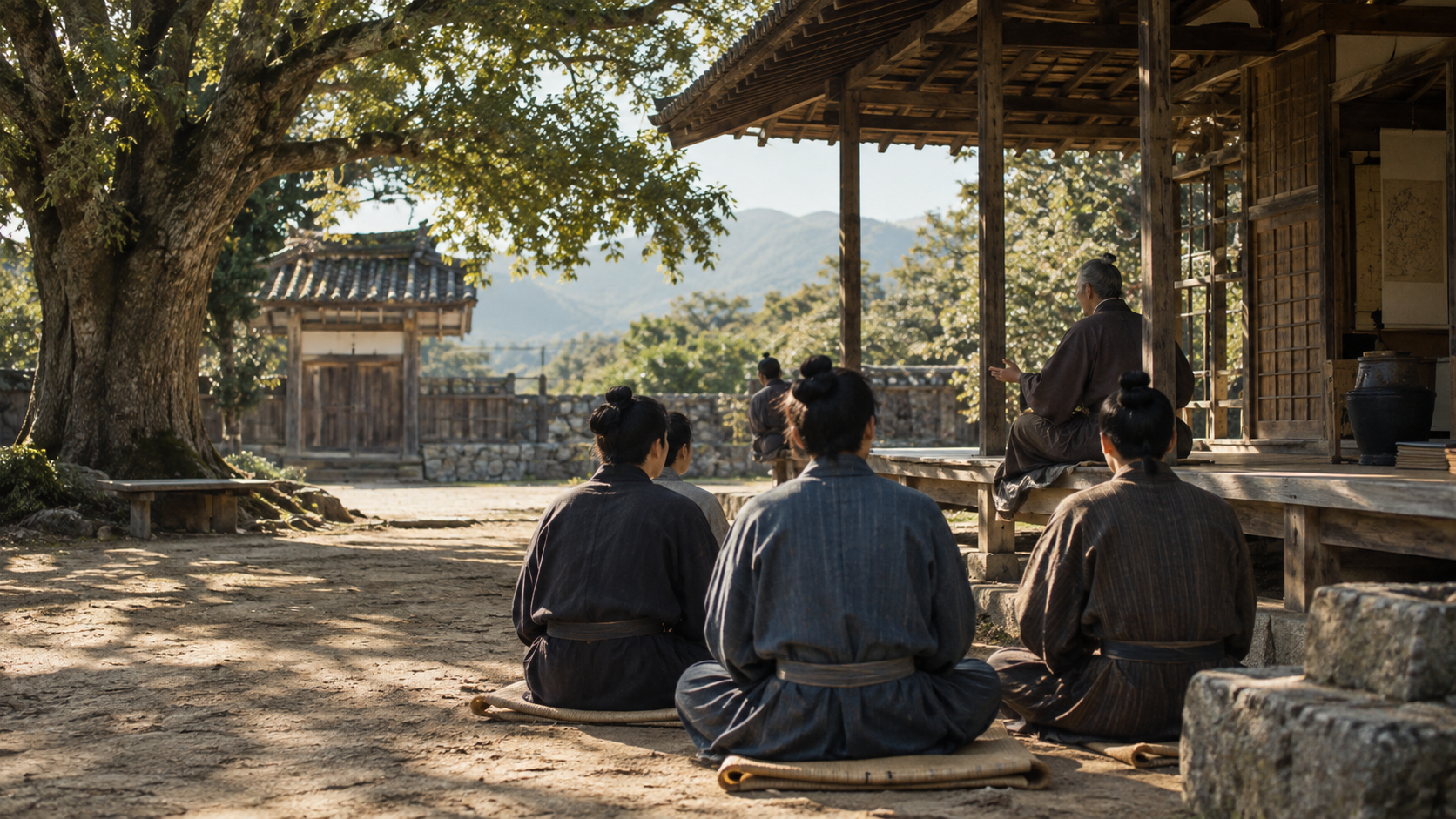
After returning to Kagoshima, Saigō established a private academy and worked in the education of young men. Reimeikan connects his return, the return of many young people and the formation of the Shigakkō. The institution offered a different setting for relationships from the central government offices he had left.
Leaving political office did not dissolve the connections with those who admired him. People gathered in a place organized in a different form from a government post. Following that setting makes the interval after resignation more visible. It is not necessary to treat every gathering as a moment in which the future war had already been decided.
Reimeikan also describes Kagoshima’s administration developing a course out of step with other prefectures. The relationship between Kagoshima and central government therefore needs attention alongside Saigō’s individual biography. The narrative follows both the institutional tension and the gathering of people, without supplying private instructions that have not been established in the consulted material.
The Constitutional Government Memorial Hall’s exhibition explanation states that Etō Shinpei sought Saigō’s cooperation in 1874 but did not obtain it. Leaving government did not mean automatically supporting every subsequent rebellion. Events after his return need to be distinguished from one another, rather than arranged as an uninterrupted series of identical anti-government actions.
Chapter 10
The Powder Store Attacks and the Move into War
At the end of January 1877, Shigakkō students attacked government powder stores in Kagoshima. Reimeikan describes worsening relations with government and the actions of students dissatisfied with its measures. Their attack is an event with its own actors. It must not simply be substituted for an unverified scene of Saigō personally ordering or conducting that first assault.
The National Diet Library summarizes Saigō as taking up arms at the urging of the academy’s students. The students’ attacks and the process by which he joined the fighting therefore need to be followed separately. Their relationship can be explained without collapsing everyone’s decisions and movements into a single instantaneous act.
The envoy dispute, resignation and homecoming, young men gathered at the academy, tension between Kagoshima and the centre, and the attacks on the stores form a sequence. Setting them out reveals changes between 1873 and 1877. It does not make one brief biographical statement sufficient evidence for every detailed motive within that interval.
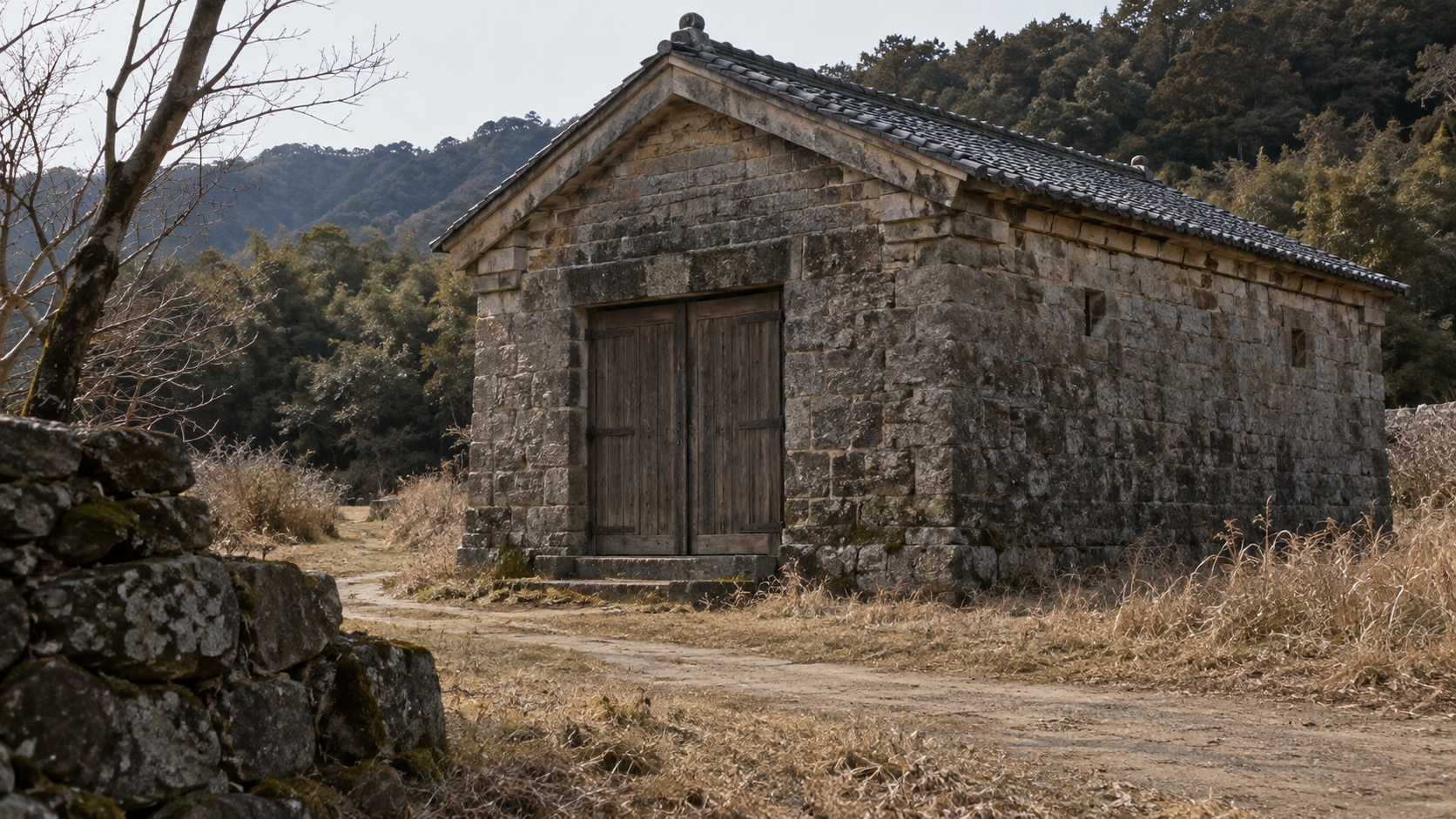
Following actions and organizational relationships is more useful here than explaining everything through one imagined inner state. Several years of events separated departure from political leadership and fighting government forces. The closed storehouse in the illustration is a generic building for considering the powder-store question, not an actual Kagoshima store or a reconstruction of the attack.
Chapter 11
From Kumamoto to Shiroyama
The Satsuma Rebellion’s fighting extended beyond Kagoshima to Kumamoto and Miyazaki. The Constitutional Government Memorial Hall explains fighting including Tabaruzaka through government forces seeking to join the garrison at Kumamoto Castle and Saigō’s side attempting to prevent that movement. The objectives and relationships of moving units belong to the account of the war.
A single image of sword-carrying warriors confronting modern weapons would make those objectives difficult to see. Where forces were trying to go and who sought to stop them also mattered. The narrative follows the institutional explanation of those movements without reconstructing every unit’s path or asserting an exact battle plan from an illustrative landscape.
Under pressure from government forces, Saigō and his companions finally withdrew to Shiroyama in Kagoshima. The fighting ended on 24 September 1877, and Saigō died. A participant in the establishment of the new political order ended his life in conflict with that government. The chronology does not require invented final words or detailed gestures at his death.
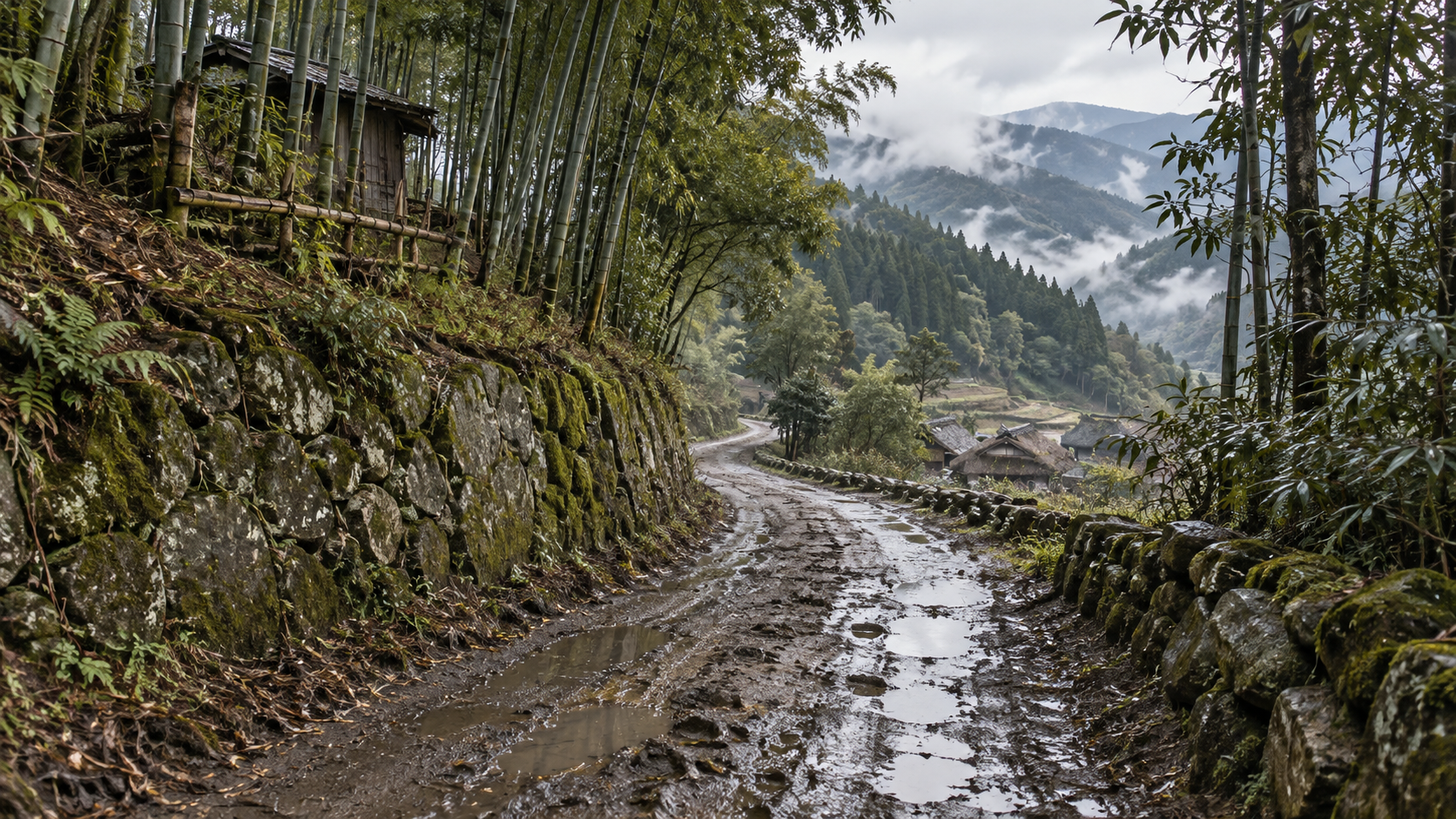
Rather than embellishing his final moments, it is useful to look back at the sequence that brought him there: cooperation in the late Tokugawa period, disagreement within government, gatherings after his return, the outbreak of war and defeat. Each belongs to a different time and relationship. The generated mountain road establishes neither actual weather nor a verified retreat route.
Chapter 12
Differences That Remained after Cooperation
Why did Saigō fight a government he had helped establish? The consulted sources allow a sequence to be followed in which cooperation in political transformation and agreement over subsequent policy were not the same thing. That distinction offers a way to understand changes of position without assigning an unchanging intention to an entire life.
Formerly opposed domains cooperated, and the new government pursued reforms in which Saigō also participated. He then left its political leadership after the envoy dispute, returned home and became involved with the academy and its young men. He took up arms as tensions with the central authorities moved into armed conflict. These stages should remain distinct.
Separating the date he left office from the date he led forces makes room for the actions of people in between. It also prevents the biography from being compressed into a single epithet. His position changed in relation to others, not merely through a title attached after the ending of the story was already known.
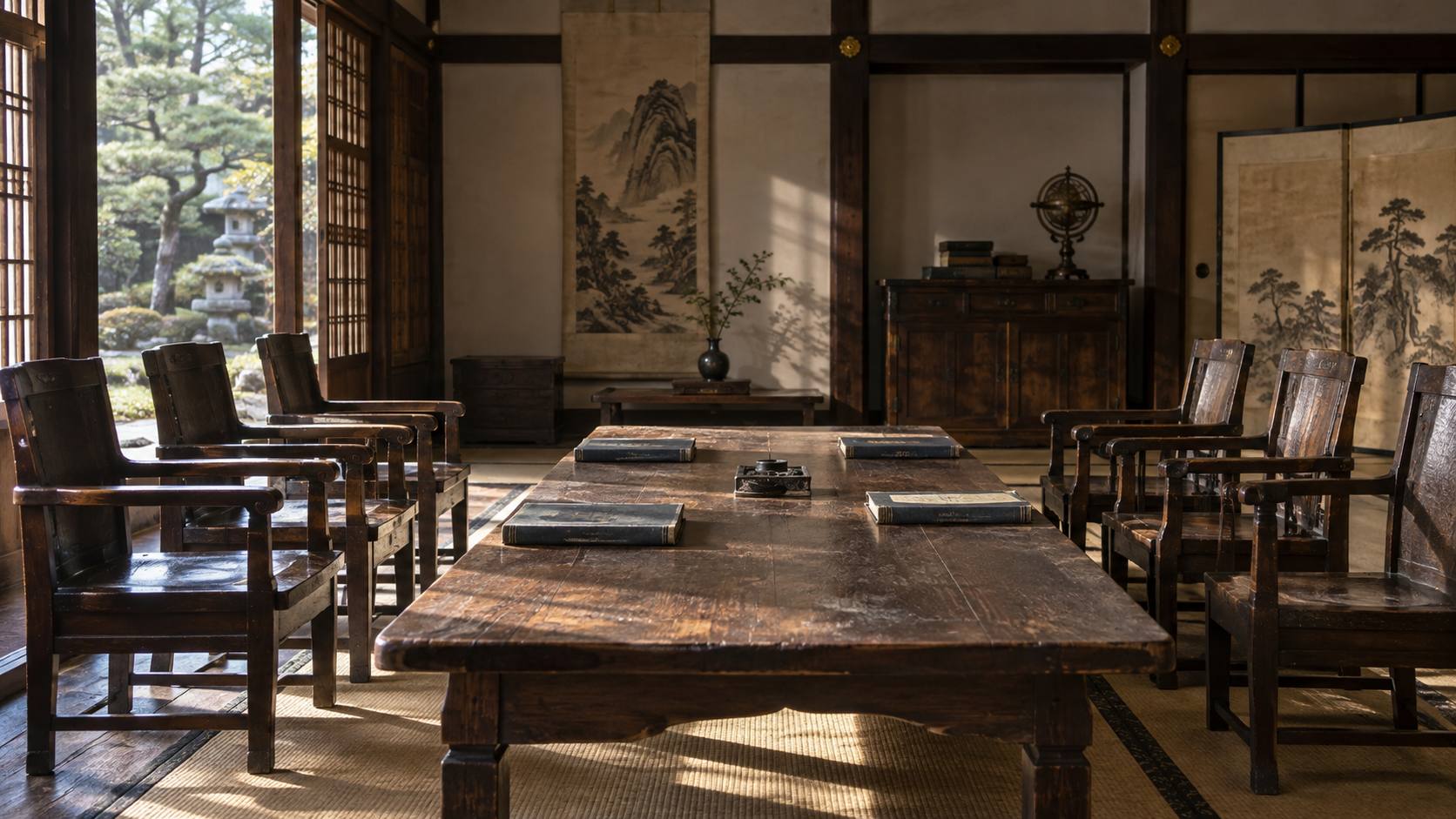
From a resignation request in 1873 to Shiroyama in 1877, the interval matters. Reading those years rather than skipping them connects the participant in making government with the man who fought it as parts of one changing life. The final imagined room is a place for considering evidence, not a photograph of his belongings or an actual archival reading room.
How to read this work
History, interpretation, and reconstruction
Separating 1873 from 1877 reveals changes of office, policy, academy relationships and actions by students and government behind Saigō’s changing position.
This work is grounded in published sources and historical research. Interior thoughts, dialogue, and some visual details are cinematic reconstructions. Where historians disagree, the article presents the point as debated rather than settled fact.
Timeline
The story in time
-
Saigō was born in Kagoshima. This is the Gregorian year, distinguished from Bunsei 10 in the historical Japanese calendar.
Sources: s01 -
Saigō resided in exile at Tatsugō in Amami.
Sources: s02 -
The envoy dispatch was decided again on the fifteenth and postponed indefinitely on the twenty-third.
Sources: s06 -
Saigō requested resignation from three positions on 23 October. Permission the following day covered councillor and Imperial Guard commander, but not army general; he subsequently returned to Kagoshima by ship.
Sources: s07 -
The Memorial Hall’s exhibition explanation describes Etō seeking, but not gaining, Saigō’s cooperation.
Sources: s09
People & terms
A guide for new readers
Key figures
- Saigō Takamori
- A Satsuma retainer who became a councillor in the new government, left its political leadership in 1873 and fought government forces in 1877.
- Shimazu Nariakira
- The Satsuma lord who brought Saigō into political service.
- Shimazu Hisamitsu
- A Satsuma leader whose conflict with Saigō formed part of the latter’s career.
- Katsu Kaishū
- Negotiated with Saigō in connection with the surrender of Edo Castle.
- Iwakura Tomomi
- Advocated priority for domestic government during the dispute over an envoy to Korea in 1873.
- Etō Shinpei
- The Constitutional Government Memorial Hall describes him seeking, but not obtaining, Saigō’s cooperation in 1874.
Glossary
- Satsuma 薩摩
- The domain within which Saigō began his service; its later relationships with other domains and the new government changed over time.
- Sangi 参議
- A councillor in the new government, one of the positions from which Saigō’s resignation was permitted in 1873.
- Konoe totoku 近衛都督
- Commander of the Imperial Guard, another position covered by the permission to resign in 1873.
- Rikugun taishō 陸軍大将
- Army general; the resignation from this position requested alongside the other two was not permitted in the explanation consulted.
- Tatsugō 龍郷
- The place in Amami associated with Saigō’s residence in exile in 1859.
- Okinoerabu 沖永良部
- One of the islands in the later 1862 exile sequence, distinct from the earlier Amami residence.
- Satsuma–Chōshū alliance 薩長同盟
- Cooperation that followed an earlier period of opposition; it should not be projected back over every preceding policy.
- Boshin War 戊辰戦争
- The 1868–1869 war whose fighting continued after the surrender of Edo Castle.
- Hanseki hōkan 版籍奉還
- The 1869 return of domain lands and populations described in the institutional account of reforms.
- Haihan chiken 廃藩置県
- The 1871 abolition of domains and establishment of prefectures.
- Shigakkō 私学校
- The private academy associated with Saigō’s return to Kagoshima and the young men whose later actions belong to the approach to war.
- Satsuma Rebellion 西南戦争
- The war of 1877 between Saigō’s side and government forces, ending at Shiroyama.
- Tabaruzaka 田原坂
- A place of fighting discussed in connection with government forces seeking to reach the Kumamoto garrison.
- Shiroyama 城山
- The final Kagoshima setting of the rebellion and Saigō’s death on 24 September 1877.
Sources & method
How this article was built
This English account translates the fixed Japanese article and preserves its nine source identifiers and their order. English titles are editorial translations. Background explains offices and separates chronological stages without inventing new facts, conversations, final words or private motives.
The consulted material comprises institutional biographies, municipal chronology and modern museum exhibition explanations. Original memoranda, resignation instruments, portraits and analytical records were not independently authenticated or transcribed here. Attribution to the museum is retained for its explanation of the envoy question and the permissions to resign.
The account does not use one exhibition description to certify an uncomplicated pacifist identity or determine Saigō’s complete diplomatic intentions. Edo Castle’s surrender is not expanded into an immediate nationwide end of fighting. The end of the rebellion is described without reconstructing Saigō’s last speech or gestures.
Images retain SHIGEKI’s AI-generated explanatory scenes and their corresponding rights and bytes from the Japanese article. Anonymous figures are not authenticated portraits; the harbour does not show an actual Korean mission, and roads and buildings are not exact sites or marching formations. The final research room contains no claimed original manuscript or personal relic.
Reimeikan pages are consolidated under Kagoshima Prefecture. The National Diet Library and the House of Representatives exhibition are conservatively grouped under the National Diet of Japan, with their distinct providers named in the reference descriptions; Amami City forms the third publisher group. Departments and individual pages are not multiplied into independent publishers.
Sources
References and further reading
- National Diet Library: Saigō Takamori 国立国会図書館・西郷隆盛 Title translated editorially for reader convenience. National Diet of Japan 国立国会図書館 Institutional biography used for birth year, career, offices, departure and taking up arms; published portrait not used to authenticate appearance. Accessed 2026-10-19
- Amami City Historical Chronology 奄美市・歴史年表 Title translated editorially for reader convenience. Amami City 鹿児島県奄美市 Municipal chronology distinguishing the 1859 Tatsugō residence from the 1862 Tokunoshima and Okinoerabu exiles. Accessed 2026-10-19
- Reimeikan: The Road toward Overthrowing the Shogunate 黎明館・倒幕への道 Title translated editorially for reader convenience. Kagoshima Prefecture 鹿児島県歴史・美術センター黎明館 Exhibition explanation of Satsuma and Chōshū’s changing relationship, from opposition toward alliance and action against the shogunate. Accessed 2026-10-19
- Reimeikan: The Boshin War 黎明館・戊辰戦争 Title translated editorially for reader convenience. Kagoshima Prefecture 鹿児島県歴史・美術センター黎明館 Exhibition explanation of fighting continuing after Edo Castle’s surrender and the war’s conclusion in 1869. Accessed 2026-10-19
- Reimeikan: The New Government and Kagoshima 黎明館・新政府と鹿児島 Title translated editorially for reader convenience. Kagoshima Prefecture 鹿児島県歴史・美術センター黎明館 Background on the return of domain lands and populations, abolition of domains and subsequent reforms; not all assigned to Saigō alone. Accessed 2026-10-19
- Reimeikan: Memorandum on the Decision to Dispatch an Envoy to Korea 黎明館・朝鮮派遣使節決定覚書 Title translated editorially for reader convenience. Kagoshima Prefecture 鹿児島県歴史・美術センター黎明館 Institutional explanation of the August and October 1873 decisions and postponement; not a definitive resolution of all interpretations of diplomatic policy. Accessed 2026-10-19
- Reimeikan: Resignation Request and Permission 黎明館・辞職願い並びに許可書 Title translated editorially for reader convenience. Kagoshima Prefecture 鹿児島県歴史・美術センター黎明館 Explanation distinguishing the three requested resignations from the two permissions and the subsequent journey home; no independent transcription of originals. Accessed 2026-10-19
- Reimeikan: The Satsuma Rebellion 黎明館・西南戦争 Title translated editorially for reader convenience. Kagoshima Prefecture 鹿児島県歴史・美術センター黎明館 Explanation of the academy, worsening relations, student attacks and the later course of the war. Accessed 2026-10-19
- Constitutional Government Memorial Hall: Building the Meiji State in a Time of Upheaval 衆議院憲政記念館・激動の明治国家建設 Title translated editorially for reader convenience. National Diet of Japan 衆議院憲政記念館 Historical explanation for a past 2009 House of Representatives exhibition, including the 1873 crisis, Etō in 1874 and movements during the rebellion. Accessed 2026-10-19
Continue reading
More stories from Shigeki
Shigeki English
Sakai’s Merchant City: Trade, Self-Government and Survival
A port, a merchant council and town communities—from changing authority to rebuilding after fire.
- When From the later fifteenth century through the Sengoku period, the fire of 1615 and early Edo-period reconstruction.
- Where Sakai, in present-day Osaka Prefecture, where maritime routes met roads on land.
Shigeki English
The Aburanokōji Incident: After Leaving the Shinsengumi
A separation in spring, a new base in summer, and two successive attacks.
- When Kyoto in Keiō 3 (1867). The incident’s historical date corresponds to December 13, 1867.
- Where Kyoto: the guards’ successive bases, the Aburanokōji attack site and the later place of remembrance.