
SHIGEKI ENGLISH STORYEN
Japanese history in English
Usuki: From an Island Castle to a Town of Trade and Learning
Sōrin’s island castle, merchants, a novitiate and the Inaba castle town: follow contact with the wider world through different places and periods.
Explore Usuki’s sea-surrounded castle, Ming and Portuguese merchants, missionary training, regional faith and later townscape. Keep Funai, the Liefde and modern interpretation distinct.
At a glance
Before you enter the story
- When
- Sōrin’s sixteenth-century activity, the events of 1600 and later castle-town development, followed by modern investigation, conservation and the 2025 castle designation.
- Where
- Usuki’s island castle and town, the separate city of Funai, the region’s cemetery sites and Sashiu.
- Key figures
- Ōtomo Sōrin, Francis Xavier, Alessandro Valignano, João Rodrigues, Inaba Sadamichi, William Adams, Jan Joosten
- What was at stake
- How a defensible island became connected with trade and learning, and how later buildings and modern evidence must be distinguished from the original setting.
Why this story matters
The larger history behind the turning point
A coastal castle and a Christian ruler can become a single familiar picture, but Usuki’s relationships with the wider world involved more places and times. Merchants, imported goods, missionary training, language learning, regional faith and later settlement leave different evidence. Following their differences makes both the town’s maritime connections and the work of interpreting its history clearer.
Historical context
What an international reader needs to know
Two Towns and Different Educational Institutions
Usuki and Bungo Funai shared relationships with the Ōtomo but were different places. Funai lay in the area of present-day Ōita City. Evidence for its port and excavated imports should therefore remain attached to Funai, while the municipal history of Usuki supports its own account of visiting merchants. A broader network does not erase local distinctions.
The educational terms also matter. The noviciado at Usuki was a novitiate; the collegio at Funai was a different institution of higher religious education. The city’s explanation connects Valignano with both. Translating them as one unspecified school and exchanging their locations would make the relationship less accurate rather than more accessible.
Protection, Baptism and Arrivals after a Ruler’s Death
Sōrin’s invitation to Xavier in Funai in 1551 and his own baptism in 1578 are separate events. The castle’s construction is kept within the approximate 1562–1563 range of the accounts. Sōrin died in 1587, while the Dutch Liefde arrived in 1600. These dates prevent a composite imagined scene from creating meetings or simultaneous events that did not occur.
Modern heritage dates belong to another layer. Excavation beginning in 2010, the cemetery’s designation in 2018 and the castle’s designation in 2025 are not dates of their original use. Reburial for conservation and a contemporary building modelled on a novitiate likewise should not be confused with either disappearance of the site or survival of the original structure.
Watch the film
See the story in motion
The film currently uses Japanese audio. This English article provides the context and source trail; it does not imply that an English subtitle track is available.
Chapter 01
Put the Sea Back around the Castle
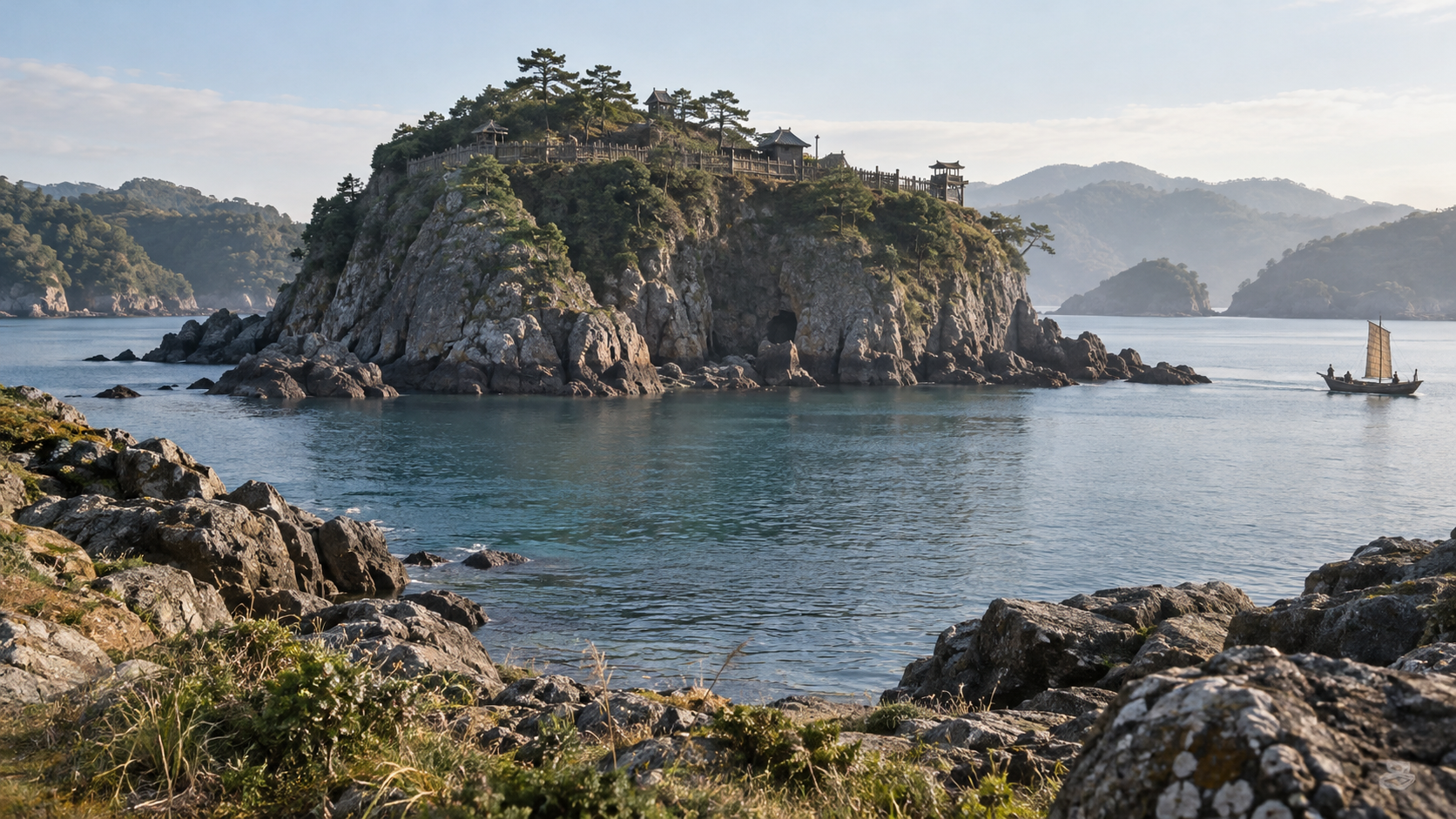
The present remains of Usuki Castle can be imagined beside a park and town streets, with stone walls close at hand. When Ōtomo Sōrin built his castle, however, its site was an island surrounded by the sea. Restoring that surrounding water in our understanding provides a starting point for reading a landscape whose form later changed.
Water protecting a castle could also be a route by which people and goods arrived from outside the town. The island position and Usuki’s activity as a trading town can be considered together, while each requires its own evidence. The existence of a maritime castle alone does not establish the volume or detailed organization of commerce.
An image containing only an overseas ship and a Christian lord can obscure cargoes, people learning languages and life in the surrounding region. Nor has every part of the castle and town visible today retained its appearance from Sōrin’s period. An account of connections with the wider world needs to preserve those different settings and times.
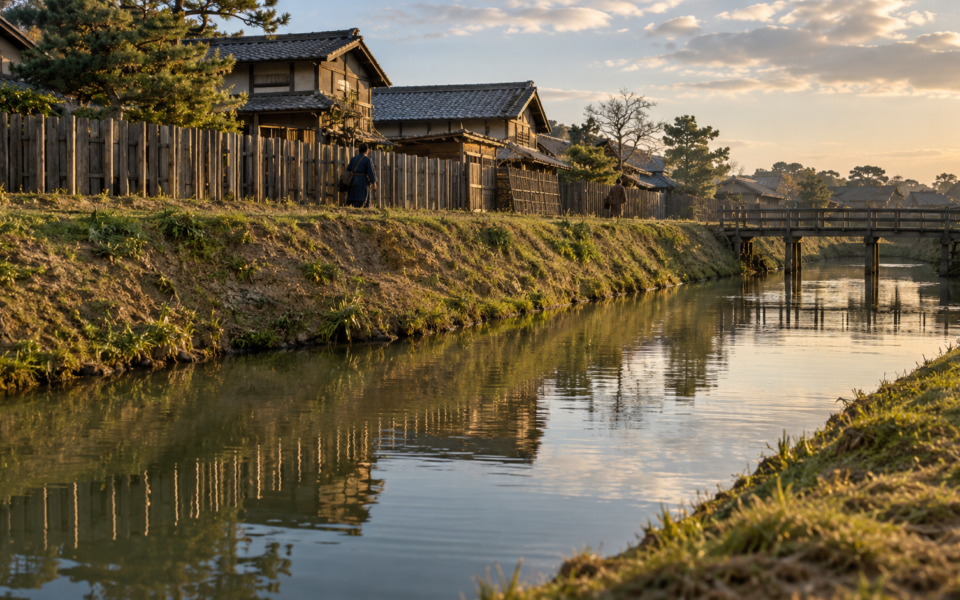
From the island castle to trade, from a novitiate to a later castle town, this narrative follows several kinds of activity. Distinguishing place and period allows Usuki’s overseas relationships to emerge through their layers. The generated island view introduces a setting; it is not a surveyed coastline or a precise reconstruction of Sōrin’s castle buildings.
Chapter 02
Choosing an Island for Defense
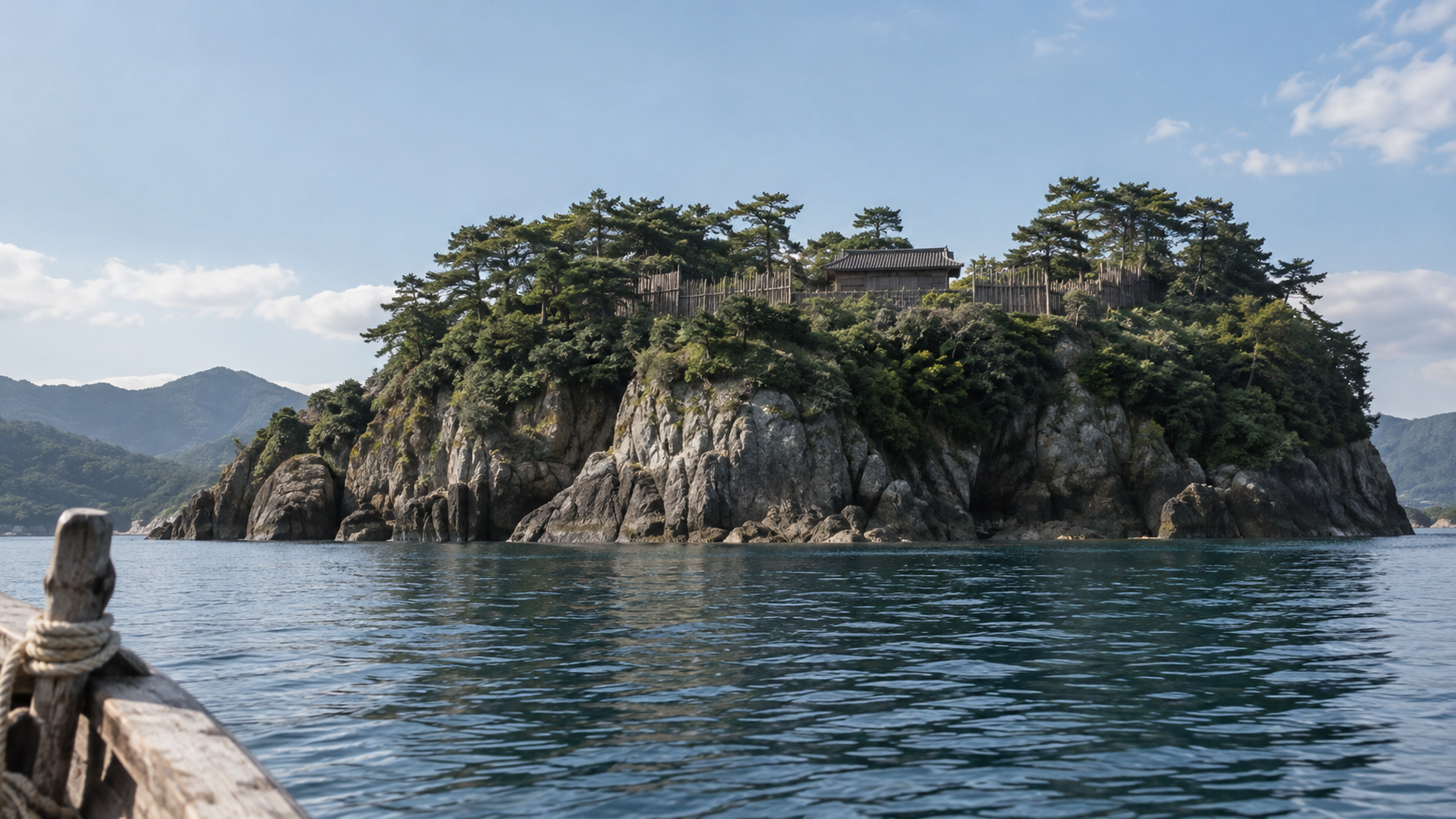
Sōrin selected an island site for the castle also known as Usuki Castle. The city’s castle explanation describes surrounding sea and steep rock faces as natural defenses. Beginning with these conditions helps separate the early setting from the later stone-walled castle and town, whose development extended beyond the period of the original builder.
Institutional descriptions give dates including 1562 and 1563 for construction. The narrative therefore retains an approximate range around 1562–1563 rather than forcing the accounts into a single certain year. Before resolving every fine detail of dating, the island chosen for defense deserves attention in its own right.
Using only the present ground as a guide could lead a reader to assume that people moved around the castle in the same way in the sixteenth century. Reading a castle surrounded by sea requires awareness of later changes in the terrain. The current landscape should not silently replace the setting described for the earlier castle.
An island castle, however, does not by itself tell us the number of vessels or amount of trade. After considering the defensive setting, the narrative turns to separate institutional explanations of those who visited through the sea. The small boat and rocky island in the illustration evoke that relationship without claiming actual water depths, sailing routes or measured defenses.
Chapter 03
Usuki and Funai: Two Points of Contact
Usuki City’s history describes merchants from Ming China and Portugal coming and going in the town during Sōrin’s time. Contact with the outside world involved people arriving as well as a ruler’s policies. That explanation offers a basis for considering commerce in Usuki without reconstructing individual cargo manifests or an exact count of visiting ships.
Not every source about the Ōtomo and overseas trade concerns Usuki. Bungo Funai was a city in the area of present-day Ōita City, separate from Usuki. This distinction is essential when moving between institutional accounts. Shared connections with the same ruling house do not make two ports or their archaeological evidence interchangeable.
Ōita City’s explanation introduces a port at Funai as a point of contact for trade with Portugal. Even towns connected with Ōtomo power had different ports and different bodies of evidence. A record of a port or finds from an urban site therefore needs to remain attached to the place the provider identifies.
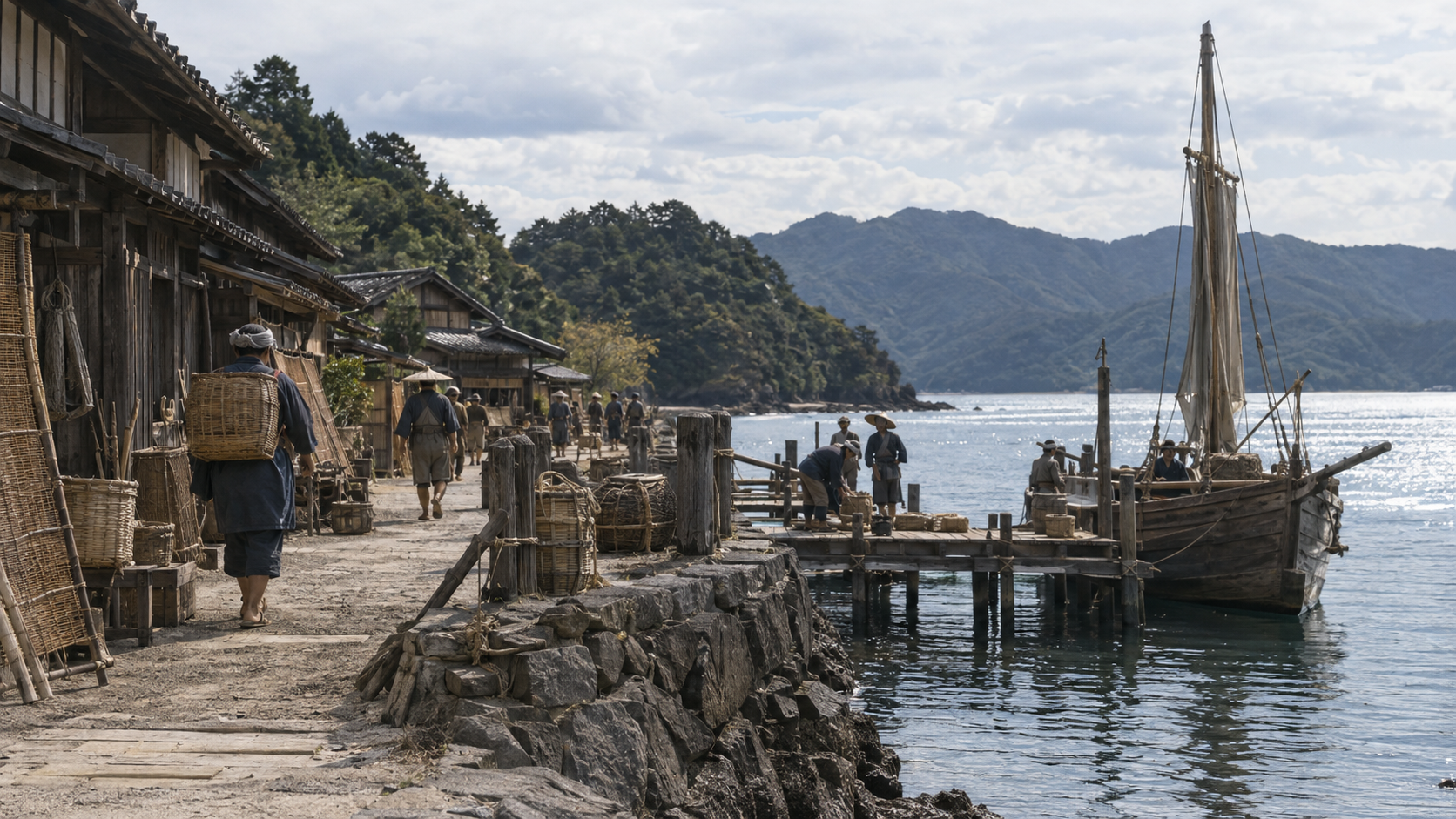
Moving Funai’s port records and excavated objects directly into Usuki would merge the two towns. To consider the wider network responsibly, the first question is where each source’s evidence belongs. The conceptual harbour scene does not claim to depict a particular port in either city or authenticate its buildings, vessels or cargo handling.
Chapter 04
Objects Connecting Bungo with Asia
The Ōita Prefectural Archaeological Center’s introduction to finds from Bungo Funai includes imports from Ming China and Southeast Asia. Looking beyond the harbour broadens the account beyond movements involving Europe. The material introduced by the institution provides a different way to consider the connections of an urban community with the wider region.
The term nanban trade may call to mind a distant European ship sailing directly to Japan. The goods used in Bungo’s towns also invite attention to Asian connections. That distinction does not deny European contact; it prevents one familiar image from accounting for every imported object or every relationship with places beyond Japan.
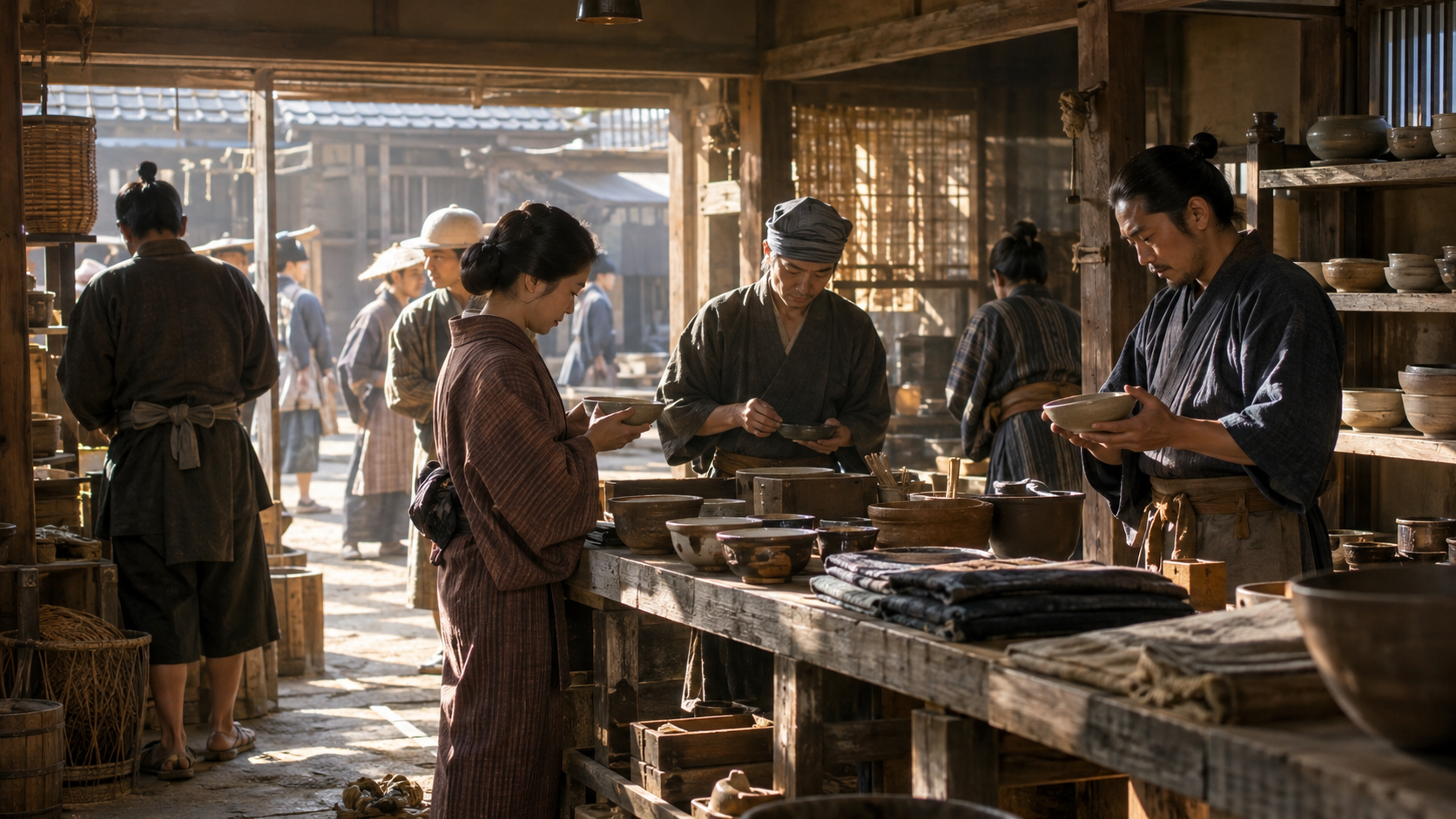
Attention to vessels and other objects of everyday use also reveals a different aspect of urban life from a narrative focused only on diplomacy or weapons. Goods arriving from elsewhere were handled and used by people. This interpretation concerns their place in a town’s material life, not an invented transaction attached to one identified archaeological object.
The finds consulted here are from Funai and are not presented as objects excavated at Usuki. Keeping that distinction allows the Ming merchants introduced in Usuki City’s history to be considered within a broader Asian setting. The generated merchants and vessels are not replicas of Funai collection items or records of an Usuki excavation.
Chapter 05
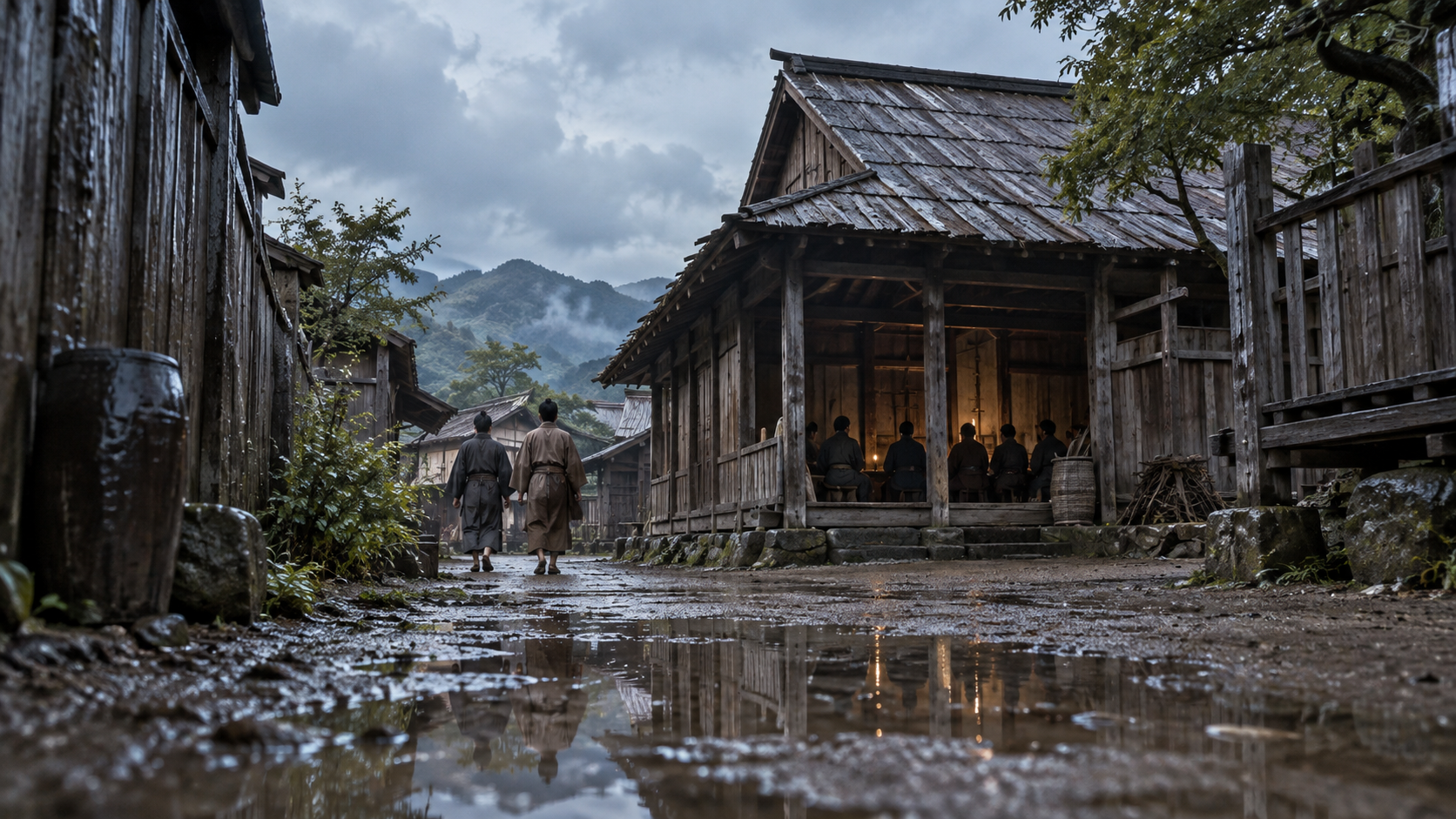
Protecting Missions and Receiving Baptism
Sōrin’s association with Christianity also contains an important interval. According to Ōita City’s biography, he invited Xavier to Funai in 1551. The place named is Funai, not Usuki. His relationship with missionary activity cannot be understood by moving this encounter into the castle town simply because later religious institutions were established there.
Sōrin’s own baptism is dated to 1578. Protecting people engaged in missionary work and receiving baptism himself were not one simultaneous action. Preserving the interval avoids turning a series of decisions and relationships into a single undated conversion scene. It also keeps distinct the person’s action and the activities of those he protected.
Between these events lay years of castle building and relationships with people from abroad. Trade, politics and religion were connected, but they cannot all be explained by one imagined decision. The account follows actions reported at different times rather than supplying an inner statement that would make every later development appear inevitable.
Visitors came to the town, and places for their activities developed. Reading those changes in sequence leaves time within the story. The generated religious building evokes a setting for faith without identifying a particular church or novitiate, or reconstructing the room and participants of Sōrin’s baptism.
Chapter 06
A Place for Learning in a Maritime Town
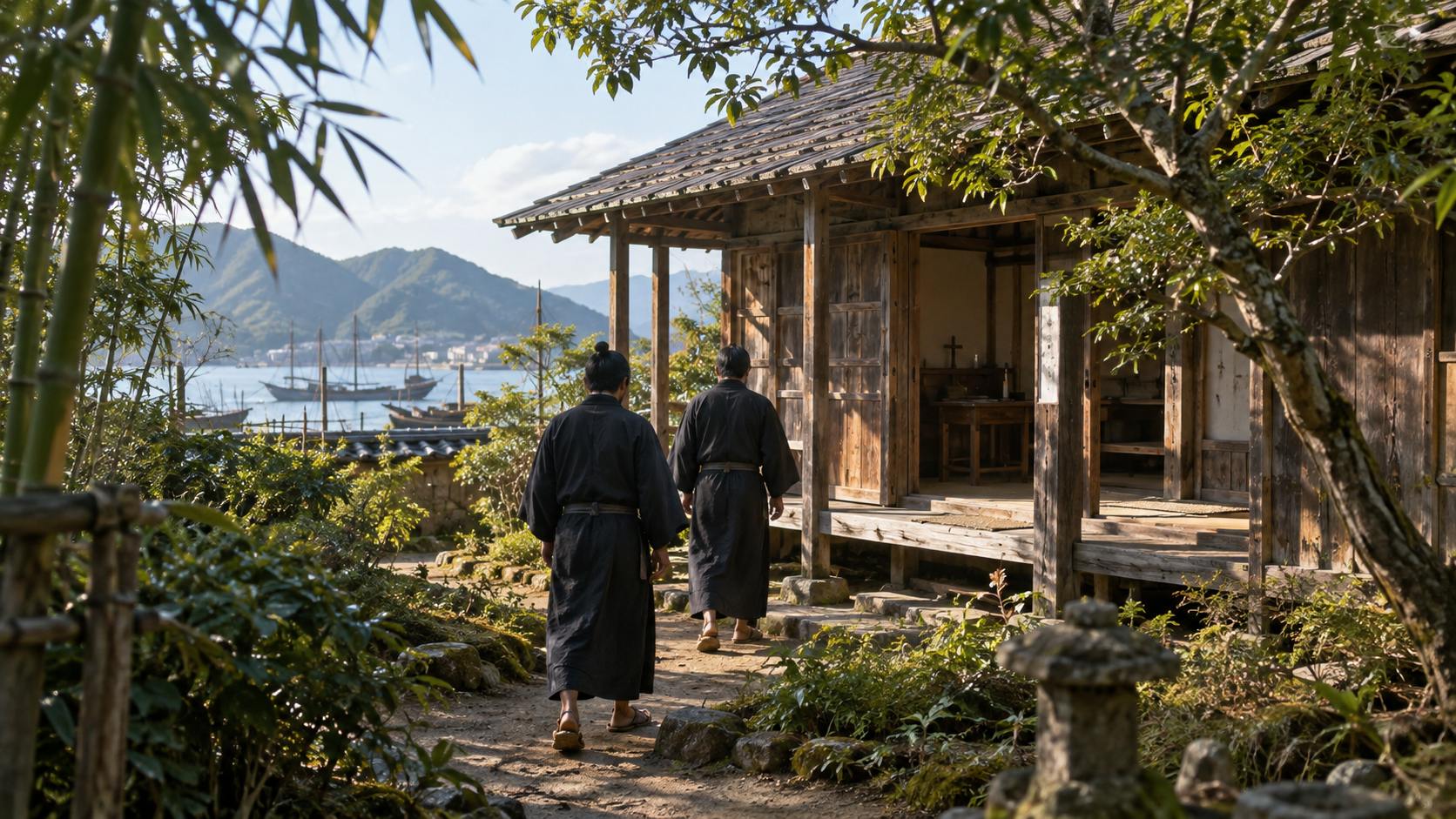
A novitiate, known as a noviciado, was established at Usuki. The Catholic Diocese of Ōita’s historical-site introduction gives 1580 as its foundation year. This date is attributed to that religious institution’s account. The town thereby appears as a place for training people as well as for maritime arrivals and the movement of goods.
Usuki City’s mural explanation describes Valignano establishing the novitiate in Usuki and a higher seminary, the collegio, in Funai. The two facilities had different names and roles in different towns. A reader unfamiliar with the terms needs that distinction before imagining them simply as one school whose location can be moved between the two sites.
Interchanging Usuki’s noviciado and Funai’s collegio would erase the difference between the places of education. Just as the trading ports need to remain separate, the institutions of learning should be located according to their providers’ explanations. Their existence does not authorize a precise reconstruction of classrooms, student numbers or buildings.
What reached a maritime town was more than merchandise. Religious teaching, languages and the work of education travelled with people. The novitiate indicates a role in training and learning within Usuki’s history. The timber building and approaching figures in the illustration evoke that activity, not an authenticated noviciado or the appearance of its actual students.
Chapter 07
Visitors Learned Languages Too
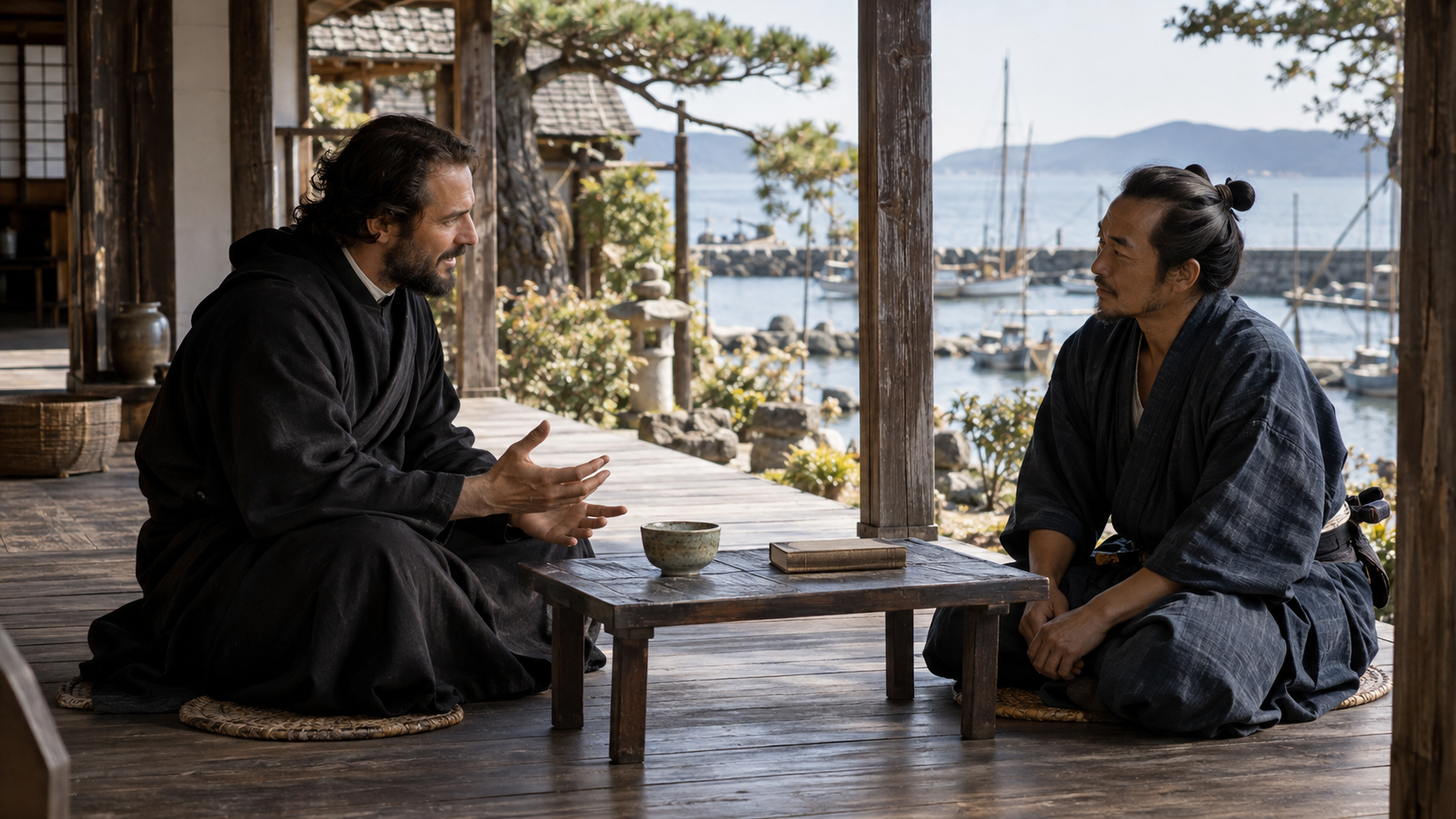
The city’s explanation identifies João Rodrigues as one of the Portuguese people who studied at the novitiate. He later wrote works including a grammar of Japanese. His connection introduces learning as an activity involving those arriving from abroad, rather than an account in which knowledge moved only in one direction toward the town.
The same municipal explanation describes Valignano himself learning about Japanese culture and Buddhism from Sōrin and Takayama Ukon. That relationship is retained with attribution. It does not provide a transcript of a lesson, or allow the narrative to invent the words spoken by any of the named participants.
Learning language and ways of life requires relationships over time. Considering sustained contact in a place of learning alongside the exchange of goods at a harbour broadens the picture of interaction. This is an interpretation connecting the institutional explanations, not a claim to recover one person’s otherwise unrecorded classroom experience.
The narrative therefore does not reenact a conversation or lesson. Following the relationships described by the city allows Usuki to be considered beyond a simple label of a town that received foreign culture. The anonymous people facing one another in the generated image are not authenticated portraits of Rodrigues, Sōrin or an actual historical meeting.
Chapter 08
Looking Again at an Image of a Building
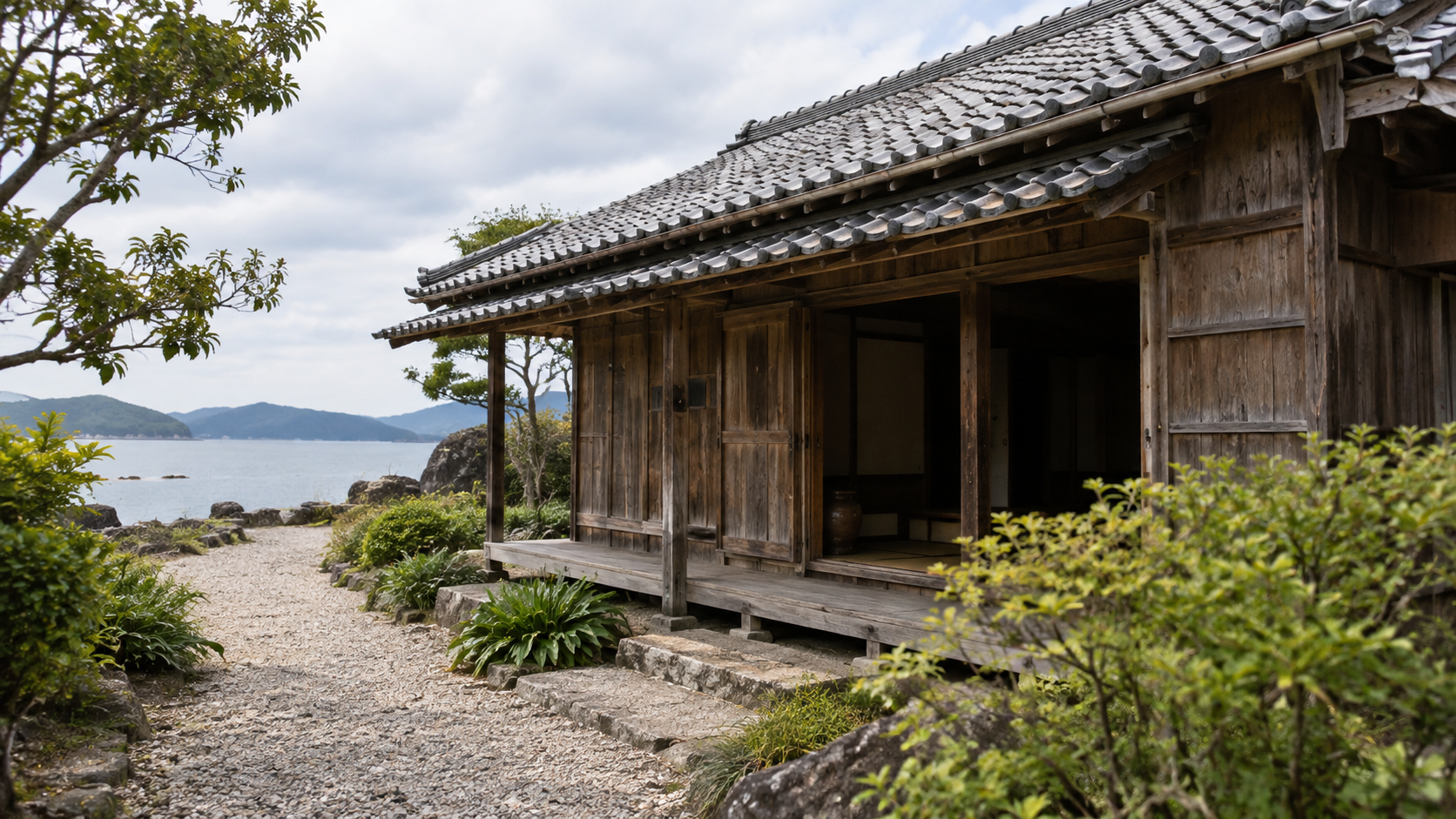
Knowing that a novitiate existed naturally raises questions about its appearance. A detailed surviving illustration and a measured record of the actual building, however, are not the same thing. A picture’s detail does not by itself establish where or how its maker acquired knowledge of the architecture it purports to show.
Usuki City’s mural explanation discusses engravings of seminaries and related buildings published in European books in the late sixteenth century. It introduces research identifying such images as imaginative representations. The narrative follows that explanation without claiming independent authentication of the original engravings or reproducing the collection images.
The present Sala de Usuki is likewise introduced by the tourism association as a place for exchange and historical display modelled on the noviciado. That is not a claim that a building from Sōrin’s period has survived unchanged. A contemporary interpretive facility and the historical institution it evokes belong to different times.
The recorded existence of an institution, a later or imagined picture and a modern explanatory facility each convey something different. This distinction also applies to the images in this article. The generated timber structure is neither a copy of a European engraving nor a precise reconstruction of the novitiate or of Sala de Usuki.
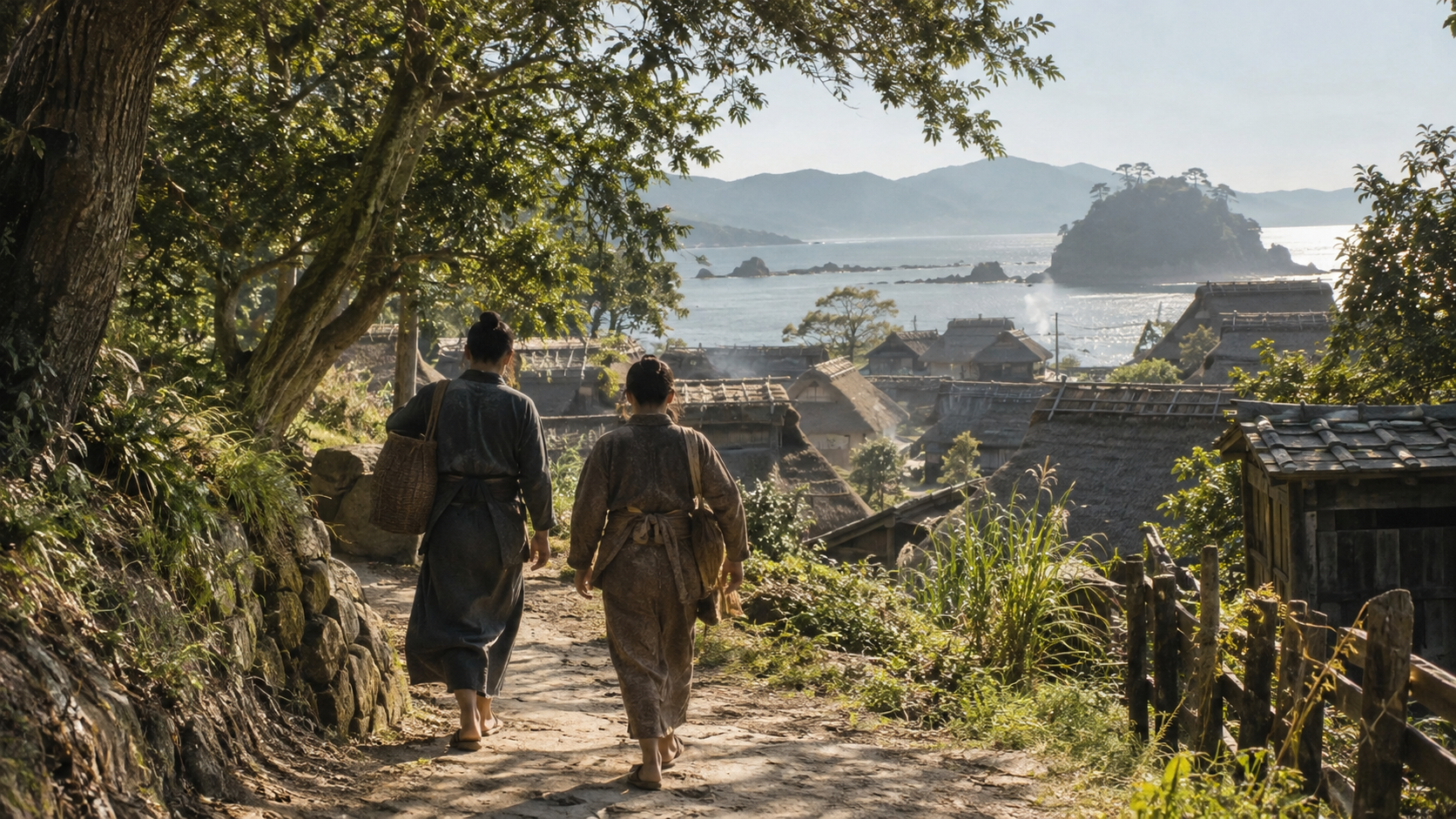
Chapter 09
Beyond Castle and Harbour: Traces of Faith
Attention now widens from castle and harbour to evidence of faith in the surrounding region. The Shimofuji Christian Cemetery lies in Nozu, within Usuki City. It offers a different approach to people’s lives from the actions of a ruler or the arrival of a ship. Those different kinds of evidence should not be treated as though they record the same activity.
The city’s cultural-property explanation describes local transmission and protection of the place as sacred, followed by excavations by the municipal Board of Education from 2010. A place preserved through community memory thus became connected with archaeological investigation. The date at which investigation began is separate from the historical period in which the cemetery was used.
The municipality explains that the remains have been reburied for preservation because keeping them exposed is difficult. Being invisible at the surface does not mean that the archaeological site has ceased to exist. This account follows the provider’s conservation description and does not promise a present visitor what remains they will be able to see.
A castle, imported goods and a regional cemetery preserve different forms of evidence. Their periods of use, investigation and heritage designation must also be distinguished. The accompanying scene broadens attention beyond the port, but does not show actual cemetery remains, gravestones or a reconstruction of the site.
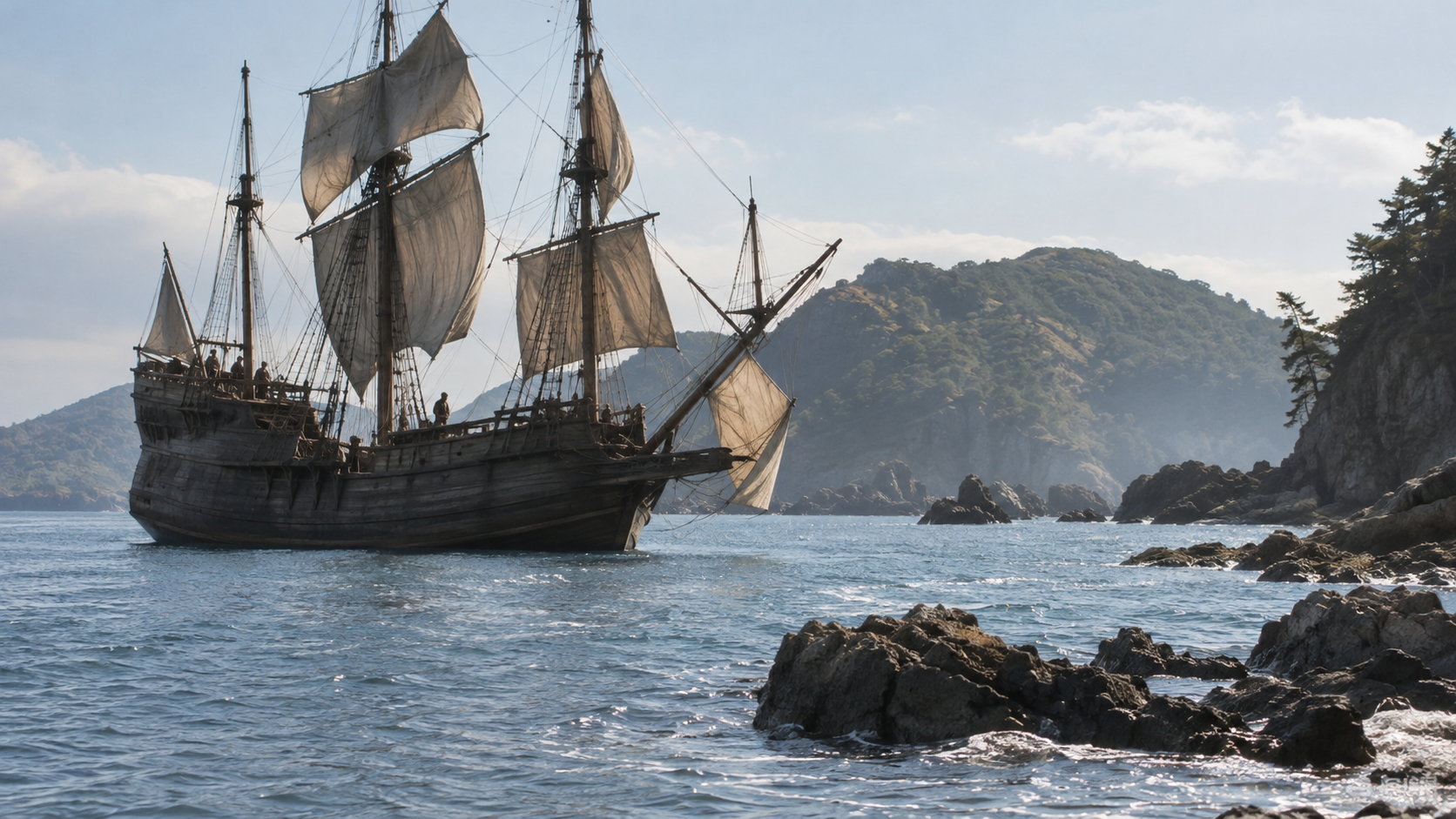
Chapter 10
A Ship That Arrived after Sōrin
In 1600, the Dutch ship Liefde arrived at Sashiu. Usuki City’s history names William Adams and Jan Joosten among those aboard. This introduces another point of overseas contact through the sea, but one with its own vessel, participants and date. It should not simply be folded into every earlier episode of Portuguese contact.
The Liefde cannot be shown as a ship welcomed by Sōrin. He died in 1587, before its arrival. The interval is decisive even if both episodes belong within a wider history of maritime relationships. A visually convenient meeting between the ruler and this vessel would create an event that the chronology makes impossible.
Contact with Portuguese people and the later arrival of a Dutch ship differ in both period and origin. Their shared relationship with the sea can be considered while retaining those distinctions. No exact hull form, route, landing arrangement or conversation with local people is reconstructed from the introductory history used here.
Placing every overseas connection in a single townscape would erase that sequence. Following who arrived and when allows the maritime history to continue beyond Sōrin’s lifetime. The generated sailing ship evokes an arrival from abroad; it is not a precise depiction of the Liefde or a documentary reconstruction of the shore in 1600.
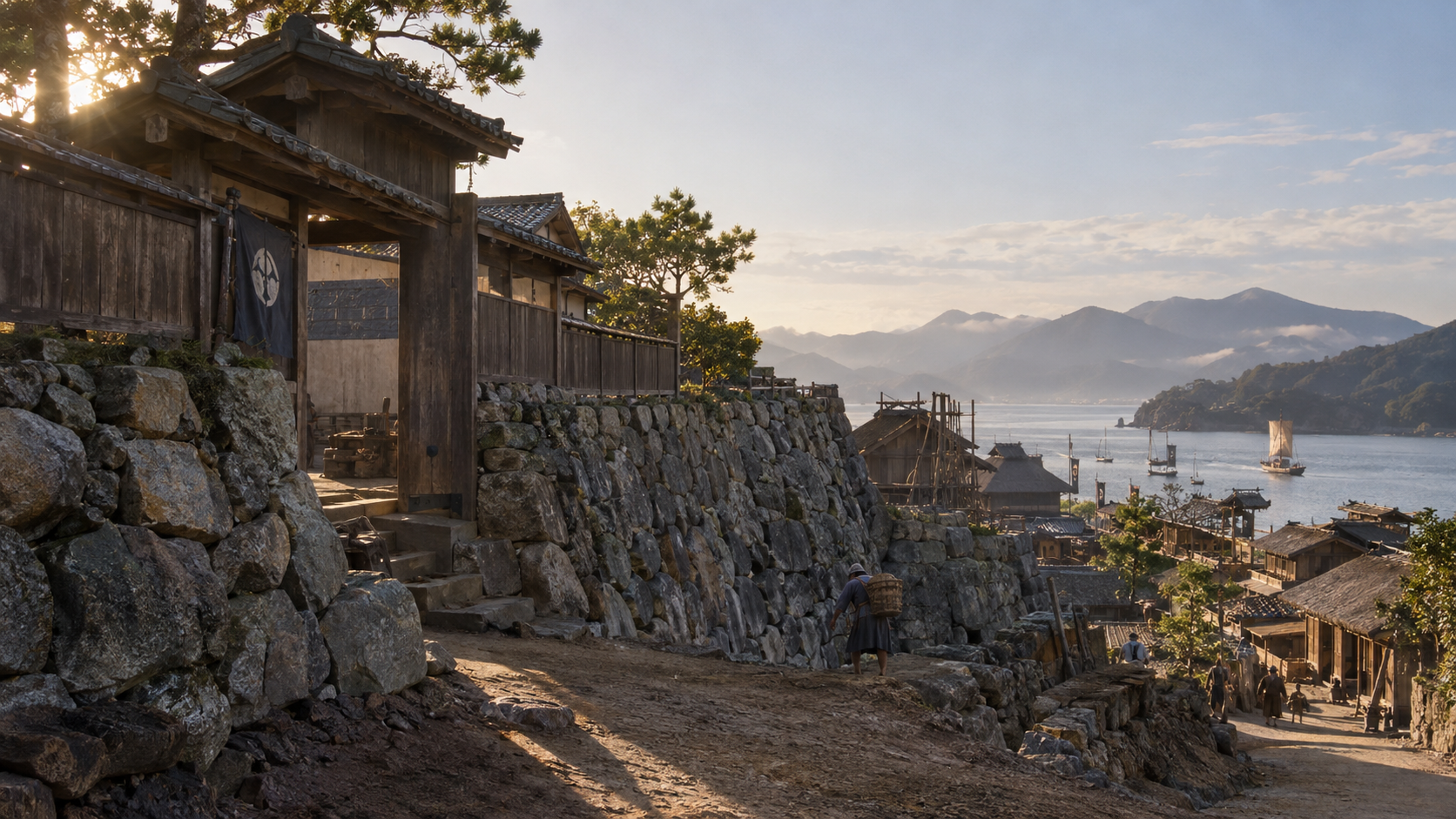
Chapter 11
A Town Layered with the Inaba Period
The castle also changed after Sōrin’s period. The Agency for Cultural Affairs’ heritage data describes stonework developed after the Ōtomo withdrew and expansion onto a sandbar as the third enclosure. The site’s later form therefore cannot be treated simply as the unchanged island castle of its original sixteenth-century builder.
Inaba Sadamichi entered Usuki in 1600. The municipal history explains that much of the townscape took shape under the Inaba. Sōrin’s period was not the only time that formed the town visible today. The coincidence in year with the Liefde’s arrival does not establish that the two events were one transaction or meeting.
Assigning every road, townhouse and castle wall to the sixteenth century would omit the work and lives of later people. From the maritime castle to the early modern castle town, changing rule and settlement accumulated at the same place. The historical account needs those layers rather than a single fixed view of an apparently old town.
A town retaining old features can contain work from several periods. Considering castle improvement and the formation of streets as changes over time keeps that history visible. The image of walls, a gate and a town by the sea is conceptual, not an authenticated gate, street plan or reconstruction of Sōrin’s founding-period architecture.
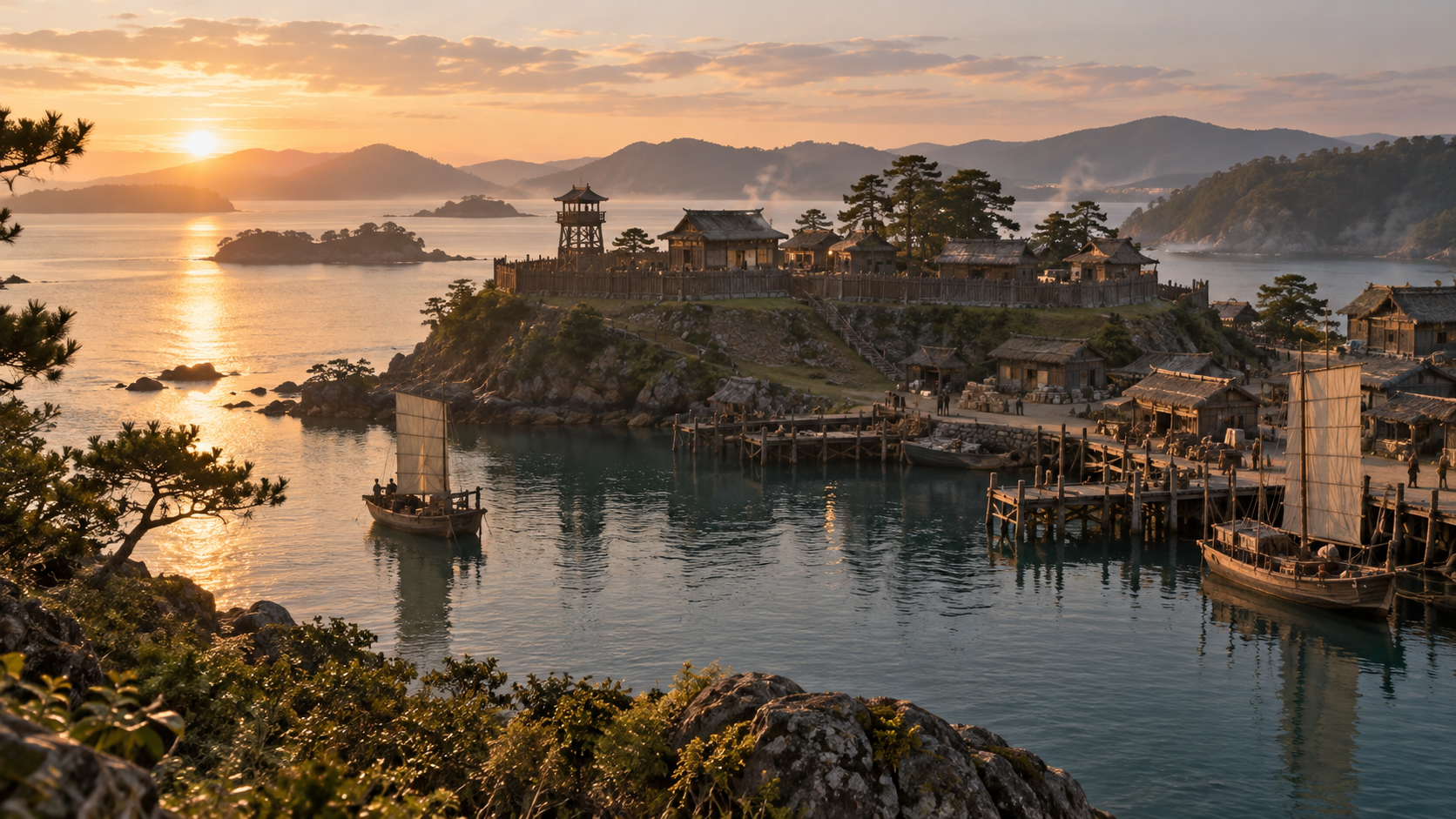
Chapter 12
Different Times in What Survives
Usuki Castle’s remains were designated a national historic site on 10 March 2025. That is a date of heritage recognition and protection, not the date the castle was founded. Keeping those kinds of date separate allows present efforts to care for a site to remain part of its history without being confused with its original construction.
The sea-surrounded castle, a town visited by merchants, a novitiate training missionaries, regional faith and a later castle town each had distinct functions and periods. Together they form Usuki’s history. No one element needs to absorb all the others, and no generated landscape can show all of them as though they belonged to one simultaneous moment.
Funai’s excavated goods and Usuki’s evidence, an imaginative engraving and a measured building, Sōrin-era contact and the later Liefde all require distinction. Retaining those differences makes the reach and duration of maritime connections clearer. It also identifies where further examination of original evidence would be needed beyond the institutional explanations consulted here.
The town received more than unusual objects. People arrived, learned languages, taught religion and lived there. Following castle defenses, movement through the sea and the later town’s form makes it possible to read several periods of Usuki’s relationship with the world together. The final conceptual view represents that inquiry, not a surveyed reconstruction of one historical date.
How to read this work
History, interpretation, and reconstruction
Separating the places and periods of castle, trade, education, faith and later townscape reveals several layers of Usuki’s overseas relationships.
This work is grounded in published sources and historical research. Interior thoughts, dialogue, and some visual details are cinematic reconstructions. Where historians disagree, the article presents the point as debated rather than settled fact.
Timeline
The story in time
-
Sōrin invited Xavier to Funai, distinct from an event in Usuki or his own later baptism.
Sources: s04 -
Sōrin received baptism.
Sources: s04 -
The Catholic Diocese of Ōita’s historical-site introduction gives this as the foundation year of the Usuki novitiate.
Sources: s11 -
Sōrin died, before the Liefde’s arrival in 1600.
Sources: s04 -
The Liefde arrived at Sashiu; in the same year Inaba Sadamichi entered Usuki.
Sources: s02 -
The municipal Board of Education excavated the Shimofuji Christian Cemetery; the city explains that the remains have been reburied for preservation.
Sources: s07 -
The cemetery was designated a national historic site; the designation date is distinct from its historical use.
Sources: s09
People & terms
A guide for new readers
Key figures
- Ōtomo Sōrin
- The Ōtomo ruler who built the island castle; protection of missionary activity and his baptism in 1578 are separate events.
- Francis Xavier
- Invited by Sōrin to Funai in 1551.
- Alessandro Valignano
- The Jesuit visitor associated with the Usuki novitiate and the college at Funai.
- João Rodrigues
- Introduced by Usuki City as having studied at the novitiate; later wrote works including a Japanese grammar.
- Inaba Sadamichi
- Entered Usuki in 1600.
- William Adams
- A passenger aboard the Liefde when it arrived in 1600.
- Jan Joosten
- Another Liefde passenger named by Usuki City.
Glossary
- Usuki 臼杵
- The maritime castle and town followed here through distinct periods of defense, contact, learning and later settlement.
- Funai 府内
- The separate Ōtomo-related city in present-day Ōita City; its port and excavated objects are not transferred to Usuki.
- Funai’s port 沖の浜
- The port at Funai introduced by Ōita City in its account of contact with Portugal.
- Nanban trade 南蛮貿易
- The historical label associated with maritime contact involving Europeans; the account also retains Asian connections and different dates of arrival.
- Noviciado ノビシャド
- The novitiate at Usuki associated with training missionaries, distinct from Funai’s collegio.
- Collegio コレジオ
- The higher seminary at Funai described by the municipal explanation; not another name for the Usuki novitiate.
- Jesuit visitor 巡察師
- The role associated here with Valignano and the educational institutions described by the city.
- Azulejo アズレージョ
- Decorative tile work; the modern mural’s explanatory text is consulted without copying its images.
- Shimofuji Christian Cemetery 下藤キリシタン墓地
- A site in Nozu whose community transmission, excavations, conservation and designation have different dates.
- Sashiu 佐志生
- The place named in Usuki City’s history for the Liefde’s arrival in 1600.
- Liefde リーフデ号
- The Dutch ship arriving after Sōrin’s death, with Adams and Joosten among its passengers.
- Inaba period 稲葉氏の時代
- The later phase associated with the formation of much of Usuki’s townscape, beginning with Sadamichi’s entry in 1600.
- Third enclosure 三の丸
- The castle expansion onto a sandbar described by the national heritage data, distinguished from the original island setting.
- Historic-site designation 史跡指定
- Modern heritage recognition; its date is not a construction date or the period in which a cemetery was used.
Sources & method
How this article was built
This English narrative translates the fixed Japanese article and retains all ten source identifiers in their original order, including the gap in the numbering. English titles are editorial translations. Background explains places, religious educational terms and chronological distinctions without adding new dialogue, private motives or exact trade statistics.
The sources consulted are institutional historical explanations, archaeological collection introductions, heritage data and modern interpretive descriptions. Imported goods introduced as Funai finds are not described as Usuki discoveries. Collection photographs, mural images, European engravings, original texts and individual excavation objects were not independently authenticated or reproduced here.
Attribution is retained for the diocese’s 1580 date and the municipal account of cultural learning. The city’s description of research identifying imaginative engravings is not presented as a new independent examination of those prints. A present facility modelled on the noviciado is distinguished from a surviving original building.
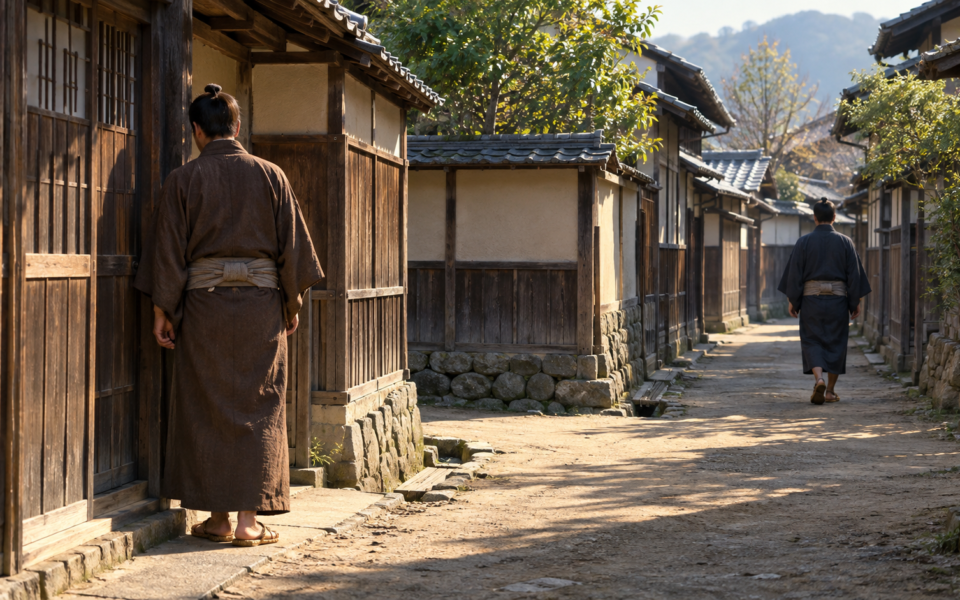
All images retain SHIGEKI’s AI-generated explanatory scenes and matching rights and bytes from the Japanese article. Anonymous people are not authenticated portraits. Ships, shorelines, gates, schools and streets are conceptual rather than exact site reconstructions. The image used with the cemetery discussion does not show original gravestones or excavated remains.
Municipal archive and cultural-property pages are grouped under Usuki City, while Ōita City, Ōita Prefecture and the Agency for Cultural Affairs retain their separate institutional identities. The tourism association and Catholic diocese are identified as their own providers. Individual departments, pages and heritage listings are not multiplied into additional independent publishers.
Sources
References and further reading
- Usuki Castle Remains 臼杵城跡 Title translated editorially for reader convenience. Usuki City 臼杵市 Earlier municipal explanation of the island’s sea and rock defenses and differing construction dates; current designation checked through the heritage data and municipal list. Accessed 2026-10-19
- History of Usuki City 臼杵市・歴史 Title translated editorially for reader convenience. Usuki City 臼杵市 History of Ming and Portuguese merchants, the Liefde and Inaba Sadamichi in 1600, and the later period of much of the townscape. Accessed 2026-10-19
- Explanation of the Azulejo Mural アズレージョ壁画解説 Title translated editorially for reader convenience. Usuki City 臼杵市 Modern mural explanation of noviciado and collegio, cultural learning and research on imagined European engravings; mural images not reproduced. Accessed 2026-10-19
- Ōtomo Sōrin and His Times 大友宗麟とその時代 Title translated editorially for reader convenience. Ōita City 大分市 Funai and its port, Xavier in 1551, baptism in 1578 and death in 1587; inconsistent relative anniversary wording not adopted. Accessed 2026-10-19
- BVNGO Ōtomo Museum BVNGO大友資料館 Title translated editorially for reader convenience. Ōita Prefecture 大分県立埋蔵文化財センター Archaeological Center introduction to imports from Ming China and Southeast Asia found at Funai, not evidence of excavation at Usuki. Accessed 2026-10-19
- Nationally Designated Cultural Properties in Usuki 臼杵市内の文化財・国指定 Title translated editorially for reader convenience. Usuki City 臼杵市 Cultural-property explanation of cemetery traditions, investigation from 2010 and reburial for conservation. Accessed 2026-10-19
- Usuki Castle Remains: Heritage Data 臼杵城跡・文化庁データ Title translated editorially for reader convenience. Agency for Cultural Affairs 文化庁・文化遺産オンライン Cultural Heritage Online explanation of later stonework and enclosure expansion and the 10 March 2025 designation. Accessed 2026-10-19
- List of Nationally Designated Cultural Properties in Usuki 臼杵市・国指定文化財一覧 Title translated editorially for reader convenience. Usuki City 臼杵市 Official designation dates for the cemetery and castle, distinguished from their periods of historical activity. Accessed 2026-10-19
- Sala de Usuki サーラ・デ・うすき Title translated editorially for reader convenience. Usuki City Tourism Association 一般社団法人臼杵市観光協会 Association introduction to a present interpretive and exchange facility modelled on the noviciado; not evidence of an unchanged surviving sixteenth-century building. Accessed 2026-10-19
- Christian Graves: Catholic Diocese of Ōita 掻懐のキリシタン墓群・カトリック大分司教区 Title translated editorially for reader convenience. Catholic Diocese of Ōita カトリック大分司教区 Religious institution’s site introduction used for its account of the novitiate’s establishment in 1580; not a basis for exact building appearance. Accessed 2026-10-19
Continue reading
More stories from Shigeki
Shigeki English
Sakai’s Merchant City: Trade, Self-Government and Survival
A port, a merchant council and town communities—from changing authority to rebuilding after fire.
- When From the later fifteenth century through the Sengoku period, the fire of 1615 and early Edo-period reconstruction.
- Where Sakai, in present-day Osaka Prefecture, where maritime routes met roads on land.
Shigeki English
The Aburanokōji Incident: After Leaving the Shinsengumi
A separation in spring, a new base in summer, and two successive attacks.
- When Kyoto in Keiō 3 (1867). The incident’s historical date corresponds to December 13, 1867.
- Where Kyoto: the guards’ successive bases, the Aburanokōji attack site and the later place of remembrance.