
SHIGEKI ENGLISH STORYEN
Japanese history in English
The Shimazu Retreat: Beyond the Breakthrough, a Road Home to Satsuma
Those who faced pursuit, those who stayed beside the commander, and those who returned by another path: follow the time after the battlefield.
In 1600, leaving Sekigahara still left the Shimazu force a journey home. Yoshihiro and Toyohisa’s different roles, published documents recognizing service during the return, and an account of Nejime Shigehira’s survival reveal a retreat continuing beyond the breakthrough.
At a glance
Before you enter the story
- When
- Sekigahara in 1600; dates in the Keichō-era historical calendar; later transmission, modern publication and present-day regional connections.
- Where
- Sekigahara and Kamiishizu; mountainous country toward Ōmi; the provinces named in the service document; the return toward Satsuma in southern Kyushu.
- Key figures
- Shimazu Yoshihiro, Shimazu Toyohisa, Nejime Shigehira
- What was at stake
- How a commander’s return depended on different kinds of work, and how documents and local traditions preserve different accounts of the journey.
Why this story matters
The larger history behind the turning point
The breakthrough is only one stage in the account of a return. Attending to pursuit, accompaniment, separation and later correspondence reveals work and experiences that disappear when a story ends at the battlefield. Recognizing the different kinds of evidence also preserves uncertainty without erasing what the surviving record does tell us.
Historical context
What an international reader needs to know
A battlefield and a distant destination
For readers unfamiliar with Japanese place names, the museum locates the Sekigahara battlefield in Gifu Prefecture, while the return destination Satsuma belongs to southern Kyushu. The local guides and Kagoshima documents concern different parts of a journey, not one small battlefield landscape. Hioki’s municipal explanation connects these distant regions through places associated with Yoshihiro.
Eastern Army and Western Army are the conventional labels used in the Japanese source’s account of the opposing forces. Here their relevance is specific: the collapse of the Western Army provides the setting for the Shimazu force’s breakthrough through the Eastern Army. This article does not expand that setting into an unsupported account of every alliance or the whole campaign.
Calendars, service and the limits of a route
Dates written with the Japanese era name Keichō retain the month and day of the calendar then used. The guide explicitly supplies a Gregorian conversion for the battle: October 21, 1600. That conversion does not authorize treating the letters’ tenth-month dates as Gregorian October dates, or converting Shigehira’s return without further evidence.
Service in the documents includes remaining beside the commander through the return. A grant expressed in koku concerns land income in the edition’s wording; no modern monetary equivalent is calculated. Likewise, historical province names in a list do not establish a day-by-day itinerary. The article explains terms needed to read the record while keeping its limits visible.
Watch the film
See the story in motion
The film currently uses Japanese audio. This English article provides the context and source trail; it does not imply that an English subtitle track is available.
Chapter 01
Beyond the enemy line
Breaking through an enemy force to withdraw from a battlefield: this apparently contrary movement is often the first image evoked by the Shimazu retreat. At Sekigahara in 1600, the museum’s account describes Shimazu Yoshihiro’s force passing through the center of the Eastern Army after the collapse of the Western Army.
Yet the far side of that breakthrough was not Satsuma. Pursuers were nearby, and a further journey lay ahead. Moving our attention beyond the striking moment of escape reveals the work that still had to be done to get home. Leaving the battlefield and completing the return were different stages.
Documents preserved in a published collection praise service at Sekigahara alongside service given without leaving the commander’s side during the return journey. Military accomplishment was not located solely in a moment of confronting an enemy. Accompanying the commander along the road also counted as work worthy of recognition.
This article brings together local accounts of the breakthrough and pursuit, a historical document edition published by Kagoshima Prefecture, and a municipal account of one man who returned by another path. Following the time that continued after Sekigahara, it reads the retreat as an episode extending toward a return to Satsuma.
Chapter 02
Yoshihiro and Toyohisa: different roles
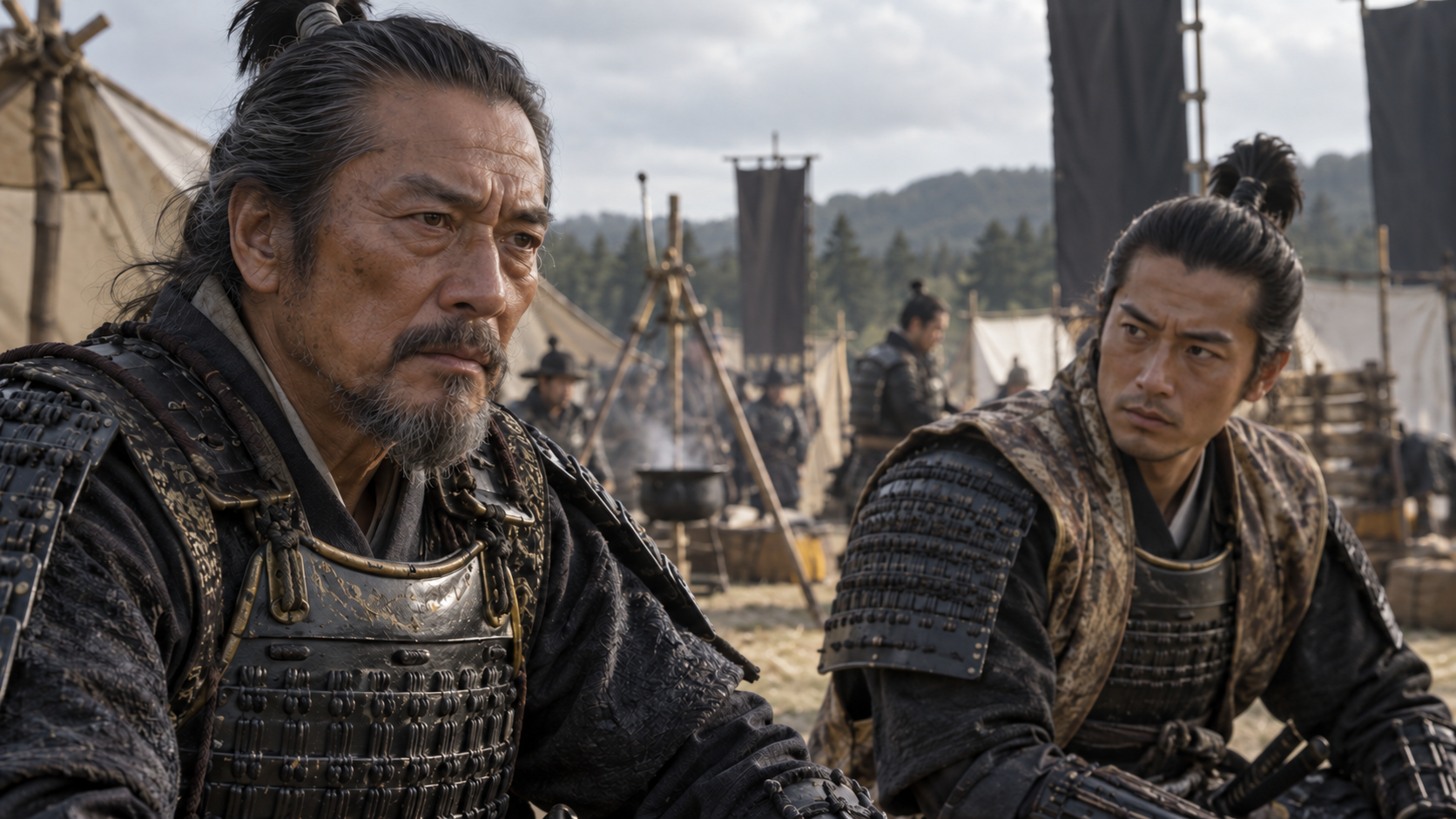
Yoshihiro’s nephew Shimazu Toyohisa was with him. The Gifu Sekigahara Battlefield Memorial Museum describes the two and their companions as establishing a position with about 1,500 troops. That approximate number describes a force containing both its commander and the people serving around him; it does not erase their different roles.
The Reimeikan introduction gives Yoshihiro’s lifespan as 1535–1619. His military career included southern Kyushu, the campaigns in Korea and Sekigahara. He therefore reached the battlefield in 1600 with a long record of experience. That background places him in time without supplying his unrecorded thoughts on the day.
Toyohisa, meanwhile, is described as moving from the vanguard of the breakthrough to the rearguard facing pursuit. The Japanese term shingari denotes the role at the rear of a withdrawing group. Simply placing the two names together does not show how their positions and responsibilities differed during the movement.
Yoshihiro returning and everyone in his force returning are not equivalent outcomes. Before hurrying toward the commander’s arrival home, we need to consider who went forward and who took responsibility for the rear. The story of a force contains more than the destination reached by its leader.
Chapter 03
The battlefield after the outcome was decided
The battle date is the fifteenth day of the ninth month of Keichō 5, in the calendar then used in Japan. The Kamiishizu guide map published by Ōgaki City also gives its Gregorian equivalent, October 21, 1600. Checking the calendar matters as much as checking the year: the ninth month is not automatically September.
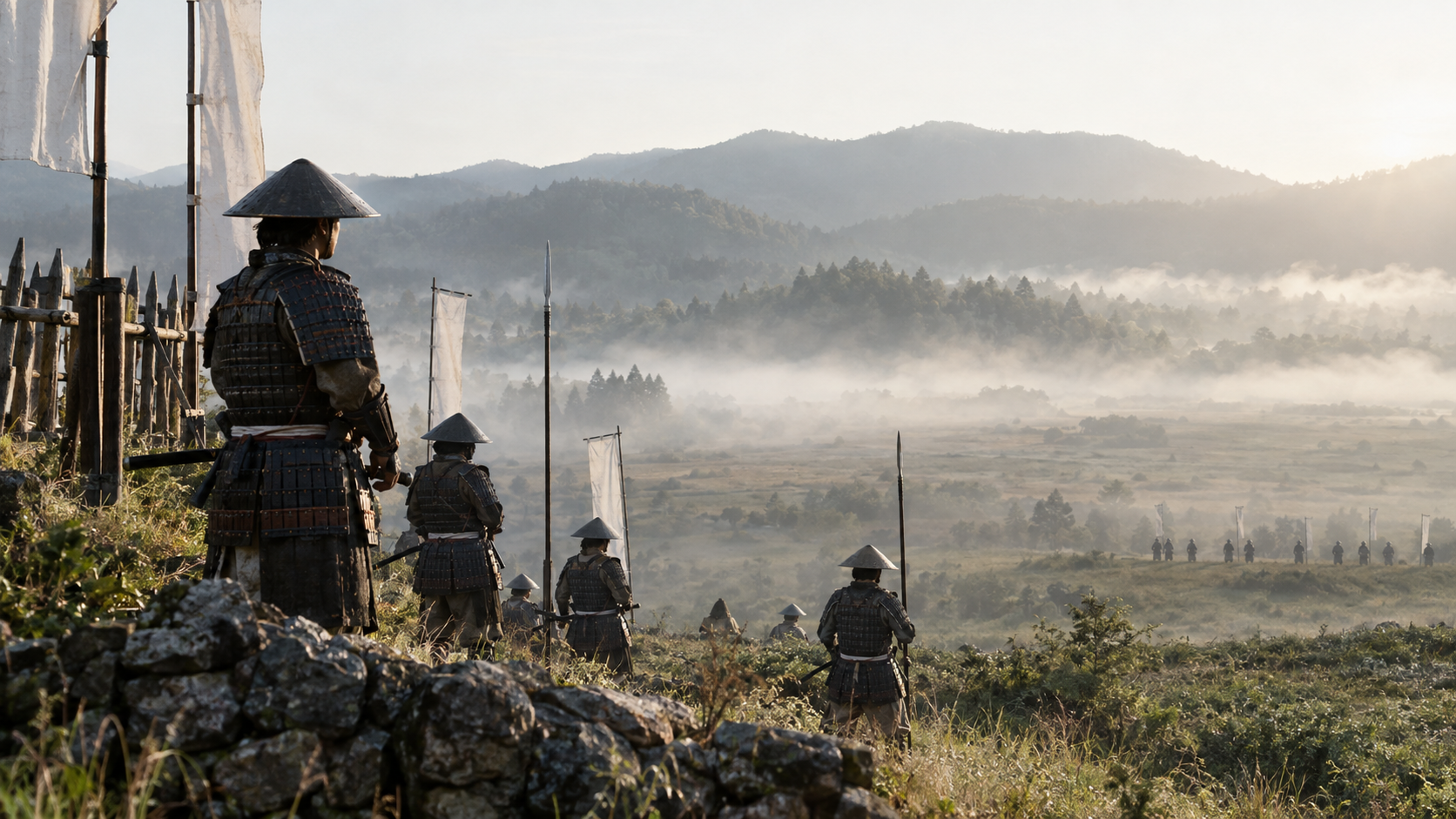
The museum summarizes the Shimazu force as remaining on the defensive during the morning and breaking through the enemy when the Western Army collapsed. Conditions changed around the position they had held. The point at which victory and defeat were decided was followed, on the same battlefield, by the problem of finding a way to return alive.
Knowing the result at Sekigahara does not tell us every subsequent action of the people who were there. Ending the account with the battle’s outcome leaves the defeated force’s movement and the pursuers’ actions outside the story. A military result and the experiences following it require attention on their own terms.
The materials used here do not reconstruct the orders exchanged by each participant or their feelings at a particular instant. Even without such additions, the accounts of changing conditions and movement provide a basis for understanding the retreat as something that continued after the outcome had been decided.
Chapter 04
Withdrawing by moving forward
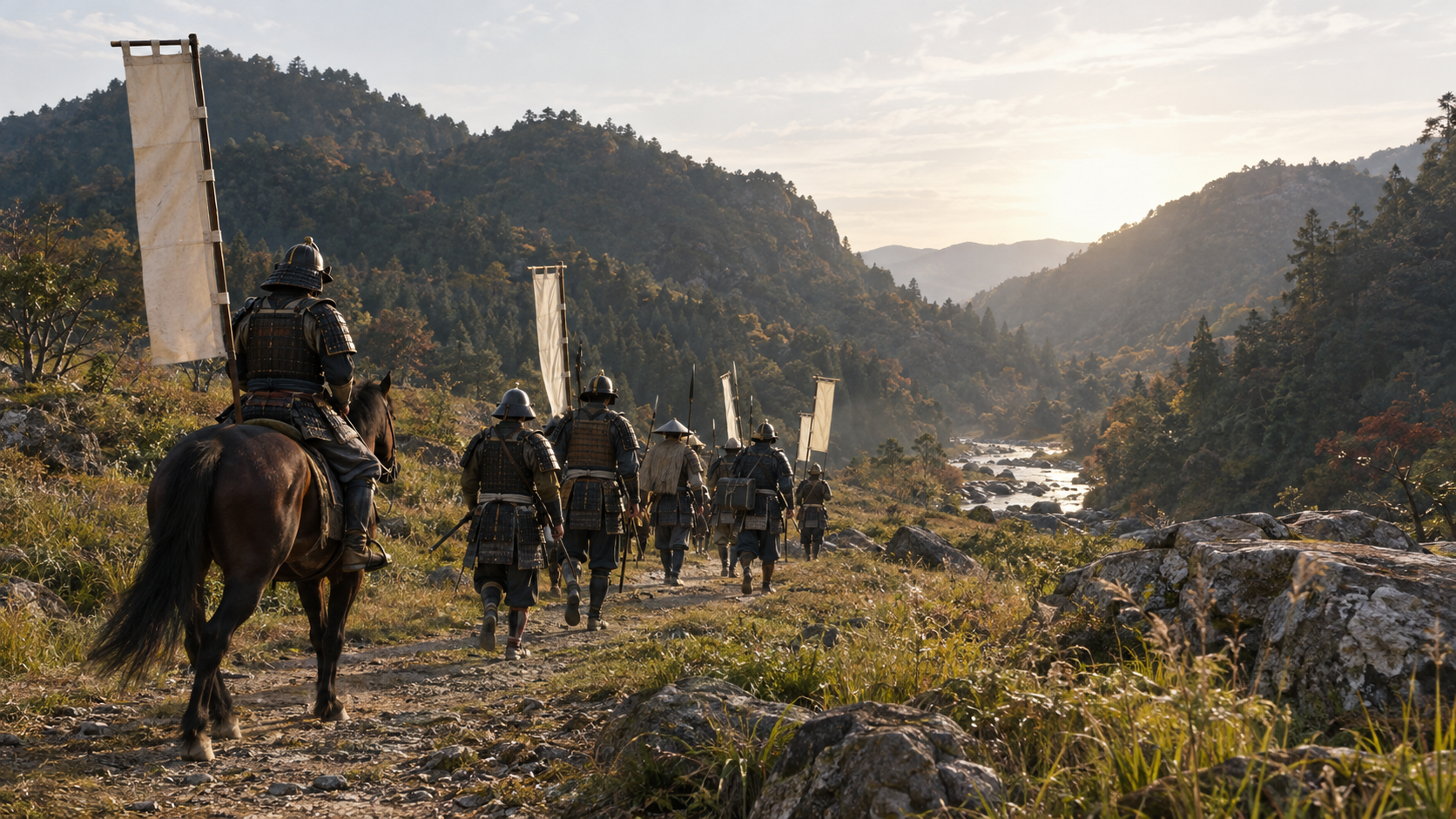
Retreat can suggest retracing the road by which a force arrived. The Kamiishizu guide instead describes the Shimazu action as a forward retreat. Passing toward and through the enemy became a movement for leaving the battlefield. The direction of motion alone does not explain what that motion was intended to accomplish.
Here, forward does not simply mean continuing an attack toward victory. It also describes a way of moving out of the battlefield and toward a route home. Treating advance and withdrawal as uncomplicated opposites makes it harder to understand the particular movement remembered as the Shimazu retreat.
The guide’s map depicts a movement from the army’s position toward Kamiishizu. The same sheet also explains that routes are disputed and that the guide is constructed principally from local historical materials and traditions. An easily understood line on a map still needs to be read with the character of its evidence in mind.
That line should not become a record establishing every individual’s footsteps. A breakthrough was followed by continued movement toward home. We can grasp this broad sequence while reading individual routes only as far as the supporting material allows. The clarity of a map is not proof that every detail has been settled.
Chapter 05
Those moving on, and those covering the rear
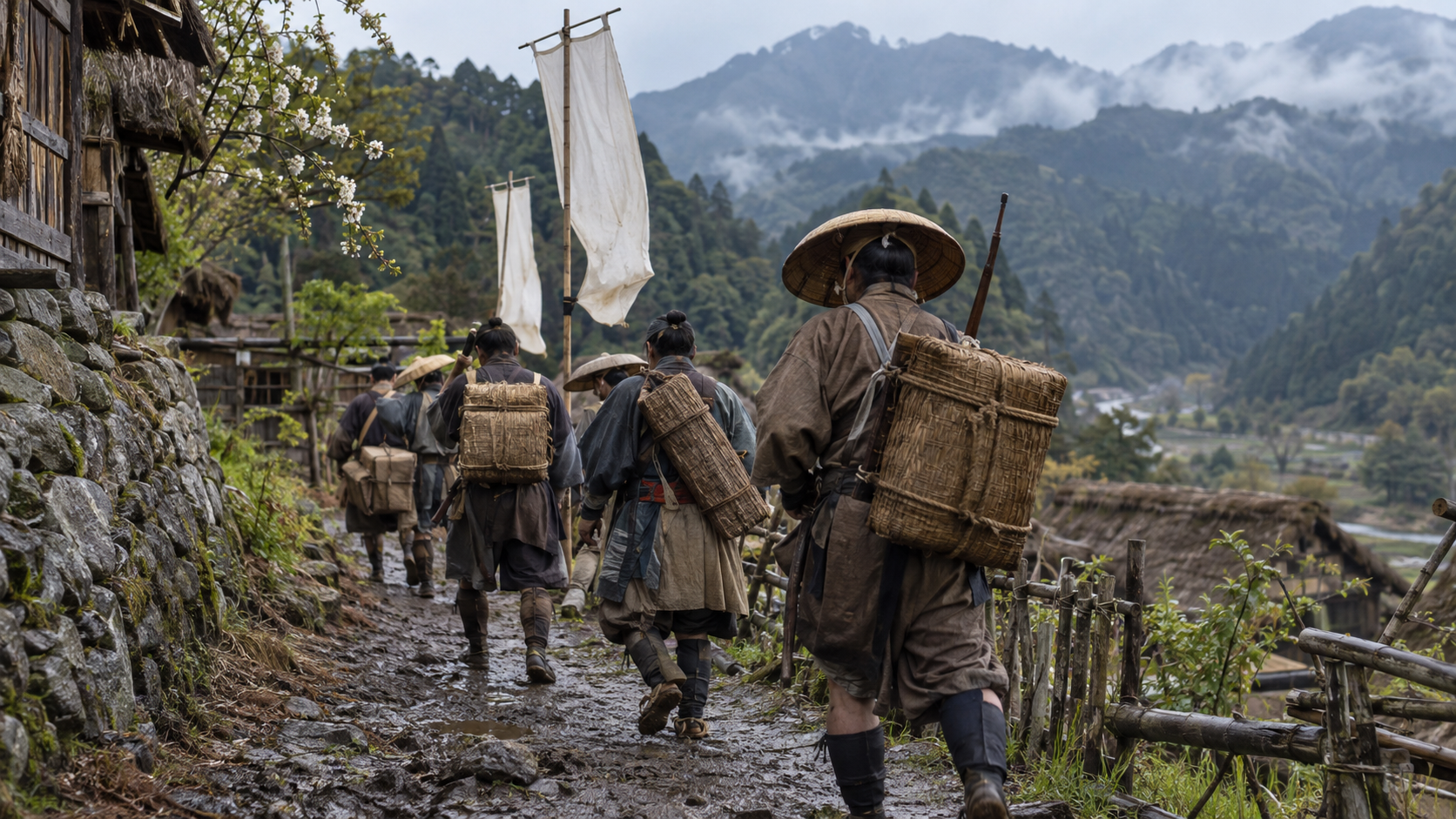
As the withdrawing group moved ahead, pursuit followed behind it. Matsudaira Tadayoshi, Ii Naomasa and Honda Tadakatsu appear in the museum’s explanations of the sites. Passing out of the battlefield did not, in itself, bring the relationship with the pursuing side to an end.
The same account describes Toyohisa, previously at the front, becoming the rearguard around Utōzaka and facing pursuit. His position shifted from opening the way to taking responsibility for the rear. Within the movement of a single force, the work assigned to a person could change.
Drawing an army as one arrow can make it appear that everyone moved in the same direction at the same speed. Considering the people who remained to protect the withdrawing group divides that single line into several kinds of work. Movement depended on relationships between people occupying different positions.
Yoshihiro’s departure from the battlefield should therefore not be told as the product of his efforts alone. Looking at those who moved on alongside those who faced the pursuers offers an entry into considering the roles supporting the return, and the costs attached to those roles.
Chapter 06
Reading the term sutegamari
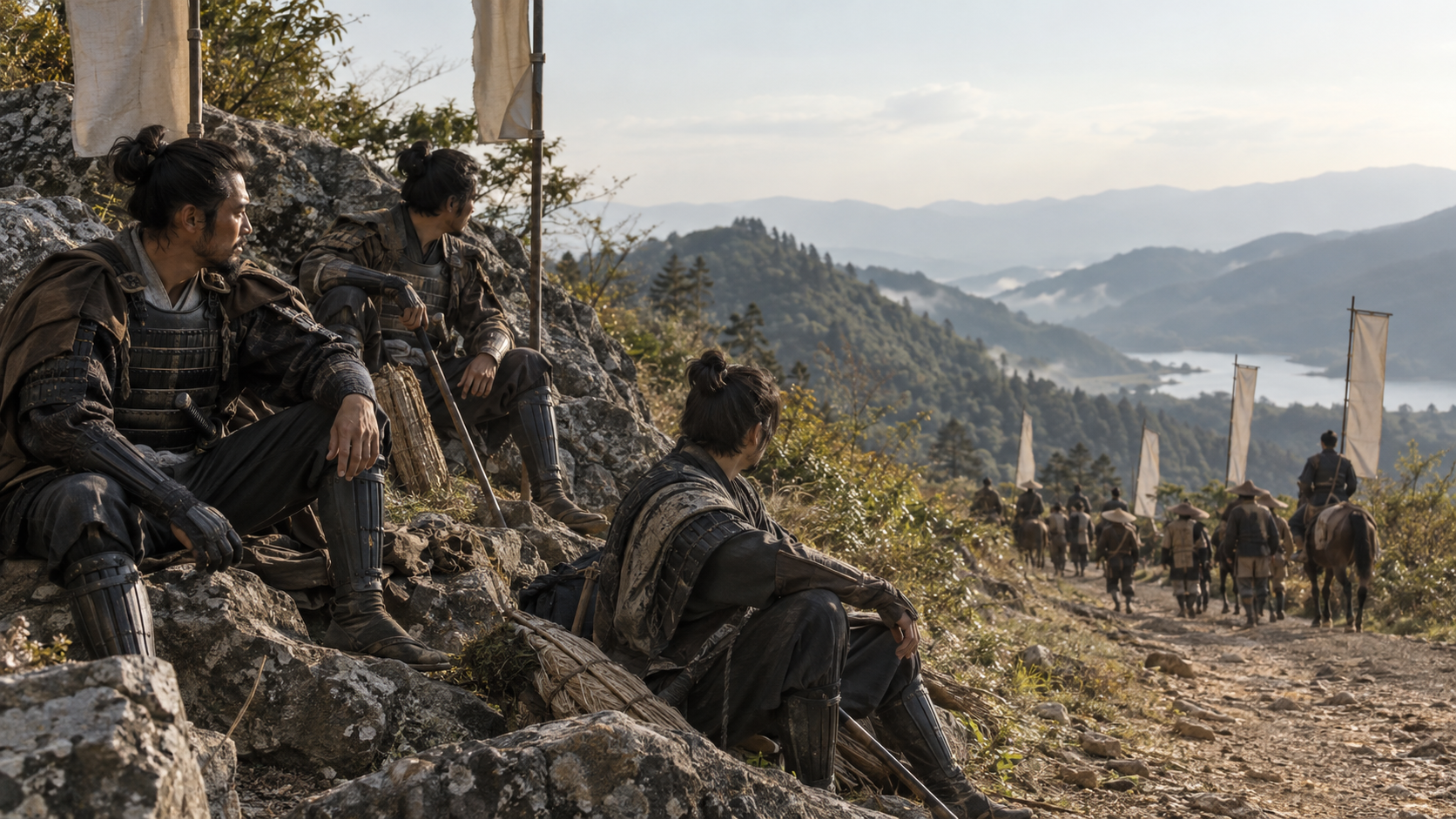
The Kamiishizu guide explains sutegamari as a way of fighting in which small units were left behind during withdrawal to delay pursuit. The term often appears in accounts of the Shimazu retreat. Understanding it begins with the relationship between the withdrawing force and the people remaining behind.
Those at the rear took on the task of giving the main force time to move away. Considering that relationship reveals different roles within the apparently single outcome of a return. Beyond the forceful impression of the name, the question is what work the action supported.
A familiar name does not mean that the number of people, formation or command at every location is known with equal certainty. This article adds no account of who aimed a firearm at a particular instant or what final words someone spoke. A general explanation of the action is not a complete reconstruction of each encounter.
Viewed only from the side of those who returned, the role of people left behind can shrink to a brief explanation. Reading sutegamari also means keeping the story open beyond the successful outcome and asking who undertook which responsibilities on the way toward it.
Chapter 07
Accounts of Toyohisa’s death do not converge
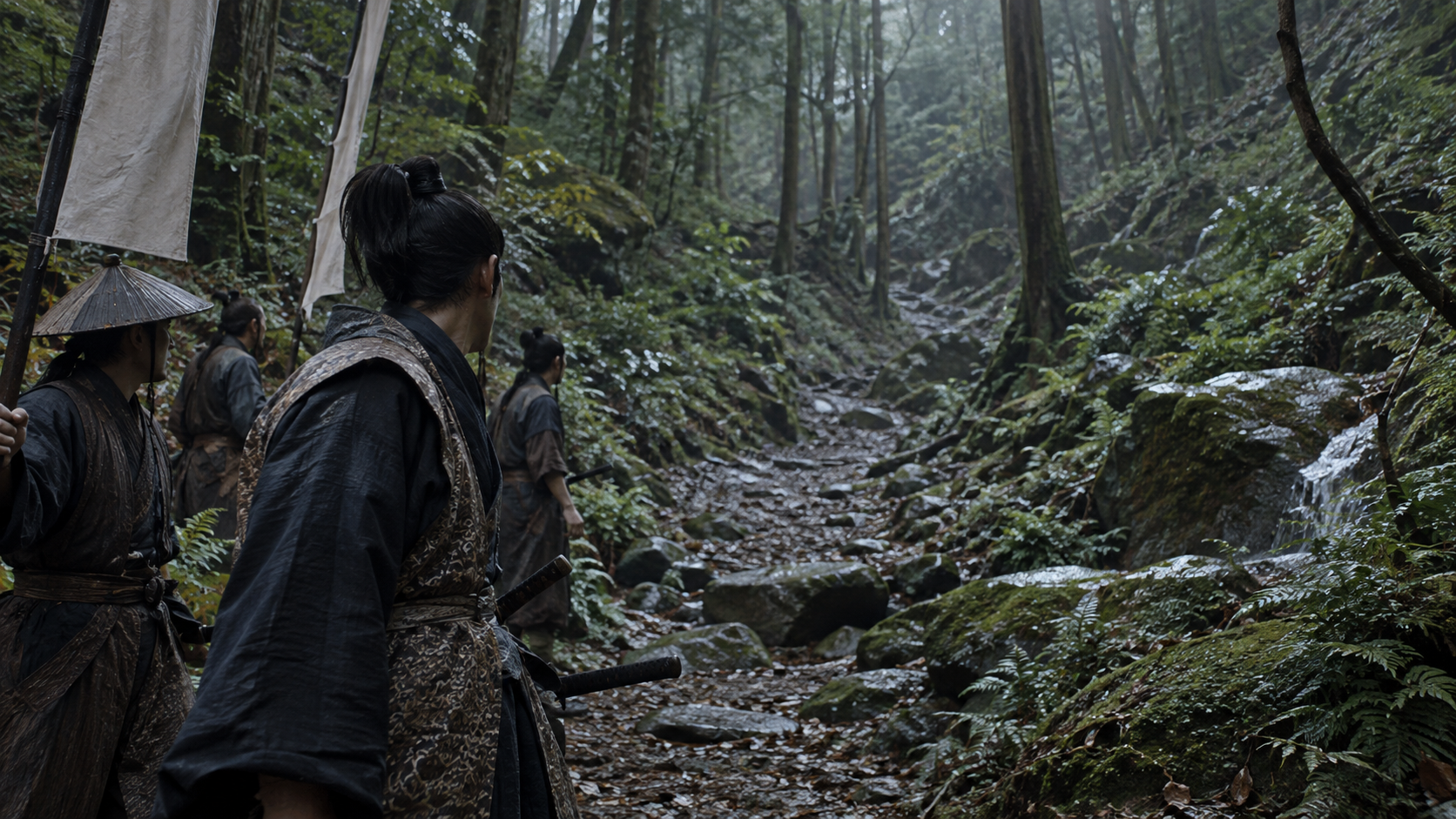
Descriptions of Toyohisa’s final moments do not agree. The museum notes an account in which he fought pursuers near Utōzaka and died amid the melee. Its qualification—that this is also said to have happened—needs to remain visible. An account introduced with uncertainty should not emerge from translation as an established scene.
The Kamiishizu guide presents another sequence: a seriously wounded Toyohisa continued farther and took his own life in Shirabyōshidani. The sheet also explains that his end was transmitted through a document sent to a temple by a later descendant of the local Miwa family. That later transmission is part of the account’s character.
There is no need to join these explanations into one final scene supposedly witnessed by everyone. The museum’s account can stand beside the guide’s account of local documents and traditions. Their difference is itself material for considering how Toyohisa’s death has been remembered and communicated.
The presence of a monument or grave today must also be distinguished from direct certainty about the moment of death. Visiting a commemorated place and investigating what happened on the day are connected activities. They do not, however, reach their conclusions through precisely the same evidence.
Chapter 08
Across the mountains, toward the road home
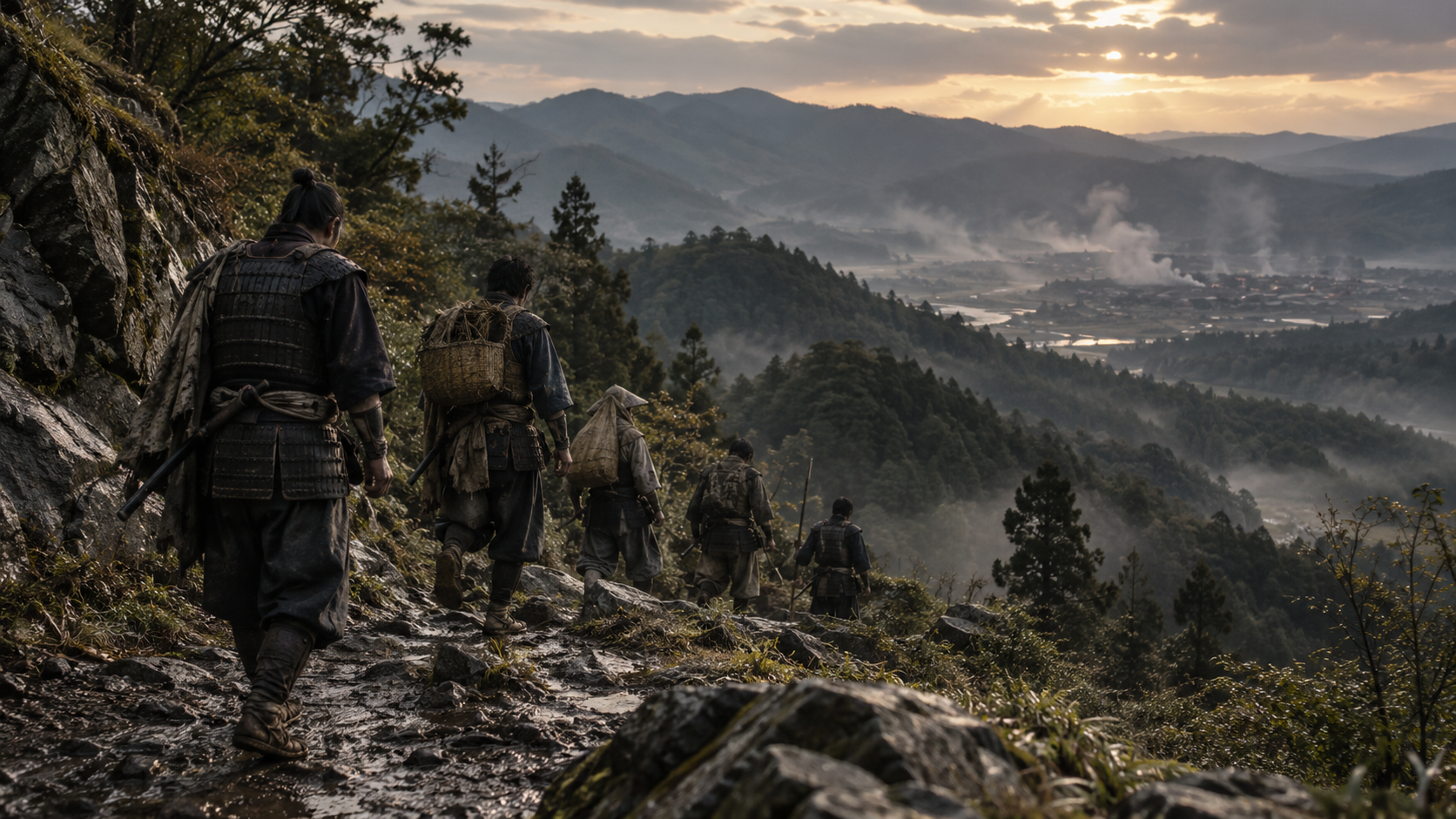
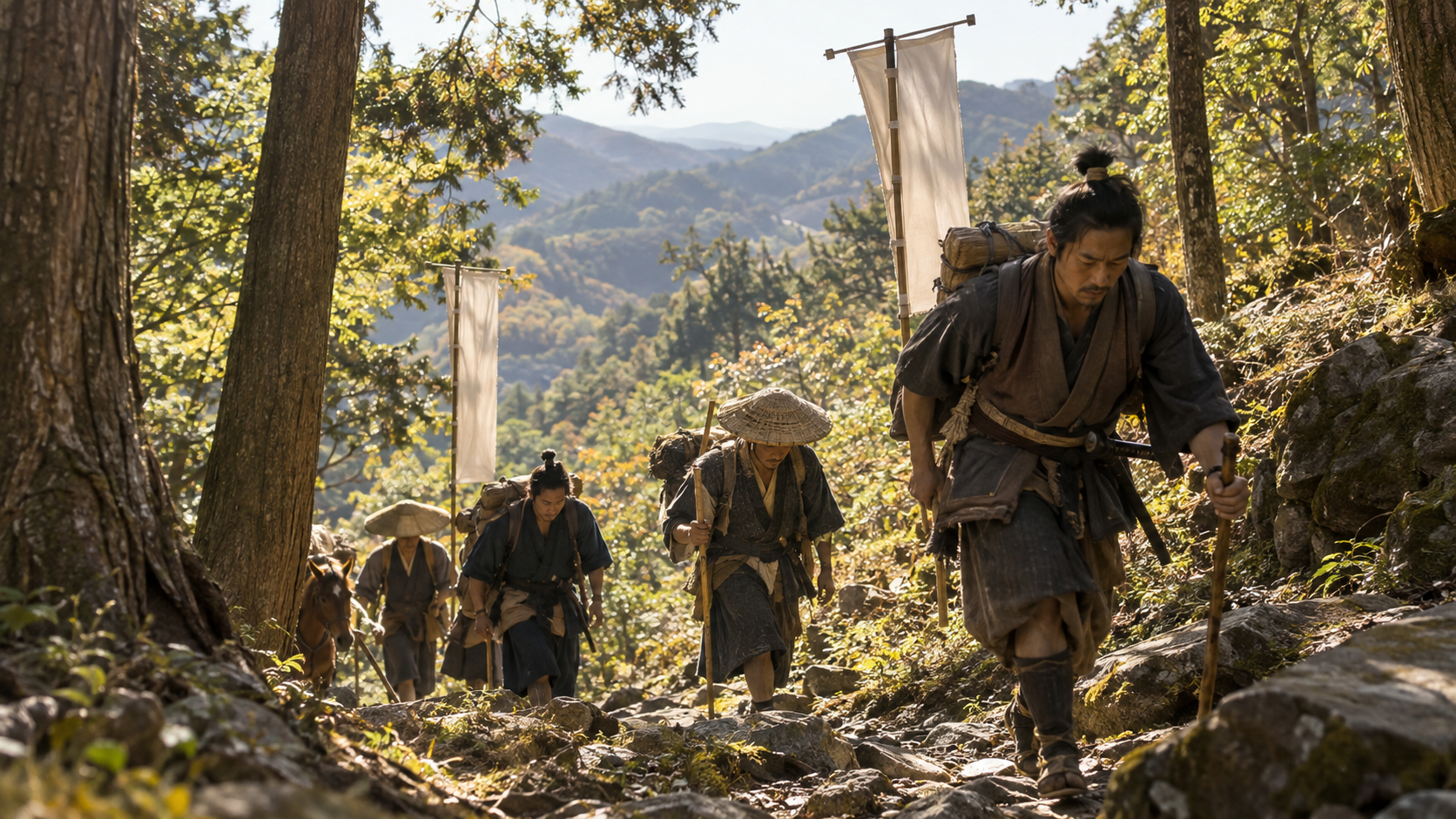
After passing beyond the immediate battlefield, Yoshihiro’s main force continued moving. The Kamiishizu guide indicates a passage through mountainous country toward Ōmi. Even on its map, the path of the main force is drawn separately from the path associated with Toyohisa and his companions.
When reading a map, first ask whose movement it represents. Once a force divided, the places its members subsequently passed and the stories attached to those places could differ. Fitting everyone into a single road home conceals that difference instead of explaining it.
The museum’s present-day 63-kilometer course is a circuit designed for cycling. Its modern distance cannot be used as the marching distance of the main force in 1600. The possibility of visiting associated places on today’s roads does not establish a complete historical itinerary.
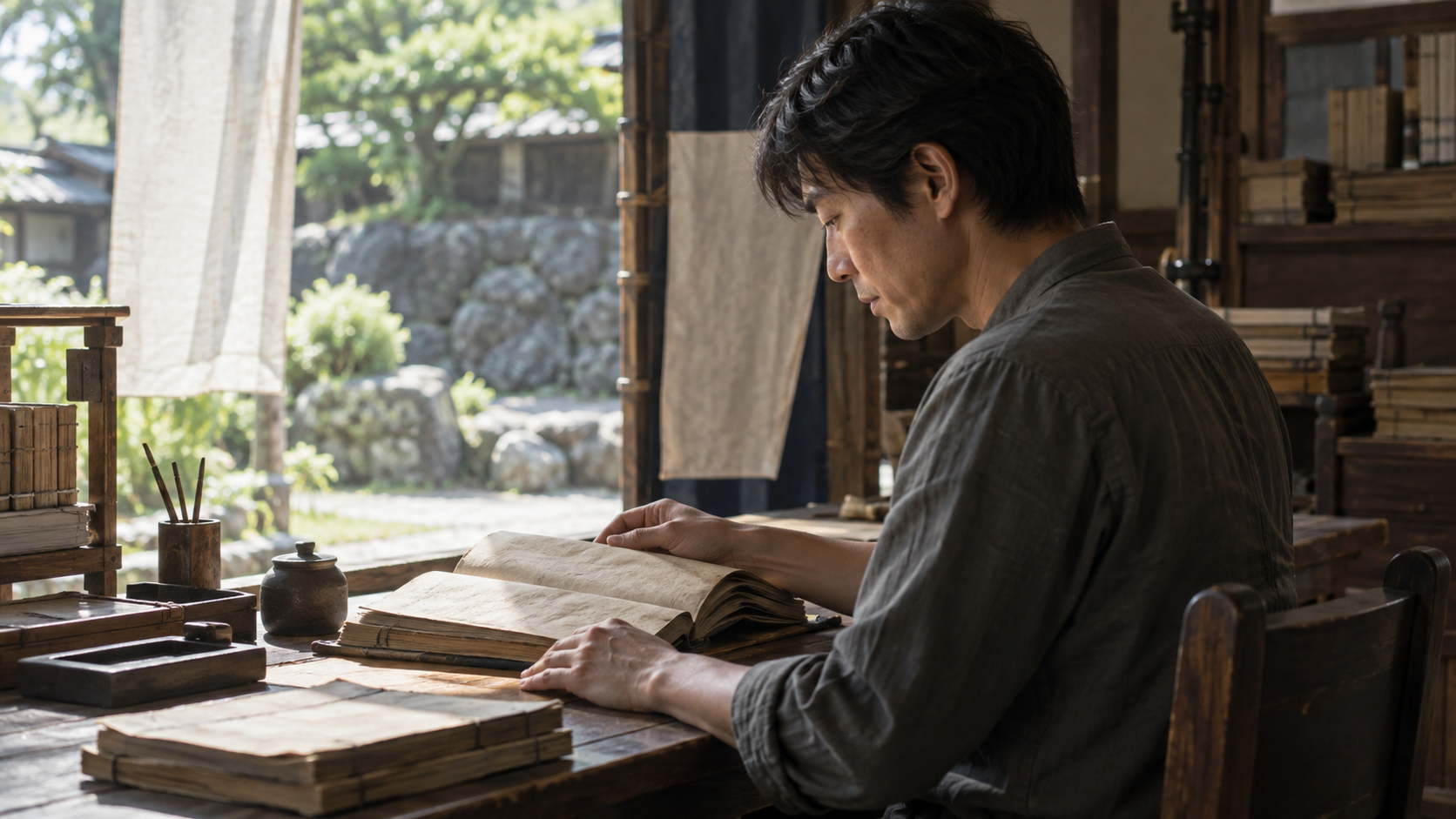
We can consider the continuation of a journey across mountainous country without filling every unknown location. A generic mountain-path scene is an imaginative illustration intended to evoke further travel. It is not a reconstruction of Gosō Pass or of the precise route taken by the main force.
Chapter 09
Service without leaving the commander’s side
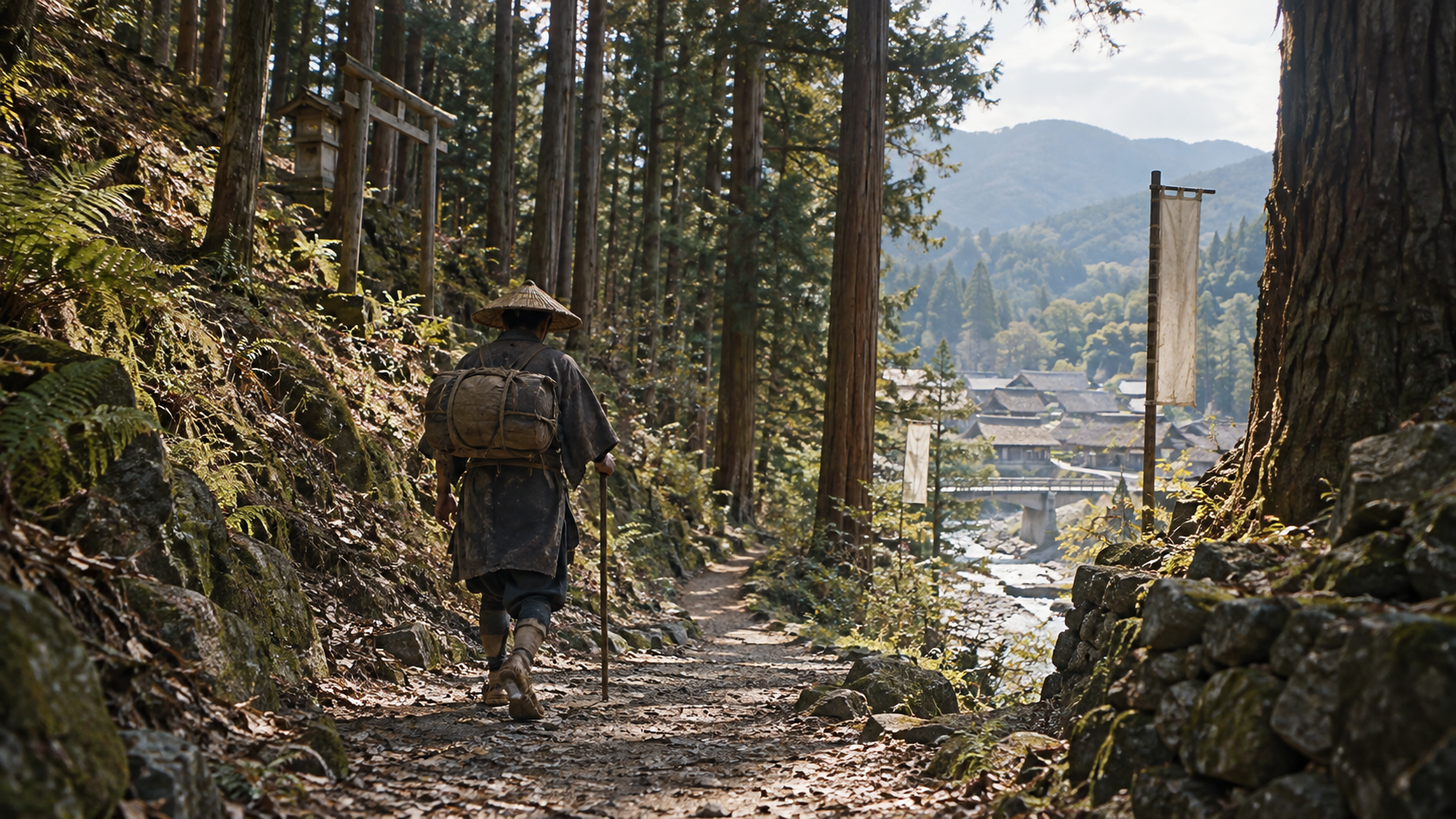
Turning from the battlefield toward the return journey also means turning to documents. On printed page 591 of the later part of Satsuhan Kyūki Zatsuroku, volume 50, published by Kagoshima Prefecture, document 1211 appears under the name Ishin—that is, Yoshihiro.
After reference to service at Sekigahara, the text names Ise, Ōmi, Iga, Yamato, Kawachi and Izumi. It recognizes service performed without leaving his side during the return and records a grant of 200 koku in land income. The praise extends beyond the battle to the journey that followed.
The listed provinces alone do not establish each day’s lodging or a precise order of passage. They do allow us to confirm that service during the return was recorded. Alongside work directed toward an enemy, the document attends to the work of sharing the commander’s road home.
What was examined here was the relevant page of the edition published by the prefecture. This is not a claim to have inspected the original manuscript document. Keeping the content readable in the transcription distinct from the article’s interpretation of returning brings the people supporting the journey into view.
Chapter 10
Nejime Shigehira: a different way home
On printed page 590 of the same volume, document 1208 also recognizes service through difficult places without leaving the commander’s side between Sekigahara and the return. Yet not everyone present on the battlefield was able to remain beside the main force throughout the journey.
A historical column in the January 2020 Hioki Municipal Newsletter describes Nejime Shigehira’s survival. Separated from Yoshihiro’s main force, Shigehira is described as being captured in Ōmi, spared and eventually returning home. Time on the road continued even outside the commander’s own itinerary.
The municipal account gives his return to Yoshitoshi as the fifteenth day of the first month of Keichō 7, while explicitly noting differences between accounts of the return. That date is read in the calendar of the time. It cannot establish the arrival date or route of everyone in the main force.
People who left the same Sekigahara battlefield could follow different paths afterward, depending on whether they stayed beside the commander or became separated. Telling the return of a force requires room for those different paths. The earlier return of its leader should not close the account of everyone else’s progress.
Chapter 11
Battlefield enemies and correspondence afterward
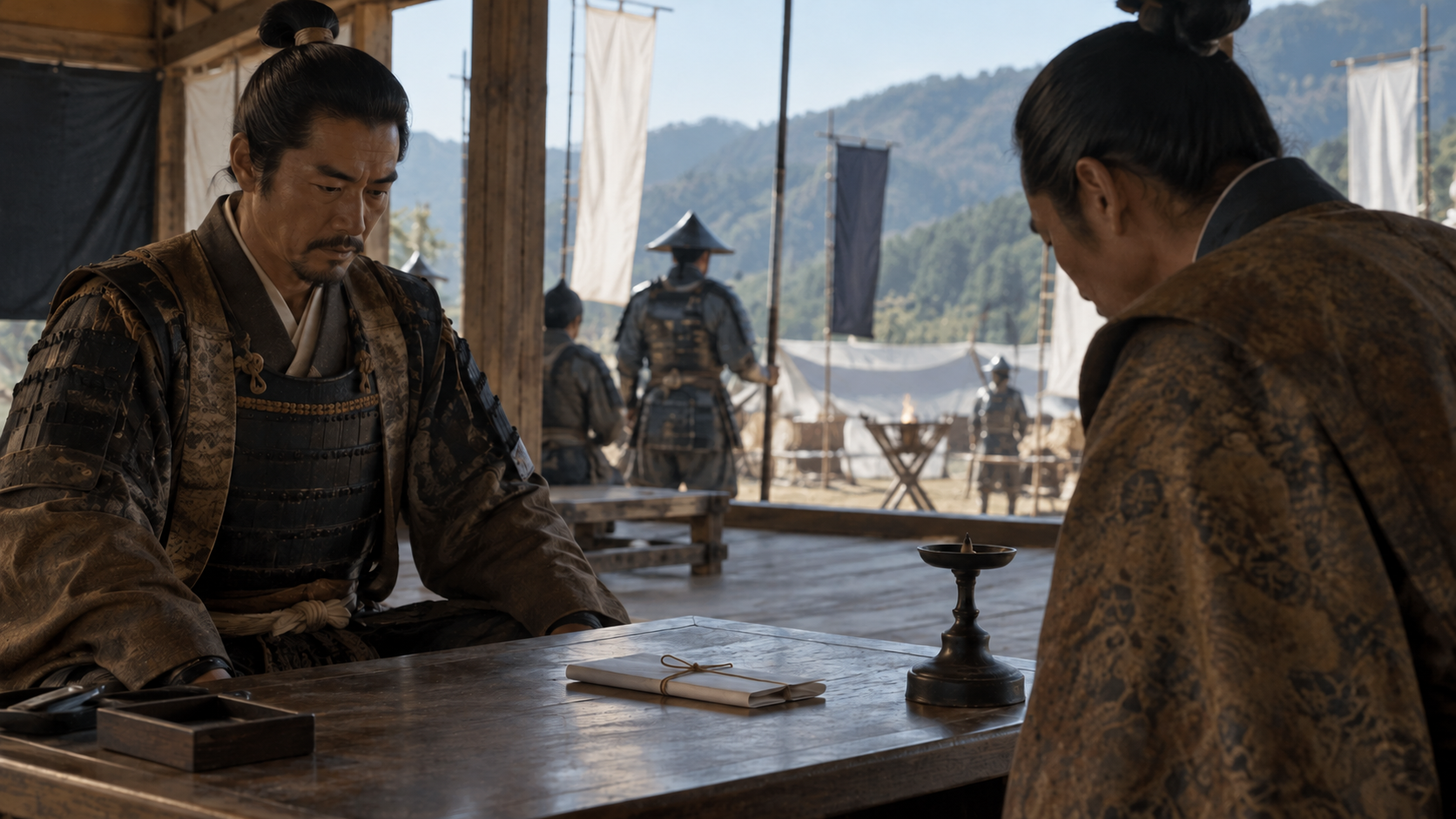
On printed page 593 of volume 50, document 1217 is a letter under Ii Naomasa’s name, dated the tenth day of the tenth month. It refers to Hyōgo-no-kami’s journey down and to future consultation. This month and day also belong to the calendar then used; they are not simply October 10 in the Gregorian calendar.
Naomasa, whose name appears among the pursuers in the site explanations, appears in the document edition as someone involved in exchanges afterward. Looking only at the opposing positions on the battlefield cannot capture every relationship that continued beyond it. A name can enter the record in more than one setting.
One letter does not explain the whole course of postwar negotiations or the reasons for the treatment of the Shimazu family. The limited point confirmed here is that exchanges through documents existed after the fighting. The letter is evidence for that point without becoming a complete explanation of the settlement.
The Historiographical Institute at the University of Tokyo also describes groups of letters concerning negotiations after Sekigahara in its introduction to volume 5 of the Shimazu family documents. This provides an institutional overview of the correspondence, rather than direct inspection of the original documents or a complete account of the negotiations.
Returning was therefore more than movement away across a landscape. Placing documents recognizing service beside a document mentioning future consultation reveals both the work of supporting a person’s return and relationships continuing into the aftermath of battle. Both are visible beyond the moment of the breakthrough.
Chapter 12
Following the retreat through the return
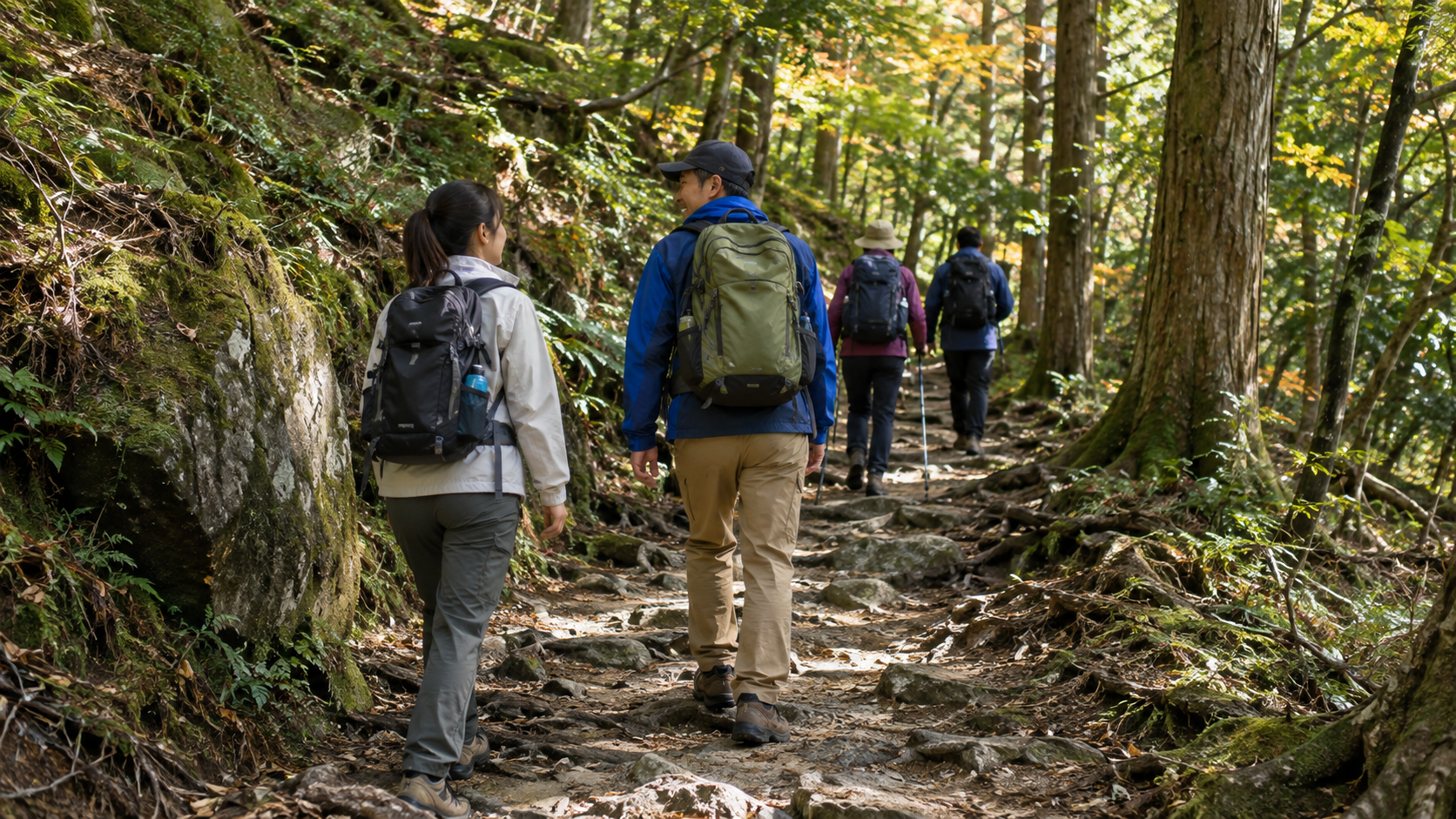
Hioki City’s account of sister and friendship municipalities introduces exchanges with Sekigahara, Ōgaki and Taga. Places associated with Yoshihiro and with the battlefield connect people in distant regions. The memory of the retreat thus also belongs to relationships between communities today; this article does not report current event schedules.
Present-day roads, monuments erected later, local traditions and documents preserved in a published edition communicate different things. Reading them with those differences in mind expands the retreat beyond one scene of breaking through an enemy. The character of each source becomes a clue for following the story.
Yoshihiro and Toyohisa; the moving main force and those taking responsibility for the rear; service without separation and a return by another path: different roles and different spans of time overlap within the same word, return. The destination of one person does not make all those experiences identical.
Leaving Sekigahara was the beginning of a road home. How much can be known, whose work entered the record, and what was transmitted as tradition? Turning toward the time after the battlefield allows us to reread the Shimazu retreat as an episode extending toward a return to Satsuma.
How to read this work
History, interpretation, and reconstruction
Looking beyond the breakthrough, this article reads the Shimazu retreat through responsibility for pursuit, service during the journey, and different paths toward a return.
This work is grounded in published sources and historical research. Interior thoughts, dialogue, and some visual details are cinematic reconstructions. Where historians disagree, the article presents the point as debated rather than settled fact.
Timeline
The story in time
-
Reimeikan gives this as Shimazu Yoshihiro’s birth year.
Sources: s05 -
Documents 1208 and 1211 in the edition recognize service without leaving the commander’s side through the return.
Sources: s04 -
Document 1217, under Ii Naomasa’s name, refers to Hyōgo-no-kami’s journey down and future consultation.
Sources: s04 -
Hioki’s account gives Nejime Shigehira’s return to Yoshitoshi, explicitly retaining differences between accounts.
Sources: s06 -
Hioki City describes exchanges with Sekigahara, Ōgaki and Taga.
Sources: s07
People & terms
A guide for new readers
Key figures
- Shimazu Yoshihiro
- Commander of the force that returned from Sekigahara to Satsuma.
- Shimazu Toyohisa
- Yoshihiro’s nephew, described as moving from the vanguard to the rearguard. Accounts of his death differ.
- Nejime Shigehira
- A Hioki municipal newsletter describes his survival after separation from the main force. Accounts of his return vary.
Glossary
- Shimazu retreat 島津の退き口
- The withdrawal associated with Yoshihiro’s force after the Western Army’s collapse at Sekigahara, considered here together with the subsequent return.
- Satsuma 薩摩
- The historical destination named for Yoshihiro’s return, in southern Kyushu; local memories connect it with present-day Kagoshima and Hioki.
- Sekigahara 関ケ原
- The battlefield in present-day Gifu Prefecture discussed in the museum and municipal accounts.
- Shingari 殿
- The rearguard role at the rear of a withdrawing group, attributed here to Toyohisa in the museum’s account.
- Sutegamari 捨て奸
- The guide’s term for leaving small units behind during withdrawal to delay pursuit; the name does not establish every encounter’s details.
- Ōmi 近江
- A historical province named in the service document, the guide’s account of onward movement and the newsletter’s account of Shigehira’s capture.
- Ishin 維新
- The name under which Yoshihiro’s document appears in the published edition discussed here.
- Hōkō 奉公
- Service, used here for the work recognized in documents concerning the battle and return journey.
- Chigyō 知行
- Land income granted for service; the discussion of document 1211 records a grant of 200 koku.
- Koku 石
- The unit in which the document expresses the grant of land income. It is not converted here into a modern salary, cash value or garrison size.
- Keichō 慶長
- The Japanese era label used for the battle and correspondence dates. Month and day remain in the historical calendar unless an explicit Gregorian conversion is supplied.
- Hyōgo-no-kami 兵庫頭
- The title appearing in document 1217’s reference to a journey down; its appearance does not establish the whole postwar negotiation.
- Yoshitoshi 吉利
- The locality to which the Hioki newsletter describes Shigehira returning, with differences between accounts retained.
Sources & method
How this article was built
This English article follows the verified Japanese article and its adopted source supplement, retaining twelve chapters, three listed people and six timeline entries. Its eight references preserve the seven earlier source IDs and add s09 for the institutional overview used in Chapter 11. Reference titles are editorial English renderings.
Relevant passages on four official HTML pages were consulted. Six retained PDF page images were inspected: both faces of the Kamiishizu guide, printed pages 590, 591 and 593 of the document edition, and the newsletter column on printed page 20. This does not claim inspection of the original manuscript documents or complete reading of all 112 pages of the edition PDF.
For the added reference, the Historiographical Institute’s official online publication introduction was read. This limited check does not claim inspection of the original documents or the complete printed volume. The existing seven-source review is retained for unchanged material.
The museum’s account of Toyohisa dying in the melee and the guide’s account of a wounded journey followed by death in Shirabyōshidani remain separate. Local traditions, later transmission and commemorative places do not become a single witnessed final scene.
The historical-calendar battle date is distinguished from the guide’s explicit Gregorian October 21 conversion. Other historical month-and-day dates are not silently converted. Shigehira’s return date remains qualified by the newsletter’s warning about differing accounts and is not applied to everyone in the force.
Document 1211’s province names and grant of 200 koku support an account of recognized service without supplying precise lodging places or daily travel order. Document 1217 supports the limited presence of correspondence without explaining the complete settlement or its motives.
The present-day 63-kilometer cycling circuit is not a historical marching distance. No exact battlefield formation, Gosō Pass reconstruction, unit count at each position, command, gunshot sequence, conversation or private emotion is added.
All twelve generated illustrations were actually inspected in the retained contact sheet. Canonical bytes and article-use rights are matched to the Japanese review. The illustrations use anonymous fictional people and imagined settings; the modern reader and hikers are identified as modern scenes. No institutional portrait, guide map or documentary photograph is reproduced.
The linked video has Japanese audio; an English subtitle track has not been verified.
Sources
References and further reading
- Shimazu Yoshihiro Course 岐阜関ケ原古戦場記念館・島津義弘コース Title translated editorially for reader convenience. Gifu Sekigahara Battlefield Memorial Museum 岐阜関ケ原古戦場記念館 Relevant official HTML site explanations consulted. Approximate troop numbers and qualifications concerning Toyohisa’s death are retained. Accessed 2026-10-11
- Kamiishizu Guide Map, Published by Ōgaki City 大垣市公開・上石津ガイドマップ Title translated editorially for reader convenience. Ōgaki Tourism Association; published by Ōgaki City 大垣市公開・大垣観光協会 Both retained PDF faces inspected. The disclaimer about local materials, traditions and differing routes is retained. Maps, photographs and illustrations are not reproduced. Accessed 2026-10-11
- Satsuhan Kyūki Zatsuroku, Later Part, Volume 50: Pages 590–593, Documents 1208–1217 鹿児島県公開・薩藩旧記雑録後編巻50(頁590–593、文書1208–1217) Title translated editorially for reader convenience. Kagoshima Prefecture 鹿児島県 Printed pages 590, 591 and 593 inspected for documents 1208, 1211 and 1217. Original manuscripts were not inspected; no claim is made to have read all 112 PDF pages. Accessed 2026-10-11
- Portrait of Shimazu Yoshihiro: Reimeikan Introduction 鹿児島県黎明館・島津義弘像 Title translated editorially for reader convenience. Kagoshima Prefectural Reimeikan Center for Historical Material 鹿児島県歴史・美術センター黎明館 Relevant official HTML biographical introduction consulted. The authenticated portrait is not reproduced. Accessed 2026-10-11
- Hioki Municipal Newsletter, January 2020: Nejime Shigehira’s Survival after Sekigahara, Printed Page 20 広報ひおき2020年1月・禰寝重張の関ケ原生還劇(紙面20頁) Title translated editorially for reader convenience. Hioki City 日置市 The column on printed page 20, on the eleventh retained PDF image, was checked against the image and extracted text. Differences between accounts of the return remain explicit. Accessed 2026-10-11
- Sister Cities and Friendship Cities 日置市・姉妹都市・友好都市 Title translated editorially for reader convenience. Hioki City 日置市 Relevant official HTML paragraphs concerning Sekigahara, Ōgaki and Taga consulted. Population figures and current event schedules are not adopted. Accessed 2026-10-11
- Shimazu Retreat Cycling Course 岐阜関ケ原古戦場記念館・島津退き口サイクリングコース Title translated editorially for reader convenience. Gifu Sekigahara Battlefield Memorial Museum 岐阜関ケ原古戦場記念館 Relevant official HTML consulted. The 63-kilometer modern cycling circuit is not treated as the army’s marching distance in 1600. Accessed 2026-10-11
- Publication Introduction: Dai Nihon Komonjo, Family Documents XVI, Shimazu Family Documents, Volume 5 東京大学史料編纂所・大日本古文書 家わけ第十六 島津家文書之五 刊行紹介 Title translated editorially for reader convenience. Historiographical Institute, The University of Tokyo 東京大学史料編纂所 The institute’s online introduction was consulted for its overview of postwar correspondence. Neither the original documents nor the edition’s full text was inspected. Accessed 2026-10-23
Continue reading
More stories from Shigeki
Shigeki English
Sakai’s Merchant City: Trade, Self-Government and Survival
A port, a merchant council and town communities—from changing authority to rebuilding after fire.
- When From the later fifteenth century through the Sengoku period, the fire of 1615 and early Edo-period reconstruction.
- Where Sakai, in present-day Osaka Prefecture, where maritime routes met roads on land.
Shigeki English
The Aburanokōji Incident: After Leaving the Shinsengumi
A separation in spring, a new base in summer, and two successive attacks.
- When Kyoto in Keiō 3 (1867). The incident’s historical date corresponds to December 13, 1867.
- Where Kyoto: the guards’ successive bases, the Aburanokōji attack site and the later place of remembrance.