
SHIGEKI ENGLISH STORYEN
Japanese history in English
The Death of Serizawa Kamo | Letters Tracing the Shinsengumi’s Changing Leadership in Mibu
Two names in early correspondence. One leader’s account of the work that followed. Read the changing organization through its surviving records.
In 1863, Serizawa Kamo was killed at the Yagi residence in Mibu, Kyoto. Follow Kondo Isami’s account of two leaders, reports issued in both men’s names from Osaka and a later letter describing his official work. Their sequence traces the Shinsengumi’s changing leadership while preserving the uncertainties around Serizawa’s death.
At a glance
Before you enter the story
- When
- Bunkyu 3, the Japanese year corresponding to 1863: remaining in Kyoto, early letters, sixth-month reports, the eighth-month upheaval, ninth-month deaths and tenth-month correspondence. Numbered dates retain the older calendar. Later memorials date to 1931 and 1971.
- Where
- Mibu in Kyoto, where the Yagi and Maekawa households provided quarters; Osaka, the setting of the joint reports; Serizawa’s place of origin in present-day Namegata, Ibaraki.
- Key figures
- Serizawa Kamo, Kondo Isami, Hijikata Toshizo, Matsudaira Katamori, Hirayama Goro, Sato Hikogoro
- What was at stake
- The loss of a leader who had shared the group’s early representation, and the subsequent structure and workload described in surviving correspondence.
Why this story matters
The larger history behind the turning point
Beginning with letters that carry both names restores the shared period before Serizawa’s death. Documents about lodgings, authority and reporting allow the organization’s changing work to be followed alongside the killing and its later remembrance. Each record contributes a particular view of that course.
Historical context
What an international reader needs to know
Kyoto, Edo and a band that remained
The shogunate was Japan’s military government, while the imperial court was in Kyoto. Edo, to which many Roshigumi members returned, was the city now called Tokyo. Mibu was a settlement on Kyoto’s edge where local households housed the band that remained. Osaka, the setting of the joint reports, was a separate city. These places mark the group’s base, its activities beyond that base and the people to whom it wrote.
The National Archives and Kyoto City explain the division between the Roshigumi sent to Kyoto and the men who stayed. The later Shinsengumi served under Matsudaira Katamori, lord of Aizu and Kyoto Military Commissioner. The early letter describes Kondo’s own loyalty to the court and commitment to the shogunate. Those stated aims help explain why this history needs more than a simple division into two opposing camps.
Titles, calendars and letters
The office of Kyoto Military Commissioner provided the authority under which the remaining men operated. In the notifications from Osaka, Matsudaira Higo-no-kami is the title used for Katamori. Town magistrates’ offices handled urban administration, judicial affairs and policing. The letters place the group in contact with such institutions, alongside its communications with people at home.
Bunkyu is a Japanese era name; Bunkyu 3 corresponds to 1863. Its numbered months and days are left in the older calendar. They are not automatically the same dates in the Gregorian calendar. The letter’s catalogue date, a date inferred in its explanatory entry and a date recorded on a gravestone also have different evidential bases. These differences remain part of the story.
Watch the film
See the story in motion
The film currently uses Japanese audio. This English article provides the context and source trail; it does not imply that an English subtitle track is available.
Chapter 01
Begin with Two Names
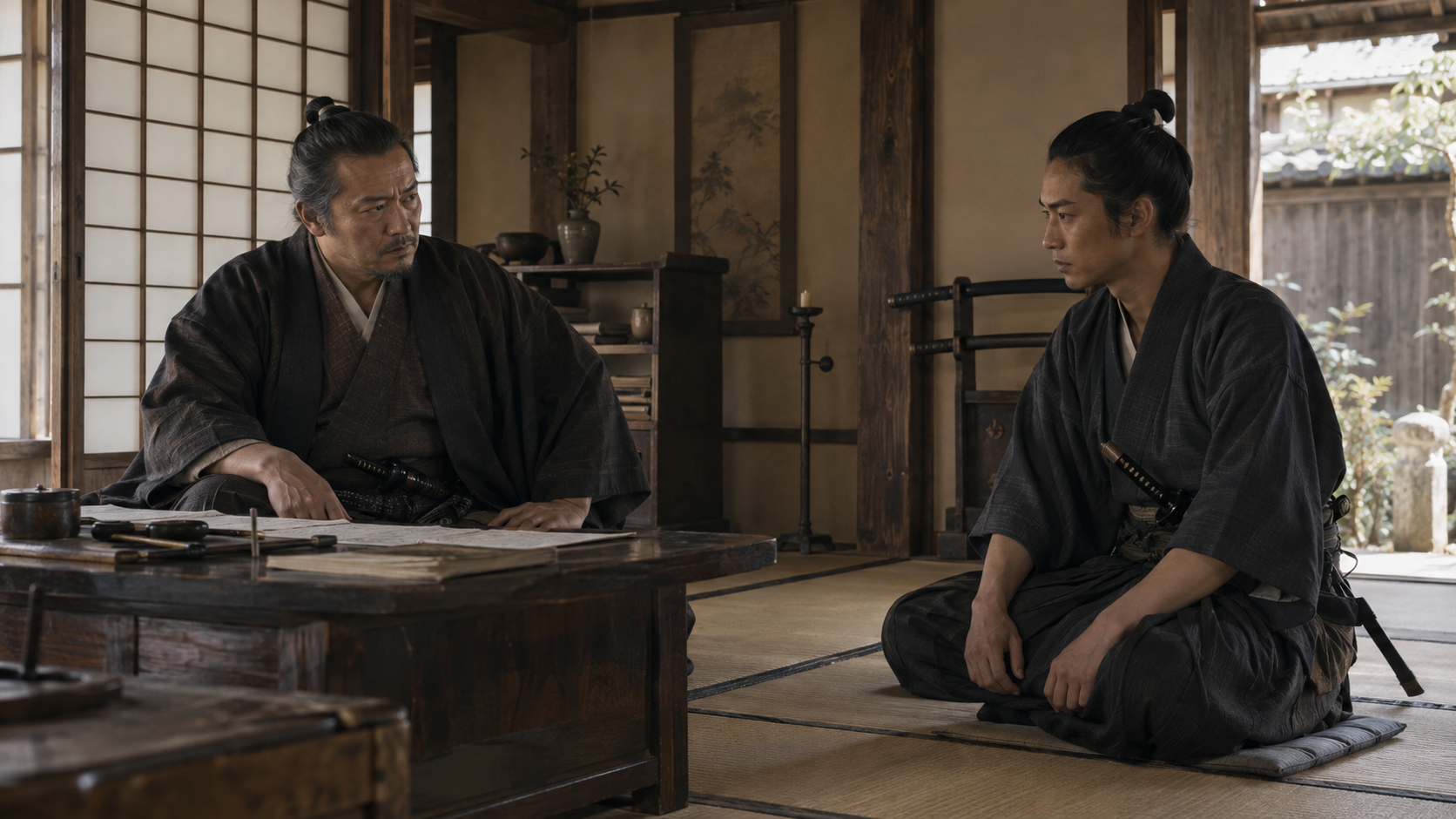
Kondo Isami and Serizawa Kamo. In correspondence from Bunkyu 3, the Japanese year corresponding to 1863, their names appear together. For readers who picture the Shinsengumi as Kondo’s organization alone, that pairing may come as a surprise. Serizawa belonged to its beginnings; he was already there when the group in Kyoto was taking shape.
In the early band based at Mibu, Kondo shared a position of leadership with Serizawa. Before the year ended, Serizawa was killed at the Yagi residence. The familiar organization centered on Kondo thus followed an earlier period in which two men were recorded as leaders. That period has its own surviving evidence.
Knowing how a story ends can change how we read what came before. If every document bearing both names becomes evidence of an inevitable rivalry, their joint reports lose their immediate purpose. Reading the correspondence in sequence allows the activities they represented together to emerge before the later killing changes the picture.
Remain in Kyoto. Establish a base at Mibu. Lead the group and report its activities beyond the headquarters. Then lose one of the leaders. Letters and places provide stages along that course. Serizawa’s death belongs within a longer change in the organization, extending beyond the events of his final night.
Chapter 02
The Men Who Stayed in Kyoto
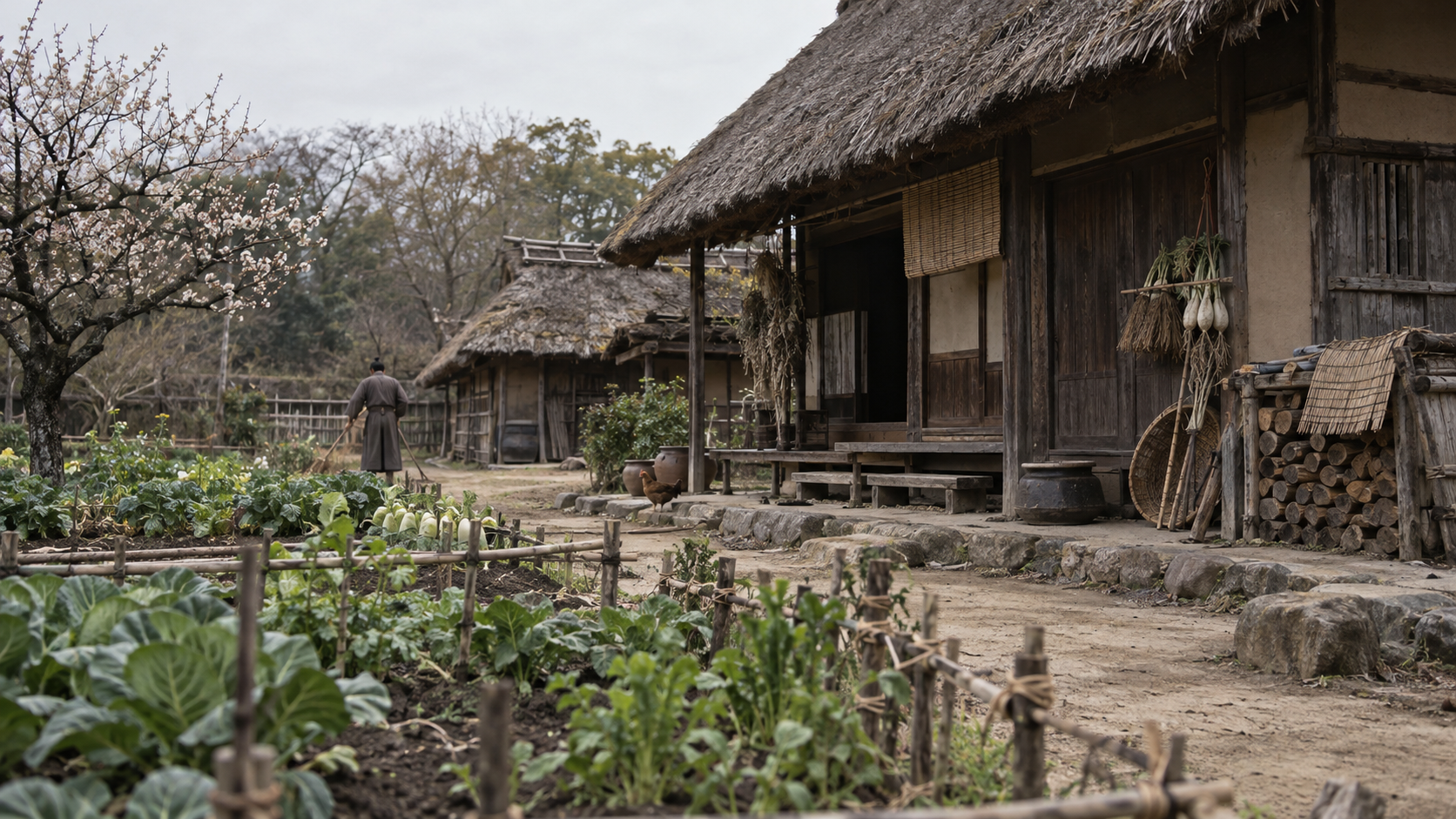
Namegata City’s heritage guide identifies Serizawa’s place of origin as Serizawa in present-day Namegata, Ibaraki Prefecture. His arrival in Kyoto belongs to the movement of men recruited by the shogunate in Bunkyu 3. The Roshigumi, the group dispatched to the city, lodged in separate households in the village of Mibu.
Kyoto City’s explanation describes the leader Kiyokawa Hachiro’s attempt to use the Roshigumi for the movement to honor the emperor and expel foreigners. The shogunate sent the men back to Edo. The group assembled for the journey to Kyoto and the organization that continued operating there therefore followed different paths.
Serizawa and Kondo were among those who stayed. The National Archives of Japan likewise locates the Shinsengumi’s origins in the band of men who remained in Kyoto. While many of their former companions returned east, those who stayed came to work under a new authority and carry out duties in the city.
This division helps explain why Serizawa appears beside Kondo in the early documents. Their story begins before the later organization had settled into its familiar form. They shared the position of men who remained in Kyoto and led the developing group. That common starting point deserves a place in the sequence.
Chapter 03
Households Become a Headquarters
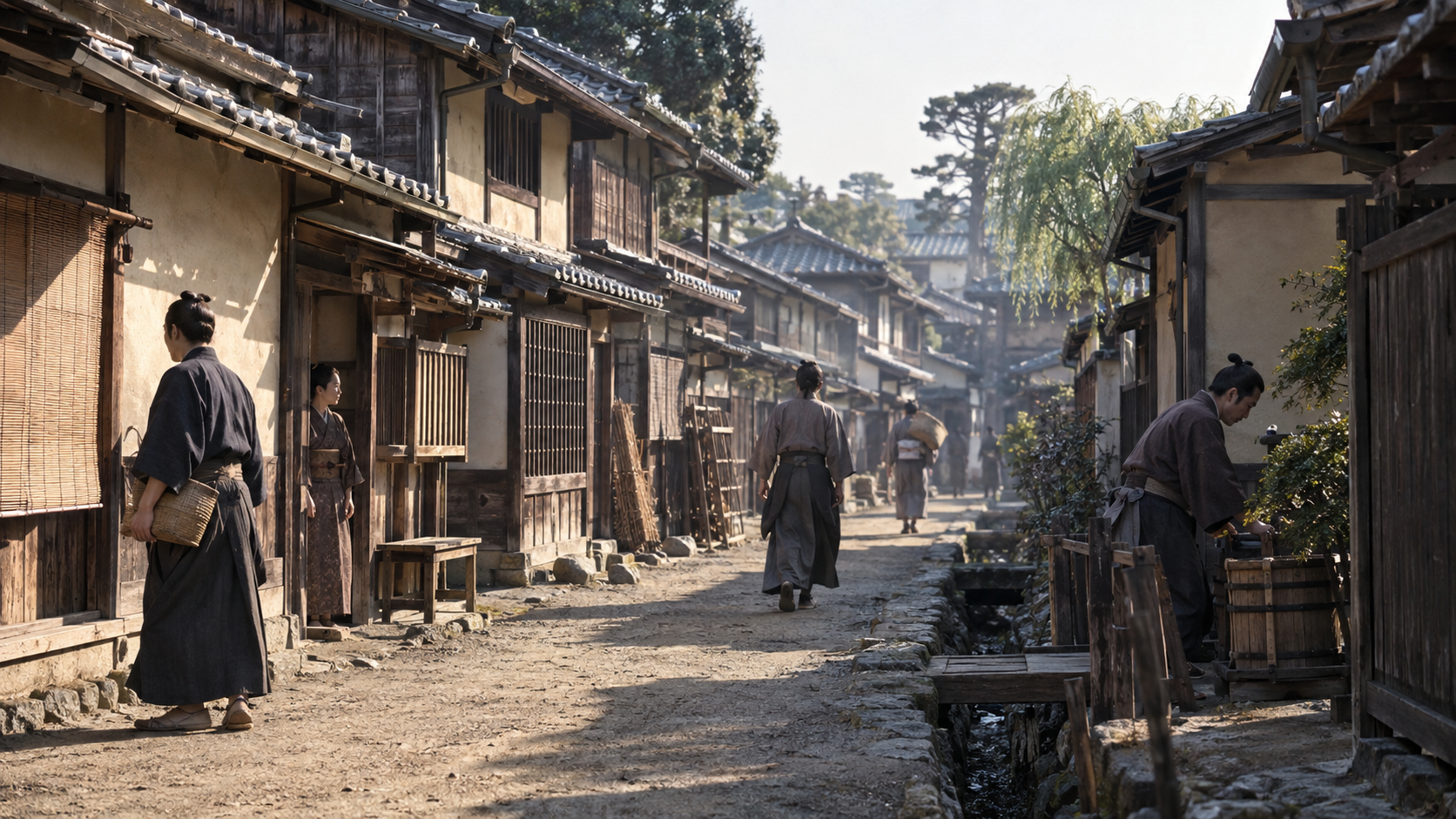
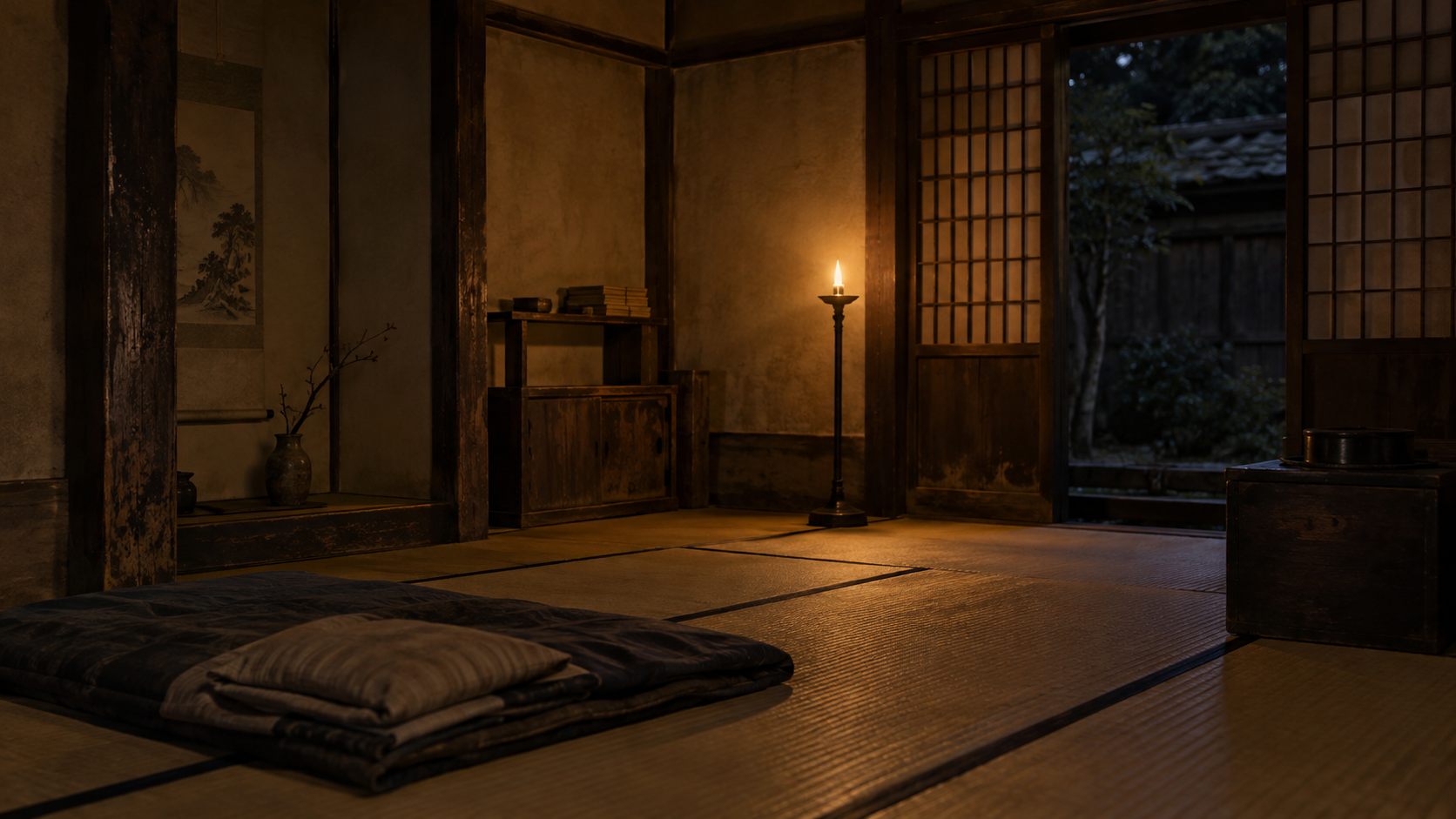
Houses in Mibu supported that beginning. The Yagi and Maekawa residences developed from places where the men lodged into bases for their activities, known as tonsho. The organization’s history began through the use of spaces belonging to local households. Its early base was embedded in the life of the surrounding settlement.
The former Maekawa residence’s history explains that the main branch of the family handled work involving public funds for the palace and government offices. Those responsibilities brought it into close contact with officials. According to the property’s account, that familiarity and trust led to its role in selecting lodgings for the arriving Roshigumi.
Mibu stood at the edge of the city yet close to Nijo Castle. The Maekawa account presents that location as suitable for the group’s needs. The choice of lodgings combined available houses, relationships with officials and a position within Kyoto’s geography. A headquarters took shape through those practical connections.
Kyoto City dates the stone marker identifying the Yagi residence as a Shinsengumi site to 1931. The place used in the closing years of the shogunate and the later sign commemorating it belong to different moments. Keeping those layers separate helps us read both the early base and the way it has been remembered.
Chapter 04
Two Leaders in Kondo’s Account
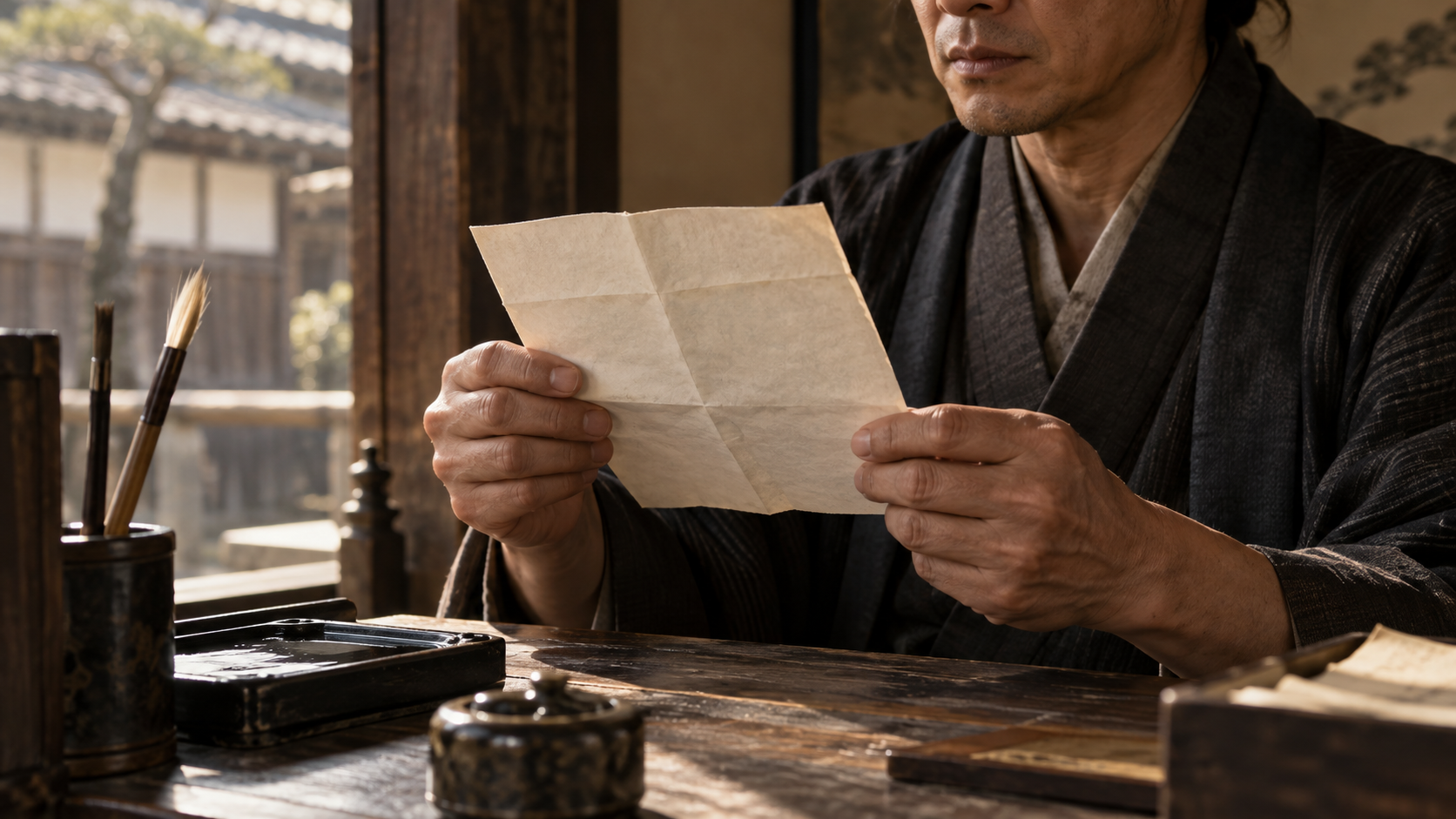
A long letter by Kondo survives in the Kojima Museum’s collection. Its catalogue assigns an estimated date in the fifth month of Bunkyu 3, but the letter has no stated dispatch date. The catalogue explanation also proposes a dispatch in the sixth month. Here it is treated as an early account, with that uncertainty intact.
In the published reading, Kondo describes a situation in which offices for overseeing the men had yet to be properly established. He then identifies Serizawa and himself as the two leaders of their comrades. Their shared position appears within his explanation of how the developing organization was being led.
The letter cannot supply a complete chart of authority. It does not settle who decided every task or whether the two men’s powers were equal in all respects. What it does preserve is Kondo’s own description of Serizawa as a fellow leader, sent to people away from the Kyoto base.
The later purge does not erase this pairing. Before assigning the two men fixed roles as opponents, we can ask how Kondo described the group at the time. His explanation gives the early organization a form that should be read on its own terms, while the later change remains further along the story.
Chapter 05
Court, Shogunate and the Writer’s View
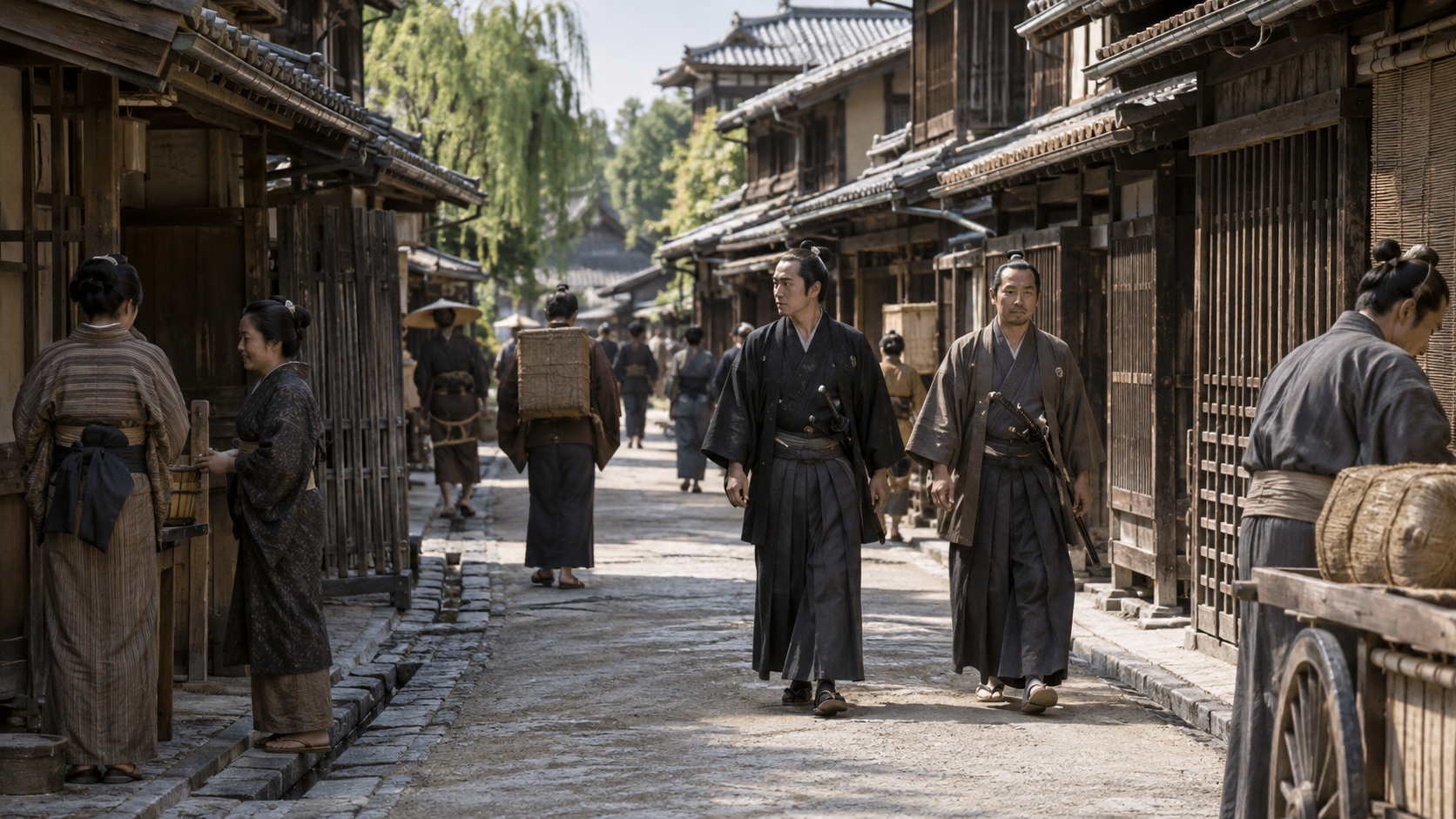
The same letter contains Kondo’s account of a precarious political situation in Kyoto. He also expresses an intention to offer loyalty to the imperial court and devote himself to the shogunate. Viewing the period only through its later outcome can make these commitments seem harder to understand than the words themselves suggest.
These are Kondo’s stated aspirations and his view of events. The letter does not give us Serizawa’s private thoughts or establish that the two men agreed on every political question. Its account of the organization sits beside the writer’s account of the city’s situation. Both belong to the person communicating them.
What should the group do in Kyoto, whom should it approach and under what authority should it remain? Leadership involved explaining its position as well as carrying out activities. The correspondence brings that work of explanation into view around the armed encounters that often dominate the group’s remembered history.
A letter sent home also had to communicate events to people beyond the scene. Preserving the writer’s perspective allows us to follow that effort during an unsettled period. His account need not be forced into every detail of the Shinsengumi’s later image. The document retains the circumstances of its own telling.
Chapter 06
A Joint Report from Osaka
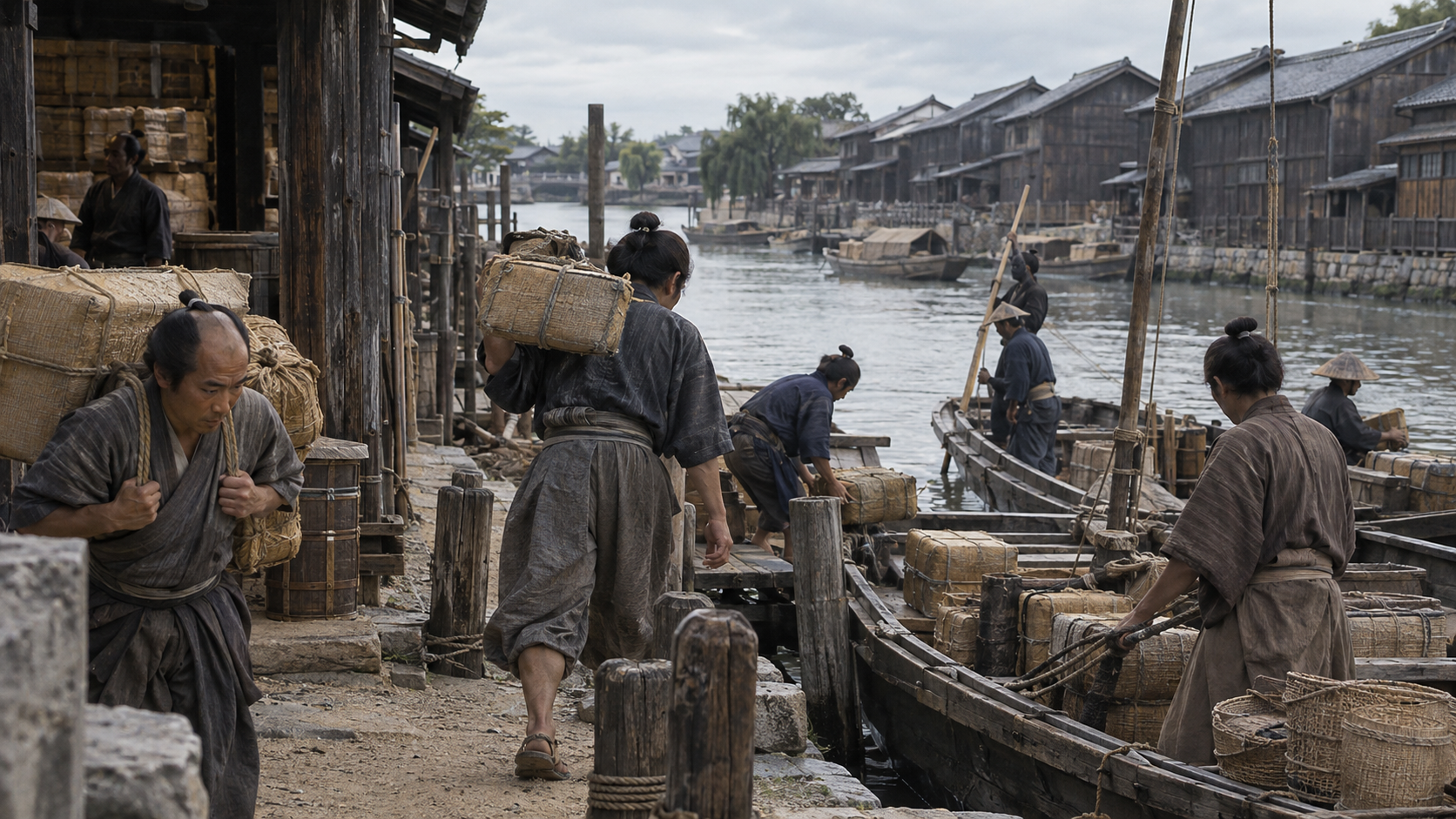
Another record bears Kondo and Serizawa’s names together. Its catalogue dates it to the third day of the sixth month of Bunkyu 3. The Kojima Museum explains that Kondo wrote the letter, although it was issued in both names. Joint representation and the physical work of writing emerge as distinguishable roles.
The published reading reports the capture in Osaka of men claiming to be roshi and their delivery to a magistrate’s office. It also includes copies of notifications concerning a fight between members of the group and sumo wrestlers. These were addressed to Osaka’s eastern town magistrate’s office and Matsudaira Higo-no-kami.
Matsudaira Higo-no-kami refers here to Matsudaira Katamori. The two names on the notifications show the leaders representing the band to authorities beyond Mibu. An encounter was followed by an account sent to officials. The group’s activities connected its local base with institutions that expected to hear what had happened.
An episode involving drawn swords readily commands attention. The correspondence also preserves the procedure that followed: explaining the incident and submitting that explanation. Shared leadership took a concrete form in documents bearing both men’s names. Those reports belong to the work through which the band presented its activities outside its own quarters.
Chapter 07
The Reports Do Not Say the Same Thing
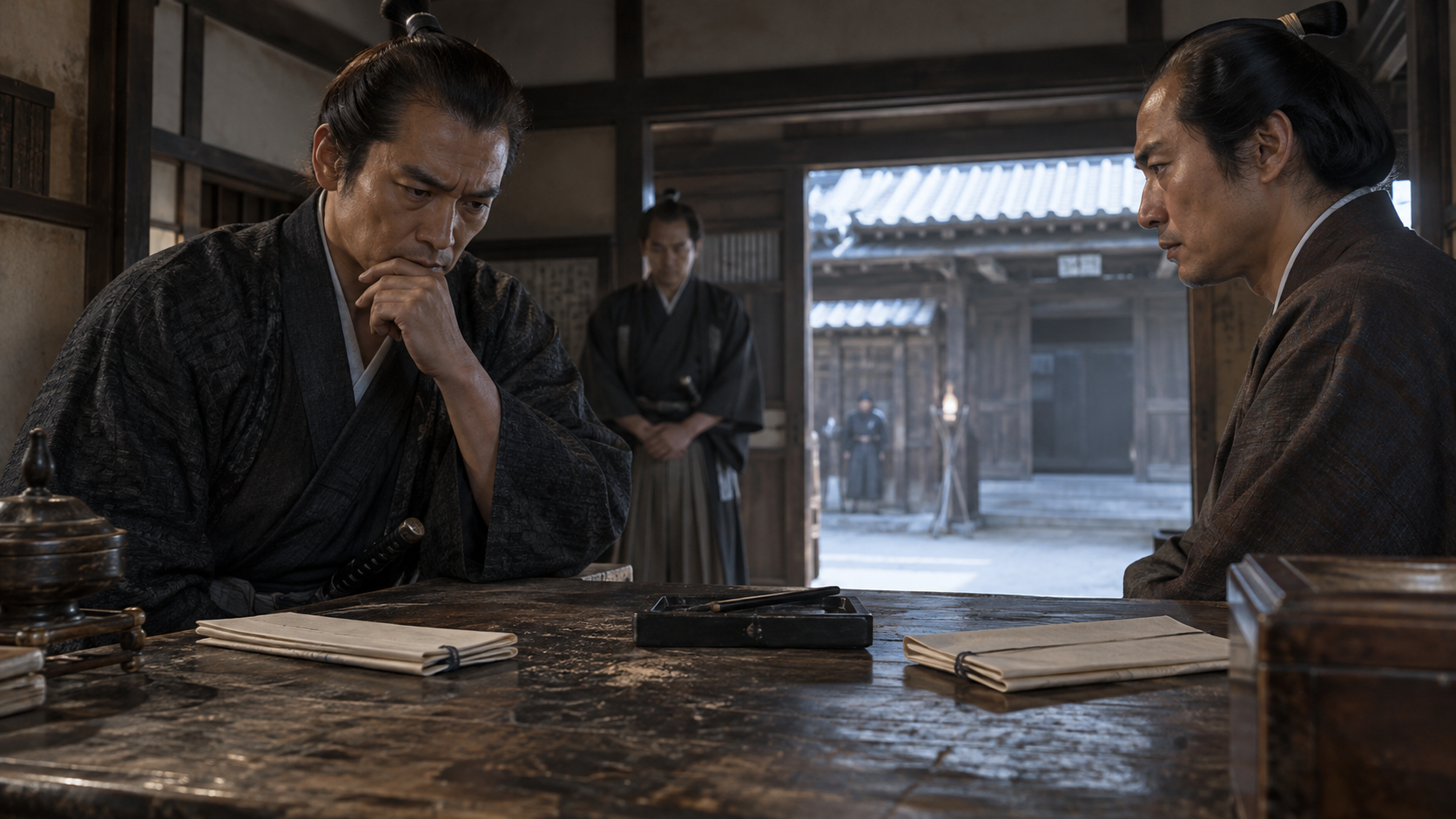
Comparison reveals differences in the explanations. The Kojima Museum’s catalogue explicitly notes that the two attached reports differ in content. The published reading also shows differences in the way injuries to the other side are described. Their relationship should remain visible instead of being smoothed into one uniform account.
The writers present the encounter as an attack on their own party to which they responded. This is a participant’s report. It does not preserve the other side’s circumstances in the same way. Numbers stated in it therefore require care before they can be treated as independently established totals of the people injured.
A difference between two reports does not by itself establish one as the whole truth or reveal the writer’s intention. It first tells us that the group submitted accounts to outside authorities and that those accounts were not identical. Reading them together keeps the limits of each explanation in sight.
The fight in the sixth month and Serizawa’s death later in the year are separated in time and by the character of the evidence. A jointly issued notification is not an order to kill. Before connecting the events through a single chain of cause and effect, we should retain the scope of what these documents report.
Chapter 08
When the Shinsengumi Name Appeared
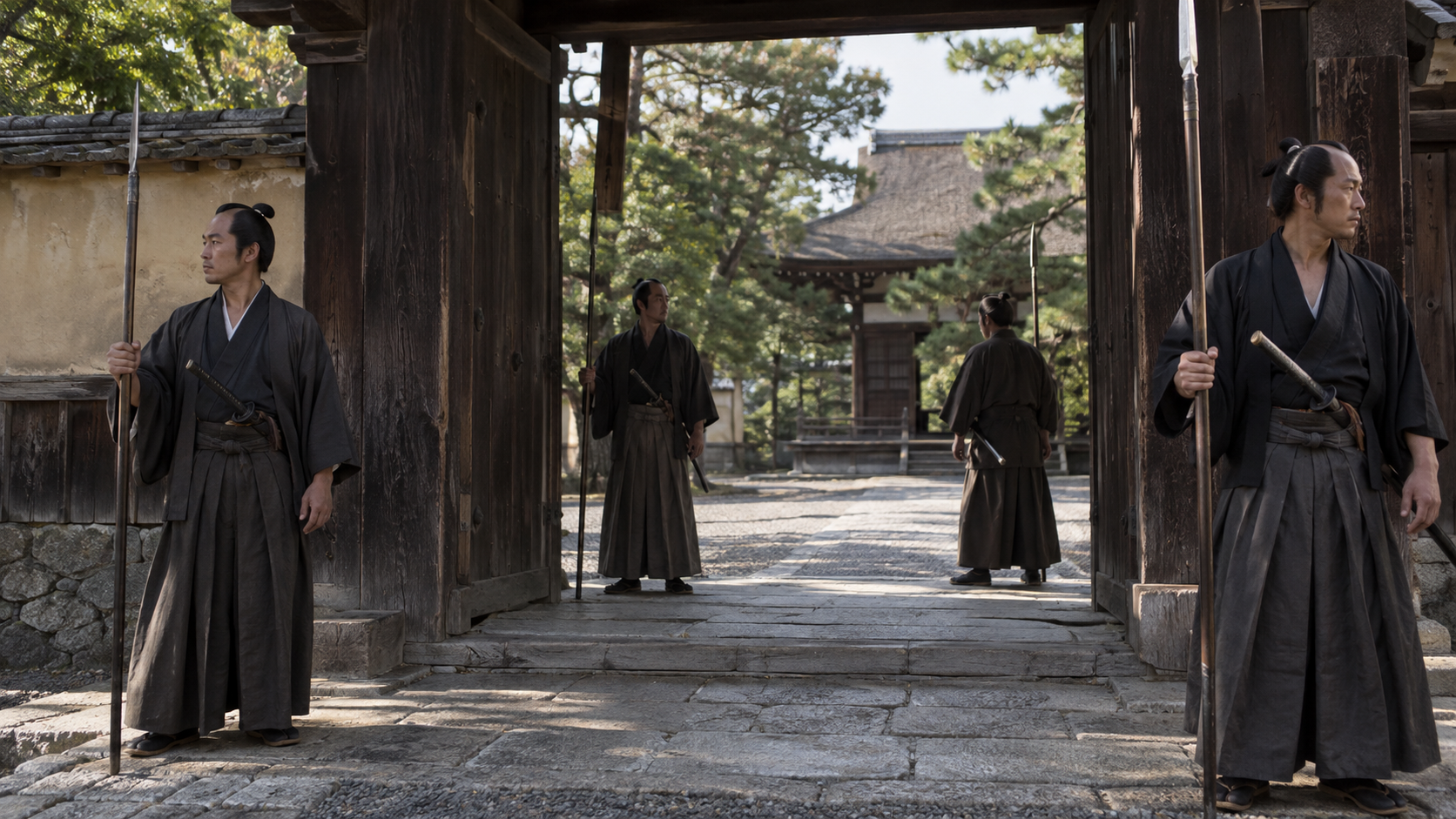
The men who remained in Kyoto, including Serizawa and Kondo, came under Matsudaira Katamori, lord of Aizu and Kyoto Military Commissioner. The National Archives explains that they acted under his authority during the political upheaval on the eighteenth day of the eighth month of Bunkyu 3. Around that time, they became known as the Shinsengumi.
Their decision to remain, the early leadership, the reports from Osaka and their involvement in the political upheaval form successive points in the story. The band described in letters to people at home also had a place in Kyoto’s arrangements for security. Its relationship with the commissioner connected those activities with an outside authority.
Serizawa was still part of the group at this stage. Starting only from the later structure centered on Kondo can compress the shared activities through which it first became known. The emergence of the name and the change in leadership are related parts of the history, each with its own sequence.
Month and day numbers for Bunkyu 3 in this article follow the Japanese calendar then in use. Adding the year 1863 does not convert the eighteenth day of the eighth month into Gregorian 18 August. Letter dates and political events are followed with that distinction intact; no unverified conversion is supplied.
Chapter 09
The Lives Lost at the Yagi Residence
Serizawa died at the Yagi residence. Mibu Temple gives the deaths of Serizawa and Hirayama Goro as the eighteenth day of the ninth month of Bunkyu 3. Its explanation states that the death dates it lists are based on inscriptions on the gravestones. The date is retained in the calendar of that period.
The temple’s account names Kondo and others in connection with the assassination. Kyoto City’s tourism guide recounts an attack after a banquet and the sword marks said to remain in the house. The tourism page also states that historical accounts differ and that its presentation offers one version.
A surviving place and knowledge of an attack’s complete sequence are different kinds of evidence. The letters and site explanations consulted here cannot fix each person’s movements, the order of every action or the words spoken into a scene observed firsthand. They must retain the limits of what they actually preserve.
We can therefore follow the interruption of the shared leadership without supplying dialogue or precise movements for the last night. The notifications from Osaka had carried both men’s names. With one of them gone, the story enters another stage: how the organization’s leadership and its work were described afterward.
Chapter 10
A Different Leadership Structure
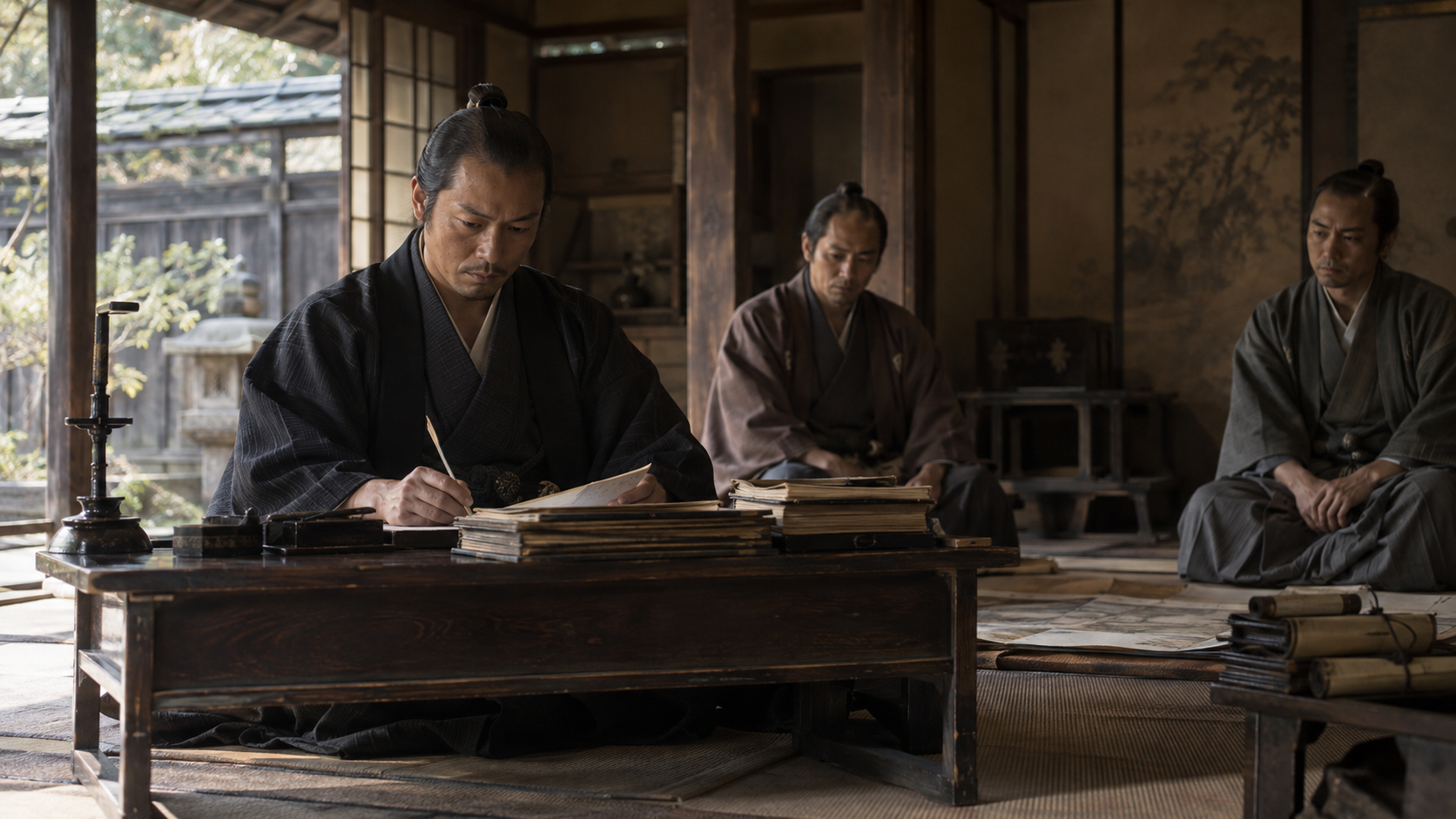
The Yagi family’s official explanation describes an organization that settled into a structure with Kondo as commander and Hijikata Toshizo as deputy after the purge of Serizawa’s faction and others. Set beside the earlier description of two leaders, that account allows a change in the organization to be followed.
Knowing the resulting structure does not recover the wording of an order to kill. The early letter with an estimated date and the joint reports from the sixth month explain positions and activities. They cannot simply be reassigned as evidence for the route by which instructions for the later attack were transmitted.
Accounts of Serizawa’s conduct and competition over authority have accumulated around the killing. A single story leading inevitably to the ending can change the purpose of documents written beforehand. The work of representing the group jointly and the later loss of one leader each require attention within their own evidence.
The change also involved more than removing a name from a list. Representing the band, visiting government offices and reporting its activities were continuing tasks. How did those tasks appear in correspondence after the death? Kondo’s letter from the tenth month provides another point from which to read the altered situation.
Chapter 11
Kondo’s Work in the Tenth Month
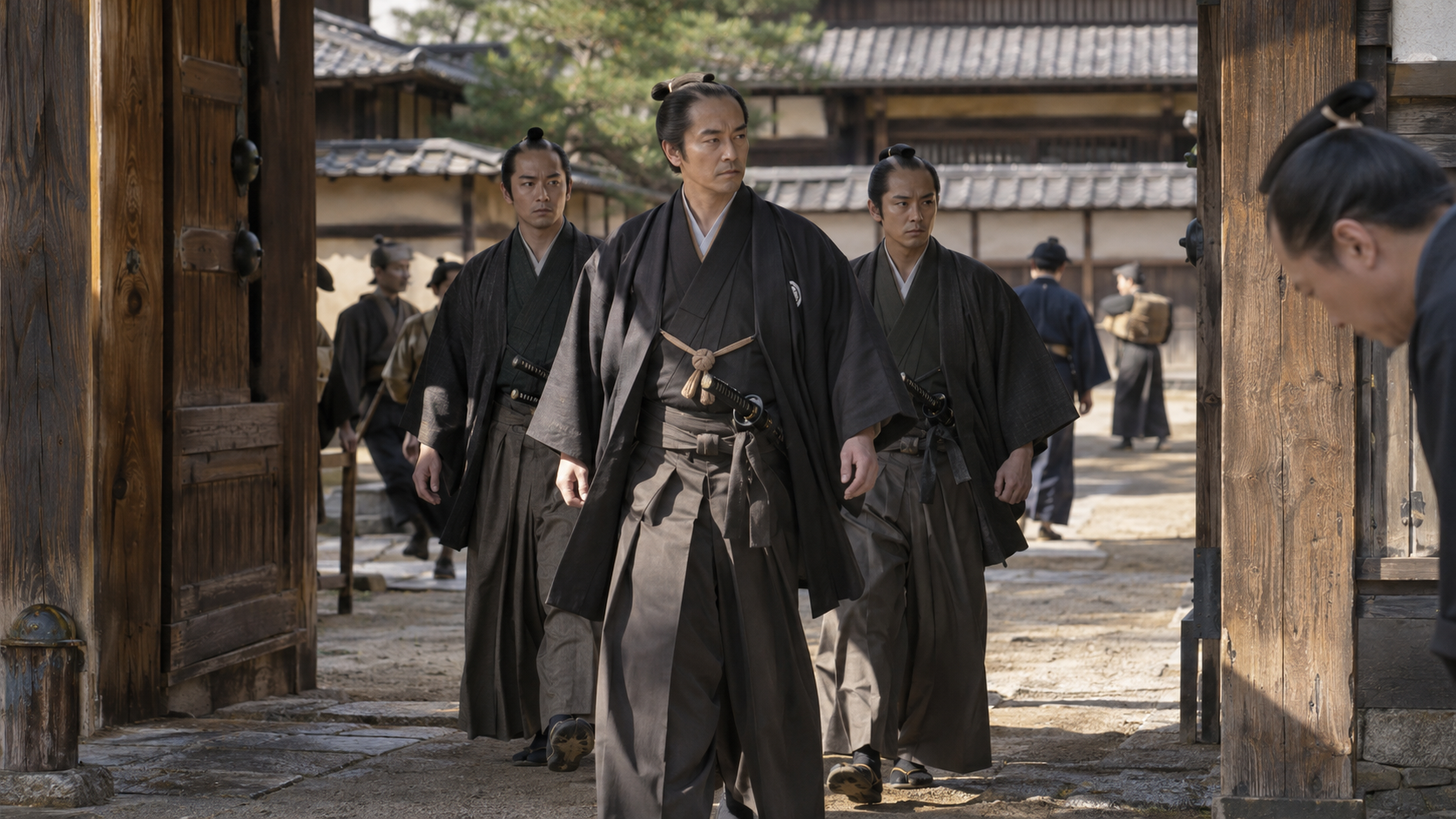
The Sato Hikogoro Shinsengumi Museum holds Kondo’s letter dated the twentieth day of the tenth month of Bunkyu 3. In its published reading, he describes frequent business at the Aizu offices, the palace and the town magistrate’s office. He also voices concern about matters depending on him alone. The work of an autumn leader survives in these words.
This is no complete allocation of everyone’s duties. Kondo’s complaint that responsibility fell heavily on one person cannot prove that he performed every task without assistance. It tells us how he described his burden to a correspondent at home. That personal account is valuable precisely when its scope is kept clear.
The same letter discusses his father’s illness, the household during his absence and repayment of money borrowed for replacing the roof of the training hall. Public responsibilities in Kyoto and ongoing connections with home occupy the same document. Exchanges less visible in the title of commander sit alongside his account of official work.
The letter also reports the killing of three men described as spies within the group. Those three are not identified here with Serizawa and his companions, and the passage is not presented as a confession to the Yagi residence attack. A difference between early shared leadership and Kondo’s stated autumn burden can be read without extending that comparison into an unproven causal account.
Chapter 12
Another Leader Remembered at Mibu
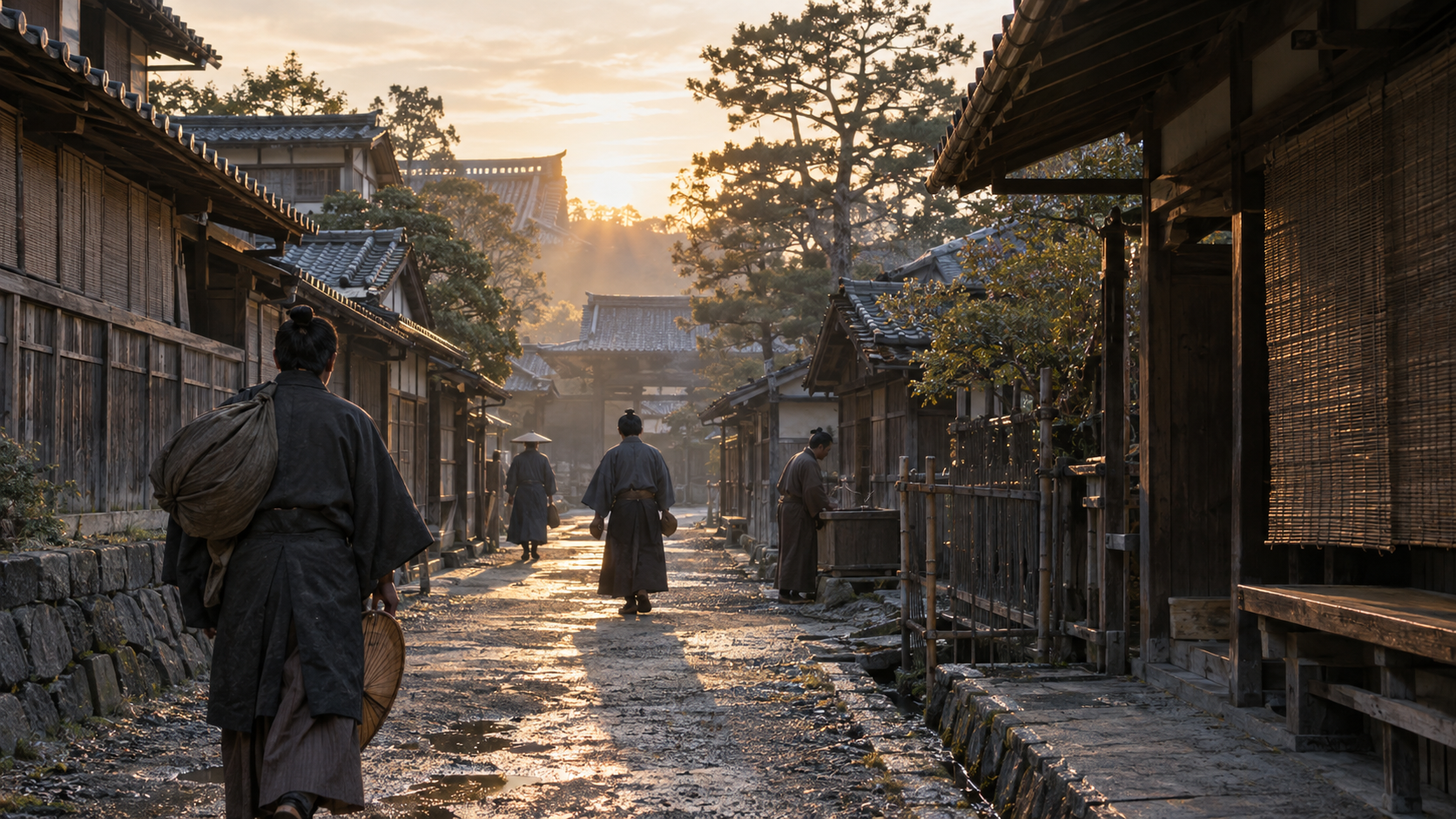
At Mibuzuka within Mibu Temple are the graves of Serizawa and Hirayama. Serizawa’s name remains in a place that also holds Kondo’s bust and a memorial containing his hair. The temple dates the erection of Kondo’s bust to 1971. Graves and later commemorative objects each carry their own history into the present.
These places recall Serizawa’s death and his place in the group’s beginnings. Kondo’s account of two leaders and the jointly issued notifications preserve a shared period before the loss. Even when the ending is familiar, those documents allow the time in which their names appeared together to be read again.
From remaining in Kyoto to serving under the military commissioner; from the death at the Yagi residence to the structure centered on Kondo. Following that course keeps the Shinsengumi from appearing fully formed at a single moment. Its leadership and the work of representing it took different shapes as the year unfolded.
Letters preserve positions and reports; places preserve accounts of death and layers of remembrance. Between them remain orders and intentions that the evidence consulted here cannot fully establish. Keeping those boundaries visible still leaves a story to follow: the change in Mibu’s organization from the time when Serizawa’s name stood alongside Kondo’s.
How to read this work
History, interpretation, and reconstruction
Early descriptions of two leaders, joint notifications and Kondo’s later account of his workload offer successive points from which to read a change in the Shinsengumi’s leadership.
This work is grounded in published sources and historical research. Interior thoughts, dialogue, and some visual details are cinematic reconstructions. Where historians disagree, the article presents the point as debated rather than settled fact.
Timeline
The story in time
-
The group participates in the political upheaval under the Kyoto Military Commissioner; the National Archives places the use of the Shinsengumi name around this time.
Sources: s01 -
Mibu Temple gives this date for Serizawa and Hirayama’s deaths and describes their assassination at the Yagi residence.
Sources: s09 -
The Yagi family’s explanation describes a structure with Kondo as commander and Hijikata as deputy.
Sources: s08 -
A stone marker identifying the Yagi residence as a Shinsengumi site is erected.
Sources: s02 -
Kondo’s bust is erected at Mibu Temple.
Sources: s09
People & terms
A guide for new readers
Key figures
- Serizawa Kamo
- Remained in Kyoto and appears alongside Kondo as a leader of their comrades. Killed at the Yagi residence.
- Kondo Isami
- Described the early shared leadership and activities in letters; became the central leader of the organization after Serizawa’s death.
- Hijikata Toshizo
- Identified by the Yagi family’s explanation as deputy commander in the structure established after the purge of Serizawa’s faction.
- Matsudaira Katamori
- Lord of Aizu and Kyoto Military Commissioner. The men who remained in Kyoto, including Serizawa and Kondo, came under his authority.
- Hirayama Goro
- Killed alongside Serizawa at the Yagi residence; his grave is at Mibuzuka.
- Sato Hikogoro
- Recipient of Kondo’s letter dated the twentieth day of the tenth month of Bunkyu 3.
Glossary
- Shinsengumi 新選組
- The band that developed from men remaining in Kyoto and served under the Kyoto Military Commissioner.
- Roshigumi 浪士組
- The group assembled by the shogunate and dispatched to Kyoto; many members subsequently returned to Edo.
- Roshi 浪士
- A term used for the unaffiliated warriors recruited into the group and for men described in its reports.
- Shogunate (bakufu) 幕府
- The military government whose recruitment, offices and authority appear in the group’s early history.
- Imperial court 朝廷
- The emperor’s court in Kyoto, to which Kondo expresses loyalty in the early letter.
- Sonno joi 尊王攘夷
- The slogan of honoring the emperor and expelling foreigners, named in explanations of the Roshigumi’s early politics.
- Kyoto Military Commissioner 京都守護職
- The office held by Matsudaira Katamori, under whose authority the men remaining in Kyoto served.
- Matsudaira Higo-no-kami 松平肥後守
- The title used for Matsudaira Katamori in the Osaka notifications. It does not identify their destination as a separate Higo domain office.
- Tonsho 屯所
- Quarters serving as a base for the group’s activities, including the Yagi and Maekawa residences at Mibu.
- Town magistrate’s office 町奉行所
- An office responsible for urban administration, judicial affairs and policing; the reports and letters connect the group with such offices.
- Kyokucho and fukucho 局長・副長
- Commander and deputy commander: the roles used in the Yagi family’s account of Kondo and Hijikata after the purge.
- Bunkyu 3 文久三年
- The Japanese era year corresponding to 1863. Numbered months and days here retain the calendar then in use.
- Published reading (yomikudashi) 読み下し
- An institution’s readable presentation of a historical text, consulted here without claiming a new decipherment of the original handwriting.
- Mibuzuka 壬生塚
- The memorial and burial area at Mibu Temple containing graves of Serizawa, Hirayama and other members, together with later commemorative objects.
Sources & method
How this article was built
This English article follows the fixed, publicly verified Japanese manuscript’s twelve chapters, six people, ten timeline entries and thirteen references. All linked HTML pages were opened and their relevant passages read. English headings for Japanese sources are editorial translations; no official English title is implied.
The three published readings provided by the Kojima Museum and Sato Hikogoro Shinsengumi Museum through the Tama Digital Shinsengumi Museum are used together with their catalogue explanations. Consultation of these institutional readings is not a claim to have newly deciphered the original handwriting. Original pages and images have not been reproduced.
The early letter’s catalogue creation field estimates the fifth month of Bunkyu 3, while its explanation proposes a sixth-month dispatch and notes the absence of a written dispatch date. That uncertainty is retained. Kondo’s description of two leaders does not establish an exhaustive command chart or give direct access to Serizawa’s thoughts.
The Osaka reports remain accounts supplied by participants. Differences between their explanations are retained; their injury figures are not adopted as independent casualty totals. The letter issued in both men’s names is not treated as an order for the later attack. The tenth-month letter’s report of three spies killed is kept separate from Serizawa’s death.
The National Archives and municipal explanations support the organization’s setting and sequence. Property and temple explanations preserve site history and remembrance. Mibu Temple expressly bases its listed death dates on gravestone inscriptions; the tourism guide presents one account among differing versions. No exact assault sequence, dialogue, weather or private motive is supplied.
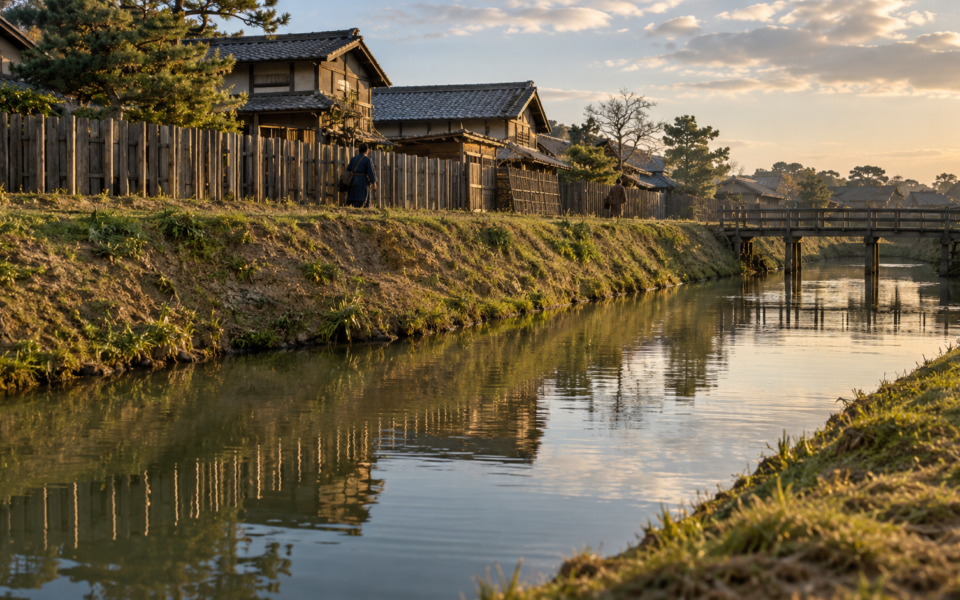
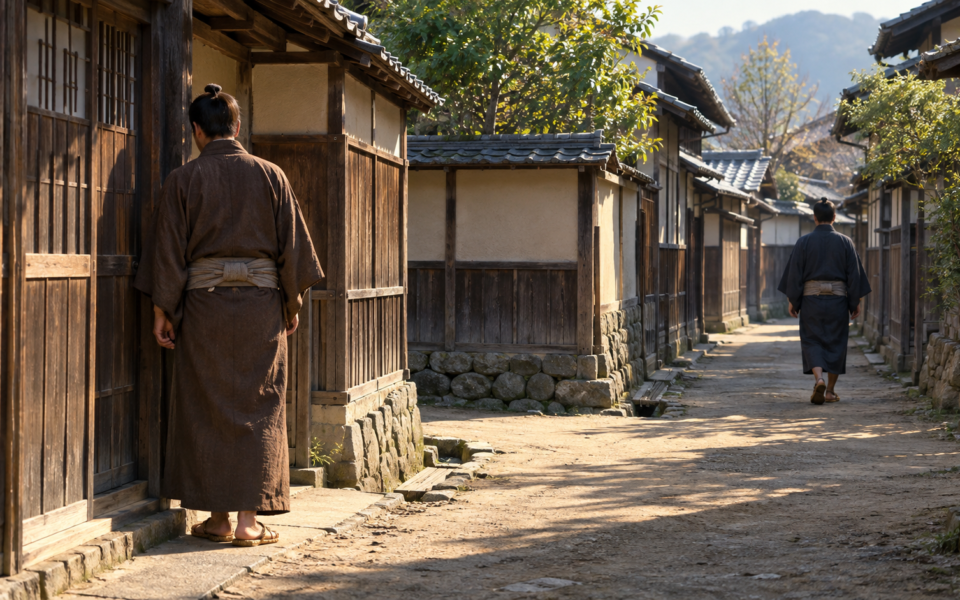
All twelve distinct canonical illustrations were viewed individually, and their hashes and article rights matched to the Japanese review. Their people, papers and settings are imaginative AI-generated representations. They are not genuine portraits, original letters or photographs documenting the residences or killing. The associated video has Japanese audio; an English subtitle track has not been verified.
Sources
References and further reading
- National Archives: Statement on Allowances for Shinsengumi Leader Kondo Isami and Thirty Men, and Related Records 国立公文書館・新選組隊長近藤勇以下三十名御手当之儀書上ほか Title translated editorially for reader convenience. National Archives of Japan 国立公文書館 Exhibition explanation of the men who remained in Kyoto, their service under the Kyoto Military Commissioner and the emergence of the group’s name. Accessed 2026-10-10
- Kyoto City: Shinsengumi Historic Site, NA070 京都市・新選組遺蹟NA070 Title translated editorially for reader convenience. Kyoto City 京都市 Explanation of the Roshigumi’s lodgings, departure and remaining members; dates the later stone marker to 1931. Accessed 2026-10-10
- Serizawa Kamo’s Family Home Site 行方市・芹澤鴨生家跡 Title translated editorially for reader convenience. Namegata City 行方市 Municipal heritage entry identifying Serizawa in present-day Namegata as his place of origin. Accessed 2026-10-10
- Published Reading of Kondo Isami’s Early Letter, Estimated Fifth Month of Bunkyu 3 小島資料館所蔵・文久3年5月推定近藤勇書簡読み下し Title translated editorially for reader convenience. Kojima Museum / Tama Digital Shinsengumi Museum 小島資料館/多摩デジタル新選組資料館 Institutional reading describing two leaders, Kyoto’s political situation and Kondo’s stated commitments. The estimated date remains uncertain. Accessed 2026-10-10
- Published Reading of the Letter Issued in Kondo Isami and Serizawa Kamo’s Names 小島資料館・近藤勇芹沢鴨連名書簡の読み下し Title translated editorially for reader convenience. Kojima Museum / Tama Digital Shinsengumi Museum 小島資料館/多摩デジタル新選組資料館 Reports of captures and a fight with sumo wrestlers in Osaka, with copies of notifications; read as a participant’s account. Accessed 2026-10-10
- Catalogue: Letter of Kondo Isami and Serizawa Kamo 小島資料館・近藤勇芹沢鴨書簡目録 Title translated editorially for reader convenience. Kojima Museum / Tama Digital Shinsengumi Museum 小島資料館/多摩デジタル新選組資料館 Catalogue dates the letter to the third day of the sixth month, identifies Kondo as its writer and notes differences between the two attached reports. Accessed 2026-10-10
- About the Former Maekawa Residence 旧前川邸・前川邸とは Title translated editorially for reader convenience. Former Maekawa Residence 旧前川邸 Property history explaining the family’s official connections, the selection of lodgings and Mibu’s location near Nijo Castle. Accessed 2026-10-10
- The Yagi Family and the Shinsengumi 八木家・八木家と新選組 Title translated editorially for reader convenience. Yagi Family 八木家 Site explanation of the remaining men and the later structure with Kondo as commander and Hijikata as deputy. Accessed 2026-10-10
- Mibu Temple and the Shinsengumi 壬生寺・新選組と壬生塚 Title translated editorially for reader convenience. Mibu Temple 壬生寺 Explanation of graves and memorials at Mibuzuka. Listed death dates are expressly based on gravestone inscriptions. Accessed 2026-10-10
- Kyoto Official Tourism: From Nijo Castle to the Mibu Area 京都市観光公式・二条城から壬生界わい Title translated editorially for reader convenience. Kyoto City Official Tourism 京都市観光公式 Site descriptions include the Yagi residence attack and sword-mark tradition; the page expressly presents one version among differing accounts. Accessed 2026-10-10
- Published Reading of Kondo Isami’s Letter to Sato Hikogoro, Tenth Month, Day Twenty, Bunkyu 3 佐藤彦五郎新選組資料館・文久3年10月20日近藤勇書簡読み下し Title translated editorially for reader convenience. Sato Hikogoro Shinsengumi Museum / Tama Digital Shinsengumi Museum 佐藤彦五郎新選組資料館/多摩デジタル新選組資料館 Institutional reading covering official business, family and repayment for the training hall roof. Its report of three men killed is kept separate from Serizawa’s death. Accessed 2026-10-10
- Catalogue: Kondo Isami’s Letter on Events at the Shinsengumi’s Formation 近藤勇書簡「新選組結成時の事件」目録 Title translated editorially for reader convenience. Kojima Museum / Tama Digital Shinsengumi Museum 小島資料館/多摩デジタル新選組資料館 Creation field gives an estimated fifth-month date; the explanation notes the absence of a dispatch date and proposes a sixth-month dispatch. Accessed 2026-10-10
- Catalogue: Kondo Isami’s Letter on Swords 近藤勇書簡「刀剣談」目録 Title translated editorially for reader convenience. Sato Hikogoro Shinsengumi Museum / Tama Digital Shinsengumi Museum 佐藤彦五郎新選組資料館/多摩デジタル新選組資料館 Identifies Sato Hikogoro as recipient and the twentieth day of the tenth month as the date; explains the roof repayment and the separate report of three spies killed. Accessed 2026-10-10
Continue reading
More stories from Shigeki
Shigeki English
Sakai’s Merchant City: Trade, Self-Government and Survival
A port, a merchant council and town communities—from changing authority to rebuilding after fire.
- When From the later fifteenth century through the Sengoku period, the fire of 1615 and early Edo-period reconstruction.
- Where Sakai, in present-day Osaka Prefecture, where maritime routes met roads on land.
Shigeki English
The Aburanokōji Incident: After Leaving the Shinsengumi
A separation in spring, a new base in summer, and two successive attacks.
- When Kyoto in Keiō 3 (1867). The incident’s historical date corresponds to December 13, 1867.
- Where Kyoto: the guards’ successive bases, the Aburanokōji attack site and the later place of remembrance.