
SHIGEKI ENGLISH STORYEN
Japanese history in English
Saitō Hajime: From Aizu to a Meiji Life as Fujita Gorō
How did a Shinsengumi member who stayed in Aizu live after the war? His names, family and police work show what came next.
Born in Edo, Saitō Hajime joined the Mibu Rōshigumi and the Shinsengumi, served in Kyoto and stayed to fight in Aizu during the Boshin War. He survived Nyorai-dō, moved to Tonami, married Takagi Tokio, worked for the Metropolitan Police as Fujita Gorō, took part in the Satsuma Rebellion, died in 1915 and rests at Amidaji in Aizu. This article keeps local explanations apart from his private thoughts, and police history apart from personal achievement.
At a glance
Before you enter the story
- When
- From his birth in 1844, through Kyoto in 1863, Aizu and Nyorai-dō in 1868, Tonami, marriage and police service after the war, and the Satsuma Rebellion of 1877, to his death in 1915 and his grave at Amidaji today
- Where
- Edo, Kyoto, Shirakawa and Bonari Pass, Aizu, Takada in Echigo, Tonami, Tokyo and Aizuwakamatsu
- Key figures
- Saitō Hajime (Fujita Gorō), Hijikata Toshizō, Kondō Isami, Takagi Tokio, Matsudaira Katamori, Sagawa Kanbē, Yamakawa Hiroshi
- What was at stake
- What happened to a Shinsengumi member who survived defeat, changed his name and served a different government while keeping his ties with Aizu?
Why this story matters
The larger history behind the turning point
Ending a biography with a battle can hide decades of life that followed. Connecting Saitō's names with his family and work shows continuity across political defeat, while keeping visible the limits of what can be said about motives, dates and personal achievements.
Popular images of Saitō often focus on his swordsmanship. Following his surrender, marriage, police service and later work shows how people on the losing side of 1868 found places in the new state without breaking their old connections.
Historical context
What an international reader needs to know
A change of government, a continuing life
The Shinsengumi’s Kyoto activities are placed in relation to Matsudaira Katamori and Aizu. The Boshin War then changes the setting from work in Kyoto to fighting associated with the former shogunate’s side. These affiliations explain the conflict, but they do not fix every survivor’s later employment or relationships.
Meiji and Taishō are era names used here to orient the longer biography. Police service belongs to the years after the fighting in Aizu, while the death year 1915 places Saitō beyond Meiji. The story therefore extends across more than the period commonly pictured through the Shinsengumi’s swordsmen.
Tonami, marriage to an Aizu woman and the intermediaries named around that marriage provide links between the war and later work. The article follows these reported connections without inventing a private explanation for every decision or describing survival as a simple choice between loyalty and betrayal.
What an authority record and a police history can establish
An authority record links names so that information about one person can be found consistently. The National Diet Library record is used for the identity linking Saitō Hajime and Fujita Gorō, life dates and occupational descriptions. Its existence does not mean that every book listed behind it has been independently read.
The police institution’s history answers a different question. Its 1874 foundation and the deployment of police forces in 1877 provide organizational context. They do not establish Fujita’s appointment date, rank, exact route or personal battlefield achievements. Individual participation is followed through the local biographical guidance, with those limits retained.
Local sources likewise require attention to attribution and disagreement. The explanation that Saitō remained from obligation towards Aizu is not converted into his independently verified voice. The conflicting 1916 label is distinguished from the adopted 1915 death year, and the statement about his wishes for burial remains attributed to the tourism account.
Watch the film
See the story in motion
The film currently uses Japanese audio. This English article provides the context and source trail; it does not imply that an English subtitle track is available.
Opening
A life beyond the fighting
A man who fought the forces of the new government as a member of the Shinsengumi later worked for that same government's police. Saitō Hajime's life did not end with the outcome of the war. Victory and defeat help describe the conflict of 1868, but they do not contain everything that happened to one of its survivors. The war ended the domain system he had served, but it did not end the lives of the people caught up in it.
Saitō stayed in Aizu and fought there, yet he did not die in the Boshin War. Under the name Fujita Gorō he lived on into a new era, married a woman from Aizu, worked for the Metropolitan Police and, according to local accounts, took part in the Satsuma Rebellion of 1877. For international readers, these years run from the last days of the Tokugawa shogunate into the modern Japanese state.
This article follows him from his birth in Edo through Kyoto, Aizu, Tonami and Tokyo to his grave in Aizuwakamatsu. It keeps official records, local explanations and dictionary entries apart, and it does not supply his private thoughts where no record of them has been consulted. Where sources differ, the differences are stated rather than smoothed over, so that readers can see what remains uncertain.

Chapter 1
Records that connect several names
The National Diet Library's authority data links Saitō Hajime and Fujita Gorō as one person and gives his life dates as 1844 to 1915. Its description of his occupation lists both a former member of the Shinsengumi and a police officer, joining two careers that are often told separately. An authority record of this kind is a library tool for gathering information about one person under several names.
According to the Aizuwakamatsu Tourism Bureau, Saitō changed his name to Yamaguchi Jirō and then to Ichinohe Denpachi, and finally took the name Fujita Gorō as a retainer of the Aizu domain. Aizuwakamatsu City writes the name he used after returning to the Shinsengumi as Yamaguchi Jirō with a different character. Read together, the two local accounts show that even the spelling of his names varies from one explanation to another.
Each change of name came with a change of position and allegiance. The sources consulted here do not say exactly when, or for what reason, each change was made. This article therefore uses the sequence of names as a guide to his path, without inventing explanations for it. The names themselves, however, still mark the main stages of a life that crossed several political worlds.
Chapter 2
From Edo to Kyoto
The Kyodo News glossary entry on Kotobank states that Saitō was born in Edo in 1844. A feature in Wa-Raku Web, published by Shogakukan, introduces him as the second son of Yamaguchi Yūsuke, a foot soldier of the Akashi domain in Harima Province. Accounts of his family background therefore come from different kinds of publications, and they are cited separately here.
Aizuwakamatsu City explains that at the age of nineteen Saitō is said to have cut down a man and fled from Edo to Kyoto, where he joined the group of masterless samurai that had come up to the city. The sources consulted here give no further details of that incident, and none are added. What is recorded is the move itself, which brought him into contact with the men who would form the Shinsengumi.
In the third month of 1863 the Mibu Rōshigumi was formed in Kyoto under the protection of the Aizu domain, and Saitō joined it. Working under Matsudaira Katamori, the lord of Aizu and Kyoto Military Commissioner, this group became the Shinsengumi. Saitō's connection with Aizu began here. That early link between the corps and the Aizu domain explains much of what he did in the years that followed.
Chapter 3
Duties in Kyoto and the retreat of 1868
In the Shinsengumi Saitō became an assistant vice-commander and is said to have served as a fencing instructor and as leader of the Third Unit. Aizuwakamatsu City relates that during the Ikedaya incident of 1864 he entered the building late and came to the aid of Kondō Isami and others who were hard pressed. These posts placed him among the corps' leading swordsmen, although no record measures his skill in any exact way.
When Itō Kashitarō and his followers later left the corps to form the Goryō Eji, the guards of the imperial tombs, Saitō went with them. He is said, however, to have passed information to Kondō's side, and he eventually returned to the Shinsengumi. Local explanations describe this period with visible caution. The sources consulted here present this episode as something that is said, not as a fully documented sequence of events.
In 1868 the Boshin War began. Saitō fought at Toba-Fushimi and then at Kōshū-Katsunuma before heading for Aizu. The relationship with Aizu that had been formed in Kyoto now moved the scene of his fighting to the northeast of Japan. The war that followed would test those ties far more severely than the years of patrolling in Kyoto had done.
Chapter 4
Toward Aizu: Shirakawa and Bonari Pass
By the time Saitō reached Aizu, Kondō Isami was already dead. According to Aizuwakamatsu City and the Fukushima Prefectural Tourism and Products Association, Saitō took command of the unit in place of Hijikata Toshizō, who had been wounded. The loss of the corps' commander and the wounding of its vice-commander left Saitō with heavy responsibility.
The Aizuwakamatsu Tourism Bureau explains that Saitō led his men in the fighting over Shirakawa Castle and at the Battle of Bonari Pass, acting together with the Aizu domain. These battles concerned the defence of the roads leading into Aizu. Bonari Pass lay on a route into Aizu, and the fighting there came before the attack on the castle town.
Fukushima's tourism association notes that Hijikata and Saitō were the only former senior officers of the Shinsengumi to take part in the Aizu War. As the fighting turned against the former shogunate's side, the paths of the two men began to separate. From this point the story of the Shinsengumi in the northeast divides into two different journeys.

Chapter 5
Whose words explain why he stayed?
While troops of the former shogunate moved north, Saitō chose to remain in Aizu. Aizuwakamatsu City relates that he disagreed with Hijikata, who intended to go on to Sendai, and argued that abandoning Aizu would not be just. Hijikata, for his part, continued north with the forces of the former shogunate.
Fukushima's tourism association says that out of a sense of obligation to Aizu he stayed and fought on with a few other members of the corps. Both accounts explain his decision through his bond with Aizu, in the way local institutions tell this story today. Local guidance in Aizu today often presents this choice as an expression of loyalty to the domain.
These words and reasons, however, come from present-day explanations. This article has not examined anything Saitō himself wrote about the decision, so it does not reconstruct the conversation or his feelings at that moment. What can be stated is the action itself: he stayed in Aizu. Keeping that distinction clear allows the decision to be respected without turning it into invented dialogue.
Chapter 6
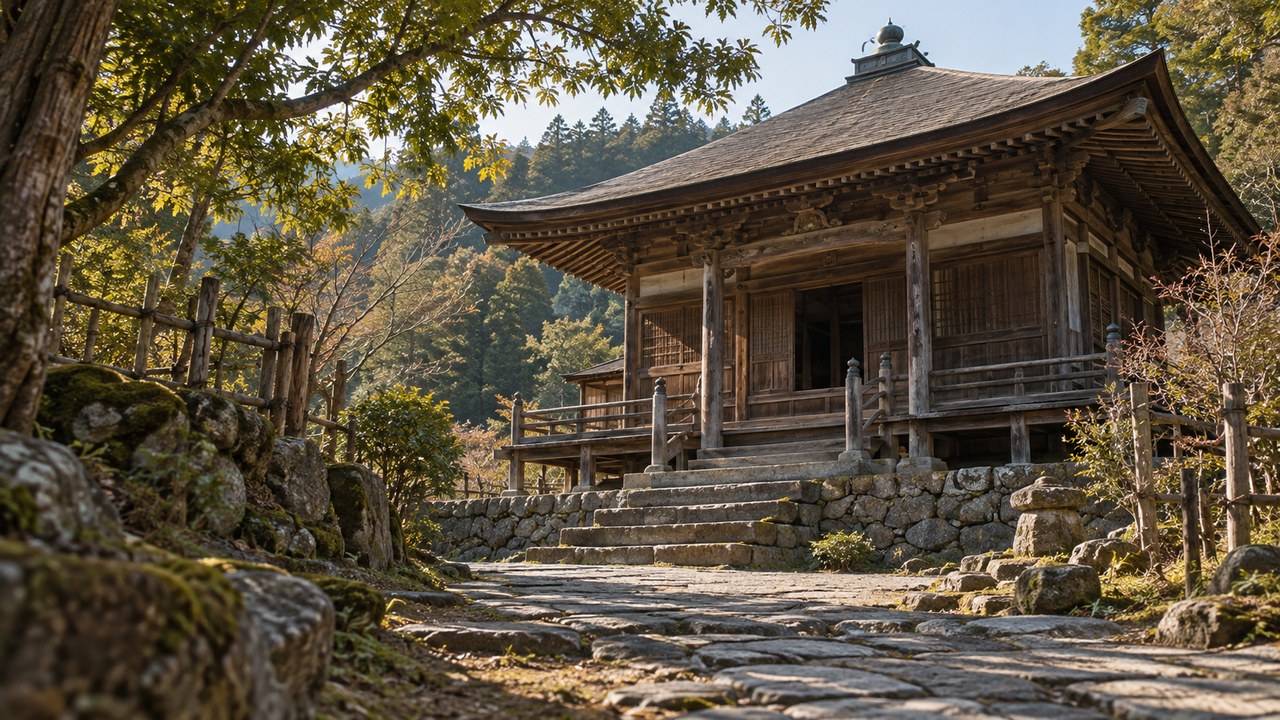
Nyorai-dō was not the end
After the Battle of Bonari Pass, Saitō stayed in Aizu, took up a position at Nyorai-dō, a temple hall, and fought the new government's forces that had advanced toward the castle town. This is how the Aizuwakamatsu Tourism Bureau describes his part in the war. The fighting there took place after the new government's forces had entered the area around the castle town.
According to Aizuwakamatsu City, the unit at Nyorai-dō was long said to have been wiped out in a sudden attack by the western army. In fact, seven of its members, Saitō among them, survived into the Meiji era. A place often described as an ending was not the end of his life. The story of a unit destroyed to the last man is therefore corrected by the local explanation itself.
The Japan Tourism Agency's multilingual explanation states that in the autumn of 1868 Tsuruga Castle was besieged by the new government's forces for about a month, with some five thousand people, including women, children and the elderly, inside. Matsudaira Katamori eventually agreed to surrender. The siege brought great suffering to the castle town, and its memory remains central to how Aizu tells its history.
Chapter 7
After surrender: Takada and Tonami
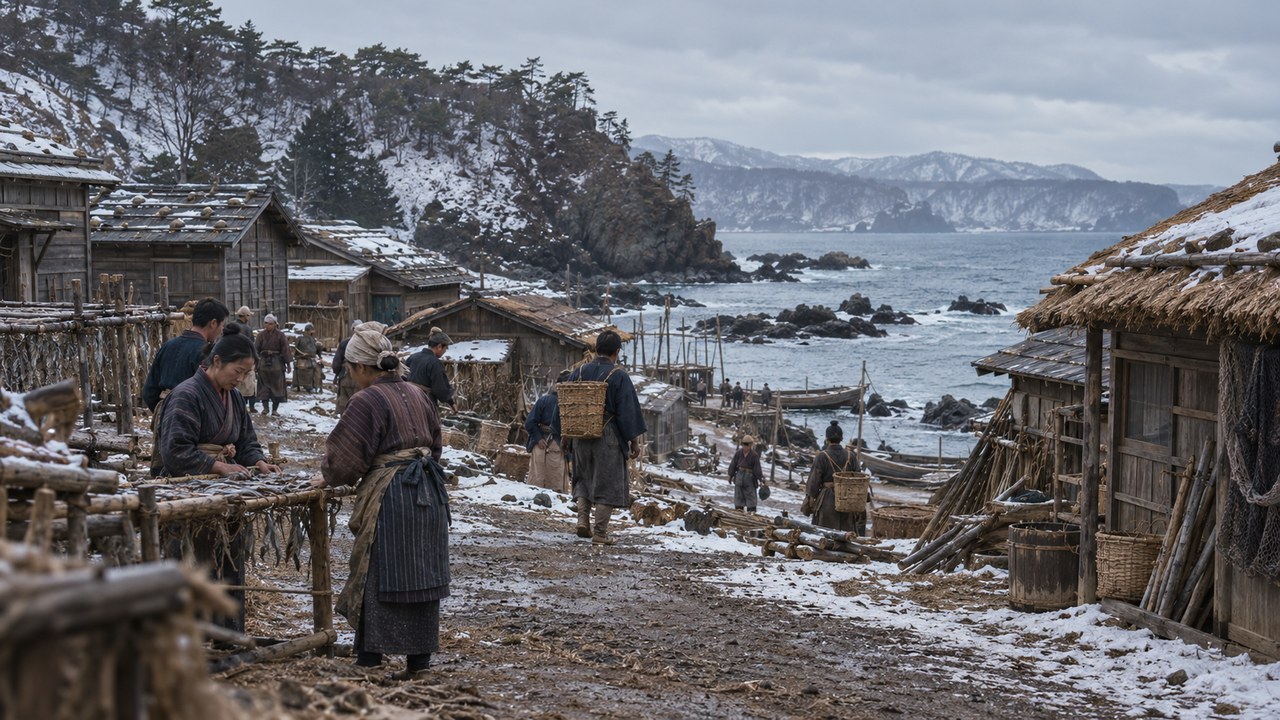
Saitō is said to have kept fighting even after the Aizu domain surrendered. Nippon Tabi Magazine relates that he gave himself up after being persuaded by an envoy sent by Matsudaira Katamori, and then lived in confinement at Takada in Echigo Province. The account does not give the exact date of his surrender, and none is added here.
The Matsudaira house of Aizu was later re-established as the Tonami domain in what is now Aomori Prefecture, and Saitō moved there. The Kyodo News glossary entry adds that after he moved to Tokyo he kept up his relationship with the Matsudaira family. Tonami was a new domain created for the Matsudaira house after its defeat, in the far north of Honshu.
The Aizuwakamatsu Tourism Bureau says that in Tonami Saitō shared the hardships of the Aizu retainers. The sources consulted here do not describe his daily life in that harsh land. Even so, they show that after the war he remained among the people of Aizu. Former Aizu retainers moved there with him, and the local account speaks of the hardships they shared.
Chapter 8
Connections seen in his marriage to Tokio
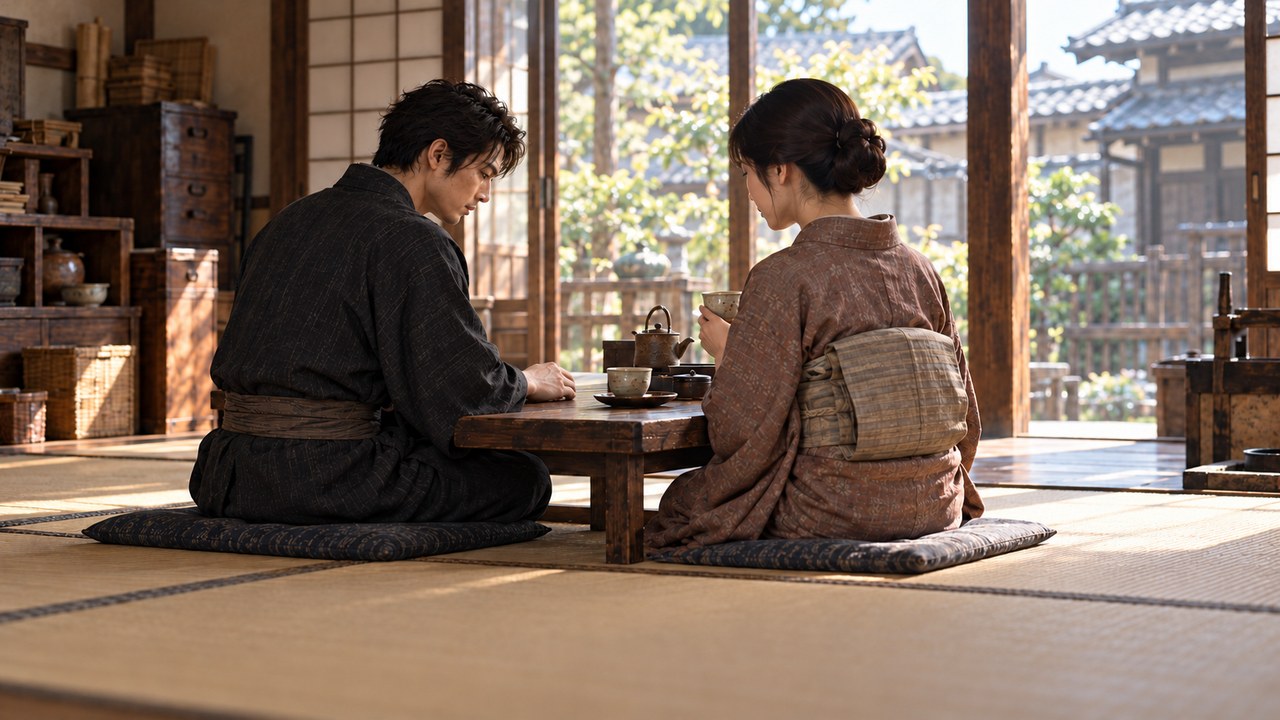
According to the Aizuwakamatsu Tourism Bureau, Saitō, who had gained the favour of Matsudaira Katamori, married Tokio, a daughter of Takagi Kojūrō of a distinguished Aizu family with a stipend of three hundred koku. The year of the marriage is not stated in the sources consulted here. A stipend in koku measured rice income and indicated a family's rank within the domain.
The same account names the former Aizu senior retainers Sagawa Kanbē and Yamakawa Hiroshi as secondary go-betweens, with Matsudaira Katamori as the principal go-between. Aizuwakamatsu City also states that Sagawa and Yamakawa acted as secondary go-betweens. A go-between arranged and witnessed a marriage, and the names listed here show how closely former Aizu leaders were involved.
Aizuwakamatsu City adds that Yamakawa Hiroshi chose the name of the couple's eldest son, Tsutomu. Through a marriage and the naming of a child, the ties among people on the defeated side carried on into everyday life in the Meiji period. These personal details, small in themselves, show how former enemies of the new government rebuilt ordinary lives.
Chapter 9
Fujita Gorō joins a new police force
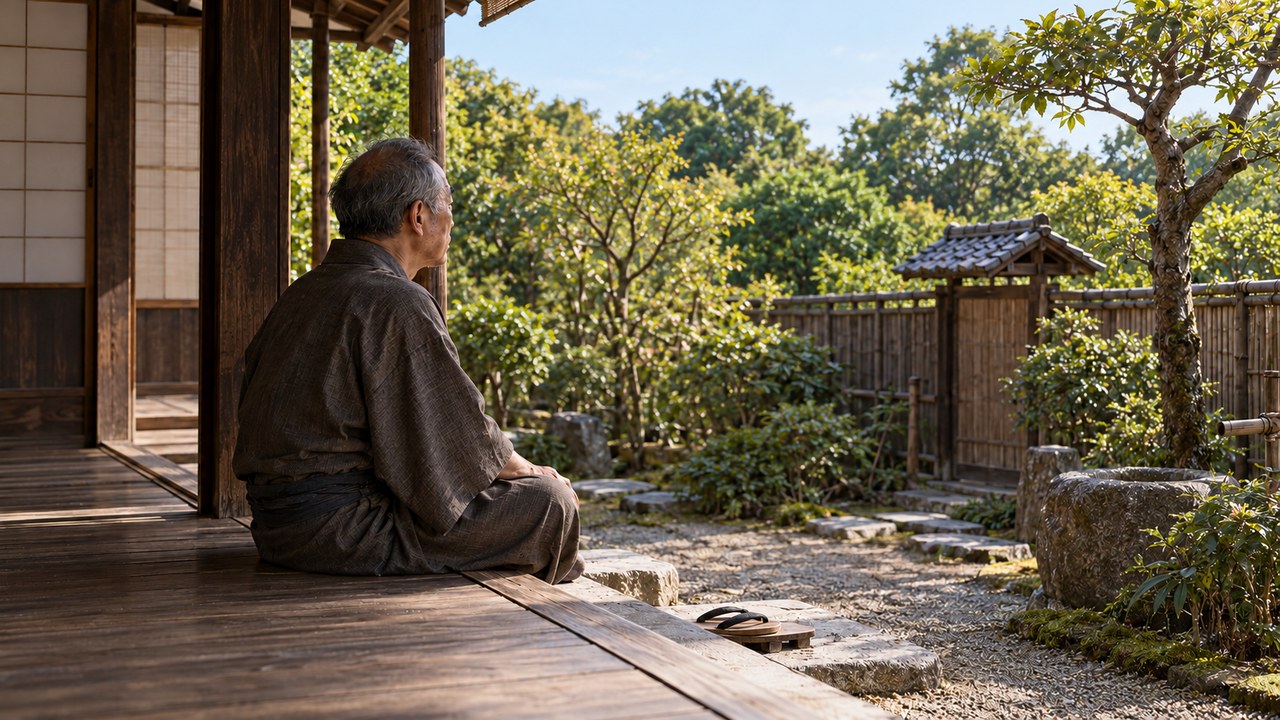
As Fujita Gorō, Saitō worked for the Metropolitan Police in Tokyo. He thus came to serve in the police of the government he had once fought against. Both the Kyodo News glossary entry and the local explanations mention this employment. His work there placed a former opponent of the new government inside one of its key institutions.
According to the Metropolitan Police Department's official history, the Tokyo Metropolitan Police was founded in 1874. That is the year the institution was created, however, and it should not be read as the year Fujita joined it. Keeping the dates of the institution and of the individual apart avoids a common error in retelling his story.
The sources consulted here do not give a detailed record of when Fujita joined the police or which posts he held. They do confirm that a former Shinsengumi member, under a new name, worked to keep order in the capital of the Meiji state. Further details of his police career would require sources beyond those consulted for this article.
Chapter 10
1877: the Satsuma Rebellion and later work
The Metropolitan Police Department's history records that police units joined the government army in the Satsuma Rebellion of 1877. The Aizuwakamatsu Tourism Bureau states that Fujita took part in that war. The rebellion, led by Saigō Takamori in Kyushu, was the last major armed uprising against the Meiji government.
The Wa-Raku Web feature says he took part as an assistant police inspector. The work of the police units as a whole, however, cannot be read as one man's personal achievement. This article goes no further than the fact that he took part. Personal feats attributed to him in popular retellings are not repeated here because they could not be confirmed.
Aizuwakamatsu City relates that Fujita later left the police and worked at the Tokyo Museum of Education. The Wa-Raku Web feature adds that he afterwards handled general affairs and accounts at the Tokyo Women's Normal School. These later posts show that his working life continued well beyond his years with the police.
Conclusion
The Fujita family grave in Aizu
Fujita Gorō died on 28 September 1915, the fourth year of the Taishō era. Nippon Tabi Magazine gives the place of his death as Masago-chō in Hongō Ward, Tokyo. A heading in Aizuwakamatsu City's explanation gives the year as 1916, so the sources do not fully agree. He lived beyond the Meiji era into the reign of the Taishō emperor, decades after the fall of the shogunate.
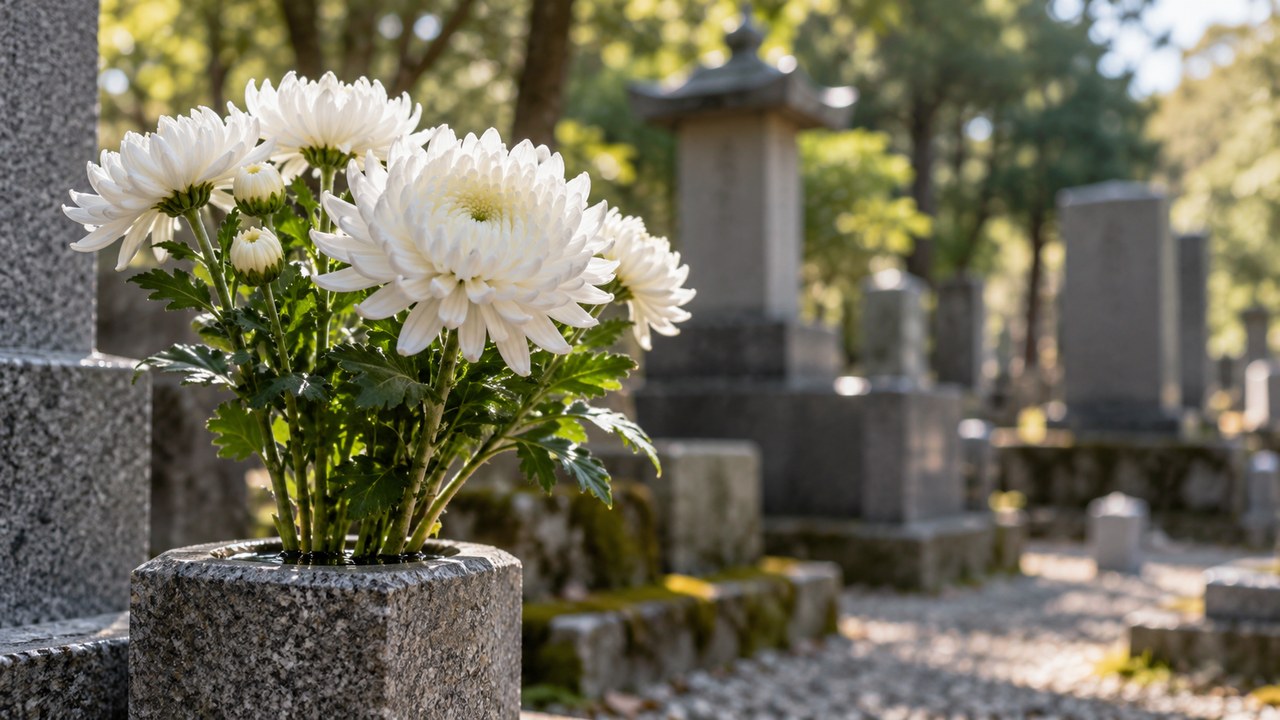
His grave is at Amidaji in Nanokamachi, Aizuwakamatsu, and the Aizuwakamatsu Tourism Bureau says he was buried there in accordance with his will. According to Aizuwakamatsu City, his wife Tokio rests there with him. Fukushima's tourism association also connects the grave with a cemetery for those who fought on the eastern side.
Remembered as a master swordsman, Saitō Hajime also lived a long life after the fighting, and following his ties with Aizu brings that life into view. His names and allegiances changed, but his connections with people did not break. The grave in Aizu still carries that continuation today. Reading his life in this way places the famous swordsman back among the people and places that sustained him.
How to read this work
History, interpretation, and reconstruction
Following Saitō Hajime and Fujita Gorō as one life shows that his bond with Aizu continued after the fighting, through marriage, work and his grave. Explanations of why he stayed are kept apart from his inner thoughts, and institutional history apart from personal achievement.
This work is grounded in published sources and historical research. Interior thoughts, dialogue, and some visual details are cinematic reconstructions. Where historians disagree, the article presents the point as debated rather than settled fact.
Timeline
The story in time
-
The Tokyo Metropolitan Police is founded (distinct from the year Fujita joined).
Sources: s06
People & terms
A guide for new readers
Key figures
- Saitō Hajime (Fujita Gorō)
- Former Shinsengumi member who fought in Aizu, survived and worked for the Metropolitan Police in the Meiji period; 1844–1915.
- Takagi Tokio
- Daughter of the Takagi family of Aizu, whose marriage to Saitō is described in official local guidance.
- Matsudaira Katamori
- Lord of Aizu and Kyoto Military Commissioner; local guidance also connects him with the couple’s marriage after the war.
- Sagawa Kanbē
- Named in local guidance among the intermediaries for Saitō and Tokio’s marriage.
- Yamakawa Hiroshi
- Named in local guidance among the intermediaries for Saitō and Tokio’s marriage.
- Hijikata Toshizō
- Vice-commander of the Shinsengumi; wounded in Aizu, he was replaced by Saitō as unit leader, and their paths separated when he moved on toward Sendai.
- Kondō Isami
- Commander of the Shinsengumi; fought alongside Saitō at the Ikedaya and had already died when Saitō reached Aizu.
Glossary
- Saitō Hajime / Fujita Gorō 斎藤一・藤田五郎
- Names connected to the same person by the National Diet Library authority record; the record alone does not establish exact dates or motives for the changes.
- Shinsengumi 新選組
- The organization associated here with guarding and policing Kyoto in relation to Aizu; its members followed different paths during the war.
- Mibu Rōshigumi 壬生浪士組
- The Kyoto gathering which Fukushima’s tourism account states Saitō joined in 1863, associated with the later Shinsengumi.
- Aizu 会津
- The domain and community central to the article’s wartime and later relationships; present-day places include Aizuwakamatsu.
- Kyoto Military Commissioner 京都守護職
- The office held by Matsudaira Katamori in the setting of the Shinsengumi’s Kyoto activities.
- Boshin War 戊辰戦争
- The conflict beginning in 1868 between the new government’s forces and opponents associated with the former shogunate; Saitō’s life continued afterwards.
- Nyorai-dō 如来堂
- The Aizu site associated with fighting and commemoration; Saitō’s survival is distinguished from a claim that everyone present died.
- Tonami 斗南
- The place to which the local tourism account says Saitō moved after the Boshin War, sharing the hardships of Aizu people.
- Metropolitan Police 警視庁
- The institution associated with Fujita’s later work. Its 1874 foundation does not establish his personal appointment date.
- Satsuma Rebellion 西南戦争
- The 1877 conflict in which local guidance states Fujita participated; police organizational history does not establish all his individual actions.
- Meiji and Taishō 明治・大正
- Successive era names that place his later life beyond the late shogunate; his death in 1915 falls in Taishō.
- Amidaji 阿弥陀寺
- The temple in Aizuwakamatsu where the Fujita family grave is described in local guidance; statements about Saitō’s burial wishes remain attributed.
- Goryō Eji 御陵衛士
- The guards of the imperial tombs, a group formed by Itō Kashitarō and others who left the Shinsengumi; Saitō went with them and later returned.
- Bonari Pass 母成峠
- A mountain pass on a route into Aizu, where a battle was fought in 1868.
- Takada 高田
- A castle town in Echigo Province where Saitō is said to have been confined after surrendering.
Sources & method
How this article was built
This English edition follows the revised Japanese article scene by scene and keeps its sources, their order and its timeline. It draws on the National Diet Library authority record, explanations by Aizuwakamatsu City, the Aizuwakamatsu Tourism Bureau, the Fukushima Prefectural Tourism and Products Association and the Japan Tourism Agency, the Metropolitan Police Department's history, a Kyodo News glossary entry on Kotobank, Nippon Tabi Magazine and a Wa-Raku Web feature.
The death year 1915 follows the National Diet Library record and several local accounts; a municipal heading giving 1916 is disclosed. Reasons for staying in Aizu and burial in accordance with his will remain attributed to the institutions that explain them. The year the police were founded is not treated as the year he joined, and the work of police units is not credited to him personally.
Images are AI-generated conceptual scenes by SHIGEKI. They are not portraits of real people, original documents or exact reconstructions of historic sites. The film has Japanese audio.
Sources
References and further reading
- Saitō, Hajime, 1844–1915: Authority Record 国立国会図書館・斎藤, 一, 1844–1915(典拠) Title translated editorially for reader convenience. National Diet Library 国立国会図書館 Authority 00695102 connects Saitō Hajime and Fujita Gorō and records the dates 1844–1915 and former Shinsengumi and police careers. It does not establish exact name-change dates or motives, or constitute reading the underlying books in full. Accessed 2026-11-18
- Following the Footsteps of the Shinsengumi 会津若松観光ビューロー・新選組の足跡をたどる Title translated editorially for reader convenience. Aizuwakamatsu Tourism Bureau 会津若松観光ビューロー Shirakawa, Bonari Pass, Nyorai-dō, Tonami, marriage to Tokio and named intermediaries, police service, participation in the Satsuma Rebellion,1915 death and the Amidaji grave. Obligation and burial wishes remain attributed; no exact name-change year, household dialogue or individual battle achievements are added. Accessed 2026-11-18
- Samurai Story 福島県観光物産交流協会・サムライストーリー Title translated editorially for reader convenience. Fukushima Prefecture Tourism and Local Products Exchange Association 福島県観光物産交流協会 The 1863 Mibu Rōshigumi, Third Unit leadership, remaining in Aizu, later police career and 1915 death. The present-day explanation of his reasons is not independent proof of private thoughts or verbatim speech; no verdict on strongest swordsman or handedness. Accessed 2026-11-18
- Aizu and the Shinsengumi 会津若松市・会津と新選組 Title translated editorially for reader convenience. Aizuwakamatsu City 会津若松市 The Kyoto Military Commissioner and Shinsengumi, survival at Nyorai-dō, marriage and relationships. The heading’s 1844–1916 label conflicts with the authority record and is not adopted for the death year. No unverified espionage claims, incidents or direct speech are added. Accessed 2026-11-18
- The History of the Metropolitan Police 警視庁・警視庁の歴史 Title translated editorially for reader convenience. Metropolitan Police Department 警視庁 The 1874 foundation of the Tokyo Metropolitan Police and deployment of police forces on the government side in 1877. The foundation date is not Fujita’s appointment date, and organizational achievements or personnel totals are not transferred to him. Accessed 2026-11-18
- Saitō Hajime (Kyodo News glossary) 斎藤一(共同通信ニュース用語解説) Title translated editorially for reader convenience. Kotobank (The Asahi Shimbun Company) コトバンク(朝日新聞社) Used for his birth in Edo in 1844, joining the Mibu Rōshigumi in 1863 and his post as assistant vice-commander, the Ikedaya incident, Toba-Fushimi and resistance in Aizu, and the move to Tonami and continuing relationship with the Matsudaira family after moving to Tokyo. Accessed 2026-11-18
- Amidaji and the Gosankai 阿弥陀寺・御三階 Title translated editorially for reader convenience. Nippon Tabi Magazine ニッポン旅マガジン Used for the battles of Shirakawa and Bonari Pass, resistance after Aizu's surrender, surrender after persuasion by Matsudaira Katamori's envoy, confinement at Takada in Echigo, and his death in 1915 at Masago-chō, Hongō Ward, Tokyo, and burial at Amidaji. Accessed 2026-11-18
- Wakamatsu Castle: The Boshin War and the Siege (Multilingual Explanation Text Database) 史跡若松城跡/会津戦争と籠城戦(地域観光資源の多言語解説文データベース) Title translated editorially for reader convenience. Japan Tourism Agency 観光庁 Used for the month-long siege of Tsuruga Castle in autumn 1868, the roughly five thousand people inside, and Matsudaira Katamori's surrender. Accessed 2026-11-18
- Who Was Saitō Hajime? The Unusual Life and Sword of a Mysterious Unit Leader 斎藤一とは?ミステリアスな組長の数奇な生涯と愛刀を語る Title translated editorially for reader convenience. Wa-Raku Web (Shogakukan) 和樂web(小学館) Used for the account of his father as Yamaguchi Yūsuke, a foot soldier of the Akashi domain, his part in the Satsuma Rebellion as an assistant police inspector, and his later work at the Tokyo Museum of Education and the Tokyo Women's Normal School. The feature is written as a first-person narrative whose tone and settings are stated to be fictional, so only its factual statements are used, with attribution. Accessed 2026-11-18
Continue reading
More stories from Shigeki
Shigeki English
Ishida Mitsunari: How a Magistrate of 190,000 Koku Came to Stand at the Center of Sekigahara
Was Sekigahara a war Mitsunari plotted? Fourteen scenes follow the third son of a village family from the survey fields and supply lines to the center of the decisive battle, and to the riverbed at Rokujō.
- When From his birth in 1560 to his execution on the 1st day of the 10th month of 1600.
- Where Ōmi (today Shiga Prefecture), Sakai, Kyushu and Hakata, Oshi in Musashi, Korea, Sawayama, Fushimi, Ōgaki, Sekigahara and Kyoto.
Shigeki English
Taira no Kiyomori: From the First Warrior Noble to a Capital by the Sea
Born as Tadamori’s heir, he rose through the Hogen and Heiji conflicts to grand minister of state, then turned from Fukuhara to Itsukushima, Owada no Tomari and Song ships, before the transfer and return of the capital, his death and the end of his family.
- When 1118–1181, from his birth to his death, with the defeat at Dan-no-ura in 1185 and the statue of 1967
- Where Kyoto, Fukuhara in present-day Kobe, Owada no Tomari, Itsukushima, the Ondo Strait and Dan-no-ura