
SHIGEKI ENGLISH STORYEN
Japanese history in English
The Ōshio Heihachirō Uprising: Relief, Rebellion and Fire in 1837 Osaka
Why did a former official who sold his books to feed the hungry take up arms against the city he had once served?
In 1837, former Osaka official Ōshio Heihachirō rose under a banner calling for relief of the people. Follow the famine, his rejected relief plan, the sale of his library, his manifesto, the broken bridges, the great fire, his death in hiding and the unrest that spread across Japan.
At a glance
Before you enter the story
- When
- The nineteenth day of the second month of Tenpō 8 (1837), with the famine that preceded it and the unrest that followed. Months and days follow the calendar of the time.
- Where
- Tenma, Senba and the waterways of Osaka, a city governed directly by the Tokugawa shogunate.
- Key figures
- Ōshio Heihachirō, Ōshio Kakunosuke, Atobe Yoshisuke, Miyawaki Shima, Ikuta Yorozu
- What was at stake
- Whether a city at the center of Japan’s rice trade could feed its poor, and what an armed protest in their name would cost the people it claimed to defend.
Why this story matters
The larger history behind the turning point
The uprising shocked the Tokugawa order because it was led by a former official in one of the shogunate’s most important cities. Its manifesto circulated widely, and people elsewhere soon claimed the name of Ōshio’s disciples.
It also poses a lasting question about protest and its consequences. Ōshio spoke for people in real distress, yet the fire that followed his rising destroyed the homes of many ordinary residents of Osaka.
Historical context
What an international reader needs to know
Osaka in the Edo period
Osaka was the great commercial city of western Japan and was ruled directly by the Tokugawa shogunate. Domains from across the country shipped rice there to sell, which is why the city was so closely tied to the price of food.
Two town magistrates, East and West, took turns administering the city with the help of officials called yoriki and dōshin. Ōshio had served in the East office before resigning in 1830.
Dates and names
Months and days in this article follow the lunisolar calendar used in Japan at the time, so the nineteenth day of the second month does not match February 19 on the modern calendar.
Japanese family names come first, so Ōshio is the family name of Ōshio Heihachirō. Ages are given as counted at the time, when a person was one year old at birth.
Watch the film
See the story in motion
The film currently uses Japanese audio. This English article provides the context and source trail; it does not imply that an English subtitle track is available.
Opening
A banner for relief and a city in flames
On the nineteenth day of the second month of Tenpō 8, in 1837, a former Osaka official named Ōshio Heihachirō raised a force under a banner reading “Relieve the People.” The uprising was put down in about half a day, yet the fire it started burned into the next day and is said to have consumed one-fifth of the city.
How did a man who spoke for the hungry come to take up arms and leave so much of Osaka in ashes? Ōshio was also a scholar who had sold his own library to help people in need. His actions carry two sides, rescue and destruction, and neither can be removed from the story.
This article follows the rice trade of Osaka and the famine, Ōshio’s years as an official, his manifesto, the route of the rising, the great fire, his death and the unrest that followed. Months and days follow the calendar of the time, and where sources give different figures, those differences are stated openly.
Chapter 1
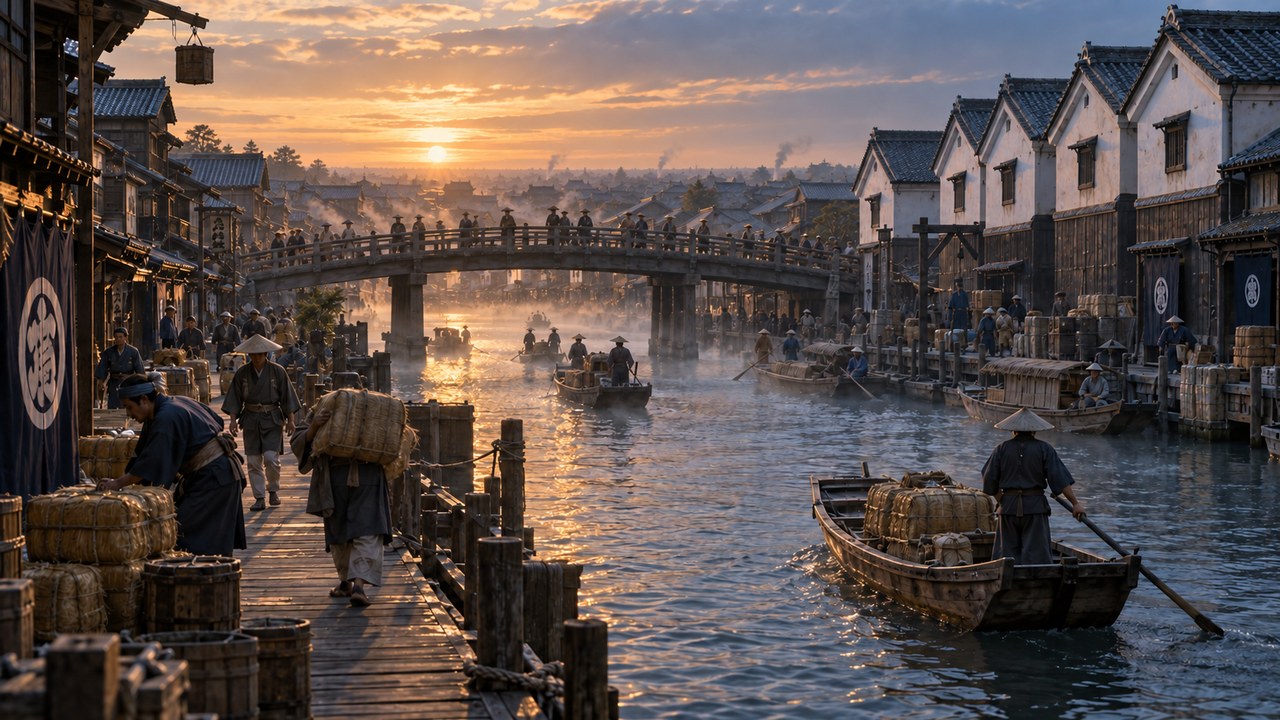
A city where rice gathered
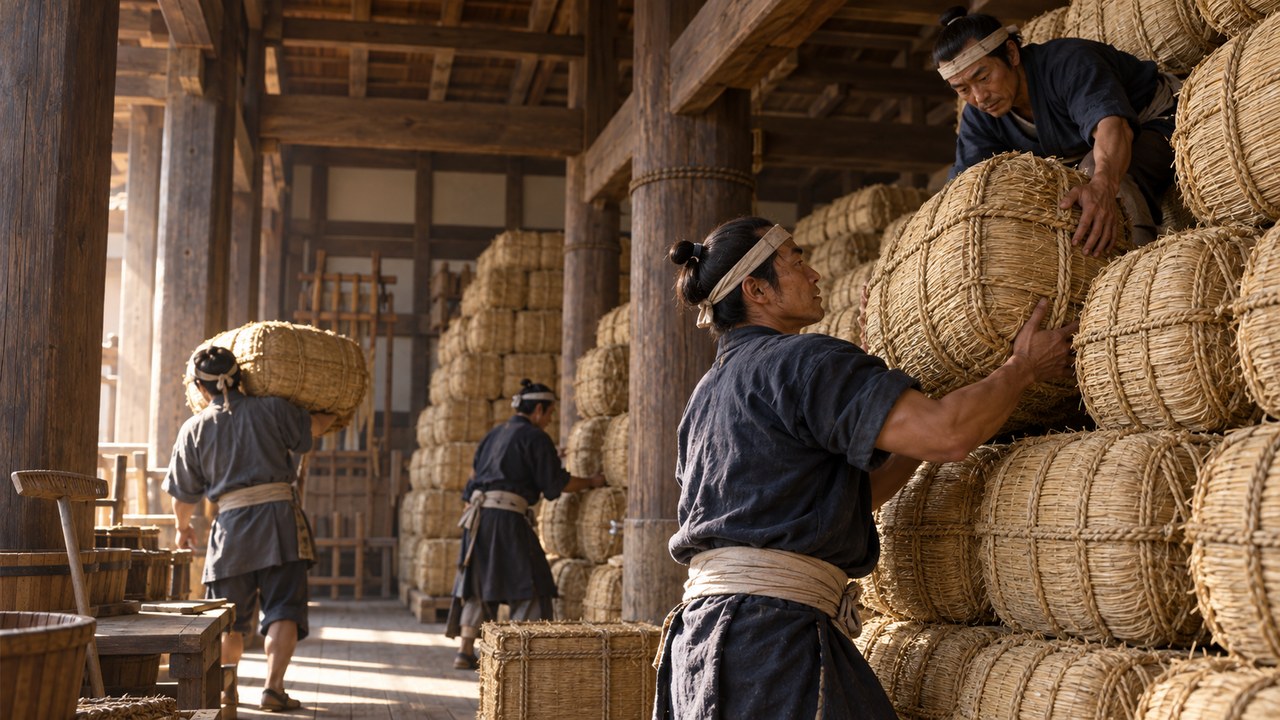
Osaka was governed directly by the Tokugawa shogunate. Its town magistrates oversaw civil administration, public order, justice and firefighting across the city. Many domains also kept storehouses there, where rice and local products shipped from their home territories were sold for cash. That money in turn helped pay for the running of each domain.
A city full of rice is not the same as a city whose people can afford to eat. The grain arriving at the storehouses was also a commodity that supported domain finances. The crisis Ōshio faced was one in which people went hungry at the very center of Japan’s rice trade, close to the warehouses and markets that handled the grain.
The daily work of the magistrates’ offices rested on officials called yoriki and on the lower-ranking dōshin who served with them. Yoriki divided among themselves duties concerning temples and shrines, rivers, public works and other matters. It was in this working heart of a great commercial city that Ōshio spent much of his career.
Chapter 2
Famine and a rejected relief plan
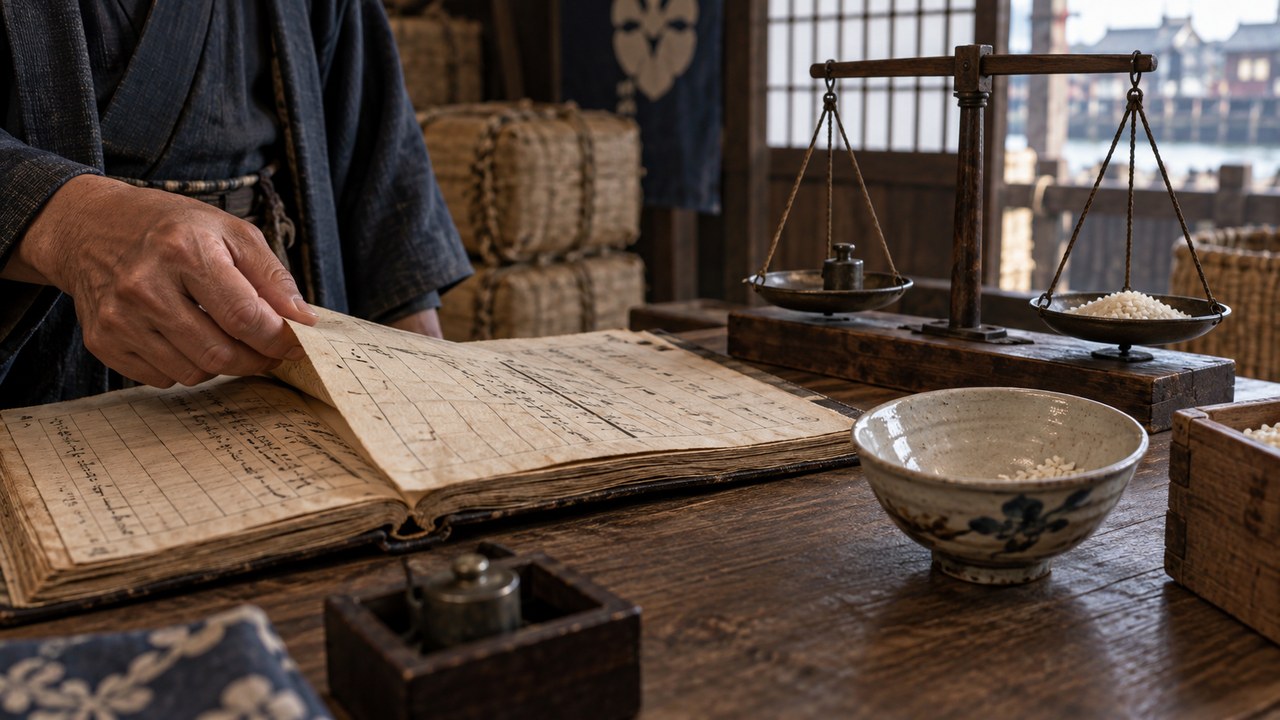
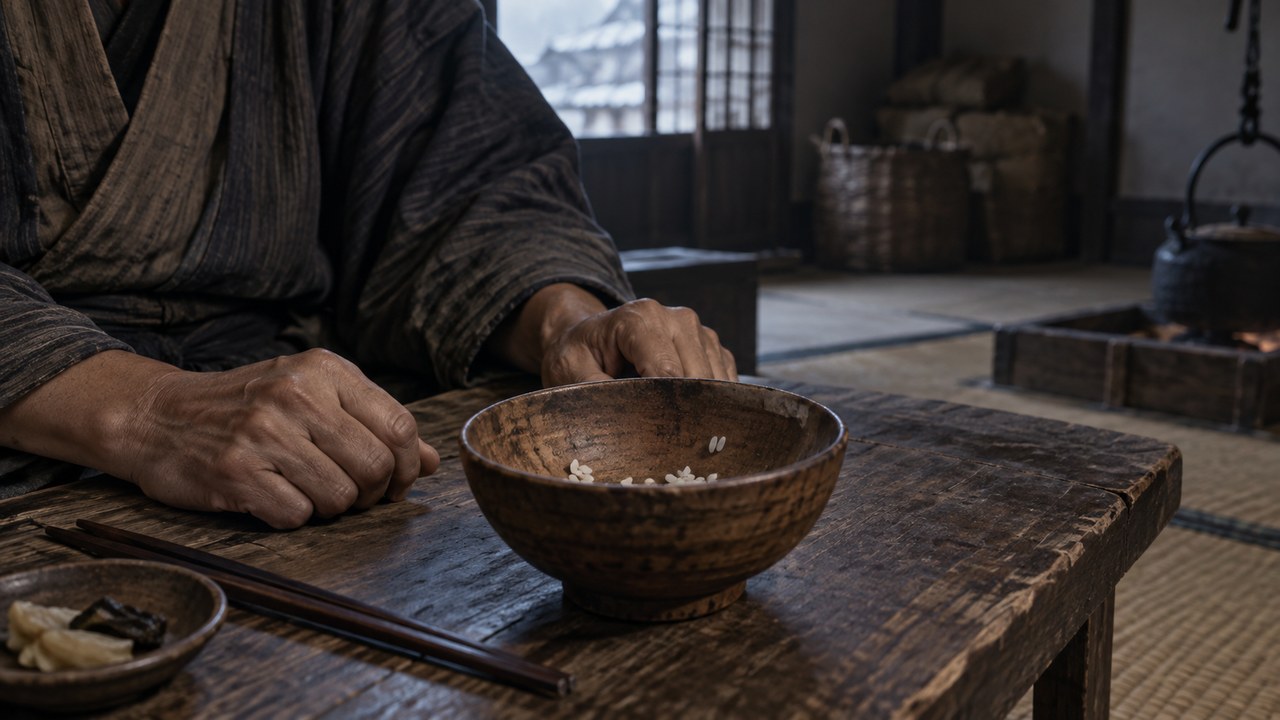
The Tenpō famine struck Japan from 1833 until about 1837. According to the National Archives of Japan, cold weather ruined harvests and many people starved in the northeast. Deaths from hunger and disease across the country are estimated at between 200,000 and 300,000, a toll that reached far beyond any single region or city.
Osaka felt the crisis through the price of rice. A newsletter of the city’s historical editors, citing the official history of Osaka, records that poor harvests from 1832 drove prices sharply upward the next year. In 1836, it says, the buying up of rice brought famine back to the city once again.
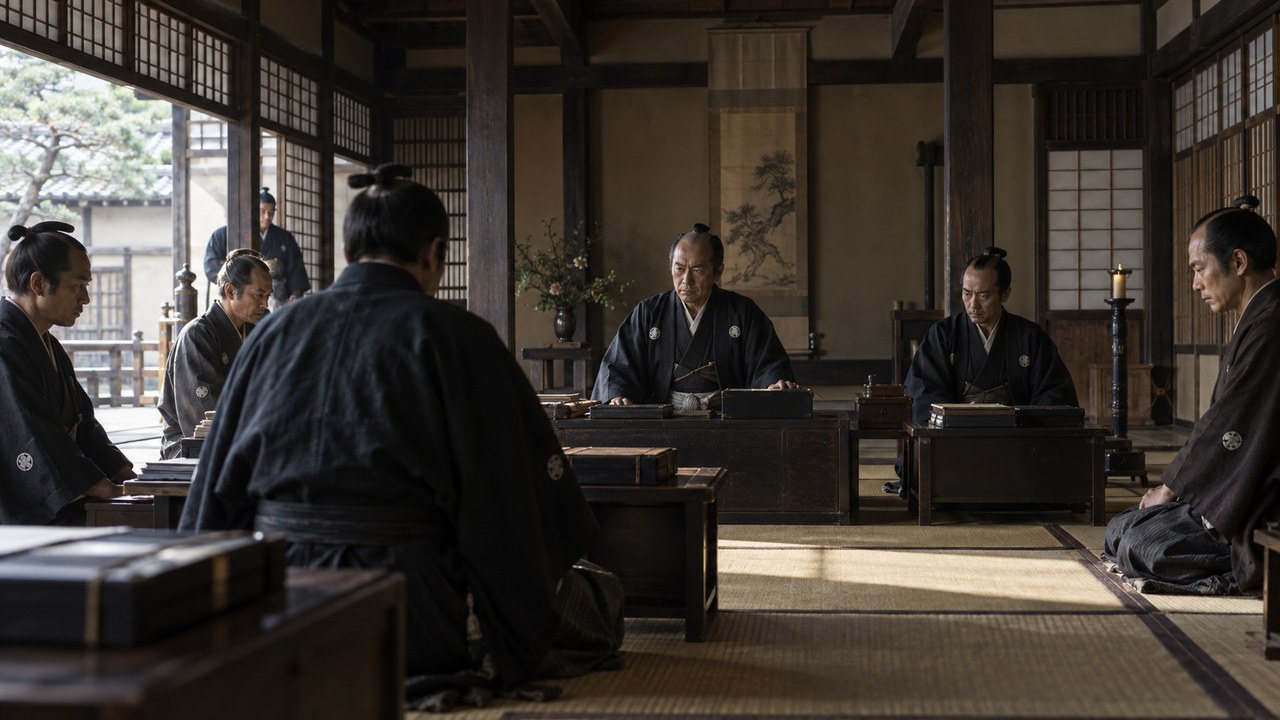
During the great famine of 1836, Ōshio put forward a plan to relieve the poor, but the East Town Magistrate, Atobe Yoshisuke, did not adopt it. Ōshio’s anger turned both toward the wealthy merchants who bought up rice and toward a magistrate who, in his view, failed to take effective action against the suffering.
Chapter 3
The celebrated yoriki
Ōshio Heihachirō was born in 1793 in the Tenma district of Osaka. The Suita City Museum explains that he began serving at the East Town Magistrate’s Office as an apprentice at about thirteen or fourteen. Another account says that he succeeded to the family position and became a yoriki at twenty-five.
As a yoriki, Ōshio became known for cases such as the arrest of suspected Christians in 1827. The Yamaguchi Prefectural Archives notes that his handling of difficult cases earned him a reputation as a celebrated official. He is also said to have refused bribes and to have exposed wrongdoing within the magistrate’s office itself.
In 1830, when the East Town Magistrate Takai stepped down, Ōshio resigned as well. He was thirty-eight by the traditional count. Although he no longer held office, he remained a man who understood how the magistrate’s office worked and what conditions were like in the city it governed. That knowledge would shape how others viewed his later revolt.
Chapter 4
The scholar of Senshindō
After leaving office, Ōshio taught Wang Yangming Confucianism at his private academy, Senshindō, at his home in Tenma, and devoted himself to writing. His works include Kohon Daigaku Katsumoku and Senshindō Sakki. Among his students were sons of influential families from villages near Osaka, which gave his teaching a reach beyond the city itself.
Ōshio also moved in learned circles. He held literary gatherings with Shinozaki Shōchiku and Okada Hankō and was in contact with the historian Rai San’yō. A Chinese-style poem written when he climbed Mount Kabuto in the autumn of 1836 uses the phrases “awake alone” and “being watchful over oneself when alone.”
The site of Senshindō now lies within the grounds of the Japan Mint in Osaka’s Kita Ward, where a stone monument marks it. Osaka City honors the place as a historic site and records that it was both a place of teaching and writing and a place from which cannon were later fired.
Chapter 5
Selling his books for the poor
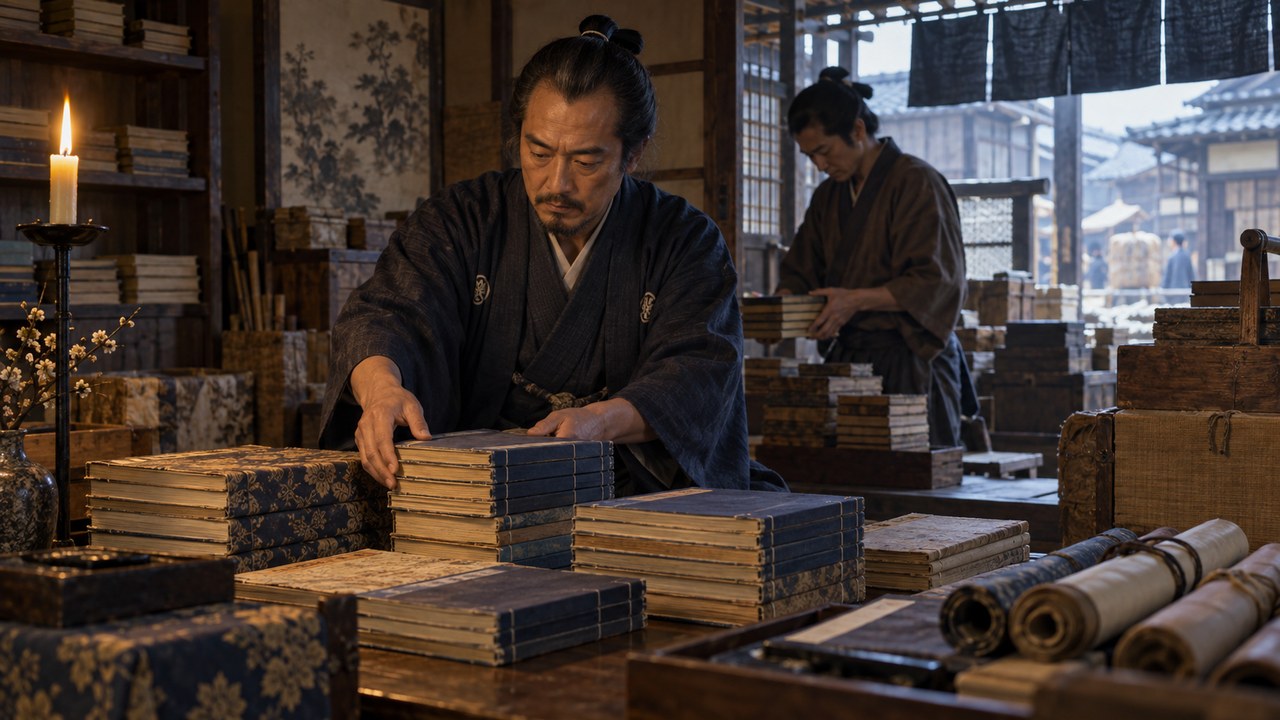
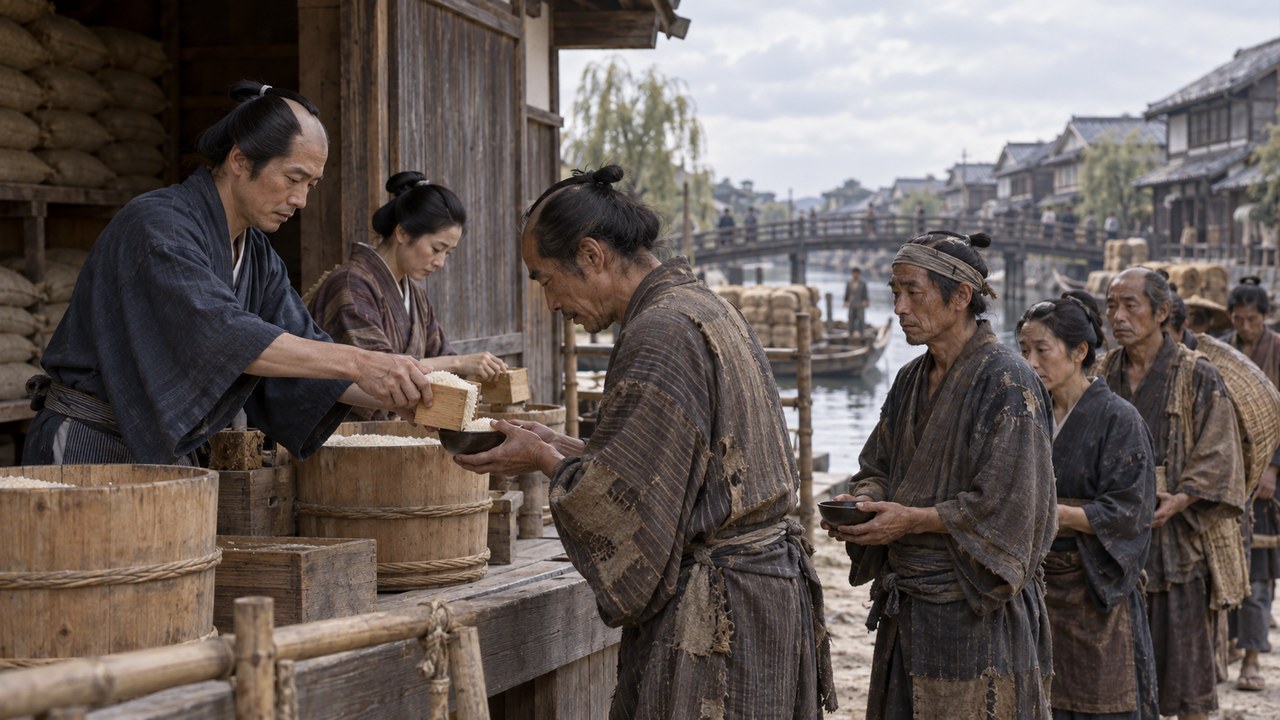
During the famine of 1836, Ōshio sold his library and gave the proceeds to people in distress. According to the Suita City Museum, the sale brought in 620 ryō, and he handed out one shu of gold to each of about ten thousand needy people. It was an unusually direct act for a former official.
Sources describe the size of the library in different ways. The Yamaguchi Prefectural Archives speaks of tens of thousands of volumes, while an article in Gendai Business gives a figure of fifty thousand. The sources consulted here do not allow an exact count, so this article does not attempt to settle the number.
One shu was one-sixteenth of a ryō. Each person therefore received only a small sum, and one man’s fortune could not feed a whole city. His proposal had been rejected and private charity had clear limits. It was under those conditions that Ōshio moved toward armed action against the authorities he held responsible.
Chapter 6
A manifesto to the villages
Before the rising, Ōshio issued a manifesto urging villagers around Osaka to join him. It opens by warning that when all within the four seas suffer distress, heaven’s favor will not last long. Copies were distributed to farmers in the provinces of Settsu, Kawachi, Izumi and Harima, the farming country surrounding the city.
A copy introduced by the Yamaguchi Prefectural Archives ends, just before the date, with words declaring that heaven’s punishment was being carried out. The manifesto escaped shogunate controls and spread across Japan as people copied it by hand. By setting out his reasons in writing, Ōshio ensured that memory of the rising traveled far beyond Osaka.
The Hashimoto family of Suita, village leaders whose sons had studied with Ōshio, offers one example. The sons had already left his school by the time of the uprising, yet the family kept a copy of the manifesto. A document that was dangerous to possess could still survive quietly in a rural household.
Chapter 7
Betrayal and an early start
The plan was exposed before it could unfold. A newsletter of Osaka’s historical editors states that Ōshio resolved to assassinate Atobe and burn out the great merchants, but that an informer ruined the scheme. The educational site HugKum explains that the rising had been planned for the evening and was moved up to early morning.
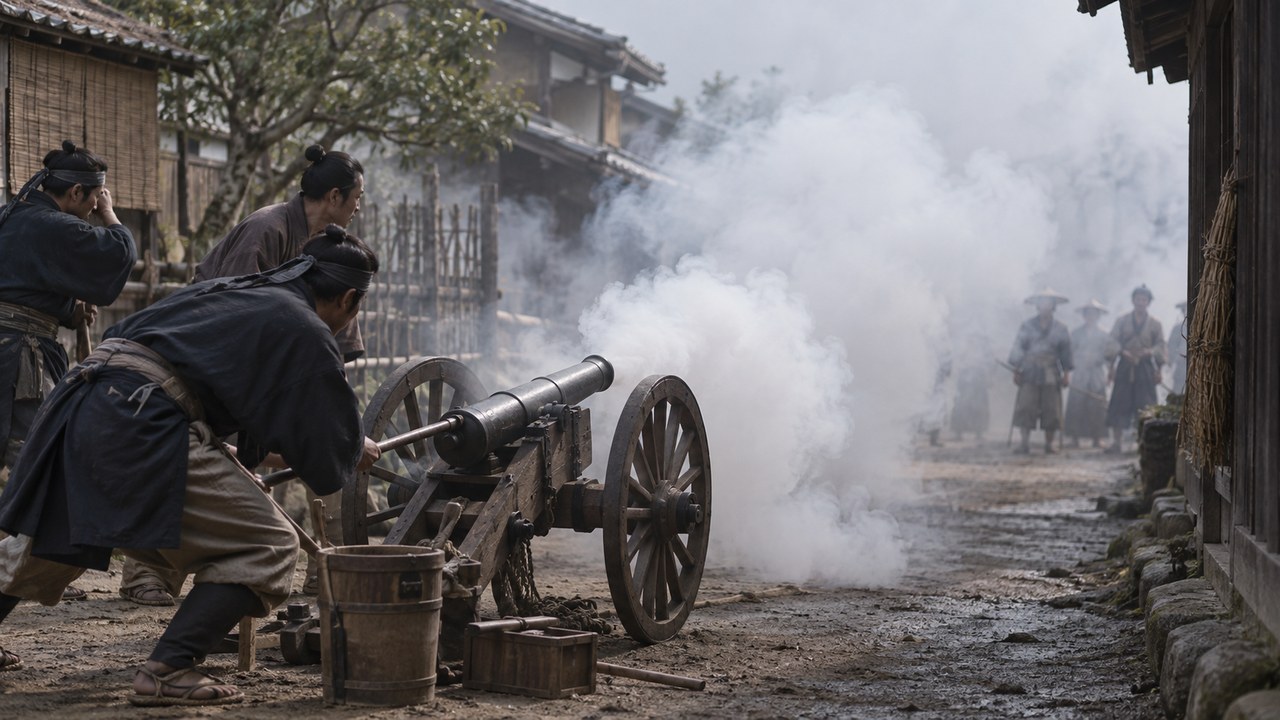
On the nineteenth day of the second month, Ōshio rose in Tenma. Osaka City identifies the Senshindō site as a place from which cannon were fired. A monument also stands in the former garden of the residence of Asaoka, a yoriki of the eastern unit, where the first shot from Ōshio’s force is said to have landed.
One article puts the force at about three hundred people. Only twenty or thirty were close disciples, and the rest were farmers and poorer townspeople who answered the call. Osaka City’s explanation adds that the uprising began before preparations were complete, a detail that helps explain how quickly the rising lost its momentum.
Chapter 8
Breaking the bridges
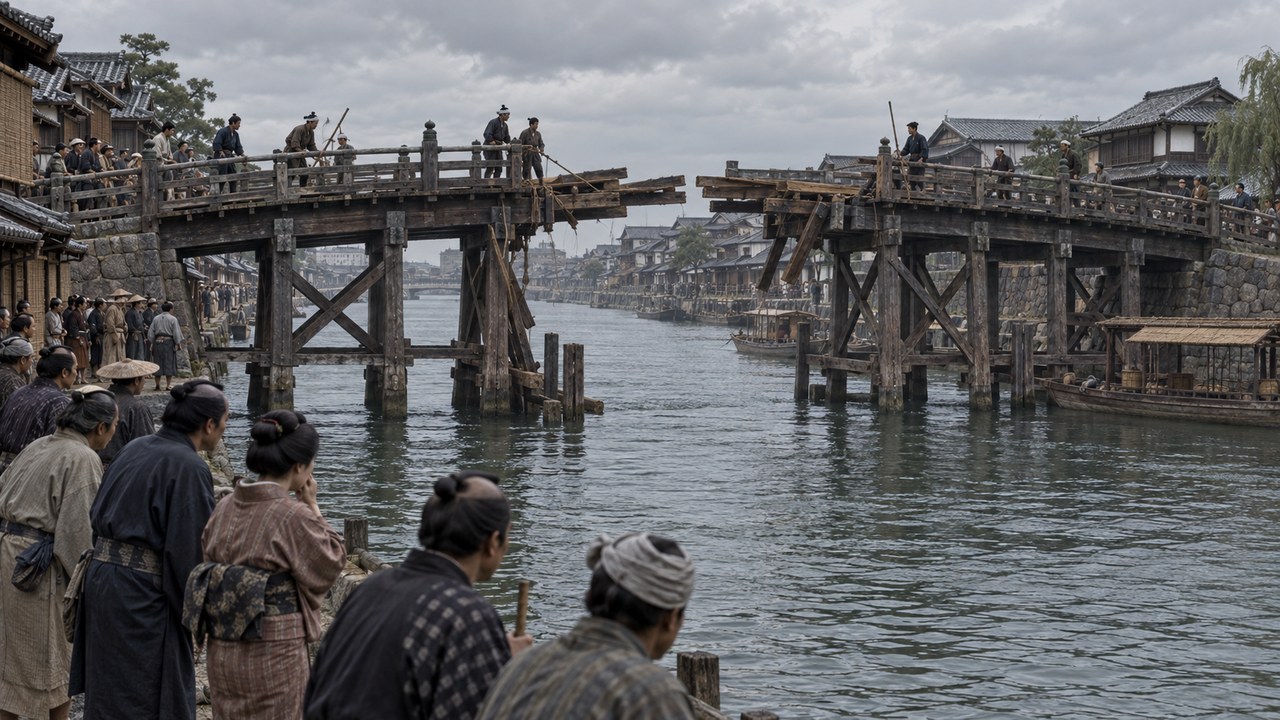
Osaka was a city of rivers and bridges. Kita Ward’s account says that the shogunate’s side cut three great bridges, including Tenjin Bridge, to stop Ōshio’s force from entering the Uemachi district. Materials from Chūō Ward likewise say that Tenma, Tenjin and Naniwa bridges were broken to hold the rebels back.
The same Chūō Ward materials, however, also state that forces carrying the banner of relief crossed Naniwa Bridge southward into northern Senba. The sources consulted here cannot establish exactly when each of the three bridges was damaged or how badly. This article therefore reports both statements rather than choosing a tidy version of events.
After moving into Senba, south of Naniwa Bridge, Ōshio’s force attacked the shops of wealthy merchants. Fire is said to have spread from Tenma across the Ōkawa River into Senba. The shogunate’s attempt to cut the bridges and the flames that crossed the water together shaped what the city endured that day.
Chapter 9
Donors’ shops in flames
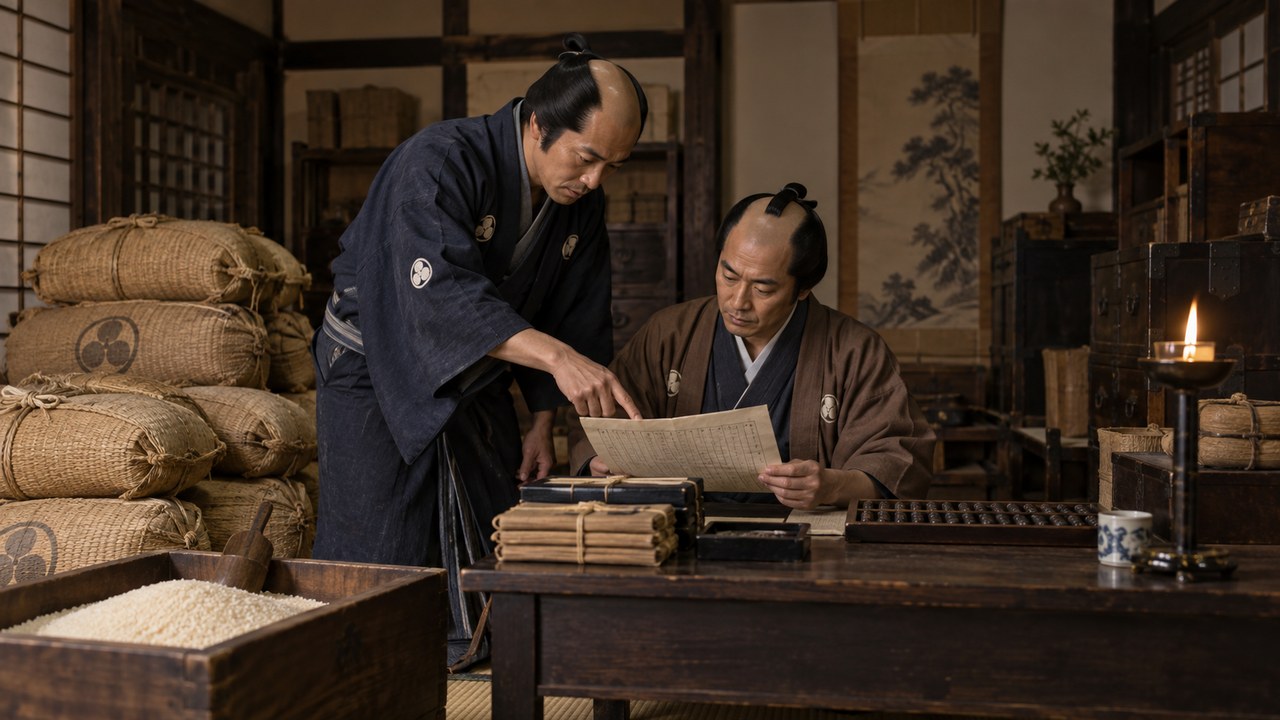
The targets were great merchant houses. The National Archives of Japan records that the shops of Hiranoya Gohei and Kōnoike-ya Zen’emon, both major donors to relief efforts in 1834, were set on fire by Ōshio’s force. Merchants who had given money and rice for the poor were therefore among those attacked.
Those donors’ names appeared in Jinpū Benran, a register published to praise the charity of 1834. It came out in the third month of 1837, the month after the uprising. The National Archives itself notes the irony of that timing, which places a celebration of generosity directly beside the burning of the generous.
A record of giving and anger over high rice prices came to rest on the same merchant houses. The fact that donors were attacked shows why this uprising cannot be told as a simple contest between those who rescued and those who robbed. The evidence keeps both realities in view at once.
Chapter 10
The Ōshio fire
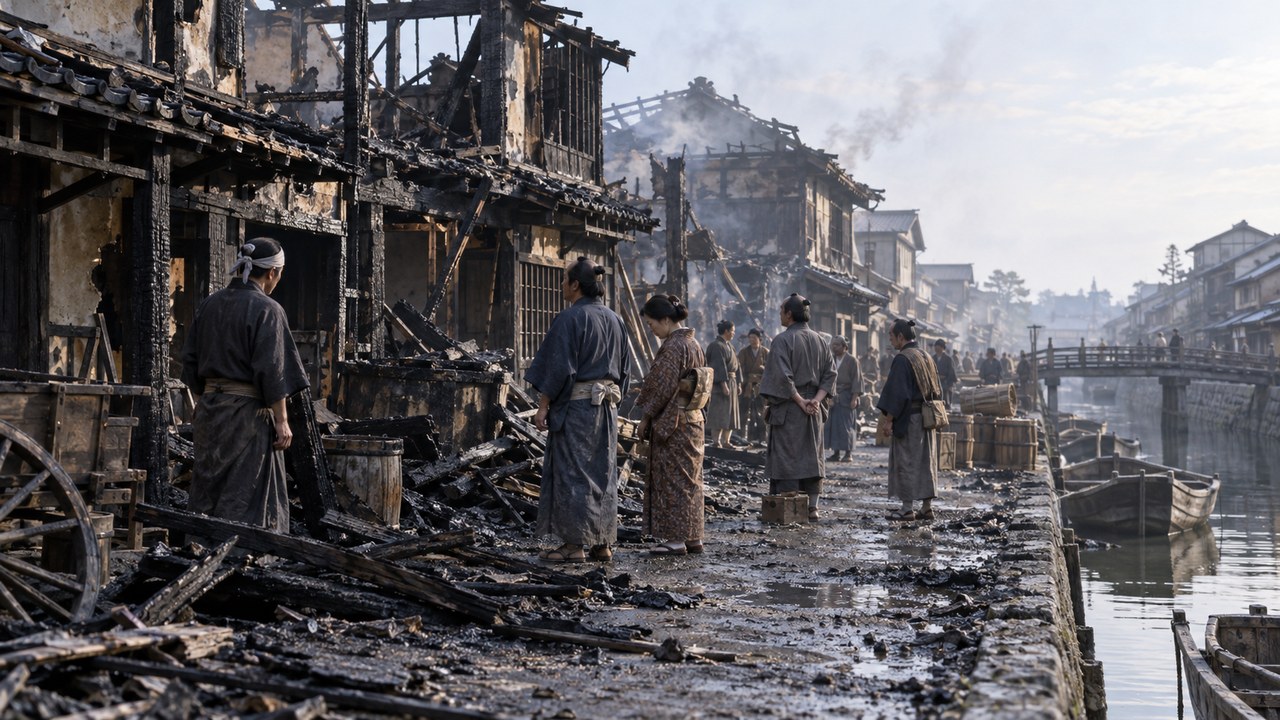
The fighting ended in about half a day, but the fire continued until the twentieth. The Suita City Museum states that more than ten thousand households were burned out. About one-fifth of the city is said to have been destroyed, and the disaster came to be remembered by the name Ōshio-yake, the Ōshio fire.
One article puts the number of people left homeless at seventy thousand. Osaka Tenmangū Shrine lost its buildings entirely, and its present main hall was rebuilt in 1843. The Tōshōgū shrine dedicated to the Tokugawa founder is also said to have burned, a loss with obvious symbolic weight in a city ruled by the shogunate.
The fire of a rising meant to save the people also took the homes of the townspeople it claimed to defend. Whatever value one sees in Ōshio’s protest, that damage cannot be set aside. Any fair account has to hold his stated purpose and the suffering of the burned city together.
Chapter 11
Forty days in hiding
After his defeat, Ōshio is said to have escaped by boat from the Hachikenya landing. News reached Wakayama Castle town by the next day. The Kii domain ordered watchfulness on the twenty-second, and on the twenty-third it circulated descriptions of seven ringleaders. The description of Ōshio gave his age as about forty-five or forty-six and noted a long, pale face.
On the twenty-seventh day of the third month, Ōshio and his adopted son Kakunosuke were surrounded by officers at a townhouse in Aburakake-chō in Osaka. They lit gunpowder and killed themselves about forty days after the rising. Their remains are said to have been preserved in salt and later displayed on crosses as those of condemned criminals.
The consequences reached Ōshio’s relatives. His uncle Miyawaki Shima, a shrine priest in Suita, could not escape suspicion because his name was written on a cannon carriage, and he was found dead in a pond at Shōmoto village on the twenty-first of the second month. The graves of Ōshio and his son stand at a temple in Osaka’s Kita Ward.
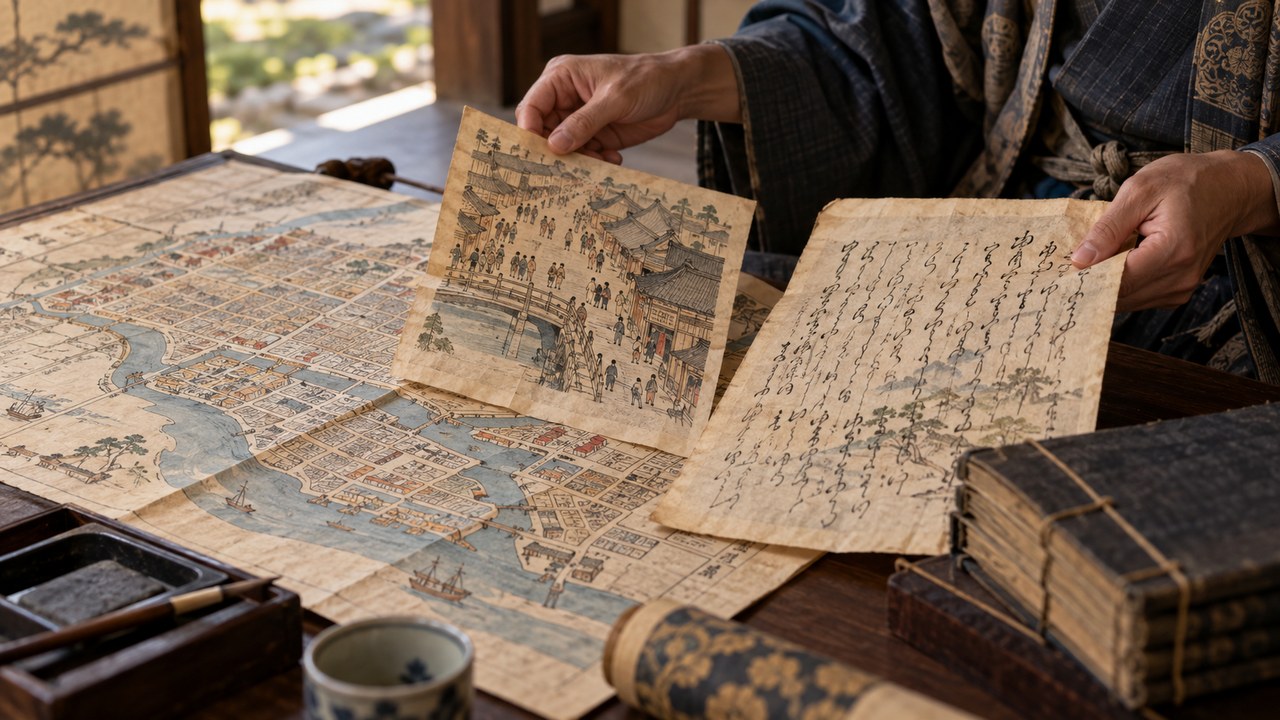
Chapter 12
Those who claimed to be his disciples
That a former official had taken up arms in a city ruled directly by the shogunate shocked Japanese society. In the same year came an uprising at Mihara in Bingo in the fourth month, Ikuta Yorozu’s attack at Kashiwazaki in Echigo in the sixth, and a disturbance led by Yamadaya Daisuke at Nose in Settsu in the seventh.
Some of those involved called themselves Ōshio’s disciples. The nativist scholar Ikuta attacked the Kashiwazaki administrative post at dawn on the first day of the sixth month and died in defeat. Even so, these events cannot be traced to Ōshio alone. People across many regions shared the suffering of the famine, and local grievances had causes of their own.
Ōshio was a scholar who pleaded for relief and the leader of a revolt that brought a great fire upon his city. Rather than choosing only one of those images, it is more useful to set side by side what happened in a hungry city and who lost what as a result.
How to read this work
History, interpretation, and reconstruction
The Ōshio uprising held together a plea for relief and the destruction of much of the city. Reading the famine, the magistrate’s response, the limits of private charity, the manifesto and the fire side by side reveals a figure who cannot be reduced to either hero or rebel.
This work is grounded in published sources and historical research. Interior thoughts, dialogue, and some visual details are cinematic reconstructions. Where historians disagree, the article presents the point as debated rather than settled fact.
Timeline
The story in time
-
As a yoriki, Ōshio is involved in the arrest of suspected Christians.
Sources: s12 -
The Tenpō famine spreads across Japan.
Sources: s3 -
Wealthy Osaka merchants donate money and rice for relief.
Sources: s6 -
In a severe famine, Atobe Yoshisuke does not adopt Ōshio’s relief plan, and Ōshio sells his books to aid the poor.
Sources: s12 -
Ōshio’s uncle Miyawaki Shima is found dead in a pond at Shōmoto village.
Sources: s12 -
Descriptions of seven ringleaders are circulated in the Kii domain.
Sources: s14 -
The donors’ register Jinpū Benran is published.
Sources: s6 -
An uprising breaks out at Mihara in Bingo.
Sources: s19 -
Yamadaya Daisuke leads a disturbance at Nose in Settsu.
Sources: s19 -
The present main hall of Osaka Tenmangū Shrine is rebuilt.
Sources: s11
People & terms
A guide for new readers
Key figures
- Ōshio Heihachirō
- Former yoriki of Osaka’s East Town Magistrate’s Office and Wang Yangming scholar who led the uprising of 1837.
- Ōshio Kakunosuke
- Heihachirō’s adopted son, who hid with him and died with him on the twenty-seventh day of the third month.
- Atobe Yoshisuke
- East Town Magistrate of Osaka, who did not adopt Ōshio’s relief plan during the famine of 1836.
- Miyawaki Shima
- Heihachirō’s uncle and a shrine priest in Suita, who died just after the uprising.
- Ikuta Yorozu
- Nativist scholar who attacked the administrative post at Kashiwazaki in 1837.
Glossary
- Yoriki 与力
- A mid-ranking official who carried out the work of a town magistrate’s office.
- Dōshin 同心
- A lower-ranking official who worked under the yoriki.
- Town magistrate 町奉行
- The shogunate official responsible for administration, order and justice in a city such as Osaka.
- Domain storehouse 蔵屋敷
- A domain’s warehouse and office in Osaka, used to sell rice and local goods for cash.
- Senshindō 洗心洞
- Ōshio’s private academy in the Tenma district of Osaka.
- Wang Yangming Confucianism 陽明学
- A school of Confucian thought that Ōshio taught at Senshindō.
- Ryō and shu 両・朱
- Units of gold currency in the Edo period; sixteen shu made one ryō.
- Ōshio-yake 大塩焼け
- The name given to the great fire caused by the uprising of 1837.
- Jinpū Benran 仁風便覧
- A published register praising those who donated money and rice for relief in 1834.
- Senba 船場
- A central commercial district of Osaka south of the Ōkawa River.
Sources & method
How this article was built
This English edition follows the revised Japanese article scene by scene and keeps its nineteen sources, their order and its sixteen timeline entries. It draws on the National Archives of Japan, Osaka City and its ward offices, the Osaka Municipal Library, the Suita City Museum, the Yamaguchi and Wakayama prefectural archives, reference dictionaries and explanatory articles.
Institutional explanations, reference articles and the interpretation offered here are kept separate. Where sources differ, as they do on the size of Ōshio’s library, the scale of the fire and the breaking of the bridges, the difference is stated. Images are AI-generated reconstructions, not authentic portraits or historical photographs.
Sources
References and further reading
- The Ōshio Heihachirō Uprising (Medieval and Early Modern Osaka) 大塩平八郎の乱(中世・近世の大坂) Title translated editorially for reader convenience. Osaka Municipal Library 大阪市立図書館 Used for his resignation, Senshindō, the sale of his books, the date and suppression of the rising and its wider influence. Accessed 2026-11-18
- Site of Senshindō 洗心洞跡 Title translated editorially for reader convenience. Osaka City 大阪市 Used for the school, relief through the sale of books, the unprepared rising, the cannon and the historic site. Accessed 2026-11-18
- The Tenpō Famine 天保の飢饉 Title translated editorially for reader convenience. National Archives of Japan 国立公文書館 Used for the duration and scale of the famine, estimated deaths and its link to the uprising. Accessed 2026-11-18
- Overview of the Shinshū Osaka City History, Source Volume 7 『新修大阪市史 史料編』第7巻 近世Ⅱ 政治2 概要 Title translated editorially for reader convenience. Osaka Municipal Library / Osaka City History Editorial Office 大阪市立図書館/大阪市史編纂所 Used for the duties of town magistrates, yoriki and dōshin and the role of domain storehouses. Accessed 2026-11-18
- Jinpū Benran 仁風便覧 Title translated editorially for reader convenience. National Archives of Japan 国立公文書館 Used for the donations of 1834, the register, the burning of donors’ shops and the deaths of Ōshio and his son. Accessed 2026-11-18
- Tenjin Bridge 天神橋 Title translated editorially for reader convenience. Kita Ward, Osaka City 大阪市北区 Used for the cutting of the three great bridges by the shogunate’s side. Accessed 2026-11-18
- About Osaka Tenmangū 大阪天満宮について Title translated editorially for reader convenience. Osaka Tenmangū Shrine 大阪天満宮 Used for the destruction of the shrine in 1837 and the rebuilding of its main hall in 1843. Accessed 2026-11-18
- Suita City Museum Newsletter No. 79 (Ōshio Heihachirō Exhibition) 吹田市立博物館だより 第79号(特別展「大塩平八郎展」) Title translated editorially for reader convenience. Suita City Museum 吹田市立博物館 Used for Ōshio’s life, the relief plan, the 620 ryō, the manifesto, the fire, Miyawaki Shima, the Hashimoto family and his death. Accessed 2026-11-18
- Foreign Ships and the Tenpō Reforms (The Ōshio Uprising) 外国船の出現と天保の改革(大塩平八郎の乱) Title translated editorially for reader convenience. Yamaguchi Prefectural Archives 山口県文書館 Used for his reputation, the size of his library, the manifesto and its copying, and the shock of the rising. Accessed 2026-11-18
- The Ōshio Uprising: A Wanted Description Preserved in Kokawa 大塩の乱――粉河の旧家に残されていた大塩平八郎の人相書 Title translated editorially for reader convenience. Wakayama Prefectural Archives 和歌山県立文書館 Used for how news spread, the orders of the Kii domain, the wanted descriptions and the shock to the shogunate. Accessed 2026-11-18
- Research Guide to Kita Ward 調べかたガイド 各区版 北区の調べかた Title translated editorially for reader convenience. Osaka Municipal Kita Library 大阪市立北図書館 Used for his death by explosives, the family graves, the Senshindō monument and the one-fifth of the city destroyed. Accessed 2026-11-18
- Osaka City History Newsletter No. 55 編纂所だより 第55号 Title translated editorially for reader convenience. Osaka City Historical Materials Research Association 大阪市史料調査会 Used for rice prices and hoarding, Ōshio’s plan, the informer, and his friendships and poetry. Accessed 2026-11-18
- Town Archives: Osaka このまちアーカイブス 大阪 Title translated editorially for reader convenience. Sumitomo Mitsui Trust Realty 三井住友トラスト不動産 Used for the Senshindō site, the monument at Asaoka’s residence, the escape from Hachikenya and the Ōshio fire. Accessed 2026-11-18
- The Ikuta Yorozu Uprising 生田万の乱 Title translated editorially for reader convenience. Kotobank コトバンク Used for the attack on Kashiwazaki on the first day of the sixth month of 1837 and Ōshio’s influence. Accessed 2026-11-18
- Dictionary Entries on the Ōshio Uprising (JK Keyword) 大塩平八郎の乱に関する辞典項目(JK Keyword) Title translated editorially for reader convenience. JapanKnowledge ジャパンナレッジ Used for the events at Mihara, Kashiwazaki and Nose and the claim to be Ōshio’s disciples. Accessed 2026-11-18
- The Ōshio Heihachirō Uprising That Burned One-Fifth of Osaka 大坂の中心地の“5分の1”が焼き払われ、7万人が家を失った「大塩平八郎の乱」 Title translated editorially for reader convenience. Gendai Business (Kodansha) 現代ビジネス(講談社) Used, as one article’s account, for the library, the size of the force, the route, the targets, the homeless and the Tōshōgū. Accessed 2026-11-18
- The Salt Preservation Punishment of the Edo Period 上から下から流しこまれる塩、塩、塩!江戸時代の罪人を震わせた塩漬けの刑とは? Title translated editorially for reader convenience. Waraku Web (Shogakukan) 和樂web(小学館) Used for the preservation of Ōshio’s remains in salt and their later display. Accessed 2026-11-18
- Tenjin Bridge and Naniwa Bridge (River & Bridge) 天神橋・難波橋(River & Bridge) Title translated editorially for reader convenience. Chūō Ward, Osaka City 大阪市中央区 Used for the breaking of the three bridges and the crossing of Naniwa Bridge into northern Senba. Accessed 2026-11-18
- Who Was Ōshio Heihachirō? 大塩平八郎は何をした人? 起こした乱の経緯や影響をわかりやすく解説 Title translated editorially for reader convenience. HugKum (Shogakukan) HugKum(小学館) Used, as an explanatory article, for his succession at twenty-five, his exposure of wrongdoing and the early start of the rising. Accessed 2026-11-18
Continue reading
More stories from Shigeki
Shigeki English
Amakusa Shiro at Hara Castle: A Young Symbol in the Surviving Evidence
An Arima castle, Matsukura taxes, risings in Shimabara and Amakusa, Itakura’s death, Nobutsuna’s siege and the fall of the castle: the history of the people who gathered under a boy’s name, told within the limits of the sources.
- When Kan’ei 14–15 (1637–1638), with the castle’s construction (1599–1604) and modern excavation and World Heritage inscription (2018) as background
- Where Shimabara and Amakusa in southwestern Japan, culminating in the siege of Hara Castle
Shigeki English
From the Black Ships to Hakodate: Sixteen Years from Bakumatsu to Meiji
Treaties, the Sakuradamon incident, the Kinmon incident, the Satsuma–Choshu alliance, the return of power, Toba–Fushimi, Edo Castle, Aizu and Hakodate: diplomatic commitments, political authority and military command did not change at the same moment.
- When 1853–1869, with administrative changes in 1869 and 1871 placed separately
- Where Uraga, treaty ports, Edo, Kyoto, Toba–Fushimi, Aizu and Hakodate