
SHIGEKI ENGLISH STORYEN
Japanese history in English
The Jōkyū War: From an Order against Yoshitoki to Rokuhara and Oki
Kamakura answered an order from Kyoto with an army. Retainer relationships, a continuing political base and one land document reveal what followed victory.
Follow the Jōkyū War of 1221 from the order against Hōjō Yoshitoki through Masako’s role, Yasutoki and Tokifusa at Rokuhara, a land exchange and Go-Toba’s years of poetry in Oki.
At a glance
Before you enter the story
- When
- From Kamakura politics after 1199 through the Jōkyū War of 1221 to Go-Toba’s death in Oki in 1239; documentary dates retain the historical Japanese calendar.
- Where
- Kamakura in eastern Japan, Kyoto and Rokuhara, the lands named in a shogunate directive, and Oki’s Nakanoshima.
- Key figures
- Retired Emperor Go-Toba, Hōjō Yoshitoki, Hōjō Masako, Hōjō Yasutoki, Hōjō Tokifusa, Minamoto no Sanetomo, Kujō Yoritsune (Mitora)
- What was at stake
- Whether a command naming Yoshitoki would divide Kamakura’s retainers, and how the result changed political work, particular land arrangements and the defeated ruler’s later life.
Why this story matters
The larger history behind the turning point
The Jōkyū War is more than a reversal between an emperor’s order and a warrior government’s victory. Its aftermath can be followed through a political establishment in Kyoto, a specific directive about land and the years of poetry that continued on Oki. Distinguishing personal targets, commanders, institutions and later historical writing makes these connections clearer without turning transmitted speeches or images into eyewitness records.
Historical context
What an international reader needs to know
Two Political Centres and Several Different Roles
The rise of Kamakura warrior government did not mean the immediate disappearance of the imperial court in Kyoto. Go-Toba was a retired emperor who continued to exercise political authority, while Kamakura’s succession arrangements required negotiations with the capital. The Jōkyū conflict grew within this relationship. The postwar shogunate advantage likewise did not abolish the court itself.
Yoshitoki, Masako, Yasutoki and Tokifusa should not be treated as interchangeable actors. Yoshitoki was the named target; Masako is associated with encouraging the retainers’ unity; Yasutoki and Tokifusa led forces into Kyoto and remained at Rokuhara. Their separate roles help an unfamiliar reader connect a command, the response in Kamakura, military movement and continuing administration.
Reading Dates, Chronicles and One Land Document
The fifth month of Jōkyū 3 and the document’s eighth month, thirtieth day retain the calendar used in the sources. They are not presented as Gregorian May or August 30. The Azuma Kagami’s coverage of earlier events should also be distinguished from its later compilation and the copying date of a surviving manuscript. These are different chronological questions.
An institutional introduction to a chronicle does not authenticate every reported word as speech recorded on the day. Similarly, the explanation of one land exchange does not prove that every estate underwent an identical confiscation. The narrative follows the specific scope of the evidence while using that example to consider the administrative work that followed victory.
Watch the film
See the story in motion
The film currently uses Japanese audio. This English article provides the context and source trail; it does not imply that an English subtitle track is available.
Chapter 01
The Order and the Destinations That Followed
In 1221, the third year of the Jōkyū era, Retired Emperor Go-Toba issued an order to attack Hōjō Yoshitoki. Yet the person subsequently taken away from the capital and exiled to Oki was Go-Toba himself. Fighting transformed the relative positions of the authority issuing the order and the man it named as its target.
Would naming Yoshitoki cause the shogunate’s retainers to obey the order, or would they support Kamakura? The action initiated from Kyoto confronted warriors with a question about their existing relationships. The issue was not simply what a command said, but how those who received it understood their own position in relation to the government in the east.
The shogunate’s army advanced to Kyoto. After victory it left a political base there, while documents instructed how particular lands were to be handled. Go-Toba’s life, meanwhile, continued on islands across the sea. These consequences carried the conflict beyond the fighting itself and into administration, property arrangements and the later years of the defeated ruler.
The Jōkyū War can therefore be read beyond the days of battle. Distinguishing the person who issued the order, the person who encouraged the retainers, and those who led the army into Kyoto makes the work left after victory more visible. This narrative follows those different roles rather than treating one famous name as the actor in every place.
Chapter 02
Between Kyoto and Kamakura
Kyoto contained the political and cultural worlds of emperors, retired emperors and court nobles. Go-Toba exercised retired imperial rule and was deeply involved in waka poetry, including the compilation of the Shin Kokin Wakashū. His political role and his cultural activity both belong to the history followed here; exile did not make the latter disappear.
In eastern Japan stood the Kamakura government established by Minamoto no Yoritomo. The emergence of warrior government did not immediately deprive the imperial court in Kyoto of all function. Negotiation as well as conflict linked the two centres. Describing them simply as an old authority already replaced by a new one would make the outcome seem settled before the events occurred.
The order would reach warriors connected through relationships formed since Yoritomo’s time. Looking only at a command issued in Kyoto is insufficient, but so is imagining Kamakura as an institution that had always been united. The connections among retainers and the political struggles within the shogunate are part of the setting in which the order was received.
Knowing the eventual result can make the shogunate’s advantage look inevitable. Before 1221, however, who would conduct government in Kamakura and how that government would relate to Kyoto had repeatedly been at issue. The earlier succession problems and negotiations help explain the circumstances of the conflict without inventing a plan or private intention for every participant.
Chapter 03
Who Would Support the Vacant Position?
Yoritomo died in 1199. The work of supporting his successors remained, and struggles among powerful retainers continued. The political structure he had established did not settle into an uncontested form simply because its founder had died. Following those internal conflicts gives context to the authority that Yoshitoki later held within Kamakura.
Hōjō Yoshitoki participated in the rise of the Hōjō alongside his father Tokimasa. He eventually came to lead shogunate politics with his elder sister Masako. His position was the product of conflicts and choices within Kamakura, rather than an authority that can be assumed to have existed unchanged from the beginning of the warrior government.
In 1213, conflict with Wada Yoshimori led to fighting. Yoshitoki should not be imagined as a leader accepted without objection by every retainer throughout his career. The Hōjō consolidated their position through struggles among powerful figures. The institutional account of his rise provides a background against which the later order naming him acquires significance.
The name singled out by Go-Toba in 1221 stood at the end of that accumulation of political power. Before asking what an order against Yoshitoki would do, we need to recognize what his position had come to mean in Kamakura. This connection between personal target and political structure is an interpretation of the sequence described by the sources.
Chapter 04
Bringing a Young Lord to Kamakura
In 1219, Minamoto no Sanetomo, the third shogun, was assassinated. The period in which Yoritomo’s sons succeeded as shogun came to an end, and the question of whom to bring to Kamakura became urgent. The succession was also a matter of negotiation with Kyoto, linking the internal needs of warrior government to relationships with the capital.
The shogunate sought a member of the imperial family, but those negotiations did not produce that result. The child who came from the Kujō family in Kyoto was Mitora, later known as Kujō Yoritsune. The young lord welcomed to Kamakura and the later shogun’s name belong to the same person, but the stages should not be collapsed into one moment.
Masako led politics in the position for which she became known as the nun shogun. Bringing in a young figure did not itself complete the daily work of making decisions or keeping retainers together. The people supporting the shogunal position still had responsibilities. The institutional explanation emphasizes Masako’s political activity beyond a simple family relationship.
The negotiations over an imperial successor and the later order against Yoshitoki took place within the same continuing relationship between Kyoto and Kamakura. The conflict of 1221 did not arise between two centres that had never previously negotiated. Recognizing those earlier contacts does not require assuming that one failed negotiation explains every subsequent act.
Chapter 05
The Man Named in the Order
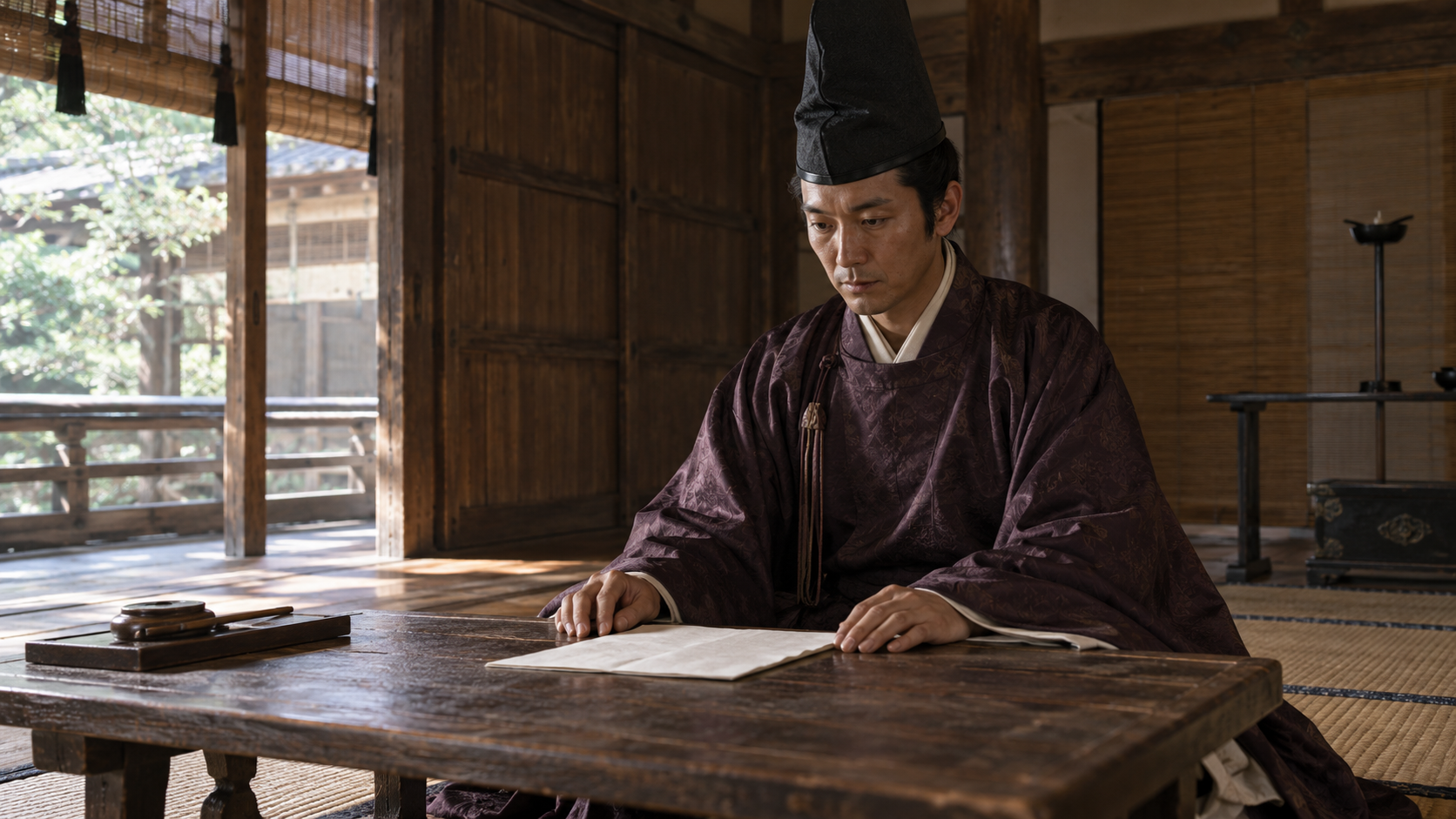
In the fifth month of Jōkyū 3, or 1221, using the calendar of the time, Go-Toba issued his order against Hōjō Yoshitoki. The first point to establish is whom the order named. Yoshitoki was its target. The historical wording should not be replaced with a broader modern summary that silently changes the object of the command.
An order to attack Yoshitoki as an individual and a fully defined programme to abolish every part of the government at Kamakura cannot simply be described as the same proposition. Nor should Go-Toba’s entire intention be reconstructed backwards from the shogunate’s later victory. This account keeps the named target separate from claims about the complete scope of an otherwise unestablished plan.
A command seeks a response, but those receiving it act within their own positions and existing relationships. The question concerning Yoshitoki thus became connected with choices made by the retainers supporting Kamakura. That is an interpretation of the political relationship, not a claim to know the private thoughts of an individual warrior reading a particular document.
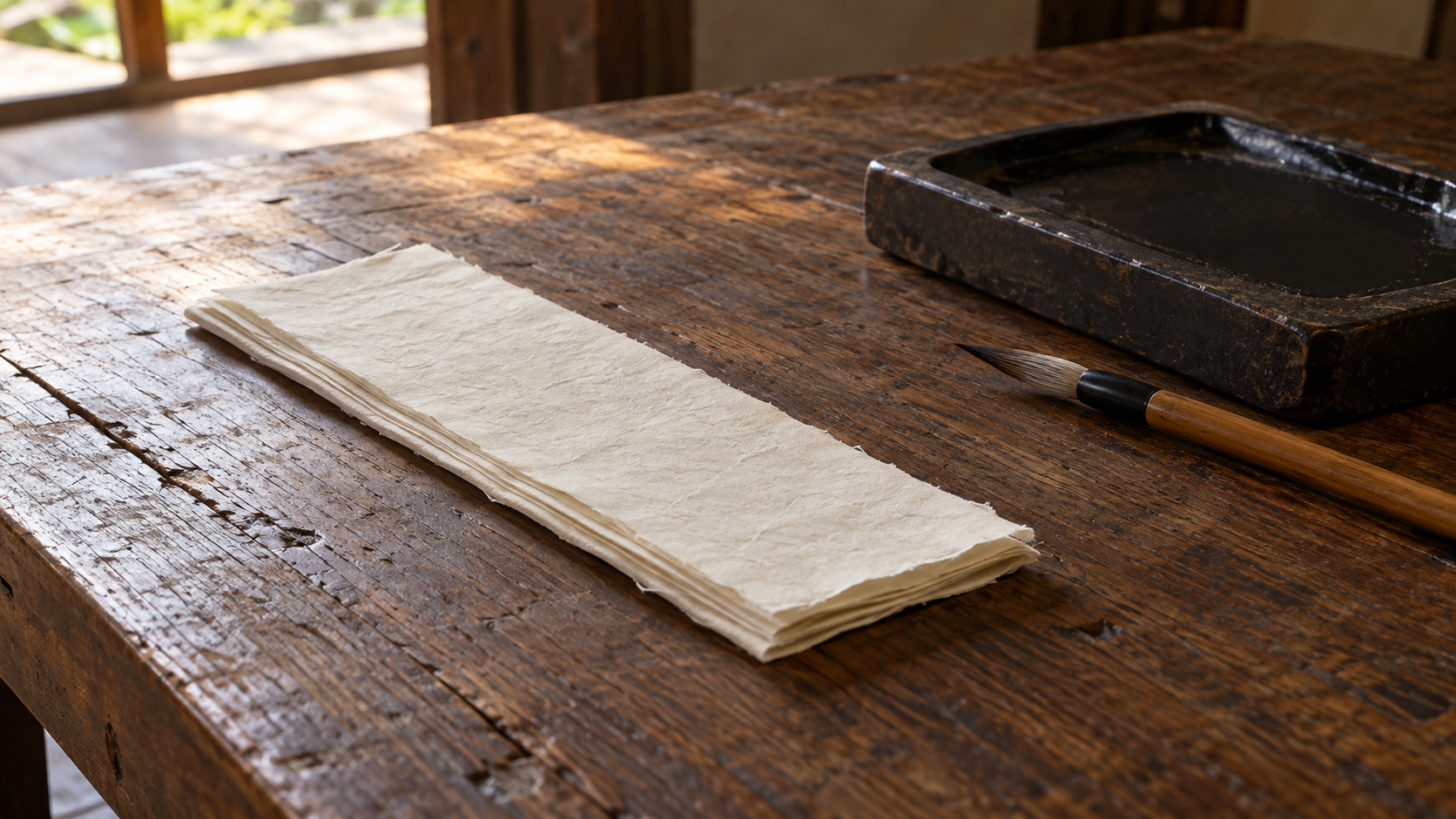
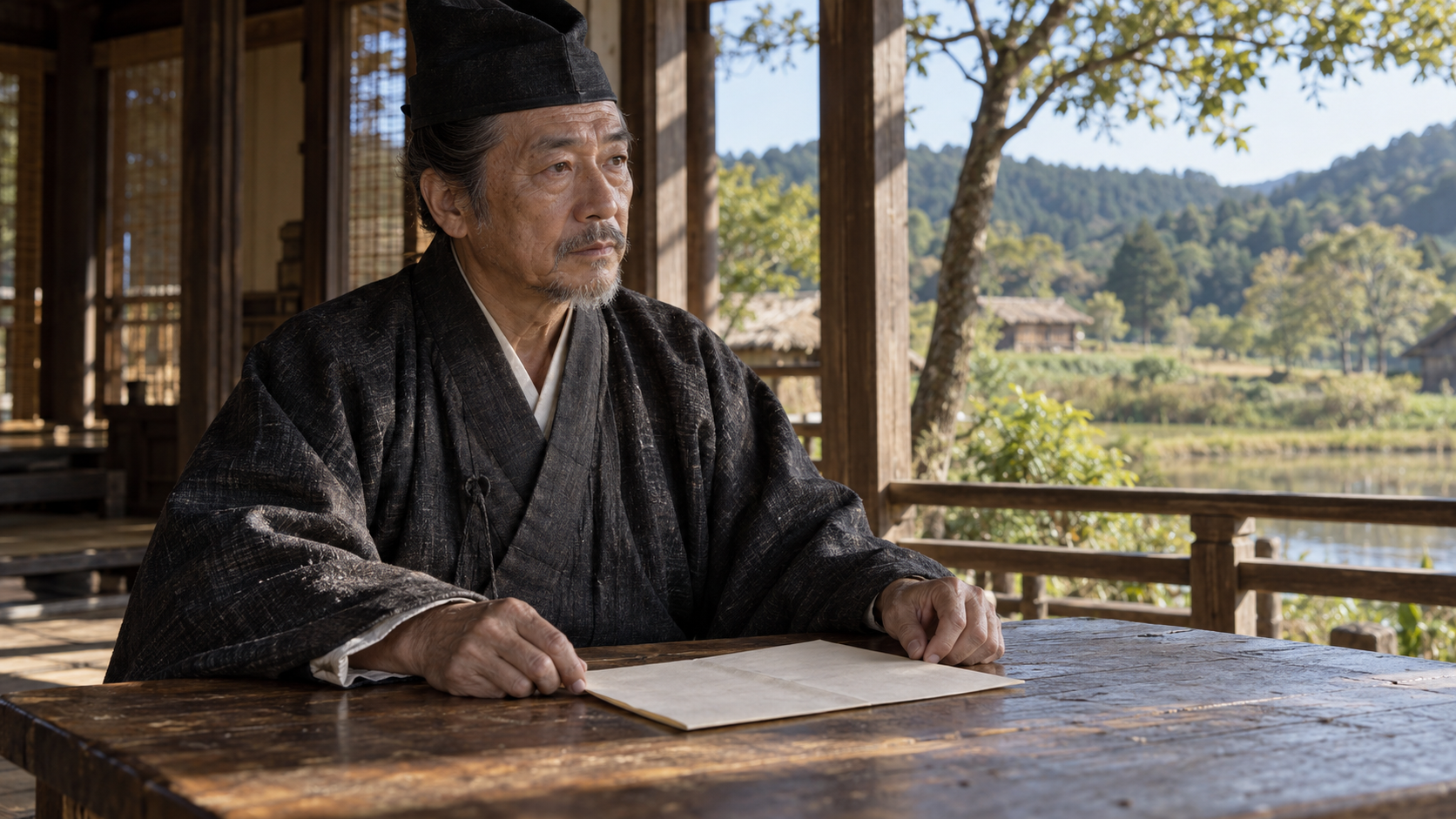
Could Yoshitoki be isolated as the target, or would action against him be understood as a crisis for Kamakura? Following the distance between the target stated in the order and the actions that actually followed offers a way into the conflict. The blank paper in the illustration is a conceptual prop, not a facsimile or a reading of the original command.
Chapter 06
Invoking Yoritomo’s Benefits
In this crisis, Masako is remembered as having urged the retainers to unite by recalling the benefits they had received from Yoritomo. The appeal to relationships formed under him is an important clue to how the Kamakura side came together. It connected the immediate danger with the basis on which retainers had supported the warrior government.
The familiar speech, however, cannot be reproduced as though every word had been verified at the scene. When words are transmitted through historical writing, the date and manner in which that writing was produced also matter. An account of Masako’s role and an exact recording of her voice are different kinds of historical claim.
The Azuma Kagami records events centred on the shogunate, but neither its compiler nor its year of compilation is firmly established. The National Archives’ explanation places its likely formation around 1300. It is therefore a historical compilation made after the Jōkyū War, rather than a text whose every passage can be treated as a contemporary transcript from 1221.
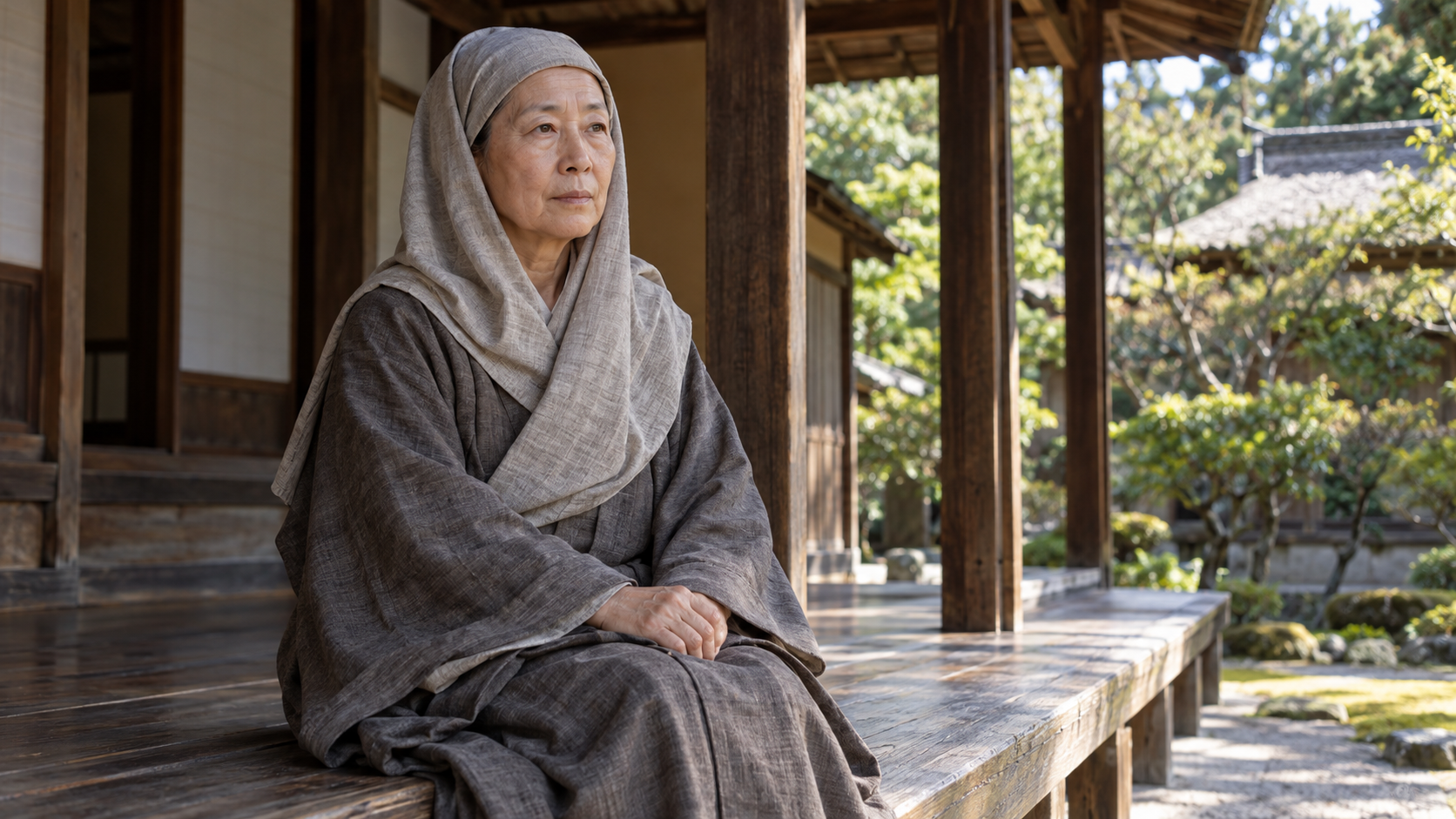
Recognizing Masako’s activity should be separated from turning the reported speech into the literal sound of that day. Without inventing dialogue, we can still consider the importance of invoking Yoritomo’s relationship with the retainers as a reason to support Kamakura. The illustration evokes the political role; it is neither an authenticated portrait nor a reconstruction of her feelings.
Chapter 07
Those Who Went West
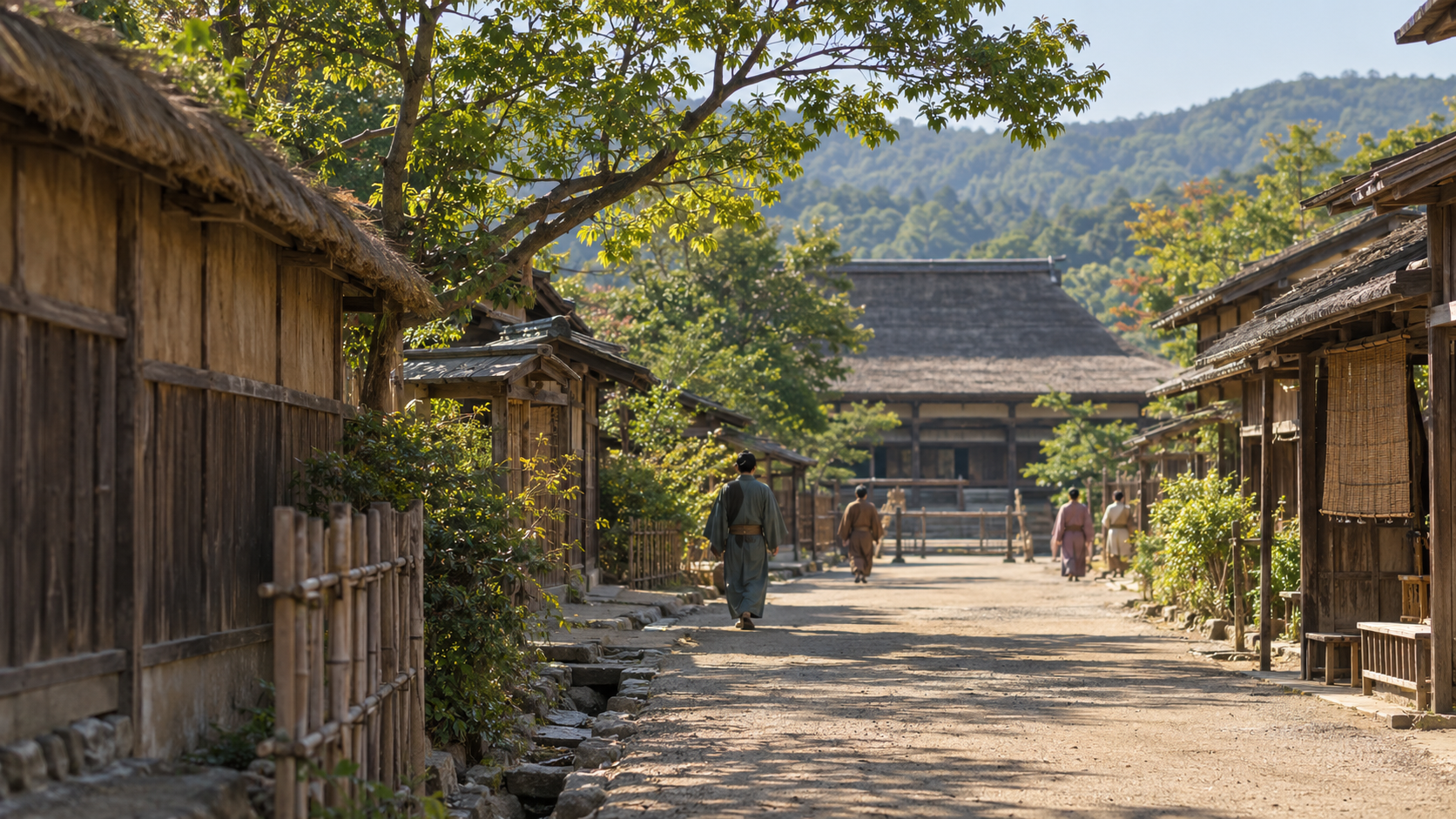
Kamakura sent an army to Kyoto. Kyoto City’s explanation identifies Hōjō Yasutoki and Hōjō Tokifusa as the figures who led forces into the capital during the conflict. Yoshitoki, the order’s target, and the two men who entered Kyoto occupied different roles. Keeping their names distinct prevents political leadership from being confused with presence at every military location.
Depicting Yoshitoki as if he alone moved the army and fought everywhere would obscure the connection between decisions in Kamakura and an army travelling away from it. Separating the named target, political judgment and the people acting at the front reveals the geographical and institutional spread of the events. It also avoids supplying a fictitious personal battlefield itinerary.
Figures transmitted for the size of a large army require caution. They cannot simply be converted into verified totals equivalent to a completed muster roll or modern statistics. This narrative does not fix a troop number. Its focus is the westward movement and the political result, within the limits of the institutional explanations consulted.
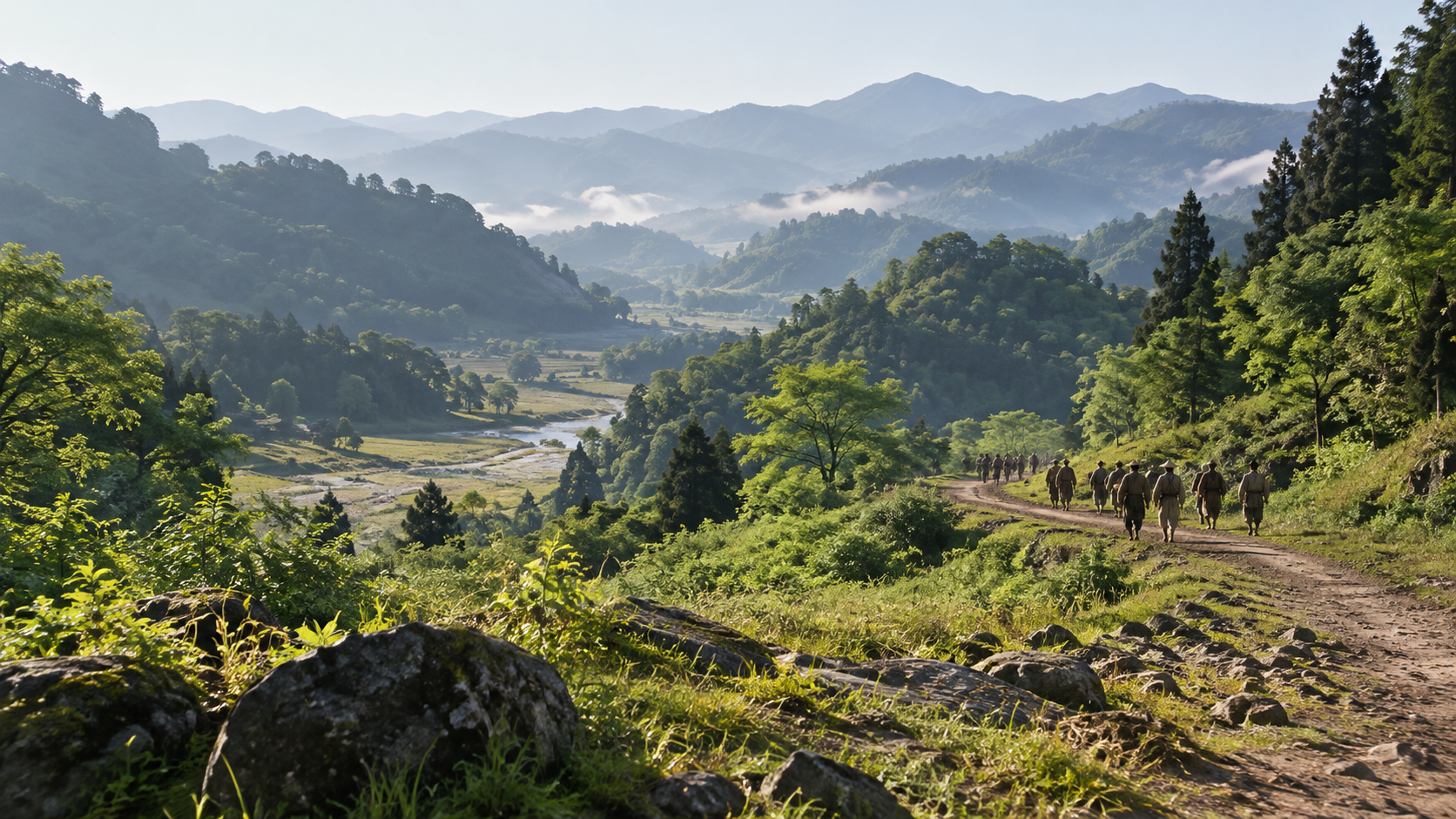
The order had travelled from Kyoto toward Kamakura; the military response moved in the opposite direction. Action directed at the Yoshitoki named by Go-Toba led to a campaign beyond Kamakura, bringing the fighting close to the capital. The imagined group on a mountain road illustrates movement without establishing an actual route, headcount or the appearance of a named commander.
Chapter 08
Kyoto Beyond the River
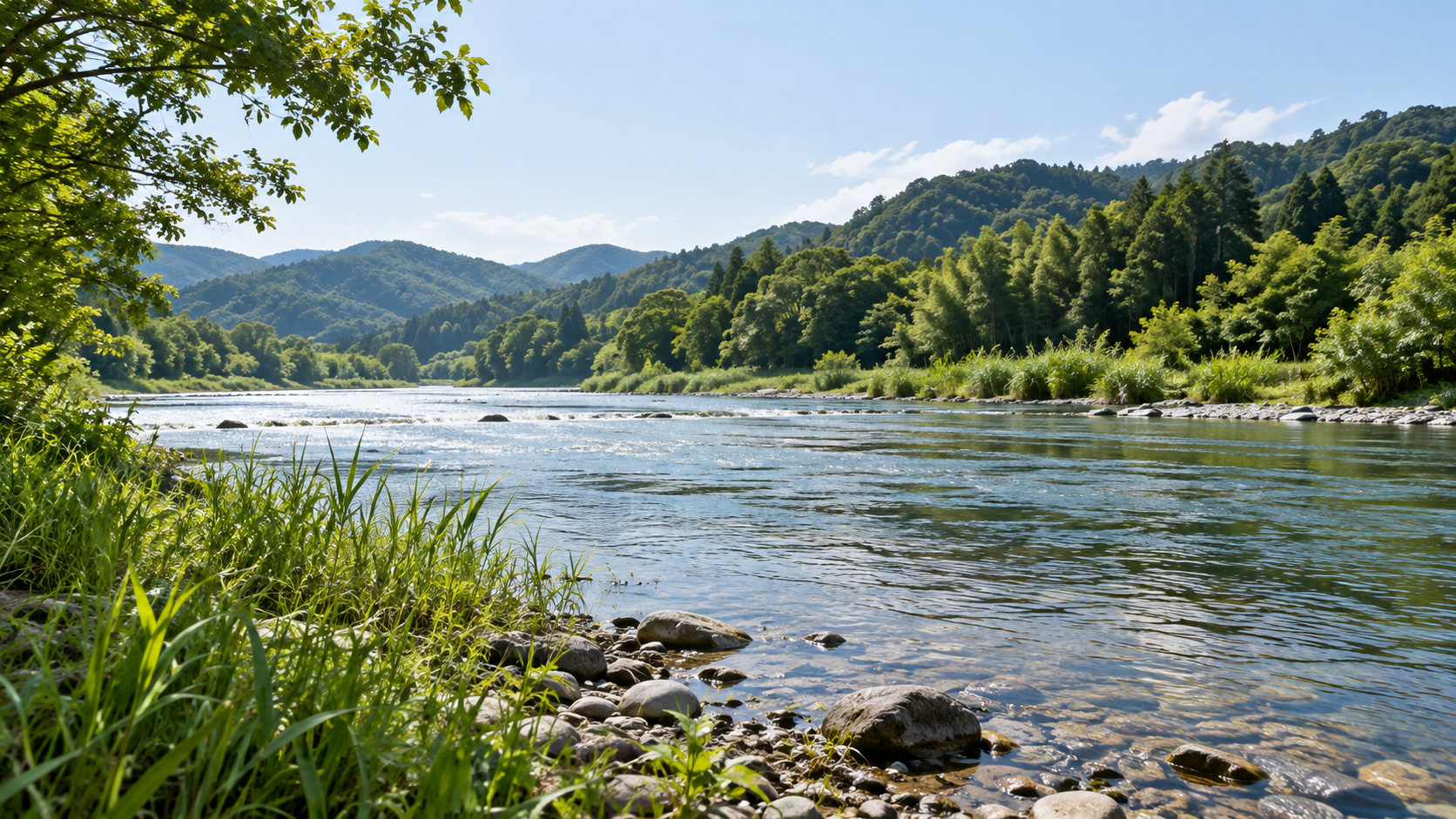
As the army approached the capital, rivers and bridges became places of battle. The Museum of Kyoto’s exhibition explanation introduces a scene in which the Kyoto and Kamakura sides face one another across the Uji River. The river thus provides a geographical setting for understanding the conflict without requiring a fabricated minute-by-minute account of a crossing.
Later illustrated narratives also offer evidence of how fighting was remembered and told. Their pictures cannot be substituted for photographs taken on the day. They do not independently establish every soldier’s position, the precise water level or the words exchanged. This account uses the institution’s explanation without claiming to have authenticated or copied an original illustrated scroll.
The Kyoto side was defeated and the attempt to bring down Yoshitoki failed. Shogunate forces entered the capital from which the order had been issued, and postwar measures began. What ended was the attempt directed against Kamakura’s leading figure. Kyoto itself did not cease to exist as a political centre, nor did the imperial court disappear with the defeat.
Would victory be followed by a return to the earlier relationship, or would responsibilities remain where the army had arrived? Turning from the fighting to Rokuhara makes the institutional consequences visible. The decisive issue for this narrative is not only which side prevailed, but how the victory became connected with the continuing work of government in Kyoto.
Chapter 09
The Work That Continued at Rokuhara
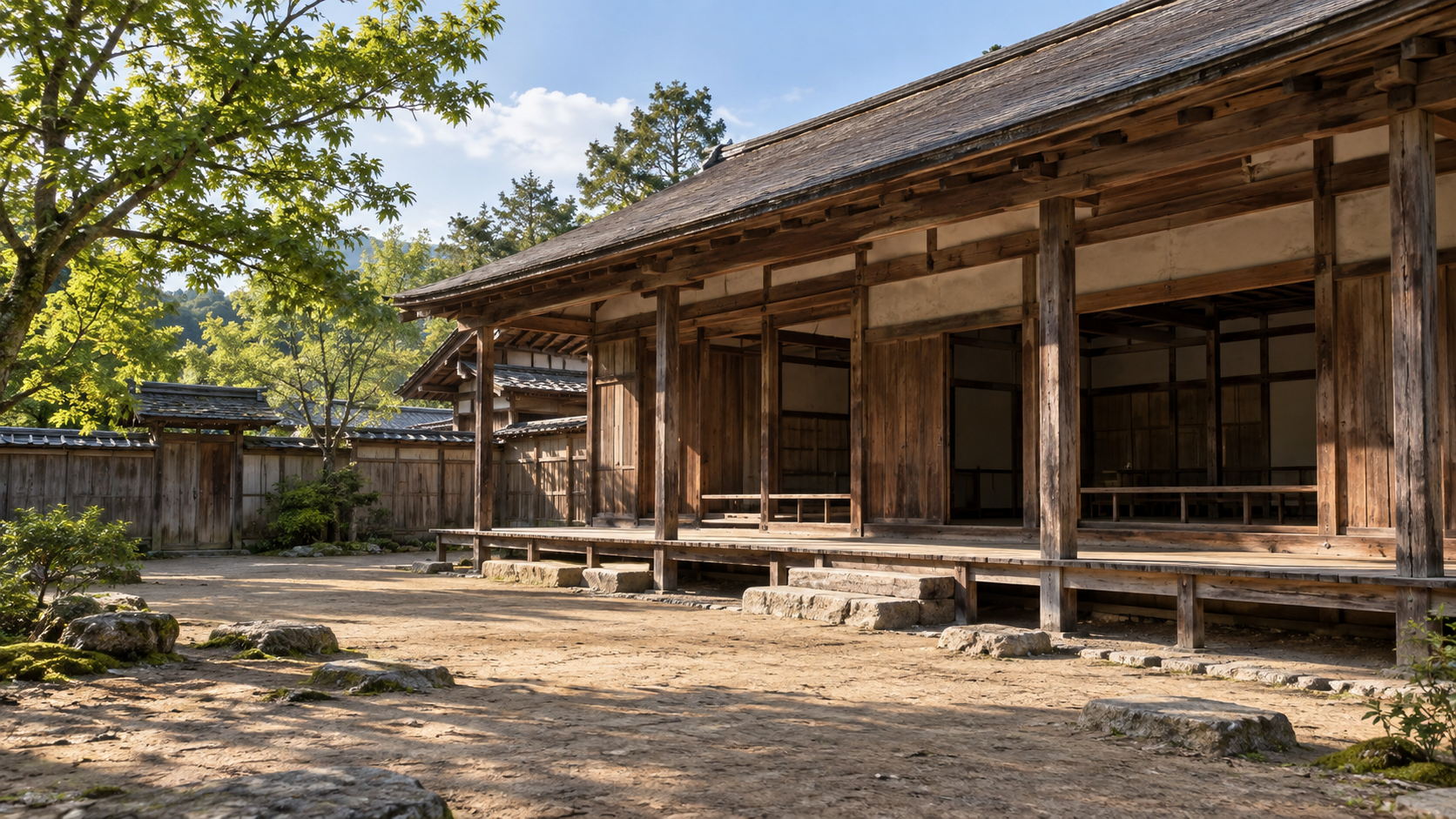
Yasutoki and Tokifusa remained at Rokuhara after entering Kyoto. Kyoto City explains that their handling of the conflict’s aftermath and general administration formed the origin of the Rokuhara Tandai. A political base remained at the destination of the military campaign. The consequences of victory therefore extended beyond an army’s arrival and departure.
Rokuhara is a district on the east bank of the Kamo River. A base for the shogunate’s Kyoto guardians had already been located there from 1185, before the Jōkyū War. It would therefore be misleading to imagine that victory in 1221 created an office for the first time on a site with no previous connection to Kamakura’s work in the capital.
Earlier responsibilities in Kyoto led into a new postwar arrangement. Rokuhara Tandai refers to the shogunate’s political establishment and its heads. A northern and a southern position were each held by a member of the Hōjō family. These offices should not be reduced to an architectural label alone: the name also concerns people conducting government.
Winning the war and undertaking the politics that followed were connected. Viewed through the people and institutions left in Kyoto, the shogunate’s victory was a change that cannot be contained within a battlefield result. The imagined low timber building represents administrative work after the conflict, not a precise reconstruction of the Rokuhara offices or a photograph of surviving remains.
Chapter 10
One Document Connecting Two Lands
A single document offers another view of the postwar changes. The Kantō Gechijō introduced by Kawasaki City is dated to the thirtieth day of the eighth month of Jōkyū 3, or 1221, in the contemporary calendar. It records Yoshitoki ordering an exchange of two lands. The date is not silently converted to Gregorian August 30.
The lands named are Takaku Saigō in Hizen Province and Inage Honjō in Musashi Province. Places far apart were connected through a single decision. Inage Honjō was an estate associated with the area of present-day Nakahara in Kawasaki. The point here is the document’s specific relationship between lands, rather than an invented map of their exact medieval boundaries.
The municipal explanation introduces the document as evidence for the process by which Inage Honjō became Kantō goryō shortly after the war. An individual arrangement makes visible the work of deciding and administering landholding in which the shogunate was involved. The narrative follows the institution’s account without claiming an independent transcription of the original document or its signatures.
This example cannot be expanded into proof that all land was confiscated or treated in the same way. Its value lies in the particular decision it preserves: who ordered a disposition after the fighting and how a relationship between lands was changed. The conceptual scene of document handling does not portray an authenticated image of Yoshitoki or reproduce the written instrument.
Chapter 11
The Years That Continued in Oki
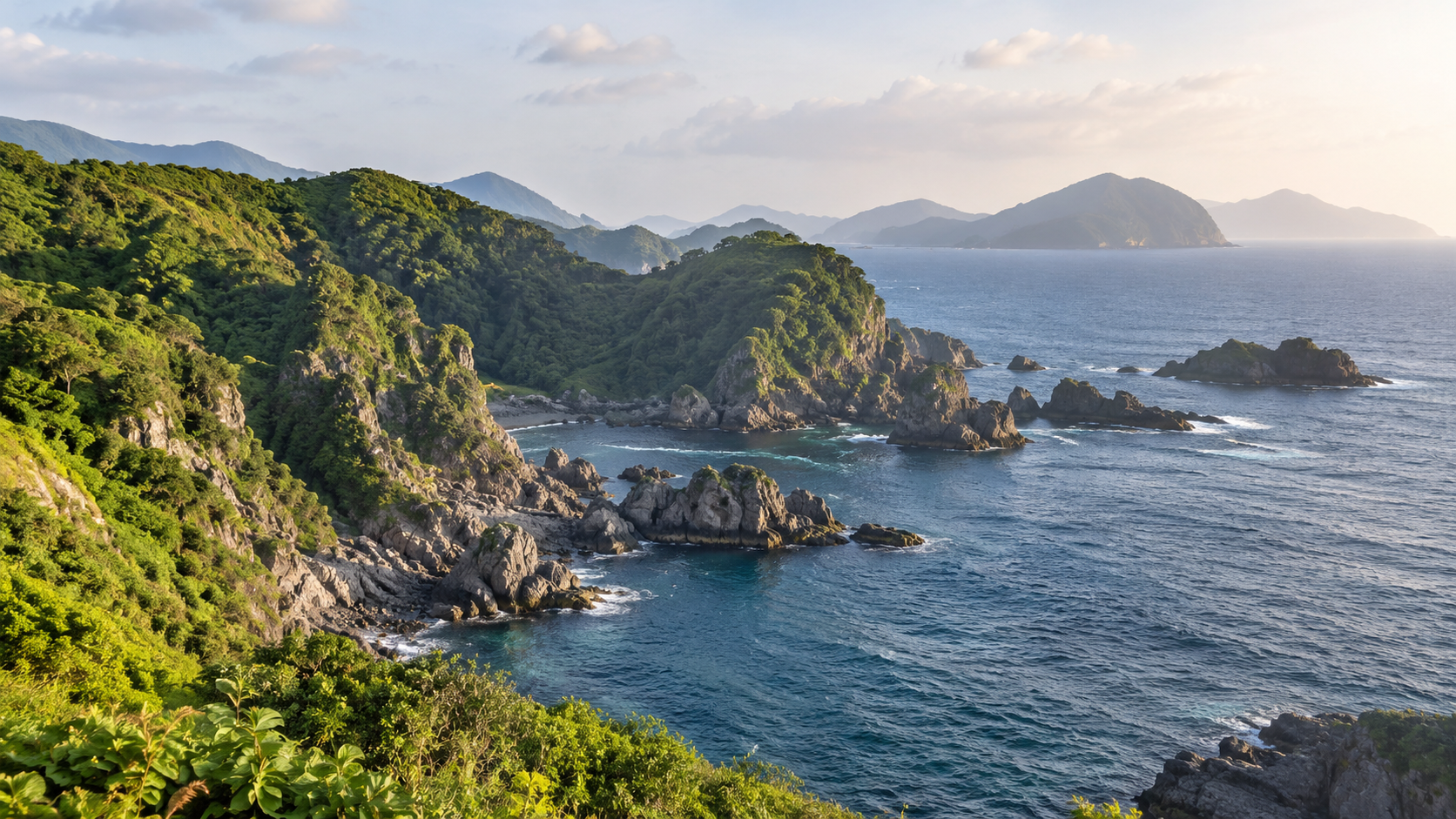
Go-Toba was exiled to Oki. The place of exile was Karita-gō in Ama District of Oki Province, corresponding to present-day Ama Town in Shimane Prefecture. Ama Town lies on Nakanoshima in the Oki Islands. This geographical explanation places the later life of the retired emperor across the sea from Kyoto without reconstructing an unverified landing point or route.
From his arrival in 1221 until his death in 1239, Go-Toba did not return to the capital. Those years cannot be compressed into a single image of the day of defeat. Exile was a continuing part of the war’s aftermath, extending well beyond the military campaign and the immediate decisions made by the victorious side.
Shimane Prefecture’s explanation describes poetic work that continued after exile. Go-Toba, who had been deeply involved with the Shin Kokin Wakashū, continued this activity on the islands, where the Oki version of the anthology took shape. The history of his cultural work therefore accompanies, rather than simply precedes, the history of his political defeat.
There is no need to supply inner thoughts directed at the island scenery or words that have not survived. Work with poetry continued after removal from Kyoto’s political setting. Those years also belong to what the Jōkyū War left behind. The imagined headland is not a documentary photograph of Oki’s actual coast or the place at which Go-Toba came ashore.
Chapter 12
Looking Beyond Victory and Defeat
The order against Yoshitoki led, through the retainers’ consolidation and the movement of the shogunate’s army into Kyoto, to defeat for the side that issued it. The imperial court itself did not vanish as a result. The outcome changed the relationship between political centres without making every earlier institution cease to exist.
After the war, court nobles and warriors continued within a political order in which the shogunate held the stronger position. A base remained at Rokuhara, and particular land decisions reflected shogunate authority. Victory became connected with governing what followed. The offices and the document provide different scales at which to examine that consequence.
Go-Toba’s life, meanwhile, moved to Oki. On the defeated side, cultural work continued through years spent away from the capital. Considering those years alongside the victors’ institutions gives the aftermath a wider scope. Neither the institutional changes nor the poetry needs to be explained by inventing an otherwise unrecorded emotional response.
An order naming one man, two commanders who entered the capital, responsibilities retained at Rokuhara, and a document recording an exchange of land can be read together. The Jōkyū War connects these different histories. Beyond the names of winner and loser, political work and individual lives continued, leaving evidence that extends the story beyond the days of combat.
How to read this work
History, interpretation, and reconstruction
The retainers’ relationships connect the response to the order with the army sent to Kyoto, postwar administration and land decisions, and the cultural work continued in exile.
This work is grounded in published sources and historical research. Interior thoughts, dialogue, and some visual details are cinematic reconstructions. Where historians disagree, the article presents the point as debated rather than settled fact.
Timeline
The story in time
-
Minamoto no Yoritomo died; the work of supporting successors and conflicts among retainers continued in Kamakura.
Sources: s04 -
The Wada conflict formed part of the process through which the Hōjō consolidated their position in the shogunate.
Sources: s04 -
Date of the Kantō Gechijō ordering the exchange of Takaku Saigō and Inage Honjō.
Sources: s07
People & terms
A guide for new readers
Key figures
- Retired Emperor Go-Toba
- Ordered action against Yoshitoki in 1221; after defeat he was exiled to Oki, where he continued his work with poetry.
- Hōjō Yoshitoki
- A leading figure in Kamakura government and the person named as the target of Go-Toba’s order.
- Hōjō Masako
- Remembered for invoking Yoritomo’s benefits to encourage unity among the shogunate’s retainers.
- Hōjō Yasutoki
- Led shogunate forces into Kyoto and remained at Rokuhara to conduct postwar government.
- Hōjō Tokifusa
- Entered Kyoto with Yasutoki and remained at Rokuhara.
- Minamoto no Sanetomo
- The third shogun, assassinated in 1219.
- Kujō Yoritsune (Mitora)
- Brought to Kamakura as a young child after Sanetomo’s death; initially known as Mitora.
Glossary
- Jōkyū War 承久の乱
- The conflict of 1221 following Go-Toba’s order against Hōjō Yoshitoki, also discussed through its administrative and cultural consequences.
- Retired imperial rule 院政
- Political activity exercised by a retired emperor; Go-Toba’s position was not simply that of a ruler who had left political life.
- Shogunate 幕府
- The warrior government based in Kamakura, whose army defeated the Kyoto side in 1221.
- Gokenin 御家人
- Retainers connected with the shogunate through relationships central to the Kamakura response to the order.
- Kamakura-dono 鎌倉殿
- The lord at the head of the Kamakura order; the narrative distinguishes Mitora’s childhood arrival from the later shogun’s name and status.
- Nun shogun 尼将軍
- The name associated with Masako’s political position; it does not turn every reported utterance into a verified transcript.
- Azuma Kagami 吾妻鏡
- A historical compilation centred on the shogunate, with compiler and formation date uncertain and compilation estimated around 1300 in the Archives’ account.
- Rokuhara 六波羅
- A district east of the Kamo River in Kyoto, with a shogunate base predating the Jōkyū War.
- Rokuhara Tandai 六波羅探題
- The shogunate’s Kyoto political establishment and its heads, emerging from Yasutoki and Tokifusa’s postwar administrative work.
- Kantō Gechijō 関東下知状
- The shogunate directive introduced by Kawasaki City, used here for the particular 1221 exchange of two lands.
- Inage Honjō 稲毛本庄
- An estate associated with present-day Nakahara in Kawasaki, named in the land-exchange document.
- Kantō goryō 関東御領
- The shogunate-related landholding category used in the municipal explanation of Inage Honjō’s postwar status.
- Oki 隠岐
- The islands to which Go-Toba was exiled after the war; the place discussed here is in present-day Ama Town on Nakanoshima.
- Shin Kokin Wakashū 新古今和歌集
- The waka anthology with which Go-Toba was deeply involved; an Oki version took shape through his continuing work in exile.
Sources & method
How this article was built
This English narrative translates the fixed Japanese article and retains the identifiers and ordering of its ten institutional references. English source titles are editorial translations. Additional background explains historical institutions, calendar conventions and the limits of the cited evidence without supplying new conversations, personal motives or battlefield details.
The modern institutional explanations are the sources actually consulted. The Azuma Kagami manuscript, illustrated Jōkyū narrative, original land document, signatures, portraits and other collection images were not independently authenticated or reproduced for this article. A historical work’s formation date, its period of coverage and the date of a surviving copy are distinguished.
Reported activity by Masako is described without recreating a verbatim speech. Troop totals are not fixed as modern statistics. The order’s named target is not expanded into a complete unverified programme, and the land directive remains an individual example. The 2021 and 2022 exhibition pages are historical reference material, not announcements of exhibitions currently open.
All illustrations are retained SHIGEKI AI-generated explanatory scenes with matching rights and image bytes. Anonymous figures, blank papers, buildings, roads, riverbanks and coastal views are not authenticated portraits, original documents, actual battle positions or precise site reconstructions. No poems are quoted or presented as newly translated original verse.
Publisher labels group municipal museum and communications pages under their municipality, the Board of Education under Kawasaki City, and the Shimane museum with Shimane Prefecture. Separate pages, authors and departments are not multiplied into independent institutions. The interpretation connecting war and later work is identified as interpretation rather than an unqualified claim from a single medieval text.
Sources
References and further reading
- The Museum of Kyoto: The Jōkyū War Revisited 京都文化博物館・よみがえる承久の乱 Title translated editorially for reader convenience. The Museum of Kyoto 京都文化博物館 Official explanation for a past exhibition, including the conflict, Uji River scene and the court-warrior relationship after the war; original images not reproduced. Accessed 2026-10-19
- Kyoto City, Urban History 09: Rokuhara 京都市・都市史09 六波羅 Title translated editorially for reader convenience. Kyoto City 京都市 Official account of the district, its pre-1221 shogunate base, and the origins and structure of the Rokuhara Tandai. Accessed 2026-10-19
- Kamakura-dono Correspondence, Part 4: Hōjō Masako 鎌倉市・鎌倉殿通信 第4回 北条政子 Title translated editorially for reader convenience. Kamakura City 鎌倉市(解説:鎌倉歴史文化交流館学芸員 山本みなみ) Curatorial explanation by Yamamoto Minami of the Kamakura Museum of History and Culture, concerning Masako, the succession and unity in 1221. Accessed 2026-10-19
- Kamakura-dono Correspondence, Part 2: Hōjō Yoshitoki 鎌倉市・鎌倉殿通信 第2回 北条義時 Title translated editorially for reader convenience. Kamakura City 鎌倉市(解説:鎌倉歴史文化交流館学芸員 山本みなみ) Explanation by the same municipal museum curator of Yoshitoki’s rise and the events of 1213, 1219 and 1221. Accessed 2026-10-19
- Hōjō Exhibition, Volume 3 鎌倉歴史文化交流館・北条氏展vol.3 Title translated editorially for reader convenience. Kamakura City 鎌倉市・鎌倉歴史文化交流館 Municipal museum account of the outcome and the illustrated Jōkyū narrative in a past exhibition; a separate municipal page is not a separate publisher. Accessed 2026-10-19
- Azuma Kagami 国立公文書館・吾妻鏡 Title translated editorially for reader convenience. National Archives of Japan 国立公文書館 Institutional introduction distinguishing the work’s chronological scope, estimated compilation around 1300 and the later copying of a surviving manuscript. Accessed 2026-10-19
- Kantō Gechijō: A Shogunate Directive 川崎市教育委員会・関東下知状 Title translated editorially for reader convenience. Kawasaki City 川崎市教育委員会 Board of Education explanation of the dated land-exchange document and its context; the later authentication slip is distinct from the 1221 instrument. Accessed 2026-10-19
- Shimane Literary Map: Go-Toba 島根県・しまね文学マップ 後鳥羽院 Title translated editorially for reader convenience. Shimane Prefecture 島根県 Prefectural explanation of exile, continued poetic work, the Oki anthology and places of remembrance; no waka quoted or independently translated here. Accessed 2026-10-19
- Retired Emperor Go-Toba and Oki 島根県立古代出雲歴史博物館・後鳥羽上皇と隠岐 Title translated editorially for reader convenience. Shimane Prefecture 島根県立古代出雲歴史博物館 Prefectural museum’s past-exhibition account of the 1221 conflict, the place of exile and death in 1239; museum and prefecture not split into separate publishers. Accessed 2026-10-19
- The Attractions of Ama Town 海士町・海士町の魅力 Title translated editorially for reader convenience. Ama Town 海士町 Official municipal explanation placing Ama on Nakanoshima and describing its connection with Go-Toba; no present travel or opening arrangements asserted. Accessed 2026-10-19
Continue reading
More stories from Shigeki
Shigeki English
Sakai’s Merchant City: Trade, Self-Government and Survival
A port, a merchant council and town communities—from changing authority to rebuilding after fire.
- When From the later fifteenth century through the Sengoku period, the fire of 1615 and early Edo-period reconstruction.
- Where Sakai, in present-day Osaka Prefecture, where maritime routes met roads on land.
Shigeki English
The Aburanokōji Incident: After Leaving the Shinsengumi
A separation in spring, a new base in summer, and two successive attacks.
- When Kyoto in Keiō 3 (1867). The incident’s historical date corresponds to December 13, 1867.
- Where Kyoto: the guards’ successive bases, the Aburanokōji attack site and the later place of remembrance.