
SHIGEKI ENGLISH STORYEN
Japanese history in English
Iki and the 1274 Invasion: Records, Traditions and the Search for a Battlefield
Taira Kagetaka, a later castle identification, commemoration and what excavation has established.
Read Iki’s experience of the 1274 invasion through accounts of Taira Kagetaka, later identification of Hinotsume Castle, commemorative sites and archaeological investigation. Evidence for a castle is distinguished from proof of the battle’s exact location.
At a glance
Before you enter the story
- When
- The 1274 Bunei invasion, with 1281 kept separate and later commemoration and investigation identified by date
- Where
- Iki Island, including the Katsumoto and Ashibe areas
- Key figures
- Taira Kagetaka, Later compilers, commemorators and archaeological investigators
- What was at stake
- Which parts of the island’s battle history are documented, and which identifications remain open questions?
Why this story matters
The larger history behind the turning point
Iki can disappear into a brief transition between Tsushima and Hakata Bay. Following the island’s own records and places reveals a history requiring investigation in its own right. The limits of the evidence do not make the event insignificant; they identify which questions still need to be answered.
A shrine, a mound, a castle ditch and a written account have different histories. Commemoration can deserve protection without proving an exact battlefield or burial total. Recognizing both their value and their limits makes it possible to respect inherited memory while reading archaeological findings carefully.
Historical context
What an international reader needs to know
Different dates and kinds of record
Bunei identifies the 1274 invasion and Koan the second invasion of 1281. The article concentrates on the first. References to old-calendar months and days are not silently converted into identical Gregorian dates, and later evidence concerning 1281 is labelled as such.
Hachiman Gudokun is a work with a religious purpose, explaining the power of the Hachiman deity as well as relating events. Institutional descriptions of its surviving copies and content should be distinguished from a direct transcription of an original manuscript or an official report written during a battle.
Identification and archaeological context
Identifying a place named in a text with a modern location involves comparison of names, terrain and other information. A later identification may preserve local knowledge, but it is not the same as finding a contemporary plan fixing the location of a particular event.
Excavation likewise establishes findings within investigated areas. Failure to recover direct evidence there does not prove that no battle occurred anywhere on the island. Conversely, finding a castle structure does not by itself date its use to the invasion or identify the actions that took place within it.
Watch the film
See the story in motion
The film currently uses Japanese audio. This English article provides the context and source trail; it does not imply that an English subtitle track is available.
Scene 01
Questions preserved on the island
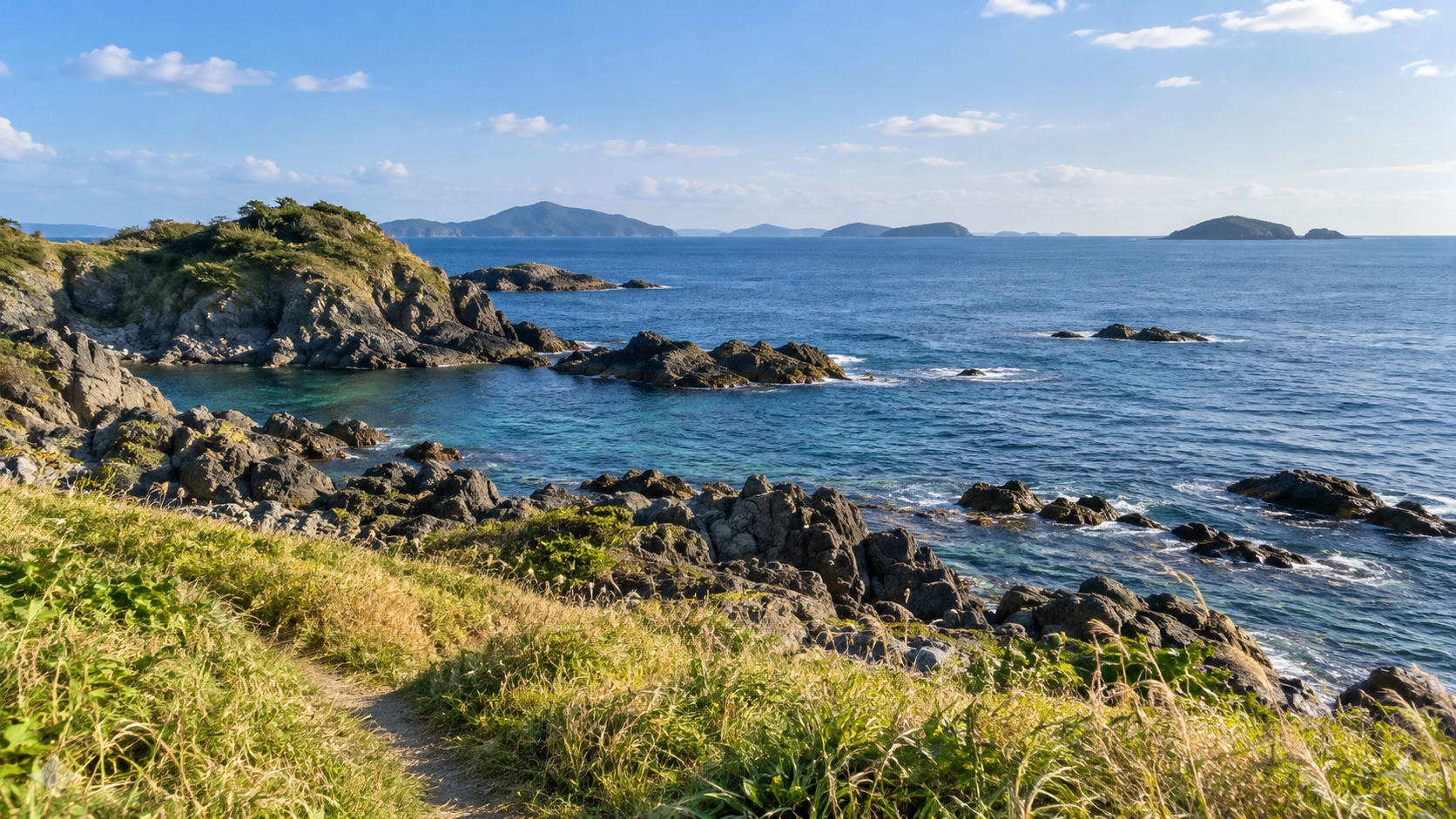
On Iki, places including Senninzuka, Shinjo Shrine and Hinotsume Castle carry memories of the Bunei invasion. Following the names can make a battlefield more than seven centuries old seem immediately present, yet the relationship between a historic place and a place named in a record needs examination.
Iki was attacked in 1274 after Tsushima. Accounts describe the deputy governor, Taira Kagetaka, fighting and dying. The detailed course of the battle and the precise location of the castle, however, include questions not fully established by the evidence introduced here.
The article follows what records relate, what later generations transmitted and what investigation has confirmed. These are connected ways of approaching the island’s past, but their boundaries matter. What survives and what remains unresolved both form part of the history.
Scene 02
Between Tsushima and Kyushu
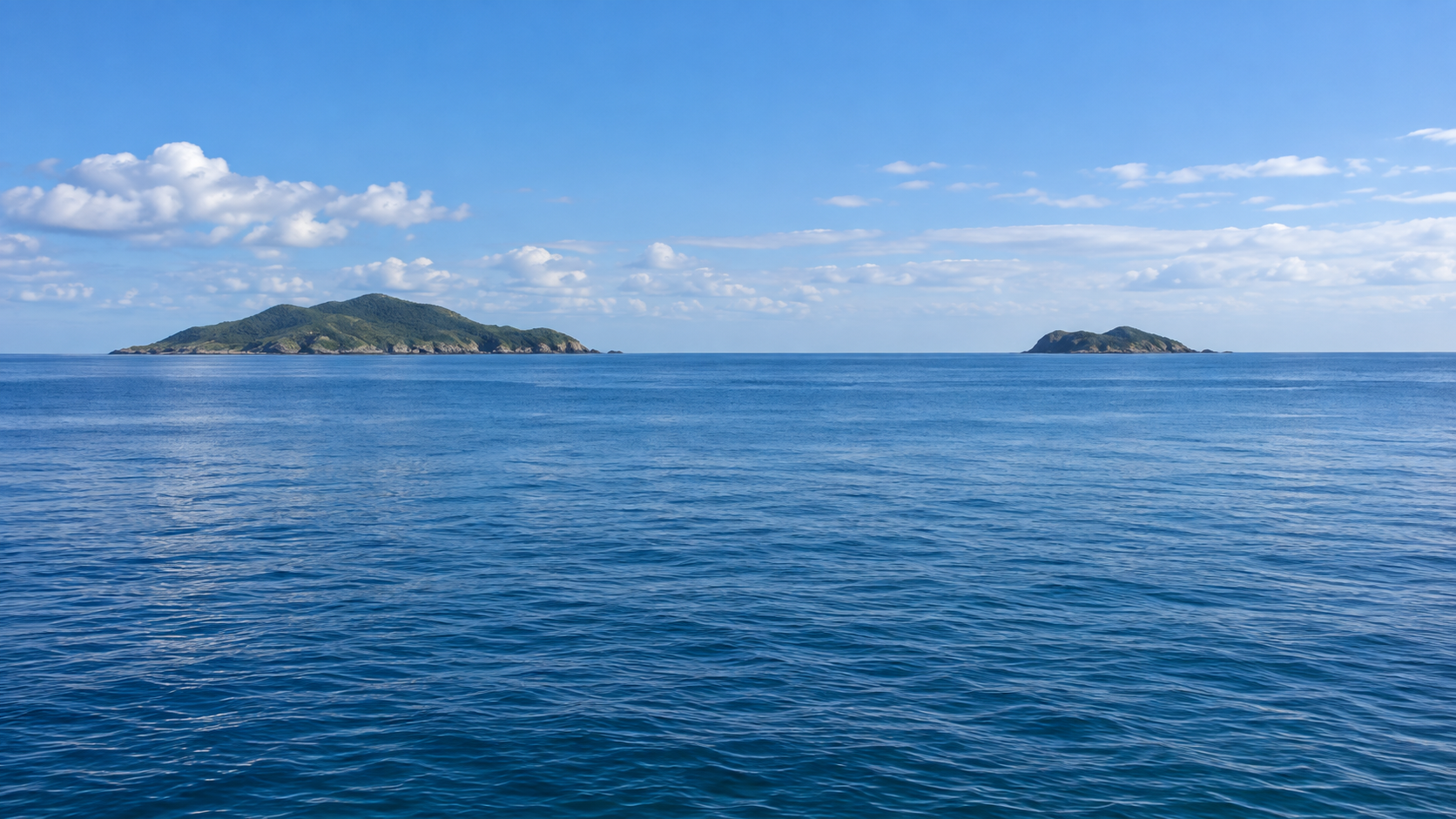
Iki lies in the sea between Tsushima and Kyushu. Beginning the invasion story directly in Hakata Bay can hide the experience of islands attacked before the expedition reached that coast. The sequence of places is part of understanding the wider event.
In 1274, Yuan and Goryeo forces crossed the sea through Tsushima and Iki toward Kyushu. Those events were connected, but did not occur on one continuous shoreline. An image of fighting at Hakata cannot establish Iki’s terrain or troop positions.
The island also contains distinct places: the western coast, the Katsumoto area and Ashibe to the east. Locating traditions and objects prevents different settings from being collapsed. The National Archives’ explanation corroborates the two invasion years and the advance from Tsushima to Iki, without settling exact battle locations within the island.
Scene 03
The Bunei invasion and the calendar
The invasion reached Iki after Tsushima in the tenth month of the contemporary calendar. When a month or day is given, it belongs to that historical calendar, rather than automatically corresponding to the same number in today’s Gregorian calendar.
A second invasion followed in 1281. Iki has records and traditions concerning both, so collecting them under the single word invasion can mix events from different years. This account centres on 1274 and identifies later references explicitly.
The island’s position within maritime movement is a broad setting. Exactly who fought where on a particular day is a narrower question requiring its own evidence. Separating the general sequence from individual locations is a way to approach an event for which detailed records are limited.

Scene 04
Kagetaka and the limits of a short account
One work relating the fighting is Hachiman Gudokun, which also expounds Hachiman’s sacred power. Nagasaki Prefecture introduces an account of vessels reaching the island’s western side, a landing, and Kagetaka resisting with his retainers in a castle before defeat and death by suicide.
That account does not supply a conversation transcript or the position of every defender. Figures appearing in a historical narrative should also be distinguished from a precise modern operational tally or a total for all losses throughout the island.
A different kind of record appears in the Kyushu National Museum document album. Its institutional explanation identifies a Bunei 11 order following news of attacks on Tsushima and Iki and directing a vassal to travel for defence. This supports study of the shogunate’s response, rather than the castle’s exact location or the details of Kagetaka’s final moments.
Scene 05
Which castle did the record mean?
The castle in the narrative is called Sho no Saburo’s castle. Connecting that designation to a modern map requires additional clues. The existence of the name in a text does not supply coordinates by itself.
An Edo-period local geography associated it with Hinotsume Castle in Shinjo, Katsumoto. A visitor consequently encounters the medieval past partly through an identification made in a later period. Such an identification can include inherited geographical knowledge without becoming a contemporary battlefield plan.
The existence of a place called Hinotsume Castle and the conclusion that it was the castle where Kagetaka died in 1274 are separate propositions. Keeping them separate from the start makes it possible to assess what later investigation contributes to each.

Scene 06
Memory given visible form in later centuries
The local-geographical identification influenced later commemoration. The prefectural explanation connects that interpretation with the establishment of Kagetaka’s grave and Shinjo Shrine during the Meiji period. The present memorial setting therefore has a history after the invasion.
The grave and shrine should not be imagined as surviving in the same form from the battle year. Later people created visible ways to remember the island’s past. Paintings and postcards of the invasions also belonged to modern acts of representation.
Such works can show how later generations imagined the event, but cannot serve as thirteenth-century eyewitness records. Battle narratives, local traditions and modern memorials may concern the same event while having different dates and purposes. Recognizing those differences changes the questions asked of a historic site.

Scene 07
What designation of Senninzuka establishes
Senninzuka in Shinjo Higashifure, Katsumoto, was designated a prefectural historic site in 1975. The reason for designation needs attention alongside the name. The prefecture presents it as a commemorative place transmitting the historical significance of the Bunei invasion.
The name, which refers to a thousand-person mound, does not establish that exactly a thousand people’s remains were excavated there. Nor does designation alone prove that archaeology has conclusively located the battle’s centre.
The explanations retain caution about identifying the castle in the record with today’s Shinjo Shrine, while recognizing the historical importance of the wider area through tradition and terrain. Cultural value and directly demonstrated archaeological facts can both be respected without treating them as identical.
Scene 08
What an investigated area can reveal
The prefectural explanation introduces investigations at Hinotsume Castle and Tojinbaru. Work at the castle examined areas around the shrine buildings; at Tojinbaru, a low plateau’s slope was investigated. The reported work did not find features or objects directly corroborating the Bunei fighting.
That absence does not establish that the battle never occurred. Excavation is limited by where and how much ground was examined. Its result concerns the investigated scope, rather than every possible place on the island.
The opposite assumption is also too quick: a castle named in a narrative is not automatically the present castle site without further evidence. Reading records, proposing locations and comparing physical traces is continuing work. An answer reached along the way should not be presented as a completed conclusion.
Scene 09
A castle ditch and evidence of a battle
Investigation can reveal something important about a castle even when the battle identification remains unresolved. At Hinotsume, part of a circular dry ditch was reported, contributing to understanding the site’s structure.
A dry ditch is dug ground used for defence without being filled with water. Confirming such a boundary can disclose aspects of a castle that are not clear from the surface alone. It is a finding about structure, not by itself proof of a specific event.
When a feature was built, when it was used and what happened there require their own supporting evidence. The 2023 investigation’s result should therefore neither be dismissed nor expanded beyond what it demonstrates. Its significance includes providing a basis for further questions.
Scene 10
An old statue and an unconfirmed owner
Places and objects beyond castles and mounds have also been associated with the invasions. At Chotokuji in Ashibe, a standing wooden Amida Nyorai figure survives. The prefectural account describes it as a work of the late Heian period.
That account also introduces a local historian’s suggestion that it might have been Kagetaka’s personal devotional image. The object’s age and its ownership by one particular person are different questions. One does not prove the other.
The possibility can prompt further investigation, but removing its tentative wording would turn a suggestion into an unsupported statement that Kagetaka prayed before this image. The article preserves that boundary and does not reproduce the statue or invent an individual devotional scene.
Scene 11
Anchor stones and separate invasion years
Around Ashibe harbour on the eastern side of Iki, anchor stones thought to have served old sailing vessels have been passed down. Some were raised from the seabed and later used in memorial towers or grave markers.
Their presence does not prove that they belonged to Yuan military ships of 1274. The prefectural account says their actual use aboard those vessels is unknown. Maritime objects and an invasion association need to remain separate until supported by evidence.
The same explanation introduces a record of fighting near this area during the Koan invasion. That concerns 1281, a different year from the first expedition. Old shipping, traditions and the second invasion connect the island with the sea in different ways; combining them into one event would erase useful distinctions.
Scene 12
An island’s history and questions still open
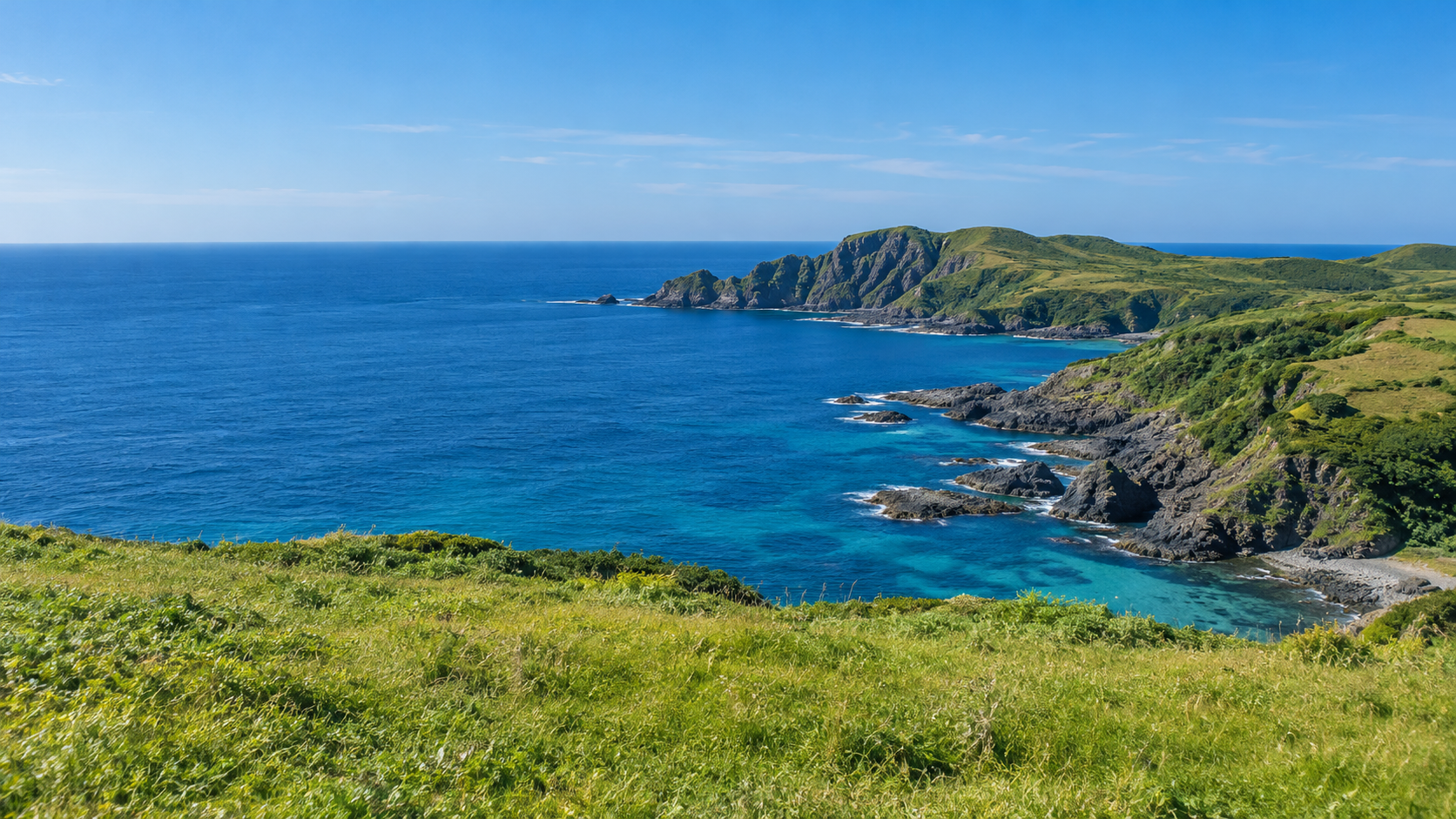
Iki preserves a narrative of its deputy governor’s resistance, local geographies and traditions associating that narrative with places, later memorials, and investigations testing what can be known about them. None alone supplies the complete history.
The task is to distinguish what was written, what later people proposed and what survey or excavation established, without filling a short record with invented detail. That approach gives the island’s experience its own importance beyond a brief stop on the way to Hakata Bay.
The location and extent of the old battlefield remain questions. The coastline and elevated ground can be viewed alongside the time of people who remembered the event and sought to understand it. The unresolved parts are kept visible, rather than closed by the certainty of a place-name or an illustration.
How to read this work
History, interpretation, and reconstruction
Iki’s invasion history is best approached by distinguishing written accounts, later place identifications, commemoration and the specific results of excavation.
This work is grounded in published sources and historical research. Interior thoughts, dialogue, and some visual details are cinematic reconstructions. Where historians disagree, the article presents the point as debated rather than settled fact.
Timeline
The story in time
-
The second invasion; records of fighting around Ashibe are kept separate from 1274.
Sources: s1 -
The local geography introduced by the prefecture identifies Sho no Saburo’s castle with Hinotsume Castle.
Sources: s1 -
Shinjo Shrine, dedicated to Kagetaka, is built at the top of the Hinotsume site.
Sources: s2 -
The Shinjo historic battlefield of the Bunei invasion is designated a prefectural historic site.
Sources: s3 -
Investigation confirms part of a dry ditch at Hinotsume. The annual report states that direct clues to the Bunei event were not obtained.
Sources: s2
People & terms
A guide for new readers
Glossary
- Bunei invasion 文永の役
- The 1274 invasion central to this article, distinct from the expedition of 1281.
- Koan invasion 弘安の役
- The second invasion, in 1281; Ashibe-related references are dated separately.
- Deputy governor 守護代
- The position associated in the article with Taira Kagetaka.
- Hachiman Gudokun 八幡愚童訓
- A work relating events while also expounding Hachiman’s sacred power; surviving copy dates are distinguished from composition.
- Place identification 比定
- Associating a location named in a record with a particular site through names, terrain and other clues.
- Dry ditch 空堀
- A defensive cut in the ground not filled with water; evidence for structure does not alone identify a battle.
- Senninzuka 千人塚
- A commemorative place whose name does not prove an excavated burial total.
Sources & method
How this article was built
The English edition retains all twelve Japanese scenes, six timeline entries and eight source identifiers, including the two institutional corroborating sources added before publication. Source titles are editorial translations, and a repository hosting a prefectural report is not counted as its independent author.
The work distinguishes 1274 and 1281, historical calendar dates, the narrative’s character, later identification and Meiji commemoration. It preserves both the reported ditch and the absence of direct Bunei clues within the stated investigations. Lack of evidence within one area is not universal proof of absence.
Institutional explanations are not presented as newly deciphered originals. The Amida ownership suggestion and anchor-stone associations remain tentative. All illustrations are conceptual; no original manuscript, statue photograph, archaeological plan or medieval eyewitness image is reproduced.
Sources
References and further reading
- Memories of the Bunei invasion on Iki: prefectural publication 長崎県配布PDF・壱岐における「文永の役」の記憶 Title translated editorially for reader convenience. Nagasaki Prefecture 長崎県 Printed pages 4–5 support the narrative, later identifications, commemoration, earlier excavations, statue and anchor-stone cautions. Original manuscripts, local geographies and plates are not reproduced. Accessed 2026-10-26
- Nagasaki buried cultural properties annual report 32, fiscal 2023 investigations 長崎県埋蔵文化財調査年報32(令和5年度調査分)第51集、2024年11月30日 Title translated editorially for reader convenience. Nagasaki Prefecture Board of Education / Archaeological Centre 長崎県教育委員会・埋蔵文化財センター/奈良文化財研究所全国遺跡報告総覧 Printed page 26 reports the 2023 Hinotsume investigation, ditch and absence of direct Bunei clues. Hosting by the national site-report repository is not treated as separate authorship. Later formal reports are not claimed as examined. Accessed 2026-10-26
- Shinjo historic battlefield of the Bunei invasion: cultural property database 長崎県文化財データベース・文永の役新城古戦場 Title translated editorially for reader convenience. Nagasaki Prefecture 長崎県 Used for designation on 7 January 1975, location and commemorative explanation. Designation is not proof of an exact battlefield or burial count. Accessed 2026-10-26
- Historical folklore survey card: invasion site at Shinjo Tainohara 歴史民俗調査カード・元寇遺跡新城鯛の原 Title translated editorially for reader convenience. National Museum of Japanese History 国立歴史民俗博物館 The card dated 31 October 1973 retains the lack of clear evidence that Shinjo Shrine marks Kagetaka’s death location. Card photographs and maps are not reproduced. Accessed 2026-10-26
- Hachiman Gudoki: cultural properties of Ehime 八幡愚童記・えひめの文化財 Title translated editorially for reader convenience. Ehime Prefecture Board of Education 愛媛県教育委員会文化財保護課 Used for the work’s religious character. The described 1483 copy and composition of the work are not conflated; it is not treated as a same-day battle report. Accessed 2026-10-26
- Hachiman Gudoki: Nagoya University Library collection 八幡愚童記・名古屋大学附属図書館所蔵 Title translated editorially for reader convenience. Tokai National Higher Education and Research System / Nagoya University Library 東海国立大学機構/名古屋大学附属図書館 The catalogue’s estimated early-modern copy date and content note support the distinction between copying and composition. No manuscript-image transcription or reproduction is claimed. Accessed 2026-10-26
- Japan and Mongolia, Chapter 1: thirteenth-century relations 国立公文書館 日本とモンゴル 第1章・13世紀の日本モンゴル関係 Title translated editorially for reader convenience. National Archives of Japan 国立公文書館 The exhibition explanation corroborates the two invasion years, the Tsushima-to-Iki sequence and the religious character of the Hachiman narrative. Historical calendar dates are not converted by assumption, and exhibition images are not reproduced. Accessed 2026-11-04
- Album of historical documents, Kyushu National Museum B120 e国宝 古文書手鑑(九州国立博物館 B120) Title translated editorially for reader convenience. National Institutes for Cultural Heritage / Kyushu National Museum 国立文化財機構・九州国立博物館 The collection explanation identifies the Bunei 11 order responding to reports of attacks and directing travel for defence. This is not a new decipherment or evidence fixing Iki’s castle and battlefield positions. Accessed 2026-11-04
Continue reading
More stories from Shigeki

Shigeki English
Enomoto Takeaki after Defeat: Government Service, Treaties and Migration
Follow the changing responsibilities behind a former opponent’s Meiji career.
- When From service under the shogunate to release in 1872, the treaty of 1875 and migration to Mexico in 1897
- Where Japan, Saint Petersburg, Siberia and overseas settlement projects
Shigeki English
Dojima Rice Market: Receipts, Accounts and the Movement of Prices
Trading without moving a bale did not make every transaction the same kind of trade.
- When Seventeenth-century Osaka; relocation around 1697; recognition in 1730; later Edo networks; institutional changes from 1869 to 1939
- Where Dojima and the Nakanoshima warehouse district in Osaka, linked to rice-producing regions and distant customers