
SHIGEKI ENGLISH STORYEN
Japanese history in English
Goryokaku: The Work Protected by Hakodate's Inland Star Fort
From an office overlooking the sea to a hall inside an inland moat. Following the opening of the port, construction, changes of hands, the Hakodate War, dismantling, designation and the reconstruction of 2010.
Why was Goryokaku built away from Hakodate's harbour? This article follows the opening of the port and the magistrate's three tasks, the choice of an inland site, Takeda Ayasaburo's design and staged construction, the difference between the start of office work and the completion of all works, the transfer to the new government and the occupation by former shogunate forces, the bombardment of the Hakodate War, postwar dismantling, designation as a historic site in 1922 and a Special Historic Site in 1952, and the partial reconstruction of 2010. Dates follow the contemporary calendar.
At a glance
Before you enter the story
- When
- From the 1854 decision to open Hakodate through construction from 1857, the start of office work in 1864, the Hakodate War of 1868-1869, the park of 1914, designations in 1922 and 1952, to the partial reconstruction of 2010; month and day references use the contemporary Japanese calendar
- Where
- Hakodate’s harbour and mountain-foot office, the inland Yanagino site in Kameda, and the later Goryōkaku park and reconstructed office.
- Key figures
- Takeda Ayasaburo, Koide Hozane, Sugiura Makoto, Shimizudani Kinnaru, Enomoto Takeaki
- What was at stake
- How an administration could remain connected with an opened port while protecting its work, and how successive institutions and later reconstruction changed the same site.
Why this story matters
The larger history behind the turning point
A star-shaped fort can be remembered so strongly for its last battle that the office it was built to protect disappears from view. Goryokaku's history connects a port's foreign relations, territorial government, construction logistics, warfare, archaeology, heritage protection and reconstruction.
Sources also disagree in instructive ways: 1864 or 1866 for completion, 1871 or 1872 for dismantling. Keeping those milestones apart, rather than choosing one number, explains why the landscape visible today combines remains and buildings from different periods.
Historical context
What an international reader needs to know
A Magistrate’s Office Was More Than a Court
For readers encountering the institution in English, magistrate can suggest a judicial officer dealing primarily with legal cases. The official accounts here describe a broader combination of foreign relations, government of Ezo and coastal defense. Those responsibilities explain the connection between the port and its protected administrative buildings. The 1854 re-establishment should also be distinguished from the office’s earlier establishment in 1802 and abolition in 1821.
Names changed again during the political transition of 1868. The Hakodate Saibansho and the later Hakodate-fu belong to the succession of regional administrative bodies described by the sources. The first is not adequately understood through the modern meaning of court alone. Nor should the earlier administrative transfer be merged with the occupation by Enomoto’s former shogunate forces later that year.
Dates, Distance and the Layers of the Present Site
Month-and-day dates in this narrative follow the Japanese calendar used at the time. The sixth month of 1864 and the fifth month of 1869 are therefore not silently converted into Gregorian June and May. Construction began in 1857, the main office building was begun in 1862, work in that building began in 1864, and completion of associated works followed in 1866. Each date marks a different stage.
The approximate distance of three kilometres from the harbour describes the relocation’s setting. It is not an exact firing range for every gun in the later war. Equally, the present office is a modern reconstruction of part of the original building at full scale, while the surviving storehouse has undergone conservation. These distinctions prevent the current landscape from being read as one untouched scene from the 1860s.
Watch the film
See the story in motion
The film currently uses Japanese audio. This English article provides the context and source trail; it does not imply that an English subtitle track is available.
Opening
An office beyond the moat
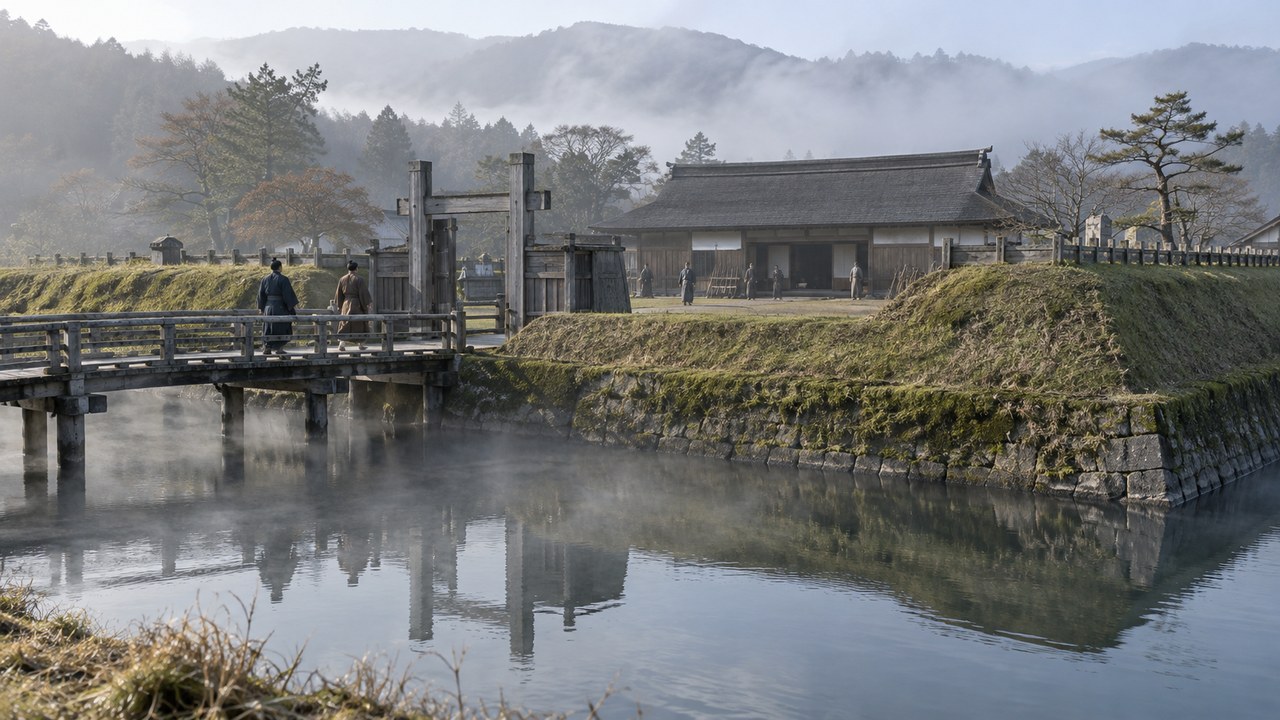
Beyond low earthen ramparts and a moat stands a timber administrative building. Goryokaku is famous for its star-shaped outline and for the last battle fought there, but it was first built as a fortification to protect the Hakodate Magistrate's Office, the institution that governed a newly opened port and the territory around it.
Yet Goryokaku does not stand on the waterfront. Why were an office and its defenses brought together inland, about three kilometres from the harbour where foreign ships arrived? The choice of site combined two concerns: the new workload created by opening the port, and the need to prepare for an attack that might come from the sea.
This article follows the site in order: the reasons for moving the office, construction, changes in who ran it, the Hakodate War, the dismantling of its buildings, its designation as a historic site and the partial reconstruction of 2010. Month and day references stay in the calendar used at the time, and no dialogue or inner thoughts are added where the records are silent.
Chapter 1
Opening a port, receiving its business
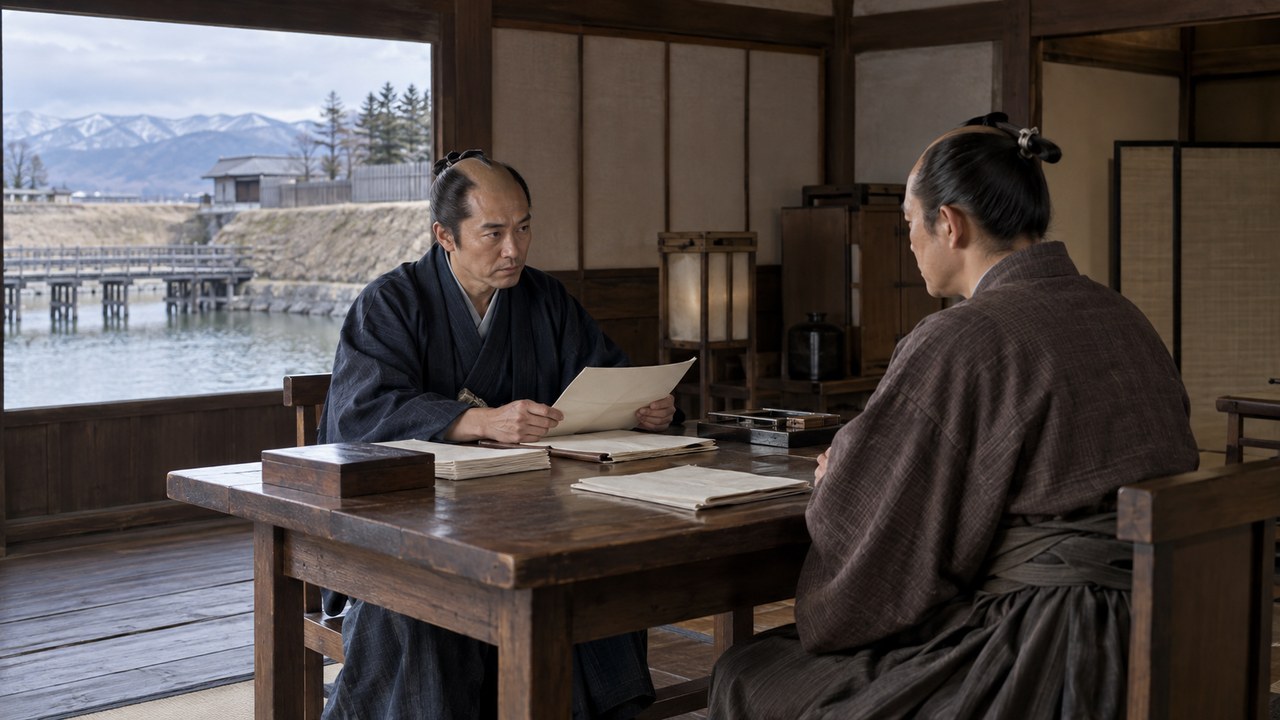
In 1854, the Treaty of Kanagawa with the United States settled that Hakodate would be opened, and the Tokugawa government appointed a Hakodate magistrate once again. According to the facility that now manages the site, the magistracy had first been created in 1802 and abolished in 1821, so 1854 marked its re-establishment rather than its beginning.
The office had three tasks: dealing with foreign visitors, governing Ezo, as Hokkaido was then called, and defending the coast. Its officials did not simply watch ships. They received requests, sent reports and handled the movement of people and goods. A window to the outside world needed to be close to the harbour that it served.
The first magistrate's office was placed at the foot of Mount Hakodate, around what is now Motomachi Park. Its view over the sea was convenient for the work of a port authority. That same openness to view, however, would soon become one of the reasons for considering a move to a new site further inland.
Chapter 2
From the foot of the mountain to the interior
The office at the foot of the mountain could be seen clearly from ships in the harbour, and anyone climbing Mount Hakodate could look straight down on it. The fact that the mountain lay within the area where foreigners were permitted to walk freely was also counted among the concerns about its defense.
The new site chosen was Yanagino in Kameda Village, about three kilometres from the harbour. The official explanations say it was meant to lie beyond the expected range of naval guns of the day, while still allowing contact with the town of Hakodate and access to water. Distance alone was not the only condition.
Along the shore, batteries such as the Benten Point battery were built to defend the sea approaches, while Goryokaku was raised inland to enclose the office. It is worth keeping this division of roles in view: one set of works protected the harbour, and another protected the administrative institution that governed it.
Chapter 3
Turning a star into construction work
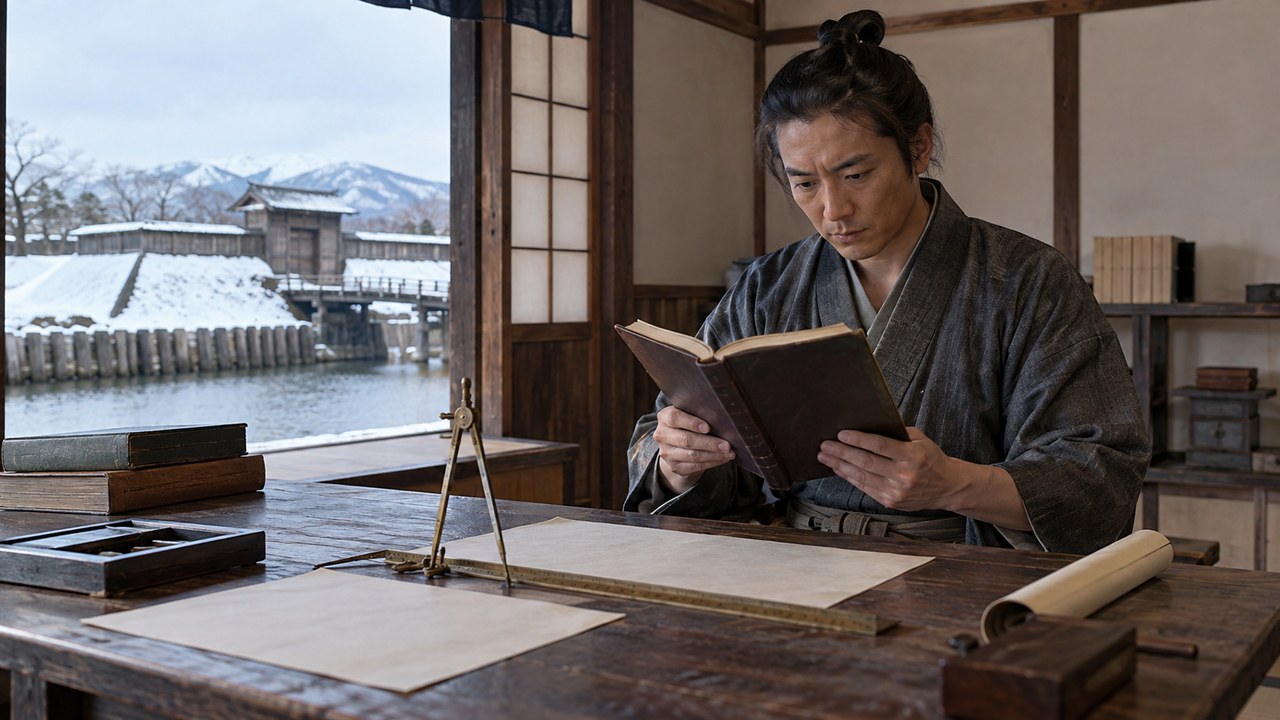
The design was entrusted to Takeda Ayasaburo. The Agency for Cultural Affairs explains that Takeda, then a professor at the shogunate's institute for Western studies in Hakodate, adopted the methods of Western bastioned fortification. The projecting points of the star made it easier for defenders to fire along and around the walls.
Nippon Tabi Magazine reports that Takeda copied cannon drawings and plans of bastions from a French warship that entered Hakodate in 1855, and used them as a basis for his design. The Japan National Tourism Organization also mentions the influence of the French military engineer Vauban on the shape of the fort.
Work began in 1857. Five outer works called demilunes were originally planned outside the walls, but only one, in front of the main gate, was built. The outline that survives today is therefore not just a copied model. It is also a shape that was chosen and trimmed during construction, under limits of cost and time.
Chapter 4
Frozen earth and timber across the sea
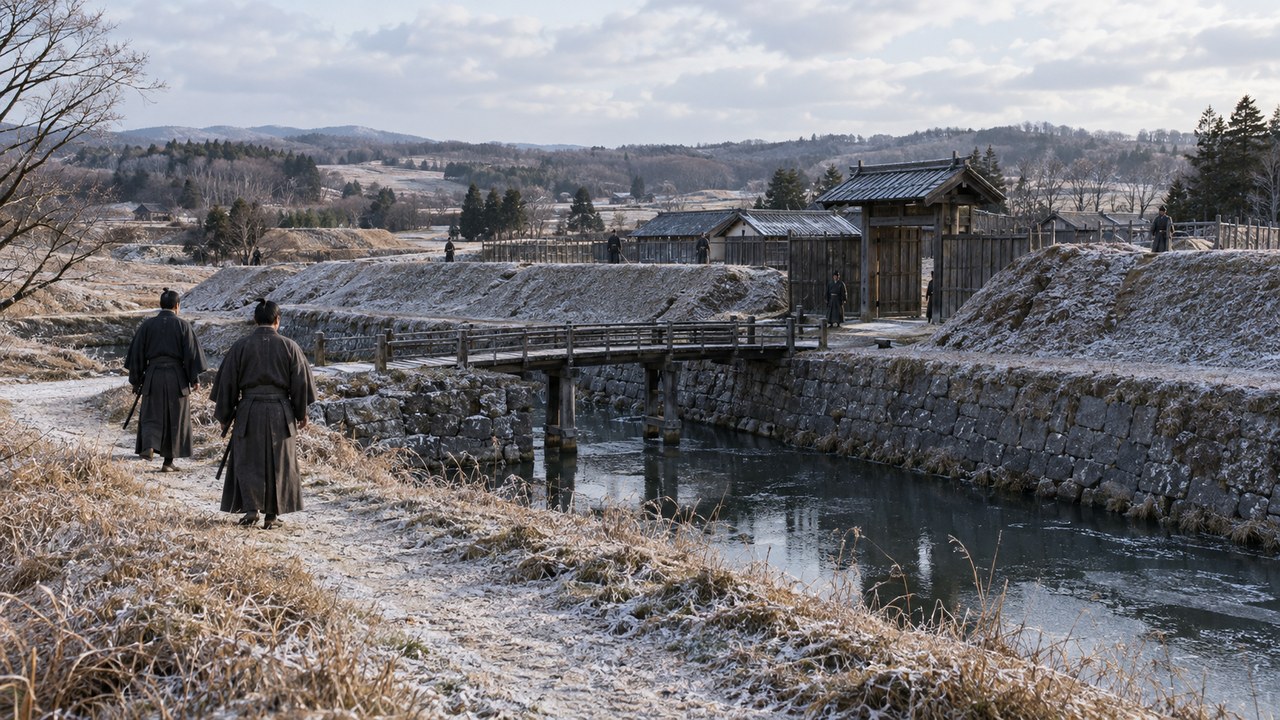
In the north, the soil of the ramparts freezes in winter and loosens in spring. To stop this cycle from causing collapses, stone walls were built to support the earthworks. The Agency for Cultural Affairs records that the outer moat drew water from the Kameda River, and that the gates and the moat sides were faced with stone.
In 1862 construction began on the magistrate's main building at the centre of the fort. Inside the defensive perimeter that was still being shaped, work moved forward on the hall where officials would actually carry out their duties, receive visitors and keep their records.
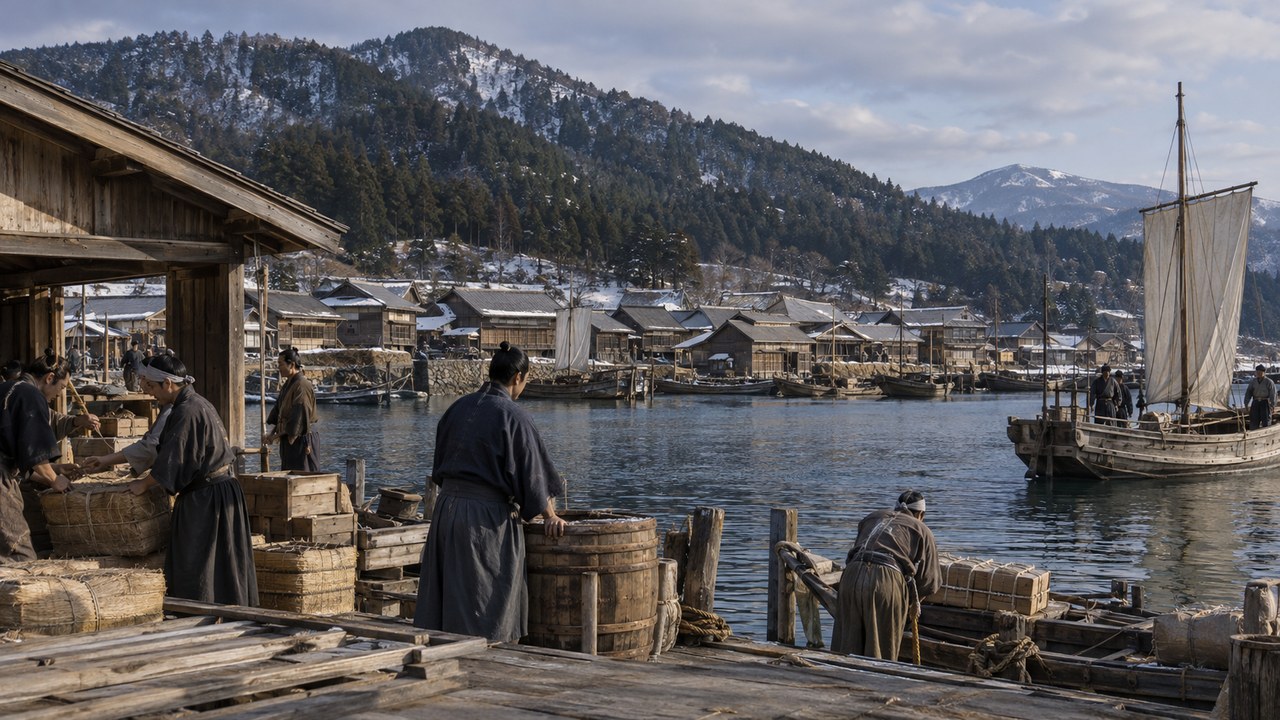
The building used pine, cedar and hiba, a northern cypress, and timber prepared in Noshiro in Akita was carried across the sea to Hakodate. An office deliberately placed away from the harbour was still tied to the sea along the routes that brought its materials, and construction depended on shipping as much as on digging.
Chapter 5
Work that began before the works were finished
According to the Agency for Cultural Affairs, Goryokaku was almost complete by the fifth month of 1864, and in the sixth month Magistrate Koide Hozane moved in. Hakodate City likewise says the office began work in its new building that month. The complete set of works, including ancillary facilities, was not finished until 1866.
The Hokkaido government's park page and the national tourism organization give 1864 as the year of completion, while Nippon Tabi Magazine gives 1866. Rather than one of them being wrong, they appear to mark different milestones: the beginning of office work on the one hand, and the completion of all construction on the other.
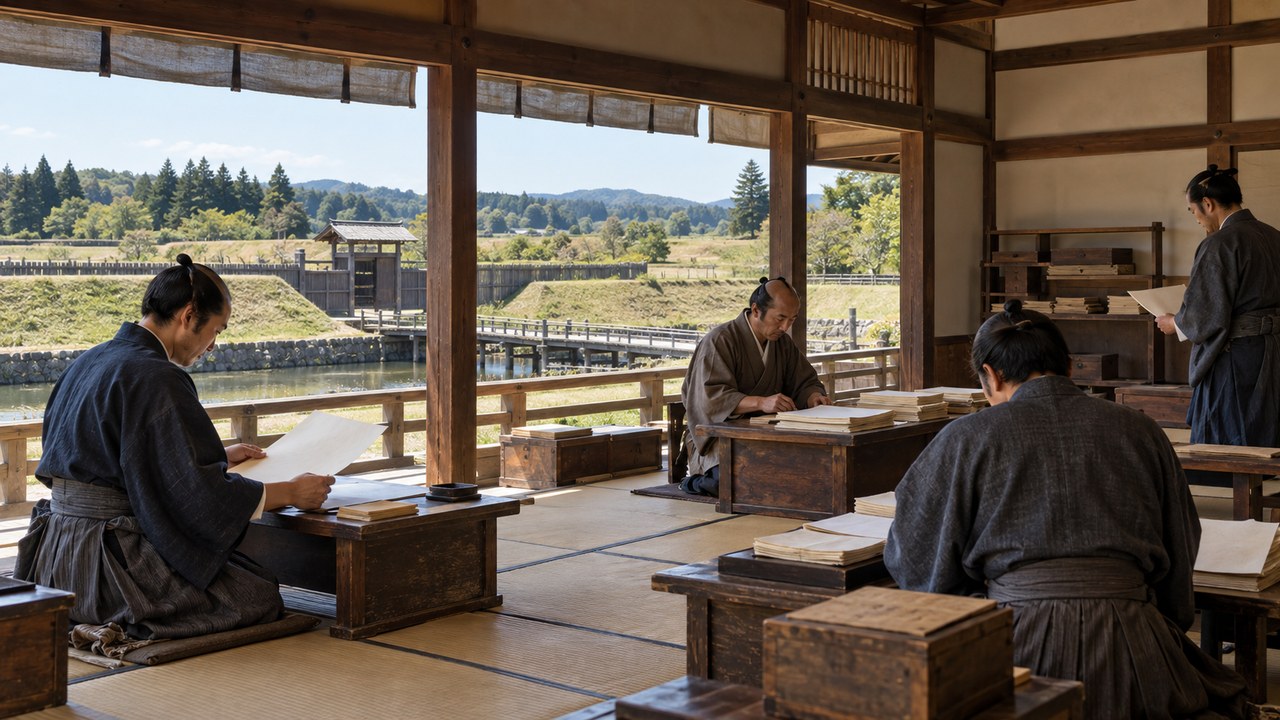
The main building had a public section where officials worked and private quarters linked to the magistrate's household, and the enclosure also held storehouses and row houses for staff. Outside, moats and ramparts stood guard; inside, papers were handled and visitors received. The defenses surrounded an ongoing administrative routine.
Chapter 6
Daily life left in the ground
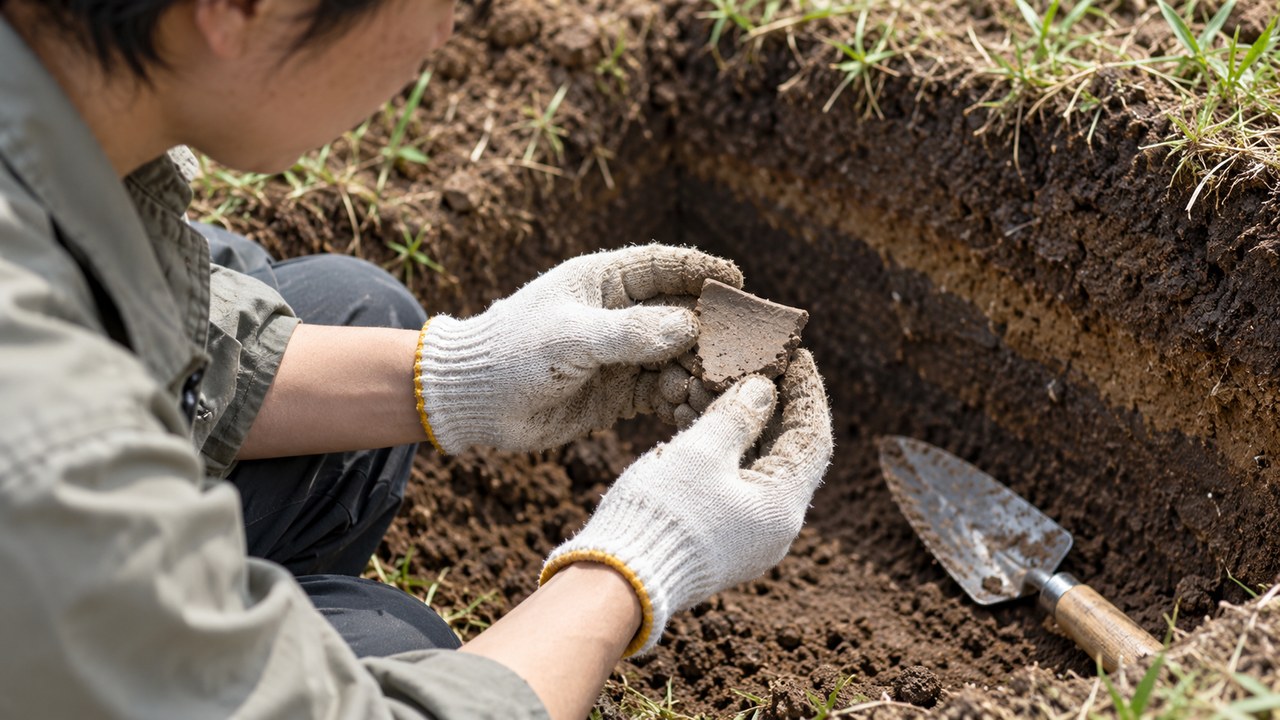
Excavations at Goryokaku have uncovered teacups, earthenware kettles and inkstones. Vessels for eating and drinking and tools for writing allow us to picture the work and daily life that went on inside the office, beyond the major events that history usually remembers about the site.
Archaeologists examined refuse pits around the main building, the private quarters and the row houses. By combining what was found, where it was found and in which layer, they reconstruct how the ground was used while the buildings stood, and which parts of the enclosure saw which kinds of activity.
Not everything found inside the walls can be assigned to the years of the magistrate's office, however. Some items, such as European liquor bottles, may relate to the period of the Hakodate-fu government or to the Hakodate War. The same moat enclosed different users at different times, and the finds must be read with that in mind.
Chapter 7
Two changes of hands
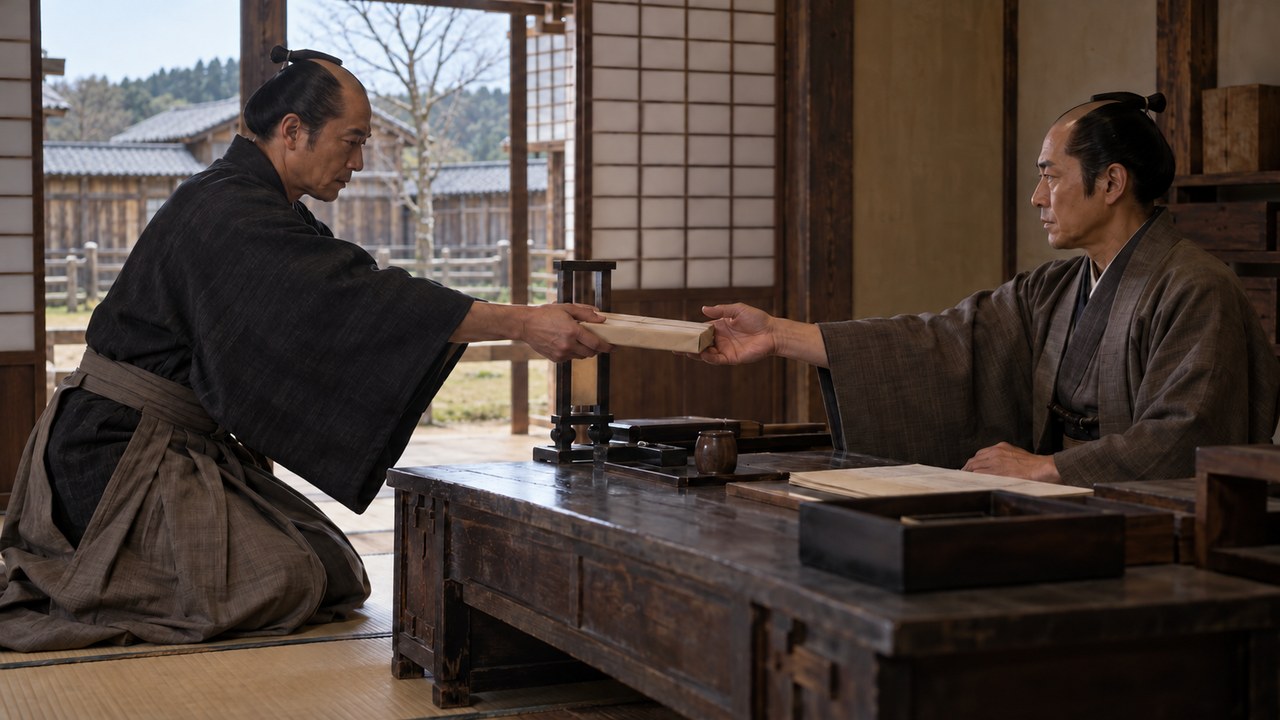
In 1868 Sugiura Makoto, the shogunate's Hakodate magistrate, handed over the administration to Shimizudani Kinnaru of the new government. The newly established Hakodate Saibansho was not a court in the modern sense but an office for regional government, and it was soon reorganized as Hakodate-fu.
In the autumn of the same year, the former shogunate forces led by Enomoto Takeaki landed in Ezo and occupied Goryokaku on the twenty-sixth day of the tenth month by the calendar of the time. Nippon Tabi Magazine notes that the fort was unoccupied when they entered it, the new government's officials having withdrawn.
The transfer of administration to the new government and the occupation by former shogunate forces in autumn were separate events. Within a short time, an office built to govern an open port changed hands twice and became the headquarters from which a war would be directed during the following winter and spring.
Chapter 8
Shells that fell short, a shell that struck
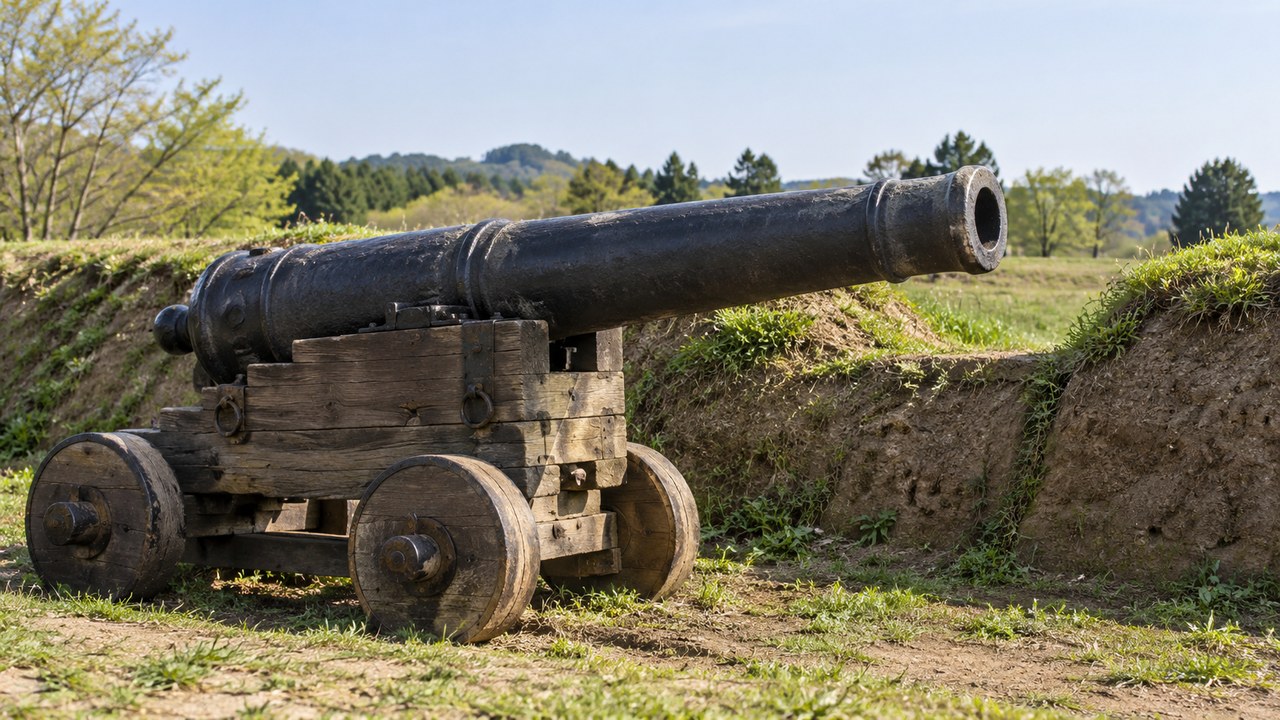
In the spring of 1869 the new government's forces pressed their offensive in Ezo, and on the eleventh day of the fifth month they launched a general assault on Hakodate. Guns at Goryokaku fired in support of positions toward the harbour, but many shells fell short and the fire had little effect on the battle.
On the following day, a shell fired from the government warship Kotetsu struck the drum tower of the magistrate's office. Naval guns could now reach an office that had been moved partly to keep it out of their range. Roughly a dozen years separated the assumptions made at construction from the conditions of actual war.
On the eighteenth day of the fifth month, Enomoto and his colleagues surrendered and the Hakodate War drew to a close. The national tourism organization presents the site as the scene of the final battle between Tokugawa forces and the new government. Even so, the outcome cannot be explained by the star shape or by one distance alone.
Chapter 9
After the buildings were gone
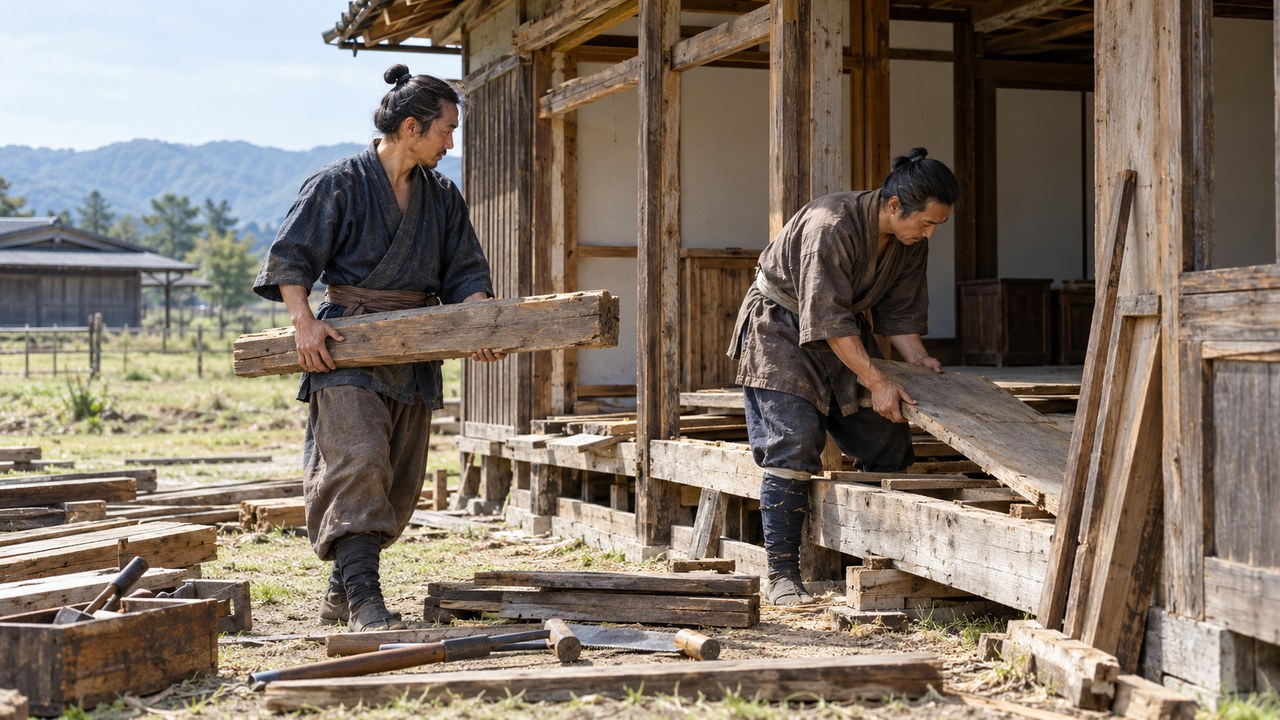
After the fighting, most of the magistrate's main building was dismantled. Hakodate City gives the year as 1871, while the Agency for Cultural Affairs and Nippon Tabi Magazine give Meiji 5, or 1872. Either way, the building was not destroyed by bombardment. It was taken down deliberately in the years after the war.
Hakodate City explains that the dismantled timber was sent for use in buildings such as the Hokkaido Development Commission's offices in Sapporo. Materials that had supported the office in Hakodate were carried away to help build a new centre for the colonization and development of Hokkaido.
An original storehouse from the construction period remained inside the walls, although its present appearance includes later conservation repairs and a restored eave. In 1914 Goryokaku opened to the public as a park, and Somei-yoshino cherry trees were planted, changing how residents and visitors used the space within the moat.
Chapter 10
Reading one photograph again
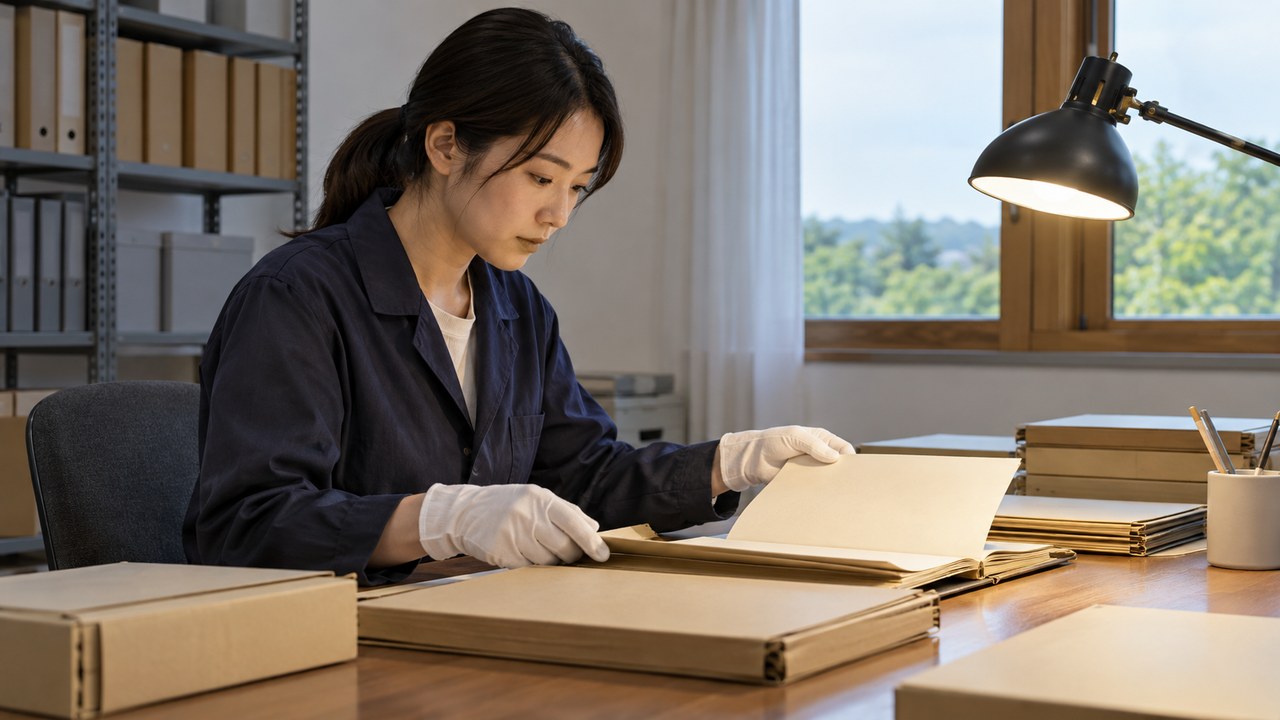
The reconstruction of the magistrate's office relied on old plans, photographs and the results of archaeological excavation. No single type of source could reveal everything about the appearance or position of the building, so researchers had to compare different kinds of evidence against each other.
One old photograph had been thought, on the basis of a note on its back, to show Nijo Castle in Kyoto. Once it was identified as a photograph of the Hakodate Magistrate's Office, it was read anew as evidence for the building's exterior, and it became one of the important clues for the reconstruction.
A photograph shows what was in front of the camera but cannot reveal what was hidden. By combining it with the dimensions on plans and with building traces confirmed by excavation, researchers gradually built up the evidence on which the reconstruction could rest, step by step and source by source.
Chapter 11
From historic site to special historic site
The site of Goryokaku was designated a national historic site on 12 October 1922. The Agency for Cultural Affairs notes that, although its buildings were taken down and parts were altered in the early Meiji years, it preserves its original form well, and it cites its value for the history of castles and for showing how Western learning entered Japan at the end of the Edo period.
According to the Hokkaido government, in 1952 the site was designated a Special Historic Site under the name Goryokaku-ato. It is regarded as Japan's first Western-style fortress, and measures have been taken to protect and preserve it as part of the nation's heritage.
The park now holds about 1,600 cherry trees and is one of Hakodate's best-known places for cherry-blossom viewing, alongside Hakodate Park. A place remembered for war has been protected by designation and has become somewhere people gather with the seasons. That modern history is also part of the landscape seen today.
Conclusion
Recovering part of the office at full scale
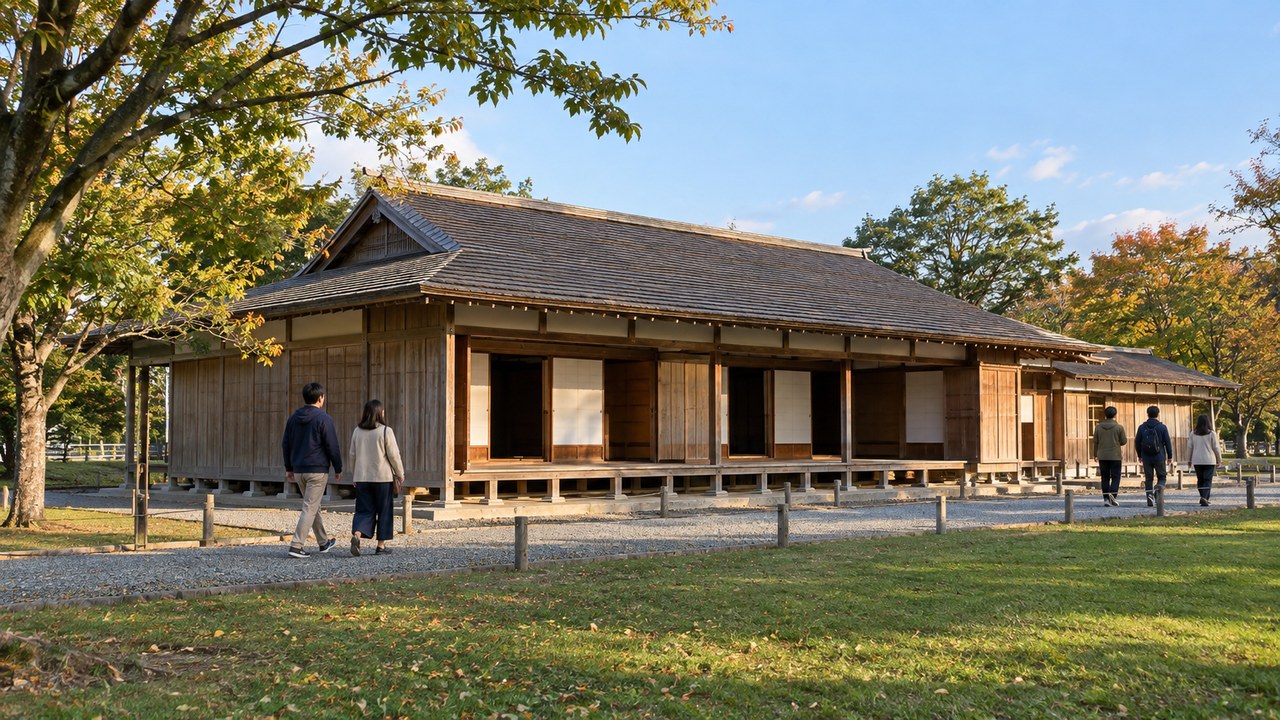
In 2010 part of the Hakodate Magistrate's Office was reconstructed and opened to the public. The rebuilt area covers about one third of the original main building, and that portion was built at its original size. It is not a model of the whole building reduced to one third of its scale.
In deciding the extent of the reconstruction, the need to protect the remains in the ground and the conditions for opening the interior to visitors were also considered. Today's landscape layers moats and ramparts, a conserved storehouse and a modern reconstruction, each belonging to a different period of the site's history.
Goryokaku was built to move an office away from the harbour and to let its work continue safely within the walls. Alongside the memory of the last battle, the time spent receiving ships, exchanging documents and building and rebuilding the office has also accumulated inside this star-shaped enclosure.
How to read this work
History, interpretation, and reconstruction
Reading the inland site through both defense and administration, and separating each stage, from construction and changes of hands to war, dismantling, designation and modern reconstruction, shows what the star fort was built to protect.
This work is grounded in published sources and historical research. Interior thoughts, dialogue, and some visual details are cinematic reconstructions. Where historians disagree, the article presents the point as debated rather than settled fact.
Timeline
The story in time
People & terms
A guide for new readers
Key figures
- Takeda Ayasaburō
- Designer of Goryōkaku, drawing on European bastioned fortification.
- Sugiura Makoto
- Tokugawa magistrate who handed over Hakodate’s administration to the new government.
- Shimizudani Kinnaru
- Official who received responsibility for Hakodate’s administration on behalf of the new government.
- Enomoto Takeaki
- A central figure among the former shogunate forces that crossed to Ezo and established their headquarters at Goryōkaku.
- Koide Hozane
- Hakodate magistrate who moved into the new office at Goryokaku in the sixth month of 1864.
Glossary
- Goryōkaku 五稜郭
- The inland bastioned fort built around the Hakodate Magistrate’s Office; its defenses and office buildings have different construction stages.
- Hakodate Magistrate’s Office 箱館奉行所
- An office responsible for foreign relations, government of Ezo and coastal defense, rather than merely a modern judicial court.
- Tokugawa government 幕府
- The governing authority that re-established the Hakodate magistracy in 1854; called the shogunate in references to its former forces.
- Ezo 蝦夷地
- The historical geographical designation used by the sources for the northern territory administered from Hakodate.
- Bastion 稜堡
- A projecting part of a fortification connected with the arrangement of defensive fire around the perimeter.
- Hangetsuho 半月堡
- An outwork outside the main enclosure; five were planned at Goryōkaku but only one was built.
- Yanagino, Kameda 亀田村柳野
- The inland locality selected for the relocated office, approximately three kilometres from the harbour in the institutional account.
- Benten Cape battery 弁天岬台場
- A coastal defensive position; it should be distinguished from the inland fort enclosing the office.
- Hakodate Saibansho 箱館裁判所
- An early new-government regional administrative institution; translating its name simply as a modern law court would obscure its wider role.
- Hakodate-fu 箱館府
- The administrative structure that followed the Hakodate Saibansho in the sequence described by the sources.
- Kōtetsu 甲鉄
- The new government’s warship whose bombardment struck the magistrate’s drum tower during the Hakodate War.
- Kaitakushi 開拓使
- The development administration associated here with the reuse of dismantled Hakodate timber for offices in Sapporo.
- Storehouse 土蔵
- A building surviving from the original construction period, with later conservation repairs and restored eaves.
- Partial reconstruction at full scale 原寸部分復元
- Rebuilding a selected part at its original size; approximately one third refers to the extent of the original office represented, not to a reduced scale.
- Special Historic Site 特別史跡
- The highest class of designated historic site under Japan's cultural properties law. Goryokaku was designated a historic site in 1922 and a Special Historic Site in 1952.
- Demilune 半月堡
- A triangular outwork placed outside the main walls. Five were planned at Goryokaku, but only one was built, in front of the main gate.
Sources & method
How this article was built
This English edition follows the revised Japanese article scene by scene and keeps its sources, their order and its timeline. It draws on official explanations by Hakodate City and the facility that manages the reconstructed magistrate's office, Cultural Heritage Online by the Agency for Cultural Affairs, the Hokkaido government, the Japan National Tourism Organization and Nippon Tabi Magazine. Titles given in English are editorial translations.
Month and day references stay in the contemporary calendar. Where sources give different years, for completion and for dismantling, both are disclosed and read as different milestones or as an unresolved discrepancy. Modern institutional accounts are not treated as original nineteenth-century records.
Images are AI-generated conceptual scenes by SHIGEKI. They are not historical photographs, actual site views or exact reconstructions. The film has Japanese audio.
Sources
References and further reading
- History of Goryōkaku: From Construction to the Return of Political Authority 五稜郭の歴史・築造から大政奉還 Title translated editorially for reader convenience. Hakodate City 函館市 Municipal account of the earlier office, its three responsibilities, relocation, construction stages and administrative transfer. Accessed 2026-11-18
- History of Goryōkaku: From the Hakodate War to the Present 五稜郭の歴史・箱館戦争から現在 Title translated editorially for reader convenience. Hakodate City 函館市 Municipal account of fighting, later uses, dismantling, park opening and reconstruction research. Accessed 2026-11-18
- Buildings and Remains within Goryōkaku 五稜郭内の建物と遺構 Title translated editorially for reader convenience. Hakodate City 函館市 Distinguishes the start of office construction and operation, associated works, the surviving storehouse and the reconstructed area. Accessed 2026-11-18
- Life at the Magistrate’s Office Seen through Excavated Finds 出土品からみる奉行所の暮らし Title translated editorially for reader convenience. Hakodate City 函館市 Archaeological interpretation of objects and disposal contexts, including caution about the period of European bottles. Accessed 2026-11-18
- The Seven Months of the Hakodate War 箱館戦争の7か月 Title translated editorially for reader convenience. Hakodate Magistrate's Office (designated manager for Hakodate City) 函館市指定管理・箱館奉行所 Official designated-management facility account of the transfer, occupation, fighting, bombardment and surrender; historical calendar dates retained. Accessed 2026-11-18
- History and Chronology of the Hakodate Magistrate’s Office 箱館奉行所の歴史・年表 Title translated editorially for reader convenience. Hakodate Magistrate's Office (designated manager for Hakodate City) 函館市指定管理・箱館奉行所 Official facility account of the fortified office, institutional changes, dismantling and the 2010 partial reconstruction. Accessed 2026-11-18
- Goryōkaku and the Hakodate Magistrate’s Office 五稜郭と箱館奉行所 Title translated editorially for reader convenience. Hakodate Magistrate's Office (designated manager for Hakodate City) 函館市指定管理・箱館奉行所 Official facility explanation of relocation, approximate harbour distance, bastioned design and the construction sequence. Accessed 2026-11-18
- The Role of the Hakodate Magistrate’s Office 箱館奉行所の役割 Title translated editorially for reader convenience. Hakodate Magistrate's Office (designated manager for Hakodate City) 函館市指定管理・箱館奉行所 Official facility explanation of foreign relations, coastal defense and government of Ezo; earlier establishment and re-establishment distinguished. Accessed 2026-11-18
- Reconstruction of the Hakodate Magistrate’s Office 箱館奉行所の復元 Title translated editorially for reader convenience. Hakodate Magistrate's Office (designated manager for Hakodate City) 函館市指定管理・箱館奉行所 Official facility account of plans, excavation, reassessed photographs and the full-scale reconstruction of approximately one third of the original building. Accessed 2026-11-18
- Site of Goryokaku (Cultural Heritage Online) 五稜郭跡(文化遺産オンライン) Title translated editorially for reader convenience. Agency for Cultural Affairs 文化庁 Used for the 1922 designation, Takeda Ayasaburo's design and bastioned method, the 1857 start, near-completion in the fifth month of 1864 and Koide Hozane's move in the sixth month, the moat fed by the Kameda River and stone facing, the outwork before the main gate, the early Meiji occupation, the 1872 demolition by the Development Commission and the site's historical value. Accessed 2026-11-18
- Goryokaku Park 五稜郭公園 Title translated editorially for reader convenience. Hokkaido Government (Urban Environment Division) 北海道(建設部まちづくり局都市環境課) Used for completion in 1864 after seven years, its description as Japan's first Western-style fortress, the opening as a park in 1914, the 1952 Special Historic Site designation and about 1,600 cherry trees. Accessed 2026-11-18
- Goryokaku 五稜郭 Title translated editorially for reader convenience. Nippon Tabi Magazine ニッポン旅マガジン Used for Takeda copying drawings from a French warship in 1855, the 1857 start and 1866 completion, the occupation of the empty fort on the twenty-sixth day of the tenth month of 1868, the Kotetsu bombardment, demolition in 1872 and the park and cherry trees of 1914. Accessed 2026-11-18
- Goryokaku Fort Goryokaku Fort Japan National Tourism Organization 日本政府観光局(JNTO) Used for completion in 1864, Takeda Ayasaburo and the influence of Vauban, its description as Japan's first Western-style fortification, the final battle of 1869, the 1914 park, and the loss of the magistrate's office in 1871 and its reopening in 2010. Accessed 2026-11-18
Continue reading
More stories from Shigeki
Shigeki English
Taira no Kiyomori: From the First Warrior Noble to a Capital by the Sea
Born as Tadamori’s heir, he rose through the Hogen and Heiji conflicts to grand minister of state, then turned from Fukuhara to Itsukushima, Owada no Tomari and Song ships, before the transfer and return of the capital, his death and the end of his family.
- When 1118–1181, from his birth to his death, with the defeat at Dan-no-ura in 1185 and the statue of 1967
- Where Kyoto, Fukuhara in present-day Kobe, Owada no Tomari, Itsukushima, the Ondo Strait and Dan-no-ura
Shigeki English
Oishi Riku: Beyond the End of Chushingura, the Family That Lived On
Born in Toyooka, a wife in Ako, then Yamashina, Toyooka again and Hiroshima: a spring homecoming and an autumn divorce letter, the deaths of husband and son, further losses, and a son’s appointment in Hiroshima.
- When 1669–1736, with the events of 1702 kept in their separate seasons, and later memory from 1748 to 2014
- Where Toyooka, Ako, Yamashina and Hiroshima