
SHIGEKI ENGLISH STORYEN
Japanese history in English
Kawanakajima: Twelve Years in Northern Shinano Beyond the Famous Duel
Appeals for help, contested castles, the shogun's documents and letters written after the fighting: five confrontations and what Shingen and Kenshin were really contesting.
Kawanakajima was not one battle. This article follows five confrontations from 1553 to 1564 through displaced warriors, the standoff on the Sai River, the fall of Katsurayama, the shogun's documents, the clash of 1561, conflicting casualty figures, the duel told in the Kōyō Gunkan and the memories of later generations.
At a glance
Before you enter the story
- When
- Five conventional confrontations: 1553, 1555, 1557, 1561 and 1564; later remembrance includes visits and poetry recorded for 1810.
- Where
- Kawanakajima and northern Shinano; castles and approaches linked with Echigo; wider political and military connections to Kantō and Kōzuke.
- Key figures
- Takeda Shingen (Harunobu), Uesugi Kenshin (Nagao Kagetora; Uesugi Masatora; Terutora), Murakami Yoshikiyo, Takeda Nobushige, Imagawa Yoshimoto, Yamamoto Kansuke, Konoe Sakitsugu
- What was at stake
- Whether displaced warriors could recover and maintain their footholds, how Takeda control became established, and how later narratives shaped the remembered battlefield.
Why this story matters
The larger history behind the turning point
A celebrated moment can draw attention away from the people and places that made a long conflict possible. Recovering a castle, holding it after an army withdrew and keeping the loyalty of neighboring warriors were connected problems, and following them returns the region to the center of its own history.
Kawanakajima also shows how evidence and legend differ. Letters written after the battle disagree about the dead, and the famous duel comes from a chronicle compiled decades later. Reading these sources side by side shows how a remembered battle was made.
Historical context
What an international reader needs to know
One region, several confrontations
Kawanakajima here refers to a regional conflict in northern Shinano. The five conventional dates do not mark continuous daily fighting over twelve years. They group campaigns and confrontations separated by intervals, involving different castles, river crossings and military movements. The fourth confrontation is the famous 1561 encounter at Hachimanpara.
Shinano and Echigo are historical provincial names. The movement from a lost Shinano base toward Echigo matters because assistance came through relationships across that border. Kaizu, Asahiyama, Iiyama and other castles enter the story as particular footholds. Their names should not be combined into one location or taken as interchangeable labels for the battlefield.
Changing names and different kinds of evidence
Takeda Harunobu and Takeda Shingen refer to the same commander at different stages. Nagao Kagetora, Uesugi Masatora and the later familiar name Kenshin likewise refer to one person. In discussing 1561, Masatora preserves the contemporary name. Takeda Nobushige is Shingen’s younger brother, distinct from the later Sanada Nobushige.
The article distinguishes documents introduced by the city history, modern institutional explanations, a compiled source entry and a later military narrative. An official website may discuss all of these without making them equally contemporary. The date Eiroku 4, ninth month, day 10 remains in the Japanese calendar then in use; it is not silently converted into a Gregorian date.
Watch the film
See the story in motion
The film currently uses Japanese audio. This English article provides the context and source trail; it does not imply that an English subtitle track is available.
Opening
Kawanakajima was more than one battle
Uesugi Kenshin swings his sword and Takeda Shingen catches the blow on his war fan. For many people in Japan, that image is what the name Kawanakajima brings to mind. A bronze statue of the two commanders locked in single combat even stands in the historic battlefield park in Nagano City, where visitors still stop to photograph it.
Yet Kawanakajima was not a single battle. Nagano City's chronology lists five confrontations, in 1553, 1555, 1557, 1561 and 1564. The familiar phrase "twelve years" counts both the first and the last of those years. It does not mean that armies fought every day for twelve years, or that they always met on the same ground.
This article follows the conflict in order, from the appeals of warriors who had lost their lands to the fighting over castles, a negotiated peace, the fierce clash of 1561, the documents written afterward and the memories that later generations built. Throughout, what contemporary documents report is kept separate from what later war chronicles describe.
Chapter 1
The people driven out of Shinano
Takeda Harunobu, the man later known as Shingen, steadily extended his power from Kai into the neighboring province of Shinano. His advance was not smooth. In 1548 he was defeated by Murakami Yoshikiyo at Uedahara, losing senior retainers including Itagaki Nobukata, and in 1550 his attack on Toishi Castle was also driven back. Yoshikiyo was a formidable opponent.
The balance shifted in 1551, when Sanada Yukitaka captured Toishi Castle for the Takeda. On the ninth day of the fourth month of 1553, Harunobu took Yoshikiyo's stronghold of Katsuraoka. Driven from his base, Yoshikiyo turned to Nagao Kagetora of Echigo, the young lord who would later be known to history as Uesugi Kenshin.
Yoshikiyo was not alone in asking for help. The Takanashi, Inoue, Shimazu, Suda and Kurita families of northern Shinano also appealed to Kagetora. For these warriors, the conflict was not an abstract contest between two great commanders. It was an urgent question of whether they could ever return to the castles and lands they had lost.
Chapter 2
1553: Winning back a castle
On the twenty-second day of the fourth month of 1553, Kagetora marched into Shinano and, together with Yoshikiyo and his allies, fought the Takeda army at Yawata in Sarashina District. According to Nagano City's account, the Takeda forces were beaten, Katsuraoka Castle was retaken, and Yoshikiyo was able to return to his former territory.
Harunobu soon rebuilt his strength and invaded again. In the eighth month he defeated Yoshikiyo at Shioda Castle, and Yoshikiyo fled once more to Echigo. Kagetora returned, fought the Takeda army at Fuse at the end of that month, and advanced to Yawata on the first day of the ninth month, when the Takeda-held Arato Castle fell without a fight.
On the seventeenth, Kagetora's troops set fire to Sakaki Nanjō. When Harunobu moved to meet them, they fell back to Kawanakajima and returned to Echigo. Kagetora is said to have carried Buddhist images and ritual objects from Zenkōji temple to the town below Kasugayama Castle at this time. Neither side had won a decisive victory.
Chapter 3
Two hundred days across the Sai River
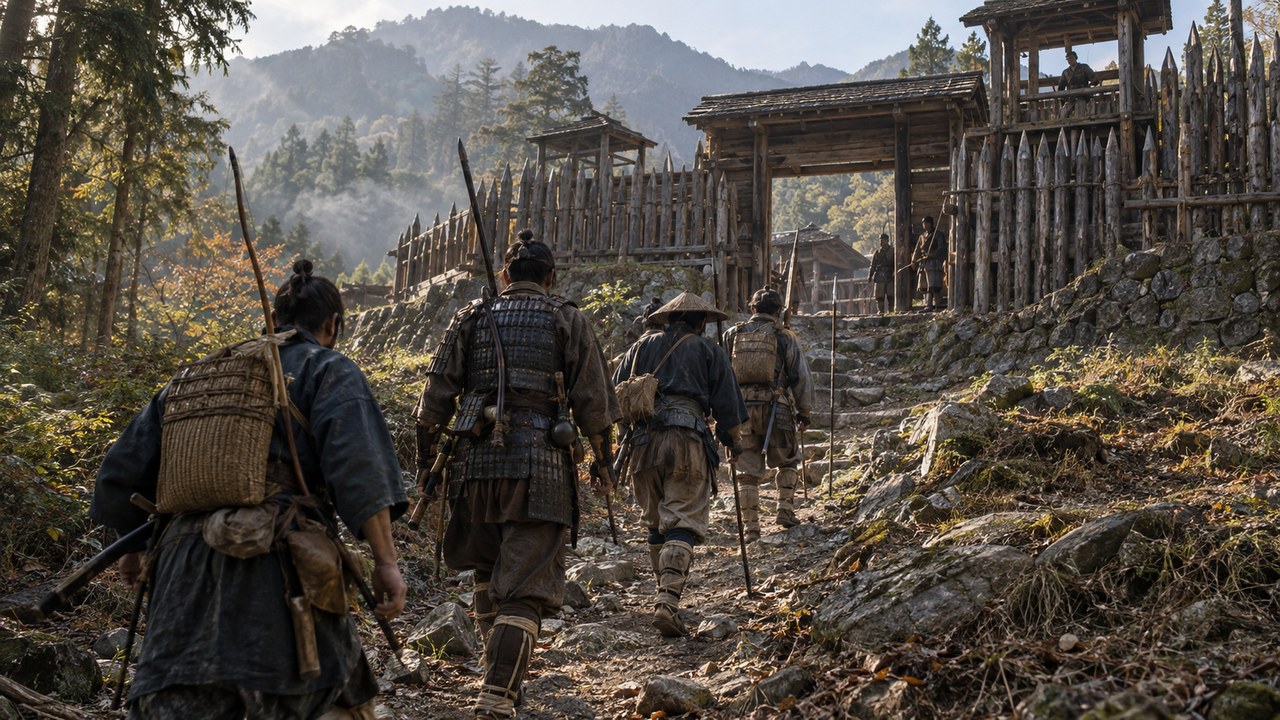
In the third month of 1554, Harunobu concluded an alliance with the Imagawa of Suruga and the Hōjō of Sagami, securing his rear. In the seventh month of the following year, Kagetora set up camp at Yokoyama Castle near Zenkōji and attacked Asahiyama Castle, held by the Kurita family, who had sided with the Takeda.
Harunobu positioned himself at Ōtsuka in Sarashina District, facing Kagetora across the Sai River, and is said to have sent Asahiyama 3,000 men, 800 archers and 300 firearms. Fighting broke out near the river on the nineteenth day of the seventh month, but it did not become a decisive battle, and the standoff stretched on for about 200 days.
The long campaign wore down morale and strained supplies. On the fifteenth day of the intercalary tenth month, peace was concluded through the mediation of Imagawa Yoshimoto. Asahiyama Castle was to be demolished, both armies would leave Kawanakajima, and lands would be returned to their former lords. The terms show that land and castles were the heart of the dispute.
Chapter 4
Katsurayama falls in the season of snow
Peace did not end Takeda efforts in northern Shinano. In 1556 the Takeda side divided the Ochiai family, who held Katsurayama Castle, by winning over some of its members. In the eighth month of that year, Sanada Yukitaka captured Amakazari Castle from the Tōjō family, opening the way toward the Zenkōji plain.
Early in 1557, the Takeda army attacked Katsurayama at a time when deep snow kept Echigo's forces from moving. The defenders, led by the Ochiai family, held out inside the castle, but it fell on the fifteenth day of the second month. The Takeda side now controlled the center of the Zenkōji plain.
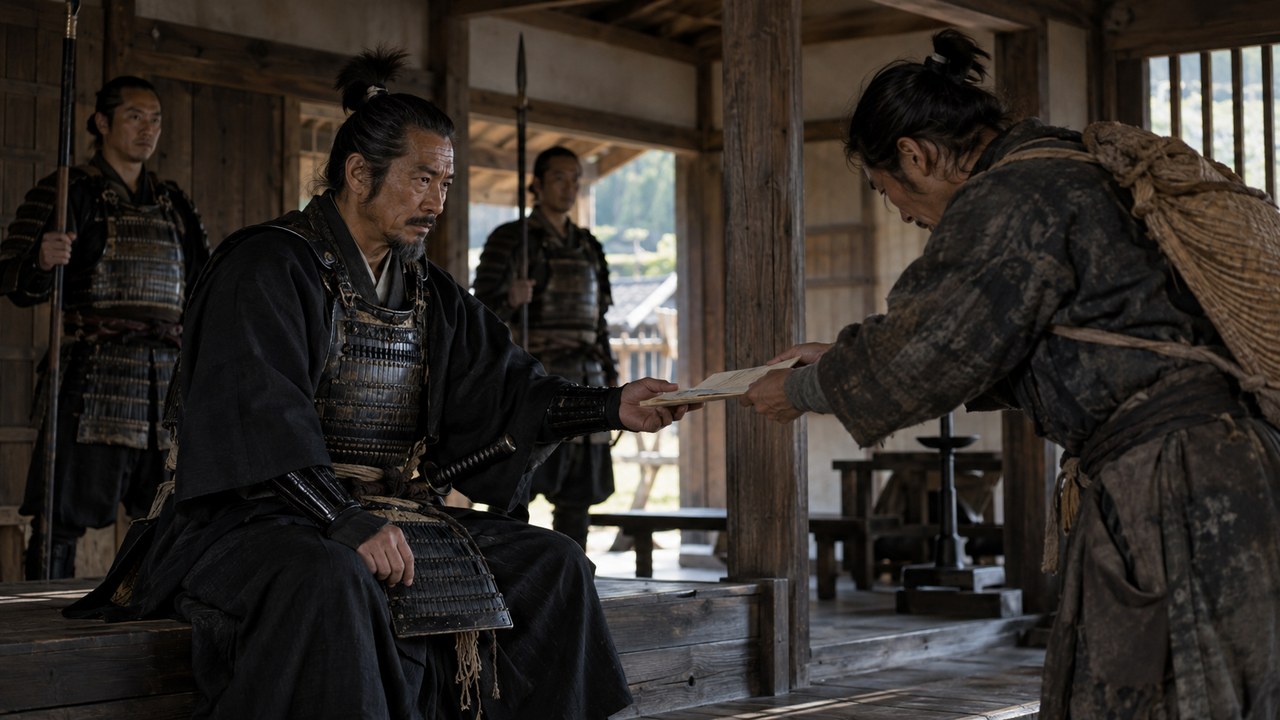
The day after the fall, Kagetora wrote to Irobe Katsunaga asking him to take the field. Meanwhile Yamada Sakyō-no-suke, a member of the Takanashi family, surrendered to the Takeda. He was confirmed in his home domain of 500 kan and granted a further 700 kan at Ōkuma. The fight for castles was also reshaping the loyalties of local warriors.
Chapter 5
Yamamoto Kansuke and the clash at Uenohara
Kagetora set out on the twenty-fourth day of the third month and recovered the Yamada stronghold and Fukushima Castle. Reaching Zenkōji on the twenty-first of the fourth month, he restored Asahiyama Castle as his headquarters and by the thirteenth of the fifth month had pushed as far as Iwahana at Sakaki. The Takeda forces avoided battle and withdrew.
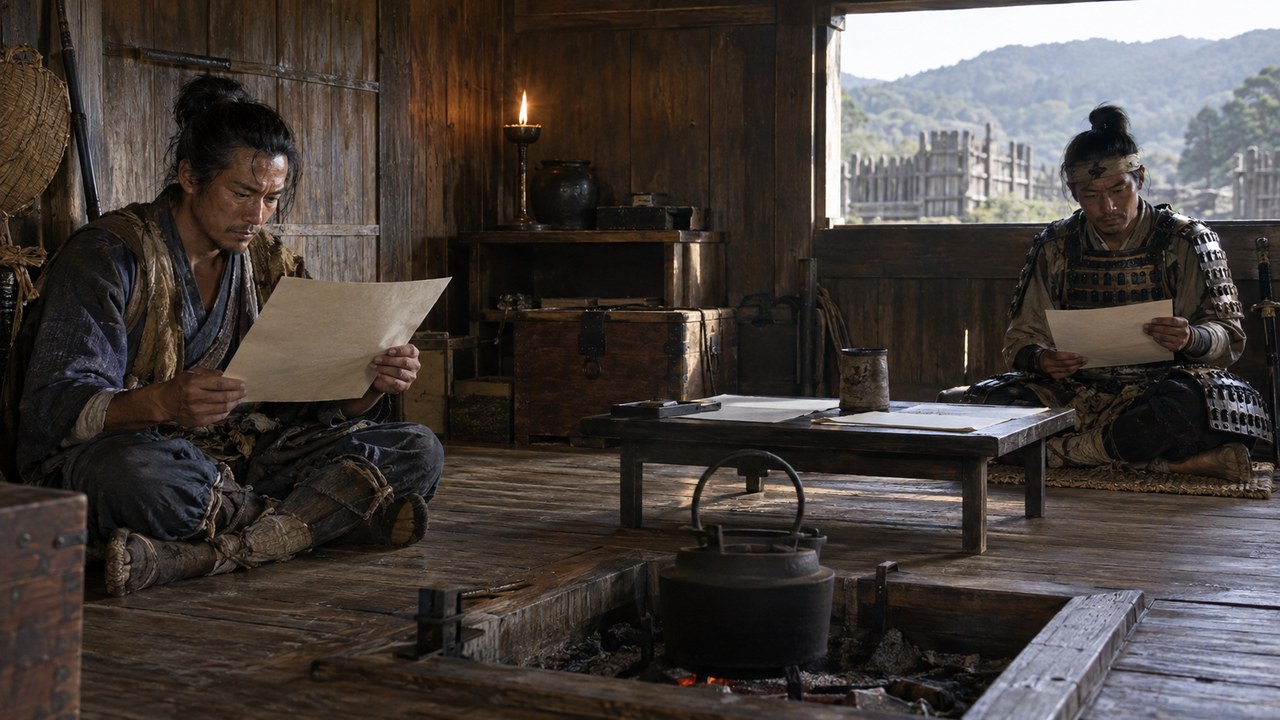
When Kagetora attacked Ichikawa Fujiwaka at Nozawa, Fujiwaka asked Harunobu for help. The messenger Harunobu sent to promise support was Yamamoto Kansuke, the figure later celebrated as a master strategist. The Nagano city history points to this letter from Harunobu as an example of Kansuke's name appearing in a reliable source, an important anchor for a man surrounded by legend.
Late in the eighth month, a small engagement was fought at Uenohara in Minochi District, and the Echigo forces soon withdrew. This is counted as the third confrontation. More than five months in the field had not pushed back the Takeda advance. Otari Castle had fallen in the seventh month, and almost all of Shinano now lay under Takeda control.
Chapter 6
A contest for the shogun's backing
The rivalry also extended beyond the battlefield. In 1558 Harunobu obtained appointment from the shogun, Ashikaga Yoshiteru, as military governor of Shinano. The office gave him grounds to denounce Kagetora's campaigns in the province as acts against the shogun's wishes. In the same year he also moved the Buddha of Zenkōji to his home province of Kai.
Kagetora answered by traveling to Kyoto in the fourth month of 1559, where he received documents from the shogun justifying his campaigns in the Kantō region and in Shinano. These accused Harunobu of ignoring the shogun's order to make peace and of invading Echigo, and they instructed Kagetora to settle the conflicts among the warriors of Shinano.
The name Shingen is first attested in the fifth month of 1559, after Harunobu entered religious life. Each man now sought to show that he had the legitimate right to act in Shinano. The two commanders were competing not only by moving armies but also by enlisting the authority of the shogun on their side.
Chapter 7
Kaizu Castle and the campaign of 1561
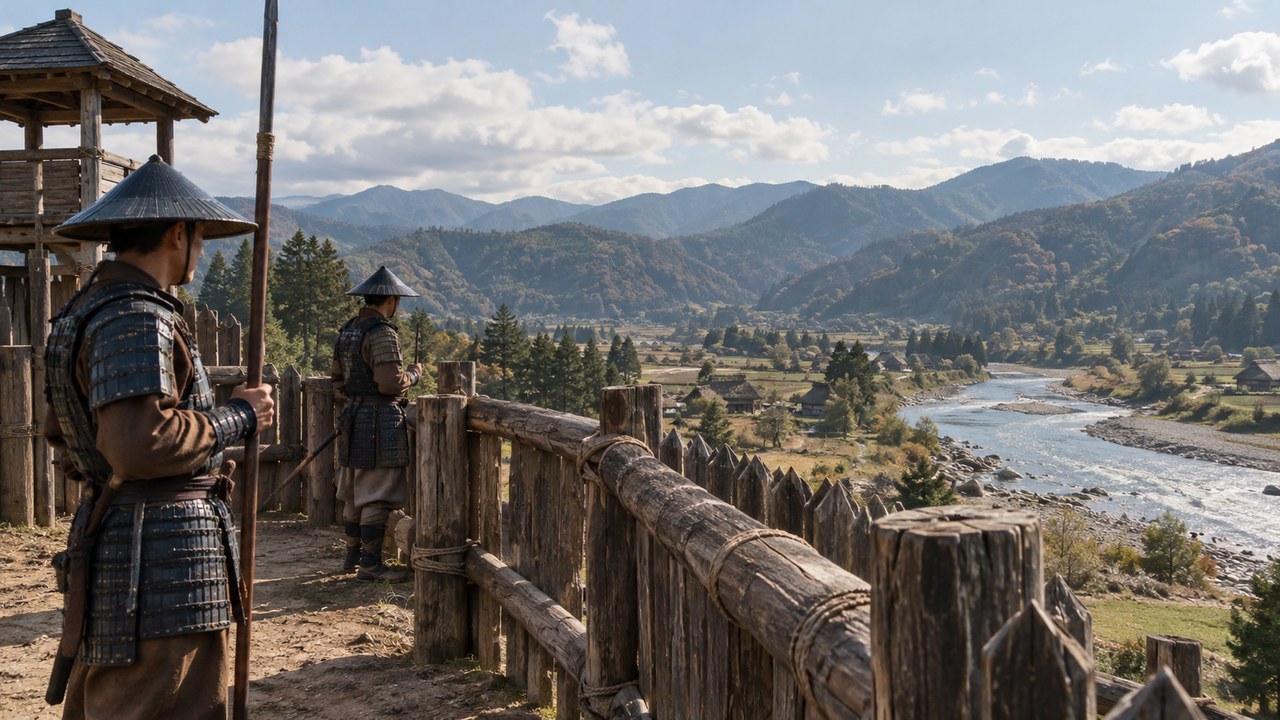
In 1560 Shingen built Kaizu Castle at Kawanakajima, the fortress later known as Matsushiro Castle. It became the base for Takeda rule over northern Shinano. The Nagano city history explains that the Uesugi side would have needed to capture this castle if the local warriors it supported were ever to regain their former positions.
Kagetora marched into the Kantō region in the autumn of 1560 and attacked Odawara Castle the next spring, without success. Afterward, at the Tsurugaoka Hachimangū shrine in Kamakura, Uesugi Norimasa passed to him the Uesugi name and the office of Kantō kanrei, the shogun's deputy for the east. He took the name Uesugi Masatora, and his standing was transformed.
Masatora returned to Echigo in the sixth month and in the eighth month led his fourth expedition to Kawanakajima. Shingen also arrived in the area. On the tenth day of the ninth month of the fourth year of Eiroku, the two armies collided. That date follows the calendar of the time and corresponds to late October today.
Chapter 8
The battle as the Kōyō Gunkan tells it
The familiar story of the battle rests on the Kōyō Gunkan, a Takeda military chronicle thought to have taken shape around the 1620s, in the early Edo period. According to this book, about 13,000 Uesugi troops camped on the mountain called Saijosan, while about 20,000 Takeda troops gathered at nearby Kaizu Castle, each side watching the other.
Yamamoto Kansuke is said to have proposed sending 12,000 men to attack the mountain, driving the Uesugi army down into the 8,000 men of Shingen's main force. The plan later became known as the woodpecker tactic. In the chronicle, however, Masatora saw through it, came down from the mountain on the night of the ninth and crossed the Chikuma River.
On the morning of the tenth, the mist lifted to reveal the Uesugi army directly in front of the Takeda lines. The chronicle says the Uesugi side had the better of the first half and that the Takeda won the second after the detached force arrived. It lists Nobushige, Morozumi and Kansuke among the dead and gives Uesugi losses as 3,117.
Chapter 9
Numbers written after the battle
On the thirteenth day of the ninth month, three days after the battle, Masatora issued letters of commendation to Irobe Katsunaga and others. He claimed that several thousand enemy horsemen had been killed, while acknowledging that many of his own relatives and retainers had also fallen. A 1561 letter of commendation from Masatora appears in a museum catalog as an Important Cultural Property.
Documents survive on the Takeda side as well. On the twenty-sixth, Shingen recognized the service of Ueno Sakon-no-jō, presenting him with armor and promising further reward. At the end of the tenth month, he informed the Jōjūin of Kiyomizu-dera that he had won and killed more than 3,000 enemies, and that his opponents were shut up in the Ichikawa and Nojiri castles.
A reply sent to Masatora on the fifth day of the tenth month by Konoe Sakitsugu, the former imperial regent, puts the number of enemies killed at more than 8,000 horsemen. Each of these figures comes from the side reporting it. The Nagano city history estimates more cautiously that at least 1,000 men died on both sides, and perhaps several thousand.
Chapter 10
Can the duel be confirmed?
The Kōyō Gunkan describes a mounted warrior, his head wrapped in white cloth, who struck at Shingen three times while Shingen parried with his war fan. The rider was later said to have been the Uesugi commander himself. A stone monument in the battlefield park, marking the site of "three strokes and seven strokes," preserves this tradition for modern visitors.
Konoe Sakitsugu's reply does mention that Masatora drew his own sword and fought. But the Nagano city history points out that no reliable source records a duel between the two commanders, and that no contemporary source describes the armies' strength, organization or the course of the fighting. Writers have also raised questions about whether the woodpecker tactic could have worked as described.
What can be said with confidence is that many lives were lost. Shingen's younger brother, Takeda Nobushige, died in this battle. The Katsuyamaki chronicle records his death but says nothing about who won. According to Nagano City's digital museum, only five letters written by Nobushige survive today, a small trace of a life ended at Kawanakajima.
Chapter 11
The castles that remained and the last standoff
The Nagano city history judges the outcome by looking at castles. The Takeda army lost none of its strongholds and confined the Uesugi side to the Iiyama, Ichikawa and Nojiri castles. The main arena of conflict between the two houses then shifted to Kōzuke, although fighting continued along the border between Shinano and Echigo.
In the fourth month of 1563, Shingen planned an incursion into Echigo, but snowmelt had swollen the Sai River and made it hard to move troops. He therefore mobilized laborers to build a road along the foot of Mount Iizuna. In the third month of 1564, Takeda forces captured Nojiri Castle, though the Uesugi side quickly took it back.
In the eighth month of 1564, Terutora, as Masatora was then called, marched to Kawanakajima, and Shingen camped at Shiozaki. The armies faced each other for about 60 days until Terutora withdrew to Iiyama and returned to Kasugayama on the first day of the tenth month. It was the last standoff, and most of northern Shinano stayed under Takeda rule until 1582.
Chapter 12
Kawanakajima in memory
Memories of the battle spread widely during the Edo period. The catalog of a 2024 exhibition at the Nagano Prefectural Museum of History lists war chronicles such as the Kōyō Gunkan and the Hokuetsu Gundan, folding screens depicting the battle, and color woodblock prints from the final years of the shogunate into the Meiji era. Many of the scenes we picture today were shaped by such works.
A record from 1810 tells of people who visited sites such as the grave of Yamamoto Kansuke and composed poems around the 250th anniversary of the battle. Today the historic park at Hachimanpara contains the Hachiman shrine, said to mark Shingen's headquarters, along with burial mounds, and the neighboring Nagano City Museum explains the conflict to visitors.
Looking beyond the famous duel brings other people into view: those who tried to win back castles and land, those who worked to fasten their rule upon the region, and those who left written words behind. The twelve years of Kawanakajima were a long struggle over the land and people of northern Shinano.
How to read this work
History, interpretation, and reconstruction
Reading the five confrontations through recovery of land, castles and postwar relationships places the famous duel tradition within the longer history of northern Shinano.
This work is grounded in published sources and historical research. Interior thoughts, dialogue, and some visual details are cinematic reconstructions. Where historians disagree, the article presents the point as debated rather than settled fact.
Timeline
The story in time
-
Visitors tour sites of the battle and compose poems around its 250th anniversary.
Sources: s13
People & terms
A guide for new readers
Key figures
- Takeda Shingen (Harunobu)
- Advanced into Shinano and retained bases for Takeda control in its northern districts.
- Uesugi Kenshin (Nagao Kagetora; Uesugi Masatora)
- Campaigned in connection with Shinano warriors seeking assistance. He used the name Uesugi Masatora in 1561.
- Murakami Yoshikiyo
- Driven from his base in Shinano, he appealed to Echigo for military assistance.
- Takeda Nobushige
- Shingen’s younger brother, killed in the fourth Kawanakajima confrontation in 1561.
- Imagawa Yoshimoto
- Mediated the peace settlement of 1555.
- Yamamoto Kansuke
- Sent as Harunobu's messenger to Ichikawa Fujiwaka in 1557. The Kōyō Gunkan portrays him as the strategist behind the plan of 1561.
- Konoe Sakitsugu
- Former imperial regent whose reply of 1561 mentions that Masatora drew his own sword and fought.
Glossary
- Shinano 信濃
- The historical province containing the northern districts contested in this article. Kawanakajima is a region within this setting, not a synonym for the whole province.
- Echigo 越後
- The province to which displaced Shinano warriors appealed for Kagetora’s assistance; the border with Shinano remained a setting of conflict.
- Kantō 関東
- The eastern regional setting of Masatora’s other campaigns and the office he inherited; these connected the Shinano conflict to wider politics.
- Kantō kanrei 関東管領
- The office inherited by Masatora together with the Uesugi name. Its political importance is distinguished from ownership of every place in Kantō.
- Kōzuke 上野
- A province in the wider setting of the commanders’ subsequent military activities; not the Uwanohara battlefield mentioned in the third confrontation.
- Kanjō 感状
- A written commendation recognizing military service. Praise and reported successes reflect the issuer’s position and do not automatically establish neutral casualty totals.
- War fan 軍配
- The commander’s fan in the familiar later image of the duel. Its presence in the story is not proof of an authenticated encounter.
- Kōyō Gunkan 甲陽軍鑑
- A work of military learning known by the early Edo period and an important foundation for later Kawanakajima stories. It is not a contemporary battlefield transcript.
- Hachimanpara 八幡原
- The setting of the fierce fourth confrontation in 1561; distinct from Yawata in the municipal account of the first confrontation.
- Kaizu Castle 海津城
- A base retained by the Takeda side after the fourth confrontation, central to the city history’s assessment of territorial control.
- Contemporary Japanese calendar 当時の暦
- The calendar used for the Eiroku 4 ninth-month tenth-day date. The numerals are not presented as the same month and day of the Gregorian calendar.
- Inclusive anniversary count 数え年式の年数
- A count including the initial year. It explains the source’s 250th-year description for 1810 and the twelve-year span from 1553 through 1564.
- Woodpecker tactic 啄木鳥の戦法
- The later name for the plan described in the Kōyō Gunkan, in which a detached force would drive the Uesugi army down from its mountain camp.
- Zenkōji plain 善光寺平
- The basin around Zenkōji temple in northern Shinano, a central prize in the conflict.
Sources & method
How this article was built
This English edition follows the revised Japanese article scene by scene and keeps its eighteen sources, their order and its fifteen timeline entries. It draws on Nagano City, the Nagano city history, the Nagano Prefectural Museum of History, Nippon Tabi Magazine and Waraku Web. Titles given in English are editorial translations.
Letters and chronicles are cited as the city history and museum materials describe them and were not independently transcribed. Numbers from the Kōyō Gunkan and from letters are attributed to those texts. Dates follow the lunar calendar in use at the time.
Sources
References and further reading
- A Chronology of the Battles of Kawanakajima 長野市・年表で見る川中島の戦い Title translated editorially for reader convenience. Nagano City 長野市 Used for dates from 1548 to 1564, changes of name and the division into five confrontations. Casualty totals and tactics derived from chronicles are not adopted as verified. Accessed 2026-11-18
- The First Battle of Kawanakajima 長野市・第1次川中島の戦い Title translated editorially for reader convenience. Nagano City 長野市 Used for the fall of Katsuraoka, the fighting at Yawata and Fuse, Shioda Castle, the withdrawal and the Zenkōji images. Accessed 2026-11-18
- The Second Battle of Kawanakajima 長野市・第2次川中島の戦い Title translated editorially for reader convenience. Nagano City 長野市 Used for the 1554 alliance, Asahiyama Castle, the camp at Ōtsuka, the standoff of about 200 days and the terms of peace. Accessed 2026-11-18
- The Third Battle of Kawanakajima 長野市・第3次川中島の戦い Title translated editorially for reader convenience. Nagano City 長野市 Used for the capture of Katsurayama, Kagetora's campaign, the restoration of Asahiyama and the clash at Uenohara. Accessed 2026-11-18
- Nagano City History: Fighting on the Shinano–Echigo Border 長野市誌・信越国境の戦い Title translated editorially for reader convenience. Nagano City 長野市/ADEAC Used for letters and land grants after the fall of Katsurayama, Ichikawa Fujiwaka and Yamamoto Kansuke, the third confrontation and the governorship of Shinano. Accessed 2026-11-18
- Nagano City History: The Clash at Hachimanpara in Eiroku 4 長野市誌・永禄四年八幡原の激突 Title translated editorially for reader convenience. Nagano City 長野市/ADEAC Used for the shogun's documents, Masatora's change of name, letters of commendation, Konoe Sakitsugu's reply, Shingen's letters, the Katsuyamaki and the limits of the evidence. Accessed 2026-11-18
- Nagano City History: Kawanakajima in Kōyō Gunkan 長野市誌・甲陽軍鑑が記す川中島の合戦 Title translated editorially for reader convenience. Nagano City 長野市/ADEAC Used for the date of the Kōyō Gunkan and for its account of troop numbers, tactics and the course of the battle, reported as the chronicle's narrative. Accessed 2026-11-18
- Shinano Shiryō, Volume 12: Eiroku 4, Ninth Month, Day 10 長野県立歴史館・信濃史料 巻十二 永禄四年九月十日 Title translated editorially for reader convenience. Nagano Prefectural Museum of History 長野県立歴史館/ADEAC Used for the compiled entry on the tenth day of the ninth month of 1561 and its list of sources. Accessed 2026-11-18
- A Letter by Takeda Nobushige 長野市デジタル博物館・武田信繁書状 Title translated editorially for reader convenience. Nagano City 長野市デジタル博物館 Used for the content of Nobushige's letter, the five surviving letters and his death in 1561. Accessed 2026-11-18
- Nagano City History: Fighting on the Iiyama Approach 長野市誌・飯山口の攻防戦 Title translated editorially for reader convenience. Nagano City 長野市/ADEAC Used for the estimate of casualties, the role of Kaizu Castle, the outcome, the 1563 road and the shift toward Kōzuke. Accessed 2026-11-18
- The Fifth Battle of Kawanakajima 長野市・第5次川中島の戦い Title translated editorially for reader convenience. Nagano City 長野市 Used for the 1563 road, Nojiri Castle in 1564, the standoff at Shiozaki and the end of the conflict. Accessed 2026-11-18
- Depictions of Kawanakajima: 2024 Exhibition Checklist 長野県立歴史館・2024年描かれた川中島合戦展示目録 Title translated editorially for reader convenience. Nagano Prefectural Museum of History 長野県立歴史館 Used for the 1561 letter of commendation and for the chronicles, screens and prints listed in the exhibition catalog. Accessed 2026-11-18
- Kawanakajima Materials: Kawanakajima no Ki, Copy 信州デジタルコモンズ・川中島史料 河中島之記 写 Title translated editorially for reader convenience. Nagano Prefectural Museum of History 長野県立歴史館/信州デジタルコモンズ Used for the 1810 visits and poetry. Its earlier military narrative is not adopted as a verified chronology. Accessed 2026-11-18
- 81: Kawanakajima Battlefield 長野市・81 川中島古戦場 Title translated editorially for reader convenience. Nagano City 長野市 Used for the present-day Hachiman shrine and battlefield site. Accessed 2026-11-18
- Kawanakajima Battlefield Historic Park 川中島古戦場史跡公園 Title translated editorially for reader convenience. Nippon Tabi Magazine ニッポン旅マガジン Used for the statue, the monument, the deployments and river crossing as told in the Kōyō Gunkan, and the modern equivalent of the battle date. Accessed 2026-11-18
- Matsushiro Castle 松代城 Title translated editorially for reader convenience. Nippon Tabi Magazine ニッポン旅マガジン Used for the building of Kaizu Castle in 1560 and its later name. Accessed 2026-11-18
- Guide to Kawanakajima Battlefield Historic Park 川中島古戦場史跡公園のご案内 Title translated editorially for reader convenience. Nagano City 長野市 Used for the Hachiman shrine, burial mounds, monument and neighboring museum. Accessed 2026-11-18
- Uesugi Kenshin, the Strongest Warlord of the Sengoku Period? 上杉謙信はまさに戦国最強だった!「毘沙門天の化身」が駆けた数々の戦場とは Title translated editorially for reader convenience. Waraku Web 和樂web Used for questions raised about the traditional account of the woodpecker tactic. Accessed 2026-11-18
Continue reading
More stories from Shigeki
Shigeki English
Oishi Riku: Beyond the End of Chushingura, the Family That Lived On
Born in Toyooka, a wife in Ako, then Yamashina, Toyooka again and Hiroshima: a spring homecoming and an autumn divorce letter, the deaths of husband and son, further losses, and a son’s appointment in Hiroshima.
- When 1669–1736, with the events of 1702 kept in their separate seasons, and later memory from 1748 to 2014
- Where Toyooka, Ako, Yamashina and Hiroshima
Shigeki English
The Ōmiya Incident: The Night Ryōma and Nakaoka Were Attacked, Read Through the Surviving Records
The Teradaya, the return of power, the move to the Ōmiya, the night of the attack, three deaths, the funeral at Ryōzen, the Mimawarigumi testimony and theories of a hidden hand, with what can be confirmed kept apart from competing accounts.
- When The attack on the 15th day of the 11th month of Keiō 3 (10 December 1867), with its background from 1865 and later testimony, the 1927 marker and the 1962 statues
- Where The Ōmiya, a soy-sauce merchant’s shop on Kawaramachi in Kyoto.