
SHIGEKI ENGLISH STORYEN
Japanese history in English
The Kenmu Restoration: Rewards, Land Courts and a Government That Lasted Three Years
Offices for rewards, a land court of more than a hundred, documents from Aso and Lake Biwa, and a satire in the capital: the work that came after the fall of the Kamakura shogunate.
In 1333 Emperor Go-Daigo overthrew the Kamakura shogunate and began to rule directly, but by 1336 his government had collapsed. This article follows imperial orders, the Office of Rewards, the land tribunal, the Aso documents, the Sugaura dispute, the Nijō riverbank satire, the Nakasendai Rebellion and the road to Minatogawa and Yoshino.
At a glance
Before you enter the story
- When
- From the plots of 1331 through the new government of 1333, the division of the court in 1336 and a renewed village lawsuit in 1340.
- Where
- Kyoto and Yoshino; Aso in Higo Province; Sugaura and Ōura on Lake Biwa; Kamakura and Mutsu in the east; Minatogawa in Settsu.
- Key figures
- Emperor Go-Daigo, Ashikaga Takauji, Ashikaga Tadayoshi, Nitta Yoshisada, Kusunoki Masashige, Prince Moriyoshi, Hōjō Tokiyuki, Emperor Kōmyō
- What was at stake
- Who would be rewarded, whose land claims would be upheld, how decisions would reach the provinces and whether the allies who overthrew the shogunate could remain united.
Why this story matters
The larger history behind the turning point
A government can build institutions and issue real decisions and still fail to hold its supporters together. The Kenmu Restoration shows both sides at once: functioning offices and surviving judgments on one hand, and mounting frustration, military rivalry and collapse on the other.
The period also shows why evidence matters. A legal letter, a village lawsuit, a satire and a war tale each reveal something different, and reading them side by side gives a fuller picture than any single explanation of failure.
Historical context
What an international reader needs to know
Rewards, land and written orders
Medieval Japanese warriors expected land rights in return for military service, so rewards and land disputes were closely tied together. Granting a holding to one claimant could affect another who already claimed the same place. Written orders were therefore central to political life, and the offices in this article existed to produce and deliver them.
A written order shows that a decision was made and sent. It does not prove that the decision was carried out on the ground. That is why this article treats the Aso letter as evidence of a decision and its addressees, and does not use it to describe what happened afterward in the province.
Two governors and two courts
The military governor (shugo) and the provincial governor (kokushi) were separate posts, and the Kenmu government deliberately placed them side by side. Readers should keep these offices distinct when they appear in the Aso letter.
After 1336 two imperial courts claimed legitimacy: the Northern Court in Kyoto, backed by the Ashikaga, and the Southern Court at Yoshino. The division lasted for decades, long beyond the events described here.
Watch the film
See the story in motion
The film currently uses Japanese audio. This English article provides the context and source trail; it does not imply that an English subtitle track is available.
Opening
After the shogunate fell
In the fifth month of 1333 the Kamakura shogunate, which had dominated Japan for about a century and a half, collapsed. Emperor Go-Daigo returned to Kyoto the following month and began to run a government in which the emperor himself would rule directly. Because the era name changed to Kenmu in 1334, this brief regime is known as the Kenmu Restoration.
By 1336 it had fallen apart. The familiar explanation is that unfair rewards angered the warriors who had helped bring it to power. Surviving documents add an important complication. The new government did establish offices to deliberate on rewards and to judge land disputes, and it sent written orders to officials in the provinces.
This article follows those offices, the documents preserved at Aso in Kyushu and on the shore of Lake Biwa, a famous satire posted in the capital, and the final break with Ashikaga Takauji. The question throughout is what became difficult once the shogunate was gone. Months and days follow the lunar calendar in use at the time.
Chapter 1
From Oki back to the capital
Go-Daigo took the throne in 1318, and in 1321 he ended the cloistered rule of his father, Retired Emperor Go-Uda, and began governing in person. A plot against the shogunate leaked in 1324 and failed. A second plan leaked through a close adviser in 1331. The emperor was captured at Kasagi and exiled the next year to the Oki Islands.
In the intercalary second month of 1333 he escaped from Oki as Prince Moriyoshi and Kusunoki Masashige raised troops on his behalf. Nawa Nagatoshi supported him, and Ashikaga Takauji, sent out as a shogunate commander, turned against Kamakura at Tanba and destroyed its Kyoto headquarters at Rokuhara. With Nitta Yoshisada and others also on his side, the shogunate fell in the fifth month.
Fighting a common enemy did not mean wanting the same government afterward. Teaching material from Tokyo University of Foreign Studies explains that direct imperial rule favored the imperial family and court nobles, and that dissatisfaction grew among warriors who wished warrior government to continue. The expectations of the allies never fully overlapped, even at the moment of victory.
Chapter 2
Decisions gathered around imperial orders
At the center of the new government stood the rinji, a document conveying the emperor's will. The Sekai Daihyakka encyclopedia describes a politics in which landholdings were confirmed or transferred only through such orders. Emperor Kōgon, who had been installed by the shogunate, was set aside, and the offices of regent and chief adviser were abolished.
Large numbers of people traveled to Kyoto from the provinces seeking confirmation of their lands. Before long the government changed its method, moving from confirming holdings case by case to a general confirmation law applied uniformly across the provinces. The change shows an ideal of personal imperial judgment being adjusted to the practical volume of requests.
Kyoto City's historical explanation notes that requiring an imperial order to confirm hereditary lands disregarded warrior customs and privileges. The more decisions were gathered in the emperor's hands, the more people found themselves waiting for a single sheet of paper that might settle the future of their families.
Chapter 3
The Office of Rewards
The central government included the Kirokusho, which judged major suits; the Onshōkata, which deliberated on rewards for military service; the Zassho Ketsudansho, which handled land litigation; and the Mushadokoro, which guarded Kyoto. Members of the Nitta family were prominent in the guard office, which was divided into six shifts of a little more than sixty warriors.
The Office of Rewards began operating in 1333 with senior nobles such as Tōin Saneyo presiding. So many people sought rewards that its business fell behind, and in 1334 it was reorganized into four divisions covering four regions of the country, headed by Yoshida Sadafusa, Kujō Mitsutsune, Madenokōji Fujifusa and Shijō Takasuke.
Reorganization did not end the confusion. Final authority rested with the emperor, and the results of deliberation were reportedly overturned on many occasions. Reference works also note that powerful figures such as Ashikaga Takauji did not take part in the office. Creating a place to bring a claim was one thing. Persuading claimants to accept the outcome was another.
Chapter 4
A land court of more than a hundred
Disputes over land went to the Zassho Ketsudansho, a tribunal established around the ninth month of 1333. It began with about seventy members in four divisions, each responsible for a group of regions. According to Britannica's Japanese encyclopedia, the first and second divisions sat on odd-numbered days and the third and fourth on even-numbered days.
In the eighth month of 1334 the tribunal doubled to eight divisions with 107 members. They ranged from high-ranking courtiers to minor officials and included former shogunate administrators and retainers of Ashikaga Takauji. Kusunoki Masashige was also a member. Litigation could not move forward without people who understood how the shogunate had handled such work.
Its decisions were issued in documents known as chō and kudashibumi, and about 120 of them have been identified. Its business covered land disputes, suits over annual taxes and the confirmation of hereditary holdings. Once Takauji left the government in 1335 its activity declined rapidly, and some of its staff went on to serve the Muromachi shogunate as administrators.
Chapter 5
A letter addressed to Aso
The Aso family documents introduced by the Kumamoto University Library include a tribunal letter dated the fourth day of the eleventh month of 1333. It orders recognition of the boundaries of Aso estate, as requested by the Aso high priest Korenao, in accordance with a provincial decree of the Shōryaku era. It followed an imperial order issued on the second day of the tenth month.
The decree cited as the basis dates from 1078, and neither the original nor any copy survives. The library explains that Korenao's claim that the estate covered all of Aso district stretched that decree, and that the Kenmu government can be said to have approved the claim as a reward. Here a reward decision survives in written form.
The letter was addressed to both the military governor's office and the provincial government office of Higo. The military governor was Ōtomo Chiyomatsumaru, also known as Ujiyasu, and the provincial governor was Kikuchi Takeshige. The document is valued as evidence of the policy of placing the two posts side by side. It cannot, by itself, show how far the order was carried out locally.
Chapter 6
Small governments in Mutsu and Kamakura
Governing the whole country from Kyoto alone was difficult. Besides appointing both provincial governors and military governors, the new regime created special bases in the distant east. In the tenth month of 1333 Kitabatake Akiie escorted Prince Noriyoshi to Taga in Mutsu, and in the twelfth month Ashikaga Tadayoshi escorted Prince Nariyoshi to Kamakura.
In the first month of 1334 the Mutsu base received offices including a council, an inquiry board and an administrative headquarters. These names recall the institutions of the Kamakura shogunate. Even a government that had overthrown the shogunate, it seems, could not disregard the methods by which warriors had long been governed.
In each base an imperial prince served as figurehead while powerful men handled the practical work. The man sent to Kamakura was Takauji's younger brother. About two years later, that same city would become the stage on which Takauji and the new government finally parted ways.
Chapter 7
A village dispute that outlasted its verdicts
Conflicts over land were older than the new government. On the northern shore of Lake Biwa, Sugaura and the neighboring Ōura estate had been contesting a boundary and the ownership of rice fields since the early fourteenth century. The Shiga University archives describe a statement from Ōura cultivators in 1300 and a report on the boundary by an inspector in 1302.
In 1334 the dispute returned to court, and a judgment from the Zassho Ketsudansho gave Sugaura a provisional victory. The 1302 inspection report was submitted as evidence for the first time on this occasion. A document more than thirty years old had gained new importance in the courtroom of a new government.
That judgment settled nothing permanently. In 1340 the Danna-in temple group of Mount Hiei, the proprietor of Sugaura, challenged a ruling in favor of Ōura and filed suit again, submitting a map drawn up to support the Sugaura position. Governments had changed, but the villagers were still arguing over the same land.
Chapter 8
A new palace and a debt decree
In the first month of 1334, at the same moment the era name changed to Kenmu, the government announced that it would build a new imperial palace compound. Kyoto City's explanation says warriors were also expected to help pay for the project, which added to their discontent. People who had only just finished fighting now faced a fresh burden.
In the fifth month of the same year the government issued a debt-relief decree. It also halted barriers across the provinces and planned to mint a coin called Kenkon Tsūhō and to issue paper money. Together these measures formed an ambitious plan to bring circulation and finance under the direction of the throne.
The debt decree is said to have had limited effect. A government already struggling with rewards and lawsuits was also trying to rebuild the capital and reshape the economy. Within only a few years, an extraordinary amount of work had piled up on a very small number of offices and people.
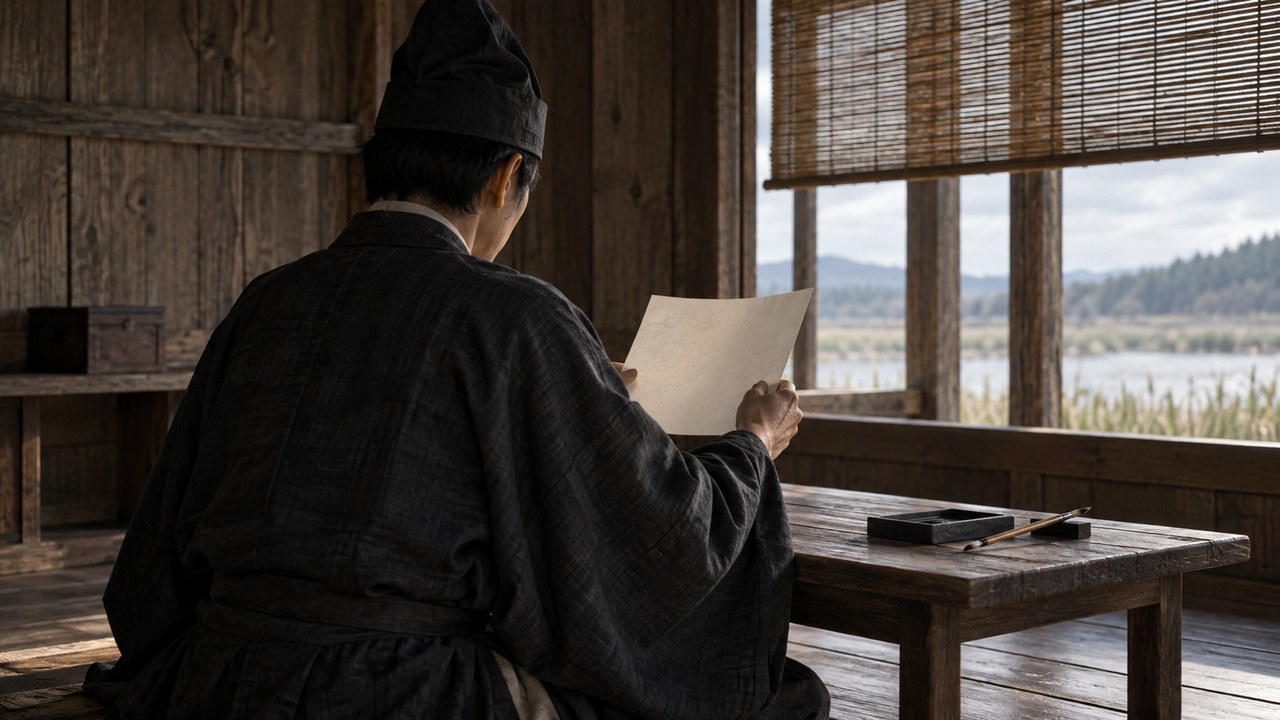
Chapter 9
The satire at Nijō riverbank
In the eighth month of 1334, according to tradition, a long anonymous satire appeared on the Nijō riverbank of the Kamo River, close to the seat of government. Some accounts place it a year later. It opens with what was in fashion in the capital, listing night raids, robberies and forged imperial orders. Its 88 lines survive in a single text, the Kenmu-ki.
Its targets were many: people flocking to Kyoto in search of rewards or lawsuits, swollen offices, unfair appointments and the behavior of social climbers. It also mentions basara, a showy and extravagant style of the day. Historians value the piece as a vivid source for the atmosphere of the capital during these unsettled years.
The author claims to be one of the common youths of Kyoto, but the learning on display suggests a courtier or monk unhappy with the new regime. Because it was posted near the government offices, some scholars read it as a direct appeal to the emperor. Sharp as it is, it should not be mistaken for the voice of the whole country.
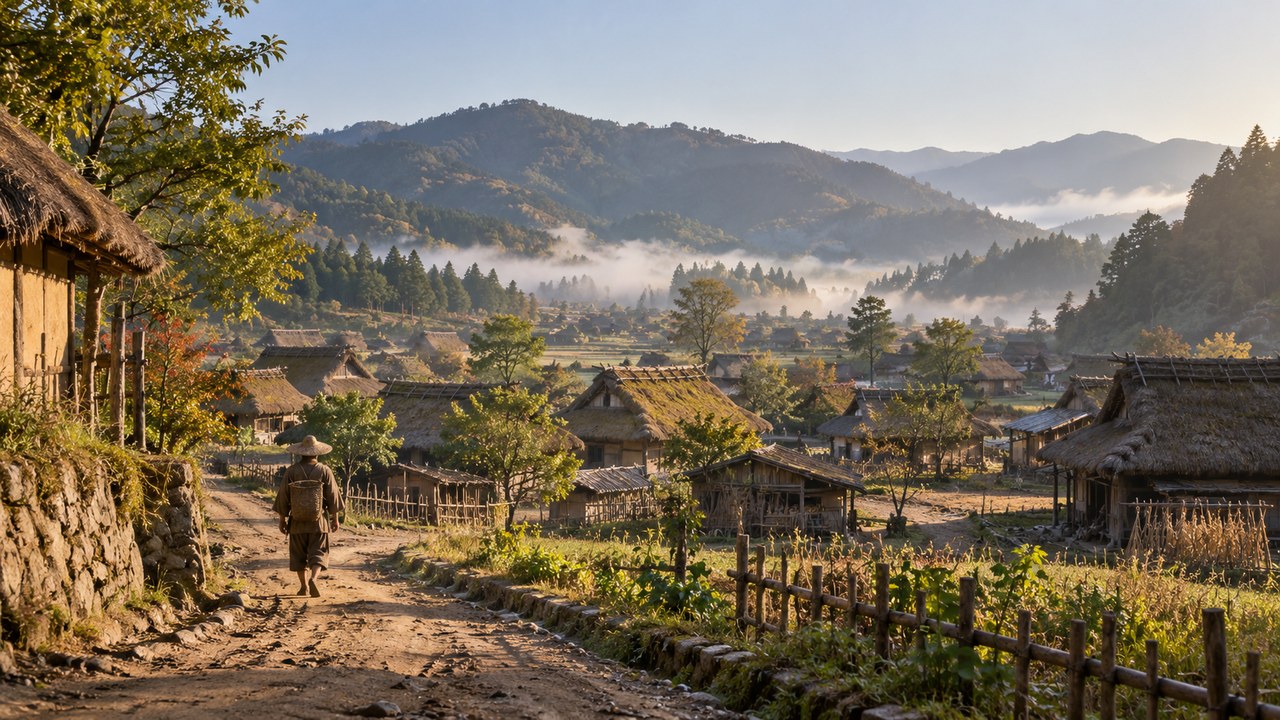
Chapter 10
Prince Moriyoshi and the Nakasendai Rebellion
There were also fractures inside the regime. Prince Moriyoshi, who had played a major part in the overthrow of the shogunate, was named shogun in the sixth month of 1333 but dismissed in the ninth month of the same year. In the tenth month of 1334 he was arrested and sent to Kamakura, into the custody of Ashikaga Tadayoshi.
In the seventh month of 1335 Hōjō Tokiyuki raised an army in Shinano and advanced on Kamakura. Tadayoshi was defeated in Musashi and retreated west with Prince Nariyoshi, and on the way he had the imprisoned Moriyoshi killed. The date is given as the twenty-third day of the seventh month. Tokiyuki occupied Kamakura late that month.
Takauji asked for permission to march east and for appointment as shogun, but Go-Daigo refused. He left Kyoto anyway and retook Kamakura in the eighth month. Tokiyuki's hold on the city had lasted only about twenty days, which is why the uprising is also known as the Twenty-Day Rebellion.
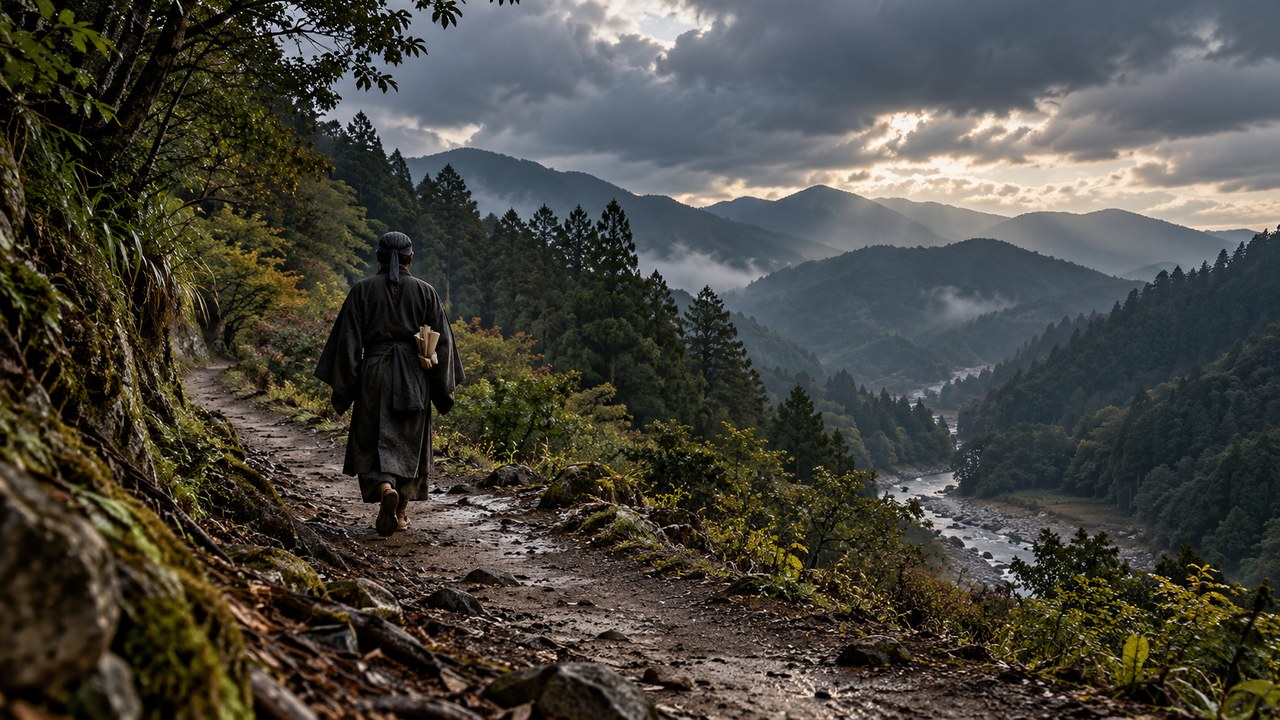
Chapter 11
From Minatogawa to Yoshino
Takauji stayed in Kamakura, and in the eleventh month of 1335 he turned against the new government, declaring that his aim was to strike down Nitta Yoshisada. He defeated Yoshisada's army at Hakone and entered Kyoto in the first month of 1336, but forces led by Kitabatake Akiie and others drove him out, and he fled to Kyushu.
On his way west Takauji obtained an edict from Retired Emperor Kōgon. He won a victory at Tatarahama in the third month and then advanced back toward the east. In the fifth month he defeated Kusunoki Masashige and others at Minatogawa in Settsu and reentered Kyoto. Kobe's Hyōgo Ward records a tradition that Masashige made his headquarters on Mount Ege.
In the eighth month Takauji installed Emperor Kōmyō, and in the tenth month Go-Daigo handed over the imperial regalia. The Kenmu Shikimoku, a statement of governing principles, followed in the eleventh month. In the twelfth month, however, Go-Daigo moved to Yoshino and founded the Southern Court, opening an era in which two imperial courts stood side by side.
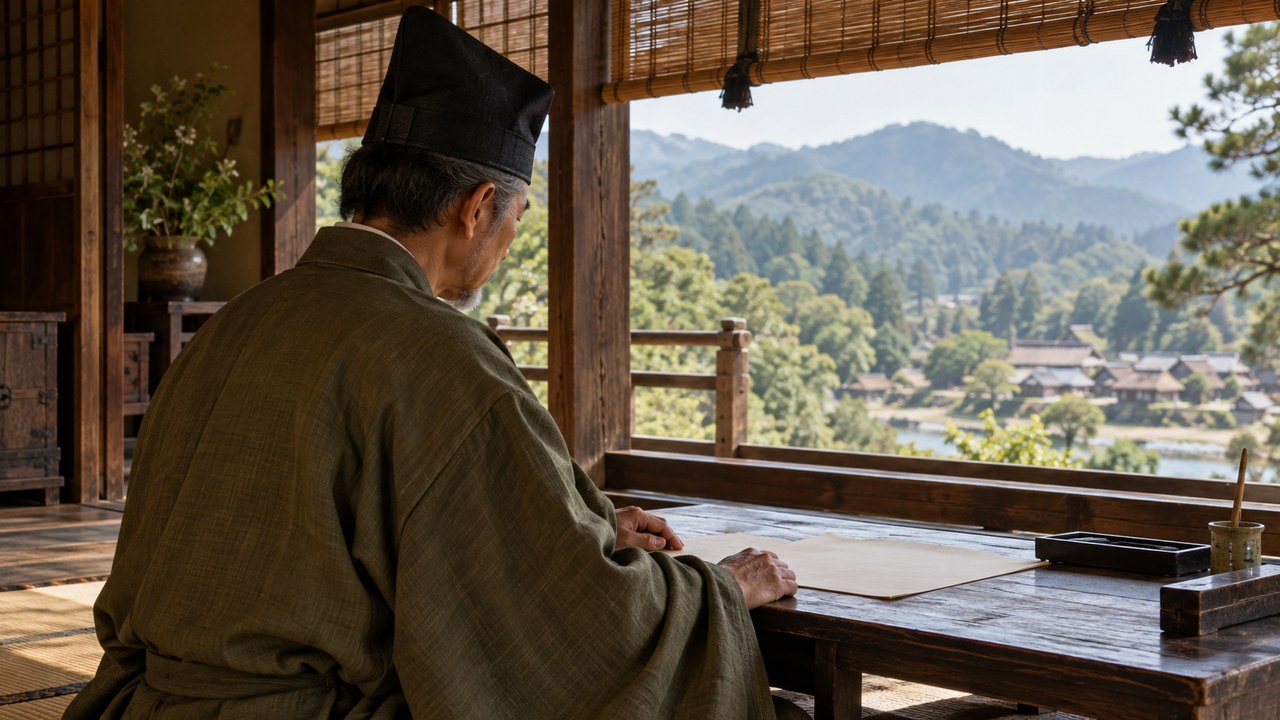
Chapter 12
The work the documents preserve
The Nijō Tomikōji palace, the setting of the new government, was burned by Ashikaga forces in 1336. Takauji became shogun in 1338. In 1339 Go-Daigo abdicated in favor of Prince Noriyoshi and died soon after. His tomb, the Tōnoo mausoleum, lies behind the main hall of Nyoirin-ji temple in the mountains of Yoshino.
The Kenmu Restoration was short, but it was not a government that did nothing. The letter recognizing the boundaries of Aso, the judgment between Sugaura and Ōura, and a land tribunal that grew beyond a hundred members all record work that this regime actually carried out, however uneven the results may have been.
At the same time, a system that gathered decisions around the emperor could not bear the full weight of rewards and lawsuits. Overthrowing a shogunate and holding a society together afterward were different tasks. The documents of this brief government still show how hard the second task could be, long after the fighting had stopped.
How to read this work
History, interpretation, and reconstruction
Reading the offices for rewards and justice, letters sent to the provinces, continuing land disputes and satire together shows how hard it was to turn an alliance against the shogunate into lasting government.
This work is grounded in published sources and historical research. Interior thoughts, dialogue, and some visual details are cinematic reconstructions. Where historians disagree, the article presents the point as debated rather than settled fact.
Timeline
The story in time
-
Statements and an inspector's report are produced in the dispute between Sugaura and Ōura.
Sources: s04 -
Go-Daigo's plot is exposed; he is captured at Kasagi and exiled to the Oki Islands.
Sources: s03 -
The Zassho Ketsudansho land tribunal is established with four divisions and about seventy members.
Sources: s09 -
Kitabatake Akiie escorts Prince Noriyoshi to Mutsu, and Ashikaga Tadayoshi escorts Prince Nariyoshi to Kamakura.
Sources: s08 -
A tribunal letter orders the offices of Higo to recognize the boundaries of Aso estate.
Sources: s02 -
Prince Moriyoshi is arrested and sent to Kamakura.
Sources: s13 -
Takauji is appointed shogun.
Sources: s05 -
Go-Daigo abdicates in favor of Prince Noriyoshi and dies.
Sources: s03 -
The proprietor of Sugaura, the Danna-in of Mount Hiei, sues again against a ruling favoring Ōura.
Sources: s04
People & terms
A guide for new readers
Key figures
- Emperor Go-Daigo
- Led the new government after the fall of the Kamakura shogunate and moved to Yoshino in 1336.
- Ashikaga Takauji
- Helped overthrow the shogunate, opposed Go-Daigo in 1335, and was appointed shogun in 1338.
- Nitta Yoshisada
- Warrior who helped overthrow the shogunate. His family was prominent in the Kyoto guard office, and he was defeated at Hakone in 1335.
- Emperor Kōmyō
- The emperor supported by Takauji in Kyoto in 1336.
- Kusunoki Masashige
- Raised troops against the shogunate, served on the land tribunal and was defeated by the Ashikaga at Minatogawa in 1336.
- Prince Moriyoshi
- Son of Go-Daigo, appointed shogun in 1333, arrested in 1334 and killed in Kamakura in 1335.
- Ashikaga Tadayoshi
- Younger brother of Takauji, who escorted Prince Nariyoshi to Kamakura in 1333.
- Hōjō Tokiyuki
- Rose in Shinano in 1335 and briefly occupied Kamakura in the Nakasendai Rebellion.
Glossary
- Kenmu Restoration 建武の新政
- The short government led by Go-Daigo beginning in 1333, named for the era adopted in 1334.
- Rinji 綸旨
- A document transmitting an imperial command; its issue and its practical enforcement are distinct questions.
- Rewards — onshō 恩賞
- Recognition for service, including the Aso territorial recognition as interpreted by the university library; one case does not establish universal satisfaction.
- Kirokusho 記録所
- The central office that judged major suits under Go-Daigo's government.
- Onshōkata 恩賞方
- The office that deliberated on rewards for military service; it was reorganized into four regional divisions in 1334.
- Zassho Ketsudansho 雑訴決断所
- The land tribunal of the Kenmu government, founded around 1333 and enlarged to eight divisions and 107 members in 1334.
- Shugo office 守護所
- The office of a military provincial governor, one regional addressee in the Aso document.
- Kokuga 国衙
- The provincial civil administrative office, distinct from the shugo office.
- Estate — shō 荘
- The estate designation in the Aso example; recognition of its extent is not treated as proof of uncontested local possession.
- Nijō riverbank satire 二条河原落書
- An anonymous critical text, read as satire rather than a nationwide opinion survey or a securely identified author’s biography.
- Kenmu Shikimoku 建武式目
- The 1336 code, distinct from both Go-Daigo’s earlier government and Takauji’s shogunal appointment in 1338.
- Taiheiki 太平記
- A war tale associated with this period; its narrative scenes differ from documents recording grants and lawsuits.
- Mushadokoro 武者所
- The guard office responsible for security in Kyoto, in which members of the Nitta family were prominent.
- Basara ばさら
- A showy, extravagant style of behavior and dress mentioned in the Nijō riverbank satire.
- Nakasendai Rebellion 中先代の乱
- The rising of Hōjō Tokiyuki in 1335, which briefly recaptured Kamakura.
- Southern Court 南朝
- The court Go-Daigo established at Yoshino in 1336, in opposition to the court supported by the Ashikaga in Kyoto.
Sources & method
How this article was built
This English edition follows the revised Japanese article scene by scene and keeps its seventeen sources, their order and its eighteen timeline entries. It draws on Kyoto City, Kumamoto University Library, the National Diet Library, Shiga University, Tokyo University of Foreign Studies, the Japan Arts Council, encyclopedia entries on Kotobank, Kobe City, Cultural Heritage Online and Nippon Tabi Magazine. Titles given in English are editorial translations.
Original documents were not independently transcribed. Where reference works disagree on dates or numbers, the article gives a range or notes the variation. War tales are not treated as direct records. Months and days follow the lunar calendar in use at the time.
Sources
References and further reading
- Cultural History 08: The Nijō Riverbank Satire 文化史08 二条河原落書 Title translated editorially for reader convenience. Kyoto City 京都市 Used for the date and place of the satire, the offices of the new government, warrior grievances, the palace levy and the burning of the Nijō Tomikōji palace. Accessed 2026-11-18
- Aso Family Papers, Volume 5, Item 4: Zassō Ketsudansho Document, Printed Edition No. 77 阿蘇家文書 第5巻4 雑訴決断所牒 刊本77号 Title translated editorially for reader convenience. Kumamoto University 熊本大学附属図書館 Used for the letter of 1333, its addressees, the paired governors, the Shōryaku decree and its approval as a reward. Local enforcement is not assumed. Accessed 2026-11-18
- Emperor Go-Daigo 後醍醐天皇 Title translated editorially for reader convenience. National Diet Library 国立国会図書館/ジャパンサーチ Used for Go-Daigo's accession, direct rule, the plots against the shogunate, his escape from Oki, imperial orders, Yoshino and his death in 1339. Accessed 2026-11-18
- The Formation of Village Territory — SAM Archive Newsletter No. 3 史料館にゅうすSAM第3号 村の領域の成立 Title translated editorially for reader convenience. Shiga University 滋賀大学経済学部附属史料館 Used for the documents of 1300 and 1302, the judgment of 1334 and the renewed suit of 1340, which is not treated as the date of the contested ruling. Accessed 2026-11-18
- Ashikaga Takauji 足利尊氏 Title translated editorially for reader convenience. National Diet Library 国立国会図書館/ジャパンサーチ Used for Takauji's actions from 1333 to 1338, including Rokuhara, his break with the government, Kyushu, Minatogawa, Emperor Kōmyō and his appointment as shogun. Accessed 2026-11-18
- Lesson 6: The Fall of the Kamakura Shogunate and the Kenmu Restoration 第6回 鎌倉幕府の崩壊と建武の新政 Title translated editorially for reader convenience. Tokyo University of Foreign Studies 東京外国語大学 Used for the overthrow of the shogunate and the explanation of warrior dissatisfaction with direct imperial rule. Warriors are not treated as holding one view. Accessed 2026-11-18
- Conflict in the Northern and Southern Courts Period 文化デジタルライブラリー 南北朝時代の動乱 Title translated editorially for reader convenience. Japan Arts Council 日本芸術文化振興会 Used for the division of the court in 1336, the conflicts that followed and the character of the Taiheiki as a war tale. Accessed 2026-11-18
- Kenmu Restoration (encyclopedia entries) 建武新政 Title translated editorially for reader convenience. Kotobank コトバンク Used for land confirmation, the palace project, the debt decree, currency plans, the eastern bases and the events of 1335 and 1336. Accessed 2026-11-18
- Zassho Ketsudansho (encyclopedia entries) 雑訴決断所 Title translated editorially for reader convenience. Kotobank コトバンク Used for the founding, expansion, membership, surviving documents and decline of the tribunal. Some accounts give three original divisions. Accessed 2026-11-18
- Onshōkata (encyclopedia entries) 恩賞方 Title translated editorially for reader convenience. Kotobank コトバンク Used for the founding, presiding nobles, four divisions and relation to imperial decisions. Reference works differ between 1333 and 1334 for its founding. Accessed 2026-11-18
- Mushadokoro (encyclopedia entries) 武者所 Title translated editorially for reader convenience. Kotobank コトバンク Used for the Nitta family, the six shifts and the guarding of Kyoto. Reference works give between 63 and 65 members. Accessed 2026-11-18
- Nakasendai Rebellion (encyclopedia entries) 中先代の乱 Title translated editorially for reader convenience. Kotobank コトバンク Used for the rising of 1335, the occupation of Kamakura, Tadayoshi's retreat, Takauji's march and the rebellion's alternative name. Accessed 2026-11-18
- Prince Moriyoshi (encyclopedia entries) 護良親王 Title translated editorially for reader convenience. Kotobank コトバンク Used for his appointment and dismissal as shogun, his arrest in 1334 and his death in 1335. One account gives the twenty-second day. Accessed 2026-11-18
- Nijō Riverbank Satire (encyclopedia entries) 二条河原落書 Title translated editorially for reader convenience. Kotobank コトバンク Used for the competing dates, the 88 lines, the Kenmu-ki, its opening, its targets and proposed authors. Accessed 2026-11-18
- The Age of Takauji, Masashige and War 尊氏 正成と戦の時代 Title translated editorially for reader convenience. Hyōgo Ward, Kobe City 神戸市兵庫区 Used for the battle of Minatogawa and the tradition of a headquarters on Mount Ege. Accessed 2026-11-18
- Autograph Prayer of Ashikaga Takauji, 1336 足利尊氏自筆願文〈建武三年八月十七日/清水寺宛〉 Title translated editorially for reader convenience. Cultural Heritage Online (Agency for Cultural Affairs) 文化遺産オンライン(文化庁) Used for the sequence of Minatogawa, the entry into Kyoto and the accession of Emperor Kōmyō in 1336. Accessed 2026-11-18
- Nyoirin-ji Temple 如意輪寺 Title translated editorially for reader convenience. Nippon Tabi Magazine ニッポン旅マガジン Used for the location of Go-Daigo's mausoleum behind the main hall of the temple. Accessed 2026-11-18
Continue reading
More stories from Shigeki
Shigeki English
Oishi Riku: Beyond the End of Chushingura, the Family That Lived On
Born in Toyooka, a wife in Ako, then Yamashina, Toyooka again and Hiroshima: a spring homecoming and an autumn divorce letter, the deaths of husband and son, further losses, and a son’s appointment in Hiroshima.
- When 1669–1736, with the events of 1702 kept in their separate seasons, and later memory from 1748 to 2014
- Where Toyooka, Ako, Yamashina and Hiroshima
Shigeki English
The Ōmiya Incident: The Night Ryōma and Nakaoka Were Attacked, Read Through the Surviving Records
The Teradaya, the return of power, the move to the Ōmiya, the night of the attack, three deaths, the funeral at Ryōzen, the Mimawarigumi testimony and theories of a hidden hand, with what can be confirmed kept apart from competing accounts.
- When The attack on the 15th day of the 11th month of Keiō 3 (10 December 1867), with its background from 1865 and later testimony, the 1927 marker and the 1962 statues
- Where The Ōmiya, a soy-sauce merchant’s shop on Kawaramachi in Kyoto.