
SHIGEKI ENGLISH STORYEN
Japanese history in English
The Battle of Ishigakibaru: The Fighting Before Kuroda Josui Arrived
From the fall of the Ōtomo to the defence of Kitsuki Castle, the battle near Beppu, Josui's night arrival, the surrender and what the sources disagree about.
On the thirteenth day of the ninth month of 1600, Ōtomo Yoshimune fought Kuroda and Matsui forces at Ishigakibaru near Beppu. Kuroda Josui reached the area only that night. This article follows the loss of the Ōtomo domain, the defence of Kitsuki Castle, the rout of the vanguard and the reversal that followed, the death of Yoshihiro Muneyuki, the surrender on the fifteenth, the differences between a letter of the time and a later family history, and the fate of the Ōtomo.
At a glance
Before you enter the story
- When
- From the loss of the Ōtomo domain in 1593 to the battle and surrender of the ninth month of 1600, with the aftermath to 1605; month and day follow the Japanese calendar then in use.
- Where
- Hamawaki, Tateishi, Kitsuki Castle, Ishigakibaru and Mount Jissōji in and around present-day Beppu; Nakatsu Castle; and Funai as the earlier Ōtomo base.
- Key figures
- Kuroda Josui, Ōtomo Yoshimune, Matsui Yasuyuki, Ariyoshi Tatsuyuki, Inoue Kuroemon, Yoshihiro Muneyuki
- What was at stake
- Could a dispossessed daimyo family recover Bungo while the wider struggle that ended at Sekigahara was being decided?
Why this story matters
The larger history behind the turning point
A battle remembered under one famous name turns out to depend on many people: the garrison of a Hosokawa castle, Kuroda commanders who fought before their leader arrived, and an Ōtomo side that held the advantage in the first phase.
Ishigakibaru also shows how sources shape memory. A report written days after the fighting and a family history finished a century later describe the same day differently, and those differences are part of the history.
Historical context
What an international reader needs to know
One calendar, several different events
The dates in this article follow the Japanese calendar of the time and are not converted to modern months. The fighting at Ishigakibaru took place on the thirteenth day of the ninth month, two days before Sekigahara, while Yoshimune surrendered on the fifteenth, the day of Sekigahara itself.
A shared date does not show when news travelled between the two places. The sources used here do not say when word of Sekigahara reached Beppu, so no time is suggested.
Allies from different houses
The defenders of Kitsuki served the Hosokawa, while the relief force came from the Kuroda. They fought together at Ishigakibaru, but they were not one army under one family, and their reports of the day do not always match.
Funai, the old Ōtomo base, lies apart from the battlefield at Beppu. Keeping these places and affiliations distinct makes the campaign easier to follow.
Watch the film
See the story in motion
The film currently uses Japanese audio. This English article provides the context and source trail; it does not imply that an English subtitle track is available.
Opening
Josui arrived that night
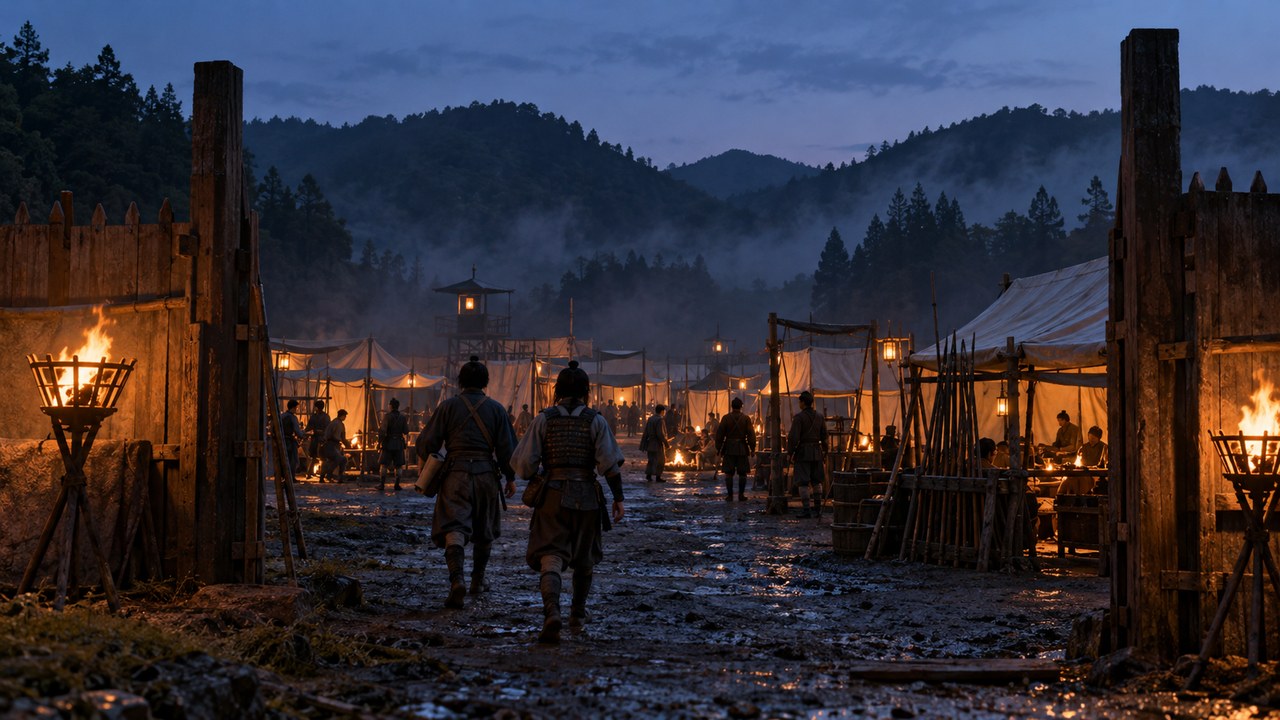
On the thirteenth day of the ninth month of 1600, heavy fighting broke out at Ishigakibaru in Bungo Province, in what is now Beppu in Oita Prefecture. The battle is usually remembered as a victory for Kuroda Josui. Yet Beppu City's chronology places Josui's arrival at Mount Jissōji on the night of that same day, after the fighting had ended.
The men who fought during the day were Kuroda units that Josui had sent ahead, together with the forces of Matsui Yasuyuki, a retainer of the Hosokawa family. Facing them was Ōtomo Yoshimune, who had returned to Bungo in the hope of recovering the province his family had lost.
This article follows events in order, from the loss of the Ōtomo domain to the siege of Kitsuki Castle, the battle at Ishigakibaru, the surrender and the aftermath. A letter drafted just after the battle and accounts compiled later do not always agree, so each source is identified as the story unfolds. All month and day references use the Japanese calendar of the time.
Chapter 1
The lord who lost Bungo
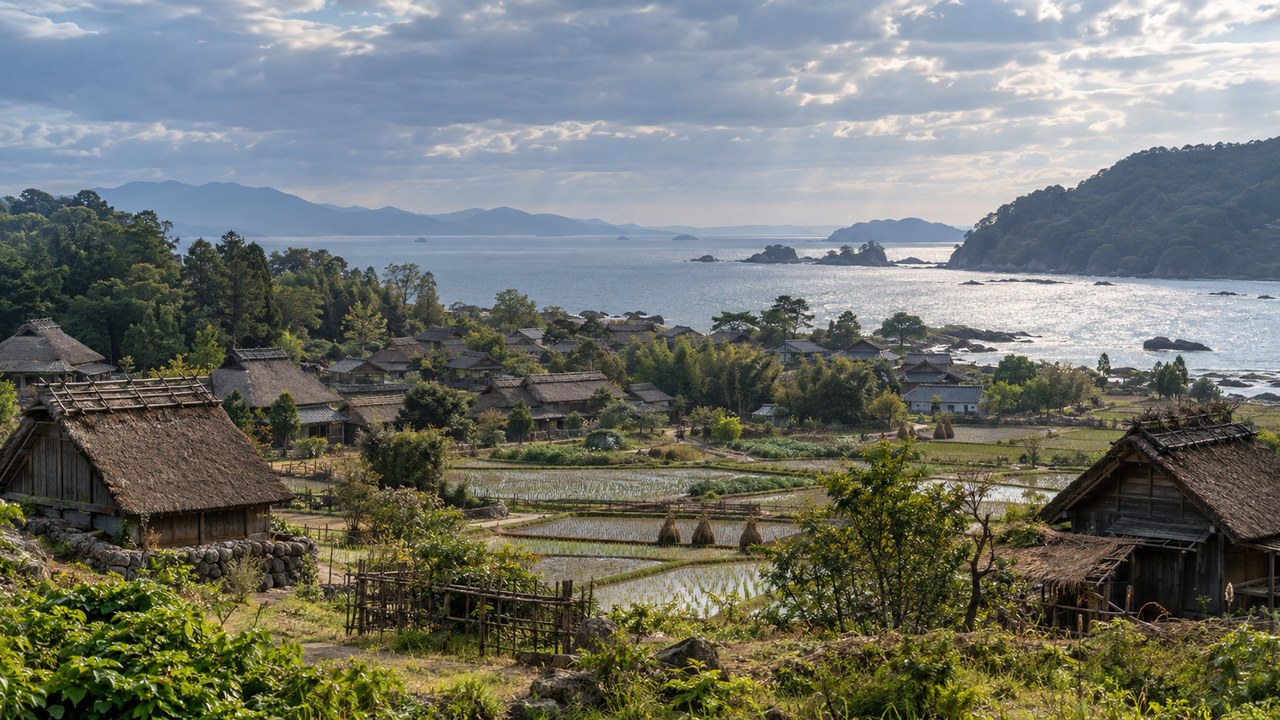
The Ōtomo had long ruled Bungo from their base at Funai, in present-day Oita City. According to Oita City, Yoshimune was serving in the invasion of Korea when he heard that allied troops had been defeated and quickly withdrew from the field. In 1593 Toyotomi Hideyoshi stripped him of his rank as a daimyo and of his lands for that retreat.
A booklet published by the Beppu City Board of Education explains that Yoshimune, deprived of Bungo, was confined under the custody of Mōri Terumoto. Born in 1558, he was then in his mid-thirties, and the great family he had inherited was suddenly without a domain.
Seven years later, the Toyotomi regime was split by rivalry between Tokugawa Ieyasu and his opponents. In the seventh month of 1600, an anti-Tokugawa coalition rose with Mōri Terumoto as its commander in chief. That upheaval gave Yoshimune an opportunity to return to the lands his family had once held.
Chapter 2
Kitsuki Castle under the Hosokawa
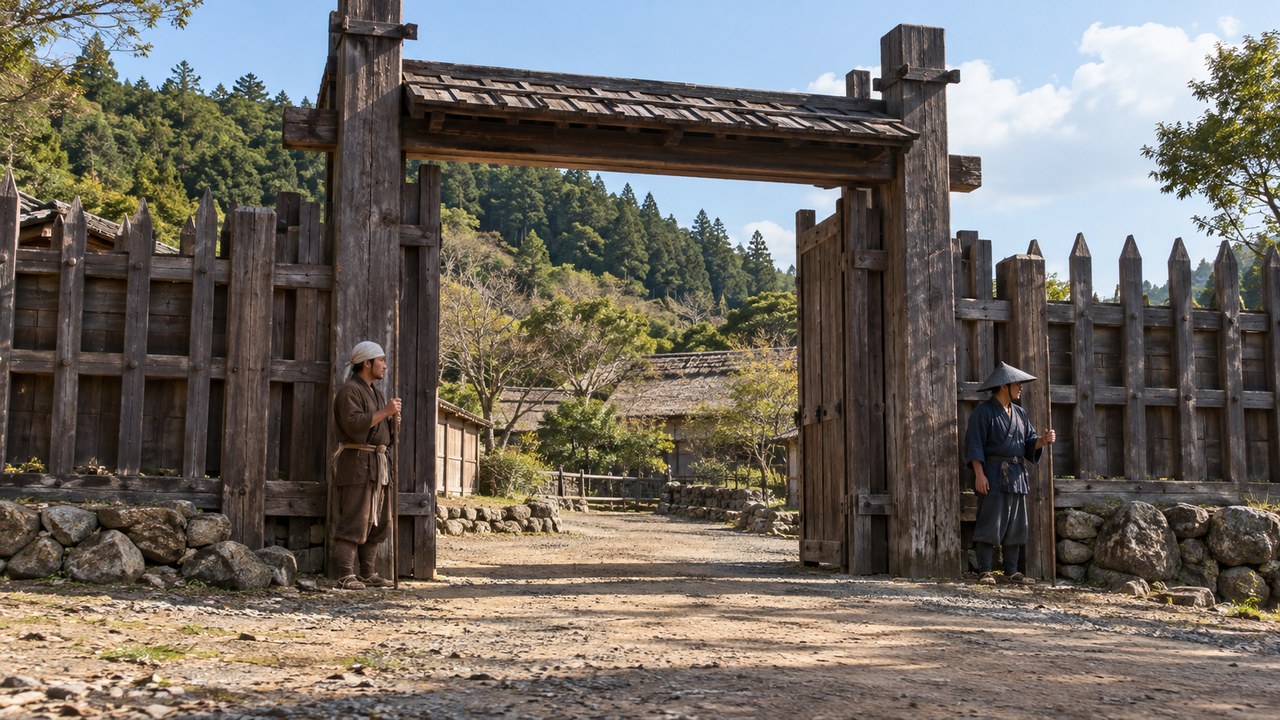
New lords had already taken over parts of the former Ōtomo territory. The Beppu booklet records that in the second month of 1600, on the recommendation of Tokugawa Ieyasu, Hosokawa Tadaoki received Hayami District, which included Beppu, and Yufuin, assessed together at 60,000 koku. Kitsuki Castle was held for him by two senior retainers, Matsui Yasuyuki and Ariyoshi Tatsuyuki.
Letters reached Matsui from the commissioners in Osaka urging him to join their side. When Ōta Kazuyoshi of Usuki and his associates demanded that the castle be handed over, Matsui is said to have thrown the letter back and warned that any further messenger would be cut down.
When the Ōta side tried to occupy the old castle at Fukae, close to Kitsuki, the Kitsuki garrison pulled down its main and second enclosures to prevent it. Tension around Kitsuki was therefore already high well before any army reached the plain of Ishigakibaru.
Chapter 3
Josui at Nakatsu
Kuroda Nagamasa, the head of the family, had taken the main Kuroda army to fight on the Tokugawa side. A feature on Fukuoka Prefecture's official tourism site says that his father Josui, left behind at Nakatsu Castle, had almost no soldiers and spent his accumulated savings to hire masterless samurai.
Accounts of how many he gathered differ. The Beppu booklet introduces a figure of more than 3,600 men, while the Fukuoka site speaks of about 9,000 masterless samurai. The two numbers may not describe the same moment or use the same method of counting, so this article does not choose between them.
Josui also worked closely with Kitsuki. Matsui reported receiving three large guns from him and a promise that a relief force would come if the castle were attacked. Men serving different houses were thus already linked by practical cooperation before the fighting began.
Chapter 4
The landing at Hamawaki
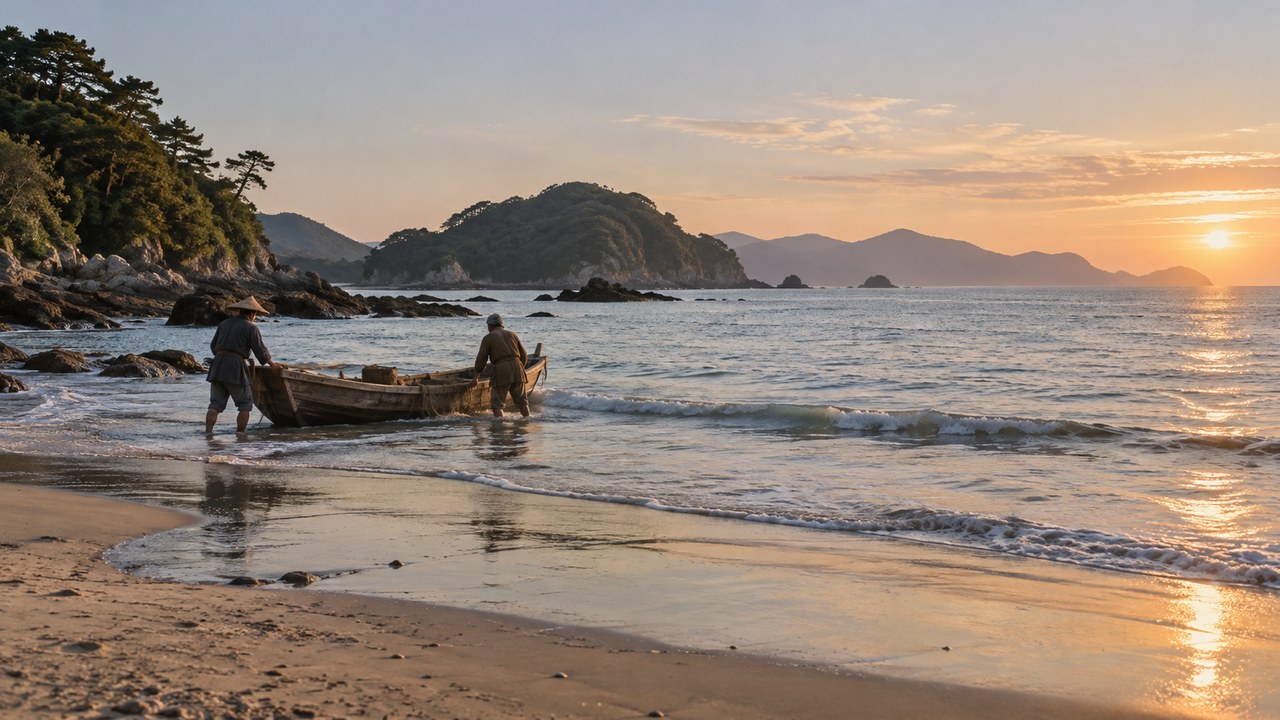
According to Beppu City's chronology, Yoshimune set out from the Kyoto and Osaka region for Bungo around the eighth month. On the ninth day of the ninth month he landed at Hamawaki in Beppu and set up his camp at Tateishi. On the same day, Josui left Nakatsu Castle and marched toward Bungo. The two leaders were thus moving toward the same district at the same moment.
People with old ties to the Ōtomo gathered at Tateishi. The Tsurumi Shichito no Ki, introduced in the Beppu booklet, says that those who owed the family favours came from nearby until they numbered more than three thousand horsemen. That is the statement of one source, however, and cannot be treated as an established count.
Among the commanders who joined him were Yoshihiro Muneyuki and Munakata Kamon. With the recovery of the old domain as their shared aim, the Ōtomo forces now had a base in the Beppu area, within reach of the Hosokawa castle at Kitsuki.
Chapter 5
The castle that did not fall
On the tenth day of the ninth month, the Ōtomo forces attacked Kitsuki Castle, defended by Matsui and his men. The castle held, and on the eleventh day the attackers fell back to their camp at Tateishi. Nippon Tabi Magazine's account of the castle also credits Josui's support with saving it from capture. The assault had failed within two days.
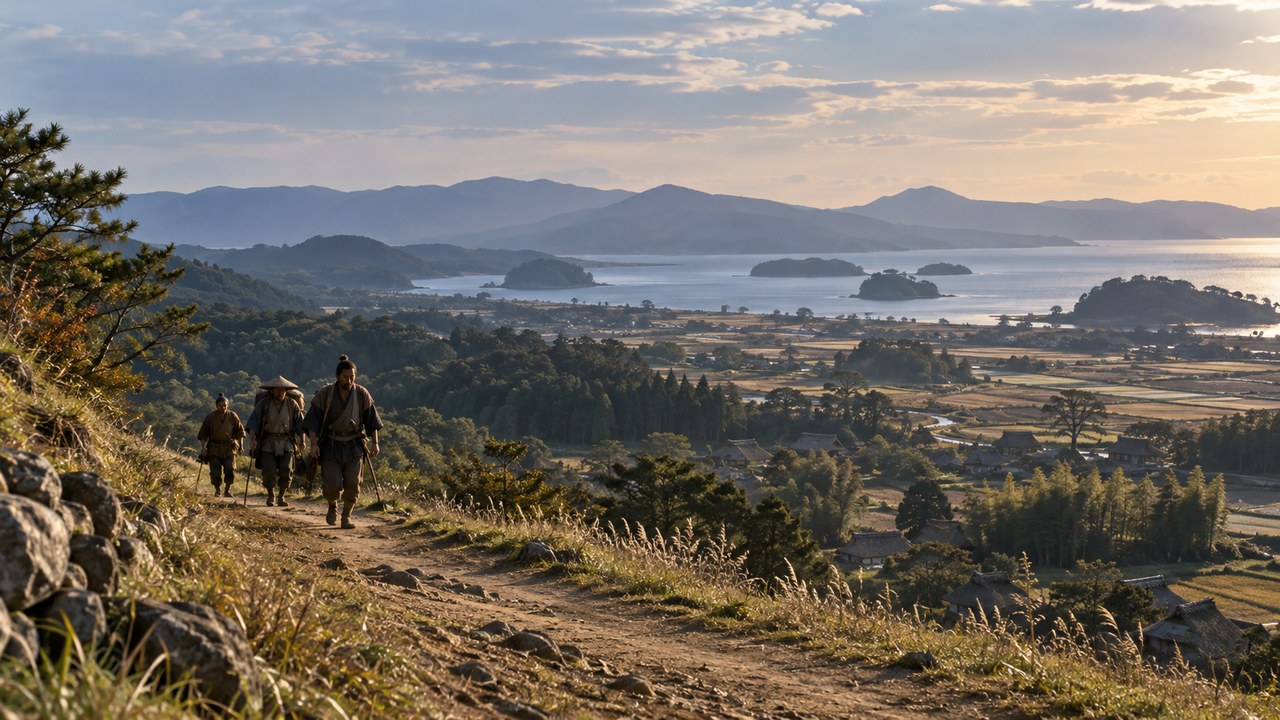
Josui learned of the attack on the night of the tenth, at the Akane Pass on the Kunisaki Peninsula. He immediately sent Inoue Kuroemon, Kuno Jizaemon and others to relieve the castle, turning his own march into a rescue of an ally from another house.
Because Kitsuki had held out, the focus of the campaign shifted from the castle to Beppu. The Kuroda relief force and the Matsui troops now joined together and prepared to move against Yoshimune at Tateishi, setting the stage for the decisive encounter.
Chapter 6
Marching to Ishigakibaru
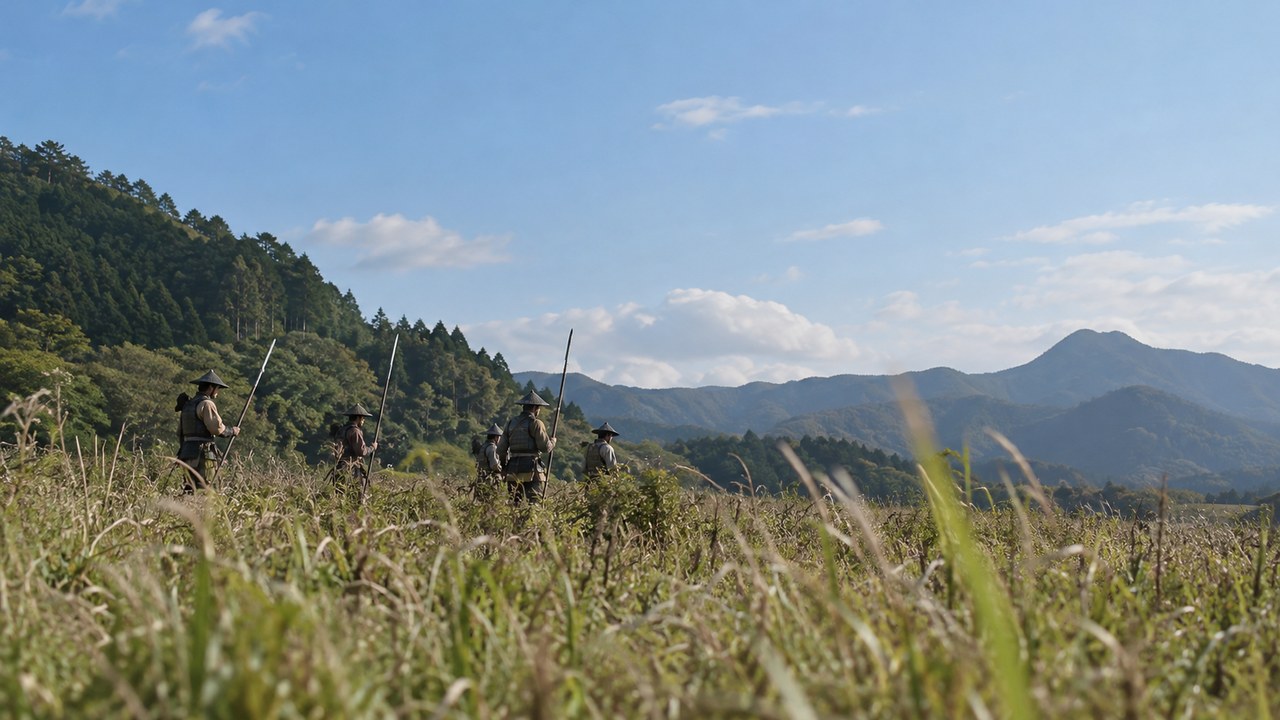
On the thirteenth day, the Kuroda reinforcements that had reached Kitsuki set out for Beppu with the Matsui forces. Ishigakibaru lay on the broad alluvial fan of Beppu, and Beppu City records that the fighting there lasted from around midday until evening.
A letter draft sent home by Matsui and Ariyoshi soon after the battle describes the Kuroda vanguard as one thousand men under four commanders: Kuno Jizaemon, Sogabe Goroemon, Mori Yosobei and Tokieda Heidayū. Its figures are among the few numbers recorded by men who had taken part in the battle themselves.
Behind them came a second formation, also of one thousand men, led by Inoue Kuroemon, Nomura Ichiemon and a son of Gotō Matabei. The Kitsuki troops under Matsui and Ariyoshi fought alongside these Kuroda units, although they served a different lord.
Chapter 7
The vanguard driven back
The Ōtomo side held the advantage when the fighting began. According to the letter draft, the Kuroda vanguard chased Ōtomo troops as far as the edge of Tateishi and was then struck by a counterattack in which Kuno and Sogabe were killed. The later Kuroda family history gives Kuno's age as nineteen.
The family history also says that Mori and Tokieda pursued the enemy without realizing that the retreat was a ruse. The vanguard broke and fled back past Mount Jissōji, and for a time the outcome of the day looked very different from the one that is remembered.
The sources disagree about what the Kitsuki troops did next. The letter draft says that Matsui and his men resolved to die where they stood and held their ground, whereas the Kuroda family history says that Matsui and Ariyoshi withdrew to their original position. One account comes from participants reporting home, the other from a history compiled for the Kuroda house.
Chapter 8
The death of Yoshihiro Muneyuki
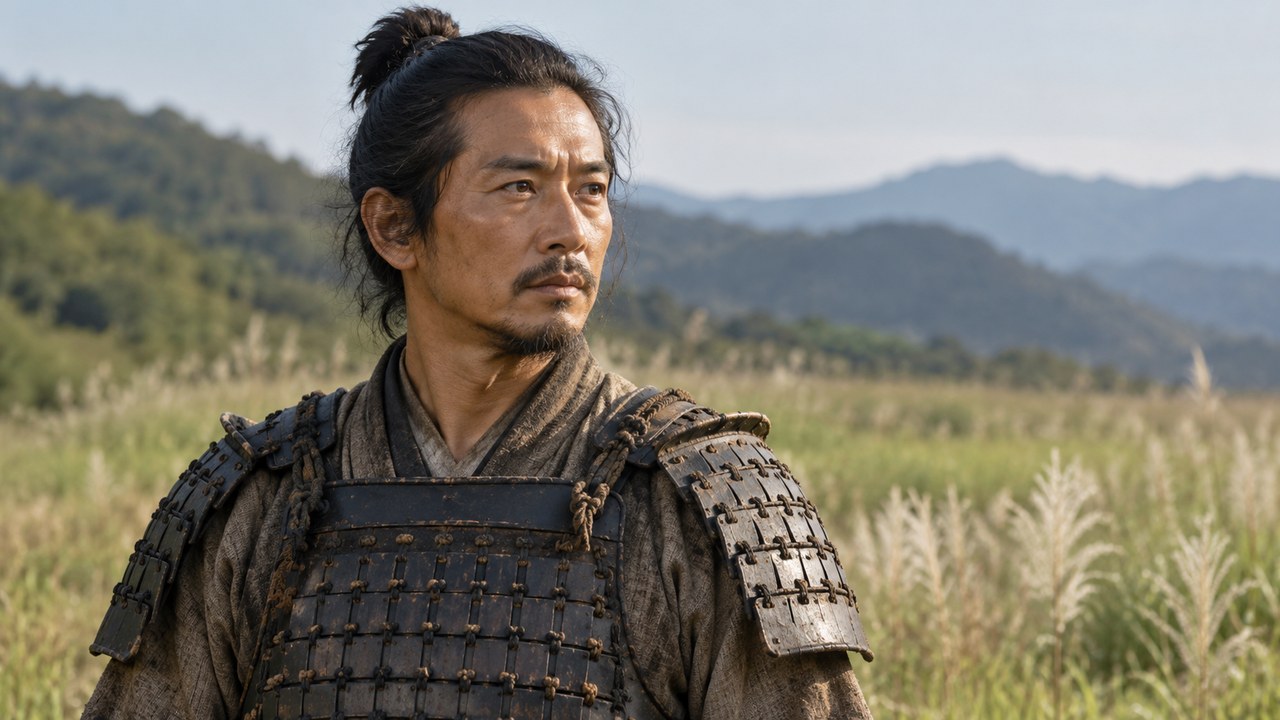
The tide turned when the second formation under Inoue and Nomura entered the battle. Beppu City explains that the larger Kuroda and Matsui forces fought hard and that the deaths of leading Ōtomo commanders such as Yoshihiro Muneyuki decided the result. The letter draft claims more than eighty enemy dead, including Muneyuki and Munakata Kamon.
Muneyuki was born in 1564 and became head of his family at fifteen after his father Shigenobu died at the Battle of Mimikawa. Bungotakada City explains that after the Ōtomo lost their domain he served his cousin Tachibana Muneshige, and that he was killed at Ishigakibaru after losing a duel with Inoue Kuroemon. He had also fought in the Korean campaigns.
His death was not remembered in only one way. The Kuroda family history says he killed twenty-three enemies that day, while the Tsurumi Shichito no Ki says that a Kuroda retainer shot him through the side with a matchlock. Even the history of the family he fought against praised his loyalty, and local communities still honour him.
Chapter 9
A night arrival and the inspection of heads
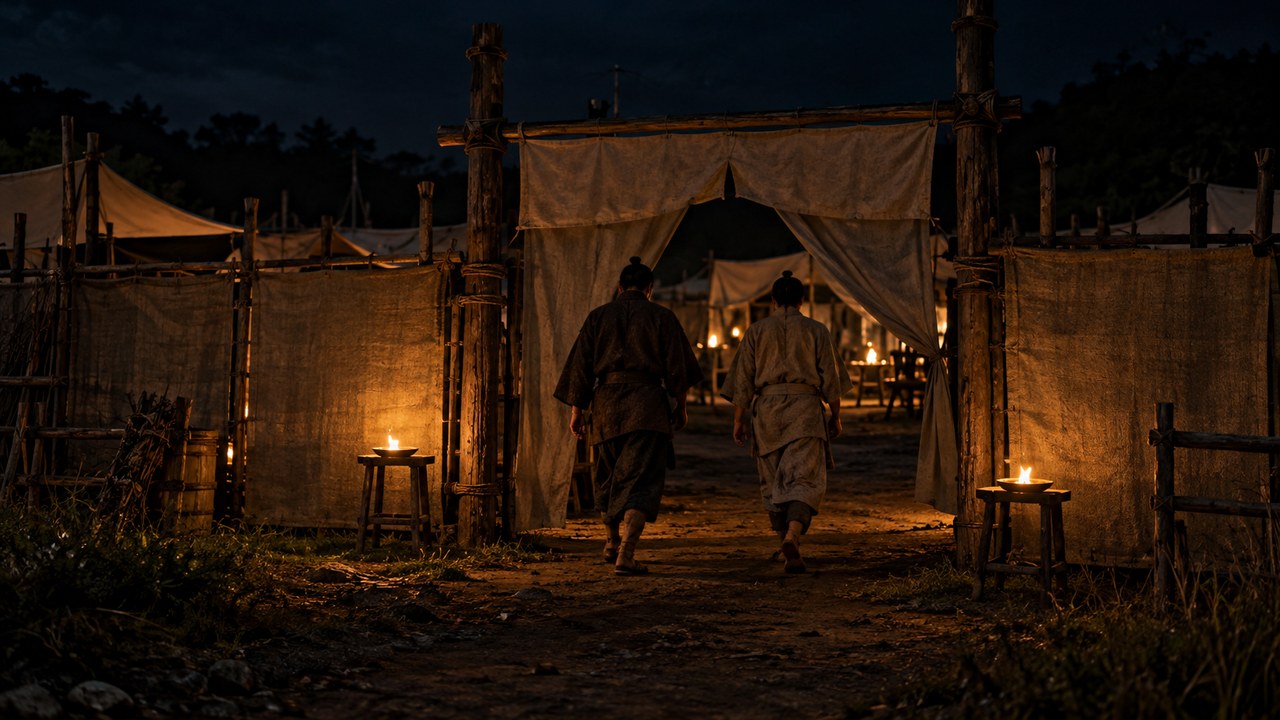
On the night of the thirteenth, after the battle had been decided, Josui took up his position on Mount Jissōji. He cannot therefore be placed on the field directing the daytime fighting in person. Decisions at the front rested with the units led by commanders such as Inoue, Nomura and Matsui.
On the following day, the heads of slain enemies were inspected at Mount Jissōji, a customary way of confirming what had been achieved in battle. The hill is still presented by Beppu City as a historic site, and an explanatory sign stands at its summit. The inspection took place only after Josui had reached the hill.
A late arrival does not mean that Josui's role was minor. He had gathered troops, supplied guns to Kitsuki and dispatched the relief force. The fighting of the thirteenth depended on that preparation, even though he was not present while it took place.
Chapter 10
A surrender on the day of Sekigahara
Early on the fifteenth day, Yoshimune shaved his head and, with about ten followers, surrendered at the camp of Mori Tahei. According to the letter draft, his life was spared because Mori was his sister's husband, and he was sent to Nakatsu. The campaign to recover Bungo had lasted less than a week from the landing at Hamawaki.
On that same fifteenth day, Tokugawa forces won the great battle at Sekigahara in Mino Province. The fighting at Ishigakibaru had taken place two days earlier, so it was Yoshimune's surrender, rather than the battle itself, that coincided with Sekigahara.
Sharing a date does not mean that people in Beppu knew the result of Sekigahara that day. The sources used here do not show when the news arrived, and this article does not fill that gap with a guess. Two separate conflicts simply reached their conclusions on the same day.
Chapter 11
Between a letter and a family history
The sources for Ishigakibaru were written at very different times. The letter draft by Matsui and Ariyoshi, dated the nineteenth day of the ninth month, reported the fighting to their home domain immediately after the battle. The Kuroda family history, compiled by Kaibara Ekiken and others, was completed in 1704 according to the Fukuoka City Museum.
Their numbers do not line up either. For Ōtomo dead, the letter draft gives more than eighty, while the Tsurumi Shichito no Ki gives ninety elite horsemen and more than 150 common soldiers. Such figures cannot be compared without asking which part of the battle and whose losses each source is describing. This article therefore reports each figure with its source instead of offering a single total.
Participants reporting home had reasons to present their own conduct well, and a family history exists to preserve a family's memory. Reading each source with its purpose in mind does not weaken the story. It shows how a single battle could be seen in more than one way.
Chapter 12
Kyushu and the Ōtomo after the battle
Josui's campaign did not end at Ishigakibaru. On the sixteenth day he surrounded Aki Castle, held by Kumagai Naomori, and went on to attack other castles in Kyushu. Fukuoka's tourism site lists the capture of Kokura Castle and the surrender of Kurume and Yanagawa castles in the same year. Josui died in 1604.
Yoshimune was sent to eastern Japan after his defeat and died in 1605. Reference works differ on the place, naming either Shishido in Hitachi Province or Edo. His son Yoshinori was placed in the care of Tokugawa Ieyasu, and the family later continued as kōke, a rank of hereditary masters of ceremony serving the shogunate.
Beppu still preserves sites connected with the battle, including Yoshimune's camp, the graves of Yoshihiro Muneyuki and Munakata Kamon, and Mount Jissōji. Before Josui arrived that night, others had defended a castle, hurried to its relief and fought on the plain. Keeping that order in view gives the battle its true shape.
How to read this work
History, interpretation, and reconstruction
Separating combat, the night arrival and surrender allows the battle to be read through the Ōtomo, Kuroda and Hosokawa-affiliated Matsui forces rather than as the work of one famous leader.
This work is grounded in published sources and historical research. Interior thoughts, dialogue, and some visual details are cinematic reconstructions. Where historians disagree, the article presents the point as debated rather than settled fact.
Timeline
The story in time
-
Hosokawa Tadaoki receives Hayami District, including Beppu, and Yufuin, assessed at 60,000 koku.
Sources: s01 -
Yoshimune sets out for Bungo from the Kyoto and Osaka region.
Sources: s02 -
Josui arrives at Mount Jissōji.
Sources: s02 -
The heads of slain enemies are inspected at Mount Jissōji.
Sources: s01 -
Josui surrounds Aki Castle, held by Kumagai Naomori.
Sources: s01 -
Date of the letter draft in which Matsui Yasuyuki and Ariyoshi Tatsuyuki report the battle.
Sources: s01 -
Kuroda Josui dies.
Sources: s10 -
Ōtomo Yoshimune dies.
Sources: s09 -
The Kuroda family history is completed.
Sources: s04
People & terms
A guide for new readers
Key figures
- Kuroda Josui
- Directed Kuroda reinforcements; Beppu City’s chronology places his arrival at Mount Jissōji on the night of the thirteenth day of the ninth month in the historical calendar.
- Ōtomo Yoshimune
- Sought to recover former Ōtomo lands and surrendered on the fifteenth day of the ninth month.
- Matsui Yasuyuki
- A Hosokawa retainer associated with the Matsui forces defending Kitsuki Castle; not a Kuroda retainer.
- Yoshihiro Muneyuki
- Fought on the Ōtomo side; later military tales and local commemoration also contributed to how he was remembered.
- Ariyoshi Tatsuyuki
- A senior Hosokawa retainer at Kitsuki Castle and co-author of the letter draft of the nineteenth day.
- Inoue Kuroemon
- A commander of the Kuroda second formation, sent to relieve Kitsuki and remembered for a duel with Yoshihiro Muneyuki.
- Mori Tahei
- A Kuroda retainer and, according to the letter draft, the husband of Yoshimune's sister; Yoshimune surrendered at his camp.
- Munakata Kamon
- An Ōtomo commander said to have led the second line, killed at Ishigakibaru.
Glossary
- Ishigakibaru 石垣原
- The battle setting in the Beppu area; the chronology distinguishes combat from the later surrender.
- Kuroda Josui 黒田如水
- The Kuroda leader whose arrival at Mount Jissōji is placed at night after the thirteenth-day fighting.
- Ōtomo Yoshimune 大友義統
- The Ōtomo figure seeking former lands; the reading Yoshimune follows the adopted municipal explanation.
- Matsui Yasuyuki 松井康之
- A Hosokawa retainer connected with the defense of Kitsuki, not a member of the Kuroda house.
- Yoshihiro Muneyuki 吉弘統幸
- An Ōtomo fighter discussed in later narrative and commemoration as well as the history of the campaign.
- Kitsuki Castle 木付城
- The castle whose attack and relief preceded the fighting at Ishigakibaru; historical written form retained in the Japanese term.
- Hamawaki 浜脇
- The Beppu landing place in the ninth-day entry of the municipal chronology.
- Funai 府内
- The earlier Ōtomo base introduced by Oita City; not identical with the battlefield in Beppu.
- Historical ninth month 旧暦九月
- The month in the calendar then used; it is not silently equated with modern September.
- Letter draft 書状案
- The form of the post-battle document introduced by the booklet, dated the nineteenth day; not newly translated here in full.
- Kuroda kafu 黒田家譜
- The family history dated to 1704 in the museum list, distinct from contemporary reporting.
- Military tale 軍記物
- A narrative form identified as the source of part of Muneyuki’s later story; its scene is not a witnessed conversation transcript.
- Tateishi 立石
- The place in the Beppu area where Ōtomo Yoshimune set up his camp in 1600.
- Akane Pass 赤根峠
- The pass on the Kunisaki Peninsula where Josui heard that Kitsuki Castle was under attack.
- Kōke 高家
- A shogunate rank whose holders handled ceremonies and dealings with the imperial court.
Sources & method
How this article was built
This English edition follows the revised Japanese article scene by scene and keeps its ten sources, their order and its fifteen timeline entries. It draws on Beppu City and its board of education, Bungotakada City, the Fukuoka City Museum, Oita City, Nippon Tabi Magazine, Crossroad Fukuoka and Kotobank. Titles given in English are editorial translations.
Month and day references follow the Japanese calendar then in use. Troop and casualty figures are attributed to the source that gives them. The letter draft, the Kuroda family history and the Tsurumi Shichito no Ki are cited as the Beppu booklet introduces them and were not independently transcribed.
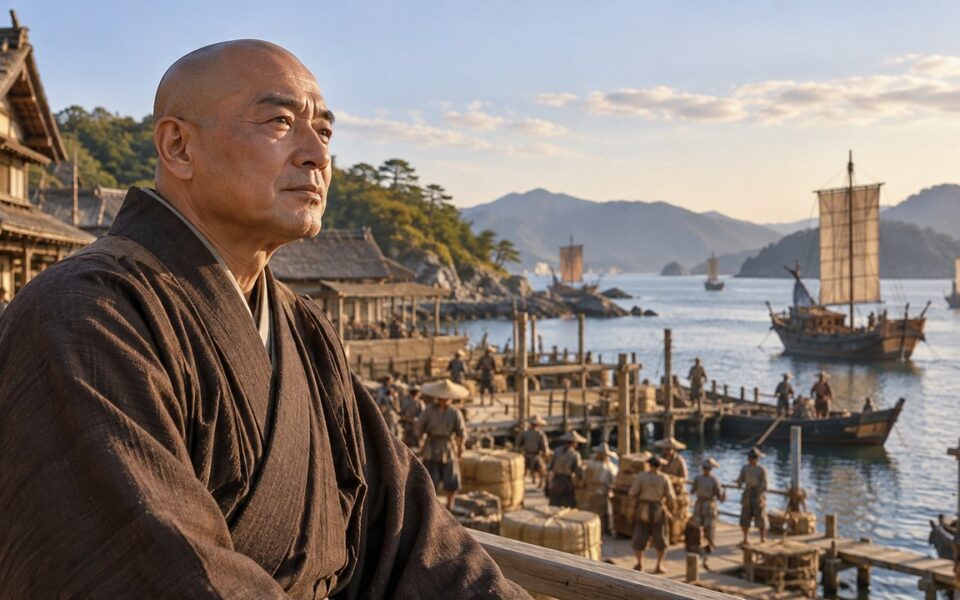
The images are AI-generated imaginative reconstructions by SHIGEKI. They are not authenticated portraits, historical photographs or exact reconstructions of the sites.
Sources
References and further reading
- Beppu Cultural Properties No. 44: The Battle of Ishigakibaru べっぷの文化財 No.44 石垣原合戦 Title translated editorially for reader convenience. Beppu City 別府市教育委員会・別府市文化財保護審議会 Used for the loss of the Ōtomo domain, the Hosokawa holdings, events around Kitsuki Castle, the letter draft of the nineteenth day, and the accounts and figures in the Kuroda family history and the Tsurumi Shichito no Ki. Accessed 2026-11-18
- The Battle of Ishigakibaru and Sites Associated with Kanbei 大河ドラマ「軍師官兵衛」ゆかりの石垣原合戦(いしがきばるかっせん) Title translated editorially for reader convenience. Beppu City 別府市 Used for the dated chronology of the campaign, the course of the fighting, Josui's night arrival, the surrender and the historic sites. Accessed 2026-11-18
- Yoshihiro Muneyuki and His Connection with Bungotakada 豊後高田市で活躍した戦国武将・吉弘統幸について Title translated editorially for reader convenience. Bungotakada City 豊後高田市 文化財室 Used for Muneyuki's birth, succession, service under Tachibana Muneshige, death at Ishigakibaru and later commemoration. Accessed 2026-11-18
- Fukuoka City Art Museum and Museum Joint Exhibition of Kuroda Materials VIII 市美×市博 黒田資料名品展Ⅷ 宇多源氏アイデンティティ Title translated editorially for reader convenience. Fukuoka City Museum 福岡市博物館 Used for the completion of the Kuroda family history in 1704 and its compilation by Kaibara Ekiken and others. Accessed 2026-11-18
- Ōtomo Clan Sites Project 大友氏遺跡事業 Title translated editorially for reader convenience. Oita City 大分市 教育委員会文化財課 Used for Funai as the historical base of the Ōtomo clan. Accessed 2026-11-18
- The Ōtomo Clan Afterwards 大友氏のその後 Title translated editorially for reader convenience. Oita City 大分市 Used for the reason for Yoshimune's dismissal in 1593, his defeat at Ishigakibaru and the later status of the family under the Tokugawa. Accessed 2026-11-18
- Kitsuki Castle 杵築城 Title translated editorially for reader convenience. Nippon Tabi Magazine ニッポン旅マガジン Used for the castle's background and its survival of the attack of 1600 with Josui's support. Accessed 2026-11-18
- Places Associated with Kuroda Kanbei in Fukuoka Prefecture 黒田官兵衛ゆかりの地、福岡県 Title translated editorially for reader convenience. Crossroad Fukuoka クロスロードふくおか(福岡県の観光情報公式サイト) Used for Nagamasa's departure, Josui at Nakatsu and his recruitment of masterless samurai. Accessed 2026-11-18
- Ōtomo Yoshimune 大友義統 Title translated editorially for reader convenience. Kotobank コトバンク(日本大百科全書ほか) Used for his dates, custody under Mōri Terumoto, removal to eastern Japan and differing accounts of where he died. Accessed 2026-11-18
- Places Associated with Kuroda Kanbei in Fukuoka Prefecture: Feature and Chronology 黒田官兵衛ゆかりの地、福岡県(特集・年表) Title translated editorially for reader convenience. Crossroad Fukuoka クロスロードふくおか(福岡県の観光情報公式サイト) Used for the capture of Kokura Castle, the surrender of Kurume and Yanagawa castles, and Josui's death in 1604. Accessed 2026-11-18
Continue reading
More stories from Shigeki
Shigeki English
Taira no Kiyomori: From the First Warrior Noble to a Capital by the Sea
Born as Tadamori’s heir, he rose through the Hogen and Heiji conflicts to grand minister of state, then turned from Fukuhara to Itsukushima, Owada no Tomari and Song ships, before the transfer and return of the capital, his death and the end of his family.
- When 1118–1181, from his birth to his death, with the defeat at Dan-no-ura in 1185 and the statue of 1967
- Where Kyoto, Fukuhara in present-day Kobe, Owada no Tomari, Itsukushima, the Ondo Strait and Dan-no-ura
Shigeki English
Oishi Riku: Beyond the End of Chushingura, the Family That Lived On
Born in Toyooka, a wife in Ako, then Yamashina, Toyooka again and Hiroshima: a spring homecoming and an autumn divorce letter, the deaths of husband and son, further losses, and a son’s appointment in Hiroshima.
- When 1669–1736, with the events of 1702 kept in their separate seasons, and later memory from 1748 to 2014
- Where Toyooka, Ako, Yamashina and Hiroshima