
SHIGEKI ENGLISH STORYEN
Japanese history in English
The Hakodate War: Why Did the Former Shogunate's Forces Head North?
From the escape off Shinagawa to the landing at Washinoki, Goryokaku, the loss of the Kaiyo Maru, an officers' ballot, Muroran, Futamata, the assault of the fifth month, surrender and the Hekketsu-hi.
After Edo Castle was handed over, Enomoto Takeaki and his colleagues refused to surrender their warships and sailed north with a plan to develop Ezo for the Tokugawa retainers. This article follows the escape off Shinagawa, the decision near Sendai, the occupation of Goryokaku, the sinking of the Kaiyo Maru, the ballot and the notice to the consuls, the settlers at Muroran, the landing at Otobe and Futamata, the assault of the eleventh day of the fifth month, the surrender of the eighteenth day, and what came after.
At a glance
Before you enter the story
- When
- From the escape off Shinagawa in the eighth month of 1868 to the surrender of Goryokaku on the eighteenth day of the fifth month of 1869; month and day follow the Japanese calendar then in use.
- Where
- Shinagawa off Edo, Matsushima Bay near Sendai, Washinoki, Hakodate and Goryokaku, Esashi, Muroran, Otobe and Futamata.
- Key figures
- Enomoto Takeaki, Matsudaira Taro, Otori Keisuke, Hijikata Toshizo, Arai Ikunosuke, Sawa Tarozaemon
- What was at stake
- What would become of the shogunate's remaining warships and of the Tokugawa retainers once the shogunate had ended?
Why this story matters
The larger history behind the turning point
The last campaign of the Boshin War combined naval power, the occupation of territory and a proposed political future. Following those elements in order shows why the move north was more than a simple retreat, and why it still ended in surrender.
The case also shows why an election, an administrative claim and a development plan each need their own evidence. The later label Ezo Republic does not by itself answer questions about who voted, what residents thought or whether any state recognized the administration.
Historical context
What an international reader needs to know
Edo, Ezo and Hakodate
Edo was the city later named Tokyo. Shinagawa was the departure setting off that city. Ezo is the historical regional name used here for the northern setting of the campaign, on the island now known as Hokkaido. Hakodate is a port there; Goryokaku housed the magistracy and later became the former-shogunate headquarters.
Bakufu is translated as shogunate, the warrior government associated with the Tokugawa house. Its surrender of Edo Castle did not immediately end fighting in other regions. The Boshin War continued to the Hakodate campaign of 1869. Japanese and Ainu residents already lived in Ezo, so proposed development must not be described as settlement of an empty island.
Dates and the provisional government
Meiji is a Japanese era name. Meiji 1 corresponds to 1868. The month and day references retained in this article use the calendar then in force: the eighteenth day of the fifth month of 1869 is not silently rendered as May 18 in the modern Gregorian calendar.
President and commissioner translate offices described in the municipal history. These English terms do not make the restricted ballot equivalent to a modern election open to all inhabitants. Notifications to foreign consuls are read as communications and statements of intention; recognition of independent statehood would require a separate evidentiary basis.
Watch the film
See the story in motion
The film currently uses Japanese audio. This English article provides the context and source trail; it does not imply that an English subtitle track is available.
Opening
A fleet heading north
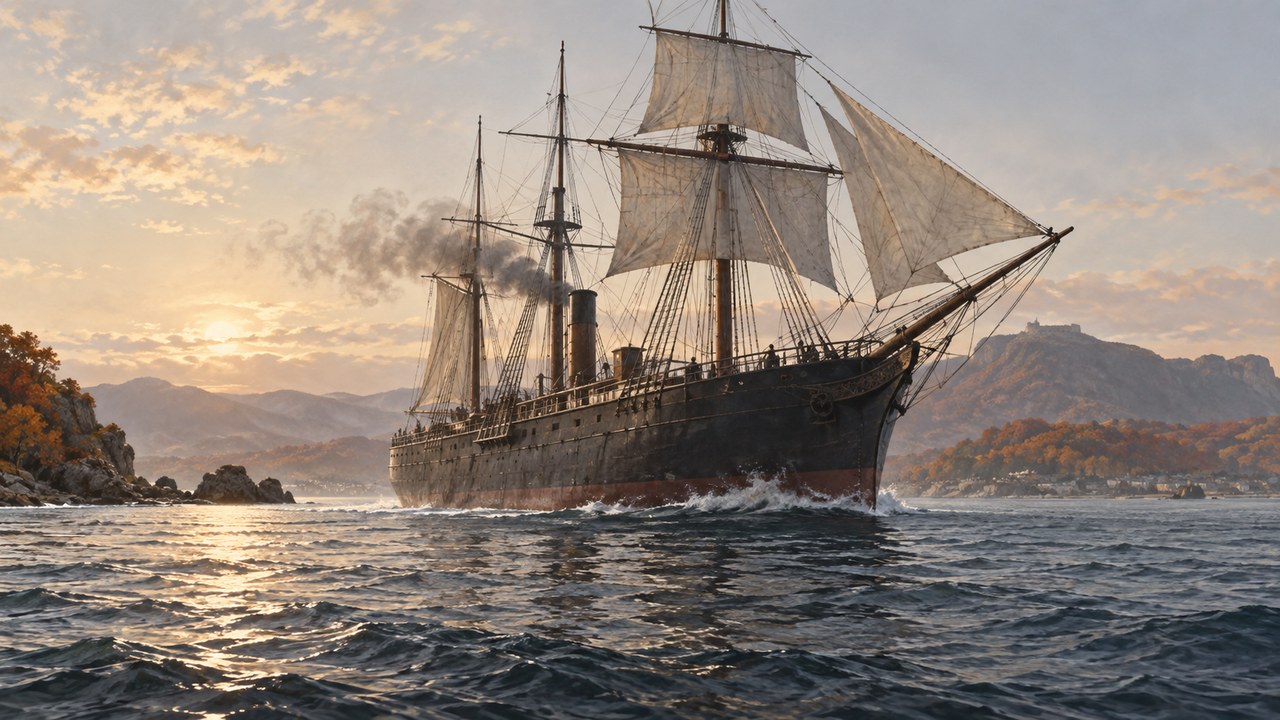
In 1868, the year that became Meiji 1, the handover of Edo Castle to the new government did not end the fighting. On the night of the nineteenth day of the eighth month, a fleet led by Enomoto Takeaki slipped away from the waters off Shinagawa and eventually sailed to Ezo, the northern island now called Hokkaido. Its last strongholds were the port of Hakodate and the fort of Goryokaku.
Why did the forces of the former shogunate choose the north? Two problems lay behind the choice: warships that their commanders refused to hand over to the new government, and the question of where the retainers of the Tokugawa house could go once the shogunate had collapsed. Before heading north, they had already sent the new government a statement proposing the development of Ezo.
This article follows the escape of the fleet, the decision taken near Sendai, the landing at Washinoki and the occupation of Goryokaku, the loss of the Kaiyo Maru, the officers' ballot and the notice to foreign consuls, the settlers sent to Muroran, the landing at Otobe and the defence of Futamata, the general assault of the eleventh day of the fifth month, the surrender of the fort, and what came afterwards.
Chapter 1
Warships that were never handed over
Enomoto Takeaki was born in 1836 in the Shitaya district of Edo. According to the National Archives of Japan, the shogunate sent him to the Netherlands in 1862, where he studied navigation and international law. After his return he became a leader of the shogunate navy, and when Edo Castle was surrendered in 1868 he argued for continuing the war and refused to give up the warships.
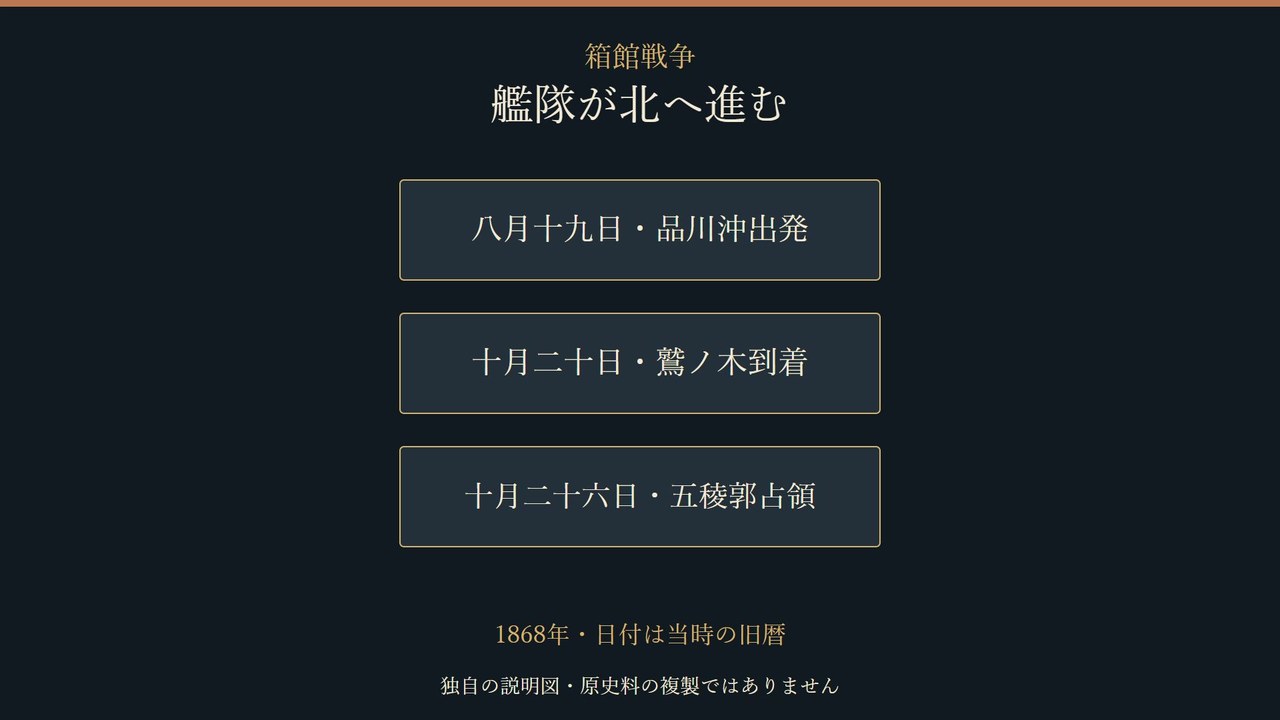
The municipal history of Hakodate records that at eleven o'clock on the night of the nineteenth day of the eighth month, eight ships, the Kaiyo, Kaiten, Banryu, Chiyodagata, Shinsoku, Chogei, Kanrin and Mikaho, left Shinagawa Bay. More than two thousand men were aboard, including Iba Hachiro of the Yugekitai unit and the French artillery captain Jules Brunet, who had left the French military mission to join them.
The voyage went badly from the start. Off Choshi the fleet ran into a typhoon. The Mikaho ran aground and was wrecked off the Boso Peninsula, and the Kanrin was captured by new-government forces at the port of Shimizu. The remaining ships reached Tona and Matsushima in Matsushima Bay, near Sendai, around the twenty-sixth day of the eighth month.
Chapter 2
The decision to go north
Before the escape, Enomoto had asked Katsu Kaishu and others to deliver a statement from the Tokugawa retainers to the new government. According to the municipal history, that statement included the development of Ezo. The north was being considered as land where the many retainers of the Tokugawa house, who had lost their place in the old order, might make a living.
The northern alliance of domains that Enomoto hoped to support, however, was collapsing. On the fifteenth day of the ninth month the Sendai domain announced its surrender, and Aizu, Shonai and Nanbu soon followed. Enomoto joined forces with army units under Otori Keisuke and Hijikata Toshizo and decided to go to Ezo, submitting a petition that asked for Ezo to be entrusted permanently to the Tokugawa house.
The fleet left Tona beach on the ninth day of the tenth month and called at Miyako for fuel and water. On the eighteenth day, eight ships, including the Kaiyo, Kaiten and Banryu, set out for Ezo with more than three thousand people aboard. At a council of war during the voyage, nine articles of military discipline were adopted, and it was agreed that force could be used if necessary to take control of Ezo.
Chapter 3
From Washinoki to Goryokaku
On the twentieth day of the tenth month, the fleet arrived at Washinoki, in what is now the town of Mori in Hokkaido, and the former-shogunate forces went ashore. Hakodate City treats this landing as the beginning of the Hakodate War. The troops marched toward Hakodate and defeated forces of the Hakodate prefectural government and the Matsumae domain in clashes at Toge-shita and the Kakkumi pass.
On the twenty-fifth day, Shimizudani Kinnaru, the governor of the Hakodate prefectural government, withdrew to Aomori. The next day the former-shogunate forces occupied Goryokaku, which had been left empty. The municipal history notes that the Kaiten and Banryu entered Hakodate harbour that day, and that on the first day of the eleventh month the flagship Kaiyo arrived and fired a twenty-one gun salute.
At the customs house in the port, earlier officials were summoned and reappointed, and ordinary business resumed on the second day of the eleventh month. The newcomers were not only fighting; they were also trying to take over the administration of Hakodate. Their army then advanced toward Matsumae and Esashi and brought the southern part of Ezo under its control.
Chapter 4
A fort that was also a government office
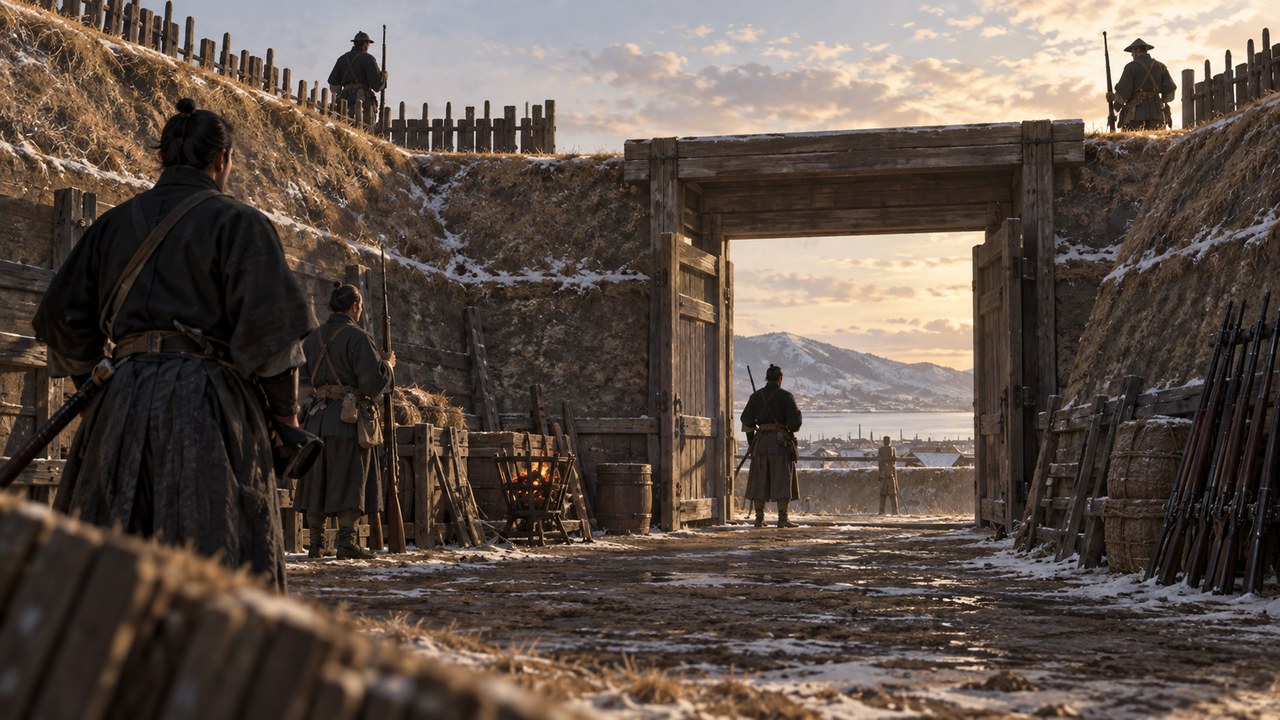
Goryokaku was not a fort that Enomoto and his men built for this war. According to the National Archives of Japan, the shogunate constructed it between 1857 and 1864 as a Western-style fortification, and it was designed by Takeda Ayasaburo, a scholar of Western learning. Its outline was planned to suit the artillery of the time.
It was a flat star-shaped fort with five projecting bastions intended as gun platforms, and inside it stood the office of the Hakodate magistrate. After the shogunate fell, the new Meiji government took it over and used it for the Hakodate court and then the Hakodate prefectural government. What the former-shogunate forces seized was therefore also the office from which the region was governed.
Seen only as a star-shaped outline on a map, Goryokaku can look like a castle built for a final battle. When attention turns to the administrative work carried out inside its walls, however, it becomes easier to understand why Enomoto chose it as his headquarters: holding it meant holding the seat of local government as well as a defensive position.
Chapter 5
Losing the flagship Kaiyo Maru
As the occupation of southern Ezo went on, the fleet lost its greatest warship, the Kaiyo Maru. Esashi Town explains that the ship was built in the Netherlands for the shogunate and completed in the ninth month of 1866. It was the core of the naval power that Enomoto had refused to give up when Edo Castle was surrendered.
On the fifteenth day of the eleventh month of Meiji 1, the Kaiyo Maru was supporting from the sea the army units under Hijikata Toshizo that had taken Matsumae and were heading for Esashi. Off Esashi it was caught in a blizzard, ran aground and sank. On land the forces were extending their control, while at sea they were losing their most important ship.
For a force that had come north at the head of a fleet, the loss of its flagship was a heavy blow. Underwater excavation of the wreck began in 1975, and 32,905 objects have been recovered. In April 1990 a full-size reconstruction of the ship was completed in Esashi, where it now serves as a museum about the vessel and its sinking.
Chapter 6
A ballot among officers
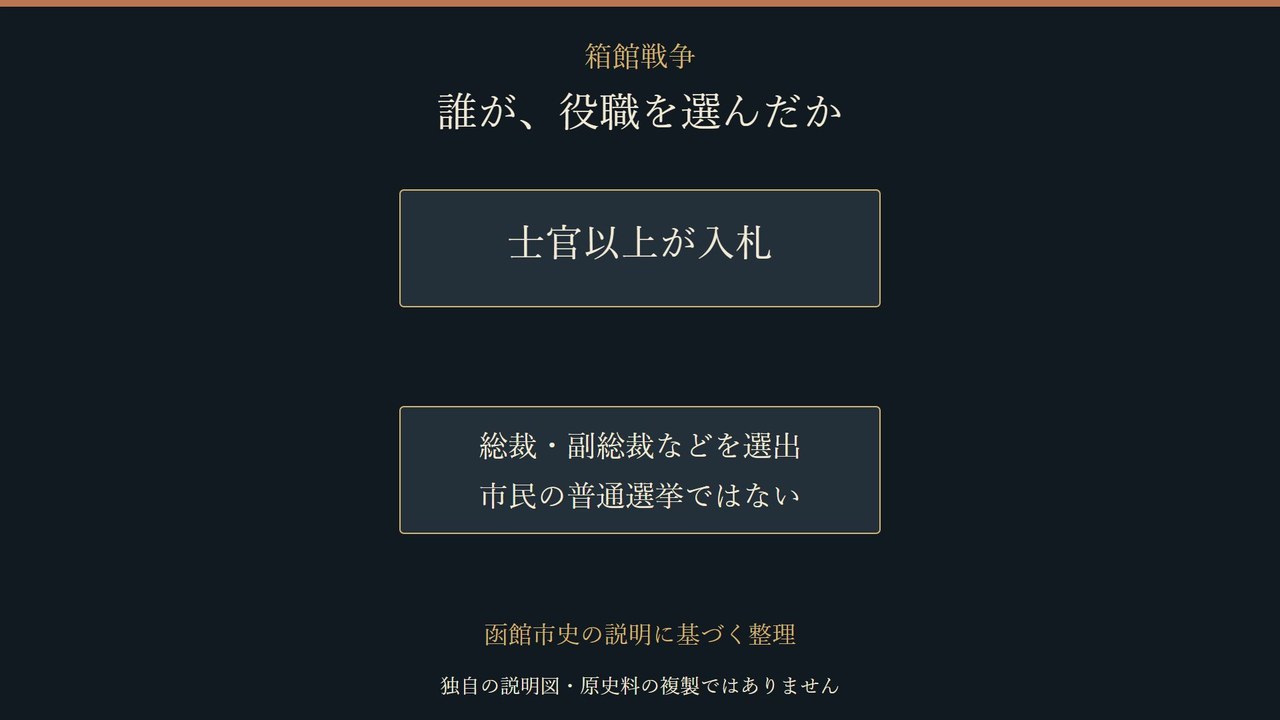
On the fourteenth day of the twelfth month, the former-shogunate forces informed the consuls of foreign countries that their officials would be chosen by ballot. According to the municipal history, the voters were officers of upper rank and above, a group that is estimated to have made up only about a third of the whole force that had come north.
The recorded vote counts show Enomoto Kamajiro, as Enomoto was then known, chosen as president with 155 points, Matsudaira Taro as vice-president with 126, Arai Ikunosuke as naval commissioner with 73, and Otori Keisuke as army commissioner with 89. The ballot turned a body of soldiers and sailors into an organization with named offices and lines of responsibility.
This administration is sometimes called the Ezo Republic, but the municipal history states that the ballot was not a public election that could be called republican, even among the troops. The people of Hakodate did not vote. Looking closely at who chose, and what they chose, is the key to understanding what this organization was and what it was not.
Chapter 7
A notice to the consuls and a 101-gun salute
The municipal history reproduces the content of the notice sent to the foreign consuls. It reported that military and administrative problems in Hakodate, the Matsumae region and elsewhere had been settled, and that Tokugawa governors would be appointed in various places under a provisional administration. It was signed by Matsudaira Taro as army commander and Enomoto Kamajiro as admiral.
The notice declared that the whole of Ezo had in effect been occupied and announced that a salute of 101 guns would be fired from the Benten battery. On the fifteenth day of the twelfth month a ceremony was held, guns were fired from the Kaiten and the battery, and a banquet took place at Goryokaku. Hakodate City dates the founding of the provisional government under President Enomoto to this day.
This, however, was the administration's own account of itself, addressed to outsiders. The claim of occupation in the notice cannot be read as evidence that the Japanese and Ainu people living in Ezo had consented to it. Informing the consuls was also something quite different from being formally recognized as an independent state by any foreign government.
Chapter 8
Settlers sent to Muroran
After losing the flagship Kaiyo, the navy appointed the ship's captain, Sawa Tarozaemon, as commissioner of land development and made members of the Kaiyo's crew into a development corps. Sailors who no longer had a ship were redirected to the work of opening up land, in line with the plan for Tokugawa retainers that had been announced before the voyage north.
According to the municipal history, on the fifteenth day of the first month of Meiji 2, more than two hundred people sailed to Muroran, then called Mororan, aboard the Takao Maru, and made it their base for development. The move shows that the reasons for coming north were not limited to keeping warships and continuing the fight against the new government.
The municipal history also notes, though, that because fighting with the new-government forces soon began, no concrete achievements of the development corps can be confirmed. Announcing a plan, sending people to carry it out and leaving lasting results were three different things. The corps at Muroran would surrender there on the eighteenth day of the fifth month.
Chapter 9
The landing at Otobe and the defence of Futamata
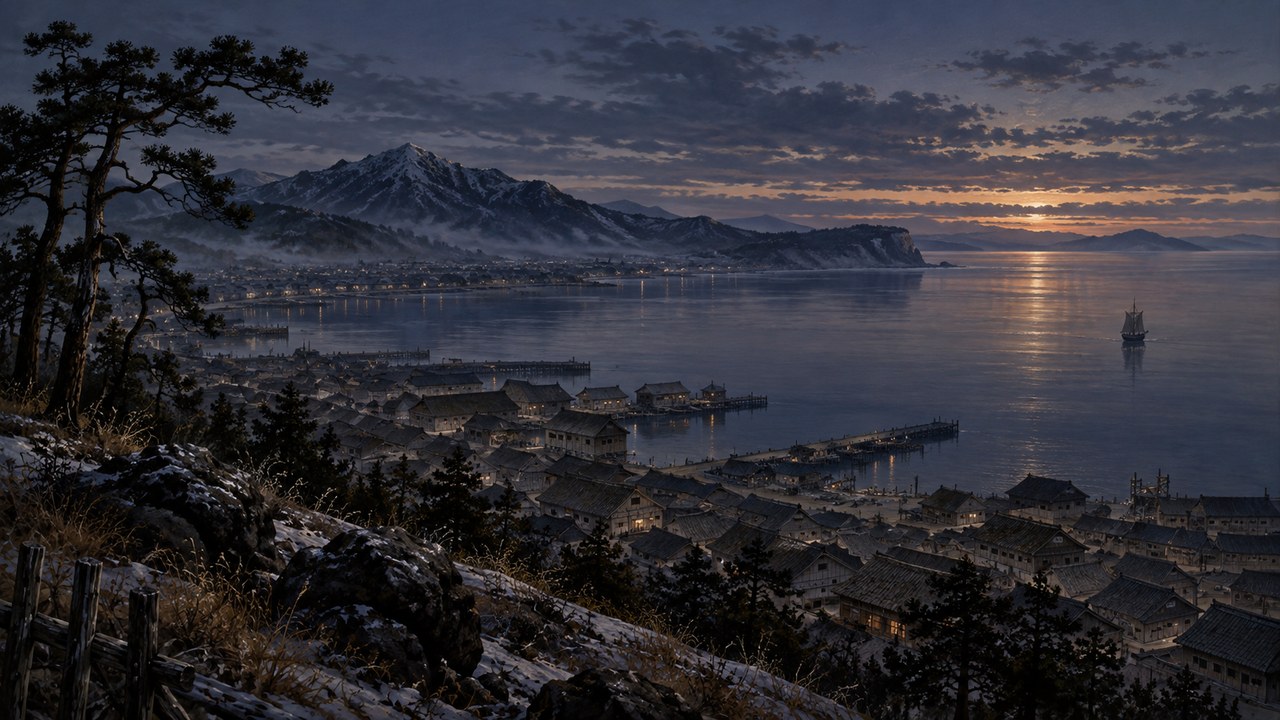
On the ninth day of the fourth month of Meiji 2, new-government forces landed at Otobe on the west coast and advanced on Hakodate along three routes. According to the Hakodate Magistrate's Office, by the end of the fourth month they had taken control of most of the southern part of the island, pressing the former-shogunate forces back toward Hakodate.
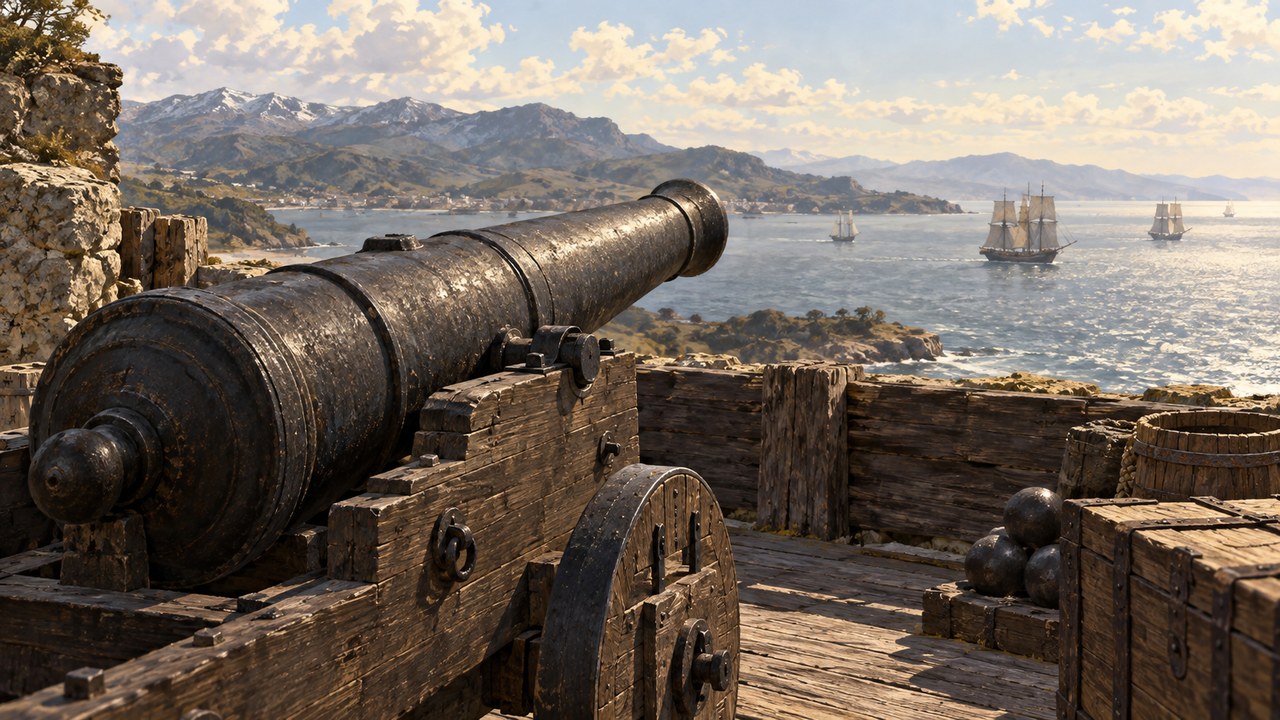
The position that held out longest was Futamata. The municipal history records that Hijikata Toshizo reached Futamata on the tenth day of the fourth month with infantry units and set up his headquarters on Daibayama. From about three in the afternoon of the thirteenth until about seven the next morning, firing went on for sixteen hours, and his side is said to have used more than 35,000 rounds.
On the twenty-third the new-government forces returned in greater numbers, but they still could not break through at Daibayama. On the twenty-ninth, however, Hijikata learned that the garrison at Yafurai had been badly defeated. Fearing that he would be attacked from both sides, he abandoned the position and fell back to Goryokaku. Success on one front could not change the course of the campaign as a whole.
Chapter 10
The general assault of the eleventh day
On the eleventh day of the fifth month, the new-government forces launched a general assault on Hakodate. Hakodate City records that the Benten battery was almost destroyed and that Shiryokaku, a small fort hastily built to protect the Toshogu shrine, fell in about half a day. In the harbour the Banryu sank the government warship Choyo, but the Kaiten was defeated and the former-shogunate fleet was lost.
Hijikata Toshizo was killed in the fighting that day. Hakodate City places his death near the Ikoku bridge by the Ipponki checkpoint, close to today's Jujigai tram stop. The Hakodate Magistrate's Office notes that the cannon at Goryokaku had too short a range to reach the harbour, so the fort could not support the ships and batteries by the shore.
On the twelfth day, a shell from the government warship Kotetsu struck the drum tower at Goryokaku, killing or wounding several people. On the fifteenth the Benten battery surrendered, and on the sixteenth Nakajima Saburosuke and his sons were among those killed at the Chiyogaoka camp. Having lost the harbour and the surrounding positions, Goryokaku was left isolated.
Chapter 11
From negotiation to surrender
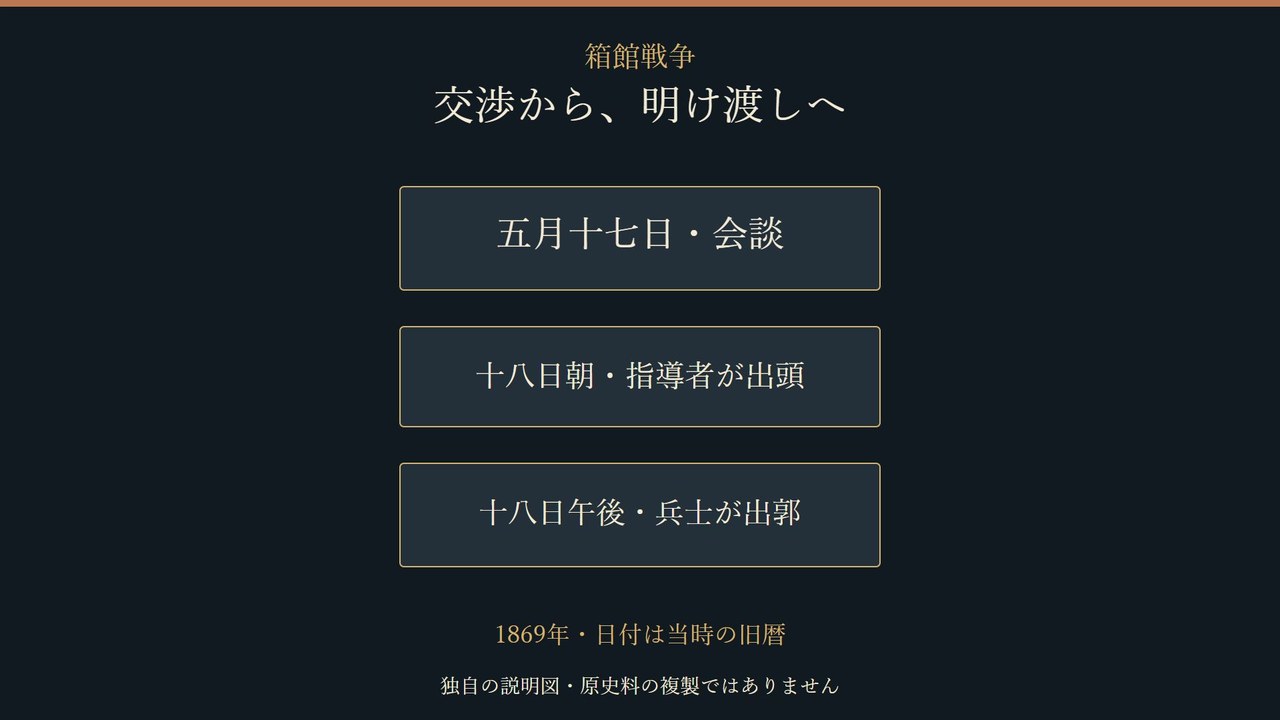
Inside the fort, the municipal history records, Enomoto tried to take responsibility by committing ritual suicide but was stopped by those around him. After discussion it was decided to surrender. On the morning of the seventeenth day of the fifth month, Enomoto and Matsudaira went to a meeting place at Kameda to see staff officers of the new government, admitted their own guilt and asked for leniency for everyone else.
Terms submitted that night stated that Enomoto, Matsudaira, Arai and Otori would surrender at the government lines between six and seven on the morning of the eighteenth, and that the soldiers would leave the fort between one and two in the afternoon. On the eighteenth more than a thousand men were escorted from the fort to Hakodate and held at temples including Shomyoji and Jitsugyoji.
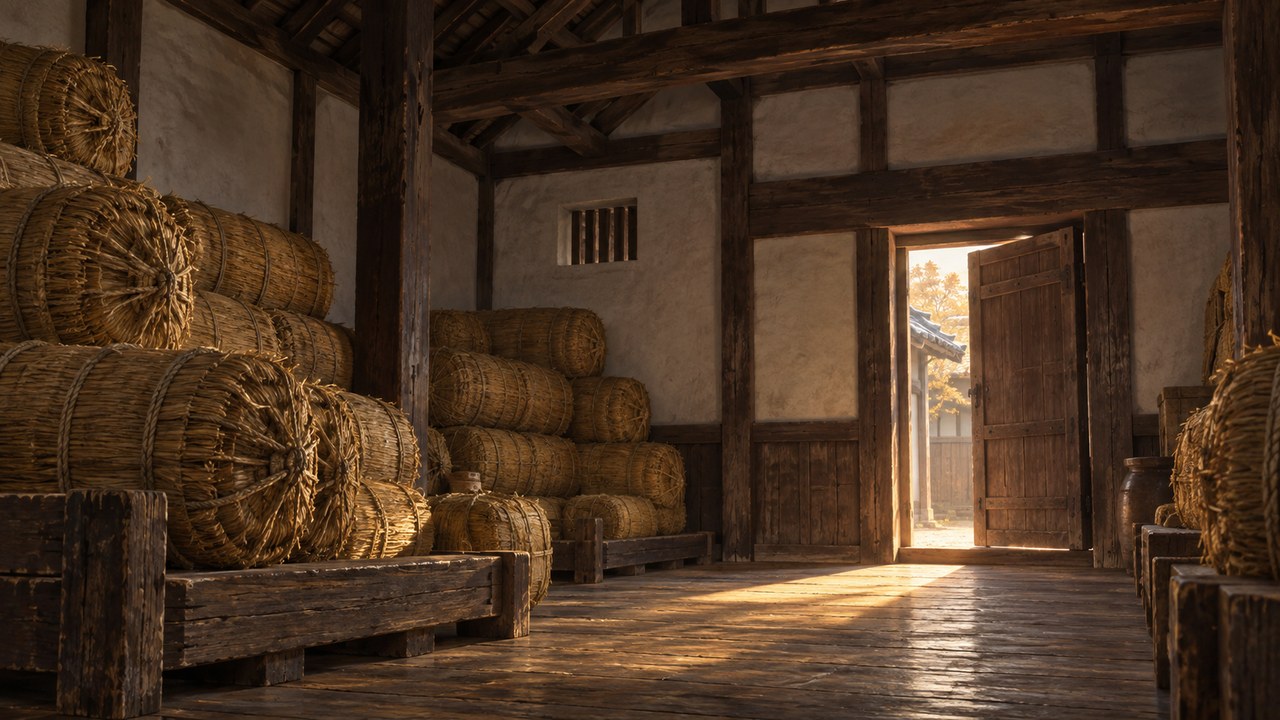
The same day weapons and provisions, including more than five hundred bales of rice, were handed over, and the surrender ceremony was completed. Hakodate City states that the Hakodate War, which had lasted about seven months, ended in this way. The war did not stop with a final shot; it ended through negotiation and the step-by-step transfer of people, weapons and supplies.
Conclusion
Goryokaku after the war, and the people who remained
After the war Goryokaku passed to the Ministry of Military Affairs, and in 1871 most of the magistrate's buildings were dismantled. It later became an army drill ground, opened as a public park in 1914 and was designated a Special Historic Site in 1952. The magistrate's office was reconstructed in 2010, and the only building surviving from the time of construction is a provisions storehouse.
Enomoto was imprisoned but released in 1872, and he went on to serve the Hokkaido Development Commission. He later held cabinet posts as minister of communications, education and foreign affairs. In 1875 the Hekketsu-hi memorial, honouring about eight hundred of the war dead including Hijikata Toshizo and Nakajima Saburosuke and his sons, was erected at the foot of Mount Hakodate with help from Otori Keisuke and Enomoto.
The move north cannot be summed up as a simple flight, nor as the realization of an ideal. After the shogunate ended, someone had to decide what would become of the remaining warships and of the people who had served it. The Hakodate War was the military and political answer that a limited group of men attempted to give to that question.
How to read this work
History, interpretation, and reconstruction
Reading the move north through the warships that were never handed over and the plan to develop Ezo for Tokugawa retainers, without equating an officers' ballot or a notice to consuls with residents' consent or recognition as an independent state.
This work is grounded in published sources and historical research. Interior thoughts, dialogue, and some visual details are cinematic reconstructions. Where historians disagree, the article presents the point as debated rather than settled fact.
Timeline
The story in time
-
The shogunate builds Goryokaku, with the office of the Hakodate magistrate inside.
Sources: s03 -
The Kaiyo Maru is completed in the Netherlands.
Sources: s06 -
The Sendai domain announces its surrender, and the northern alliance of domains begins to collapse.
Sources: s08 -
Eight ships carrying more than three thousand people set out for Ezo.
Sources: s08 -
The Kaiyo Maru runs aground and sinks off Esashi in a blizzard.
Sources: s06 -
More than two hundred members of the development corps sail to Muroran.
Sources: s04 -
New-government forces land at Otobe.
Sources: s11 -
Sixteen hours of firing at Futamata.
Sources: s10 -
The Hekketsu-hi memorial is erected at the foot of Mount Hakodate.
Sources: s12
People & terms
A guide for new readers
Key figures
- Enomoto Takeaki
- Former-shogunate naval officer who led the fleet north and served as president of the provisional administration in Ezo.
- Matsudaira Taro
- Vice-president; co-signed the notice to the consuls and went with Enomoto to the meeting at Kameda.
- Otori Keisuke
- Army commissioner; one of the four leaders who surrendered; later helped erect the Hekketsu-hi.
- Hijikata Toshizo
- Former vice-commander of the Shinsengumi; held Futamata and was killed in Hakodate on the eleventh day of the fifth month of 1869.
- Arai Ikunosuke
- Naval commissioner; one of the four leaders who surrendered.
- Sawa Tarozaemon
- Captain of the Kaiyo who became commissioner of land development and went to Muroran.
- Shimizudani Kinnaru
- Governor of the Hakodate prefectural government, who withdrew to Aomori in the tenth month of 1868.
- Nakajima Saburosuke
- Killed with his sons at the Chiyogaoka camp on the sixteenth day of the fifth month of 1869.
Glossary
- Boshin War 戊辰戦争
- The conflicts beginning in 1868 and continuing to the surrender at Hakodate in 1869.
- Ezo 蝦夷
- Historical name used for the campaign's northern setting in what is now Hokkaido, already inhabited by communities including Ainu people.
- Goryokaku 五稜郭
- Five-bastioned fort built by the shogunate in 1857-64, containing the Hakodate magistracy.
- Bakufu 幕府
- Warrior government, translated as shogunate.
- Hakodate magistracy 箱館奉行所
- Administrative office associated with government in Ezo, the open port and coastal defense.
- Ezo Republic 蝦夷共和国
- Familiar later label for the provisional administration. Its officers' election was not universal civilian suffrage.
- Kaiyomaru 開陽丸
- Dutch-built flagship of Enomoto's fleet, lost off Esashi in 1868.
- Meiji 明治
- Japanese era name; Meiji 1 corresponds to 1868.
- Honshu 本州
- The main Japanese island, to which defeated leaders were later taken.
- Kaiyo Maru 開陽丸
- The Dutch-built flagship of the shogunate navy, lost off Esashi in the eleventh month of 1868.
- Futamata 二股口
- A pass on the route to Hakodate where Hijikata Toshizo held off government forces in the fourth month of 1869.
- Hekketsu-hi 碧血碑
- A memorial erected in 1875 at the foot of Mount Hakodate for the former-shogunate war dead.
Sources & method
How this article was built
This English edition follows the revised Japanese article scene by scene and keeps its twelve sources, their order and its fifteen timeline entries. It draws on Hakodate City and four sections of its municipal history, the Hakodate Magistrate's Office, the National Archives of Japan, Esashi Town and Nippon Tabi Magazine. Titles given in English are editorial translations.
Month and day references follow the Japanese calendar then in use. Approximate figures such as more than two thousand or more than a thousand are kept as the sources give them, and the estimate that voters made up about a third of the force is presented as an estimate.
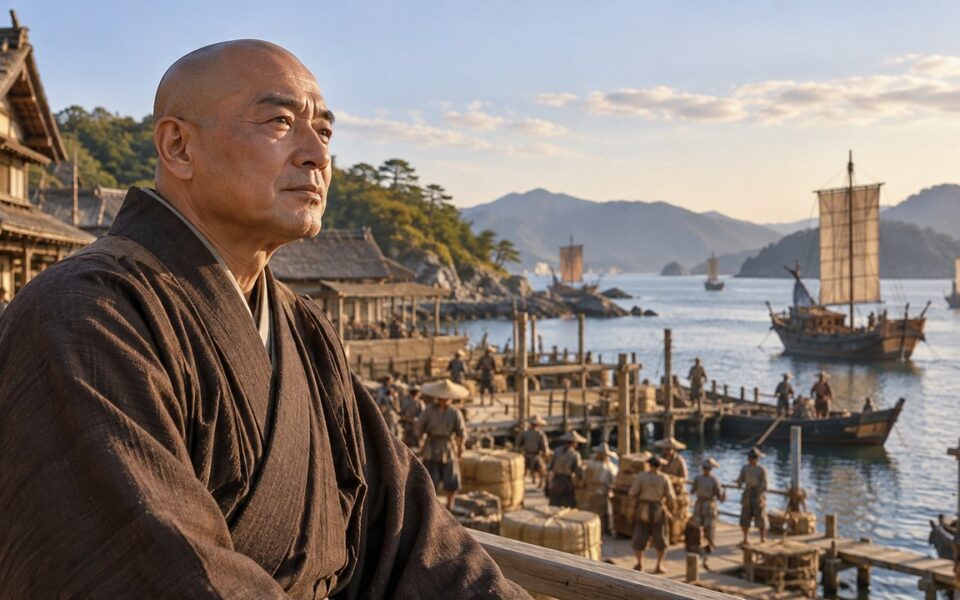
The images are AI-generated conceptual illustrations and diagrams, not historical photographs or exact reconstructions of named ships, people or places. No invented speech, inner motive or casualty figure fills gaps in the evidence.
Sources
References and further reading
- History of Goryokaku: From the Hakodate War to the Present 五稜郭の歴史(箱館戦争から現在) Title translated editorially for reader convenience. Hakodate City 函館市 Used for the voyage, the landing at Washinoki, the occupation of Goryokaku, the founding of the provisional government, the landing of the fourth month, the assault of the eleventh day of the fifth month and Hijikata's death, the surrender, and the later history of the site. Municipal text summarized under CC BY 2.1 Japan; city photographs and maps are not reused. Accessed 2026-11-18
- Documents on Enomoto Kamajiro's Escape with the Fleet and the Punishment of Brunet and Other Frenchmen 榎本釜次郎脱艦一件書並仏人ブリユウネ等所罰方 Title translated editorially for reader convenience. National Archives of Japan 国立公文書館 Used for Enomoto's birth, study in the Netherlands, refusal to surrender the warships, the departure of eight ships on the night of the nineteenth day of the eighth month of 1868, his imprisonment and release in 1872, and his later posts. Accessed 2026-11-18
- Plan of Goryokaku, Hakodate 函館五稜郭の図 Title translated editorially for reader convenience. National Archives of Japan 国立公文書館 Used for the construction of Goryokaku in 1857-1864, its designer, its role as an office of government and its later history. Accessed 2026-11-18
- Buildings and Remains inside Goryokaku 五稜郭内の建物と遺構 Title translated editorially for reader convenience. Hakodate City 函館市 Used for the reconstruction of the magistrate's office in 2010 and the surviving provisions storehouse. Municipal text summarized under CC BY 2.1 Japan. Accessed 2026-11-18
- Kaiyo Maru Memorial Museum 開陽丸記念館 Title translated editorially for reader convenience. Esashi Town 江差町 Used for the ship's completion in the Netherlands in 1866, its sinking off Esashi, the excavation from 1975 and the reconstruction of 1990. Accessed 2026-11-18
- Hakodate Municipal History, General Narrative 2: The Election of Officials and the Ceremony Declaring the Occupation of Ezo 函館市史 通説編2 役員選挙と蝦夷地領有宣言式 Title translated editorially for reader convenience. Hakodate City 函館市 Used for the ballot among upper-rank officers and the vote counts, the notice to the consuls, the 101-gun salute, and the development corps sent to Muroran. Accessed 2026-11-18
- Hakodate Municipal History, General Narrative 2: The Surrender of Goryokaku 函館市史 通説編2 五稜郭開城 Title translated editorially for reader convenience. Hakodate City 函館市 Used for the attempted suicide, the meeting at Kameda, the terms of surrender, the escort of more than a thousand men, the transfer of weapons and rice, and the surrender at Muroran. Accessed 2026-11-18
- Hakodate Municipal History, General Narrative 2: Heading North 函館市史 通説編2 北へ向かう Title translated editorially for reader convenience. Hakodate City 函館市 Used for the escape of eight ships and more than two thousand men, the loss of the Mikaho and Kanrin, the statement on developing Ezo, the collapse of the northern alliance, the departure of the eighteenth day of the tenth month and the nine articles of discipline. Accessed 2026-11-18
- Hakodate Municipal History, General Narrative 2: The Occupation of Goryokaku 函館市史 通説編2 五稜郭占拠 Title translated editorially for reader convenience. Hakodate City 函館市 Used for the occupation of the twenty-sixth day of the tenth month, the arrival of the Kaiten, Banryu and Kaiyo, the twenty-one gun salute and the reopening of the customs house. Accessed 2026-11-18
- Hakodate Municipal History, General Narrative 2: The New-Government Army Closes in on Hakodate 函館市史 通説編2 新政府軍箱館へ迫る Title translated editorially for reader convenience. Hakodate City 函館市 Used for the defence of Futamata: Hijikata's position on Daibayama, sixteen hours of firing and more than 35,000 rounds, and the withdrawal on the twenty-ninth day of the fourth month. Accessed 2026-11-18
- Seven Months of the Hakodate War 箱館戦争の7か月 Title translated editorially for reader convenience. Hakodate Magistrate's Office (operated under a Hakodate City management contract) 函館市指定管理・箱館奉行所 Used for the clashes at Toge-shita and Kakkumi, the governor's withdrawal, the landing at Otobe and the control of the south by the end of the fourth month, the range of the Goryokaku cannon and the events of the twelfth to eighteenth days of the fifth month. Accessed 2026-11-18
- Hekketsu-hi Memorial 碧血碑 Title translated editorially for reader convenience. Nippon Tabi Magazine ニッポン旅マガジン Used for the erection of the memorial in 1875, the roughly eight hundred dead it honours, the help of Otori Keisuke and Enomoto Takeaki, and the origin of its name. Accessed 2026-11-18
Continue reading
More stories from Shigeki
Shigeki English
Taira no Kiyomori: From the First Warrior Noble to a Capital by the Sea
Born as Tadamori’s heir, he rose through the Hogen and Heiji conflicts to grand minister of state, then turned from Fukuhara to Itsukushima, Owada no Tomari and Song ships, before the transfer and return of the capital, his death and the end of his family.
- When 1118–1181, from his birth to his death, with the defeat at Dan-no-ura in 1185 and the statue of 1967
- Where Kyoto, Fukuhara in present-day Kobe, Owada no Tomari, Itsukushima, the Ondo Strait and Dan-no-ura
Shigeki English
Oishi Riku: Beyond the End of Chushingura, the Family That Lived On
Born in Toyooka, a wife in Ako, then Yamashina, Toyooka again and Hiroshima: a spring homecoming and an autumn divorce letter, the deaths of husband and son, further losses, and a son’s appointment in Hiroshima.
- When 1669–1736, with the events of 1702 kept in their separate seasons, and later memory from 1748 to 2014
- Where Toyooka, Ako, Yamashina and Hiroshima