
SHIGEKI ENGLISH STORYEN
Japanese history in English
Warring States Hakata: Rebuilding a Burned Merchant City
From the scorched earth of 1580 to the prohibition of 1586, the Taiko town plan of 1587, a letter of 1588, the burdens of the Korean campaigns, the nagare and the building of Fukuoka Castle.
Hakata, a trading port in northern Kyushu, was reduced to scorched earth in the wars of the Warring States period. This article follows the struggle among the Otomo, Shimazu and Ryuzoji and the attack of 1580, the prohibition of 1586, the conquest of Kyushu and the Taiko town plan of 1587, the roles of the merchants Shimai Soshitsu and Kamiya Sotan, Kobayakawa Takakage's letter of 1588, the burdens of the Korean campaigns, the nagare, and the twin towns of Hakata and Fukuoka.
At a glance
Before you enter the story
- When
- From the damage of 1559 and the burning of 1580, through the prohibition of 1586, the conquest and town plan of 1587 and the letter of 1588, to the Korean campaigns from 1592, the building of Fukuoka Castle in 1601-1607 and the town of 1690.
- Where
- Hakata's port and merchant town in northern Kyushu, Osaka Castle, Hakozaki, the Kobayakawa base at Najima, Nagoya in Hizen, and the neighbouring castle town of Fukuoka.
- Key figures
- Toyotomi Hideyoshi, Kuroda Yoshitaka, Kobayakawa Takakage, Shimai Soshitsu, Kamiya Sotan, Oga Soku, Otomo Sorin
- What was at stake
- How a burned trading town was rebuilt through orders from above and the work of merchants and townspeople, and what new burdens came with recovery.
Why this story matters
The larger history behind the turning point
Hakata's recovery is often told as the story of one ruler's plan. Following the burning, the protection orders, the plan, the merchants' work and the later wartime demands in sequence shows how many hands and how much time rebuilding a town required.
The sources also differ in useful ways, on Kamiya Sotan's birth year and on the number of nagare at different times. Keeping those differences shows which parts of the story are firmly documented and which depend on the source consulted.
Historical context
What an international reader needs to know
Town planning and commercial recovery
Machiwari here means laying out streets and plots. The English phrase town plan describes that spatial work without implying that a fully working town appeared the moment the order was issued. People still needed houses, storehouses, routes and working relationships with those in power.
Protection orders, merchant privileges, requests for cooperation and wartime demands show different kinds of relationship between the town and its rulers. None of them alone proves the consent of every inhabitant or the absence of later burdens.
Several places and several dates
An unrealised castle plan for Hakata, the Kobayakawa base at Najima, Nagoya Castle on the coast of Hizen and the later Fukuoka Castle are four different things. Keeping them apart avoids drawing a single imagined castle into the story.
Likewise, the Taiko town plan of 1587, the letter of 1588, the campaign orders from 1592, the nagare described for the Edo period and the figures for 1690 belong to different moments and are kept in order.
Watch the film
See the story in motion
The film currently uses Japanese audio. This English article provides the context and source trail; it does not imply that an English subtitle track is available.
Opening
Who rebuilt the burned merchant city?
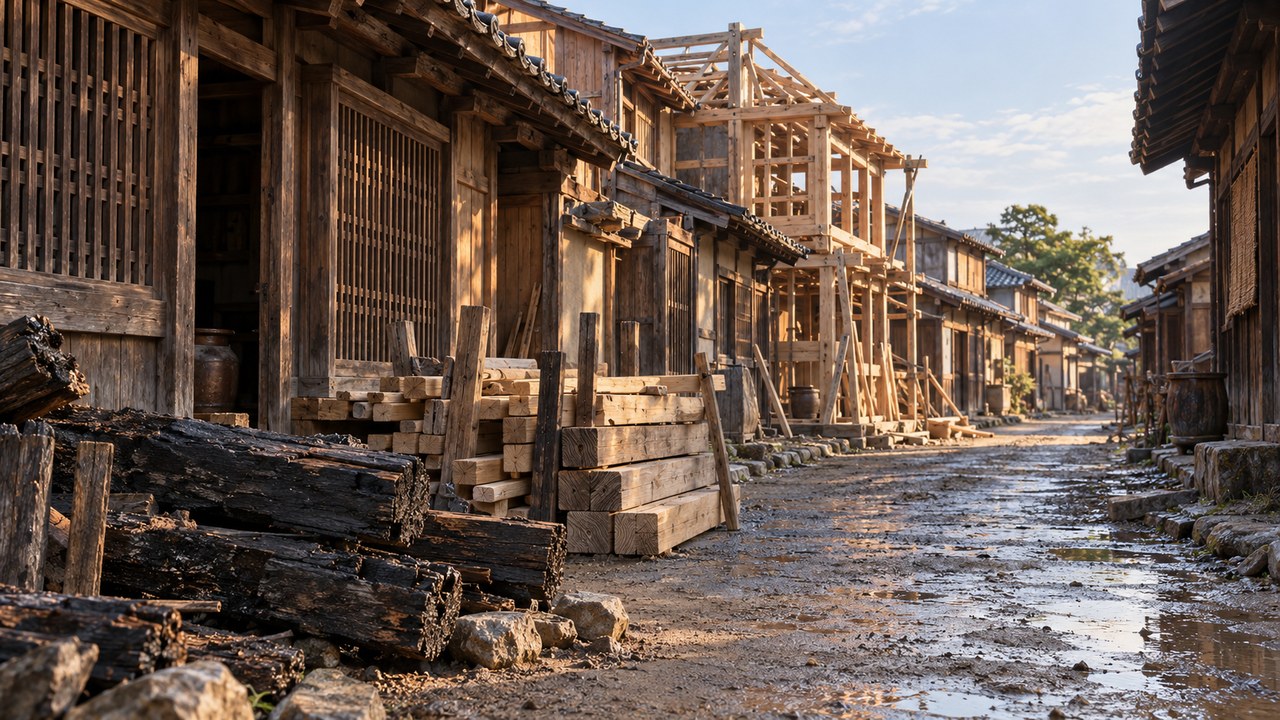
Hakata, the port where people and goods from across the sea came together, stood in the middle of the struggles for northern Kyushu during the Warring States period. In 1580, the eighth year of Tensho, the town was attacked and reduced to scorched earth, according to the Fukuoka City Museum.
In 1587 the same town began to recover under a town plan ordered by Toyotomi Hideyoshi. Japanese dictionaries describe this plan as the origin of the present Hakata district. Yet a single order did not bring daily life back overnight, and the people who used the streets and storehouses still had to return and rebuild.
This article follows the trading and self-governing town, the wars of Kyushu and the disaster of 1580, the prohibition of 1586, two great merchants, the plan of 1587, a letter of the following year, the burdens of the invasions of Korea, the neighbourhood units called nagare, and finally the building of Fukuoka Castle.
Chapter 1
A trading port and a self-governing town
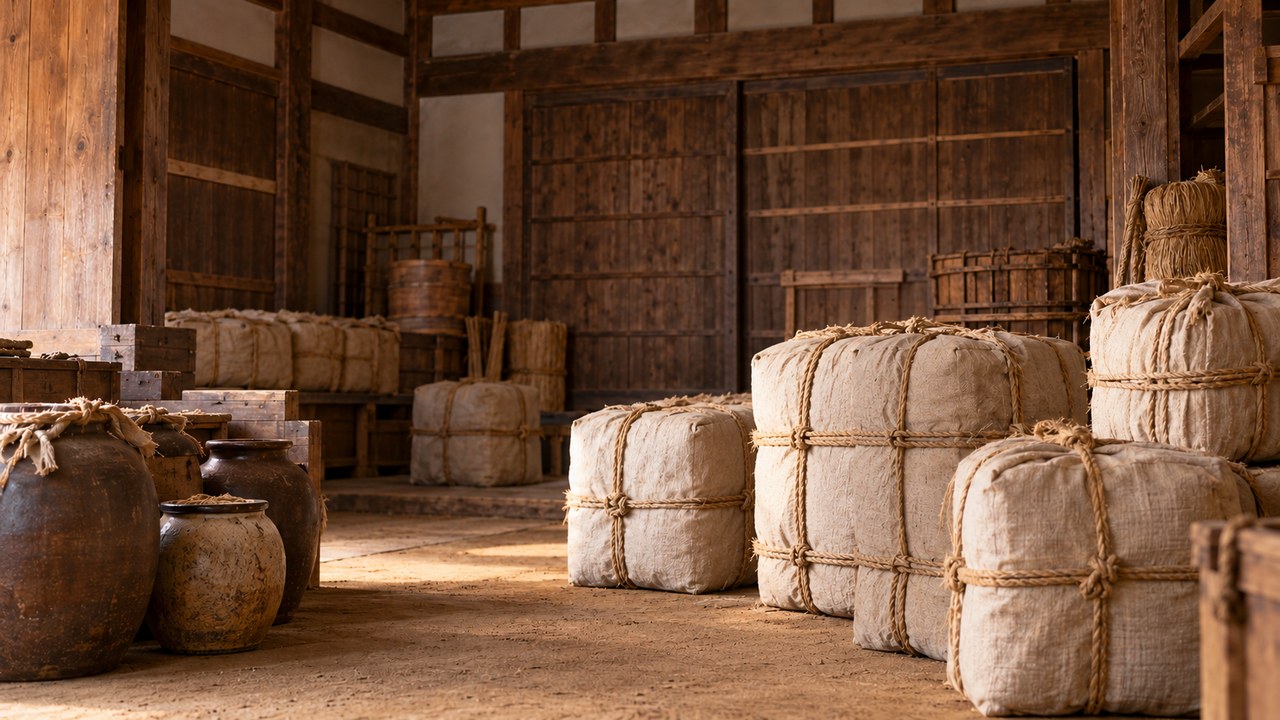
The history of Hakata Port published by the Fukuoka City Port and Airport Bureau records that commerce and crafts developed in Hakata during the Warring States period and that trade with Ming China and other countries flourished. In the sixteenth century, wealthy merchants later called the Three Heroes of Hakata were active in the town.
The town was also governed in a distinctive way. The Obunsha dictionary of Japanese history explains that in the Warring States period Hakata was run by twelve elders known as nengyoji. The Heibonsha World Encyclopedia adds that after the fall of the Ouchi family the town came under the Otomo and had a self-governing structure divided into eastern and western parts.
A prosperous harbour, however, was not the same as a safe town. The more wealth gathered in a place, the harder it was for that place to stay outside the contests over who would rule it, and Hakata was soon pulled into those contests. Its wealth, its ships and its warehouses made it a prize that every rising power in northern Kyushu wished to hold.
Chapter 2
Three rivals in Kyushu, and the ruin of 1580
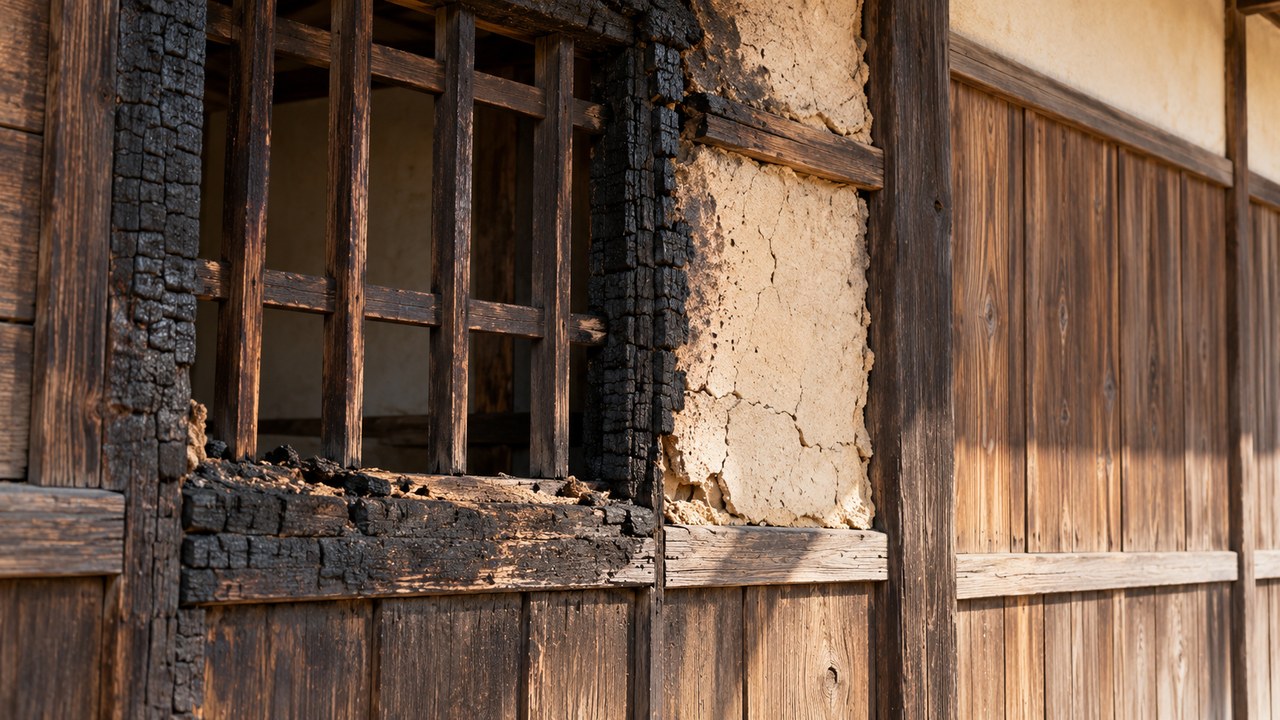
The Heibonsha World Encyclopedia states that Hakata suffered devastating blows from the rebellion of the Chikushi family in 1559, the second year of Eiroku, and from the invasion of the Ryuzoji of Hizen in 1580. The fires of war came to the town more than once, and they cannot be reduced to a single day.
According to the Fukuoka City Museum, the Otomo were defeated by the Shimazu at the battle of Mimikawa in Hyuga at the end of 1578, and Kyushu became a three-way struggle among the Otomo, the Shimazu and the Ryuzoji. Ryuzoji Takanobu pushed into Chikuzen, and in 1580 Hakata itself was attacked and turned to scorched earth.
The port history adds that the war left Hakata in ashes and that many of its people scattered to the surrounding areas. These explanations do not tell us who burned each house or exactly how far the damage reached, and this article does not invent those details or a count of casualties.
Chapter 3
1586: a prohibition to protect the town
In the third month of 1584 Ryuzoji Takanobu was defeated and killed at the battle of Okitanawate in Hizen by the allied forces of the Shimazu and Arima. After that, Shimazu power reached into northern Kyushu. In the third month of 1586 Otomo Sorin visited Hideyoshi at Osaka Castle and asked for an army of relief.
In the seventh month of the same year the Shimazu took the castles of Homan and Iwaya, and at Iwaya the commander Takahashi Joun and the whole garrison died fighting. In the eighth month Hideyoshi sent a large army to Kyushu with Kuroda Yoshitaka as its commissioner of military affairs, and the Shimazu forces began to withdraw.
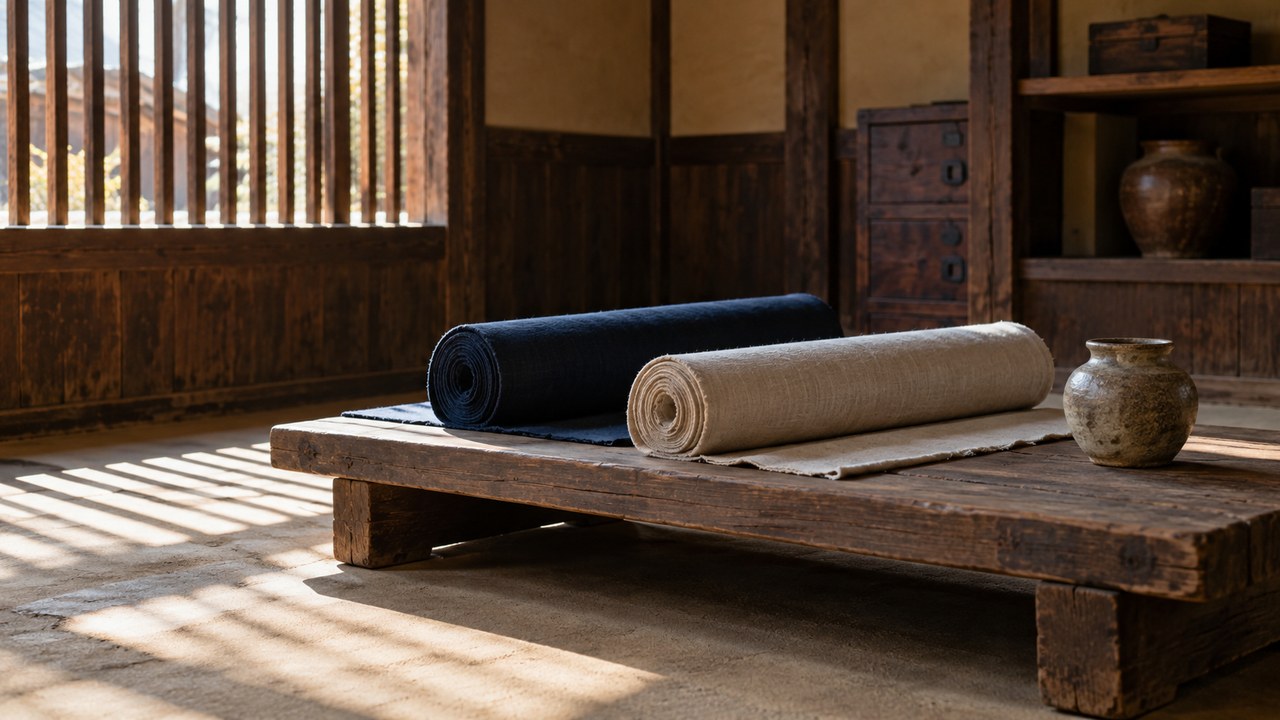
In this period Hideyoshi took up the protection and recovery of Hakata, which the wars had left in ruins. Kuroda Yoshitaka and Kobayakawa Takakage posted prohibitions in Hakata that forbade looting and violence by the Toyotomi troops. Before any town plan, there was first an order to protect the town.
Chapter 4
Soshitsu and Sotan, two great merchants
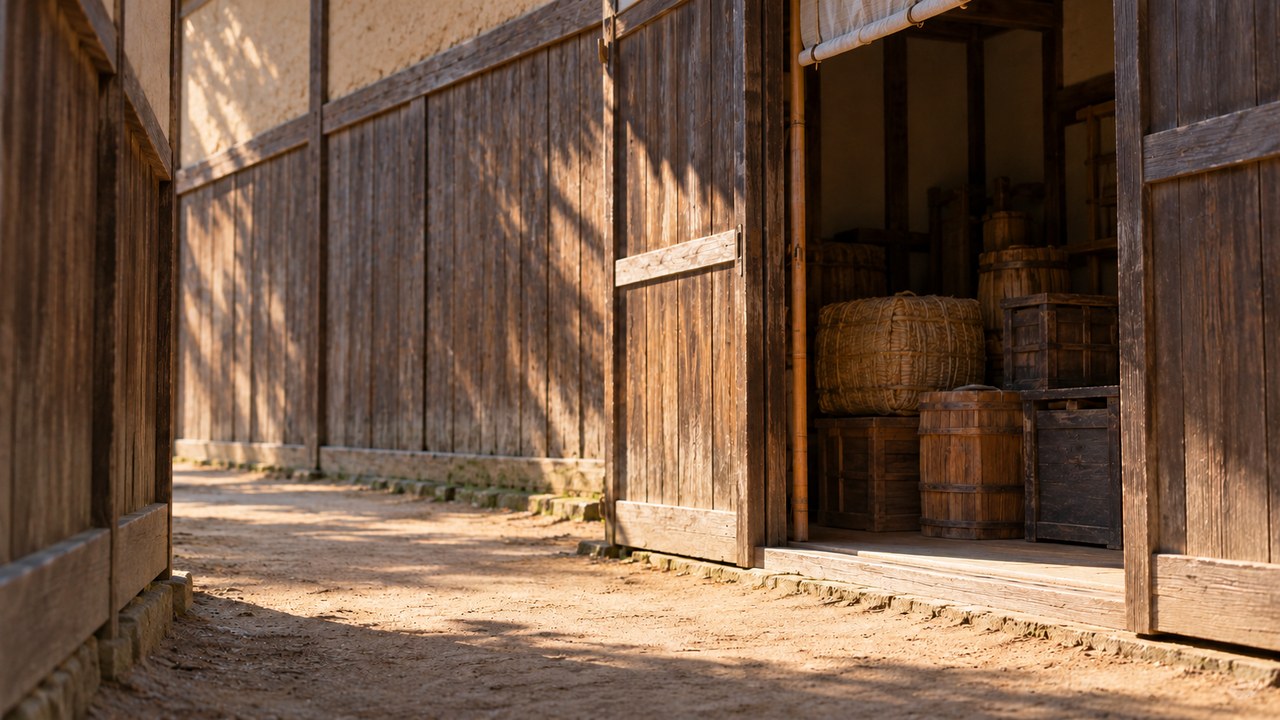
Shimai Soshitsu was a wealthy Hakata merchant who used the name Soshitsu written with different characters before 1587. The Fukuoka City Museum notes that he appears in documents from the early Tensho years and that Otomo Sorin granted him free passage and exemption from taxes. He dealt in aloeswood, gold brocade and Korean tea bowls, and took part in trade with Ming China and Korea.
Soshitsu was also tied to warlords through the tea ceremony. A letter dated the nineteenth day of the first month of 1582 tells him that Oda Nobunaga would hold a tea gathering for him in Kyoto, and that gathering was planned for the first day of the sixth month at Honnoji in Kyoto, the temple where Nobunaga was attacked the next morning.
Kamiya Sotan is described as a grandson of Jutei, known for developing the Iwami silver mine. His birth year is given as either 1551 or 1553. The Yamakawa concise dictionary of Japanese history records that he went up to Kyoto in the eleventh month of 1586 and was invited to Hideyoshi's great tea gathering at Osaka Castle on the third day of the first month of 1587.
Chapter 5
1587: the conquest of Kyushu and a castle never built
In the third month of 1587 Hideyoshi took the field himself and marched south toward Satsuma, and in the fifth month Shimazu Yoshihisa surrendered. In the sixth month the provinces of Kyushu were redistributed at Hakozaki, and Kobayakawa Takakage received Chikuzen. Takakage later built a castle at Najima, facing Hakata Bay, and made it his base.
A column by the Fukuoka City Museum's City History Editorial Office introduces a vermilion-seal order of the same year in which Hideyoshi told Kasuya Takenori to carry out castle construction in Hakata. The aim is thought to have been both the recovery of Hakata and its use as a base for the planned invasion of Korea.
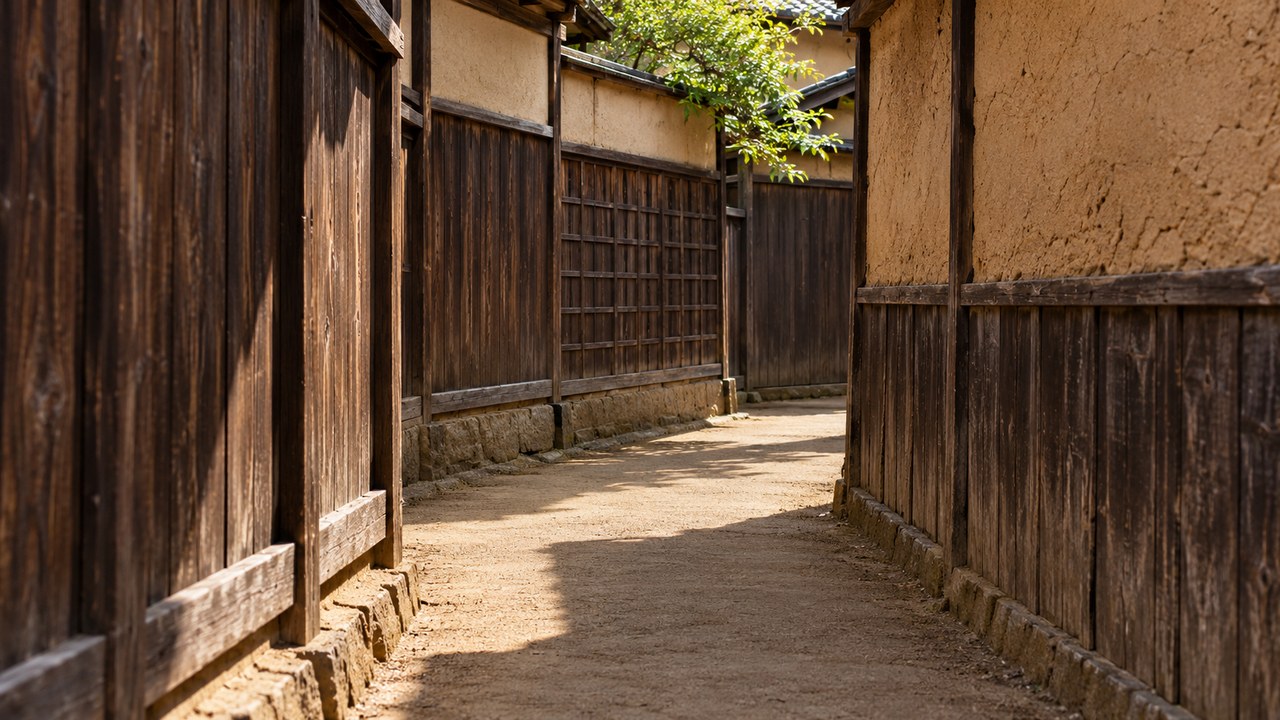
Yet no castle was built in Hakata. Hideyoshi later moved his base to Nagoya, in present-day Karatsu in Saga Prefecture, and built Nagoya Castle there. No record is said to survive explaining the change, and the phantom Hakata castle must be kept separate from the real castle at Najima.
Chapter 6
The Taiko town plan
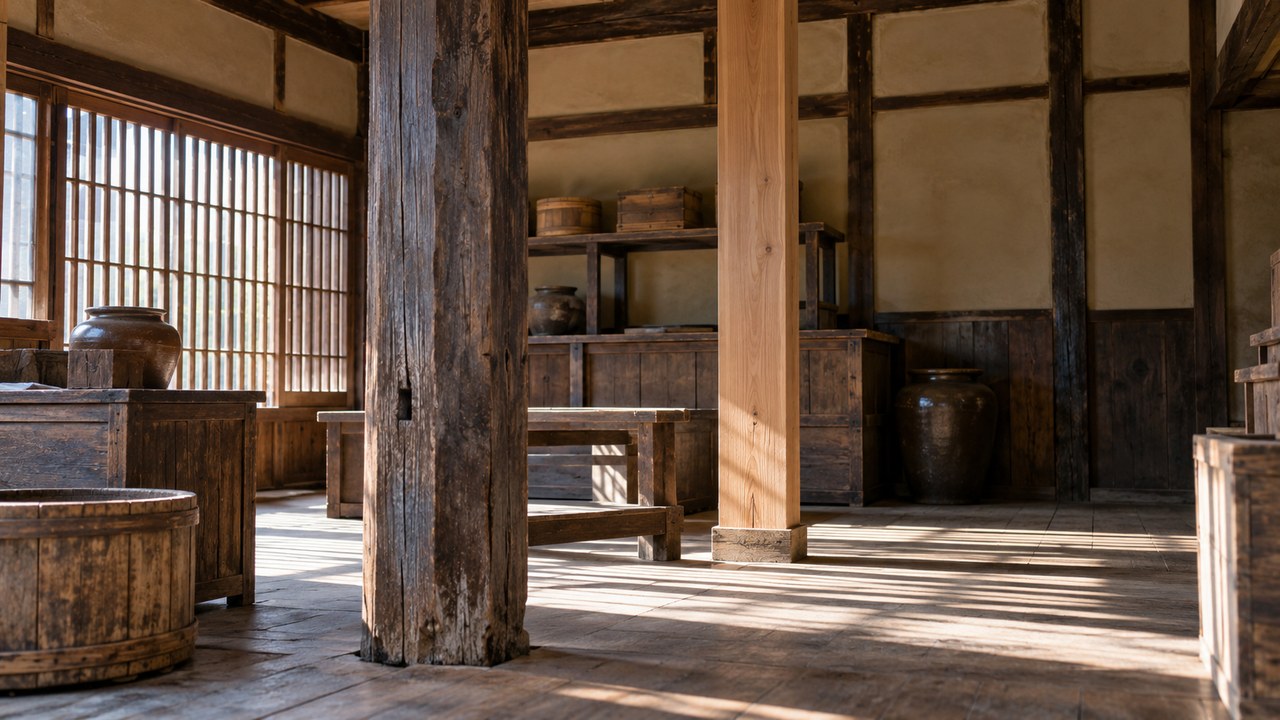
After completing the conquest of Kyushu, Hideyoshi ordered the recovery of Hakata in 1587. The Nipponica encyclopedia says recovery began with a town plan covering an area ten cho on each side, and the Heibonsha World Encyclopedia records that a free-market decree was issued at the same time and that merchants who had scattered came back.
Local merchants took part in the plan. The port history says that Soshitsu and Sotan assisted the Taiko town plan, and a Fukuoka Now feature relates the tradition that Sotan walked the town with a measuring pole. The Yamakawa dictionary records that in the sixth month of 1587 Sotan was given a residence and exempted from town duties.
According to the City History Editorial Office's explanation of the Yamakasa festival, the seven nagare dating from the Taiko town plan formed the basis of Hakata's administration and self-government in the early modern period. Still, the day lines were fixed on a plan cannot be treated as the day houses, storehouses and daily life returned. Rebuilding a town meant months and years of building, moving back, trading and negotiating with new lords.
Chapter 7
A letter of the following year
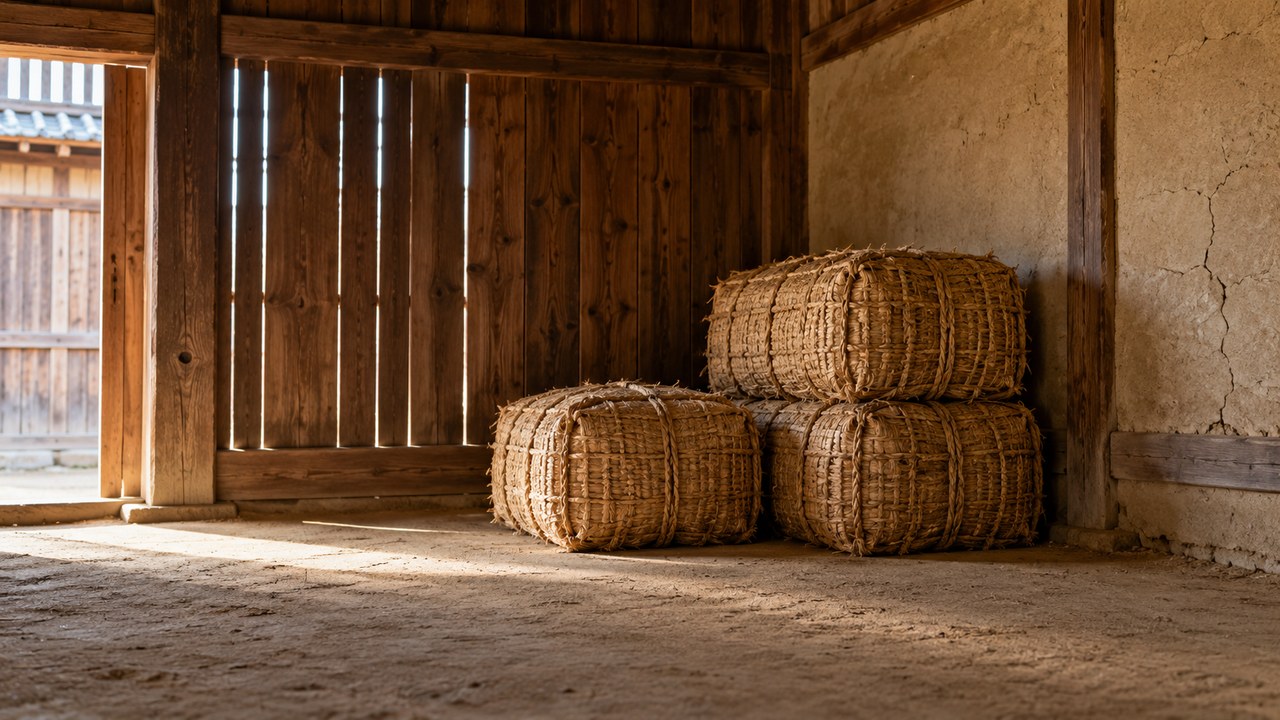
The order for the town plan did not end the work. The Shimai family documents held by the Fukuoka City Museum include a letter from Kobayakawa Takakage dated the twentieth day of the second month of 1588, the sixteenth year of Tensho, written to the merchant after the plan had begun.
According to the museum's explanation, this letter instructed Soshitsu to work together with Kamiya Sotan on the recovery of Hakata. It suggests that the work of rebuilding continued through dealings between Takakage, the lord of Chikuzen, and the merchants of the town, well after the plan was first ordered. Recovery, in other words, depended on continuing cooperation, not on a single command.
Within the Shimai family documents, 704 items comprising 781 pieces from the Warring States to the Edo period were designated an Important Cultural Property of Japan on 27 June 2023. This article relies on the museum's introduction and does not claim an independent reading of the original letter or of its tone.
Chapter 8
The Korean campaigns and emptied storehouses
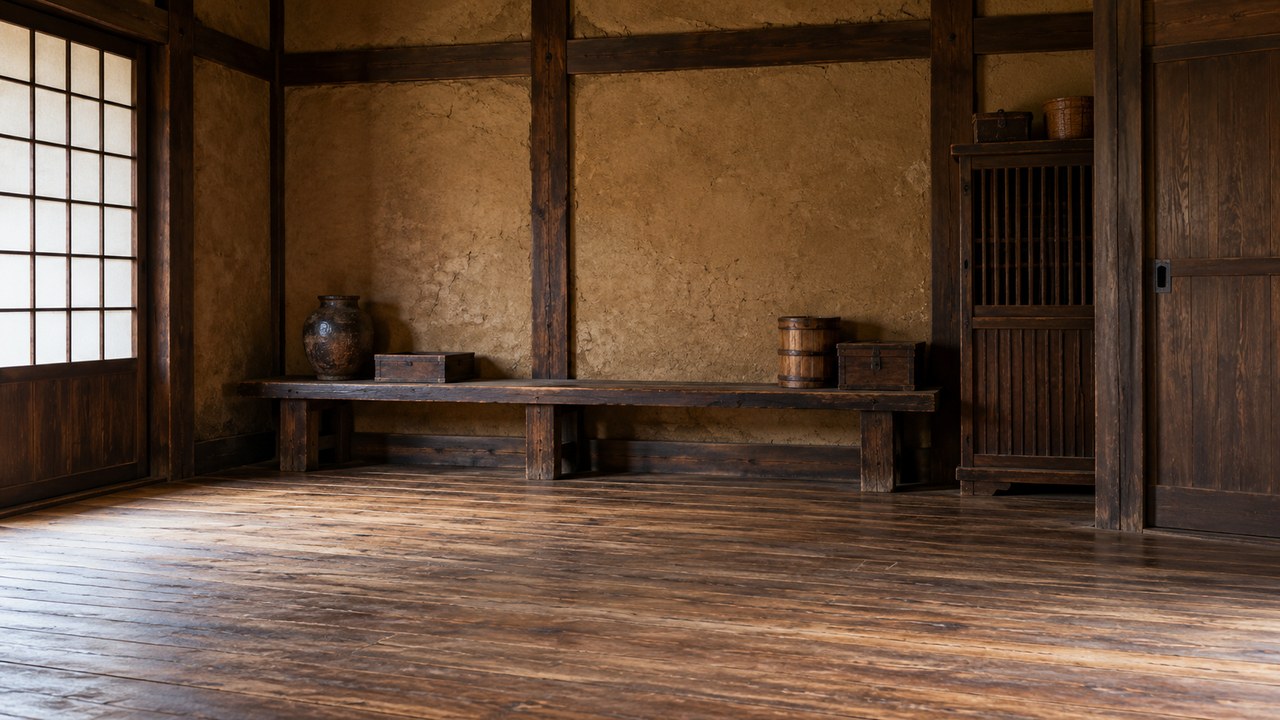
In the invasions of Korea that began in 1592, the first year of Bunroku, Hakata's merchants played a large part. According to the Fukuoka City Museum, Soshitsu crossed to the Korean peninsula himself and was ordered to empty storehouses in Hakata so that they could hold rice for the army.
A letter from Ishida Mitsunari introduced by the museum, probably of 1592, forbids soldiers from quartering themselves in Soshitsu's house while he was away. The Yamakawa dictionary records that Sotan also worked on supply, gathering provisions, and was allowed to trade at Nagoya, the base of the campaigns.
The Heibonsha World Encyclopedia sees Hideyoshi's aim in rebuilding Hakata as making it a supply base for the Korean campaigns, and notes that the merchants' privileges were gradually eroded and that Hakata lost its position as a trading port to Nagasaki. The rebuilt town was asked to carry new burdens, and its merchants served the war effort as well as their own trade.
Chapter 9
The nagare: units of the town
In early modern Hakata, groupings of neighbourhoods called nagare carried out administration and self-government. The City History Editorial Office explains that the basis was the seven nagare dating from the Taiko town plan, and that by the middle of the Edo period the town's growth had raised the number to ten.
The nagare were also units for festivals. The seven original nagare took turns to make the six floats of the Yamakasa, while the remaining one was responsible for the Noh performance offered to Kushida Shrine. The newer nagare are said to have helped the original seven rather than building floats of their own.
The Heibonsha World Encyclopedia records that in 1690, the third year of Genroku, Hakata had 113 neighbourhoods and nine nagare. Because the number changed over time and with ways of counting, this article does not project the early modern picture back onto the year 1587 or onto the present festival.
Chapter 10
Hakata and Fukuoka, two towns side by side
After the battle of Sekigahara, the Kuroda family came to Chikuzen. Fukuoka City's timeline records that Fukuoka Castle was built between 1601 and 1607 and that the twin towns of Fukuoka and Hakata were born. Excavations have also confirmed that stones and roof tiles from Najima Castle were reused at Fukuoka Castle.
According to the Fukuoka Now feature, Oga Soku came to Hakata from Nakatsu in Buzen when Kuroda Nagamasa moved to Chikuzen, and played a central part in building Fukuoka Castle and its town and in rebuilding Hakata's temples and shrines. The port history likewise presents Soku as a purveyor to the Kuroda domain.
The Heibonsha World Encyclopedia, by contrast, says that Sotan lost his former standing under the Kuroda. Soshitsu died on the twenty-fourth day of the eighth month of 1615 and Sotan on the twenty-eighth day of the tenth month of 1635. The three men should not be grouped as partners who carried out the town plan together in 1587.
Conclusion
Recovery was not a single finished map
Scorched earth in 1580, a prohibition in 1586, conquest and a town plan in 1587, a letter in 1588, and the burdens of war from 1592: the recovery of Hakata moved forward through events of different dates that overlapped with one another, each involving different people.
According to the Heibonsha World Encyclopedia, Hakata reached its height in 1690 with 3,118 households and 19,468 people. The Nipponica encyclopedia notes that Hakata was later drawn into the castle town of Fukuoka. Even in the hundred years after the plan, the shape and role of the town kept changing.
The Taiko town plan was a turning point, but the wars before it and the burdens after it should not be cut away. Only by seeing both the orders of those who ruled and the work of those who emptied storehouses, walked the streets and carried the festivals can the recovery of Hakata in the Warring States period come into view.
How to read this work
History, interpretation, and reconstruction
Following war, protection, the town plan, the cooperation requested the next year and the burdens that came after it in order, and reading recovery as a process carried by rulers' orders and by merchants and townspeople.
This work is grounded in published sources and historical research. Interior thoughts, dialogue, and some visual details are cinematic reconstructions. Where historians disagree, the article presents the point as debated rather than settled fact.
Timeline
The story in time
-
Hakata is badly damaged in the rebellion of the Chikushi family.
Sources: p8 -
The Otomo are defeated by the Shimazu at Mimikawa in Hyuga, and Kyushu becomes a three-way struggle among the Otomo, Shimazu and Ryuzoji.
Sources: p1 -
Otomo Sorin visits Hideyoshi at Osaka Castle and asks for help.
Sources: p1 -
The Shimazu take the castles of Homan and Iwaya. Hideyoshi sends an army under Kuroda Yoshitaka as commissioner; Yoshitaka and Kobayakawa Takakage post prohibitions in Hakata.
Sources: p1 -
Kamiya Sotan is invited to Hideyoshi's great tea gathering at Osaka Castle.
Sources: p9 -
Kobayakawa Takakage instructs Soshitsu by letter to work with Sotan on the recovery of Hakata.
Sources: p6 -
Hakata reaches its height with 113 neighbourhoods, nine nagare, 3,118 households and 19,468 people.
Sources: p8
People & terms
A guide for new readers
Key figures
- Toyotomi Hideyoshi
- Ordered protection of Hakata and the reorganization of its streets and plots.
- Kuroda Yoshitaka
- Associated with the 1586 prohibition protecting Hakata.
- Kobayakawa Takakage
- Associated with protective orders and requests for merchants’ cooperation in rebuilding.
- Shimai Sōshitsu
- A merchant who assisted the town reorganization and was asked by Takakage to cooperate in recovery.
- Kamiya Sōtan
- A merchant who assisted the town reorganization and appears with Sōshitsu in the request for recovery work.
- Ōga Sōku
- Introduced as a merchant serving the later Kuroda domain; not made a third participant in the two merchants’ 1587 undertaking.
- Otomo Sorin
- Lord of Bungo who granted Soshitsu privileges and asked Hideyoshi for help at Osaka Castle in 1586.
- Ryuzoji Takanobu
- Lord of Hizen who pushed into Chikuzen around the time of the attack on Hakata in 1580; killed in battle in 1584.
- Kasuya Takenori
- Ordered by Hideyoshi in 1587 to build a castle in Hakata; the castle was never built.
- Ishida Mitsunari
- Issued a letter during the Korean campaigns forbidding troops to quarter in Soshitsu's house.
Glossary
- Hakata 博多
- The commercial port town whose warfare, protection and rebuilding are followed here; distinct from the later neighbouring castle town of Fukuoka.
- Taikō town plan 太閤町割
- The reorganization of streets and plots ordered by Hideyoshi in 1587. The order is not a declaration that all recovery was immediately complete.
- Prohibition 禁制
- An order prohibiting violence and disorder in the protection of Hakata; its issue does not prove permanent or universal safety.
- Shimai Sōshitsu 嶋井宗室
- One of the two merchants associated with the plan and the recipient of the cooperation request introduced by the museum.
- Kamiya Sōtan 神屋宗湛
- The merchant named with Sōshitsu in the recovery cooperation described by the sources.
- Ōga Sōku 大賀宗九
- A merchant introduced in the later Kuroda context, distinct from the two merchants assisting the earlier town plan.
- Najima Castle 名島城
- The Kobayakawa base, distinct from the unrealized Hakata castle proposal.
- Nagoya Castle 名護屋城
- The later castle associated with overseas campaigns, not the unrealized Hakata proposal or Najima.
- Nagare 流
- A unit involved in early-modern administration, self-government and festival life, with changing numbers and roles.
- Military rice 兵糧米
- Rice to be stored under the later order described by the museum; storage does not establish a named merchant’s personal contribution.
- Merchant serving a domain 御用商人
- The later relationship through which the port history introduces Sōku under the Kuroda.
- Chikuzen 筑前
- The regional setting of Kobayakawa rule in the museum’s adopted explanation.
- Nengyoji 年行事
- The twelve elders who ran Hakata's self-government in the Warring States period, according to a Japanese dictionary.
- Cho 町
- A unit of length of roughly 109 metres; the plan of 1587 is described as covering ten cho on each side.
- Rakuichi 楽市
- A free-market decree removing trade restrictions, said to have been issued for Hakata in 1587.
- Yamakasa 山笠
- Hakata's float festival, whose duties were rotated among the nagare in the early modern period.
Sources & method
How this article was built
This English edition follows the revised Japanese article scene by scene and keeps its ten sources, their order and its thirteen timeline entries. It draws on the Fukuoka City Museum and its City History Editorial Office, Fukuoka City, the Fukuoka City Port and Airport Bureau, dictionary entries collected on Kotobank and a feature by Fukuoka Now. Titles given in English are editorial translations.
Where sources differ, the differences are stated in the text rather than resolved. Museum explanations and dictionary entries are not treated as full readings of the underlying documents, and the measuring-pole story is presented as a tradition.
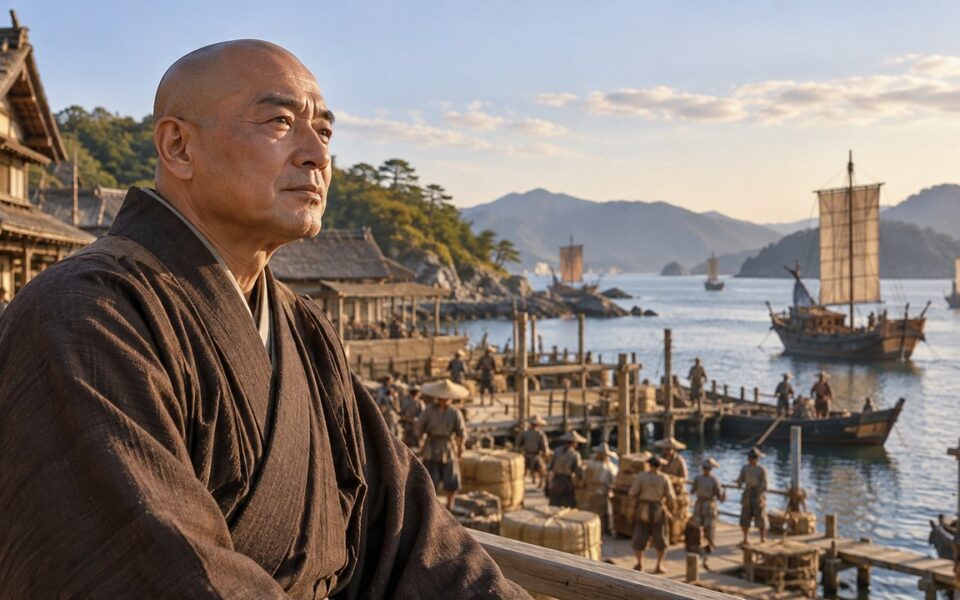
The images are AI-generated imaginative reconstructions, not authenticated portraits, historical photographs or exact reconstructions. No invented speech, inner motive, casualty figure or street layout fills gaps in the evidence.
Sources
References and further reading
- Warring States Hakata 4: The End of the Age of Disorder and the Conquest of Kyushu 戦国時代の博多展4 乱世の終焉・九州平定 Title translated editorially for reader convenience. Fukuoka City Museum 福岡市博物館 Used for the three-way struggle after Mimikawa, the attack and burning of 1580, Ryuzoji Takanobu's death in 1584, Otomo Sorin's appeal in 1586, the fall of Iwaya, Kuroda Yoshitaka's army, the prohibitions of Yoshitaka and Takakage, the surrender of 1587 and the redistribution at Hakozaki. Accessed 2026-11-18
- History of Hakata Port 博多港の歴史 Title translated editorially for reader convenience. Fukuoka City Port and Airport Bureau 福岡市港湾空港局 Used for trade and commerce in the Warring States period, the scattering of people after the wars, Soshitsu and Sotan's help with the Taiko town plan, and Oga Soku as a purveyor to the Kuroda domain. Accessed 2026-11-18
- A Fantasy of Tensho 15: The Phantom Hakata Castle 天正15年の空想 幻の博多城 Title translated editorially for reader convenience. Fukuoka City Museum City History Editorial Office 福岡市博物館市史編さん室 Used for Hideyoshi's order to Kasuya Takenori to build a castle in Hakata, its likely aims, the fact that no castle was built and the later move to Nagoya. Accessed 2026-11-18
- Early Modern Hakata Seen through the Yamakasa 山笠にみる近世の博多 Title translated editorially for reader convenience. Fukuoka City Museum City History Editorial Office 福岡市博物館市史編さん室 Used for the seven nagare dating from the Taiko town plan, the increase to ten, their role in administration and self-government, and the Yamakasa and Noh duties. Accessed 2026-11-18
- The Kobayakawa Family, Chikuzen Province and Hakata 小早川氏と筑前国・博多 Title translated editorially for reader convenience. Fukuoka City Museum 福岡市博物館 Used for Takakage's receipt of Chikuzen in 1587, Najima Castle and the reuse of its stones and tiles at Fukuoka Castle. Accessed 2026-11-18
- The World of the Shimai Family Documents 嶋井家文書の世界 Title translated editorially for reader convenience. Fukuoka City Museum 福岡市博物館 Used for Soshitsu's earlier name, privileges from Otomo Sorin, goods and trade, the 1582 tea invitation, the letter of 1588/2/20, the Korean campaign orders and Ishida Mitsunari's letter, his death in 1615, and the 2023 designation as an Important Cultural Property. Accessed 2026-11-18
- The History of Fukuoka City 福岡市のあゆみ Title translated editorially for reader convenience. Fukuoka City 福岡市 Used for the town-plan order of 1587 and the building of Fukuoka Castle in 1601-1607 that created twin towns. Accessed 2026-11-18
- Hakata (dictionary entries) 博多 Title translated editorially for reader convenience. Kotobank (Nipponica, Heibonsha World Encyclopedia, Obunsha Dictionary of Japanese History and others) コトバンク(日本大百科全書・改訂新版 世界大百科事典・旺文社日本史事典ほか) Used for the twelve nengyoji, Otomo rule and the east-west division, the damage of 1559 and 1580, the recovery order and free-market decree of 1587, the plan of ten cho on each side, the return of merchants, the supply-base aim, the erosion of privileges, the 1690 figures and incorporation into the castle town of Fukuoka. Accessed 2026-11-18
- Kamiya Sotan (dictionary entries) 神屋宗湛 Title translated editorially for reader convenience. Kotobank (Yamakawa Concise Dictionary of Japanese History, Heibonsha World Encyclopedia, Mypedia and others) コトバンク(山川 日本史小辞典・世界大百科事典・百科事典マイペディアほか) Used for his descent from Jutei, the differing birth years, his trip to Kyoto in 1586, the tea gathering of 1587/1/3, his residence and exemption in the sixth month of 1587, supply work in the Korean campaigns, his decline under the Kuroda and his death in 1635. Accessed 2026-11-18
- Hakata: A City Built by Merchants Hakata: A City Built by Merchants Fukuoka Now Fukuoka Now Used for the tradition that Sotan walked the town with a measuring pole in 1587, and for Oga Soku's move from Nakatsu with Kuroda Nagamasa and his role in building Fukuoka Castle and restoring Hakata's temples and shrines. Accessed 2026-11-18
Continue reading
More stories from Shigeki
Shigeki English
Taira no Kiyomori: From the First Warrior Noble to a Capital by the Sea
Born as Tadamori’s heir, he rose through the Hogen and Heiji conflicts to grand minister of state, then turned from Fukuhara to Itsukushima, Owada no Tomari and Song ships, before the transfer and return of the capital, his death and the end of his family.
- When 1118–1181, from his birth to his death, with the defeat at Dan-no-ura in 1185 and the statue of 1967
- Where Kyoto, Fukuhara in present-day Kobe, Owada no Tomari, Itsukushima, the Ondo Strait and Dan-no-ura
Shigeki English
Oishi Riku: Beyond the End of Chushingura, the Family That Lived On
Born in Toyooka, a wife in Ako, then Yamashina, Toyooka again and Hiroshima: a spring homecoming and an autumn divorce letter, the deaths of husband and son, further losses, and a son’s appointment in Hiroshima.
- When 1669–1736, with the events of 1702 kept in their separate seasons, and later memory from 1748 to 2014
- Where Toyooka, Ako, Yamashina and Hiroshima