
SHIGEKI ENGLISH STORYEN
Japanese history in English
Okita Soji: From Sword Practice in Tama to a Letter from Kyoto
Training at the Shieikan in Edo, practice visits to Hino, teaching in his master's place and a letter from Kyoto: diaries and correspondence place a celebrated swordsman among the people who knew him.
Born in Edo as the son of a Shirakawa samurai, Okita Soji trained in Tennen Rishin-ryu at the Shieikan and travelled to Tama to practise and to teach in his master's place. This article follows diary records of his errands and illness, his role in Kyoto and the Ikedaya tradition, a letter to Miyagawa Otogoro reporting returning comrades, an ailing teacher, his own illness and thanks for misozuke, and his death in Edo, keeping different kinds of evidence apart.
At a glance
Before you enter the story
- When
- From his birth (1842 or 1844) and entry to the Shieikan (1852), through diary records of 1861 to 1863, the Ikedaya incident of 1864 and a letter probably of 1867, to his death in 1868
- Where
- The Shieikan in Ichigaya, Edo; the Hino-juku Honjin and households in Tama; Kyoto; and Imado or Sendagaya in Edo
- Key figures
- Okita Soji, Kondo Shusuke (Shusai), Kondo Isami, Hijikata Toshizo, Sato Hikogoro, Kojima Shikanosuke, Miyagawa Otogoro
- What was at stake
- What do diaries and a letter show about a swordsman whose life is usually told through legends of his skill?
Why this story matters
The larger history behind the turning point
A diary entry about teaching and illness, or a letter thanking someone for food, changes the scale at which a famous historical figure can be approached. Keeping the authors, dates and limits of each record visible lets the people around Okita enter his story without inventing his private thoughts.
Many popular images of Okita, from his exact age to his collapse at the Ikedaya, rest on disputed dates or tradition. Separating these from what diaries and his own letter record helps readers see what is known and what is still uncertain.
Historical context
What an international reader needs to know
Tama, Edo and Kyoto in the Story
Tama is the local setting of the training venues and households discussed here; Hino is one of its places. Edo, now Tokyo, appears in journeys and correspondence. Kyoto is the setting from which the later letter reaches back toward that circle. These place names orient the narrative without establishing an exact itinerary.
Hino’s explanation describes a road-station household supporting a practice hall; Kodaira’s library places the pre-Kyoto visits in the context of the shogunate’s recruitment. Household, school and later corps have different roles. Their connections do not make every local practice session an activity of a corps already established in Kyoto.
Diaries, Correspondence and Calendar Dates
The library’s diary excerpts show what other writers recorded about visitors and illness. The published letter reading shows what Okita communicated to one recipient. An assessment of his promise and a report of improvement belong to different speakers and purposes. Neither should lose that attribution in translation.
The catalog attributes the letter to 1867 and identifies its older teacher. The letter supplies its month and day and the requests themselves. The English account preserves these distinctions, the historical calendar, the two men’s separate illnesses and the difference between earlier measles and the later illness that encyclopedias identify as tuberculosis.
Watch the film
See the story in motion
The film currently uses Japanese audio. This English article provides the context and source trail; it does not imply that an English subtitle track is available.
Opening
People beyond the wooden sword
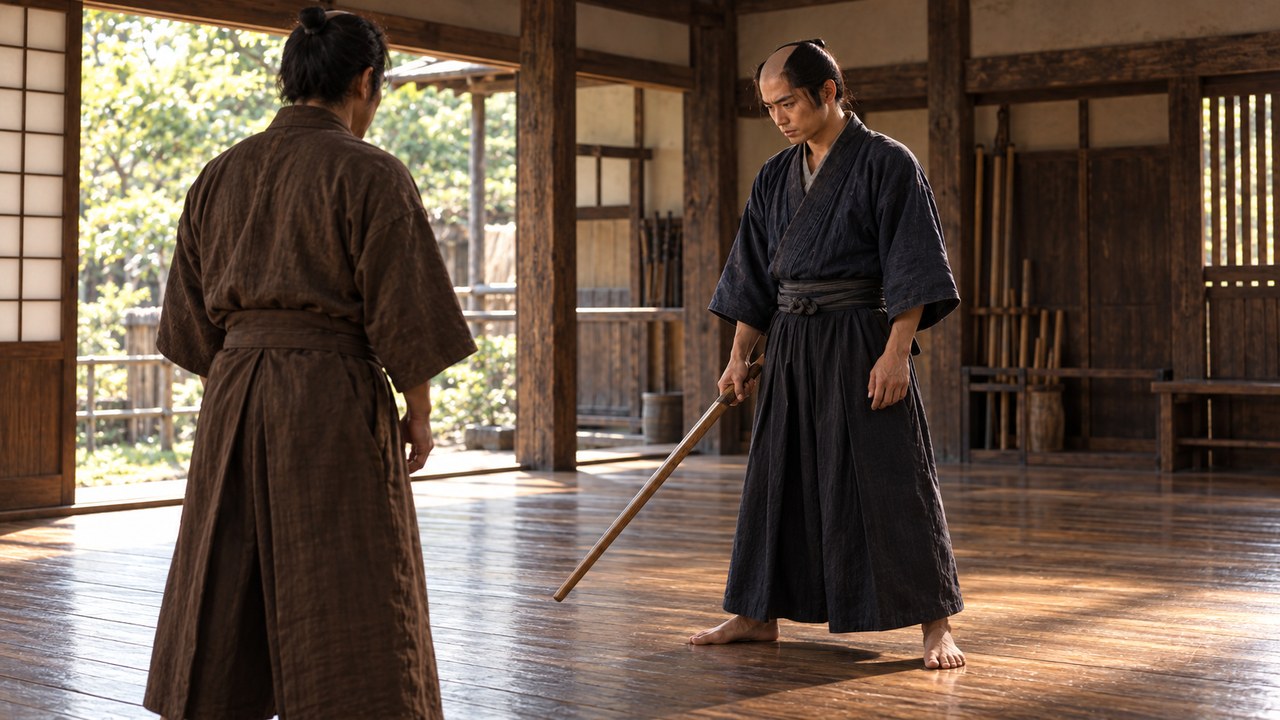
The name of Okita Soji is wrapped in stories about his skill with the sword. He is remembered as the leader of the First Unit of the Shinsengumi, the corps that policed Kyoto in the last years of the shogunate. Yet when we follow him through diaries and letters, a different figure appears: a young man who travelled to training halls, stood in for his teacher and wrote news to people far away.
Hino City explains that Okita studied swordsmanship under Kondo Isami and often came to practise at the training hall in the Hino-juku Honjin, the official inn of the Hino post town. At the end of each of those journeys there were people who taught, people who learned and a household that kept the training hall running.
This article follows him in order: from his training at a hall in Edo to practice in the Tama district west of the city, a single letter sent from Kyoto, and his death back in Edo. Along the way it keeps apart diaries written by people around him, his own letter, the explanations of encyclopedias and stories that have come down as tradition.
Chapter 1
A boy who entered a training hall in Edo
According to the encyclopedia entries, Okita was born in Edo, the son of a samurai of the Shirakawa domain. His father is said to have died when Soji was two years old. Some explanations give his year of birth as 1842 and others as 1844. This article does not choose between them, because the sources consulted here do not settle the point.
Okita trained at the Shieikan, the hall run by Kondo Shusuke in the Ichigaya area of Edo. Shinjuku City's explanation confirms that the hall stood in an area called the Kora Yashiki, now 25 Ichigaya Yanagicho, and gives Okita's entry to the hall as 1852. He would have been a child of around ten at the time.
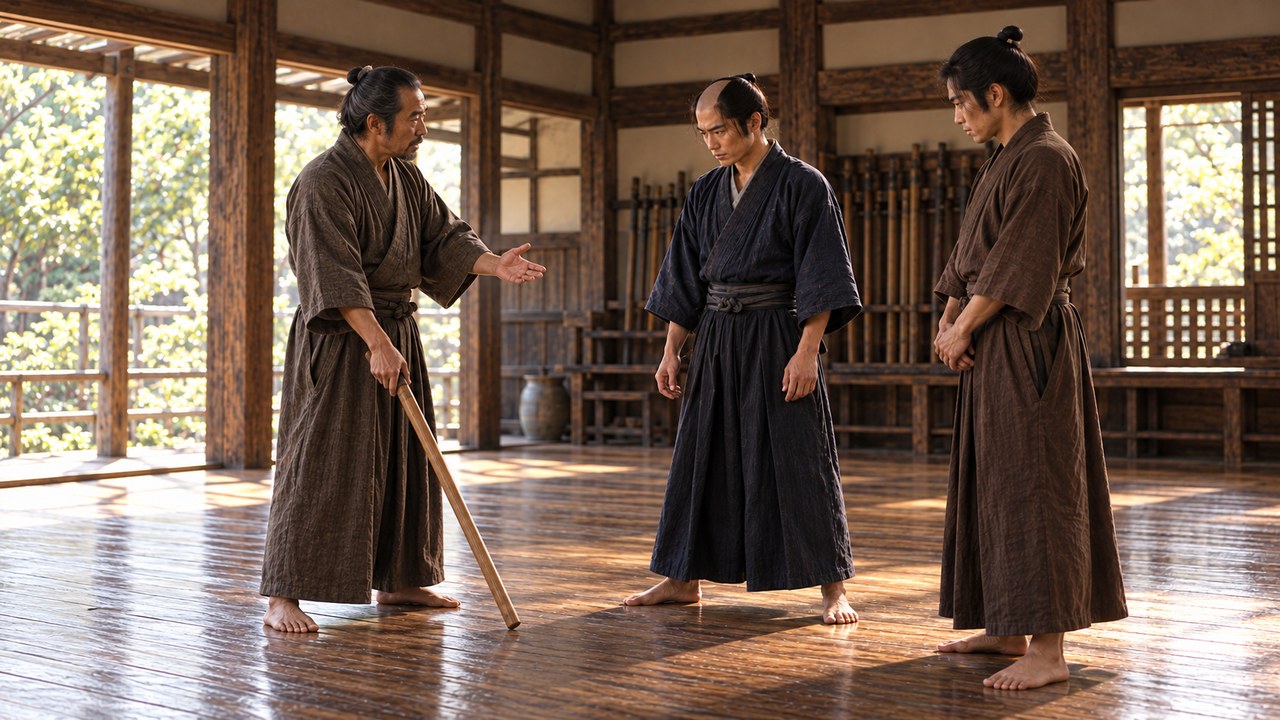
Okita became a live-in student of Shusuke, and there he came to know Kondo Isami and Hijikata Toshizo. The school they studied was Tennen Rishin-ryu. Hino City describes it as a school that valued techniques usable in real combat, and notes that its students practised with heavy wooden swords in order to grow used to the weight of a real blade.
Chapter 2
The road to practice in Hino
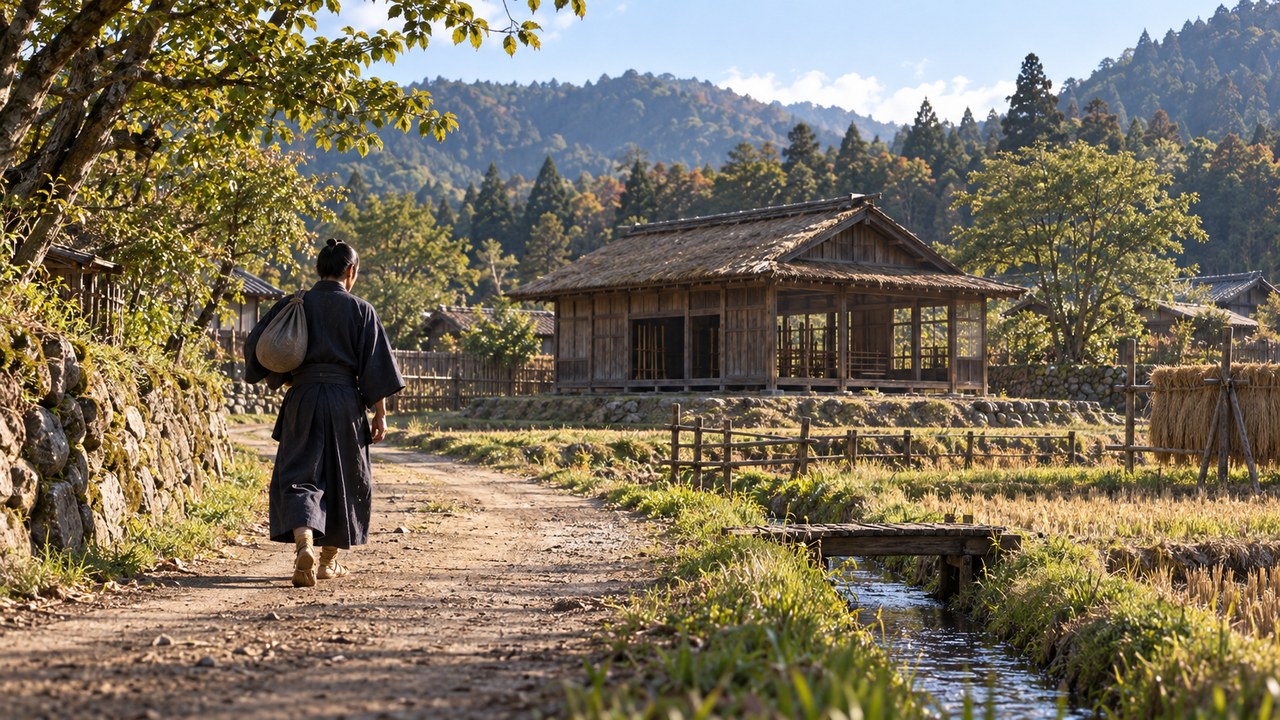
Having learned at the hall in Edo, Okita also travelled often to practise at the training hall in the Hino-juku Honjin in Tama. According to Hino City, it was there that he met people who would later become members of the Shinsengumi. The ties that later held the corps together began in rooms like this one.
A training hall was a building where a swordsman sharpened his skill, but it was also a place where people came and went and met one another face to face. The relationships formed by travelling between Edo and Tama and studying the same school with the same people went back well before the group was formed in Kyoto.
The sources used here cannot tell us the exact route Okita took or how long each journey lasted. What this chapter follows is simply the fact that he came to practise in Hino, and the role of the household that received those who made the journey. Without such hosts, there would have been no place for the visitors to train.
Chapter 3
A household that ran the post town
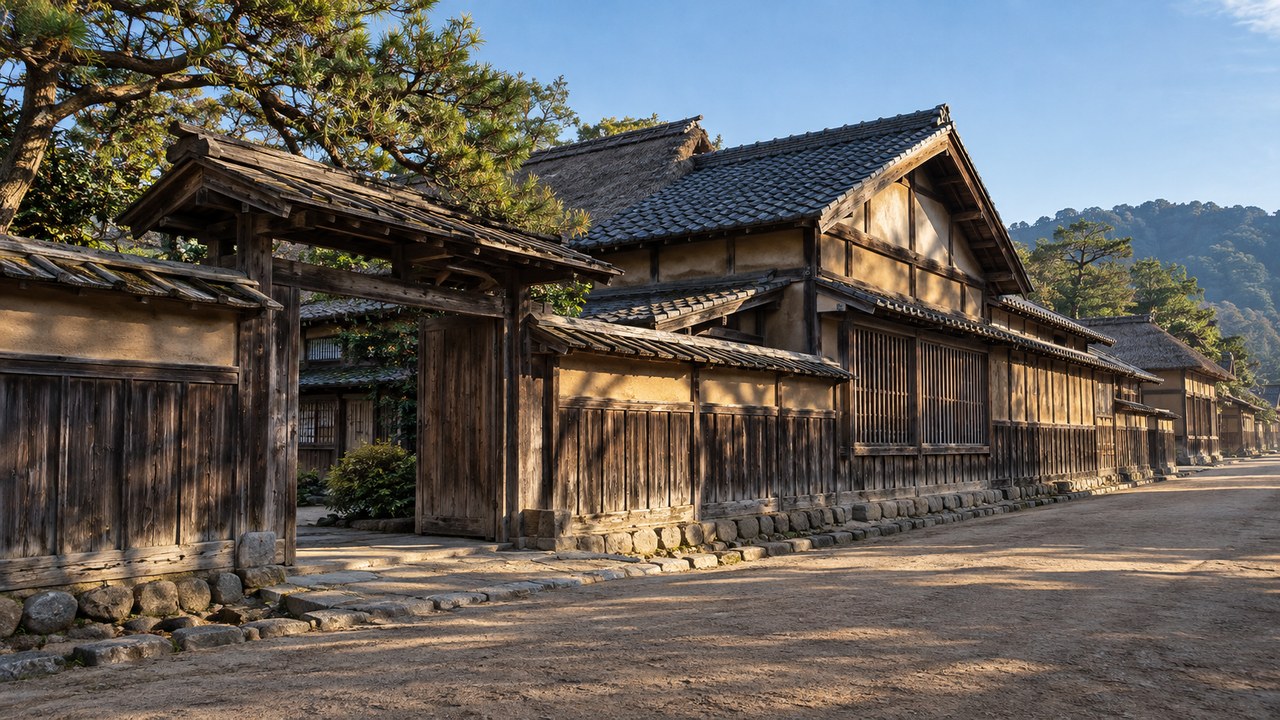
The Hino-juku Honjin was the residence of Sato Hikogoro. Sato was the village headman and also the official in charge of the post town's station, which supplied men and horses for travellers on the highway. In this household, which received travellers and carried out the work of the road, a training hall for Tennen Rishin-ryu was built.
Hino City's explanation records that Sato studied the same school, built a training hall at the Honjin, and that Kondo Isami, Hijikata Toshizo, Okita Soji and others practised there. Hijikata was the younger brother of Sato's wife, so ties of family and ties of the sword overlapped in this one house.
We cannot match the building that survives today to the exact rooms Okita used. Even so, the history of a training hall inside a household that supported the post town, and of people gathering there, is a reliable starting point for thinking about where Okita went and whom he met before he left for Kyoto.
Chapter 4
Messenger and stand-in teacher
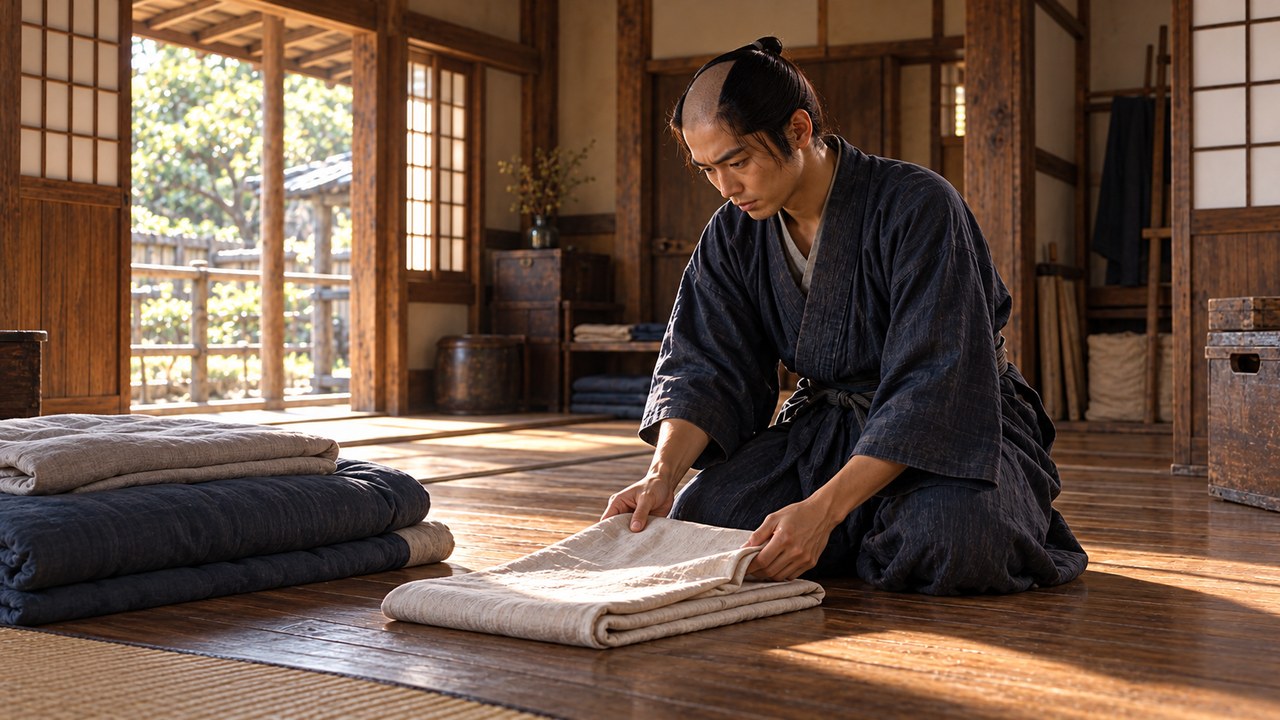
According to the Kodaira City Library, Okita often went out to Tama to give lessons in place of Shusuke. In other words, he was trusted at a young age not only to receive instruction but also to teach on his teacher's behalf, travelling out to the villages where the school had its supporters.
The Tomizawa diary records that on the twentieth day of the eighth month of 1861, Okita visited the Tomizawa household as Shusuke's messenger. He delivered a letter explaining that, because Shusuke had grown old, his adopted son Isami had succeeded to the school, and asking for the family's continued support.
The same diary also mentions a plan for an outdoor match at Fuchu. Between holding a wooden sword and keeping a school going lay other tasks, such as teaching and carrying messages, and Okita took on both. The encyclopedia entries add that he served as head student, or jukuto, of the Shieikan.
Chapter 5
1862: hope and worry in a diary
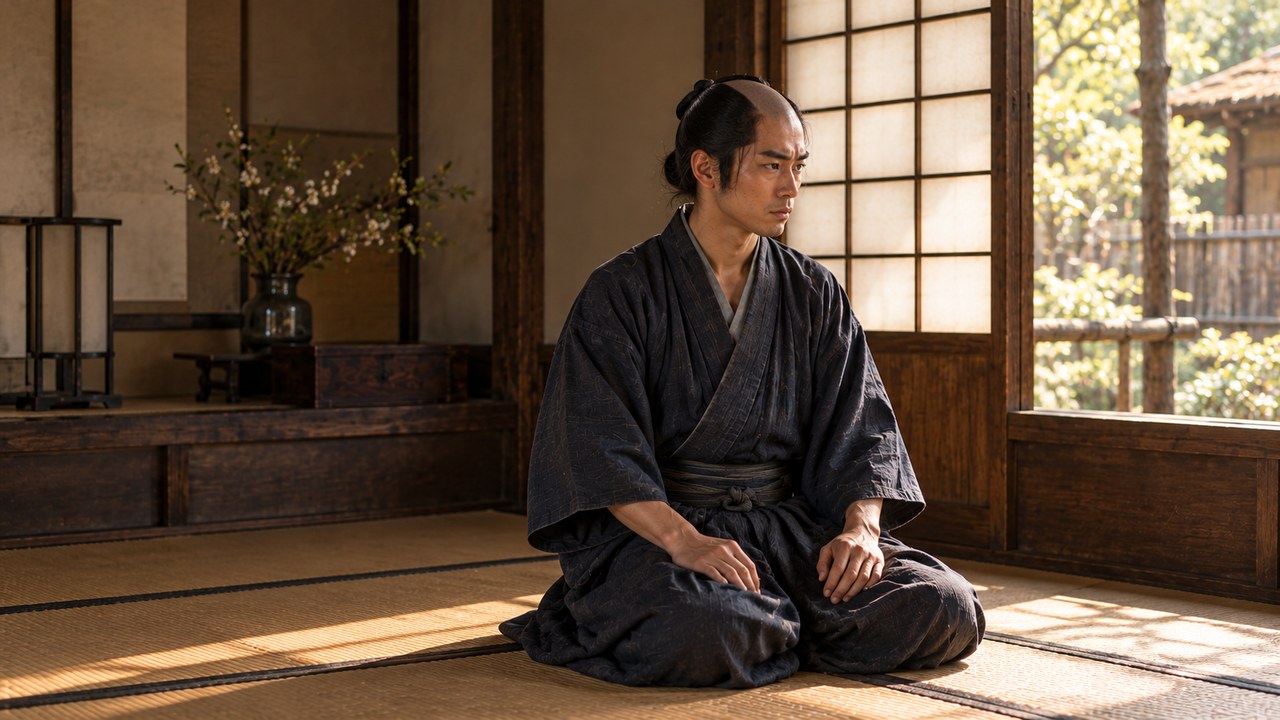
The Kojima diary for the fifteenth day of the seventh month of 1862 records that Okita, who was then teaching in Shusuke's place, had caught measles. The diary was kept by Kojima Shikanosuke, a village headman in Tama who supported Kondo and his circle and wrote down the comings and goings of his visitors.
The Kodaira City Library explains that the writer saw Okita as someone who would surely become a master swordsman, and was deeply worried about his condition. The entry preserves the eyes of someone who watched a young man at work, looked forward to his future and cared about his health.
The illness of this year was measles. It belongs to a different time and context from the illness mentioned in Okita's later letter, so this article does not join the two together into one continuous medical history. Each record is read in the year and month in which it was written.
Chapter 6
Visits before leaving for Kyoto
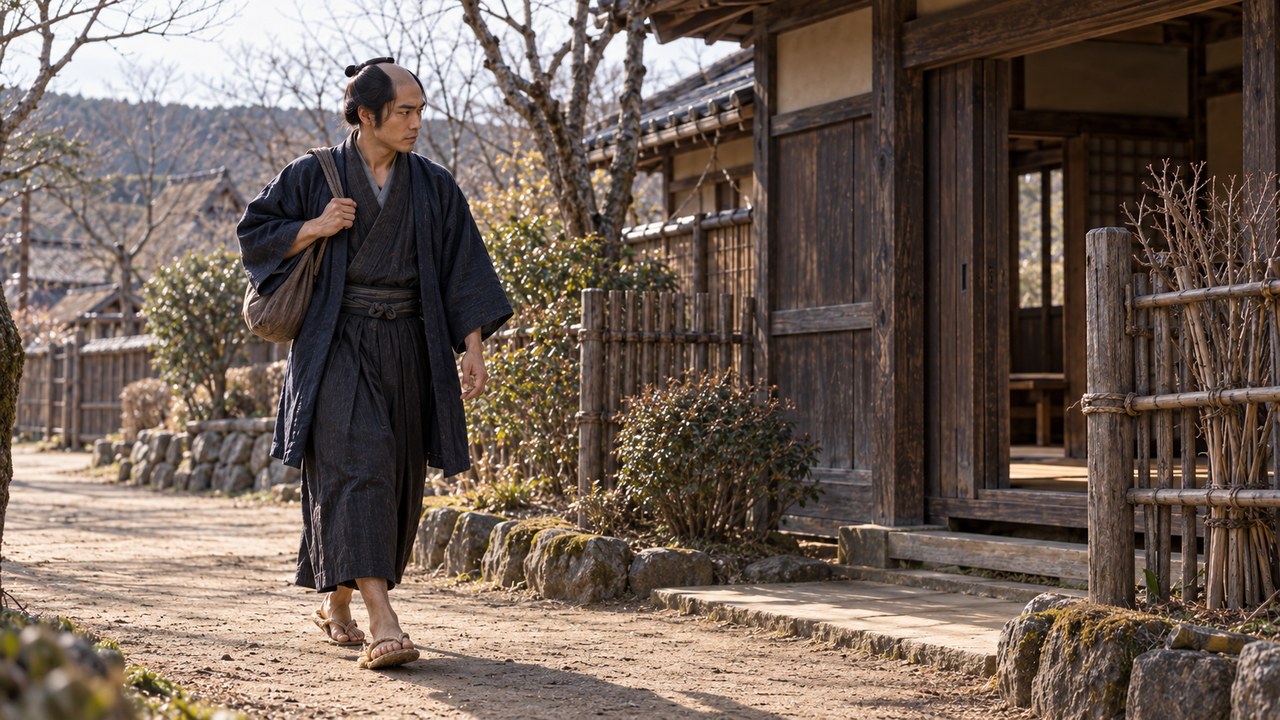
In the first month of 1863, the shogunate called for masterless samurai to join a new force, and the members of the Shieikan began to move. The Kojima diary records visits by Kondo and others to the Kojima household, and notes that Okita came with Yamanami Keisuke on the seventeenth day of the first month.
The records do not tell us what was said during these visits or what anyone was thinking. Still, the brief note of who visited whose house shows that ties with local people continued right up to the moment of departure. The family that wrote it down kept a trace of travellers who were about to leave.
According to the encyclopedia entries, Okita went up to Kyoto that year with Kondo Isami and others and joined the group that became the Shinsengumi. The road to Kyoto began among the households of Tama that had recorded his visits in their diaries, and his letters would later travel back along it.
Chapter 7
Okita in Kyoto
In Kyoto, Okita is said to have served first as an assistant to the vice-commanders and later as leader of the First Unit. Hino City also notes that he led the First Unit and is said to have been an exceptionally skilled swordsman. There is, however, no record that measured his skill, and the claim should be read as reputation.
The encyclopedia entries explain that in the Ikedaya incident of 1864 he charged into the inn alongside Kondo and others. The story that he coughed up blood and collapsed on the spot is widely known, but it has come down as tradition, and this article does not treat it as an established record of what happened that night.
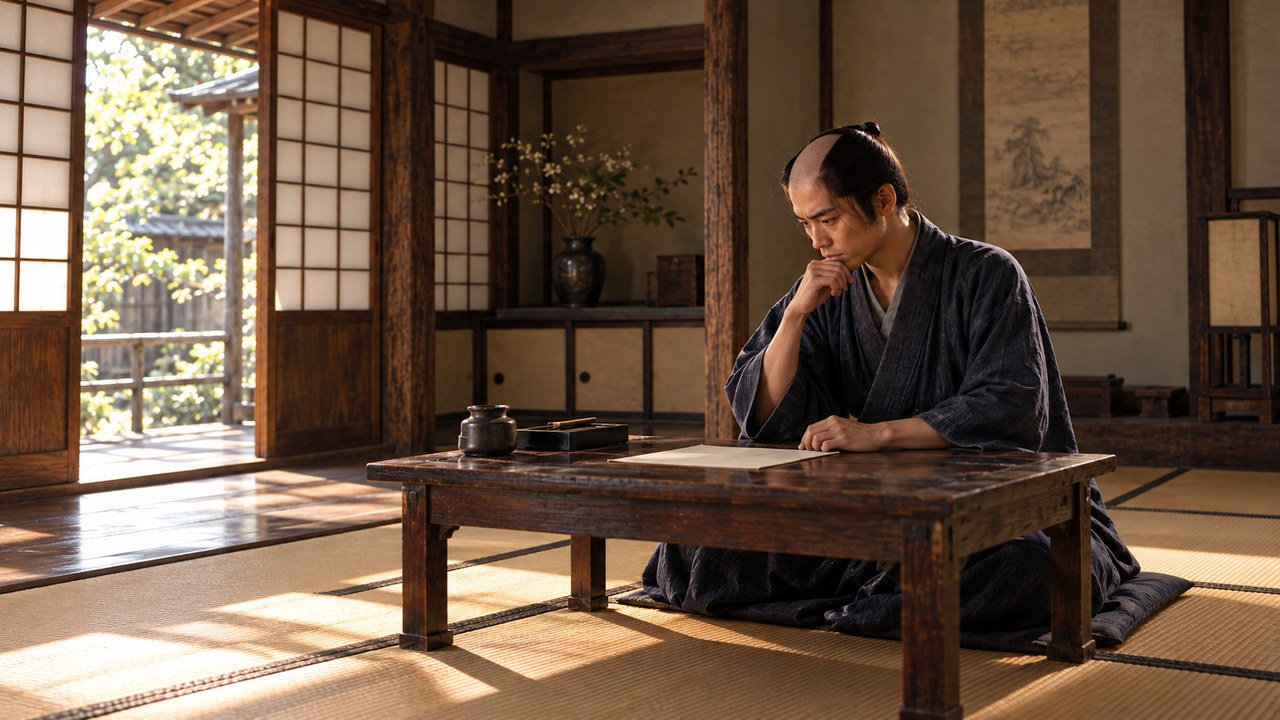
In a letter dated the fourth day of the eleventh month, probably in 1865, Kondo Isami wrote to his supporters in Tama that if anything should happen to him, he wished to pass Tennen Rishin-ryu on to Okita. That single line shows the place Okita held in the eyes of his own teacher and the leader of the corps.
Chapter 8
A letter reporting two safe returns
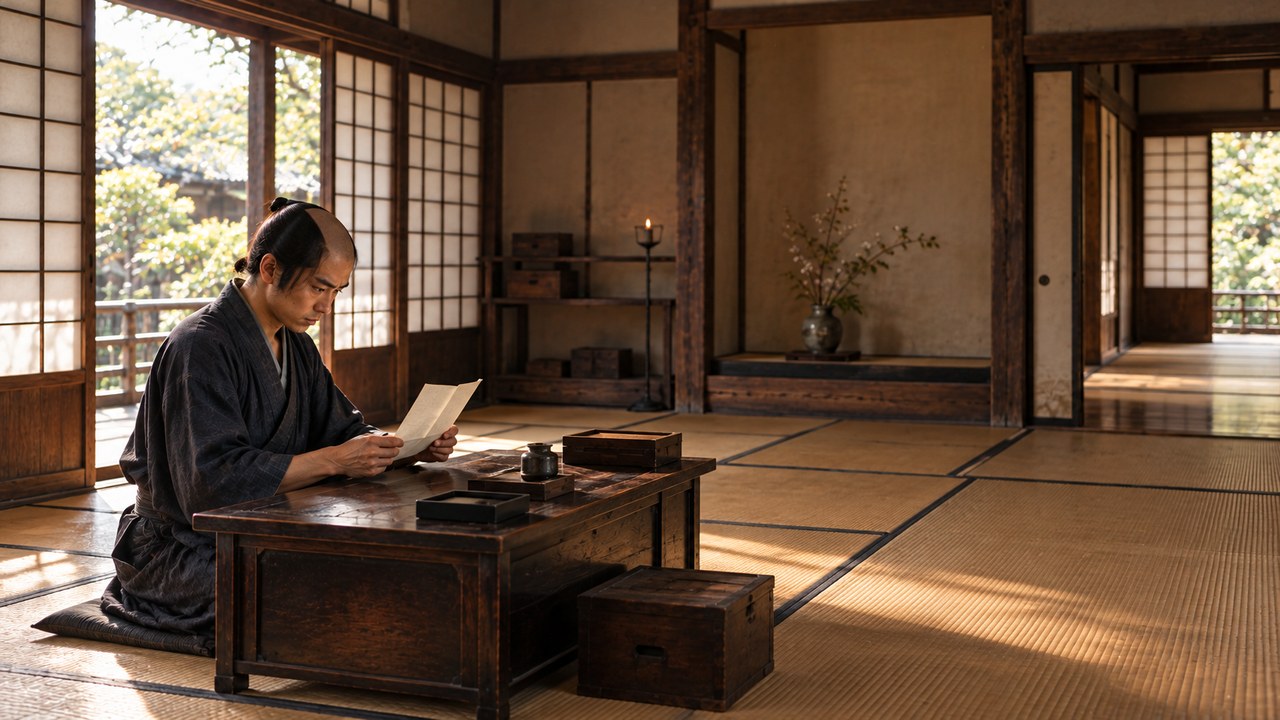
The rest of this article reads one letter Okita wrote to Miyagawa Otogoro. According to the catalogue entry published through ADEAC, the archive platform that hosts the Tama Digital Shinsengumi Archive, the letter is thought to have been written on the twelfth day of the eleventh month of 1867.
According to the published reading of the letter, Okita first reports that Hijikata and Inoue had returned safely to the corps on the third of that month. Comrades travelled between Edo and Kyoto, others learned of their arrival, and the news then travelled on to people further away. A short report thus carried a whole network of movement.
The letter does not tell us how Miyagawa received this news. Even so, the published reading confirms that Okita chose the safe return of his comrades as the first thing to report. Alongside fighting and politics, the comings and goings of familiar people were important news for those living at a distance.
Chapter 9
Worrying about a teacher, reporting on himself
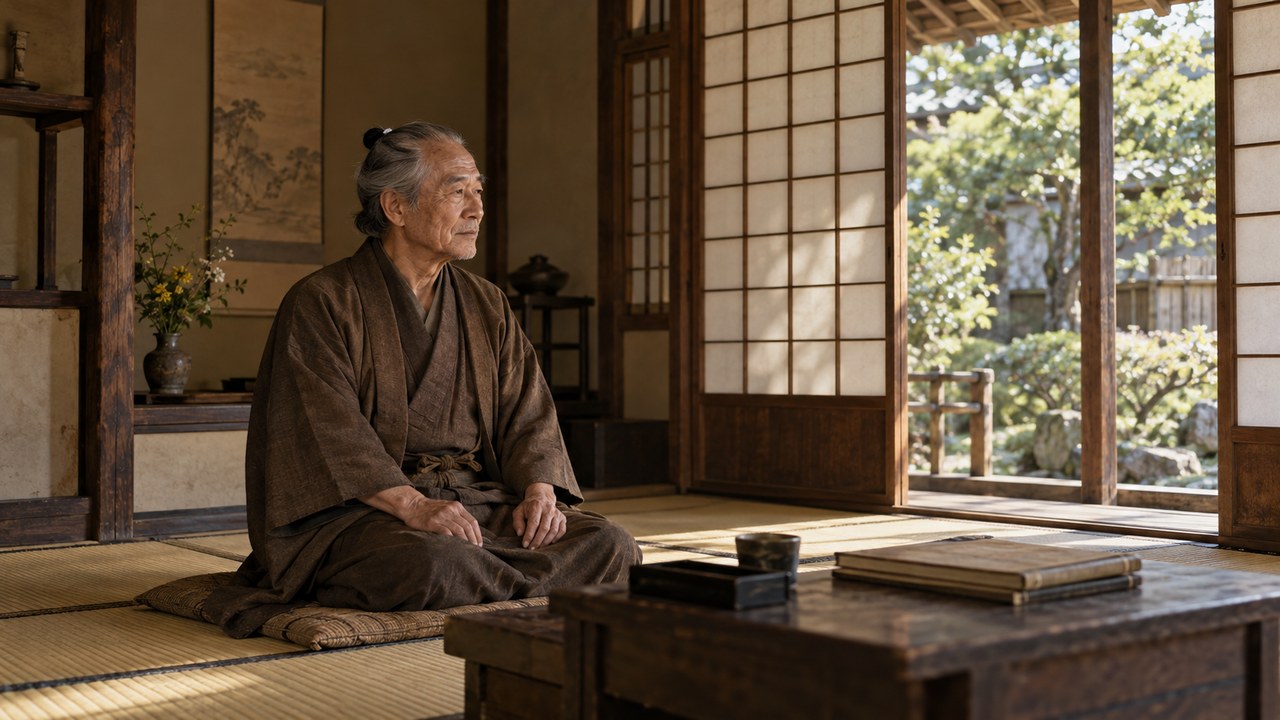
Okita then writes that he had heard from Hijikata that the old master was unwell, and that he had wished to visit him. The catalogue identifies this teacher as Kondo Shusai, that is, his former teacher Shusuke. The master he had once stood in for in Tama was still on his mind in Kyoto, years later and hundreds of kilometres away.
But Okita himself was ill and could not travel east to Edo, so he asks his correspondent to look after the old master instead. The encyclopedia entries explain that Okita suffered from tuberculosis and that his condition worsened from around 1867. The illness of the teacher and the illness of the writer appear side by side in the same letter.
In the letter Okita says that he is getting better day by day and that his correspondent should not worry. This is the news he chose to send about himself. It does not allow us to judge the full state of his health, or to say how the illness would develop afterward, and the article does not try to.
Chapter 10
Thanks for pickled vegetables
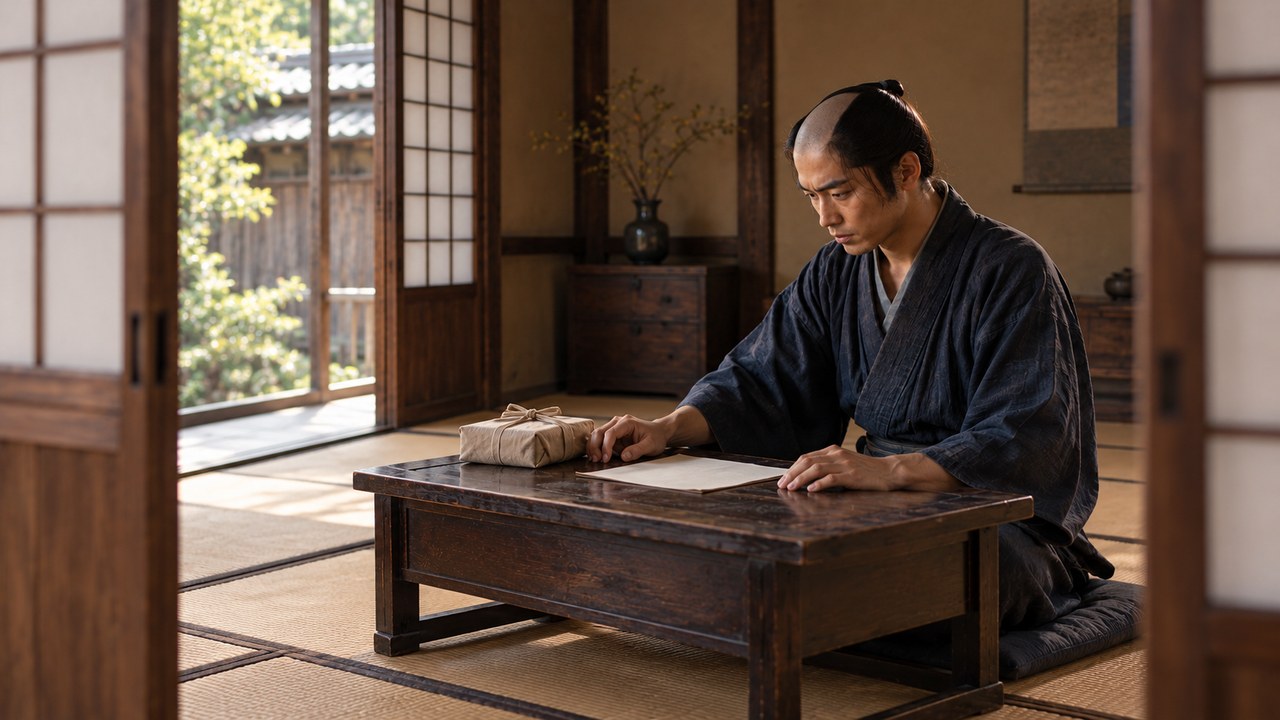
Near the end of the letter, Okita thanks his correspondent for a gift of misozuke, vegetables pickled in miso, that had been sent to him. The published reading continues with a request to pass on his regards to everyone. A letter addressed to one person was also meant for the people around him.
Food arrived from far away, and the person who received it sent thanks in return. Apart from his skill with the sword or his rank in the corps, exchanges like this one were part of the web of relationships that supported Okita's daily life in Kyoto, far from the households of Tama and Edo.
The return of comrades, a wish to visit an ailing teacher, news of his own health and thanks for a gift: one short letter holds several errands that connected different people. Beyond the page Okita wrote stood the person who would read it and the others who would receive his greetings through that reader.
Closing
His last months in Edo
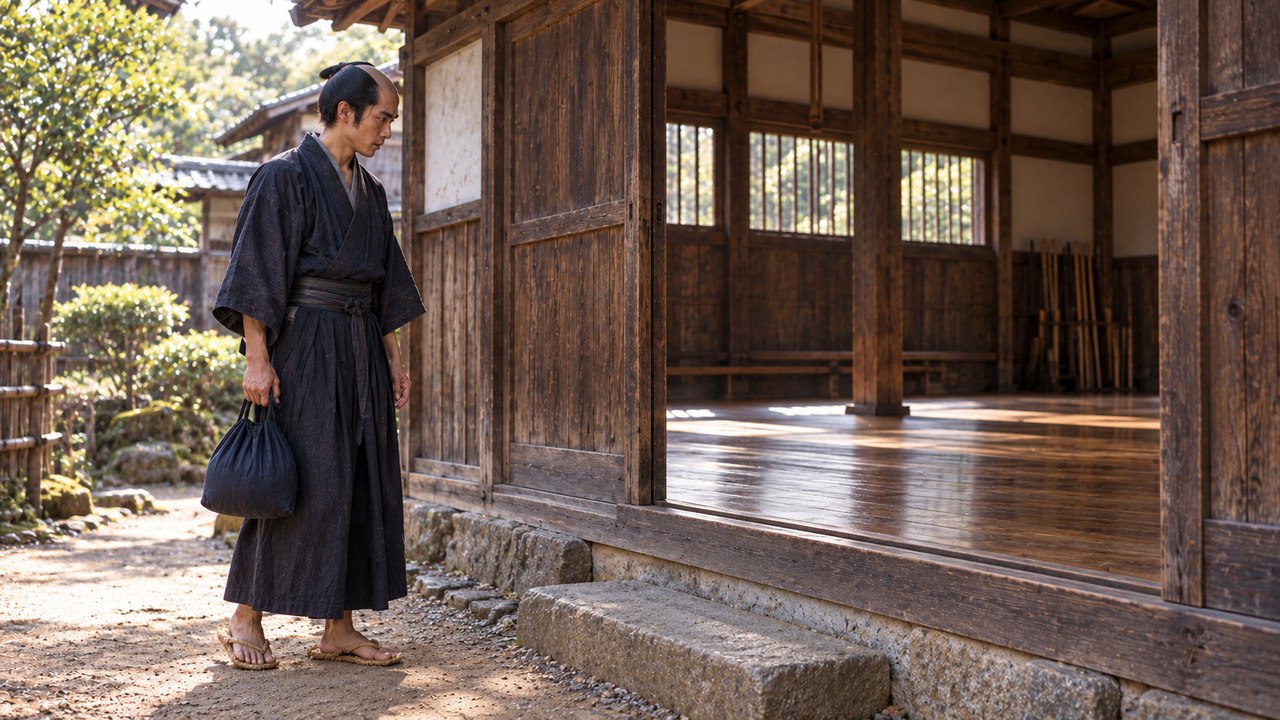
According to the encyclopedia entries, Okita returned to Edo after the battle of Toba-Fushimi and died of tuberculosis on the thirtieth day of the fifth month of 1868. His grave is at Senshoji temple in Moto-Azabu, Minato Ward, Tokyo. Some explanations give his death as 1867, so the dates of his life differ between sources.
There are also two accounts of where he died. Nippon Tabi Magazine explains that one places his death at the residence of the physician Matsumoto Ryojun in Imado, Asakusa, while another says he moved to the house of a gardener named Heigoro in Sendagaya and died there. Edo therefore has two sites remembered as the place where he died.
From learning to teaching, and from visiting people in person to asking favours by letter: when Okita's life is read through his ties to others, the threads of daily life that linked Tama and Kyoto emerge alongside the familiar story of the swordsman. That is the picture the diaries and his own letter leave behind.
How to read this work
History, interpretation, and reconstruction
Okita is usually remembered for his swordsmanship alone, but the practice visits, substitute teaching, errands and letters recorded around him show a man who linked people in Tama and Kyoto.
This work is grounded in published sources and historical research. Interior thoughts, dialogue, and some visual details are cinematic reconstructions. Where historians disagree, the article presents the point as debated rather than settled fact.
Timeline
The story in time
-
Born in Edo, the son of a Shirakawa domain samurai (year of birth disputed).
Sources: s07 -
Said to enter the Shieikan, Kondo Shusuke's training hall in Ichigaya.
Sources: s08 -
Visits the Tomizawa household as Shusuke's messenger with a letter announcing Isami's succession (Tomizawa diary).
Sources: s04 -
Catches measles while teaching in Shusuke's place; the Kojima diary records hope for his future and worry for his health.
Sources: s04 -
Visits the Kojima household with Yamanami Keisuke after the shogunate's call for masterless samurai.
Sources: s04 -
Goes up to Kyoto with Kondo Isami and others and joins the group that becomes the Shinsengumi.
Sources: s07 -
Charges into the Ikedaya with Kondo and others (the story of coughing blood and collapsing is tradition).
Sources: s07 -
Kondo Isami writes that if anything happens to him he wishes to pass Tennen Rishin-ryu on to Okita.
Sources: s04
People & terms
A guide for new readers
Key figures
- Okita Sōji
- A student of Tennen Rishin-ryū who taught in his teacher’s place and later led the Shinsengumi’s First Unit.
- Kondō Isami
- A successor in Tennen Rishin-ryū who shared the training world described in these records.
- Kondō Shūsuke (Shūsai)
- Okita’s teacher, with whom he lived as a resident pupil; the older teacher identified in the later letter’s catalog explanation.
- Hijikata Toshizō
- A member of Okita’s Tama circle whose return to headquarters is reported in the letter.
- Satō Hikogorō
- A village headman and post-station transport official at Hino; he established a training hall at his residence.
- Kojima Shikanosuke
- A member of the Kojima household associated with diary records of Okita’s teaching visits, illness and other calls.
- Miyagawa Otogorō
- The addressee of Okita’s letter cataloged as probably dating to 1867.
- Inoue Genzaburō
- Reported in the letter to have returned to headquarters together with Hijikata.
- Yamanami Keisuke
- A fellow member of the Shieikan circle who visited the Kojima household with Okita in 1863
Glossary
- Tama 多摩
- The region containing the homes and practice venues discussed in the early records; these connections do not define an exact travel route.
- Edo 江戸
- The city now called Tokyo, connected by journeys and correspondence with Tama and Kyoto in the sources used here.
- Shinsengumi 新選組
- The corps associated with Kondō, Hijikata and Okita in Kyoto; Okita later led its First Unit.
- Tennen Rishin-ryū 天然理心流
- The sword school shared by several people in the account; Hino describes its practical emphasis and heavy wooden practice swords.
- Dōjō 道場
- A venue for instruction and practice; the hall at Satō’s residence connected visitors with a local household.
- Degeiko 出稽古
- Practice undertaken by visiting another venue; the term does not specify an exact route or schedule.
- Daigeiko 代稽古
- Conducting practice for another teacher, as Okita did in the library’s account; distinct from inheriting leadership of the school.
- Uchideshi 内弟子
- A pupil living and working with a teacher, rather than attending only for lessons, in the library’s explanation.
- Honjin 本陣
- A designated lodging for high-ranking travelers at a road station; Hino’s example was associated with Satō’s residence.
- Nanushi 名主
- Village headman, one of the offices through which Hino identifies Satō Hikogorō.
- Toiya 問屋
- The post-station office associated with transport arrangements; here the term concerns road-station duties rather than simply a modern wholesale shop.
- Rōshi 浪士
- A man without a serving lord; recruitment provides the setting for the pre-Kyoto visits in the library account.
- Shūsuke and Shūsai 周助・周斎
- Names used for the older Kondō teacher, who is distinguished from Kondō Isami throughout this account.
- Misozuke 味噌漬け
- Food preserved in miso; the letter does not specify ingredients, quantity, a meal or a medical effect.
- Historical calendar 旧暦
- The calendar underlying the historical month/day labels; associating a year does not convert the same numbered month and day to Gregorian dates.
- Shieikan 試衛館
- The Tennen Rishin-ryu training hall run by Kondo Shusuke in the Ichigaya area of Edo, where Okita trained from childhood.
- Ikedaya incident 池田屋事件
- The 1864 raid by the Shinsengumi on an inn in Kyoto where activists had gathered.
Sources & method
How this article was built
This English edition follows the revised Japanese article scene by scene and keeps its sources, their order and its timeline. It draws on explanations by Hino City, Shinjuku City and the Kodaira City Library, the catalogue entry and published reading of Okita's letter in the Tama Digital Shinsengumi Archive on ADEAC, encyclopedia entries on JapanKnowledge, and Nippon Tabi Magazine.
Okita's year of birth, the place of his death and the story of coughing blood at the Ikedaya differ between sources or come down as tradition, and are presented as such. His statement that he was recovering is read as what he told his correspondent, not as a full account of his health.
Images are AI-generated conceptual scenes by SHIGEKI. They are not portraits of real people, original documents or exact reconstructions of historic sites. The film has Japanese audio.
Sources
References and further reading
- Okita Sōji — Hino City 日野市 沖田総司 Title translated editorially for reader convenience. Hino City 日野市 Official introduction supporting visiting practice, associations and the later First Unit position; the skill statement is not a measured ranking. Accessed 2026-11-18
- Tennen Rishin-ryū — Hino City 日野市 天然理心流 Title translated editorially for reader convenience. Hino City 日野市 General explanation of the school and heavy wooden swords; not proof of Okita’s exact movements or the pictured implements. Accessed 2026-11-18
- Hino-juku Honjin — Hino City 日野市 日野宿本陣 Title translated editorially for reader convenience. Hino City 日野市 Historical-site account of Satō’s offices, residence, hall and family relationship. Present-day information and traditions are not reconstructions of a specific visit. Accessed 2026-11-18
- Tama and the Shinsengumi — Kodaira City Library 小平市立図書館 多摩と新選組 Title translated editorially for reader convenience. Kodaira City Library 小平市立図書館 Institutional explanation and posted diary excerpts: resident pupils, substitute teaching, succession communication, measles, pre-Kyoto visits and correspondence. Conflicting biographical year labels are not adopted. Accessed 2026-11-18
- Catalog: Okita Sōji’s Letter to Miyagawa Otogorō ADEAC 沖田総司書簡・宮川音五郎宛 目録 Title translated editorially for reader convenience. Tama Digital Shinsengumi Museum / ADEAC Archive 多摩デジタル新選組資料館/ADEACアーカイブ Catalog metadata and explanation identify sender, addressee, estimated dating and the older teacher as Kondō Shūsai. The original is cataloged as privately held, not owned by this digital collection. Accessed 2026-11-18
- Published Reading of Okita Sōji’s Letter ADEAC 多摩デジタル新選組資料館・同書簡読み下し Title translated editorially for reader convenience. Tama Digital Shinsengumi Museum / ADEAC Archive 多摩デジタル新選組資料館/ADEACアーカイブ Complete posted reading consulted for the return report, inability to travel, reported improvement, request concerning the teacher, gift and regards. No original-handwriting decipherment claimed. Accessed 2026-11-18
- Okita Soji (Encyclopedia Nipponica, Heibonsha World Encyclopedia and others) 沖田総司(日本大百科全書・世界大百科事典・新版 日本架空伝承人名事典) Title translated editorially for reader convenience. JapanKnowledge (NetAdvance) ジャパンナレッジ(ネットアドバンス) Used for his birth as the son of a Shirakawa samurai and the disputed year, his training and post as head student at the Shieikan, the move to Kyoto in 1863, his posts in the Shinsengumi, the Ikedaya incident and the tradition of coughing blood, his tuberculosis, his death on the 30th day of the fifth month of 1868 and his grave at Senshoji. Traditions are not treated as established. Accessed 2026-11-18
- Enoki Walking Route (Site of the Shieikan) えのき散歩道(試衛館跡) Title translated editorially for reader convenience. Shinjuku City 新宿区 Used for the location of the Shieikan in the Kora Yashiki (now 25 Ichigaya Yanagicho), Kondo Isami's adoption in 1849 and Okita's entry in 1852. Accessed 2026-11-18
- Imado Shrine 今戸神社 Title translated editorially for reader convenience. Nippon Tabi Magazine ニッポン旅マガジン Used for the two accounts of where Okita died, at Matsumoto Ryojun's residence in Imado or at the gardener Heigoro's house in Sendagaya, and the entry in Nagakura Shinpachi's list of comrades. Accessed 2026-11-18
Continue reading
More stories from Shigeki
Shigeki English
Ishida Mitsunari: How a Magistrate of 190,000 Koku Came to Stand at the Center of Sekigahara
Was Sekigahara a war Mitsunari plotted? Fourteen scenes follow the third son of a village family from the survey fields and supply lines to the center of the decisive battle, and to the riverbed at Rokujō.
- When From his birth in 1560 to his execution on the 1st day of the 10th month of 1600.
- Where Ōmi (today Shiga Prefecture), Sakai, Kyushu and Hakata, Oshi in Musashi, Korea, Sawayama, Fushimi, Ōgaki, Sekigahara and Kyoto.
Shigeki English
Taira no Kiyomori: From the First Warrior Noble to a Capital by the Sea
Born as Tadamori’s heir, he rose through the Hogen and Heiji conflicts to grand minister of state, then turned from Fukuhara to Itsukushima, Owada no Tomari and Song ships, before the transfer and return of the capital, his death and the end of his family.
- When 1118–1181, from his birth to his death, with the defeat at Dan-no-ura in 1185 and the statue of 1967
- Where Kyoto, Fukuhara in present-day Kobe, Owada no Tomari, Itsukushima, the Ondo Strait and Dan-no-ura