
SHIGEKI ENGLISH STORYEN
Japanese history in English
The Battle of Okehazama: What Did Nobunaga See Before He Advanced?
The great house of Imagawa, reports from the forts, smoke at Atsuta, troops gathering at Zenshoji, a sudden storm and the death of Yoshimoto, followed by Ieyasu's independence and the fall of the Imagawa.
On the nineteenth day of the fifth month of 1560, Oda Nobunaga's army killed Imagawa Yoshimoto. Behind the legend of a surprise attack lay forts facing castles, reports on the night before, smoke at Atsuta, troops gathering at Zenshoji, deep fields and a sudden storm. Using Shinchokoki and explanations by public institutions, this article follows the day in order, keeps the differing army sizes and sites of Yoshimoto's death apart, and traces the consequences through Ieyasu's independence and the end of the Imagawa.
At a glance
Before you enter the story
- When
- Eiroku 3 (1560), fifth month, 19th day, with background from 1338 and consequences to 1569
- Where
- Southeastern Owari around Narumi, Odaka and Okehazama; Okazaki in Mikawa; Suruga and Totomi
- Key figures
- Oda Nobunaga, Imagawa Yoshimoto, Matsudaira Motoyasu (later Tokugawa Ieyasu), Imagawa Ujizane, Ota Gyuichi, author of Shinchokoki
- What was at stake
- What did Nobunaga know before he struck, and how did one day change the balance of power in eastern Japan?
Why this story matters
The larger history behind the turning point
Okehazama is often remembered as a simple surprise attack by a few against many. The recorded sequence of reports, movements and weather gives a more concrete picture of how decisions were made with limited information.
The battle opened the way for Tokugawa Ieyasu to become independent and ally with Nobunaga, and it began the decline of the Imagawa, a house that had ruled Suruga for over two centuries.
Historical context
What an international reader needs to know
People, names and military positions
Oda and Imagawa identify the opposing sides in this account; Nobunaga and Yoshimoto are their commanders. Matsudaira Motoyasu is the same person later known as Tokugawa Ieyasu. Using his contemporary name keeps his Imagawa-side activity visible. Japanese personal names here place the family name first.
A castle and a fort are distinct kinds of position in this narrative. The castles held by Imagawa forces and the forts facing them explain where supply movements and attacks took place. The article does not assume that a present-day castle or monument preserves the full appearance of a position in 1560.
Reading a date and a later printed text
Eiroku 3 is the era year used by the official explanations for 1560. Our month and day expressions refer to the Japanese calendar retained in the original article, without a conversion to the Western calendar. This makes the date convention explicit to readers encountering it in English.
Shinchokoki is Ota Gyuichi's account of Nobunaga. The checked copy is an 1881 printed edition, far later than the battle. Its era-year entry differs from the dating in the official explanations. We report that discrepancy instead of presenting the chosen edition as an unproblematic contemporary recording.
Watch the film
See the story in motion
The film currently uses Japanese audio. This English article provides the context and source trail; it does not imply that an English subtitle track is available.
Opening
Begin with the forts
On the nineteenth day of the fifth month of Eiroku 3, the year 1560, the army of Oda Nobunaga killed Imagawa Yoshimoto at Okehazama in Owari Province. Yoshimoto ruled Suruga, Totomi and Mikawa, and his defeat by a young lord of Owari became one of the best-known battles in Japanese history. Month and day follow the lunar calendar used at the time.
The battle is often told as the story of a small force that destroyed a huge army in a surprise attack. Yet Shinchokoki, the chronicle of Nobunaga written by his retainer Ota Gyuichi, shows that the day began earlier, with a contest over castles and forts and a series of reports reaching Nobunaga before the main armies met. Read in order, those reports turn a famous result into a sequence of decisions taken with partial knowledge.
What was Nobunaga told, how far did he go, and what did he confirm before he moved? This article compares the chronicle with present-day explanations by public institutions and follows the sequence from the positions held before the battle to the death of Yoshimoto and the changes that followed it.
Chapter 1
The Imagawa, a great house of Suruga
The Imagawa were a branch of the Ashikaga family, the house of the Muromachi shoguns. In 1338 the first of the line, Imagawa Noriyuki, was appointed military governor of Suruga. According to Shizuoka City, the family then ruled Suruga for about 230 years, through the Muromachi period and into the age of the warring states.
Yoshimoto became head of the house after winning a succession dispute that followed the death of his elder brother Ujiteru, and he concluded an alliance with the Hojo and the Takeda. He added new articles to the Imagawa house law issued by his father Ujichika and is known for advanced methods of governing his lands. The young head of the Matsudaira of Mikawa, later Tokugawa Ieyasu, was also on the Imagawa side.
Shizuoka City describes the familiar picture of Yoshimoto as a courtly lord who led a vast army only to be cut down by a few men as an image created later. Under what conditions, then, did this ruler send his forces into Owari? The answer begins not with Yoshimoto's march itself, but with the strongholds that both sides already held along the border between Owari and Mikawa.
Chapter 2
Forts facing castles
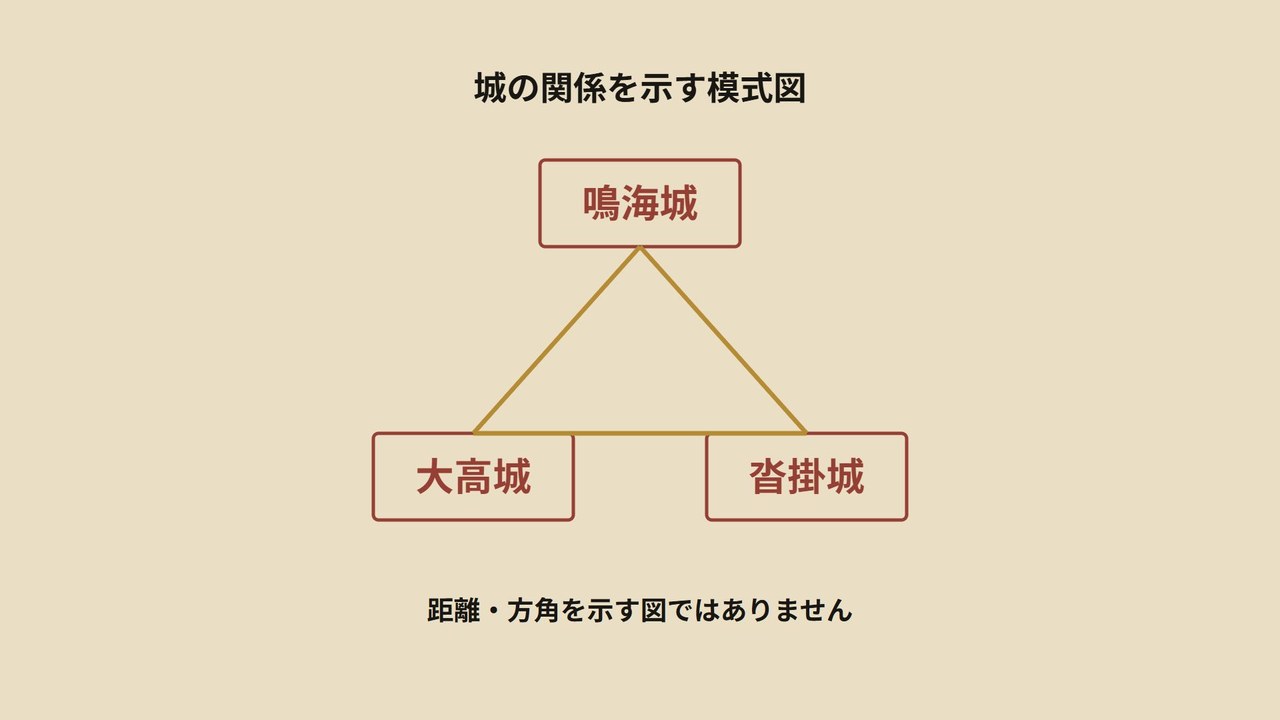
The setting is the southeastern part of Owari. Shinchokoki records that the Imagawa side had placed men in the castles of Narumi, Odaka and Kutsukake. Imagawa strongholds had already pushed deep into Owari territory before the campaign of 1560.
Nobunaga's side answered by building the forts of Tange, Zenshoji and Nakajima around Narumi, and two more forts, Marune and Washizu, between Narumi and Odaka. The Midori Ward office of Nagoya also explains the two forts as positions set up against Odaka Castle.
In other words, even before Yoshimoto's main army arrived, this was a district where castles and forts stood facing each other. The way into the battle lies not only in the size of a great army approaching from far away, but also in the layout of strongholds close at hand. Each castle needed food and men, and each fort was placed to cut those supplies or watch the roads that carried them.
Chapter 3
News on the night before
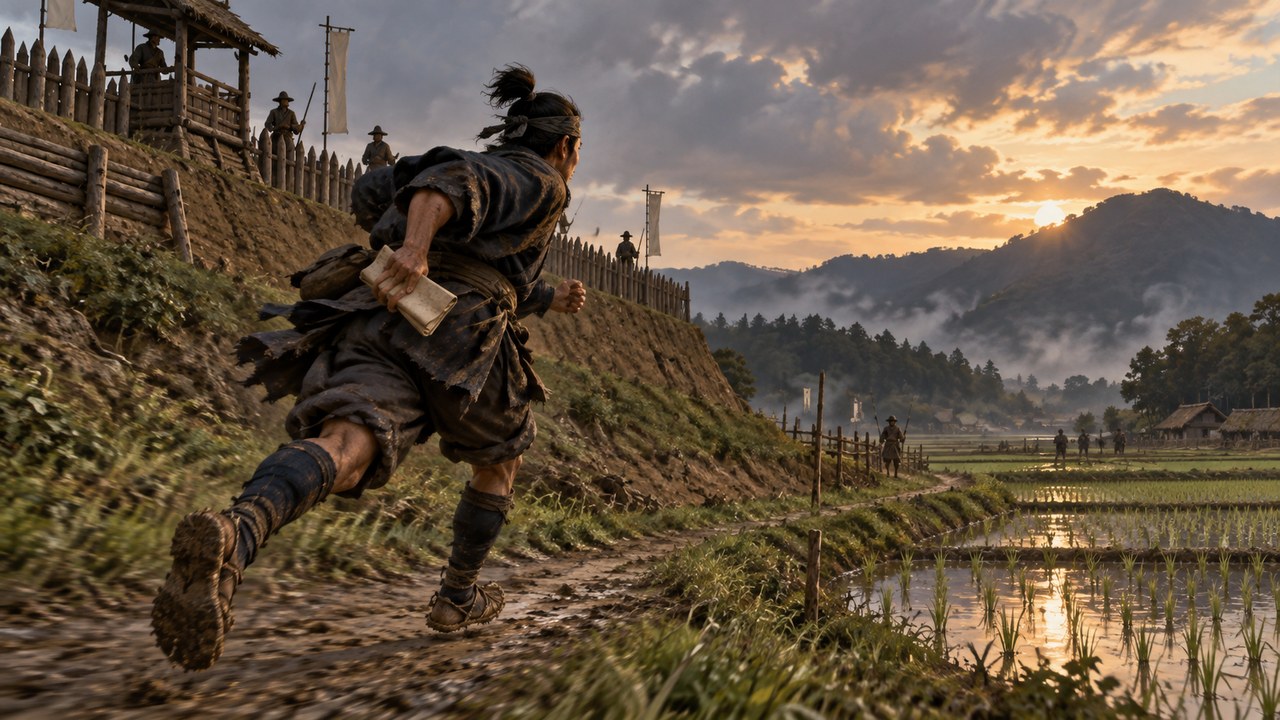
According to Shinchokoki, on the night before the battle the forts reported to Nobunaga at Kiyosu that provisions were being taken into Odaka Castle and that the forts were likely to be attacked the next morning. For Nobunaga, the morning attack did not come out of nowhere.
The man who carried the provisions into Odaka was Matsudaira Motoyasu, the future Tokugawa Ieyasu, then fighting for the Imagawa. The National Archives of Japan explains that the supply operation succeeded. Once food reached the castle, its garrison had what it needed to hold on.
The report did not, however, reveal where Yoshimoto's main body was. What the chronicle passes on is the movement of supplies and the expectation that the forts would be targeted. Nobunaga still had to learn much more before he could decide where to strike. The chronicle gives no sign that he knew the enemy's plan in detail at this stage.
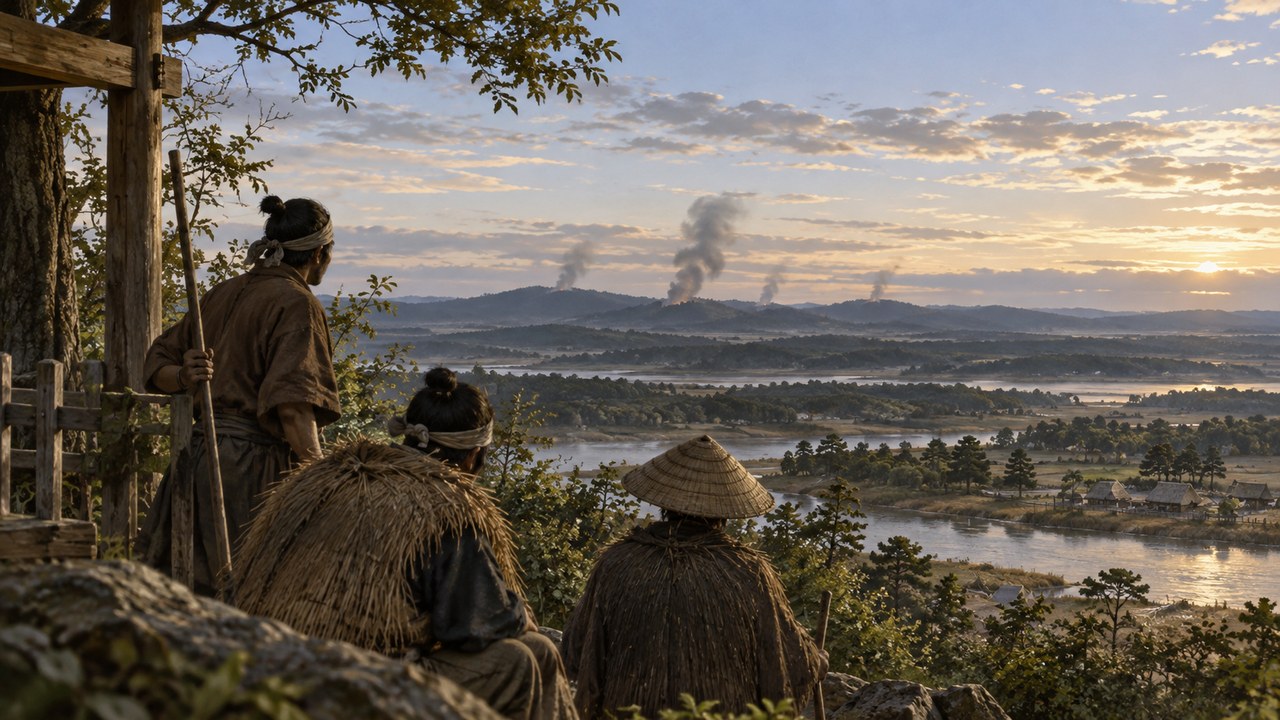
Chapter 4
Reports of attack and smoke at Atsuta
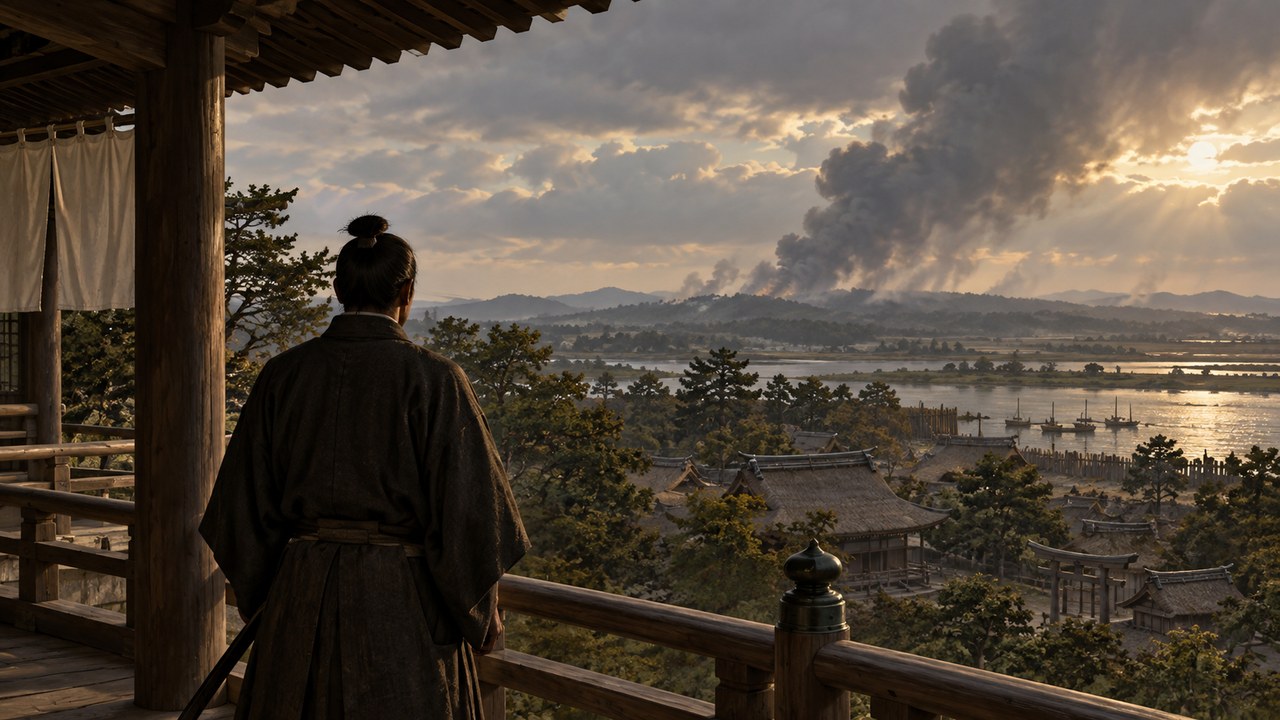
Around dawn, reports arrived one after another that the forts of Marune and Washizu were under attack. Shinchokoki places Nobunaga's departure after these reports. When he left Kiyosu, it says, he was accompanied by only six riders, himself included.
Six riders was the party at the moment of departure, not the number of soldiers who later took part in the attack. Nobunaga rode on to Atsuta and looked east. Smoke was rising in the direction of the forts, and it appeared that Marune and Washizu had fallen.
Two kinds of information appear here: reports brought by messengers, and smoke seen from a distance. The Midori Ward explanation also records that Washizu was attacked by Imagawa forces and that fierce fighting took place at Marune with Matsudaira Motoyasu and others. By the time Nobunaga could see the smoke, the fighting at the forts had already been under way for some time.
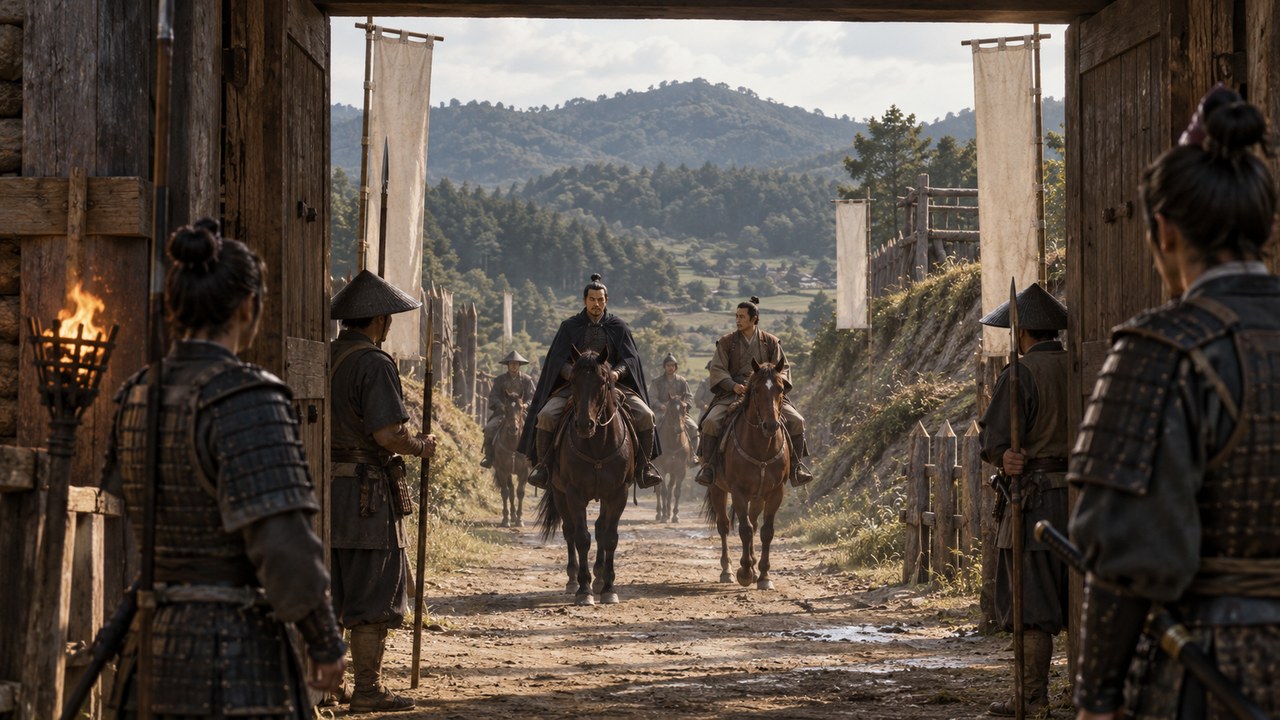
Chapter 5
From Atsuta to Zenshoji
The road beyond Atsuta had its own conditions. According to Shinchokoki, the route along the shore was shorter, but the tide was high and horses could not pass, so Nobunaga took the upper road. Modern roads cannot simply be laid over the map to draw the shortest line.
Next the chronicle names the fort of Tange and then the fort of Zenshoji. At Zenshoji, it says, Nobunaga put his men in order and saw that the troops had gathered. Between Kiyosu, Atsuta and the forts, an army had been forming around him.
The Midori Ward explanation likewise states that Nobunaga assembled his forces at Zenshoji on the way to Okehazama. The forts he passed were not only landmarks along the road; they were also places where soldiers could be collected before the next move. Gathering men in stages also meant that the size of Nobunaga's force changed through the day, which matters when we look at the numbers.
Chapter 6
How to read the numbers
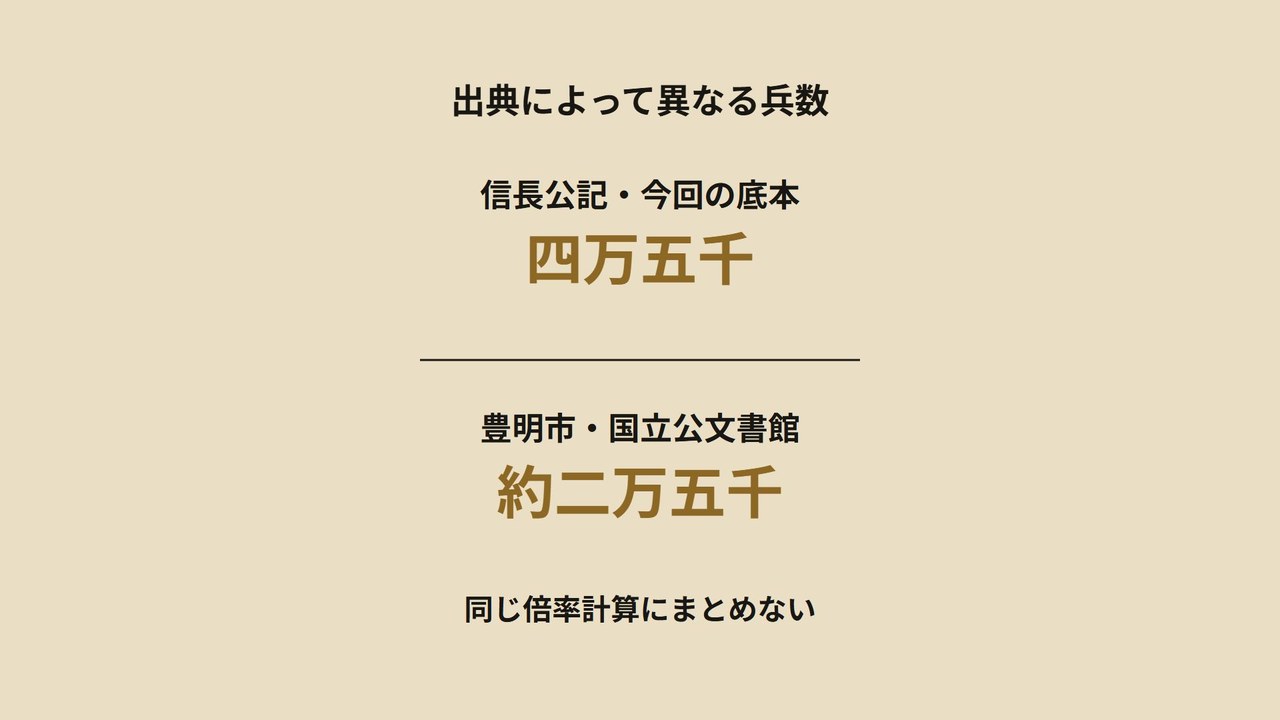
How many men fought on each side? The printed edition of Shinchokoki checked for this article gives Yoshimoto's army as 45,000 and says that when Nobunaga moved to Nakajima he had fewer than 2,000 men.
Toyoake City, by contrast, gives the Imagawa army as about 25,000 and the Oda force at the time of battle as about 3,000, and the National Archives also says that Yoshimoto led 25,000 soldiers. The figures differ from source to source, and they do not all count the same moment.
Mixing the numbers at departure from Kiyosu, at the gathering point and at the moment of attack makes any comparison collapse. The whole Imagawa army must also be kept separate from the men actually fighting near Yoshimoto. A single neat ratio of attackers to defenders hides more than it reveals. What the sources do agree on is that the Oda force that attacked was much smaller than the Imagawa army as a whole.
Chapter 7
The earlier clash and the move to Nakajima
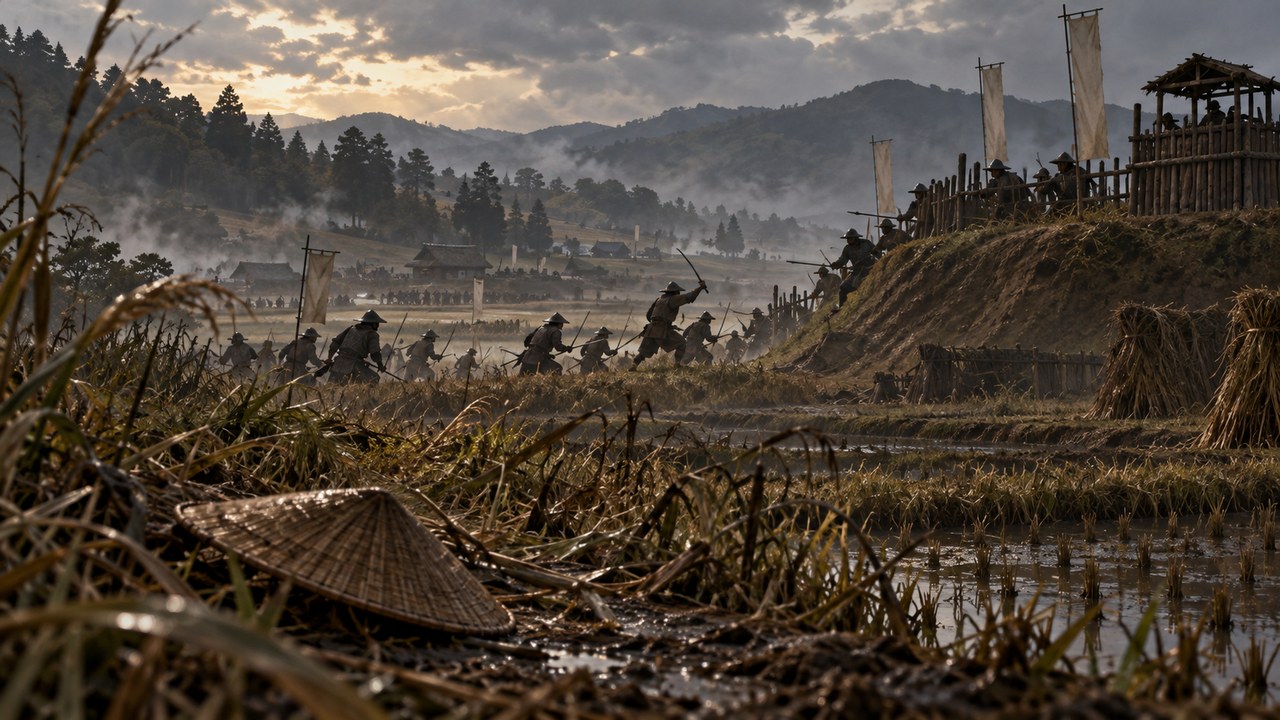
Around the time Nobunaga reached Zenshoji, Shinchokoki records that a unit of the Oda side went out toward Yoshimoto's army and was defeated. The fight of this advance party and the attack later led by Nobunaga himself need to be read as separate events.
When Nobunaga then tried to move to the fort of Nakajima, his retainers tried to stop him. The road ran between deep paddy fields, wide enough for only one rider at a time, and they worried that a small force would be plainly visible to the enemy.
Nobunaga moved to Nakajima anyway and from there sent his men further forward. The defeat of the advance party, the move to Nakajima and the advance beyond it follow one another in a continuous passage of the chronicle. The order matters: Nobunaga advanced after learning that an earlier attack had failed, not before.
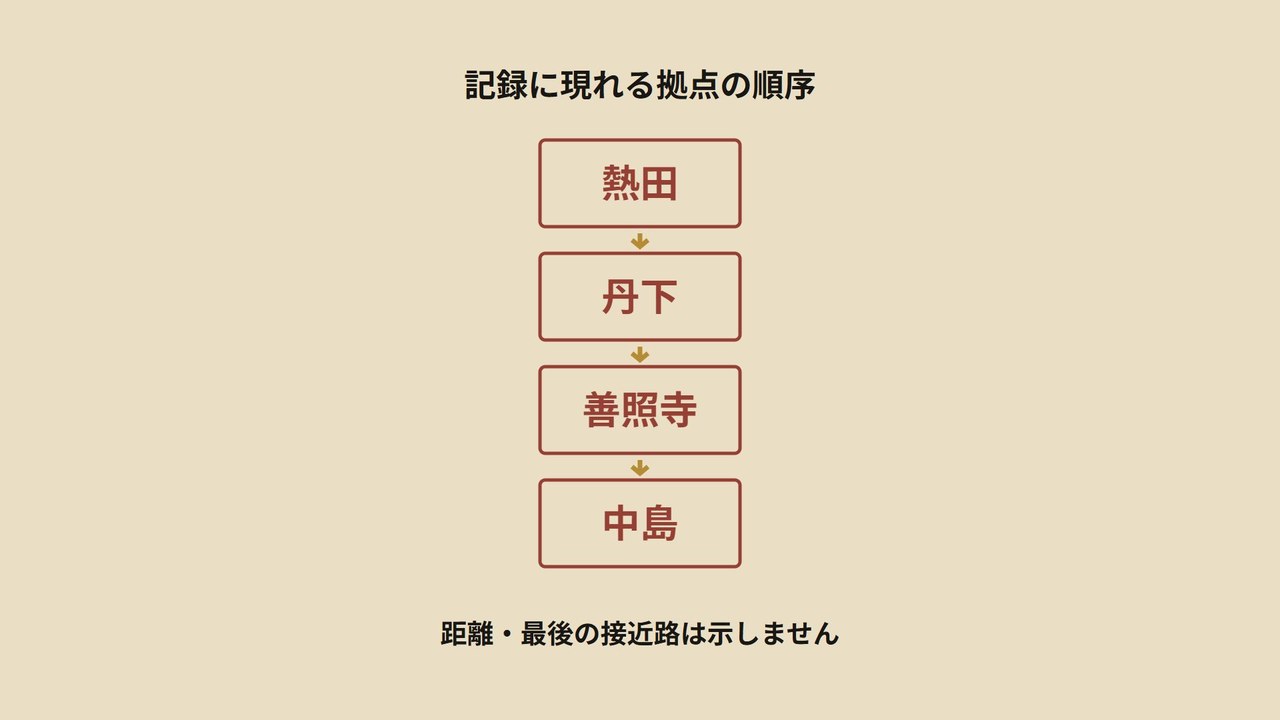
Chapter 8
Deep fields and two places of death
Shinchokoki mentions deep paddies and narrow paths along the way, and describes the area where Yoshimoto was killed as uneven and hard to move through. The ground restricted movement for attackers and retreating soldiers alike, rather than serving only as a convenient screen.
The chronicle's words cannot pin Yoshimoto's headquarters to a single point on a modern map, and even the march map published by Toyoake City is labeled as an assumption. Two places are remembered as the site of his death: the traditional battlefield site in Toyoake and Okehazama Battlefield Park in Midori Ward, Nagoya.
Nagoya's official tourism site introduces the park as the place where Yoshimoto, who had made camp on Okehazama hill, is said to have met his end. Both sites are places of memory, shaped by local tradition and later preservation as historic monuments.
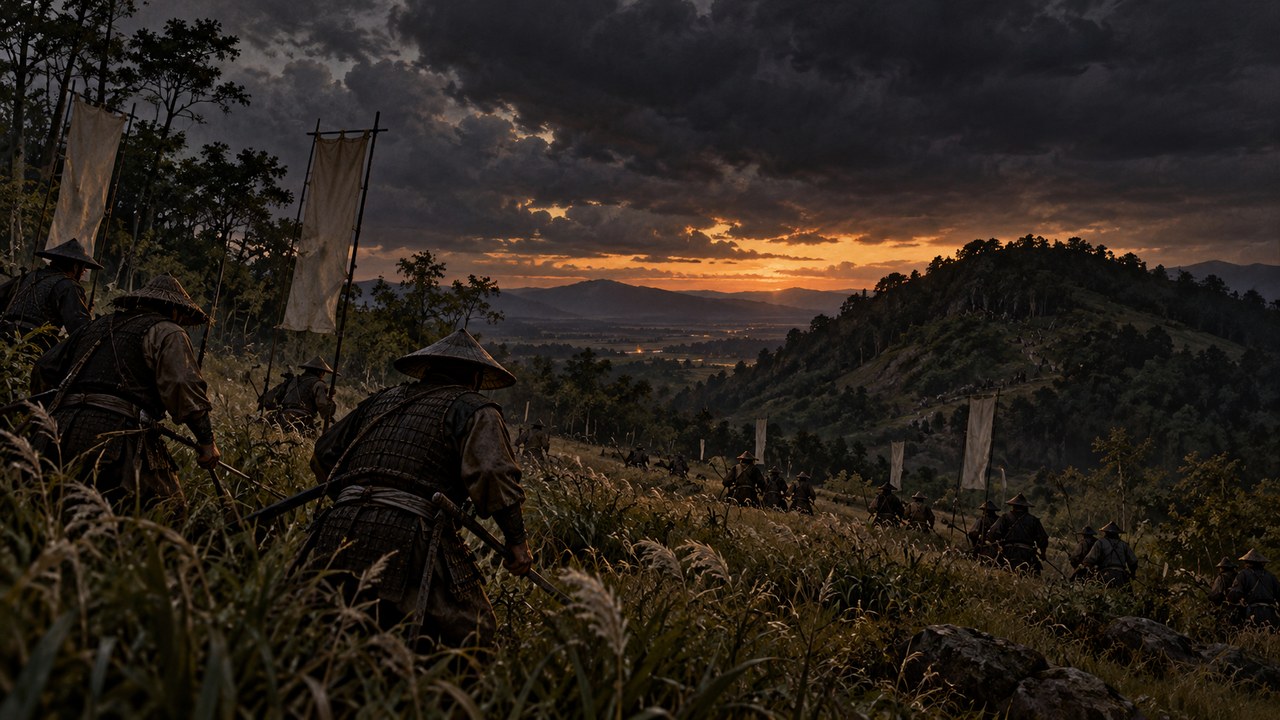
Chapter 9
Sudden rain and the order of the attack
Okehazama is famous for a sudden, violent storm. Shinchokoki says that when the army had been brought up to the foot of the hills, a sudden rain fell, and that the attack began when the sky cleared. It even describes trees being blown down.
What matters is not to treat the approach in the rain and the start of the attack as the same moment. A Toyoake City public bulletin also separates the approach during bad weather from the attack after the weather improved.
Did the rain conveniently hide the attackers, or did it simply happen during the march? What the chronicle records is a sequence: sudden rain, clearing skies, then the attack. There is no evidence that Nobunaga had predicted the weather. Later retellings that make the storm part of a master plan go beyond what the chronicle says.
Chapter 10
The death of Yoshimoto
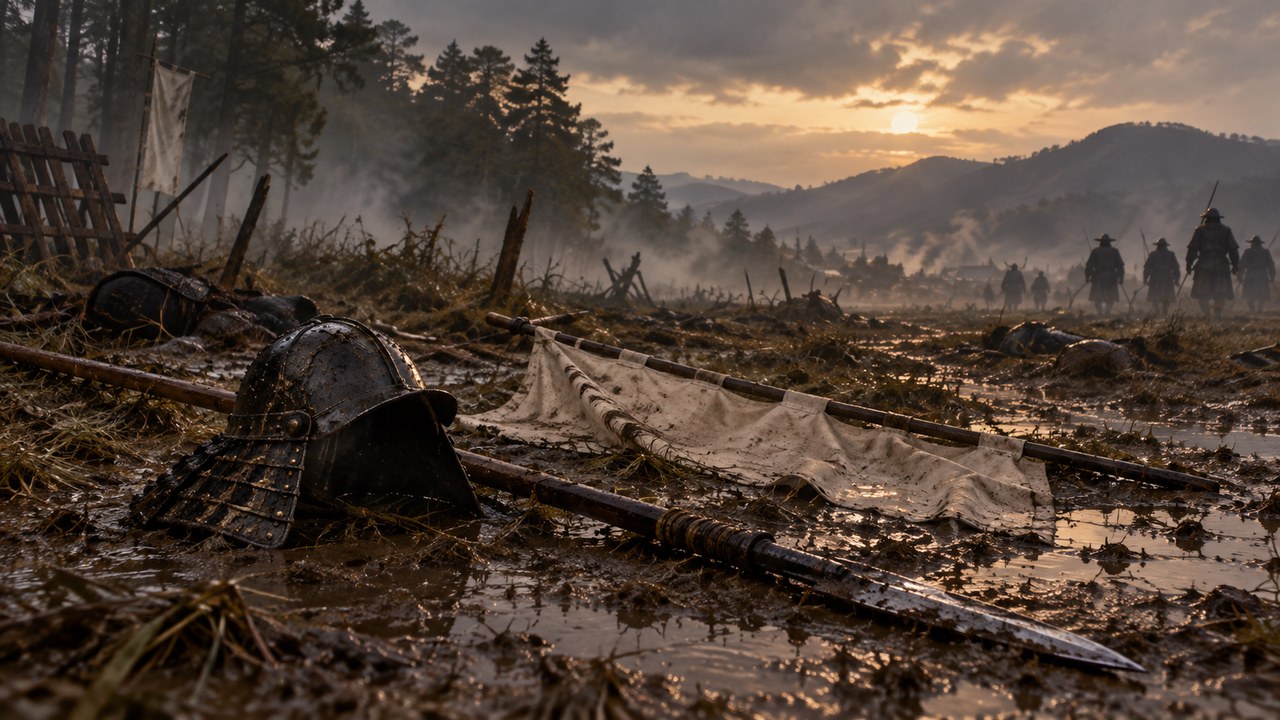
Under attack, the Imagawa side gave way, and Shinchokoki records that even Yoshimoto's lacquered palanquin was abandoned. Yet it is not a record of Yoshimoto fleeing without resistance.
The men around him closed in and fought again and again as they withdrew, their numbers steadily falling. In the end, the chronicle says, Nobunaga's retainer Hattori Koheita struck at Yoshimoto, and Mori Shinsuke took his head. Nagoya's tourism site gives the same two names.
The National Archives explanation also states that the main bodies of the two armies fought at Okehazama and that Yoshimoto was killed. The ruler of three provinces had died on the battlefield, and this outcome began to redraw the balance of power along the Tokai coast. Few battles of the period ended with the death of the commander of a whole regional power.
Chapter 11
Motoyasu's independence and the alliance with Nobunaga
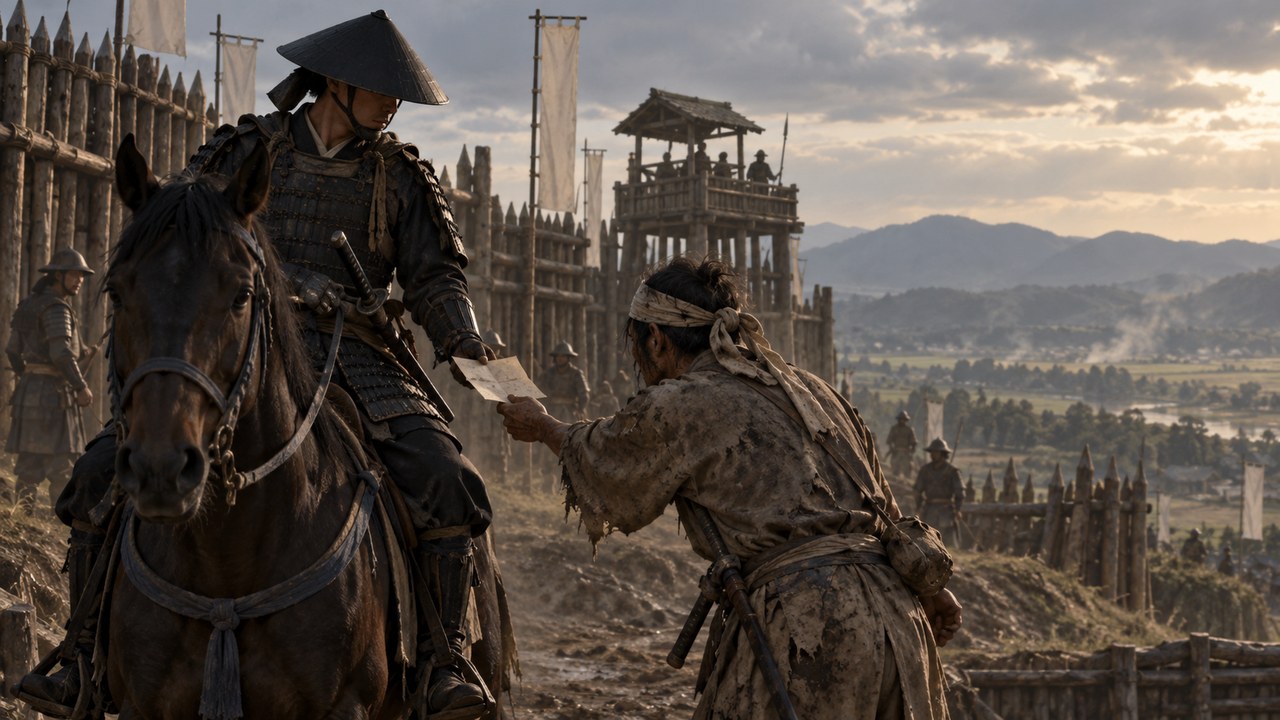
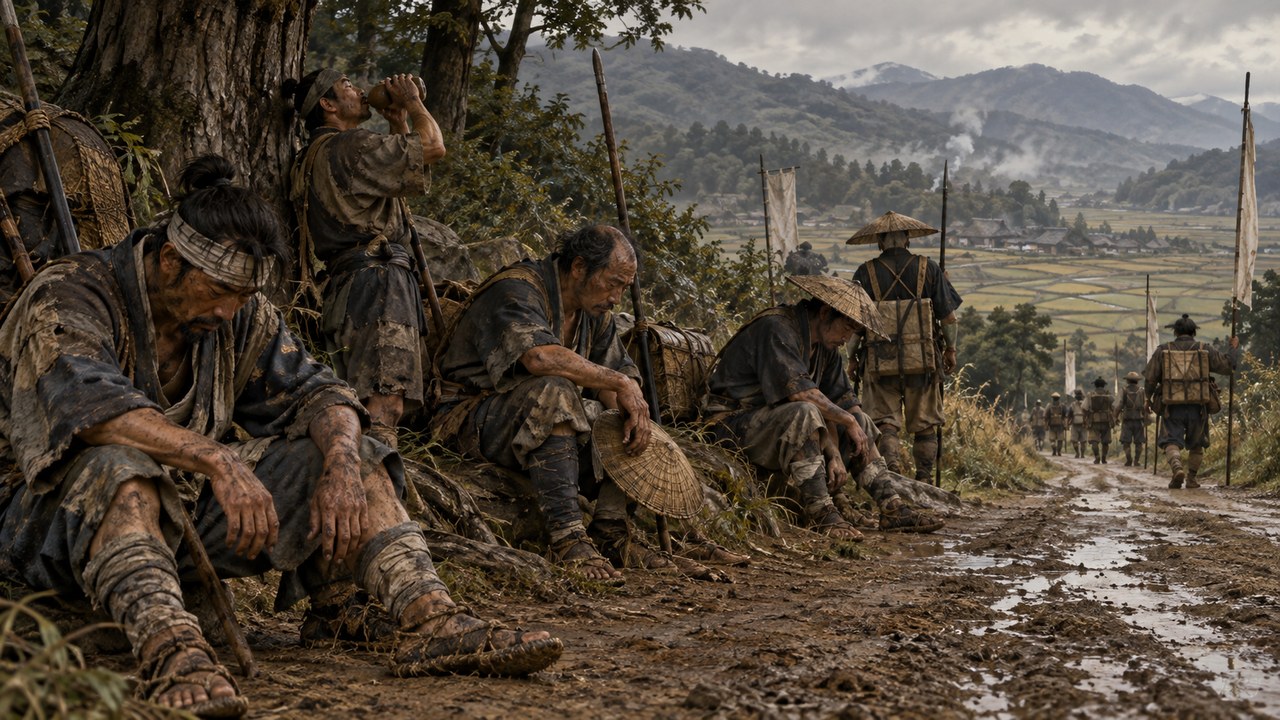
News of Yoshimoto's death reached Matsudaira Motoyasu, who was resting at Odaka Castle. According to the National Archives, the news came that evening from his uncle Mizuno Nobumoto. Motoyasu confirmed it before leaving the castle and went to Daijuji, his family temple at Okazaki.
Because the Imagawa troops abandoned Okazaki Castle and withdrew to Suruga, Motoyasu entered it on the twenty-third day of the fifth month, for the first time in about eleven years. He did not join Nobunaga at once, however; for some time after the battle he went on fighting the Oda as an Imagawa ally.
According to the same institution, Motoyasu made peace and an alliance with Nobunaga in Eiroku 4 (1561), and in Eiroku 6 (1563) his heir Takechiyo, later Nobuyasu, was betrothed to Nobunaga's daughter. That same year Motoyasu dropped the character "moto" received from Yoshimoto and changed his name to Ieyasu.
Conclusion
What Nobunaga saw, and what became of the Imagawa
What did Nobunaga see before he moved? The records let us trace reports of attacks on the forts, smoke seen from Atsuta, troops gathering at Zenshoji, the conditions of the road, the earlier clash and a sudden storm. This is not everything he knew, but the order in which the record preserves it.
After Yoshimoto's death his son Ujizane led the Imagawa. Shizuoka City notes that Ujizane showed real ability in governing his lands and in economic policy. Even so, invaded by Takeda Shingen in Suruga and by Ieyasu in Totomi, he surrendered Kakegawa Castle in Eiroku 12 (1569), and the Imagawa ended as a warring-states power.
The day at Okehazama did more than make Nobunaga's name. It opened the way for Ieyasu to stand on his own and marked the beginning of the Imagawa decline. Behind the legend of a surprise attack lay a chain of concrete conditions: forts, reports, gathering troops, ground and weather. Seen this way, Okehazama is less a miracle than a day in which information, timing and terrain came together, and in which the consequences reached far beyond one battlefield.
How to read this work
History, interpretation, and reconstruction
Okehazama cannot be explained by a surprise attack alone. Placing the forts, reports, gathering of troops, road and weather in their recorded order shows how Nobunaga advanced with limited information, and how the result led to Ieyasu's independence and the decline of the Imagawa.
This work is grounded in published sources and historical research. Interior thoughts, dialogue, and some visual details are cinematic reconstructions. Where historians disagree, the article presents the point as debated rather than settled fact.
Timeline
The story in time
-
Imagawa Noriyuki is appointed military governor of Suruga, founding the Suruga Imagawa.
Sources: s8 -
Matsudaira Motoyasu enters Okazaki Castle, abandoned by Imagawa troops, for the first time in about eleven years.
Sources: s3 -
Motoyasu makes peace and an alliance with Nobunaga.
Sources: s3 -
Motoyasu's heir is betrothed to Nobunaga's daughter; Motoyasu changes his name to Ieyasu.
Sources: s10 -
Ieyasu completes the conquest of Mikawa and at year's end is permitted to take the surname Tokugawa.
Sources: s10
People & terms
A guide for new readers
Key figures
- Oda Nobunaga
- Commander who left after reports of attacks on the forts and advanced toward the Imagawa force
- Imagawa Yoshimoto
- Imagawa commander killed at Okehazama
- Matsudaira Motoyasu
- Later Tokugawa Ieyasu; serving the Imagawa side and involved in supplying Odaka Castle
- Ota Gyuichi
- Author of Shinchokoki
- Imagawa Ujizane
- Yoshimoto's son, who led the Imagawa after 1560 and surrendered Kakegawa Castle in 1569
Glossary
- Okehazama 桶狭間
- The battle setting where the main Oda and Imagawa forces fought and Yoshimoto was killed.
- Eiroku 3 永禄3年
- The era year corresponding to 1560 in the official explanations. Month and day remain in the original Japanese calendar.
- Owari 尾張
- The province whose southeastern castles, forts and roads form the setting of this account.
- Shinchokoki 信長公記
- Ota Gyuichi's account of Nobunaga, consulted here through an 1881 printed edition with a noted era-year discrepancy.
- Castle / shiro 城
- A military position; Narumi, Odaka and Kutsukake are the castles held by Imagawa forces in the account.
- Fort / toride 砦
- A fortified position. Tange, Zenshoji, Nakajima, Marune and Washizu form part of the local military setting.
- Provisions / hyoro 兵糧
- Food supplies for troops; their delivery into Odaka is part of the activity preceding the battle.
- Report / chushin 注進
- A report conveying news. Reports of attacks on the forts precede Nobunaga's departure in the chronicle.
- Matsudaira Motoyasu 松平元康
- The contemporary name used here for the man later known as Tokugawa Ieyasu, then active on the Imagawa side.
- Ujizane 氏真
- Imagawa Ujizane, Yoshimoto's son and successor, who surrendered Kakegawa Castle in 1569.
- Kakegawa Castle 掛川城
- The castle in Totomi where Ujizane held out before the Imagawa surrendered in 1569.
Sources & method
How this article was built
This English edition follows the revised Japanese article scene by scene and keeps its sources, their order and its timeline. The narrative relies on the 1881 printed edition of Shinchokoki in the National Diet Library and on explanations by Toyoake City, the National Archives of Japan, Nagoya's Midori Ward office, Shizuoka City and Nagoya's official tourism bureau.
Army sizes, the final approach route and the exact place of Yoshimoto's death differ between sources or remain uncertain, and they are presented as such. The checked edition of Shinchokoki dates the events to a different era year from the official explanations; the article follows the official dating of 1560.
Images are AI-generated conceptual scenes and original SHIGEKI diagrams with Japanese labels. They are not portraits of real people or exact reconstructions of historical places. The film has Japanese audio.
Sources
References and further reading
- Ota Gyuichi, Shinchokoki, opening volume, 1881 printed edition 太田牛一『信長公記』巻之上、甫喜山景雄刊、1881年(我自刊我本) Title translated editorially for reader convenience. National Diet Library; work by Ota Gyuichi 国立国会図書館(原著:太田牛一) The checked opening sections appear in NDL images 15–17. The edition's era-year discrepancy is retained. Army figures and attributed speech are reported as features of this text, without treating them as a modern census or transcript. Accessed 2026-11-18
- Okehazama Ancient Battlefield Tradition Site 豊明市「桶狭間古戦場伝説地」 Title translated editorially for reader convenience. Toyoake City 豊明市 Used for the official dating, differing army figures and the explicitly hypothetical route diagram. The Japanese article excludes casualty totals, headquarters coordinates and dramatic details not established within its selected evidence. Accessed 2026-11-18
- The Battle of Okehazama: Tokugawa Ieyasu exhibition 国立公文書館「桶狭間の戦い」徳川家康―将軍家蔵書からみるその生涯 Title translated editorially for reader convenience. National Archives of Japan 国立公文書館 An exhibition explanation used for Yoshimoto's death and Motoyasu's supply operation and subsequent actions. The original Matsudairaki and Iwabuchi Yawa Besshu have not been newly read; the alliance date is not fixed here. Accessed 2026-11-18
- Midori historic walking route: Green spaces and forts 名古屋市緑区「緑区史跡散策路・緑地・砦コース」 Title translated editorially for reader convenience. Nagoya City, Midori Ward 名古屋市緑区 Used for Washizu and Marune forts and their relationship to Odaka. Distances, garrison totals and commanders omitted by the Japanese article remain omitted; this explanation does not establish the final attack route. Accessed 2026-11-18
- Midori historic walking route: Narumi post town 名古屋市緑区「緑区史跡散策路・鳴海宿コース」 Title translated editorially for reader convenience. Nagoya City, Midori Ward 名古屋市緑区 Used alongside the chronicle for the forts and the assembly at Zenshoji. Modern photographs and walking maps are not presented as images or precise maps of the battle. Accessed 2026-11-18
- Koho Toyoake, 1 February 2023, page 25 広報とよあけ2023年2月1日号25頁、文化財保護委員鈴木兼幸による解説 Title translated editorially for reader convenience. Toyoake City 豊明市 Used for the distinction between approach in bad weather and the subsequent attack. Interpretations of headquarters identification and the motives for stopping are not adopted as established facts; the listed bibliography is not claimed as newly read. Accessed 2026-11-18
- The Imagawa: A Great House that Ruled Suruga 今川氏~駿河に君臨した名家~ Title translated editorially for reader convenience. Shizuoka City 静岡市 Used for the family's origins and appointment in 1338, Yoshimoto's succession, alliances and house law, the later origin of his courtly image, and Ujizane's rule and the end of the Imagawa. Accessed 2026-11-18
- Okehazama Battlefield Park 桶狭間古戦場公園 Title translated editorially for reader convenience. Nagoya Convention & Visitors Bureau (Nagoya Concierge) 名古屋観光コンベンションビューロー(名古屋市観光情報「名古屋コンシェルジュ」) Used for the park as a traditional site of Yoshimoto's death and for the names Hattori Koheita and Mori Shinsuke; not used to fix the place of death. Accessed 2026-11-18
- Changing the Surname to Tokugawa and the Name to Ieyasu (Tokugawa Ieyasu: His Life through the Shogunal Library) 「徳川」への改姓と「家康」への改名|徳川家康―将軍家蔵書からみるその生涯 Title translated editorially for reader convenience. National Archives of Japan 国立公文書館 Used for the betrothal of 1563, the change of name to Ieyasu, and the conquest of Mikawa and the Tokugawa surname in 1566. Accessed 2026-11-18
- The Battle of Mikatagahara (Tokugawa Ieyasu: His Life through the Shogunal Library) 三方原の戦い|徳川家康―将軍家蔵書からみるその生涯 Title translated editorially for reader convenience. National Archives of Japan 国立公文書館 Used for the breakdown of the Imagawa alliances, the invasions of Suruga and Totomi, and the surrender of Kakegawa Castle in 1569. Accessed 2026-11-18
Continue reading
More stories from Shigeki
Shigeki English
Ishida Mitsunari: How a Magistrate of 190,000 Koku Came to Stand at the Center of Sekigahara
Was Sekigahara a war Mitsunari plotted? Fourteen scenes follow the third son of a village family from the survey fields and supply lines to the center of the decisive battle, and to the riverbed at Rokujō.
- When From his birth in 1560 to his execution on the 1st day of the 10th month of 1600.
- Where Ōmi (today Shiga Prefecture), Sakai, Kyushu and Hakata, Oshi in Musashi, Korea, Sawayama, Fushimi, Ōgaki, Sekigahara and Kyoto.
Shigeki English
Taira no Kiyomori: From the First Warrior Noble to a Capital by the Sea
Born as Tadamori’s heir, he rose through the Hogen and Heiji conflicts to grand minister of state, then turned from Fukuhara to Itsukushima, Owada no Tomari and Song ships, before the transfer and return of the capital, his death and the end of his family.
- When 1118–1181, from his birth to his death, with the defeat at Dan-no-ura in 1185 and the statue of 1967
- Where Kyoto, Fukuhara in present-day Kobe, Owada no Tomari, Itsukushima, the Ondo Strait and Dan-no-ura