
SHIGEKI ENGLISH STORYEN
Japanese history in English
Sanada Nobushige: Why "the Finest Warrior in Japan" Fought for the Losing Side
A hostage boyhood, the parting at Inubushi, Ueda Castle, fourteen years at Kudoyama, Sanadamaru, the charge at Tennoji, and the birth of the name Yukimura.
Sanada Nobushige came close to Tokugawa Ieyasu's headquarters in the Summer Campaign at Osaka and was praised as the finest warrior in Japan, yet a year earlier he had been an exile in Kudoyama. This article follows his life from his years as a hostage to Inubushi, Ueda, Kudoyama, Sanadamaru and Tennoji, and asks why he fought for the Toyotomi and where the name Yukimura came from, keeping records apart from later stories.
At a glance
Before you enter the story
- When
- About 1567 to 1615, with his brother Nobuyuki's death in 1658 and the later spread of the name Yukimura
- Where
- Ueda (Shinano), Echigo, Osaka, Inubushi, Kudoyama (Kii) and Osaka Castle
- Key figures
- Sanada Nobushige, Sanada Masayuki, Sanada Nobuyuki, Toyotomi Hideyoshi, Tokugawa Ieyasu, Toyotomi Hideyori
- What was at stake
- Why did a celebrated warrior choose the side with little chance of winning?
Why this story matters
The larger history behind the turning point
Nobushige is one of the most popular heroes in Japanese history, but the name most people know him by, Yukimura, does not appear in records of his lifetime.
His life shows how a small warrior house survived between great powers, and how the losing side of a war could be remembered as heroic.
Historical context
What an international reader needs to know
Japan around 1600
After a century of civil war, Toyotomi Hideyoshi unified Japan. After his death in 1598, Tokugawa Ieyasu won the Battle of Sekigahara in 1600 and later destroyed the Toyotomi house in the Osaka campaigns of 1614 and 1615.
Small houses such as the Sanada survived by allying with larger powers, often sending family members as hostages to guarantee their loyalty.
Dates and names
Month and day references follow the Japanese lunar calendar used at the time, and ages are given in the traditional Japanese count.
Many famous episodes about the Sanada come from later war narratives and storytelling. This article marks such traditions where they arise.
Watch the film
See the story in motion
The film currently uses Japanese audio. This English article provides the context and source trail; it does not imply that an English subtitle track is available.
Opening
Tennoji, 7 May 1615
On the seventh day of the fifth month of Keicho 20 (1615), south of Osaka Castle at the approach called Tennoji, a unit clad in red armor drove straight toward the headquarters of Tokugawa Ieyasu. Its commander was Sanada Nobushige, the warrior later remembered under the name Sanada Yukimura. By evening that same day he had been killed.
After the fighting, a letter that the Shimazu lord of Satsuma appears to have sent home described the campaign and contained a famous phrase: "Sanada, the finest warrior in Japan." Even those who had stood on the other side spoke of how he fought. Yet only a year earlier Nobushige had been an exile living in Kudoyama, a mountain village in Kii Province.
By 1614 the balance of power had already tipped toward the Tokugawa. Even so, Nobushige entered Osaka Castle and fought for the Toyotomi. Why did he choose the side with so little chance of winning? And where did the name Yukimura, which never appears in his own letters, come from? This article follows his life from his years as a hostage to his last day, keeping records, later stories and modern debate apart.
Chapter 1
A boy passed between great houses
Nobushige was born the second son of Sanada Masayuki. His birth year is usually given as 1567, although other years have been proposed. His childhood name was Benmaru, and he later used the name Genjiro. His elder brother Nobuyuki would eventually inherit the house. The Sanada were small lords based in Chiisagata in Shinano Province who had long served the Takeda family of Kai.
When the Takeda were destroyed in 1582, the Sanada had to survive between the Hojo, the Tokugawa and the Uesugi. In 1583 Masayuki began building Ueda Castle on high ground overlooking the Chikuma River. In 1585 the Tokugawa attacked the castle and were driven back in the First Battle of Ueda; around that time Nobushige was sent to Echigo as a hostage to the Uesugi, a guarantee of his father's new alliance.
When Masayuki later submitted to Toyotomi Hideyoshi, Nobushige moved to Osaka and served at Hideyoshi's side. He married a daughter of Otani Yoshitsugu, one of Hideyoshi's trusted lords, and in 1594 he received court rank and the title Saemon-no-suke. His brother Nobuyuki, meanwhile, married a daughter of Honda Tadakatsu, a leading Tokugawa vassal. These two marriages would later help to separate the brothers.
Chapter 2
The parting at Inubushi
Hideyoshi died in 1598, leaving a young heir, Hideyori. Tokugawa Ieyasu, the most senior of the regents, steadily increased his power. In 1600 he led an army east to punish Uesugi Kagekatsu of Aizu, and the Sanada father and sons marched with him. In his absence, Ishida Mitsunari and his allies raised troops against Ieyasu.
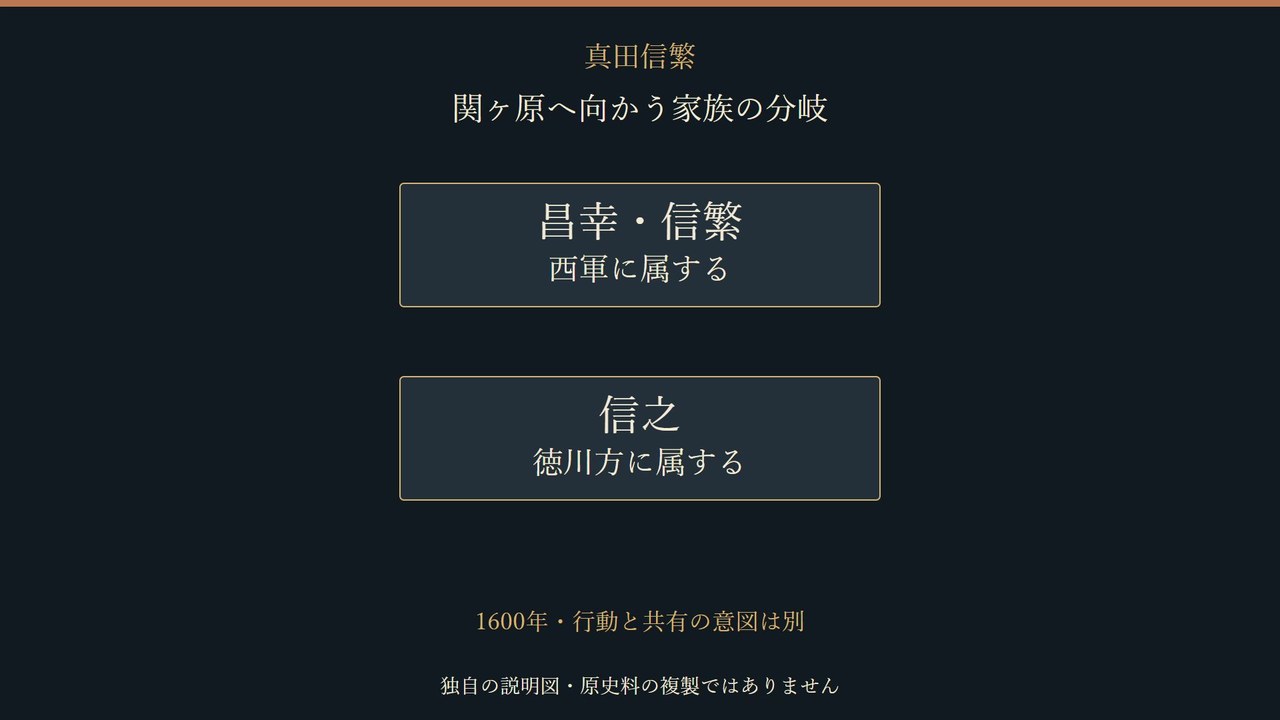
When the news reached them, the Sanada are said to have met and talked at Inubushi in Shimotsuke Province. No contemporary record describes what was said. Only the outcome is known: Masayuki and Nobushige joined the Western army aligned with Mitsunari, while Nobuyuki stayed with Ieyasu.
The usual explanation points to their marriages. Another, widely repeated later, holds that the family deliberately divided so that the house would survive whichever side won. Some historians, however, think Nobuyuki had already decided to stay with the Tokugawa before the meeting. Whether the family planned the split or each man followed his own position cannot be settled from the surviving evidence.
Chapter 3
Ueda Castle, and after Sekigahara
Masayuki and Nobushige returned to Ueda and shut themselves in the castle. A Tokugawa force of about 38,000 men under Ieyasu's son Hidetada, marching west along the Nakasendo road, attacked it. The Sanada held the castle and pinned Hidetada's army down at Ueda in what is called the Second Battle of Ueda. Hidetada failed to reach the decisive Battle of Sekigahara on the fifteenth day of the ninth month.
It would be too simple, though, to blame Hidetada's delay entirely on the Sanada; there is also a story that the messenger carrying Ieyasu's orders was held up. In any case, the war was decided at Sekigahara. The Western army was defeated in a single day, and the stand at Ueda did not change the outcome.
As members of the losing side, Masayuki and Nobushige could have faced severe punishment. Nobuyuki, who had stayed with the Tokugawa, is said to have begged for the lives of his father and brother. The two were sent to Mount Koya. Ueda Castle was handed over to the Tokugawa and dismantled, and the Ueda lands were given to Nobuyuki.
Chapter 4
Fourteen years at Kudoyama
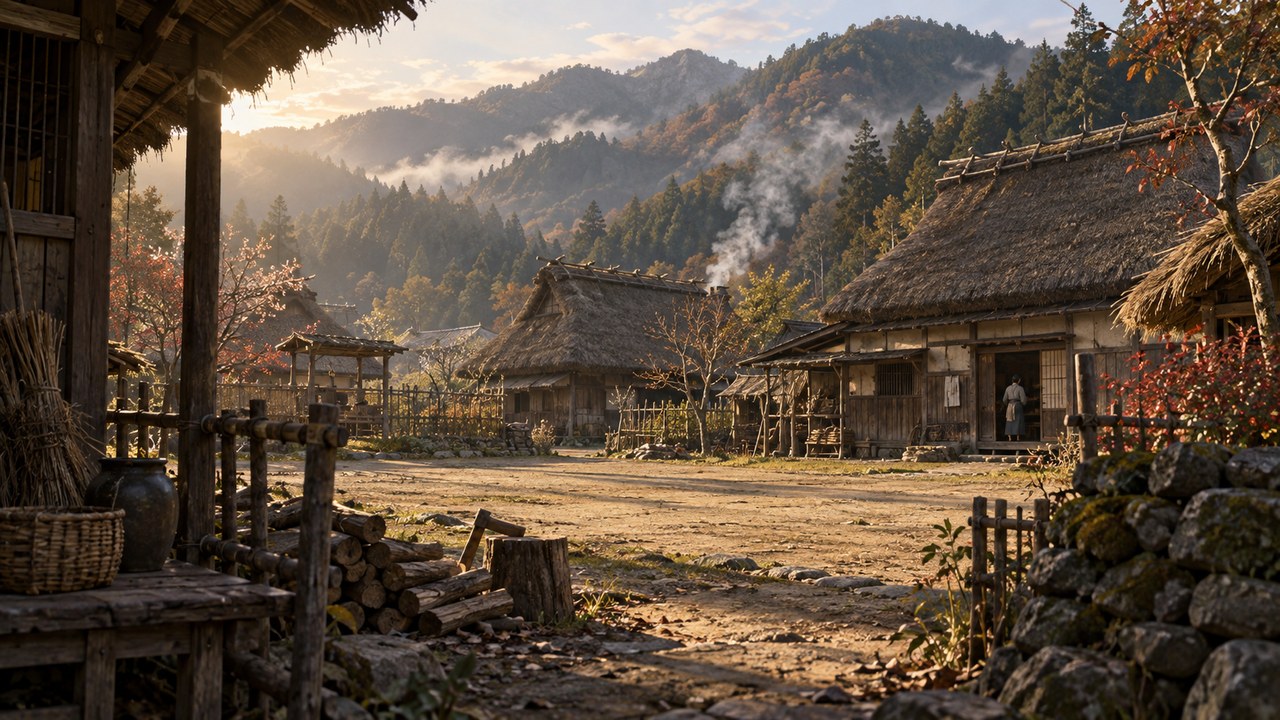
After relying at first on a temple on Mount Koya connected with the Sanada, Masayuki and Nobushige came to live in Kudoyama at the foot of the mountain. Nobushige's wife and children lived with them. They were under watch and could not travel freely.
Their life depended on money and goods sent by Nobuyuki and by retainers back home. Even so it was not easy. Masayuki wrote to Nobuyuki about their hardship and waited for a pardon that would let him go home. The Sanada museum in Kudoyama describes Nobushige living surrounded by retainers and children and building trust with the local people.
Masayuki died of illness at Kudoyama in 1611, at the age of sixty-five by the traditional count. The father who had twice turned back Tokugawa armies ended his life in the mountain village without returning home. Nobushige's son Daisuke is also said to have been born during these Kudoyama years.
Chapter 5
A jar of shochu and letters about growing old
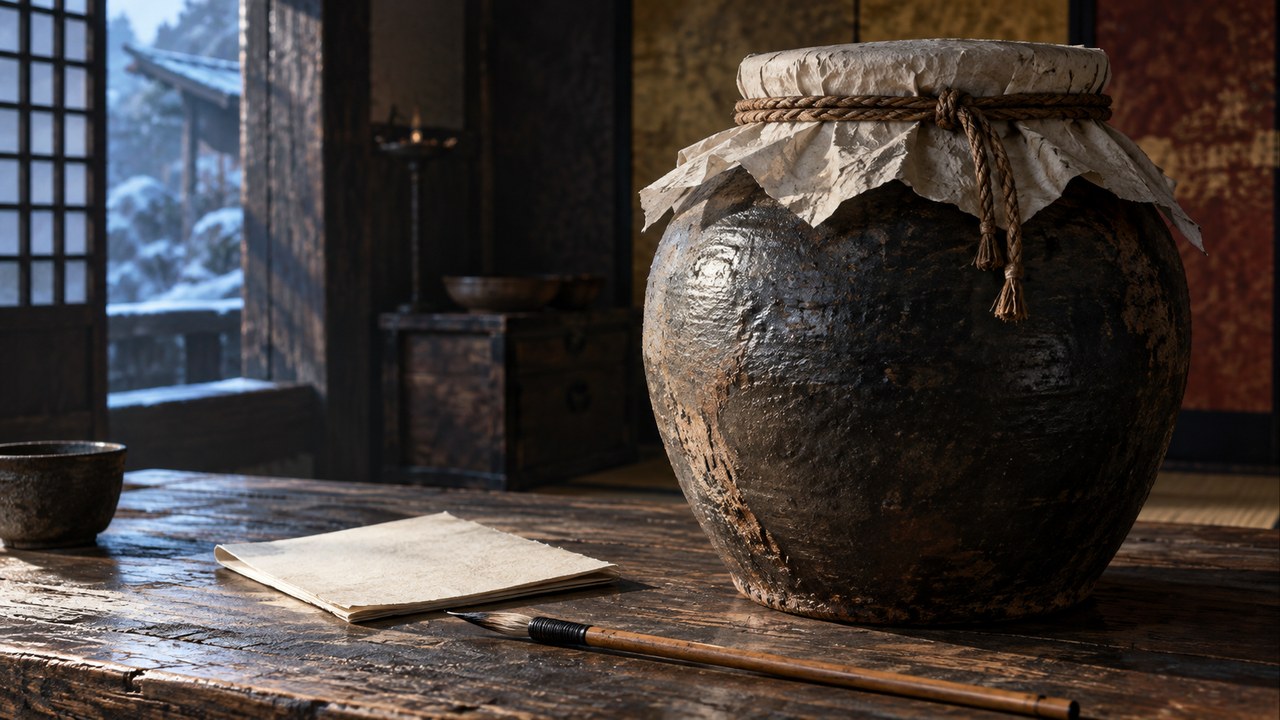
Nobushige's life at Kudoyama can be glimpsed in his letters. In an autograph letter introduced by the Osaka Museum of History, he asks for shochu, a distilled liquor, to be packed into a jar and sent to him, and he adds a reminder: close the mouth of the jar tightly and paste paper over it.
The letter conveys both the modest life of an exile and a careful attention to small things. In another letter he is said to have lamented that his teeth had fallen out and his beard had turned white. The warrior who had once served beside Hideyoshi was entering his forties in a remote village.
At Kudoyama Nobushige took Buddhist vows and used the name Kohaku. There is also a story that his family supported themselves by weaving cord, and that this is the origin of the flat braid known as Sanada-himo, but there is no reliable record of it and it survives only as tradition. It would not have been surprising if he had ended his days there.
Chapter 6
From Kudoyama to Osaka
In 1614 relations between the Tokugawa and the Toyotomi broke down. One trigger was the inscription on a bell made for the Hokoji temple in Kyoto, which was attacked as a curse on Ieyasu. As the two houses moved toward war, the Toyotomi gathered ronin, samurai who had lost their lords after Sekigahara, from across the country.
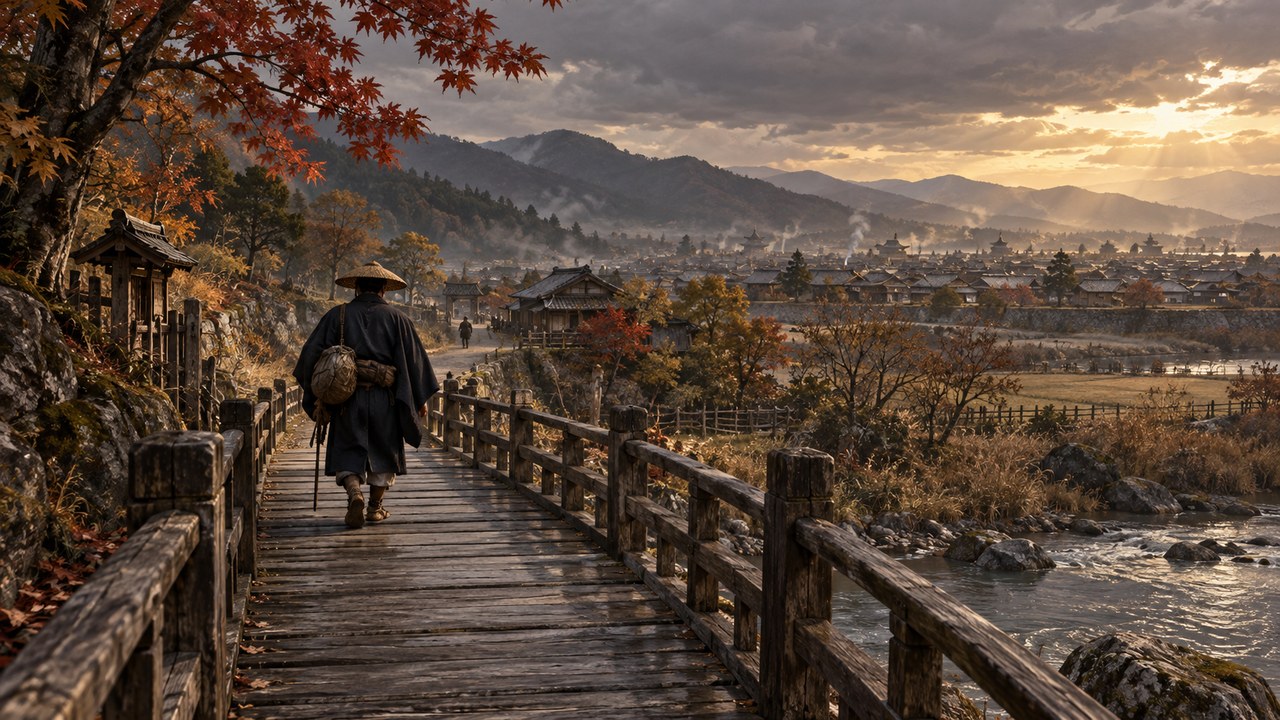
An invitation from Toyotomi Hideyori reached Nobushige as well. He slipped out of Kudoyama despite the watch and entered Osaka Castle together with his son Daisuke. Local people are said to have helped him, while the story that he made the village guards drunk at a banquet belongs mostly to later tales.
Well-known ronin such as Goto Matabei, Mori Katsunaga and Chosokabe Morichika gathered at the castle. A plan to march out and meet the enemy is said to have been discussed, but the Toyotomi chose to defend the castle. The Tokugawa mobilized daimyo from all over Japan, and at the start of winter a huge army surrounded Osaka Castle.
Chapter 7
Sanadamaru, outside the walls
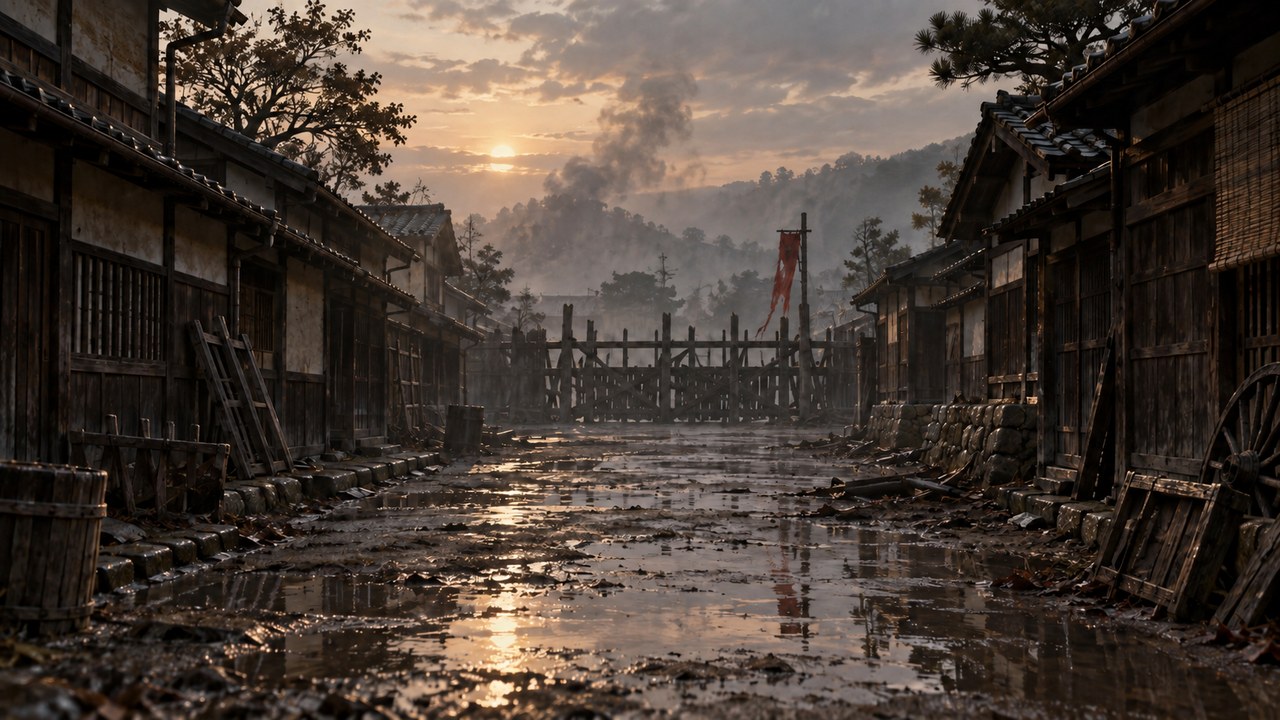
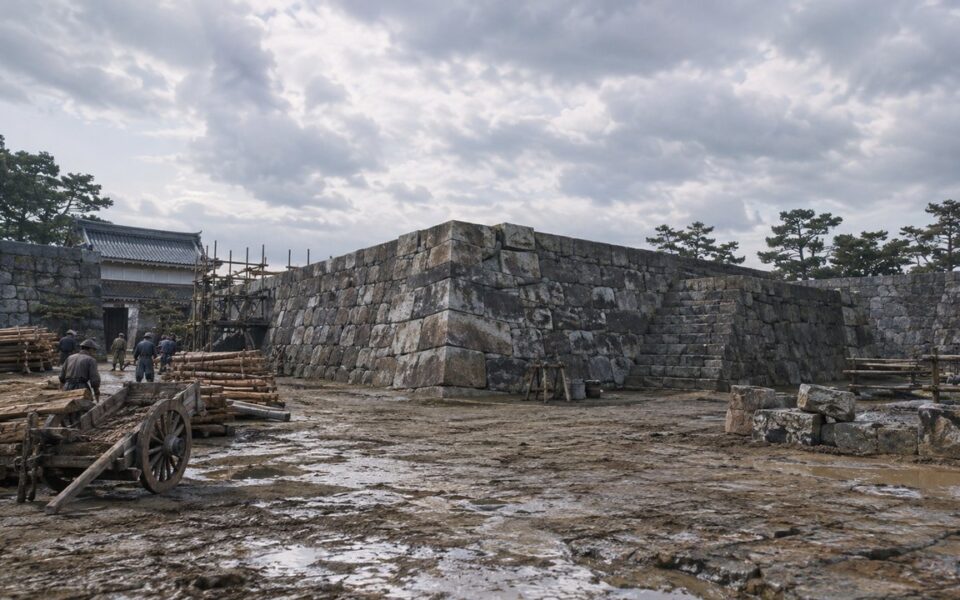
Osaka Castle and its town were enclosed by moats and earthworks, but to the south lay a flat plateau, and that side was thought to be weak. Nobushige built a fortified outwork projecting beyond the defenses there. It came to be called Sanadamaru, the Sanada enclosure.
On the fourth day of the twelfth month of Keicho 19 (1614), forces including those of Maeda Toshitsune attacked Sanadamaru. Gunfire poured down on the soldiers who pressed up to the moat, and the Tokugawa side withdrew with heavy losses. The Ueda City Museum describes this as a major victory for Nobushige in the Winter Campaign.
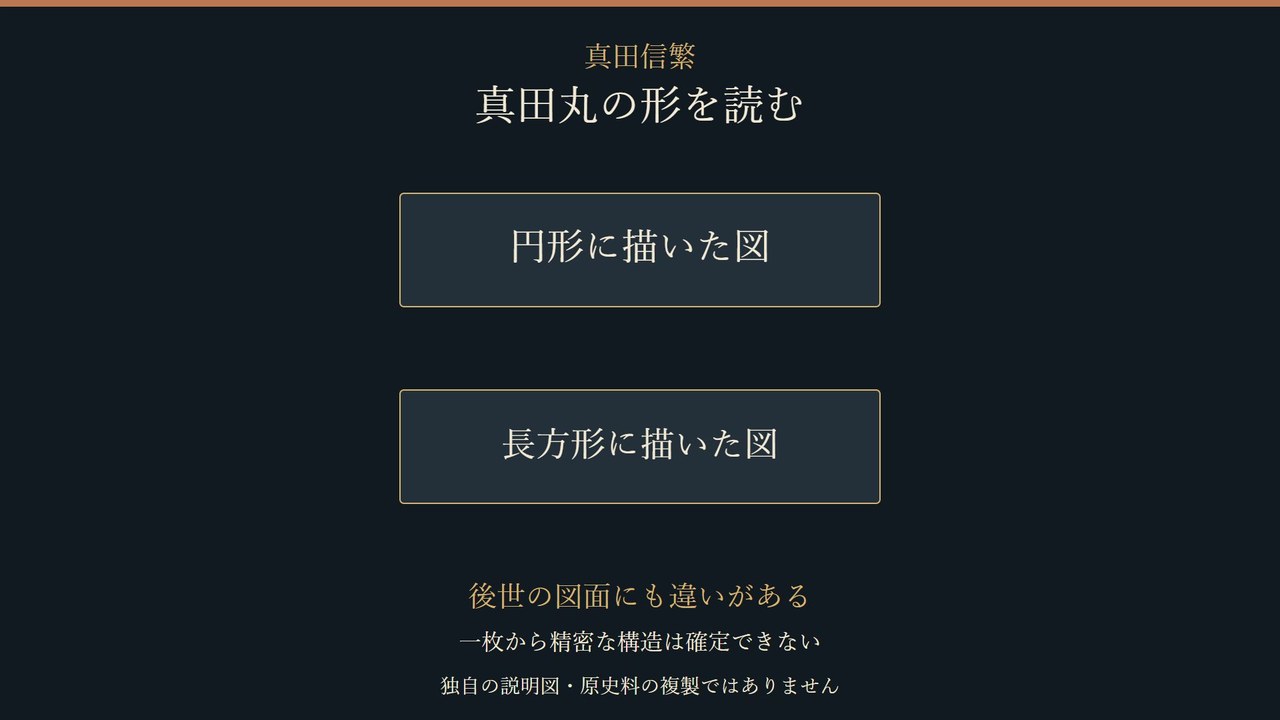
No trace of Sanadamaru remains today. A plan introduced by the Osaka Museum of History shows it as a U-shaped work projecting south from the outermost defenses and is regarded as one of the few sources reflecting a survey made just after the Winter Campaign. Different plans draw its shape differently, however, and the familiar half-moon outline is still debated.
Chapter 8
Peace, and a last letter
The Winter Campaign ended in a peace agreement in the twelfth month. One condition was filling in the castle moats, and Sanadamaru was demolished. It is often said that far more was filled in than had been agreed, but historians differ over what the agreement actually covered. During this time the Tokugawa side is said to have tried to win Nobushige over, but he did not move.
Around then Nobushige wrote to his sister's husband, Oyamada Shigemasa, and others. According to the usual account, he said he would like to see them if there was no more fighting that year, but that no one could know what the next day would bring, and that they should think of him as someone no longer in this world.
In the spring of 1615 the two houses went to war again. With its moats gone, Osaka Castle could no longer withstand a siege, and the Toyotomi had to fight outside the walls. In the fighting of the sixth day of the fifth month Goto Matabei was killed, and Nobushige is said to have fought the army of Date Masamune before guarding the rear of the retreating Toyotomi forces.
Chapter 9
The charge at Tennoji
On the seventh day of the fifth month Nobushige took up position on Chausuyama hill, with Mori Katsunaga's unit to the east. When the fighting began around noon, Nobushige's men clashed with the Echizen Matsudaira forces in front of them, pushed forward and broke into Ieyasu's headquarters.
The headquarters fell into confusion, and Tokugawa-side records note that Ieyasu's standard went down. There is even a story that Ieyasu prepared to take his own life, but such stories come mostly from later narratives. The Osaka Summer Campaign screen introduced by the Osaka Museum of History shows Nobushige's unit fighting Echizen troops at Tennoji.
But they were badly outnumbered, and Nobushige was killed that day. Yasui Shrine preserves a tradition that he died there, and a monument to Sanada Yukimura's death stands in its grounds. Osaka Castle fell the next day and Hideyori took his own life. The Shimazu document lists among those who died in the castle Nobushige's son, "Sanada Daisuke."
Chapter 10
Where did "Yukimura" come from?
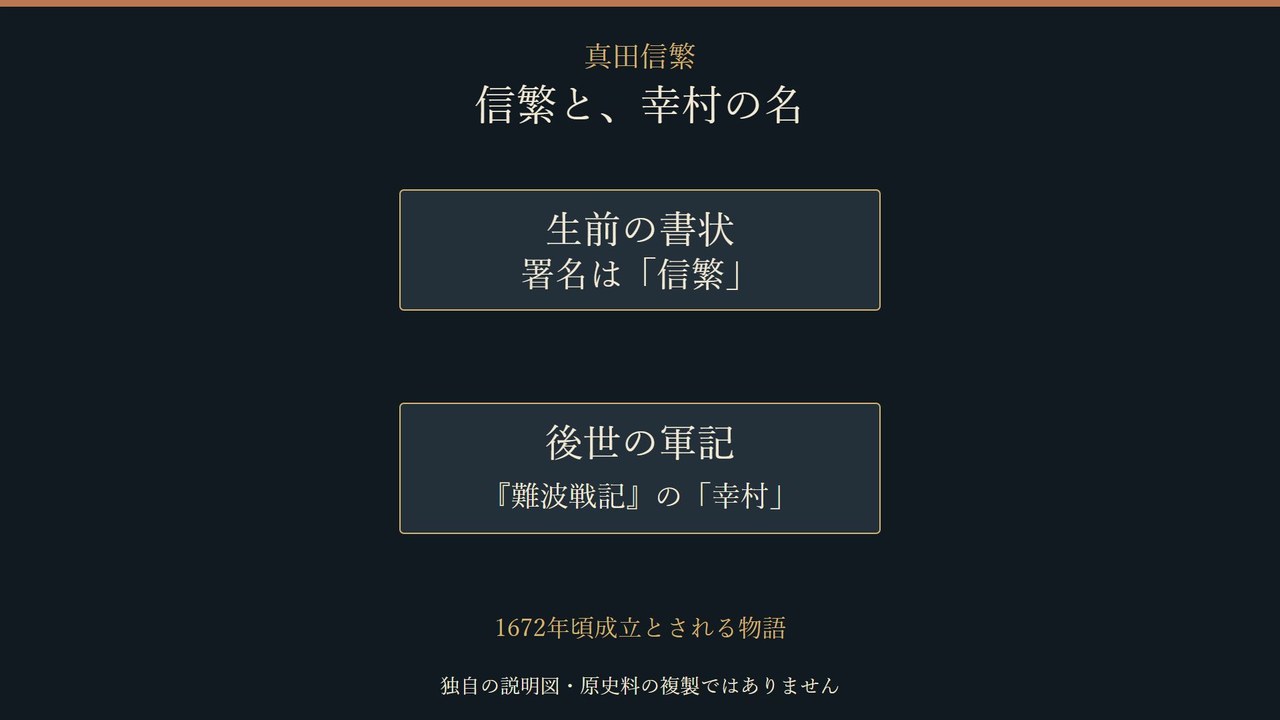
In the letters and records of his own lifetime, the man is called Nobushige. The Ueda City Museum explains that Nobushige is the name confirmed by his own signatures. Warriors were normally referred to by family name and official title, such as "Sanada Saemon-no-suke," so it was not unusual for a personal name to fade from memory.
According to the Edo-Tokyo Museum library, the name Yukimura is thought to appear first in Naniwa Senki, a war narrative compiled in the Kanbun era. It then appeared in later works such as Sanada Sandai-ki and the Tokugawa Jikki, the shogunate's official chronicle. Why the name Yukimura was chosen has not been established.
In this way the heroic figure of "Sanada Yukimura" grew in war narratives and storytelling, together with later battle plans and stories about Sanadamaru. The historical Nobushige and the Yukimura of legend overlap to form the image of the Sanada that is familiar today.
Conclusion
Why fight for the losing side?
Nobushige left no written explanation of why he joined the Toyotomi. Four views are commonly offered: gratitude to the Toyotomi house, under which he grew up and received court rank; the example of his father Masayuki, who fought the Tokugawa twice and never yielded; a warrior's wish not to end his life as an exile but to leave a name on the battlefield; and family circumstances, since his brother was securing the house on the Tokugawa side.
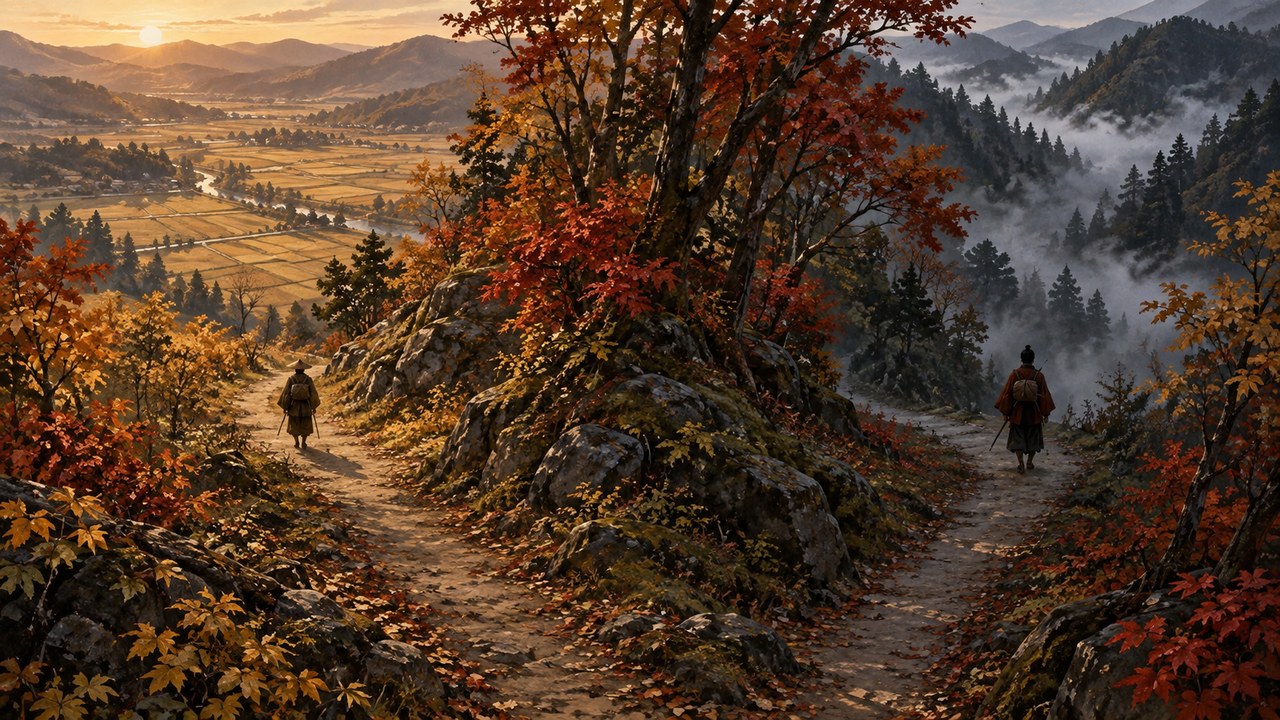
Rather than one of these being the answer, it seems more natural to think that several reasons overlapped. Nobushige had been passed between great houses as a hostage, had joined the Western army by his father's decision and had spent fourteen years in a mountain village. In the last year of his life, he fought in a place he had chosen himself.
His brother Nobuyuki moved from Ueda to Matsushiro in 1622 and laid the foundations of the Matsushiro domain until his death in 1658 at the age of ninety-three. The younger brother's name lived on in stories, and the elder brother's house lived on in history.
How to read this work
History, interpretation, and reconstruction
Nobushige never wrote down why he joined the Toyotomi. Gratitude, his father's example, a warrior's honor and family circumstances overlapped, and he spent his last year fighting in a place he had chosen. The heroic name Yukimura was born in stories after his death.
This work is grounded in published sources and historical research. Interior thoughts, dialogue, and some visual details are cinematic reconstructions. Where historians disagree, the article presents the point as debated rather than settled fact.
Timeline
The story in time
-
Born the second son of Sanada Masayuki (other birth years have been proposed).
Sources: s01 -
Masayuki begins building Ueda Castle.
Sources: s03 -
Receives court rank and the title Saemon-no-suke.
Sources: s01 -
Ueda Castle is handed over, and Masayuki and Nobushige are exiled to Kudoyama.
Sources: s03 -
Masayuki dies of illness at Kudoyama.
Sources: s07 -
Nobuyuki dies at the age of ninety-three.
Sources: s01 -
The name Yukimura appears in the war narrative Naniwa Senki.
Sources: s06
People & terms
A guide for new readers
Key figures
- Sanada Nobushige
- Masayuki's second son; lived at Kudoyama before fighting on the Toyotomi side at Osaka.
- Sanada Masayuki
- Father of Nobushige and Nobuyuki; joined the Western side in the Sekigahara confrontation.
- Sanada Nobuyuki
- Nobushige's elder brother; sided with the Tokugawa and later moved to Matsushiro.
Glossary
- Nobushige 信繁
- The name found in his own signatures and reliable records of his lifetime.
- Yukimura 幸村
- The name familiar from later war narratives and storytelling.
- Ronin 牢人
- Samurai without a lord; many who lost their masters after Sekigahara gathered at Osaka.
- Kudoyama 九度山
- A village at the foot of Mount Koya where Masayuki and Nobushige lived in exile.
- Sanadamaru 真田丸
- The outwork Nobushige built south of Osaka Castle in the Winter Campaign of 1614.
- Naniwa Senki 難波戦記
- A war narrative of the Kanbun era (1661-1673) in which the name Yukimura first appears.
- Keicho 慶長
- A Japanese era name; Keicho 19 and 20 correspond to 1614 and 1615.
Sources & method
How this article was built
The narrative is based on public explanations by the Ueda City Museum, Ueda City, the Osaka Museum of History, the Edo-Tokyo Museum, the National Institute of Japanese Literature, the Kudoyama Sanada Museum and the Osaka tourism bureau, and on the fact-checked script of the full-length SHIGEKI film.
Where views differ, such as his birth year, the reasons for the parting at Inubushi, the shape of Sanadamaru and the scope of the peace terms, the main positions are presented. Anecdotes such as the escape from Kudoyama, Ieyasu's readiness to die and the origin of Sanada-himo are marked as traditions.
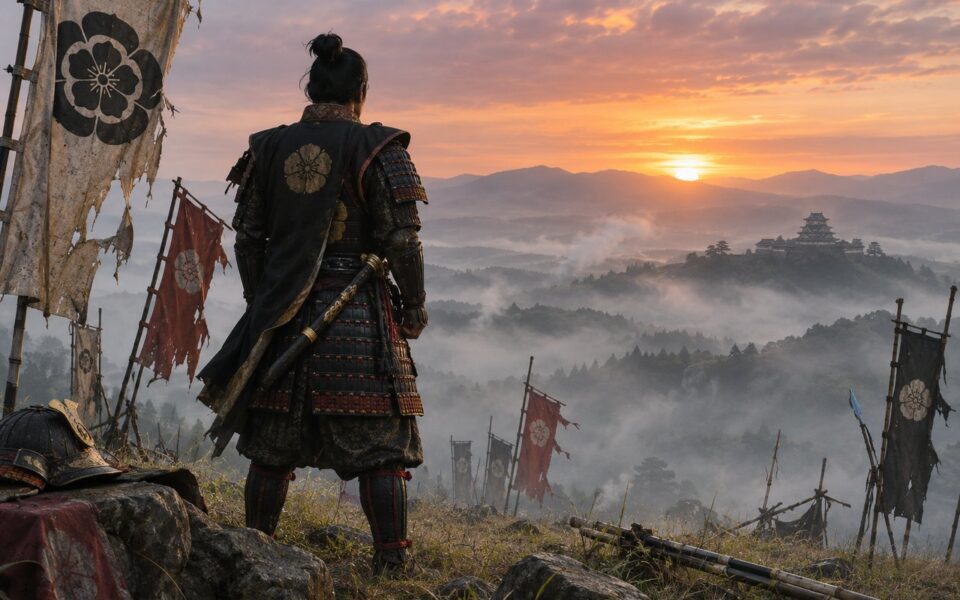
Images are AI-generated conceptual scenes and original SHIGEKI diagrams. They are not portraits of real people or exact reconstructions of historical places. The film has Japanese audio.
Sources
References and further reading
- Successive Lords of Ueda Castle 歴代上田城主 Title translated editorially for reader convenience. Ueda City Museum 上田市立博物館 Used for Nobushige's career, hostage years, court rank, Sanadamaru, his death, his name, and Nobuyuki's move to Matsushiro and death. Accessed 2026-11-18
- Sanadamaru: Special Exhibition 真田丸特別展 Title translated editorially for reader convenience. Edo-Tokyo Museum 江戸東京博物館 Used for the family division, Kudoyama, the Osaka campaigns and the later heroic image. Accessed 2026-11-18
- History of Ueda Castle 上田城の歴史 Title translated editorially for reader convenience. Ueda City 上田市 Official chronology used for the castle's founding, the two battles of Ueda, the exile to Kudoyama and the move to Matsushiro. Accessed 2026-11-18
- Sanadamaru: Explanations of Exhibition Objects 真田丸 展示資料解説 Title translated editorially for reader convenience. Osaka Museum of History 大阪歴史博物館 Used for the shochu letter, the U-shaped plan of Sanadamaru, the Shimazu report with "the finest warrior in Japan" and Sanada Daisuke, and the Summer Campaign screen. Accessed 2026-11-18
- Archives of the Matsushiro Domain and the Sanada House 松代藩・真田家のアーカイブズ Title translated editorially for reader convenience. National Institute of Japanese Literature 国文学研究資料館 Used for later battle plans and war narratives depicting Sanadamaru and Yukimura. Accessed 2026-11-18
- The names Nobushige and Yukimura (reference answer) 信繁と幸村の名前 Title translated editorially for reader convenience. Edo-Tokyo Museum Library 江戸東京博物館 Used for the name in his lifetime and the first appearance of Yukimura in Naniwa Senki and later works. Accessed 2026-11-18
- The Three Generations of the Sanada 真田三代について Title translated editorially for reader convenience. Kudoyama Sanada Museum 九度山・真田ミュージアム Used for life at Kudoyama, Masayuki's death in 1611, the shochu letter and the departure for Osaka. Accessed 2026-11-18
- Yasui Shrine 安居神社 Title translated editorially for reader convenience. Osaka Convention & Tourism Bureau (OSAKA-INFO) 大阪観光局(OSAKA-INFO) Used for the tradition that Nobushige died there and the monument in its grounds. Accessed 2026-11-18
Continue reading
More stories from Shigeki
Shigeki English
The Great Meireki Fire: Three Outbreaks and a Recovery Without a Keep
In the first month of 1657, fires from Hongo, Koishikawa and Kojimachi burned most of Edo. Follow the disputed figures, the robe legend, snow and relief, the mound for the dead, firebreaks and relocations, Ryogoku Bridge, Honjo and the keep base through thirteen scenes.
- When From the dry winter of 1656 and the fire of the 18th–20th days of the 1st month of 1657 to the recovery of 1658–1661 and the withdrawal and return of Honjo in 1682–1688, with later events in 1720, 1859 and 1863. Months and days follow the historical calendar.
- Where Hongo, Koishikawa, Kojimachi and Edo Castle, the burned town, the Sumida River crossing, Eko-in, Asakusa and the developing lands of Honjo and Fukagawa.
Shigeki English
Ishida Mitsunari: How a Magistrate of 190,000 Koku Came to Stand at the Center of Sekigahara
Was Sekigahara a war Mitsunari plotted? Fourteen scenes follow the third son of a village family from the survey fields and supply lines to the center of the decisive battle, and to the riverbed at Rokujō.
- When From his birth in 1560 to his execution on the 1st day of the 10th month of 1600.
- Where Ōmi (today Shiga Prefecture), Sakai, Kyushu and Hakata, Oshi in Musashi, Korea, Sawayama, Fushimi, Ōgaki, Sekigahara and Kyoto.