
SHIGEKI ENGLISH STORYEN
Japanese history in English
Japan’s Land Tax Reform: Rice, Cash and the Land Certificate
The measurements and valuations behind a tax of three percent of land value.
Read the reform begun in 1873 through assessed land value, certificate ownership, surveys and delayed issue of earlier certificates. Regional examples from Gifu, Niigata and Kumamoto reveal valuation disputes, the rate reduction of 1877 and the continuing work of updating records.
At a glance
Before you enter the story
- When
- Certificates associated with 1872; reform from 1873; rate reduction in 1877 and implementation continuing to 1881
- Where
- Japan, with regional examples from Gifu, Niigata, Kumamoto and Nagano
- Key figures
- Land-certificate holders, Cultivators, Local survey participants, Government inspectors, Officials and community representatives discussing valuation
- What was at stake
- What changed when a tax was calculated on assessed land value and payable in cash, and what work made that system operate?
Why this story matters
The larger history behind the turning point
A tax rate is incomplete without its base. Three percent of assessed land value was not three percent of a year’s rice harvest. The distinction changed the relationship between revenue, harvest conditions and the cash a taxpayer needed.
A national regulation also required local measurement, evaluation and records. Certificates issued late, debates over land grades and later ledger corrections reveal implementation as a process, rather than one change completed everywhere on the date of promulgation.
Historical context
What an international reader needs to know
Owner, cultivator and taxpayer were different questions
The system made the land-certificate holder the taxpayer. Working a field and owning it were not automatically the same relationship. The article therefore distinguishes rights to land, cultivation and the duty to pay national land tax.
A certificate could identify location, area and ownership, while also connecting a named person with a tax liability. Its existence did not by itself settle every local dispute or make all later changes to the land automatically appear in the record.
A calculation example is not an actual household account
The article uses an assumed assessed value of one hundred yen only to explain percentages: three percent gives three yen, and two and a half percent gives two yen fifty sen. These figures do not reconstruct a particular farm’s account, present-day purchasing power or all household burdens.
Regional sources describe particular conditions, such as snow, administrative delays and valuation disputes. They are not evidence that everyone experienced the same change in the same year. Generated rural scenes do not identify actual villages, tax officials, protesters or surviving certificates.
Watch the film
See the story in motion
The film currently uses Japanese audio. This English article provides the context and source trail; it does not imply that an English subtitle track is available.
Scene 01
Rice, money and a piece of paper
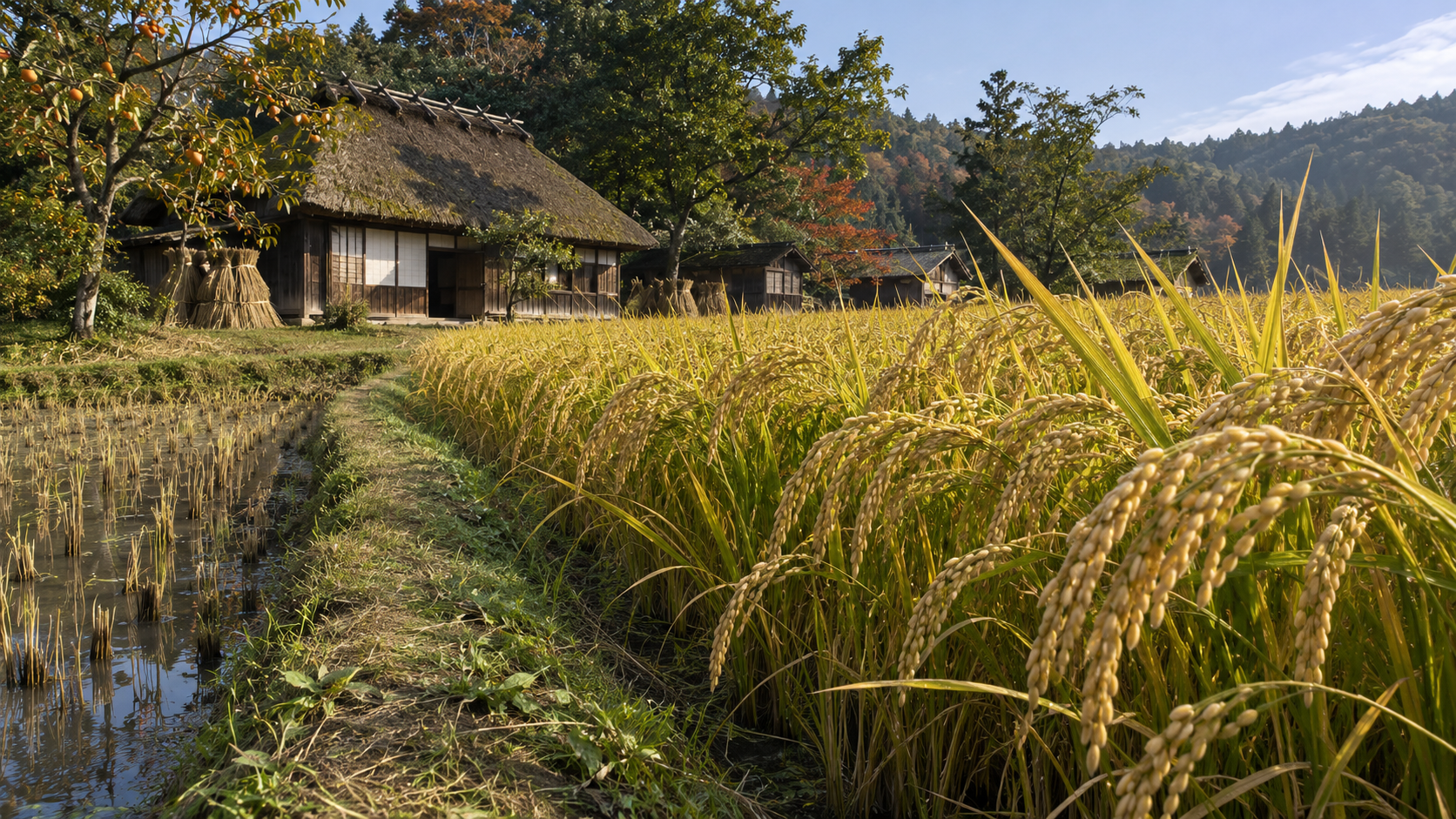
What changed when a landholder was required to pay tax in money rather than deliver rice? The land tax reform involved more than substituting one payment medium for another. Land value became the basis of calculation.
Establishing who held the certificate also identified the taxpayer. Measuring fields and recording ownership helped create the information on which the tax depended.
The reform begun in 1873 connected the government’s wish for stable revenue with the problem of obtaining cash. Rice, money and paper belong within the same explanation, while assessed value must remain distinct from each year’s actual harvest.
Scene 02
Three percent of what?
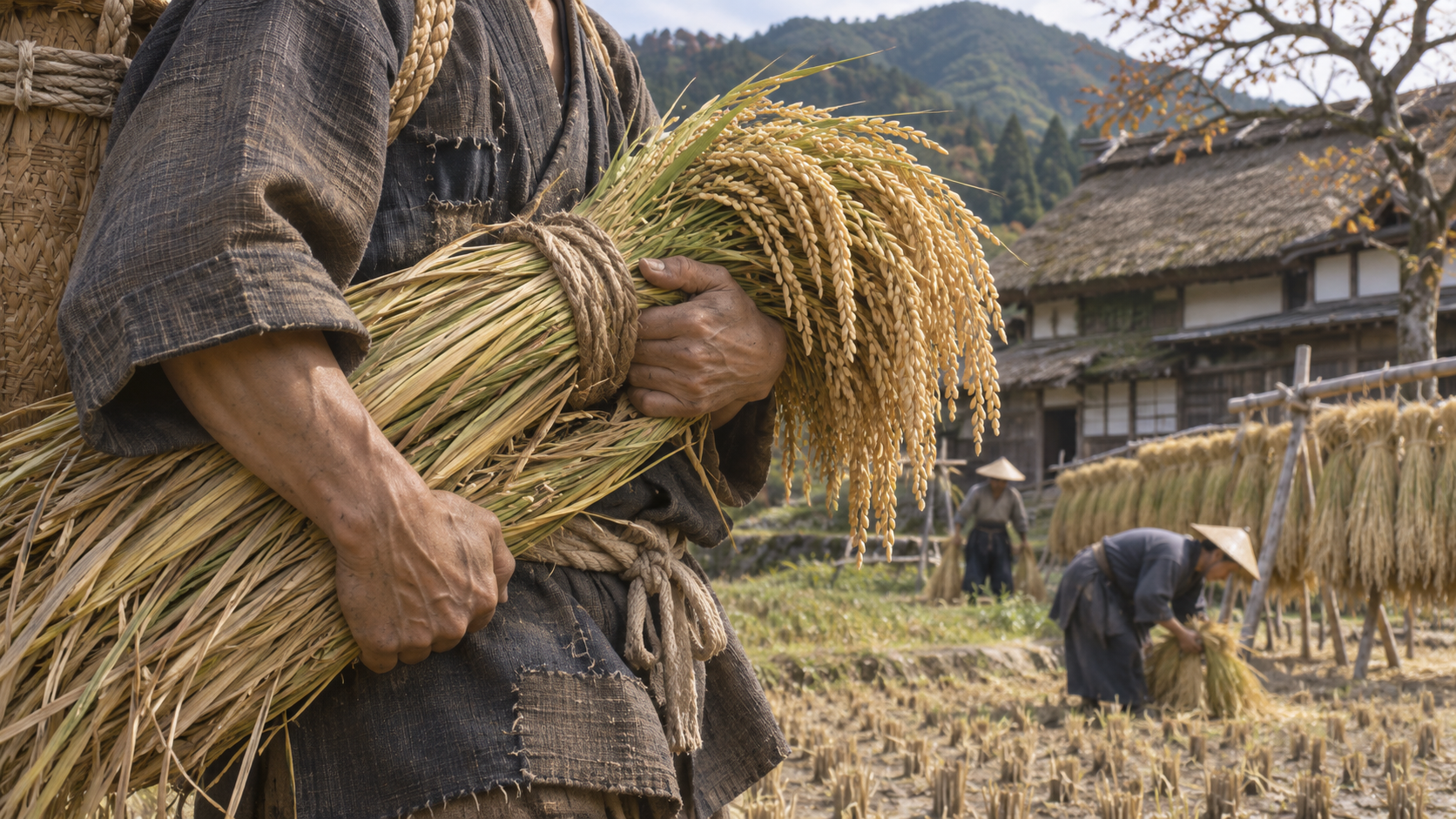
The basic framework assessed land value from returns and set land tax at three percent of that value. It did not mean handing over three percent of the rice harvested that year.
Assume an assessed value of one hundred yen. The tax would be three yen. This is a simple illustration of the rate, not a reconstructed account of an actual household.
The ease of finding those three yen could vary with a household’s circumstances. Identifying the denominator therefore matters: the percentage was applied to land value, while the conditions for meeting the payment could change from one year to another.
Scene 03
A certificate identified rights and liability
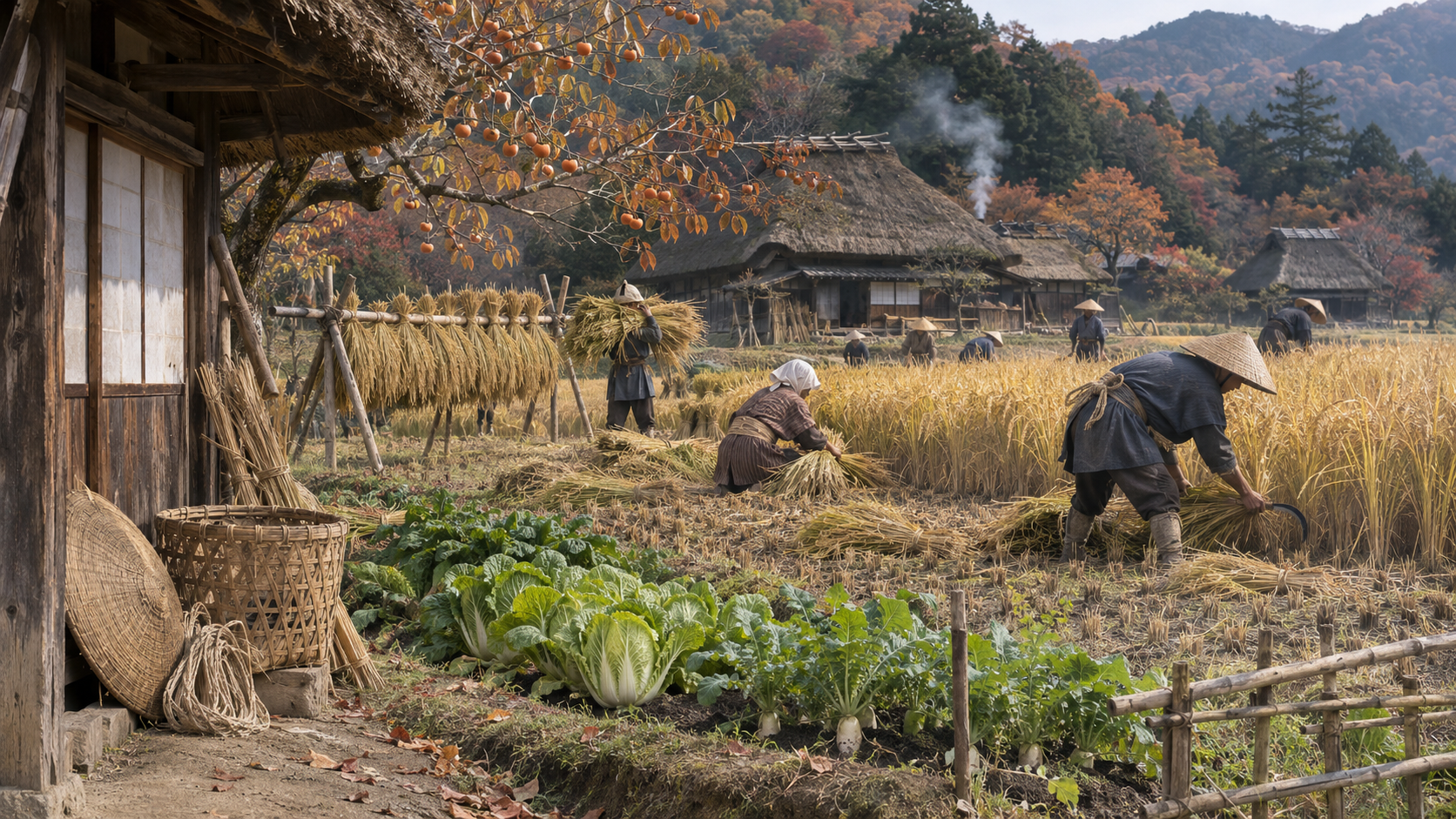
A land record needed more than a name for a field. Location, area and ownership distinguished parcels. The certificate served as evidence concerning land rights and as a means of identifying who bore the tax.
The system treated the certificate holder as the land-tax payer. A person cultivating rented land did not acquire the same status simply by working it.
Nor did writing a name on paper settle every existing relationship. The surveys behind issue and the land’s subsequent movement required further records. Ownership, cultivation and taxation must be examined as connected but distinct matters.
Scene 04
Before a number, there was a field to investigate
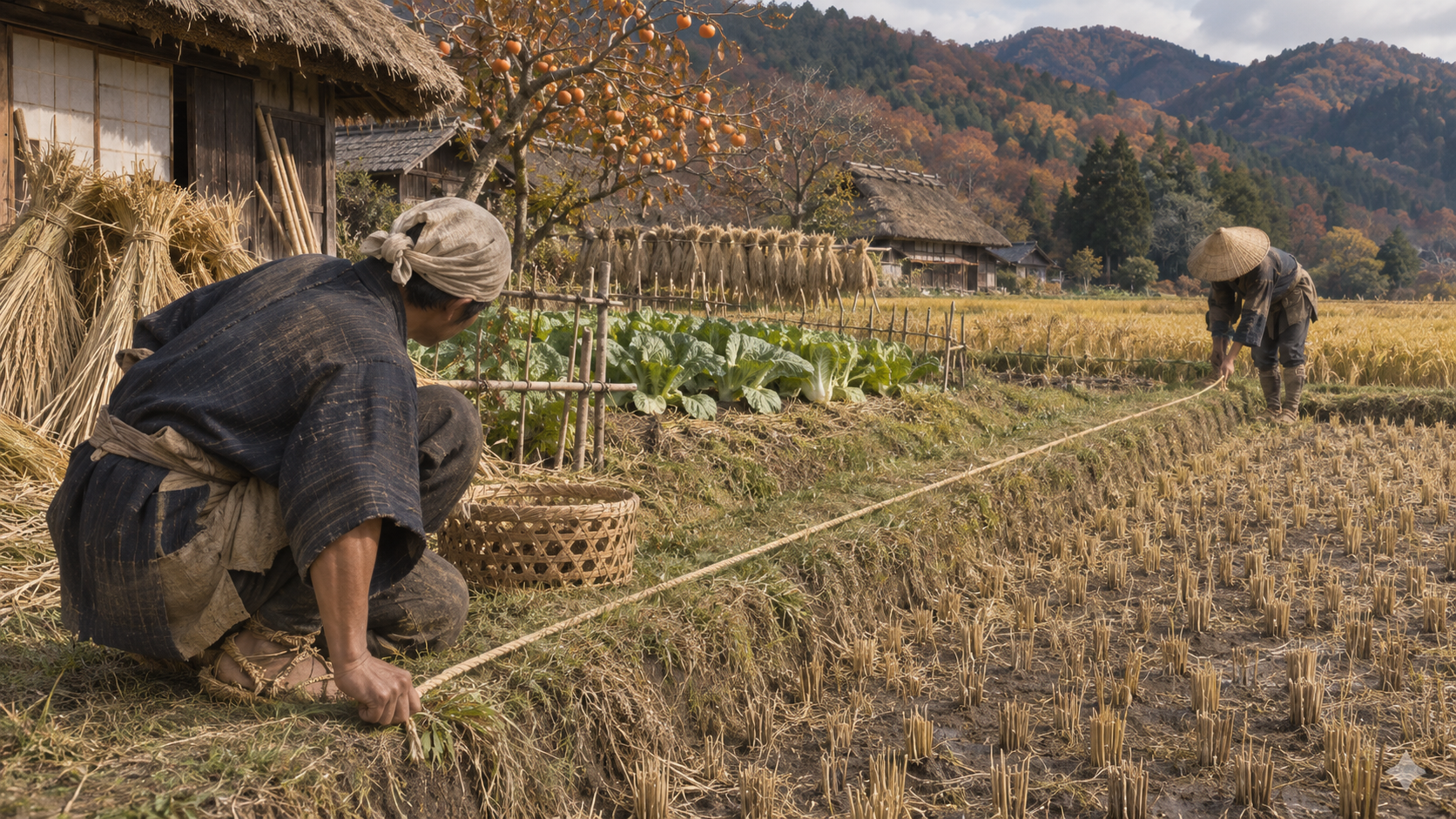
Gifu’s historical archive explains a method in which people familiar with local conditions conducted practical surveys and officials inspected the results. A central rule alone could not supply the area of each parcel.
Boundaries, measurements and written records had to be compared. That required local knowledge and labour as well as official supervision.
The archival glossary of the reform office lists boundaries, area, ownership, value and certificates among its responsibilities. A Nagano catalogue also describes remeasurement and field checks. These are examples of administrative work, not proof that every village followed an identical timetable or that every original page has been deciphered.
Scene 05
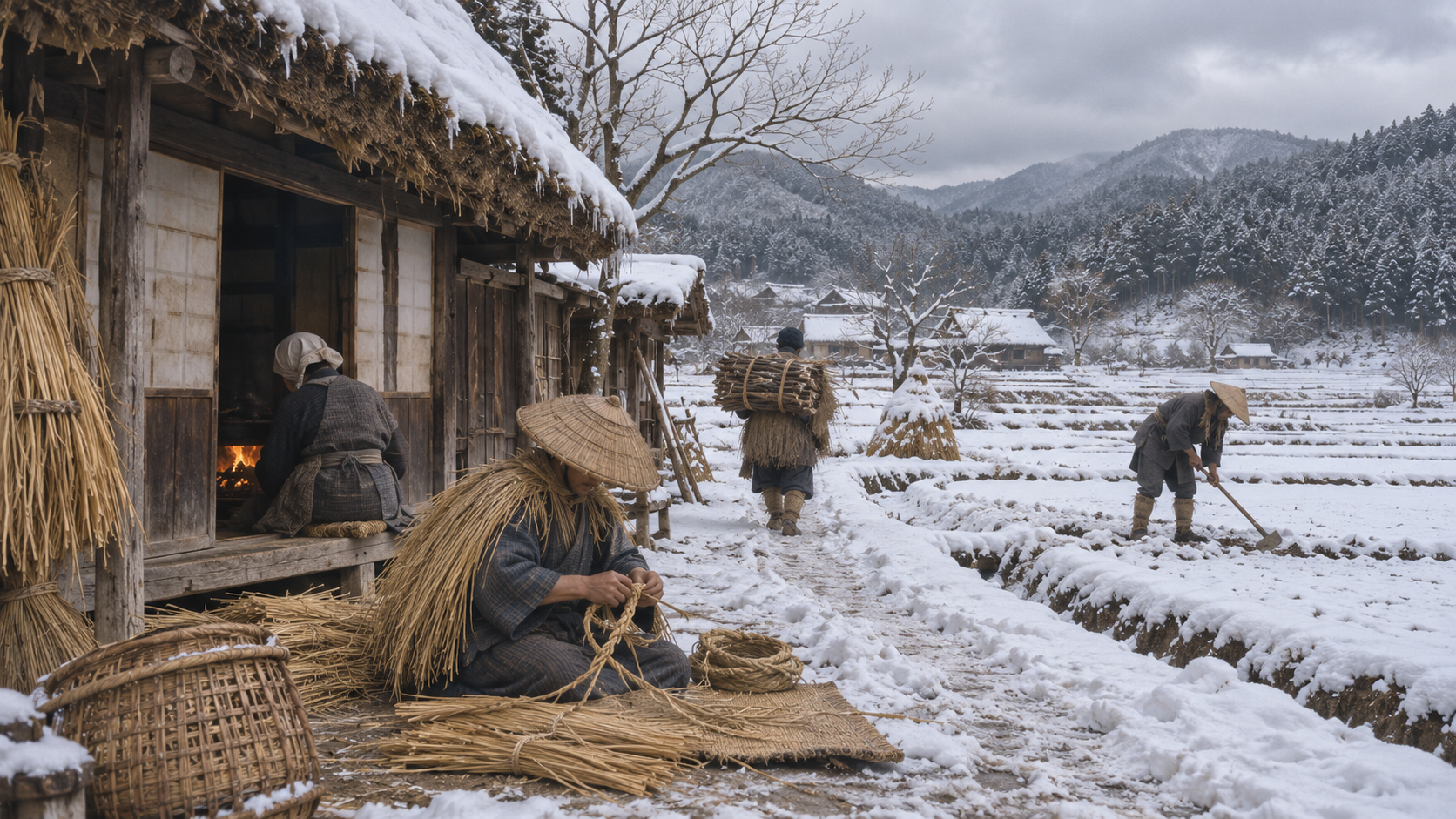
Snow and delays complicated implementation
Niigata’s archive describes difficulty measuring fields beneath winter snow. The plan for a common national system met seasonal and local conditions on the ground.
The earlier certificates known as Jinshin chiken were associated with issue beginning in 1872. The reform ordinance followed in 1873 and led to revised certificates.
These were not two kinds of paper exchanged everywhere at the instant the calendar year changed. Niigata’s explanation describes difficulties from the initial issue. Surviving certificates can therefore reveal stages of implementation rather than only a finished uniform system.
Scene 06
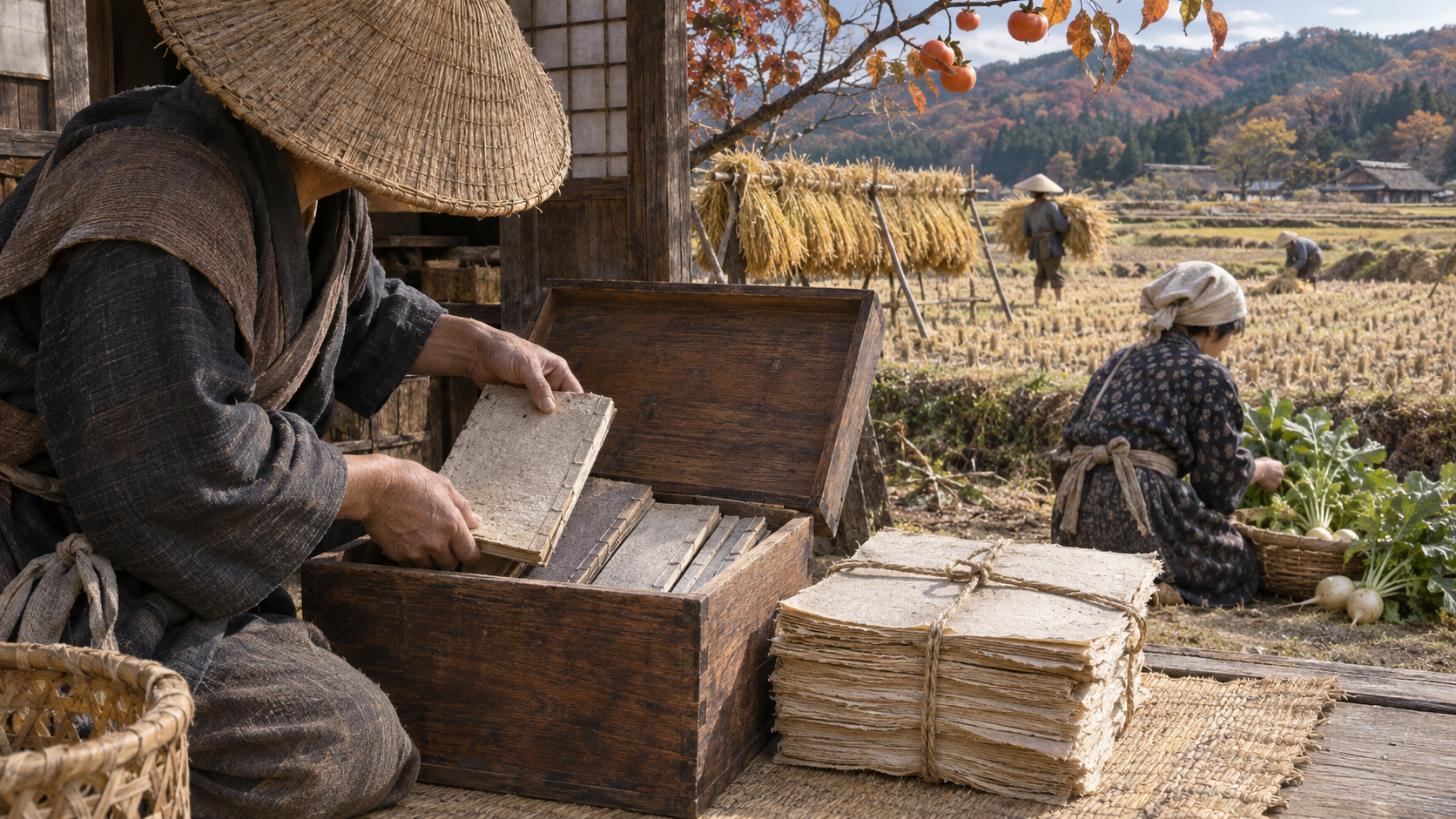
The name’s year was not always the issue year
Kumamoto Museum holds a Jinshin certificate issued in 1874. Jinshin refers to the cyclical designation associated with 1872, yet this particular document was issued two years later.
The museum explains difficulties in staffing and preparing ledgers in the region. Certificates of this named type were also issued in later years.
Reading the name as a universal issue date would erase those delays. Cancellations and later parcel numbers can offer evidence of change, but the generated papers are not copies of the actual certificate. The object’s name, issue and subsequent alterations require separate attention.
Scene 07
Land grades were debated
Area alone did not establish value. Gifu’s Koheiben was a proposal about judging grades of land. A local district head put it forward in 1875 for three Hida districts amid a reassessment directed toward higher valuations.
The archive describes discussion with community representatives, taking differences in harvest into account. The criteria for evaluation were themselves a subject of argument.
This is not a reconstructed conversation at a meeting or a statement of what every farmer thought. It identifies a regional example of the gap between an aim of consistent valuation and standards local people could accept.
Scene 08
A fixed tax was not a fixed burden
The reform’s principle separated land tax from annual increases and decreases in harvest. For government, that helped detach revenue from fluctuations in the crop.
For the person obtaining cash, sale prices mattered. If rice sold at a lower price, more rice would be needed to obtain the same sum; at a higher price, less would be needed.
That is a general relation between price and quantity, not a calculated sale by a named farmer. Later measures allowing some payment in rice also need to be distinguished from the initial cash-payment principle. Implementation could contain adjustments without erasing the basic rule.
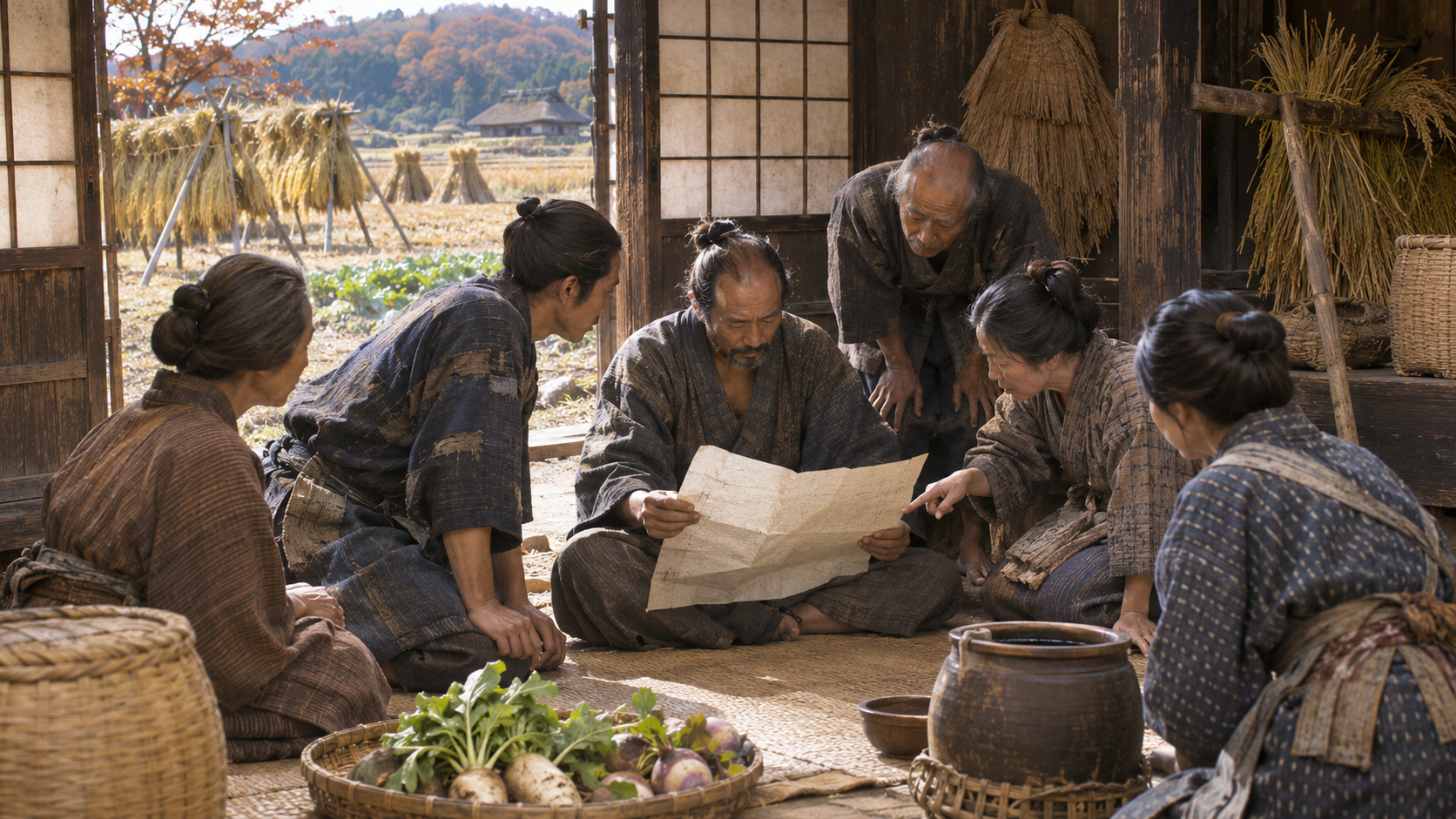
Scene 09
What did opposition concern?
Opposition was not simply dislike of anything new. Recognising a particular value for land affected the tax that would follow, giving survey and valuation procedures direct consequences.
Niigata’s explanation describes conflict between prefectural authorities and farmers over valuation, with opposition around Suibara continuing to 1880. The year of the ordinance alone does not reveal that duration.
Nor did all opposition have one demand or one course. Regional records are needed to identify the issue in each case. Government implementation and local acceptance of a value did not necessarily move at the same pace.
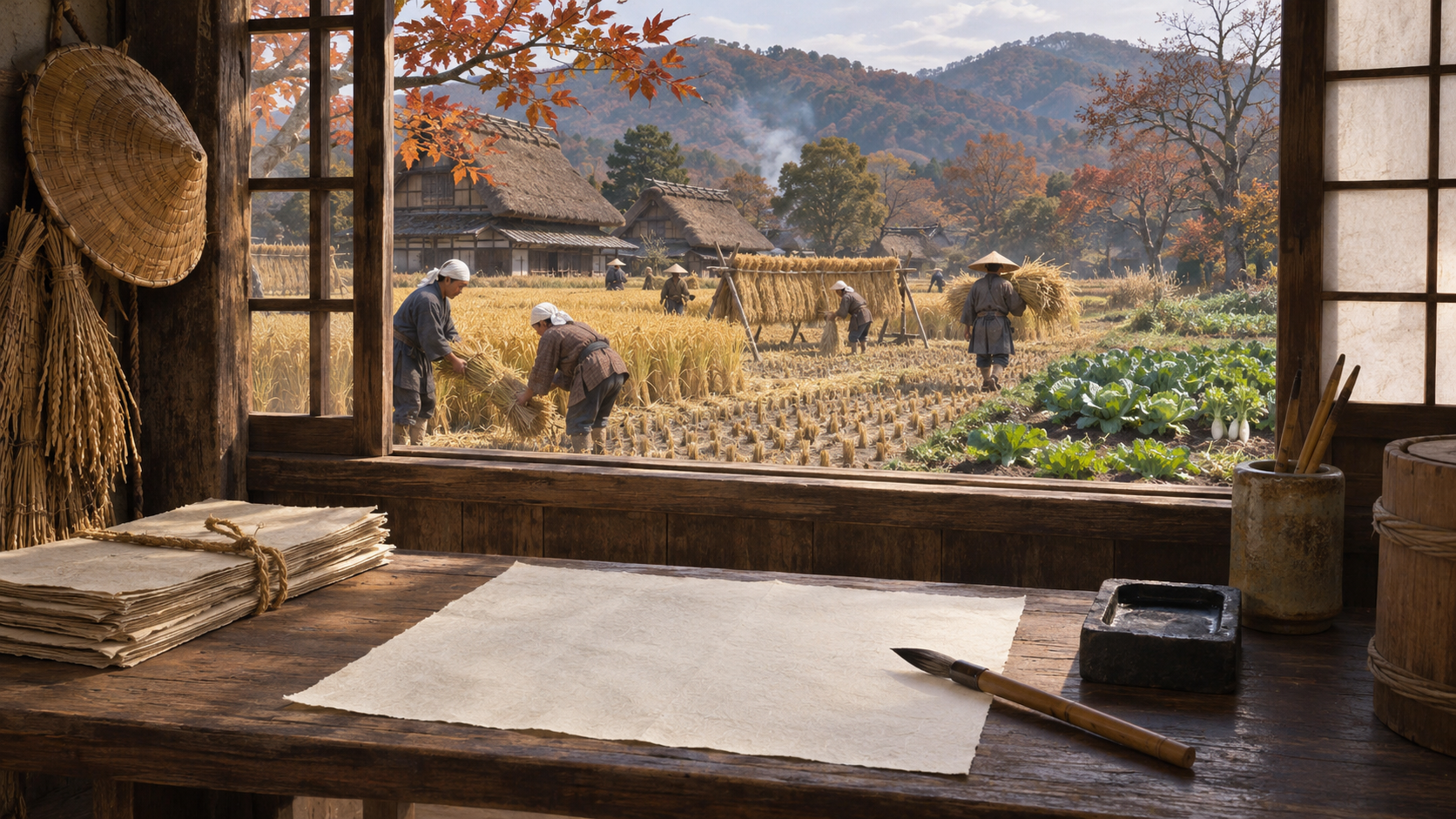
Scene 10
The rate fell to two and a half percent
In 1877, the land-tax rate fell from three to two and a half percent. In the assumed hundred-yen example, three yen would become two yen fifty sen.
A lower rate changed the amount calculated, but did not automatically settle disputes about the assessed value. The tax college’s explanation describes later demands to correct imbalances in valuation.
Reducing a rate and revising an assessment were different procedures. The national land-tax figure also did not represent every burden affecting a household. The calculation illustrates one change without making it a complete account of living conditions.
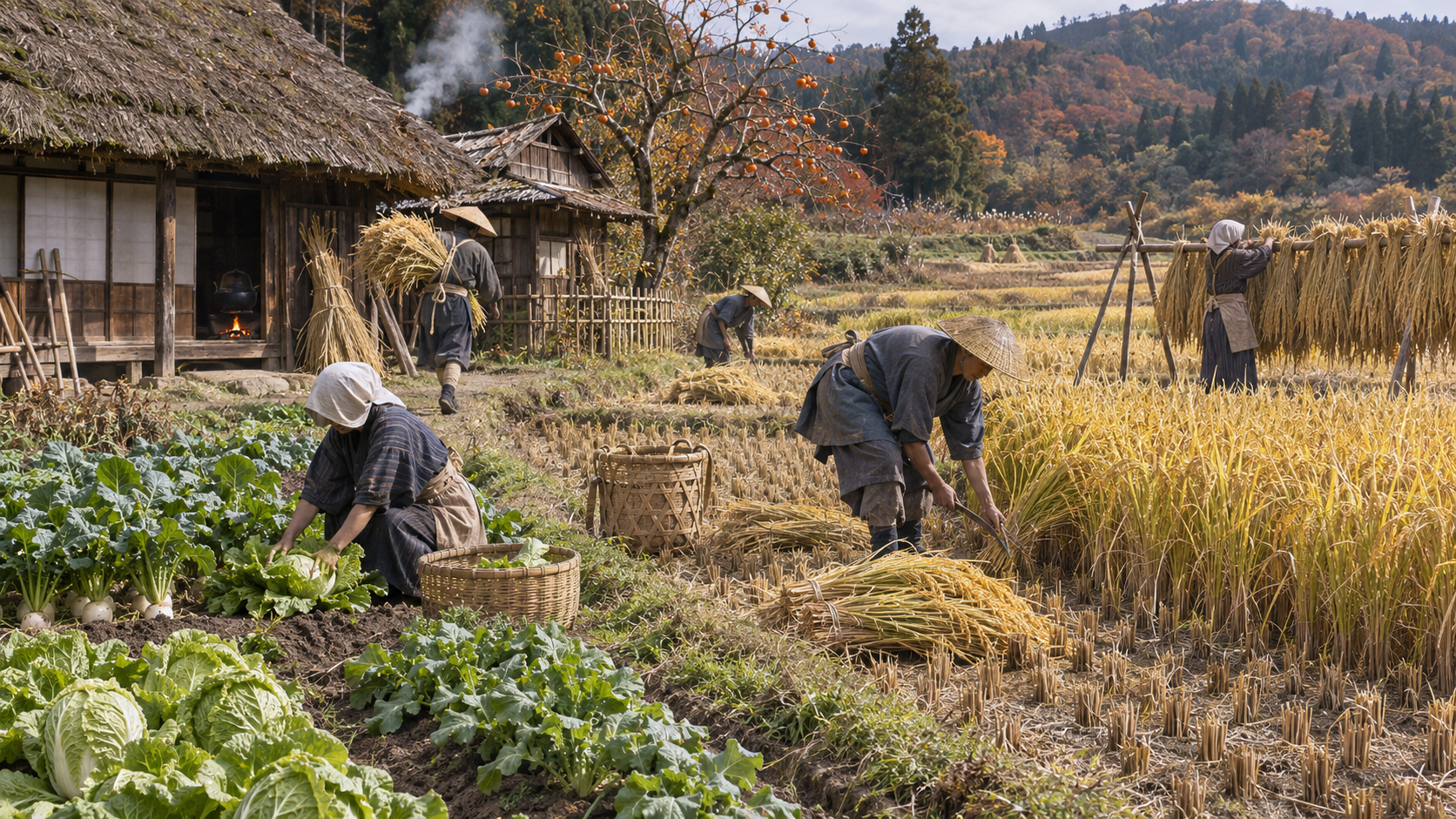
Scene 11
Records needed continuing revision
The reform undertaking continued to 1881. Land did not stop changing afterward: parcels were sold, opened or used differently, and records could become detached from those movements.
The tax college describes problems in certificate ledgers and later work on land registers and field verification. Comparing the actual land with written entries remained necessary.
Creating a system and maintaining its information were different tasks. The later materials discussed in the source explanation are not all original documents from 1873. They help show how updating records continued after the initial regulation and certificate issue.
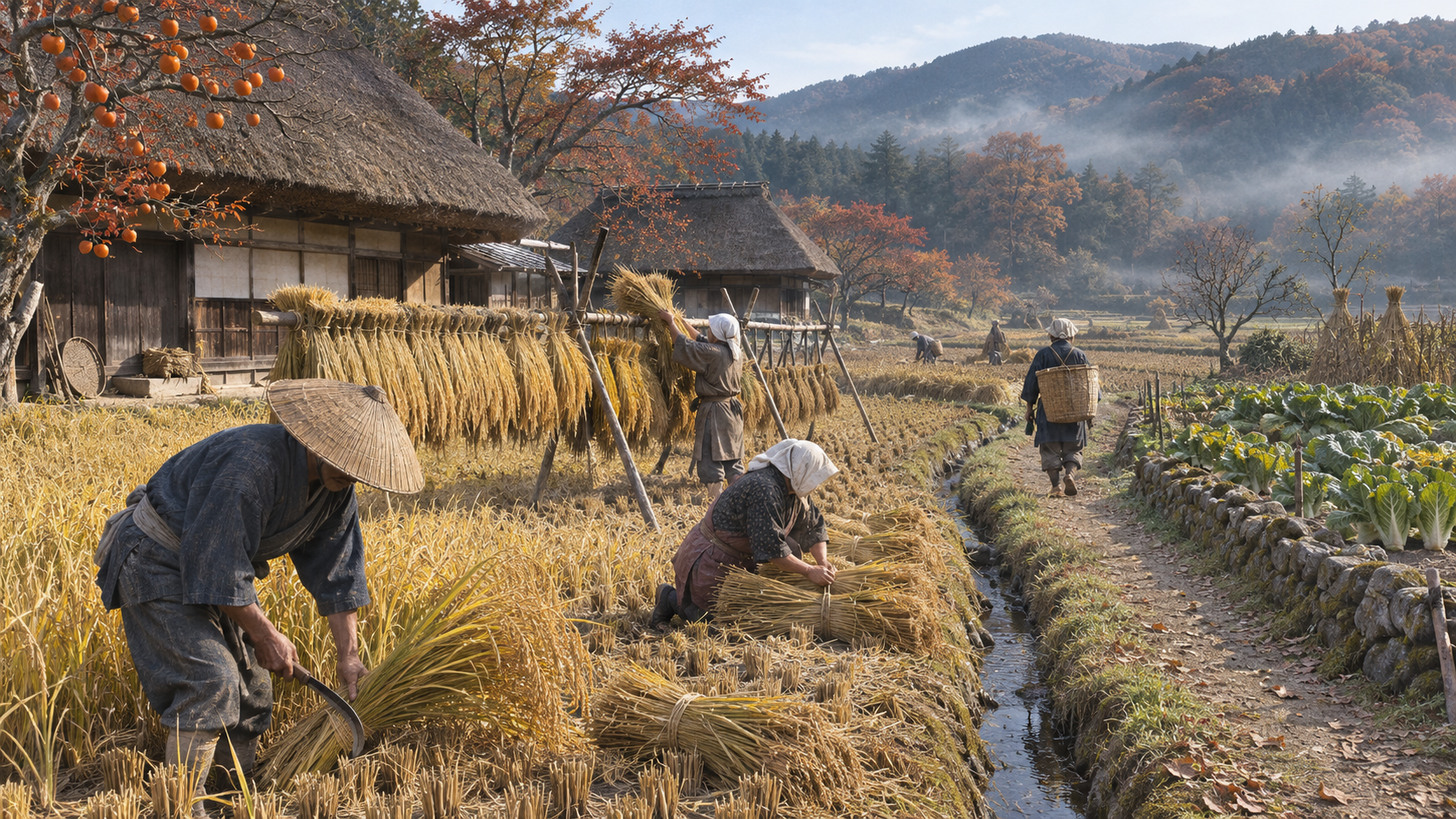
Scene 12
Read the changes on the paper
The reform connected tax to assessed value and certificate ownership. Measurements and evaluation supplied its foundation, while the government’s revenue aims met people’s need to obtain money.
Snowbound surveys, delayed certificates and proposals on land grades reveal local processes inside the national framework. The change did not affect every place identically or finish everywhere in the same year.
A certificate therefore invites several questions: which parcel, whose name, what issue date and what later alterations? Following those questions connects an official document with the continuing history of land and livelihoods.
How to read this work
History, interpretation, and reconstruction
Cash taxation depended on records of value, area and ownership, linking the government’s search for stable revenue with the conditions under which people had to obtain money.
This work is grounded in published sources and historical research. Interior thoughts, dialogue, and some visual details are cinematic reconstructions. Where historians disagree, the article presents the point as debated rather than settled fact.
Timeline
The story in time
-
The Kumamoto Museum example of a Jinshin certificate was issued, later than the year behind the type’s name.
Sources: s05 -
Koheiben proposed criteria for grading land in the Gifu regional example.
Sources: s03 -
The land-tax rate was reduced from three to two and a half percent.
Sources: s02 -
The Niigata account describes continuing valuation opposition around Suibara.
Sources: s04 -
The reform undertaking continued.
Sources: s02
People & terms
A guide for new readers
Glossary
- Land tax reform 地租改正
- The Meiji reform connecting cash taxation with assessed land value and identified certificate holders.
- Land certificate 地券
- A document recording land information and ownership while helping identify the taxpayer.
- Assessed land value 地価
- The base to which the tax rate was applied, distinct from one year’s crop or a modern purchasing-power equivalent.
- Jinshin certificate 壬申地券
- An earlier certificate type named after the cyclical designation associated with 1872, though particular examples were issued later.
- Koheiben 公平弁
- A regional proposal discussed by Gifu’s archive, concerned with standards for grading land.
- Field verification 地押調査
- Work comparing records with actual land, important to later corrections and updating.
Sources & method
How this article was built
The narrative distinguishes a national rule from the work required to implement it locally. Institutional explanations provide the framework, while Gifu, Niigata, Kumamoto and Nagano offer particular examples. Their different dates and circumstances are retained rather than converted into one nationwide experience.
The hundred-yen calculation explains the tax base and rate only. It establishes neither a real farm’s payment nor a modern equivalent, and the discussion of sale prices supplies no invented quantity sold. Ownership, cultivation and tax liability remain separate relationships.
Later adjustments and record-keeping are considered in their own periods. No original certificate, memorandum or complete tax collection is claimed as independently transcribed in full. Generated illustrations introduce rural activities without identifying actual persons, places or documentary objects.
Sources
References and further reading
- The land tax reform ordinance 日本のあゆみ:地租改正条例が制定される Title translated editorially for reader convenience. National Archives of Japan 国立公文書館 Explains the framework. It does not establish every locality’s actual payment experience or settle all historical land rights at once. Accessed 2026-11-06
- Introduction to the first volume of historical tax materials 租税史料叢書 第一巻 解題 Title translated editorially for reader convenience. National Tax Agency / National Tax College 国税庁 税務大学校 Distinguishes the 1873 framework from later supplementary measures and record-keeping. Later collected documents are not all treated as originals from 1873. Accessed 2026-11-06
- Koheiben 公平弁 Title translated editorially for reader convenience. Gifu Prefectural Historical Archives 岐阜県歴史資料館 A regional case of survey and valuation discussion, not a uniform view of all farmers or a transcript of invented conversations. Accessed 2026-11-06
- Two land certificates telling the history of reform 第75話 地租改正を伝える二つの地券 Title translated editorially for reader convenience. Niigata Prefectural Archives / Library 新潟県立文書館/県立図書館 Regional explanation of surveys, delayed issue and opposition, without assuming simultaneous national change. Accessed 2026-11-06
- Land certificate, Jinshin type, object 70405 地券之証(壬申地券) ID70405 Title translated editorially for reader convenience. Kumamoto Museum 熊本博物館 Shows why the certificate type’s name must be distinguished from the issue date. The original image is not reproduced. Accessed 2026-11-06
- Tax newsletter 176: Land tax reform 税制メールマガジン第176号 地租改正 Title translated editorially for reader convenience. Ministry of Finance of Japan 財務省 A modern institutional historical overview, rather than an independent transcription of the original ordinance. Accessed 2026-11-06
- Land Tax Reform Office: Archival glossary 地租改正事務局 アジ歴グロッサリー Title translated editorially for reader convenience. Japan Center for Asian Historical Records 国立公文書館 アジア歴史資料センター Explains responsibilities concerning boundaries, area, ownership, value and certificates, not one universal local implementation date. Accessed 2026-11-06
- Land tax reform documents, 02OD5040520000 地租改正書類 02OD5040520000 Title translated editorially for reader convenience. Nagano Prefectural Library / Shinshu Digital Commons 県立長野図書館/信州デジタルコモンズ Catalogue account of notes from the reform period, including remeasurement, numbering and field comparison. The whole manuscript is not claimed as deciphered. Accessed 2026-11-06
Continue reading
More stories from Shigeki

Shigeki English
The Second Choshu Expedition: Four Fronts and a Negotiated Withdrawal
Read weapons together with terrain, training, command and support.
- When 1866, distinct from the first expedition in 1864; the process of ending extended into January 1867
- Where Oshima, the Aki border, Iwami and the Kanmon Strait facing Kokura
Shigeki English
Hasedo: Why Fighting Continued after Sekigahara
Separate the siege, the arrival of news, and withdrawal under pursuit.
- When 1600; month and day references use the calendar of the time
- Where Hasedo and Yamagata in Dewa, connected with Aizu and distant Sekigahara