
SHIGEKI ENGLISH STORYEN
Japanese history in English
Hirado’s Dutch Trading Post: A Warehouse, Demolition and Dejima
Commercial expansion and government control changed the same waterfront.
Follow the Dutch post from a rented house in 1609 through waterfront expansion, a warehouse completed in 1639, demolition orders in 1640 and relocation in 1641. Distinguish the English company, Dejima’s earlier purpose, archaeological remains and the reconstructed warehouse opened in 2011.
At a glance
Before you enter the story
- When
- Hirado’s Dutch post, 1609–1641; the reconstructed facility opened in 2011
- Where
- Hirado’s waterfront and Dejima in Nagasaki
- Key figures
- Dutch East India Company personnel, English East India Company personnel, Tokugawa government authorities, Hirado’s residents, Archaeological investigators
- What was at stake
- Why was a newly expanded commercial base dismantled and moved while Dutch trade itself continued?
Why this story matters
The larger history behind the turning point
A prosperous commercial establishment could still depend on conditions set by government. The warehouse’s growth and the tightening of control were not mutually exclusive developments; they occurred in the same period.
Buildings and ground also preserve different histories. Excavated remains, later occupation and a modern reconstruction should not be combined into one unchanged seventeenth-century view. Their distinct dates explain how knowledge of the site has been assembled.
Historical context
What an international reader needs to know
A trading post was a compound, not one mansion
A company’s factory or trading post included spaces for business, residence and storage, together with access to the port. The term does not identify a manufacturing factory in the modern sense. The surviving story concerns a collection of facilities and their changing ground.
The Dutch and English companies maintained separate establishments. Sharing a port did not make them one organisation or give them the same closing date. The English post’s closure in 1623 must be distinguished from the Dutch relocation to Dejima in 1641.
Restriction did not mean the end of all exchange
The shogunate’s controls on travel, ships and Christianity changed during the 1630s. This account does not reduce all Japan’s foreign relations to the Dutch alone or assume that every form of trade ended when one location was restricted.
Dejima had a history before the Dutch move. Its construction, the exclusion of Portuguese arrivals and the later relocation were separate events. Generated illustrations are conceptual waterfront and building scenes, not precise plans, authenticated ships or photographs of excavation.
Watch the film
See the story in motion
The film currently uses Japanese audio. This English article provides the context and source trail; it does not imply that an English subtitle track is available.
Scene 01
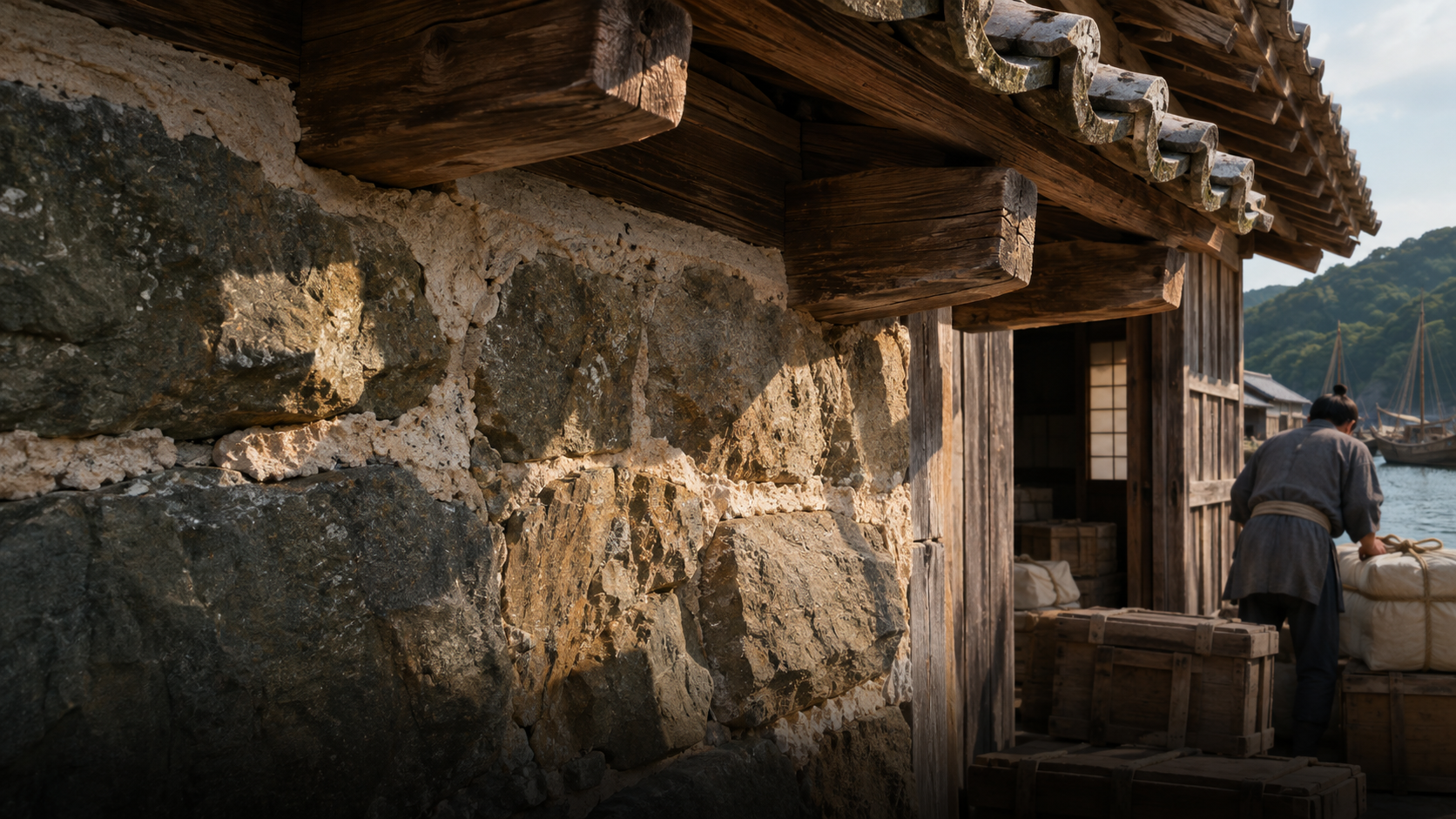
A new warehouse received a demolition order
A stone warehouse was completed at Hirado’s Dutch post in 1639. The following year brought an order to dismantle it. The trading post’s official explanation identifies the displayed Christian-era date as the stated reason.
In 1641 the establishment moved to Dejima. The destruction order and the relocation were successive developments, not one event occurring on the same day.
The question is how growing commerce met the government’s conditions for maintaining it. Following both the facilities and the controls explains more than treating a date inscription as the sole cause of everything that followed.
Scene 02
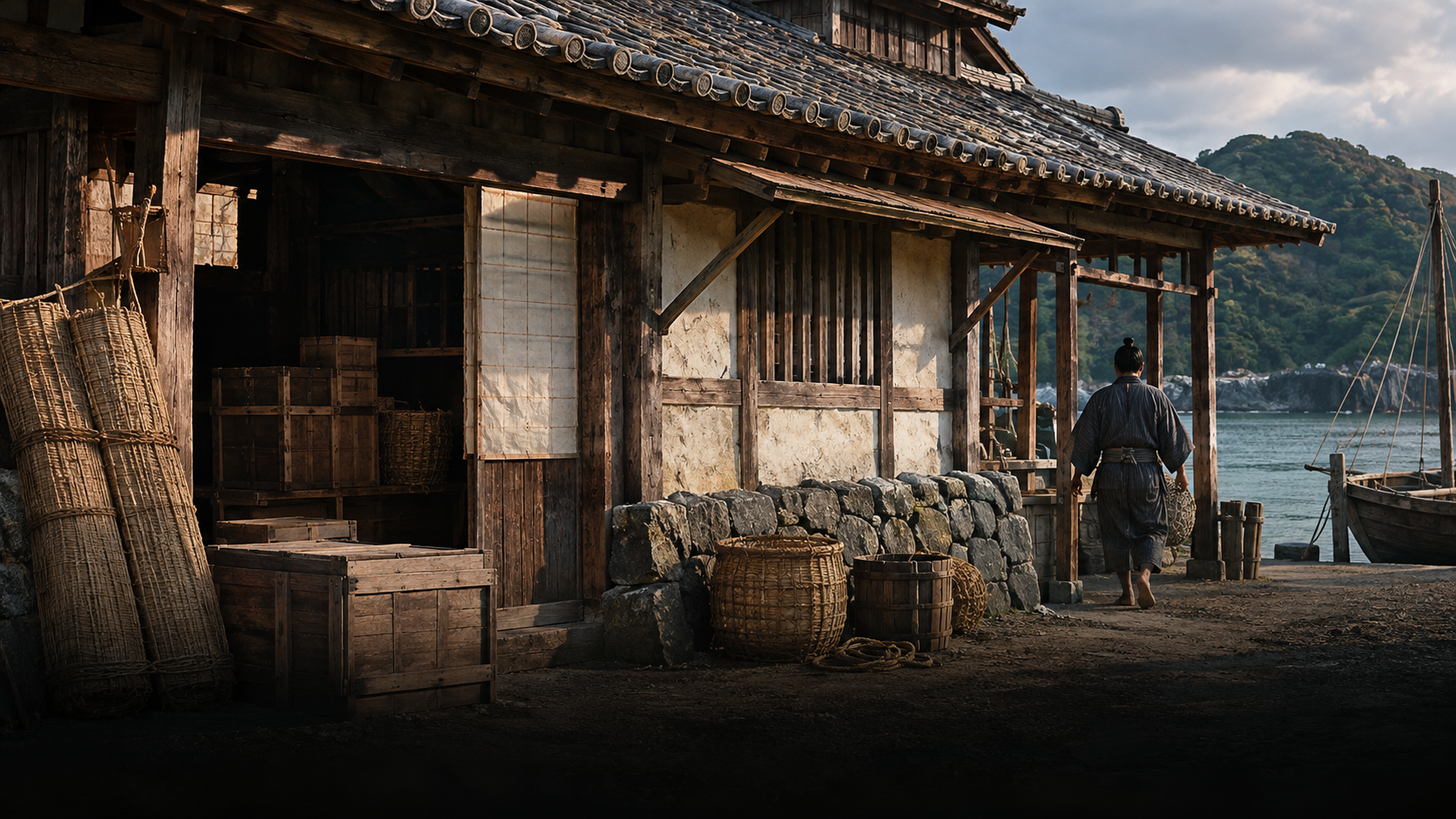
A compound grew from rented premises
The post began with a rented residence that included a storehouse. Business, living and storage functions expanded over time. A single grand building is therefore an incomplete image of the establishment.
The site faced the sea with hills behind it. Reclamation enlarged the usable ground, leaving traces that archaeological work could investigate.
Buildings, shoreline and access were connected. Looking only at the facade of a present reconstructed warehouse would remove much of that relationship. The ground between structures can be as informative as the structures themselves.
Scene 03
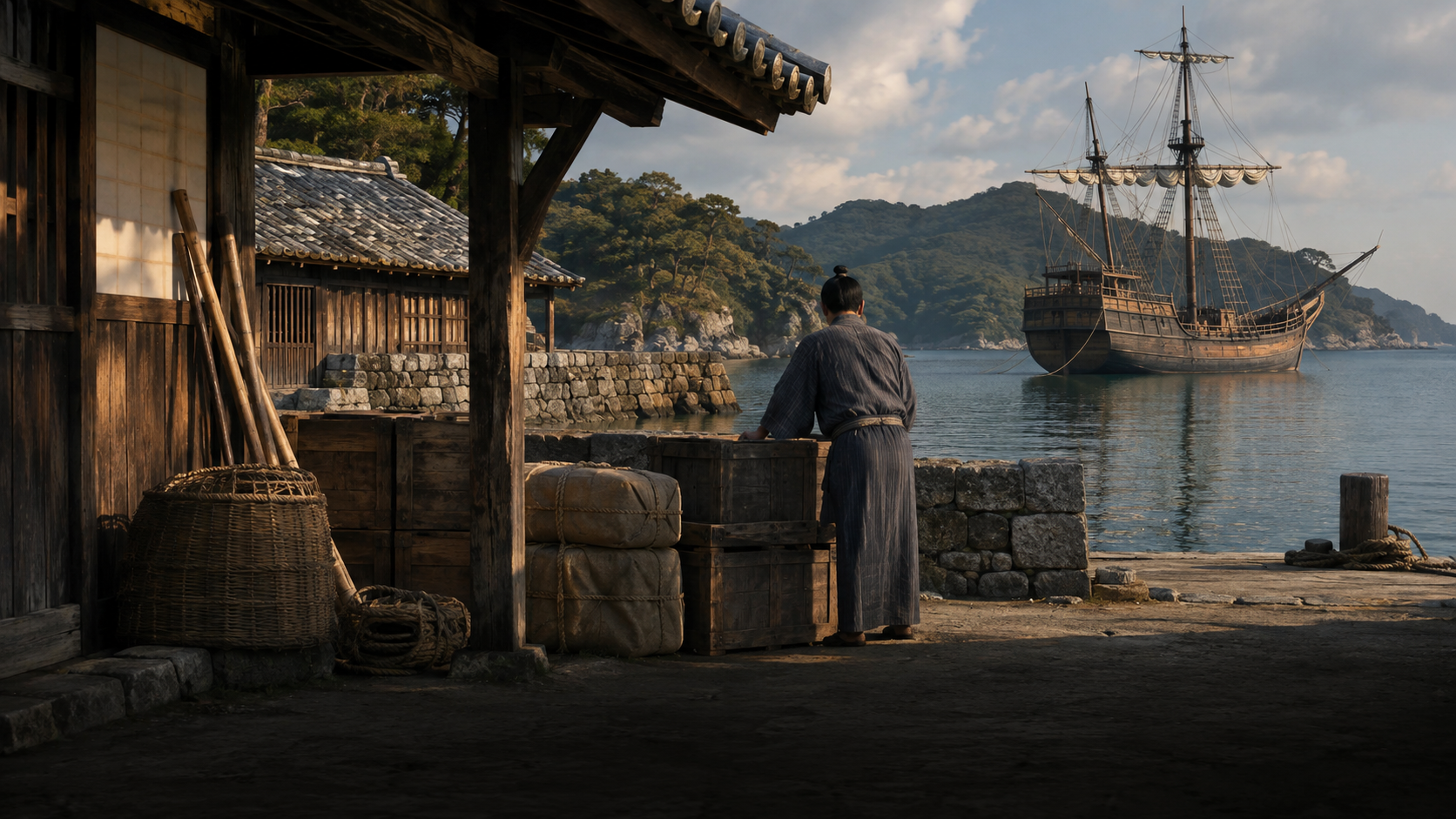
Permission and a base in 1609
The Dutch post was established in Hirado in 1609. Company ships arrived, and representatives obtained permission for commerce after meeting Tokugawa Ieyasu at Sunpu.
A ship entering a harbour and a company sustaining a base there were different developments. Storage and premises made continued business possible after an individual arrival.
The later relocation was not already the known outcome of that beginning. The account starts with permission and establishment, rather than interpreting every early decision as a step toward a move more than three decades later.
Scene 04
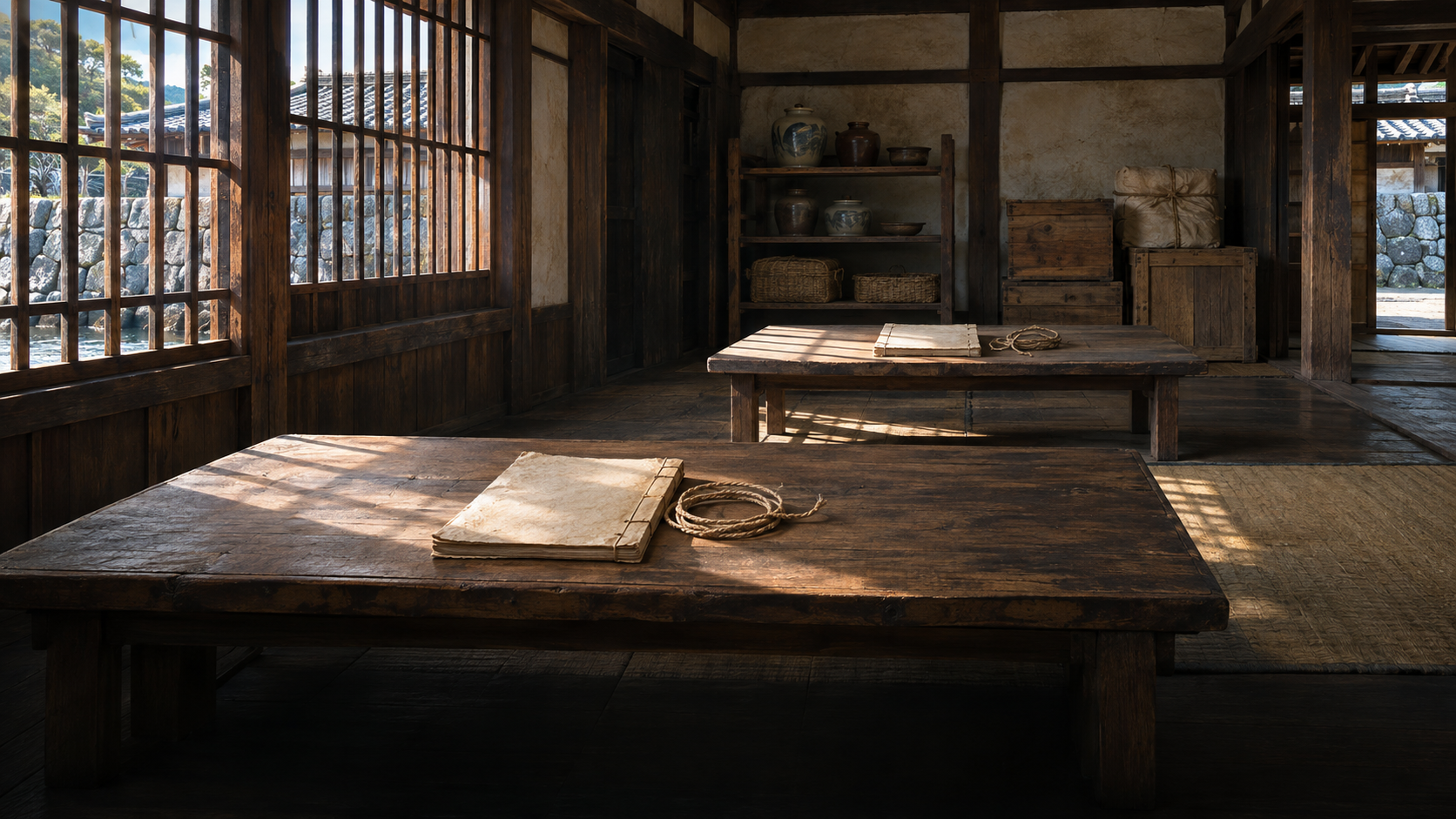
The English company followed a different course
An English trading post opened at Hirado in 1613. The Matsura museum explains the arrival carrying a royal letter, a meeting with Ieyasu and permission for trade.
Different companies therefore operated in the same port for a period. Their business histories did not merge simply because their premises were nearby.
The English post closed in 1623 after trade failed to expand sufficiently. That was earlier than the Dutch move to Dejima. Distinguishing company and date prevents a single undifferentiated story of foreign merchants from replacing their different trajectories.
Scene 05
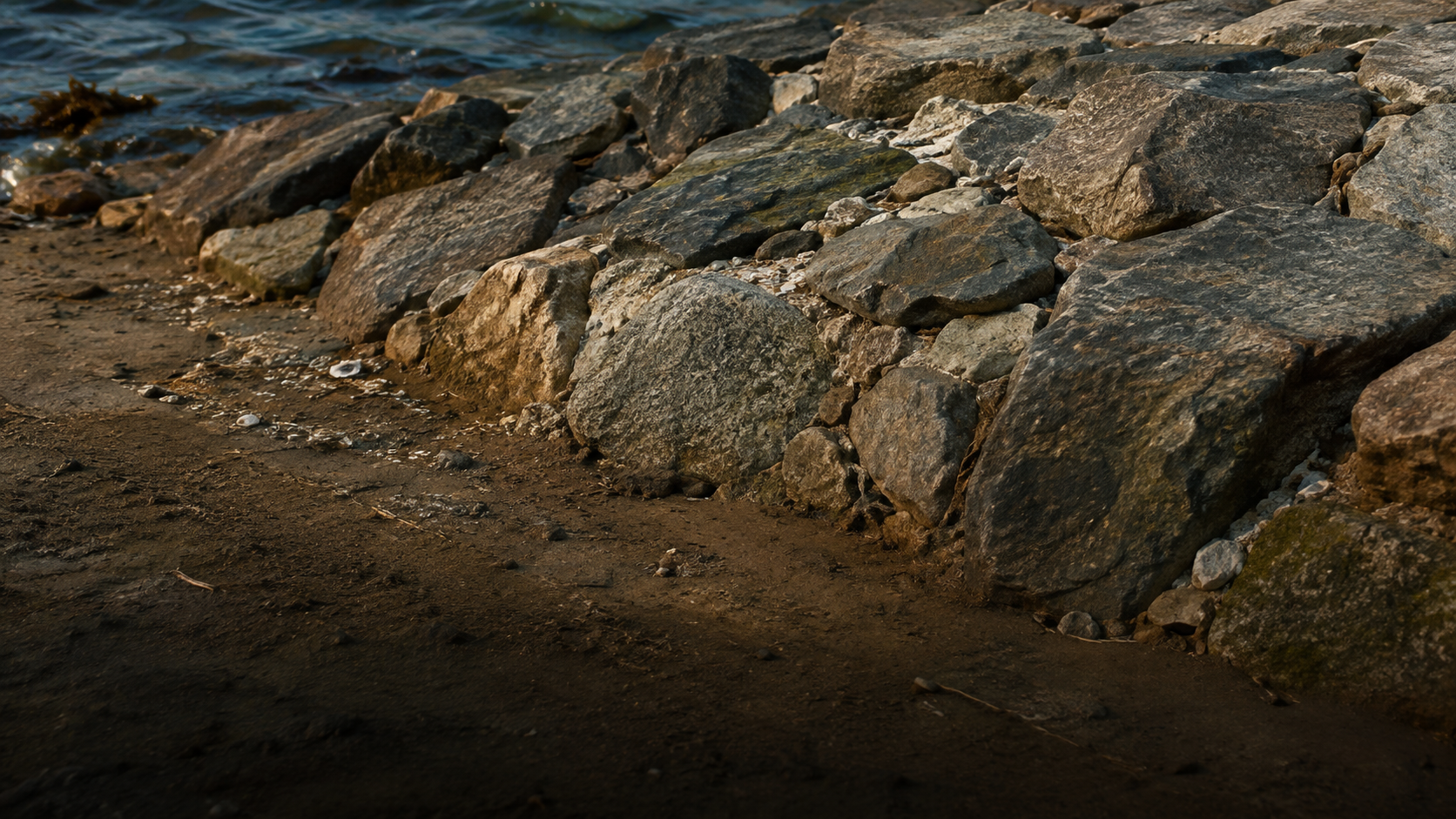
Expansion changed the waterfront
The archaeological report distinguishes early reuse of premises, construction from 1612 and a later stone-warehouse phase beginning in 1637. These phases correspond with changes in reclaimed ground.
The shoreline was therefore part of the compound’s development. A current coastal view does not by itself reveal earlier edges or the sequence through which land was added.
Buried waterfront structures invite questions about what stood beside the sea at each stage. The conceptual image is not a measured plan of those remains, and the article supplies no invented reclamation dimensions.
Scene 06
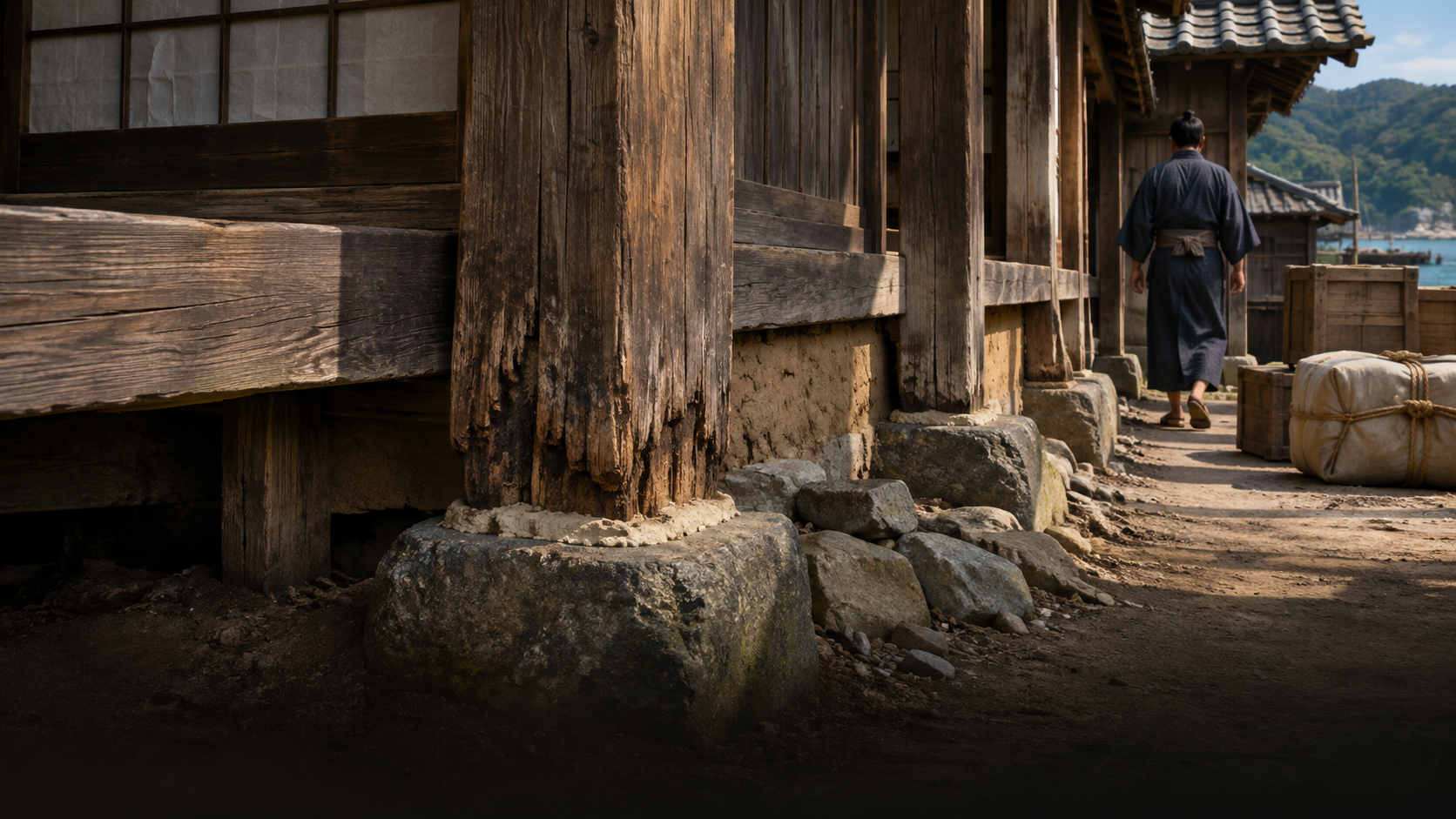
New construction replaced earlier storage
Hirado City links increased trade in the later 1630s with the need for large storage facilities. The warehouse completed in 1639 belonged to that commercial expansion.
The archaeological abstract describes two earlier warehouses being replaced by the new building. Construction changed an existing compound rather than merely adding something to vacant ground.
Official restoration explanations also draw attention to stone walls and a tiled roof. Commercial requirements and architectural choices were connected, without implying that the generated image establishes every construction detail or the nationality of particular workers.
Scene 07
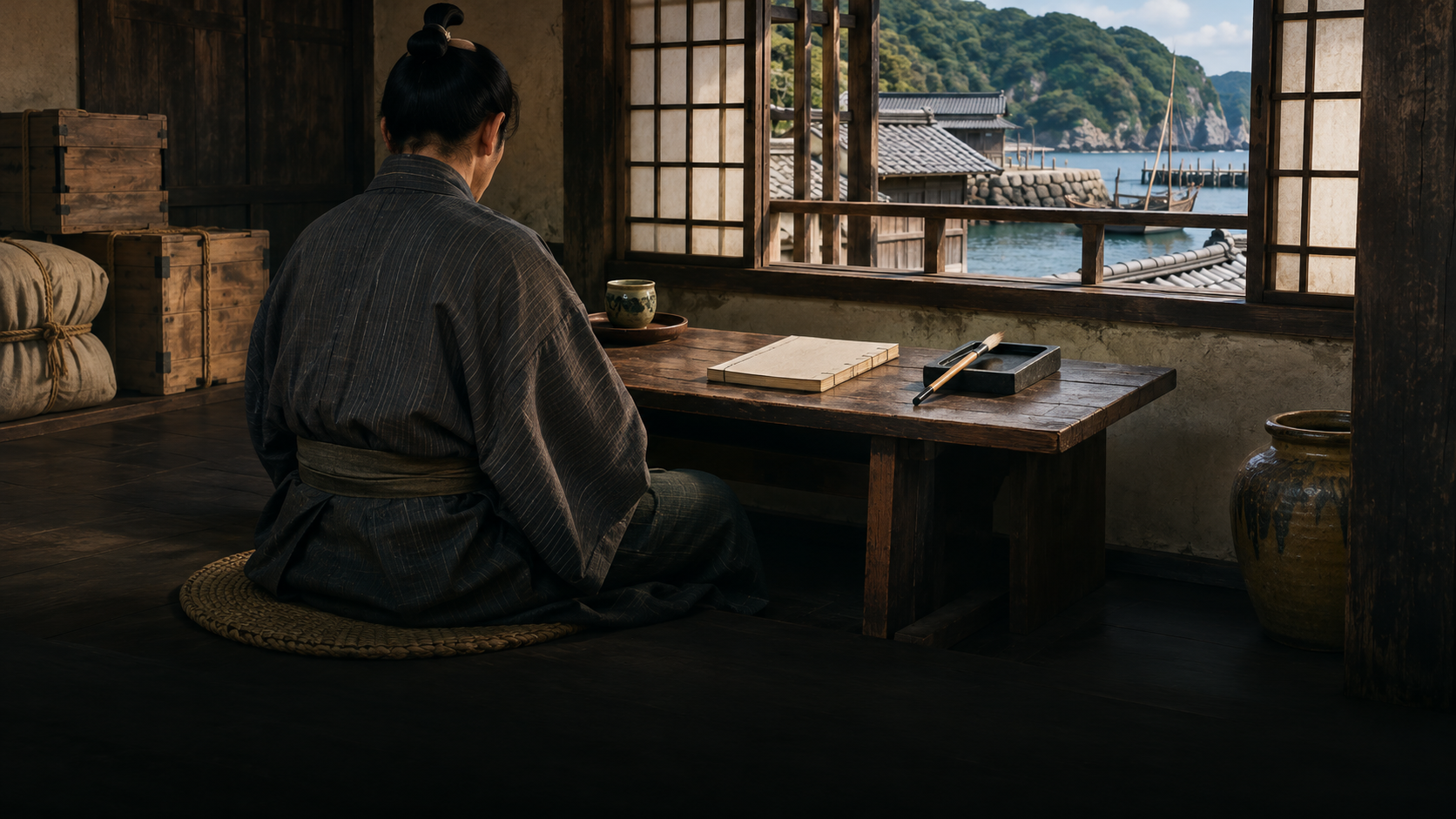
Trade growth coincided with tighter control
During the 1630s, the government imposed restrictions on Japanese overseas travel and return, foreign arrivals and Christianity. Those measures overlapped with the expansion of the post’s facilities.
The city’s explanation describes Dutch trade increasing within that changing environment. Restriction on some relations did not require every remaining commercial operation to shrink in the same way.
The large warehouse and stronger government control were therefore two aspects of the period. Prosperity at a location did not guarantee continued permission to operate there under unchanged conditions.
Scene 08
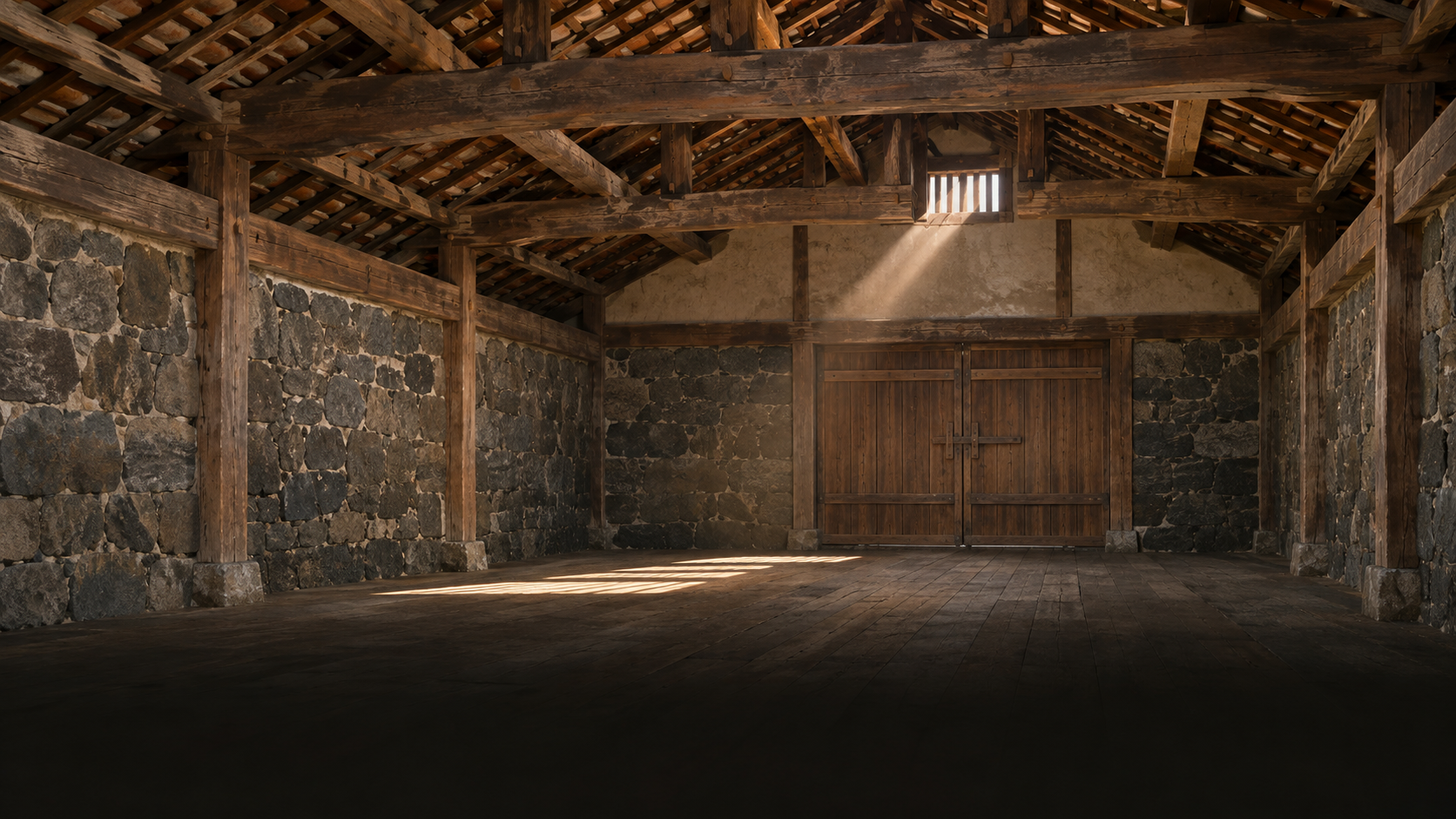
Read the order in its wider setting
In 1640, the recently built warehouse received a demolition order. The post’s institutional history explains the Christian-era year as objectionable under the prohibition of Christianity.
Commercial buildings did not stand outside the government’s religious and administrative conditions. The stated reason should be read alongside the wider direction of trade control.
That does not justify reducing every circumstance of relocation to a single inscription. The order concerned buildings in 1640, while relocation followed in 1641. Keeping the sequence visible gives the explanation its necessary limits.
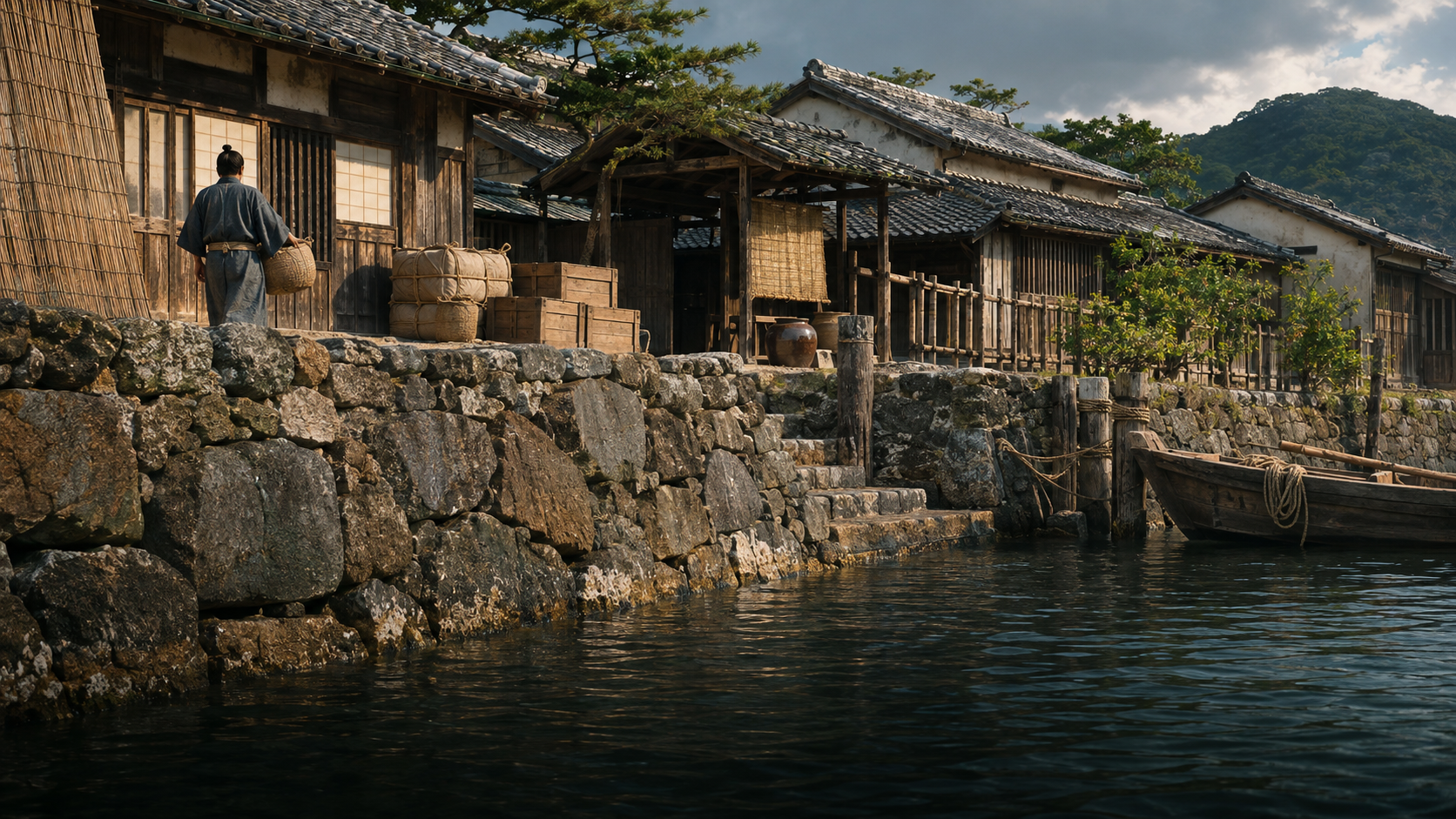
Scene 09
Dejima already had another purpose
Dejima was completed in 1636, before the Dutch move. Nagasaki’s cultural-property explanation describes a reclaimed island initially intended to house Portuguese arrivals.
The government prohibited Portuguese arrivals in 1639. The Dutch establishment was then moved from Hirado to Dejima in 1641.
Construction, exclusion and relocation were separate stages in the island’s use. It was not created from the beginning solely for the Dutch post. Changes in Hirado’s establishment were connected with a place whose own purpose had also changed.
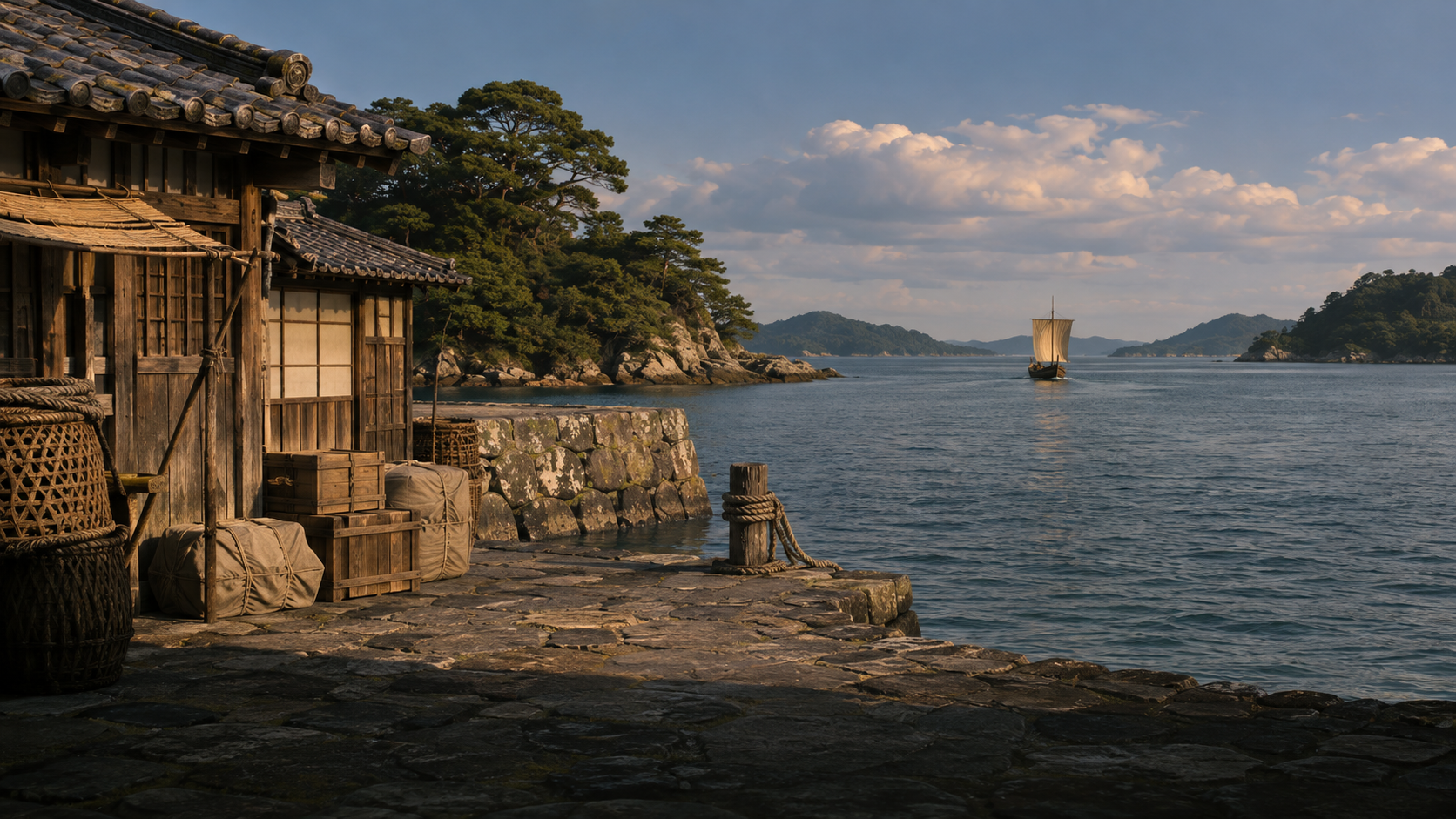
Scene 10
The location changed; trade continued
Leaving Hirado did not mean Dutch trade with Japan ended. Activity continued at Dejima. The city’s account also contrasts everyday interaction with residents in Hirado with the conditions of the later island base.
Relocation changed the setting in which people lived and conducted business. The difference concerned access and relationships as well as the movement of stored goods.
Hirado’s former compound also acquired later uses. The restoration plan treats subsequent Edo-period remains as part of the site’s history. The trading post’s departure did not turn the land into a historical blank.
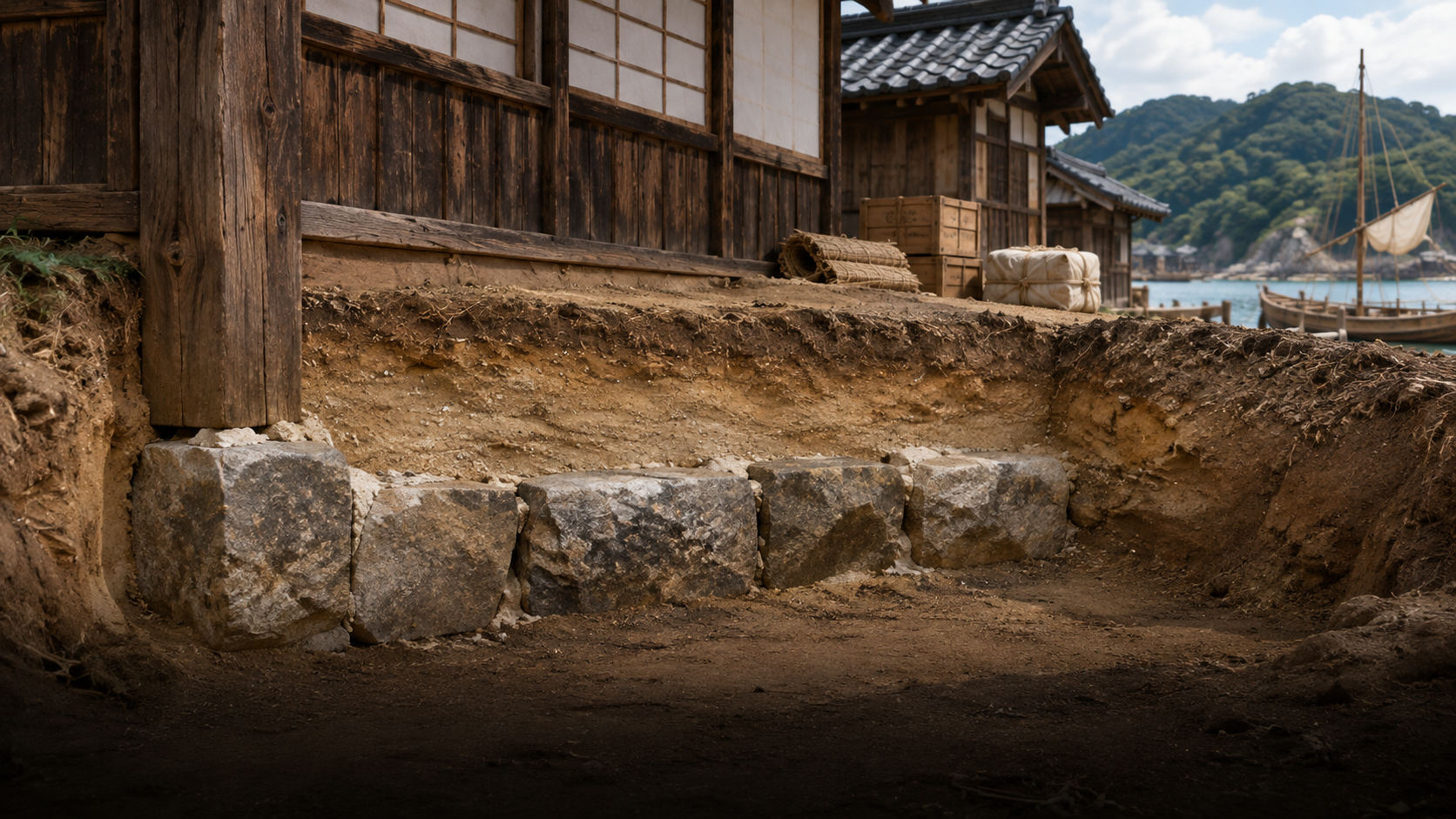
Scene 11
Remains and reconstruction are different things
The report’s abstract describes foundation traces interpreted alongside documentary evidence. That comparison connects what survived underground with descriptions retained on paper.
The present museum opened in 2011 in a reconstruction of the 1639 warehouse. A reconstructed building and surviving walls or wells do not have the same status as old fabric.
Neither the full report nor every original account book is represented as independently read here. The image is not an excavation photograph. Distinguishing evidence and reconstruction allows both to be valued without presenting all visible elements as unchanged seventeenth-century structures.
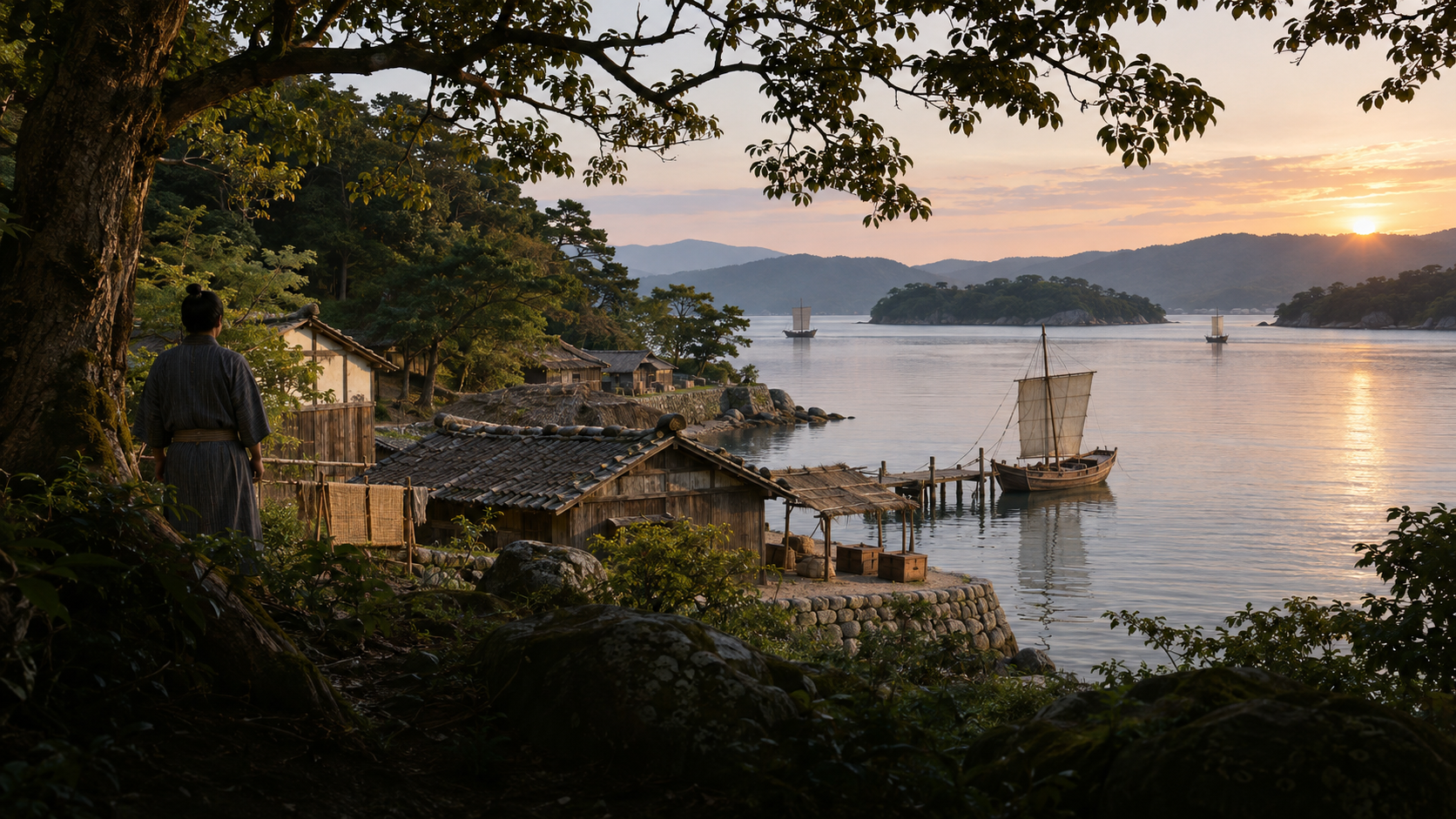
Scene 12
Growth did not decide the future location
From rented premises, the post expanded its facilities and storage. Demolition was ordered in 1640, followed by a move in 1641. The stated date-inscription reason forms part of that sequence.
The wider question concerned where and under what conditions trade would be allowed. The company’s commercial success alone could not settle the government’s decision about its location.
Following warehouses, altered waterfront ground and continued activity at Dejima reveals a period of changed gateways rather than a simple end to overseas connection. The place of exchange changed while the relationship continued under different conditions.
How to read this work
History, interpretation, and reconstruction
Growth in trade and buildings did not guarantee a trading post’s future at the same location; commercial development and government control together explain trade continuing through a changed gateway.
This work is grounded in published sources and historical research. Interior thoughts, dialogue, and some visual details are cinematic reconstructions. Where historians disagree, the article presents the point as debated rather than settled fact.
Timeline
The story in time
People & terms
A guide for new readers
Glossary
- Trading post or factory 商館
- A commercial establishment combining business, residence and storage, rather than a modern manufacturing factory.
- Dutch East India Company オランダ東インド会社
- The company associated with the Dutch establishment, separate from the English company.
- Dejima 出島
- The reclaimed Nagasaki island whose earlier Portuguese purpose preceded the Dutch relocation.
- Reclamation 埋立て
- The enlargement of usable ground by filling coastal areas, relevant to the compound’s changing extent.
- Foundation remains 基礎遺構
- Physical traces investigated archaeologically, distinguished from a modern reconstructed superstructure.
- Reconstruction 復元
- A modern rebuilding based on evidence, not a claim that the entire visible building survives from the historical period.
Sources & method
How this article was built
Company histories and the two locations are separated chronologically. A building order and relocation have different dates, while the English closure follows another company’s history. The account does not treat foreign trade as one operation with one end date.
The archaeological discussion remains within the public abstract and institutional explanations. It supplies no detailed dimensional conversion or full original-document transcription. Several references belong to the same trading-post institution and are not ten independent eyewitnesses.
Surviving traces, later land use, a restoration plan and the modern warehouse retain distinct status. Generated scenes authenticate none of them. No exact trade volume, private conversation or claim that one inscription alone explains every policy decision is added.
Sources
References and further reading
- History of the Hirado Dutch Trading Post 平戸オランダ商館の歴史 Title translated editorially for reader convenience. Hirado Dutch Trading Post 平戸オランダ商館 Institutional history and chronology; the inscription is attributed as the stated reason, not made the sole explanation of relocation. Accessed 2026-11-06
- Western trade and Hirado 西洋貿易と平戸 Title translated editorially for reader convenience. Matsura Historical Museum 松浦史料博物館 Distinguishes the Dutch and English companies and their different dates of operation. Accessed 2026-11-06
- Present condition of the trading-post site 商館跡の現在のようす Title translated editorially for reader convenience. Hirado Dutch Trading Post 平戸オランダ商館 Explains surviving traces without dating every feature to 1639 or claiming a full reading of an original transfer inventory. Accessed 2026-11-06
- History of Dejima 出島の歴史 Title translated editorially for reader convenience. Official Dejima resource 出島公式 Relevant chronology and historical sections. Later island institutions are not all projected onto 1641, and Japan’s foreign exchange is not reduced to the Dutch alone. Accessed 2026-11-06
- Dejima Dutch trading-post site 出島和蘭商館跡 Title translated editorially for reader convenience. Nagasaki City Cultural Properties Section 長崎市文化財課 Explains the separate stages of construction, Portuguese exclusion and Dutch relocation. Accessed 2026-11-06
- Dutch trading post オランダ商館 Title translated editorially for reader convenience. Hirado City 平戸市 Institutional description identifying the present warehouse as a reconstruction rather than an original surviving building. Accessed 2026-11-06
- The restoration plan for the Hirado post 平戸和蘭商館復元計画とは Title translated editorially for reader convenience. Hirado Dutch Trading Post 平戸オランダ商館 A plan and preservation approach, not evidence that every proposed part of the entire compound has been rebuilt. Accessed 2026-11-06
- Reviving the Hirado Dutch Trading Post よみがえる平戸オランダ商館 Title translated editorially for reader convenience. Hirado Dutch Trading Post 平戸オランダ商館 Restoration explanation; historical progress wording is not used as current construction advice. Accessed 2026-11-06
- Foundations of the warehouse built in 1639 at Hirado 平戸オランダ商館跡1639年築造倉庫の基礎遺構 Title translated editorially for reader convenience. Japanese Archaeological Association / Hagiwara Hirofumi and Kato Arishige 日本考古学協会/萩原博文・加藤有重 Bibliography and public abstract of the 2002 report. The full paper, original diaries and account books are not claimed as independently read; disputed dimensional conversions are omitted. Accessed 2026-11-06
- Hirado Dutch trading-post remains 平戸和蘭商館跡 Title translated editorially for reader convenience. Hirado City 平戸市 Cultural-property explanation used for commercial development and local interaction, without invented trade quantities or claims of a unique national gateway. Accessed 2026-11-06
Continue reading
More stories from Shigeki
Shigeki English
The Second Choshu Expedition: Four Fronts and a Negotiated Withdrawal
Read weapons together with terrain, training, command and support.
- When 1866, distinct from the first expedition in 1864; the process of ending extended into January 1867
- Where Oshima, the Aki border, Iwami and the Kanmon Strait facing Kokura
Shigeki English
Hasedo: Why Fighting Continued after Sekigahara
Separate the siege, the arrival of news, and withdrawal under pursuit.
- When 1600; month and day references use the calendar of the time
- Where Hasedo and Yamagata in Dewa, connected with Aizu and distant Sekigahara