
SHIGEKI ENGLISH STORYEN
Japanese history in English
The Heiji Conflict: How an Emperor’s Movement Changed Kyoto
Follow Sanjo Palace, the imperial residence and Rokuhara through a changing political struggle.
Kiyomori and Yoshitomo fought on the same side in 1156 but became opponents in the Heiji conflict. Trace court relationships, the attack on Sanjo Palace, imperial departures, Yoshitomo’s defeat and Yoritomo’s exile, while distinguishing the events from later narratives, picture scrolls and copies.
At a glance
Before you enter the story
- When
- The Hogen conflict of 1156 as background; the Heiji conflict of 1159 and Yoritomo’s exile in 1160
- Where
- Kyoto: Sanjo Palace, the imperial residence and Kiyomori’s Rokuhara base; later exile in Izu
- Key figures
- Taira no Kiyomori, Minamoto no Yoshitomo, Fujiwara no Nobuyori, Shinzei, Emperor Nijo, Retired Emperor Go-Shirakawa, Minamoto no Yoritomo
- What was at stake
- Why did those who first seized the initiative fail to retain it, and how did imperial movement change their position?
Why this story matters
The larger history behind the turning point
Military strength operated within court politics. Control of buildings and the location of the emperor could change in different ways, so occupying the capital’s political spaces did not necessarily establish lasting command of the political situation.
The later fame of Minamoto and Taira can obscure earlier alliances. Keeping 1156 and 1159 separate shows relationships changing, while following Yoritomo beyond defeat prevents the outcome of one conflict from being treated as the end of every participant’s history.
Historical context
What an international reader needs to know
More than two military families
Kiyomori and Yoshitomo both supported Go-Shirakawa in the Hogen conflict of 1156. Their later opposition was therefore a change in political relationships, rather than the continuation of a permanent division determined entirely by family name.
After Go-Shirakawa abdicated in favour of Nijo, both the reigning emperor’s court and the retired emperor’s circle mattered. Shinzei and Nobuyori were associated with the latter, while people supporting government centred on Nijo also participated in the political situation. A diagram with only two warriors cannot capture those relationships.
Narrative evidence and the location called Rokuhara
The Tale of Heiji and its illustrated scrolls preserve later representations of events. Their words and images can be studied as narratives without turning dialogue into an authenticated transcript or a later painted scene into direct observation of 1159.
Rokuhara had different uses across time. Kiyomori’s residence in the Heiji conflict must be distinguished from the Kamakura government’s institution established after the Jokyu conflict of 1221. A continuing place-name does not establish an unchanged organisation. The generated illustrations identify neither exact buildings nor actual participants.
Watch the film
See the story in motion
The film currently uses Japanese audio. This English article provides the context and source trail; it does not imply that an English subtitle track is available.
Scene 01
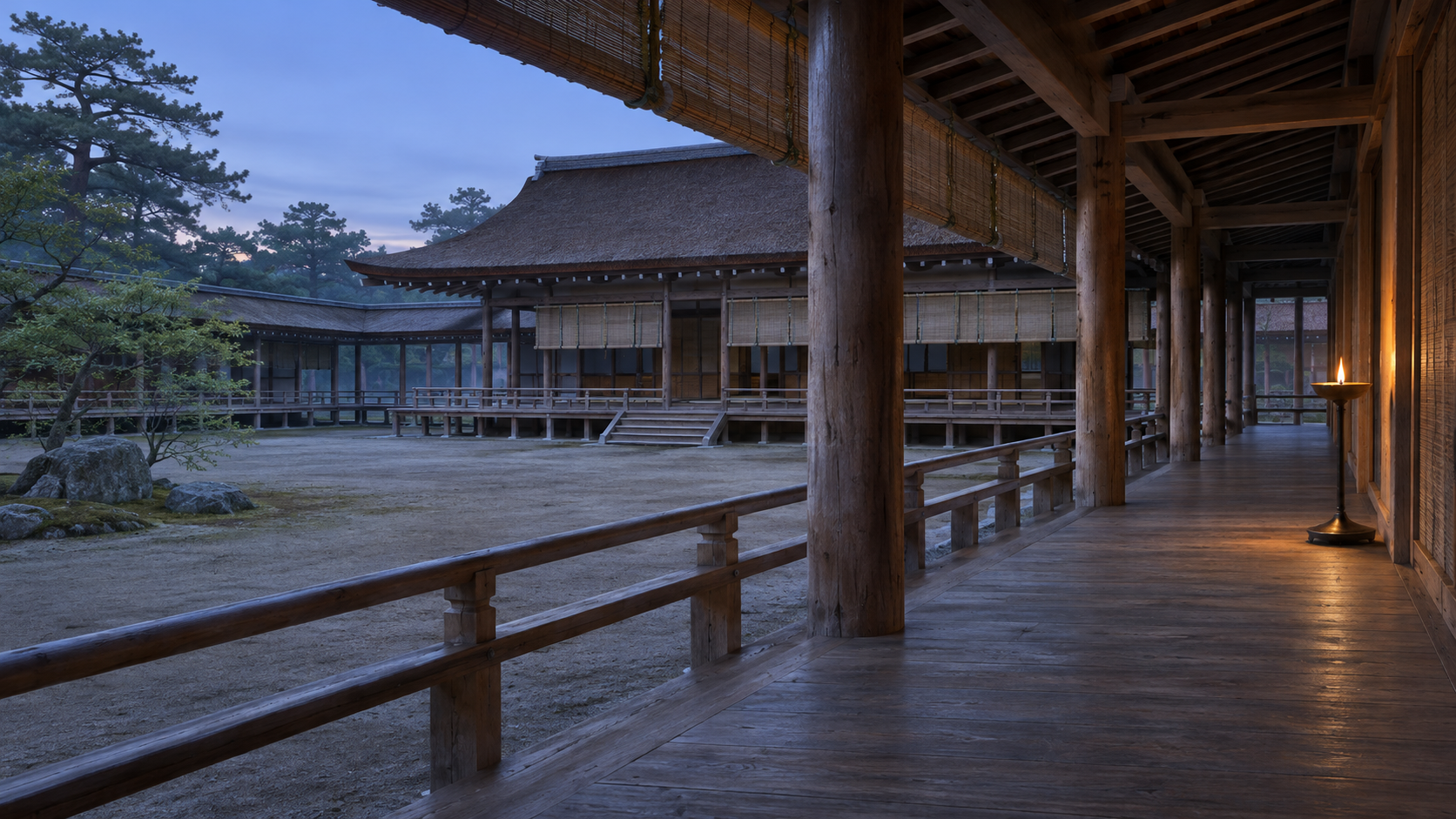
A change of place altered the political balance
In the Heiji conflict, the location of the emperor helped change the balance. Emperor Nijo left the imperial residence and went to Rokuhara, where Kiyomori was based. A later picture scroll represents the movement and the reception that followed.
Nobuyori and Yoshitomo had acted first in the capital, but that initiative did not assure their final victory. Their position depended on relationships involving the reigning emperor, the retired emperor’s associates and military power.
Following Sanjo Palace, the imperial residence and Rokuhara provides a route through those changes. The question concerns how control and alliances shifted during the conflict, rather than simply which of two families was always destined to win.
Scene 02
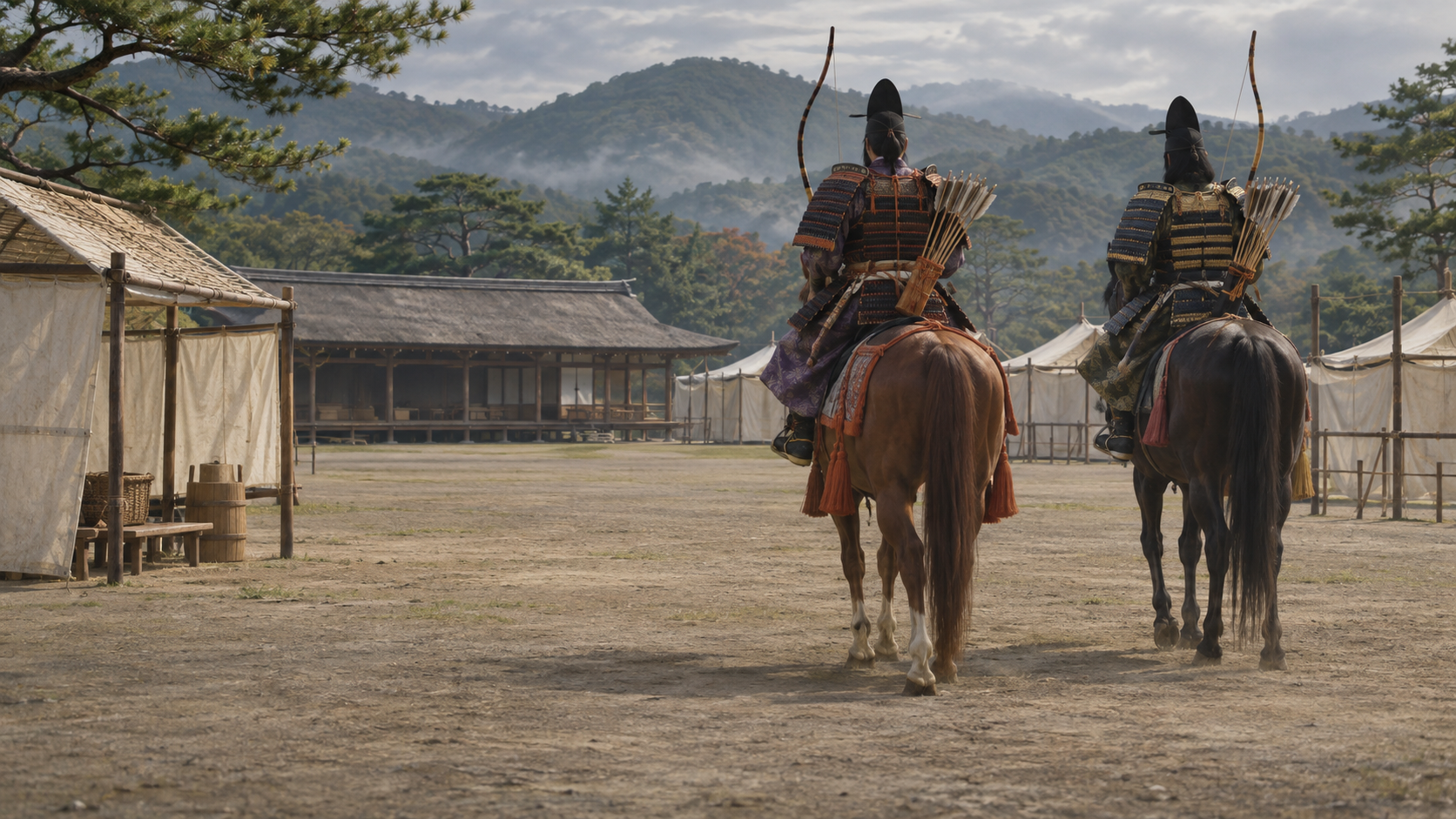
Kiyomori and Yoshitomo had fought together
The Hogen conflict occurred in 1156. Kiyomori and Yoshitomo both fought on Go-Shirakawa’s side. Family names alone did not determine their alignment: military participants joined opposing sides within a court struggle.
Three years later, in the Heiji era, they faced one another as opponents. Treating both conflicts as one uninterrupted Minamoto–Taira confrontation removes that change from view.
Earlier cooperation did not guarantee the same relationship in the next struggle. The starting point is therefore a court environment in which ties could be rearranged. Later outcomes cannot be used to make the earlier alliance disappear.
Scene 03
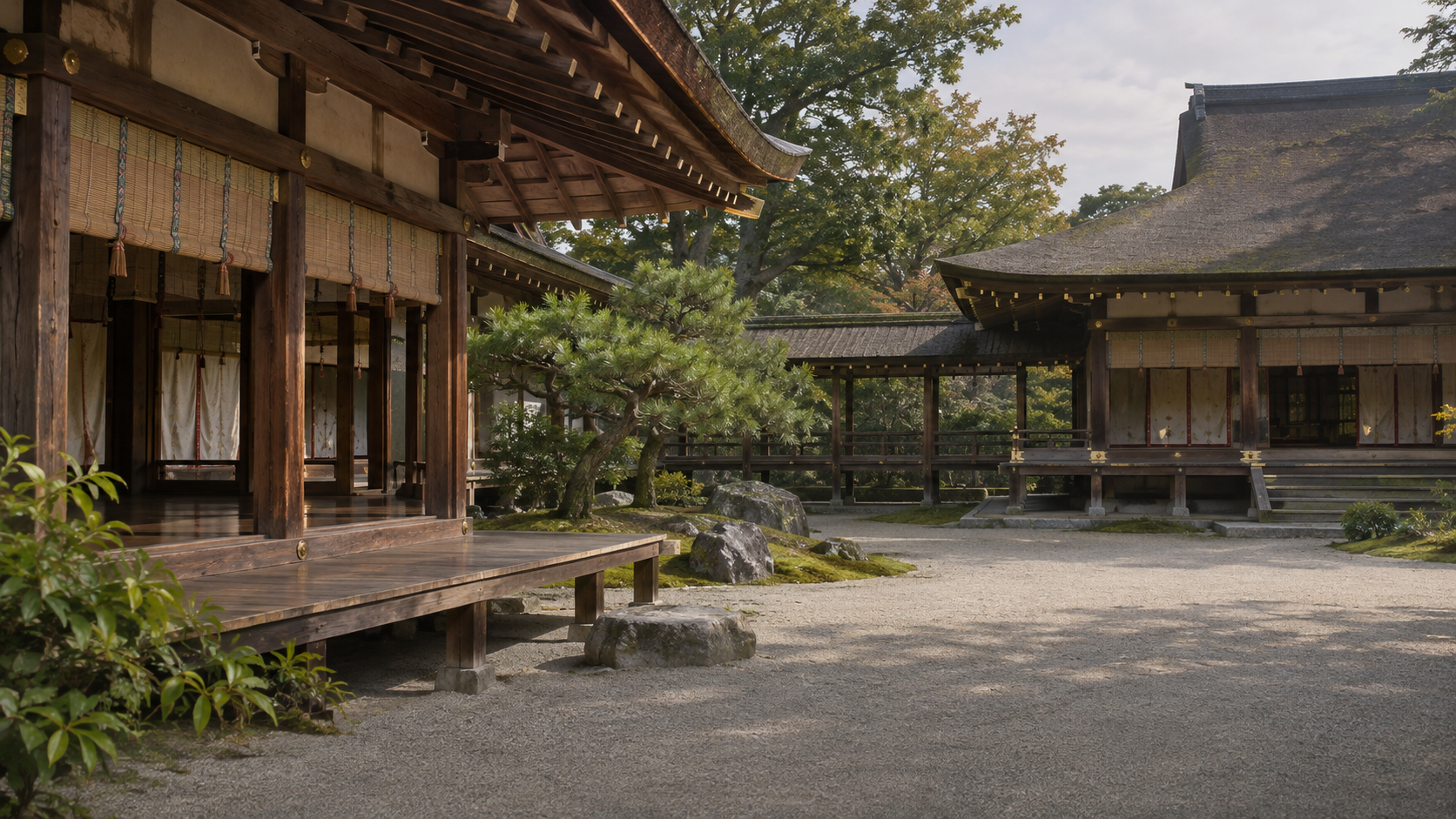
The retired emperor’s associates were not the whole court
After Hogen, Go-Shirakawa yielded the throne to Nijo and became a retired emperor. The reigning emperor’s court and the people around the retired emperor both remained relevant to political authority.
Shinzei and Nobuyori became influential near Go-Shirakawa. People favouring government centred on Nijo also mattered. Keio University’s Shido Bunko explanation describes multiple relationships interacting in the dispute.
The struggle concerned who would direct government and with whom they would cooperate. Neither Shinzei against Nobuyori nor Kiyomori against Yoshitomo supplies a complete diagram. Several lines of conflict crossed within the same capital.
Scene 04
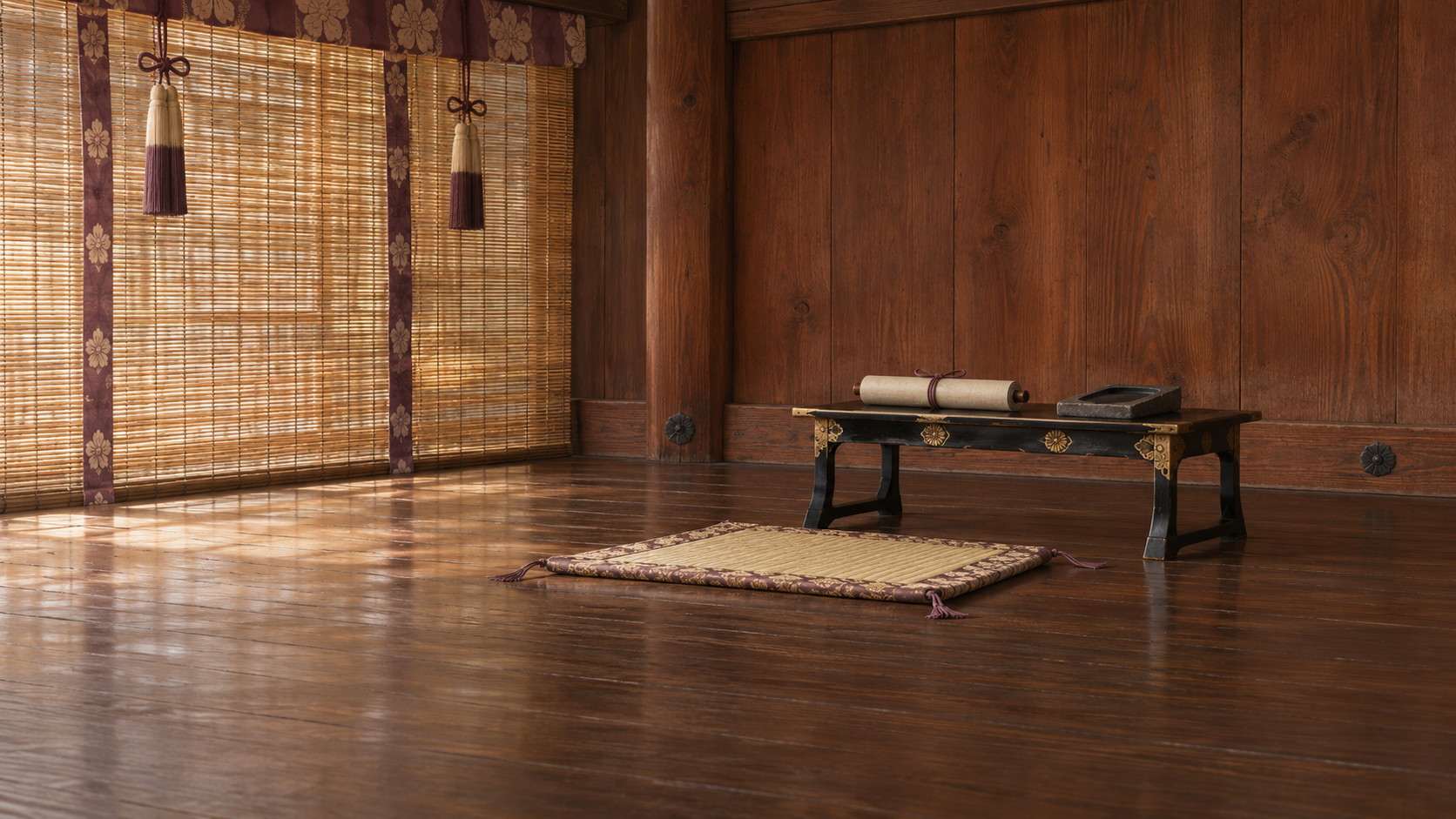
Trace alliances before assigning motives
Shinzei was closely involved in government under Go-Shirakawa and had links with Kiyomori. Nobuyori opposed him and joined with Yoshitomo as events moved toward a political upheaval.
Those connections do not permit the reconstruction of everything Yoshitomo hoped or Kiyomori feared as private dialogue. Later narratives organise characters into memorable personalities, but their literary presentation is not direct access to the participants’ thoughts.
The account therefore follows actions: who joined whom, which residence was attacked and who moved afterward. This approach leaves moral judgments and psychological invention aside while preserving the relationships needed to understand the sequence.
Scene 05
The attack during Kiyomori’s absence
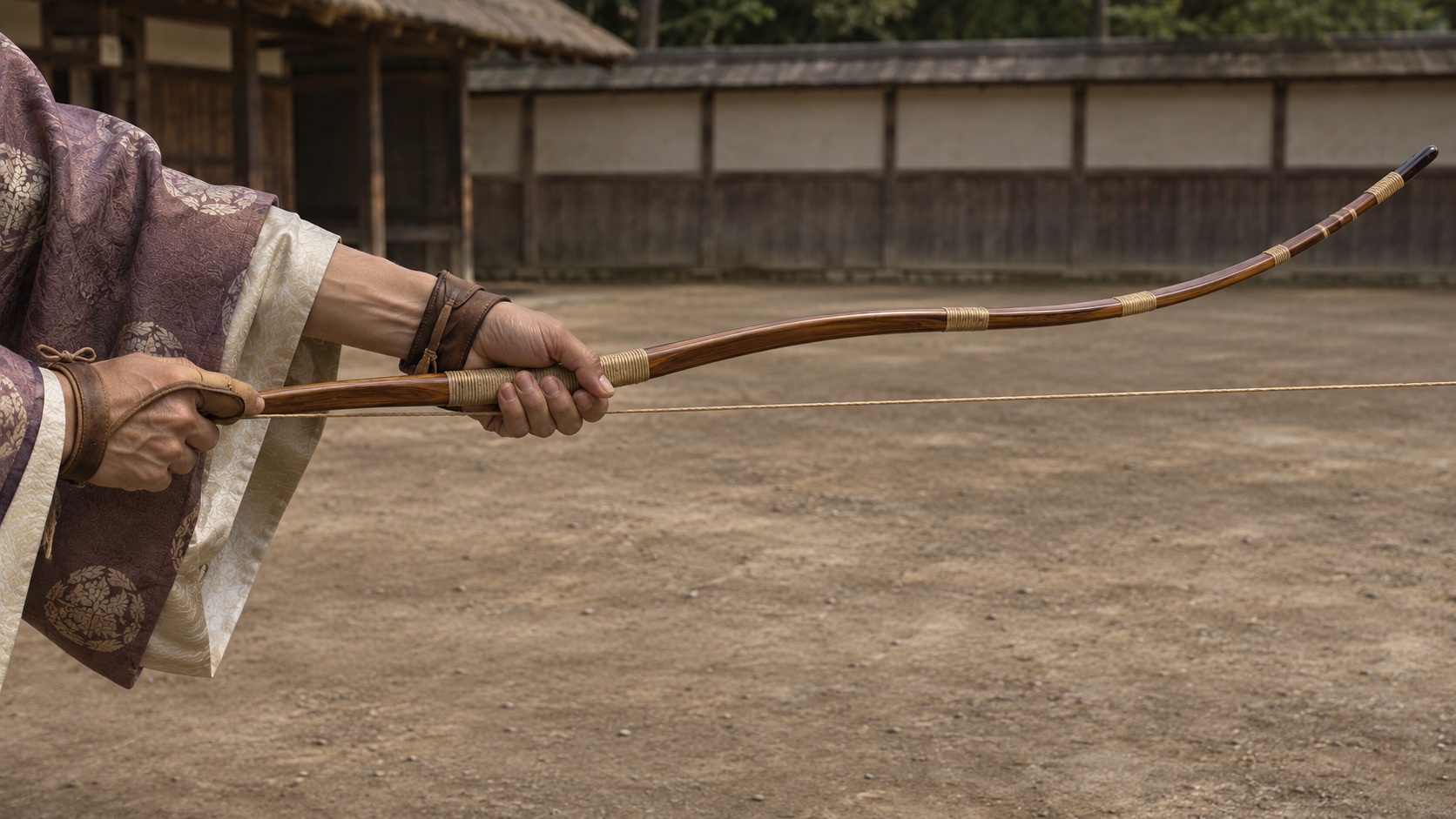
In the twelfth month of 1159, while Kiyomori was away on pilgrimage to Kumano, Nobuyori and Yoshitomo acted. Sanjo Palace, Go-Shirakawa’s residence, was attacked and set on fire. Shinzei fled the capital and subsequently died.
Go-Shirakawa and Nijo were placed in the imperial residence. Nobuyori and Yoshitomo had seized a major initiative, changing the situation in the capital before Kiyomori returned.
Taking buildings and removing an opponent did not settle how government would operate afterward. The next movements of the emperor, retired emperor and Kiyomori mattered. The attack on Sanjo Palace was a stage in the conflict rather than its final outcome.
Scene 06
Was every stage one original plan?
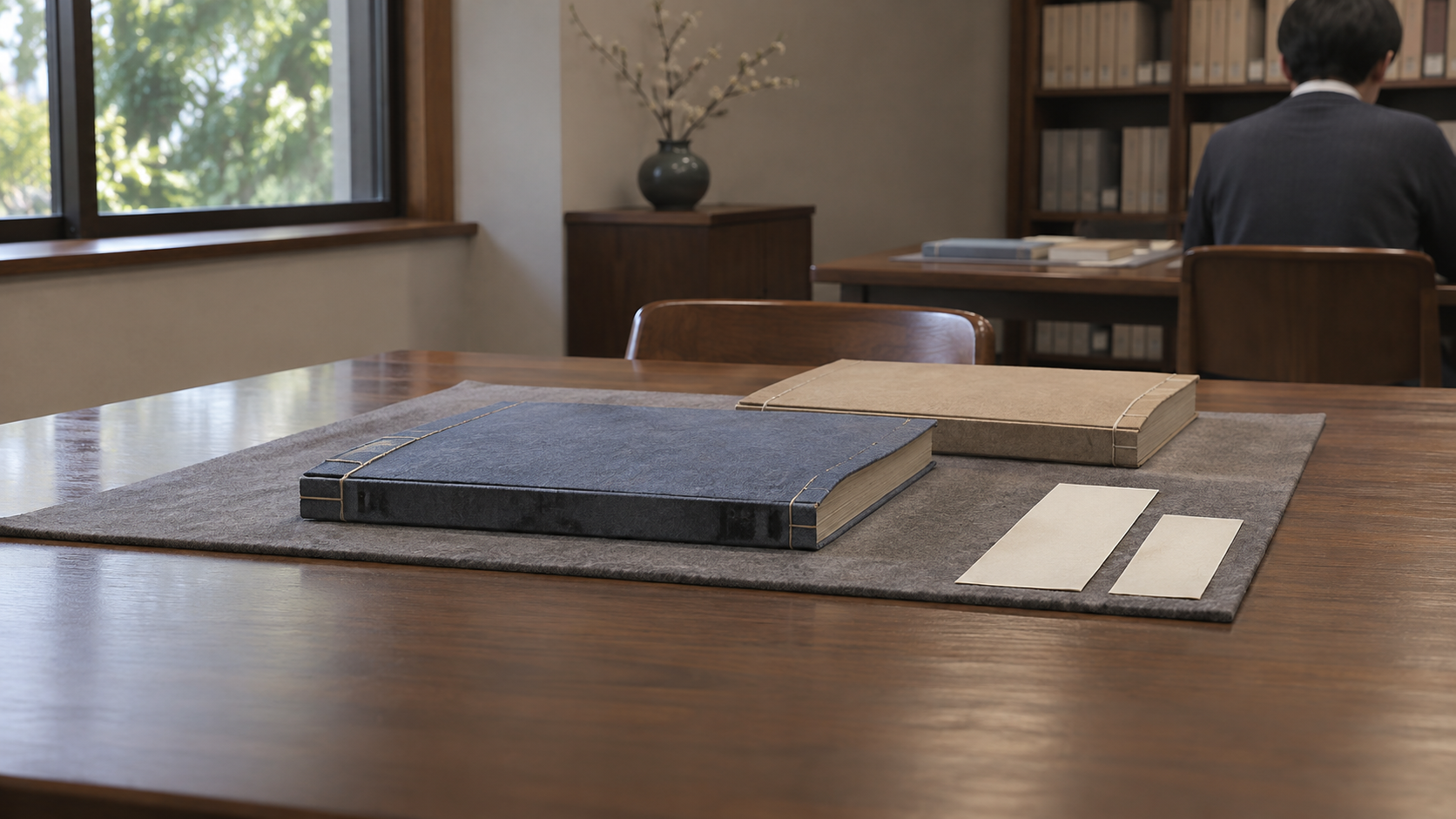
Can the initial attack and the later fighting be treated as the execution of one plan established from the beginning? Literary scholar Haramizu Tamiki discusses the scarcity of evidence for reconstructing the conflict and the distance between events and the war tale.
Interpretations of Go-Shirakawa’s involvement and the relationship between the political upheaval and subsequent battle are not uniform. The article does not resolve those debates by declaring him either the architect of everything or entirely unaware.
Separating the circumstances of the initial action from those producing the eventual victors keeps later developments visible. The modern research-room illustration signals the work of interpretation; it is not a room in which twelfth-century participants met.
Scene 07
Kiyomori returned, and the emperor left
After Kiyomori returned to Kyoto, the conflict entered another phase. Nijo left the imperial residence and moved to Kiyomori’s Rokuhara residence. Go-Shirakawa also escaped from the place where he had been held.
Their departures changed the position of Nobuyori and Yoshitomo. Occupying the earlier residence and receiving the emperor at another base were different political positions. Keio’s explanation identifies the escapes as a change in the situation.
The movements of court figures therefore belong alongside military movements. Rokuhara matters here because it was Kiyomori’s base at that moment. The change of place helps explain why an initial seizure of initiative did not remain decisive.
Scene 08
A later scroll shows the Rokuhara journey
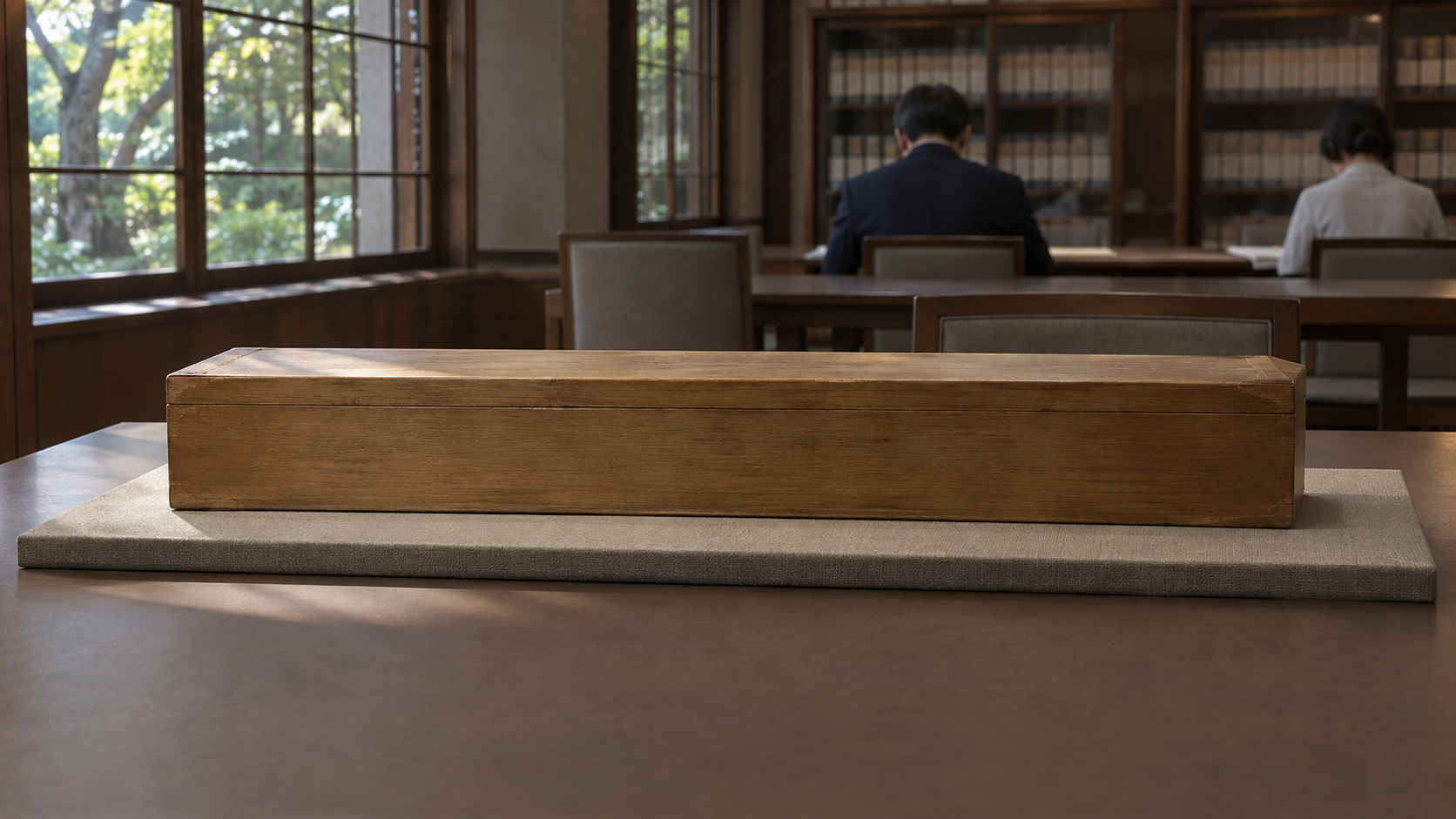
The Tokyo National Museum holds the Rokuhara imperial-visit scroll of the illustrated Tale of Heiji. Its four sections represent Nijo leaving in a court woman’s clothing and the events surrounding his reception at Kiyomori’s residence.
The work dates to the thirteenth-century Kamakura period. It was not painted on the day of the conflict. Its depiction therefore also belongs to the later telling and visual arrangement of the event.
Nagoya City Museum introduces a copy made in 1860. Original scroll and much later copy have distinct dates even when the compositions resemble one another. Neither the brightness of an image nor its detail makes it a direct view of the night in question.
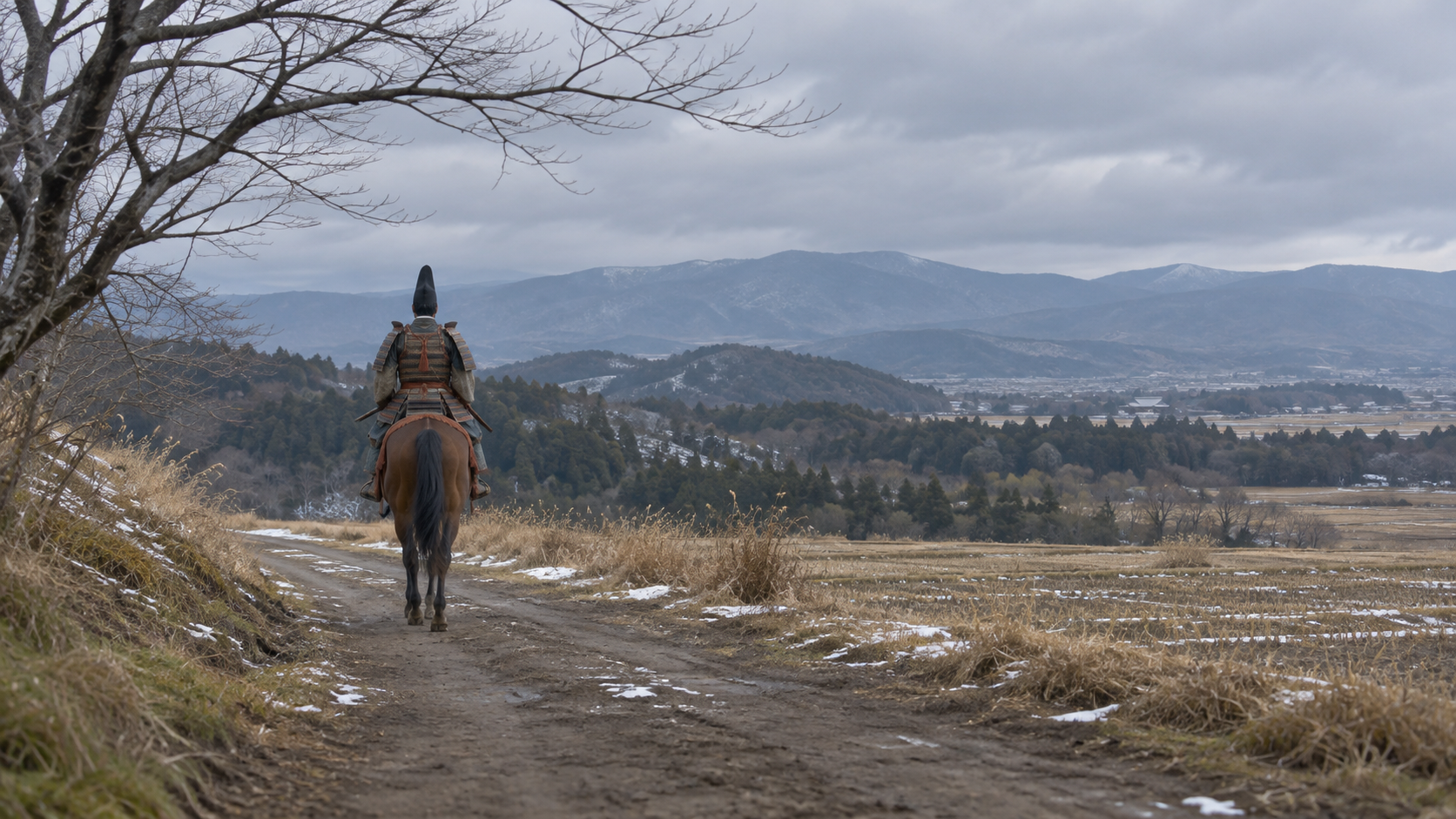
Scene 09
Yoshitomo lost, while Yoritomo survived
Yoshitomo’s forces were defeated by Kiyomori’s side. Nobuyori was executed, and Yoshitomo died after fleeing Kyoto. Those who acted first had not retained control to the end.
For Kiyomori, victory strengthened his position as a military figure connected to the court. It did not mean every Minamoto participant disappeared. Yoshitomo’s son Yoritomo survived and was exiled to Izu.
Izunokuni City’s historical overview dates the exile to 1160. Defeat in the capital and subsequent lives form related but different histories. Yoritomo’s later rise should neither erase this defeat nor be treated as a result already guaranteed at this point.
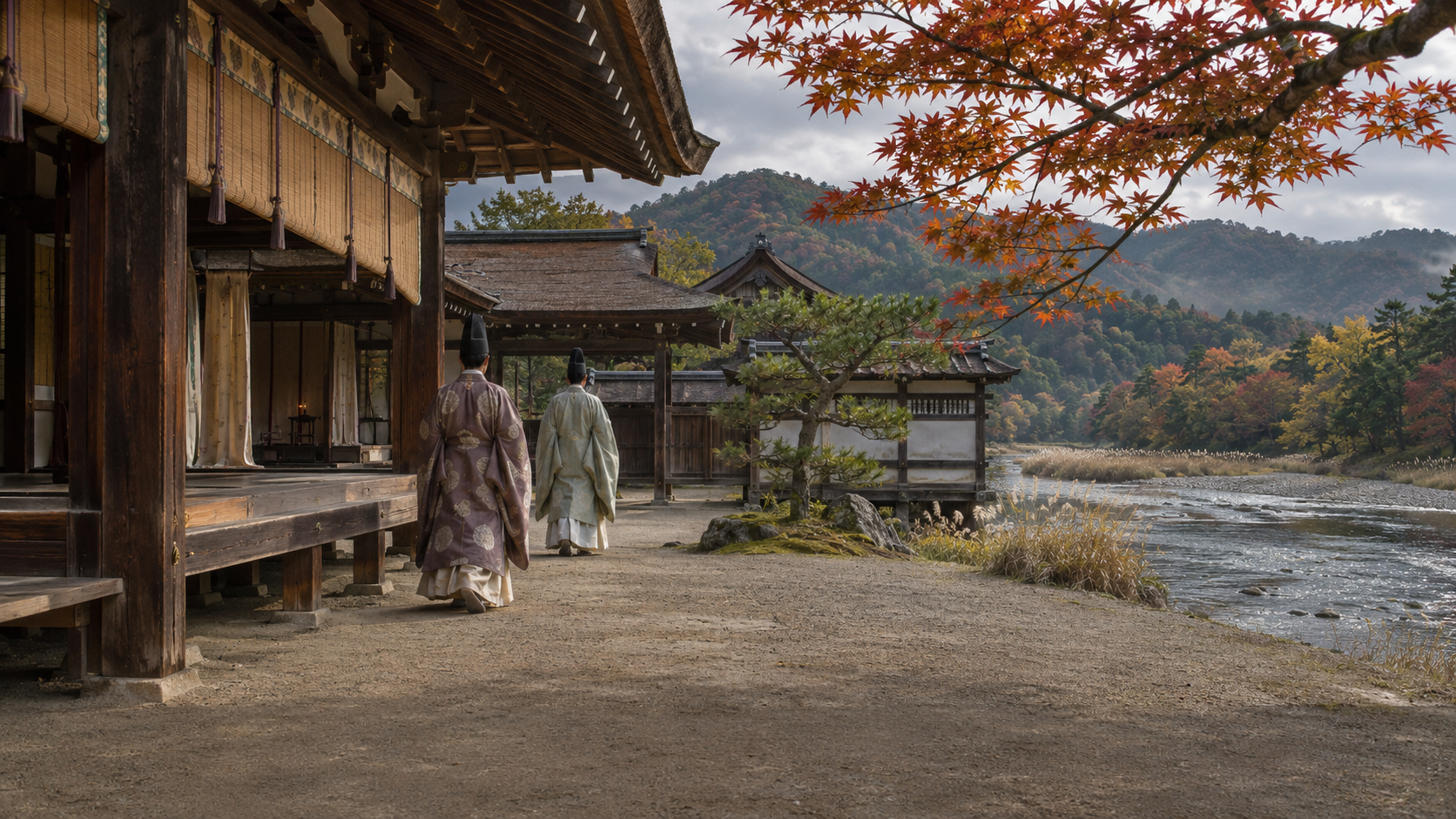
Scene 10
Kiyomori’s residence preceded the later Rokuhara office
The name Rokuhara may recall the Kamakura government’s Rokuhara Tandai. That later institution was not the same organisation as Kiyomori’s residence during the Heiji conflict.
Kyoto City’s urban history separates the area associated with Taira residences from the government office established after the Jokyu conflict. The place-name continued while its users and responsibilities changed.
Understanding Nijo’s destination begins with the twelfth-century base. Only afterward should the reader move to later institutional history. Otherwise a familiar later name can introduce offices that did not yet exist into the account of 1159.
Scene 11
The tale is evidence of narration as well as events
The Tale of Heiji transmitted accounts of the conflict, memorable feats and the fortunes of individuals. Kyoto University’s literary-history explanation introduces the enduring reception of such narratives.
Manuscripts also differ, and passages were revised. Keio’s discussion points to scholarship comparing those versions. A narrative’s importance does not depend on treating every surviving wording as an unchanged record from the participants.
The tale can reveal which scenes were emphasised and how characters were presented. Its dialogue is not used here as authenticated speech. Moving between the event’s reconstruction and its later narration helps establish what each kind of evidence can support.
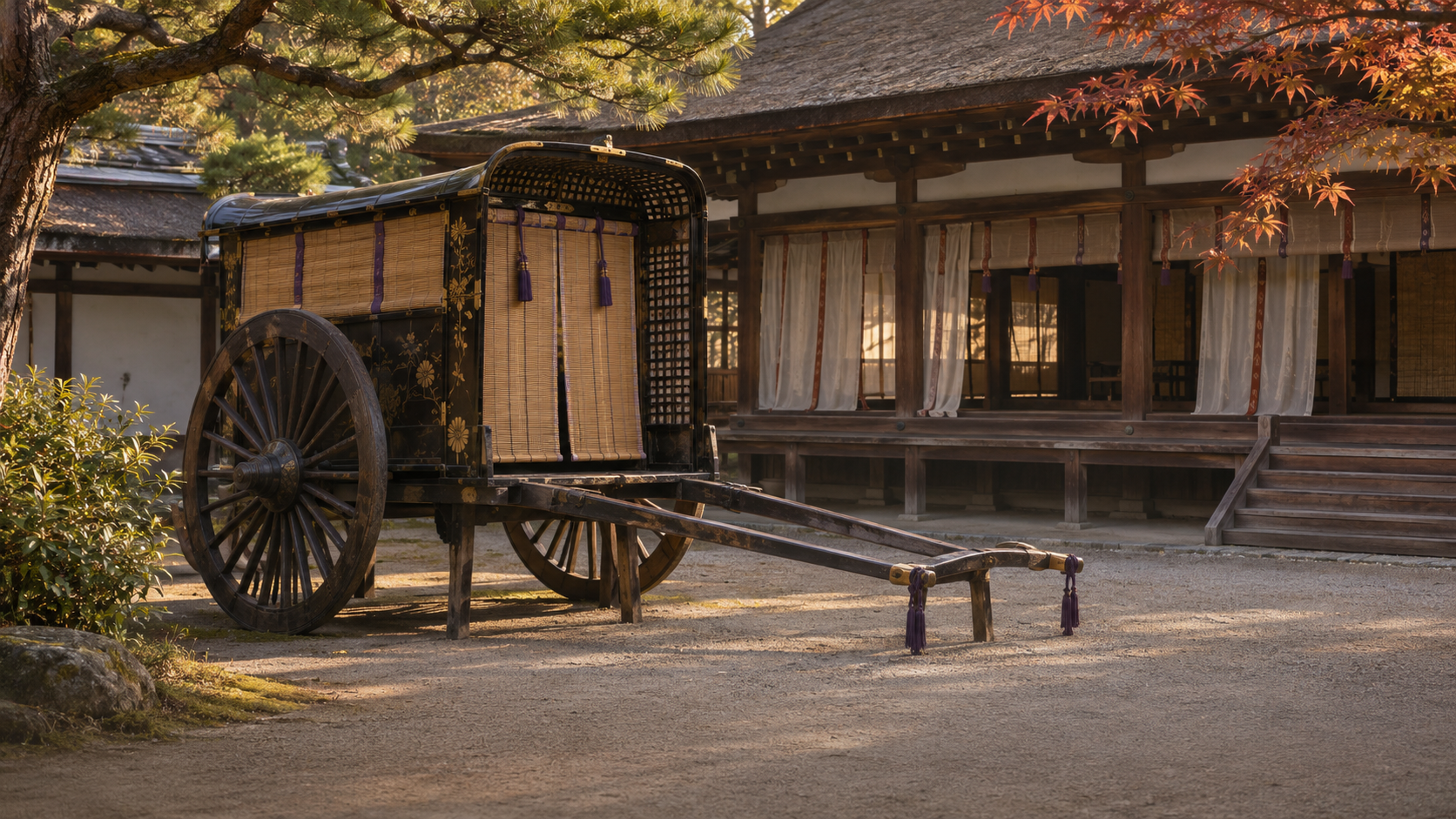
Scene 12
A political upheaval changed both men’s positions
The two warriors who had supported the same side in Hogen became enemies in Heiji. Yoshitomo was defeated and died. Kiyomori emerged with a stronger place in the capital, on the side that had received the emperor.
That sequence involved the retired emperor’s associates and developments around Nijo as well as armed forces. A fixed division between Minamoto and Taira removes much of the process through which the outcome became possible.
Yoritomo’s exile continued into another history. The victory of one conflict did not determine every later ending. Following the attack, imperial movement and Rokuhara in sequence makes the changing balance of the capital more intelligible without reading the entire future backward into it.
How to read this work
History, interpretation, and reconstruction
Following court relationships and the changing locations of the emperor and retired emperor reveals shifts in the conflict that a fixed Minamoto-versus-Taira division conceals.
This work is grounded in published sources and historical research. Interior thoughts, dialogue, and some visual details are cinematic reconstructions. Where historians disagree, the article presents the point as debated rather than settled fact.
Timeline
The story in time
-
Yoritomo was exiled to Izu.
Sources: s08 -
The illustrated Tale of Heiji’s Rokuhara imperial-visit scroll was produced.
Sources: s04 -
The Rokuhara area became associated with a later Kamakura government institution, distinct from Kiyomori’s residence.
Sources: s09 -
The copy of the Rokuhara scroll introduced by Nagoya City Museum was made.
Sources: s07
People & terms
A guide for new readers
Glossary
- Hogen conflict 保元の乱
- The conflict of 1156, in which Kiyomori and Yoshitomo supported the same side.
- Heiji conflict 平治の乱
- The subsequent upheaval in which the former allies opposed each other.
- Retired emperor 上皇
- The status held by Go-Shirakawa after he yielded the throne; his circle remained politically significant.
- Rokuhara 六波羅
- The Kyoto area containing Kiyomori’s base, whose twelfth-century role must be separated from a later government office.
- Picture scroll 絵巻
- A painted narrative format; the surviving work discussed here dates after the events it represents.
- Later copy 模本
- A reproduction made in another period, which requires its own date rather than inheriting the date of the event depicted.
Sources & method
How this article was built
The narrative separates the Hogen and Heiji conflicts before tracing the attack on Sanjo Palace, imperial movement and the final defeat. It does not assume a single unchanged plan from the opening action to the outcome. The scholar’s discussion is used to identify uncertainty rather than to replace one unsupported certainty with another.
Historical December belongs to the calendar used at the time and is not presented as an automatically equivalent Gregorian date. Yoritomo’s exile is dated separately in 1160. The thirteenth-century scroll, its 1860 copy and the later Rokuhara institution each retain their own chronological setting.
The illustrated narrative, institutional summaries and scholarly arguments have different functions. Neither narrative speech nor a detailed painted composition becomes an eyewitness transcript. Generated modern reading-room scenes indicate research conceptually and do not show Heian interiors, authenticated holdings or an actual reading room of the cited institutions.
Sources
References and further reading
- A history of Kyoto City 京都市のあゆみ Title translated editorially for reader convenience. Kyoto City 京都市 Relevant chronology entries distinguish the conflicts of 1156 and 1159 and the earlier shared alignment. Accessed 2026-11-06
- Historical background: The Hogen and Heiji conflicts 文化デジタルライブラリー 史実とその時代:保元・平治の乱 Title translated editorially for reader convenience. Japan Arts Council 日本芸術文化振興会 Explains alliances, the Kumano pilgrimage, return, defeat and exile. Character motives are not inferred solely from this summary. Accessed 2026-11-06
- The Tale of Hogen and The Tale of Heiji, MediaNet 29 保元物語 平治物語(MediaNet29、2022、pp60–61) Title translated editorially for reader convenience. Keio University Shido Bunko / Takahashi Yusuke 慶應義塾大学 斯道文庫・高橋悠介 Two-page discussion of interacting court relationships, imperial departures, manuscript variants and revisions. Accessed 2026-11-06
- Illustrated Tale of Heiji: Rokuhara imperial-visit scroll, A-9976 平治物語絵巻(六波羅行幸巻) A-9976 Title translated editorially for reader convenience. Tokyo National Museum / National Institutes for Cultural Heritage 国立文化財機構・東京国立博物館 Catalogue identifies the thirteenth-century work and its four sections. A depicted disguise is attributed to the artwork; its images are not reproduced here. Accessed 2026-11-06
- Battle and temple-origin picture scrolls: Tale of Heiji 合戦・寺社縁起絵巻(平治物語絵巻) Title translated editorially for reader convenience. National Diet Library 国立国会図書館 Exhibition explanation distinguishes a later copy from the Kamakura-period original and introduces the Sanjo Palace attack. Accessed 2026-11-06
- The distance between the Heiji conflict and The Tale of Heiji 平治の乱と『平治物語』の径庭(2012、61巻6号24–35) Title translated editorially for reader convenience. Haramizu Tamiki / Association of Japanese Literature 原水民樹・日本文学協会 Article abstract and selected portions of the published paper support the existence of interpretive disputes. Neither the entire paper nor every cited primary text is represented as fully read. Accessed 2026-11-06
- Honzan Yuinen’s copy of the Rokuhara imperial-visit scroll 帆山唯念「平治物語絵巻」六波羅行幸巻(模本) Title translated editorially for reader convenience. Nagoya City Museum 名古屋市博物館 Explains the copy made in 1860 and distinguishes it from the Kamakura work. Accessed 2026-11-06
- Historical overview of Izunokuni City 資料1 伊豆の国市の歴史概要 Title translated editorially for reader convenience. Izunokuni City 伊豆の国市 The relevant overview passage dates Yoritomo’s exile to 1160. Exact residence location, age and dramatic rescue dialogue are not adopted. Accessed 2026-11-06
- Urban history 09: Rokuhara 都市史09 六波羅 Title translated editorially for reader convenience. Kyoto City 京都市 Separates the Taira residential area from the office established after 1221. Continuing geography is distinguished from institutional continuity. Accessed 2026-11-06
- Literary history through Kyoto University collections: Hogen and Heiji tales 京都大学所蔵資料でたどる文学史年表 保元・平治物語 Title translated editorially for reader convenience. Kyoto University Library 京都大学附属図書館 Introduces reception and textual history. Literary scenes are not treated as verbatim statements by historical participants. Accessed 2026-11-06
Continue reading
More stories from Shigeki
Shigeki English
The Second Choshu Expedition: Four Fronts and a Negotiated Withdrawal
Read weapons together with terrain, training, command and support.
- When 1866, distinct from the first expedition in 1864; the process of ending extended into January 1867
- Where Oshima, the Aki border, Iwami and the Kanmon Strait facing Kokura
Shigeki English
Hasedo: Why Fighting Continued after Sekigahara
Separate the siege, the arrival of news, and withdrawal under pursuit.
- When 1600; month and day references use the calendar of the time
- Where Hasedo and Yamagata in Dewa, connected with Aizu and distant Sekigahara