
SHIGEKI ENGLISH STORYEN
Japanese history in English
The Toi Raids: Defense, Letters and Returning Captives in the Seas of 1019
The sea carried attackers, returning people and information.
Explore the raids on Tsushima, Iki and northern Kyushu in 1019 through Dazaifu’s response, Fujiwara no Takaie and regional warriors, letters reaching Kyoto, Goryeo’s rescue efforts and returnee testimony. Distinguish historical-calendar dates, reporting delays, uncertain casualty totals and later copies of the Shoyuki diary.
At a glance
Before you enter the story
- When
- 1019, with month and day references retaining the period’s Japanese calendar
- Where
- Tsushima, Iki, northern Kyushu, Kyoto and the waters connected with Goryeo
- Key figures
- Fujiwara no Takaie, Fujiwara no Sanesuke, Regional warriors, People abducted and later rescued, Goryeo participants in rescue and return
- What was at stake
- How did coastal defense, delayed reports and the return of abducted people become parts of the same event?
Why this story matters
The larger history behind the turning point
The departure of the attackers did not end the experience of those carried away. Following rescue and return changes the shape of the history: a sea crossed by raiders was also crossed by people helping captives reach home. Suspicion at the beginning and actions established afterward must be evaluated separately.
The event also exposes the difference between action and knowledge of action. A letter’s date, its arrival in Kyoto and the diary entry preserving information need not coincide. Reading those stages carefully makes the record more informative without inventing conversations, complete routes or the inner experiences of people whose words do not survive.
Historical context
What an international reader needs to know
The setting preceded the Kamakura shogunate
These events took place in the Heian period, more than two centuries before the Mongol invasions. The Kamakura shogunate and its later retainer mobilization system did not yet exist. Dazaifu and people active in Kyushu were central to the response, while the court in Kyoto learned of developments through reports.
The article therefore avoids explaining the participants entirely through later warrior institutions. A scholar may connect their activities with longer processes in warrior formation, but such an interpretation does not place a fully developed later system in 1019. The relationship between contemporary roles and subsequent change remains part of the question.
What the accounts can and cannot establish
The evidence used here includes a library learning guide, a researcher’s interview, a scholarly discussion, municipal publications and a cultural-property catalogue. These are identified by function. Their discussion of the Shoyuki does not amount to an independent reading of every original diary entry or every relevant passage of Korean historical records.
The word Toi is treated as a historical designation, not proof of the complete organization of the raiding group. Discussion of Jurchen raiders is not generalized to every Jurchen person, Goryeo’s government or a modern nation. Numbers, precise routes and reconstructed ships are also kept outside claims that the evidence cannot securely support.
Watch the film
See the story in motion
The film currently uses Japanese audio. This English article provides the context and source trail; it does not imply that an English subtitle track is available.
Scene 01
The event did not end with the defense of the coast
More than two centuries before the Mongol invasions, a major raid struck the waters around northern Kyushu. The event known as the Toi raids took place in 1019. Tsushima, Iki and the Kyushu coast were attacked, with residents killed or taken away across the sea.
Fujiwara no Takaie and regional warriors appear in the defensive response. Yet their resistance is not the whole story. The subsequent rescue and return of abducted people also involved Goryeo. Ending the account when the attackers departed would leave those people’s situation unresolved.
Defense, communication and return therefore provide three connected perspectives. They allow the eleventh-century sea to be considered as more than a boundary facing an outside threat. The conceptual landscape supplies visual context, while the historical relationships are established through the attributed explanations and evidence discussed in the article.

Scene 02
Dazaifu and Kyoto experienced different timelines
The setting was the Heian period, before the Kamakura shogunate. Later images of retainer mobilization during the Mongol invasions cannot simply be applied to it. The response on the Kyushu side involved Dazaifu and the people working and fighting in that regional setting.
For the court in Kyoto to know what was happening by the coast, news had to travel. The day an event occurred might therefore differ from the day a Kyoto diary recorded a report. The date attached to a record requires interpretation, rather than being automatically assigned to the action described.
All month and day references here retain the historical Japanese calendar. They are not modern Gregorian dates produced by copying the same numbers. Following the chronology requires asking whether each date concerns fighting, a letter’s composition, its reception or a subsequent report, rather than placing everything on one immediate timeline.
Scene 03
A historical name and uncertainty about the attackers
Toi is a name appearing in the records. It does not by itself disclose the complete membership or command structure of the attacking group. Researcher Seki Yukihiko explains the event through raiding activity associated with some Jurchen people, while locating it within a changing East Asian setting.
That explanation cannot be converted into an action by all Jurchen people or a war between present-day nations. Japanese participants initially suspected a connection with Goryeo. Such suspicion is evidence of uncertainty at that moment, rather than proof that the Goryeo government directed the attack.
The name used, the information available to people at the time and actions later established need to be separated. Otherwise an early guess can become an unsupported conclusion about a whole population. The account follows the documented activities without supplying a complete organization or identity where the record does not establish one.
Scene 04
Attacks reached Tsushima, Iki and northern Kyushu
The raids reached northern Kyushu after attacks on Tsushima and Iki. These islands occupied important positions in maritime movement, but that position also exposed residents to attacks arriving by sea. The victims were not limited to people participating in armed resistance; local inhabitants were attacked and abducted.
The movement of ships intersected violently with life on land. News of the damage also moved from the islands toward Kyushu. A line drawn on a present-day map, however, cannot establish every part of a particular ship’s course or resolve all the circumstances of individual landings.
Iki City’s cultural-history framework places the event of 1019 separately from the Mongol invasions of 1274 and 1281. Even where the same island experienced repeated violence, the episodes belong to different periods. Keeping them distinct prevents the place names from collapsing several histories into one generalized invasion.
Scene 05
The coastal response involved regional participants
The Kyushu University Library guide describes attacks reaching the Chikuzen coast from the seventh day of the fourth month. Noko Island and the Hakata area appear among places connected with the fighting. The sequence concerns several coastal positions rather than one isolated confrontation.
Dazaifu sent forces and worked with regional warriors in resistance. Imagining only reinforcements arriving from the capital would obscure the people responding locally. The defense needs to be considered through those already confronting the coastal emergency, rather than through an assumption that all action began in Kyoto.
Reports from Dazaifu provide one route into the daily sequence. What such reports conveyed matters alongside later explanations of the event. The article follows the guide’s account without claiming an independent full reading of the underlying report in Choya Gunsai or a reconstruction of exact troop formations and numbers.
Scene 06
Takaie’s role and the people supporting him
Fujiwara no Takaie is a central figure in accounts of the defense. His individual bravery, however, cannot explain every part of the response. Seki’s discussion also emphasizes warriors active in the region, bringing a capital-connected figure and people rooted in Kyushu into the same account.
That relationship can be connected with longer histories of warrior development. It should not imply that all the features of later warrior society were already established. The event has to be interpreted through relationships appropriate to its own period, while leaving subsequent institutional development as a separate process.
Omura City’s history discusses the activity and local establishment of lower officials of Dazaifu as important to the rise of western Kyushu warrior groups. This is a historical interpretation of formation over time. It does not make the later Kamakura retainer system a completed institution at the moment of the raids.
Scene 07
Wind, waves and time between battles
Weather affected the coastal sequence. According to the library guide, strong wind and high waves interrupted direct fighting on the tenth and eleventh days of the fourth month. Dazaifu’s side prepared ships during this interval, showing activity even when direct battle was paused.
Fighting resumed on the twelfth day. The guide then follows the raiders toward Matsuura on the thirteenth and away from the Kyushu coast. Presenting everything as one uninterrupted day of decisive battle would erase this sequence and the different practical demands of coastal resistance.
Meeting an attack on land and responding to an opponent moving by sea were connected but different tasks. Ships had to be prepared, while wind and waves constrained movement. The illustration evokes that general problem without purporting to record an exact storm, wave height, vessel or moment during the historical event.
Scene 08
A letter’s date and its arrival in Kyoto
How did events at the coast reach Kyoto? The library guide says that letters from Takaie reached Fujiwara no Sanesuke on the seventeenth day of the fourth month. The letters themselves were dated the seventh and eighth days. These dates describe different stages in the movement of information.
Sanesuke’s diary, the Shoyuki, is important for the survival of such information. The gap between composition and reception matters: when someone in Kyoto read the news, later events were already unfolding or had occurred in Kyushu. A report was therefore knowledge of an earlier situation, not immediate access to the coast.
Modern assumptions about rapid communication would obscure that gap. Reading the dates as stages helps clarify the court’s perspective without inventing an exact itinerary for the messenger. The blank paper in the image is an explanatory prop, not a facsimile or an independently examined original of either historical letter.
Scene 09
Goryeo’s rescue efforts and the return of abducted people
After the raiders left, people carried away still faced consequences that defense on the Japanese coast had not resolved. Goryeo participants confronted raiders at sea, rescued abducted people and helped connect them with a return to Japan. Those actions are essential to the event’s wider history.
Early Japanese suspicions about Goryeo and the later rescue should be evaluated separately. The first conjecture cannot define everyone across the sea as one enemy. The same maritime world contained attackers, people taken captive and those helping rescue and send them home, with different actions and responsibilities.
Tsushima City’s cultural-property explanation also discusses Nagamine no Morochika’s escape, journey to Goryeo and information from returnees. It provides context for individual movement, not a complete reconstruction of every maritime route. Its casualty figures and suggested coastal views are not adopted here as settled totals or exact historical geography.

Scene 10
How returnee testimony reached a diary
Information brought back by returning people entered the records. Historian Murai Shosuke explains that the Shoyuki preserves a Dazaifu report incorporating the experiences of women who returned. Their testimony therefore matters alongside accounts centered on the defenders and the outcome of the fighting.
Experience, questioning, reporting and inscription in a Kyoto diary formed stages between events at sea and a text available to later readers. People whose names or words survive were not the whole population affected. Their presence in the record supplies a valuable perspective without making the account complete.
A Dazaifu City Archives explanation warns that some totals in the Shoyuki damage statement do not match the sum of those killed and captured. Adding every printed figure would not automatically produce a definitive event-wide count. The article preserves that numerical limitation while retaining the significance of the reports and testimony.

Scene 11
Limited records and the manuscripts that transmit them
Sources for the Toi raids are limited. Seki describes the need for careful reading of the Shoyuki and other surviving material. Distinguishing what a text conveys from the explanation a researcher constructs makes it easier to see both the information available and the boundaries of an interpretation.
The records connect attacks, resistance, letters and rescue, but they do not authorize invented conversations or unrestricted claims about private thoughts. An account can retain considerable breadth by linking established events carefully, without filling every silence with a dramatic scene or a reconstructed motive.
The Cultural Heritage Database describes the Maeda-family Shoyuki as copies from the later Heian to early Kamakura periods. The date Sanesuke recorded events and the date a surviving manuscript was copied are distinct. Reading its catalogue description is not the same as examining every original entry for 1019.
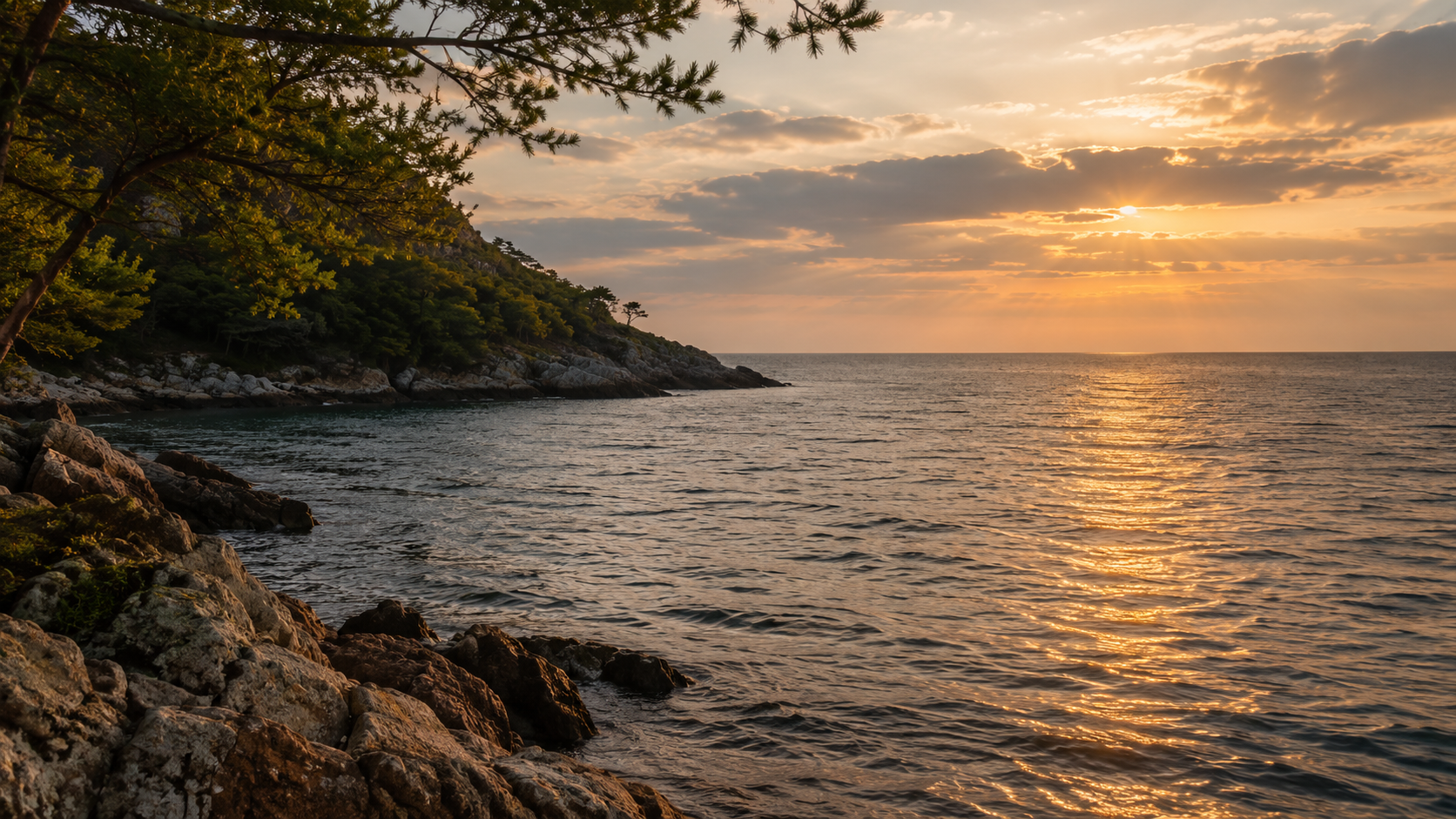
Scene 12
A sea of raids, returning people and moving information
The Toi raids were an event of 1019, different from the later Mongol invasions. Dazaifu and regional participants responded to attacks on Tsushima, Iki and northern Kyushu. Information reached Kyoto after a delay, while rescue and support from Goryeo contributed to the return of abducted people.
The sea was both a direction from which attackers arrived and a way for people to come home. Moving the focus from Takaie’s defense to letters and returnee testimony does not diminish the fighting; it places that response within a broader history of human movement and communication.
The eleventh-century maritime world can thus be read as a connected setting rather than merely a dividing line. The interpretation depends on keeping different participants, dates and kinds of evidence visible. It does not require a complete casualty total, invented speech or a precise reconstruction of every route to explain those relationships.
How to read this work
History, interpretation, and reconstruction
Connecting defense with communication, rescue and return reveals relationships across the eleventh-century sea that a story ending with the raiders’ departure would miss.
This work is grounded in published sources and historical research. Interior thoughts, dialogue, and some visual details are cinematic reconstructions. Where historians disagree, the article presents the point as debated rather than settled fact.
Timeline
The story in time
-
Attacks on Tsushima, Iki and the northern Kyushu coast, with residents harmed and abducted.
Sources: kyushu-guide, researcher, iki -
Strong winds and high waves interrupt direct fighting; Dazaifu’s side prepares ships.
Sources: kyushu-guide -
Fighting resumes, followed by movement toward Matsuura and departure from the coast.
Sources: kyushu-guide, dazaifu -
Sanesuke receives Takaie’s letters dated the seventh and eighth days.
Sources: kyushu-guide -
Goryeo rescue and repatriation, together with individual journeys, contribute to people’s return.
Sources: kyushu-guide, murai, tsushima -
Women’s accounts reach the Shoyuki through a Dazaifu report.
Sources: murai -
Copying dates of the Maeda-family Shoyuki manuscripts, distinct from the events and diary recording of 1019.
Sources: shoyuki -
Later Mongol invasions affecting Iki, separate from the event of 1019.
Sources: iki
People & terms
A guide for new readers
Glossary
- Toi no nyuko 刀伊の入寇
- The conventional name for the raids of 1019, whose historical designation does not establish a complete group membership.
- Dazaifu 大宰府
- The regional administrative setting central to the Kyushu response discussed here.
- Shoyuki 小右記
- Fujiwara no Sanesuke’s diary, whose recording and surviving manuscript-copy dates must be distinguished.
- Goryeo 高麗
- The Korean kingdom associated here with rescue and support for returning abducted people, not established as the attacker by early suspicions.
- Jurchen 女真
- The population associated with some raiders in the researcher’s explanation; the actions are not attributed to every member.
- Choya Gunsai 朝野群載
- A collection including a Dazaifu report cited by the guide; a full independent reading of that original report is not claimed.
Sources & method
How this article was built
The completed video’s twelve selected chapters provide the sequence. Four sections of the library guide are consolidated into one source; eight substantive references are used in total, with added municipal history, archival explanation and manuscript catalogue serving distinct purposes.
The relevant pages of the Iki, Omura, Tsushima and Dazaifu PDFs were visually examined. The researcher interview and relevant Murai section were read in saved text. These readings are not presented as independent examination of every medieval original, all manuscript volumes or all 185 pages of the Omura chapter.
Historical-calendar dates, reporting delays, numerical discrepancies and manuscript transmission remain explicit. There are no invented conversations, unrestricted psychological claims, exact routes or population-wide accusations. Approved generated stills are general illustrations separately adopted for the article; no source maps, photographs, documents or audio are reproduced.
Sources
References and further reading
- The Toi raids: Library guide, with its sections consolidated 刀伊の入寇 九州を襲った異民族(各章を一括) Title translated editorially for reader convenience. Kyushu University Library Cute.Guides / Iwanami Toshihiko 九州大学附属図書館 Cute.Guides/岩波俊彦 The saved introduction, onset, fighting and return sections were read as one guide, not counted as four independent sources. Written during the author’s library TA work. Old-calendar dates and report reception are distinguished. No complete original Shoyuki, Choya Gunsai or Goryeosa reading claimed; no maps, quotations or images reproduced. Accessed 2026-11-04
- Interview with Seki Yukihiko on the Toi raids, March 17, 2022 刀伊の入寇 関幸彦インタビュー(2022年3月17日) Title translated editorially for reader convenience. Chuokoron-Shinsha / Seki Yukihiko 中央公論新社/関幸彦 The author’s explanation was read in saved text for limited evidence, Takaie and regional warriors. It is not a reading of the entire book or a claim about a whole ethnic population or modern nation. Accessed 2026-11-04
- Section reviewing sources for Japan–Goryeo relations, by Murai Shosuke 日麗関係史料の検討に関する節(村井章介、国史館論叢) Title translated editorially for reader convenience. National Institute of Korean History database / Murai Shosuke 韓国 国史編纂委員会DB/村井章介 The relevant scholarly section was read in saved text for women returnees’ experiences, the Dazaifu report and the Shoyuki. Not a full reading of medieval originals; no invented quotation, psychology or definitive numbers. Accessed 2026-11-04
- Iki City cultural-history framework: Attacks from abroad 壱岐市歴史文化基本構想 C-1 異国の襲来 Title translated editorially for reader convenience. Iki City 壱岐市 PDF page 20, printed page 41, was read and visually examined to distinguish 1019 from the two thirteenth-century Mongol invasions. No source photographs or maps reproduced, and unrelated numerical or calendar claims are not imported. Accessed 2026-11-04
- New Omura City History, volume 2: Medieval period, chapter 1 新編大村市史 第2巻 中世編 第1章 鎌倉時代 Title translated editorially for reader convenience. Omura City 大村市 PDF and printed page 19 were read and visually examined for the interpretation of warrior-group formation. Not all 185 pages were read. Activity and local establishment of lower officials do not place later Kamakura institutions in 1019. Accessed 2026-11-04
- The Toi raids: Local cultural-property introduction 刀伊の入寇 わがまち まちしるべ シリーズ文化財の紹介 Title translated editorially for reader convenience. Tsushima City Board of Education, Cultural Properties Division 対馬市教育委員会 文化財課 The single PDF page, printed page 15, was read and visually examined for Morochika and return. Its early date and damage figures are not adopted as definitive; coastal photographs and population-wide generalizations are not reproduced or extended. Accessed 2026-11-04
- The Toi raids: Cultural Properties of Dazaifu 477, by Shigematsu Toshihiko 刀伊の入寇 平安時代の外寇事件 太宰府の文化財477(重松敏彦) Title translated editorially for reader convenience. Dazaifu City Archives 太宰府市公文書館 Page 28 of the February 2025 newsletter was read and visually examined, including the warning that the damage statement’s totals and breakdown do not always match. Drama scenes and the schematic map are not reproduced as historical reconstructions. Accessed 2026-11-04
- Shoyuki, Maeda-family manuscripts: Cultural Heritage Database 小右記 前田家本 文化遺産データベース Title translated editorially for reader convenience. Agency for Cultural Affairs 文化庁 The catalogue was read to distinguish Sanesuke’s diary from later Heian–early Kamakura copies and their later transmission. Not an autograph from 1019 or a full reading of every volume and relevant entry; no image reproduced. Accessed 2026-11-04
Continue reading
More stories from Shigeki
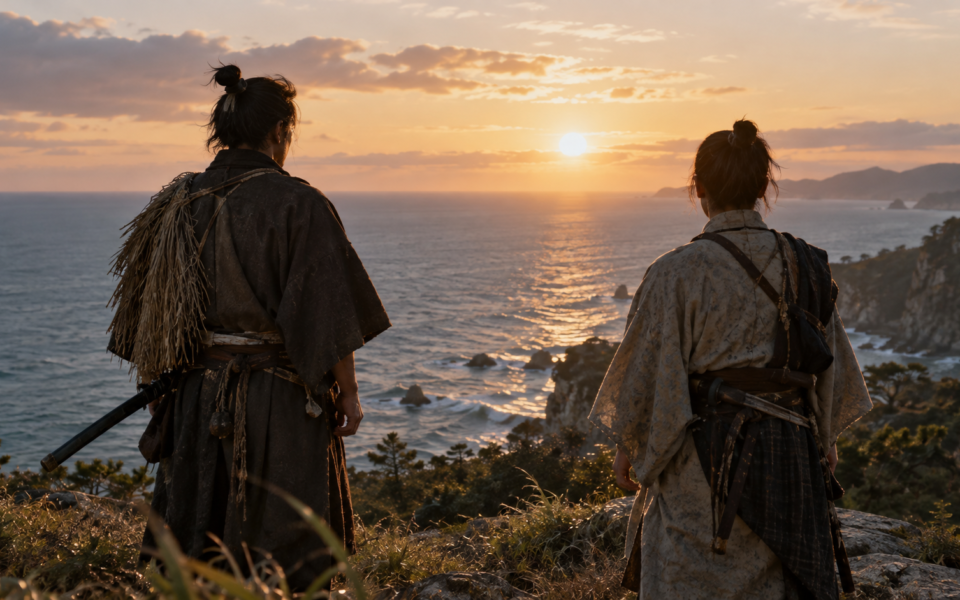
Shigeki English
The Battle of Minatogawa: How Was the Defeated Masashige Remembered?
Separate the time of fighting from the times when records, images and memorials were made.
- When The battle in 1336; a report dated 1337; commemoration in 1692 and 1857; the tunnel, park and statue of the modern city
- Where Minatogawa and Kobe, considered alongside documents, war narratives and later images held or described by several institutions
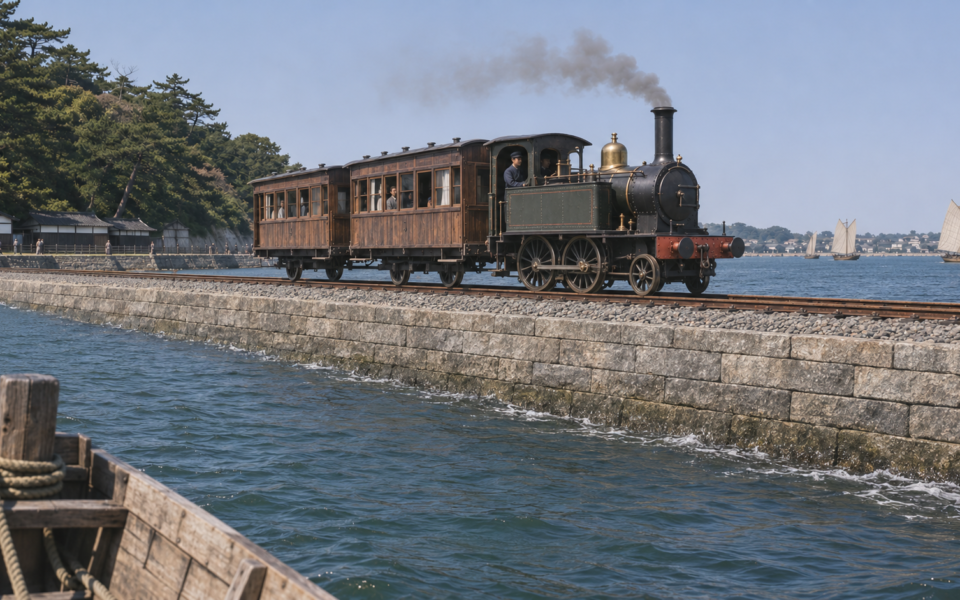
Shigeki English
Railway Opening and the Takanawa Embankment: Where Trains and Boats Crossed
An embankment carrying trains into the sea also raised the question of keeping a way to the water.
- When Construction in the early 1870s, railway opening in 1872, later widening and reclamation, rediscovery in 2019 and additional designation in 2021
- Where The former coast at Takanawa between Shimbashi and Shinagawa, along the Shimbashi–Yokohama railway