
SHIGEKI ENGLISH STORYEN
Japanese history in English
Shizugatake: How Politics after Nobunaga Became a War between Hideyoshi and Katsuie
The death of a lord changed the relationships among castles and retainers.
Look beyond the Seven Spears to the struggle for leadership after the Kiyosu conference, control of Nagahama, snow and supplies, and the forts around Lake Yogo. Follow the attack on Oiwayama, Hideyoshi’s return and the departure of units, keeping the contemporary calendar and modern reconstructions distinct.
At a glance
Before you enter the story
- When
- 1582–1583; historical month and day references use the contemporary Japanese calendar
- Where
- Northern Omi, especially the Lake Yogo area, connected to Ise, Mino and Echizen
- Key figures
- Hashiba Hideyoshi, Shibata Katsuie, Oda Nobutaka, Takigawa Kazumasu, Sakuma Morimasa, Nakagawa Kiyohide, Maeda Toshiie
- What was at stake
- Who could turn influence within the former Oda leadership into effective control of castles, alliances and armies?
Why this story matters
The larger history behind the turning point
A celebrated battle can be remembered through a few famous names while the conditions that brought the armies together disappear. Shizugatake becomes more intelligible when political authority, castle ownership and the movements of separate forces are followed together.
It also shows why the outcome of one attack is not the outcome of a campaign. Taking a position, remaining there, returning from another front and keeping an army together were different problems. Their sequence matters as much as individual martial distinction.
Historical context
What an international reader needs to know
Former colleagues in a changing political order
Hashiba Hideyoshi, later known by the family name Toyotomi, and Shibata Katsuie had served Oda Nobunaga. Their conflict developed after Nobunaga’s death, within a political world still shaped by the Oda house, its sons and its former senior retainers.
The Kiyosu conference belonged to that process. It did not stop later changes in authority, territory or alliance. Explaining the campaign through an imagined conversation at the conference would conceal the subsequent actions that can actually be traced through historical accounts.
Several kinds of date and landscape
The campaign’s month and day references below retain the Japanese calendar used at the time. A fourth-month date is not automatically an April date in the Gregorian calendar. No conversion is supplied here, and modern designation dates are labelled separately.
Castle sites, surviving earthworks and modern castle-shaped museums offer different evidence. Nagahama’s current museum opened in 1983; the present Kiyosu facility was rebuilt in 1989. Neither building is presented as an unchanged room or tower witnessed by the participants in 1582–1583.
Watch the film
See the story in motion
The film currently uses Japanese audio. This English article provides the context and source trail; it does not imply that an English subtitle track is available.
Scene 01
Before the Seven Spears came Oda politics
Shizugatake is often associated with the Seven Spears. Following the road to battle, however, reveals a dispute over the political inheritance of Nobunaga and the control of castles in several regions.
Hideyoshi and Katsuie had once served the same lord. Their later confrontation in the hills of northern Omi cannot be explained simply by placing two rival personalities opposite one another on a battlefield.
This account follows leadership after Nobunaga, changes in strongpoints and the movements of separate forces. The celebrated warriors remain part of the story, while the campaign that made their actions possible comes into view.
Scene 02
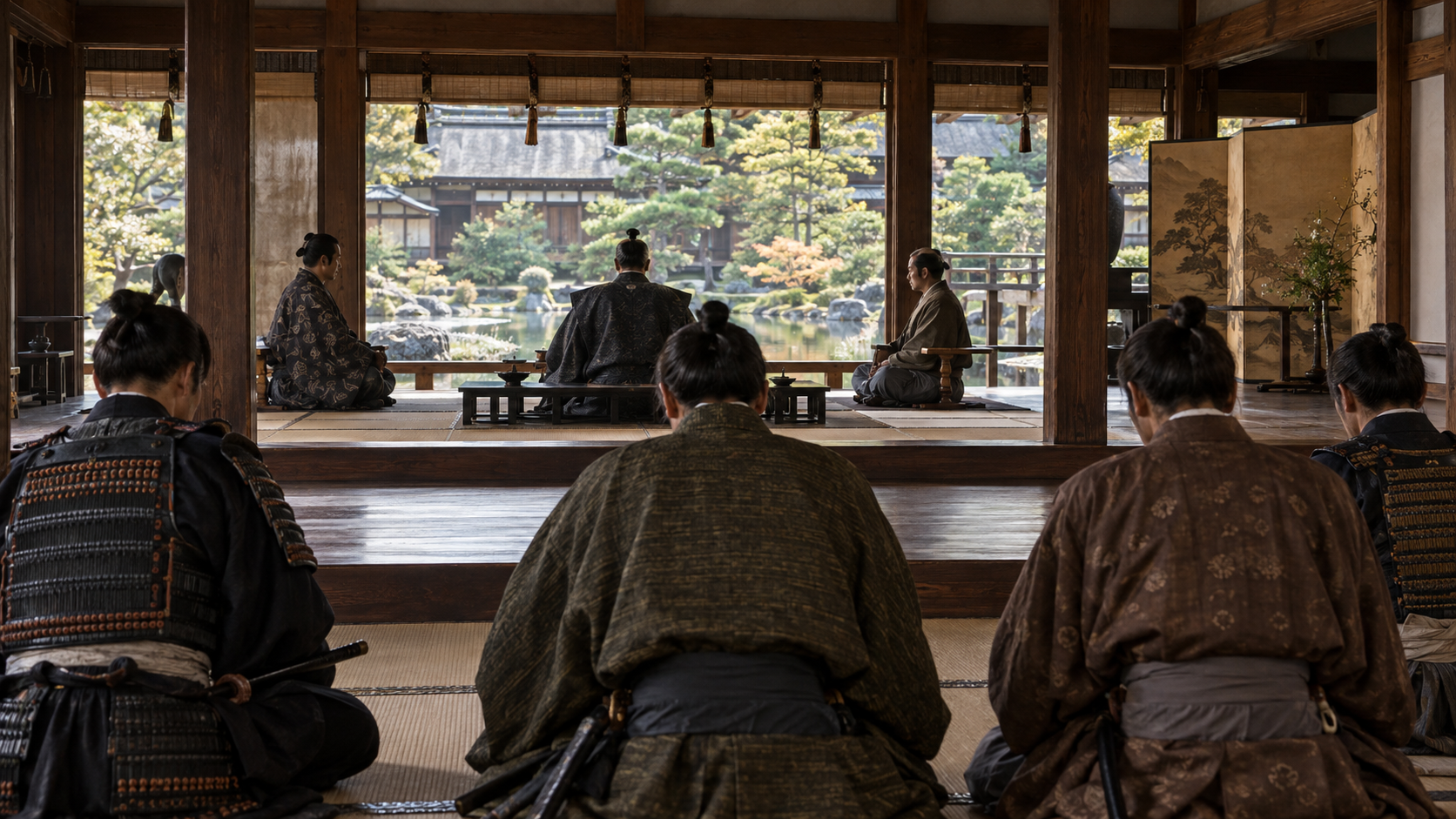
The death of a lord and the Kiyosu conference
Nobunaga died in the Honnoji incident in 1582. His death left retainers facing questions about who would lead and how the Oda house would be supported. The Kiyosu conference addressed the succession and the political settlement that followed.
A settlement did not freeze the balance of power. Hideyoshi strengthened his position, while disagreement with Katsuie and others continued. Developments after the meeting are therefore essential to understanding the later war.
Kiyosu City also introduces Nobukatsu as the castle’s lord after the conference. Its present facility, however, was rebuilt in 1989. Knowing where a historical meeting occurred does not make today’s building the original meeting room.
Scene 03
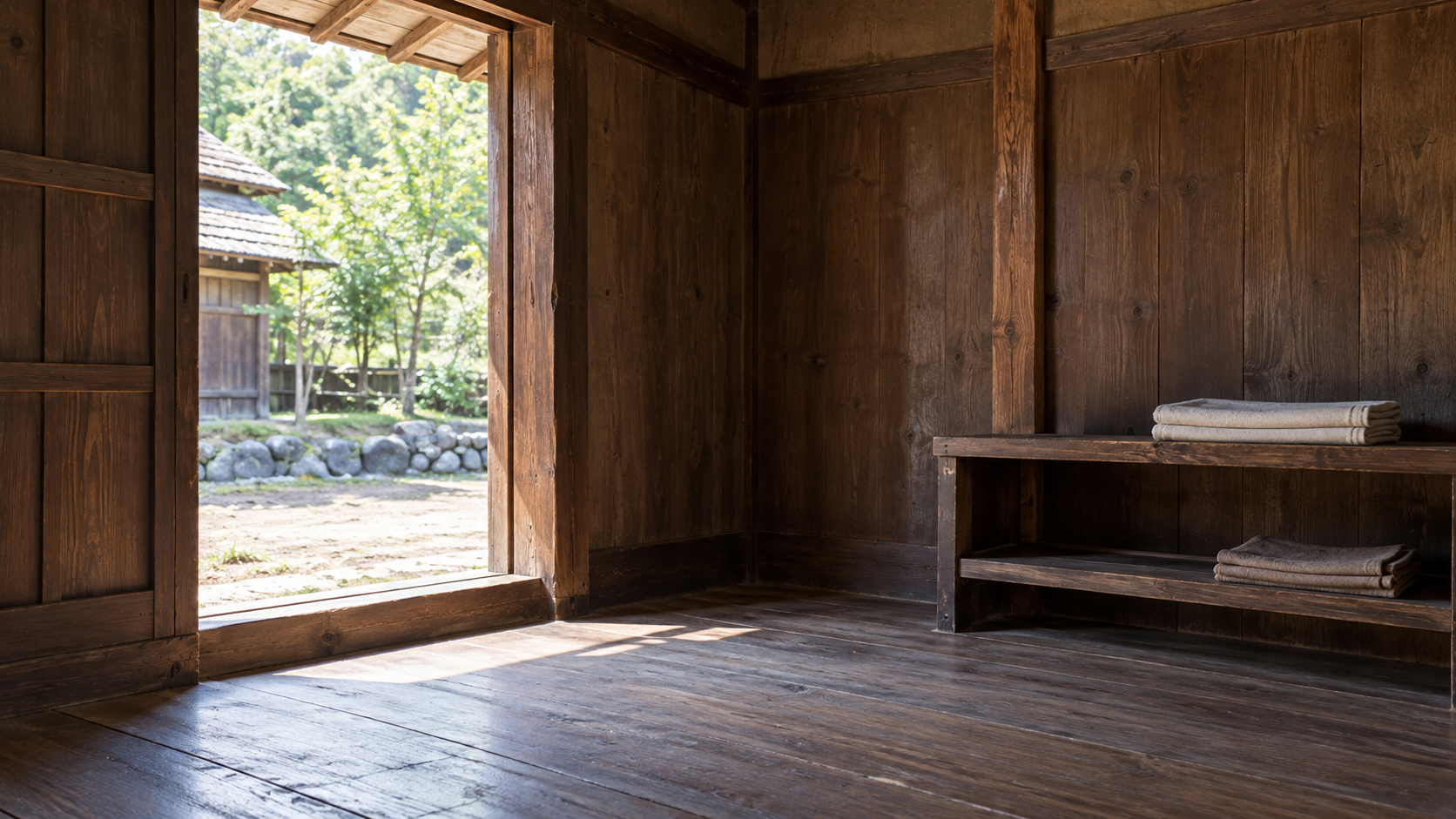
A funeral and the exercise of leadership
Fukui Prefectural History describes Hideyoshi taking the initiative at Kiyosu and later conducting Nobunaga’s funeral. Katsuie, meanwhile, criticized what he regarded as Hideyoshi’s unilateral action.
Nobunaga’s son Nobutaka and Takigawa Kazumasu also became connected to opposition against Hideyoshi. The conflict involved political positions and relationships extending beyond the preferences of two commanders.
Who could act in the name of the emerging order, which partners could support that action, and which castles could sustain it were connected questions. This is an interpretation of the observable political pattern, rather than a claim to know the private emotions of the people involved.
Scene 04
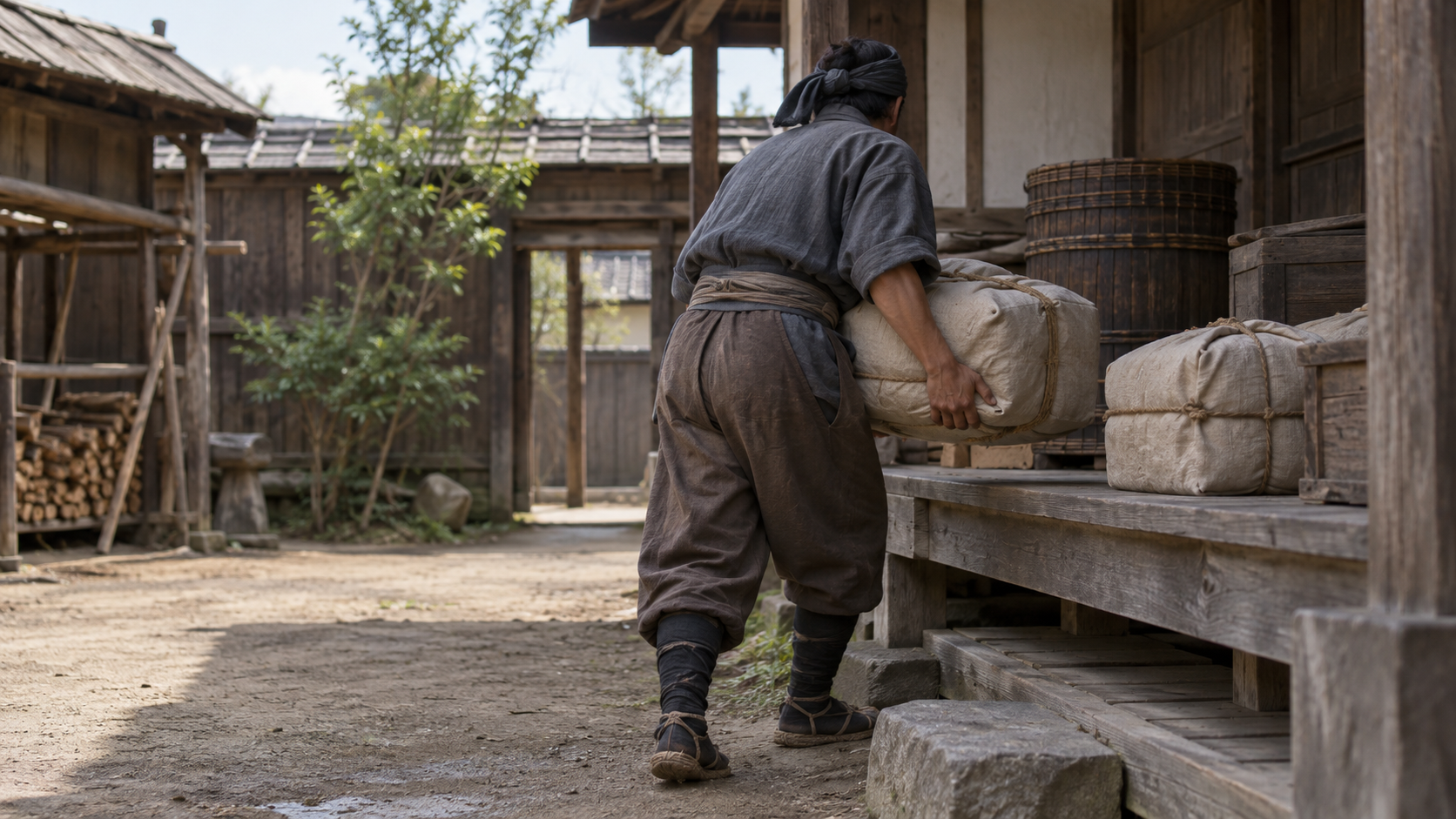
Nagahama changed hands and changed roles
Nagahama provides a concrete example of how the political settlement could change on the ground. The castle museum explains that after Kiyosu the castle belonged to Katsutoyo, Katsuie’s nephew.
Katsutoyo subsequently surrendered to Hideyoshi. Nagahama then served Hideyoshi as a base in his conflict with Katsuie. The same location acquired a different military role as its allegiance changed.
The museum account and prefectural history do not agree on the month of that surrender, so this article does not select one as certain. The change of control is relevant without resolving an inconsistency that would require further source comparison.
Scene 05
Snow and supplies shaped the available choices
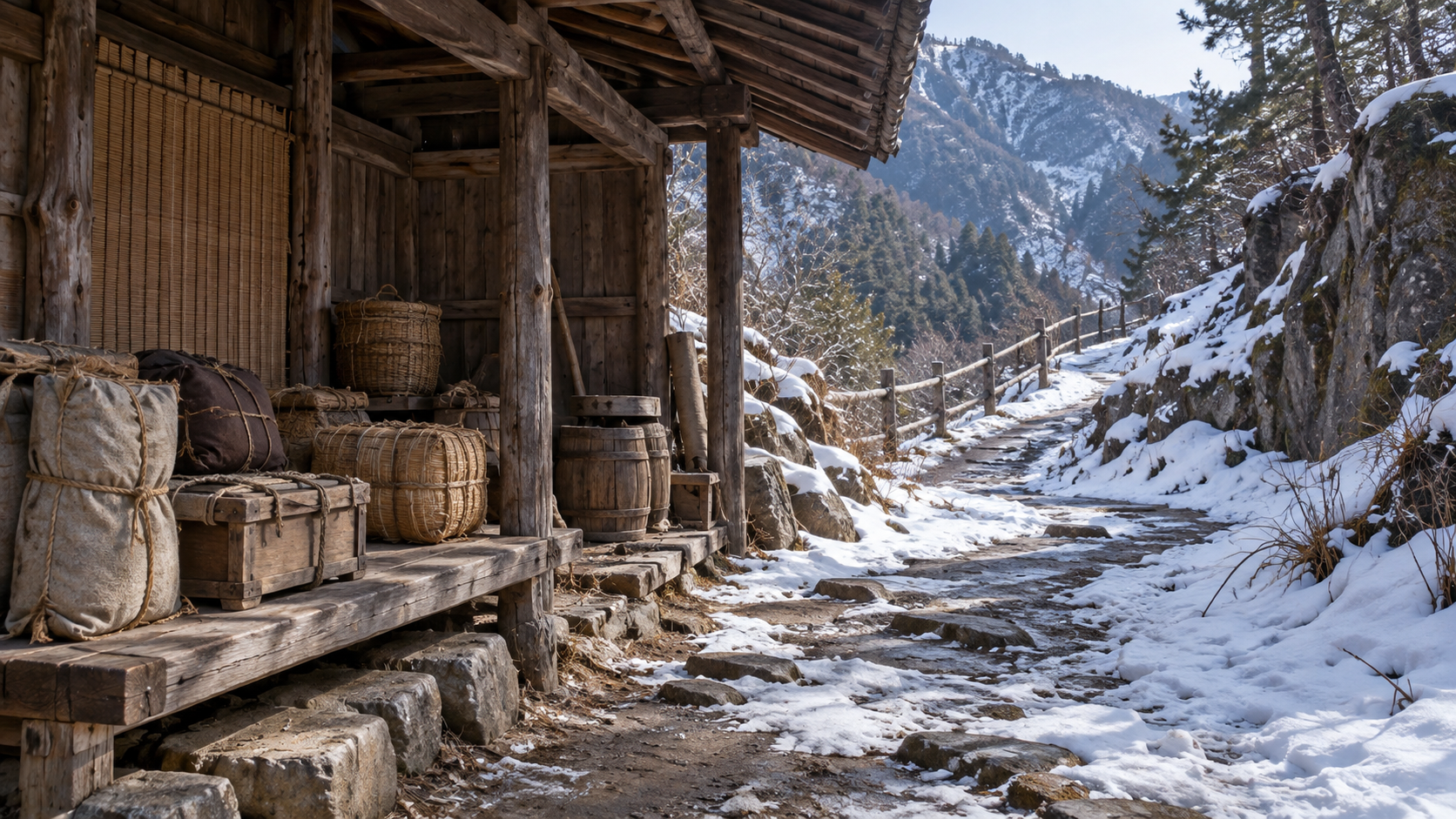
Katsuie’s position in Hokuriku brought seasonal constraints into the conflict. Fukui Prefectural History explains his concern that snowfall would make the reinforcement of troops and the supply of weapons and ammunition difficult.
He sent envoys seeking peace, while Hideyoshi’s actions around Nagahama continued. Negotiation and military movement developed alongside the practical problem of getting people and material through the landscape.
A commander could not move an army at the same speed in every season merely by deciding to do so. Territory, roads and transport conditions narrowed the available choices. No exact journey time, weather reconstruction or universal marching speed is inferred here.
Scene 06
A diplomatic approach was not an arriving army
Both sides sought assistance from other powerful lords. Their rivalry extended beyond the castles directly facing one another and into attempts to influence neighbouring regions and potential partners.
According to the prefectural history, Hideyoshi asked Uesugi Kagekatsu to move into Etchu and Noto. Katsuie explored connections with Tokugawa Ieyasu and Mori Terumoto. The same account says neither side secured active military support through these approaches.
A request, a relationship and a deployed reinforcement are different things. Listing every approached lord as an actual battlefield ally would change what the source supports. The distinction helps keep diplomatic ambitions separate from the forces that operated in the campaign.
Scene 07
From Ise to northern Omi: connected strongpoints
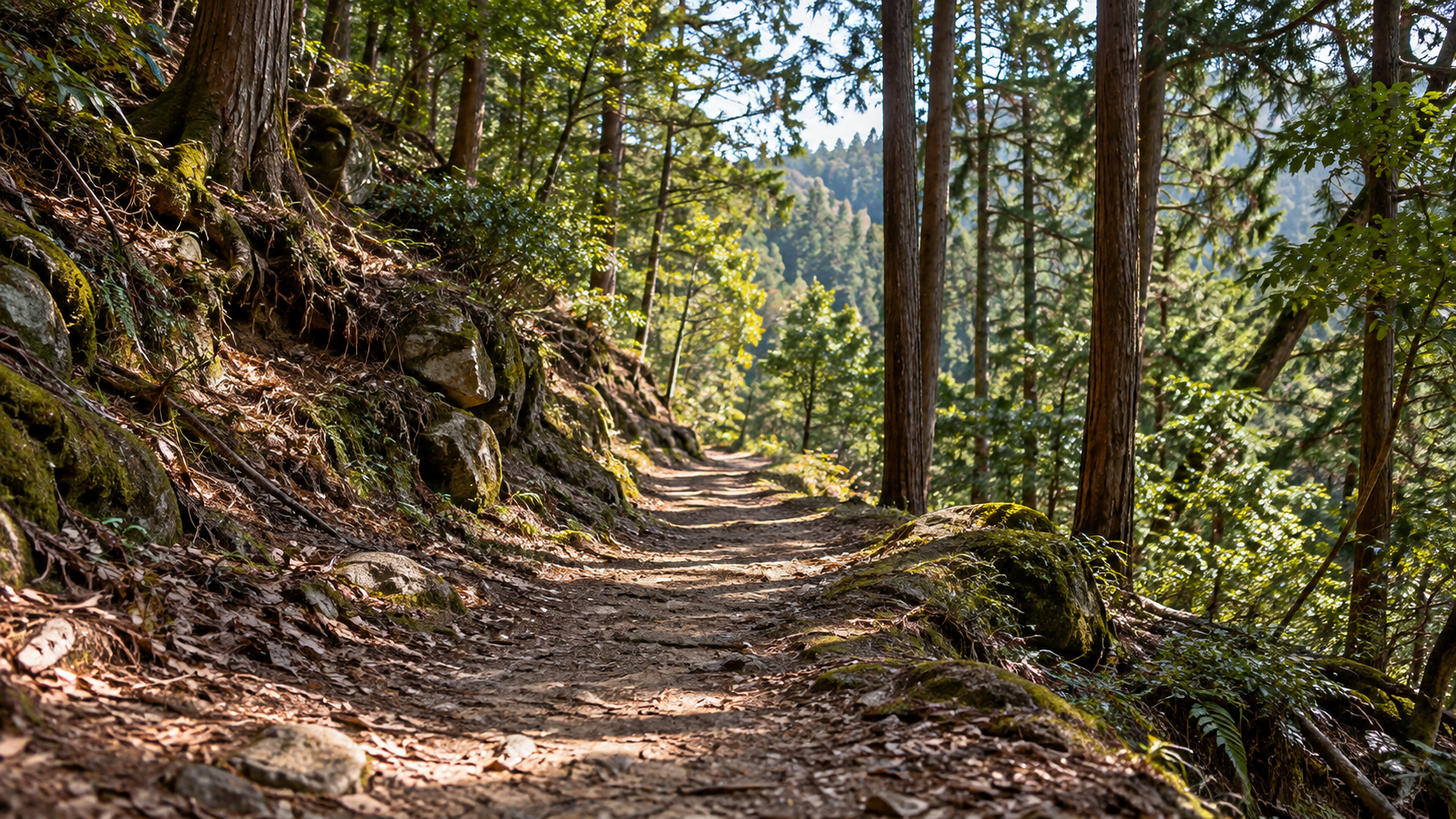
In the middle of the second month of 1583, Hideyoshi began attacking Kazumasu’s positions around Nagashima and Kuwana in Ise. When Katsuie’s forces advanced from Hokuriku, Hideyoshi entrusted that fighting to Nobunaga’s son Nobukatsu and returned to Omi in the third month.
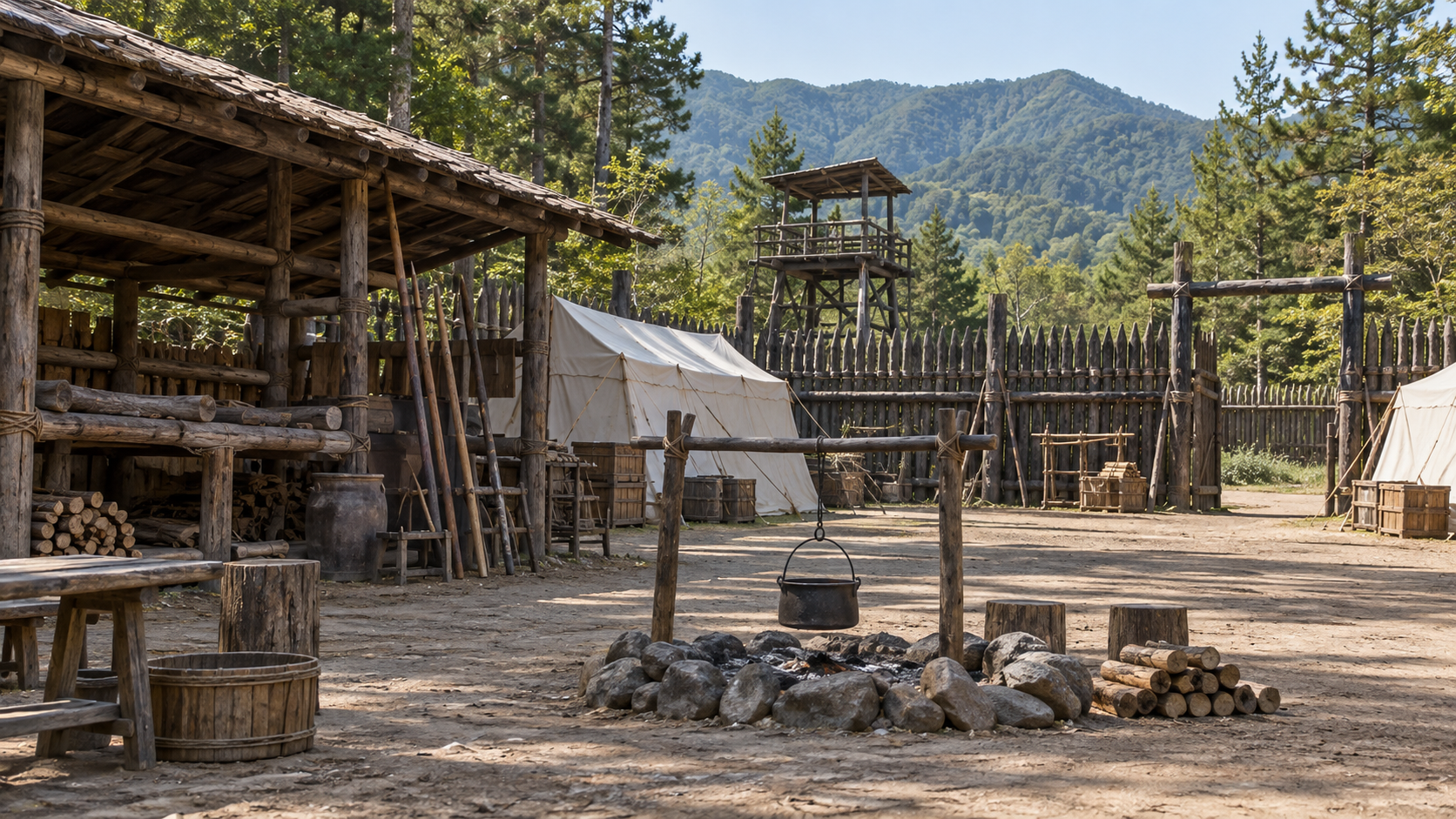
Katsuie established his headquarters at Yanagase, while Hideyoshi’s side occupied positions around Lake Yogo. Tsuruga City identifies Genbao Castle as Katsuie’s headquarters. The campaign involved connected positions including Oiwayama and Shizugatake, rather than two armies arranged in one open field.
Nagahama’s historical-cultural plan treats the surrounding positions as a group of campaign fortifications. Cultural Heritage Online separately records the designation of Genbao’s remains as a historic site on 13 July 1999. That modern designation is not a date of battle or construction.
Scene 08
An uprising at Gifu drew Hideyoshi toward Mino
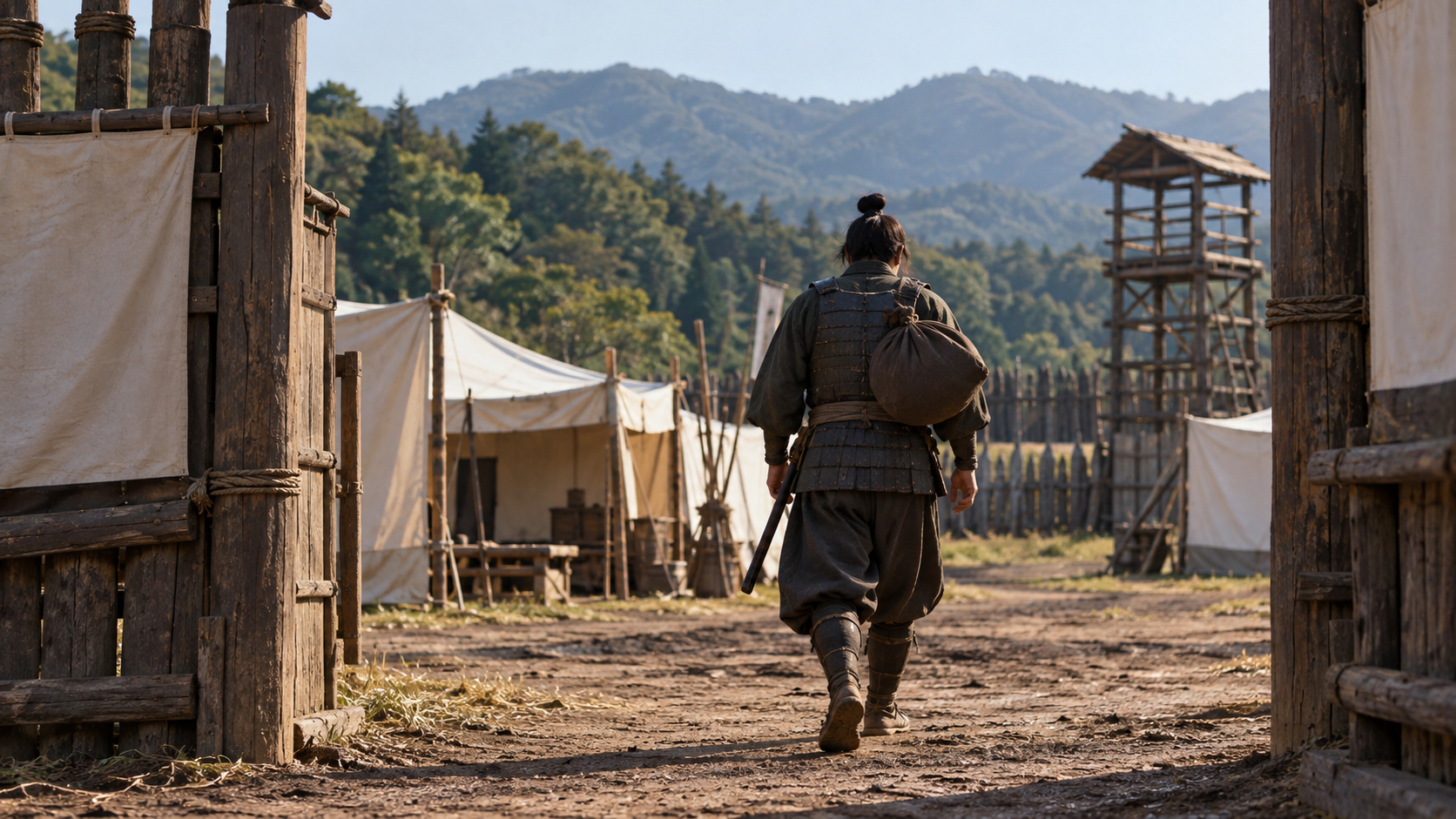
Events elsewhere affected the confrontation. Fukui Prefectural History explains that Nobutaka at Gifu, who had previously surrendered to Hideyoshi, raised troops again. Hideyoshi therefore took a force toward Mino.
The conflict around Lake Yogo was connected to another front. Moving one force away could change the circumstances facing the positions that remained. A campaign map needs to accommodate these movements, rather than treating every commander as permanently present in one place.
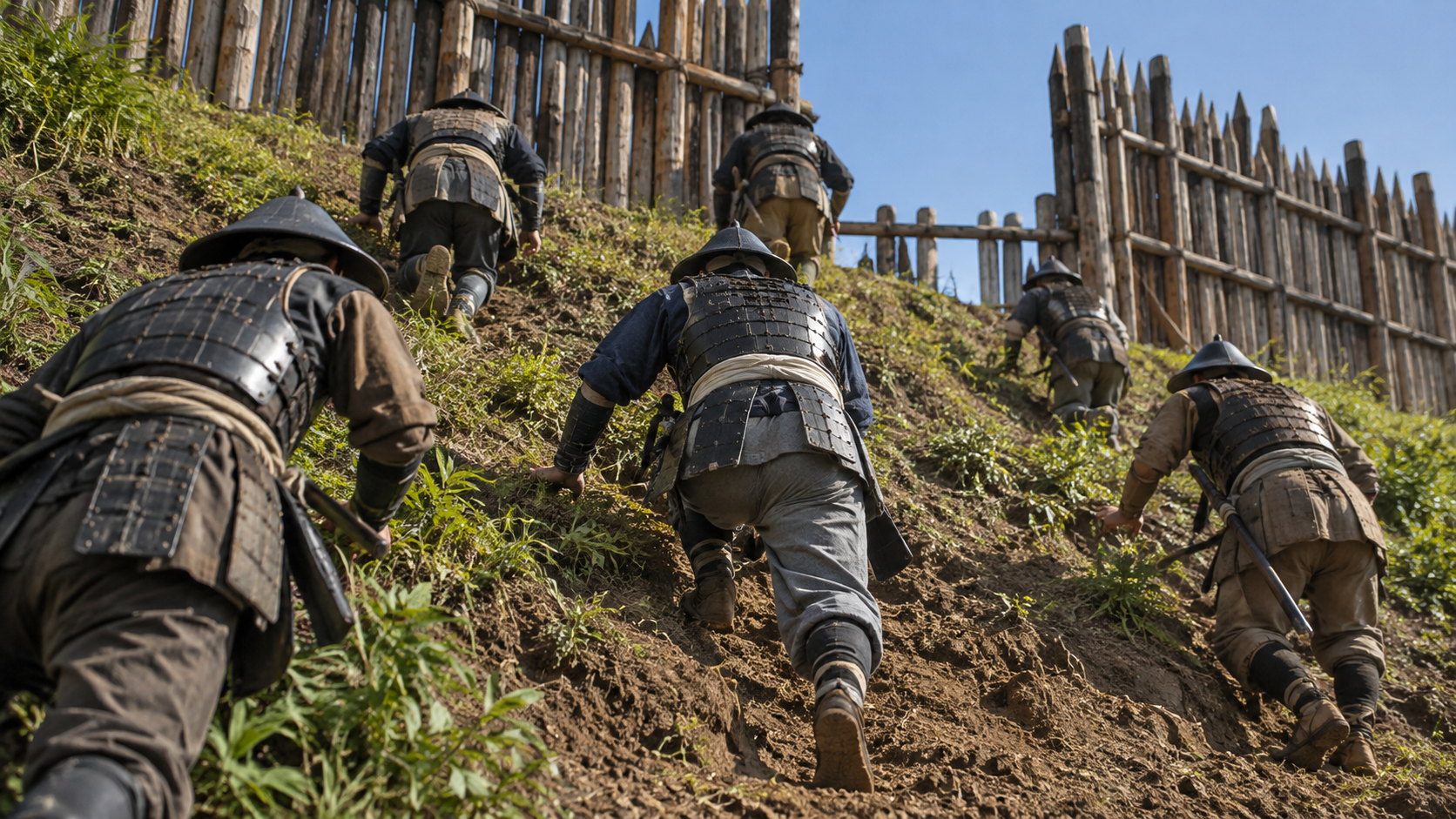
Sakuma Morimasa on Katsuie’s side learned that Hideyoshi had gone to Mino and developed an attack against Hideyoshi’s positions. The next stage followed from this changing situation, not from an isolated contest without a wider political and geographical setting.
Scene 09
The attack on Oiwayama
One target was Oiwayama, defended by Nakagawa Kiyohide. The prefectural history states that Katsuie approved Morimasa’s plan on the condition that his force return immediately after taking the position.
On the twentieth day of the fourth month of Tensho 11, Morimasa and his companions attacked Oiwayama, and Kiyohide was killed. This date is retained in the Japanese calendar then in use; it has not been converted to Gregorian April.
The attack succeeded, but Morimasa remained at Oiwayama. Capturing the position and deciding what to do afterwards were separate stages. The first success did not settle the outcome of the campaign. No invented last words or exact death scene is added to the account.
Scene 10
Hideyoshi returned from Ogaki and pursued
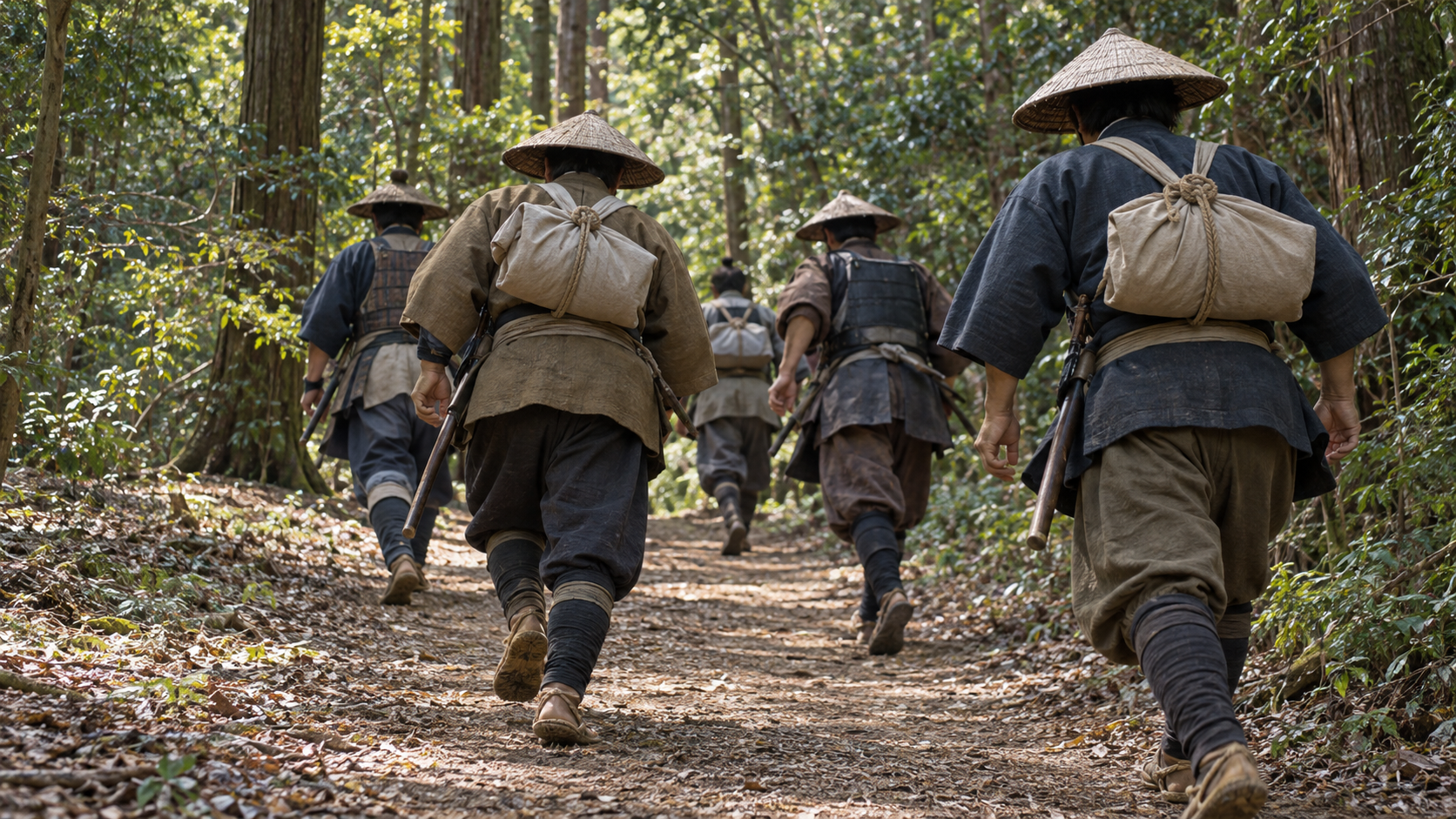
On learning about the attack on Oiwayama, Hideyoshi turned back from Ogaki. On the following day, the twenty-first, his side moved into pursuit of Morimasa’s forces.
The sequence is significant: Hideyoshi’s move toward Mino, Morimasa’s attack, then Hideyoshi’s return. The relationship between attacker and pursued changed as those actions followed one another.
The prefectural account includes a celebrated distance and journey time, but this article does not adopt those figures without separate comparison. Following the order of events is sufficient to show why taking a fort did not guarantee victory in the subsequent fighting.
Scene 11
Units departed and Katsuie retreated toward Kitanosho
During the pursuit, Maeda Toshiie and others on Katsuie’s side left the battlefield, and the army’s cohesion broke down. The prefectural history traces Katsuie’s inability to mount a decisive engagement and his retreat toward Kitanosho.
Units within one camp did not necessarily continue acting together until the end. Distinguishing departing troops from those remaining helps explain how an army could lose the capacity to fight as a coherent force.
Katsuie later met his end at Kitanosho Castle. The result at Shizugatake substantially changed relations among Nobunaga’s former retainers. The account does not explain each departure through an invented inner motive, nor reconstruct unverified dialogue at the castle.
Scene 12
The Seven Spears and the castles seen today
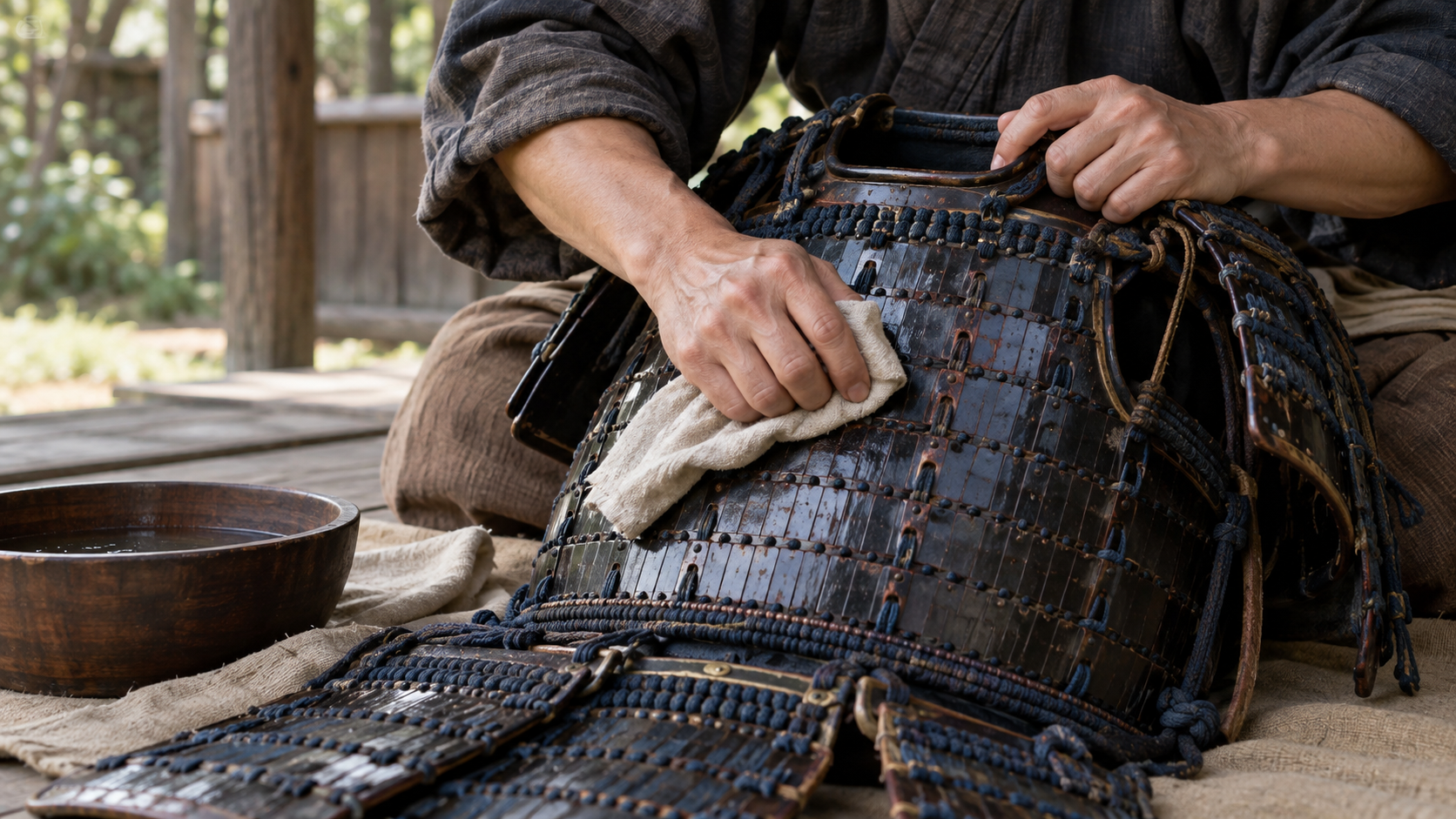
Warriors distinguished on Hideyoshi’s side became known in later memory as the Seven Spears. The Nagahama museum’s catalogue introduction asks when that name came into use and whether the membership was fixed.
Those questions are part of the introduction; the full catalogue has not been independently examined here. The famous collective name should therefore not be treated as a complete account of the battle or as proof that later classifications were fixed at the moment of fighting.
The same care applies to the landscape. The current castle-shaped Nagahama museum opened in 1983. It can help visitors study the past, but it is not the unchanged castle of the campaign. A modern museum and a sixteenth-century military position have different histories.
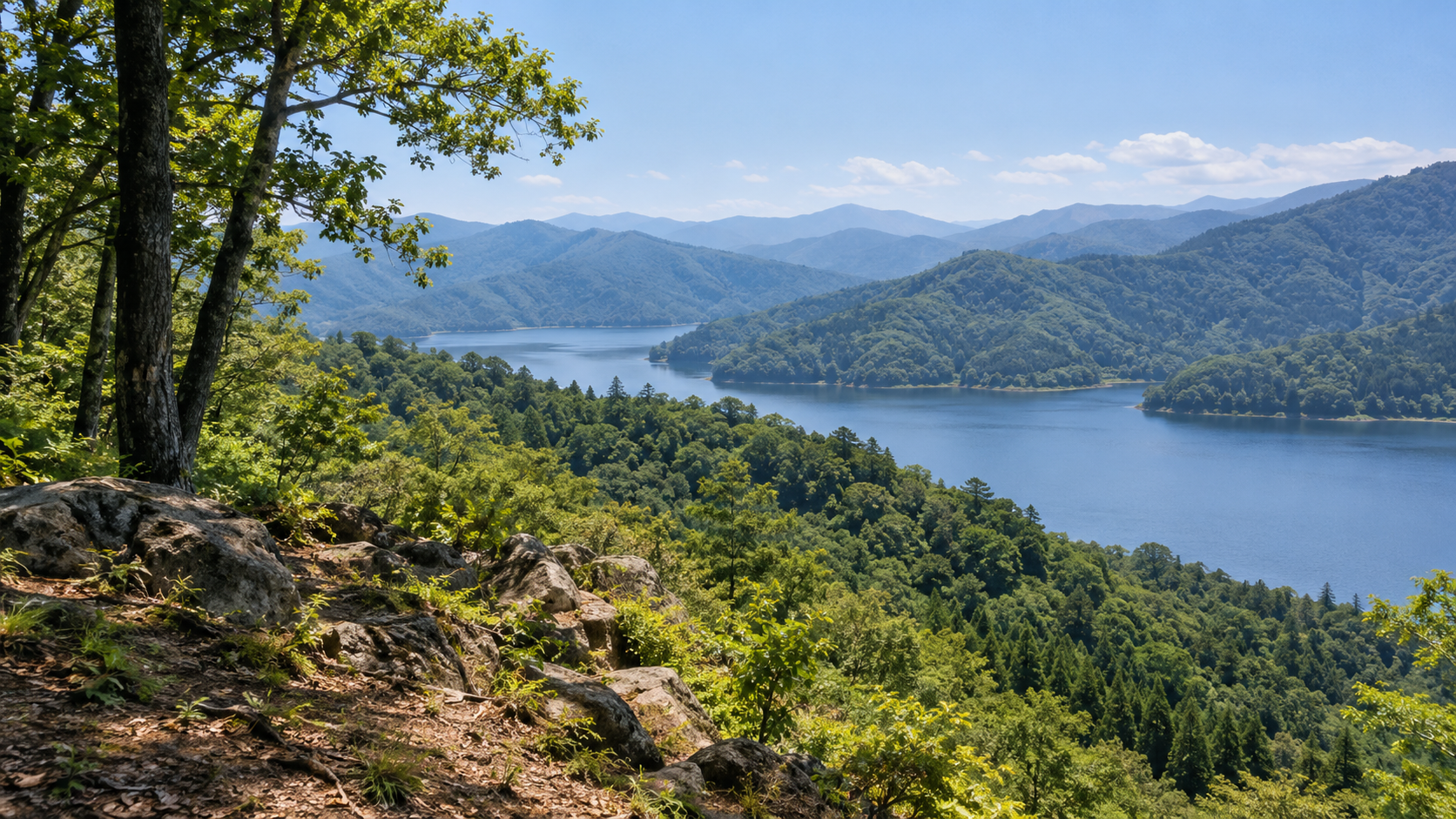
Scene 13
Read politics, castles and forces together
The struggle for leadership after Nobunaga changed castle control and political relationships, then developed into military confrontation. Season and supply, an uprising elsewhere, an attack on a position and a rapid change in direction became interconnected.
Reducing Shizugatake to one commander’s personality or the exploits of seven men would leave much of that process unexplained. Following the relationships among places and forces gives the campaign a more coherent shape.
The remaining sites and the written historical accounts provide different starting points for inquiry. Reading them together, while retaining the limits of each, connects the celebrated battle with the politics of the Oda house and the geography of northern Omi.
How to read this work
History, interpretation, and reconstruction
Shizugatake emerged from interacting political, logistical and military developments across several castles and forces, rather than from the exploits of seven warriors alone.
This work is grounded in published sources and historical research. Interior thoughts, dialogue, and some visual details are cinematic reconstructions. Where historians disagree, the article presents the point as debated rather than settled fact.
Timeline
The story in time
-
Hideyoshi conducts Nobunaga’s funeral amid conflict with Katsuie and others.
Sources: rivalry -
Hideyoshi begins attacks on Kazumasu in Ise.
Sources: battle -
Hideyoshi returns to Omi after the advance of Katsuie’s forces.
Sources: battle -
Nobutaka’s renewed uprising leads Hideyoshi toward Mino.
Sources: battle -
Kiyohide is killed in the attack on Oiwayama; Morimasa remains there.
Sources: battle -
Hideyoshi’s side pursues; units leave Katsuie’s army.
Sources: battle -
Katsuie retreats to Kitanosho and later meets his end at the castle.
Sources: battle -
The present Nagahama Castle History Museum opens.
Sources: castle -
The present Kiyosu Castle facility is rebuilt.
Sources: kiyosu -
Genbao Castle’s remains are designated as a historic site.
Sources: heritage
People & terms
A guide for new readers
Glossary
- Kiyosu conference 清洲会議
- The meeting after Nobunaga’s death concerning succession and the political settlement; subsequent power relations continued to change.
- Omi 近江
- The historical province around Lake Biwa; northern Omi and Lake Yogo formed the campaign’s central landscape.
- Seven Spears 七本槍
- The later collective name associated with distinguished warriors on Hideyoshi’s side; the museum introduction raises questions about its formation and membership.
- Campaign fort 陣城
- A fortified position used in a campaign; the positions around Lake Yogo are studied as a connected group rather than as a single field.
- Tensho 天正
- The Japanese era name used in the battle’s date. Era year, calendar month and day must be distinguished from unconverted Gregorian dates.
Sources & method
How this article was built
The narrative follows institutional histories, municipal explanations and museum publication descriptions. These sources serve different purposes: a political history explains a sequence of actions, a heritage listing records a designation, and a catalogue introduction can raise questions without supplying the book’s full conclusions.
The surrender month at Nagahama is left unresolved where the institutional accounts differ. Battle dates retain the contemporary Japanese calendar. Exact troop totals, celebrated travel speeds, private emotions and unverified dialogue are excluded rather than filled in from later dramatic convention.
All illustrations are explanatory AI-created scenes. They are not historical photographs, portraits, reproductions of documents, exact castle surveys or verified views along an army’s route. The article reproduces none of the research pages’ photographs, maps or historical artefacts.
Sources
References and further reading
- Fukui Prefectural History, Volume 3: Conflict between Katsuie and Hideyoshi 福井県史 通史編3 勝家と秀吉の対立 Title translated editorially for reader convenience. Fukui Prefecture 福井県 Institutional historical account of politics, snow and supply, and diplomatic approaches. The quoted original documents are not claimed as independently examined here. Accessed 2026-11-04
- Fukui Prefectural History, Volume 3: The Battle of Shizugatake 福井県史 通史編3 賎ケ嶽の戦い Title translated editorially for reader convenience. Fukui Prefecture 福井県 Used for movements, the Oiwayama attack, pursuit and departures. Exact troop counts, journey distance and time, anger and dialogue are not adopted. Accessed 2026-11-04
- Genbao Castle (Uchinakaoyama Castle) Historic Site 国指定史跡玄蕃尾城(内中尾山城)跡 Title translated editorially for reader convenience. Tsuruga City 敦賀市 Identifies the hill castle as Katsuie’s headquarters. Surviving structures and the exact historical appearance are kept distinct. Accessed 2026-11-04
- History of Nagahama Castle 長浜城の歴史 Title translated editorially for reader convenience. Nagahama City 長浜市 The museum’s saved page was read; current retrieval returned 403. Its surrender month differs from the prefectural account. The present museum opened in 1983. Accessed 2026-11-04
- Shizugatake and the Seven Spears: Catalogue Introduction 賤ヶ岳合戦と七本槍 図録紹介 Title translated editorially for reader convenience. Nagahama City 長浜市 Saved publication description read after current 403 retrieval. Its questions about the name and membership are cited without claiming to have read the full 71-page catalogue. Accessed 2026-11-04
- Nagahama Historical-Cultural Plan: Shizugatake Fortifications and Battlefield 長浜市歴史文化基本構想 エリア③ 賤ヶ岳城砦群と古戦場 Title translated editorially for reader convenience. Nagahama City 長浜市 Printed page 73, the tenth PDF page: text and list concerning the group of positions. No claim to have inspected the following map image or read the whole plan. Accessed 2026-11-04
- Kiyosu Castle 清洲城 Title translated editorially for reader convenience. Kiyosu City 清須市 Used for Nobukatsu’s position after the conference and the modern facility’s reconstruction in 1989. No imagined conference dialogue is adopted. Accessed 2026-11-04
- Genbao Castle Remains, Cultural Heritage Online 玄蕃尾城(内中尾山城)跡 文化遺産オンライン Title translated editorially for reader convenience. Agency for Cultural Affairs 文化庁 Used narrowly for the recorded designation date, 13 July 1999. The listing’s image is not reproduced. Accessed 2026-11-04
Continue reading
More stories from Shigeki
Shigeki English
The Battle of Minatogawa: How Was the Defeated Masashige Remembered?
Separate the time of fighting from the times when records, images and memorials were made.
- When The battle in 1336; a report dated 1337; commemoration in 1692 and 1857; the tunnel, park and statue of the modern city
- Where Minatogawa and Kobe, considered alongside documents, war narratives and later images held or described by several institutions
Shigeki English
Railway Opening and the Takanawa Embankment: Where Trains and Boats Crossed
An embankment carrying trains into the sea also raised the question of keeping a way to the water.
- When Construction in the early 1870s, railway opening in 1872, later widening and reclamation, rediscovery in 2019 and additional designation in 2021
- Where The former coast at Takanawa between Shimbashi and Shinagawa, along the Shimbashi–Yokohama railway