
SHIGEKI ENGLISH STORYEN
Japanese history in English
The Ōmiya Incident: Reading the Records of Ryōma’s Last Night
The attack, the publication of recollections, and the erection of a memorial belong to different moments.
Follow the 1867 Ōmiya Incident through its location and dates, the different deaths of Ryōma and Nakaoka, later recollections and a marker erected in 1927. A leading theory about the Kyoto Mimawarigumi is distinguished from a conclusive identification of the attackers or those behind them.
At a glance
Before you enter the story
- When
- The attack in 1867; recollections published in the Meiji and Taishō eras; a marker erected in 1927.
- Where
- The Ōmiya, a soy-sauce merchant’s shop on Kawaramachi in Kyoto.
- Key figures
- Sakamoto Ryōma, Nakaoka Shintarō
- What was at stake
- What the different kinds of surviving record can establish about an attack, its testimony and its later remembrance.
Why this story matters
The larger history behind the turning point
A well-known death can seem to call for a single definitive scene. The Ōmiya Incident instead offers an opportunity to compare a lifetime letter, later recollections, institutional explanations and a memorial. Each contributes something different to the history, and uncertainty about one question does not erase what is established about another.
Historical context
What an international reader needs to know
Reading the dates in two calendars
Keiō 3 is the Japanese era year corresponding here to 1867. Its numbered months should not be read as modern Gregorian month names. The National Diet Library pairs the historical death dates with December 10 for Ryōma and December 12 for Nakaoka. This article uses those supplied correspondences rather than silently turning the historical eleventh month into November.
The date of Ryōma’s earlier business letter remains in its historical-calendar form. Publication years such as 1912 and 1919, meanwhile, describe the books carrying recollections. A date on a published volume does not by itself date every stage through which an account was spoken, heard, remembered or written.
An event, a record and a memorial
Kyoto is the setting of the attack; the Ōmiya identifies the merchant’s premises. The present stone marker identifies the site but was erected sixty years afterward. Its historical value includes the later act of commemoration. It cannot, simply by standing at the site, supply a plan of the room or the attackers’ route.
The museum explanations also distinguish an assessment of a theory from a definitive solution. Here “leading theory” preserves that qualification. Statements about the Mimawarigumi and statements about whoever might have ordered the attack answer different questions, and the latter is not inferred automatically from the former.
Watch the film
See the story in motion
The film currently uses Japanese audio. This English article provides the context and source trail; it does not imply that an English subtitle track is available.
CHAPTER 01
One night in Kyoto
On the fifteenth day of the eleventh month of Keiō 3, in 1867, Sakamoto Ryōma and Nakaoka Shintarō were attacked at the Ōmiya in Kyoto. The National Diet Library’s biography of Ryōma supplies the corresponding date in the Gregorian calendar: December 10. The two ways of writing the date refer to the same night.
In accounts of Ryōma’s life, the incident forms the final scene. Yet a detailed reconstruction of that scene brings established points into contact with questions that must be considered through testimony. Who carried out the attack? What was said? The explanations published by historical museums leave some of these questions open.
Here the focus moves from Ryōma’s entire life to this particular incident. Establishing its location and date is the starting point. From there, we can follow how accounts of the attack reached later generations.
Acknowledging what remains unknown helps distinguish the event’s outline from explanations added afterward. It allows a history of the incident to retain both its established framework and the questions that the surviving accounts do not settle.
CHAPTER 02
The Ōmiya as a place
The Ōmiya was a soy-sauce merchant’s shop on Kawaramachi in Kyoto. The Ryozen Museum of History identifies this business as the setting of the incident in its published explanation. The name therefore belongs to a particular historical place, rather than to an imagined room built around a famous death.
Kyoto City also introduces a stone marker identifying the site of the attack. The present street and marker, however, do not by themselves reveal the arrangement of the building on that night.
The marker is a commemorative object erected after the event. Identifying where something happened and reconstructing the interior in which it happened are separate tasks. Evidence for the former does not automatically establish the latter.
First establish the shop and the site; then avoid deciding room dimensions or the attackers’ movements beyond what the examined records support. This order makes it possible to follow the memory attached to a place without confusing that memory with a complete picture of the original scene.
CHAPTER 03
Two different dates of death
The two men were attacked in the same place, but what followed was not identical. The Sakamoto Ryoma Memorial Museum explains that Ryōma died almost immediately, while Nakaoka Shintarō lived two days longer.
The National Diet Library’s biographies record Ryōma’s death on the fifteenth day of the eleventh month and Nakaoka’s on the seventeenth. Their Gregorian equivalents are December 10 and December 12, 1867. Treating an attack on both men as a simultaneous death erases this distinction.
An account attributed to Nakaoka after the attack cannot be treated as the same kind of evidence as something written by Ryōma himself after the event. The circumstances under which an account could have been transmitted matter to its interpretation.
Even when describing the shared attack, the two men’s deaths should not be collapsed into a single moment. Separating their timelines helps explain the place occupied by testimony that was subsequently passed down.
CHAPTER 04
How accounts were transmitted
According to the memorial museum, Nakaoka described the attack to people who arrived afterward. Their recollections and related accounts helped transmit the incident to later generations.
Several stages lie within that transmission: the person who was attacked, those who heard his account, and those who later put an account into writing. A record of something directly witnessed and a record of something heard from another person can answer different questions.
For comparison, the National Diet Library introduces a letter Ryōma sent to Mutsu Munemitsu concerning business on the twenty-second day of the tenth month of Keiō 3, before the attack. A letter written during his lifetime and an account passed on by others after the incident are different kinds of historical material.
This distinction does not make recollections worthless. Asking who could have known what, and from which position, helps determine which part of the incident a particular account can illuminate. The point is to understand the route by which information reached the record.
CHAPTER 05
Accounts of the final words
The memorial museum’s FAQ places three works beside one another when discussing Ryōma’s final words: Tani Kanjō’s posthumous writings, published in Meiji 45; the autobiography of Baron Abo Kiyoyasu, published in Taishō 8; and the autobiography of Count Tanaka Mitsuaki, published in Taishō 15. The museum gives these accounts some credibility as reports transmitted by people who arrived soon after the attack.
Publication dates deserve separate attention. NDL Search records the lower volume of Tani’s writings as edited by Shimauchi Toshie and published by Seikensha in 1912. It records Abo Kiyoyasu as the author of his autobiography, published by Abo Kiyokazu in 1919. These are bibliographic facts about the books; publication is not necessarily the moment when a recollection was first heard.
The three passages introduced by the museum do not describe words and actions in identical terms. Rather than taking the most memorable sentence as a complete account, it is more informative to retain the identity of the recollection and the period of the publication that carries it.
This article does not reenact dialogue or present a new critical edition of the original recollections. It identifies the works and their publication periods and uses the museum’s explanation to show that the incident has been transmitted in more than one form.
CHAPTER 06
Differences between testimonies
Comparing testimony also matters when considering the perpetrators. The memorial museum presents the involvement of Imai Nobuo and others as a leading explanation, while noting discrepancies among the relevant testimonies.
It also points to inconsistency across more than one account given by an individual witness. Where statements diverge, counting how many support a version or automatically preferring the more detailed account does not resolve the problem.
The more specific a statement becomes, the more necessary it is to ask what its speaker could have known and how it relates to other evidence. Specificity can make a story vivid without making every detail secure.
An explanation may form a coherent narrative without thereby becoming established fact. Recognizing a leading interpretation and conclusively identifying the people who carried out the attack remain different judgments.
CHAPTER 07
What a “leading theory” means
A notice for a 2024 lecture at the Ryozen Museum of History describes the theory that the Kyoto Mimawarigumi carried out the assassination as a leading view. The Sakamoto Ryoma Memorial Museum’s FAQ likewise gives weight to the involvement of Imai Nobuo and others from the Mimawarigumi, while explaining the problems with testimony.
The similar direction taken by these two institutions helps readers understand how the incident is currently presented. It does not authorize a reconstruction that identifies, as settled fact, the person wielding a sword at each instant.
Calling an explanation a leading theory preserves both comparison with other possibilities and the limitations of the records. If an article communicates an institution’s assessment, it should retain the language expressing the strength of that assessment.
Thus the Mimawarigumi theory can be described as influential without turning it into a complete identification of every participant and action. How far the evidence supports that next step is a separate question.
CHAPTER 08
Perpetrators and those who ordered an attack
The identity of the people who carried out an attack and the identity of anyone who ordered it need to be considered separately. Even a persuasive account of the perpetrators does not necessarily establish a chain of instructions behind them.
The memorial museum explains that no decisive material establishes the perpetrators or the person behind the attack conclusively. An apparent benefit to someone, or political opposition between groups, cannot by itself supply the missing name of an instigator.
Material that helps us consider a relationship differs from evidence showing that an instruction was given. The distinction concerns what a particular piece of evidence can establish, rather than the dramatic appeal of an explanation.
Keeping these questions apart prevents a discussion of political background from becoming an unsupported proof of an individual act. Before filling the gap with a single personality, it is necessary to ask how far the evidence actually reaches.
CHAPTER 09
Handling a vivid scene
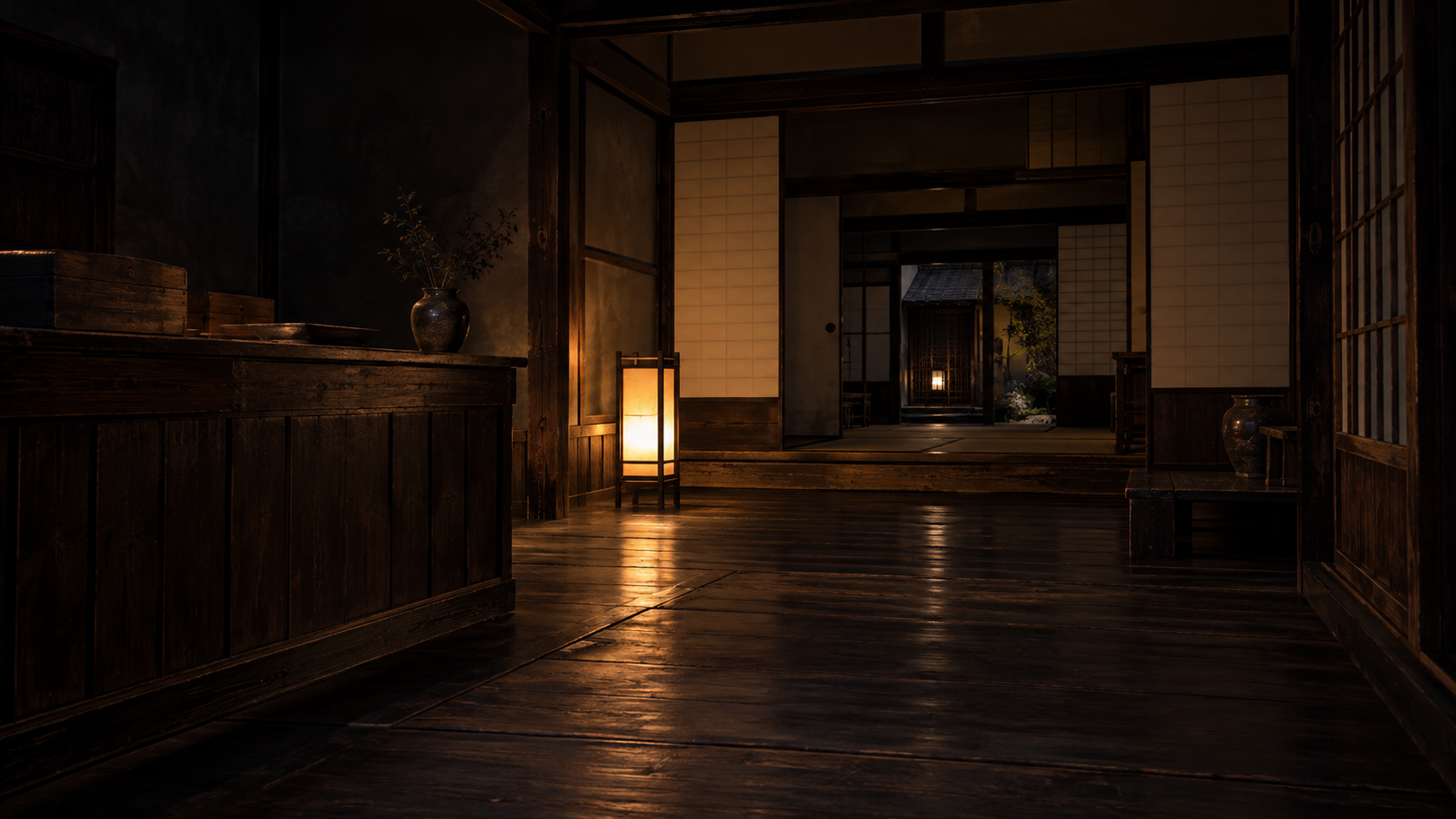
A shop at night, a light, stairs and a sword: imagining the incident readily brings concrete objects into view. Their familiarity can make a scene seem complete before its historical basis has been examined.
Each element nevertheless raises a question about sources. Which account supports it? Is an action described in one recollection also presented in the same way in another?
Joining striking details from different testimonies without checking their positions and sequence can produce a scene that no single source describes. This is a problem for visual storytelling. Even an explanatory illustration should not become a supposedly established diagram of the number of attackers or their movements indoors.
Using the location and date as a framework, while placing differences in testimony alongside one another, keeps the evidentiary problem visible. A vivid picture should not conceal the uncertainty that the account is trying to explain.
CHAPTER 10
The later history of a stone marker
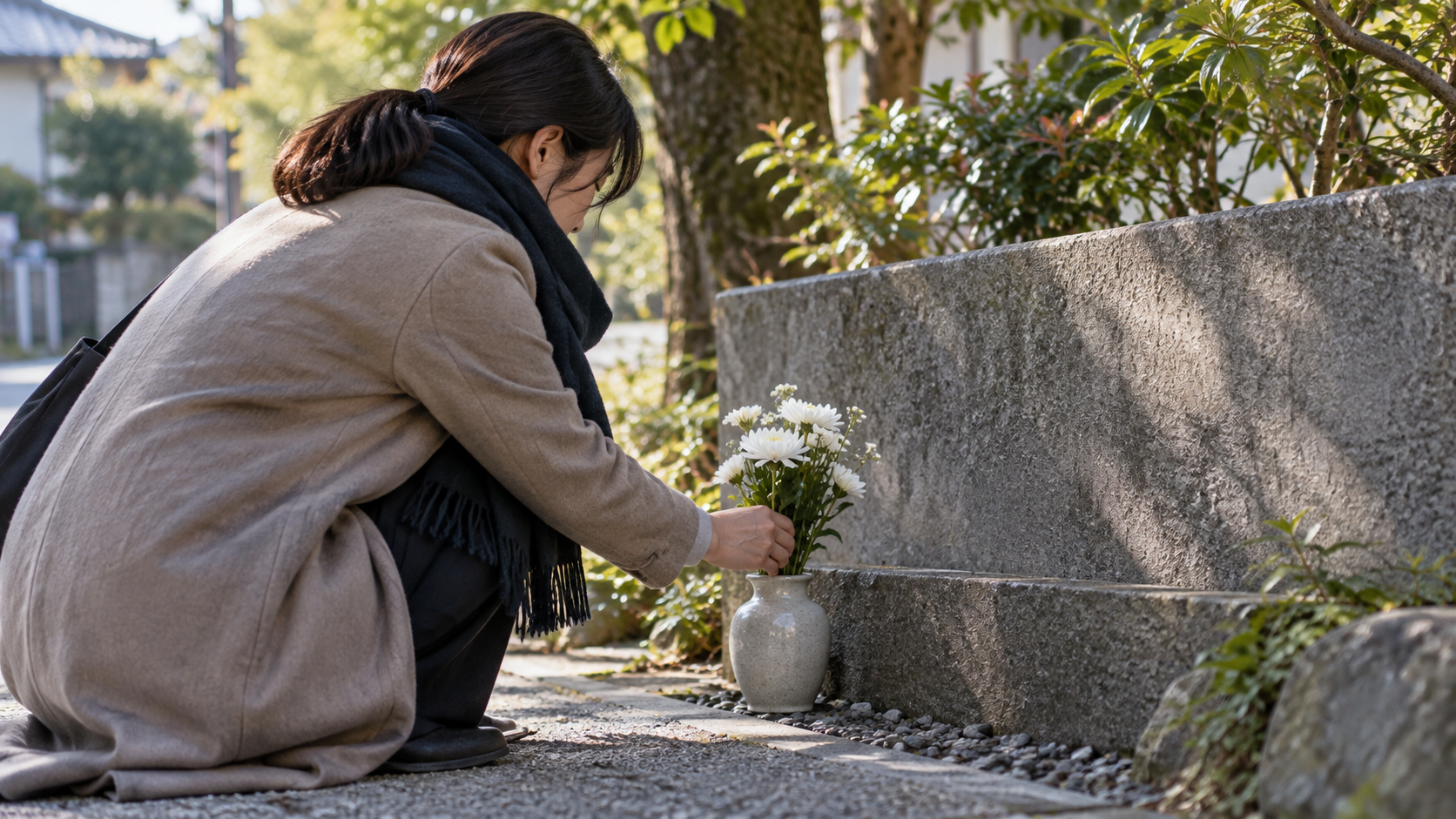
Kyoto City records that the Kyoto City Education Association erected the marker at the site in 1927, sixty years after the incident. Its listed location is on the west side of Kawaramachi Street, south of Takoyakushi Street.
Looking at this marker means encountering how later people remembered the place as well as identifying where the attack occurred. An object made after a long interval is not the same kind of material evidence as an object surviving from the moment of the event.
That distinction does not diminish the marker’s role in carrying knowledge of a place forward. An inscription and subsequent visits connect historical memory with a location that people can continue to find.
Instead of moving directly from today’s marker to an imagined scene in 1867, we can include the interval between the incident and its commemoration. The site then reveals more than one period of history.
CHAPTER 11
Organizing degrees of certainty
The outline can now be separated from the unresolved details. The attack took place at the Ōmiya in Kyoto on the fifteenth day of the eleventh month of 1867 in the historical calendar.
Ryōma and Nakaoka were both attacked, but their survival after the incident differed. These points form the framework supplied by the institutional explanations examined for this article.
Accounts of final words and details of the perpetrators require comparison of testimony transmitted afterward. The assessment that the Mimawarigumi theory is a leading view also remains distinct from a conclusive identification of perpetrators or instigators. Areas of uncertainty need not make every part of the incident equally uncertain.
Established points provide a footing for considering what the testimony can tell us and where a conclusion remains unavailable. In this reading, the event retains a recognizable outline while continuing to raise specific questions.
CHAPTER 12
From one night back to the records
The Ōmiya Incident is remembered as the end of Ryōma’s life. Understanding that night, however, requires attention to the character of the records through which it is known.
The date of the event, the people who transmitted an account, the period when a text appeared, and the later erection of a marker each have their own time and role. They cannot be treated as though they all belonged to the same moment.
A letter written before the incident, recollections describing it, and a commemorative stone made afterward each have creators, dates and subjects they can help establish. Beginning with the question each source can answer avoids forcing these different records into a single continuous scene.
Continuing to ask such questions, while checking their foundations, is one way to understand the Ōmiya Incident. Distinguishing degrees of certainty returns attention to the surviving records and to the different routes by which the past reaches us.
How to read this work
History, interpretation, and reconstruction
Understand the Ōmiya Incident by distinguishing the event, the transmission of recollections and later commemoration.
This work is grounded in published sources and historical research. Interior thoughts, dialogue, and some visual details are cinematic reconstructions. Where historians disagree, the article presents the point as debated rather than settled fact.
Timeline
The story in time
-
Ryōma sends Mutsu Munemitsu a letter concerning business. The date is retained in the historical calendar.
Sources: s08 -
Nakaoka Shintarō’s date of death. Gregorian equivalent: December 12, 1867.
Sources: s04 -
Publication of Tani Kanjō’s posthumous writings, as recorded in the bibliography.
Sources: s06 -
Publication of the autobiography of Baron Abo Kiyoyasu, as recorded in the bibliography.
Sources: s07 -
The Kyoto City Education Association erects the stone marker at the site.
Sources: s03
People & terms
A guide for new readers
Glossary
- Ōmiya 近江屋
- The soy-sauce merchant’s premises on Kawaramachi in Kyoto where the attack occurred.
- Keiō 3 慶応3年
- The Japanese era year used for the incident in 1867; its numbered months retain the historical calendar.
- Kyoto Mimawarigumi 京都見廻組
- The group identified in the institutions’ leading explanation of the perpetrators; the article retains the qualification attached to that explanation.
- Recollection 回想
- An account remembered and transmitted afterward, whose author, circumstances and publication need to be considered.
- Posthumous writings 遺稿
- Writings issued after their author’s death; a publication date and the date of the events described are different kinds of date.
- Autobiography 自叙伝
- An account of the author’s own life. Its publication information does not, by itself, establish when every reported statement was first heard.
- Bibliographic record 書誌
- A catalogue description identifying a publication, such as its author, editor, publisher and date. Checking it is different from reading every passage in the work.
- Site marker 石標
- A commemorative stone identifying a place. The marker discussed here was erected in 1927, not during the attack.
Sources & method
How this article was built
This translation retains the Japanese article’s twelve chapters, six timeline entries and eight sources. Five National Diet Library pages are counted as one parent institution, giving four parent publishers in total. English source titles are editorial translations.
The adopted source scope consists of museum explanations, a municipal marker record, library biographies, a letter exhibition description and bibliographic records. It does not amount to a new collation of the original memoirs. No reconstructed final words, private thoughts, exact movements or chain of orders are supplied.
The Gregorian equivalents for the two death dates follow the National Diet Library’s paired dates. The original-calendar date of the business letter, later publication dates and the 1927 marker remain distinct. The 1926 publication of Tanaka’s autobiography is reported through the museum’s introduction, rather than a newly checked independent catalogue entry.
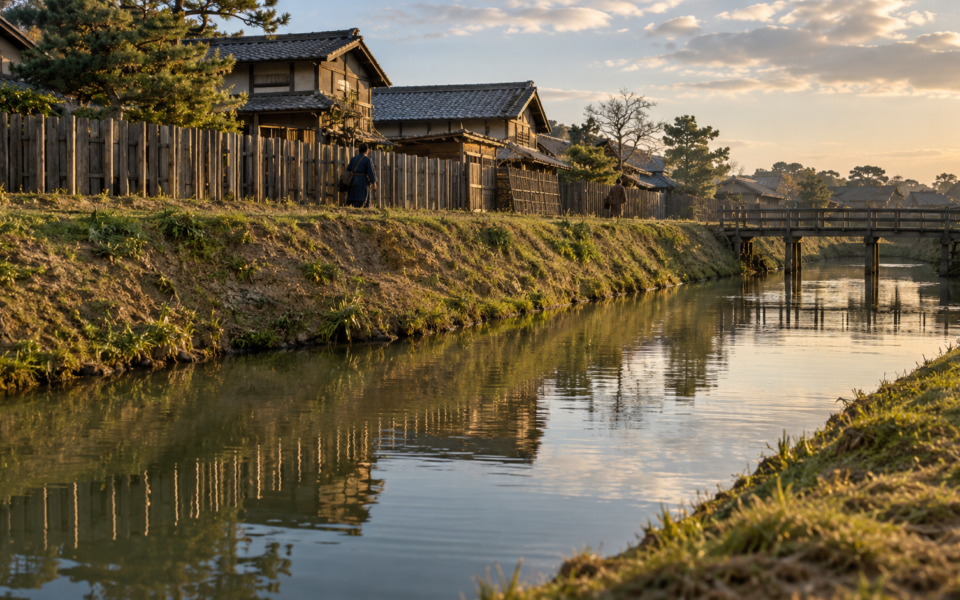
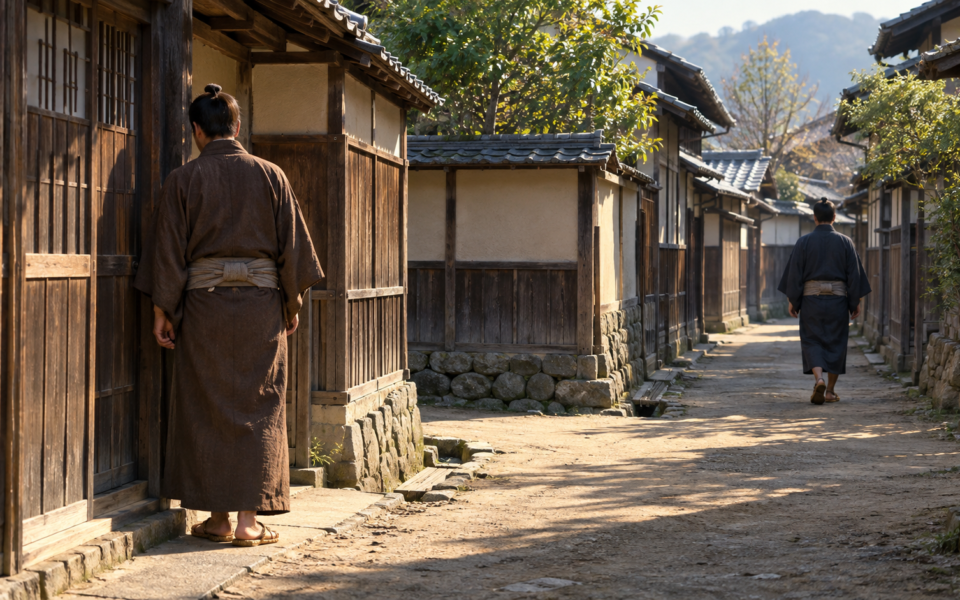
Illustrations are AI-generated explanatory scenes owned by SHIGEKI. Modern research and remembrance scenes are identified as modern. They are not photographs of historical documents, the actual site marker or named institutions. No museum portraits, document images or long quotations from the recollections are reproduced.
Sources
References and further reading
- Ryozen Museum of History: Notice for a Lecture on the Kyoto Mimawarigumi 霊山歴史館・講演会「京都見廻組の実像」案内 Title translated editorially for reader convenience. Ryozen Museum of History 霊山歴史館 The incident description in the July 15, 2024 lecture notice identifies the merchant’s shop and the status of the Mimawarigumi theory. Reading the notice is not attendance at the lecture. Accessed 2026-10-23
- Sakamoto Ryoma Memorial Museum: Ryōma FAQ 高知県立坂本龍馬記念館・龍馬FAQ Title translated editorially for reader convenience. Sakamoto Ryoma Memorial Museum, Kochi Prefecture 高知県立坂本龍馬記念館 Used for the two men’s different survival, the three works transmitting final words, and the assessment of perpetrator theories. This article summarizes the museum’s presentation, without a new edition of the original recollections. Accessed 2026-10-23
- Kyoto City: Site of the Attack on Sakamoto Ryōma and Nakaoka Shintarō 京都市・坂本龍馬・中岡慎太郎遭難地 Title translated editorially for reader convenience. Kyoto City 京都市 Used for the site, location and 1927 erection of the marker. The marker is not treated as a surviving object from the night in 1867. The page’s birth-year statement is not adopted. Accessed 2026-10-23
- Portraits of Modern Japanese Historical Figures: Nakaoka Shintarō 国立国会図書館・近代日本人の肖像「中岡慎太郎」 Title translated editorially for reader convenience. National Diet Library 国立国会図書館 The biographical dates establish the seventeenth day of the eleventh month of Keiō 3 as December 12, 1867. The portrait image is not reproduced. Accessed 2026-10-23
- Portraits of Modern Japanese Historical Figures: Sakamoto Ryōma 国立国会図書館・近代日本人の肖像「坂本竜馬」 Title translated editorially for reader convenience. National Diet Library 国立国会図書館 The biographical dates establish the fifteenth day of the eleventh month of Keiō 3 as December 10, 1867. The portrait image is not reproduced. Accessed 2026-10-23
- NDL Search: Tani Kanjō’s Posthumous Writings, Lower Volume NDLサーチ・『谷干城遺稿』下の書誌 Title translated editorially for reader convenience. National Diet Library 国立国会図書館 Bibliographic confirmation of the editor, publisher and 1912 publication. The incident narrative within the volume has not been independently edited or translated here. Accessed 2026-10-23
- NDL Search: Autobiography of Baron Abo Kiyoyasu NDLサーチ・『男爵安保清康自叙伝』の書誌 Title translated editorially for reader convenience. National Diet Library 国立国会図書館 Bibliographic confirmation of the author, publisher and Taishō 8 / 1919 publication; the original autobiography is not quoted or transcribed. The catalogue gives the reading Abo Kiyoyasu. Accessed 2026-10-23
- Autograph Exhibition: People Who Lived in the Late Tokugawa Period 国立国会図書館・あの人の直筆「幕末を生きた人々」 Title translated editorially for reader convenience. National Diet Library 国立国会図書館 Exhibit 52 introduces Ryōma’s business letter to Mutsu Munemitsu dated the twenty-second day of the tenth month of Keiō 3. Used to distinguish a lifetime letter from later recollections, without reproducing the document image or text. Accessed 2026-10-23
Continue reading
More stories from Shigeki
Shigeki English
Sakai’s Merchant City: Trade, Self-Government and Survival
A port, a merchant council and town communities—from changing authority to rebuilding after fire.
- When From the later fifteenth century through the Sengoku period, the fire of 1615 and early Edo-period reconstruction.
- Where Sakai, in present-day Osaka Prefecture, where maritime routes met roads on land.
Shigeki English
The Aburanokōji Incident: After Leaving the Shinsengumi
A separation in spring, a new base in summer, and two successive attacks.
- When Kyoto in Keiō 3 (1867). The incident’s historical date corresponds to December 13, 1867.
- Where Kyoto: the guards’ successive bases, the Aburanokōji attack site and the later place of remembrance.