
SHIGEKI ENGLISH STORYEN
Japanese history in English
Osaka’s Winter Campaign: Why the Moats Were Filled
Fighting beyond the walls, the Sanada Maru, bombardment and peace: how the settlement changed a castle that had survived the winter siege.
Osaka’s Winter Campaign ended in a settlement rather than the destruction of its keep. Follow the bell-inscription dispute, surrounding battles, bombardment and the agreement that altered the moats, while separating winter earthworks from later Tokugawa rebuilding.
At a glance
Before you enter the story
- When
- Keichō 19, conventionally 1614, with peace in its historical twelfth month; the following year’s Summer Campaign and subsequent rebuilding.
- Where
- Osaka Castle and its surrounding battle locations, including Shigino, Imafuku and the Sanada Maru; Hōkōji in Kyoto in the inscription dispute.
- Key figures
- Tokugawa Ieyasu, Toyotomi Hideyori, Sanada Nobushige, Yodo-dono
- What was at stake
- How peace terms altered the physical conditions of defence even though the keep survived the immediate campaign.
Why this story matters
The larger history behind the turning point
The campaign shows that the end of fighting can change military space through negotiated terms and construction work. Separating those processes from later rebuilding makes the relationship between the Winter and Summer Campaigns easier to understand.
Historical context
What an international reader needs to know
Osaka, Ōsaka and the different castle phases
The historical Japanese spelling in the campaign name and the modern spelling associated with the present city are both represented here by the familiar English form Osaka. That spelling does not make the castle visible today identical with the Toyotomi castle of the Winter Campaign.
The institutional accounts distinguish the Toyotomi castle, work following the winter settlement, the next year’s fighting and Tokugawa reconstruction after the Toyotomi defeat. These are successive settings. A description of one phase should not silently supply a wall, moat or construction event for another.
Reading a settlement through words, maps and ground
The sources approach the campaign through different materials: a historian’s account of contemporary lords’ documents, municipal histories, museum explanations of maps and buried structures, and later local commemorations. Their different purposes help explain why the article attributes interpretations instead of treating every description as an eyewitness report.
Calendar wording is another part of that care. The twelfth month of Keichō 19 is retained as a historical label. The adopted histories give differing settlement day labels, so the article does not pick one, convert it to a modern date or identify the early seventeenth-century calendar with the later Tenpō system.
Watch the film
See the story in motion
The film currently uses Japanese audio. This English article provides the context and source trail; it does not imply that an English subtitle track is available.
Chapter 01
The castle remained; its defences changed
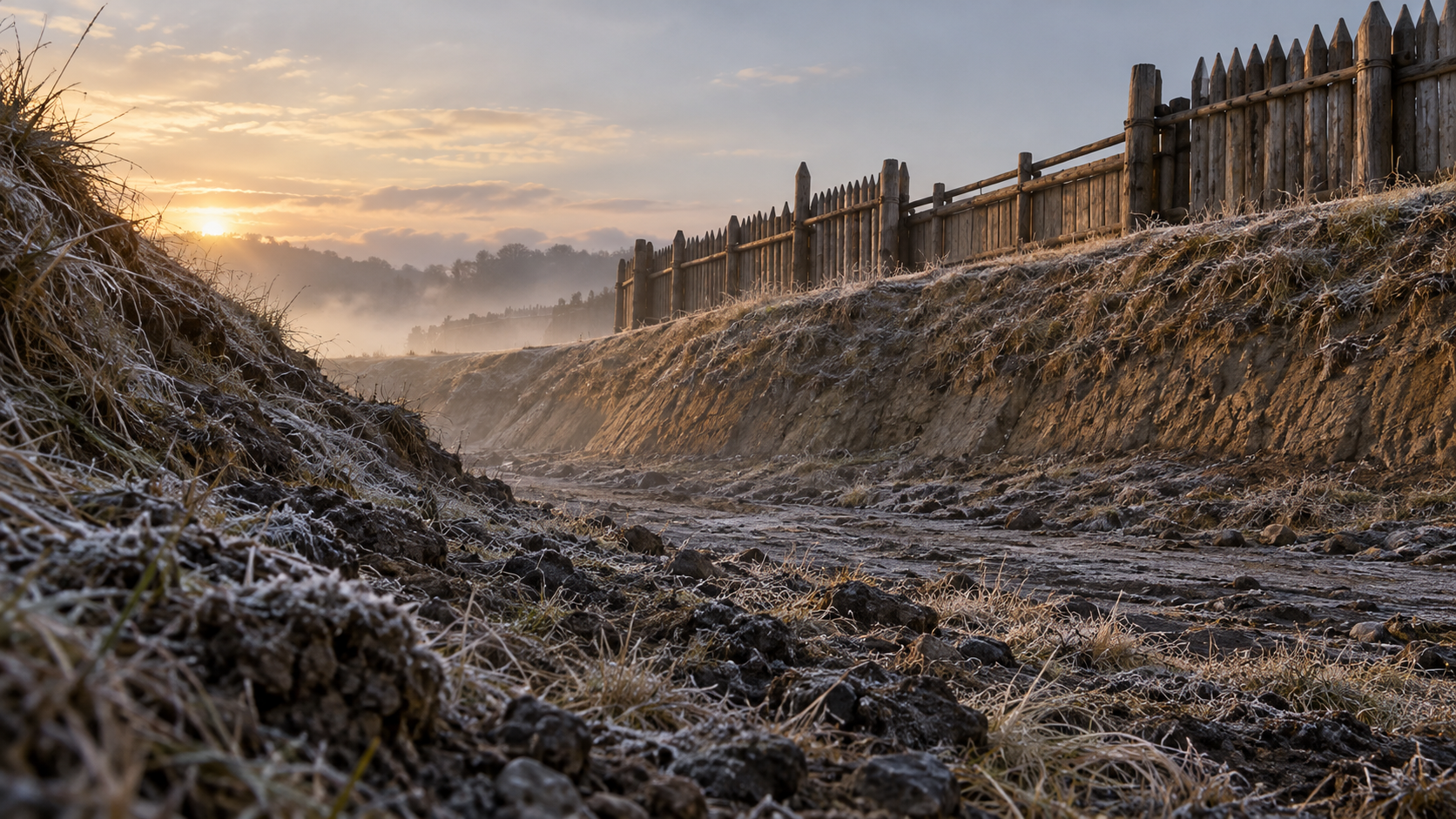
A moat dug to protect a castle can also be filled as a consequence of war. Osaka’s Winter Campaign ended with a change of that kind. Its conclusion was not simply the familiar image of attackers taking a keep: the fighting gave way to a settlement, followed by work that altered the castle’s defences.
The Toyotomi and Tokugawa sides made peace. Once combat stopped, the defensive works around the castle underwent substantial change. A keep continuing to stand and an entire defensive system continuing to function were different outcomes. To understand the settlement, we must look beyond the survival of the most visible building.
Were the moats filled because the Tokugawa side broke its promise? An official historical explanation published by Kashiwara City revisits that familiar account using documents of contemporary lords. It introduces an interpretation of the agreed conditions that requires closer attention than a simple story of an outer moat followed by unauthorized destruction.
The route into the question begins outside the keep. Fighting around the castle, siege pressure, negotiation, agreement and earthmoving belong to a sequence. Following those stages helps explain how a campaign could stop short of the castle’s destruction while still changing the conditions under which it could be defended.
Chapter 02
The walls above ground and the Toyotomi castle below
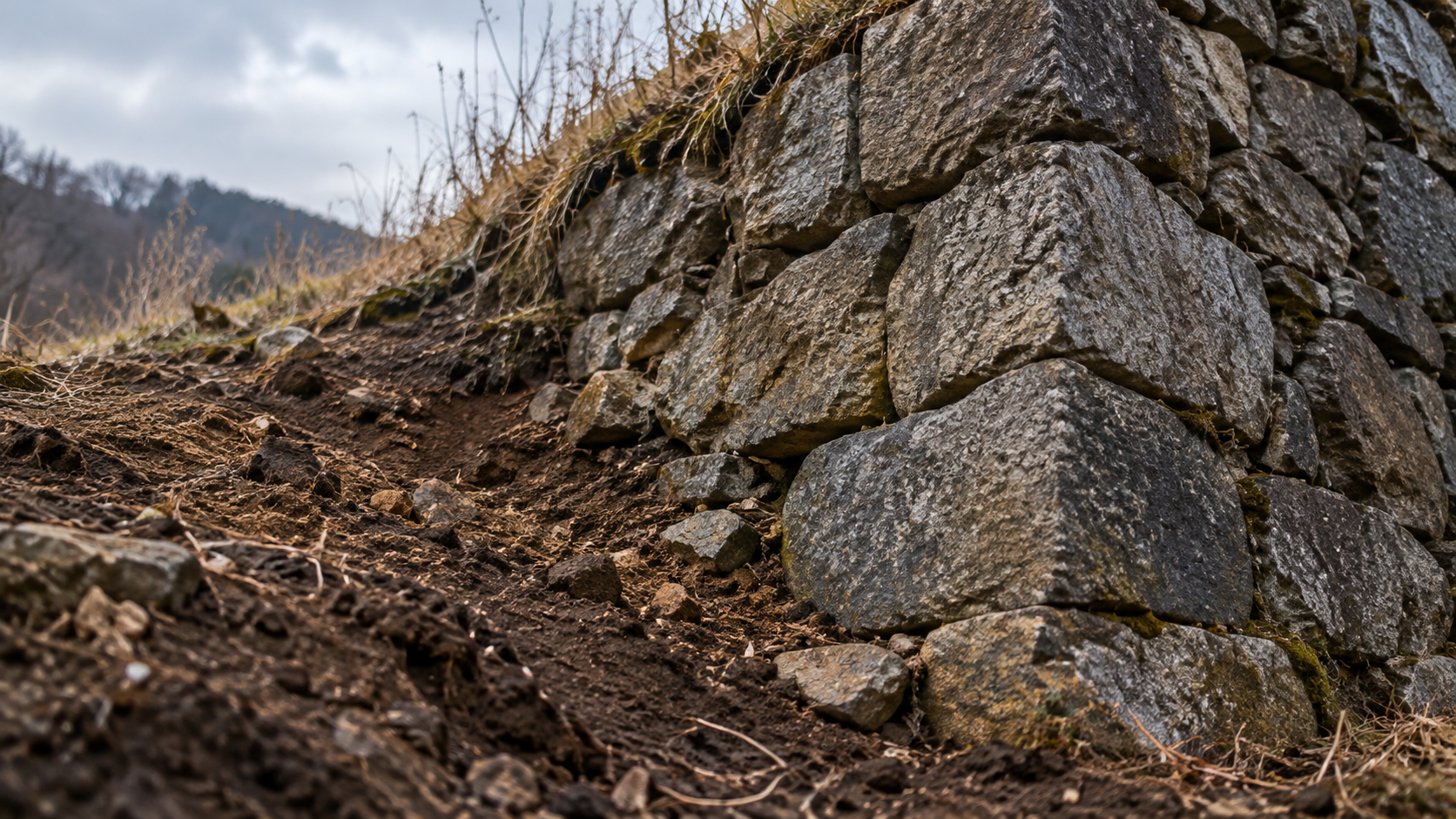
The stone walls visible at Osaka Castle today cannot simply be projected backward onto the Winter Campaign. Different phases of construction occupy the same site. A visitor looking at a present wall is therefore encountering evidence that requires a date, rather than a ready-made view of the defences faced by the armies of 1614.
The castle museum explains that, after the Toyotomi defeat in the Summer Campaign, the Tokugawa shogunate rebuilt over the earlier castle. Stonework from the Toyotomi phase survives beneath later work. The relation between what is visible above ground and what remains buried expresses a sequence of different castles on the same ground.
This later rebuilding must also be separated from the filling of moats after the winter settlement. Both processes involved changing the site, but they belonged to different political and military stages. The repeated use of words such as filling or covering should not turn them into one construction project.
The museum’s explanation of buried remains offers an entry into that distinction. Before using today’s walls to imagine the earlier siege, it is necessary to ask which building phase they represent. This article does not adopt a discovery year from a page whose Japanese-era and Western-year labels conflict.
Chapter 03
Defending more than a single building
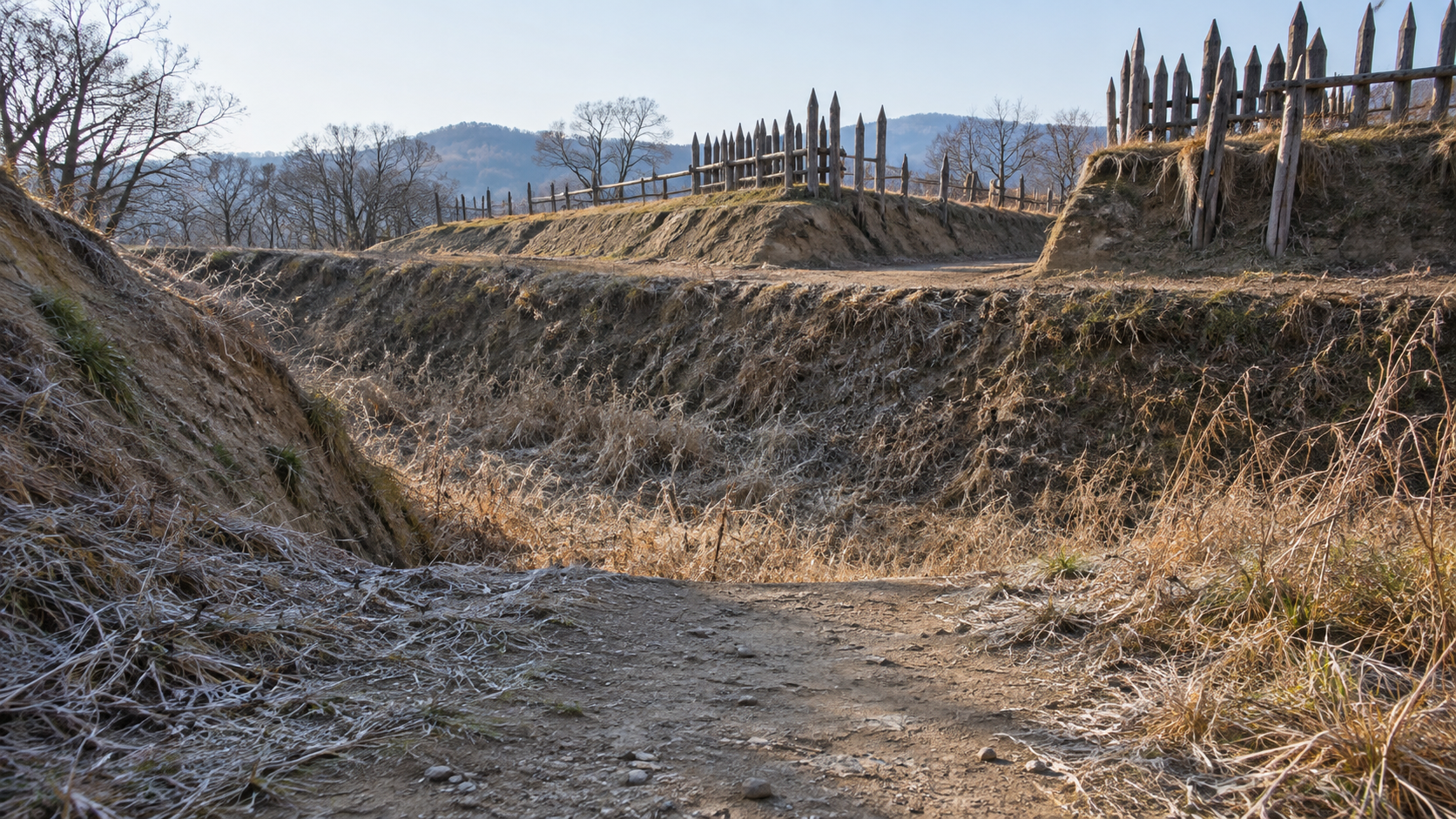
The Toyotomi castle was more than its keep. Alongside the principal enclosures, including the honmaru and ninomaru, an extensive outer defensive circuit surrounded a wider area. This broader arrangement matters when the settlement’s requirements concern works outside the central building rather than the keep alone.
Moats, earthworks, palisades and the space in which troops could move all formed part of the problem of defence. A castle’s military function depends on the relationship between such features. Looking only at the surviving outline of a tower would leave out much of the ground over which an attacker had to advance.
As a general explanation of defensive space, a ditch can obstruct a route and constrain the places where an attacker approaches. Defenders can organize around those approaches. This is an analytical way of explaining the importance of obstacles; it is not a surveyed reconstruction of every route and position at Osaka.
Even if a keep remains in the same place, changing the routes leading toward it changes the defensive situation. The dispute over moats and outer works therefore concerned more than the appearance of the castle. It concerned how the space surrounding its centre would operate after the settlement.
Chapter 04
A bell inscription becomes a political issue
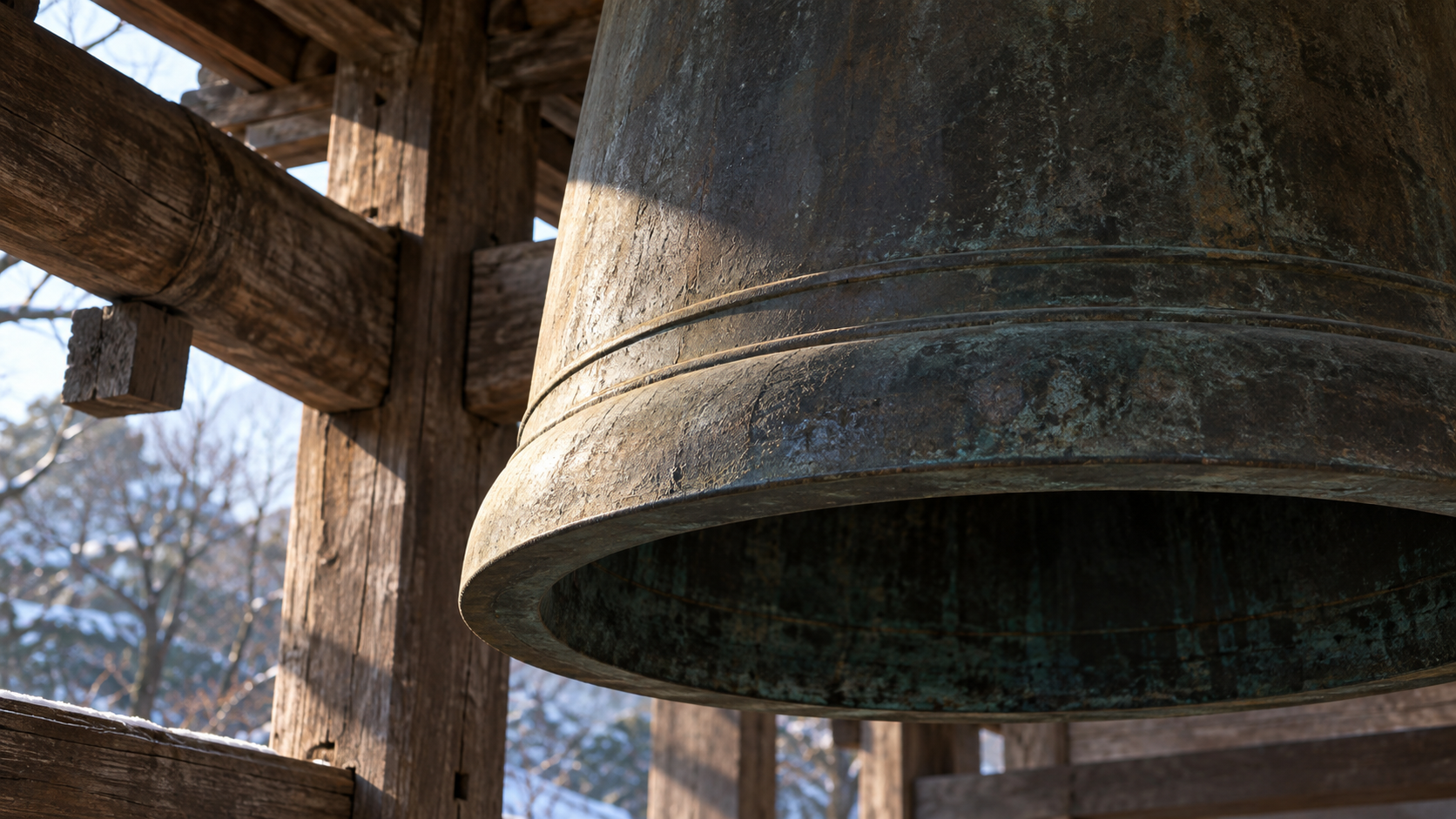
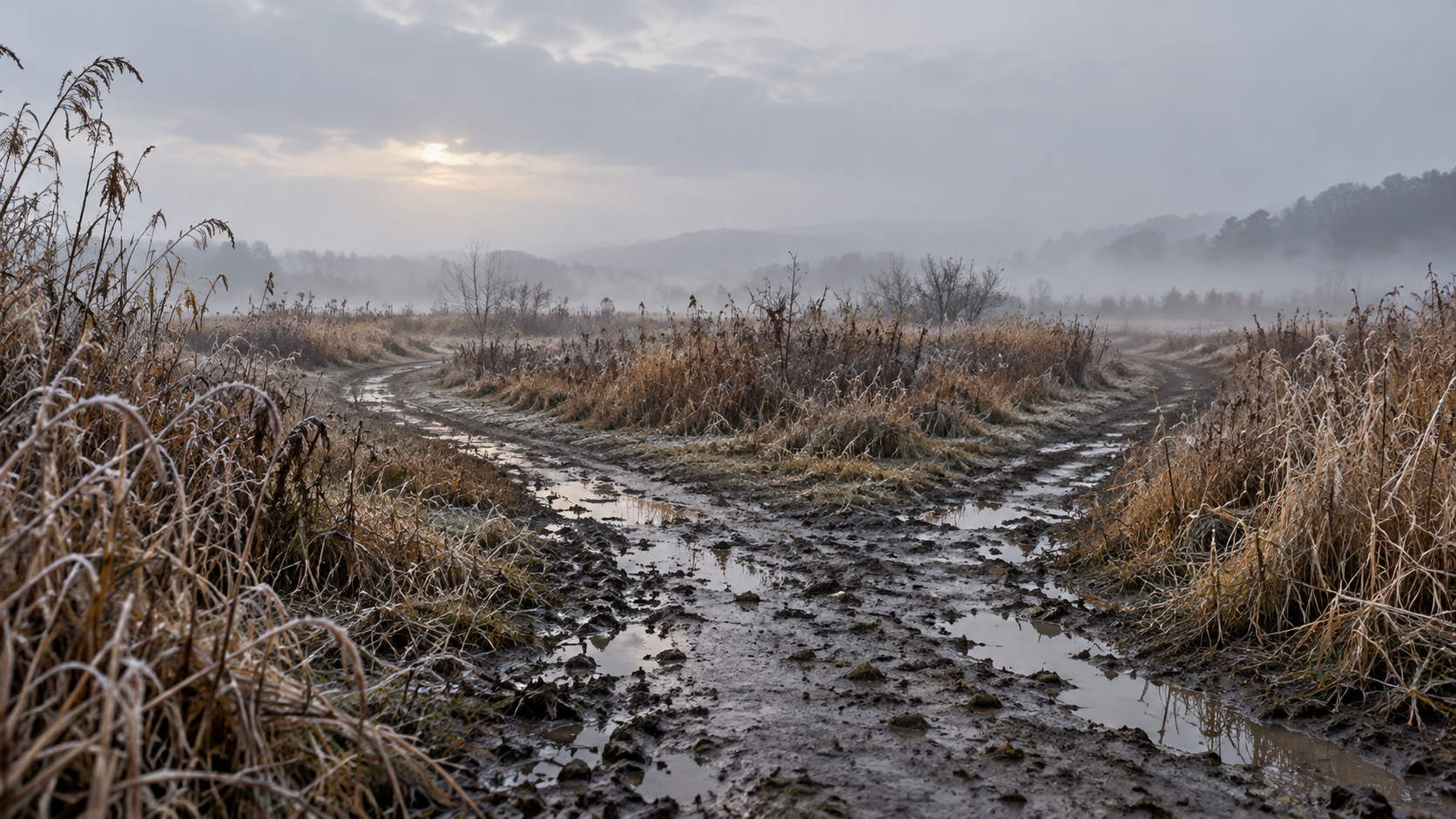
The inscription on a bell at Hōkōji in Kyoto became a point of dispute in the approach to the Winter Campaign. Kyoto City’s account describes the controversy surrounding those characters. A text associated with a temple entered the political conflict between the two sides.
The Tokugawa side objected to a reading of the characters in the phrase Kokka ankō, treating them as separating the characters of Ieyasu’s name. Describing that objection establishes an interpretation advanced in the dispute. It does not independently prove that the makers of the inscription intended a curse.
The private intention of the people who composed the text cannot be supplied through invented dialogue or a scene showing what they secretly meant. The first task is to distinguish the inscription, the objection made to it and the political significance the dispute acquired in the accounts used here.
If a handful of characters is made to explain the entire conflict on its own, the relationship between the two houses and the negotiations around the issue disappear from view. The bell controversy is treated here as one stage in the process leading toward military action, rather than an unrestricted explanation of every cause.
Chapter 05
Shigino and Imafuku: fighting beyond the castle
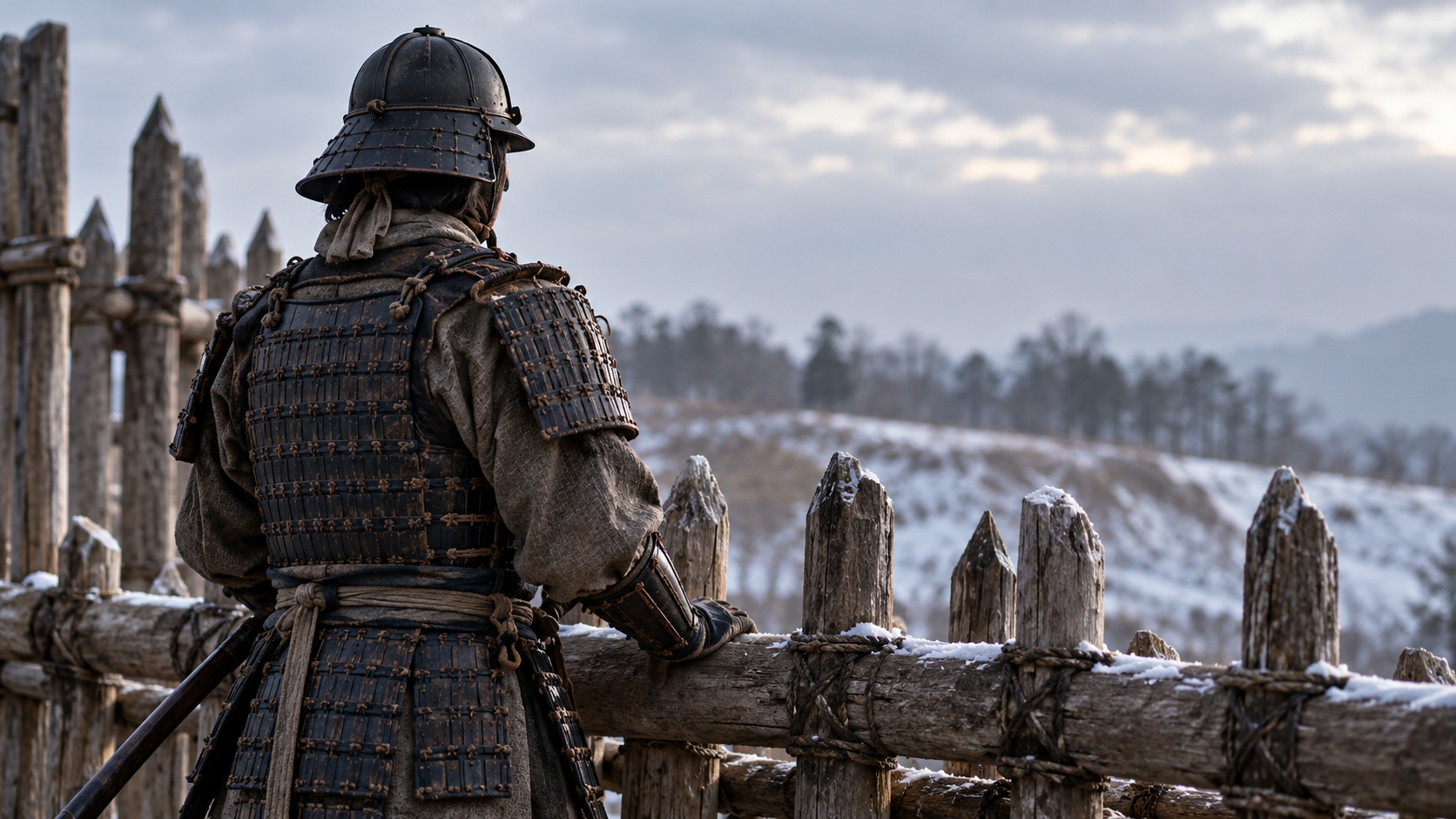
The fighting was not confined to a single front immediately before the keep. Shigino and Imafuku, discussed in Osaka City’s Jōtō Ward account, were also settings of the Winter Campaign. Their inclusion broadens the geographical picture beyond the most familiar episodes at the Sanada Maru and the bombardment of the castle.
The ward’s account includes forces associated with Uesugi and Satake and Toyotomi commanders such as Kimura Shigenari and Gotō Mototsugu. These references introduce fighting over positions and approaches around the castle. They are not expanded here into a detailed order of battle or an independently reconstructed sequence of troop movements.
Present-day monuments and information boards can help visitors encounter the history of these neighbourhoods. The words on such markers nevertheless belong to a later act of explanation or commemoration. They should be distinguished from contemporary records when deciding what a specific statement can establish about the campaign.
No precise army totals or fixed front lines are added to the adopted account. The point is to retain the wider setting of the fighting. The winter siege involved surrounding places and routes as well as the castle centre, and its conclusion cannot be understood by looking at only one celebrated defensive position.
Chapter 06
The Sanada Maru and a surviving set of maps
The Naegi Tōyama Historical Museum in Nakatsugawa introduces illustrated battle maps showing the Sanada Maru. The set, transmitted through the Tōyama family, concerns the Winter and Summer Campaigns. It is a source through which the defences and their later representation can be approached.
The museum explains that the Sanada Maru appears in the first of the six maps. Its introduction also connects Sanada Nobushige with the name Yukimura, by which he became widely known. The same individual should not become two separate commanders when the Japanese names are carried into English.
Numbers of soldiers written on a map require their own assessment. They are not automatically verified totals of troops actually present in combat. The circumstances and purpose of the map’s production matter, and this article does not claim a full independent decipherment of all six originals.
The fighting associated with the Sanada Maru is an important part of the Winter Campaign. It cannot, by itself, explain the entire campaign’s outcome. The wider siege, the pressure applied to the castle and the negotiations that followed must remain within the picture alongside the defence of one position.
Chapter 07
Pressure from bombardment
Bombardment was among the pressures applied to the besieged castle. Fukui City’s museum account includes attack and artillery fire in its explanation of the movement toward a settlement. That pressure belongs within the military situation confronting the people inside and the negotiations between the sides.
A dramatic retelling might place all the weight on a single cannon shot frightening Yodo-dono into making peace at once. Such a scene produces an easily grasped cause and effect. It also risks converting an account of bombardment into certainty about one person’s private thoughts and the whole basis of a political agreement.
To discuss the effect of shelling on the situation within the castle is different from proving an individual’s exact fear or decision at a particular instant. Concentrating every explanation on one emotion would remove the surrounding military circumstances and the process of negotiation from the account.
Whether to continue fighting or to stop under agreed conditions was a political as well as a military question. Bombardment can be acknowledged as pressure without declaring that one projectile alone determined the settlement. No imagined conversation inside the castle is used to settle that question here.
Chapter 08
Peace in the twelfth month of Keichō 19
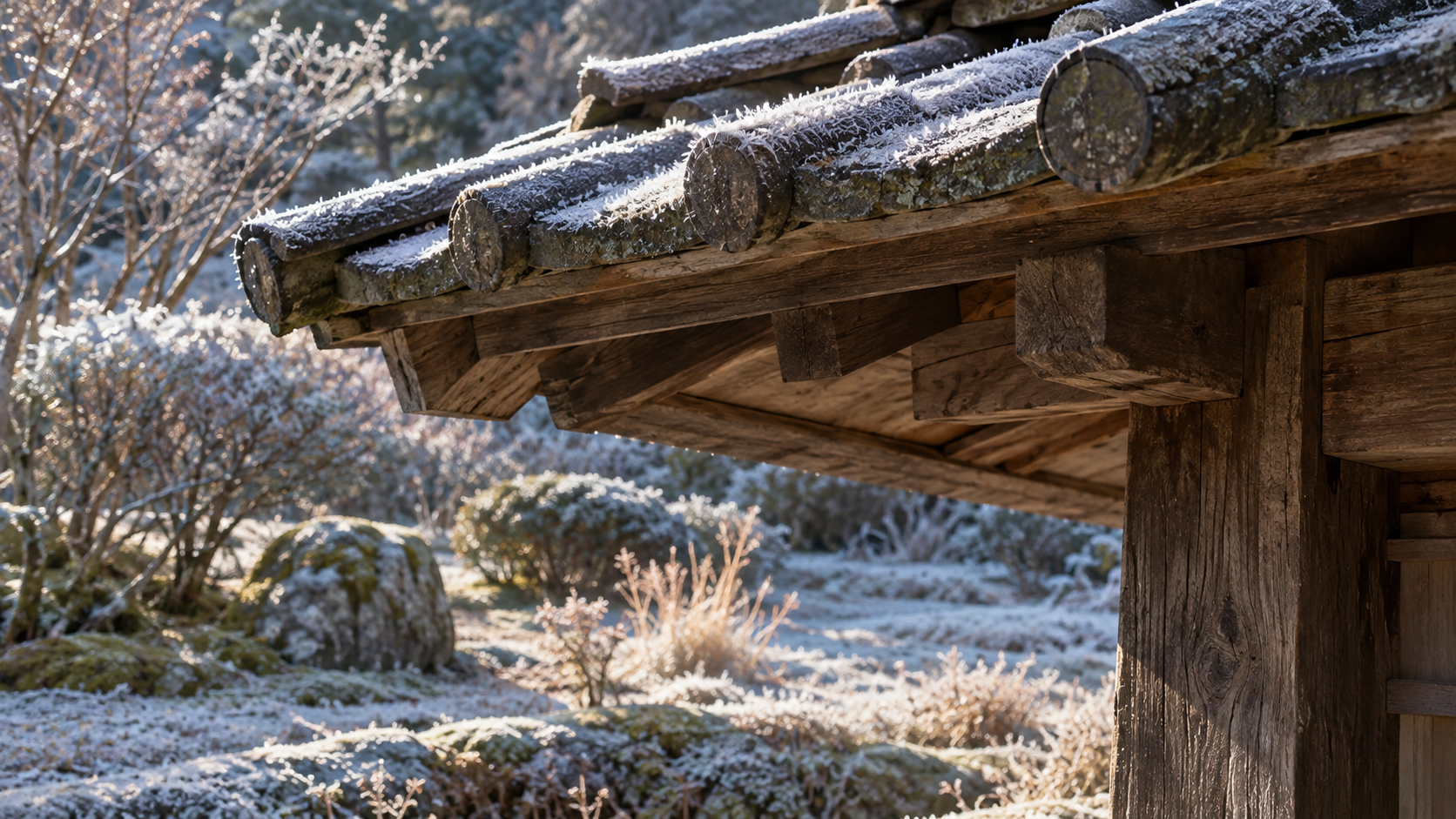
Peace was concluded in the twelfth month of Keichō 19. In this formulation, the month belongs to the Japanese calendar used at the time. The campaign is conventionally associated with 1614, but the historical month label should not be silently converted into December on a present-day calendar.
The National Astronomical Observatory’s explanation helps distinguish a lunisolar calendar from the calendar now in use. It is used here for that general distinction. This article does not call the early seventeenth-century system the later Tenpō calendar or use the explanation as a calculation of a particular modern date.
The Tondabayashi municipal history and Fukui City’s museum give different day labels in their accounts of the settlement. The Japanese article retains that difference by specifying the month rather than selecting one day. The English account follows the same approach and supplies no unsupported exact Gregorian equivalent.
Reaching agreement, exchanging written pledges and carrying out subsequent work are also separate actions. They need not be squeezed into one instant in order to tell a clear story. Once the fighting stopped, the question becomes what the settlement required and what then happened to the castle’s defensive space.
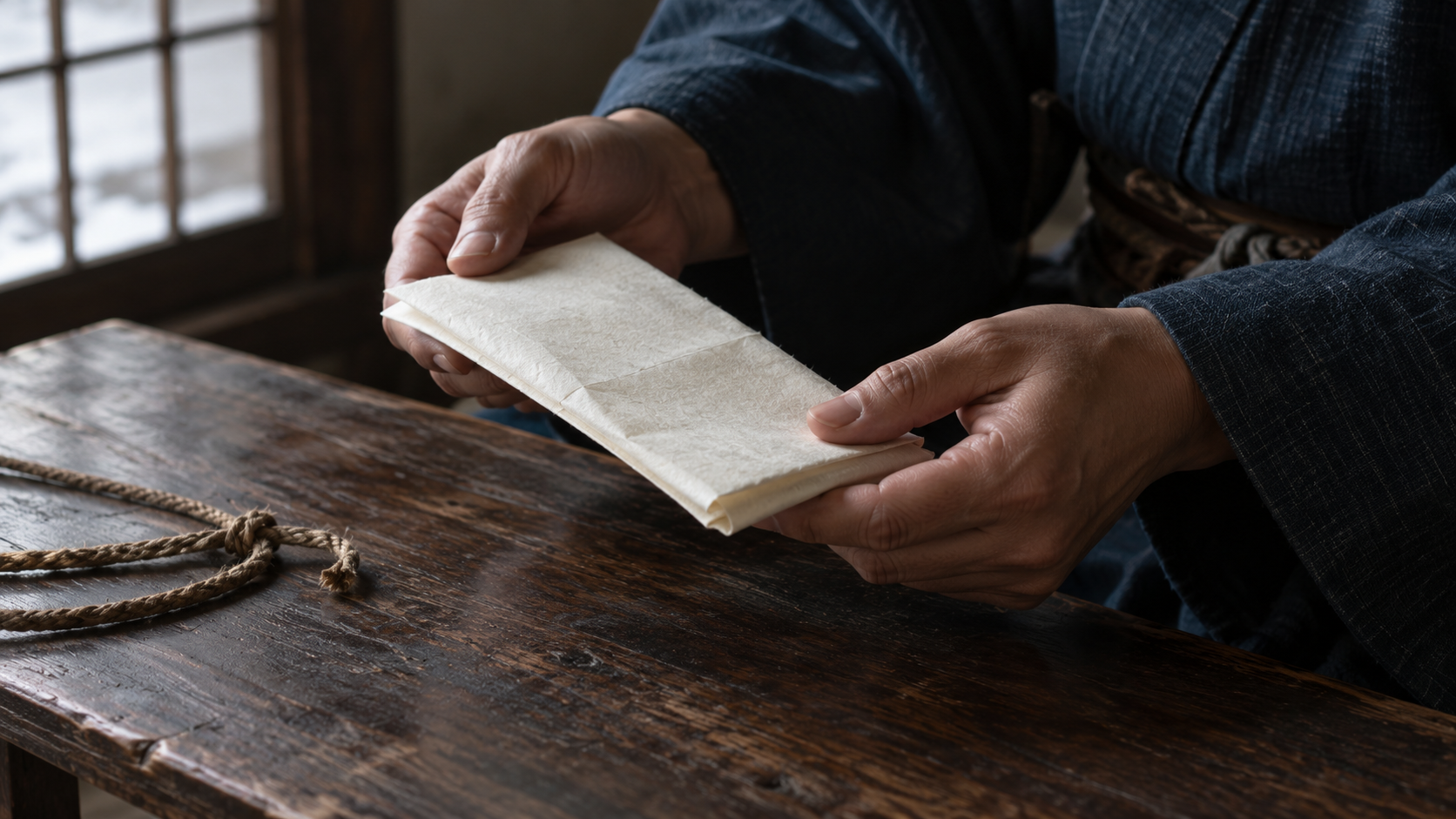
Chapter 09
Was filling the moats outside the agreement?
Historian Amano Tadayuki’s explanation, published by Kashiwara City’s cultural-properties section, revisits a popular account of the moat filling. It does not simply accept the story that only the outer moat was included in the promise and that the Tokugawa side subsequently extended the work without authorization.
The explanation states that documents of contemporary lords indicate agreement by both sides to dismantle the second and third enclosures and fill the inner moat as well. This is a significant point in the city’s interpretation of the settlement. The attribution matters because it identifies the source and scope of the argument.
This article reports that documentary interpretation through the published explanation. It does not claim that all the underlying original documents have been independently read and compared here. The argument can be presented clearly without elevating a consulted secondary explanation into an unperformed original archival investigation.
Agreement also does not establish equality of bargaining power. Even when conditions were accepted, the relationship between the parties requires separate consideration. The question of deception alone can obscure the weight of the conditions themselves: terms capable of transforming a castle’s defences after the immediate fighting had ended.
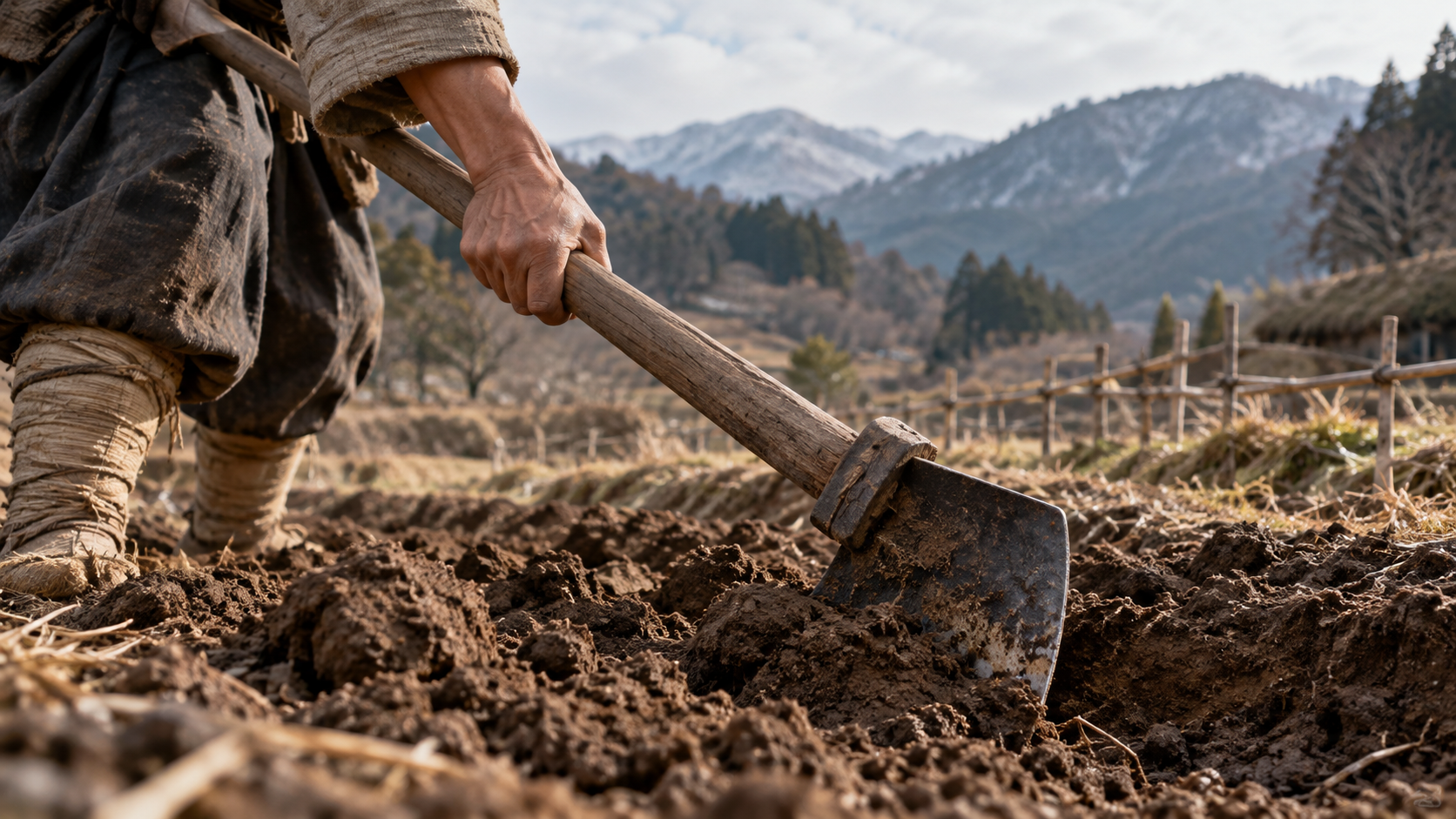
Chapter 10
Peace moves earth
After the settlement, work proceeded to remove defensive structures and fill the moats. The outcome of the campaign thus took material form in earthmoving and the alteration of space. A political agreement could affect a castle through labour on its surroundings as well as through a change in who occupied a building.
Where a ditch had separated two areas, filling it changed the barrier between them. Approaches that had depended on the obstacle could operate differently. This is an interpretation of the defensive function of moats, not a claim that every individual route at Osaka has been reconstructed or its effectiveness measured.
The statement that work formed part of agreed terms does not prove that carrying it out was peaceful or free of pressure. The content of an agreement and the manner of its implementation are separate questions. The explanation of the terms should not be stretched into an unsupported account of every exchange at the worksite.
The space created to protect the castle was altered as a consequence of the peace. If attention rests only on the continued presence of the keep, that loss of defensive function can be missed. The castle’s survival and the survival of its earlier protection were not equivalent results.
Chapter 11
Different conditions in the following year
The Summer Campaign in the following year was not fought under an unchanged set of circumstances. Kashiwara City’s explanation discusses renewed armament after the peace and the course of fighting beyond the castle. The winter settlement therefore belongs within the account of the conditions preceding the next campaign.
Once works that had supported the winter defence were removed, the castle could remain on the same site while the available ways of fighting changed. The lost moats connect the two campaigns through a material alteration of defensive space. Continuity of location did not mean continuity of military conditions.
That connection should not be made into a claim that moat filling alone automatically determined the summer outcome. The movement toward renewed war and the military actions at particular places have their own histories. The adopted explanation does not license replacing those events with a single inevitable consequence.
Understanding how the castle changed after surviving the winter fighting nevertheless gives the two campaigns a concrete relationship. The end of the Winter Campaign was not an empty pause. Changes made under the settlement carried forward into the setting in which further decisions and military actions took place.
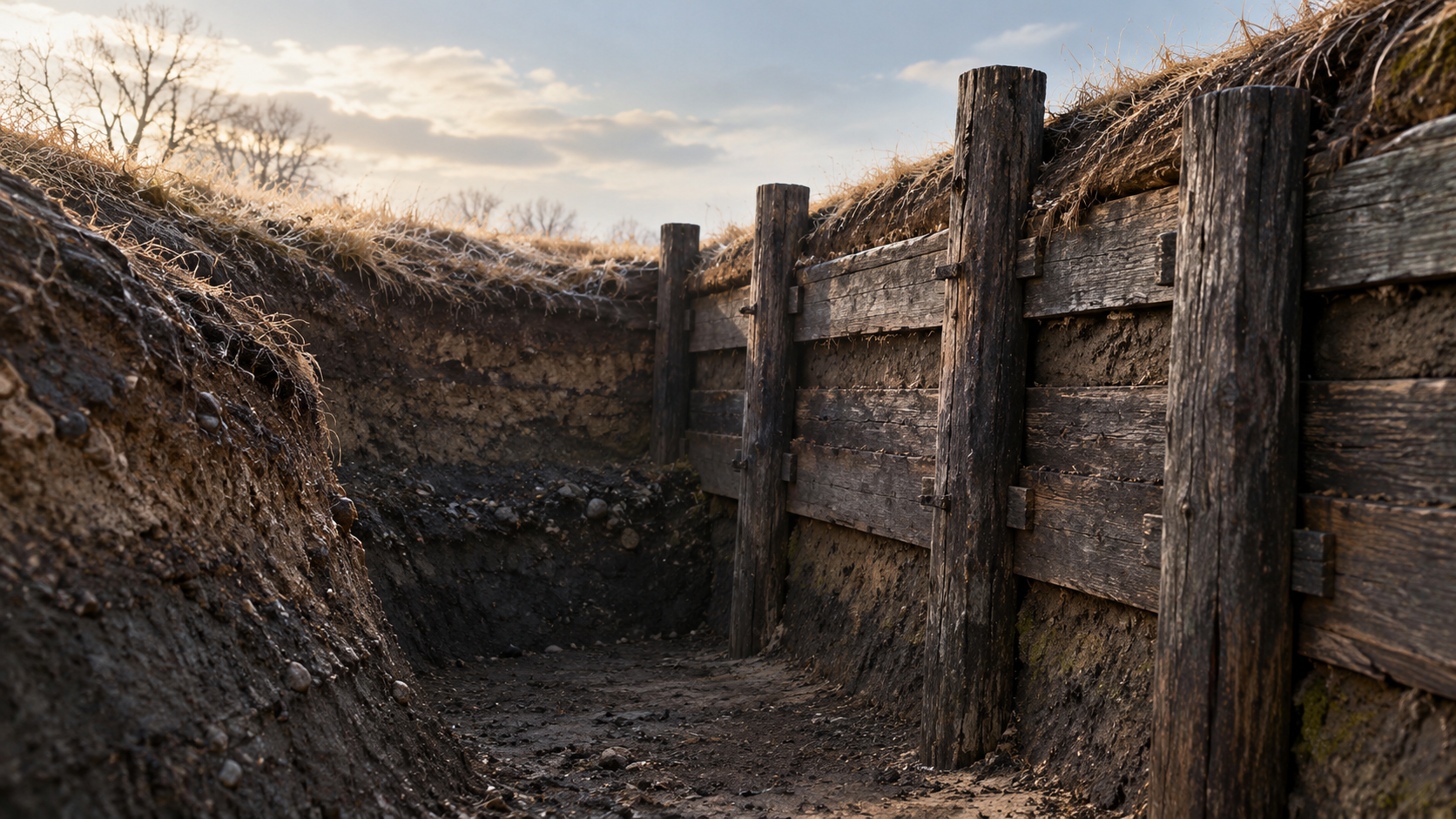
Chapter 12
A standing castle with protection lost
The Winter Campaign did not end with the castle completely destroyed in battle. Fighting gave way to peace, and the conditions of that peace changed the castle’s protection. The distinction between a surviving building and a surviving system of defence provides a way of understanding what the campaign had achieved.
The battles at Shigino and Imafuku, the Sanada Maru, artillery pressure, negotiation and earthmoving all belong within this account. Neither a single heroic defence nor one uncomplicated story of trickery can replace that sequence. Each directs attention to a part of the campaign rather than supplying every part of its explanation.
Tokugawa rebuilding after the Toyotomi house’s fall belongs to a further stage, visible in the relationship between later walls and buried earlier remains. Keeping that construction separate from the work after the winter settlement prevents two different transformations of the site from collapsing into one.
Why were moats built to protect the castle filled? The official explanations adopted here point toward a conflict whose settlement reached into the physical shape of the fortress. Battle did not have to demolish the keep for its defensive circumstances to change. The standing castle had lost part of what had protected it.
How to read this work
History, interpretation, and reconstruction
Distinguish winter fighting, the peace terms and the filling of moats. A standing castle and a surviving defensive system were different things; later Tokugawa rebuilding belongs to another stage.
This work is grounded in published sources and historical research. Interior thoughts, dialogue, and some visual details are cinematic reconstructions. Where historians disagree, the article presents the point as debated rather than settled fact.
Timeline
The story in time
People & terms
A guide for new readers
Key figures
- Tokugawa Ieyasu
- A leading figure on the Tokugawa side in the conflict with the Toyotomi and the Winter Campaign.
- Toyotomi Hideyori
- Head of the Toyotomi house, based at Osaka Castle.
- Sanada Nobushige
- A commander on the Toyotomi side associated with the Sanada Maru; also widely known as Yukimura.
- Yodo-dono
- A figure mentioned in accounts of the bombardment and peace negotiations. Her unrecorded private thoughts are not reconstructed as fact.
Glossary
- Winter Campaign 大坂冬の陣
- The campaign associated with Keichō 19 and conventionally 1614; it ended in a settlement followed by changes to the castle’s defensive works.
- Summer Campaign 大坂夏の陣
- The following year’s renewed campaign, distinguished from the winter fighting and subsequent settlement works.
- Toyotomi house 豊臣家
- The house headed by Hideyori at Osaka Castle, distinct from the Tokugawa side.
- Keep 天守
- The central tower of a castle. Its continued presence does not establish the continued function of the entire surrounding defensive system.
- Honmaru 本丸
- The principal enclosure of a castle, distinguished from the keep as a single building.
- Ninomaru and sannomaru 二の丸・三の丸
- Second and third enclosures, named in the Kashiwara explanation of the settlement’s dismantling terms.
- Sōgamae 惣構
- An extensive outer defensive circuit enclosing a broader area around the castle’s principal parts.
- Sanada Maru 真田丸
- The defensive position associated with Sanada Nobushige and shown in the map set introduced by the Naegi Tōyama Historical Museum.
- Sanada Nobushige / Yukimura 真田信繁・幸村
- Names referring to the same commander in this account, not to two participants.
- Hōkōji 方広寺
- The Kyoto temple whose bell inscription became a political point of dispute before the campaign.
- Shigino and Imafuku 鴫野・今福
- Locations around the castle discussed in Jōtō Ward’s account of winter fighting.
- Lunisolar calendar 太陰太陽暦
- The calendar category discussed by the Observatory to explain why historical Japanese month labels cannot simply be equated with modern calendar months.
- Peace settlement 和議・講和
- The agreement ending the immediate winter fighting; agreement, exchange of pledges and implementation are distinguished rather than treated as one instantaneous act.
Sources & method
How this article was built
This English manuscript preserves the fixed Japanese article’s four people, twelve scenes, five timeline entries and nine adopted source IDs in their original order. English titles and glossary explanations are editorial translations, not claims of official English titles.
The argument that dismantling the second and third enclosures and filling the inner moat were agreed by both sides is explicitly attributed to Amano Tadayuki’s explanation published by Kashiwara City. The underlying lords’ documents have not been independently read in full for this article.
Museum map descriptions are not converted into verified troop totals or exact combat positions. The inscription dispute is not evidence of proven authorial intent to curse; bombardment is not used to invent Yodo-dono’s thoughts or a sole-projectile explanation of peace.
A discovery year with conflicting era and Western-year labels is excluded. Differing settlement days are retained as an unresolved difference by giving the historical month only. No unsupported exact modern-calendar conversion is supplied.
All accompanying images are AI-generated imaginative reconstructions, not authenticated portraits, original maps, actual excavations, document facsimiles, exact architecture or contemporary photographs. The institutions’ maps, photographs and illustrations are not reproduced.
Publisher counts consolidate repeated departments and pages. The castle museum and Osaka City’s ward material are conservatively grouped rather than counted as three unrelated publishers; ADEAC is a platform hosting Tondabayashi’s municipal history, not an extra source organization.
Sources
References and further reading
- The Osaka Campaigns and Kashiwara, Column 2: The Beginning of the Summer Campaign 大坂の陣と柏原コラム2 大坂夏の陣のはじまり Title translated editorially for reader convenience. Kashiwara City 柏原市 文化財課/天野忠幸 Amano Tadayuki’s explanation attributes mutual agreement to contemporary lords’ documents. The underlying documents have not been independently read in full here; images are not reproduced. Accessed 2026-10-21
- How the Toyotomi Stone Walls Were Discovered 豊臣石垣発見の経緯 Title translated editorially for reader convenience. Osaka City 大阪城天守閣 The Osaka Castle Museum explains Toyotomi structures and Tokugawa rebuilding after the Toyotomi defeat. That later rebuilding is distinguished from the work after the winter settlement. Accessed 2026-10-21
- An Illustrated Map of Osaka Castle’s Sanada Maru 資料紹介 大坂城「真田丸」の絵地図 Title translated editorially for reader convenience. Nakatsugawa City 中津川市苗木遠山史料館 The Naegi Tōyama Historical Museum introduces a set of six maps. Troop numbers written on them are not treated as verified actual strengths; no complete decipherment or reproduction of the originals is claimed. Accessed 2026-10-21
- Traces of Toyotomi Osaka Castle Surviving Today 現在に残る豊臣大坂城の痕跡 Title translated editorially for reader convenience. Osaka City 大阪城天守閣 The Osaka Castle Museum discusses traces of Toyotomi water moats and later remains. A discovery year with inconsistent Japanese-era and Western-year labels is excluded. Accessed 2026-10-21
- Jōtō Historical Observations: The Winter Campaign 吉村区長の城東見聞録 大坂冬の陣 Title translated editorially for reader convenience. Osaka City 大阪市城東区 The ward’s explanation introduces Shigino and Imafuku, monuments and information boards. Later commemoration is distinguished from contemporary evidence; detailed strengths and fixed fronts are not asserted. Accessed 2026-10-21
- Urban History 19: The Great Buddha Hall 都市史19 大仏殿 Title translated editorially for reader convenience. Kyoto City 京都市 The Hōkōji bell-inscription explanation is used. The Tokugawa interpretation is not equated with proof of a curse intended by the inscription’s makers. Accessed 2026-10-21
- History of Tondabayashi, Volume 2: The Beginning of the Winter Campaign 富田林市史 第二巻 大坂冬の陣の開始 Title translated editorially for reader convenience. Tondabayashi City 富田林市/ADEAC The municipal history, presented on ADEAC, discusses the campaign and peace. Its settlement day differs from the Fukui museum account; the article retains only the historical month. Accessed 2026-10-21
- The Osaka Campaigns and the Fukui Domain: 2016 Summer Special Display 平成28年夏季特別陳列 大坂の陣と福井藩 Title translated editorially for reader convenience. Fukui City 福井市立郷土歴史博物館 The museum account covers the inscription, siege, attacks, bombardment, peace and renewed fighting. It is not used to invent Yodo-dono’s inner thoughts or make one shot the sole cause of peace. Accessed 2026-10-21
- What Is the Old Calendar? 旧暦ってなに? Title translated editorially for reader convenience. National Astronomical Observatory of Japan 国立天文台 Used to distinguish lunisolar and present calendars. The Keichō-period calendar is not called the later Tenpō calendar, and no exact conversion of the settlement day is claimed. Accessed 2026-10-21
Continue reading
More stories from Shigeki
Shigeki English
Sakai’s Merchant City: Trade, Self-Government and Survival
A port, a merchant council and town communities—from changing authority to rebuilding after fire.
- When From the later fifteenth century through the Sengoku period, the fire of 1615 and early Edo-period reconstruction.
- Where Sakai, in present-day Osaka Prefecture, where maritime routes met roads on land.
Shigeki English
The Aburanokōji Incident: After Leaving the Shinsengumi
A separation in spring, a new base in summer, and two successive attacks.
- When Kyoto in Keiō 3 (1867). The incident’s historical date corresponds to December 13, 1867.
- Where Kyoto: the guards’ successive bases, the Aburanokōji attack site and the later place of remembrance.