
SHIGEKI ENGLISH STORYEN
Japanese history in English
The Genkō Rebellion: Mountains and Documents beyond the Defeat at Kasagi
A mountain base was lost, yet commands could be issued again. Follow Kasagi, Chihaya and Mount Senjō between 1331 and 1333.
Defeated at Kasagi and exiled to Oki, Emperor Go-Daigo lost his mountain base. Why did the campaign continue? Chihaya’s resistance, commands from Mount Senjō and Takauji’s prayer reveal changing connections between places and people.
At a glance
Before you enter the story
- When
- 1331–1333, with month-and-day dates retained in the historical calendar; later literary transmission, excavation and modern institutional explanations.
- Where
- Kasagi and the Kyoto region; Kawachi and Chihaya; Oki and Hōki’s Mount Senjō; Shinomura Hachimangū; Kamakura and Tōshōji.
- Key figures
- Emperor Go-Daigo, Kusunoki Masashige, Nawa Nagatoshi, Ashikaga Takauji, Nitta Yoshisada
- What was at stake
- How resistance and political communication continued after the emperor lost a base, and why defeating the shogunate did not settle a common political future.
Why this story matters
The larger history behind the turning point
Defeat at one place does not necessarily end activity elsewhere. Reading mountain bases alongside commands and a shrine prayer reveals different ways people could support, communicate and change sides. Keeping archaeological remains, contemporary documents and later war narrative distinct also makes the argument more precise: each source answers some questions while leaving others open.
Historical context
What an international reader needs to know
An emperor, a military government and several regions
The Japanese title bakufu is rendered here as shogunate, a military government. Go-Daigo’s presence in Kyoto and his later use of mountain bases should not be confused with the government centered in Kamakura that he sought to overthrow. Kamakura City’s overview describes the shogunate as a warrior government and identifies its fall in 1333.
The places named in the narrative are not adjacent parts of one battlefield. Kasagi belongs to the Kyoto region; Chihaya is discussed in the Kawachi setting of present-day Chihayaakasaka Village in Osaka. Tottori’s explanation places the emperor’s arrival in Hōki, after exile on Oki, while the shrine prayer is held in Kameoka’s institutional account. These locations help track distinct actions rather than reconstruct one continuous march.
Dates and documents before a shared outcome
Genkō is a Japanese era name. The article retains historical month-and-day labels, including the intercalary second month of 1333. It does not replace them with identically numbered Gregorian dates. The same care applies to the third-month and fifth-month rinji and the fourth-month shrine prayer.
A rinji conveys an imperial intention through an attendant; a ganmon presents wishes and promises before a deity. Their recipients and purposes differ even when they concern the same conflict. A document’s named issuer, actual handwriting and later identification by an institution must also be distinguished. None of these sources by itself establishes the private motives or common plans of all participants.
Watch the film
See the story in motion
The film currently uses Japanese audio. This English article provides the context and source trail; it does not imply that an English subtitle track is available.
Chapter 01
After the mountain stronghold fell
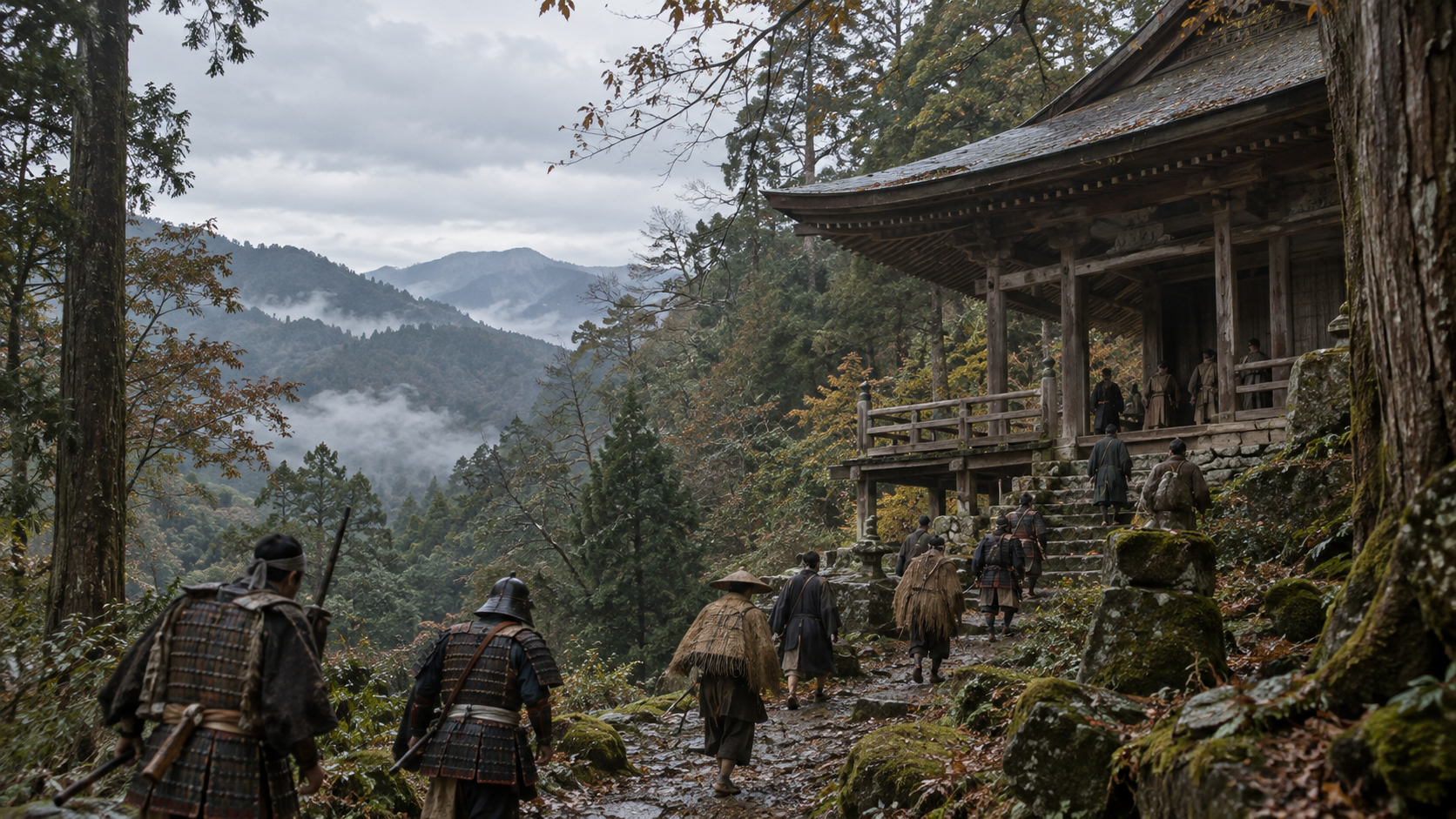
An emperor moves to a mountain temple and is defeated by the shogunate’s army. If the story ends there, the attempt to overthrow the military government seems to have failed. In 1331, Mount Kasagi, which Emperor Go-Daigo had made his base, fell. The emperor was subsequently exiled to Oki.
Yet in 1333 commands were being issued from another mountain. Between those moments, Kusunoki Masashige resisted in Kawachi, and warriors in Hōki supported the emperor. Ashikaga Takauji also emerged as a figure changing sides from the shogunate. The loss at Kasagi had not ended activity everywhere.
Losing one base and bringing movements in different regions to an end were not the same thing. Even after the emperor had been taken into custody, people in other places continued to act. Attending to those connections brings the time after defeat into view, instead of treating it as an empty interval.
Kasagi, Chihaya and Mount Senjō; commands sent from a mountain and a prayer dedicated at a shrine: these offer different approaches to the Genkō Rebellion. Rather than reducing it to one person’s determination, this article follows how resistance and support continued across people and places.
Chapter 02
A temple becomes a base
Kasagi Town gives Go-Daigo’s arrival as the twenty-seventh day of the eighth month of Genkō 1, the year 1331. Whenever month-and-day dates from the Genkō era appear here, they retain the calendar used at the time. They are not the same numbered dates in today’s calendar.
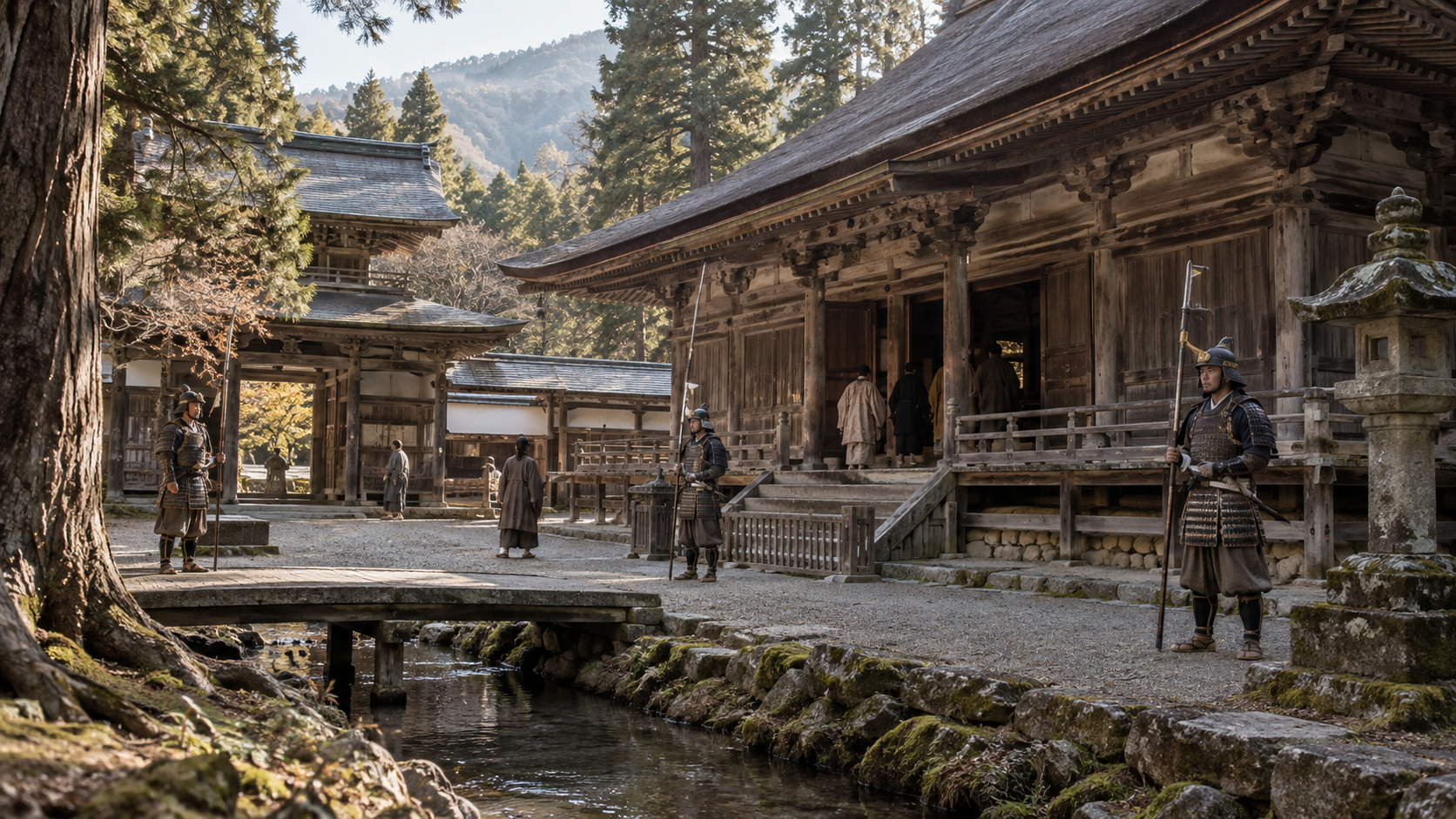
Kasagidera stood on the mountain. The Kyoto Prefectural Board of Education explains its use as a mountain castle through both documentary sources and excavation. A place of worship and religious practice could also serve political and military purposes. These uses brought different kinds of activity into the same landscape.
An anzaisho is a place where the emperor stays while away from his usual residence. Moving outside the capital did not remove the need for a center of activity. The temple and the mountain’s terrain provide clues for considering the base established there, without determining every building’s precise arrangement.
Entering the mountain was not enough to bring the conflict to a close. In the town’s account, the emperor was defeated by the shogunate’s army and his temporary residence was set on fire. Kasagi did not remain a base capable of continuing to protect him.
Chapter 03
Two periods layered at Kasagi
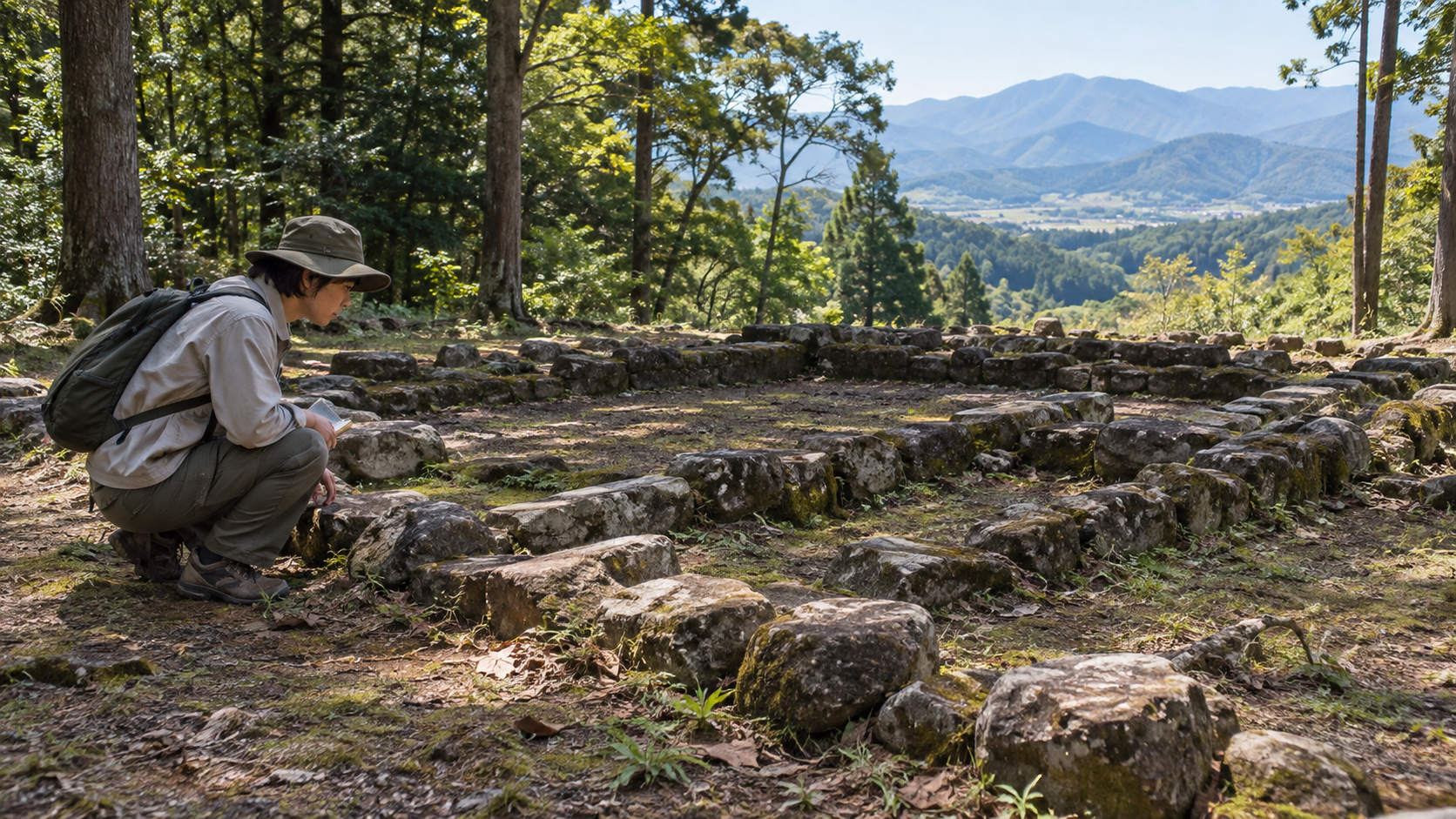
Walking through a castle site today also means considering the time that has passed through it. Kasagi was not used as a stronghold only during the Genkō Rebellion. It was used and modified again in the later Sengoku period. The visible site therefore contains more than one historical moment.
The Kyoto explanation points to overlapping remains from the Kamakura and Sengoku periods. It considers many defensive features visible at the surface likely to reflect Sengoku-period alterations. The forms in front of a visitor cannot all be carried back to 1331 simply because that year is central to the site’s story.
Reading documentary accounts of residence and fighting alongside excavated traces and the present terrain helps us approach the mountain’s different uses. A stone or ditch does not itself disclose an imperial command. Each kind of evidence contributes information, while leaving other questions to different sources.
Having established the defeat at Kasagi, we can turn toward another mountain. The fall of one base did not end movements opposing the shogunate. A site’s later history needs to remain visible, but so does the continuation of resistance beyond that particular site.
Chapter 04
Resistance continuing in Kawachi
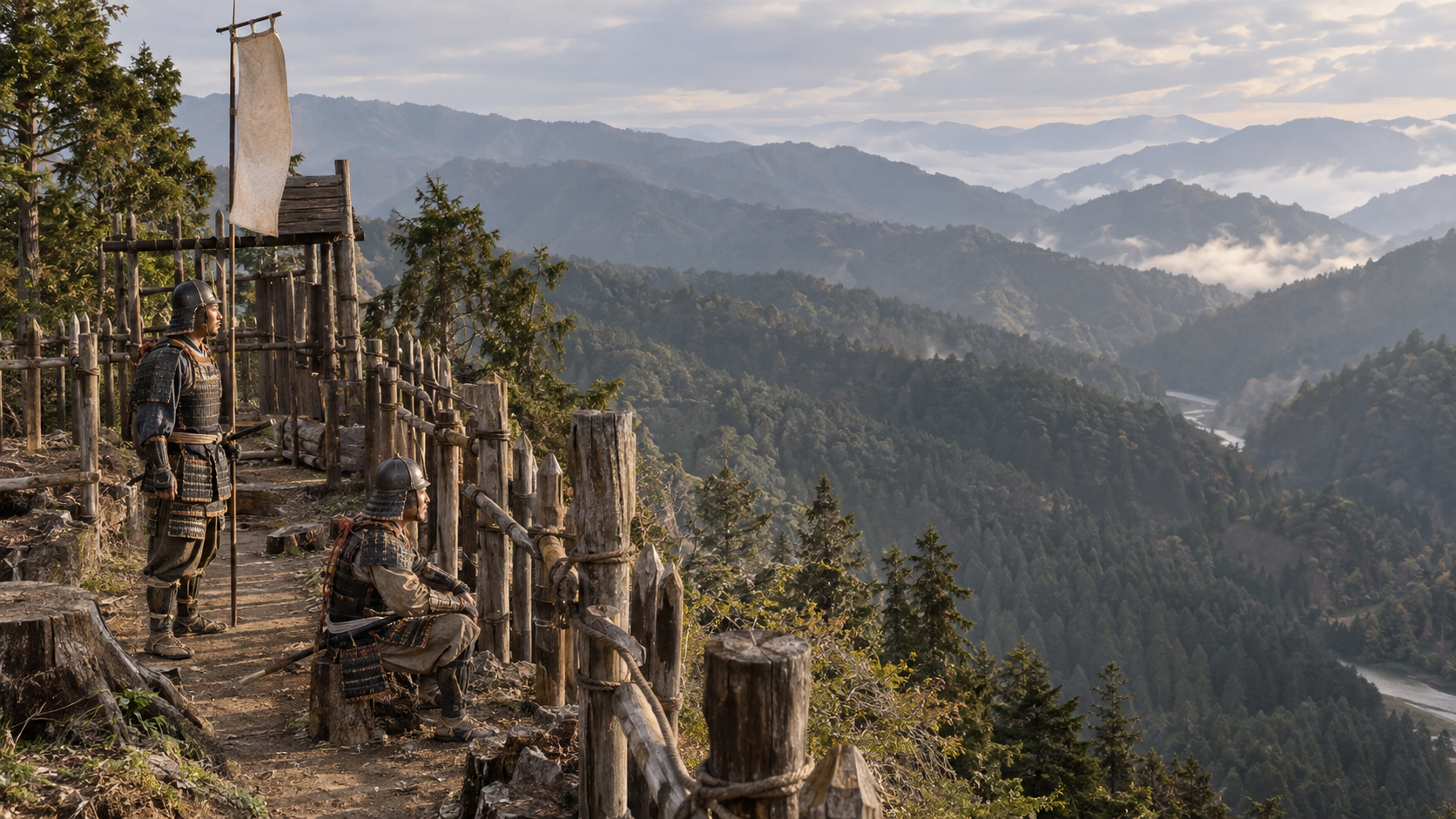
Kawachi contained a base of Kusunoki Masashige. Chihayaakasaka Village’s guide describes Chihaya Castle as a mountain stronghold built in 1332. In the year after Kasagi’s defeat, a place of resistance was therefore being established in another region. The emperor’s location does not encompass the whole geography of the conflict.
The castle guide describes a spur extending west from Mount Kongō and deep valleys surrounding it. Enclosures called kuruwa were formed by artificially leveling ground along the ridge. This was terrain in which people and armies could not move as they would across an extensive plain.
In 1333, Masashige fought the shogunate’s forces at this castle. The elevated base and the surrounding landscape offer clues for considering that resistance. A topographical plan alone, however, cannot reconstruct the position of each person or the sequence of attacks. Terrain and a complete battle narrative are different kinds of information.
The emperor’s exile did not make the fighting in Kawachi disappear. An entry into understanding this period is to resist confining the movement against the shogunate to the one place where the emperor happened to be. Resistance could persist in a different setting.
Chapter 05
Where the straw-dummy story comes from
A well-known stratagem associated with Chihaya Castle involves dressing straw figures in armor to draw the enemy’s attention. The village’s guide introduces this as an account found in Taiheiki. The origin of the story should remain attached to it: the guide is identifying a narrative source, not presenting a live report from the fighting.
The National Archives of Japan estimates Taiheiki’s composition in the later fourteenth century and does not identify a single established author. It is a war tale covering upheavals from Go-Daigo’s plan to overthrow the shogunate through events in 1367. Its scope and literary character matter when using it as historical evidence.
The time when a work took shape and the time when a surviving book was copied are also different. The Nojiri manuscript shown by the archives is described as a copy made in 1578. The battlefield of 1333, the later formation of the narrative and a still later manuscript occupy separate points in time.
The vivid stratagem offers material for understanding how the fighting was told in later generations. We can appreciate the story while distinguishing its evidentiary character from a contemporary written command. The battle as transmitted in narrative is another aspect of the Genkō Rebellion, rather than a substitute for every other source.
Chapter 06
From Oki to Hōki
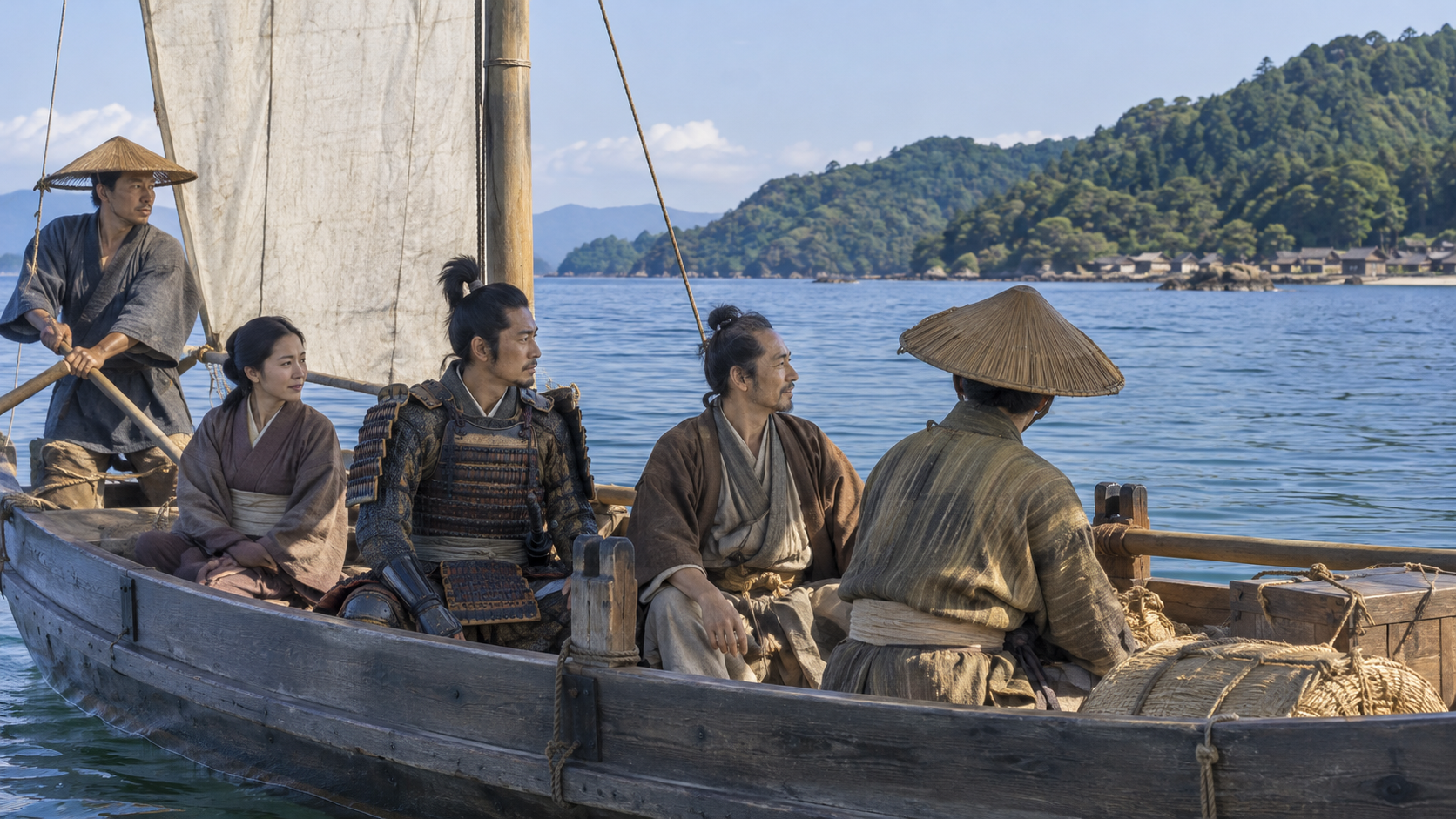
Go-Daigo escaped from the island of Oki in the intercalary second month of 1333. An intercalary month was an additional month in the calendar then used. Retaining that designation prevents the event from being silently moved into an ordinary modern February. The distinction belongs to the chronology itself.
Tottori Prefecture’s explanation of the Aimi family documents describes the emperor reaching Hōki, gaining the support of the local warrior Nawa Nagatoshi and renewing the campaign against the shogunate on Mount Senjō. Crossing the sea was followed by obtaining support in a new place.
One person’s change of location did not by itself establish a place from which activity could resume. Considering the people who supported him after arrival makes the escape visible as an event leading toward another base. The new setting mattered through the people acting within it as well as through its terrain.
The sequence followed here is movement from Oki to Hōki and the resumption of activity with local support. This article does not fill in an exact sea route, conversations among passengers or the sea conditions on a particular day beyond what the consulted account establishes.
Chapter 07
Commands leaving the mountain
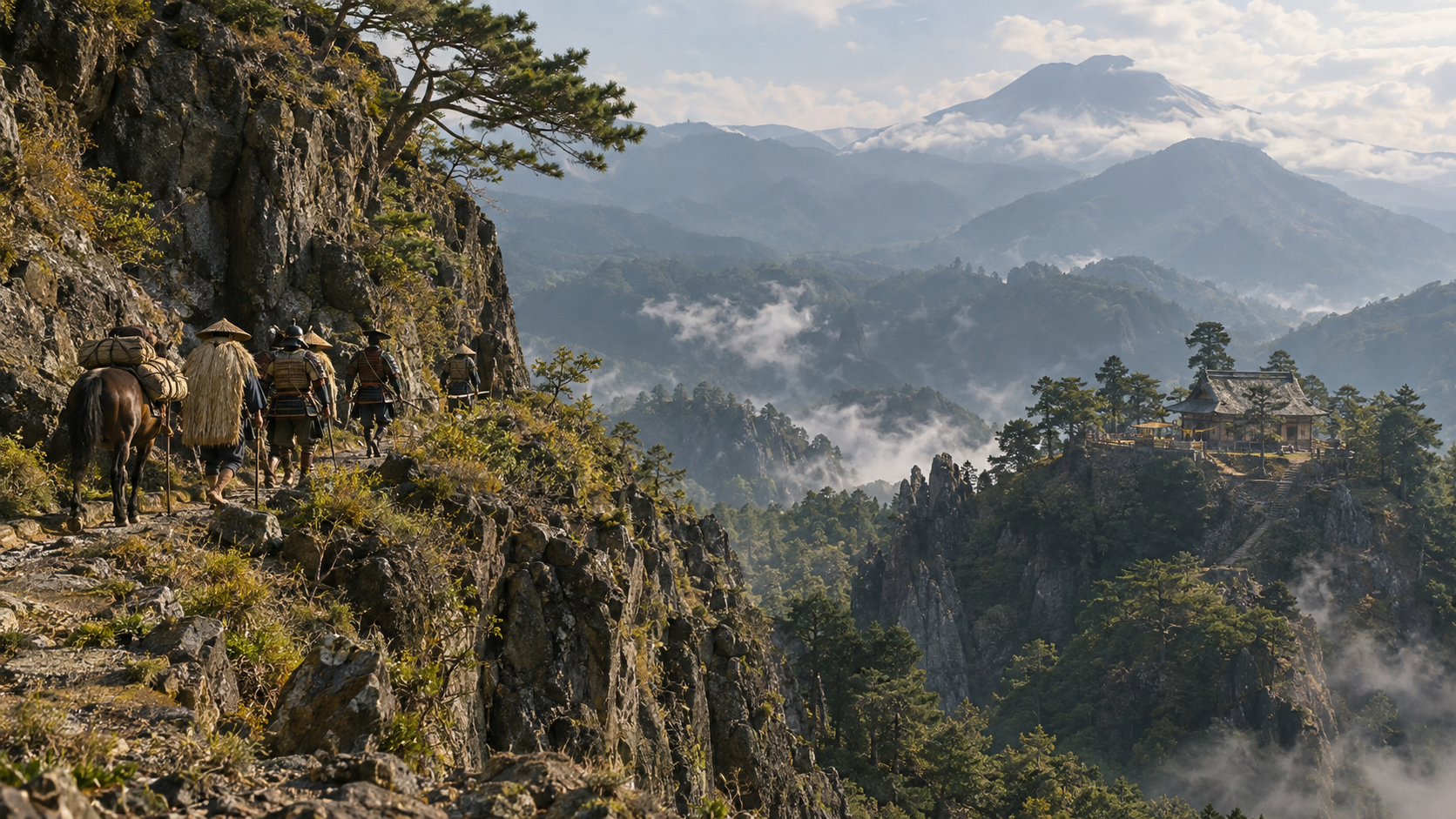
The new base was not a palace in Kyoto. Tottori’s explanation describes imperial commands being issued from Mount Senjō to recipients across the country during roughly three months, until the emperor departed toward Kyoto on the twenty-third day of the fifth month. That date also retains the historical calendar.
Looking at the mountain only as a place for troops to hold out misses part of its role. Documents were issued and received by people who could act on them. The base was also a political place from which commands could be sent to distant regions. Its functions extended beyond the protection offered by a slope.
At Kasagi, a mountain base had fallen. At Mount Senjō, the emperor was again issuing commands. Rather than combining both mountains into a single fortress story, comparing what could be done at each place gives the recovery a more concrete shape. Similar terrain did not make the two situations identical.
A base’s size alone does not determine its power. To whom could an intention expressed there be communicated, and what actions could follow? The rinji discussed next provides one view of that process. It allows the discussion to move from a landscape toward a surviving form of political communication.
Chapter 08
Differences preserved in a rinji
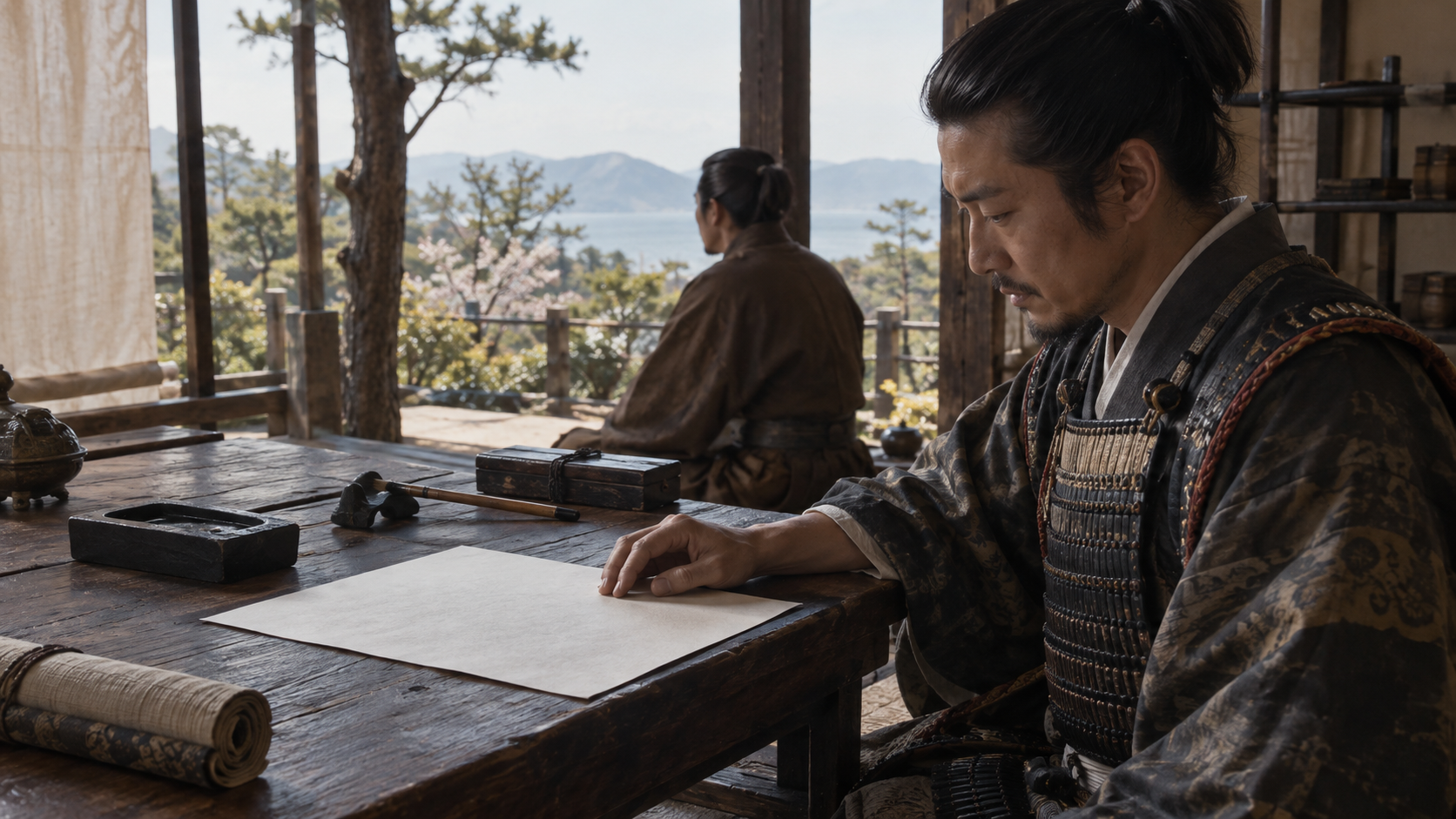
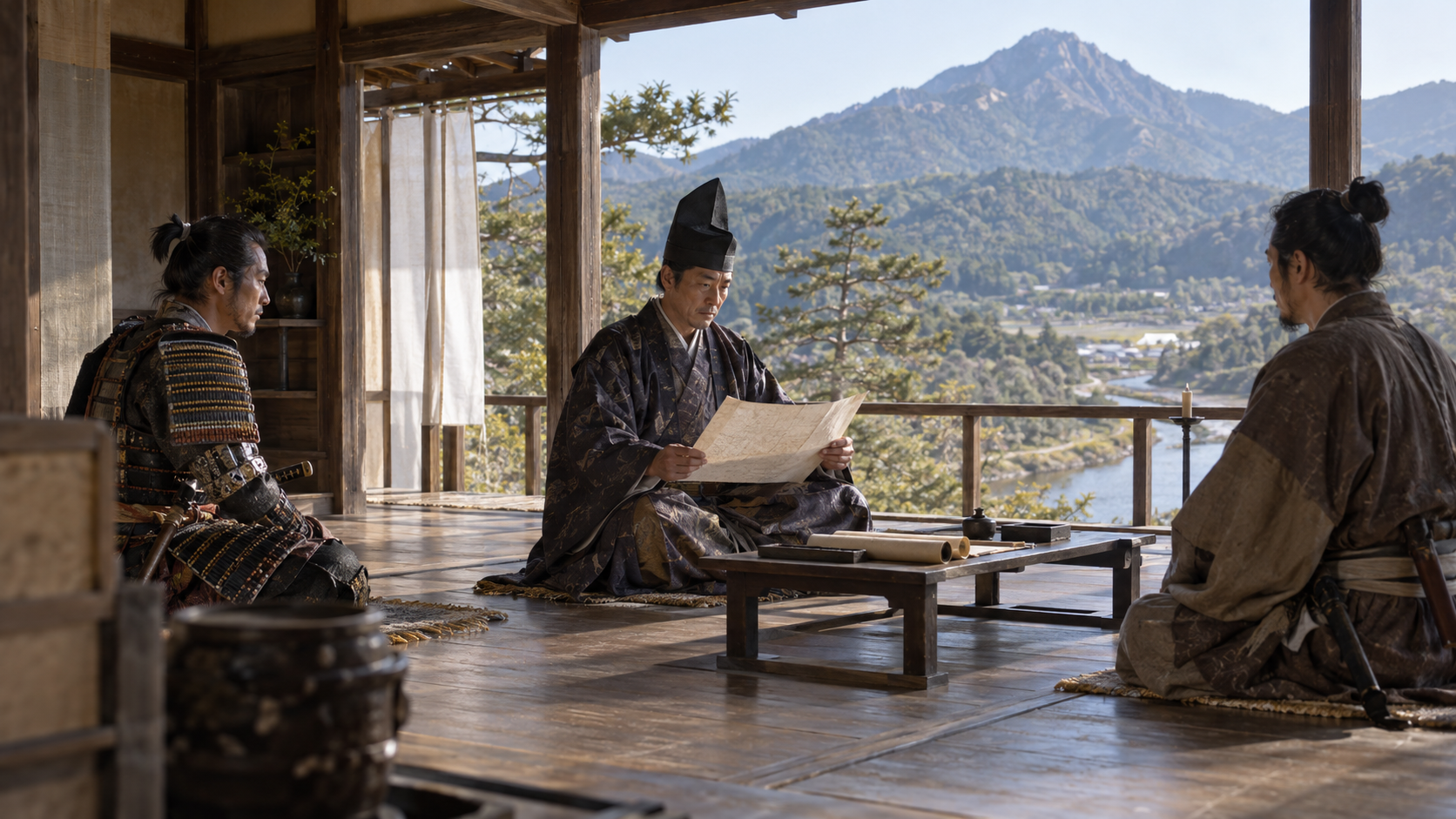
A rinji conveys the emperor’s intention through an attendant. One in the Aimi family documents, dated the fourth day of the third month, promises a reward for a warrior’s achievements and is issued under Chigusa Tadaaki’s name. The name appearing as issuer is important, but it is not the only feature to examine.
Tottori’s explanation identifies the handwriting as Go-Daigo’s own. It also describes white kōzo paper rather than the pale ink-colored recycled paper called shukushi normally used for this form. Reading the document requires distinguishing the name under which it was issued from the person who put brush to paper.
A shortage of attendants or the prescribed paper is the prefectural commentator’s proposed explanation. The command recorded in the document and circumstances inferred from its unusual form do not have the same level of certainty. Translation should preserve the difference instead of turning the proposed explanation into a witnessed fact.
Another rinji, dated the fifth day of the fifth month, is described as written in a different hand on shukushi. Comparing the two prevents one exceptional example from defining all activity on the mountain. The documents also reveal a political act: recognizing achievements and connecting them with promised rewards and further service.
Chapter 09
What Takauji promised before the deity
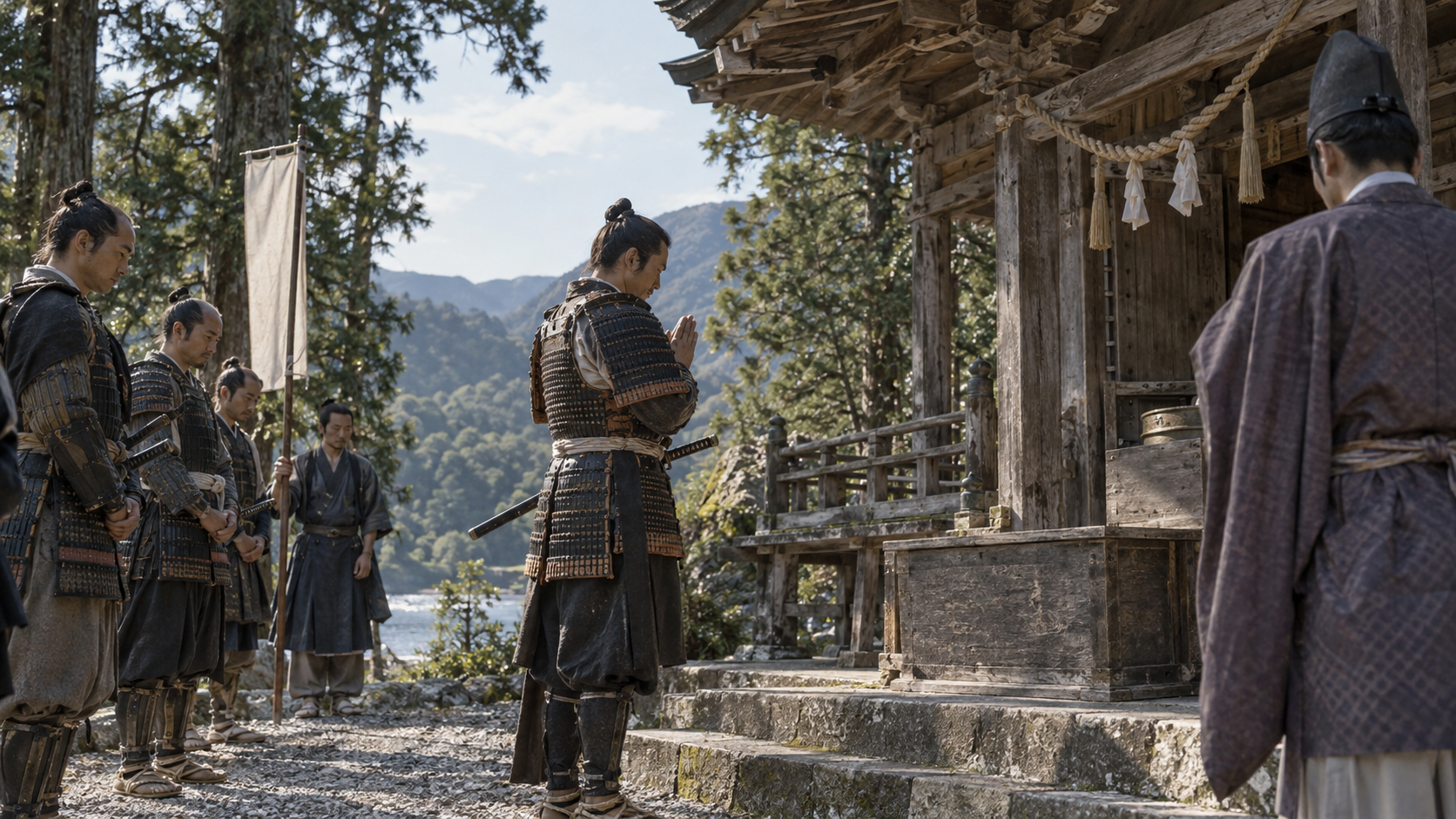
In the fourth month of 1333, Ashikaga Takauji had originally set out toward Mount Senjō on the shogunate’s side. The Kameoka museum explains that he changed to Go-Daigo’s side and raised troops at Shinomura Hachimangū. At this point his name was written with different characters from the form by which he later became known.
The prayer he dedicated at the shrine expresses a wish to overthrow the Kamakura shogunate and restore the Minamoto. It also promises to embellish the shrine and donate fields if the wish is fulfilled. What he requested and promised thus survives in a documentary form, addressed to a deity.
The museum introduces the document as thought to be in Takauji’s own hand. Retaining that qualification, we cannot use it to determine everything in his mind or a motive common to warriors throughout the country. A written wish establishes something more limited than complete access to a person’s inner life.
A rinji communicates a command to people, while a ganmon sets out a wish and promise before a deity. Papers connected with the same conflict could have different recipients and purposes. Those distinctions help us read the actions associated with them without treating all documents as interchangeable expressions of one plan.
Chapter 10
People acting in different regions
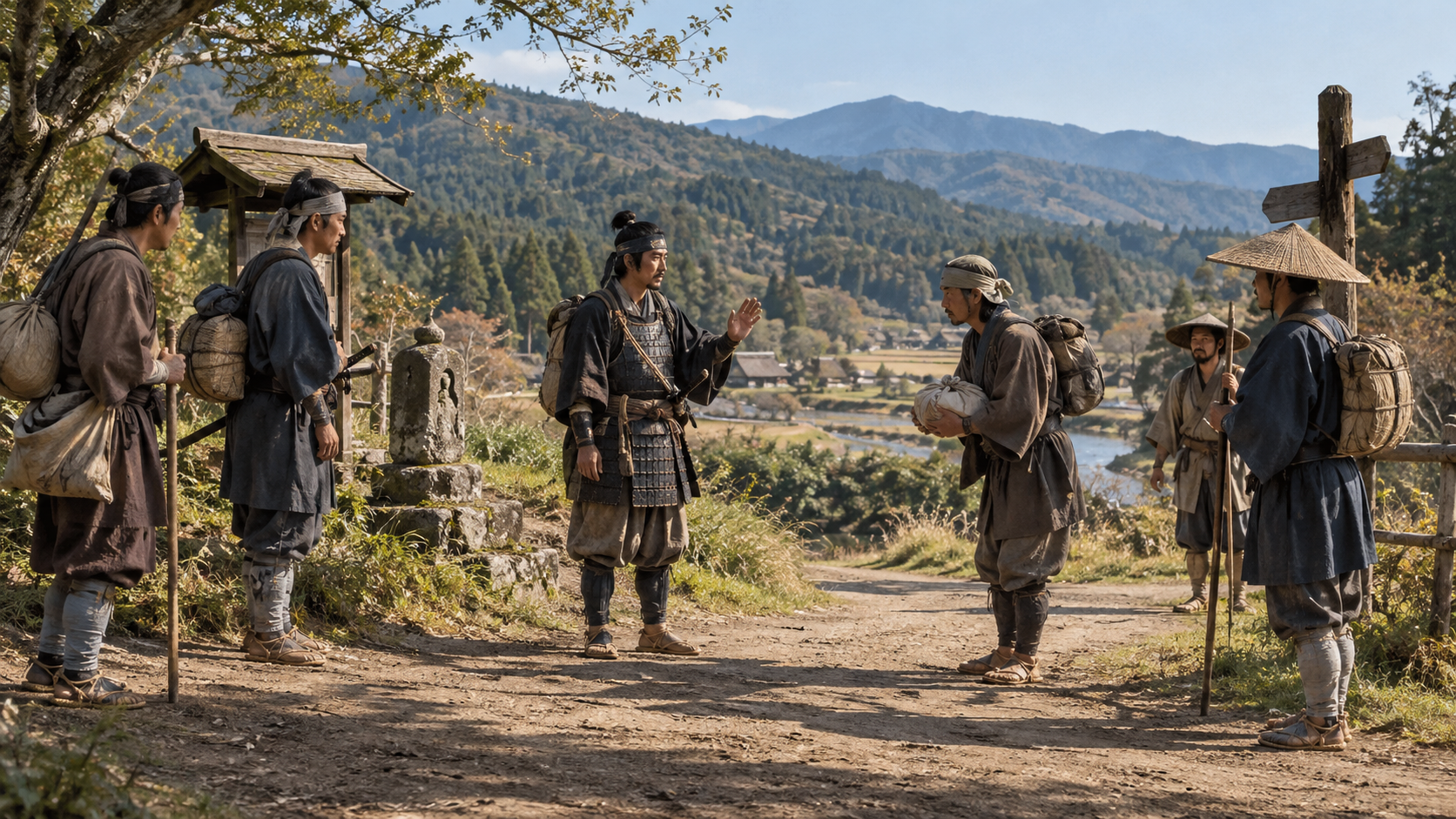
Masashige defended a mountain castle in Kawachi. Nagatoshi supported the emperor in Hōki. Takauji changed sides from the shogunate. They acted in different places and from different positions. Listing them on one timeline does not mean they were gathered together in one location or undertaking the same task.
Defending a mountain, leaving an island, issuing commands and changing an army’s allegiance overlapped as the conflict continued. The period after the defeat at Kasagi was not an interval in which nothing happened. Several kinds of movement can be seen within it, even when the emperor’s immediate circumstances had changed.
That does not establish that everything followed one plan from the beginning. Surviving commands and wishes reveal part of what people sought at particular moments. Opposing the shogunate together did not itself guarantee agreement about the future that should follow its defeat. Shared opposition and a shared political settlement are separate questions.
The continuation of the campaign can be considered through supporting people and places and the documents actually issued, without being confined to the emperor’s feelings. After one mountain base fell, activity connected again through other locations. That pattern becomes visible between 1331 and 1333.
Chapter 11
Reading Kamakura’s end through a place
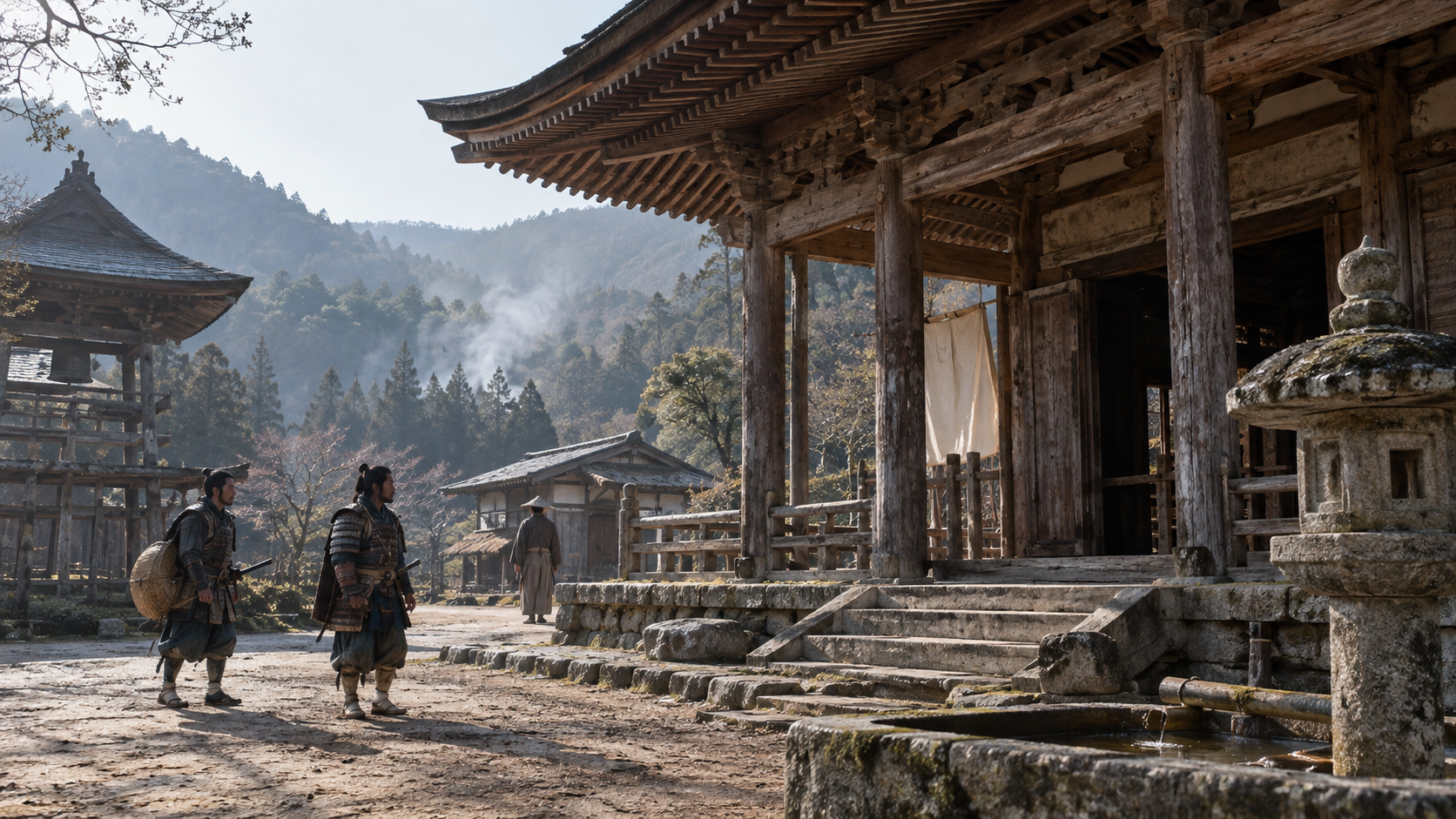
In 1333, the Kamakura shogunate fell to forces including those of Nitta Yoshisada. Kamakura City presents the Tōshōji site as a place connected with Hōjō Takatoki’s end and the shogunate’s destruction. The temple is described as having burned during the fighting. Its history brings the discussion to another location.
The city also describes building remains, ditches and traces of fire identified in later excavations. Both accounts of the conflict and material traces left underground contribute to considering the place’s history. They should be read together without assuming that every excavated feature supplies a complete scene of the final fighting.
The investigated remains were backfilled for protection and are not now exposed exactly as they appeared during excavation. A photograph of the quiet site cannot disclose all the excavated information. Present appearance, archaeological observation and historical narrative need to remain distinguishable, even where they concern the same ground.
Traditional numbers of the dead and a nearby yagura should likewise not be combined into a precisely reconstructed final scene. Having followed the story from Kasagi to Kamakura, the approach remains the same: establish what documents, traditions and excavation each communicate, and keep their limits in view.
Chapter 12
Victory did not settle a common future
Overthrowing the shogunate did not mean that the politics afterward had been settled into one agreed form. Kamakura City’s historical overview also points to conflict among powerful warriors and the subsequent Ashikaga government. Victory over one government and agreement about its successor were different outcomes.
Why did the campaign continue after Kasagi’s defeat? The materials examined here show overlapping developments: resistance persisted elsewhere, the emperor obtained fresh support and a base for issuing commands, and warriors changed sides from the shogunate. These connections offer an account of continuation through particular actions and places.
Chihaya’s terrain, rinji issued from Mount Senjō and Takauji’s prayer each provide an approach to the Genkō Rebellion, but they do not prove the same things. Reading their differences, including the stratagem transmitted in a war tale, gives more depth to the people acting between defeat and victory.
A mountain stronghold was lost, yet another place for issuing commands emerged. Winning together did not amount to a promise to follow the same road afterward. The Genkō Rebellion was a story of recovery after defeat and also a history in which connections between people and places were being rearranged.
How to read this work
History, interpretation, and reconstruction
Regional resistance, fresh support and a base for issuing commands, together with warriors changing sides, offer a way to read the campaign’s continuation after defeat at Kasagi.
This work is grounded in published sources and historical research. Interior thoughts, dialogue, and some visual details are cinematic reconstructions. Where historians disagree, the article presents the point as debated rather than settled fact.
Timeline
The story in time
-
Chihayaakasaka Village’s guide gives this as the year Chihaya Castle was built.
Sources: s04 -
Go-Daigo escapes Oki and establishes a base on Mount Senjō in Hōki with Nawa Nagatoshi’s support.
Sources: s05 -
The Aimi family documents preserve rinji with different handwriting and paper.
Sources: s05 -
Kameoka’s museum describes Takauji changing to Go-Daigo’s side at Shinomura Hachimangū.
Sources: s07
People & terms
A guide for new readers
Key figures
- Emperor Go-Daigo
- After defeat at Kasagi and exile to Oki, he issued commands from a new base on Mount Senjō in Hōki.
- Kusunoki Masashige
- Resisted the shogunate’s forces from mountain strongholds in Kawachi.
- Nawa Nagatoshi
- A local warrior who supported the emperor after his arrival in Hōki.
- Ashikaga Takauji
- The warrior later known by a differently written form of the same name. He joined Go-Daigo’s side in 1333 and dedicated a written prayer.
- Nitta Yoshisada
- Attacked Kamakura in 1333.
Glossary
- Genkō Rebellion 元弘の乱
- The conflict considered here through the defeat at Kasagi in 1331 and the movements leading to the shogunate’s fall in 1333; Genkō is a Japanese era name.
- Bakufu 幕府
- The military government, rendered here as shogunate. The Kamakura shogunate is the government opposed by Go-Daigo and the other participants discussed here.
- Anzaisho 行在所
- A residence where the emperor stays while away from his usual residence; used for Go-Daigo’s base at Kasagi.
- Kuruwa 曲輪
- An enclosure made by leveling ground within a stronghold, discussed in the guide to Chihaya’s ridge terrain.
- Rinji 綸旨
- A document conveying the emperor’s intention through an attendant. The name under which it is issued and the actual handwriting need not identify the same person.
- Shukushi 宿紙
- Recycled paper with a pale ink-colored appearance, described as the usual paper for the rinji discussed here.
- Kōzo paper 楮紙
- Paper made from kōzo fiber; the Tottori account identifies unusual white paper in the third-month rinji.
- Ganmon 願文
- A written prayer expressing wishes and promises before a deity, the form of Takauji’s document dedicated at the shrine.
- Taiheiki 太平記
- A war tale estimated to have taken shape in the later fourteenth century; its narrative and later manuscript copies have their own histories.
- Intercalary month 閏月
- An additional month in the historical calendar. Go-Daigo’s escape is placed in the intercalary second month, not silently converted to modern February.
- Oki and Hōki 隠岐・伯耆
- Distinct places: Oki is the island exile location, while Hōki is the province reached afterward, where Nagatoshi supported the emperor.
- Takauji’s earlier name form 足利高氏
- The characters used for Takauji in the 1333 prayer account; distinguished from the later written form while retaining the same English pronunciation.
- Takauji’s later name form 足利尊氏
- The later written form of Ashikaga Takauji’s name. It does not identify a different person.
- Yagura やぐら
- A term used for the nearby rock-cut feature in Kamakura’s account. Its associated tradition is not treated as proof of an exact final scene.
Sources & method
How this article was built
This English manuscript translates the fixed, publicly verified Japanese article’s twelve chapters, five listed people, six timeline entries and nine sources. Source IDs, scene IDs and their order remain aligned with the Japanese manuscript. Reference titles are editorial English renderings.
Relevant passages on eight official HTML pages were consulted. Both pages of the retained Chihaya Castle guide PDF were inspected, including the terrain plan. This is not a claim to have deciphered original rinji or the original prayer independently, or to have inspected all excavation reports or all of Taiheiki.
Kasagi’s visible defenses are not all assigned to 1331: the prefecture describes overlapping Kamakura and Sengoku remains. Chihaya’s terrain plan supports a discussion of enclosures and valleys, not an exact reconstruction of troop positions or the order of attacks.
The straw-dummy stratagem remains a Taiheiki account identified by the village guide. The events of 1333, the work’s estimated later-fourteenth-century composition and the Nojiri manuscript copied in 1578 are distinguished.
The Tottori explanation identifies Go-Daigo’s handwriting in a rinji issued under an attendant’s name. The proposed shortage of attendants or prescribed paper remains the commentator’s inference. The other rinji’s different hand and recycled paper remain part of the comparison.
Takauji’s prayer is described by the museum as thought to be in his own hand. Its stated wishes are not used to infer his complete inner life or a motive shared by every warrior. The earlier and later written forms of his name refer to the same person.
Kamakura’s historical accounts, local traditions, excavated traces and backfilled present site are distinguished. Traditional numbers and a nearby yagura do not establish an exact death scene. The article does not claim that shared opposition guaranteed political agreement afterward.
All twelve adopted illustrations were actually viewed in the retained contact sheet. Their bytes and article-use rights are checked against the Japanese review. They show anonymous fictional people and generic places. Scene 3 depicts modern examination of remains and scene 5 a modern reader. Institutional images, maps and document facsimiles are not reproduced.
No unrecorded conversation, private emotion, exact escape route, sea condition or troop count is added. The linked video has Japanese audio and a verified Japanese subtitle record; an English subtitle track is not verified.
Sources
References and further reading
- Kasagi Town: Site of Emperor Go-Daigo’s Temporary Residence 笠置町・後醍醐天皇行在所跡 Title translated editorially for reader convenience. Kasagi Town 笠置町 Relevant official HTML consulted, particularly the arrival date and temporary residence. Institutional images are not reproduced. Accessed 2026-10-17
- Kasagi Castle Site 京都府教育委員会・笠置寺城跡 Title translated editorially for reader convenience. Kyoto Prefectural Board of Education, Cultural Properties Protection Division 京都府教育委員会文化財保護課 Relevant official HTML consulted. Overlapping Kamakura and Sengoku remains and the qualified dating of visible defenses are retained. Accessed 2026-10-17
- Exploring Local History 千早赤阪村・歴史 Title translated editorially for reader convenience. Chihayaakasaka Village 千早赤阪村 Relevant official HTML consulted for Chihaya and Akasaka strongholds. Present visitor arrangements are not treated as medieval features. Accessed 2026-10-17
- Chihaya Castle Site Guide 千早赤阪村・千早城跡案内 Title translated editorially for reader convenience. Chihayaakasaka Village 千早赤阪村 Both pages of the retained official PDF inspected, including the terrain plan. The Taiheiki stratagem remains attributed; the plan is not reproduced. Accessed 2026-10-17
- The Aimi Family Documents: A Rinji in Go-Daigo’s Hand 鳥取県文化財課・相見家文書 Title translated editorially for reader convenience. Tottori Prefecture, Cultural Properties Division 鳥取県文化財課 Relevant official HTML consulted. Document content and handwriting attribution are distinguished from the commentator’s proposed explanation of shortages. Accessed 2026-10-17
- Ashikaga Takauji’s Written Prayer 亀岡市文化資料館・足利高氏願文 Title translated editorially for reader convenience. Kameoka Museum of Culture 亀岡市文化資料館 Relevant official HTML consulted. Attribution to Takauji’s own hand remains qualified. The original document and institutional images are not reproduced. Accessed 2026-10-17
- Taiheiki: History and Narrative Exhibition 国立公文書館・太平記 Title translated editorially for reader convenience. National Archives of Japan 国立公文書館 Relevant official HTML consulted. The events narrated, estimated composition in the later fourteenth century and Nojiri copy of 1578 remain distinct. Accessed 2026-10-17
- History of Kamakura 鎌倉市・鎌倉の歴史 Title translated editorially for reader convenience. Kamakura City 鎌倉市 Relevant official HTML consulted for the shogunate’s fall in 1333 and later conflict. Shared opposition is not treated as agreement on a political future. Accessed 2026-10-17
- The Tōshōji Historic Site 鎌倉市・東勝寺跡 Title translated editorially for reader convenience. Kamakura City 鎌倉市 Relevant official HTML consulted. Historical accounts, traditions, excavated traces and the backfilled present site are distinguished. No exact final scene is reconstructed. Accessed 2026-10-17
Continue reading
More stories from Shigeki
Shigeki English
Sakai’s Merchant City: Trade, Self-Government and Survival
A port, a merchant council and town communities—from changing authority to rebuilding after fire.
- When From the later fifteenth century through the Sengoku period, the fire of 1615 and early Edo-period reconstruction.
- Where Sakai, in present-day Osaka Prefecture, where maritime routes met roads on land.
Shigeki English
The Aburanokōji Incident: After Leaving the Shinsengumi
A separation in spring, a new base in summer, and two successive attacks.
- When Kyoto in Keiō 3 (1867). The incident’s historical date corresponds to December 13, 1867.
- Where Kyoto: the guards’ successive bases, the Aburanokōji attack site and the later place of remembrance.